Posts Tagged ‘Africa’

Rafto Prize 2025 to Emergency Response Rooms of Sudan (ERR)

September 17, 2025

The Rafto Prize 2025 has been awarded to The Emergency Response Rooms of Sudan (ERRs) for their courageous work to preserve the most fundamental human right – the right to life.

The Emergency Response Rooms of Sudan are grassroot networks that emerged in the wake of the war in Sudan in 2023. They consist of thousands of volunteers who engage in collaborative, community driven efforts to meet urgent humanitarian needs of others, at great personal risk. The ERRs save lives and maintain human dignity in a place of misery and despair.

After the brutal war between the Sudanese Armed Forces (SAF) and the Rapid Support Forces (RSF) broke out in April 2023, the Sudanese state collapsed. As a consequence, civilians have an enormous need for humanitarian assistance.In a desperate attempt to save lives, ordinary Sudanese took matters in their own hands and formed self-help groups to offer services supporting basic life, welfare, and human dignity through Emergency Response Rooms (ERRs).

The ERRs originated in Khartoum and has spread to other conflict areas of Sudan. To mitigate excessive loss of life and human suffering, ERRs provide key services such as health, food, water, body retrieval and burial. They also work on monitoring, documenting, and responding to cases of sexual violence.

The Rafto Prize 2025 honours the Emergency Response Rooms and the thousands of individuals protecting the right to life and health, who are building hope in Sudan, at tremendous risk to their own lives. The prize is also a recognition of the significance of grassroot mobilization and collective effort in ensuring basic human rights in times of conflict. The need for protection of human rights and humanitarian assistance is becoming greater by the day. In these trying times, we must all stand in solidarity with the people of Sudan.

For more on the Rafto prize and its many previous laureates: see: https://www.trueheroesfilms.org/thedigest/awards/A5043D5E-68F5-43DF-B84D-C9EF21976B18

https://www.rafto.no/en/news/the-rafto-prize-2025-to-emergency-response-rooms-of-sudan-err

https://www.reuters.com/world/africa/sudanese-network-volunteer-aid-groups-wins-norwegian-human-rights-award-2025-09-17/

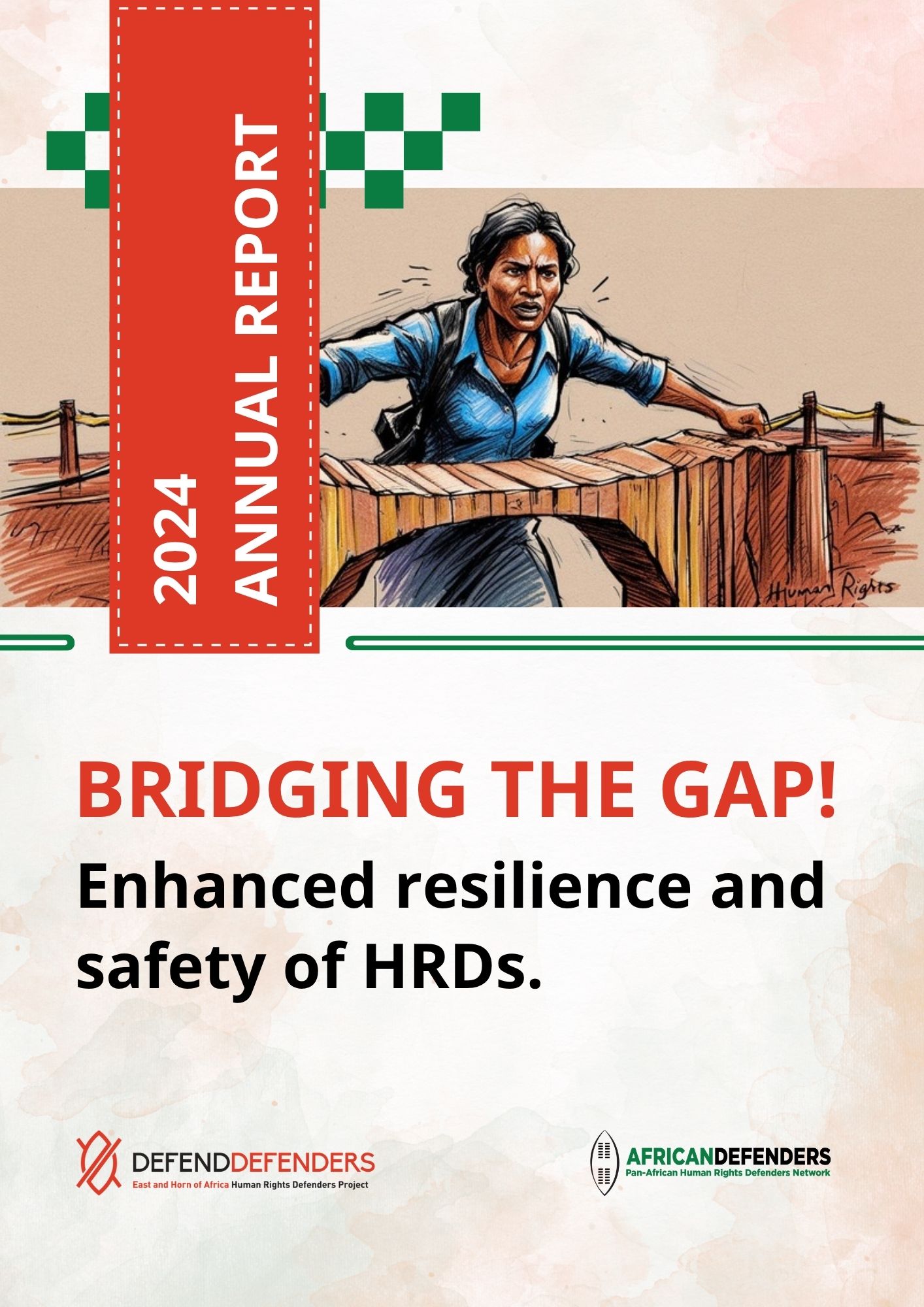
Bridging the Gap – Annual Report 2024 DefendDefenders on Africa

August 1, 2025

The year 2024 witnessed a deteriorating political and human rights climate, with the war in Sudan, police violence in Kenya, ethnic conflict in Ethiopia and political instability in the Sahel intensifying threats against human rights defenders (HRDs). Despite the risks, the East and Horn of Africa Human Rights Defenders Project (DefendDefenders) and the Pan African Human Rights Defenders Network (AfricanDefenders) remained steadfast in providing HRDs with essential protection support, supported amplifying of their voices, and enhancing their capacity to navigate the environments.

Our protection efforts were central to our work as HRDs faced heightened threats. DefendDefenders provided a total of 643 protection grants (493 emergency grants and 150 direct assists under the Ubuntu Hub Cities Initiative). AfricanDefenders strengthened partnerships with the Elisabeth-Selbert-Initiative, the Shelter Cities Initiative, and the University of Pretoria’s Centre for Human Rights to facilitate the relocation and protection of HRDs at risk.

On the advocacy front, we remained committed to ensuring that HRDs had a voice at regional, and international levels. At the UN Human Rights Council, we advocated for the renewal of critical mandates, including the UN Commission on Human Rights in South Sudan and the Special Rapporteur on Eritrea. Additionally, we launched the report Is the Tide Turning? which analyses African states’ voting patterns on human rights resolutions to inform and shape future advocacy strategies.

At ACHPR, we facilitated HRDs’ participation in the 79th and 81st ordinary sessions, organized side events, and engaged with civil society organisations. Our involvement in the African Electoral Justice Network underscored our commitment to promoting fair and transparent electoral processes. Additionally, we facilitated a benchmarking trip for ACHPR Commissioners to the Inter-American Commission on Human Rights, fostering inter-regional collaboration on human rights protection. We conducted solidarity missions to Kenya and Senegal, standing with indigenous women HRDs, grassroots defenders, and civil society leaders. We also co-hosted a global consultation with outgoing and incoming UN Special Rapporteurs on Freedom of Peaceful Assembly and Association, addressing emerging threats to civic space and climate justice activism.

We strengthened national HRD coalitions across the East and Horn of Africa, reinforcing networks for collective advocacy and protection. Our 7th Focal Point Meeting brought together members of the East and Horn of Africa Human Rights Defenders Network to assess civic space trends, evaluate our 2021-2025 Action Plan, and strategise for the 2026-2030 period. As part of this gathering, we also convened an inter-mechanism dialogue between HRDs, the Chairperson of the ACHPR, and the Chairperson of the UN Working Group on Enforced Disappearances to enhance HRDs engagement with the special mechanisms.

To sustain HRDs’ resilience, we prioritised capacity-building, equipping them with tools to navigate an increasingly hostile environment. Over the year, we trained 990 HRDs through more than 62 workshops on physical security, digital security, wellbeing, monitoring and documentation, Kobo Toolbox, and resource mobilisation. The year concluded with the launch of our annual thematic report, Rocky Ground and Shifting Sands: Human Rights Defenders Working in the Context of Elections in East Africa, offering insights into the challenges HRDs face in electoral contexts in Burundi, South Sudan, Tanzania, and Uganda.

Download Report Here:

https://defenddefenders.org/annual-report-2024/

Strange case of inter-arab feud by using HRDs in Geneva

April 3, 2025

Watan News on 30 March 2025 came with a rather remarkable story about the UAE’s covert efforts to damage Qatar and Saudi Arabia’s reputations through paid campaigns using African NGOs Human rights sources in Geneva. Whether this is all true or not I cannot say, but it is worth reporting on.

Watan writes that “human rights circles in Geneva’ have revealed the United Arab Emirates’ involvement in leading coordinated incitement campaigns against its adversaries, using African organizations in exchange for financial bribes to attack Abu Dhabi’s opponents and whitewash its own dire human rights record. According to the source, Abu Dhabi’s campaign aims to bring in so-called “victims,” such as migrant workers, to testify before the UN Human Rights Council in an effort to damage Qatar’s international reputation.

Reliable reports indicate that the UAE has continuously funded this campaign over the past three years. Several human rights organizations and active institutions in Geneva have reportedly received large sums of money to support anti-Qatar activities. The funds are reportedly channeled through the UAE Embassy in Geneva and a key intermediary, Issa Al-Arabi, a Bahraini national who acts as a liaison for the UAE in supporting various rights groups at the UN.

According to the source, the campaign is being executed by the Rencontre Africaine pour la Défense des Droits de l’Homme (African Meeting for the Defense of Human Rights) under the leadership of Nishkarsh Singh, along with the Tomoko Development and Cultural Union (TACUDU) led by Fazal-ur-Rehman, and the International Network for Human Rights (INHR).

Another UN source said that the UAE’s campaign is coordinated by key figures within the diplomatic and human rights community in Geneva and Washington, primarily operating within the INHR network.

This organization plays a major role in organizing human rights events at the UN, with a team of participating legal and diplomatic experts.

Notable individuals involved include:

  • Biro Diawara – A veteran human rights activist in Geneva for over 20 years, representing African civil society including journalists, parliamentarians, religious leaders, and human rights defenders. He has strong ties to African delegations in New York, Geneva, and the continent, with a focus on Sudan, West Africa, and his native Guinea.
  • Clément N. Voule – Former UN Special Rapporteur on the Rights to Freedom of Peaceful Assembly and of Association. After completing his term in the summer of 2024, he joined the Geneva Human Rights Institute in September. A Togolese international lawyer, he specializes in human rights and security sector reform and holds multiple roles within Geneva’s human rights community.
  • Jane Galvão – Director of Resource Mobilization at INHR and Global Health Advisor. With over 20 years of experience managing health programs, she has worked on infectious diseases and women’s and children’s health, managing over $750 million in funding for organizations like UNITAID and WHO.
  • Eric N. Richardson – Founding President of INHR. A former U.S. diplomat and attorney, he led the U.S. team at the UN Human Rights Council in Geneva from 2013 to 2016. With experience in countries like China, North Korea, Libya, Tunisia, New Zealand, and Israel, he now focuses on mediation efforts with Amnesty International and teaches law at the University of Michigan and UC Berkeley.
  • John Shyamana – Expert in Social and Economic Rights, New York. With over 30 years of experience, he specializes in child policy, labor rights, and social welfare, having worked with the U.S. Congress and state legislatures on legislative and advocacy efforts.
  • Kumar – Senior Human Rights Advisor, Washington D.C. Former Advocacy Director for Amnesty International USA. With more than two decades of experience, he has championed human rights and humanitarian causes worldwide, particularly in Asia, Afghanistan, and Myanmar.
  • Jeff Landsman – Managing Director and Treasurer at INHR. A certified financial planner and seasoned international buyer, he oversees the institute’s financial operations and strategic planning.
  • Asel Alimbayeva – Program Officer and Director, INHR Geneva. Fluent in English, French, Russian, and Kazakh. She has worked at the UN Office in Geneva and Kazakhstan’s Permanent Mission, leading social media and HR operations at the institute.
  • Pedro Cherinos Terrones – Legal Advisor, Lima. A Peruvian lawyer specializing in international trade, business law, human rights, and compliance with international law.
  • Sean Wessing – AI and Innovation Specialist, Bologna. Holds dual Master’s degrees from SAIS–Johns Hopkins and Bologna Business School. Leads fundraising and AI governance projects at INHR.
  • Zaf Haseem – Videographer and Reconciliation Specialist, Asia. A conflict mediator who has worked in Sri Lanka, Burma, Indonesia, and the Central African Republic, using film as a training tool for peacebuilding.

UAE’s Smear Campaign Targeting Qatar and Saudi Arabia

Diplomatic sources indicate that the UAE is recruiting African civil society organizations to conduct media and human rights attacks against Qatar. These efforts are expected to intensify during the UN Human Rights Council sessions in June and September 2025, with a major campaign planned for the September session. Additionally, the UAE is reportedly preparing similar activities within the African Union Commission, targeting both Qatar and Saudi Arabia as part of its escalating geopolitical rivalry in Africa.

These developments underscore rising regional tensions in Africa, where the UAE is leveraging human rights tools and diplomatic influence to advance its political agenda.

They also raise serious concerns about the independence of some Geneva-based human rights organizations, which are increasingly being used as instruments of political influence rather than neutral advocacy.

https://www.watanserb.com/en/2025/03/30/uae-accused-of-funding-smear-campaigns-through-african-ngos/?amp=1

Nigerian atheist Mubarak Bala freed from prison (but fear still persists)

January 8, 2025

The President of the Humanist Association of Nigeria, Mubarak Bala, was apprehended at his home in Kaduna State on 28 April 2020. See:

The prominent Nigerian atheist, who was freed on 8 January 2024 after serving more than four years in prison for blasphemy, is now living in a safe house as his legal team fear his life may be in danger…

In 2024, the UN Working Group on Arbitrary Detention (UNWGAD) released its opinion that the Nigerian State violated international law by detaining Bala. Concluding that he was wrongfully imprisoned for exercising his right to freedom of thought, conscience, religion or belief and that because of this violation no trial should have taken place.

Humanists International welcomes news of the release of Mubarak Bala, however, it reiterates that he should never have been detained in the first place. The organization once again thanks all those individuals and organizations without whose support this work would not have been possible. The organization hopes that Bala will one day be able to return to his homeland, and resume his work.

[https://humanists.international/]

Andrew Copson, President of Humanists International stated:

Today, we celebrate Mubarak Bala’s release – a hard-won victory that fills us with immense joy and relief. This triumph would not have been possible without the unwavering dedication of Humanists International’s staff, the tireless advocacy of Leo Igwe, the expertise of James Ibor and Bala’s legal team, and the invaluable support of our partner organizations. We extend our deepest gratitude to each and every one of them. While we rejoice in Mubarak’s freedom, we remain committed to fighting for the countless others who remain unjustly imprisoned for their beliefs. Their struggle is our struggle, and we will not relent until they too are free.”

https://www.bbc.com/news/articles/c62zpk4nnxdo

Three HRDs win Kenyan Human Rights Defender of the Year award

November 30, 2024

Walter Ngano, on Friday, 29 November 2024, wrote about three nationals in Kenya being honoured as Human Rights Defenders, illustrating again how awards can function at the national level.

Three Kenyan activists were feted at an awards ceremony on Friday, November 29, recognizing them for their commitment to protecting human rights. Boniface Mwangi, Hanifa Adan, and Hussein Khalid were awarded the Human Rights Defender of the Year award during the Human Rights Defenders (HRD) Awards. The event was held at the Royal Danish Embassy in Nairobi, Kenya.

The three, who are prominent activists in Kenya, were jointly awarded the prize, which is under the Working Group on Human Rights Defenders in Kenya, which brings together Civic Society Organizations and development partners concerned with the protection of HRDs.

The three were honoured for the role they played in the June-August Gen Z protests that were witnessed in Kenya in 2024. Together, they managed to lead Kenyans in advocating for the withdrawal of the Finance Bill, 2024.

In addition, Boniface Mwangi was recognized for his contributions towards advancing good governance, constitutionalism, the rule of law, and the promotion and protection of human rights and fundamental freedoms in Kenya. [https://humanrightsdefenders.blog/2019/05/17/debate-in-kenya-are-human-rights-defenders-always-credible/]

Hussein was honoured for his contribution to ensuring access to justice for survivors and families of victims of rights violations. Hanifa, on the other hand, was awarded for her dedication to the promotion of public integrity in Kenya. 

The aim of the ceremony is to honour and publicly recognise the important work of HRDs in Kenya by giving out awards to men and women who have demonstrated courage and impact in the promotion and protection of human rights and fundamental freedoms. 

While speaking after winning the award, Hanifa Adan expressed her joy at winning the award and dedicated the award to Kenyans who lost their lives in the June-August Gen Z protests witnessed in 2024. The award was her fourth in 2024.

“I feel honoured to have won the Human Rights Defender of the Year Award. It’s such an honour, and this is my fourth award this year. I dedicate this award to each and every comrade that we lost during the Gen Z protests,” Hanifa noted.

Hussein Khalid while receiving his award expressed his surprise at being feted but acknowledged the role of activism in the country this year. “I am really shocked by this, but when I look back, it is because of the so many days and sleepless nights we spent doing post-mortems and autopsies for the comrades that we lost in the protests,” Khalid stated. The activist went ahead to request a moment’s silence for the deceased. 

https://www.kenyans.co.ke/news/106865-boniface-mwangi-hanifa-adan-hussein-khalid-win-human-rights-defender-year-award

Lawlor: more than 400 human rights defenders, journalists in DRC targeted within a year

June 22, 2024

On 19 June 2024, Mary Lawlor, Special Rapporteur on the situation of human rights defenders expressed alarm at increasing targeting of human rights defenders in the Democratic Republic of Congo (DRC), particularly in villages and provinces in the east of the country, as the armed conflict intensifies.

Attacks, intimidation and killings of human rights defenders continue on a daily basis in the Democratic Republic of Congo, despite repeated calls for authorities to step up efforts to investigate human rights violations in the country and arrest and bring perpetrators to justice,” she said

From June 2023 to April 2024, the United Nations Joint Human Rights Office in the DRC documented incidents of intimidation, threats of physical violence, attacks and acts of reprisals targeting 387 human rights defenders and 67 journalists, perpetrated by both State agents and armed groups.

Lawlor noted that two women human rights defenders, members of the Youth Movement for Change (LUCHA), had been facing violence and death threats from Twigwaneho armed group since November 2023.

“When LUCHA organised public protests against recent attacks on their village in the South Kivu province, the rebel group sent armed forces to arrest them, forcing them to flee and go into hiding. To this day, they continue to receive death threats and live in hiding,” the expert said. One of the women’s mothers was abducted by the same rebel group in February 2024 and reportedly executed for not revealing her daughter’s whereabouts.

Obedi Karafuru, a human rights defender and head of the workers’ committee, was shot dead by unidentified men in his home village in rebel-held Rutshuru territory in North Kivu province. The Special Rapporteur noted that he had been working to secure fair compensation for former workers on a logging project and had been complaining to authorities for the past four years about death threats against him and his colleagues. “No investigation has been opened into the murder,” Lawlor said.

A human rights defender received death threats in February 2022 when he questioned the effectiveness of the Government’s state of emergency in North Kivu, stating that authorities had failed to guarantee the safety of the population. “The death threats forced him into hiding, as State authorities never responded to his call for protection,” the expert said. Four women human rights defenders from the women-led organisation Tous pour la Paix et la Cohésion Sociale, have been victims of kidnapping and violence following activities they organised around women’s rights.

The expert noted that the DRC adopted a law on the protection of human rights defenders in 2023, which meets the minimum international standards, and ensures special protection for women human rights defenders as well as physical protection of human rights defenders and their families.

“Many executions of human rights defenders are preceded by death threats,” Lawlor said, referring to the report she presented to the Human Rights Council in 2021. “Unless the physical integrity of human rights defenders is guaranteed, they will not be able to fully contribute to the construction of a just society that respects human rights,” she said.

“I call on authorities in the DRC to take all necessary measures to ensure a safe working space and protection for human rights defenders, as well as to guarantee the exercise of their rights to freedom of peaceful assembly and association and to effectively and reliably investigate all cases of executions in accordance with international standards, including the Minnesota Protocol, and bring those responsible to justice,” Lawlor said.

This statement is endorsed by Gina Romero, Special Rapporteur on the rights to freedom of peaceful assembly and of association; Morris Tidball-Binz, Special Rapporteur on extrajudicial, summary or arbitrary executions.

Distributed by APO Group on behalf of Office of the UN High Commissioner for Human Rights (OHCHR).

see also: https://humanrightsdefenders.blog/2022/05/13/floribert-chebeya-dr-congo-policeman-sentenced-to-death-for-murder/

https://www.news24.com/news24/africa/news/war-on-activists-more-than-400-human-rights-defenders-journalists-in-drc-targeted-within-a-year-20240620

Sudanese Human Rights Defenders risk their lives to document the war

March 13, 2024

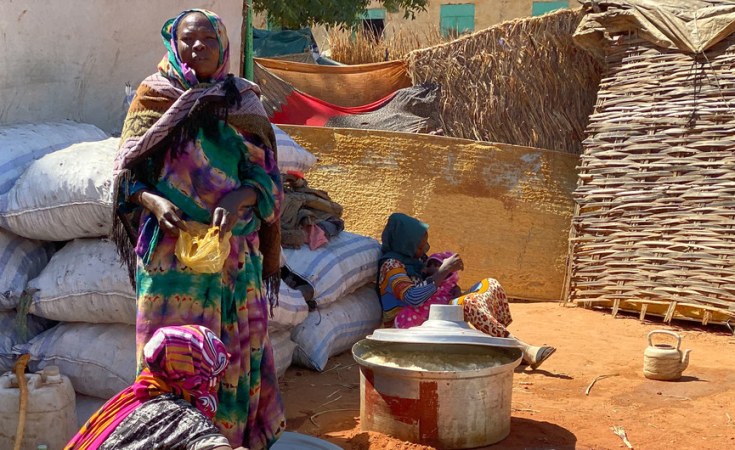
Internally displaced families gather at a temporary gathering point outside a school in El Geneina town following recent intercommunal conflict in West Darfur. Modesta Ndubi/UNHCR

Ela Yokes in The New Humanitarian (Geneva) of 11 March 2024 reports on the role of young people documenting the abuses in the war in the hope that it will contribute to justrice in the future.

Sudanese civil society groups are playing a pivotal role in documenting human rights abuses committed during 10 months of conflict, even as volunteers risk being arrested by the warring parties and are struggling with a month-long internet blackout. Youth groups, legal associations, and civilians acting in a personal capacity have all been involved in cataloguing the human rights impacts of the conflict that commenced in April 2023 and sets the army against the paramilitary Rapid Support Forces (RSF).

Documentation is a pathway to justice,” Noon Kashkoush of the Emergency Lawyers, a legal group monitoring abuses, told The New Humanitarian. She said she hopes the evidence her group has gathered will be used one day in the Sudanese justice system….

Access challenges for international aid agencies mean local mutual aid groups have shouldered the bulk of the relief effort in the most conflict-affected places. And likewise, civil society initiatives have carried the burden of human rights documentation. Despite the volatile security situation, local groups have led efforts to document sexual violence and killings, monitor ceasefire violations, track down missing persons, and report on the makeshift detention sites run by both the army and the RSF.

The findings of these civil society groups have fed into numerous human rights reports, including a detailed report last month by the UN, which charges both sides of the conflict of committing widespread abuses, some of which may amount to war crimes.

The report accuses RSF fighters of occupying residential buildings to shield themselves from army attacks, of massacring thousands of people in the Darfur region, and of committing extensive sexual abuse, including cases of rape and gang rape.

For its part, the army is accused of killing more than 100 civilians in airstrikes that were ostensibly targeting RSF positions but carried out in densely populated urban areas, or on public buildings including churches and hospitals.

The report also documents attacks on human rights defenders. It states that activists have been kidnapped and subjected to death threats and smear campaigns organised by army supporters, while several Darfuri rights monitors have been killed by the RSF.

Many groups documenting rights violations were active during the 2018-2019 Sudanese Revolution that toppled dictator Omar al-Bashir, and during the protests that followed the 2021 army-RSF coup that ended the post-Bashir democratic transition. Prior to the war, the Emergency Lawyers group was providing legal assistance to the families of pro-democracy protestors and activists who had been arbitrarily arrested, tortured, or killed by security forces.

Kashkoush said the group is now focused on war-related abuses, including the bombardment of civilian areas and the detention centres set up by the army and RSF in the capital, Khartoum, and the neighbouring cities of Omdurman and Bahri.

Kashkoush said the publication of the group’s reports and announcements have helped secure the release of hundreds of detainees – including some from the Emergency Lawyers network itself – though she described facing many difficulties.

“All of those documenting violations face the issue that movement on the ground is very challenging,” she said. “We depend a lot on open-source [information], such as video footage, and we work to verify it using witness statements.”

Another group involved in documenting abuses is the Youth Citizens Observers Network (YCON). It was established in late 2021 by volunteers wanting to shed light on violations committed against pro-democracy protesters and civil society activists. After the current conflict broke out, the network relaunched its platform under an anti-war stance, according to one of the group’s volunteers, who requested to remain anonymous to ensure their safety.

The volunteer said YCON has observers across Sudan and releases monthly reports on the impact of the war and the human rights situation. It also monitored several army-RSF truces that were violated last year. “In any given region, civilian monitors who are trained in documentation and verification methods are present on the ground and have a very wide network of connections,” said the volunteer. “Any event happening in a specific area, they would know about it.”

In cases where access to places affected by fighting has been too difficult for civil society groups, civilians already on the ground have taken it upon themselves to document what they are witnessing and publish evidence on social media.

When clashes between the RSF and the army first broke out in Khartoum, Hassan Abd al-Rauf, a local shop owner who ran a travel agency and a men’s clothing store, found himself caught in the epicentre.

Instead of escaping or complying with an RSF order that civilians should leave his neighbourhood, al-Rauf decided to stay, guard his properties, and offer assistance to others who were struggling to flee.

Walking through deserted streets, al-Rauf began recording live broadcasts on his Facebook page. His footage revealed the extent of the destruction and showed unarmed civilians who had been killed in the crossfire or targeted by snipers.

“When I started with the broadcasts, the aim was to connect people with what was happening on the ground and send photos [of the damage] back to the property owners in the area,” al-Rauf said in an interview after escaping Sudan for Qatar.

Two weeks after starting the broadcasts – which were getting hundreds of thousands of views – al-Rauf’s uploads suddenly stopped. He said he was captured by RSF fighters in the capital and held in a detention centre for 25 days.

“[The RSF] were certainly aware and it was the reason for my arrest,” al-Rauf said. “[One of my videos showed] a number of RSF vehicles after they had robbed the Bank of Khartoum and were hit by army aircraft.”

The volunteer at YCON said members of their group have faced harassment and the threat of detention from security forces as they attempt to move across different locations to document violations.

Similar threats were also described by Thouiba Hashim Galad, a member of the Missing Initiative, a local group with a platform that lets people post information about missing people. The group has a Facebook page with hundreds of thousands of followers.

“On a personal level, I receive private messages that include threats and very bad language,” Galad said. “Before the war, [the military authorities] were trying to hack our page many times,” she added.

On top of the security risks, volunteers told The New Humanitarian they are also struggling with a nationwide communication blackout that began in early February and has been blamed on the RSF.

Kashkoush of the Emergency Lawyers group said her organisation is unable to receive daily updates about human rights abuses, and instead gets a flurry of reports during the brief moments when they have an internet connection.

Kashkoush called for an international investigation into the blackout, which she described as a “constitutional violation” and a “deliberate attempt by one or both sides” to restrict access to information and thwart documentation efforts.

Documenting rights abuses has also had a psychological impact on volunteers, according to Galad of the Missing Initiative, which was founded in 2019 shortly after the RSF killed over 120 pro-democracy protesters at a Khartoum sit-in.

Galad, who currently volunteers for the initiative from outside Sudan, said the most difficult aspect of her work is delivering bad news to families when she learns that a missing person has been found dead.

During the first few weeks of the conflict, the Missing Initiative’s Facebook page was flooded with requests for information about people who had gone out to buy groceries or fuel and hadn’t returned.

Between April and August 2023, Galad said the group received over 600 reports of missing persons. She added that they stopped publishing statistics when they realised the actual number of cases was likely much greater than those reported to them.

Despite the challenges the group faces, Galad told The New Humanitarian she is determined to keep the initiative alive, especially as the conflict slips out of international focus.

“The main reason I am doing this is because I am a defender of human rights,” Galad said. “This is a continuation of the work we began after the [2019 Khartoum sit-in] massacre, on the basis that, in the future, both sides will be held accountable.”

The volunteer from YCON shared a similar view: “The fundamental motivation that allows us to continue monitoring the situation… is that this will provide accurate, recorded information for the institutions that will later work on [justice].”

Read this report on The New Humanitarian. The New Humanitarian puts quality, independent journalism at the service of the millions of people affected by humanitarian crises around the world.

Profile of Human Rights Defender Pamela Angwench Judith from Uganda

March 12, 2024

DefendDefenders in January 2024 has chosen as HRDs of the Month Pamela Angwech from Uganda.

For most of her life, Pamela Angwech’s existence has always been a defiant and simultaneous act of survival and resistance.  In 1976 when she was born, the anti-Amin movement was gathering pace, and her family was one of the earliest victims in Northern Uganda. Her father, a passionate educationist in Kitgum district was one of the most vocal critics of the dictatorship’s human rights excesses, which made him an obvious target of the state’s marauding vigilantes.  Fearing for his life and that of his young family, he escaped North, to Sudan, leaving behind his wife, then pregnant with Pamela, to follow him as soon as she could. It was on the treacherous journey to rejoin her father that Pamela was born, somewhere between Uganda and Sudan, and named Angwench, an Acholi word to mean “on the run,” in keeping with the circumstances of her birth.

Unfortunately, those precarious circumstances would continue to define most of Angwech’s childhood. Although Amin was eventually overthrown, paving way for her family’s return home, the immediate post-Amin years were equally tumultuous, and when President Museveni’s National Resistance Army took power in 1986, Northern Uganda was immediately engulfed in a civil war by the Lord’s Resistance Army(LRA) rebels that would rage on for the next 20 years, bringing wanton anguish and suffering to the region’s people and communities.

Angwench navigated those precarious circumstances to pursue an education, convinced that only then could she impact her community for the better. At University, she studied Gender and Women Studies and immediately returned home to seek work with the UN’s World Food Program Office in Gulu, determined to join the relief effort to alleviate the suffering of her people in Internally Displaced People’s (IDP)Camps.

Initially, they told me there was no job. But I was determined to work with the UN and nowhere else. So, I camped at their office for 14 straight days. Sometimes, I would volunteer as a gatekeeper when the substantive gatekeeper was away, and other times, I would sit at the front patch of the Office Head the whole day. When they realized I was determined not to leave, they allowed me to start officially volunteering with them. “I would go with them to distribute food in the IDP camps, until later, I was formally integrated as official staff.

Yet, despite her dogged stubbornness and resilience, she was not prepared for the heart-rending experience of life in the IDPs, particularly the plight of women and girls.

I started to notice that after picking their food rations, women and children would start picking residue beans from the floor, to take for either their little children or their elderly parents who could not queue. One other time, I noticed a visibly tired woman carrying a baby on her back, being pushed out of the queue by others. I called her to the front and assured her that I would give her a special ration but asked her to first untie her baby from the back, so she could protect her from the sun and breastfeed her. When she untied her baby, I noticed that the baby’s neck was twisted – it had suffocated and died! That changed me, forever,

From Humanitarian to Human Rights Activist

Angwech realized that like a balm, humanitarian work could only soothe the suffering of her people but fell short of tackling the root causes of the same suffering. “So I decided that someone had to speak up about the heartbreaking indignity and human rights violations surrounding the conflict in Northern Uganda. I turned full scale, from a humanitarian to a human rights activist, particularly championing the rights of women who were most vulnerable “she says.  

Angwech would move on the streets rallying women to stand up for their rights, holding placards signaling injustices against women in IDP camps like molestation and rape. Overtime, she won followers: Emboldened by her courage and audacity, other women started to show up and speak up against the conflict and related violence. Angwech mobilized grassroot women groups to pursue LRA leader Joseph Kony in Congo’s Garamba forest, to dramatize their cries for peace, under UN resolution 13/25 which provides for women’s participation in peace processes. 

In 2004, Angwech started Gulu Women’s Economic Development & Globalization (GWED-G) to rehabilitate victims of the war, from victims of conflict-related sexual and gender-based violence to those physically harmed by the conflict.  Since then, Angwech says GWED-G has rehabilitated over 1700 war victims through physical rehabilitation projects, giving them prosthesis, among other forms of support. It has also continued to sensitise and organise grassroot women into human rights defenders’ groups, through which they can report and address GBV cases, issues of women economic rights among others. Today, Angwech says there are about 600 of these groups across Gulu, Lamwo, Amuru and Kitgum, each with a membership of 30 -40 members.    

Today, GWED-G is arguably the largest grassroots human rights organisation in Northern Uganda. It has also expanded to cover other social and economic causes, including environmental protection advocacy. Angwech says the environment is the local communities’ last refugee, and yet deforestation and charcoal burning are threatening it.  “For post-conflict communities like us in Northern Uganda, land is our primary resource. It is the land from which people make an income to feed their families, send their children to school, and access medical care. War destroyed everything else. So, if we don’t protect the environment, our land will be degraded, rainy seasons will begin to change which will affect food production and bring back hunger,” she says.

https://defenddefenders.org/human-rights-defender-of-the-month_pamela_angwench_judith

CIVICUS 2020 report “People Power Under Attack” – Africa

December 14, 2020

Africa: Civic Rights Were Eroded Across Africa in 2020

The most common violations of civic space registered by the CIVICUS Monitor were the detention of journalists, followed by disruption of protests, censorship, intimidation and the detention of protestors. Almost half of CIVICUS Monitor updates in 28 different countries mentioned the detention of journalists. 14 December 2020. Fundamental civic rights, including freedoms of association, peaceful assembly and expression, deteriorated across Africa in 2020. [See also: https://humanrightsdefenders.blog/2016/10/24/today-civicus-launches-its-worldwide-monitor-to-track-civil-space/]

In an allAfrica.com guest column Sylvia Mbataru and Ine Van Severen – CIVICUS researchers who contributed to People Power Under Attack 2020 – unpack what the report says about Sub-Saharan Africa. They conclude that civic space has been reduced in four West African nations (Côte d’Ivoire, Guinea, Niger and Togo) and has improved in the Democratic Republic of Congo and Sudan.

Over the past year the CIVICUS Monitor has documented several drivers of civic space violations in Africa including mass protests that were met with violent repression, and electoral processes, mostly presidential elections. Violations in the context of elections often involve the arrest of opposition members and pro-democracy activists, internet shutdowns, detention of journalists and crackdowns on protesters.

In three of the four West African countries that were downgraded – Côte d’Ivoire , Guinea and Togo – constitutional changes were adopted in recent years, leaving incumbent presidents Alassane Ouattara, Alpha Condé and Fauré Gnassingbé all claiming that new constitutions allowed them to run for further terms. The process of changing constitutions or bypassing term limits led to mass protests that were met with excessive force, the adoption and use of restrictive legislation, and punishment for dissenters criticising those in power, in particular pro-democracy activists.

Niger has also been downgraded by the CIVICUS Monitor. Even though a peaceful political change of power seems likely in the elections later this month, serious questions remain about Niger’s democratic prospects as human rights violations continue and civil society is subjected to restrictions.

These countries in West Africa have not been alone in efforts to muzzle dissent, exclude opposition and crack down on protests in the context of elections.  This bleak picture is further seen in Eastern and Southern Africa.

In Burundi, ahead of the May 2020 elections, state security forces and members of the youth league of the ruling party threatened, intimidated and killed opposition party members, and stifled the media and civil society organisations.

In Tanzania, as the country prepared for its August 2020 vote, the government embarked on a major crackdown to suppress dissent, including by enacting new laws and regulations to stop opposition members from actively campaigning, prevent civil society organisations and independent observers from observing the electoral process, weaken civil society and the media, and limit the use of online platforms by journalists and voters.

Despite this difficult picture, the year also proved the resilience of people and civil society in exercising their civic freedoms, leading to fundamental democratic changes. In Malawi, although the period surrounding the disputed May 2019 election was characterised by violations including internet shutdowns and repression of protests, civil society successfully contested the results, leading to a new election and a change of government in June 2020 .

However, many other African countries are moving away from holding free and fair elections. With several countries gearing up to hold elections in the coming months, civic rights violations are being reported in countries across the continent.

In Uganda, opposition members and their supporters are being violently prevented from holding rallies and journalists are being arrested and violently attacked while covering events held by opposition candidates and civil society; human rights defenders are being threatened by state authorities, including by having their bank accounts frozen and their operational licences withheld.

In Ethiopia, civil society groups have expressed concern at the crackdown on dissenting political views ahead of the general elections slated for 2021. Similarly, in Zambia, civil society has denounced an escalating trend of judicial harassment, repression and attacks on human rights defenders ahead of the August 2021 general elections. In Benin, electoral laws have been adopted that make it difficult for opposition candidates to stand in the 2021 presidential  election, which might lead to President Patrice Talon running almost unopposed.

The situation is so bleak that for the first time in a decade, according to the 2020 Mo Ibrahim Index of African Governance, overall governance in Africa has declined. The Index highlighted that, “in terms of rights, civil society space and participation, the continent had long before embarked on a deteriorating path and the pandemic simply aggravated this existing negative trajectory.”

With even more elections on the cards in 2021 – in Djbouti, Chad and Somalia among others – governments should prioritise the respect of fundamental freedoms, including the right of people to express themselves without intimidation and to assemble peacefully to express their dissent. Africa’s leaders should adhere to the African Charter on Democracy, Elections and Government, ensuring that free and fair elections take place. 2021 must be the year in which Africa’s dismal trends are reversed.

https://findings2020.monitor.civicus.org/africa.html

https://findings2020.monitor.civicus.org/africa.html

Article 19 seeks Programme Officer – Media and Protection

November 16, 2020

For its office in Nairobi, Kenya, Article 19  seeks a Senior Programme Officer for Media and Protection. The Senior Programme will work to enhance the safety and security of individuals and organizations working to protect and promote freedom of expression and information, as reflected in our strategy, bringing strong project management skills, serving as the primary focal point on our “Media and Protection” thematic areas across the organization. 

In collaboration with relevant teams, this Senior Programme Officer will identify new strategic areas for ARTICLE 19 Eastern Africa’s consolidation and growth as a leading advocate organization for free expression, effective protection of activists and organizations, particularly journalists, bloggers, whistleblowers, social communicators and human rights defenders. 

Leading in advancing media and protection standards at global and regional fora, in collaboration with relevant teams, the Senior Programme Officer will be a primary force in ensuring effective coordination externally with key INGOs working on media and protection of FoE/I and internally within the organization. This Senior Programme Officer will facilitate programmatic work in the Eastern Africa regional office and programmes, with a particular focus on supporting the monitoring of attacks on communicators and human rights defenders.

Requirements:

  • Masters Degree level or equivalent with post-graduate qualification in human rights, law, African studies, international relations, political science, media, communication, or other relevant field being an added advantage.
  • At least 7 years experience in policy work, monitoring, advocacy and/or campaigning work in the human rights sector;
  • At least 2 years experience of managing budgets and projects;
  • Experience of working with partner organisations;
  • Experience of working in a cross-cultural environment.

See also: https://humanrightsdefenders.blog/2019/12/23/are-you-with-me-the-life-of-kevin-boyle/ and

https://humanrightsdefenders.blog/2019/06/17/social-media-councils-an-answer-to-problems-of-content-moderation-and-distribution/

  • Application deadline is 29th November 2020. 

https://article.peoplehr.net/Pages/JobBoard/Opening.aspx?v=49d9a552-cea6-4fab-a961-b204504c1b3f