Global Citizen is a social action platform for a global generation that aims to solve the world’s biggest challenges. On the platform, you can learn about issues, take action on what matters most, and join a community committed to social change. toRegister: https://www.globalcitizen.org/
On 27 September 2025, United Nations High Commissioner for Human Rights Volker Türk joined award-winning actor, playwright, and Global Citizen and UN Women Goodwill Ambassador Danai Gurira, along with Global Citizen Prize winners Valeriia Rachynska, Director of Human Rights, Gender and Community Development at 100% Life (Ukraine), and Omowumi Ogunrotimi, Founder and Executive Lead of Gender Mobile Initiative (Nigeria), to announce commitments to protect human rights defenders and share powerful personal stories of impact at Global Citizen Festival in New York City
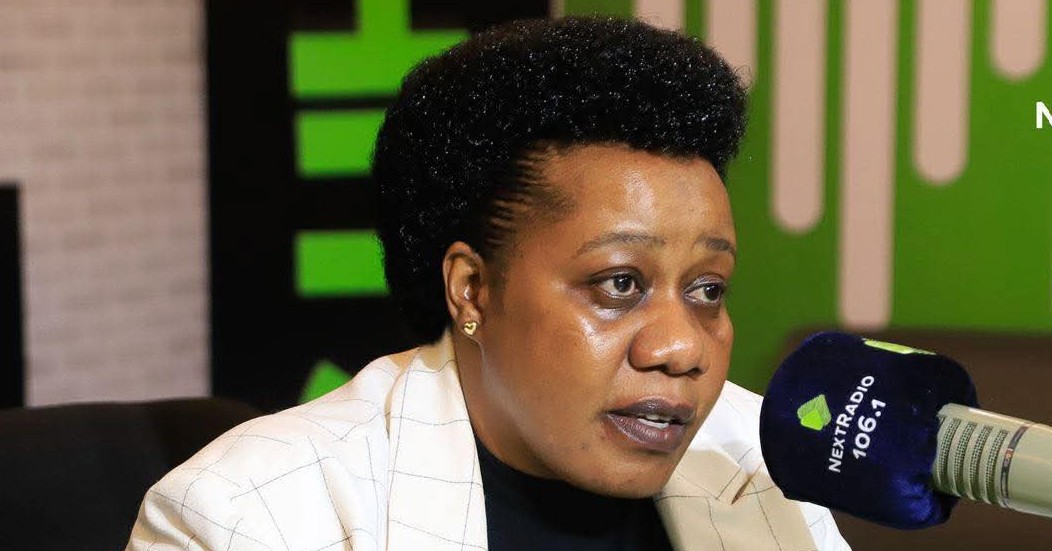
Marie Louise Baricako, a women’s rights activist from Burundi, in Geneva for the Human Rights Council (Geneva Solutions/Michelle Langrand)
Michelle Langrand in Geneva Solutions of 8 October 2025, talks with Burundian women’s rights defender Marie Louise Baricako – who was In Geneva to attend the Human Rights Council. She warns that her country is sinking deeper into crisis as the region teeters on the brink, urging the international community to push for a national dialogue.
Marie Louise Baricako recalls the Arusha negotiations with a mixture of pride and sorrow. In the late 1990s, she pushed for women to have a seat at the table in the talks aimed at ending Burundi’s inter-ethic civil war – and yet, 25 years on, much of the agreement’s promises remain unfulfilled.
“If women are left out, Burundi will keep losing,” she says. “How can you hope to develop when 52 per cent of your population are left aside?”
Baricako has spent a lifetime trying to empower that 52 per cent. In 1988, she became the first Burundian woman to earn a PhD, studying in Cameroon, and later led the English department at the University of Burundi. Born in Muramvya province, she spent much of her adult life abroad, including in The Gambia, where she joined Femme Africa Solidarité, a feminist network founded in Geneva in 1996 to promote female leadership in peace, security and development……
Fortuné Gaetan Zongo, UN special rapporteur on Burundi since 2021, warns of a “real risk” of regional destabilisation. “If Kinshasa were to fall, Burundi would be deeply affected,” he tells Geneva Solutions. Some 78,000 Congolese refugees fleeing the violence have crossed into Burundi since the beginning of the year, raising questions about how Burundi, already struggling, can cope with their humanitarian needs while the UN aid system is strapped for cash.
Baricako sees how ethnic narratives continue to be exploited by those in power. “This is what our leaders today are nourishing, because in their mind, Tutsi had kept power for so long alone, excluding Hutus. Now, they say ‘we have taken it, we shall not release it, until Jesus comes back’,” she says.
Yet repression is not limited to a group. “When women or human rights defenders dare to speak out on any violation, the next day, either they are in prison or they are killed,” she says…
Despite the bleak prospects, Baricako places hope in ordinary Burundians. “They have had time to believe in these stories of Hutus or Tutsi being the enemy. Now I believe people have realised that it is not about the ethnic group,” she says. “Burundians want a peaceful country, and they are ready to work as hard as they can to rebuild Burundi.”
Baricako stresses that talks would lead to more unfulfilled promises without the participation of those in power. She calls on the African Union and the East African Community to step out of their indifference and pressure Burundi to the table.
Zongo, who has been met with the government’s outright refusal to cooperate with him and other human rights experts, also notes that certain states with good relations with Burundi, like Tanzania, DRC and Cameroon, “can convince Burundi to sit at the table and engage in cooperation.”
For all the setbacks, Baricako remains steadfast. “The support of civil society has been essential in staying strong and not abandoning the fight,” she says. “Peace is our business, whether they want it or not. I will not go to the battlefield with a weapon, but what I have in my heart, I will use it to stand for peace and security of Burundians.”
On 24 September, 2025, the United Nations (UN) Assistant Secretary-General for Human Rights (ASG), presented the annual report of the UN Secretary-General (UNSG) on intimidation and reprisals against those cooperating with the UN. The report highlights allegations of acts of intimidation and reprisals committed from May 2024 to April 2025, as well as updates on cases from previous reports.
Reprisals are acts of intimidation, harassment or retaliation against individuals or groups for cooperating with the UN. The annual report includes both newly documented cases from the reporting period and follow-up information on situations previously highlighted, such as changes in detention conditions, judicial or administrative measures, or recurring patterns of intimidation. see also: https://www.linkedin.com/pulse/20140603192912-22083774–crime-should-not-pay-in-the-area-of-international-human-rights
The UNSG report warns that “more than half of the States reviewed continue to enforce or adopt laws on civil society, counter-terrorism and national security that have the effect of deterring or obstructing cooperation with the United Nations”. In some cases, new or amended legislation has further tightened restrictions on NGOs, complicating their registration and operations, and creating additional obstacles to meaningful civil society engagement with the UN. This trend is particularly pronounced in the Middle East and North Africa (MENA), where more than 6 out of 10 cases of reprisals are linked to counter-terrorism or security measures.
On 9 September 2025 UN experts called on authorities in Mali to disclose the fate and whereabouts of journalist and activist El Bachir Thiam, who disappeared four months ago.
“Mali must immediately and unconditionally release El Bachir Thiam and other victims of enforced disappearance, and cease the crackdown on civil society actors, human rights defenders, and political opponents or those perceived as such,” the experts said.
El Bachir Thiam is a journalist for the MaliActu website and a member of several civil society organisations and political movements, including the political party Yelema – Le Changement, led by former Prime Minister Moussa Mara, the Collectif Sirako, and a youth movement calling for a return to constitutional order, for which he serves as spokesperson and communications officer.
Thiam was allegedly kidnapped on 8 May 2025, in front of several witnesses in Kati town, by a group of at least five hooded and unidentified men suspected of being Malian intelligence agents – more specifically from the the Agence Nationale de la Sécurité d’Etat (ANSE) – or elements of the Bamako gendarmerie du Camp I, who were traveling in a gray TOYOTA V8 4×4 vehicle with tinted windows and no license plate. His relatives and colleagues reportedly searched for him in vain in police stations and gendarmeries of Bamako and Kati. Since then, Thiam’s fate and whereabouts have remained unknown.
“As time goes by, Thiam’s condition risks deteriorating further and will take a profound toll on his physical and psychological health,” the experts said.
On 17 July 2025, Thiam Mariam Dagnon, wife of El Bachir Thiam, filed a complaint for kidnapping and disappearance with the Public Prosecutor of the Kati Court of First Instance. Thiam’s alleged kidnapping and enforced disappearance took place in the context of peaceful protest movements initiated in early May 2025 by several political movements and parties, as well as civil society actors and organisations, following the adoption of draconian laws further restricting civic space by Malian transitional authorities in April 2025.
The experts stressed that Malian authorities are allegedly making increased use of enforced disappearance as a weapon to instill fear and silence civil society actors, human rights defenders, political opponents or those perceived as such.
“These actions have a pattern. The frequency of the practice, its organised nature and the methods used indicate a systematic character,” they said.
“Thiam’s case reflects the persistent and escalating pattern of human rights violations against members of opposition political parties, civil society organisations, journalists and human rights defenders in Mali,” the experts said, recalling that several mandate holders had expressed similar concerns in 2021, 2024 as well as in February, April and August 2025.
They noted that the situation has continued to further deteriorate, as illustrated by the signature or adoption of several draconian laws, including a presidential decree on 13 May which dissolved all political parties and “organisations of a political nature” in Mali.
The experts have written to the Government of Mali and will continue to closely monitor the situation.
On 18 September 2025, ISHR said that analysis of revised 2026 budget proposal for UN80 reform points to disproportionate cuts to the chronically-underfunded human rights pillar. Together with peace and development, human rights constitutes one of the three key areas of action for the UN and thus should be adequately funded.
On 16 September 2025, the UN Secretary-General published its report revising its earlier proposal for the UN’s 2026 budget (known as ‘Revised estimates’ report). The International Service for Human Rights (ISHR) has analysed the revised budget and is deeply concerned about proposed cuts to an already chronically under-resourced human rights pillar. While demands on the human rights system do not cease to grow to address mounting global conflicts and crises, further cuts will significantly reduce effectiveness and efficiency, and its capacity to deliver on human rights protection to individuals and populations on the ground.
‘The UN’s human rights pillar has historically received significantly less funds than development and peace and security, accounting for just 7% of the UN regular budget and less than 1% of UN’s total expenditure. Any cuts to it would result in minimal savings but have significant and disproportionate adverse consequences for the rights of people around the world – Phil Lynch, ISHR Executive Director
In recent years, a liquidity crisis fuelled by the late or non-payments of dues by the US and China had already prompted High Commissioner for Human Rights Volker Türk to suspend the delivery of reports, workshops and other activities mandated by the Human Rights Council (HRC). The HRC has also reduced the length of its sessions, limiting space for States, experts and civil society to address some of the world’s most pressing rights issues and crises.
Additional cuts to the human rights pillar would further undermine the ability of the UN’s human rights bodies to continue to investigate atrocity crimes such as in Gaza, Myanmar and the Democratic Republic of Congo, to support victims and human rights defenders, to assist States in improving their human rights policies, and to develop global human rights standards that protect us all.
UN Secretary-General Antonio Guterres stressed the cuts are ‘carefully calibrated’ and ensure balance between the UN’s three pillars (peace and security, development, and human rights). Yet, the proposed cuts to the budget of the Office of the High Commissioner for Human Rights (OHCHR) of around 15% run much deeper than the 2026 proposed budget on development (targeted for around 12% cut) and peace and security (targeted for a 13% cut, excluding peacekeeping operations).
Like a three-legged stool, if the human rights pillar is cut to the extent proposed then not only will it collapse, but the whole system will topple.
ISHR is campaigning for the UN80 Initiative to be more than a simple accounting overhaul for the UN, centred only on cost-cutting. On July 21, ISHR and 16 civil society organisations signed an open letter to the Secretary-General and High Commissioner Türk with concrete recommendations and proposals to ensure that the UN human rights system is streamlined, strengthened and sustainable, guided by the aim of support human rights defenders, providing justice to victims and ensuring accountability for rights abuses.
The cuts will next be reviewed by a UN budgetary committee traditionally hostile to human rights funding, whose conclusions will serve as a basis for States to negotiate.
For more information, please contact: Raphael Viana David, ISHR, Programme Manager r.vianadavid@ishr.ch
To illustrate how international days can influence actions by NGOs, here an example from Syria:
The International Day of the Victims of Enforced Disappearances (30 August) the Platform of Families of Missing and Enforcedly Disappeared Persons in North and East Syria organized a solidarity stand in Qamishlo.
The event took place today under the slogan, “Our doors are still open, waiting for their return,” in front of the office of the United Nations High Commissioner for Refugees (UNHCR) in Qamishlo, Jazira Canton, with participation from relatives of the missing, activists, and human rights defenders.
Participants carried banners with messages in Kurdish, Arabic, and English, including: “A mother is still waiting at the window,” “Absence is a weight heavier than iron,” “No peace and no future without knowing the fate of the missing,” “Knowing the fate is the beginning of holding perpetrators accountable,” and “Our voices will not be silenced; we will continue demanding our loved ones.”
Abbas Ali Mousa, coordinator of the Platform of Families of Missing Persons in North and East Syria, told ANHA agency that the number of families affiliated with the platform ranges between 600 and 700.
Mousa explained that the event was held in solidarity with victims of enforced disappearances and their families, reaffirming their legitimate right to know the fate of their loved ones and emphasizing the necessity of establishing truth and justice.
Ilham Ahmed, the mother of journalist Farhad Hamo, who has been missing by ISIS mercenaries for 11 years, said: “I know nothing about my son or his fate.”
Ahmed added: “Despite repeatedly appealing to human rights organizations and relevant bodies, we have received no response or clarification.” She called on human rights organizations and groups working with abductees to reveal the fate of her son and all missing persons.
“Today, I want to recognise the many human rights defenders who risk their lives around the world, and the courage and dedication of all my UN Human Rights staff,” said UN Human Rights Chief Volker Türk in his video message for World Humanitarian Day. “The sacrifice of our colleagues strengthens our resolve to continue their essential work.”
Twenty-two years ago, a devastating attack struck the United Nations headquarters at the Canal Hotel in Baghdad, Iraq. The bombing claimed the lives of 22 UN staff members and left more than a hundred others injured. It was a day that profoundly shook the humanitarian community and continues to resonate decades later.
In Geneva, Switzerland, colleagues, families, and friends gathered at the UN Human Rights headquarters to pay tribute — not only to those killed in Baghdad but to all humanitarian workers who have lost their lives in service across the globe.
Each year, 19 August is observed as World Humanitarian Day, a moment to recognize those who dedicate themselves to alleviating human suffering, and to remember the victims of humanitarian crises worldwide.
This year’s ceremony included a reading of the names of the 22 UN staff members who perished in the 2003 Baghdad attack, along with colleagues killed in Afghanistan, Haiti, and Rwanda, followed by a minute of silence. Flowers were later placed at the memorial to Sergio Vieira de Mello, the Secretary-General’s Special Representative for Iraq at the time, who also died in the bombing.
Nada Al-Nashif, the UN Deputy High Commissioner for Human Rights and a survivor of the Canal Hotel bombing, reflected on her experience when she was UNDP Country Director in Iraq during the commemoration in Geneva.
“We were caught up in a feverish excitement at the thought of what could be achieved, the endless possibilities of support, advice, assistance,” she said. “Even as we took daily risks and coped with the unrelenting pressure of delivering, we were sustained by a certain innocence — the belief that the big blue UN flag was our protection, its folds sufficiently strong to make us untouchable.”…
“Over two decades later, it is a humbling story of recovery that I am proud to tell; a journey of individual and collective resilience, a re-dedication to our cause, the cause of global justice and dignity, guided by an extraordinary commitment to service and the deep awareness that as humans, we are one.”
The event also highlighted the grave risks humanitarian workers face today, including targeted attacks that have led to deaths, injuries, abductions, and detentions. With 2024 marking the deadliest year on record for humanitarian personnel, concerns are growing that 2025 could prove even worse.
From Afghanistan to Sudan, from Gaza to Venezuela, humanitarian and human rights workers continue their missions under severe risks and limited access. With nearly 60 armed conflicts ongoing around the globe, the scale and complexity of crises are growing, and so are their human rights implications.
At the ceremony through prerecorded videos, staff from Haiti and Sudan remarked on the importance of humanitarian work.
Abdelgadir Mohammed, a Human Rights Analyst with UN Human Rights in Sudan, highlighted that the escalation of conflict in March and April 2025 has triggered a sharp rise in human rights violations, including ethnically targeted attacks and widespread sexual and gender-based violence, particularly in Darfur.
“I believe that human rights save lives,” he said. “I believe that human rights monitoring and reporting plays a critical role in protecting affected populations.”
Marie Sancia Dossier, a Protection Officer for UN Human Rights in Haiti, noted that as of 2025, nearly 85 percent of the capital’s metropolitan area is under the control of armed gangs, whose influence continues to expand across the country.
“Our motivation is an act of rebuilding and strengthening social cohesion, the rule of law and respect for human rights,” she said. “We are not only implementers. Together with institutions and civil society, we are co-builders of resilience, justice and social transformation. Our aim is to see a country where rights are respected, where institutions serve citizens, and where every person, regardless of their situation, can live in safety and dignity.”
At the 59th Human Rights Council session, civil society organisations share reflections on key outcomes and highlight gaps in addressing crucial issues and situations. Full written version below.
We join others who have expressed grave concern about the UN’s financial situation throughout the session. We deplore that we are in this position primarily due to the failure of some States to pay their assessed contributions in full and on time. We regret that this crisis is currently affecting the Council’s ability to deliver its mandate. Today, UN Member States are sending a clear message that human rights and their implementation are optional and not inalienable. We call on all States to pay their dues to the UN in full and without delay, both now and in future years, and strengthen the human rights pillar of the UN by substantially increasing its regular budget. [see: https://humanrightsdefenders.blog/tag/united-nations/]
We welcome the Council’s decision to renew, once more, the Mandateof theIndependent Expert on protection against violence and discrimination based on sexual orientation and gender identity, following a call from more than 1,259 organisations from 157 countries and territories. While the mandate was supported by the overwhelming majority of Council members, we regret that a mandate focusing on core human rights issues such as freedom from violence and discrimination was once again put for a vote.
We welcome the adoption of the resolution on civil society space. The resolution acknowledges important civil society initiatives such as Declaration +25 and addresses key and emerging trends such as strategic lawsuits against public participation (SLAPPs), the phenomenon of transnational repression, and foreign funding legislation, as well as other restrictive legislation including counter-terrorism legislation. We regret, however, that language on transnational repression has been weakened throughout the negotiations and does not take a step forward in terms of defining the phenomenon and its patterns. ..
We welcome the adoption of the resolution on human rights and climate change in relation to climate finance. As acknowledged by the resolution, climate finance is a tool for addressing climate change and it is also important for the enjoyment of human rights when finance prioritises equity, climate justice, social justice, inclusion and just transition processes. … We also regret that, notwithstanding the support expressed by numerous delegations, this resolution is blatantly silent in recognising the positive, important, legitimate and vital role that environmental human rights defenders (EHRDs) play in the promotion and protection of human rights and the environment, particularly in the context of climate change. As recognised by the HRC resolution 40/11, EHRDs are one of the most exposed and at risk around the world. The Inter-American Court on Human Rights has recently ruled in its Advisory Opinion on “Climate Emergency and Human Rights” that EHRDs play a fundamental role due to the urgency, gravity and complexity to address the climate emergency. We will not have climate justice without consulting, listening and including EHRDs in climate actions and initiatives, including this annual resolution.
We express our support for a new strong resolution on the safety of journalists, adopted by consensus and co-sponsored by over 70 countries from all world regions, signalling a renewed international commitment to prevent, protect and remedy all human rights violations against journalists. The resolution becomes the first across the UN to recommend a range of concrete, specific measures to
It is concerning that the Council could not find consensus on the resolution on access to medicines, vaccines and other health products. States should acknowledge that intellectual property rights can be a barrier for access to health products, especially in public health emergencies and should act with a view to finding human-rights compliant solutions. States should further ensure that the benefits of scientific progress is available, accessible, acceptable and of good quality to all people, without discrimination.
We welcome the resolution on new and emerging digital technologies and human rights. The resolution reaffirms the need for human rights due diligence and impact assessments throughout the life cycle of new and emerging digital technologies, and crucially calls upon States to refrain from or cease the use of artificial intelligence applications that are impossible to operate in compliance with international human rights law. The resolution importantly mandates OHCHR to expand its work on UN system-wide promotion, coordination, and coherence on matters related to human rights in new and emerging digital technologies.
We welcome the rejection by the Council of an unprecedented, harmful draft resolution (L.1/Rev.1) presented in bad faith by Eritrea to discontinue the mandate of the Special Rapporteur. The voting result (25 against, 4 in favour) is clear and will deter similar initiatives to terminate mandates. The Pandora’s Box remains closed for now. We welcome the adoption of resolution L.7, which extends the mandate of the Special Rapporteur and enables continued scrutiny of Eritrea‘s dire human rights situation.
We welcome the adoption by consensus of the resolution on the situation of human rights of Rohingya Muslims and other minorities in Myanmar—a strong signal of the Council’s continued prioritization of their plight. As violence between the Myanmar military and Arakan Army escalates, Rohingya face renewed existential threats. We recognize the efforts made to align the resolution closer to the evolving situation on the ground, including its recognition of the role of Arakan Army along with the Myanmar military in perpetuating violence and targeting Rohingya. We also welcome the resolution’s acknowledgment of the worsening humanitarian crisis due to dwindling aid that is driving more Rohingya to risk dangerous journeys by sea. The call for protection of Rohingya across borders and respect for non-refoulement is vital. We support the resolution’s emphasis on accountability and reparations as prerequisites for safe, voluntary, and dignified return of Rohingya refugees. However, we regret its failure to call for an end to arms and jet fuel sale and transfers that continue to fuel ongoing violence.
We emphasize the vital role of investigative mechanisms and, in the context of the UN’s liquidity crisis, we urge all those involved, including the Secretary-General and the High Commissioner, to allocate sufficient resources for these mechanisms to operate. All UN Member States must pay their dues in full and on time. As the conflict in Sudan, now in its third year, shows no sign of abating, resulting in the world’s largest displacement crisis and egregious atrocities against civilians, the work of the Fact-Finding Mission (FFM) should continue. At HRC60, extending its mandate will be a priority.
We continue to deplore this Council’s exceptionalism towards serious human rights violations in China, including crimes against humanity. In his global update to this Council session, High Commissioner Türk indicated he remains ‘concerned about lack of progress on much-needed legal reform to ensure compliance with international human rights law’ and ‘regret[s] that there has not yet been a resolution to the individual cases [the OHCHR has] raised]’. It is imperative that the Council take action commensurate with the gravity of UN findings, by establishing a monitoring and reporting mechanism on China as repeatedly urged by over 40 UN experts since 2020. We urge China to genuinely engage with the UN human rights system to enact meaningful reform, and ensure all individuals and peoples enjoy their human rights, on the basis of recommendations from the OHCHR Xinjiang report, UN Treaty Bodies, and UN Special Procedures.
This Council’s continued silence on the human rights crisis in Egypt remains of major concern. The human rights situation in Egypt is worse than at any point in its modern history and continues to deteriorate. During its UPR process, Egypt rejected or dismissed as “already implemented” recommendations related to serious human rights violations 134 times. In particular, Egypt either rejected or dismissed recommendations to release political prisoners and end arbitrary arrests 12 times, to stop attacks against independent civil society and journalists 19 times, and to end torture and ill-treatment 6 times. The goverment also refused to ensure accountability for those who have committed torture and other human rights violations 7 times, and rejected or dismissed recommendations to halt violance and discrimination against women, minorities and members of the LGBT+ community 25 times, including repeatedly rejecting calls to criminalize marital rape, as well as forced virginity and anal exams. In this context, action by the HRC to address these violations is as important as ever.
Watch the video of the statement below:
Signatories:
African Centre for Democracy and Human Rights Studies (ACDHRS)
Asian Forum for Human Rights and Development (FORUM-ASIA)
“Despite it all, I hold onto a small hope—that the future might bring justice, that our voices will eventually be heard, and that one day I can celebrate my birthday again, in peace, with the people I love, free from fear and loss.” – Awdah Hathaleen, April 2025 Photo by: Emily Glick
An Israeli settler shot dead a Palestinian teacher who helped film Oscar-winning documentary No Other Land, according to the Palestinian education ministry and an Israeli-American activist who was at the scene of the shooting.
No Other Land co-director Yuval Abraham said on X that a settler shot Odeh (also Awdah) Hathaleen in the lungs in Umm Al-Khair village in the occupied West Bank. Residents allege the shooter was Yinon Levy, who is sanctioned by the UK.
Attorney Avichai Hajbi said he was representing a resident “who felt his life was in danger, was forced to fire his weapon into the air” after residents were “attacked by an Arab mob, along with foreign activists, with stones and violence”. Mattan Berner-Kadish, an Israeli-American activist at the scene, told the BBC that at about 17:20 local time (15:20 BST) on Monday, a bulldozer from a nearby Israeli settlement was driven through private Palestinian land, crushing a sewage pipe, multiple olive trees and two fences.
Berner-Kadish and other activists, including Hathaleen’s cousin Ahmad, ran to block the bulldozer. The activist said the driver hit Ahmad in the neck and shoulder with a drill that extended from the bulldozer, with his footage capturing Ahmad falling to the ground. Berner-Kadish did not believe Levy was driving.
While attending to Ahmad’s injuries, Berner-Kadish heard a pop. Running back to the village to get water, he saw Hathaleen lying bleeding from a gunshot wound and Levy, the only settler he saw, holding a gun.
In a video believed to be filmed by a relative of Hathaleen and posted on social media, a man identified as Levy is seen holding a pistol with a bulldozer behind him, as men yell at him. Levy pushes at one man, who pushes back. Levy then raises his pistol and shoots ahead of him, then again into the air.
The clip cuts off when the person filming turns around to run away as women are heard screaming. The footage does not show what or who the shots hit, if anything, and whether anyone else was shooting. There are no other settlers visible. Israeli police said it was investigating the incident in the area of Carmel, an Israeli settlement near Umm Al-Khair.
“As a result of the incident, a Palestinian man was pronounced deceased. His exact involvement is under investigation,” police told the BBC. Police said on Tuesday morning they had detained an Israeli citizen for questioning. Israeli media later reported Levy was released on house arrest.
The Israel Defense Forces (IDF) also detained five Palestinians on suspicion of involvement in the incident, along with two foreign tourists who were present. Berner-Kadish said on Tuesday evening they were still detained. The activist, who began visiting the village in 2021, said Hathaleen was “one of my best friends in the world” and the two were days away from constructing a football field in the village. He added that Hathaleen was a “warm and loving” father of three young children.
The Palestinian education ministry said Hathaleen was a teacher at a local secondary school. US congresswoman Lateefah Simon, a Democrat from California, said she was “heartbroken” over the killing of Hathaleen. He and his cousin, “both holding valid visas”, were detained and deported from San Francisco airport last month while travelling for a multicultural faith dialogue, she said.
Abraham said Hathaleen had helped film No Other Land, the 2025 Oscar winner for best documentary feature that follows the legal fight between the Israeli government and Palestinians over Masafer Yatta, a West Bank community of about 20 villages.
..Levy, a leader of an outpost farm, was sanctioned by the UK in 2024, along with others, because he “used physical aggression, threatened families at gunpoint, and destroyed property as part of a targeted and calculated effort to displace Palestinian communities”.
He was also sanctioned by the US under the Biden administration, along with others, last year, but President Donald Trump lifted those sanctions.
Gilad Kariv, a member of Israel’s Knesset from the Democrats party, said on X in response to the video that “in the territories, armed Jewish militias operate unchecked”.
Settler violence, which has also been on the rise for years, has surged since the outbreak of the war in Gaza. The UN documented at least 27 attacks by settlers against Palestinians that resulted in property damage, casualties or both, between 15 and 21 July, in the West Bank.
“Knowing our rights empowers us to act. Change is not as far away as it often seems. Every one of us can drive change from where we are,” said Avril Murillo, a young digital feminist activist from Bolivia.
“No one understands the urgency of change like young people do, especially those who’ve grown up watching their futures shrink under injustice,” added Yara Al-Zinati, a youth advocate from Gaza. “That’s why youth must stand up for their rights, to lead and shape a future where communities can thrive.”
For Kenneth Mulinde, from Uganda, young people have a responsibility to advocate for accountability and human dignity for all.
And for Constance Luk, a mental health advocate from Malaysia, connecting youth has the power to build a world free of discrimination and where communities support and care for each other.
Murillo, Al-Zinati, Mulinde and Luk were among a group of 45 young human rights advocates from around the world who participated in a Youth Rights Academy in Geneva on 7-11 July.
The Youth Rights Academy is the result of a partnership between UN Human Rights and and Qatar’s global foundation, Education Above All (EAA), aimed at empowering and mobilizing young people, particularly those living in situations of conflict and insecurity, to stand up for their human rights.
The partnership, implemented since 2022, has previously resulted in the development of the Youth Advocacy Toolkit, which was launched in September 2023 as “YES: Youth Empowerment System”, and laid the foundation for the Youth Rights Academy.
Since its beginning, the project has been guided by a Youth Advisory Board (YAB), a group of young human rights advocates from diverse countries and regions who offer feedback on the project’s overall direction and focus. Members of the second cohort of the YAB attended the Youth Rights Academy as participants, and also helped to design and facilitate some of its sessions.
The Academy brought together experts, including UN bodies and mandate-holders, and civil society organizations to equip young rights advocates with the knowledge and tools to defend and promote human rights in their communities.
The program included workshops on international human rights law and international humanitarian law, the right to education, the climate crisis, political participation, social media advocacy, and the protection of human rights defenders, among other topics.