Thor Halvorssen, President of the Human Rights Foundation, writes in the foreword that ‘since our launch 15 years ago, the Human Rights Foundation has created a global network of support for hundreds of the bravest and most influential dissidents in the world. These individuals dedicate their lives, often at great personal risk, to challenging authoritarian governments that violate the most basic rights of 4.18 billion people in 94 countries across the globe. In order to better serve these individuals and turn the tide toward a freer and more open world, we are challenging ourselves to significantly grow our reach and impact in 2020. .. the Human Rights Foundation exists to challenge tyranny and promote freedom in closed and closing societies. So how do we accomplish that?:
We engage in political prisoner legal advocacy
We educate a global audience through media and events that reach millions of people every month
We conduct research and analyses that change government policy across the world;
We produce high-impact reports and publications focusing on human rights and authoritarianism; and
We directly support individual activists and civil society organizations on the frontlines of democratic change
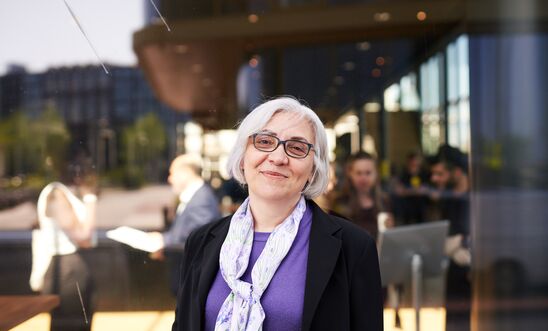
On 10 July 2020 the Martin Ennals Foundation published an interview with new Board member Barbara Lochbihler, former Secretary General of Amnesty International Germany and Member of the European Parliament (2009-2019):
What motivated you to join the Martin Ennals Foundation?
During the past thirty years, in my role as Secretary General of Amnesty International Germany and before with the Women’s International League for Peace and Freedom in Geneva, and then later on as Member of the European Parliament, with a focus on human rights, the work and expertise of human rights defenders were and became central to me. The increasing challenges and threats they face demanding better protection of the rights of their fellow human beings is still very worrisome and needs all our attention and solidarity.
Why did you choose to join the UN Committee against Enforced Disappearance?
After ending my mandate in the European Parliament in Brussels, I was looking for a way to continue my human rights engagement. The United Nations human rights work in Geneva is at the centre of developing international protection mechanisms and norms. Since a year now, I’m an independent expert in the UN Committee against Enforced Disappearance. It monitors the implementation of the International Convention for the Protection of All Persons from Enforced Disappearance and takes up individual cases. I’m enjoying the great teamwork with colleagues in an international context.
…
2020 has been so far a year of global upheaval. What is your advice to human rights defenders across the world?
The work of human rights defenders is essential to improve the situation on the ground, by factual reporting of cases, by analysing the root causes of human rights violations, by demanding political change and proposing better legal protection mechanisms. In 2019, Front Line Defenders registered 304 cases of human rights defenders who were killed. Increasingly human rights defenders are under threat, they experience violence and oppression. It is urgent to continue our international support and solidarity with human rights defenders, in order to counter and defend the space for civil society actors.
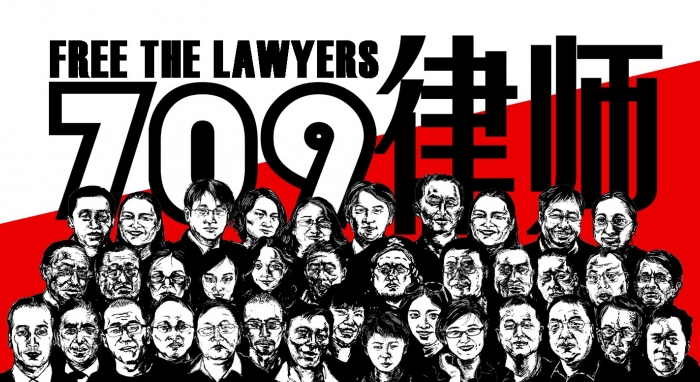
On 9 july 2020 the International Service of Human Rights came out with a good overview of what has happened to the Chinese lawyers since the crackdown five year ago [see: https://humanrightsdefenders.blog/2015/07/29/the-remarkable-crackdown-on-lawyers-in-china-in-july-2015/]. Human rights lawyers are a cornerstone of China’s human rights movement: they represent victims of abuses, promote compliance with international law, and strive for human rights change inside the system.
In the weeks following 9 July 2015, over 300 Chinese weiquan (‘rights defence’) lawyers and legal activists were harassed, detained and disappeared, in a nationwide police sweep that came to be known as the ‘709 Crackdown’. Five years later, these lawyers and their families still face a range of restrictions and rights violations aimed at silencing their efforts for a more just and rights-compliant society.
Disbarment, secret detention, disappearances, harassment of relatives, stigmatisation: the ‘systematic crackdown on lawyers’ denounced by UN experts has changed in form but not in its scale or scope.
Despite the risks, they strive to uphold the fundamental rights of all Chinese citizens, guaranteed under China’s Constitution and international treaties. They represent the most vulnerable and unjustly accused: those who have been evicted from their land or are victims of police abuse; minorities criminalised for their religious belief or ethnicity; human rights defenders and those expressing opinions different from the official Party line.
‘Without independent lawyers, there can be no rule of law,’ says Sarah M Brooks, ISHR Asia Advocate.
‘And when the rule of law is weaponised – as we saw last week with the imposition of the National Security Law in Hong Kong – lawyers are on the front lines of defending rights and freedoms. The least we can do – as individuals and as a global community – is to stand with them.’
In a defiant act of reclaiming, 9 July is now recognised by the human rights movement as ‘China Human Rights Lawyers Day’. To highlight this important day, ISHR has produced a bilingual information flyer on the patterns of repression against Chinese human rights lawyers, and action by the international community. The information flyer is available in English and Chinese. 请点击此处下载中文版。 For more information, please contact Raphael Viana David at r.vianadavid@ishr.ch or on Twitter at @vdraphael.
In an interesting article published on 10 july 2020, Bruno Stagno Ugarte – Deputy Executive Director for Advocacy of Human Rights Warch – sees encouraging signs of a revival of the leading role of the Nordic countries when it comes to international human rights policy.
…There are encouraging signs these countries might be ready to re-engage in denouncing grave abuses and lead international efforts for country-specific scrutiny and accountability.
..If Iceland with a population of 365,000, found the bandwidth to lead on two issues simultaneously, its larger Nordic neighbors can surely match both its courage and performance.
There are reasons to be encouraged on that front. In June, Finland supported the creation of a Libya investigation by the Human Rights Council to document violations committed by all parties and preserve evidence. Denmark, currently a member of the Council, is considering addressing ongoing rights violations by Saudi Arabia. And now that Norway has been elected to a non-permanent seat on the United Nations Security Council for the 2021-22 term, we hope it will become a principled voice for human rights and lead on country-specific situations.
In the absence of leadership by larger states, it is incumbent on smaller states, individually and collectively, to ensure that multilateral tools remain relevant to address dire human rights situations. The Nordic countries have done so in the past; it is time for them to do so again.
On 9 june 2020 Agnes Callamard, the UN special rapporteur on extrajudicial, summary or arbitrary executions, urged member states to pressure Saudi Arabia to free women activists before a G20 nations summit which Riyadh will be hosting in November. At least a dozen prominent women’s rights activists were arrested in Saudi Arabia in 2018 as it lifted a ban on women driving cars, a step that many of the detainees had long campaigned for. The women were rounded up as part of a broader crackdown on dissent that extended to clerics and intellectuals.
Several of the arrested women have alleged torture and sexual assault in detention. Saudi officials deny this and said the detainees were suspected of having harmed Saudi interests and offered support to hostile elements abroad.
Some of the activists are now on trial, but few charges have been made public. Charges against at least some of the activists relate to contacts with foreign journalists, diplomats and human rights groups. Their prosecution has drawn global criticism, particularly following the 2018 murder of journalist Jamal Khashoggi by Saudi agents inside the kingdom’s Istanbul consulate. (as Rapporteur Agnes Callamard also dealt with Khashoggi’s killing: https://humanrightsdefenders.blog/2019/12/23/the-unsatisfactory-end-to-the-khashoggi-investigation/)
Earlier Amnesty International had called on Saudi Arabian authorities to immediately release women human rights activists, including those who are “being punished for daring to drive.“…. Amnesty UK has launched a “Beep for freedom” campaign in support of the persecuted women’s rights defenders. The campaign involves supporters sharing photos of themselves behind the wheel of a car or sharing the campaign’s “Beep For Freedom” car horn symbol, with an appeal to the Saudi authorities to “immediately and unconditionally” release the activists and drop all charges against them.
On 7 July 2020 Front Line Defenders made public the toolkit onwoman HRDs, a companion to the EU Guidelines of Human Rights Defenders (2004) which provide practical actions for EU staff in Brussels and in human rights defenders’ (HRDs) home countries to support and protect HRDs.
While useful, the Guidelines do not contain recommendations or actions that consider the varied experiences of women human rights defenders (WHRDs) with regard to gender, sexuality, race, class, family life, etc. This EU Toolkit on WHRDs provides practical steps for the EU to better meet the needs of WHRDs, from a gendered, intersectional perspective.
As outlined in the UN Resolution on Women Human Rights Defenders, WHRDs experience violence in differentiated ways because of the work they do and who they are, as women. The UN Special Rapporteur on HRDs reports that “women defenders often face additional and different risks and obstacles that are gendered, intersectional and shaped by entrenched gender stereotypes and deeply held ideas and norms about who women are and how women should be.” In addition, there are many economic, social, cultural and geographical factors that affect how WHRDs experience violations. These factors include class, religion, age, language, sexual orientation, location, race and ethnicity. The UN calls all actors to develop specific gendered protection measures, and the inclusion of WHRDs in their design and implementation. The need for the toolkit has arisen because many protection measures are difficult to access for WHRDs as they face not only societal barriers to their work, but also in accessing the international community. The toolkit will help bridge that divide.
Following consultations with international WHRD networks, the EU Office of Front Line Defenders drafted a Toolkit for diplomats on how to address the specific protection needs of women human rights defenders at risk. It was presented to the EU Council Working Group on Human Rights, bringing together the EU institutions and diplomats from the 28 Member States, in Helsinki in October 2019, and shared again on occasion of the preparation of the Guidance Note for Delegations and Embassies by the EU Council Working Group on Human Rights. There are plans to have it tested in collaboration with WHRDs and diplomats in one or two countries per continent; the goal is to have this Toolkit adopted as an annex to the EU Guidelines on HRDs.
Human Rights Watch is seeking a forward-thinking, innovative and experienced senior security professional who can guide a globally dispersed organization that reports on the most sensitive human rights issues. The Director of Physical Security will lead the organization to optimal and inclusive physical security risk management practices for the complex environments in which it operates.
This position is the organization’s lead on all physical security matters, providing support and leadership across a wide range of areas including crisis and incident response, asset protection, programmatic work, travel safety and event security. In partnership with the Director of Information Security, this role provides unified security risk management leadership across HRW.
The successful candidate will understand the threat landscape facing Human Rights Defenders or similar constituencies and have a proven track record of enabling work in challenging operational contexts. They will continue to lead the organization towards best practices and further embed and promote a proactive security culture; collaborate with both internal and external security groups; and have experience in crisis management, operational security and training.
The role will require international travel, including to areas that might be considered high risk. This position will be based in one of HRW’s main offices and will report to the Chief Operating Officer or their designee.
Please apply by visiting the online job portal at careers.hrw.org. Application Deadline: August 1, 2020
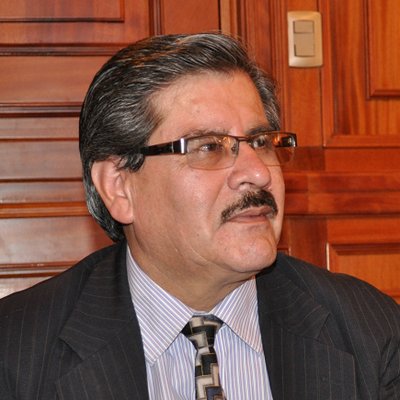
Human rights defender Waldo Albarracín continues to be the subject of death threats and may be the target of surveillance, as a result of his work in Bolivia. Since October 2019, the defender has been targeted on a regular basis with threatening messages via his Facebook account by known and unknown individuals. The messages include threats to incriminate him and to set his house on fire.
About Waldo Albarracín: Waldo Albarracín is a well established and widely recognised human rights defender in Bolivia. He was the President of the Permanent Assembly of Human Rights of Bolivia (APDHB) from 1992 to 2003 and the Bolivian Ombudsman from 2004 to 2010. He is the current Rector of Universidad Mayor de San Andrés in La Paz and President of the National Committee for the Defence of Democracy (CONADE), a civil platform defending political rights.
1 July 2020 Front Line Defenders called for urgent action. Those of you who want to take action in this and other cases of threatened HRDs, should subsctibe to Front Line’s almost daily information.
In May 2020, Waldo Albarracín was mentioned as a target in a threatening video posted and circulated on social media by the illegal armed group Resistencia Juvenil Cochala. At 1:10 in the video, one man of a group of six men, hooded and armed, stated: “Resistencia Juvenil Cochala will fight on behalf of the Bolivia against Waldo Albarracín and Bolivian political leaders.” The armed group currently exceeds 5,000 members online and describes itself as a citizen’s platform, formed to fight against tyranny and in promotion of democracy in Bolivia. According to the group, it has no one leader.
In June 2020, the Fake Antenna Detection Project, an initiative established by the South Lighthouse organisation, released its findings that Waldo Albarracín, along with a number of human rights organizations and academic entities, may have had their mobile phones intercepted. The study identified 24 suspicious antennas, capable of interfering with mobile phones, some of which were located by the Office of the Permanent Assembly of Human Rights in Bolivia and also by the University Mayor de San Andres, both places where Waldo Albarracín works from. It has been suggested by local media that the interceptions were orchestrated by the military and government authorities, however the authorities are yet to comment publicly on the existence of the antennas and how permanent they are. South Lighthouse researches and monitors surveillance activities and abusive technological practices threatening human rights, security, and privacy in Latin America and other parts of the world.
Front Line Defenders has previously expressed concern regarding the risks faced by Waldo Albarracín. Although the human rights defender has faced risks since 2004 as a result of his human rights work, there has been a worrying escalation since the protests in 2019 regarding the results of the presidential election. On 10 November 2019, the defender’s house was set on fire by a crowd of around 500 people, whilst his family were still inside.
..Front Line Defenders believes he is being targeted solely as a result of his peaceful and legitimate human rights activities.
The verdict in the trial of Amnesty Turkey’s chair, the organisation’s former Turkey director and nine other human rights defenders, is expected tomorrow. The key hearing will begin at 8.00am BST (10.00am local time) on Friday 3 July at Istanbul Heavy Penal Court, No 35.
Taner Kılıç, Idil Eser, Özlem Dalkıran, Günal Kurşun, Veli Acu, Nejat Taştan, Nalan Erkem, İlknur Üstün, Şeyhmus Özbekli, Ali Gharavi and Peter Steudtner are all on trial for baseless terrorism charges.
Over the course of 11 earlier hearings spread over nearly three years, ‘terrorism’ allegations against all 11 defendants have been repeatedly and categorically disproven, including – ironically – by the state’s own evidence. The prosecution’s attempt to present legitimate human rights activities as unlawful acts has comprehensively failed, said Amnesty. [see also: https://humanrightsdefenders.blog/2020/02/16/turkey-who-will-defend-the-human-rights-defenders/.]
In August 2018, after more than 14 months in prison, former Amnesty Turkey Chair Taner Kılıç was released on bail. Eight of the others spent almost four months each behind bars before they were released in October 2017.
At the tenth hearing in November 2019, the prosecutor requested acquittal for five of the 11, and convictions for the remaining six.
In the meantime, on 2 June 2020, the Council of Europe’s Commissioner for Human Rights spoke out on the independence of lawyers in Turkey: “I have taken note with concern of a bill recently submitted to the Turkish Parliament containing amendments to the Turkish Law No. 1136, which affect lawyers and their professional associations. The proposed changes would notably allow for a plurality of bar associations in provinces with large numbers of lawyers and modify the election procedures of bar associations and their Union. These changes raise particular concerns when seen against the background of the serious problems I identified in my latest report on Turkey published in February 2020. These problems include a hostile and repressive atmosphere affecting civil society in Turkey, of which professional associations, such as bar associations, are a very important part; the glaring lack of consultation and involvement of civil society in policy-making and legislation; and the very difficult situation, including undue judicial pressure, faced by lawyers in Turkey both as human rights defenders and as a fundamental part of an increasingly hostile judicial system.“
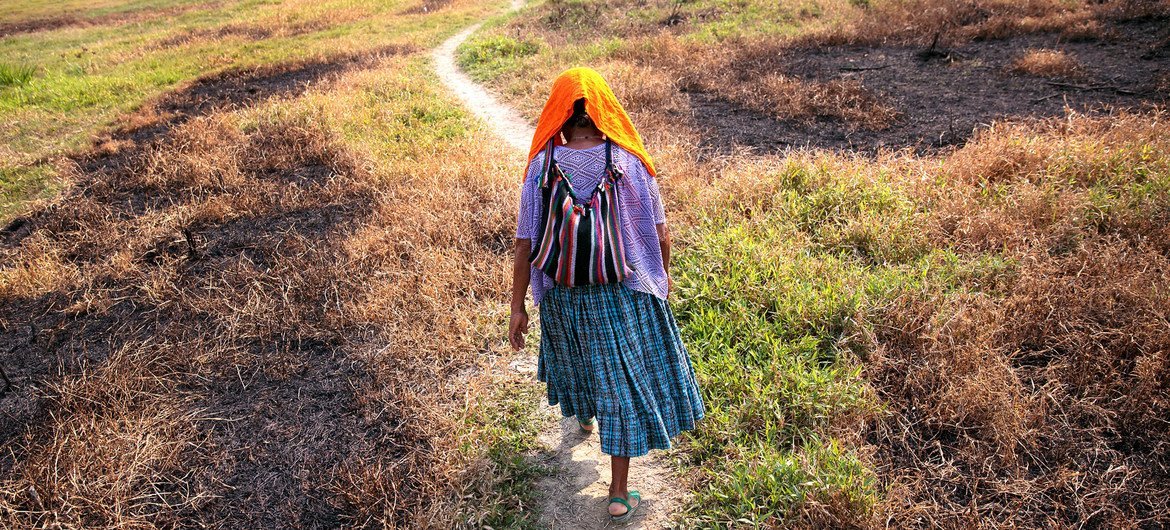
UN Women/Ryan Brown After surviving military enslavement in Guatemala, Maria Ba Caal received help through an emergency grant from the UN Voluntary Fund for Victims of Torture.
26 June 2020 was the International Day in Support of Victims of Torture. Torture is an “egregious abuse of human rights”, UN Secretary-General António Guterres said. Although international law “unequivocally prohibits torture in all instances”, the UN chief pointed out that it nevertheless continues in many countries, “even those where it is criminalized”.
“On this International Day in Support of the Victims of Torture, human rights defenders and survivors of torture around the world take the opportunity to speak out against this abhorrent denial of human dignity and they act to remember and support its victims”, Mr. Guterres said in his message.
Its prohibition forms part of customary international law, which means that it is binding on every member of the international community, regardless of whether a State has ratified international treaties that expressly prohibit the practice or not, according to the UN. Moreover, the systematic or widespread practice of torture constitutes a crime against humanity.
The UN Voluntary Fund for Victims of Torture, channels funding to assist victims of torture and their families by awarding hundreds of grants to civil society organizations worldwide for medical, psychological, legal, social and other assistance. It contributes to the rehabilitation, reparation, empowerment and access to remedies for nearly 50,000 torture survivors each year.
And to underline that torture is still very much a problem today the Himalayan Times of 26 June writes “that despite new criminal laws, impunity for acts of torture, ill-treatment prevails in detention” in Nepal
The International Commission of Jurists (ICJ), Advocacy Forum (AF) and Terai Human Rights Defenders Alliance (THRD Alliance) have voiced concerns about the near-total failure by authorities to investigate and prosecute acts of torture in Nepal. On the occasion of the International Day in Support of Victims of Torture, the three rights organisations urged the Government of Nepal to investigate into all allegations of torture and ill-treatment, and to bring prosecutions where warranted under the criminal provisions of the Penal Code…
The ICJ has made an appeal to the Government of Nepal to establish an independent preventative mechanism for monitoring of detention centres and to become party to the Optional Protocol of the Convention on Torture. Nearly two years after provisions in the new Penal Code came into effect, not a single torture prosecution appears to have been brought. There have also been very few instances in which victims have received an effective remedy and reparation for their ill-treatment, the press release stated.
Nepal has, as per the statement, failed to meet its obligations in this regard under article 2(3) of the International Covenant of Civil and Political Rights and article 14 of the Convention Against Torture….
The AF and THRD Alliance both published reports on Friday that document instances of torture and other ill-treatment against detainees over the past year. Some 20 per cent of the more than 1,000 detainees interviewed reported some form of unlawful ill-treatment during confinement.

 Hans Thoolen on Human Rights Defenders and their awards