AI has started a campagiun to call on the Italian prosecutor to drop the absurd investigation against the crew of the rescue ship “Iuventa 10”. Despite having saved more than 14,000 lives, they are accused of “facilitating the irregular entry” of migrants into Italy, which carries a sentence of up to 20 years. The criminalization of rescue at sea has hampered vital lifesaving activities in the Central Mediterranean, and it is part of a wider crackdown on acts of solidarity across Europe
“Three years after the baseless criminal investigation began, the Iuventa 10 crew remain in limbo with the threat of long jail terms hanging over them,” said Maria Serrano, Amnesty campaigner on migration.
“The criminalization of rescue at sea has hampered vital lifesaving activities in the Central Mediterranean, and it is part of a wider crackdown on acts of solidarity across Europe. Wrapped up with the fate of these ten men and women are the fates of hundreds of others and thousands of refugees and migrants they are helping.” .
“We could no longer stand by and watch people disappearing in the Mediterranean mass grave. We chose to use our privilege to be eyewitnesses, reporters, and a safe harbour for thousands of people on the move,” said one of the Iuventa10
“It was, still is and will remain the task of all of to save human lives wherever possible, to offer protection to those who need it, to treat everyone with dignity and to fight with them for the world in which we want to live.”
The Iuventa case is not an isolated one. Across Europe people standing in solidarity or assisting refugees and migrants have been threatened, smeared, intimidated, harassed and dragged through the courts simply for helping others. Authorities have misused and abused anti-smuggling laws to criminalize human rights defenders and punish solidarity. https://www.amnesty.org/en/documents/eur01/1828/2020/en/
Fewer rescue assets had led to an increase of the death rate in 2018 and 2019. Since 2016 more than 50,000 women, men and children have been intercepted at sea by the Libyan Coast Guard and returned to Libya, where they are exposed to arbitrary detention, torture, extortion and rape.
The Iuventa case was the first judicial proceeding launched against a rescue NGO in Italy, following a smear campaign in which NGOs were stigmatized.
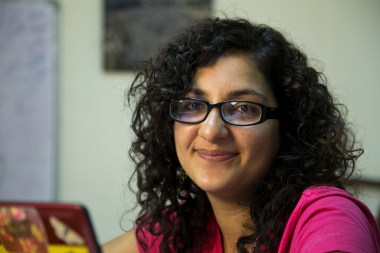
This is an open letter from MONA SEIF asking for your solidarity and support. It is long, but contains crucial details: My name is Mona Seif, I am an Egyptian HRD. Over the past few weeks the Egyptian regime has been escalating violent targeting of my family. If you are following the news from this art of the world then you know how most of the media platforms have been blocked and many journalists detained, harassed, or pushed into exile. So I am writing to you, hoping you will carry my voice and that of everyone facing injustice here.
Mona Seif, Egypt – Final Nominee MEA 2013
My brother Alaa Abdel Fattah has been in jail since last September. He was rearrested only 6 months after he got out of prison after completing a full five-years sentence. He has been in maximum security prison for 10 months in horrific conditions and daily violations of his rights, Egyptian laws and prison regulations. For the past months we have filed numerous official complaints, appealed to all sorts of entities here that have jurisdiction over the prison authorities, but none of them made any move to stop the violations or start a serious investigation. None of them made any attempt to bring us just a small bit of our rights.
On the night of Alaa’s arrival to Tora Maximum security prison 2 he was stripped of his clothes, blind folded, beaten and threatened that “He will never get out of here“, we have submitted an official report to the general prosecutor, we have repeatedly met with the head of his Human Rights adminstration, Alaa went on record in state security prosecution while reviewing his pretrial detention and testified in details on the torture he endured. Until now, not one serious move was taken regarding this horrific incident, and it was an intro to the kind of prison he will be locked in.
Since the crisis of Covid19 started, the Egyptian MOI has used it as an excuse to tighten the isolation of all prisoners, increase intimidation of prisoners and their families, and escalate in their deprivation of their basic rights. Since March 9th all visits have been completely banned in all prisons all over Egypt, however the families were not offered any alternative form of communication. We were not allowed phone calls with the prisoners, and most prisons are not allowing letters, even though both are explicit rights by the law, not to mention worrying times like these. Some prisoners were trying to get the word out about the deterioration of their health, about fear of Corona in prisons, the lack of proper information to help them understand the toll of the crisis and lack of sanitary measures indifferent Egypt, the only response the MOI had was clamping down even harder on those prisoners, punishing those who voiced out their concerns, all this while the arrests of more activists is ongoing and the arrest of doctors who talk publicly about their needs, problems and the reality of managing Covid19 within our health system.
With Alaa in particular, state security seems intent on preventing any sort of communication between us and him, even at times when they are allowing letters from other prisoners. Alaa went on a hunger strike on April12th and they did not even inform us. For a whole month during the covid19 emergency, my brother was on full hunger strike, my mother spent every morning at the prison’s gate and they did not allow us one letter to assure us of his well being. For every letter received we as a family paid a heavy price. We received a letter after Alaa ended his hunger strike on May 18th, and another on June 6th after my mother camped daily by Tora prison. Then the last one we got was on June 25th after we were violently assaulted and robbed right infront of Tora prison on the watch of their guards, and only after my younger sister Sanaa was abducted by plainclothed officers while entering the general prosecutor’s office- with her lawyer- to report the violent assault and officially document her injuries. Sanaa is now detained, and we haven’t been allowed any letters from her as well.
I think I’ve seen alot, I’ve witnessed so many violations committed by the current and previous regimes, but somehow I would have never imagined that a victim of a violent assault would be kidnapped by state security from the gates of the general prosecutor’s office as they are trying to seek his protection and file an official complaint regarding a very public incident like the one we were part of. And it definitely wouldn’t have occured to me that not only the general prosecutor would turn a blind eye on such a grave crime committed at his doorstep, but actually enable them to “legalize” her detention afterwards.
Both Sanaa and Alaa are in prison They, and thousands of prisoners, are at risk facing the combined danger of an epidemic and a brutal senseless regime. Please speak up on their behalf.. write about them, share their stories, add your name to the petition, or you can directly write a letter to Judge Hany Georgy the Head of Human rights administration at the general prosecutor’s office hanyfathy70@yahoo.com
On 23 July 2020 Front Line Defenders launched the first edition of a very interesting new Monthly Digital Magazine:“Cypher – Comics as Eyewitness”.
This project advances the organization’s storytelling and narrative framing work in collaboration with and in support of human rights defenders (HRDs). Working with artists from around the world, including the awardwinning visual storyteller, Beldan Sezen, as creative director, the Magazine will be a monthly publication featuring 3 or 4 stories of HRDs and the challenges they face. Each month, Front Line Defenders will collaborate with comics artists from around the world, pairing them with HRDs to develop stories that portray their work and the challenges, risks and threats they face. The first edition features stories from: Kenya (artist: Nomes Dee) – a profile of Ruth Mumbi’s efforts to defend the rights of evicted families in the Kairobangi neighborhood of Nairobi as the COVID-19 pandemic spread; [see also: https://humanrightsdefenders.blog/2015/01/22/human-rights-defenders-in-york-programme-tell-their-story-ruth-mumbi/] Pakistan (artist: anonymous for security reasons) – the story of the abduction enforced disappearance of Pakistani HRD Idris Khattak, as told from the perspective of his daughter; Lebanon (artist: Pascale Ghazaly) – with COVID-19 hitting, ongoing street protests against political and economic corruption and the collapse of the economy, Ethiopian domestic workers found themselves kicked out and abandoned, as even the embassy refused to help; a collective of domestic workers organized critical support; Brazil (artist: Lyvia Emanuelly ) – transvesti HRD Rosa Luz is a social media and YouTube influencer and rap/hip hop musician; when she used her art to criticize political leaders, she faced intense backlash in the media and from politicians, including death threats, only returning to her public role after a hiatus to ensure her security.
Lisa Schlein reported on 14 July 2020 that UN Investigators are skeptical of reform promises by new President, while HRW sent a letter to the new President Ndayishimiye
The U.N. Commission of Inquiry on Burundi is doubting that promises of reform made by Burundi’s newly-elected president will result in hoped-for improvements in the country’s human rights situation. The commission has submitted its report on prevailing conditions in the country to the U.N. Human Rights Council.
The three-member panel welcomes promises of political reconciliation, judicial reform and protection of the population made by President Ndayishimiye, in his inaugural address. But, the chair of the U.N. commission, Doudou Diene, says the president’s comments were full of ambiguities and contradictions.
For example, he notes the president’s remarks seemed to justify the imposition of restrictions on some public liberties such as freedom of expression, information and assembly under the guise of preserving Burundian culture.
Speaking on a video link from Paris, he said, “Such remarks are concerning, especially given that the new president’s policies will be implemented by a government composed primarily of the old guard of the late President Nkurunziza’s regime — some of whom are under sanctions for their involvement in grave human rights violations.”
FILE – Burundi’s President Pierre Nkurunziza queues at a polling station during elections, under the simmering political violence and the growing threat of the coronavirus, in Ngozi, Burundi, May 20, 2020.
President Pierre Nkurunziza died of cardiac arrest on June 8, after a brief hospitalization, while his wife was in Kenya undergoing medical treatment. A number of news outlets report he died of the coronavirus.
Commission chair Diene says gross, widespread human rights violations continue in Burundi and that it would be premature to make any pronouncements on the possible evolution of the situation under the new government.
He said, “We solemnly urge the new president of the republic to demonstrate his willingness for change by fully cooperating with the international human rights mechanisms. The immediate release of the four journalists of Iwacu, of human rights defenders … would be a significant gesture of this.” {see: https://humanrightsdefenders.blog/2020/02/05/burundi-elections-start-with-convicting-4-journalists/]
Burundi’s ambassador to the United Nations in Geneva, Renovat Gabu, rejects the commission’s report. He accuses the commission of interfering in the domestic affairs of his country and of slandering and insulting public authorities with the blessing of the U.N. council.
Letter to President Ndayishimiye: Protecting Human Rights in Burundi, 13 July, 2020
Re: Protecting Human Rights in Burundi
… We have reported on human rights concerns in Burundi since 1995. We are writing to raise important concerns and share our recommendations on steps your government should take to advance and protect human rights in Burundi. We hope that you will address these issues and make the protection and promotion of human rights a top priority throughout your presidency. We urge you to work to make systemic changes to end the violence and abuse, fueled by widespread impunity, that have plagued the country for far too long, especially since 2015.
While we regret the former administration’s withdrawal of Burundi from the International Criminal Court, which took effect in 2017, we are encouraged by the commitments stated in your inaugural speech to reform the judiciary and ensure that all government or other officials who commit offenses are held accountable. Your assurances that measures will be taken to protect victims and witnesses are critical to delivering this promise, as is your commitment to ensuring that corruption will not be tolerated….
To address these challenges and demonstrate a real commitment to promoting rights and turning the page on decades of violence, abuse, mismanagement, and impunity, we urge you to take the following steps during your first year in office:
Remove from security services posts and other executive branches, officials who have been credibly implicated in serious human rights violations, according to reports by the United Nations Commission of Inquiry on Burundi, the UN Human Rights Council, the African Commission on Human and Peoples’ Rights’ fact-finding mission report, and Burundian and international human rights organizations. Ensure that no one who may be subject to criminal or other investigation into human rights abuses is in a position to influence that investigation.
Instruct the security forces, the local administrators, and the Imbonerakure to stop extortion, the use of forced labor, beatings, arbitrary arrests, threats, harassment, and collection of contributions for state-led projects. Order the Imbonerakure and other officials to dismantle all unauthorized roadblocks.
Ensure a thorough and independent investigation into the crimes and abuses committed by the Imbonerakure. These investigations should lead to fair and transparent prosecutions, and your government should ensure that your party’s youth league is disarmed and not used for any official state security or similar duties.
Fully protect everyone’s rights to freedom of expression, assembly, and association in accordance with international standards. Lift the suspension on the operations of independent media and human rights organizations, and ensure journalists and human rights activists who are in exile can return safely. Members and supporters of political parties, Burundian and international journalists, and Burundian and international human rights defenders should be able to conduct their work freely, criticize government policies, and organize peaceful protests without fear of intimidation, reprisals, harassment, arrests, or the excessive use of force by the security forces.
Cooperate with and support regional and international human rights mechanisms and treaties, and act to ensure that Burundian law adequately reflects international human rights commitments. This should include full cooperation with the UN Human Rights Council’s special procedures, including giving the UN Commission of Inquiry on Burundi unfettered access to the country; the resumption of cooperation with the Office of the High Commissioner for Human Rights; finalization of a memorandum of understanding with the African Union’s human rights observer mission and ensuring the observers get unfettered access to the country and its detention facilities; and allow international NGOs to operate without interference.
Ratify the Rome Statute and align national legislation provisions to cooperate promptly and fully with the International Criminal Court as a court of last resort. Cooperate with the ongoing ICC investigations into alleged crimes against humanity committed in Burundi or by nationals of Burundi outside Burundi until 26 October 2017.
As four Yemeni journalists continue to wonder when or whether the Houthi authorities will execute the death sentences they received in April on spying charges, Reporters Without Borders (RSF) calls for international pressure to make the Houthis understand that they will suffer international opprobrium if they do not overturn the sentences.
Before being abducted by the Houthis in 2015, the four journalists played leading roles in a Sanaa-based network of media outlets and Facebook, Twitter, YouTube, Telegram and WhatsApp pages linked to Al-Islah, the Yemeni branch of the Muslim Brotherhood and ruling party in regions controlled by Yemen’s internationally recognized government.
Abdul Khaleq Amran edited the Al-Islah Online website and ran Yemen Revolution Press, a news agency created from several media outlets in 2011. His staff covered the Yemeni civil war, documented crimes committed by the Houthis and interviewed the Houthis’ opponents.
Akram Al-Walidi supervised the staff of the Alrabie-ye.net news website and the government news agency SABA. He gathered information about developments in the fighting from the Al-Islah side, on the basis of reliable sources and with the help of a network of senior political and administrative officials then based in Ma’rib, which was established as the new capital after the Houthi rebels seized Sanaa.
Hareth Humaid, the head of news at Yemen Revolution Press, covered Houthi human rights violations, including abductions and bombardments of civilians. He produced a daily news bulletin with the latest violations. Its last issue was No. 54.
Tawfiq Al-Mansouri worked for the daily newspaper Al-Masdar until it stopped publishing when the Arab coalition intervened in 2015. He then joined Yemen Revolution Press doing layout and graphic design and helping to give form to the various media outlets linked to the agency.
After their abduction in 2015, the four journalists were secretly moved from one prison to another in Sanaa and were subjected to violent interrogations. Torture and repeated blows left all of them with severe physical and psychological aftereffects, according to the Association of Abductees’ Mothers. Amran has a slipped disc. Humaid has suffered loss of vision and has constant migraines. Walidi has chronic digestive problems.
“Every year the world moves one step closer to the universal abolition of the death penalty, but these four veteran journalists are facing the worst of all sentences just for doing their job,” RSF secretary-general Christophe Deloire said.
“Efforts are urgently needed to end their nightmarish plight and return to humanitarian principles in a country where journalists have already paid a heavy price in the war. The Houthis must overturn this decision or face international opprobrium. We ask all those who may have any influence, direct or indirect, on the Houthis to use it to help bring this madness to an end.”
The four were among a total of ten journalists abducted by the Houthis in Sanaa in 2015 on the absurd grounds that they could potentially provide the Arab coalition with information for use in its air strikes. Accused of “collaborating with the enemy,” they were tried by a Houthi Special Criminal Court that is not recognized by the international community.
In its latest annual round-up, RSF reported that a total of 15 journalists were being held hostage in Yemen, most of them by the Houthis. The others were either being held in provinces controlled by the so-called “legitimate government” (such as Muhammad Ali Al-Moqri) on in areas controlled by separatists (such as Saleh Musawa, who has since been released).
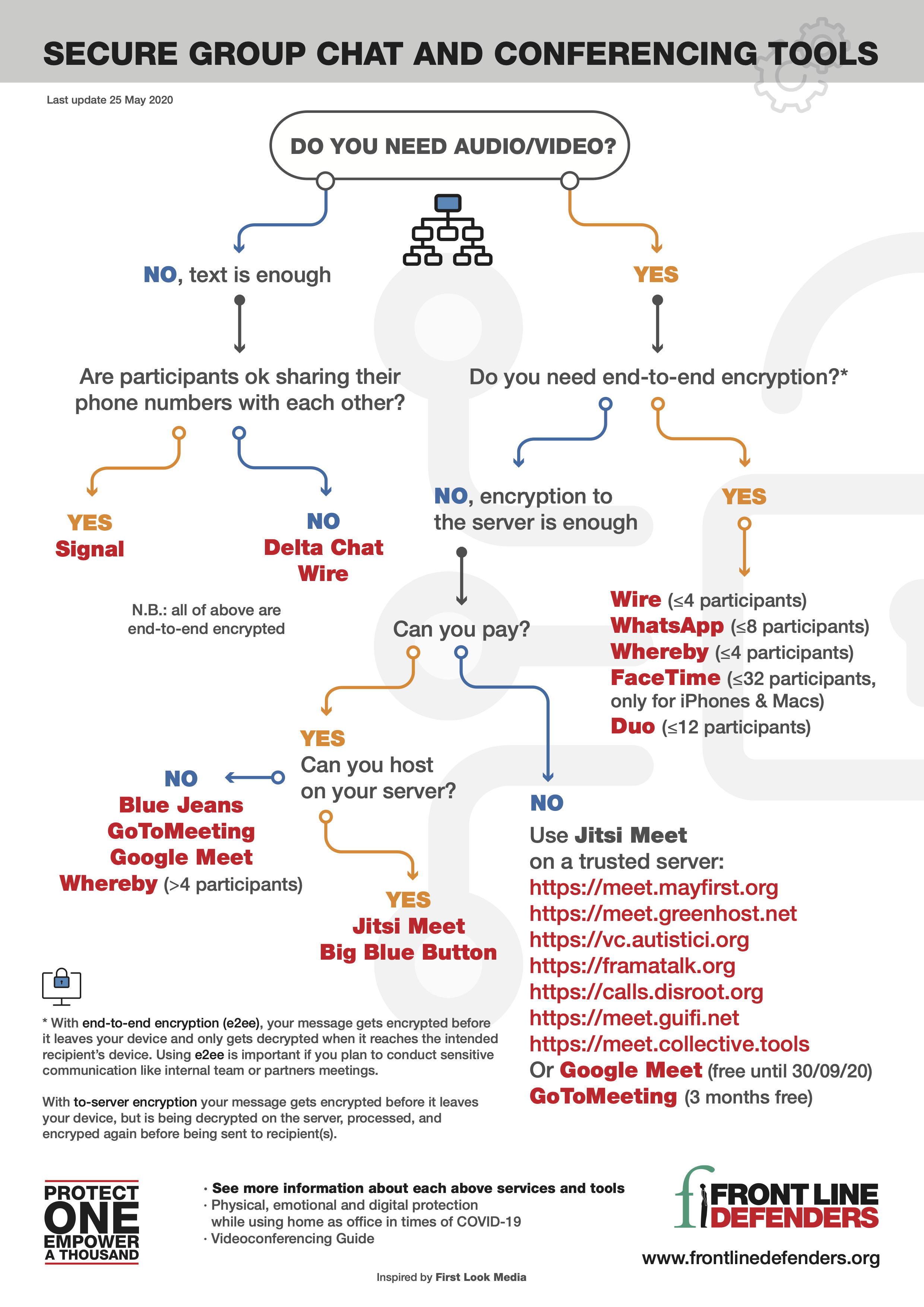
With teams increasingly working remotely during COVID-19, we are all facing questions regarding the security of our communication with one another: Which communication platform or tool is best to use? Which is the most secure for holding sensitive internal meetings? Which will have adequate features for online training sessions or remote courses without compromising the privacy and security of participants?
Front Line Defenders presents this simple overview which may help you choose the right tool for your specific needs.
With end-to-end encryption (e2ee), your message gets encrypted before it leaves your device and only gets decrypted when it reaches the intended recipient’s device. Using e2ee is important if you plan to transmit sensitive communication, such as during internal team or partners meetings.
With encryption to-server, your message gets encrypted before it leaves your device, but is being decrypted on the server, processed, and encrypted again before being sent to recipient(s). Having encryption to-server is OK if you fully trust the server.
Why Zoom or other platforms/tools are not listed here: There are many platforms which can be used for group communication. In this guide we focused on those we think will deliver good user experiences and offer the best privacy and security features. Of course none of the platforms can offer 100% privacy or security as in all communications, there is a margin of risk. We have not included tools such as Zoom, Skype, Telegram etc. in this guide, as we believe that the margin of risk incurred whilst using them is too wide, and therefore Front Line Defenders does not feel comfortable recommending them.
Surveillance and behaviour: Some companies like Facebook, Google, Apple and others regularly collect, analyse and monetize information about users and their online activities. Most, if not all, of us are already profiled by these companies to some extent. If the communication is encrypted to-server owners of the platform may store this communication. Even with end-to-end encryption, communication practices such as location, time, whom you connect with, how often, etc. may still be stored. If you are uncomfortable with this data being collected, stored and shared, we recommended refraining from using services by those companies.
The level of protection of your call depends not only on which platform you choose, but also on the physical security of the space you and others on the call are in and the digital protection of the devices you and others use for the call.
Caution: Use of encryption is illegal in some countries. You should understand and consider the law in your country before deciding on using any of the tools mentioned in this guide.
Criteria for selecting the tools or platforms
Before selecting any communication platform, app or program it is always strongly recommended that you research it first. Below we list some important questions to consider:
Is the platform mature enough? How long has it been running for? Is it still being actively developed? Does it have a large community of active developers? How many active users does it have?
Does the platform provide encryption? Is it end-to-end encrypted or just to-server encrypted?
In which jurisdiction is the owner of the platform and where are servers located? Does this pose a potential challenge for your or your partners?
Does the platform allow for self-hosting?
Is the platform open source? Does it provide source code to anyone to inspect?
Was the platform independently audited? When was the last audit? What do experts say about the platform?
What is the history of the development and ownership of the platform? Have there been any security challenges? How have the owners and developers reacted to those challenges?
How do you connect with others? Do you need to provide phone number, email or nickname? Do you need to install a dedicated app/program? What will this app/program have access to on your device? Is it your address book, location, mic, camera, etc.?
What is stored on the server? What does the platform’s owner have access to?
Does the platform have features needed for the specific task/s you require?
Is the platform affordable? This needs to include potential subscription fees, learning and implementing, and possible IT support needed, hosting costs, etc.
The document then proceeds to give more detailed information related to each tool/service listed in this guide
Video calls, webinar or online training recommendations
Video calls recommendations: In the current situation you will undoubtedly find yourself organizing or participating in many more video calls than before. It may not be obvious to everyone how to do it securely and without exposing yourself and your data to too much risk:
Assume that when you connect to talk your camera and microphone may be turned on by default. Consider covering your camera with a sticker (making sure it doesn’t leave any sticky residue on the camera lens) and only remove it when you use the camera.
You may not want to give away too much information on your house, family pictures, notes on the walls or boards, etc. Be mindful of the background, who and what is also in the frame aside from yourself? Test before the call by, for example, opening meet.jit.si and click on GO button to get to a random empty room with your camera switched on to see what is in the picture. Consider clearing your background of clutter.
Also be mindful who can be heard in the background. Maybe close the door and windows, or alert those sharing your space about your meeting.
It is best to position your face so your eyes are more or less at the upper third of the picture without cutting off your head. Unless you do not want to reveal your face, do not sit with your back to a light or a window. Daylight or a lamp from the front is the best. Stay within the camera frame. You may want to look into the lens from time to time to make “eye contact” with others. If you are using your cellphone, rest it against a steady object (e.g. a pile of books) so that the video picture remains stable.
You may want to mute your microphone to prevent others hearing you typing notes or any background noise as it can be very distracting to others on the call.
If the internet connection is slow you may want to switch off your camera, pause other programs, mute the microphone and ask others to do same. You may also want to try sitting closer to the router, or connecting your computer directly to the router with an ethernet cable. If you share internet connection with others, you may ask them to reduce extensive use of internet for the duration of your call.
It it very tempting to multitask especially during group calls. But you may very soon realise that you are lost in the meeting and others may realize this.
If this is a new situation for you or you are using a new calling tool, you may want to give yourself a few extra minutes to learn and test it prior to the scheduled meeting to get familiar with options like turning on/off the camera and the microphone, etc.
If possible, prepare and test a backup communication plan in case you will have trouble connecting with others. For example, adding them to a Signal group so you can still text chat or troubleshoot problems on the call. Sometimes it helps to have an alternate browser installed on your computer or app on the phone to try connecting with those.
If you would like to organise a webinar or online training, you can use tools outlined above in the group communication. Some of best practices include:
Make sure that you know who is connected. If this is needed check the identities of all people participating by asking them to speak. Do not assume you know who is connected only by reading assigned names.
Agree on ground-rules, like keeping cameras on/off, keeping microphone on/off when one is not speaking, flagging when participants would like to speak, who will be chairing the meeting, who will take notes – where and how will those notes be written and then distributed, is it ok to take screenshots of a video call, is it ok to record the call, etc.
Agree on clear agendas and time schedules. If your webinar is longer than one hour, it is probably best to divide it into clear one-hour sessions separated by some time agreed with participants, so they have time to have a short break. Plan for the possibility that not all participants will return after a break. Have alternative methods to reach out to them to remind them to return, like Signal/Wire/DeltaChat contacts for them.
It is easiest to use a meeting service that participants connect to using a browser without a need to register or install a special program, one that also gives the webinar organiser the ability to mute microphones and close cameras of participants.
Prior to the call, check with all participants whether they have particular needs, such as if they are deaf or hard of hearing, if they are visually impaired or blind, or any other conditions which would affect their participation in the call. With this in mind, ensure that the selected platform will accommodate these needs and to be sure, test the platform beforehand. Simple measures can also improve inclusion and participation in your calls, such as turning on cameras when possible, as it can allow for lip-reading.
Encourage all participants to speak slowly and to avoid jargon where possible, as the working language of the call is most likely not everyone’s mother tongue language. Naturally, there will be moments of silences and pauses, embrace them. They can help to support understanding and can be helpful for participants who are hard of hearing, interpreters and will also aid assistive technology to pick up words correctly.
Ketty Nivyabandi is a Burundian activist and poet who led the first women-only demonstrations against Burundi’s president in 2015. She defied police beatings, tear gas, and a water cannon to make women’s voices heard.
In this podcast THE HUMAN RIGHTS FOUNDATION dives into Burundi’s authoritarian regime and Ketty’s resistance to Burundi’s dictatorship. What role can women play in protesting and organizing? How do you survive police brutality? How can people remain hopeful and support protestors in Burundi?
On Wednesday 9 September 9am-12pm (New York time)Amnesty International and the International Service for Human Rights will hold – as usual – an online pledging event for candidate States in advance of the Human Rights Council elections that will take place this autumn for the membership term 2021-2023,. State representatives and civil society are invited to participate actively in the events and pose questions to candidate States.
The link to attend the event will be shared closer to the date.
Have a question? Follow the event on Twitter and submit questions to candidates via: @ISHRglobal #HRCpledging #HRCelections2020
On 14 July Business-Wire reported that the VPN company TunnelBear has partnered with NGOs to give away 20,000 accounts (these NGOs inlcude Access Now, Frontline Defenders, Internews, and one other undisclosed participant).
This program aims to empower individuals and organizations with the tools they need to browse a safe and open internet environment, regardless of where they live. The VPN provider is encouraging other NGOs or media organizations across the world to reach out if they too are in need of support. “At TunnelBear, we strongly believe in an open and uncensored internet. Whenever we can use our technology to help people towards that end, we will,” said TunnelBear Cofounder Ryan Dochuk.
TunnelBear’s VPN encrypts its user’s internet traffic to enable a private and censor-free browsing experience.
“By undergoing and releasing independent audits of their systems, adopting open source tools, and collaborating with the open source community, TunnelBear has proven itself to be an industry leader in the VPN space and a valuable private sector partner within the internet freedom movement. Internews is happy to support TunnelBear in extending its VPN service to the media organizations, journalists, activists, and human rights defenders around the globe who can benefit from it,” said Jon Camfield, Director of Global Technology Strategy at Internews.
The case argued that the Israeli defence ministry should revoke the group’s export licence in light of numerous allegations that its phone-hacking Pegasus spyware has been used by governments (including Mexico, Saudi Arabia, Morocco and the UAE) to spy on civilians including an Amnesty International employee, human rights activists, lawyers and journalists..
The district court judge Rachel Barkai wrote in a statement that there was not enough evidence to “substantiate the claim that an attempt was made to monitor a human rights activist”. She wrote that in reviewing materials provided by the Ministry of Defence and Ministry of Foreign Affairs, she was persuaded that export licences were granted as part of a “sensitive and rigorous process”, and closely monitored and revoked if conditions were violated, “in particular in cases of human rights violations.”
Amnesty International decried the court’s decision. Danna Ingleton, acting co-director of Amnesty Tech, said in a statement: “Today’s disgraceful ruling is a cruel blow to people put at risk around the world by NSO Group selling its products to notorious human rights abusers. […] The ruling of the court flies in the face of the mountains of evidence of NSO Group’s spyware being used to target human rights defenders from Saudi Arabia to Mexico, including the basis of this case – the targeting of one of our own Amnesty employees.”
NSO said: “Our detractors, who have made baseless accusations to fit their own agendas, have no answer to the security challenges of the 21st century. Now that the court’s decision has shown that our industry is sufficiently regulated, the focus should turn to what answer those who seek to criticise NSO have to the abuse of encryption by nefarious groups.”…



 Hans Thoolen on Human Rights Defenders and their awards