Archive for the 'organisations' Category

A human rights defender’s story: Alicia Wallace from the Bahamas

February 17, 2021

On 15 January 2021 The International Service for Human Rights (ISHR) published a long interview with Alicia Wallace, a human rights defender from the Bahamas. Here it is in full:

“I remember to be hopeful, not because it feels good or because I am waiting for something to happen on its own, but because I believe in my own power and the magic we create when queer people, Black people, women come together to channel our rage, righteous and raw, into sustained action.”

The year is 2050. What does the world look like – in particular for women, Black people, LGBTI people?

We are making strides toward equality and we are centered in all decision-making processes. We are protected and respected. It is a norm for us to be in positions of leadership. Diversity is expected. We are as safe at night as anyone is during the day. We have access to education, healthcare, food, and housing. All of our needs are met. Redistribution of wealth is in progress. Our survival is not dependent on or propping up the capitalist system. We are defining justice for ourselves. We recognise ourselves as the source of our own healing.

How did your work help achieve the vision you just described?

My work provoked conversation. It made information, from academic theory to changemaking methodologies, accessible to everyone. I created spaces where people have been comfortable to question, critique, challenge, learn, share, and create. I developed tools for all of us to be able to think outside of the reality we used to know. We knew we were not bound to it because I put significant emphasis on imagination and future-making. I found a way to fight the injustice we faced and facilitate collaborative visioning, imagining, and creating. We channeled our rage, weaponised hope (inspired by the work of artist Angelika Wallace-Whitfield), and we came together to co-create the futures. I helped to create tools and systems to enable that practice.

Was there a defining moment in your life that motivated you to defend human rights?

I am a queer Black woman. I have student loan debt. I am unwaged. I am a survivor of violence. My life is a collection of moments that make it necessary for me to defend and promote human rights if I am to survive and leave the world better than I met it. Perhaps what prompts me to action is recognition of another important fact—I have privilege. I have had experiences I may never speak of, and I know that my circumstances could be a lot worse. It is important for me to use what I have to help us all get what we ought to have had a long time ago. For me, the defining moment happens over and over again, when I feel rage threatens to control my body, and I remember to be hopeful, not because it feels good or because I am waiting for something to happen on its own, but because I believe in my own power and the magic we create when queer people, Black people, women come together to turn channel our rage, righteous and raw, into sustained action.

Do you face any threats and attacks because of your work? 

I’ve been experiencing rape and death threats for the past six years. Most of it has been online. The most troubling threats come following participation in direct action or agitation from people in positions of influence. In 2018, when I participated in the 71st session of the Committee on the Elimination of Discrimination against Women (CEDAW) in Geneva, a radio personality made dangerous statements about me on the air. The same person incited the first threats of violence against me in 2014, so I knew I needed to take it seriously. I made a report to the CEDAW focal point on reprisals, but the outcome was not favorable. A government representative called me to suggest I report the incident to the police, but did not offer support in doing so and could not cite an offense, according to Bahamian law, that I would be reporting. It was a ridiculous suggestion that gave me no help. The government, of course, reported its “action” to the UN, even claiming that I said I no longer felt unsafe. I told the focal point that this was untrue and that, at the very least, the government should have been instructed to publicly state its support for human rights defenders, enact hate speech and hate crime legislation, and direct the radio personality to cease and desist all reference to me and any other human rights defenders. It would have cost the UN nothing to support me and other human rights defenders by making these recommendations to the government. Instead, I am left to fend for myself in a place where I continue to live and work without protection, legal or otherwise.

On this see what was stated by Andrew Gilmour in December 2019: “The Bahamas responded to the allegations of intimidation and reprisals against woman human rights defender Alicia Wallace after she engaged with the Committee on Elimination of all forms of Discrimination against Women (CEDAW). She and her colleagues were subjected to hate speech by a well-known radio personality, the effect of which was to create an unsafe environment for Ms. Wallace and other women human rights defenders. The Bahamas affirmed its commitment to protect human rights defenders and ensure that they can engage freely with the UN. The delegation told the Council that authorities proactively provided assistance to Ms. Wallace to guarantee her safety.”[from: https://humanrightsdefenders.blog/2019/09/23/andrew-gilmours-2019-report-on-reprisals-it-gets-worse-but-response-remains-mostly-rhetoric/]

What could be done for you to be able to work safely and effectively?

Institutions and people in positions of power need to rebuke violence, harassment, and threats of violence. The State needs to enact legislation against hate crimes and hate speech. It needs to publicly state its support of human rights defenders, make it clear that the relationship between itself and advocates is complementary, not adversarial, and assert that it will protect us. The United Nations and other bodies in control of international mechanisms and reporting processes need to take responsibility for the safety and security of the human rights defenders it depends on to monitor and evaluate State action. These organisations need to raise the bar, calling States to higher standards. They have to make it clear to States and the general public that the safety and security of human rights defenders are a matter of priority before we are detained, disappeared, or murdered.

How has the Covid-19 pandemic affected your work? 

It has, as predicted, increased the volume of work. People, especially vulnerable people, are suffering. The pandemic has created crisis after crisis, from domestic violence and unpaid care work to unemployment and disruption of education. In anticipation of the effects of COVID-19 and State actions in response to it, Feminist Alliance for Rights (FAR)—where I am a steering committee member—produced guidelines for feminist policymaking during this time. This is one of the most critical pieces of work I have contributed to this year. In addition, I have been engaged in rapid response, working on policy recommendations to end gender-based violence, and continuing the regular programming of Equality Bahamas. It has been a busy year, but one of learning and where I have been able to see and strengthen my own agility. Human rights defenders have to be able to anticipate, prepare, respond, pivot, assess, and revise at all times, and especially during the crisis. The work has intensified and been taxing, but I believe that we have learned more this year than we have in years gone by, people are more aware of inequalities, and in addition to getting more people on our team, we can get institutions to make substantive change.

You are the producer of a monthly newsletter called The Culture RUSH. How does fusing pop culture with social justice help achieve your vision?

I want people to understand the movement for justice and equality. I want to see a broader understanding of feminism, women’s rights, LGBTQ+ people’s rights, and the importance of  centering vulnerable people in decision-making processes, programmes, and activities. We need more people on our team. That requires two main actions: communicating in clear, accessible ways, and meeting them where they are in order to deliver the message. Academic text, feminist theory, and the language of institutions and advocacy are not as appealing or accessible as pop culture. People know what’s going on in Cardi B’s marriage, Megan Thee Stallion’s friend group, and the lives of real housewives. If WAP gets us talking about women’s pleasure, let’s talk about  women in rap, lyrics, and music videos. In The Culture RUSH, I make connections between pop culture and social justice. In January 2021, I am starting Scorch, a paid subscription newsletter breaking feminist theory and academic text down into digestible bites (similar to Blinkist). I’m excited about making human rights and social justice accessible and interesting to wider audiences. When people are interested, they’re more likely to get invested, and when they’re invested, we can convince them to take action with us. People power is how we win.

Thank you, Alicia! 


Alicia A. Wallace is a queer Black feminist, gender expert, and research consultant. She is the Director of Equality Bahamas which promotes women’s and LGBTQ+ rights as human rights through public education, community programming, and advocacy. Her work has included a two-year educational campaign ahead of a national referendum on gender and citizenship, the design and coordination of  Women’s Wednesdays—a month event series bringing women together to share knowledge and ideas—and management of a disaster relief donation and distribution center. Alicia is also a steering committee member of Feminist Alliance for Rights (FAR). She has a weekly column on social and political issues in the Bahamian daily newspaper The Tribune and has published academic papers. 

Photo credits in order of appearance: Blair J. Meadows, Equality and Justice Alliance, Equality Bahamas

http://ishr.ch/news/human-rights-defenders-story-alicia-wallace-bahamas
Mary Robinson and the case of the Arab Princess

February 16, 2021

There’s a saying in show business that you can spend 20 years becoming an overnight star. In politics, the same is true in reverse, as the sad case of Mary Robinson and Princess Latifa of Dubai shows. Mary Robinson as former UN High Commissioner for Human Rights and a widely-honored human rights defender [with 9 awards to her name, see: https://www.trueheroesfilms.org/thedigest/laureates/4E44A265-DF1A-45E2-8C6A-3294577EA211] was a much admired personality. For that reason I was reluctant to highlight her role in the sad case back in December 2018, although many human rights NGOs (including AI and HRW) did criticise her.

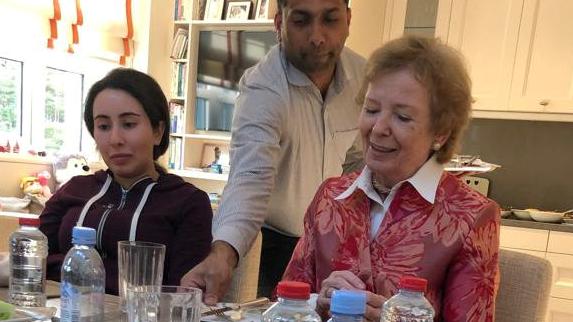
The former UN human rights Commissioner has been criticised for describing the daughter of Dubai’s ruler as “troubled” after she was reportedly forcibly returned to the kingdom after fleeing months earlier. Mary Robinson met with Sheikha Latifa on 15 December and photos released showed the two women smiling together in what appears to be a home. Ms Robinson, the former president of Ireland, told BBC’s Radio 4 the princess was a “vulnerable” woman with a “serious medical situation” for which she was receiving psychiatric care.

Immediately the highly publicised and bizarre meeting in December was panned by rights groups for being stage-managed by the Emirati ruling family (Ms Robinson is a personal friend of Sheikha Haya, a wife of the Dubai ruler.) Defending her comments, Ms Robinson released a statement saying: “I am dismayed at some of the media comments on my visit and I would like to say I undertook the visit and made an assessment, not a judgement, based on personal witness, in good faith and to the best of my ability.”

Toby Cadman, a barrister instructed by Detained in Dubai to act on behalf of the princess, told Review: “I am extremely disappointed that she would lend herself to what has been interpreted as a whitewash. “We have requested an independent assessment of [Princess Latifa’s] state of mind and her physical well-being. It’s up to the United Nations to be satisfied that she is not being detained against her will.” Then in January 2019 Mrs Robinson stated that she contacted Michelle Bachelet, UN high commissioner for human rights. On 18/02/2019 Former Irish president Mary Robinson said she has no regrets over getting involved in the case of a Dubai princess who had tried to flee the UAE.

Exactly one year on from Latifa’s dramatic capture at sea, rights groups told The Independent they were deeply concerned about her welfare and still had no knowledge of what happened to her between her March 2018 capture and December when she reappeared in Dubai. Pleas to the UAE for an independent delegation to be granted access to the royal to assess her, have gone unanswered. “Human Rights Watch is still calling for her to be able to travel to a third country where we and other monitors can be assured she is able to speak freely and independently without fear of retaliation,” Hiba Zayadin of HRW told The Independent. “Ms Robinson is not equipped to make an evaluation of Latifa, who was in the presence of people who allegedly forcibly disappeared her,” she added.

Amnesty International put out a similar call. “There has been no reply from the UAE, which has never responded to anything regarding domestic human-rights abuses that Amnesty International has attempted to raise with them,” said Amnesty’s Devin Kenney.

Now, 16 February 2021, after new footage was shared by BBC Panorama, in which the 35-year-old daughter of the ruler of Dubai has confirmed that commandos drugged her as she tried to flee by boat and flew her back to detention and accused her father, Sheikh Mohammed bin Rashid Al Maktoum, of holding her “hostage”, Mrs Robinson has stated that she feels “horribly tricked” by the family of Princess Latifa Al Maktoum, and has joined in calls for immediate international action in order to establish Princess Latifa’s current condition and whereabouts

Fortunately some of the worst rumours turn out not to be true e.g.that  Sheikha Latifa was killed during early 2019 through extreme physical torture by the female maids inside the palace.[https://www.weeklyblitz.net/news/fraud-racket-plays-new-trick-centering-a-murdered-princess/].

Robinson is rightly revered for her life’s work, and that work is not invalidated by her unacceptable interference in the case of Princess Latifa. But her reputation has been tarnished by this.

And on 25 February followed this https://www.theguardian.com/world/2021/feb/25/princess-latifa-letter-uk-police-investigate-sister-shamsa-cambridge-abduction

For those interested in the many articles about his case:

https://www.thetimes.co.uk/edition/ireland/dubai-paid-for-robinson-to-visit-runaway-princess-c3gnrv8cj
https://www.irishcentral.com/news/politics/former-irish-president-defends-decision-to-meet-princess-allegedly-detained-against-will
https://www.independent.ie/irish-news/the-mysterious-story-of-princess-latifa-her-reported-escape-from-dubai-and-her-meeting-with-mary-robinson-37679044.html
https://www.breakingnews.ie/ireland/mary-robinson-visit-to-dubai-a-private-family-matter-says-princess-haya-895790.html
https://www.thetimes.co.uk/article/robinson-writes-to-un-human-rights-chief-wp2z8vc9j
http://www.midwestradio.ie/index.php/news/28421-mary-robinson-s-address-to-ireland-s-diplomats-today-will-take-place-behind-closed-doors
https://www.wsj.com/articles/mrs-robinson-and-the-missing-princess-11547078838
https://www.independent.co.uk/voices/mary-robinson-dubai-princess-latifa-escape-uae-sheikh-mohammed-haya-a8717081.html
https://www.dailymail.co.uk/news/article-6586191/UAE-swaps-British-arms-consultant-centre-bribery-scandal-Dubai-princess.html was there a swap? https://scroll.in/latest/909621/christian-michels-family-to-move-un-after-claims-that-he-was-extradited-in-swap-for-dubai-princess
https://www.middleeasteye.net/news/mary-robinson-cancels-appearance-dubai-festival-over-jailed-uae-activist-840835552
https://www.hrw.org/news/2019/01/17/uae-injustice-intolerance-repression
https://www.breakingnews.ie/ireland/former-president-mary-robinson-has-no-regrets-over-dubai-princess-visit-905272.html
https://www.independent.ie/irish-news/letter-robinson-sent-to-un-about-princess-latifa-visit-is-not-for-public-distribution-37833996.html
https://www.dailymail.co.uk/news/article-6925547/Lisa-Bloom-calls-Dubai-rulers-HORSE-banned-Kentucky-derby-protest.html
https://www.middleeastmonitor.com/20190629-reports-dubai-princess-left-crown-prince-husband-fled-uae/
https://www.theguardian.com/commentisfree/2021/feb/18/uae-release-latifa-shamsa-women-rights

https://www.theguardian.com/commentisfree/2021/feb/28/the-tourists-who-flock-to-dubai-seem-happy-to-overlook-a-few-missing-princesses

Prominent human rights defender Eren Keskin given six-year jail sentence in Turkey

February 16, 2021

’I have been prosecuted many times and jailed for my thoughts. I’m still here. I’m not going anywhere’ – Eren Keskin tweeted after she was sentenced.

Amnesty International has condemned the sentencing of four Turkish human rights defenders on “terrorism-related” in a case involving Özgür Gündem – a daily newspaper that was closed down in 2016. Eren Keskin, a prominent human rights defender and lawyer in Turkey – was sentenced to six years in jail for supposed “membership of an armed terrorist organisation”. See: https://www.trueheroesfilms.org/thedigest/laureates/BFDBB222-0FE0-32BF-ADD6-4D342A315C22

Zana Kaya, the newspaper’s editor-in-chief was sentenced to one year and 13 months in prison for “making propaganda for a terrorist organisation.” Özgür Gündem’s former publisher, Kemal Sancılı and the newspaper’s managing editor İnan Kızılkaya have been sentenced to six years and three months in prison for “being a member of an armed terrorist organisation” – the same sentence as Eren Keskin’s.

All four remain at liberty pending their appeals. This case is latest where anti-terrorism laws used to criminalise legitimate and peaceful activity in Turkey. Milena Buyum, Turkey Campaigner at Amnesty International said: “Today a human rights lawyer who has spoken out against injustice for more than three decades, has become the victim of injustice herself.

“Eren Keskin has dedicated her life to defending the rights of women, prisoners and fought for justice for the families of the disappeared. This verdict is yet another shocking example of anti-terrorism laws being used to criminalise legitimate, peaceful activities.See also: https://humanrightsdefenders.blog/2019/05/12/martin-ennals-award-finalist-eren-keskin-honoured-in-ankara/

https://www.amnesty.org.uk/press-releases/turkey-human-rights-lawyer-eren-keskin-given-six-year-jail-sentence-terrorism

HRW blasts Colombia over human rights defenders’ murders

February 15, 2021
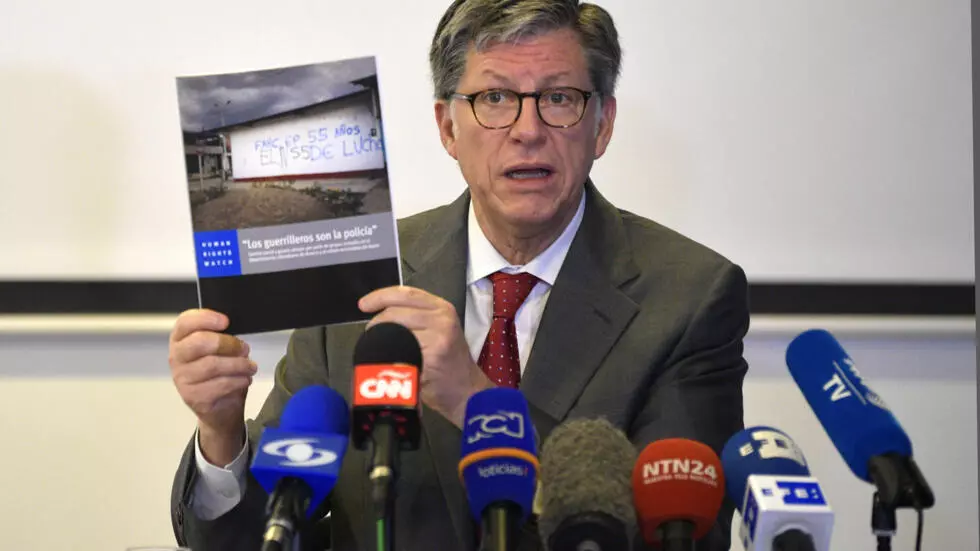
Jose Miguel Vivanco, HRW director for the Americas, accuses the Colombian government of failing to act on the murders of rights activists
Jose Miguel Vivanco, HRW director for the Americas, accuses the Colombian government of failing to act on the murders of rights activists Raul ARBOLEDA AFP

Human Rights Watch on Wednesday 10 Febuary 2021 hit out at Colombia’s government over the rising number of human rights defenders and activists being murdered in the South American country.

Since the 2016 peace accord that ended half a century of fighting between government forces and the Revolutionary Armed Forces of Colombia (FARC), an increasing number of civil society leaders have been killed each year. But “the government has acted slowly and weakly in the implementation of policies to prevent these murders,” HRW said in a statement.

Despite Colombia suffering the largest number of such murders on the continent, “the government’s response has been more focussed on making speeches and announcements than adopting measures that will have an impact in the territories” affected by the violence, said Jose Miguel Vivanco, HRW director for the Americas.

In 2016, 61 civil society leaders were killed, a number that increased to 84 in 2017, 115 in 2018, 108 in 2019 and 133 in 2020, according to UN figures, some of which have yet to be verified. See also: https://humanrightsdefenders.blog/2020/01/20/colombia-21-january-2020-civil-society-begins-a-much-needed-patriotic-march/

Behind the wave of violence targeting advocates are National Liberation Army Marxist rebels, dissident FARC guerrillas and right-wing paramilitaries, as well as armed drug-trafficking groups. They are fighting each other over access to lucrative cocaine and illegal mining markets.

HRW says most victims were murdered as reprisals for opposing drug-trafficking in their territories, allegedly collaborating with the army or supporting the replacement of illegal coca plantations with legal ones. The digest of Human Rights Laureates lists 50 HRDs in Colombia. See: https://www.trueheroesfilms.org/thedigest

https://www.france24.com/en/live-news/20210210-hrw-blasts-colombian-govt-over-rights-activists-murders

DR Congo should reopen inquiry into murder of Floribert Chebeya

February 12, 2021
A man wearing a T-shirt with portraits of Floribert Chebeya and Fidèle Bazana attends the trial in Kinshasa on April 30, 2013 of policemen accused of killing the two men in 2010.
A man wearing a T-shirt with portraits of Floribert Chebeya and Fidèle Bazana attends the trial in Kinshasa on April 30, 2013 of policemen accused of killing the two men in 2010. © 2013 Junior D. Kannah/AFP via Getty Images

On 11 February 2021 Human Rights Watch stated that The Democratic Republic of Congo government should reopen its investigation into the 2010 double murder of the leading human rights defender Floribert Chebeya and his driver, Fidèle Bazana, following new revelations about the case. Amid allegations reported by international media outlets that the murders were carried out on the orders of the police chief at that time, Gen. John Numbi, Human Rights Watch called for a credible, impartial, and independent inquiry.

On February 8, 2021, in radio interviews with Radio France Internationale (RFI) and Deutsche Welle, two Congolese police officers in exile admitted to taking part in the murders of Chebeya and Bazana on the premises of police headquarters on June 1, 2010 and provided a detailed account of the murder. At a meeting in April 2019, President Felix Tshisekedi personally told Chebeya’s wife and human rights groups that he was committed to conducting an impartial investigation into the murder.

“President Tshisekedi should put his words about investigating the Chebeya murder into action,” said Thomas Fessy, senior Congo researcher at Human Rights Watch. “The latest revelations show the need for a new inquiry and present the best chance to see that justice is done.”

On June 1, 2010, Chebeya received a telephone call asking him to attend a meeting at General Numbi’s office. The next day, the police said that Chebeya had been found dead in his car in the Mont Ngafula area of Kinshasa, the capital. The body of his driver, Bazana, is still missing.

Speaking to RFI and Deutsche Welle from an undisclosed location abroad, the former police drivers Hergil Ilunga and Alain Kayeye revealed details about the plan to kill Chebeya and how it was carried out. They alleged that police officers asphyxiated Chebeya and Bazana, one after the other, in different police vehicles at the police headquarters.

They admitted to taking part in the murders and covering them up on the orders of Col. Daniel Mukalay, then the police intelligence chief, and Christian Ngoy, then the commander of the feared Simba battalion. The two former drivers said that both senior officers were acting upon Numbi’s instructions.

Ilunga and Kayeye said they would be ready to face justice if their safety were guaranteed. They claimed to have fled Congo in late 2020 for fear of their lives as Numbi was allegedly looking to kill them.

Chebeya was among Congo’s most vocal human rights defenders, regularly exposing abuses by the country’s security services and successive governments over many years. He was threatened and intimidated repeatedly by Congolese authorities because of his work. He received the now defunct Reebok award: https://www.trueheroesfilms.org/thedigest/laureates/BA601D45-292F-61CB-530A-17FE52D5F974

Following a widely criticized trial by a military court – with a first verdict in June 2011 and an appeal decision in September 2015 – four police officers were found guilty of murdering Chebeya and Bazana. Ngoy, along with Paul Mwilambwe and Jacques Mugabo, were tried in absentia and sentenced to death. Mukalay, the highest-ranking officer on trial, was sentenced to 15 years in prison and is currently serving his sentence at Kinshasa’s central prison. The military court also found the Congolese government at fault and ordered it to pay damages to the families of both victims.

When the trial began in November 2010, Numbi, then police inspector general, was presented to the court as a witness even though he was widely suspected to be behind the murders. In 2014, one of the fugitives, Mwilambwe, resurfaced in Senegal, where he accused Numbi of orchestrating the murders. Senegalese authorities opened an investigation and Mwilambwe was indicted in January 2015. But the proceedings stalled, and the investigation is ongoing in Senegal. Mwilambwe, a presumed key witness, has since moved to Belgium and has also said he was ready to stand trial. [https://humanrightsdefenders.blog/2015/01/13/indictment-in-senegal-a-breakthrough-in-the-congolese-chebeya-bazana-case/]

On September 3, 2020, Ngoy was arrested in Lubumbashi and immediately transferred to Ndolo military prison in Kinshasa for possession of illegal weapons. Following his arrest, Congolese human rights organizations said that the authorities should reopen the Chebeya case.

Following these new revelations, over 100 Congolese human rights groups called for the immediate arrest of Gen. Numbi and the reopening of Chebeya’s case. Ambassadors in Congo from the EU, Belgium, and the US have also all publicly backed reopening the inquiry. The United Nations Joint Human Rights Office said it was “available to assist the judiciary in shedding light on the despicable murder of Chebeya and Bazana.”

“The Chebeya and Bazana families have yet to learn the full truth and obtain justice for the gruesome killings of their loved ones,” Fessy said. “With these new revelations, the Congolese government needs to act. The judiciary should provide safe conditions to hear those who have come forward while General Numbi and other senior officials implicated in the murders should be fully and fairly investigated.”

Note the latest: https://www.theafricareport.com/74437/drc-general-john-numbi-implicated-in-the-chebeya-case-has-fled-the-country/

https://www.hrw.org/news/2021/02/11/dr-congo-reopen-inquiry-prominent-activists-murder

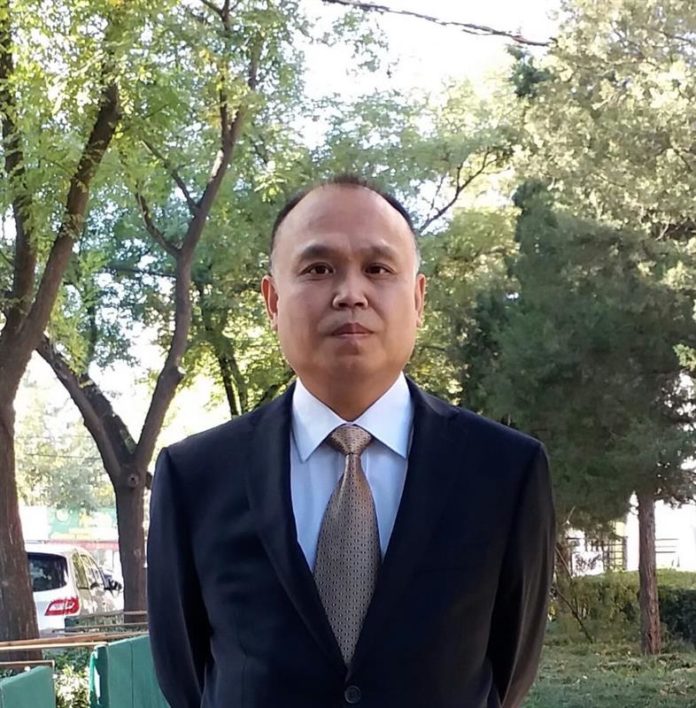
Breaking news: Yu Wensheng, Chinese human rights lawyer, is Martin Ennals Laureate 2021!

February 11, 2021

Yu Wensheng, a lawyer from China, was just announced as the laureate of the Martin Ennals Award for Human Rights Defenders 2021 during an on-line ceremony broadcast from Geneva. [https://humanrightsdefenders.blog/2021/02/11/reminder-in-a-few-hours-starts-the-martin-ennals-award-ceremony-2021/]

Yu was just another corporate lawyer in a fast-rising Chinese economy. But when he decided to take on human rights cases and ask for constitutional reform in his country, he drew the ire of one of the most powerful regimes in the world. Yu has been detained, harassed, and convicted in secret. While in custody, he has been tortured and denied medical care and family visits. His wife, Xu Yan, who Yu has not seen in person for 3 years, herself has become an icon. She has taken up the mantel of human rights defense and is currently studying law. Yu’s fight for due process has completely upended his life. [https://humanrightsdefenders.blog/2021/01/21/mea-nominee-yu-wensheng-in-poor-health-after-years-in-prison/]

Let us hope that China will behave a bit more moderately in response this time {see e.g. https://humanrightsdefenders.blog/2020/08/29/chinese-sensitivity-again-on-display-re-human-rights-awards/]

https://www.scmp.com/news/world/article/3121512/jailed-chinese-lawyer-yu-wensheng-wins-international-human-rights-award

Digest of Laureates ready – this blog changes orientation

February 2, 2021

With the launching of the new Digest of human rights laureates by True Heroes Films (THF) today, 2 February 2021, I have decided to centre my blog more on human rights awards and laureates. It will give the blog more focus and this will also help the Digest to stay up to date. After many years of work, True Heroes Films (THF) has made public its gateway to human rights awards and their laureates at www.trueheroesfilms.org/thedigest. The Digest is a new free online tool that gives everybody access to information on human rights awards, including the list of people who received such awards. Over the last 20 years, the human rights movement has discovered the value of awards. The Digest tells that story and makes human rights defenders more visible as an encouragement and role model for others.

Here some specialised user comments:
The Digest “will help us demonstrate to the world how many human rights defenders there are in the world and the different human rights they defend and fight for” stated Guadalupe Marengo, Head of Global Human Rights Defenders Programme at Amnesty International.


“It is a useful resource that places individuals, the laureates, at the heart of the search process,” commented Eleanor Davies of the Centre of Applied Human Rights at York University.


“With a simple and straightforward way to find what you are looking for, it helps initiate partnerships,” says Friedhelm Weinberg, Executive Director of HURIDOCS, an organisation specialised in information technology.

For human rights defenders, the Digest allows finding awards and people concerned with similar causes worldwide. Award givers can quickly check their candidates. For media, the Digest means instant access to information on human rights defenders or an award announcement to complete their story.


The Digest was created during 8 years with support from the City of Geneva, Brot für die Welt and the Permanent Mission of the Netherlands to the United Nations Office.

http://www.trueheroesfilms.com/

Stansted 15 convictions quashed: “No case to answer”

January 30, 2021

The Court of Appeal held on Friday 29 January 2021 that a group of activists who broke into Stansted Airport in an act of protest should “never have been prosecuted” for an “extremely serious” terror-related offence under s.1(2)(b) of the Aviation and Maritime Security Act 1990 (“AMSA”).

It overturned the Stansted 15’s convictions.

Lord Burnett said the protestors should not have been prosecuted for the extremely serious offence … because their conduct did not satisfy the various elements of the offence. “There was, in truth, no case to answer.”

See : https://humanrightsdefenders.blog/2019/02/07/the-stansted-15-story-ends-well-but-not-good-enough/

This case has been controversial, drawing attention both nationally and internationally. Following the initial convictions, a joint letter was sent to the Government by UN experts, including the Working Group on Arbitrary Detention, the Special Rapporteur in the promotion and protection of the right to freedom of opinion and expression, the Special Rapporteur on human rights defenders, and the Special Rapporteur on the promotion and protection of human rights and fundamental freedoms when countering terrorism. The UN experts urged the UK government not to use security and terrorism-related legislation to prosecute peaceful protesters.

The failure of the ground relating to necessity, duress and s.3 CLA are unlikely to surprise those with experience of defending protestors in direct action cases. Nevertheless, it is notable that the actions of the appellants did prevent the deportation of five persons on the flight who have consequently been able to establish their legal right to remain in the UK, including three on human rights grounds. One of those has been granted asylum as a victim of human trafficking. In total, of the 60 persons due to be on the deportation flight, eleven reportedly remain in the country.

Amongst the human rights group who have celebrated the ruling are Amnesty UK, who welcomed “a good day for justice” and Liberty, who hailed “a major victory for protest rights” and deprecated the now-quashed convictions, calling them “part of a sustained attack on the right to protest.”

https://www.gazette-news.co.uk/news/19049773.stansted-15-protestors-convictions-overturned-appeal/

Sri Lanka: damning UN report deserves follow up

January 28, 2021

The UN Human Rights Council (UNHRC) must take urgent steps to address the worsening human rights situation in Sri Lanka, said Amnesty International, on 27 January 2021 following the release of a damning UN report on the country’s efforts to ensure accountability for crimes committed during the civil conflict.

Almost twelve years on from the end of Sri Lanka’s civil war, the report, from the Office of the High Commissioner for Human Rights warns that the country’s persistent failure to address historic crimes is giving way to ‘clear early warning signs of a deteriorating human rights situation and a significantly heightened risk of future violations.’ [see also; https://humanrightsdefenders.blog/2020/07/30/sri-lanka-lawyers-human-rights-defenders-and-journalists-arrested-threatened-intimidated/]

In February 2020, the Sri Lankan government announced that it would no longer cooperate with the UNHRCs landmark resolution 30/1, which promotes reconciliation, accountability, and human rights in the country, and would instead pursue its own reconciliation and accountability process. This report lays bare Sri Lanka’s abject record on delivering justice and accountability and the decaying effect this has had on human rights in the country David Griffiths, Director of the Office of the Secretary General at Amnesty International

“This report lays bare Sri Lanka’s abject record on delivering justice and accountability and the decaying effect this has had on human rights in the country. The seriousness of these findings highlights the urgent need for the UN Human Rights Council to step up its efforts in Sri Lanka,” said David Griffiths.

“For more than a decade, domestic processes have manifestly failed thousands of victims and their families. Given the government’s decision to walk away from resolution 30/1, and regression on the limited progress that had been made, the Human Rights Council must send a clear message that accountability will be pursued with or without the cooperation of the government.”

Amnesty International is calling on the UN Human Rights Council to implement the report’s key recommendations to put in place more stringent oversight on Sri Lanka, including more robust monitoring and reporting on the human rights situation, and the collection and preservation of evidence for future prosecutions. 

“UN member states should learn from past experience, and this time heed the early warning indicators identified by the UN’s top human rights official.” said David Griffiths

The OHCHR report, published on 27 January 2021, is available to download here:.  The Human Rights Council will meet for its 46th session from 22 February to 23 March, during which Canada, Germany, Montenegro, North Macedonia and the UK – the current core group of states leading on Sri Lanka – are expected to present a resolution in follow-up to the OHCHR report.

Amnesty International published an assessment of the situation in Sri Lanka, setting out clear expectations for HRC action, earlier this month. The High Commissioner’s report supports the call for more robust monitoring and reporting on the situation, as well as the collection and preservation of evidence for future prosecutions.

https://www.amnesty.org/en/latest/news/2021/01/sri-lanka-damning-un-report-stresses-need-for-urgent-international-action-on-accountability/

Egypt decade after Arab spring: Amnesty and UN express concern over detention

January 27, 2021

The human rights organization Amnesty International published a scathing report on 25 January 2021 decrying the inhumane conditions in Egyptian prisons. The report comes a decade after the Arab Spring uprising.

The report detailed the experiences of 67 individuals in detention, 10 of whom died in custody and two who died shortly after being released. It was carried out primarily between February 2020 and November 2020 and focused on 16 prisons. It found that:

  • Prisoners were kept in squalid conditions and received unhealthy food;
  • There was no proper access to health care, which may have resulted in death;
  • Overcrowding, poor ventilation and limited access to water and toilets led inevitably to outbreaks of coronavirus.

The report also found that some prisoners were deliberately denied access to health care due to their political affiliations. Activists, politicians and human rights defenders were denied basic treatments available to other inmates. There was also evidence of prison authorities “targeting prisoners critical of the government and denying them adequate food or family visits,” Markus Beeko, Secretary General of Amnesty International in Germany, asserted. According to UN estimates, there are 114,000 people incarcerated in the north African country.

On 22 January 2021 Mary Lawlor also deplored the arrest and prolonged pre-trial detention of  human rights defenders and bloggers, and their  accusation of being members of a terrorist organisation, continuing Egypt’s practice to intimidate and criminalise human rights defenders, journalists and their families.

“I am extremely concerned by the seemingly unrelenting efforts of the Egyptian authorities to silence dissent and shrink civic space in the country, despite repeated calls from UN mechanisms and the international community,” said Mary Lawlor, UN Special Rapporteur on the situation of human rights defenders.

The Special Rapporteur said she was disturbed by the detention since 2018 of human rights defender and blogger Mohamed Ibrahim Radwan, also known as ‘Mohamed Oxygen’, on charges of “membership of a terrorist organisation” and “misuse of social media” in retaliation for his posts and videos reporting on human rights issues. He was granted conditional release by the Cairo Criminal Court in November last year but was attached to a new case on charges of joining a terrorist organisation and kept in detention. He remains in pre-trial detention in Al-Aqrab Prison, south of Cairo.

Lawlor said that human rights defenders such as researcher and post-graduate student Patrick Zaki, who was arrested in February last year, have endured repeated renewals of detention without trial. “Pre-trial detention should only be used as the exception to the rule, rather than the default approach,” said Lawlor.

“Not only are these human rights defenders, journalists and other civil society actors unduly targeted for their legitimate and peaceful defence of human rights and fundamental freedoms, they are wrongfully accused of belonging to terrorist organisations and portrayed as a national security threat under vague legal provisions,” the Special Rapporteur said. “This is an issue which I and a number of UN experts have previously communicated our concern about to the Egyptian authorities.”

The Lawlor’s call has been endorsed by: Fionnuala Ní Aoláin, Special Rapporteur on the promotion and protection of human rights while countering terrorism and Irene Khan, Special Rapporteur on the promotion and protection of the right to freedom of opinion and expression.

In the meantime also a tiny sparkle of good news: Egypt’s Administrative Court overturned on Thursday a 2016 decision by Cairo governorate to close El-Nadeem Centre for the Rehabilitation of Victims of Violence and Torture. [see also: https://humanrightsdefenders.blog/2018/01/25/ai-germany-award-goes-to-egypts-nadeem-center-for-torture-victims/.

Ten years after the Tahrir square protests in Cairo, Egypt’s human rights record is disastrous. On the occasion of the anniversary of the 2011 revolution, several international campaigns are calling for the release of imprisoned activists writes Sofian Philip Naceur in Qantara.de Violent, authoritarian and extremely paranoid: since his bloody takeover in 2013, Egypt’s President Abdul Fattah al-Sisi has restored a regime whose brutality far outstrips even the reign of long-term ruler Hosni Mubarak. Hopes for real political and social change after the mass uprising that forced Mubarak out of office after 30 years in power have faded away, leaving a disillusionment that is omnipresent.

See also: https://humanrightsdefenders.blog/2020/12/18/arab-spring-information-technology-platforms-no-longer-support-human-rights-defenders-in-the-middle-east-and-north-africa/

Countless people who, before and after the 2011 revolt, campaigned in various ways for “bread, freedom and social justice” in Egypt, are today intimidated and politically inactive, or have fled the country to live in exile. Tens of thousands, however, remain imprisoned in Egypt for political reasons, paying a hefty price for their activism and courage.

Egyptian opposition figures are using the current media attention around the tenth anniversary of the “25 January Revolution” to highlight the fate of those currently in prison for their political engagement. Some have been sentenced to heavy jail terms, while others are subjected to pre-trial detention lasting years by the Egyptian security forces and the country’s judiciary. European opposition politicians are also participating in corresponding campaigns.

Eight politicians from Germany’s left-wing party – Die Linke – have signed a solidarity statement calling for the immediate release of all political detainees, which explicitly highlights the fate of six detained leftist activists, journalists and trade unionists. Although the campaign specifically highlights six individual cases, it expresses solidarity not only with Egyptian leftists, but with all those “who are resisting Sisi’s dictatorship”. In addition to journalist Hishem Fouad, who advocated for striking workers and independent trade unions long before 2011, the German politicians are also calling for the release of novelist Ayman Abdel Moati, lawyer and trade union activist Haitham Mohamadeen and trade unionist Khalil Rizk. All four are detained on flimsy, terrorism-related charges.

https://www.dw.com/en/egypt-amnesty-slams-inhumane-prison-conditions/a-56331626

https://en.qantara.de/content/human-rights-violations-in-egypt-demanding-president-sisi-free-his-political-prisoners

english.ahram.org.eg/NewsContentP/1/399358/Egypt/Egypt-court-overturns-closure-of-human-rights-NGO-.aspx

https://www.middleeasteye.net/news/egypt-amnesty-condemns-prison-conditions

https://www.aljazeera.com/opinions/2021/1/27/the-social-media-myth-about-the-arab-spring

https://www.yenisafak.com/en/news/academic-urges-new-era-for-political-prisoners-in-egypt-3559752