Archive for the 'organisations' Category

Alaa Abdel Fattah, and two others receive heavy prison sentences in Egypt

December 21, 2021

Egypt on Monday 20 December 2021 sentenced Alaa Abdel Fattah, a leading figure in the 2011 revolution, to five years in jail, with two others receiving four years, his sister Mona Seif and a judicial source said. [see also: https://humanrightsdefenders.blog/2020/08/06/re-issued-passionate-plea-for-help-in-open-letter-by-mona-seif-from-egypt-about-targeting-of-her-family/]

A computer programmer, blogger and high-profile activist who mobilized youths in the uprising that unseated autocrat Hosni Mubarak, Abdel Fattah had been in pre-trial detention since September 2019.

Abdel Fattah, his lawyer Mohamed al-Baqer and blogger Mohamed “Oxygen” Ibrahim were convicted of “broadcasting false news” in their trial in Cairo.

A judicial source, speaking on condition of anonymity, confirmed the verdict and sentencing to AFP.

Rulings in the court cannot be appealed. They require final approval by President Abdel Fattah al-Sisi.

Washington, which has already frozen 10 percent of its aid to Egypt over repeated rights violations, said it was “disappointed” by the sentence. “Journalists, human rights defenders, and others seeking to peacefully exercise their freedom of expression should be able to do so without facing criminal penalties, intimidation, harassment, or any other form of reprisal,” said State Department spokesman Ned Price.

The Committee to Protect Journalists decried Monday’s ruling as “unacceptable”.

The verdict “demonstrates the lengths to which authorities are willing to go to punish these journalists for their work”, said Sherif Mansour, CPJ’s Middle East and North Africa Coordinator. “Both journalists have already spent several years in prison on bogus charges, and authorities must release them immediately and unconditionally,” Mansour added.

Human Rights Watch on Sunday slammed “the government’s rush to use emergency courts… after holding people illegally for years in pretrial detention”. The New York-based rights watchdog then said that if Abdel Fattah and the other activists were to be sentenced, this would confirm “that fierce repression of peaceful critics remains the order of the day in Egypt”.

Abdel Fattah has spent most of the past decade in jail at Tora, one of the country’s most notorious prisons, after previous convictions. His mother, mathematics professor Laila Soueif, wrote in a New York Times opinion piece published on Saturday that “the outside world, once so inspired by the Egyptian revolutionaries, is looking away. His crime is that, like millions of young people in Egypt and far beyond, he believed another world was possible. And he dared to try to make it happen.

Prolific writer Abdel Fattah’s critically acclaimed essay collection “You Have Not Yet Been Defeated” was published in October.“At its fundamental core, his writing is attached to justice,” Soueif told AFP in October when the book was released.

Ahead of the trial session, Egypt’s foreign ministry lambasted the German government on Saturday for a statement calling for a “fair trial” and the release of the three dissidents. Cairo described the German foreign ministry’s call as “a blatant and unjustified meddling in Egyptian internal affairs”.

Rights groups say Egypt is holding some 60,000 political prisoners, many facing brutal conditions and overcrowded cells. See also: https://humanrightsdefenders.blog/2021/01/27/egypt-decade-after-arab-spring-amnesty-and-un-express-concern-over-detention/

In a 2019 interview with the show 60 Minutes on US broadcaster CBS, Sisi said there were no political prisoners in Egypt. And – of course – the official reaction to interventions was: Egypt’s foreign ministry stressed on Monday that it was absolutely not appropriate to comment on or in any way refer to an independent judicial process.

https://www.upi.com/Top_News/World-News/2021/12/20/Egypt-prison-sentences-three-activists-2011-uprising/9611640051667/

EU launches a €1.5 billion 6-year plan to promote human rights and its defenders

December 17, 2021

w

On the eve of Human Rights Day (10 December 2021) and coinciding with the Summit for Democracy, the European Union launched the Global Europe Human Rights and Democracy programme. This programme, worth €1.5 billion, steps up EU support in promoting and protecting human rights and fundamental freedoms, democracy, and the rule of law and the work of civil society organisations and human rights defenders around the world during the period 2021–2027. The programme will promote and protect the universality of human rights, strengthen the rule of law and accountability for human rights violations and abuses, and defend the full and effective exercise of fundamental freedoms, including the freedom of expression, supporting independent journalism and media, while seizing opportunities and countering risks associated with digital and new technologies.

High Representative/Vice President Josep Borrell said: “Courageous people from all backgrounds are fighting on a daily basis for their civil liberties, for independent media and to safeguard democratic institutions, often at great personal risk. The European Union stands with them. The Global Europe Human Rights and Democracy programme will allow us to strengthen our support to and protection of universal human rights and democratic principles worldwide: for everyone, at any time and everywhere. Together with civil society organisations, human rights defenders, the UN Human Rights Office and the International Criminal Court, we will leave no one behind.”

International Partnerships Commissioner Jutta Urpilainen, said: “Human rights and democracy are a cornerstone of sustainable and inclusive development, and essential to addressing global challenges and ensure citizens reach their full potential and realise their aspirations. In whichever way you measure it – in stability, equality, economic growth, health or longevity – democracies always outperform other forms of government in the long run. I am proud to think of the countless human rights defenders, young people, women, girls and civil society organisations that the €1.5 billion Global Europe Human Rights and Democracy programme will empower to build a better tomorrow for all of us.

It has five overarching priorities:

  • Protecting and empowering individuals€704 million

Uphold all human rights, including by working towards the universal abolition of the death penalty, the eradication of torture and cruel and inhumane treatment, the fulfilment of basic needs, decent working conditions, the eradication of child labour, and a safe, clean, healthy and sustainable environment. The programme will promote equality, inclusion and respect for diversity, support human rights defenders and counter shrinking space for civil society, and strengthen the rule of law, ensure a fair and effective administration of justice, and close the accountability gap.

  • Building resilient, inclusive and democratic societies – €463 million

The programme will support functioning pluralist, participatory and representative democracies, and protect the integrity of electoral processes. It will, for instance, engage civil society observers in election observation and support pro-democracy organisations, networks and alliances.

  • Promoting a global system for human rights and democracy – €144 million

Enhance strategic partnerships with key actors, such as the Office of the UN High Commissioner for Human Rights (OHCHR), the International Criminal Court (ICC), regional human rights systems, national human rights institutions, the private sector, and the Global Campus of Human Rights.

  • Safeguarding fundamental freedoms, including harnessing the opportunities and addressing the challenges of digital and new technologies €195 million

Create and maintain an environment conducive to the full exercise of all fundamental freedoms both offline and online. For example, it will help strengthen the capacity of independent, pluralistic and quality media, including investigative journalists, bloggers and fact-checkers, to provide the public with reliable information through responsible and professional reporting. It will support civil society in fostering online media literacy and digital skills and in promoting an open, global, free and secure internet equally accessible to all.

  • Delivering by working together – €6.6 million

The earmarked funds can support the civil society in engaging with national authorities within the framework of the human rights dialogues that the EU conducts with partner countries, or finance training, studies, or exchanges of best practice. It underpins all of the activities.

In the first year of implementation, the EU will focus on promoting a global system for human rights and democracy. For example, in 2022–2024, the EU will support the Office of the United Nations High Commissioner for Human Rights with €16 million, the Global Campus of Human Rights with €10 million, and the International Criminal Court with €3 million. The EU will also support in 2022 the launch of a Team Europe Democracy initiative to reinforce the impact of EU and Member States’ global support to democracy. The 2021 action plan complements a number of urgent individual measures under the programme adopted earlier.

Background

The Global Europe Human Rights and Democracy programme is flexible as regards procedures, and supports civil society actions independently of the consent of partner countries’ governments and other public authorities. A substantial part of the programme will be implemented at country level. Subsequent calls for proposals covering the different activities, open to civil society organisations across the world, will be published in the coming months. See also: https://humanrightsdefenders.blog/2018/02/27/10611/

Funded under the thematic pillar of the new Neighbourhood, Development and International Cooperation Instrument (NDICI) – Global Europe, the Global Europe Human Rights and Democracy programme is the successor of the European Instrument for Democracy and Human Rights (EIDHR), which was established in 2006 to support civil society-led actions in the area of human rights and democracy in countries outside the EU. Under the previous financial period 2014–2020, the European Instrument for Democracy and Human Rights was allocated €1.33 billion.

Front Line Defenders Award for Human Rights Defenders 2021

December 14, 2021

With some delay (apologies), here are the winners of the 2021 Front Line Defenders Award for Human Rights Defenders at Risk. For more on this award and all its laureates, see: https://www.trueheroesfilms.org/thedigest/awards/2E90A0F4-6DFE-497B-8C08-56F4E831B47D

The short videos above provide more information on the laureates:

2021 – Africa: Aminata Fabba, Sierra Leone
          – Americas: Camila Moradia, Brazil
          – Asia: Mother Nature Cambodia, Cambodia [see also: https://humanrightsdefenders.blog/2021/06/22/continued-harassment-of-mother-nature-defenders-in-cambodia/]
          – Europe & Central Asia 1: Siarhei Drazdouski & Alah Hrableuski, Belarus
          – Europe & Central Asia 2: Mamadou Ba, Portugal
          – Middle East & North Africa: Sami & Sameeha Huraini, Palestine.

To watch the on-line ceremony:

https://www.frontlinedefenders.org/en/front-line-defenders-award

Mauricio Ochieng – transgender human rights defender from Kenya

December 14, 2021

Mauricio Ochieng‘ is a transgender activist and a SOGIESC human rights defender from the Western part of Kenya. In this short video, posted by the ISHR, he explains how his work will help to fight discrimination, achieve equality and create a better future for transgender people in Kenya. “So I saw the need of engaging different activists and human rights defenders across the region to make sure that this kind of arrest should not happen to anybody because of their gender identity or sexual orientation.”

https://ishr.ch/defender-stories/human-rights-defenders-story-mauricio-ochieng-from-kenya/

Apply now for ISHR’s Human Rights Defender Advocacy Programme 2022

December 10, 2021

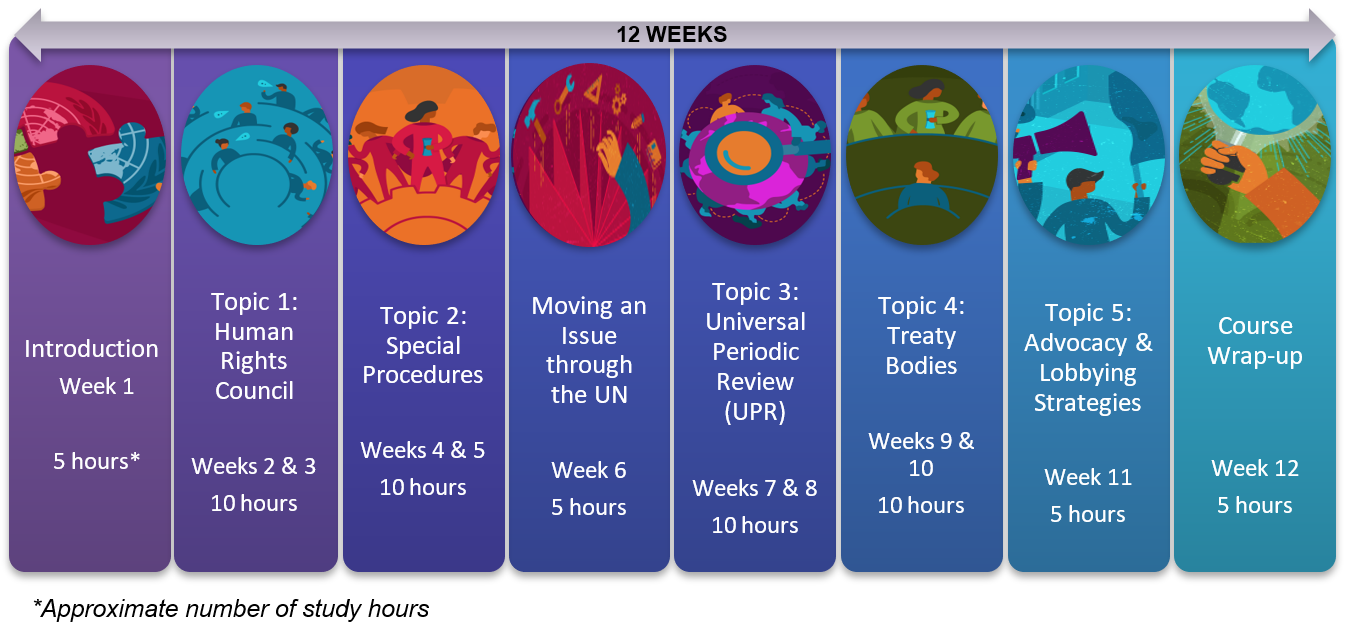
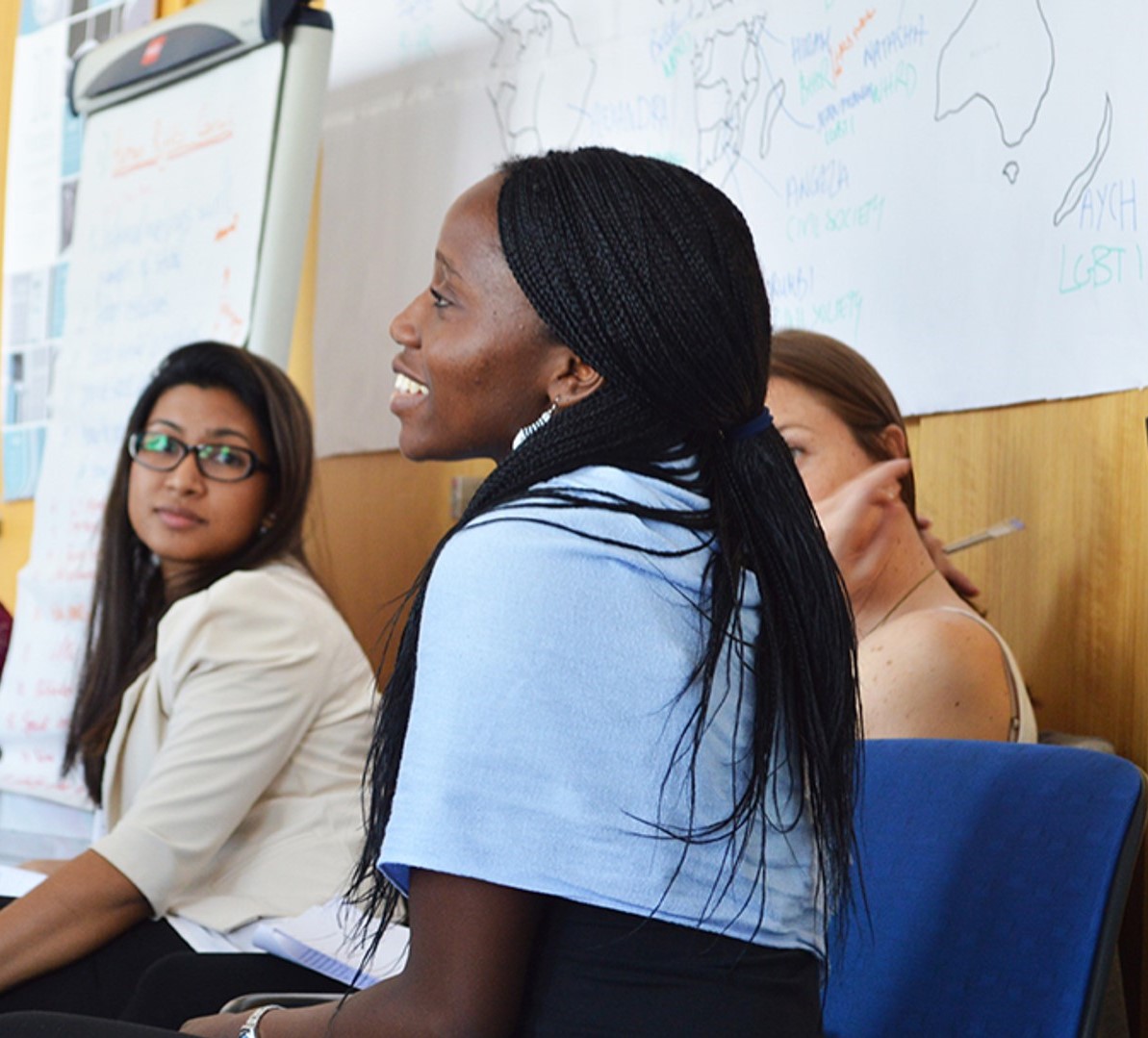
If you are you a human rights defender keen to use the UN you would do well to apply to the 2022 edition of ISHR’s flagship training the Human Rights Defender Advocacy Programme (HRDAP).

After two successful online editions in 2020 and 2021, ISHR has launched the call for applications for the third online edition which will take place remotely between 4 April and 24 June 2022. [for last year’s see: https://humanrightsdefenders.blog/2019/11/07/applications-now-open-for-ishrs-2020-training-for-human-rights-defenders/]

The course equips human rights defenders with the knowledge and skills to integrate the UN human rights system into their existing work at the national level in a strategic manner, and provides an opportunity for participants to prepare for and engage in lobbying and advocacy activities at the UN with the aim to effect change back home.

Applications for HRDAP22 will remain open until Monday 3 January 2022.

The 12-week course allows defenders to continue their vital work on the ground, while diving into the inner workings of each key UN human rights mechanism, and gaining first-hand experience from advocates and UN staff on how civil society can strategically engage in the international human rights space.  

By participating in HRDAP, defenders:

  1. Gain knowledge and tools, which they can use to ensure their voice is central in international human rights decision-making
  2. Explore and compare the benefits of engagement with the Human Rights Council, the Special Procedures, the OHCHR, the UPR and the Treaty Bodies, and examine how they can use them to bolster their work at the national level
  3. Develop strategies and lobbying techniques to increase the potential of their national and regional advocacy work

During the last training, 19 human rights defenders from 17 countries took part in the programme. At the end of the training, 100% of those surveyed were satisfied with the programme, with 82% indicating they were “very satisfied”. Find out more about what they learnt here.

This programme is directed at experienced human rights defenders in non-governmental organisations, with existing advocacy experience at the national level and some prior knowledge of the international human rights system. ISHR supports, and promotes solidarity with and between, defenders working in the following areas or contexts, which we recognise as intersectional and interdependent:

  1. Equality, dignity and non-discrimination
  2. Environmental justice and sustainability
  3. International accountability for the repression of human rights defenders
  4. Transparency and rule of law

Download the HRDAP22 Programme Description to find out more and apply before Monday 3 January 2022!

What are the next steps?

https://ishr.ch/latest-updates/hrdap-2022-apply-now-for-ishrs-training-for-human-rights-defenders/

NGOs demand EU to impose sanctions on NSO Group

December 7, 2021

Dozens of rights groups are urging the European Union to impose sanctions on the Israeli NSO Group to ban the company’s Pegasus surveillance technology. The letter sent to the EU was signed by 86 rights groups and independent experts, including Reporters Without Borders, Amnesty International, Human Rights Watch, the Electronic Frontier Foundation and Privacy International, among others. A consortium of media revealed that this powerful spyware was used extensively by several governments to spy on lawyers, journalists, political opponents and human rights activists.

Several victims of illegal surveillance have been identified in Hungary, where the government initially denied being a client of NSO Group, before admitting to having purchased the software. See also: https://humanrightsdefenders.blog/2021/11/10/palestinian-ngos-dubbed-terrorist-were-hacked-with-pegasus-spyware/

A good resource is here: https://www.haaretz.com/israel-news/MAGAZINE-nso-pegasus-spyware-file-complete-list-of-individuals-targeted-1.10549510

Several victims of illegal surveillance have been identified in Hungary, where the government initially denied being a client of NSO Group, before admitting to having purchased the software. See also:

There is overwhelming evidence that Pegasus spyware has been repeatedly used by abusive governments to clamp down on peaceful human rights defenders, activists and perceived critics,” Deborah Brown, senior digital rights researcher and advocate at Human Rights Watch, said in a statement. “The EU should immediately sanction NSO Group and ban any use of its technologies.”

The EU’s global human rights sanctions would allow the EU to adopt “ “targeted sanctions against entities deemed responsible for violations or abuses that are “of serious concern as regards the objectives of the common foreign and security policy”, including violations or abuses of freedom of peaceful assembly and of association, or of freedom of opinion and expression,” the letter read.

According to Human Rights Watch, these rights have been “repeatedly violated using NSO technology,” and, as highlighted by the UN Special Rapporteur on freedom of opinion and expression, “the use of spyware by abusive governments can also facilitate extrajudicial, summary or arbitrary executions and killings, or enforced disappearance of persons.” See also: https://humanrightsdefenders.blog/2021/10/04/big-coalition-urges-un-to-denounce-abuses-facilitated-by-spyware-technologies/

NSO Group was blacklisted by the US State Department at the beginning of November, and slapped with a sanction that drastically limited the business relationships the US company had with US customers or suppliers, according to the French newspaper Le Monde. “The EU should unequivocally close its doors to business with NSO Group,” Brown said.

“Targeted sanctions are necessary to that end, and to add to growing international pressure against the company and the out-of-control spyware industry.”

In Europe, several investigations are ongoing, but no sanctions have been formally imposed on the company. In addition to Hungary, several other countries are, or have been, customers of NSO Group – although this does not mean that all these countries have made illegal use of Pegasus.

In addition to Germany, several EU countries have purchased access to the software, according to Le Monde.

See also: https://www.haaretz.com/israel-news/tech-news/.premium.HIGHLIGHT.MAGAZINE-citizen-lab-vs-nso-the-institute-taking-down-israel-s-mercenary-spyware-firms-1.10536773

https://slate.com/technology/2021/12/apple-lawsuit-nso-group-q-cyber-pegasus.html

https://www.euronews.com/next/2021/12/03/pegasus-spyware-ngos-urge-the-eu-to-sanction-israeli-group-nso

And the latest: https://marketresearchtelecast.com/spyware-sale-at-nso-group-the-end-of-pegasus/226205/

as well as

https://www.irishtimes.com/news/ireland/irish-news/concern-activist-s-phone-infected-with-spyware-during-dublin-conference-1.4778962

in 2022 the following items can be added:

https://www.hrw.org/news/2022/01/26/human-rights-watch-among-pegasus-spyware-targets

https://thewire.in/tech/nso-chairman-quits-says-departure-unrelated-to-recent-scandals

India arrests Khurram Parvez again

November 23, 2021

The National Investigation Agency (NIA) of India arrested on Monday, 22 November 2021 prominent human rights defender Khurram Parvez after a day of extensive searches at his residence and office in Jammu and Kashmir capital Srinagar. He is an internationally recognized human rights defender, see: https://www.trueheroesfilms.org/thedigest/laureates/81468931-79AA-24FF-58F7-10351638AFE3

A family member told The Wire that Khurram’s residence in the city’s Sonawar locality was raided by NIA officials who were accompanied by local police and paramilitary troopers, on Monday morning. Another raid was carried out later in the day at his office in the Amira Kadal locality.

The raids were carried out in connection with a case (RC 30/2021) filed by the agency earlier this year.

Sources said the investigators confiscated Khurram’s mobile phone, laptop, some books and documents from his office and residence before taking him to the agency’s camp office in Srinagar’s Church Lane on Monday afternoon. “In the evening, we got a call to bring his clothes,” said a family member, adding that his wife and their son went to the office and handed his clothes to the officials there.

The NIA has not so far issued any statement on the arrest of Khurram, who is also the chairman of Asian Federation Against Involuntary Disappearances. Sources said his family was handed the arrest memo on Monday evening and he is likely to be flown to New Delhi on Tuesday.

The United Nations said it was disturbed by the reports of Khurram’s arrest, “I’m hearing disturbing reports that  Khurram Parvez was arrested today in Kashmir & is at risk of being charged by authorities in #India with terrorism-related crimes. He’s not a terrorist, he’s a Human Rights Defender,” Mary Lawlor, UN Special Rapporteur on Human Rights Defenders, tweeted. David Kaye, a former UN Special Rapporteur, said Khurram’s arrest under terrorism charges was “yet another extraordinary abuse in Kashmir.”

World Organisation Again Torture (OMCT), a Geneva based non-profit which works with groups across the world to fight for human rights, said it was “deeply concerned” by Khurram’s arrest, “We are deeply concerned about the high risk of torture while in custody. We call for his immediate release,” OMCT said in a tweet.
One of the most prominent rights defenders from Kashmir, Khurram has extensively worked on documenting the abuses allegedly committed both by security forces and militants in Kashmir as coordinator of Jammu Kashmir Coalition of Civil Society (JKCCS), a rights group based in Srinagar. See also: https://humanrightsdefenders.blog/2016/12/01/human-rights-defender-khurram-parvez-reluctantly-released-in-india/

The JKCCS has published more than a dozen reports on human rights abuses in Kashmir and its last report, ‘Kashmir’s Internet Siege’ focused on the mass detentions and the reported breakdown of the judicial system in Jammu and Kashmir in the aftermath of the reading down of Article 370. See also: https://humanrightsdefenders.blog/2020/02/09/forgotten-kashmir-something-has-to-be-done/

Khurram’s last tweet on August 30 this year was about a programme organised by Asian Federation Against Involuntary Disappearances and its members countries across Asia who pledged “that truth will not be buried, disappeared won’t be ever forgotten & perpetrators will never be forgiven.”

However, India’s government resists any notion of having acted wrongly:

Ministry of External Affairs (MEA) spokesperson Arindam Bagchi said that the [UN] statement makes “baseless and unfounded allegations” against Indian security forces. “It also betrays a complete lack of understanding on the part of the OHCHR of the security challenges faced by India from cross-border terrorism and its impact on the most fundamental human right ‘the Right to Life’ of our citizens, including in Jammu and Kashmir,” he said.

Asserting that all actions are undertaken in accordance with the law, he said, “We urge the OHCHR to develop a better understanding of the negative impact of terrorism on human rights.”

https://www.sbs.com.au/news/prominent-human-rights-activist-arrested-by-india-s-top-anti-terrorism-agency/9b91bc37-0dd2-48d4-aedc-b020fb36ea54

https://www.telegraphindia.com/india/valley-rights-activist-khurram-parvez-detained-by-nia/cid/1840157

https://thewire.in/rights/khurram-parvez-nia-arrest

https://www.reuters.com/world/india/un-criticises-disturbing-arrest-rights-activist-indian-kashmir-2021-11-23/

https://www.thehindu.com/news/national/other-states/global-rights-bodies-call-for-release-of-kashmir-based-activist-khurram-parvez/article37640132.ece

https://thewire.in/diplomacy/un-ohchr-khurram-parvez-arrest-india-dismiss

2021 Reporters Without Borders (RSF) Press Freedom Awards

November 21, 2021

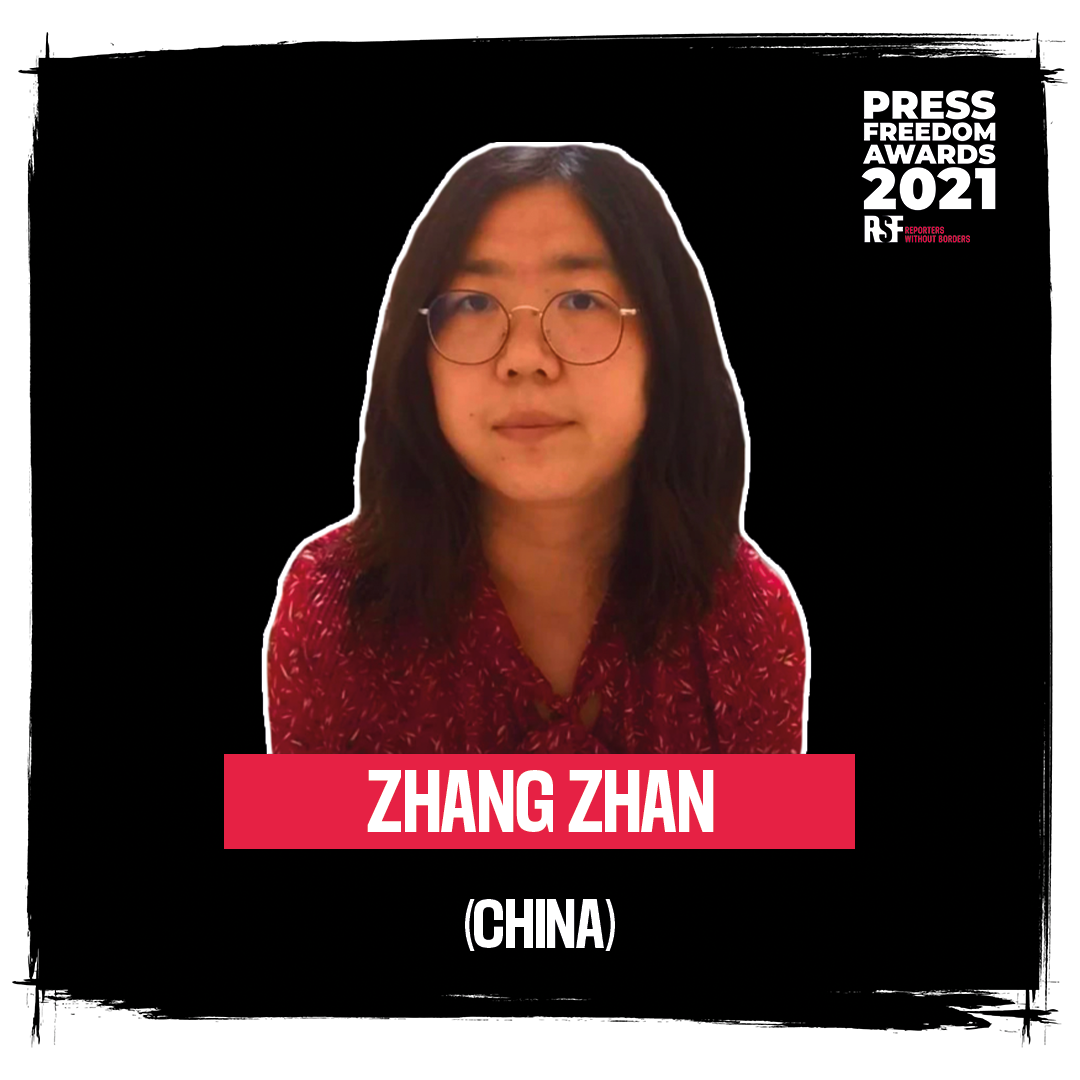
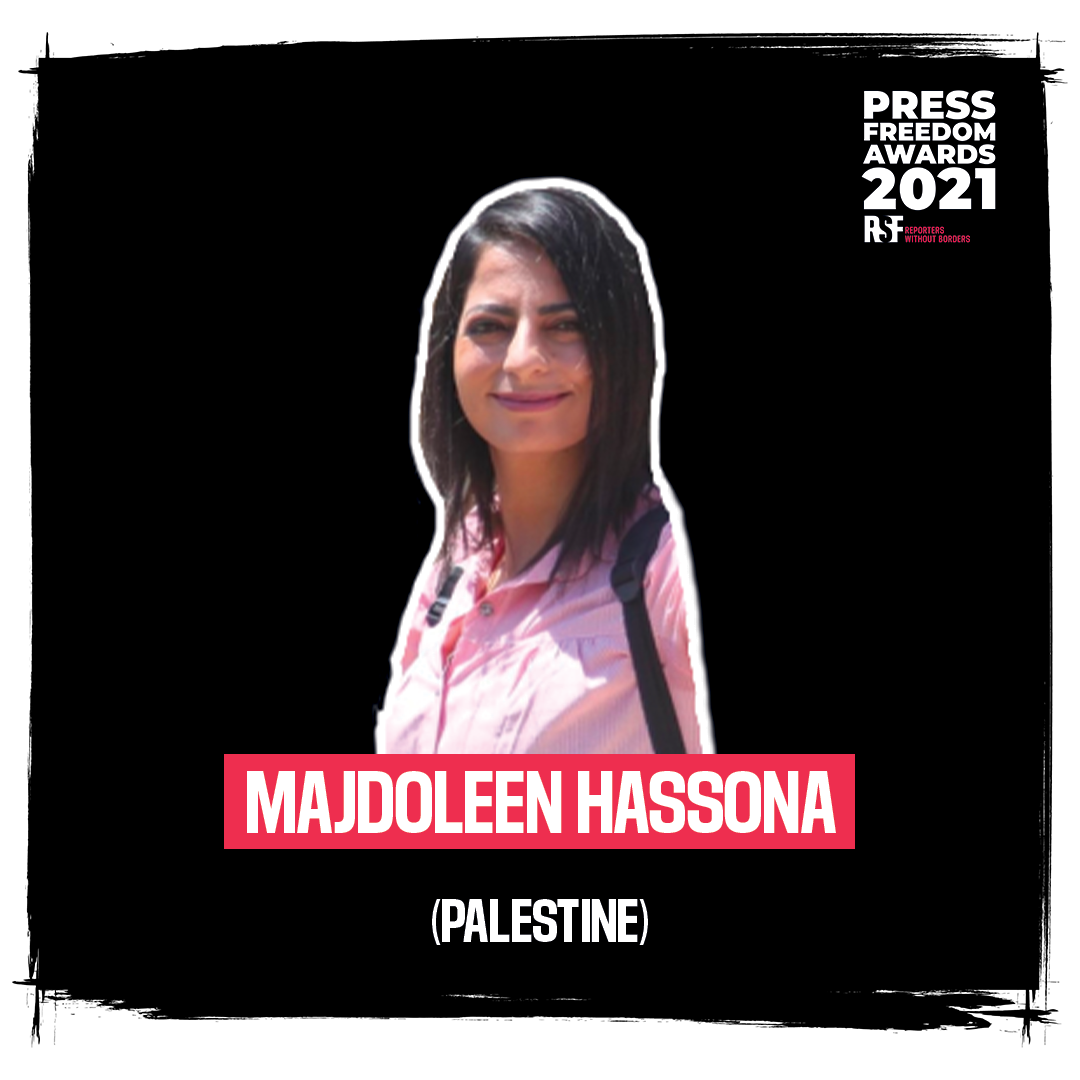
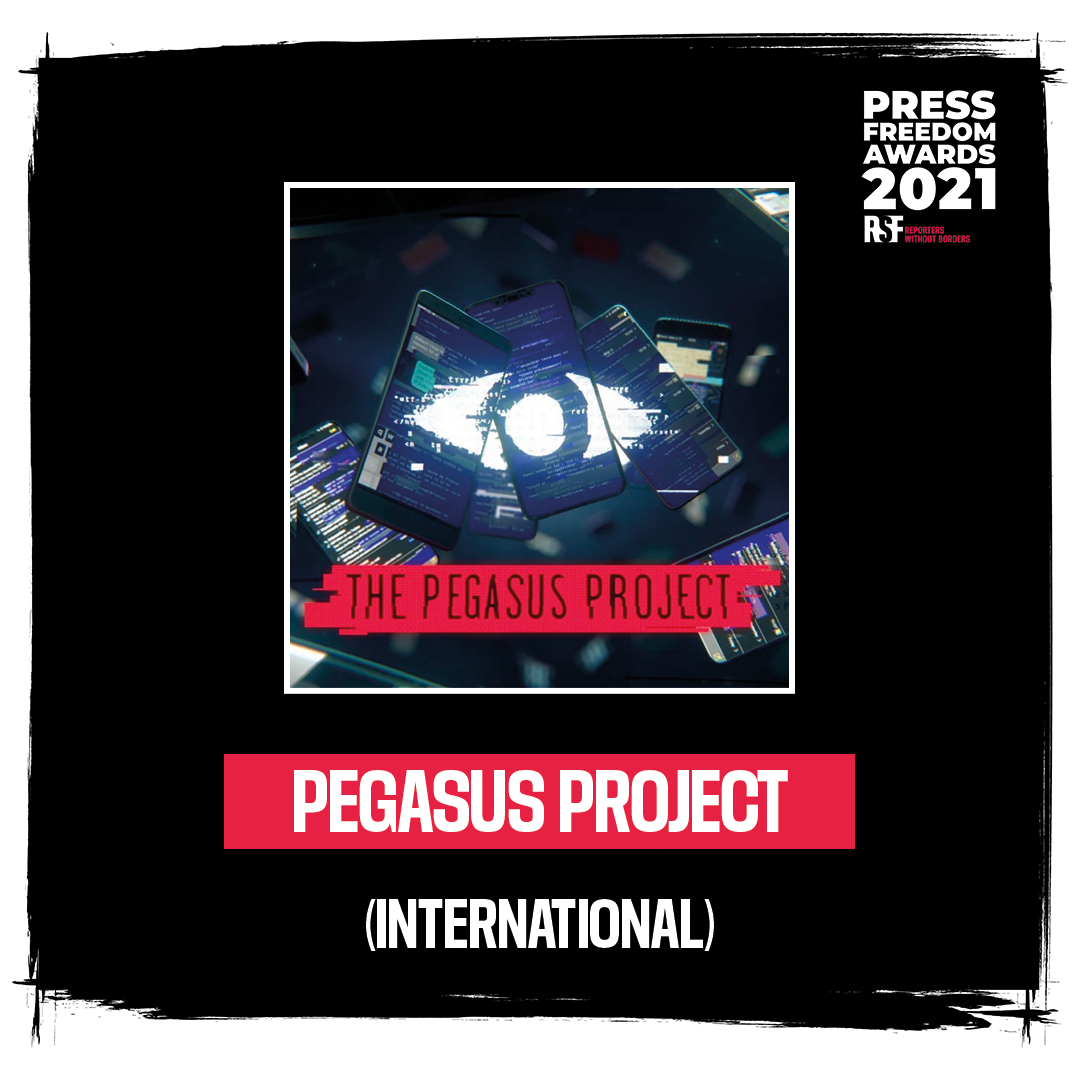
On 20 November 2021 Pacific Media Watch reported that the 2021 Reporters Without Borders (RSF) Press Freedom Awards have been given to Chinese journalist Zhang Zhan in the courage category, Palestinian journalist Majdoleen Hassona in the independence category, and the Pegasus Project in the impact category.

RSF president Pierre Haski announces the 29th RSF Press Freedom Awards in Paris. Video: RSF

RSF’s press freedom prizes are awarded every year to journalists or media that have made a notable contribution to the defence or promotion of freedom of the press in the world. This is the 29th year they have been awarded. The 2021 awards have been given in three categories — journalistic courage, impact and independence.

Courage Prize
The 2021 Prize for Courage, which aims to support and salute journalists, media outlets or NGOs that have displayed courage in the practice, defence or promotion of journalism, has been awarded to Chinese journalist Zhang Zhan.

Zhang Zhan

Despite constant threats, this lawyer-turned-journalist covered the covid-19 outbreak in the city of Wuhan in February 2020, live-streaming video reports on social media that showed the city’s streets and hospitals, and the families of the sick. Her reporting from the heart of the pandemic’s initial epicentre was one of the main sources of independent information about the health situation in Wuhan at the time.

After being arrested in May 2020 and held incommunicado for several months without any official reason being provided, Zhang Zhan was sentenced on 28 December 2020 to four years in prison for “picking quarrels and provoking trouble”. In protest against this injustice and the mistreatment to which she was subjected, she went on a hunger strike that resulted in her being shackled and force-fed. Her friends and family now fear for her life, and her health has worsened dramatically in recent weeks. See also: https://humanrightsdefenders.blog/2021/11/06/chinese-journalist-zhang-zhan-at-imminent-risk-of-death/

Independence Prize
The 2021 Prize for Independence, which rewards journalists, media outlets or NGOs that have resisted financial, political, economic or religious pressure in a noteworthy manner, has been awarded to Palestinian journalist Majdoleen Hassona.

Majdoleen Hassona
Majdoleen Hassona

Before joining the Turkish TV channel TRT and relocating to Istanbul, this Palestinian journalist was often harassed and prosecuted by both Israeli and Palestinian authorities for her critical reporting. While on a return visit to the West Bank in August 2019 with her fiancé (also a TRT journalist based in Turkey), she was stopped at an Israeli checkpoint and was told that she was subject to a ban on leaving the territory that had been issued by Israeli intelligence “for security reasons”. She has been stranded in the West Bank ever since but decided to resume reporting there and covered the anti-government protests in June 2021 following the death of the activist Nizar Banat.

Impact Prize
The 2021 Prize for Impact, which rewards journalists, media outlets or NGOS that have contributed to clear improvements in journalistic freedom, independence and pluralism, or increased awareness of these issues, has been awarded to the Pegasus Project.

The Pegasus Project
The Pegasus Project

The Pegasus Project is an investigation by an international consortium of more than 80 journalists from 17 media outlets* in 11 different countries that was coordinated by the NGO Forbidden Stories with technical support from experts at Amnesty International’s Security Lab. Based on a leak of more than 50,000 phone numbers targeted by Pegasus, spyware made by the Israeli company NSO Group, the Pegasus Project revealed that nearly 200 journalists were targeted for spying by 11 governments — both autocratic and democratic — which had acquired licences to use Pegasus. This investigation has made people aware of the extent of the surveillance to which journalists are exposed and has led many media outlets and RSF to file complaints and demand a moratorium on surveillance technology sales. See also: https://humanrightsdefenders.blog/2021/11/10/palestinian-ngos-dubbed-terrorist-were-hacked-with-pegasus-spyware/

“For defying censorship and alerting the world to the reality of the nascent pandemic, the laureate in the ‘courage’ category is now in prison and her state of health is extremely worrying,” said RSF secretary-general Christophe Deloire.

“For displaying a critical attitude and perseverance, the laureate in the ‘independence category has been unable to leave Israeli-controlled territory for the past two years. “For having revealed the scale of the surveillance to which journalists can be subjected, some of the journalists who are laureates in the ‘impact’ category are now being prosecuted by governments.

https://rsf.org/en/news/chinese-journalist-palestinian-journalist-and-pegasus-project-receive-2021-rsf-press-freedom-awards

Greece’s mistaken deterrence: migrants and aid workers facing heavy prison sentences

November 17, 2021
An abandoned life jacket in the Aegean Sea in 2016 | Photo: Picture-alliance/AP Photo/L.Pitarakis

A post by Marion MacGregor published on 15 November 2021in ‘Infomigrants’ brings out an awful truth which I have to face up to even though Greece is my adopted country. In the face of Turkey ‘weaponsing’ migrants, it is trying its hands at deterrence in the hope that it will diminish the pressure of inflows

Greece and other European countries are increasingly using the threat of criminal proceedings against aid workers and those migrants who ended up being marked as migrant smugglers.

Hanad Abdi Mohammad is in prison, he says, because of something he was forced to do. The Somali is serving an impossibly long sentence of 142 years (!) after he was convicted last December for driving an inflatable dinghy carrying migrants to Greece. He says that he didn’t have a choice, because the smuggler hit him in the face and threatened him with a gun before abandoning the boat in rough seas. As 28-year-old Mohammad told journalists and members of the European Parliament who visited the prison last week, he “didn’t think saving people is a crime.”

In the same prison on the Greek island of Chios two men from Afghanistan, Amir Zaheri and Akif Rasouli, both in their 20s, are also serving sentences of 50 years for similar criminal offences. The men’s convictions and staggering prison terms show how far Greece is ready to go in order to stop migrants in their tracks.

On the day the smuggler abandoned them at sea between Turkey and Greece, Mohammad and nearly three dozen other migrants were only concerned about their lives. Mohammad says that he called the Turkish coast guard repeatedly, begging to be rescued. But when it arrived, the Turkish patrol boat circled the migrants’ dinghy sending water into the boat and gradually pushing it toward Greece. In the chaos, two women fell overboard and drowned, AP reports.

The survivors were finally rescued by the Greek coast guard, and Mohammad helped others onto the rescue boat. He admitted to having driven the boat after the smuggler left. It didn’t cross his mind that would lead to him being prosecuted as a smuggler.

It’s not possible that someone who comes to claim asylum in Greece is threatened with such heavy sentences simply because they were forced, by circumstances or pressure, to take over handling a boat,” one of the lawyers representing the three imprisoned in Chios, Alexandros Georgoulis, told AP. Greek authorities, he said, “are essentially baptizing the smuggled as the smuggler.”

From file: Sara Mardini and Seán Binder | Screenshot from Amnesty International Ireland

Greek authorities have also accused aid workers and volunteers helping migrants in Greece of serious crimes. In one widely publicized case, the Syrian human rights worker Sara Mardini, a refugee herself, and an Irish volunteer Sean Binder were arrested and detained for months in 2018 on suspicion of espionage, money laundering, human trafficking and other offenses. Due to face trial on the island of Lesbos alongside 22 other civil society activists later this week, Binder says he is “terrified.”

I’ve had a taste of life in prison on Chios. It was all scabies and bed bugs with 17 of us packed in a cell,” Binder told The Guardian. “The police holding cells were even worse, the most awful place on earth; squalid, windowless rooms full of asylum seekers just there because authorities had nowhere else to put them.”

Giorgos Kosmopoulos, a campaigner with an Amnesty International group which plans to monitor the trial in Greece, says that this is not only happening there. “Human rights defenders across Europe are being criminalized … for helping refugees and migrants,” he told The Guardian. See also: https://humanrightsdefenders.blog/2020/10/09/mary-lawlor-condemns-criminalization-of-those-saving-lives-in-the-mediterranean/

AP reports that, according to the European Union Agency for Fundamental Rights, Germany, Italy, Malta, the Netherlands, Spain and Greece have initiated 58 investigations and legal proceedings since 2016 against private entities involved in search and rescue.

I think it’s important to challenge these in the courts, to not at all sit back and accept that we should be cast as smugglers or spies because I offered CPR, (or) more often than not just a smile, to someone in distress,” Binder told the news agency. “It is preposterous that we should be cast as criminals. I don’t accept it….It doesn’t matter who you are, you don’t deserve to drown in the sea.

Binder told The Guardian that he has not bought a return ticket to the UK, where he has been studying. He and Mardini face a maximum eight-year sentence, convertible into a fine. They are still under investigation for offences which could carry 25-year sentences if they are convicted.

In my view, the problem can only be tackled in a European context [see e.g. https://ec.europa.eu/home-affairs/what-we-do/policies/legal-migration-and-integration_en%5D but it seems most member states cling to outdated notion of sovereignty.

Not directly related but possibly relevant is recent legislation in Greece, adopted on November 11, 2021, that makes it a criminal offence to spread “fake news.” Human Rights Watch said that the Greek government should immediately move to revoke the provision, which is incompatible with freedom of expression and media freedom. “In Greece, you now risk jail for speaking out on important issues of public interest, if the government claims it’s false,” said Eva Cossé, Greece researcher at Human Rights Watch. “The criminal sanctions risk making journalists and virtually anyone else afraid to report on or to debate important issues such as the handling of Covid-19 or migration or government economic policy.

While the trial began Thursday, it was almost immediately suspended. The court’s decision to adjourn, said 27-year-old Binder, a diver and German national, “is further proof of the absurdity of this case.”

https://www.commondreams.org/news/2021/11/18/drop-charges-greece-delays-trial-humanitarians-who-aided-refugees-sea

https://www.infomigrants.net/en/post/36487/greece-migrants-and-aid-workers-facing-decades-in-prison

https://www.independent.ie/regionals/kerryman/news/kerry-aid-worker-faces-trial-in-greece-41058865.html

https://www.hrw.org/news/2021/11/17/greece-alleged-fake-news-made-crime

https://reliefweb.int/report/greece/greece-guilty-verdict-migrant-rights-defenders-could-mean-more-deaths-sea-un-expert

https://www.ansamed.info/ansamed/en/news/sections/politics/2021/11/19/trial-of-aid-workers-in-greece-is-adjourned-amid-protests_5de29280-fde8-4c77-b7c2-ef878c497157.html

See also in March 2022: https://www.hrw.org/news/2022/03/17/ray-hope-fight-against-greeces-border-abuses,

and on 12 April: https://www.ohchr.org/en/press-releases/2022/04/un-committee-enforced-disappearances-publishes-findings-greece-and-niger

Interpol: UAE Major General and Chinese Public Security Official are not good candidates for Interpol!

November 16, 2021

INTERPOL is going to have its General Assembly on the 23 – 24 November 2021 in Lyon. The election of both its President and a member of the Executive Committee look terrible. Already in 2017 there was a problem: see https://humanrightsdefenders.blog/2017/04/20/interpol-headed-by-chinese-police-official-human-rights-defenders-fearsome/. (The former chairman of Interpol Meng Hongwei was also a ministry of public security official, serving as vice-minister. However, Meng’s Interpol term ended prematurely in 2018 when he disappeared during a visit to China and was later jailed for 13 years on bribery charges, amid Xi Jinping’s anti-graft campaign targeting millions of officials.)

Several prominent members of the European Parliament (MEPs) have warned that the appointment of the Emirati official Major General Ahmed Nasser Al-Raisi to the position of president of Interpol would “undermine the mission and reputation” of the global police organisation. In a letter sent to the European Commission president, three MEPs urged European Union (EU) states to elect an Interpol chief that comes “from a country with an established criminal justice system and longstanding respect for human rights”.

The Gulf Center for Human Rights (GCHR), the French League for Human Rights and the International Federation for Human Rights are also concerned about the candidacy of Major General Ahmed Nasser Al-Raisi call to reject him.

Ahmed Al-Raisi has been Inspector General of the UAE’s Interior Ministry since 2015 and is also in charge of the UAE police force. Under his leadership, forces have carried out repeated and systematic arbitrary detentions and tortured prisoners of conscience and human rights defenders with complete impunity. One of the most emblematic cases concerns human rights defender Ahmed Mansour. Winner of the 2015 Martin Ennals Award and member of the GCHR steering committee, Ahmed Mansour has been imprisoned since March 2017 and sentenced to ten years’ imprisonment in 2018 for, according to the authorities, criticising the Emirati government and tarnishing his country’s image on social networks. Since 2017, he has been held in solitary confinement in Al-Sadr prison, in a 4m2 cell, without access to medical, hygiene, water or sanitary facilities. The inhumane conditions of Ahmed Mansour’s imprisonment have been the subject of several appeals without any favourable response from the Emirati authorities. [see: https://humanrightsdefenders.blog/tag/ahmed-mansoor/]

According to reports of several NGOs, torture is used systematically in detention centres in order to obtain confessions of guilt or testimonies against other detainees, particularly in the prisons of Al-Razeen, Al-Wathba and Al-Sadr. In addition, some prisons, such as Al-Awair prison and the Al-Barsha police detention centre, are overcrowded and unsanitary, making it extremely difficult to comply with social distancing and recommended hygiene practices in the context of the COVID-19 pandemic….In addition, prisoners are regularly denied medication and medical treatment for pre-existing health problems or illnesses developed during detention. Several UN experts have condemned these practices and expressed their concerns to the UAE authorities in recent years, but the authorities have not changed their practices.

Such inhumane treatment is recurrent in the UAE and is in flagrant contravention of international law and the Nelson Mandela Rules on the Treatment of Prisoners. While Major General Al-Raisi is, by virtue of his office, responsible for investigating complaints of abuse by the police and security forces in his country, none have been conclusively investigated. In the absence of any enforceable accountability mechanisms in the UAE, the GCHR has filed a complaint in France, against General Major Al-Raisi for acts of torture. Unfortunately, Interpol did not listen: https://www.businessinsider.com/interpol-president-uae-official-accused-of-torture-elected-2021-11

Another problematic candidate is Hu Binchen, the deputy director-general of the Chinese Ministry of international cooperation department, who is one of three candidates vying for two seats as Asia delegates on the committee.

The 13-member executive committee oversees the work of Interpol’s general secretariat and helps set future policy. Interpol controls a number of databases containing identifying details of people and property, which assist in global policing. It also operates the system of red notices, which are requests “to locate and provisionally arrest an individual pending extradition”.

However, there are long-running concerns over governments or authorities misusing the system to track down dissidents. While there are clear rules against the use of red notices on refugees, high-profile cases have shown countries are repeatedly able to obtain red notices, against Interpol policy.

Activists and advocacy groups, as well as 50 members of an international cross-party group of legislators, the Inter-parliamentary Alliance on China, have lodged their objections at Hu’s potential election to the committee, noting alleged attempts by China to use the red notice system to target exiled Uyghur activists.

“By electing Hu Binchen to the executive committee, the general assembly would be giving a green light to the PRC government to continue their misuse of Interpol and would place the tens of thousands of Hong Kong, Uyghur, Tibetan, Taiwanese and Chinese dissidents living abroad at even graver risk,” said the letter from the Alliance, citing the July detention of Uyghur activist Idris Hassan in Morocco.

Allowing Interpol to be used as a vehicle for the PRC government’s repressive policies does great harm to its international standing.”

The human rights group Safeguard Defenders said the Chinese ministry’s international cooperation department, in which Hu is a senior official, oversaw operations named Sky Net and Fox Hunt, chasing down fugitives overseas. It alleged “teams were sent by the ministry “to intimidate and harass ethnic Chinese to force them to return to China ‘voluntarily’”. In a report also released on Monday, Safeguard Defenders said there had been a tenfold increase in the issuance of Chinese red notices between 2000 and 2020.

A later development is that 259 organizations, call on INTERPOL to immediately ban the Myanmar military junta from representing Myanmar as a member of INTERPOL. They demand that the military junta is excluded from the upcoming 89th INTERPOL General Assembly and all benefits and future cooperation that membership entails. [see: https://www.forum-asia.org/?p=36143]

https://www.fidh.org/en/issues/litigation/open-letter-to-the-representatives-of-the-member-states-of-the

https://www.middleeasteye.net/news/eu-lawmakers-say-uae-police-chief-would-undermine-interpols-reputation

https://www.theguardian.com/world/2021/nov/15/chinese-official-seeks-interpol-role-sparking-fears-for-dissidents

https://www.business-standard.com/article/news-ani/china-s-nominee-to-interpol-committee-opposed-by-lawmakers-from-20-countries-121111600231_1.html

https://www.theguardian.com/world/2021/nov/20/uae-nominee-interpol-ahmed-naser-al-raisi-torture-claims

https://www.thestar.com/news/world/europe/2021/11/22/interpol-election-raises-rights-concerns-about-fair-policing.html