Archive for the 'organisations' Category

Alan Glasgow new Executive Director of Front Line Defenders

April 23, 2024

On 17 April 2024 Front Line Defenders announced that Alan Glasgow will take up the role of Executive Director of the organisation in late May 2024.

The appointment follows a competitive, international recruitment process led by Front Line Defenders’ Board and an external recruitment agency.

As a longtime admirer of Front Line Defenders, I am delighted to have this opportunity to progress its work in supporting and protecting human rights defenders at risk,” said Alan Glasgow, incoming Executive Director of Front Line Defenders. “I feel privileged to work with human rights defenders from all around the world, in addition to our partners in civil society and government, and our supporters and donors.

“There is no doubt that human rights defenders in many parts of the world face an increasing danger and a stark reality. I hope to draw on decades of work on some of the world’s most challenging contexts – as well as the strength of Front Line Defenders’ existing skills, its remarkable global team, and knowledge base built over two decades – to help bring positive change for defenders and their crucial work.”

Alan has worked for 25 years in development, humanitarian, and human rights contexts. He joins Front Line Defenders from the position of Regional Director for Asia and Europe with the international aid agency, Mercy Corps. Prior to this, he served as Mercy Corps’ European Migration Director. He has also worked with International Rescue Committee in New York and West Africa and with GOAL as Country Director and Director of Global Business Development.

Alan’s leadership experience has focused on work at the frontlines of the world’s most challenging human rights environments, including Afghanistan, Gaza, Liberia, Myanmar, Sierra Leone, South Sudan, Sudan, Syria, Ukraine and Yemen.His career has demonstrated a profound commitment to the rights of the marginalised and his work has been underpinned by a belief in human rights principles.

Alan will be Front Line Defenders’ third Executive Director since the organisation was founded in 2001. He follows in the footsteps of Front Line Defenders’ founder Mary Lawlor who served from 2001 until 2016, and former Executive Director Andrew Anderson, who held the role from 2016 to 2023. Olive Moore, who held the role of Interim Director for the last year, will resume her role as Deputy Director.

Civil society view of the 55th session of the UN Human Rights Council

April 12, 2024

At the 55th Human Rights Council session, 22 civil society organisations share reflections on key outcomes and highlight gaps in addressing crucial issues and situations [see: https://humanrightsdefenders.blog/2024/02/26/human-rights-defenders-issues-at-the-55th-session-of-the-human-rights-council/]:

The failure of States to pay their membership dues to the United Nations in full and in time, and the practice of conditioning funding on unilateral political goals is causing a financial liquidity crisis for the organisation, the impacts of which are felt by victims and survivors of human rights violations and abuses. … Without the resources needed, the outcomes of this session can’t be implemented. The credibility of HRC is at stake. 

We welcome the adoption of three resolutions calling for the implementation of effective accountability measures to ensure justice for atrocity crimes committed in the context of Israel‘s decades long colonial apartheid imposed over the Palestinian people, and for the realisation of the Palestinian people’s right to self-determination. Special Procedures expressed their profound concern about “the support of certain governments for Israel’s strategy of warfare against the besieged population of Gaza, and the failure of the international system to mobilise to prevent genocide” and called on States to implement an “arms embargo on Israel, heightened by the International Court of Justice’s ruling […] that there is a plausible risk of genocide in Gaza […].”   This session, the Special Rapporteur on the OPT concluded that the actions of Israel in Gaza meet the legal qualifications of genocide. 

We deplore the double standards in applying international law and the failure of certain States to vote in favor of ending impunity. This undermines the integrity of the UN human rights framework, the legitimacy of this institution, and the credibility of those States. From Palestine, to Ukraine, to Myanmar, to Sudan, to Sri Lanka, resolving grave human rights violations requires States to address root causes, applying human rights norms in a principled and consistent way. The Council has a prevention mandate and UN Member States have a legal and moral duty to prevent and ensure accountability and non-recurrence for atrocity crimes, wherever they occur.

We want to highlight and specifically welcome the adoption of the first ever resolution on combating discrimination, violence and harmful practices intersex persons. The resolution builds on growing support in the Council on this topic and responds to several calls by the global coalition of intersex-led organisations. The resolution takes important steps in recognising that discrimination, violence and harmful practices based on innate variations of sex characteristics, such as medically unnecessary interventions, takes place in all regions of the world. We welcome that the resolution calls for States to take measures to protect the human rights of this population and calls for an OHCHR report and a panel discussion to address challenges and discuss good practices in protecting the human rights of intersex persons.

We welcome the renewal of the mandate of the Independent Expert on the enjoyment of human rights by persons with albinism. As attested by human rights defenders with albinism, the mandate played an invaluable role by shedding light on human rights violations against persons with albinism through ground breaking research, country visits, and human rights training, and ensuring that defenders with albinism are consulted and take part in the decision-making. The organisations also welcomed the inclusion of language reflecting the important role played by “organizations of persons with albinism and their families”, and the reference to the role of States in collaboration with the World Health Organization, “to take effective measures to address the health-related effects of climate change on persons with albinism with a view to realizing their right to the enjoyment of the highest attainable standard of physical and mental health, particularly regarding the alarming incidence of skin cancer in this population, and to implement the recommendations of the report of the Independent Expert in this regard”.

We welcome the adoption of the resolution on the renewal of the mandate of the Special Rapporteur on the human right to a clean, healthy and sustainable environment. We also welcome the update of the title of the mandate acknowledging the recognition of this right by the Human Rights Council in its resolution 48/13 on 8 October 2021 and the General Assembly resolution 76/300 on 28 July 2022. We also welcome the inclusion of gender-specific language in the text, and we call on the Special Rapporteur to devote a careful attention to the protection of environmental human rights defenders for their strong contribution to the realisation of the right to a clean, healthy, and sustainable environment, as called for by several States. We also welcome that the Council appointed for the first time a woman from the global south to fulfill this mandate, and we welcome the nomination of another woman as Special Rapporteur on the promotion and protection of human rights in the context of climate change. 

We welcome the resolution on countering disinformation, which addresses new issues whilst once again rejecting censorship and reaffirming the ‘essential role’ that the right to freedom of expression plays in countering disinformation. We welcome the specific focus on girls – besides women – as well as risks associated with artificial intelligence, gender-based violence, and electoral processes. We urge States to follow the approach of the resolution and to combat disinformation through holistic, positive measures, including by ensuring a diverse, free and independent media environment, protecting journalists and media workers, and implementing comprehensive right to information laws. Importantly, we also urge States to ensure that they do not conduct their own disinformation campaigns. At the same time, social media companies have an essential role to play and should take heed of the resolution by reforming their business models which allow disinformation to flourish on their platforms. The resolution also mandates the Advisory Committee to produce a new report on disinformation, and it is absolutely essential that this report mirrors and reinforces existing standards on this topic, especially the various reports of the Special Rapporteur on freedom of opinion and expression.

Whilst we welcome the technical renewal of the resolution on freedom of religion or belief, we regret that the parallel resolution on combating intolerance (widely known by its original name Resolution 16/18) was not tabled at the session. Since 2011, these duel resolutions have been renewed each year, representing a consensual and universal framework to address the root causes of hate based on religion or belief in law, policy, and practice. We call on the OIC to once again renew Resolution 16/18 in a future session, while ensuring no substantive changes are made to this consensual framework. We also urge all States to reaffirm their commitment to Resolution 16/18 and the Rabat Plan of Action and adopt comprehensive and evidence-based national implementation plans, with the full and effective participation of diverse stakeholders.

We welcome the adoption of the resolution on prevention of genocide and its focus on impunity, risks and early warnings, as well as the paragraph reaffirming that starvation of civilians as a method to combat is prohibited under international humanitarian law; however, we regret that the resolution fails to adequately reflect and address serious concerns relating to current political contexts and related risks of genocide. 

We welcome the adoption of the resolution on the rights of the child: realising the rights of the child and inclusive social protection, strengthening the implementation of child rights-compliant inclusive social protection systems that benefit all children. We also welcome the addition of a new section on child rights mainstreaming, enhancing the capacity of OHCHR to advance child rights mainstreaming, particularly in areas such as meaningful and ethical child participation and child safeguarding.  We remain concerned by persisted attempts to weaken the text, especially to shift the focus away from children as individual right-holders, to curtail child participation and remove the inclusion of a gender perspective.

We welcome the adoption of the resolution on torture and other cruel, inhuman or degrading treatment or punishment which addresses effective national legislative, administrative, judicial or other measures to prevent acts of torture. We welcome the new paragraph urging States concerned to comply with binding orders of the International Court of Justice related to their obligations under the Convention Against Torture.

We welcome the adoption of a new resolution on the human rights situation in Belarus. The Belarusian authorities continue their widespread and systematic politically-motivated repression, targeting not only dissent inside the country, but also Belarusians outside the country who were forced to flee for fear of persecution. Today, almost 1,500 prisoners jailed following politically-motivated charges in Belarus face discriminatory treatment, severe restriction of their rights, and ill-treatment including torture. The resolution rightly creates a new standalone independent investigative mechanism, that will inherit the work of the OHCHR Examination, to collect and preserve evidence of potential international crimes beyond the 2020 elections period, with a view to advancing accountability. It also ensures the renewal of the mandate of the Special Rapporteur who remains an essential ‘lifeline’ to Belarusian civil society.

We welcome the resolution on technical assistance and capacity building in regard to the human rights situation in Haiti and emphasis on the role civil society plays in the promotion and protection of human rights and the importance of creating and maintaining an enabling environment in which civil society can operate independently and free from insecurity. We similarly welcome the call on the Haitian authorities to step up their efforts to support national human rights institutions and to pursue an inclusive dialogue between all Haitian actors concerned in order to find a lasting solution to the multidimensional crisis, which severely impacts civil society. We welcome the renewal of the mandate of the designated expert and reference to women and children in regard to the monitoring of human rights situation and abuses developments, as well as encouragement of progress on the question of the establishment of an office of the Office of the High Commissioner in Haiti. We nonetheless regret that the resolution does not address the multifaceted challenges civil society faces amidst escalating violence, fails to further address the link between the circulation of firearms and the human rights violations and abuses, and does not identify concrete avenues for the protection of civilians and solidarity action to ensure the safety, dignity and rights of civilians are upheld.

We welcome the adoption of the resolution on Iran, renewing the mandate of the Special Rapporteur on human rights in Iran and extending for another year the mandate of the Independent International Fact-Finding Mission on Iran. The continuation of these two distinct and complementary mandates is essential for the Council to fulfill its mandate of promotion and protection of human rights in Iran. However, given the severity of the human rights crisis in the country, we regret that this important resolution remains purely procedural and fails to reflect the dire situation of human rights in Iran, including the sharp spike in executions, often following grossly unfair trials. It also fails to address the increased levels of police and judicial harassment against women and girls appearing in public without compulsory headscarves, human rights defenders, lawyers, journalists and families of victims seeking truth and justice, and the continued pervasive discrimination and violence faced by women and girls, LGBTI+ persons and persons belonging to ethnic and religious minorities in the country.  

We welcome the adoption by consensus of the resolution on Myanmar, which is a clear indication of the global concern for the deepening human rights and humanitarian crisis in the country as a result of the military’s over three-year long brutal war against the people resisting its attempted coup. We further welcome the Council’s unreserved support for Myanmar peoples’ aspirations for human rights, democracy, and justice as well as the recognition of serious human rights implications of the continuing sale of arms and jet fuel to Myanmar.

We welcome the resolution on the situation of human rights in Ukraine stemming from the Russian aggression. The latest report of the Independent International Commission of Inquiry (COI) reveals disturbing evidence of war crimes, including civilian targeting, torture, sexual violence, and the unlawful transfer of children. These findings underscore the conflict’s brutality, particularly highlighted by the siege of Mariupol, where indiscriminate attacks led to massive civilian casualties and infrastructure destruction. The report also details the widespread and systematic torture and sexual violence against both civilians and prisoners of war. Moreover, the illegal deportation of children emerges as a significant issue, as part of a broader strategy of terror and cultural erasure. The COI’s mandate extension is crucial for ongoing investigations and ensuring justice for victims. 

By adopting a resolution entitled ‘advancing human rights in South Sudan,’ the Council ensured that international scrutiny of South Sudan’s human rights situation will cover the country’s first-ever national elections, which are set to take place in De­cember 2024. With this resolution, the UN’s top human rights body extended the mandate of its Com­mis­sion on Human Rights in South Sudan.

We welcome the resolution on the human rights situation in Syria and the extension of the mandate of the Independent International Commission of Inquiry (COI), which will continue to report on violations from all sides of the conflict in an impartial and victim-centered manner. Syria continues to commit systematic and widespread attacks against civilians, in detention centers through torture, arbitrary detention and enforced disappearance and through indiscriminate attacks against the population in Idlib. We welcome that the resolution supports the mandate of the Independent Institution of the Missing People and calls for compliance with the recent order on Provisional Measures by the ICJ – both initiatives can play a significant role in fulfilling victims’ rights to truth and justice and should receive support by all UN Member States. In a context of ongoing normalisation, the CoI’s mandate to investigate and report on human rights abuses occurring in Syria is of paramount importance.

We continue to deplore this Council’s exceptionalism towards serious human rights violations committed by the Chinese government. At a time when double-standards are enabling ongoing atrocity crimes to be committed in Palestine, sustained failure by Council Members, in particular OIC countries, to promote accountability for crimes against humanity against Uyghurs and Muslim peoples in China severely undermines the Council’s integrity, and its ability to prevent and put an end to atrocity crimes globally. Findings by the OHCHR, the UN Treaty Bodies, the ILO and over 100 letters by UN Special Procedures since 2018 have provided overwhelming evidence pointing to systematic and widespread human rights violations across the People’s Republic of China. We reiterate our pressing call for all Council Members to support the adoption of a resolution establishing a UN mandate to monitor and report on the human rights situation in China, as repeatedly urged by UN Special Procedures. We further echo Special Procedures’ call for prompt and impartial investigations into the unlawful death of Cao Shunli, and all cases of reprisals for cooperation with the UN.

We regret the Council’s silence on the situation in India despite the clear and compounding early warning signs of further deterioration that necessitate preventive action by the Council based on the objective criteria. The latest of these early warning signals include the recent notification of rules to implement the highly discriminatory Citizenship Amendment Act by the Bharatiya Janata Party-led government just weeks before the election, along with recent intercommunal violence in Manipur and ongoing violence against Muslims in various parts of India amid increasing restrictions on civic space, criminalisation of dissent and erosion of the rule of law with political interference.

We further regret that this Council is increasingly failing to protect victims of human rights violations throughout the Middle East and North Africa, including in Algeria, Bahrain, Egypt, Libya, Saudi Arabia, and Yemen. The people of Yemen and Libya continue to endure massive ‘man-made’ humanitarian catastrophes caused in large part by ongoing impunity for war crimes, crimes against humanity and other grave violations of international law. In Algeria, Egypt, Bahrain, Saudi Arabia and in other MENA countries, citizens are routinely subjected to brutal, wide-spread human rights violations intended to silence dissent, eradicate independent civil society and quash democratic social movements. Countless citizens from the MENA region continue to hope and strive for a more dignified life – often at the cost of their own lives and freedom. We call on this Council and UN member States to rise above narrow political agendas and begin to take steps to address the increasing selectivity that frequently characterises this Council’s approach to human rights protection and promotion. 

We regret that once more, civil society representatives faced numerous obstacles to accessing the Palais and engaging in discussions, both in person and remotely, during this session. The UN human rights system in Geneva has always and continues to rely on the smooth and unhindered access of civil society to carry out its mandate. We remind UN Member States, as well as UNOG, that the Council’s mandate, as set out in HRC Res 5/1, requires that arrangements be made, and practices observed to ensure ‘the most effective contribution’ of NGOs. Undermining civil society access and engagement not only undermines the capacities and effectiveness of civil society but also of the UN itself.

Signatories:

  1. All Human Rights for All in Iran
  2. Asian Forum for Human Rights and Development (FORUM-ASIA)
  3. Association Arc pour la defense des droits de l’homme et des revendication democratique/culturelles du peuple Azerbaidjanais Iran -”ArcDH”
  4. Balochistan Human Rights Group
  5. Cairo Institute for Human Rights Studies
  6. Child Rights Connect (CRCnt)
  7. CIVICUS
  8. Commonwealth Human Rights Initiative (CHRI)
  9. Egyptian initiative for Personal Rights (EIPR)
  10. Ensemble contre la Peine de Mort
  11. Franciscans International
  12. Gulf Center for Human Rights
  13. Impact Iran
  14. International Bar Association’s Human Rights Institute (IBAHRI)
  15. International Federation for Human Rights (FIDH)
  16. International Lesbian and Gay Association (ILGA)
  17. International Service for Human Rights (ISHR)
  18. Kurdistan Human Rights Network
  19. Kurdpa Human Rights Organization
  20. PEN America
  21. The Syrian Legal Development Programme (SLDP)
  22. United 4 Iran

see also: https://www.eeas.europa.eu/delegations/un-geneva/eu-human-rights-council_en

https://www.fidh.org/en/international-advocacy/united-nations/human-rights-council/55th-human-rights-council-session-israel-palestine-belarus-iran

‘Foreign Agent’ Laws Spread, now also Georgia ?

April 8, 2024

Iskra Kirova, Advocacy Director, Europe and Central Asia Division of HRW, wrote on 4 April 2024: ‘Foreign Agent’ Laws Spread as EU Dithers to Support Civil Society

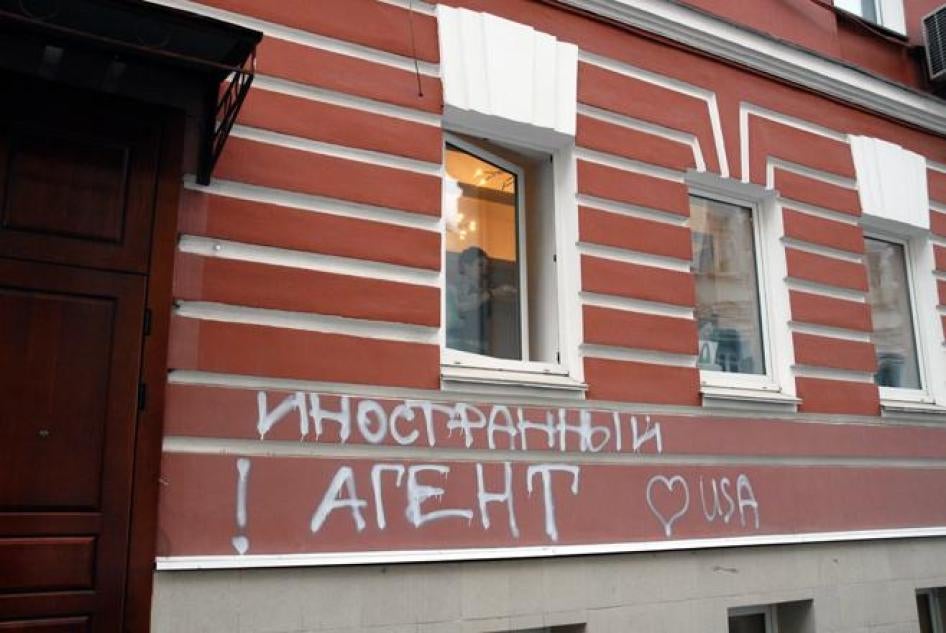
On the night before the infamous “foreign agents” law came into force back in 2012, unknown individuals sprayed graffiti reading, “Foreign Agent! ♥ USA” on the buildings hosting the offices of three prominent NGOs in Moscow, including Memorial. 
On the night before the infamous “foreign agents” law came into force back in 2012, unknown individuals sprayed graffiti reading, “Foreign Agent! ♥ USA” on the buildings hosting the offices of three prominent NGOs in Moscow, including Memorial.  © 2012 Yulia Klimova/Memorial

Georgia’s ruling party plans to reintroduce highly controversial Russia-style “foreign agent” legislation aimed at incapacitating civil society and independent media. If adopted, the laws, which were withdrawn last year in the face of massive protests, would require foreign-funded nongovernmental organizations and media to register as “agents of foreign influence”. That would make them subject to additional scrutiny and sanctions, including administrative penalties up to 25,000 GEL (about 8,600 Euro). Authorities claim the laws promote “transparency”, but their statements make it clear the laws will be used to stigmatize and punish critical voices.

Georgia was granted EU candidate status in December 2023 on the understanding it would improve conditions for civil society. This move risks derailing its EU integration even if the EU has until now been willing to move the country forward in the accession process despite limited progress on EU reform priorities. Georgia’s defiance of the EU on its civil society commitments isn’t so surprising when seen in the regional context. See also: https://humanrightsdefenders.blog/2024/03/24/kyrgyzstan-on-its-way-to-emulate-russia-with-a-draft-law-on-foreign-representatives-agents/

The day before Georgia’s announcement, Kyrgyzstan’s president signed an abusive “foreign representatives” law. Copied almost entirely from the Russian equivalent, the law would apply the stigmatizing designation of “foreign representative” to any nongovernmental organization that receives foreign funding and engages in vaguely defined “political activity”. The bill had been widely criticized after its initial submission in November 2022, including in a urgency resolution by the European Parliament.

The EU had ample opportunity to press the authorities to reject this bill. Kyrgyzstan benefits from privileged access to the EU internal market tied to respect for international human rights conventions: conventions this law clearly contravenes. The country is poised to sign an enhanced partnership agreement with the EU that centers democracy and fundamental rights. The EU has been silent on whether these deals would be imperiled by the bill’s adoption, despite the fact the European Commission’s own assessment highlighted Kyrgyzstan’s dire environment for civil society and the country’s breach of its obligations.

The latest spate of curbs on civil society comes in the wake of the European Commission’s December 2023 legislative proposal for an EU Directive on “transparency of interest representation” that would create a register of organizations which receive foreign funding. European civil society vehemently opposes the proposal because it risks shrinking space for independent organizations at home and diminishing the EU’s credibility in opposing such laws abroad. Yet the Commission forged ahead. On the same day the proposal was adopted, Hungary’s parliament approved a law that gives a government-controlled body broad powers to target civil society and independent media.

With civil society organizations under threat throughout Europe and Central Asia, we need an EU that in words and actions protects civic space and sets the right standards.

https://www.hrw.org/news/2024/04/04/foreign-agent-laws-spread-eu-dithers-support-civil-society

https://www.ohchr.org/en/press-briefing-notes/2024/04/kyrgyzstan-new-law-risks-undermining-work-ngos

https://news.un.org/en/story/2024/05/1149776

https://www.ohchr.org/en/press-releases/2024/05/georgia-un-experts-condemn-adoption-law-transparency-foreign-influence

and see this! https://oc-media.org/georgian-foreign-agent-law-protester-lazare-grigoriadis-found-guilty/

Rwanda: Human Rights Watch’ Archives March 1993 – December 1994 digitized and public

April 4, 2024

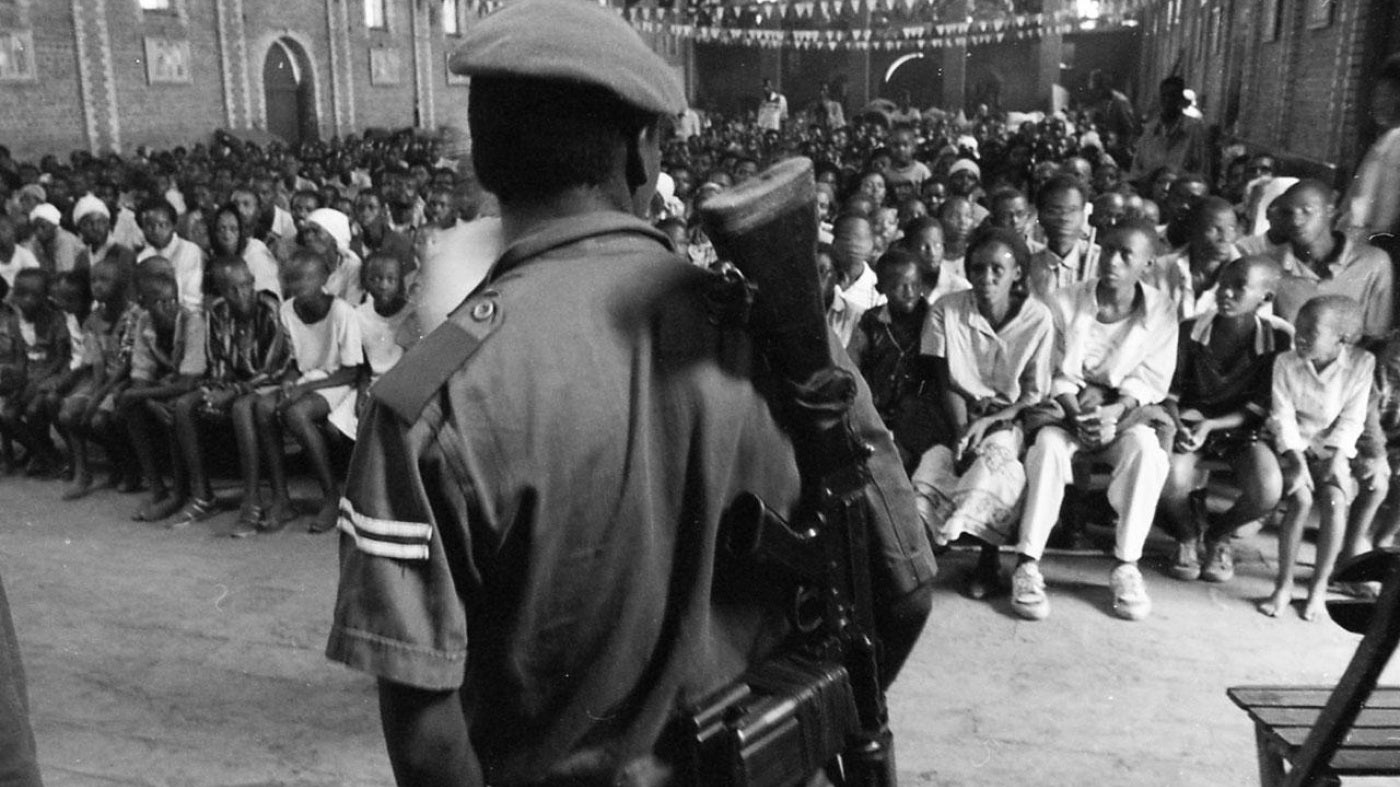
A crowd of mostly Tutsi civilians, seeking protection against Hutu militiamen, sit in the Sainte Famille Catholic church in the then-government controlled part of Kigali, listening to a member of the security services address them. Over several months, ma

On 2 April, 2024 Human Rights Watch made part of its Rwanda Archives public in digital form.

Human Rights Watch has been documenting and exposing human rights violations in Rwanda since the early 1990s. Its senior adviser in the Africa division, Alison Des Forges, one of the world’s foremost experts on Rwanda, dedicated her career to the struggle for human rights in the Great Lakes region of Africa, and to Rwanda in particular. In the period leading up to the 1994 genocide, she worked tirelessly to alert world powers to the impending crisis in Rwanda. Few would listen. By the time the genocidal forces had unleashed their sinister program and the world had awakened to the full horror that was unfolding in Rwanda, it was too late. The killings in Rwanda increased as a civil war in Burundi waged on. The violence in Burundi, also based on ethnic divisions between Hutu and Tutsi ethnic groups, lasted from 1993 until 2005.

Des Forges’s efforts did not stop when the genocide ended. She continued to painstakingly gather information on the killings, rapes, and other horrific crimes, which she compiled into what has become one of the main reference books on the Rwandan genocide: “Leave None to Tell the Story: Genocide in Rwanda”, a 500-page account of the genocide published jointly by Human Rights Watch and the International Federation of Human Rights (FIDH) in 1999. 

Des Forges testified as an expert witness in 11 trials at the United Nations International Criminal Tribunal for Rwanda (ICTR) in Arusha, Tanzania, as well as in domestic court proceedings involving Rwandan genocide suspects in several countries.

Des Forges campaigned vigorously for justice for the genocide until her tragic death in a plane crash in the US on February 12, 2009. She also documented human rights abuses by the new government of Rwanda after the genocide and advocated for accountability for all abuses, past and present.

Thirty years after the genocide, Human Rights Watch has begun the process of digitizing and making available some of Des Forges’s archives. The documents summarized below are some of those that remained in Human Rights Watch possession after Des Forges’s death and help shed light on efforts by Des Forges and others to warn about, and then attempt to stop, the genocide. These are just a selection of the many documents in the archives; others will not be published at this time for a variety of reasons. The private exchanges, letters, statements, and reports below do not purport to be a comprehensive account of the work of Human Rights Watch and others at the time, as it is likely documents are missing from the archive.

See also: https://www.trueheroesfilms.org/thedigest/awards/F42005AB-6691-4C7F-BA0D-1999D2279EA2

https://www.hrw.org/news/2024/04/02/human-rights-watch-rwanda-archives

Human rights defender’s profile: Lourdes Gómez from Guatemala

April 3, 2024

‘My passion is the defence of the right to land and territory,’ says Lourdes Gómez, a land rights defender and professor working on issues affecting Indigenous women defenders and the impacts of palm oil production.

The ISHR had the chance to meet Lourdes Gómez during her Geneva visit to attend the Human Rights Council’s 55th session. Lourdes, a land right defender and professor working on issues of Indigenous women defenders and the impacts of oil palm production, delivered a powerful statement during the session. She was also one of the speakers at a side event about the human rights situation in Guatemala.

Lourdes recently participated into the ‘artivism’ project by journalist and photographer Teresa Ordás, ‘Paisojos de mujeres defensoras de derechos humanos de Guatemala‘ (‘Landscapes of women human rights defenders from Guatemala’). The project is a collection of beautiful photographs of the real reflections of the subjects’ eyes, where Teresa Ordás highlights ‘the world in people’s eyes.’ [Website: https://www.paisojos.com]

Here is how Lourdes introduces herself in the frame of ‘Paisojos’:

‘I am a Q’eqchi’ Mayan woman of African descent. I inherited my path of defending human rights from my mother Lucia Willis Paau, who since my childhood had joined the movement to defend the rights of Mayan women in the north of Guatemala. My passion is the defense of the right to land and territory. I have dedicated myself to denouncing the violence that the State of Guatemala exerts at the community level on Indigenous, rural and peasant women while they fight for access, use, control and protection of their land. These communities face racism, discrimination and machismo. I have dedicated myself to the defense of land rights, contributing through historical registry and communal research, to the restitution of land rights’.

https://ishr.ch/defender-stories/human-rights-defenders-story-lourdes-gomez-willis-from-guatemala

India – not satisfied with its ranking – planning to develop own democracy index

April 2, 2024

The New Indian Express of 22 March 2024 reports (based on Al Jazeera) that Prime Minister Narendra Modi government has approached a major Indian think tank to develop its own democracy ratings index that could help it counter recent downgrades in rankings issued by international groups that New Delhi fears could affect the country’s credit rating. The Observer Research Foundation (ORF), which works closely with the Indian government on multiple initiatives, is preparing the ratings framework,

On June 2023, The Guardian reported that the Indian government has been secretly working to keep its reputation as the “world’s largest democracy” alive after being called out by researchers for serious democratic backsliding under the nationalist rule of the Narendra Modi government, according to internal reports seen by The Guardian.

Despite publicly dismissing several global rankings that suggest the country is on a dangerous downward trajectory, officials from government ministries have been quietly assigned to monitor India’s performance, minutes from meetings show, The Guardian said. Al Jazeera revealed that the Observer Research Foundation (ORF), which works closely with the Indian government on multiple initiatives, is preparing the ratings framework. The new rankings system could be released soon, an official was quoted as saying.

Global human rights NGO Amnesty International has continued to highlight the erosion of civil rights and religious freedom under the Narendra Modi regime.

Amnesty in its India 2022 report noted that arbitrary arrests, prolonged detentions, unlawful attacks and killings, internet shutdowns and intimidation using digital technologies, including unlawful surveillance as major concerns faced by minority groups, human rights defenders, dissenters and critics of the Union government. [see also: https://www.amnesty.org/en/latest/news/2024/03/india-crackdown-on-opposition-reaches-a-crisis-point-ahead-of-national-elections/]

Similarly, Human Rights Watch has also continued to highlight the crackdown on civil society and media under the Modi government citing persecution of activists, journalists, protesters and critics on fabricated counterterrorism and hate speech laws. The vilification of Muslims and other minorities by some BJP leaders and police inaction against government supporters who commit violence are also among HRW’s concerns in India.

Notably, the ‘Democracy Index’, prepared by The Economist Group’s Economist Intelligence Unit, had downgraded India to a “flawed democracy” in its 2022 report due to the serious backsliding of democratic freedom under the Modi government.

Similarly, the US-based non-profit organization Freedom House had lowered India’s standing from a free democracy to a “partly free” democracy in its global freedom and internet freedom ratings, while V-Dem Institute, a Sweden-based independent research institute, had classified India as an “electoral autocracy”, as part of its 2022 Democracy report. for more on ranking, see: https://humanrightsdefenders.blog/tag/ranking/

https://www.newindianexpress.com/nation/2024/Mar/22/centre-planning-its-own-democracy-index-amid-global-rankings-downgrade

Burkina Faso: Disappeared MEA laureate Daouda Diallo released

April 1, 2024

On 1 December 2023, Daouda Diallo, a human rights defender and secretary general of the Coalition Against Impunity and Community Stigmatization, was abducted by security forces in civilian clothes in Ouagadougou, capital of Burkina Faso, and taken to an unknown location. See: https://humanrightsdefenders.blog/2023/12/04/mea-laureate-2022-daouda-diallo-abducted/

On 28 March, 2024 Amnesty International (Index Number: AFR 60/7830/2024) reported that he was freed on 7 March 2024.

https://www.trueheroesfilms.org/thedigest/laureates/ca7f1556-8f73-4b48-b868-b93a3df9b4e1

Egyptian NGOs demand apology after closure of 13-year case over lack of evidence

April 1, 2024

Hossam Bahgat is demanding an apology and remedy after a travel ban and freeze on his assets was reversed on 20 March 2024 (AFP/Mada Masr/file photo)

On 22 March 2024 MEE reported on a very interesting development in Egypt, where dozens of rights defenders have been affected by travel bans and asset freezes for over decade in a ‘politically motivated’ case [see also: https://humanrightsdefenders.blog/tag/hossam-bahgat/].

Egypt has announced the closure of a 13-year landmark case in which human rights defenders were accused of receiving illicit foreign funding – but those affected by the allegations are demanding justice. An investigative judge on Wednesday declared the closure of case 173/2011, known in the media as the “foreign funding case”, due to what he described as “insufficient evidence”.

The case has been widely denounced as a politically-motivated attack on Egypt’s civil society.  Judge Ahmed Abdel Aziz Qatlan’s decision marks the end of a probe against 85 organisations. It also means an end to asset freezes and travel bans imposed on members of these organisations, he added.

Before the decision on Wednesday, accusations against most of the organisations implicated had already been dropped and this week’s decision only affects five organisations. 

These were the Egyptian Initiative for Personal Rights (EIPR); the Arabic Network for Human Rights Information (ANHRI); the Arab Penal Reform Organisation; the Cairo Institute For Human Rights Studies; and Al-Nadeem Center for  Rehabilitation of Victims of Violence.

Rights groups and human rights defenders have called for an apology and compensation for the defendants. Hussein Baoumi, foreign policy advocacy officer at Amnesty International, who had previously monitored the case as Amnesty’s Egypt researcher, said the closure of the case is a welcome step but is “long overdue”.

“The government must issue a public apology and compensate the human rights defenders for years of smearing and punitive measures, merely because they defended the rights of millions of people,” he told Middle East Eye.

Baoumi expressed cautious optimism about the government’s respect for the court decision. “It is too early to say if this marks a serious shift in the government’s crackdown on civil society,” he said. “Closing case 173 must be followed by lifting all travel bans and asset freezes against human rights defenders, all those arbitrarily detained must be released and the NGO law must be amended to bring it in line with Egypt’s obligations.”

Hossam Bahgat, director of the EIPR, has been under a travel ban and barred from accessing his bank account for eight years. Following the closure of the case, he said he felt “vindicated but not relieved”.

He demanded “an official and public apology and restitution for the psychological and material damage resulting from this bogus case”. Gamal Eid, the founder of the ANHRI, welcomed the decision to lift his travel ban but said he still hopes for “the return of all the innocent and oppressed people to their families and loved ones”, referring to the estimated 65,000 political prisoners still languishing in Egyptian jails.

The Cairo Institute for Human Rights (CIHRs) said on Friday: “The decision does not remedy the injustices suffered by the dozens of human rights defenders targeted by the case over the course of the previous decade. Egyptian authorities must issue a formal apology to the victims of this persecution and compensate them for the losses and hardship they have been forced to endure.

Bahey eldin Hassan, CIHRs director, has been sentenced to 18 years in jail in absentia and his sentence remains in effect, the group said.  Hassan and dozens of other human rights defenders are currently living in exile because they fear arrest if they return to Egypt.

CIHR also called on Egypt to put an end to its ongoing crackdown on civil society and human rights defenders, including Ibrahim Metwally, Ezzat Ghoneim, and Hoda Abdelmoniem, who are still behind bars in connection with their work.

CIHR is calling for a review of Egypt’s counter-terrorism legislation and penal code to safeguard the freedom of human rights defenders to carry out their jobs without fear of reprisals. 

“Only through a comprehensive review of repressive Egyptian legislation, the releasing of the tens of thousands of peaceful political prisoners, and a genuine opening of public space, can Egyptian authorities demonstrate genuine political will to reform,” it said.

https://eipr.org/en/press/2024/11/eipr-executive-director%E2%80%99s-asset-freeze-lifted-after-eight-years-without-trial

https://www.middleeasteye.net/news/egypt-ngos-demand-apology-after-closure-13-year-case-over-lack-evidence

Kyrgyzstan (and Slovakia) on their way to emulate Russia with draft law on ‘foreign representatives (agents)’

March 24, 2024

On 21 March 2024, Nikkei Asia carried the story on Kyrgyzstan taking a page from Russia in pushing for a ‘foreign agents’ law

Kyrgyzstan: Veto the draft law on ‘foreign representatives’ - Civic Space

Kyrgyz President Sadyr Japarov faces a high-stakes decision on whether to sign new legislation that critics warn will significantly impair how human rights defenders and independent media, among others, can work in his mountainous Central Asian state. On March 14, Kyrgyzstan’s parliament voted overwhelmingly in favor of a “foreign agents” bill that mirrors legislation adopted in Russia over a decade ago. The law is designed to control the activities of nonprofit and nongovernmental organizations that receive funding from abroad by compelling them to register as “foreign representatives,” leading to closer scrutiny of their activities by the authorities.

Japarov has a month from that date to sign it into law. Many observers have been vocal in their opposition and are urging the president to veto the bill. Syinat Sultanalieva, Central Asia researcher at Human Rights Watch, told Nikkei Asia that this law “would see the further and sharper shrinking of civil society,” a sector that has been under attack in Kyrgyzstan for more than a decade. BUT see: https://www.aol.com/kyrgyzstan-adopts-law-targeting-foreign-100124498.html

In the meantime the Prague based NGO, People in Need, speaks out against the Slovakian government’s proposed measures to curb critical media and NGOs, which would mirror tactics employed by autocrats and dictators in places ranging from Russia to Latin America, It has raised concerns about the erosion of civil liberties and the stifling of dissent. In a move reminiscent of authoritarian regimes, officials seek to designate these entities as “foreign agents,” a term often utilised to suppress opposition voices. The Fico government has already taken steps to cut NGO funding, raising further alarms about the independence of civil society activities. Additionally, Culture Minister Martina Šimkovičová and Justice Minister Boris Susko have initiated cuts to subsidy programmes, redirecting funds away from NGOs to other areas, citing concerns about transparency and favouritism in grant allocation. The government’s actions have prompted backlash from NGOs, with 90 organisations signing a petition against the minister’s decisions. 

As an organisation with roots steeped in the freedom and civic movements of post-Cold-War Czechoslovakia, we are appalled to see the illiberal turn taken by the Slovak government. The Fico government’s proposal to impose a Russian-style foreign agents’ law is anathema to the shared goals of the Czech and Slovak people who fought to end the Russian subjugation of our homelands. This is of great concern and sadness to us at People in Need.  

https://www.peopleinneed.net/slovak-government-targets-ngos-with-proposed-foreign-agents-act-11299gp

On 21 March 2024, a large group of civil society organisations jointly called on the president of Kyrgyzstan, Sadyr Japarov, to veto the amendments to the Law on Non-commercial Organisations, known as the law on ‘foreign representatives’ which clearly violates the country’s international human rights obligations and would be a devastating blow the civil society. [see also: https://humanrightsdefenders.blog/tag/foreign-agent-law/]

We are writing to you on behalf of the undersigned civil society organisations from different countries to express support for Kyrgyzstan’s civil society and urge you to veto the amendments to the Law on Non-commercial Organisations, known as the law on ‘foreign representatives’, which parliament adopted on third reading on 14 March 2024. The proposed amendments fall seriously short of Kyrgyzstan’s international human rights obligations and risk delivering a devastating blow to its vibrant civil society. The amendments will impair civil society’s ability to carry out its important and legitimate work to the benefit of the people of Kyrgyzstan, and to promote public participation, transparency, accountability and good governance, thereby eroding democratic and human rights progress made by Kyrgyzstan with negative implications for its international reputation. Further, the proposed amendments will endanger international development and economic assistance programmes in the country, which will also undermine prospects for the achievement of sustainable development goals contrary to your government’s ambitious agenda in this area. Thus, we urge you to veto the amendments for the benefit of Kyrgyzstan and its people.

Both national and international human rights experts have concluded that the draft law on ‘foreign representatives’ clearly violates Kyrgyzstan’s international human rights obligations. For example, such conclusions were presented in a joint communication addressed to your government by three UN Special Rapporteurs, appointed by the UN Human Rights Council, of which Kyrgyzstan currently is a member. The three rapporteurs stated: ‘many provisions in the proposed law would be contrary to the international human rights obligations of the Kyrgyz Republic, including the right to the freedom of association, the right to freedom of opinion and expression, the right to non-discrimination and the right to privacy. If passed, this draft law could have a chilling effect on the operation of all associations in the Kyrgyz Republic, limiting their ability to advocate for human rights, provide social services, and contribute to the development of a robust and inclusive society.’

In an earlier legal assessment prepared at the request of Kyrgyzstan’s Ombudsperson, the OSCE Office for Democratic Institutions and Human Rights (ODIHR) found that the proposed provisions lack legitimate justification and do not meet the requirements of international human rights law for acceptable restrictions on the right to freedom of association. ODIHR also stressed that the key concepts of ‘foreign representatives’ and ‘political activities’ used in the draft law are inconsistent with the principle of legal certainty and predictability and ‘would allow unfettered discretion on the part of the implementing authorities’. ODIHR further found that the proposed provisions are contrary to the principle of non-discrimination and risk stigmatising organisations carrying out legitimate work and triggering mistrust, fear and hostility against them.

The draft law on ‘foreign representatives’ does not only violate your country’s international obligations but also contradicts provisions of the Constitution of the Kyrgyz Republic (including articles 36, 32, 24 and 29), which protect the right to freedom of association and other fundamental rights. In this way, the draft law challenges the legitimacy of the current Constitution, which was initiated by you and endorsed by citizens in a national referendum in 2021.

The proponents of the draft law on ‘foreign representatives’ have argued that it is aimed at ensuring the transparency of civil society organisations (CSOs). However, while transparency is an important issue, it is not a legitimate reason under international human rights law for imposing invasive, discriminatory, and stigmatising restrictions on CSOs. On the contrary, transparency can be ensured in ways that do not contradict international law nor hamper the work of CSOs. Moreover, all non-commercial organisations in Kyrgyzstan, including those that receive foreign funding, are already subjected to extensive state control and regularly report about their activities and finances to various state bodies, which ensures transparency of their work. In particular, amendments to the Law on Non-commercial Organisations, adopted in 2021, oblige non-commercial organisations to annually provide detailed information on their sources of funding, use of funds and assets for publication on the Tax Service’s website. This information is thus already publicly accessible.

Rather than increasing the transparency of non-commercial organisations, the draft law risks undermining civil society’s crucial role in assisting public bodies with the provision of support to vulnerable groups of the population, and also in promoting public sector transparency and accountability. Watchdog organisations have already warned of a significant decline in government transparency in Kyrgyzstan, preventing the exposure of wrongdoing and increasing the risk of corruption. This impairs foreign investments as well as economic growth and well-being in the country.

Kyrgyzstan’s international partners have warned that the adoption of the law on ‘foreign representatives’ would negatively affect development assistance programmes in the country. For example, in a joint statement issued on 14 March 2024, the Delegation of the EU to the Kyrgyz Republic and the Embassies of Canada, France, Germany, the United Kingdom, and the United States stated that the proposed provisions would ‘jeopardise our ability to provide assistance that improves the lives of the citizens and residents of the Kyrgyz Republic’. They stated that, if signed in its current form, the law ‘has the potential to hurt the most vulnerable who rely on the essential services – such as food, healthcare, and education – that non-profits and NGOs [non-governmental organisations] provide’. The UN Resident Coordinator in the Kyrgyz Republic pointed out that enacting the law would threaten civil society engagement in development initiatives and the achievement of UN Sustainable Development Goals (SDGs). Thus, the law contradicts the government’s aim of being among the top 30 countries in the realisation of SDGs by 2030.

The World Bank and the European Bank for Reconstruction and Development have also stressed the importance that they attach to CSO engagement for the success of their in-country operations, when commenting on NGO concerns about the draft law’s potential impact on the activities of international financial institutions in Kyrgyzstan.

As you know, as a beneficiary of the General Scheme of Preferences Plus (GSP+), the Kyrgyz Republic is required to effectively implement international human rights conventions, including the International Covenant on Civil and Political Rights (ICCPR) in return for trade benefits afforded by the EU. Thus, the adoption and enforcement of the law on ‘foreign representatives’ is likely to negatively affect these benefits. The European Commission’s recent GSP+ monitoring report on the Kyrgyz Republic highlighted shrinking space for civil society as a key area of concern and called for swift measures to reverse this negative trend in the light of the country’s ICCPR obligations. Moreover, in its resolution adopted in July 2023, the European Parliament called for a reassessment of Kyrgyzstan’s GSP+ benefits in view of recent developments, in particular draft legislation that runs counter to the country’s international human rights obligations.

We are aware that proponents of the draft law on ‘foreign representatives’ have argued that it is similar to the US Foreign Agent Registration Act (FARA). However, FARA differs from the proposed legislation in Kyrgyzstan in crucial respects. In particular, FARA is not targeted at non-commercial organisations that receive foreign funding. Instead, FARA requires persons who conduct certain activities ‘at the order’ or ‘under the direction or control’ of a foreign government or other foreign entity to register as an ‘agent of a foreign principal’ and periodically file supplementary information about their activities in this capacity. The purpose of FARA is to ensure the public disclosure of such information rather than to subject those registered under it to ongoing, invasive state control.

President Japarov, when you consider whether or not to sign the draft law on ‘foreign representatives’, you are deciding the fate of civil society in Kyrgyzstan. Will you opt for the path taken by authoritarian countries, where similar legislation has been used in campaigns to systematically dismantle independent civil society, with negative implications for the reputation, prosperity and well-being of these countries? Or for a more forward-looking, inclusive, and democratically-oriented approach under which CSOs are treated as important, respected partners who can work together with state bodies in addressing societal problems, and international partners retain their confidence in Kyrgyzstan’s commitment to sustainable development?

For the reasons outlined above, we urge you to refrain from signing the draft law on ‘foreign representatives’ and ensure that any new legislation impacting non-commercial organisations reflects Kyrgyzstan’s international human rights obligations and undergoes thorough and inclusive consultations with civil society, as well as national and international experts. When elaborating this type of legislation, it is crucial to take the opinions of CSOs directly affected by it into account.

Signed by the following organisations (listed in the order of signature):

International Partnership for Human Rights (IPHR), Belgium

IDP Women Association Consent, Georgia

Norwegian Helsinki Committee

Hungarian Helsinki Committee, Hungary

Legal Policy Research Centre, Kazakhstan

Public Association “Dignity”, Kazakhstan

Netherlands Helsinki Committee

Civil Rights Defenders, Sweden

Protection of Rights without Borders NGO, Armenia

Swedish OSCE-network

Helsinki Citizens’ Assembly – Vanadzor, Armenia

Center for Civil Liberties, Ukraine

Public Verdict, Russia

Turkmen Helsinki Foundation, Bulgaria

Crude Accountability, USA

Freedom Files, Poland

Human Rights Center “Viasna”, Belarus

Center for Participation and Development, Georgia

Human Rights Defence Center Memorial, Russia

Civic Assistance Committee, Russia

Austrian Helsinki Association

Bulgarian Helsinki Committee

Human Rights Center (HRC), Georgia

Macedonian Helsinki Committee

Sova Research Center, Russia

Promo LEX Association, Moldova

Helsinki Foundation for Human Rights, Poland

ARTICLE 19 Europe

FIDH (International Federation for Human Rights), within the framework of the Observatory for the Protection of Human Rights Defenders

World Organisation Against Torture (OMCT), within the framework of the Observatory for the Protection of Human Rights Defenders

Amnesty International

https://asia.nikkei.com/Politics/Kyrgyzstan-takes-page-from-Russia-in-pushing-foreign-agents-law

China tries but fails to disrupt a tribute at UN to Cao Shunli

March 23, 2024

Despite protests from China and its allies, human rights organisations paid a public tribute to the late activist Cao Shunli during a debate at the UN Human Rights Council, ten years after her death. A victim of ‘deadly reprisals’ against her activism, Cao died in March 2014 after months of arbitrary detention in China. [see also: https://humanrightsdefenders.blog/2024/03/15/joint-statement-on-the-10-year-anniversary-of-deadly-reprisals-against-chinese-activist-cao-shunli/]

NGOs and activists paid tribute to the late Chinese human rights defender Cao Shunli by holding a moment of silence and applauding her name during their speaking time at the Human Rights Council.

Delivering a joint statement before the Council plenary on behalf of ISHR and 16 organisations accredited to the UN as well as 20 NGOs without consultative status, a human rights defender from the Chinese mainland concluded her intervention with a short silence and a call to States and NGOs to mirror the courage of human rights defenders and always stand in solidarity with them.

After the intervention, in a sign of respect to Cao Shunli, the room was filled with applause from NGOs and a handful of governments in honour of Cao and in solidarity with victims of reprisals for cooperation with the UN.

‘It is unacceptable to normalise reprisals,’ the human rights defender from the Chinese mainland said. ‘Cao’s courage inspires defenders globally, so let her legacy and name resonate in this room until there is accountability for all victims of reprisals,’ she emphasised.

In an attempt to silence the activist, the Chinese delegation raised a point of order protesting against the statement. This mirrored their 2014 response to ISHR and other NGO’s attempt to hold a moment of silence at the Council after Cao’s death, during which Chinese diplomats disrupted the session for over an hour. This time, Cuba, Venezuela, the Democratic People’s Republic of Korea and Russia supported China in their attempt to silence activists’ right to speak at the United Nations. 

In response to China’s attacks, Belgium on behalf of the 27 states of the European Union, supported by the United States of America, Canada and the United Kingdom, took the floor to defend NGOs’ right to speak freely.  

‘We cannot allow Cao’s story and her work to be forgotten,’ said Raphaël Viana David, China Programme Manager for ISHR. ‘Ten years on, no one has been held to account for this emblematic case of tragic State reprisals. UN experts called for an inquiry in 2014, 2019 and once again last week. Governments cannot let Beijing off the hook: they must push for accountability for Cao’s fate and for that of all activists who have been persecuted for cooperating with the UN in standing up for human rights.’

ISHR and its civil society partners urge the international community to hold the individuals and institutions responsible for Cao’s death to account and to end all acts of reprisals and repressive measures seeking to restrict civil society space and prevent activists from engaging with the UN.

https://ishr.ch/latest-updates/china-fails-in-disrupting-tribute-at-un-to-cao-shunli-ten-years-after-her-death-in-custody