Posted on 6 January 2025 – Closing date 15 January 2025
The International Federation for Human Rights (FIDH) is an international non-governmental organisation (NGO) composed of nearly 200 national human rights organisations from more than 115 countries. FIDH is a nonpartisan, non-sectarian, apolitical, and not for profit organisation. Since 1922, FIDH has been defending all human rights – civil, political, economic, social, and cultural – as set out in the Universal Declaration of Human Rights.
FIDH are now recruiting : A Delegate to the United Nations (F∕M) – Indefinite-term contract based in FIDH Geneva office
The FIDH’s Delegation in Geneva
Represents FIDH before Geneva-based international organizations and institutions, the Office of the United Nations High Commissioner for Human Rights (OHCHR); in particular, the UN Human Rights Council (HRC) and the UN Human Rights Treaty Bodies;
Organizes the participation of FIDH’s member and partner organizations in the work of UN human rights bodies and mechanisms (support and assistance with regard to the submission of “parallel” or “alternative” reports, lobbying and advocacy, communication, etc.): mainly the UN Human Rights Council (including the Universal Periodic Review (UPR) mechanism), treaty monitoring bodies, and special procedures;
Prepares and implements the interventions of lobbying and advocacy at the Human Rights Council, and defines advocacy strategies;Feeds UN human rights protection bodies and mechanisms, in particular UN special procedures and OHCHR’s sections and branches, based on information from FIDH member and partner organizations and develops the strategic analysis of institutional developments and advocacy opportunities;
Relays and reports on activities and events to FIDH’s International Secretariat based in Paris.
Direct superviser : The representative, Head of the FIDH Delegation to the United Nations in Geneva
Applicants should send their CV and a brief cover letter (in English) by email recrutement@fidh.org quoting reference FIDH DELEGATE in the subject line.
The first World Congress on Enforced Disappearances will convene from 15 – 16 January in Geneva, marking a pivotal step in the global fight to prevent and eradicate this egregious human rights violation.
This event will bring together governments, victims, civil society organisations, and international bodies to foster dialogue and chart a collective path forward to end enforced disappearances worldwide. Over the course of the two-day event, panel discussions will be held on topics such as international responsibility for the forcibly disappeared, strengthening search procedures, and protecting victims, rights defenders, lawyers and journalists.
Details of the programme are available online. The event will take place at the Geneva International Conference Centre (CICG). Onsite registration is open at the venue.
The Working Group on Enforced or Involuntary Disappearances comprises five independent experts from all regions of the world. The Chair-Rapporteur is Ms. Gabriella Citroni (Italy); and the Vice-Chair is Ms. Grażyna Baranowska (Poland); other members are Aua Balde (Guinea-Bissau); Ms. Ana Lorena Delgadillo Perez (Mexico); and Mr. Mohammed Al-Obaidi (Iraq).
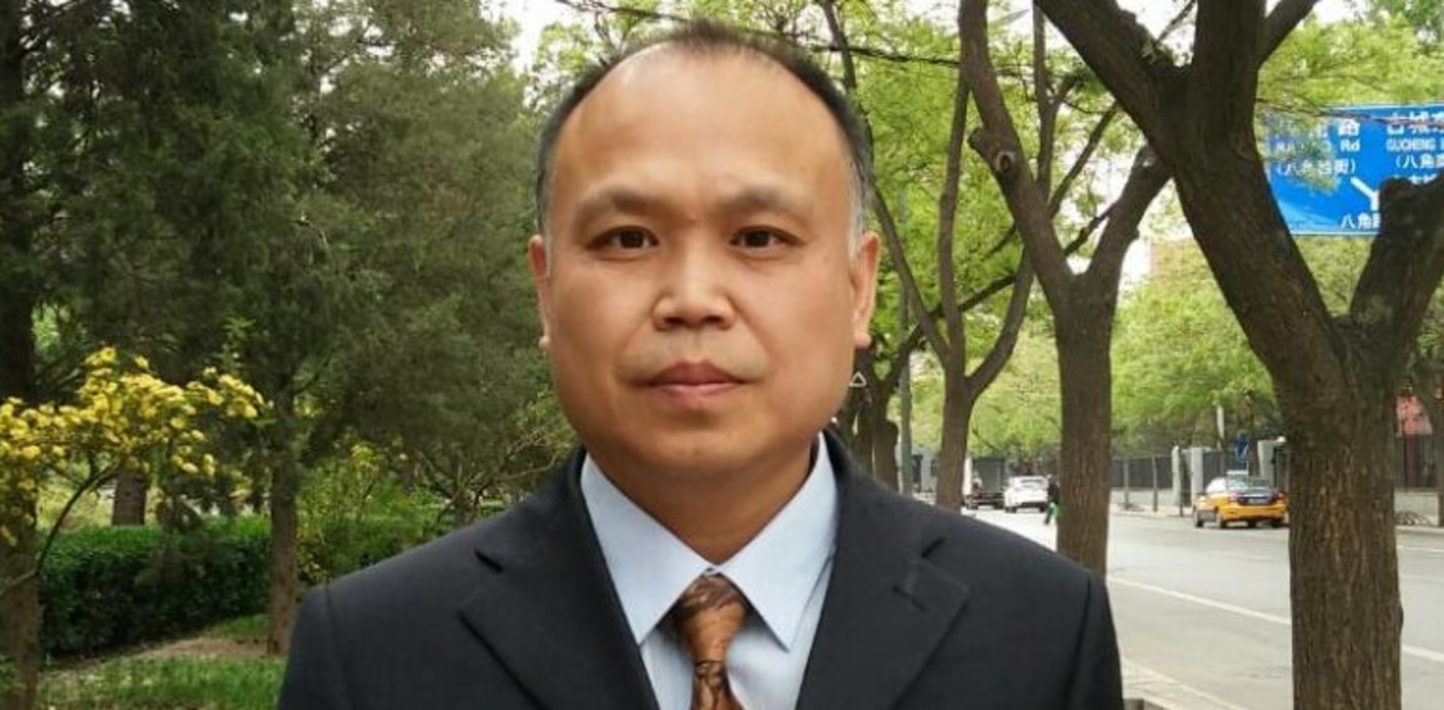
Responding to the rejection of Chinese human rights lawyer see also:s appeal against his three-year prison sentence for “inciting subversion of state power”, Amnesty International’s Interim Regional Deputy Director for Research Kate Schuetze said on 6 January, 2025: “The charges against Yu Wensheng and his wife, activist Xu Yan – who was convicted of the same offence – are entirely baseless. They reveal the authorities’ inability to provide any legitimate justification for their imprisonment.
“The Chinese government has used Yu’s online comments and his numerous international human rights awards as an excuse to label him a threat to national security. But all this really demonstrates is Beijing’s deep fear of human rights defenders who dare to dissent.
“Yu Wensheng and Xu Yan have been imprisoned solely for exercising their right to freedom of expression and they must be released immediately and unconditionally.”
On 2 January 2025 Amnesty Tech – a global collective of advocates, hackers, researchers, and technologists – announced the launch of the third Digital Forensics Fellowship (DFF).
This innovative Fellowship is an opportunity for 5 – 7 human rights defenders (HRDs), journalists, and/or technologists working in civil society organisations around the world to train with Amnesty Tech’s Security Lab to build skills and knowledge on advanced digital threats and forensic investigation techniques. This is a part-time Fellowship that will last 3-4 months and will come with a stipend.
Fellowship start and end date: The Fellowship is expected to run from April – July 2025.
Application Deadline, 23 January 2025 Location: dependent upon the suitable applicant’s location.
Remuneration: Successful applicants will be given a stipend of £500/month for their time.
Background
Across the world, hard-won rights are being weakened and denied every day. Increasingly, much of the repression faced by HRDs and journalists begins online. Since 2017, Amnesty Tech’s investigations have exposed vast and well-orchestrated digital attacks against activists and journalists in countries such as Morocco, Egypt, Azerbaijan, Qatar, Serbia, Mexico and Pakistan.
Advanced technical capacity is needed in all world regions to tackle the mercenary spyware crisis. By fostering a more decentralised, global, and diverse network of well-trained incident responders and investigators, we can jointly contribute to more timely and effective protection of HRDs and journalists against unlawful surveillance.
Participants in the Digital Forensics Fellowship will be expected to:
Attend an in-person, week-long convening where the majority of trainings will be conducted. This training will take place in June 2025, the exact location is set to be confirmed shortly.
Dedicate approximately 10 – 12 hours per month to the Fellowship, outside of the convening, by participating in remote training sessions and through independent work outside of scheduled sessions to deepen understanding of training topics.
Engage with the programme cohort and the Security Lab during the in-person and remote trainings, and in discussion groups on an ad-hoc basis.
Essential Requirements
An understanding of the technical threats, digital attacks and challenges faced by journalists, HRDs, and civil society organisations in their local contexts.
Demonstrated interest in conducting investigations to identify digital attacks against civil society, with the goal of building resilience among civil society actors in the face of surveillance after the Fellowship.
Familiarity using command line tools and basic knowledge of scripting languages like Bash and Python to analyse data.
An understanding of how internet infrastructure works, for example the role of IP addresses, TLS certificates, and DNS queries.
Technical familiarity with GNU/Linux operating systems, as well as Android and iPhone systems.
Engaging with the English language as the primary language throughout the Fellowship.
Application instructions:
To apply, applicants will be required to submit the following via our recruitment system eArcu – please upload all relevant documents to the CV section of the application portal.
A copy of your most recent CV.
A cover letter explaining your motivation and interest in the Fellowship and outlining how you meet the essential requirements outlined in the job description.
Applications must be in PDF, Word, PowerPoint or Excel format.
Application Process:
Shortlisted applicants will be invited to complete a record video interview week commencing 10th February, answering a series of pre-set questions via video, which allows us to learn more about you and your suitability for the Fellowship. Successful applicants from this process will be invited to a Microsoft Teams interview with the panel week commencing 3rd March.
The Martin Ennals Award for Human Rights Defenders honors individuals and organizations who have shown exceptional commitment to defending human rights, despite the risks involved. The Martin Ennals Award aims to support the tireless struggles of these activists.[For more on the award and its laureates, see: https://www.trueheroesfilms.org/thedigest/awards/043F9D13-640A-412C-90E8-99952CA56DCE]
To qualify for the Award 2025, the nominees must:
Be currently active in the promotion and protection of human rights
Not employ or advocate violence
Not be self-nominated
Be in need of protection
We encourage nominations of activists under 30 years of age to reflect the growing number of young persons joining the human rights movements in their countries. Post-humous nominations are not eligible. The deadline for nominations is open ended for now. Nominees must also read and acknowledge the Martin Ennals Foundation Ethical Guidelines.
Nominate your human rights champion now by filling out the nomination form (available in ENGLISH, FRENCH) and send it to info@martinennalsaward.org.
The Martin Ennals Award is a unique collaboration between ten of the world’s leading human rights organizations, who form the independent Jury that selects winners of the Award. In the first half of each year, a nomination cycle takes place over several months, at the end of which the winners of the Martin Ennals Award — or Laureates — are selected by the Jury. The names of the Laureates will be publicly announced to the public shortly before the ceremony. Mark your calendar for the Award Ceremony 2025 which will take place in the third trimester of the year in Geneva.
Learn more about the nomination process and our ethical guidelines here:
Jalal Abukhater works as an advocacy manager for 7amleh, a digital rights and human rights organisation based in Palestine.
He spoke to ISHR about what drove him to take action for the digital rights of his fellow Palestinians and about the responsibility of big technology companies and online platforms in the suppression of Palestinian rights and voices.
‘There is a responsibility for big tech companies to uphold human rights to make sure that they are not complicit in the violation of human rights, especially in the context of genocide.’
On 28 November, 2024 the International Commission of Jurists announced Carlos Ayala as its new President
Ayala brings decades of experience defending the rule of law, advocating for constitutional justice, and championing the rights of marginalized groups
The International Commission of Jurists (ICJ) proudly welcomes Carlos Ayala as its new President, taking over from Robert Goldman after seven years in the role. A distinguished legal scholar and human rights advocate, Ayala brings decades of experience defending the rule of law, advocating for constitutional justice, and championing the rights of marginalized groups.
Ayala, born in Caracas in 1957, has dedicated his career to advancing human rights. From his early days as a law student at Universidad Católica Andrés Bello, Ayala developed a profound sense of defending rights and social justice, which he carried through his graduate legal studies at Georgetown University and later in his legal practice. He is tenured professor and chair of Constitutional Law and a member of the board of the Ibero-American Institute of Constitutional Law. His commitment has spanned defending indigenous land rights in Venezuela to addressing transitional justice issues across Latin America. Notably, Ayala was instrumental in the landmark decision against blanket amnesty laws for human rights violators in Peru, a victory that set critical international legal precedents.
He has been President of the Inter-American Commission on Human Rights, as well as Rapporteur on the Rights of Indigenous Peoples of the Americas, and President of the Andean Commission of Jurists, giving him a vision of the human rights landscape that takes in the whole hemisphere of Americas from Alaska to Tierra Del Fuego.
Ayala has worked extensively on issues relating to the independence of the judiciary and he became involved with the OHCHR in monitoring the appointment of judges of several high courts. He states that one of the cases that impacted him most has been that of Venezuelan Judge Maria Lourdes Afiuni, who was arrested and detained after making a ruling that implemented a decision of the UN Working Group on Arbitrary Detentions which was not in the political interest of the government. She was immediately arrested and her trial lasted 10 years, was a flawed process throughout and ended in a flawed decision to convict.
As President, Ayala envisions the ICJ working as a unified community with other partners and allies committed to reinforcing the rule of law and international justice. Under his guidance, he will support the ICJ to advance human rights standards globally, counter setbacks, and provide critical support to governments, civil society, and multilateral institutions.
“We are facing new threats to reverse the advancement of human rights that we have achieved in the past 70 years – we need to defend against unilateralism and authoritarianism. The ICJ has been actively contributing to stop any setback in international standards, and we will continue this essential work.”
In her latest report to the UN General Assembly, the Special Rapporteur on the rights to freedom of peaceful assembly and of association , Gina Romero, underscored the effects of a growing negative rhetoric directed at civil society and activists.
The Special Rapporteur presented her report ‘Protecting the Rights to Freedom of Peaceful Assembly and of Association from Stigmatization’ in an interactive dialogue with States at the UN General Assembly’s Third Committee.
The report highlights the growing number of harmful narratives that stigmatise civil society groups and activists engaged in association and peaceful assemblies, labeling them as ‘enemies or threats to security and values.’
The Special Rapporteur highlighted an alarming trend of harmful narratives that undermine the legitimacy of peaceful activism and target human rights defenders and the public for exercising their rights to freedom of assembly and association. She discussed how activists and organisations face stigmatising labels and accusations for organising peaceful protests, forming associations, and bringing urgent issues to the attention of authorities and the international community. Her report listed specific narratives and language used in various countries to stigmatise the work of civil society organisations and activists.
Particularly vulnerable to these harmful attacks are advocates for ethnic and religious minorities, women, children, young activists, LGBTIQ+ people, environmental and Indigenous activists, and defenders of democracy, transparency, and fair elections, with trade unions and labor rights groups also being targeted frequently.
These narratives result in the restriction of human rights. While most States participating in the interactive dialogue welcomed the report, some rejected the references to their country in the report, including China, India, Iran, and Russia. Several States asked the Rapporteur about best practices and concrete examples to support and protect the right to peaceful assembly and association.
Gina Romero responded that States should avoid stigmatising protesters and civil society, facilitate peaceful assembly and association, and ensure any restrictions are evidence-based and meet the requirements of legality, necessity and proportionality. She also responded to criticism from China, India, Iran and Russia by emphasising the challenges faced when there are no responses from States to inquiries, denial of requests for country visits, or lack of clear information about state actions and called on states to engage more openly with her mandate.
The Special Rapporteur also noted that harmful narratives from both State and non-State actors restrict access to freedoms of assembly and association, leading to rights violations and shrinking civic space. She called on States to detect, monitor, and counter such cases to ‘prevent undue legal restrictions and repression of these freedoms, which create a cycle of repression and stigmatization’ and implement legal and policy reforms.
Are you a human rights defender keen to use the UN to push for change at home? If so, apply for the 2025 edition of ISHR’s flagship training, the Human Rights Defender Advocacy Programme (HRDAP)!
Learn more about why you should apply for HRDAP by watching this video!
What is the Human Rights Defender Advocacy Programme 2025 (HRDAP25)?
The course equips human rights defenders with the knowledge and skills to integrate the UN human rights system into their existing work at the national level in a strategic manner and provides an opportunity for participants to prepare for and engage in advocacy activities at the UN with the aim to effect change back home.
Online course topics – ISHR
Defenders will complete a 10-week hybrid learning programme, online and offline, which will include:
Accessing the HRDAP Platform, where they can complete e-learning courses on each key UN human rights mechanism and on advocacy strategies, and access interactive learning materials and case studies on the ISHR Academy
Taking part in live Q&A sessions with human rights experts
Receiving a continuous personalised advocacy support and coaching in order to develop concrete advocacy objectives to make strategic use of the international human rights system taking into account the local context
Building networks around the world, and learning from peers from a range of regions working on a range of human rights issues
Applying their knowledge to case-studies scenarios and enhancing their advocacy toolbox according to their specific needs (elevator pitch, SMART recommendations…)
Receiving support and advocacy accompaniment to conduct activities during the 59th and 60th Human Rights Council sessions and other relevant opportunities.
Participants will have the unique opportunity to apply their knowledge and skills while being in Geneva as well as to meet and share with their peers and experts (UN staff, diplomats, supporting NGOs…). The blended format of the course allows defenders to continue their vital work on the ground, while diving into the inner workings of each key UN human rights mechanism and gaining first-hand experience from advocates and UN staff on how civil society can strategically engage in the international human rights space. The methodology we use is interactive and learner-centred and encourage participation of everyone.
By participating in HRDAP, defenders:
Gain knowledge and tools, which they can use to ensure their voice is central in international human rights decision-making
Explore and compare the benefits of engagement with the Human Rights Council, the Special Procedures, the OHCHR, the Universal Periodic Review and the Treaty Bodies, and examine how they can use them to bolster their work at the national level
Develop strategies and advocacy techniques to increase the potential of their national and regional advocacy work
This programme is directed at experienced human rights defenders working in non-governmental organisations, with existing advocacy experience at the national level and some prior knowledge of the international human rights system.
ISHR supports, and promotes solidarity with and between, defenders working in the following areas or contexts, which we recognise as intersectional and interdependent:
Equality, dignity and non-discrimination
Environmental justice and sustainability
International accountability for the repression of human rights defenders
Transparency and rule of law
The hybrid programme will bring together around 16 committed human rights defenders from different backgrounds, who work on a wide range of areas that are linked with our programmes to ensure a sustainable collaboration. This can include, but is not limited to, defenders working on the following thematics: women rights; Indigenous people’s rights; the human rights of LGBTIQ+ persons; anti-racism; reclaiming civil society space and increasing protection of human rights defenders.
What do former HRDAPers say?
16 human rights defenders from 15 countries took part in the last edition, HRDAP24. At the end of the training, 98% of the participants were either extremely satisfied or very satisfied with the programme and felt that they would be able to apply what they learnt to their own day-to-day work. Find out more about the outcomes of HRDAP24 here.
First, download and read carefully the HRDAP 2025 Programme Description to find out more about modalities, requirements and funding. If you meet the criteria, take some time to apply using this online form before midnight Geneva time on Friday 10 January 2025!
As only a limited number of human rights defenders are able to participate in HRDAP each year, in addition to our range of guides and handbooks, ISHR has developed an e-learning space in English, French and Spanish to help human rights defenders strengthen their advocacy skills with the UN for greater impact on the ground: the ISHR Academy. The learning modules demystify the UN human rights system and build capacity to push for change. Discover new tools, insider tips, defender stories, and more!
The undersigned human rights organisations, which together represent the Jury for the Martin Ennals Award for Human Rights Defenders, condemn the continued harassment against 2021 Martin Ennals Award Finalist and woman human rights defender from Turkmenistan, Soltan Achilova. This morning, Soltan Achilova and her daughter were once again prevented from travelling to Geneva. As in 2023, Soltan Achilova was set to be recognized for her valuable contributions to the documentation of human rights violations in Turkmenistan by the Martin Ennals Foundation.
Soltan Achilova is a woman human rights defender and journalist, who continues to work in Turkmenistan, one of the most repressive and isolated countries in the world, ranking 176th out of 180 countries in terms of press freedom and working conditions for journalists. She has been reporting about her country for over a decade. Her pictures of daily life are one of the few sources of documentation of human rights violations occurring in Turkmenistan. As a result of this work, she remains under constant surveillance by Turkmen authorities and has suffered numerous incidents of harassment, intimidation, and threats. Despite the challenges, Soltan Achilova persists in her human rights work, regularly sending information and pictures outside the country so that government authorities can be held accountable. [see: https://humanrightsdefenders.blog/tag/soltan-achilova/]
On the morning of 20 November 2024, Soltan Achilova and her daughter Maya Achilova were scheduled to travel from Ashgabat to Geneva, to participate in the Martin Ennals Award ceremony. At 6:30 a.m. local time, according to the information received by the Martin Ennals Foundation, a group of law enforcement officers pushed Soltan Achilova, her daughter and her daughter’s husband into an ambulance and brought them to the specialised hospital “Infectious Disease Control Centre” in the Choganly neighbourhood of Ashgabat, located near the Ashgabat International Airport. Maya Achilova reported to the Foundation that her husband, her mother and herself are being retained at the medical facility, guarded by the security forces, and that one of the security service agents is in possession of the keys to Soltan Achilova’s apartment. Thereby, Turkmen authorities have once again prevented Soltan Achilova from travelling to Geneva, Switzerland, where she would finally be recognized as a Finalist of the 2021 Martin Ennals Award for her documentation of land grabs and forced evictions of ordinary citizens in Ashgabat.
Turkmen authorities have prevented woman human rights defender Soltan Achilova from traveling freely outside of her country on several occasions; the latest occurring as recently as November 2023. In the early hours of 18 November 2023, Soltan Achilova and her daughter were stopped by Turkmen government officials from boarding their flight to Switzerland. A customs official took their passports, wet them with a damp rag and declared the passports to be ruined, preventing Soltan and Maya Achilova from boarding the plane. Despite receiving assurances at high-level from Turkmen authorities that Soltan Achilova would not be prevented from traveling once again, the authorities continue to harass the woman human rights defender with travel restrictions and arbitrary detention.
The human rights organisations that make up the Jury of the Martin Ennals Award, as well as the Martin Ennals Foundation, once again condemn Turkmen authorities for their continued harassment of woman human rights defender and photojournalist Soltan Achilova and her family members and call for their immediate release. The organisations jointly call upon the Turkmen authorities to provide all the necessary assistance to enable her travel outside of Turkmenistan. Finally, the organisations renew their calls for Turkmenistan to fully implement their human rights obligations, including, inter alia, allowing human rights defenders and journalists to conduct their work without fear of reprisals.
Following the writing of this statement, an article containing further details was published by the Chronicles of Turkmenistan, an online publication of the Turkmen Initiative for Human Rights, which, according to its author, has also been in contact with Soltan Achilova’s family.


 Hans Thoolen on Human Rights Defenders and their awards