..A one-day conference was organized by African Centre for Media and Information Literacy (AFRICMIL), in collaboration with Amnesty International Nigeria, to explore the nexus between whistleblowing, corruption and human rights, and in doing so highlight the essence of whistleblowing as a conveyor belt of free speech and an affirmation of individual human dignity and moral worth that requires full protection from the state or other legitimate institutions.
Its theme, ‘Amplifying Whistleblowing to reduce Corruption and protect Human Rights,’ was painstakingly decided to assert the value of whistleblowers in exposing or preventing wrongdoing, and the necessity of standing up for them for largely playing the delicate role of human rights defenders who are in most cases victimized for performing what is clearly the citizenship duty of protecting the well-being of other citizens and the wider society.
Indeed, that whistleblowing is a fundamental human right is neither theoretical nor speculative. All applicable statutes from the domestic to the international are clear on this. And Maxwell Kadiri, senior legal officer at Open Society Justice Initiative (OSJI) and human rights advocate who was the keynote speaker, made the point succinctly in his refreshingly scholarly address by delving into the origin of whistleblowing and laying out all the laws proclaiming it as a human right that deserves protection.
However, worthy of note is that in exercising the right to hold opinion and express themselves by disclosing public interest illegalities or potential danger to competent authorities, whistleblowers are also helping – directly or indirectly – to protect the right being harmed by the wrongdoing they disclose. It isn’t for nothing, therefore, that some of the most prominent whistleblowing cases globally can be traced to whistleblowers who have reported wrongdoing that amounted to human rights abuse. Just one example of such is Dr. Li Wenliang, the 34-year-old Chinese ophthalmologist who was the first to blow the whistle on the covid-19 virus and other issues related to the right to life and access to healthcare. And there are many more unsung heroes like Wenliang whose disclosures have uncovered corruption and its collateral human rights violations. Whistleblowers have largely served as human rights defenders when they expose threats to human rights that the public are not able to access.
In Nigeria, they have continued to be victims of relentless persecution simply for doing the right thing: exposing wrongdoing which serves public interest. This is one of the major reasons for the whistleblowing, corruption and human rights conference. Institutions and individuals perpetrating wrongdoing often find it difficult to admit their mistake. Instead of tackling the message, they shoot down the messenger. Not a day passes without a report of public sector workers at the federal and sub-national levels being censored or penalized for challenging authorities by reporting fraud, corruption, misconduct and other illegalities. Although section 6 of Nigeria’s whistleblowing policy provides protection for whistleblowers on the receiving end of punishment for reporting wrongdoing, no whistleblower is known to have enjoyed any protection under this provision. This is because the oversight institutions are so weak that they are not able to assert themselves to implement this provision effectively. Rather than ensure honest implementation of the policy, these institutions are often found doing the bidding of the persons reported, not able to summon the courage to hold them to account for their wrongdoing and would perpetually ignore complaints of victimized whistleblowers.
At the conference, there were at least four whistleblowers with different stomach-churning tales of workplace oppression ranging from suspension, harassment, denial of salary and other benefits, punitive posting, abusive lawsuits, outright dismissal, and threat to life. At the risk of seeming immodest, it has to be stated that AFRICMIL is overwhelmed with demands for support from whistleblowers in this category. In the face of these varied attacks, it is no surprise that citizens are showing next to no interest in engaging whistleblowing despite its famed rating as an extension of the right of freedom of expression that is linked to the principles of accountability and integrity. To prevent an individual from exercising this right is much more than a denial of fundamental human right; it is a violation of humanity….
Whistleblowing is about promoting the culture of truth, self-expression and democracy. Dr. Chido Onumah, coordinator of AFRICMIL and his counterpart at the Amnesty International Nigeria, Isa Sanusi, have agreed as much and stated their resolve to work together to preserve the freedom of expression rights of citizens as it relates to whistleblowing.
On 12 July 2024 OMCT welcomed the UN Working Group’s call to the government of Tajikistan to unconditionally release them and grant them the right to compensation and other reparations. All five are representatives of the Pamiri indigenous population in the Gorno-Badakhshan Autonomous Province. Their arrest, detention and conviction occurred amidst a human rights crisis in the Autonomous Province when, following the killing of a local Pamiri resident by police, mass protests erupted in November 2021 and were violently cracked down, leaving 40 people dead and hundreds detained.
Ms. Ulfatkhonim Mamadshoeva is a journalist, well-known human rights defender, and advocate for the rights of the Pamiri Indigenous population. She was arrested and detained on 18 May 2022 in Dushanbe and sentenced to 20 years imprisonment in December 2022.
Faromuz Irgashov, Khursandsho Mamadshoev and Manuchehr Kholiqnazarov are human rights lawyers and belong to the Pamiri Lawyers’ Association, the Director of which is Mr. Kholiqnazarov. All three were members of Commission 44, presided by Mr. Irgashov. This commission had been formed to investigate police brutality following the November 2021 protests. Still, after a further escalation in May 2022, its members were threatened, and several of them were detained and convicted on charges of terrorism or establishing or participating in a criminal association. They were arrested and imprisoned in Khorog on 28 May 2022 and sentenced in December 2022 to 29-, 18- and 16-years imprisonment.
Sorbon Yunoev is a Pamiri civic activist involved in community initiatives in support of the Pamiri indigenous population, who actively criticised the crackdown and police violence during the November 2021 protests. He was arrested on 13 June 2022 in Khorog, released, re-arrested, and detained on 17 June 2022. On 23 August 2022, he was sentenced to 10 years’ imprisonment.
The World Organisation Against Torture (OMCT) submitted communications on these cases to the WGAD on 10 October 2023 and requested the Working Group to declare their detention as arbitrary and to call for their immediate release.
In its Opinions, the WGAD endorsed the arguments submitted by the OMCT and concluded that the detention of all five human rights defenders meets the definition of arbitrary deprivation of liberty on four separate counts. It noted also that the government failed to provide evidence that the accusations and charges brought had a factual basis.
The WGAD concluded that the arrest and detention of Mr Irgashov, Mr Mamadshoev and Mr Kholiknazarov were related to their legitimate advocacy for the investigation into police violence against the Pamiri Indigenous population and for having criticised law enforcement authorities for failing to effectively investigate police violence, as part of their work for Commission 44. Likewise, the Working Group concluded that the basis for the arrest and conviction of Ms. Mamadshoeva and Mr. Yunoev was their exercise of freedom of expression and freedom of assembly.
The Working Group considers that these convictions should be assessed against the backdrop of the current human rights and media freedom situation in Tajikistan – “a picture suggesting that these charges are trumped up and retaliatory in nature, aimed at silencing dissent and quashing human rights advocacy”, in particular in the context of the Gorno-Badakhshan Autonomous Province, and the broader context as reported among other things by the Special Rapporteur on the situation of human rights defenders, which indicates a pattern of repression in Tajikistan, where the crackdown on peaceful protests, independent media and human rights defenders has intensified
A prominent human rights defender in Burkina Faso has been abducted by unknown individuals, rights groups have said. Activists say it could be the latest attempt by the military government to target dissidents using a controversial law.
Daouda Diallo, 2022 recipient of the Martin Ennals international human rights award, was abducted on Friday in the capital Ouagadougou after visiting the passport department where he had gone to renew his documents, according to the local Collective Against Impunity and Stigmatisation of Communities civic group, which Mr Diallo founded.
His captors – in civilian clothing – accosted him as he tried to enter his car and took him to “an unknown location”, the group said in a statement on Friday, warning Mr Diallo’s health could be at risk and demanding his “immediate and unconditional” release.
Amnesty International’s west and central Africa office said the abduction was “presumably (for him) to be forcibly conscripted” after he was listed last month among those ordered to join Burkina Faso’s security forces in their fight against jihadi violence as provided by a new law.Right now, civil society activists, human rights defenders and even leaders of opposition political parties do not dare express freely their opinions
“Amnesty International denounces the use of conscription to intimidate independent voices in #BurkinaFaso and calls for the release of Dr Diallo,” the group said via X, formerly known as Twitter.
Earlier this year, Burkina Faso’s junta announced the “general mobilisation” decree to recapture territories lost as jihadi attacks continue to ravage the landlocked country.
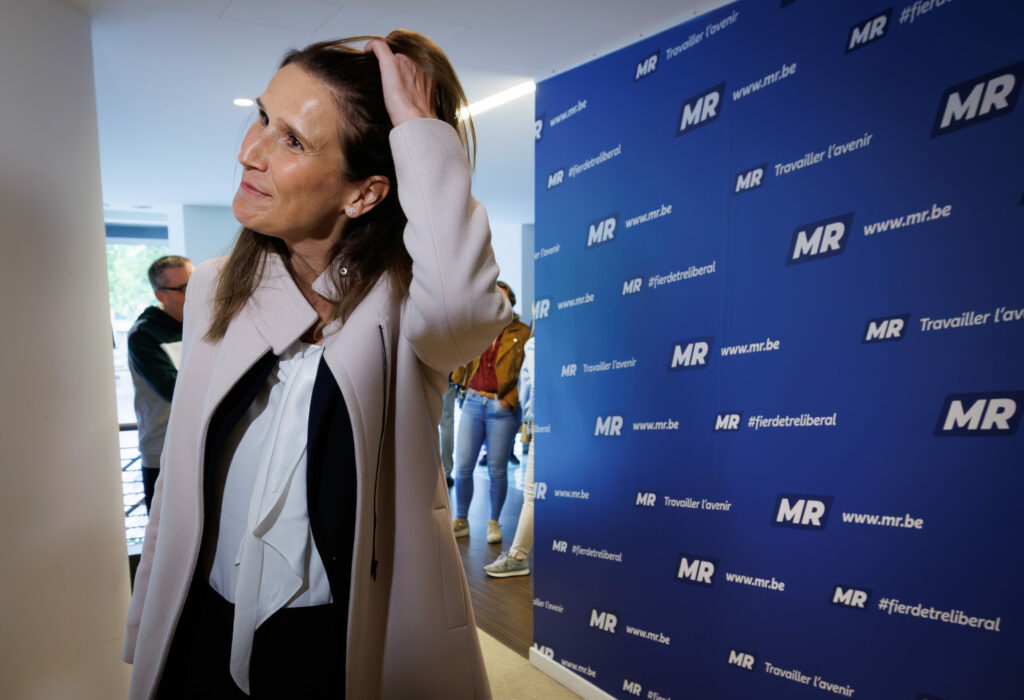
MR’s Sophie Wilmès (Renew). Credit: Belga/Benoit Doppagne
Human rights, democracy and the rule of law are at the heart of the powers that were delegated to Belgian Vice-President of the European Parliament Sophie Wilmès (Renew), President Roberta Metsola announced during the September plenary session in Strasbourg.
Metsola announced the powers delegated to the different vice-presidents for their two-and-a-half-year mandate. For Belgium’s Wilmès, there was a strong emphasis on human rights, democracy and the rule of law.
“Defending our fundamental values is a priority for me. With the democratic model clearly under threat around the world and under attack from all sides in Europe by those who indulge in authoritarian adventures, we democrats must show ourselves combative,” she said. “We are talking about the great inviolable principles that are part of our identity as Europeans. That is non-negotiable.“
In practice, Wilmès’ powers will take form in her work within the Democracy Support and Elections Coordination Group, which focuses on election observation and supporting parliaments to strengthen democracy and the rule of law in third countries, especially candidate countries.
She will also develop mediation initiatives to promote a culture of dialogue and support proponents of democratic change and human rights defenders. Additionally, she will represent the European Parliament at the United Nations, where it remains important to raise these issues.
Human Rights First announced a call for nominations for the 2024 Roger N. Baldwin Medal of Liberty Award. Nominations are due by September 23, 2024.
“Honoring those who champion human rights despite immense personal risk is at the heart of what we do,” said Human Rights First President and CEO Sue Hendrickson. “This award stands as a testament to the power of individuals to make a difference, even in the face of adversity.”
August 14, 2024:The recent summons by the Athens Magistrate marks a new development in Mr Dimitras’ long history of judicial harassment, this time also prospecting the criminal prosecution of his wife, constituting a major violation of their right to defend human rights as well as of the recently adopted European Union (EU) anti-SLAPP Directive. The Observatory for the Protection of Human Rights Defenders (FIDH-OMCT) urges the Greek authorities to put an immediate end to this practice of harassment and to ensure that all human rights defenders in the country can carry out their legitimate activities without hindrance or fear of reprisals.
Panayote Dimitras is a Greek migrants’ rights defender and Spokesperson of the Greek Helsinki Monitor (GHM) who, over the past ten years, has faced continuous episodes of judicial harassment as well as vicious smear campaigns deliberately aimed at discrediting him and his work. In the latest development, Mr Dimitras and his wife – Nafsika Papanikolatou – were summoned on May 31, 2024, by an Athens Magistrate carrying out a preliminary criminal investigation into alleged breach of trust and money laundering (in violation of paragraph 1 of Article 390 of the Greek Criminal Code and paragraphs 1 b) and 1 c) of Article 39 of Law 4557/2018, respectively), following the opening of a criminal case by the Athens First Instance Prosecutor. Mr Dimitras and Ms Papanikolatou replied to the summons and their file is in the hands of the Athens First Instance Prosecutor since then.
Exactly one year earlier, on May 31, 2023, the Greek Anti-Money Laundering Authority had already ordered the freezing of Mr Dimitras’ and Ms Papanikolatou’s personal account, pending an investigation into alleged misuse of donations to the Communication and Political Research Society (ETEPE) – a non-profit research organisation co-founded in 1990 by Mr Dimitras that manages human rights NGOs like GHM and Minority Rights Group – Greece (MRG-G). The same day the order was issued, Greek media published apparently leaked and inaccurate information about the case, reporting that all Mr Dimitras’ personal assets as well as those of the NGOs headed by him had been frozen, and that the alleged money laundering concerned funding received mainly from the EU “to support human rights causes” that “was used for other purposes than those claimed.” In fact, only a joint personal account of Mr Dimitras and Ms Papanikolatou had been frozen, and Mr Dimitras was accused of misusing, between 2010 and 2015, private donations to ETEPE amounting to 178.666,80 Euros and not EU funding.
Mr Dimitras and Ms Papanikolatou received the official notification from the Anti-Money Laundering Authority only one month and a half after the decision to freeze their personal account was taken, thereby delaying their right to access a remedy. The account freeze was initially ordered for nine months and then renewed for another nine months in February 2024. At the time of publication of this statement, the freeze is still effective notwithstanding Mr Dimitras’ and Ms Papanikolatou’s repeated requests to terminate it.
In another court case, the Three-Member Misdemeanours Court of Athens acquitted, in April 2024, Panayote Dimitras after five years of judicial harassment. Mr Dimitras was prosecuted under criminal charges of “false accusation” and “aggravated defamation” (Articles 229 and 363 of the Criminal Code of Greece, respectively) for having denounced racist comments from a public official, Christos Kalyviotis, who in return filed a complaint against Mr Dimitras for defamation.
The Observatory recalled, already at that time, that the procedure initiated by Mr Kalyviotis was only one of many abusive cases brought against Mr Dimitras over the past few years and constitutive of strategic lawsuits against public participation (SLAPPs), abusive civil proceedings aimed at criminalising human rights defenders and journalists.
Notably, since November 2022 a criminal case is ongoing against Panayote Dimitras at the Kos Court of First Instance in which he is accused of “forming or joining for profit and by profession a criminal organisation with the purpose of facilitating the entry and stay of third country nationals into Greek territory” under several articles of Law 4251/2014 (Immigration and Social Integration Code), for having provided humanitarian assistance to asylum-seekers. On January 23, 2023, preventive measures were imposed pending trial. Mr Dimitras was banned from carrying out activities with the GHM, a measure which was subsequently lifted. He was also banned from leaving the country, subjected to the obligation to report to the police station of his place of residence every 15 days, and required to pay a bail of 10,000 Euros.
More than one-and-a-half year later, these last three measures are still in place, with the consequence that Mr Dimitras cannot travel abroad for GHM human rights activities. In August 2023, he requested that the travel ban be lifted so that he could attend international meetings, and to be allowed temporarily to report to the police station in Kelafonia, where he has a summer home. Both requests were rejected by the First Instance Court of Kos. The European Parliament expressed concern about these measures in its resolution of February 7, 2024, on the rule of law and media freedom in Greece (2024/2502(RSP)). The responses provided by the Supreme Court and the Greek government to the resolution are of particular concern and seem to constitute both smear campaigns against Mr Dimitras as well as violations to his right to a fair trial, as it was falsely claimed that he had been arrested and that he had contacted a human smuggler.
The Observatory recalls that the anti-SLAPP Directive adopted by the European Parliament entered into force on May 6, 2024. The Observatory encourages the Greek authorities to bring into force the laws, regulations and administrative provisions necessary to comply with this Directive and to ensure its effective implementation to protect human rights defenders from abusive proceedings.
The Observatory expresses concern about the continued judicial harassment against Mr Dimitras and its recent enlargement towards his wife. The Observatory urges the Greek authorities to put an immediate end to all acts of harassment against Panayote Dimitras and Nafsika Papanikolatou and to allow their free exercise of the right to defend human rights.
The Board of Civil Rights Defenders would like to deeply thank Anders for his work. Under Anders’ leadership, Civil Rights Defenders has grown and developed greatly, gaining increased recognition, a higher turnover and becoming an important actor for democracy and human rights.
Effective immediately, John Stauffer, Legal Director and Deputy Executive Director, will step in as Acting Executive Director, sharing leadership with Karin Ancker, Chief Financial Officer, who will take on the role of Deputy Executive Director. The recruitment process for a new Executive Director will begin immediately.
UN experts called on the Tunisian authorities to respect the right to judicial guarantees and judicial protection of Sihem Bensedrine, who was arrested on 1 August 2024.
“In a context marked by the suppression of numerous dissenting voices, the arrest of Ms Bensedrine raises serious concerns about the respect of the right to freedom of opinion and expression in Tunisia and has a chilling effect on journalists, human rights defenders and civil society in general,” the experts said.
Bensedrine is the former President of the Truth and Dignity Commission (TVD) which documented the crimes committed under previous regimes, and a journalist who has long denounced human rights violations in the country.
Since 2021, she has been involved in a judicial investigation into the alleged falsification of a chapter in the TVD´s final report regarding corruption in the banking system. The independent human rights experts have already held discussions with the Tunisian government concerning this investigation.
“This arrest could amount to judicial harassment of Ms Bensedrine for work she has undertaken as President of the Truth and Dignity Commission,” the experts said. “It appears to be aimed at discrediting information contained in the Commission’s report, which could give rise to legal proceedings against alleged perpetrators of corruption under the previous regimes.”
The Special Rapporteurs urged Tunisia to uphold its obligation to protect members of commissions of enquiry into gross human rights violations from defamation and civil or criminal proceedings brought against them because of their work, or the content of their reports.
“We call for strict respect for Ms Bensedrine’s right to judicial guarantees, including the right to a fair trial by due process, impartiality and independence, and for an end to abusive proceedings and reprisals against her.”
States have an obligation to pay UN membership dues in full and in time. The failure of many States to do so, often for politically motivated reasons, is causing a financial liquidity crisis, meaning that resolutions and mandates of the Human Rights Council cannot be implemented. This is a breach of legal obligations, a betrayal of victims and survivors of violations and abuses, and a waste of the time and resources we have collectively invested over the last 4 weeks. The cuts to Special Procedures’ activities, including fewer country visits and the cancellation of the annual meeting, greatly limit rights holders’ ability to engage with mandate holders and it hinders their access to situations on the ground, and their engagement with domestic authorities for human rights change. Pay your dues!
We deplore the double standards in applying international law and the failure of certain States to push for accountability and ending impunity for all atrocity crimes, when these involve geopolitical interests, despite the clear relevance to thematic principles they endorse. We also deplore initiatives and threats by some States to undermine or sanction the vital work of international justice and accountability bodies, including the International Court of Justice and the International Criminal Court. This undermines the integrity of the framework, the legitimacy of this institution, and the credibility of those States. From Afghanistan to China, to Eritrea to Myanmar, to Palestine to Sri Lanka, to Sudan to Ukraine, resolving grave violations requires States to address root causes, applying human rights norms in a principled and consistent way. States promoting or supporting thematic resolutions must apply these same principles universally, including in their approach to country-specific issues. The Council has a prevention mandate and States have a legal and moral duty to prevent and ensure accountability and non-recurrence for atrocity crimes, wherever they occur. We urge all States to implement resolutions consistently, both nationally and internationally, and to align their actions with the universal human rights standards they claim to uphold, especially in responding to atrocity crimes. We urge States to enhance objective criteria for action, with predictable parameters, consistent actions and a demonstrable way forward to addressing human rights crises.
We welcome the renewal of the mandate of the Expert Mechanism to Advance Racial Justice and Equality in the Context of Law Enforcement (EMLER) by consensus. We welcome the resolution’s request to strengthen the administrative and substantive support to the Mechanism, and to provide the resources necessary for it to effectively fulfill its mandate. This renewal is a recognition of the value of its unique work over the past three years, as well as the need for experts to continue investigating States’ law enforcement practices and their impact on Africans and Afrodescendant people and communities, including the legacies of colonialism and transatlantic slave trade in enslaved Africans. As recognised by the resolution, systemic racism particularly, against Africans and people of African descent needs a systemic response. In this regard, EMLER’s reports offer a powerful tool for much-needed transformation that governments everywhere should implement. We urge States to ensure full cooperation with EMLER towards the effective fulfillment of its mandate, including by implementing its recommendations and responding promptly to its requests for information and country visits.
This session was again marked by increasing attempts at retrogression on well-established human rights standards pertaining to sexual and reproductive rights and other thematic issues related to gender and sexuality. Nevertheless, civil society organisations continue to work together across movements to ensure the resilience of the multilateral system and the upholding of human rights standards. Out of the 26 draft resolutions presented this session, 5 had a stronger focus on gender and sexuality issues and took important steps in developing human rights standards in these areas. Specifically, we welcome the adoption of the resolution on HIV, the resumption of the tradition of adopting this resolution by consensus and the inclusion of a reference to sexual and reproductive health and rights. We welcome the adoption of the resolution on the Elimination of all forms of discrimination against women and girls requesting human rights-based, gender-responsive and intersectional approaches to poverty reduction; while also expressing concern at the multiple attempts to weaken the resolution which the strongest human rights standards on women and girls are reflected, including through amendments. We also welcome the new resolution on Technology-facilitated gender-based violence, the procedural resolution on Accelerating progress towards preventing adolescent girls’ pregnancy and the resolution on menstrual hygiene management, human rights and gender equality.
We welcome the adoption of the resolution on Eritrea, renewing the Special Rapporteur’s mandate.
The resolution on the situation of Rohingya Muslims and other minorities is essential to keep the situation of Rohingya high on the agenda of the Council. However, the resolution’s calls for repatriation of Rohingya refugees to Myanmar in the current context where remaining Rohingya in Myanmar are once again confronting the dire prospects of recurrence of grave atrocities they faced in 2016 and 2017 contradict and undermine the fundamental objectives of the resolution to ensure protection of Rohingya and to create conditions for their safe, voluntary, dignified and sustainable return.
We welcome that the Council decided to devote its annual resolution on climate change and human rights to address just transition. However, we regret that some fundamental points are missing in the resolution. The recognition of the right to a clean, healthy and sustainable environment by the Human Rights Council (res 48/13) and the General Assembly (res 76/300) has been a landmark achievement. Yet, we regret to see that once again, the resolution on human rights and climate change has failed to include this right more explicitly. Parties to the UNFCCC have already acknowledged that when taking action on climate change, States should respect, promote and consider the right to a clean, healthy and sustainable environment, among other rights (decision 1/CP.27). This resolution also failed to call upon States to transition away from fossil fuels. As has been repeatedly stated by the UN Secretary General, the High Commissioner for Human Rights, and several Special Rapporteurs, fossil fuels are the root cause of the triple planetary crisis, and the main driver of climate change. Despite the support expressed by numerous delegations, this resolution is deliberately silent in recognizing the positive, important, legitimate and vital role that environmental human rights defenders play in the promotion and protection of human rights and the environment. As recognized by the HRC resolution 40/11, EHRDs are one of the most exposed and at risk around the world. Many of these attacks include Indigenous Peoples and defenders raising concerns about climate related projects, transition minerals mining and renewal projects. We will not have a just transition in the context of climate change without listening and consulting EHRDs. It is time that the annual resolutions on human rights and climate change align itself to the recent developments and strongly reaffirm a commitment to effective, rights- and science-based climate action.
We welcome the Council’s continued efforts to address the human rights impacts of arms, including by highlighting human rights obligations of States and responsibilities of the arms industry and other businesses contributing to its operations. The adoption of the resolution on human rights and the civilian acquisition, possession and use of firearms is another significant contribution to these efforts. The OHCHR report requested by the resolution, —which will explore the root causes and risk factors of firearms-related violence and its impact on the enjoyment of the right to participation, particularly of individuals in vulnerable or marginalised situations, — presents a key opportunity to highlight critical concerns surrounding civilian firearms and their broader human rights impacts and to promote an effective response to these concerns.
We welcome a new resolution on freedom of opinion and expression, which rightly highlights how this right is an enabler for all other human rights and sustainable development. Among other key issues, the resolution has been updated to express concern at the growing trend of strategic lawsuits against public participation and calls on governments to adopt and implement measures to discourage such legal harassment. In this vein, it mandates a report and expert workshop to explore the impact of strategic lawsuits against public participation. We urge all States committed to freedom of opinion and expression to co-sponsor and fully implement the commitments of the resolution.
We welcome the adoption of the resolution on Independence and Impartiality of Judges and Independence of Lawyers, focusing on the use of Digital Technologies, including Artificial Intelligence. We welcome the inclusion of language addressing serious concerns relating to the potential negative impact on international fair trial standards, including equality of arms, confidentiality and the protection of legal professions, as well as risks connected to judicial independence and impartiality, the perpetration of existing stereotypes, discrimination or harmful biases. We also welcome the emphasis on the need to always ensure human oversight, scrutiny and accountability with respect to the use of artificial intelligence in the administration of justice.
We continue to deplore this Council’s exceptionalism towards serious human rights violations committed by the Chinese government. Despite China’s efforts to instrumentalise allied countries and GONGOs to portray itself as a constructive actor during its UPR adoption, NGO statements pointed to evidence of Beijing’s lack of willingness to engage in good faith with the UN system, including: a 30% rejection rate higher than its last UPR, acts of reprisals against civil society committed during the UPR cycle, disregard for calls from Western and Global South States to implement Treaty Body recommendations and to provide unfettered access to UN experts. We urge China to genuinely engage with the UN human rights system to enact meaningful reform, and ensure all individuals and peoples enjoy internationally protected human rights. Recommendations from the OHCHR Xinjiang report, UN Treaty Bodies, and UN Special Procedures chart the way for this desperately needed change. In the absence of genuine efforts, it is equally imperative that this Council establishes a monitoring and reporting mechanism on China as repeatedly urged by over 40 UN experts since 2020.
We regret that the Council failed to uphold its obligations to the Libyan people. We are concerned that the resolution on Libya falls short in addressing the urgent need to end impunity for widespread and serious human rights abuses across the country. It ignores the findings of the Independent Fact-Finding Mission on Libya, which documented likely war crimes and crimes against humanity perpetrated by State security forces and armed militia groups, and recommended the creation of an independent international investigation mechanism. Moreover, the resolution overlooks the inability of OHCHR and UNSMIL to conduct capacity-building activities in much of Libya due to threats of violence and governmental non-cooperation. Additionally, it neglects the severe suppression of civil society through arbitrary arrests, enforced disappearances, abductions, social media monitoring, harassment, and other forms of intimidation.
We regret that the Council failed to adequately respond to the situation in Saudi Arabia. Saudi Arabia is not fit to sit at the Human Rights Council, as it is responsible for the commission of atrocity crimes, a pattern of reprisals against those who cooperate with the UN, and the repression of civil society. The human rights situation in the country is dire, with the criminalisation of women human rights defenders, arbitrary detention and the application of the death penalty, among other abuses. We call on all UN States at the General Assembly not to vote for Saudi Arabia in the upcoming HRC elections.
We regret that once more, civil society representatives faced numerous obstacles to accessing the Palais and engaging in discussions during this session, as well as continuing and worsening incidents of reprisals and transnational repression here in Geneva against those seeking to cooperate with the Council. We are concerned by the barriers imposed to access room XX and that the majority of informal consultations on resolutions were held exclusively in person. We remind UN member States, as well as UNOG, that the Council’s mandate, as set out in HRC Res 5/1, requires that arrangements be made, and practices observed to ensure ‘the most effective contribution’ of NGOs. We reiterate that an inclusive approach to participation requires that the UN addresses the limited space for civil society engagement. Undermining civil society access and participation not only undermines the capacities and effectiveness of civil society but also of the Council itself.
Signatories:
Asian Forum for Human Rights and Development (FORUM-ASIA)
Cairo Institute for Human Rights Studies (CIHRS)
CIVICUS
Egyptian Initiative for Personal Right (EIPR)
FIDH
GIN SSOGIE – The Global Interfaith Network For People of All Sexes, Sexual Orientations, Gender Identities and Expressions
Are you an artist passionate about human rights and social justice? We’re looking for talented creators to develop original art pieces for our 2024 Write for Rights campaign. This is your chance to use your creative skills to fight injustice and show your solidarity with people who are advocating for change.
What We’re Looking For
We are looking for a wide range of artistic expressions, including but not limited to:
Graphic design artwork
Videos of spoken-word art
Musical pieces (vocal, instrumental…etc.)
Videos of dances, skits
Animations
Paintings
Comic Illustrations
Project Details
Objective: Create an original art piece representing a specific Write for Rights case. Compensation: TBD Timeline: September 15, 2024 – October 15, 2024 Submission Deadline: August 30th, 2024
How to Apply
Submit your application including:
A brief introduction of yourself, your artistic background and your interest in social justice
A short proposal outlining:
Two Write for Rights cases you are interested in working on and why
A short description of your artistic vision for the piece
Don’t miss this chance to make a global impact with your art. Join us in advocating for human rights through powerful, creative expression.
Write for Rights Cases
Manahel al-Otaibi (Saudi Arabia)
Manahel al-Otaibi is a fitness instructor and a brave outspoken advocate for women’s rights in Saudi Arabia. In November 2022, she was arrested after posting to Snapchat photos of herself at a shopping mall. In the photos, she was not wearing the traditional long-sleeved loose robe known as an abaya. Manahel has been sentenced to 11 years in prison.
Wet’suwet’en Nation Land Defenders (Canada)
The Wetʼsuwetʼen Nation are deeply connected to their ancestral lands, but this is threatened by the construction of a fossil fuel pipeline through their territory. Their Hereditary Chiefs did not consent to this construction. Land defenders have been charged for blocking pipeline construction sites, even though these sites are on their ancestral lands. They could face prison and a criminal record.
Maryia Kalesnikava (Belarus)
Political activist Maryia Kalesnikava dared to challenge the repressive Belarus government. On 7 September 2020, Maryia was abducted by the Belarus authorities. She was taken to the border where she resisted deportation by tearing up her passport. She was detained and later sentenced to 11 years in prison on false charges. Maryia’s family haven’t heard from her for more than a year.
Floraine Irangabiye (Burundi)
Floriane Irangabiye is a mother, journalist, and human rights defender from Burundi. In 2010 she relocated to Rwanda where she co-founded a radio station for exiled Burundian voices. In August 2022 she was arrested while visiting family in Burundi. In January 2023 she was sentenced to 10 years in prison for “undermining the integrity of the national territory”, all for criticizing Burundi’s human rights record.
Kyung Seok Park (South Korea)
Kyung Seok Park is a dedicated disability rights activist. Holding peaceful protests on Seoul’s public transport systems, Kyung Seok Park has drawn attention to how hard it is for people with disabilities to easily access trains and subways safely – denying them the ability to travel to work, school, or to live independently. Kyung Seok Park’s activism has been met with police abuse, public smear campaigns and punitive litigation.


 Hans Thoolen on Human Rights Defenders and their awards
