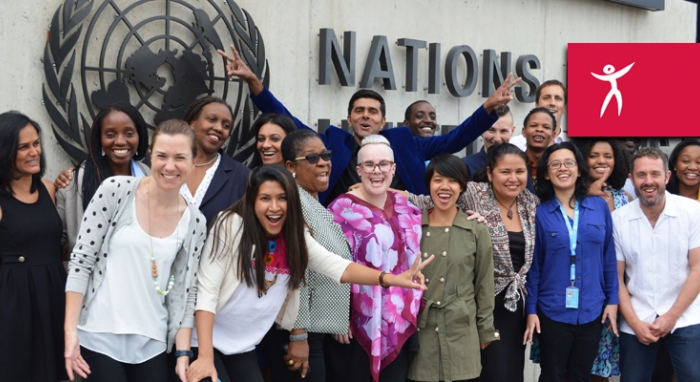
On 29 November 2016 ‘ProtectDefenders.eu’ – the EU Human Rights Defenders mechanism implemented by International Civil Society – concluded its first annual meeting of beneficiaries: human rights defenders at risk from all regions of the world who have benefited from the project gathered today in Brussels. The meeting aimed at reflecting on this first year of coordinated work to support defenders worldwide and at highlighting the worrying global phenomenon of criminalisation of human rights defenders.[see: https://thoolen.wordpress.com/2015/12/04/international-cooperative-consortium-protect-the-defenders-launched-on-2-december/]
To conclude the meeting, the twelve partner organisations of ProtectDefenders.eu have issued a public statement urging all national authorities to “publicly recognise the crucial role played by human rights defenders and protect them in all circumstances from any form of judicial harassment“. As stressed by Antoine Madelin, FIDH Director for International Advocacy and Chair of the Board of ProtectDefenders.eu, “Human Rights Defenders are the pillars of democracy and of the rule of law but are too often subjected to unfair criminal prosecution, in an effort to undermine their work in the defence of human rights.”
Since the launch of the project in October 2015, ProtectDefenders.eu has witnessed an increased criminalisation of defenders worldwide in reprisal to the conduct of legitimate human rights activities.
ProtectDefenders.eu held its meeting in Brussels under the motto “Defenders are not criminals” and brought together dozens of human rights defenders at risk supported by the EU mechanism during its first year of implementation, together with prominent representatives of NGOs, European institutions and Representatives of International and Regional Protection Mechanisms, including the United Nations Special Rapporteur on the situation of human rights defenders, Michel Forst. Participating defenders, coming from more than 20 countries such as Burundi, Honduras, Egypt, Bangladesh or the Russian Federation, shared their experiences of resilience in often dangerous and challenging situations and debated on the most effective strategies to counter criminalisation and pursue their work.
This meeting has also emphasised the main achievements and highlights of the first year of ProtectDefenders.eu. In the first twelve months, the EU Mechanism has provided more than 330 emergency grants to defenders at high risk, facilitating a rapid response to their legal, medical, security or emergency relocation needs in pressing circumstances. At the same time, ProtectDefenders.eu has successfully started and run a temporary relocation programme, disbursing more than 700,000 € in support of 74 temporary relocations in favour of 150 individuals, with the collaboration of host institutions worldwide and in the framework of the EU Temporary Relocation Platform.
The Project has also provided institutional and operational support to grassroots organisations, allocating more than 300,000 € through 32 grants. 1,300 defenders worldwide were trained to improve their security and protection in difficult contexts.
Finally, ProtectDefenders.eu has expanded its advocacy and outreach dimension, by conducting fact-finding missions and monitoring trials against defenders particularly in difficult countries, as well as carrying out initiatives to assist and connect isolated and vulnerable defenders throughout the world. ProtectDefenders.eu has coordinated more than 430 urgent alerts aimed at mobilizing the attention of concerned authorities, public and media on behalf of defenders at risk.
Human Rights defenders who attended the meeting positively assessed the first year of implementation of ProtectDefenders.eu. The twelve partners praised the EU strong support through the EIDHR of a project as ambitious and comprehensive as ProtectDefenders.eu. As pointed out by Andrew Anderson, Executive Director of Front Line Defenders and member of the Board of ProtectDefenders.eu, in the closing speech, “human rights defenders in danger around the world do benefit from this strong coordination between international civil society organizations and the institutions of the European Union.”
[ProtectDefenders.eu, the European Union Human Rights Defenders mechanism, delivers emergency help and temporary relocation grants for activists at risk, who face threats due to their work and are in need of urgent support. It also provides training and capacity-building for human rights organisations. ProtectDefenders carries out monitoring, advocacy and lobbying to raise awareness about the situation of human rights defenders and their need for protection]
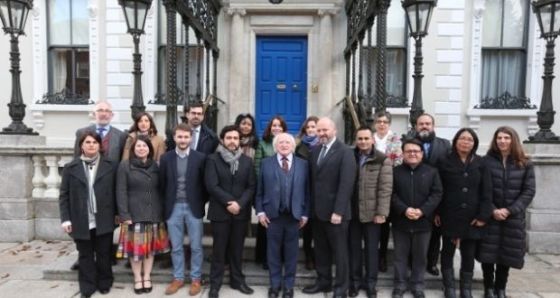
Irish President Michael D Higgins with international activists and NGO representatives in Dublin at the launch of the Human Rights Defenders Memorial. Photograph: Conor McCabe
Rachel Flaherty reports in the Irish Times of 24 November on the launch of an on-line Memorial o honour human rights defenders who have been killed The online memorial would be a tool to track investigations and advance the struggle for justice for human rights defenders. The Human Rights Defenders Memorial (HRD Memorial) has been set up by Dublin-based Front Line Defenders as an online international and interactive database. It will detail all the human rights defenders who have been murdered around the world since 1998. The Front Line Defenders organisation has estimated 3,500 have been murdered since then.
A coalition of 20 national and international human rights organisations jointly coordinated the project. Contributors included human rights groups from Colombia, Honduras and the Philippines, which Front Line Defenders said are ranked among three of the deadliest countries in the world for human rights defenders. The organisation said other countries included among the worst in terms of killing and physical attacks against human rights defenders included North Korea, China, Russia, Egypt, Saudi Arabia and Zimbabwe.
Andrew Anderson, executive director of Front Line Defenders, said the memorial sent a message the human rights community was stronger than any one person. “It will not be deterred, and its leaders will not be forgotten,” he said. “This is not random violence. This is the calculated elimination of those who speak out to defend the rights of the most vulnerable. Autocrats and powerful economic interests think that if they kill an activist, they kill a movement. The goal of the HRD Memorial is to prove them wrong.”
The Hong Kong Free Press (HKFP) of 12 November 2016 carried a fascinating report on the work of the Chinese “64 Tianwang citizen news site” which has continued to operate despite the continued arrest and detention of its reporters. Reporters Without Borders (RSF) awarded ’64 Tianwang’ its Press Freedom Prize 2016. The piece by Catherine Lai is richly illustrated by pictures. Tianwang founder Huang Qi throughout the interview remains remarkably optimistic about freedom of expression in China in the long-term.
On 30 November 2016, Khurram Parvez was released from jail but even this was not done without wrangling by the police as reported by Front Line on 30 November: On 25 November 2016, the High Court of Jammu and Kashmir in Srinagar quashed the order of detention under the Public Safety Act (PSA) and ordered the immediate release of Khuram Parvez. Justice Muzaffar Hussain Attar in his order said Khuram Parvez’s detention was “illegal”. However, in the judge’s order there was a small clerical error, so the police at Jammu’s Kot Balwal jail decided to keep Khurram Parvez in detention until a corrigendum could be issued. On 29 November 2016 at 3 pm the Jammu’s Kot Balwal jail received the corrigendum, but did not release Khurram Parvez. Instead, at around 5 pm of the same day, he was taken to the joint interrogation centre at Meeran Sahib, Jammu. No reasons were provided for his continued detention to the human rights defender or his legal counsel. Khurram Parvez was released on the morning of 30 November.
[Khurram Parvez is the Chairperson of the Asian Federation Against Involuntary Disappearances (AFAD), a collective of 13 non-governmental organizations from ten Asian countries, that campaign on the issue of enforced disappearances. He is also the Programme Coordinator of the Jammu Kashmir Coalition of Civil Society (JKCCS), which is a coalition of various campaign, research and advocacy organisations based in Srinagar, Jammu and Kashmir, which monitor and investigate human right abuses. See: https://www.frontlinedefenders.org/en/profile/khurram-parvez]
The International Service for Human Rights (ISHR) is calling for applications for its flagship Human Rights Defenders Advocacy Program in 2017 – the extensive training programme for human rights defenders. The training will take place in Geneva between 29 May and 9 June 2017 and provides defenders with opportunities to put their advocacy skills directly into action at the 35th session of the UN Human Rights Council.
ISHR’s Human Rights Defender Advocacy Programme (HRDAP) equips defenders with the knowledge and skills to make strategic use of the international human rights system. It also provides an opportunity for participants to directly engage in lobbying and advocacy activities at the UN level to effect change on the ground back home. As well as receiving training modules on all the UN human rights mechanisms from a range of experts, participants will also have the opportunity to build networks in Geneva and around the world, carry out lobbying of UN member States and UN staff, and learn from peers from a range of regions working on a range of human rights issues.
Participants will take part in:
A short online learning component, prior to face-to-face training, to enable you to consolidate your existing knowledge and develop your advocacy objectives;
Intensive training in Geneva during June, to coincide with the 35th session of the Human Rights Council. The training will focus on ways to effectively use international human rights mechanisms and to influence outcomes;
Specific advocacy at Human Rights Council sessions and other relevant meetings, with regular feedback and peer education to learn from the experiences, including expert input from leading human rights advocates.
This programme is directed at experienced human rights defenders in non governmental organisations and national human rights institutions, with existing advocacy experience at the national level and some prior knowledge of the international human rights system. If you are interested in applying for ISHR’s training programme, please read the call for applications to check that you comply with the requirements. The link to the online application form can be found under point 5 of the call for applications.
The call for applicants can be found here. For more information, write to hrdap2017@ishr.ch.
Travel bans on human rights defenders are popular with all kind of autocratic regimes but seem to enjoy special status in the Middle East. The video clip above (part of a joint campaign by AI and HRW) focuses on Egypt and so does the statement by 6 other NGOs issued on 9 November. They strongly condemn the travel ban against Malek Adly, prominent Egyptian human rights lawyer and director of the Lawyers Network of the Egyptian Center for Economic and Social Rights (ECESR). But there is more: Read the rest of this entry »
On 7 November 2016, the BBC, Reuters and other media reported that labour rights defender Andy Hall has left Thailand after a three-and-a-half year legal battle with a pineapple processing company accused, in a report he contributed to, of abusing its workforce. The dismissal of one set of charges against the British activist was confirmed by Thailand’s Supreme Court last week. But he was convicted in September on two other counts under sweeping criminal defamation and computer crimes laws and was given a three-year suspended prison sentence. He also faces civil complaints by the pineapple company, Natural Fruit, which is demanding around $12m in damages.
But it was mostly the prospect of further criminal charges over another group of workers he is supporting that persuaded Mr Hall that he should leave Thailand and not returner the time being. He and the 14 migrant workers from Myanmar – who have alleged abusive treatment at the hands of a farm which supplied the big Thai poultry processor, Betagro, with chickens – recently had defamation lawsuits filed against them. [see also: https://thoolen.wordpress.com/tag/andy-hall/]
Before he left Thailand Mr Hall told the BBC that he felt that the prospect of having to contest continuous lawsuits filed against him would make it impossible for him to defend migrant workers’ rights effectively. The situation for human rights defenders, he said in a statement made as he prepared to depart, has rapidly deteriorated in Thailand, with significantly increased risks.
The challenge confronting Mr Hall is one faced by many Thai activists as well. Defamation is a criminal charge that can carry a two-year prison sentence, often used alongside the even tougher Computer Crimes Act, which mandates a sentence of up to five years in prison.
Two years ago, the editors of a small newsletter, Phuketwan, were prosecuted by the Thai navy for an article in which they quoted a Reuters news agency report alleging Thai military involvement in human trafficking. They were finally acquitted last year, but the effort of defending themselves contributed to the newsletter being shut down.
In June this year three prominent human rights defenders were prosecuted under the same two laws by a unit of the Thai military over a report they took part in which alleged the use of torture against military detainees in southern Thailand.
On Thursday 3 November, the U.N. Human Rights office in Bangkok issued a statement praising the Supreme Court’s decision. But it also called on the Thai government “to drop charges against all human rights defenders who have been charged with criminal offenses for reporting human rights violations in accordance with its obligations under international human rights law.“
On 6 October EU Trade Commissioner Cecilie Malmström had strongly backed the British labour rights activist who helped expose labour abuses in Thailand, for which he received a three-year suspended jail sentence. Andy Hall met Malmström in Strasbourg, where MEPs also passed a strong resolution condemning Hall’s treatment under the military junta now running the country.
As the Geneva-based International Service for Human Rights (ISHR) is one of the most important sources of information on HRDs and the UN, I hope that many of you will be able to give them feedback on their various communications and digital publications by filling our the on-line survey in the link below. It indeed takes not more than 5 minutes to complete.
Every December, Amnesty supporters across the globe will write millions of letters for people whose basic human rights are being attacked. It’s all part of Write for Rights, AI’s global letter-writing marathon. The video clip includes MEA laureate 2016 Ilham Tohti. It’s one of the world’s biggest human rights events and carries on a long tradition of people writing letters to right some of the world’s biggest wrongs.
Sam Zarifihas been appointed to serve as ICJ’s next Secretary General when the current Secretary-General retires next spring. Wilder Tayler will continue to work as SG until the end of March 2017 and Sam will begin in April 2017, although there will be some overlap to ensure a smooth transition in the Geneva based HQ.
Sam is a veteran of the human rights movement, with a most impressive array of experience and contacts, and has done phenomenal work as Director of the ICJ’s Asia and Pacific Regional Programme over the last four years. Prior to joining the ICJ Sam served as Amnesty International’s Director for Asia and the Pacific from 2008 to 2012. He was at Human Rights Watch from 2000, where he was Deputy Director of the Asia division. He was Senior Research Fellow at Erasmus University Rotterdam from 1997 to 2000, where he co-edited Liability of Multinational Corporations under International Law (Kluwer 2000) as well as several other publications on the subject. Sam was born and raised in Tehran, Iran and moved to the United States to complete his education. He received his Bachelor of Arts degree from Cornell University and his Juris Doctor from Cornell Law School in 1993. After practicing as a corporate litigator for several years, he obtained an LL.M in Public International Law from New York University School of Law in 1997.