Archive for the 'organisations' Category

Iranian Human Rights Defenders in trouble

September 27, 2018
On 21 September 2018 the Observatory for the Protection of Human Rights Defenders (FIDH/ OMCT) petitioned the United Nations Working Group on Arbitrary Detention (WGAD) to seek the release of Iranian human rights lawyer Ms. Nasrin Sotoudeh. Ms. Nasrin Sotoudeh, a prominent defender and 2012 laureate of the European Parliament’s Sakharov Prize, was arrested on June 13, 2018 at her home in Tehran. [see: https://humanrightsdefenders.blog/2018/08/30/human-rights-defender-nasrin-sotoudeh-on-hunger-strike-in-iran/ ].. On September 16, 2018, Ms. Sotoudeh was informed that she would be denied her family visitation rights if she and her female visitors – including her daughter – did not wear a full hijab. Ms Sotoudeh has refused the condition and was denied the right to see her daughter on September 17, 2018.
The Observatory urges the Iranian authorities to immediately and unconditionally release Ms. Sotoudeh and to cease all acts of harassment and other abuses against her and all human rights defenders in Iran, in accordance with the provisions of the United Nations Declaration on Human Rights Defenders and with international human rights standards and international instruments to which Iran is a State party.

The semi-official ISNA news agency reported on Thursday 27 September that another human rights defender, Narges Mohammadi, has been granted a three-day leave from prison to visit her ailing father.

However, the recent terror attack in Iran may be expected to prompt the Guards to compensate by cracking down on domestic detractors and perceived opponents of their mission of defending and principles of the Islamic revolution. Certainly, some prominent figures within the Iranian activist and expatriate communities have been quick to raise alarms about the likelihood of this outcome. For instance, the Center for Human Rights in Iran quoted the Iranian human rights activist and Nobel Peace laureate Shirin Ebadi as saying of last Saturday’s attack, “Such actions lead to the justification of state violence and the arrest of many opponents in the name of fighting terrorism.” Meanwhile activists echoed the sentiment, saying, “Terrorism and violence in any form should be condemned in the strongest terms [but] such acts of violence should not become an excuse for state violence to suppress peaceful opposition.

Eswatini or Swaziland? As long as human rights defenders can do their work…

September 21, 2018

Eswatini (formerly Swaziland) saying that it must bring an end to the long record of human rights violations that have blighted the country for more than four decades. The Southern African kingdom – which is under the near total control of King Mswati – has a longstanding record of human rights violations, including the routine suppression of the rights to freedom of expression, association and peaceful assembly, as well as widespread forced evictions. Swazis will today elect new members of parliament that will form the new government for the next five years.

This election represents a golden opportunity for an incoming government to comprehensively address longstanding human rights issues,” said Deprose Muchena, Amnesty International’s Regional Director for Southern Africa.

On 8 August 2017, King Mswati approved the Public Order Act, imposing far-reaching restrictions on organizers of public gatherings. The Act also failed to provide mechanisms to hold law enforcement officials accountable for their use of unnecessary or excessive force against protesters or public gatherings. The government continues to ban opposition parties, while political activists are regularly put in jail for trying to organize and speak out against the status quo. Eswatini will only become a thriving nation when human rights are respected for all, without discrimination, added Deprose Muchena.

See also my: https://humanrightsdefenders.blog/2015/07/02/swaziland-ngo-welcomes-release-of-hrds-with-new-hope-for-independence-of-the-judiciary/

High Commissioner, please put human rights defenders up front

September 20, 2018

In a briefing paper for the new UN High Commissioner for Human Rights, Michelle Bachelet, ISHR has set out ten concrete and practical ways in which the High Commissioner and her Office can contribute to protecting human rights defenders and promoting a safe and enabling environment for their work at the international and national-levels.

Supporting and empowering these defenders – and protecting them against those governments, corporations and fundamentalists whose currency is prejudice, profit or privilege – should be the new High Commissioner’s highest priority. She should consult closely with defenders, speak out and pursue accountability when they are attacked, push for laws and mechanisms to protect them at the national level, and ensure that the UN human rights system is safe, accessible and effective for them,‘ ISHR Director Phil Lynch said.

The ISHR briefing paper complements a broader civil society letter supported by more than 750 civil society [https://humanrightsdefenders.blog/2018/09/08/civil-society-sends-letter-to-new-high-commissioner-for-human-rights-bachelet/].

Recommendations for the High Commissioner to support human rights defenders

  1. Be proactive in regularly consulting and working in partnership with human rights defenders and other independent civil society actors.
  2. Make clear and regular statements on the essential role played by human rights defenders and the need to ensure they can work in a safe and enabling environment without fear or hindrance, acknowledging the protection needs of particular groups of defenders.
  3. Speak out and demand accountability on cases of threats, attacks and reprisals against human rights defenders, including by calling for and supporting impartial investigations, prosecution of perpetrators, and effective remedies for victims.
  4. Push and work with States to fulfil the commitments laid out in the UN Declaration on Human Rights Defenders, including through repealing restrictive legislation and developing specific laws, policies and mechanisms to protect defenders.
  5. Establish a comprehensive set of indicators to assess State fulfilment of human rights obligations related to human rights defenders, which could be used as an evidentiary basis for assessing compliance.
  6. Build strategic alliances with States, civil society, academics, business enterprises and other actors with a shared interest in human rights, ensuring an enabling environment for civil society and respect for the rule of law.
  7. Define an operating procedure at OHCHR to ensure that all offices establish and apply minimum standards in regard to their work on and with human rights defenders.
  8. Encourage the Secretary General to carry out a full audit of UN work on human rights defenders and to develop an organisation-wide policy on supporting and protecting defenders. More generally, work closely with the Secretary-General to ensure that all UN agencies contribute to, and coordinate on, the protection of defenders and ensuring an enabling environment for their work.
  9. Encourage the development and implementation of an effective UN-wide policy on preventing and addressing reprisals and strongly support continuation and adequate resourcing of the mandate of the UN Senior Official on reprisals.
  10. Work to ensure that UN human rights bodies and mechanisms are accessible, effective and protective for human rights defenders, in particular by ensuring that any reform efforts are informed by the full and meaningful participation of civil society. Strong leadership from the High Commissioner is essential to ensure that the process to strengthen the Treaty Bodies in 2020, and the General Assembly mandated status review of the Human Rights Council in 2021, are underpinned by these principles.

http://www.ishr.ch/news/high-commissioner-put-human-rights-defenders-front

List of side events re HRDs at the 39th session of the UN Human Rights Council

September 19, 2018

A bit late, here the promised selection of side events at the 39th session of the UN Human Rights Council [https://humanrightsdefenders.blog/2018/09/08/many-hrd-issues-at-the-39th-session-of-the-un-human-rights-council/]. I only list those that are most relevant to human rights defenders. With apologies for those that have already taken place but it allows you to contact the organizers for any reports:

  • Shared Space under Pressure launch of guidance document on business support for civic freedoms and human rights defenders is an event organised by ISHR and took place on 17 September from 13:30 to 14:30 in Room XXVII. The panelists will present and discuss a new publication by the Business Network on Civic Freedoms and Human Rights Defenders, which provides concrete advice to companies on how to protect human rights defenders.
  • Ending reprisals: Discussion with human rights defenders and experts. The event will highlight the nature and extent of reprisals and intimidation for those cooperating with the UN, discuss and expand on the Secretary General’s report on cooperation with the UN and consider efforts to date to address reprisals as well as ways to further develop and strengthen policies to prevent and address reprisals. It will take place on 20 September from 10:00 to 11:00 in Room XXV.
  • Accountability and the need to end impunity for human rights violations in Yemen: Human rights defenders including bloggers, Internet activists and journalists at extreme risk of persecution is an event organised by the Gulf Center for Human Rights and co-sponsored by ISHR, CIVICUS and FIDH. It took place on 10 September from 12:00 to 13:00 in Room XXIV.
  • Saudi Arabia’s 3rd Cycle UPR: a Refusal to Reform is an event organised by Americans for Democracy and Human Rights in Bahrain. It will review the Kingdom’s human rights record over the past five years, taking a look at some of the recommendations offered during the previous cycle in October 2013 that have gone unfulfilled, from women’s rights to capital punishment, torture to the lack of a written penal code, and human rights defenders and civil society. It took place on 11 September from 12:00 to 13:00 in Room XXIII.
  • Gross human rights violations in Myanmar: options for international criminal accountability is an event organised by the International Commission of Jurists (ICJ), Human Rights Watch and Amnesty International and took place on 13 September at 12:00 in  Room XXVII. The discussion will focus on means of documenting violations, possible evidence-gathering mechanisms and the role of the International Criminal Court.
  • Burundi: ending the crisis and paving the way for accountability is an event organised by DefendDefenders in collaboration with a range of Burundian and international partners including ISHR. It will highlight ongoing grave violations in Burundi, lack of domestic accountability, and the need to renew the mandate of the Commission of Inquiry (CoI) on Burundi to avoid a monitoring and reporting gap and to prepare for accountability at the international level took place on Thursday 13 September from 13:00-14:00 in Room XXIV.
  • Bridging the gap: HRC resolutions and the human rights situation in Sudan will examine Sudan’s human rights and humanitarian situation and the last UN Human Rights Council resolutions, which have failed to adequately reflect it. During this side event organised by DefendDefenders, panelists will discuss Sudan’s record, ongoing violations and abuses, and what the HRC needs to do to fulfil its mandate and prioritize the rights of all Sudanese. It took place on Friday 14 September from 14:00-15:00 in Room XXIV.
  • Women’s Access to Justice is an event organised by the International Commission of Jurists (ICJ) and took place on 17 September at 14:00 in  Room XXIV. The discussion will focus on how to implement a women-centred approach in strengthening access to justice, considering ways to ensure that gender issues are robustly integrated into human rights investigations and judicial mechanisms and implemented by the actors operating within these areas. The discussion will draw on themes relevant to the annual discussion on the integration of a gender perspective taking place on 24 September.
  • Human Rights in Myanmar is an event organised by Forum Asia on 17 September from 10:00 to 11:00 in Room XXV. Human rights defenders from Myanmar presented their perspectives on the findings of the report of the Independent International Fact-Finding Mission on Myanmar, and key recommendations for the UN Human Rights Council.
  • From Documenting Violations to Preparing for Prosecutions: How can the UN respond effectively to crimes under international law in situations of crisis? is an event organised by the International Commission of Jurists (ICJ) and the Permanent Mission of the Netherlands and will take place on 18 September at  15:30 in Room XXII. The discussion will focus on why the Council and other international bodies need to move quickly to preserve evidence of crimes under international law, and options for doing so, with the International Impartial and Independent Mechanism (IIIM) for Syria, and the Commission on Human Rights in South Sudan, as examples to inform possible future mechanisms or a permanent standing mechanism.
  • Crisis in the DRC: a country-wide perspective is an event organised by CIVICUS that will take place on 18 September. The exact time and room will be announced soon.
  • Human Rights in Cambodia is an event organised by Forum Asia on 19 September from 10:00 to 11:00 in Room XXV. Civil society will discuss the closure of civic space in Cambodia following the July 2018 national elections, which have been widely condemned as neither free nor fair, as well as what the UN Human Rights Council should do to respond to attacks on civil society and the degradation of democratic freedoms.

States and NGOs are holding a lot more side events. You can download the list of State events here and NGO events here.

https://www.ishr.ch/news/hrc39-key-issues-agenda-september-2018-session


How can companies take concrete actions to protect human rights defenders?

September 19, 2018

Published a few days ago by the Business & Human Rights Resource Centre and the International Service for Human Rights, this new guidance was commissioned by the Business Network on Civic Freedoms and Human Rights Defenders, seeking to encourage companies to focus on an increasingly inescapable agenda.

‘Shared space’ under pressure

..Data from around the world shows there is a concerted attack in many countries on the essential freedoms and the rule of law on which business and civil society depend. And the defenders and organisations who expose the risk of abuse by companies in their operations and supply chains are under particular attack. Business and civil society operate in and benefit from a ‘shared space’ defined by common, fundamental elements. The rule of law and freedom of expression, association and assembly are essential to the realisation of all human rights, to good governance and accountable institutions. These elements are also critical to stable, profitable and sustainable business environments in which companies thrive and economies prosper. Yet this shared space is as much an ideal as it is a reality.

The strength of the shared space is tested by a history and legacy of mistrust between elements of civil society and business, especially between multinational corporations in certain industries and local communities in the Global South. This mistrust is reflected in actions, whether intentional or inadvertent, by individual companies and even entire industries to undermine civic freedoms and to undercut human rights defenders. It shows up in conflicts and confrontations in almost every region. Yet standards and practices have evolved over the last two decades to encourage or require companies to respect human rights – however incompletely and inconsistently. Moreover, engagement and consultation of companies with local communities and stakeholders are leading to solutions in conflicts in ways that encourage further progress. ‘The time is now for responsible business to act to defend civic freedoms and protect human rights defenders’, said Michael Ineichen, Programme Director at ISHR…

Guidance for companies

But why, when and how should business engage on this urgent agenda? This guidance represents a major step forward towards business action. It is a practical guide to realistic action by responsible companies, investors, industry associations and business leaders. It is informed by pragmatism and the principles of freedom and fair play. It is also the result of over 90 interviews with business leaders, investors, civil society advocates and other international experts who gladly offered their insights.

The document elaborates on why business should be compelled to join civil society and human rights defenders in resisting the crackdown on their work by:

  • Providing the complementary normative framework, business case and moral considerations which all encourage companies to support civic freedoms and defenders under threat;
  • Elaborating on the main elements of the business case to protect defenders, namely the business interest to secure the shared space, to manage operational and reputational risks, to build competitive advantage, and to secure a social license to operate;
  • Outlining a decision framework that is both analytical and operational to determine whether and how to act in various circumstances.

Authored by Bennett Freeman, a leader and innovator in the business and human rights  field for two decades, the guidance intends to further push the thinking and debate on how we can forge new alliances to counter the attacks on civic freedoms and human rights defenders and hold open these precious shared spaces. The Business & Human Rights Resource Centre and the International Service for Human Rights look forward to deeper and more powerful collaboration with business and stronger alliances with civil society partners through the publication of this guidance.

Download the full guidance – Shared space under pressure: business support for civic freedoms and human rights defenders

Download an executive summary – Shared space under pressure: Executive Summary

see also: https://humanrightsdefenders.blog/2017/03/09/2017-9-business-can-be-better-allies-of-human-rights-defenders/

Important side event in Geneva on ending reprisals coming up

September 12, 2018

On Wednesday 19 September (16:00-17:30 – Room XXIV, Palais des Nations, Geneva) the International Service for Human Rights (ISHR) is organizing a side event Ending reprisals: Discussion with human rights defenders and experts.

This event seeks to provide a space for human rights defenders and experts to shed light on the nature and extent of reprisals and intimidation against those cooperating with the UN; discuss and expand on the Secretary-General’s report; and to consider efforts to date to address reprisals and intimidation against those cooperating with the UN as well as ways to further develop and strengthen policies and practices to prevent and address reprisals.

Participants: 

  • Andrew Gilmour, Assistant Secretary General for Human Rights
  • Victoria Tauli-Corpuz, Special Rapporteur on the Rights of Indigenous Peoples
  • National human rights defenders

Moderator: Phil Lynch, Director of ISHR (see also: https://humanrightsdefenders.blog/2018/06/08/ishr-new-report-on-reprisals-and-restrictions-against-ngo-participation-in-the-un/)

The event is co-sponsored by the Permanent Mission of Ireland to the United Nations and the Permanent Mission of Uruguay to the Office of the United Nations.

Download the flyer here

some of my earlier posts on reprisals: https://humanrightsdefenders.blog/tag/reprisals/

Many HRD issues at the 39th session of the UN Human Rights Council

September 8, 2018

The 39th session of the UN Human Rights Council is held from coming Monday to 28 September 2018. Human Rights Defenders issues abound. Thanks to the excellent overview of the ISHR I can provide a short summary. To stay up-to-date, follow @ISHRglobal and #HRC39 on Twitter.

Reprisals

On 19 September, the Council will hold its first dedicated interactive dialogue on reprisals. It will engage with the Assistant Secretary General for Human Rights (Andrew Gilmour) who as UN senior official on reprisals will present the Secretary General’s annual report on the United Nations’ “the reprisals report”. The dedicated dialogue to address acts of intimidation and reprisals was mandated by the resolution on reprisals in September 2017 and provides a key opportunity for States to raise concerns about reprisals, and demand that Governments involved in existing cases provide an update on any investigation or action taken toward accountability. [for some of my earlier posts on reprisals: https://humanrightsdefenders.blog/tag/reprisals/]

Other key thematic reports relevant to HRDs

The Council will hold interactive dialogues and consider the reports of the Working Group on Arbitrary Detention, including on their country visits to Argentina and Sri Lanka, as well as the Working Group on Enforced or Involuntary Disappearance including on their country visit to Gambia.

The Council will consider the human rights of indigenous peoples on several occasions: it will hold a panel on the issue (see further below), the annual reports by the High Commissioner,  the Special Rapporteur on the rights of indigenous peoples, including on her visits to Mexico and Guatemala, and the Expert Mechanism on the Rights of Indigenous Peoples.

The Special Rapporteur on the promotion of truth, justice, reparation and guarantees of non-recurrence will also present his annual report, followed by an interactive dialogue, in addition to discussing the Secretary General report on the prevention of genocide.

The Council will discuss the report of the Secretary-General on capital punishment and the implementation of the safeguards guaranteeing protection of the rights of those facing the death penalty.

The Council will also discuss the report of the High Commissioner on mechanisms concerned with ensuring the safety of journalists and the Council will consider a resolution on the issue. The first informal consultation is scheduled for 11 September at 15:30.

The Special Rapporteur on the implications for human rights of the environmentally sound management and disposal of hazardous substances and wastes will present a set of principles for States, businesses and other actors to protect workers, including the need to protect worker representatives and human rights defenders from reprisal.

Country-specific developments

Burundi. During its 36th session, the Council passed two resolutions on Burundi (read here ISHR’s analysis of these two resolutions). At the 39th session, the Council will hold an interactive dialogue with the High Commissioner on his final report on Burundi on 11 September from 15:00 to 18:00. The Council will also hold an interactive dialogue with the Commission of Inquiry on 17 September between 09:00 and 12:00. ISHR continues to remain highly concerned about the human rights situation in Burundi and its refusal to cooperate with the Council’s mechanisms, which clearly warrant an invitation to the General Assembly to consider the suspension of Burundi as a member of the Council. ISHR joined a group of NGOs in calling for the renewal of the mandate of the Commission of Inquiry. [for earlier posts on Burundi: https://humanrightsdefenders.blog/tag/burundi/]

Yemen. Last September, the Council appointed a Group of Eminent Experts to carry out a comprehensive examination of all alleged violations of international human rights law committed by all parties to the conflict since September 2014. They will present their report followed by an interactive dialogue on 26 September from 09:00 to 12:00. The Council will also consider a report of the High Commissioner on the human rights situation in Yemen and on the implementation of the technical assistance. The Group of Eminent Experts’ report strongly suggests that parties to the armed conflict have perpetrated, and continue to perpetrate, violations and crimes under international law. Over 50 civil society organisations have called on the Council to renew and strengthen the mandate of the Group of Eminent Experts through the enhancement of its reporting structure and strengthening language on accountability.

China. The 39th session is the final session before China’s Universal Periodic Review. [https://humanrightsdefenders.blog/2016/03/15/remember-2nd-anniversary-of-the-death-of-cao-shunli/; https://humanrightsdefenders.blog/2018/03/26/chinas-win-win-resolution-gets-the-votes-in-the-un-council/ and many more]

Other country situations where HRD issues are relevant

The Council will hear reports on and is expected to consider resolutions addressing a range of country situations, in some instances involving the renewal of the relevant expert mandates.

They include:

  • Interactive dialogue with the Commission on Syria
  • Interactive dialogue with the Commission on human rights in South Sudan
  • Interactive dialogue with the Fact-finding mission on Myanmar
  • Interactive dialogue on the High Commissioner’s oral update on Ukraine
  • Interactive dialogue on the High Commissioner’s report on the Democratic Republic of the Congo
  • Interactive dialogue on the High Commissioner’s oral update on Libya
  • Interactive dialogue with the Special Rapporteur on Cambodia
  • Interactive dialogue with the Independent Expert on Somalia
  • Interactive dialogue with the Independent Expert on Sudan
  • Interactive dialogue with the Independent Expert on the Central African Republic

Adoption of Universal Periodic Review (UPR) reports

During this session, the Council will adopt the UPR working group reports on Turkmenistan, Burkina Faso, Cabo Verde, Colombia, Uzbekistan, Tuvalu, Germany, Djibouti, Canada, Bangladesh, Russian Federation, Azerbaijan, Cameroon, and Cuba.

Appointment of mandate holders

The President of the Human Rights Council has proposed candidates for the following two vacancies of mandate holders to be filled at this session:

  1. Special Rapporteur on the situation of human rights in Belarus
  2. Special Rapporteur on the situation of human rights in Eritrea

Resolutions to be presented to the Council’s 39th session

At the organisational meeting the following resolutions relevant to HRDs were announced (States sponsoring the resolution in brackets):

  1. The human rights situation in Yemen (Yemen and a group of countries)
  2. The protection of human rights in the Democratic Republic of Congo (Togo on behalf of the African group)
  3. The protection of human rights in the Sudan (Togo on behalf of the African group)
  4. World Programme for Human Rights Education (Brazil, Costa Rica, Italy, Morocco, Slovenia, Senegal,  Philippines, Thailand)
  5. The human rights situation in Syria (France, Germany, Italy, Jordan, Kuwait, Morocco, Qatar, Saudi Arabia, Turkey, the United Kingdom)
  6. The human rights situation in Somalia (the UK and a group of countries)
  7. The safety of journalists (Austria, Brazil, France, Greece, Morocco, Qatar and Tunisia)
  8. The human rights of indigenous peoples (Guatemala and Mexico)
  9. The promotion and protection of the human rights of peasants and other people working in rural areas (Bolivia, Cuba, Ecuador, South Africa)
  10. The human rights situation in Burundi (the European Union)
  11. The human rights situation in Myanmar (the European Union)
  12. Equal participation in political and public affairs (Botswana, Czech Republic, Indonesia, Netherlands, Peru)
  13. The situation of Rohingya muslims and other minorities in Myanmar (Pakistan on behalf of the Organisation for Islamic Cooperation)

Panel discussions

During each Council session, panel discussions are held to provide member States and NGOs with opportunities to hear from subject-matter experts and raise questions. All panel discussions will be broadcast live and archived on http://webtv.un.org. Three panel discussions are scheduled for this upcoming session:

  • The high-level panel discussion to commemorate the seventieth anniversary of the Convention on the Prevention and Punishment of the Crime of Genocide will take place on 13 September from 10:00 to 12:00.
  • The annual half-day panel discussion on the rights of indigenous peoples will take place on 19 September from 9:00 to 11:00. The theme will be the participation and inclusion of indigenous peoples in the development and implementation of strategies and projects in the context of the 2030 Agenda for Sustainable Development.
  • The annual discussion on the integration of a gender perspective throughout the work of the Human Rights Council and that of its mechanisms will take place on 24 September from 16:00 to 18:00. The theme will be gender integration and human rights investigations: strengthening a victim-centred approach.

Side events. As always there will be many side events concerning HRDs to which I will refer in the future.

——

https://www.ishr.ch/news/hrc39-key-issues-agenda-september-2018-session
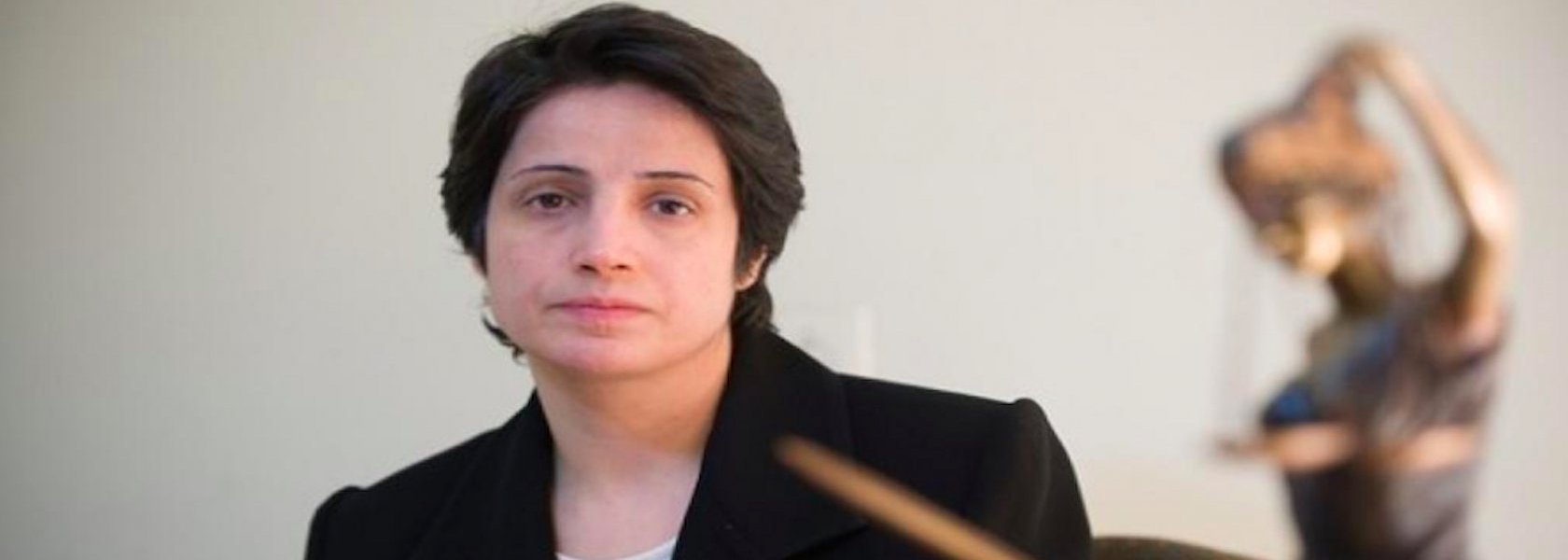
Human rights defender Nasrin Sotoudeh on hunger strike in Iran

August 30, 2018

One of the most admirable human rights defenders in the world, Iranian Nasrin Sotoudeh, has gone on hunger strike, Front Line Defenders reports on 25 August 2018. This time in protest against her judicial harassment and the continuing pressure which is being exerted on her family, relatives and friends. The defender was arrested in June and has been in the women’s ward of Evin Prison since.

Nasrin Sotoudeh  is a human rights defender and lawyer who in recent months has represented a number of women’s rights defenders who have faced charges as a result of their protests against compulsory veiling in Iran. The defender has also actively criticised the new limit which has been imposed by the Iranian judicial system on the number of state-approved lawyers which are permitted to defend political and security based cases. [see https://www.frontlinedefenders.org/en/profile/nasrin-sotoudeh  and https://humanrightsdefenders.blog/2018/06/16/iranian-human-rights-lawyer-nasrin-sotoudeh-arrested-again/]

On 25 August 2018, human rights defender Nasrin Sotoudeh began a hunger strike in protest against her judicial harassment and the continuing pressure which is being exerted on her family, relatives and friends. The next day, the Assistant Prosecutor and two other judicial authorities filed three new charges against her for “urging a referendum,” “assisting in the formation of house churches” and “organising protest rallies”. The human rights defender believes that these charges have been filed as a result of her failure to attend a court hearing on 15 August 2018, when she was sentenced to five years in prison in absentia for “propaganda against the state”, “assembly against national security” and “espionage”. The defender has lodged an appeal against these convictions. On 18 August 2018, at approximately 8 a.m., three agents of Iran’s Intelligence Ministry, holding  a warrant from Branch 7 of the Revolutionary Court in Evin Prison, raided Nasrin Sotoudeh’s house while her children were asleep. The agents also raided the house of her sister-in-law. It is believed that the agents were searching for objects related to the defender’s human rights work, such as badges reading “I oppose the compulsory Hijab”. 

——–

https://www.frontlinedefenders.org/en/case/nasrin-sotoudeh-arrested 

https://www.theguardian.com/world/2018/aug/26/no-choice-jailed-iranian-lawyer-nasrin-sotoudeh-goes-on-hunger-strike

https://www.iranhumanrights.org/2017/11/previously-imprisoned-human-rights-lawyer-nasrin-sotoudeh-refuses-to-appear-in-court/?utm_content=buffer11e53&utm_medium=social&utm_source=twitter.com&utm_campaign=buffer

30 August: International Day of Disappearances

August 30, 2018

Today, 30 August, is the International Day of the Disappeared. The UN has a Working Group on Enforced and Involuntary Disappearances (WGEID) – established in 1980. The WGEID’s mandate is to assist families in determining the fate and whereabouts of their relatives who, having disappeared, are placed outside the protection of the law. The WGEID endeavours to establish a channel of communication between the families and the Governments concerned, to ensure that individual cases which families have brought to the Group’s attention are investigated with the objective of clarifying the whereabouts of disappeared persons. Clarification occurs when the fate or whereabouts of the disappeared person is clearly established, irrespective of whether the person is alive or dead. The WGEID is made up of five independent experts.

A good piece on the widespread problem is by Ewelina U. Ochab – a human rights advocate and author of the book “Never Again: Legal Responses to a Broken Promise in the Middle East” in Forbes of 29 August 2018. She points out that the International Convention for the Protection of All Persons from Enforced Disappearance as of August 2018, had only 58 ratifications.

Many organizations use the day to try and get attention for particularly serious cases. One example is the Asian Human Rights Commission with its statement focusing on Asia:International Day of the Victims of Enforced Disappearances: Powerlessness before extra-judicial killings”

Today, the world commemorates the International Day of the Victims of Enforced Disappearances. Enforced Disappearances is one of the recurring tragedies that is happening throughout the world. Many countries, particularly less-developed countries, now adopt enforced disappearances as the easiest way of dealing with problems that Governments find difficult to cope with. The twin evils of enforced disappearances and extra-judicial killings remain as the two major problems in several Asian countries.

Bangladesh has recorded several hundreds of enforced disappearances of political opponents of the present Ruling Party within the last few months. The matter has been well publicized. But there have not been any serious interventions in order to bring an end to this iniquity. Other countries such as Pakistan, several parts of India, Sri Lanka and the Philippines are among the countries which are prominent in the practice of enforced disappearances.

……………………..

As another year goes by, there will be many additional victims of Enforced Disappearances. Will there be an attempt, at both local and international levels, to put up severe resistance to end this practice? This includes the restoration of the other factors of: a fair trial and the role of Judges in this equation. This remains as one of the major issues that concern Human Rights in our world today. When the lives of so many people are so blatantly destroyed, how can Human Rights be spoken of with any kind of significance and importance?

The fate of Victims of Enforced Disappearances is one of the urgent concerns voiced today. Victims should be given more protection. Victims should and need to be heard by all sectors of society. A genuine response to their cries for help is what is needed NOW.


for some of my earlier posts on disappearances, see: https://humanrightsdefenders.blog/tag/disappearances/

https://en.wikipedia.org/wiki/International_Day_of_the_Disappeared

WORLD: International Day of the Victims of Enforced Disappearances: Powerlessness before extra-judicial killings

https://www.forbes.com/sites/ewelinaochab/2018/08/29/the-international-day-of-the-victims-of-enforced-disappearances/#144b745eb42e

Where is the international support for Canada in its row with Saudi Arabia

August 27, 2018

The tension between Saudi Arabia and Canada began when Canada’s Global Affairs Twitter account tweeted this 3 August 2018 statement concerning human rights abuses: Canada is gravely concerned about additional arrests of civil society and women’s rights activists in , including Samar Badawi. We urge the Saudi authorities to immediately release them and all other peaceful activists.

The excessive response by Saudi Arabia and the various issues at stake have been sufficiently described  in the media (see several links below) but what is most disturbing is what one commentator called “Not a shred of solidarity was on offer anyway: it was all just a dispute between “friends” and “allies.” Weak EU response with obviously no support from the Trump government, has left the Canadian government close to mulling a kind of apology “Canada will of course continue to “speak out,” Trudeau said last Wednesday, but he also said this of Saudi Arabia: “This is a country that has some importance around the world. It is making progress when it comes to human rights.” There is no need for mediation,” said Saudi Foreign Minister Adel al-Jubeir. “…Canada has made a mistake and needs to fix it.” Al-Jubeir’s views were then immediately expanded by former Conservative foreign affairs minister John Baird in an interview broadcast by the Saudis’ own Al-Arabiya network.

On 9 August a number of Canadian organizations expressed their support to Canada for its recent position on the detention of women human rights defenders in Saudi Arabia. “and urged the international community to join Canada in calling for the unequivocal respect of women’s rights in Saudi Arabia.”

With Russia and quite of few other countries coming out openly to express solidarity with Saudi Arabia it is time to ask where the like-minded solidarity is and what international NGOs do to support courageous Canada??

[with exception for HRW https://www.hrw.org/news/2018/08/08/saudi-arabia-punishes-canada-criticizing-human-rights-defenders-arrests and AI https://www.amnesty.org/en/latest/news/2018/08/saudi-arabia-international-community-must-speak-up-for-human-rights-defenders-after-canadian-ambassador-expelled/]

———

http://www.mediafiledc.com/saudi-canadian-duel-takes-place-on-multiple-platforms/

https://www.economist.com/middle-east-and-africa/2018/08/11/saudi-arabia-picks-a-pointless-fight-with-canada

https://www.theglobeandmail.com/opinion/article-canada-owes-no-apology-to-the-saudis/

https://www.macleans.ca/politics/worldpolitics/the-trudeau-government-is-losing-its-human-rights-battle-with-the-saudis-and-missing-a-huge-opportunity/

https://interpares.ca/news/joint-statement-canadas-support-women-human-rights-defenders-saudi-arabia