On 15 March 2019 the International Federation for Human Rights and its partner organizations Association of Parents of Disappeared Persons (APDP) and Jammu Kashmir Coalition of Civil Society (JKCCS) published a briefing note detailing key human rights issues of concern in Indian-administered Jammu & Kashmir. I use the term dare in the title as wading in to the issue of Jammu and Kashmir is always tricky and leads to furious reactions from governments and media.
Human rights violations began to be formally reported in Indian-administered Jammu & Kashmir in 1990 in the midst of counter-insurgency operations by the Indian Army to contain an armed struggle against Indian rule. These military operations were marked by excessive and disproportionate use of force. Since 1990, more than 70,000 people have been killed, more than 8,000 have been subjected to enforced disappearances, several thousands have been arrested and detained under repressive laws, and torture and other acts of inhuman and degrading treatment against protestors and detainees have been routinely used by Indian security forces.
ILLUSTRATION: MIR SUHAIL QADRI.
The NGOs have demanded full and unfettered access to Jammu & Kashmir to UN bodies and representatives, foreign and domestic human rights organizations, and foreign and local journalists. The groups also called for establishing a Commission of Inquiry to investigate allegations of all human rights violations perpetrated in Jammu & Kashmir, as recommended in the report by the UN Office of the High Commissioner for Human Rights (OHCHR) and the establishment of a mechanism to monitor the human rights situation in Jammu & Kashmir through diplomatic missions in New Delhi and Islamabad.
The note details “continuing crime of enforced disappearance, extrajudicial killings, torture used as punitive action, systematic impunity for grave crimes, use of arbitrary and administrative detentions to curb dissent, military operations threatening human rights, rights to freedoms of expression, freedom of association, and freedom of religion or belief being curbed, human rights defenders under threat, sexual violence used a tool of repressions, lack of safeguards continue to place children in danger,” among other crimes.
Nothing new but it being a Sunday here in Crete, where lots of people go to church, one is struck by the continuing religious intolerance in certain parts of the world. Here two short items relating to Pakistan, both from March 2019:
reports that on 6 March 2019 human rights defender Afzal Kohistaniwas shot dead by unidentified gunmen in Gami Ada, in Khyber Pakhtunkhwa Province. Afzal Kohistani was a human rights defender who had been campaigning against “honour killings”, or choar, in the Kohistan region of Pakistan. He had been the central figure seeking justice for the killing of five young women and three young men in 2012 and 2013.
The 2012 and 2013 “honour killings” were linked to a video, which went viral after it appeared online in 2012. It showed five young women singing and clapping, while two young men performed a traditional dance during a local wedding in Palas, a remote area in Kohistan. The mixing of genders is considered a serious violation of tribal norms in Kohistan and the young people were killed as a result of the “dishonour” they had brought on their families and community…..Prior to his death, Afzal Kohistani had received numerous death threats for seeking to bring the perpetrators of the Kohistan killings to justice. The human rights defender and his family were forced to leave their home in 2012 and had been in hiding for the past seven years. A few days prior to being killed, the human rights defender had written to the Deputy Inspector General of Police (DIG) in Hazara seeking police protection but his request never received a response. The Supreme Court’s orders for the provincial government to provide the human rights defender with protection were also not heeded. (for more detail see the link below).[ One of my first posts in 2013 concerned https://humanrightsdefenders.blog/2013/09/28/pakistan-and-rights-of-women-unbearable/]
———
A story in the Business Standard of 17 March refers to the a protest rally in Geneva by Pakistani Christians living in parts of Europe objecting to “Islamists misusing blasphemy law to harass Christians in Pakistan”. The protesters walked from Palais Wilson, to ‘Broken Chair’ in front of the UN, during the 40th session of the UN Human Rights Council.
They demanded that the Pakistan government must abolish the ‘dangerous’ law misused by the state and non-state actors to target the minorities. Frank John, Chairman of Drumchapel Asian Forum in Glasgow, said: “We are unhappy with the functioning of the government in Pakistan because the mindset of ‘maulvis’ (Islamic hardliners) towards Christians is immoral. Every day, atrocities are being committed against our children, especially girls, which is not acceptable. Our girls are being kidnapped by misusing PPC 295C and they are converted into Islam.” He added: “.. If we have an altercation with any person, they put us under PPC 295C. This is a dangerous law and needs to be abolished.”
Dr Mario Silva, Executive Chairman of International Forum for Rights and Security said: “Pakistan systematically discriminates against minorities. Christians are particularly targetted by the blasphemy law. Christian persecution is a real threat to democracy and it’s a real threat to human rights. It’s something the world community needs to take a look at. He added, “The state has a responsibility to protect its minorities rather destroying them. They have to go against the perpetrators of crimes against Christians. There are attacks on Christians, suicide bombings are taking place and the government is doing nothing to investigate the persecution of Christians in the country.” Criticising the blasphemy law, he said: “Blasphemy law should in fact never be a part of any democratic system of government because blasphemy law is meant to target minorities…..” [see also: https://humanrightsdefenders.blog/2013/12/24/pussy-riot-freed-in-russia-but-the-bigger-issue-is-blasphemy-laws-everywhere/]
Christians make up less than two per cent of the population in Pakistan. Their numbers are decreasing as many of them are migrating to other countries for their safety.
The ink on an EU report (March 15) concluding that human rights in Azerbaijan remain in need of improvement, is hardly dry and there is a surprise announcement that Azerbaijan’s strongman-resident has ordered the release of more than 400 people, including opposition politicians and pro-democracy youth activists who were listed as political prisoners by international human rights groups. True, the EU report comes ahead of the upcoming EU-Azerbaijan Cooperation Council, scheduled to take place on 4 April in Brussels, but there must be other reasons.
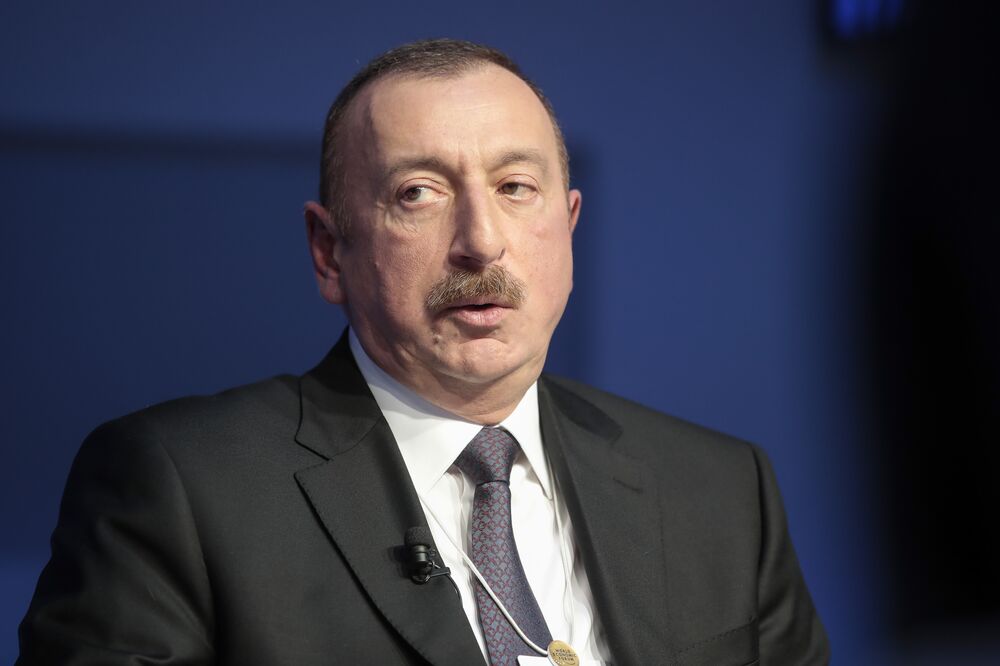
Ilham AliyevPhotographer: Jason Alden/Bloomberg
Fuad Qahramanli and Gozal Bayramli, deputy leaders of the opposition Popular Front of Azerbaijan Party, are among the pardoned, according to a statement on the presidential website. Pro-opposition youth activists Ilkin Rustamzada, Qiyas Ibrahimov and Bayram Mammadov will also be released. The pardoned are to be freed within 24 hours. At least 43 human rights defenders, journalists, political and religious activists remained wrongfully imprisoned in Azerbaijan last year, according to Human Rights Watch. Whether all of these are freed is not yet clear.
Jessica Corbett, staff writer for Common Dreams writes on 25 March “‘Blatant Effort to Intimidate and Retaliate’: Pompeo Imposes Visa Ban on ICC Staff Probing US War Crimes“
Secretary of State Mike Pompeo announced new visa restrictions in a press briefing on Friday. (Photo: U.S. State Department)
Human rights defenders expressed outrage on Friday after Secretary of State Mike Pompeo revealed that the Trump administration is revoking or denying visas for any International Criminal Court (ICC) personnel who try to investigate or prosecute U.S. officials or key allies for potential war crimes. The move, Pompeo confirmed is a direct response to ongoing efforts by the ICC to probe allegations of war crimes and crimes against humanity tied to the war in Afghanistan. There was an immediate and almost unanimous outcry by the key human rights NGOs in the USA:
Jamil Dakwar, director of the ACLU‘s Human Rights Program (the ACLU currently represents Khaled El Masri, Suleiman Salim, and Mohamed Ben Soud, who were all detained and tortured in Afghanistan between 2003 and 2008): “This is an unprecedented attempt to skirt international accountability for well-documented war crimes that haunt our clients to this day,” Dakwar said. “It reeks of the very totalitarian practices that are characteristic of the worst human rights abusers, and is a blatant effort to intimidate and retaliate against judges, prosecutors, and advocates seeking justice for victims of serious human rights abuses.”
Richard Dicker, international justice director at Human Rights Watch,called it “an outrageous effort to bully the court and deter scrutiny of U.S. conduct.” He encouraged ICC member countries to “publicly make clear that they will remain undaunted in their support for the ICC and will not tolerate U.S. obstruction.”
Daniel Balson, advocacy director at Amnesty International USA, noted that this is just “the latest attack on international justice and international institutions by an administration hellbent on rolling back human rights protections.” Visa bans, as Balson pointed out, are “powerful tools typically reserved for the most serious of human rights abusers.” But rather than targeting global criminals, the Trump administration has set its sights on the ICC—an impartial judicial body that aims to promote accountability under international law by probing and prosecuting crimes of aggression, crimes against humanity, war crimes, and genocide.
The move is “is highly indicative of [the administration’s] culture of disregard for rights abuses,” said Balson. “Throwing roadblocks in front of the ICC’s investigation undermines justice not only for abuses committed in Afghanistan, but also for the millions of victims and survivors throughout the world who have experienced the most serious crimes under international law.”
Pompeo’s announcement came after John Bolton, President Donald Trump’s national security adviser and a longtime critic of the ICC, threatened to impose sanctions on court officials in September if they continued to pursue an investigation of potential crimes by U.S. civilians or military personnel in Afghanistan….”These visa restrictions may also be used to deter ICC efforts to pursue allied personnel, including Israelis, without allies’ consent,” Pompeo added. “Implementation of this policy has already begun.”
On 15 March 2019 the Asian Human Rights Commission (AHRC) – a regional NGO – published its 250th weekly episode of the programmeAHRC TV: JUST ASIA. Congratulations.
Since October 2013, AHRC TV’s news programme has been providing a weekly broadcast of human rights news. Just Asia is the first online news report of its kind in Asia, bringing together stories and cases from victims, activists, journalists and all those concerned with human rights. Just Asia is a platform not only for the voiceless to share their narratives, but also an alternate source of information for those wanting to learn and act on human rights in Asia. The special edition is devoted to this occasion with interviews of staff, former staff and contributors.
On 6 March 2019 Global Geneva published an article by John Horekens entitled “Defending Human Rights Defenders: The Legacy of Martin Ennals”
Can a human rights award make a difference to the plight of victims by drawing public attention to their situation? Or even protect them from being killed or tortured? John Horekens argues that international prizes such as the Martin Ennals Award for Human Rights Defenders (MEA) can do just that. And even more. They recognize the courage and resilience of those who have decided to stand up for their rights, and the rights of others, regardless of the consequences.
It contains a short history of the MEA and argues forcefully for its place in Geneva. And has nice pictures!
Abdul Aziz Muhamat on stage in Geneva delivering his acceptance speech. The presentation slide was taken in Manus; on the left of Muhamat (blue T-shirt) is Behrouz Boochani (bare-chested) who was awarded Australia’s Victorian Prize for Literature in January 2019)
Abdul Aziz Muhamat, aka QNK002, is a Sudanese refugee currently interned by the Australians on Manus Island detention centre in Papua New Guinea. Standing left, here is at the MEA Award ceremony in Geneva in February, 2019. Arnold Tsunga, right, is a Zimbabwean lawyer and 2006 laureate in 2006 and currently an MEA Board member.
……………..
Martin Ennals in 1978. (Photo: Amnesty International).
It all started in London in 1992 when a group of Martin Ennals’ friends and relatives decided to commemorate the activist’s outstanding contribution to the modern human rights movement in creating this award. A founding member of the Anti-Apartheid Movement and the Secretary-General of the National Council for Civil Liberties, Ennals tirelessly advocated equal rights for all and for the development of global human rights. He created several non-governmental human rights organizations and was the first Secretary-General of Amnesty International (AI). During his tenure, AI was awarded inter alia the Nobel Peace Prize in 1977 and the UN Human Rights Award in 1978.
…..………
By 2007, close links had developed with the City of Geneva, leading to an agreement with the local government providing strong multi-year support for the ceremony itself. Its timing was moved in 2019 to February so as to benefit from increased public interest at a time when the Human Rights Council (HRC) prepares for its main session. Created in 2006 by the United Nations General Assembly, the HRC is the UN body responsible for strengthening the promotion and protection of human rights around the world and for addressing situations of human rights violations. It meets in Geneva for three regular sessions every year to discuss thematic human rights issues and situations that require its attention.
)
…..For Sandrine Salerno, municipal councillor and the leading proponent of the award within the City government, all this only underlines how deeply Geneva is committed to the defence of fundamental rights. “As a host to most major international organisations active in the human rights area, and with a long tradition of welcoming asylum-seekers, migrants, and people needing protection and assistance, the City of Geneva has made the promotion of human rights one its main international policy priorities.”
On the occasion of the MEA’s 25th anniversary in 2018, leaders of its jury organizations gathered with former laureates, providing an opportunity to discuss the state of human rights and human rights action today. In particular, they addressed issues such as how to influence authoritarians, counter populism, and the means for developing human rights action. “It is not easy to attribute impact to an organization working in the field of human rights”, says Dick Oosting, current Chairman of the Foundation Board. “Awards are only a tool.” But, he adds, “with its jury of ten major NGOs and its partnership with Geneva, the Martin Ennals Award has credibility that can provide real protection. We know this because our laureates and finalists tell us so.” Abdul Aziz Muhamat aka QNK002 on Manus Island can vouch for that.
John Horekens is a former senior official of the United Nations and of the international Red Cross. He is the vice-chairman of the Martin Ennals Foundation Board.
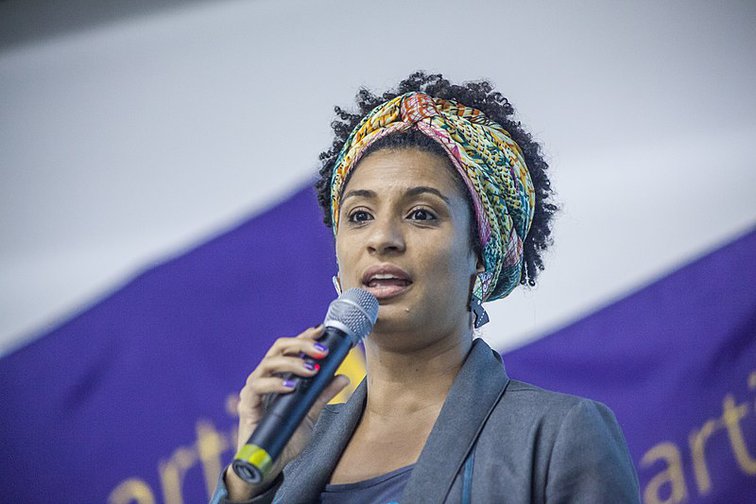
On 12 March 2019 Amnesty International reacted with “BRAZIL: ARRESTS ARE FIRST SIGN OF PROGRESS IN INVESTIGATION INTO KILLING OF MARIELLE FRANCO”.
Responding to reports that Brazilian police have arrested two men in Rio de Janeiro over the killing of human rights defender, Erika Guevara-Rosas, Americas director at Amnesty International, said: “These arrests are the first sign of progress in an investigation that has barely moved in the year since the killings. We are calling for the Brazilian authorities to ensure that investigations are independent and impartial, and to bring all those responsible, including those who ordered the crime, to justice in fair trials.” “There is no better way to honour Marielle Franco’s amazing legacy than by committing to protect human rights defenders and ensuring they can safely continue their vital work.”
A long piece in Open Democracy of 12 March provides more details and links tentatively the murder to the State:
Three moments have been key in unravelling the truth regarding this political crime. The first, the detention in December 2018 of Marcello Moares Siciliano, also a counselor in Rio de Janeiro. He was identified as the supposed intellectual author of the crime and he is being directly accused of being involved in the murder. The State Prosecutor and the Police searched his home and found material connected to the murder that also pointed towards two ex-military police officers who were also detained as possible complices.
The second, in January of this year, was the major revelation that these two military police officers have dark connections to Flavio Bolsonaro, the son of president Jair Bolsonaro, who is currently a senator. The accused are suspected to be members of the militia group ‘Escritório do Crime’, one of the most dangerous criminal groups currently in the west of Rio de Janeiro.
The third, is the unexpected arrest of a military police officer and another ex-police officer only a few days before commemorating one year since her murder. One is accused of pulling the trigger, and the other of driving the vehicle used for the attack. These appear to be the first concrete results of a complex investigation that remains plagued with uncertainty that would confirm the Brazilian state’s role in the murder…
What is certain is that the investigation has also suggested a link between Marielle’s opposition to the militarisation of Rio de Janeiro and her murder. She had discovered some worrying conexions, which could imply her death was caused by powerful mafias that wished to silence her. The complexity and the difficulty of clarifying the events surrounding her death show there are powerful interests impeding the investigation.
A coalition of human rights groups (such as Amnesty International, Gulf Centre for Human Rights, Human Rights Watch, International Trade Union Congress, Transparency International and the World Players Association) has sent an open letter to FIFA president Gianni Infantino to confirm that any country chosen to share World Cup 2022 games with Qatar will meet world football’s new ethical standards. The possible expansion of the next World Cup from 32 to 48 teams is top of the agenda at a meeting of the FIFA Council in Miami on Friday, with Infantino keen on an idea that would mean Qatar having to share the World Cup with other nations in the Middle East.
That idea would need Qatar’s approval, which is far from certain as it has been locked in a bitter diplomatic dispute with Bahrain, Egypt, Saudi Arabia and the United Arab Emirates since June 2017, but the more neutral Kuwait and Oman have been suggested as possible co-hosts.
Sotoudeh was charged with spying, spreading propaganda and insulting Iran’s supreme leader. Photograph: Behrouz Mehri/AFP/Getty Images
Only yesterday I hoped that Nasrin Sotoudeh‘s invitation to the G7 would set a good precedent [https://humanrightsdefenders.blog/2019/03/11/does-g7-set-a-precedent-with-sotoudeh-for-inviting-human-rights-defenders/], now Reuters reports that she has been handed a new sentence that her husband said was 38 years in prison and 148 lashes! The news comes days after Iran appointed a hardline new head of the judiciary, Ebrahim Raisi, who is a protege of Ali Khamenei. The appointment is seen as weakening the political influence of the Iranian president, Hassan Rouhani. (NOTE: Her husband clarified later that she will be serving 10 years of the 33 he had announced on his Facebook page and in an interview with Radio Farda)
In the meantime AIreports that a series of videos shared on social media in recent weeks have shed light on the daily harassment and violent attacks women in Iran face at the hands of morality police and pro-government vigilantes seeking to enforce the country’s forced hijab(veiling) laws. The videos show members of the public or plain-clothes morality police aggressively confronting or attacking women for defying Iran’s degrading forced hijab laws, in the name of defending “public decency”. Perpetrators of such attacks appear to be getting bolder in their assaults in response to efforts by women to film the violence they face and share the videos on social media. “The video footage that has emerged in recent weeks demonstrates the shocking levels of abuse women in Iran face on a daily basis from morality police or pro-government thugs simply for daring to defy the country’s abusive forced hijab laws,” said Philip Luther of Amnesty International. Iranian women’s rights defenders have courageously filmed these incidents as part of the My Camera My Weapon campaign, which aims to raise awareness of the constant harassment and assault that women and girls face in Iran’s streets as a result of forced hijab laws.
Amnesty added:…..The charges on which Nasrin Sotoudeh was convicted include “inciting corruption and prostitution” and “openly committing a sinful act… by appearing in public without a hijab”. Some of the activities that the authorities have cited as “evidence” against her include: opposing forced hijab; removing her headscarf during prison visits; defending women who peacefully protested against forced hijab; giving media interviews about the violent arrest and detention of women protesting against forced hijab; and placing flowers at the scene where a woman protester was violently arrested.
The UN Human Rights Council also was dealing with Iran this week: Worrying patterns of intimidation, arrest, prosecution, and ill-treatment of human rights defenders, lawyers, and labour rights activists in Iran signal an increasingly severe State response to protests and strikes in the country, Javaid Rehman, the Special Rapporteur on human rights in Iran, said on 12 March 2019. “Today, the people of Iran face a myriad of challenges,” he told the Human Rights Council in Geneva. “Many have voiced their concern through protests, demonstrations, and strikes. People from diverse sections of society – from truck drivers to teachers to factory workers – across the country have protested.” “It is in this context of increased challenges that concerns are mounting about human rights, including the rights to freedom of peaceful assembly and to association in Iran,” he said, calling on the Government to release all those detained for exercising such rights. Presenting his first report to the Council, Rehman said the re-imposition of secondary sanctions by the United States of America had further increased concerns for the welfare of ordinary Iranians.
The Special Rapporteur also highlighted the alarming health situations of numerous imprisoned individuals such as human rights defender Arash Sadeghi [see also: https://humanrightsdefenders.blog/2016/09/30/iran-shameful-sentences-for-narges-mohammadi-issa-saharkhiz-arash-sadeghi-no-detente-in-human-rights/]. Rehman also highlighted the situation of prominent woman human rights lawyer Nasrin Sotoudeh who was reportedly convicted last week of charges related to her work and could face a lengthy prison sentence. Other issues raised in his report include concerns regarding the right to life and to fair trial, the situation of detained foreign and dual nationals, and the treatment of religious and ethnic minorities.
Human Rights Watch commented that the Iranian judiciary’s draconian sentence for a prominent human rights lawyer Nasrin Sotoudeh was an “appalling travesty of justice“.
Whether by intent or by coincidence, the very critical statement of the UN Human Rights Council on Saudi Arabia came on International Women’s Day 2019. There was considerable media attention. Interesting to note is the difference in emphasis between the NYT and the Washington Post:
“Dozens of Western countries rebuked Saudi Arabia for its aggressive crackdown on free expression in a landmark initiative on Thursday in the United Nations’ top human rights body. It was the first time states had ever confronted the kingdom over its human rights record in the United Nations Human Rights Council, where Saudi Arabia is one of 47 members. The rebuke came in a statement signed by 36 nations — including every member of the European Union — that condemned Saudi Arabia’s “continuing arrests and arbitrary detentions of human rights defenders” and its use of counterterrorism laws to silence peaceful dissent. The statement pointed in particular to the treatment of Saudi women who have challenged the kingdom’s strict rules. The nations also called on Saudi Arabia to cooperate fully with investigations into the death of Jamal Khashoggi, the Washington Post columnist who was killed at the Saudi Consulate in Istanbul. The statement specifically named 10 people, all arrested last year in a crackdown that started shortly before Saudi Arabia introduced reforms allowing women to drive: Loujain Al-Hathloul, Eman Al-Nafjan, Aziza Al-Yousef, Nassima Al-Sadah, Samar Badawi, Nouf Abdelaziz, Hatoon Al-Fassi, Mohammed Al-Bajadi, Amal Al-Harbi and Shadan al-Anezi. The statement drew applause from human rights groups, which said it broke Saudi Arabia’s apparent impunity from condemnation in the council.
“It sends a strong signal that Saudi Arabia is not untouchable, and that council members should be held to a higher level of scrutiny,” said Salma El Hosseiny, an advocate for the Geneva-based International Service for Human Rights.
——-
Ishaan Tharoor wrote for the Washington Post of 8 March 2019 :”The West’s rebuke of Saudi Arabia won’t change its course”
(Anjum Naveed/AP)
The rhetorical attacks keep coming at Saudi Arabia from the West. On Thursday, the European Union signed on to a rare rebuke of the kingdom. …The statement was the first collective reprimand of Riyadh issued at the council since it was founded in 2006…Both the Trump administration and Saudi officials have sought to shield Mohammed from scrutiny, but that hasn’t dimmed the outrage of a host of Western governments and lawmakers. In Washington, Congress is still battling the White House over the latter’s flouting of a legal requirement to report to the Senate on the crown prince’s role in Khashoggi’s death. Though U.S. politicians remain bitterly divided on most issues, they have found an unusual consensus in their antipathy toward Riyadh……..
But the Saudis’ response has so far been categorical and unrepentant. “Interference in domestic affairs under the guise of defending human rights is in fact an attack on our sovereignty,” said Abdul Aziz Alwasil, the kingdom’s permanent representative in Geneva, in reaction to the European Union’s statement. Similar bullish statements came from the Saudi Foreign Ministry this year as members of Congress weighed the passage of a punitive bill.
That Riyadh has endured only the slightest course corrections amid months of controversy speaks, firstly, to the durability of the monarchy’s economic ties with a host of major powers. International political and business elites have shown themselves all too willing to overlook a regime’s record when it suits their interests. But it also speaks to the fact that despite their concerns over Khashoggi’s death, insiders in Washington cheer the Saudi push toward a more “normal” and secular modernity encouraged by Mohammed’s ambitious economic and social reform agenda. Movie theaters have sprung up, and women can now learn to drive — no matter that key female activists who clamored for these rights are still in prison.
Mohammed has championed these reforms by inculcating a new spirit of nationalism. “Saudi Arabia’s undergoing an aggressive nationalist rebranding, downplaying an austere religious doctrine associated abroad with terrorism, and promoting veneration of de facto ruler Crown Prince Mohammed bin Salman as he pursues an economic overhaul,” noted Bloomberg News this week, exploring the extent to which overt nationalism is supplanting the kingdom’s traditional religious orthodoxy. “Amid efforts to maintain domestic support while redesigning the contract between state and citizen, traitors, not infidels, are the enemy.”
The lecturing from Western capitals, too, plays into this dynamic, deepening national feeling among many patriotic Saudis who have rallied around their prince in the face of “unbalanced” criticism from abroad, said Ali Shihabi, founder of the Arabia Foundation, a Washington think tank with close ties to Riyadh. He added that “inspiring nationalism is an objective” of Mohammed’s reform agenda.
Critics of the crown prince view him as a fundamentally destabilizing leader. Other experts argue that he’s here to stay. “It’s impossible to not see how much the country has changed” under Mohammed’s watch, said former U.S. diplomat Dennis Ross at a panel hosted by the Arabia Foundation last week, saying that though the crown prince may be “reckless,” the United States has much to gain from a “successful transformation” from Wahhabism to nationalism in Saudi Arabia.




 Abdul Aziz Muhamat, aka QNK002, is a Sudanese refugee currently interned by the Australians on Manus Island detention centre in Papua New Guinea. Standing left, here is at the MEA Award ceremony in Geneva in February, 2019. Arnold Tsunga, right, is a Zimbabwean lawyer and 2006 laureate in 2006 and currently an MEA Board member.