On 6 March 2019 Global Geneva published an article by John Horekens entitled “Defending Human Rights Defenders: The Legacy of Martin Ennals”
Can a human rights award make a difference to the plight of victims by drawing public attention to their situation? Or even protect them from being killed or tortured? John Horekens argues that international prizes such as the Martin Ennals Award for Human Rights Defenders (MEA) can do just that. And even more. They recognize the courage and resilience of those who have decided to stand up for their rights, and the rights of others, regardless of the consequences.
It contains a short history of the MEA and argues forcefully for its place in Geneva. And has nice pictures!
Abdul Aziz Muhamat on stage in Geneva delivering his acceptance speech. The presentation slide was taken in Manus; on the left of Muhamat (blue T-shirt) is Behrouz Boochani (bare-chested) who was awarded Australia’s Victorian Prize for Literature in January 2019)
Abdul Aziz Muhamat, aka QNK002, is a Sudanese refugee currently interned by the Australians on Manus Island detention centre in Papua New Guinea. Standing left, here is at the MEA Award ceremony in Geneva in February, 2019. Arnold Tsunga, right, is a Zimbabwean lawyer and 2006 laureate in 2006 and currently an MEA Board member.
……………..
Martin Ennals in 1978. (Photo: Amnesty International).
It all started in London in 1992 when a group of Martin Ennals’ friends and relatives decided to commemorate the activist’s outstanding contribution to the modern human rights movement in creating this award. A founding member of the Anti-Apartheid Movement and the Secretary-General of the National Council for Civil Liberties, Ennals tirelessly advocated equal rights for all and for the development of global human rights. He created several non-governmental human rights organizations and was the first Secretary-General of Amnesty International (AI). During his tenure, AI was awarded inter alia the Nobel Peace Prize in 1977 and the UN Human Rights Award in 1978.
…..………
By 2007, close links had developed with the City of Geneva, leading to an agreement with the local government providing strong multi-year support for the ceremony itself. Its timing was moved in 2019 to February so as to benefit from increased public interest at a time when the Human Rights Council (HRC) prepares for its main session. Created in 2006 by the United Nations General Assembly, the HRC is the UN body responsible for strengthening the promotion and protection of human rights around the world and for addressing situations of human rights violations. It meets in Geneva for three regular sessions every year to discuss thematic human rights issues and situations that require its attention.
)
…..For Sandrine Salerno, municipal councillor and the leading proponent of the award within the City government, all this only underlines how deeply Geneva is committed to the defence of fundamental rights. “As a host to most major international organisations active in the human rights area, and with a long tradition of welcoming asylum-seekers, migrants, and people needing protection and assistance, the City of Geneva has made the promotion of human rights one its main international policy priorities.”
On the occasion of the MEA’s 25th anniversary in 2018, leaders of its jury organizations gathered with former laureates, providing an opportunity to discuss the state of human rights and human rights action today. In particular, they addressed issues such as how to influence authoritarians, counter populism, and the means for developing human rights action. “It is not easy to attribute impact to an organization working in the field of human rights”, says Dick Oosting, current Chairman of the Foundation Board. “Awards are only a tool.” But, he adds, “with its jury of ten major NGOs and its partnership with Geneva, the Martin Ennals Award has credibility that can provide real protection. We know this because our laureates and finalists tell us so.” Abdul Aziz Muhamat aka QNK002 on Manus Island can vouch for that.
John Horekens is a former senior official of the United Nations and of the international Red Cross. He is the vice-chairman of the Martin Ennals Foundation Board.
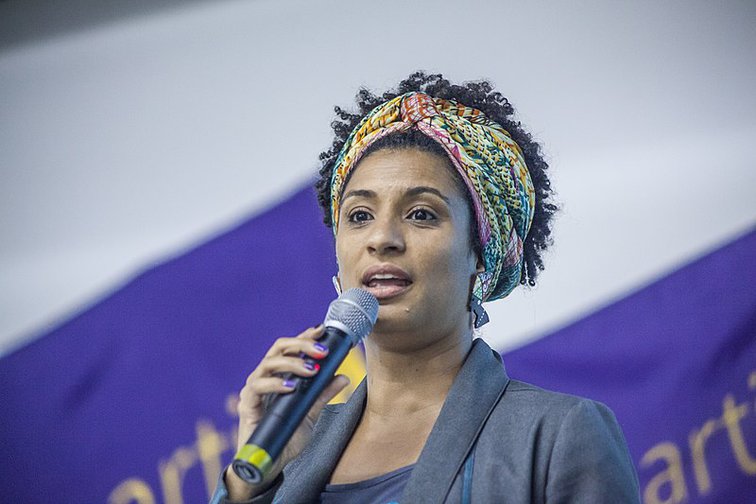
On 12 March 2019 Amnesty International reacted with “BRAZIL: ARRESTS ARE FIRST SIGN OF PROGRESS IN INVESTIGATION INTO KILLING OF MARIELLE FRANCO”.
Responding to reports that Brazilian police have arrested two men in Rio de Janeiro over the killing of human rights defender, Erika Guevara-Rosas, Americas director at Amnesty International, said: “These arrests are the first sign of progress in an investigation that has barely moved in the year since the killings. We are calling for the Brazilian authorities to ensure that investigations are independent and impartial, and to bring all those responsible, including those who ordered the crime, to justice in fair trials.” “There is no better way to honour Marielle Franco’s amazing legacy than by committing to protect human rights defenders and ensuring they can safely continue their vital work.”
A long piece in Open Democracy of 12 March provides more details and links tentatively the murder to the State:
Three moments have been key in unravelling the truth regarding this political crime. The first, the detention in December 2018 of Marcello Moares Siciliano, also a counselor in Rio de Janeiro. He was identified as the supposed intellectual author of the crime and he is being directly accused of being involved in the murder. The State Prosecutor and the Police searched his home and found material connected to the murder that also pointed towards two ex-military police officers who were also detained as possible complices.
The second, in January of this year, was the major revelation that these two military police officers have dark connections to Flavio Bolsonaro, the son of president Jair Bolsonaro, who is currently a senator. The accused are suspected to be members of the militia group ‘Escritório do Crime’, one of the most dangerous criminal groups currently in the west of Rio de Janeiro.
The third, is the unexpected arrest of a military police officer and another ex-police officer only a few days before commemorating one year since her murder. One is accused of pulling the trigger, and the other of driving the vehicle used for the attack. These appear to be the first concrete results of a complex investigation that remains plagued with uncertainty that would confirm the Brazilian state’s role in the murder…
What is certain is that the investigation has also suggested a link between Marielle’s opposition to the militarisation of Rio de Janeiro and her murder. She had discovered some worrying conexions, which could imply her death was caused by powerful mafias that wished to silence her. The complexity and the difficulty of clarifying the events surrounding her death show there are powerful interests impeding the investigation.
A coalition of human rights groups (such as Amnesty International, Gulf Centre for Human Rights, Human Rights Watch, International Trade Union Congress, Transparency International and the World Players Association) has sent an open letter to FIFA president Gianni Infantino to confirm that any country chosen to share World Cup 2022 games with Qatar will meet world football’s new ethical standards. The possible expansion of the next World Cup from 32 to 48 teams is top of the agenda at a meeting of the FIFA Council in Miami on Friday, with Infantino keen on an idea that would mean Qatar having to share the World Cup with other nations in the Middle East.
That idea would need Qatar’s approval, which is far from certain as it has been locked in a bitter diplomatic dispute with Bahrain, Egypt, Saudi Arabia and the United Arab Emirates since June 2017, but the more neutral Kuwait and Oman have been suggested as possible co-hosts.
Sotoudeh was charged with spying, spreading propaganda and insulting Iran’s supreme leader. Photograph: Behrouz Mehri/AFP/Getty Images
Only yesterday I hoped that Nasrin Sotoudeh‘s invitation to the G7 would set a good precedent [https://humanrightsdefenders.blog/2019/03/11/does-g7-set-a-precedent-with-sotoudeh-for-inviting-human-rights-defenders/], now Reuters reports that she has been handed a new sentence that her husband said was 38 years in prison and 148 lashes! The news comes days after Iran appointed a hardline new head of the judiciary, Ebrahim Raisi, who is a protege of Ali Khamenei. The appointment is seen as weakening the political influence of the Iranian president, Hassan Rouhani. (NOTE: Her husband clarified later that she will be serving 10 years of the 33 he had announced on his Facebook page and in an interview with Radio Farda)
In the meantime AIreports that a series of videos shared on social media in recent weeks have shed light on the daily harassment and violent attacks women in Iran face at the hands of morality police and pro-government vigilantes seeking to enforce the country’s forced hijab(veiling) laws. The videos show members of the public or plain-clothes morality police aggressively confronting or attacking women for defying Iran’s degrading forced hijab laws, in the name of defending “public decency”. Perpetrators of such attacks appear to be getting bolder in their assaults in response to efforts by women to film the violence they face and share the videos on social media. “The video footage that has emerged in recent weeks demonstrates the shocking levels of abuse women in Iran face on a daily basis from morality police or pro-government thugs simply for daring to defy the country’s abusive forced hijab laws,” said Philip Luther of Amnesty International. Iranian women’s rights defenders have courageously filmed these incidents as part of the My Camera My Weapon campaign, which aims to raise awareness of the constant harassment and assault that women and girls face in Iran’s streets as a result of forced hijab laws.
Amnesty added:…..The charges on which Nasrin Sotoudeh was convicted include “inciting corruption and prostitution” and “openly committing a sinful act… by appearing in public without a hijab”. Some of the activities that the authorities have cited as “evidence” against her include: opposing forced hijab; removing her headscarf during prison visits; defending women who peacefully protested against forced hijab; giving media interviews about the violent arrest and detention of women protesting against forced hijab; and placing flowers at the scene where a woman protester was violently arrested.
The UN Human Rights Council also was dealing with Iran this week: Worrying patterns of intimidation, arrest, prosecution, and ill-treatment of human rights defenders, lawyers, and labour rights activists in Iran signal an increasingly severe State response to protests and strikes in the country, Javaid Rehman, the Special Rapporteur on human rights in Iran, said on 12 March 2019. “Today, the people of Iran face a myriad of challenges,” he told the Human Rights Council in Geneva. “Many have voiced their concern through protests, demonstrations, and strikes. People from diverse sections of society – from truck drivers to teachers to factory workers – across the country have protested.” “It is in this context of increased challenges that concerns are mounting about human rights, including the rights to freedom of peaceful assembly and to association in Iran,” he said, calling on the Government to release all those detained for exercising such rights. Presenting his first report to the Council, Rehman said the re-imposition of secondary sanctions by the United States of America had further increased concerns for the welfare of ordinary Iranians.
The Special Rapporteur also highlighted the alarming health situations of numerous imprisoned individuals such as human rights defender Arash Sadeghi [see also: https://humanrightsdefenders.blog/2016/09/30/iran-shameful-sentences-for-narges-mohammadi-issa-saharkhiz-arash-sadeghi-no-detente-in-human-rights/]. Rehman also highlighted the situation of prominent woman human rights lawyer Nasrin Sotoudeh who was reportedly convicted last week of charges related to her work and could face a lengthy prison sentence. Other issues raised in his report include concerns regarding the right to life and to fair trial, the situation of detained foreign and dual nationals, and the treatment of religious and ethnic minorities.
Human Rights Watch commented that the Iranian judiciary’s draconian sentence for a prominent human rights lawyer Nasrin Sotoudeh was an “appalling travesty of justice“.
Whether by intent or by coincidence, the very critical statement of the UN Human Rights Council on Saudi Arabia came on International Women’s Day 2019. There was considerable media attention. Interesting to note is the difference in emphasis between the NYT and the Washington Post:
“Dozens of Western countries rebuked Saudi Arabia for its aggressive crackdown on free expression in a landmark initiative on Thursday in the United Nations’ top human rights body. It was the first time states had ever confronted the kingdom over its human rights record in the United Nations Human Rights Council, where Saudi Arabia is one of 47 members. The rebuke came in a statement signed by 36 nations — including every member of the European Union — that condemned Saudi Arabia’s “continuing arrests and arbitrary detentions of human rights defenders” and its use of counterterrorism laws to silence peaceful dissent. The statement pointed in particular to the treatment of Saudi women who have challenged the kingdom’s strict rules. The nations also called on Saudi Arabia to cooperate fully with investigations into the death of Jamal Khashoggi, the Washington Post columnist who was killed at the Saudi Consulate in Istanbul. The statement specifically named 10 people, all arrested last year in a crackdown that started shortly before Saudi Arabia introduced reforms allowing women to drive: Loujain Al-Hathloul, Eman Al-Nafjan, Aziza Al-Yousef, Nassima Al-Sadah, Samar Badawi, Nouf Abdelaziz, Hatoon Al-Fassi, Mohammed Al-Bajadi, Amal Al-Harbi and Shadan al-Anezi. The statement drew applause from human rights groups, which said it broke Saudi Arabia’s apparent impunity from condemnation in the council.
“It sends a strong signal that Saudi Arabia is not untouchable, and that council members should be held to a higher level of scrutiny,” said Salma El Hosseiny, an advocate for the Geneva-based International Service for Human Rights.
——-
Ishaan Tharoor wrote for the Washington Post of 8 March 2019 :”The West’s rebuke of Saudi Arabia won’t change its course”
(Anjum Naveed/AP)
The rhetorical attacks keep coming at Saudi Arabia from the West. On Thursday, the European Union signed on to a rare rebuke of the kingdom. …The statement was the first collective reprimand of Riyadh issued at the council since it was founded in 2006…Both the Trump administration and Saudi officials have sought to shield Mohammed from scrutiny, but that hasn’t dimmed the outrage of a host of Western governments and lawmakers. In Washington, Congress is still battling the White House over the latter’s flouting of a legal requirement to report to the Senate on the crown prince’s role in Khashoggi’s death. Though U.S. politicians remain bitterly divided on most issues, they have found an unusual consensus in their antipathy toward Riyadh……..
But the Saudis’ response has so far been categorical and unrepentant. “Interference in domestic affairs under the guise of defending human rights is in fact an attack on our sovereignty,” said Abdul Aziz Alwasil, the kingdom’s permanent representative in Geneva, in reaction to the European Union’s statement. Similar bullish statements came from the Saudi Foreign Ministry this year as members of Congress weighed the passage of a punitive bill.
That Riyadh has endured only the slightest course corrections amid months of controversy speaks, firstly, to the durability of the monarchy’s economic ties with a host of major powers. International political and business elites have shown themselves all too willing to overlook a regime’s record when it suits their interests. But it also speaks to the fact that despite their concerns over Khashoggi’s death, insiders in Washington cheer the Saudi push toward a more “normal” and secular modernity encouraged by Mohammed’s ambitious economic and social reform agenda. Movie theaters have sprung up, and women can now learn to drive — no matter that key female activists who clamored for these rights are still in prison.
Mohammed has championed these reforms by inculcating a new spirit of nationalism. “Saudi Arabia’s undergoing an aggressive nationalist rebranding, downplaying an austere religious doctrine associated abroad with terrorism, and promoting veneration of de facto ruler Crown Prince Mohammed bin Salman as he pursues an economic overhaul,” noted Bloomberg News this week, exploring the extent to which overt nationalism is supplanting the kingdom’s traditional religious orthodoxy. “Amid efforts to maintain domestic support while redesigning the contract between state and citizen, traitors, not infidels, are the enemy.”
The lecturing from Western capitals, too, plays into this dynamic, deepening national feeling among many patriotic Saudis who have rallied around their prince in the face of “unbalanced” criticism from abroad, said Ali Shihabi, founder of the Arabia Foundation, a Washington think tank with close ties to Riyadh. He added that “inspiring nationalism is an objective” of Mohammed’s reform agenda.
Critics of the crown prince view him as a fundamentally destabilizing leader. Other experts argue that he’s here to stay. “It’s impossible to not see how much the country has changed” under Mohammed’s watch, said former U.S. diplomat Dennis Ross at a panel hosted by the Arabia Foundation last week, saying that though the crown prince may be “reckless,” the United States has much to gain from a “successful transformation” from Wahhabism to nationalism in Saudi Arabia.
To celebrate its 70th anniversary, the Geneva Association of United Nations Correspondents (ACANU) organised a public lecture, panel discussion and award presentation in partnership with the Graduate Institute and the Club Diplomatique de Genève on “Press Freedom and Journalists Under Attack” on 25 February 2019.
Photo credit: Magali Girardin
The lecture, delivered by António Guterres, Secretary-General of the United Nations, addressed issues on the physical attacks and growing number of assaults on the credibility of journalists and media organisations, which are taking a heavy toll on media freedom. It also sought to answer what is spurring the growing hostility and violence and what can be done to protect professional journalists.
“Journalists are on the front lines, sounding the first alarm, questioning official accounts, looking into difficult and dangerous issues and – at their best – asking questions that demand an answer and telling truths that must be heard. […] In the face of this sustained campaign of harassment, intimidation and lack of accountability, we – the international community – cannot remain silent. […] I call on Governments and the international community to protect journalists and media workers, and to create the conditions they need to do their essential work, and to investigate and prosecute the perpetrators of attacks on them.”
Nina Larson, President of ACANU, then moderated a panel discussion on the situation facing journalists, which included Peggy Hicks, Director Thematic Engagement, Special Procedures and Right to Development Division, UN High Commissioner for Human Rights; Christophe Deloire, Secretary-General, Reporters Without Borders and David Sylvan, Professor, International Relations/Political Science, the Graduate Institute.
During the discussion, Ms Hicks pointed out that “one of the [phenomena] that’s really important for us to look at in this context is the extent to which we have a whole new world of threats in terms of how some of these [attacks] happen online as opposed to offline”. Mr Deloire found that oligarchical control of the media and restrictive laws were like invisible prisons, where “there is no visible victim, there is no blood, no people in jail, but the information can be controlled”. Citing ways that state entities falsely present themselves as independent journalists, Professor Sylvan added that “there are so many alternatives – “fake” or otherwise – to regular news media that the problem now for many journalists is just to try to distinguish what they are doing from the hundreds and hundreds of things that appear similar but are not. So on the one hand, there are many more means – quite apart from physical violence […] of putting sharp restrictions on press freedom, but also there is a much greater demand for this.”
In the final segment of the event, ACANU presented two new international journalism awards, created for the 70th anniversary celebration and to recognise journalists for outstanding work in the face of growing hostility. Jennifer O’Mahony, a British freelancer, was awarded the prize for “Excellence in Reporting” for her article published in The Telegraph: “Algeria dumps thousands of migrants in the Sahara amid EU-funded crackdown”. The ACANU award for “Best Journalistic Coverage of Human Rights” was given to two Geneva journalists, Adrià Budry Carbó of Le Temps and Camille Pagella of L’illustré, for their article, “Piège en haute mer”, published in Le Temps.
On 4 March 2019 it was announced that Oxfam and the Inter-American Commission on Human Rights (IACHR) signed a cooperation agreement on February 25, 2019 to promote and protect human rights in Latin America and the Caribbean, with special emphasis on economic, social, cultural and environmental rights and on the crucial role of human rights defenders. The agreement is for five years, to implement a plan including projects on research and the exchange of information linked to the situation of human rights in the region, the protection of human rights defenders and the provision of joint training processes targeting civil society organizations.
“Cooperating with the IACHR offers Oxfam a great opportunity to strengthen democracy in our countries and to weakening the current pattern of closing spaces for civil society,” said Simon Ticehurst, Oxfam’s Regional Director for Latin America and the Caribbean.
“We are very excited about signing this agreement. The excellent work Oxfam does to find lasting solutions to poverty is extremely interesting for the IACHR and for its Special Rapporteurship on Economic, Social, Cultural and Environmental Rights. Based on that, we will be developing high-impact joint projects to fight that scourge,” said IACHR Executive Secretary Paulo Abrão.
Over the past year, the IACHR has expressed its concern about the lack of guarantees for the exercise of human rights in several countries in the region. The Commission has also held hearings on issues like Central American migrant caravans, legal proceedings on the murder of human rights defender Berta Cáceres in Honduras, and the growing safety problems faced by defenders in Latin America.
In the context of this new deal, Oxfam will join forces with the IACHR to ensure the exercise of human rights.
In November 2018, China underwent its Universal Periodic Review and received many recommendations on freedom of expression, both online and off. This side event will elevate the views of civil society actors who are committed to seeing improvements in the protection of freedom of expression in China.
13 March 2019 , 13h30-14h30, in Room XXIII, Palais des Nations, Geneva
Panelists:
Judith Lichtenberg, Director of Lawyers for Lawyers
A 1989 democracy activist
Uyghur PEN representative
Steven Butler, Asia Program Coordinator, Committee to Protect Journalists
Sarah M Brooks, Asia Advocate, International Service for Human Rights.
Gillan Ropero, ABS-CBN News, reported on 28 February 2019 that the Malacañang Palace on Thursday slammed as a “rehash of old issues” the latest report of The Observatory for the Protection of Human Rights Defenders alleging that President Rodrigo Duterte was waging war against human rights defenders: “While it is true that the President’s words may be hurtful to some quarters, including human rights defenders, they are actually zeroed in on those who mock and derail the President’s efforts towards creating a society free from drugs, crime and corruption,” ,,,,”We reiterate that there is no such thing as a war against human rights defenders. There is only one against criminals, including drug pushers, and their protectors.”
The report also cited government’s alleged harassment of the Commission on Human Rights and the justice department’s pursuit of criminal charges against a number of Duterte’s political opponents who have taken strong pro-human rights views, such as Sen. Leila de Lima, currently detained on drug charges.
Spokesperson Panelo urged the International Federation for Human Rights (FIDH) and World Organization Against Torture (OMCT) to file their cases against the Philippine government to “settle this matter once and for all.” “File all cases and let’s be done with it. In the absence of this, the allegations will remain unfounded and politically motivated untruths aimed at shaming the Philippine government before the international community,” he said. “Sans this, the report is but recycled rubbish based on information peddled by the usual critiques of government, such as Karapatan, who must do so to remain relevant and to generate funds to exist from gullible sources abroad.”
The President is facing complaints at the International Criminal Court over the drug war killings. He has ordered the country’s withdrawal from the tribunal.
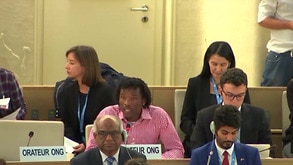
SBS news reports that award-winning Manus Island detainee Abdul Aziz Muhamat has spoken before the United Nations Human Rights Council over Australia’s ‘cruel’ asylum seeker policy. Speaking on behalf of the Human Rights Law Centre, the 25-year-old said: “After 6 years, we deserve our lives back and a future. We urge your mandates to take this up with the Australian government, which deserves to be held accountable by this Council.” [see also: https://humanrightsdefenders.blog/2019/02/18/aziz-thank-you-for-the-attention-but-now-i-have-go-back-to-detention/]
“We have no rights. We are not safe. We cannot go to Australia, or elsewhere, because the Australian Government will not allow it. We cannot go home, as it is unsafe. We are all sick and we have lost hope. We are in limbo.” He said the impact of six years of Australia’s offshore detention policy had exacted a physical and mental toll.
“As the Australian Government sits on the UN Human Rights Council, professing its commitment to human rights, it is indefinitely imprisoning nearly 1000 men and women in offshore refugee camps on Nauru and Manus,” said HRLC Legal Director Edwina MacDonald.
 Abdul Aziz Muhamat on stage in Geneva delivering his acceptance speech. The presentation slide was taken in Manus; on the left of Muhamat (blue T-shirt) is Behrouz Boochani (bare-chested) who was awarded Australia’s Victorian Prize for Literature in January 2019)
 Abdul Aziz Muhamat, aka QNK002, is a Sudanese refugee currently interned by the Australians on Manus Island detention centre in Papua New Guinea. Standing left, here is at the MEA Award ceremony in Geneva in February, 2019. Arnold Tsunga, right, is a Zimbabwean lawyer and 2006 laureate in 2006 and currently an MEA Board member.