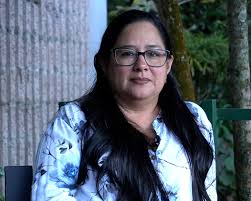
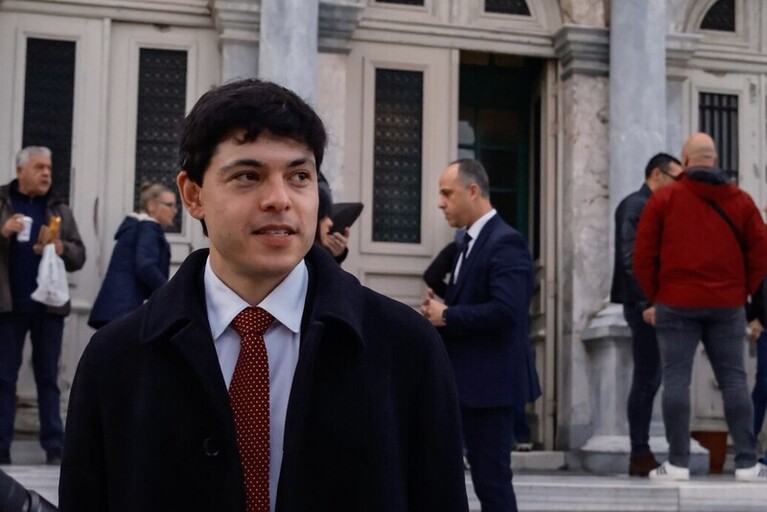
On 18 May 2026 UN experts and Human Rights Watch and Amnesty International expressed serious concern about the yearlong pre-trial detention of lawyer and woman human rights defender Ruth Eleonora López Alfaro in El Salvador.
“As time passes without the trial beginning, the presumption that detention is necessary is weakened,” the experts said.
López has been held in pre-trial detention for a year, officially authorised since 4 June 2025. During this time, she has been denied regular visits, despite precautionary measures ordered on 22 September 2025 by the Inter-American Commission of Human Rights. “This increases Ms. López’s vulnerability and puts her physical and psychological integrity at risk,” the experts said.
In maintaining judicial secrecy, the public is prevented access to hearings and the defence’s access to the criminal file is limited, thereby threatening the principle of equality of arms and the right to an adequate defence. The right to legal assistance of a lawyer of one’s choice is a cornerstone of the right to defence as established in Article 14 of the International Covenant on Civil and Political Rights.
“The circumstances of detention and the irregularities in the proceedings, point towards López being subject to reprisals because of her legitimate activities as a human rights defender and lawyer,” they said.
The experts underscored that there are elements suggesting that the criminalisation and prolonged pre-trial detention of Ruth López not only stem from her work exposing corruption and human rights violations, but also appear to reinforce patterns of social control designed to silence women leaders in the public sphere, while also seriously undermining the work of their organisations.
The experts urged the State to release Ruth López Alfaro immediately and consider alternative measures instead of keeping her in custody. They also called for the removal of the judicial secrecy imposed in the criminal proceedings, the cessation of all acts of harassment against her, and guarantees that she may carry out her human rights work without fear of reprisals. The experts are in contact with the Government of El Salvador on this matter.
The Ginetta Sagan Award honors women who are courageously defending the liberty, safety, and human rights of women and children in regions affected by serious abuses. The award provides $20,000 directly to the recipient, with unrestricted use. It recognizes women leaders who have created meaningful impact, often at great personal risk, and helps increase international visibility and protection for their work.
The award celebrates leadership, courage, and effective non-violent activism in difficult or dangerous environments
On 2 May 2026, several newspapers reported on plans to vet human rights defenders in Indonesia :
The government’s plan to screen and determine who qualifies as a human rights activist to decide who receives legal safeguards has met with backlash from civil society groups, who warn the move risks state interference in rights protections.
The plan came as the Human Rights Ministry is seeking to introduce changes to the 1999 Human Rights Law and issue a new ministerial regulation to strengthen legal protections for human rights activists, citing concerns over criminalisation against those involved in advocacy works.
To ensure legal safeguards can be provided for activists, Human Rights Minister Natalius Pigai said his ministry would form an assessor team to evaluate whether detained individuals meet the criteria as human rights defenders.
The assessment will be based on strict criteria focusing on the individual’s actions at the time of the incident rather than self-declared status or public recognition. The team will review each case individually to ensure decisions are made based on the context of ongoing legal cases.
Legal protection, the minister stressed, would only be extended to those defending public interests, particularly vulnerable or marginalised groups. Those who are proven to have acted with personal or financial motives would be excluded.
“It’s possible that someone widely known as a human rights activist, at a certain moment, may be found by the assessor team to be acting for (financial gain). In such cases, they can’t be considered a human rights activist,” Mr Pigai said on April 29, as quoted by Antara.
He added those meeting the criteria would be shielded from prosecution from the earliest stages of legal proceedings.
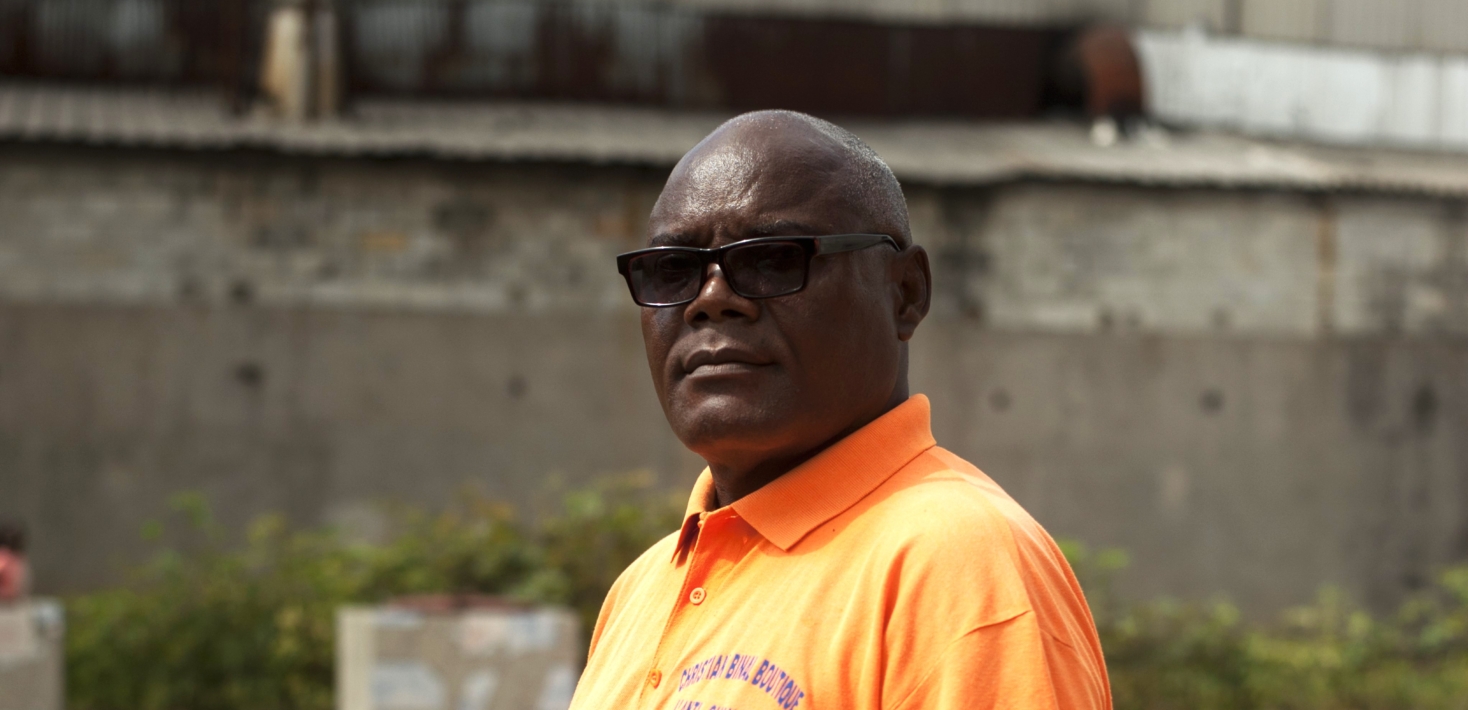
Cyrille Traoré Ndembi, 61, is the President of the Vindoulou Residents’ Collective, a neighbourhood on the outskirts of Pointe-Noire in the Republic of Congo. This retired community development specialist has been fighting to defend the residents’ right to a healthy environment since he moved there in 2019.
His house is located just ten metres from the Metssa Congo plant run by a subsidiary of the India-based Metssa Group. This recycling plant produced lead bars for export from 2013 to 2024, 50 metres from a school and in the middle of a residential area. Cyrille noticed severe health problems in his family including respiratory and digestive disorders. Blood tests on some residents showed lead levels far above the alert level set by the WHO.
Following Cyrille’s campaigning, and with the help of Amnesty International, the authorities ordered the plant’s closure in December 2024. Cyrille continues to fight for justice for his community.
“When I arrived in Vindoulou, I quickly realized the danger we were in. The air was unbreathable!
Black dust and fumes were spreading and invading our homes. Sometimes, when we went out, we couldn’t even see our nearest neighbour. The plant staff discharged oil and wastewater in front of our houses. Metal debris from the plant’s chimney fell onto our roofs. Once, I went to walk along the wall of the plant and debris fell on me like hail.
Right from the start, I had doubts about the legality of this activity in the middle of a populated area. I couldn’t understand how a substance as dangerous as lead could be recycled using processes that were, in my view, contrary to the standards and regulations in force.
‘My whole family was ill’
We arrived in Vindoulou in August 2019 and by January 2020 my whole family was ill. Our children were found to have the beginnings of pneumonia, bronchitis and bronchopneumonia. We also had diarrhoea and abdominal pains.
Across the neighbourhood, people had the same problems. I was told that the children who had moved away from Vindoulou no longer suffered from those symptoms.
The residents believed that nothing could make this company leave. For the community, it was David against Goliath. Some even called me King David.
I went door-to-door to convince people that something serious was going on. Everywhere I went, I reminded people of article 41 of our Constitution: every citizen has the right to live in a healthy environment.
I explained to people the benefits of getting organized together and taking up the fight. Today, our collective has over a hundred members.
From survivor to human rights defender
We tried to meet the directors of Metssa Congo. We met the plant’s manager, who said he was not authorized to comment on the subject. He promised us an audience with the CEO, but it never took place. They wouldn’t talk to us, simply saying that they had authorization to operate. We couldn’t even consult their environmental impact report, which is a document that we were entitled to access under the current legislation. After calling in a bailiff, I was finally able to consult another type of document, their environmental audit report produced after they had already begun operations.
In 2022, I went to meet Amnesty International’s representatives to alert them. From 2023 onwards, Amnesty investigated and provided funds to carry out blood tests on a sample of the population. We then had proof that people tested had high levels of lead in their blood.
At the time, the workers were against what I was doing. Now, most of them have joined us in our fight.Cyrille Traoré Ndembi
I took two blood tests, in March and September 2023. They showed blood lead levels above 400 µg/L. For the 17 other people tested, the levels were alarming. When the ministry carried out other tests in 2024, some ex-workers had levels of 1,000 µg/L – that’s enormous!
My youngest daughter just turned four. Of the nine children tested, she had the highest lead level, above 530 µg/L. I’m worried about her. She’s running fevers even though she has no infection.
Amnesty also helped us take legal action in 2023, to publicize our situation and, in the face of the administration’s inaction, to make a plea to the authorities. As a result, the minister [of Environment] came here and spoke to the population in December 2024. We as a collective did not have a formal audience with the minister. The authorities received Metssa Congo’s managers for an audience in Brazzaville [the Republic of Congo’s capital] several times, but never our collective! I’m not being heard. Ideally, we should be able to talk directly to the authorities.
I’ve been under pressure. Metssa filed a complaint against me alleging defamation in May 2024. I went to court, but Metssa didn’t show up. They were bolstered by the decision of the Supreme Court’s public prosecutor that allowed them to resume their activities after a suspension ordered by an administrative judge in April 2024.
One night, some young people came and threatened me. It was stressful, but I didn’t back down. At the time, the workers were against what I was doing. Now, most of them have joined us in our fight.
When the company’s operations were suspended again in June 2024 by the Ministry of Environment, we continued to fight because the word suspension meant nothing to us. We wanted to hear the word closure. When the decision was taken on 11 December 2024 to close and dismantle the plant, we were relieved, but the fight was far from over.
Several organisations came out with annual reports, including
Predatory attacks on multilateralism, international law and civil society marked 2025
The alternative on offer is a racist, patriarchal, unequal and anti-rights world order
Protesters, activists and global bodies are working to resist, disrupt and transform
The world is on the brink of a perilous new era Amnesty International warned on 21 April 2026 with the launch of its annual report, The State of the World’s Human Rights. The organisation called on governments, including Australia, to reject the politics of appeasement and collectively resist attacks on multilateralism, international law and civil society, before this emerging order takes hold.
In its assessment of the human rights situation across 144 countries, the report documents widespread violations by governments and other actors throughout 2025, alongside persistent failures of accountability, with only limited areas of progress. Many of these patterns have continued into 2026, as the international rules-based order faces sustained and coordinated pressure.
“We are confronting the most challenging moment of our age. Humanity is under attack from transnational anti-rights movements and predatory governments determined to assert their dominance through unlawful wars and brazen economic blackmail,” said Agnès Callamard, Secretary General of Amnesty International.
“World leaders have been far too submissive in the face of attacks on international law and the multilateral system. Their silence and inaction are inexcusable.”Agnès Callamard, Secretary General of Amnesty International
“The vast majority of states have been unwilling or unable to consistently denounce predatory acts by the USA, Russia, Israel or China, or to chisel out diplomatic solutions.
“World leaders have been far too submissive in the face of attacks on international law and the multilateral system. Their silence and inaction are inexcusable. It is morally bankrupt and will bring nothing but retreat, defeat and the erasure of decades of hard-fought human rights gains.
“To appease aggressors is to pour fuel on a fire that will burn us all and scorch the future for generations to come,” said Agnès Callamard…
“For the sake of humanity, the time to make history is now.”Agnès Callamard
The Inter-American Commission on Human Rights (IACHR) presents its Annual Report 2025, documenting the work it has done in compliance with the mandate to promote and protect human rights in the Americas. The report—showing, over six chapters, the results attained by IACHR mechanisms—is an instrument for institutional transparency and a reference for States, civil society, and regional and international organizations.
In a year that was full of challenges including weaknesses in democratic institutions, violence in various national contexts, the effects of climate change, and issues concerning vulnerable individuals and groups, among others, the IACHR strengthened its mechanisms and each of those mechanisms has achieved concrete results.
Our country is facing a grave threat as those in power leverage bias and disinformation to push rights-restricting legislation through at the state and federal levels. Our communities, schools, libraries, elections, and individual freedoms are being placed at risk by escalating assaults on our rights. In response, Human Rights First launched Democracy Watch in 2025, to track and expose legislative trends that endanger our civil and human rights and undermine democratic processes and institutions. Since its launch, we have tracked a proliferation of authoritarian tactics targeting our states and hurting our communities. This year we saw a wide range of legislative strategies, including rollbacks on reproductive freedom, immigrant and refugee rights, free speech, LGBTQ+ equality, voting rights, and public education.
Presenting his 2025 Annual Activity Report to the Parliamentary Assembly of the Council of Europe today, the Council of Europe Commissioner for Human Rights, Michael O’Flaherty, warned that Europe, and the rest of the world, is no longer merely in an “era of change” but is experiencing a profound “change of era” that threatens the very foundations of human rights law and practice.
“We are living in a context where our stable cultural framework is being shattered by rapid social and technological advances that surpass our capacity to grasp them,” the Commissioner stated. Highlighting the impact of artificial intelligence, the triple planetary crisis, and worsening inequality, he noted a widespread diminishment of trust between citizens and the state, as well as between generations and an increasing pressure on institutions and civil society across the continent. “Unimaginably, we risk losing our invaluable acquis of human rights law. This is the duty of our generation: to act and ensure these rights survive this transition intact”.
Srinagar: A coalition of international human rights organizations has called for the immediate release of Kashmiri journalist Irfan Meraj, three years after his arrest by India’s National Investigation Agency (NIA).
According to Kashmir Media Service, nearly three dozen human rights groups, including Amnesty International, Human Rights Watch and the Committee to Protect Journalists, said Meraj’s continued detention is based on charges they believe are politically motivated and linked to his work documenting human rights issues in occupied Jammu and Kashmir.
The organizations said that the case reflects growing pressure on journalists and researchers working on sensitive issues in the territory. The advocacy groups highlighted the detention of Kashmiri human rights defender Khurram Parvez, coordinator of the Jammu Kashmir Coalition of Civil Society (JKCCS), who has been held since 2021. Investigators previously described Mehaj as an associate of Parvez, a fact that rights organizations say forms part of the basis for the charges against him.
The coalition urged the Indian government to end what they described as reprisals against journalists and human rights defenders in occupied Jammu and Kashmir and to reconsider laws that allow extended detention without trial. They also criticized the Modi-led Indian government for failing to respond to several inquiries previously raised by UN human rights experts regarding alleged violations in the region.
The groups called on the international community to monitor the situation closely and encourage greater protection for journalists and civil society organizations, stating that continued attention from international institutions may be necessary to ensure that press freedom and basic civil liberties are upheld in the territory.
Meraj was arrested in March 2023 during an investigation conducted by India’s National Investigation Agency for uploading posts on brutalities of Indian forces in the territory.
Delivering a statement under General Debate item 5, a group of human rights organisations has raised concerns about ongoing discussions at the Human Rights Council to reduce the frequency with which Special Procedures report to the General Assembly.
These reports play a critical role in informing all UN Member States about pressing human rights issues and their links to peace, security, and sustainable development. They also help maintain visibility and political support for the UN’s human rights work in New York.
The statement emphasised that efforts to improve efficiency cannot be separated from the broader liquidity and budgetary crises affecting the UN, urging States to ensure that mandates are adequately resourced, to defend the independence of mandate holders, to protect civil society participation, and to ensure that those most at risk can continue to engage with this Council safely and meaningfully.
The written version of the statement can be found here
After delivering the statement, ISHR, Amnesty International and partner organisations outlined their concerns and recommendations in a letter sent to states.
One-size-fits-all approach: Several initiatives proposed during this 61st session appear to adopt a standardised approach with the aim of addressing a variety of objectives, including the Third Committee’s workload, cost-saving and rationalisation, rather than pursuing a strategic and mandate-specific assessment of impact and opportunities.
Lack of consultation: Proposals have also been advanced without meaningful consultation with the directly affected communities and concerned mandate holders, with sufficient time ahead of the Human Rights Council session, around the implications of reduced reporting to the General Assembly, and possible alternatives.
Resources and extraordinary character: Initiatives to shift to biannual or triennial reporting to the General Assembly, without recognising the temporary and exceptional nature of such measures, risk entrenching this practice over the long term. This could also lead to a reduction in Regular Budget resources, in line with decreased General Assembly reporting.
My ordeal started at about 2am one morning in February 2018, when I was arrested by the Greek police. People were fleeing conflicts at home and coming to Europe seeking safety in unseaworthy boats and I was helping the Emergency Response Center International to conduct search and rescue activities.
I was detained without understanding what exactly was happening; we were provided neither a lawyer nor an interpreter. After two nights, we were released “pending further investigation.” We continued to do search and rescue. After all, we had done nothing wrong. In fact, we continued to cooperate with the very authorities that had arrested us.
Then, in August 2018, six months after our initial arrest, my colleague and I were detained again. This time, we were charged with serious crimes, including forgery, the illegal use of radio frequencies, espionage, money laundering, being members of a criminal organization, and facilitating illegal entry….Finally, on 15 January this year, I was acquitted. The prosecutor at trial stated there was no evidence of criminality, and the panel of judges unanimously agreed that my 23 co-defendants and I were motivated by, and engaged in, legal humanitarianism.
Whilst I am delighted not to be returning to prison, it has taken far too long for this absurd prosecution to collapse. In the interim, the damage has already been done. EU states’ authorities have obstructed civilian rescue efforts, and over 32,000 lives have been lost at Europe’s borders since 2014. Meanwhile, dozens of humanitarians across Europe face similar prosecutions, obstruction, intimidation and harassment. Sadly, my case was not the exception but part of a wider pattern of states criminalizing humanitarian work.
The current effort to reform EU anti-smuggling legislation, the so-called “Facilitators Package” offers an opportunity to address some of the issues that have led to our baseless prosecution. However, the proposed revisions to the legislation might inadvertently increase the risk of criminalizing rescue workers – meaning future prosecutions will still be possible and may not end in acquittals like mine. They will also impact migrants, people of migrant origin and racialized people who all too often suffer from these policies.
As Amnesty International has highlighted, the proposal’s broad and vague provisions risk perpetuating the criminalization of refugees, migrants and human rights defenders. Any reform should clarify explicitly and in a binding manner that acts of humanitarian assistance or solidarity should be exempted from prosecution or punishment. Migrants who may have been smuggled themselves, or people assisting their family members should also be protected from criminal liability.
Through this reform, the EU has an opportunity to align with the EU Charter, UN Conventions and Smuggling Protocols, and treaties on maritime search and rescue, and to explicitly protect the right to life, the right to seek asylum, and the duty to render assistance.
As it stands, the proposal tries to expand the avenues to pursue humanitarian workers by introducing the crime of “public instigation” of irregular migration. This vague new provision could be misconstrued to harm refugees and migrants, advocates and activists protesting unjust migration laws or professionals providing legal information or assistance.
Prosecutors should focus on exploitation and violence, including by authorities summarily force people across land or sea borders.
Last year, the European Court of Human Rights found “serious evidence” of systematic pushbacks in Greece. Evidence of similar practices has been mounting across European borders. Without border monitoring, this already opaque crime becomes ever more obscure. Finally, trafficking, another cross-border crime, is arguably exacerbated by EU policy. A UN report published in 2018 found that asylum seekers in Libya face “unlawful killings, torture, arbitrary detention, gang rape, slavery, forced labour and extortion,” with apparent complicity by State actors. Nevertheless, the EU has for years financed the so-called Libyan Coast Guard.
Whether in the Facilitators Package or in its wider border policies, the EU must respect the rule of law and human rights.
The way to stop people taking dangerous journeys is providing safe and legal pathways for protection, commensurate in scale with the need for protection, and channels for regular migration for those seeking a better life. By denying safe routes, the EU pushes people into the arms and boats of smugglers and traffickers.
All the while, EU laws and narratives on stopping smugglers continue being used to criminalize migrants and people doing what they can to save lives or offer assistance. Unless the reform of the Facilitators package takes serious steps to uphold the duty to rescue and defend humanitarians, people will continue to risk jail for doing what is normal, human behaviour: helping others at risk.
Watch Seán as he discusses his case, his reflections and hopes for the future.
Listen to Séan’s full story in the first season of Amnesty’s podcast ‘On the Side of Humanity’.
On 13 the Havana Times follows up on Amnesty International’s international campaign for Indigenous Leader Brooklyn Rivera of Nicaragua.
Brooklyn Rivera, former deputy of the indigenous YATAMA political party. File photo: Confidencial
The Mechanism for the Recognition of Political Prisoners is demanding that the regime of Daniel Ortega and Rosario Murillo provide “proof of life” in the case of Brooklyn Rivera, the Miskito indigenous leader. Rivera was abducted by police on September 29, 2023, and has been in a state of “forced disappearance” ever since.
Sources linked to the Nicaraguan Army told CONFIDENCIAL that the indigenous leader, who until his arrest served as National Assembly representative for the indigenous YATAMA party, is in “dangerously poor health.” According to these sources, Rivera is currently “in police custody at a state-run hospital in Managua.”
On Thursday, March 12, 2026, the Mechanism reported that since his detention, his family members “haven’t heard anything from him. They have not been able to see him or obtain information on his whereabouts.” To date, his family has gone “895 days without knowing where he is,” and, according to that organization, concern is “even greater due to his delicate state of health.”
The 73-year-old indigenous leader was arrested at his home in Bilwi (Puerto Cabezas), on Nicaragua’s North Caribbean Coast. Since then, there has been no official information regarding his whereabouts, and his family has been unable to see him or communicate with him. “Rivera reportedly suffers from high blood pressure and, following his arrest, was reportedly transported by ambulance due to his medical condition,” the Mechanism noted.
The lack of official information has left his condition unclear. Since his arrest, his family has been subjected to threats, harassment, and persecution by the National Police and prison authorities.
For decades, Rivera was one of the most prominent voices in the defense of the territorial, political, and cultural rights of the Miskito people and other indigenous communities in the region. In July 2025, Tininiska Rivera, daughter of the Miskito indigenous leader, denounced the repression against indigenous leaders to the UN Expert Mechanism on the Rights of Indigenous Peoples. “As a daughter, I have been forced into exile after receiving threats and living under a constant atmosphere of persecution,” she reported.
The human rights organization Amnesty International included Rivera in an international campaign calling for the release of three prisoners of conscience worldwide, including lawyer Sonia Dahamani of Tunisia and photojournalist Sai Azael Thaike of Myanmar.
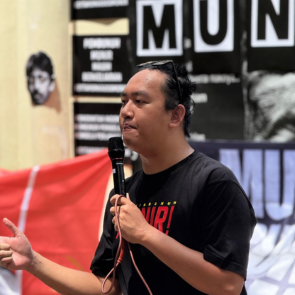
Front Line, Amnesty International, Forum Asia and several newspapers reported on this shocking event: On the evening of 12 March 2026, human rights defender Andrie Yunus became the victim of a targeted acid attack by two unidentified perpetrators in Central Jakarta. The human rights defender sustained severe chemical burns, including on his hands, face, chest, and eyes. The attack occurred immediately after Andrie Yunus participated in a podcast on ‘Remilitarism and Judicial Review in Indonesia’, a central topic of his human rights work. The human rights defender fell from his motorcycle, experiencing severe pain. He was immediately brought to the nearest hospital for emergency treatment. Medical examination confirmed burns on approximately 24% of his body.
Andrie Yunus is a human rights defender and the Deputy Coordinator for External Affairs of KontraS, the Commission for the Disappeared and Victims of Violence (Komisi untuk Orang Hilang dan Korban Tindak Kekerasan). Founded in 1998, it is one of Indonesia’s leading human rights organisations. KontraS monitors human rights situation in Indonesia and documents cases of enforced disappearances and state violence. Andrie Yunus was among the human rights defenders and activists who participated in the Fairmont Protest in March 2025. Since then, he has repeatedly been targeted with intimidation and harassment in connection with his human rights work. At the Fairmont Protest, Andrie Yunus was part of the efforts to oppose the revision of Indonesia’s Military Law (RUU TNI), which allows active-duty military officers to hold positions in 14 state institutions without needing to resign. The ratification of this law in March 2025 led to a significant expansion of the military into civilian and political affairs.
According to KontraS, none of Andrie Yunus’s belongings were stolen during or after the attack, indicating that robbery was not the motive. The organisation affirms that the attack was premeditated as the perpetrators selected the specific time and location immediately after Andrie Yunus’s public engagement on militarism in Indonesia. This attack has been the most severe incident in the series of intimidation attempts and violations against KontraS and its staff members. Since March 2025, KontraS’s office in Jakarta has been surveiled by unidentified persons and on multiple occasions in March and April 2025, army vehicles were observed stopping outside the office and photographing the premises.
Front Line Defenders strongly condemns the acid attack against human rights defender Andrie Yunus and asserts that it was a reprisal for his legitimate and peaceful work in the promotion and protection of human rights in Indonesia. Front Line Defenders is gravely concerned that this attack forms part of a broader and escalating pattern of intimidation targeting KontraS and other human rights defenders in the country.
Moreover: Unidentified assailants ambushed Veronika Lumban Tobing in Jakarta, beating her and warning her to halt activism on corruption and indigenous land rights. This violence directly ties to her exposés on elite-driven encroachments in North Sumatra, mirroring patterns where Human Rights advocates face retaliation for public interest work.