I was reading (belatedly) about the UN Special Rapporteur on the situation of human rights in Cambodia, Rhona Smith, who in January 2017 intervened strongly in the case of the 5 Cambodian human rights defenders of ADHOC (#FreeThe5KH) who have been in detention since April last year. [https://humanrightsdefenders.blog/2016/05/04/civil-society-condemns-charges-human-rights-defenders-cambodia/]Only then did I realize that the case had led a few months earlier to a landmark decision by the United Nations Working Group on Arbitrary Detention (WGAD): the first time that any UN body has referred to HRDs as a protected group.
On 21 November 21, 2016, the WGAD ruled that the ongoing detention of Mr. Ny Chakrya, Deputy Secretary-General of the National Election Committee (NEC), and four staff members of the Cambodian Human Rights and Development Association (ADHOC), Messrs. Ny Sokha, Yi Soksan, Nay Vanda, and Ms. Lim Mony, was “arbitrary.” Following a submission made by the Observatory for the Protection of Human Rights Defenders (OMCT-FIDH partnership), the Cambodian Center for Human Rights (CCHR) and the Cambodian League for the Promotion and Defense of Human Rights (LICADHO) in June 2016, the WGAD’s Opinion No. 45/2016 ruled that the five human rights defenders (HRDs) “have been discriminated against based on their status as human rights defenders, and in violation of their right to equality before the law and equal protection of the law under article 26 of the ICCPR.” This is the first time ever that the WGAD – or any other UN mechanism receiving individual complaints – has referred to HRDs as a protected group that is entitled to equal legal protection under Article 26 of the International Covenant on Civil and Political Rights (ICCPR). The ruling also recognised the violation of the five HRDs’ “rights to offer and provide professionally qualified legal assistance and other relevant advice and assistance in defending human rights.”
In addition, the WGAD found that the targeting of ADHOC staff members for having provided “legitimate legal advice and other assistance” violated the five HRDs’ right to freedom of association. It ruled that violations of fair trial rights (including the fact that the five were denied legal counsel from the beginning of their questioning), unjustified pre-trial detention, and statements made by the Cambodian authorities which denied the five the presumption of innocence – all of which contravene Cambodia’s international human rights obligations in respect to the right to a fair trial – are also serious enough to consider their ongoing detention as arbitrary. The WGAD concluded that “the deprivation of liberty ofNy Sokha, Nay Vanda, Yi Soksan, Lim Monyand Ny Chakrya, being in contravention of articles 7, 9, 10, 11 and 20 of the Universal Declaration of Human Rights and of articles 9, 10, 14, 22 and 26 of the International Covenant on Civil and Political Rights, is arbitrary.”
That Cambodian authorities are not impressed is shown by the continued detention of the 5 ADHOC HRDs and by the press release of 7 February 2017 calling for the cessation of the politically motivated criminal investigation of human rights defenders Am Sam-at and Chan Puthisak. Amnesty International, Civil Rights Defenders, Human Rights Watch, and the International Commission of Jurists signed the statement.
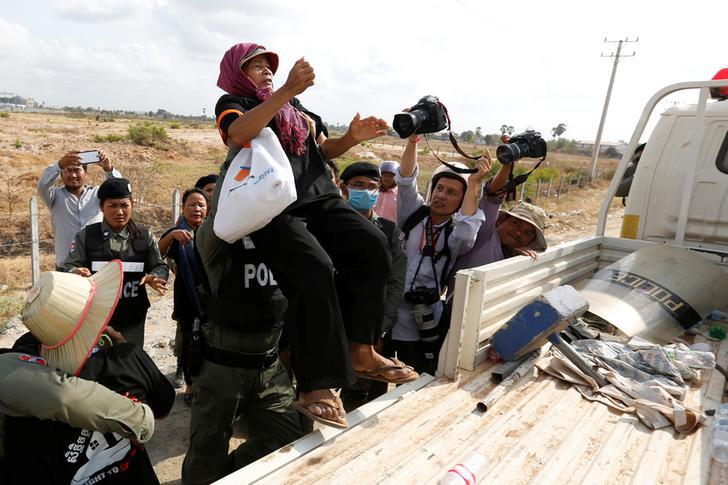
Cambodian officials have accused Sam-at, a respected human rights monitor at the Cambodian League for the Promotion and Defense of Human Rights (LICADHO) for nearly 20 years, and Puthisak, a land rights activist from Boeung Kak Lake and former prisoner of conscience, of instigating violence at an October 10, 2016 demonstration. Para-police forces, who are regularly used to suppress demonstrations, violently dispersed what had been a peaceful protest in Phnom Penh. When Puthisak attempted to prevent para-police from confiscating a drum that was being used by a demonstrator, four or five para-police attacked him, repeatedly beating him on the head with their fists, according to a video of the incident. When Sam-at tried to stop the assault, the para-police attacked him, also beating him on the head. Both men sustained injuries that needed medical attention.
“The investigation of Sam-at and Puthisak by the Cambodian authorities is a typically absurd and undisguised case of judicial harassment,” said Champa Patel, Southeast Asia and Pacific director at Amnesty International. “As usual, unnecessary and excessive use of force by the para-police goes unpunished, and those who work to promote and protect human rights find themselves subject to criminal proceedings.”
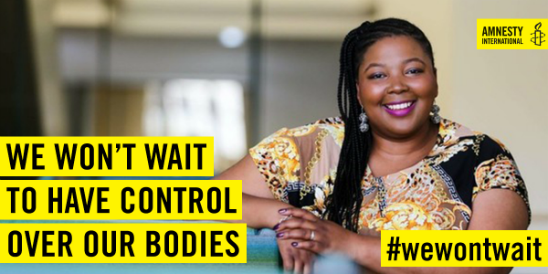
Also in the light of International Women’s Day 2017…….here are the seven Women Human Rights Defenderswhom AI UK are profiling in their campaign of women who “refuse to wait in the face of injustice, and often paying the price of freedom in the process”..:
Dr Tlaleng Mofokeng – She won’t wait… while women are still denied abortions
Tlaleng is a medical doctor in South Africa. She fearlessly advocates for sexual health as a radio presenter, spreading her message far and wide. ‘I won’t stop until the right of women to have an abortion is respected and provided for safely,’ she says. ‘In South Africa, women die every year due to unsafe abortions, yet politicians think they can use women’s reproductive rights as a political ping pong ball.‘ Tlaleng is also challenging rape culture, and championing the drive to get health practitioners to treat patients with respect and without discrimination.
Karla Avelar – She won’t wait… while refugees are denied safety
Karla Avelar is a survivor. She’s made it through gang attacks, murder attempts and prison in El Salvador. Today, she heads Comcavis Trans, which supports LGBTI people, all of whom face threats and violence in El Salvador. Their situation is so difficult in the country that many flee as refugees. Through Comcavis, Karla provides information and other support to help them on what is often a treacherous journey that normally takes them to the USA or Mexico. But the US’s hardline stance on refugees and migrants entering the country has thrown these LGBTI refugees into even greater jeopardy – something Karla is now tackling with energetic defiance.
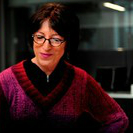
Su Changlan – She won’t wait … to reunite another child bride with her parents
Former school teacher Su Changlan’s story is not unique. One of her closest friends says that hers is the story of many women in China. She couldn’t stand by when she heard about girls trafficked as brides or parents whose children had gone missing. She did her best to help them and many others, her activism extending to land rights issues and support for pro-democracy protests in Hong Kong. She did all this knowing that she might have to sacrifice her freedom in the process. Sadly, this is just what happened. She has been detained by the authorities since 2015. ‘I hope that parents do not despair about searching for their missing children. We, civil society, should work together to help them reunite with their children. The government should also invest more in these efforts instead of hindering our work!‘
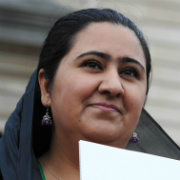
Samira Hamidi – She won’t wait… while women are excluded from government
Since 2004, Samira Hamidi has been blazing a trail for women in Afghanistan. As Chairperson of the Afghan Women’s Network (AWN) she has actively tried to ensure that women’s voices and concerns are represented at the highest levels of government. At the same time, she is a staunch advocate in the international arena, reminding governments and potential aid donors that promoting and securing women’s rights in Afghanistan must be part of any conversation they may have with the country’s leaders. She faces a steep road, but she remains undaunted, championing other women human rights defenders, ensuring that their concerns are amplified. Women should be given an equal opportunity to make a better Afghanistan.
Jeanette John Solstad Remø – She won’t wait… for the right to be recognised as a woman
Until recently, she was John Jeanette, her name signifying the dual identity she was forced to accept every day in Norway. Although this former submarine commander felt her future could only be female, Norwegian law did not allow her to change her legal gender without undergoing a compulsory ‘real sex conversion’. This would have involved having her reproductive organs removed, as well as a psychiatric diagnosis. She refused to put herself through any of this. As a result, her driving license, passport, medical prescriptions, even her library card, still referred to her as male. She campaigned hard against Norway’s abusive law and her actions, alongside those of her supporters – including Amnesty – scored a huge victory. In 2016, Norway finally adopted a new law on legal gender recognition, which allows transgender people to choose their gender. Today, in acknowledgement of this milestone, she has changed her name to Jeanette John.
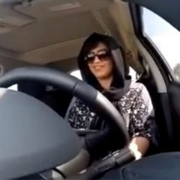
Loujain al-Hathloul – She won’t wait… for the right to drive a car
Fearless and formidable, Loujain defied Saudi Arabia’s driving ban and faced the consequences. In November 2014, she was detained for 73 days for live-tweeting herself driving into Saudi Arabia from the United Arab Emirates. Released in February 2015, she went on to stand for election in November that year – the first time women were allowed to both vote and stand in elections in the state. However, despite finally being recognised as a candidate, her name was never added to the ballot. Today, she continues her fight to create a better future for her fellow Saudis – one where women enjoy their rights as full citizens of their nation. ‘I will win. Not immediately, but definitely.’
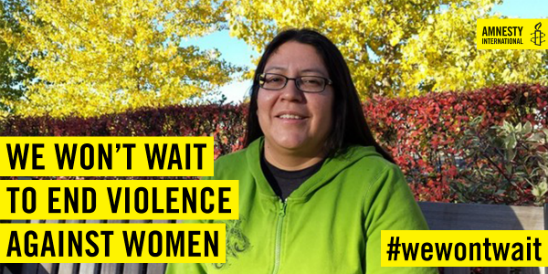
Connie Greyeyes – She won’t wait… for another sister to be stolen
Connie Greyeyes is an ‘accidental’ activist. An Indigenous Cree woman living in the province of British Columbia in Western Canada, she realised that a shocking number of Indigenous women in her community had gone missing or had been murdered. She began organising to support the families of these women and took the demand for a national inquiry to the Canadian capital in Ottawa. According to official figures, more than 1,000 Indigenous women have gone missing or been murdered in Canada in the last three decades. The efforts of Connie and many other Indigenous women across Canada have borne fruit, with the Canadian government finally announcing an inquiry in 2016. ‘When we’re together, there’s so much strength. Being able to smile even after finding out that your loved one was murdered. How can you not be inspired by women who have been to hell and back over their children? How can you not be inspired and want to continue fighting?‘
2016 Bessie Award-winning choreographer Joya Powell brings her Movement of the People Dance Company to the premiere International Human Rights Art Festival, New York City‘s first arts-advocacy festival of its kind. The Festival, presented by The Institute of Prophetic Activist Art, co-sponsored and housed at Dixon Place (161A Chrystie St, NYC), will take place 3-5 March, 2017. As part of the Dance portion of the festival, Jessica Chen of J Chen Dance project is working with three additional dance companies to create human rights-oriented dance. Jacqueline Dugal will also create a piece incorporating human rights texts.
Tickets are $10-25 and are now available online with full schedule and participant information at www.dixonplace.org.
“Dance can help translate unspoken fears and emotions…” noted Jessica Chen, of the J CHEN PROJECT, “the nuances of a leg held up, a body launched into space, a gesture of yearning is immensely powerful. For this festival, we will use movement and choreography to enhance the conversation about critical human rights issues.”
J CHEN PROJECT Commissions: Jessica Chen of JChen Dance Project comissioned works will be based in and incorporate a specific textual inspiration, ranging from the words of great human rights defenders (such as MLK Jr. or Gandhi) to a bland recitation of statistics on refugees, civilian war deaths, famine due to autocratic governments etc. The four pieces, comprising an hour of dance, will run both Saturday and Sunday, and be previewed at the opening festivities. Saturday, March 4, at 10:00 pm; Sunday, March 5, at 4 pm (see below for full lineup)…
The International Human Rights Art Festival will bring together more than 70 artists producing more than 40 events, all of them oriented toward advocacy. Artistic media will include theatre, performance, dance, spoken word, painting, photography, music, literary arts, workshops, panel discussions, a kidsfest (hands-on activities to introduce children to using art for socially-transformative purpose), film and others. Rigorously curated for quality as well as content, the event includes some of New York’s most passionate rising artist-activists. It will raise social, cultural and political issues, as well as offering gentle, positive responses through thoughtful beauty and political and social thinking.
ABOUT THE ARTISTS:
Producer Tom Block, a 20-year activist painter, author, playwright and arts producer, as well as creator of the Amnesty International Human Rights Art Festival (MD, 2010) is bringing the concept to NYC, with the 2017 International Human Rights Art Festival. The event is part of the growing number of initiatives of the Institute of Prophetic Activist Art, which Mr. Block founded last year to teach, learn from, and work with New York’s activist artist community. www.tomblock.com
One of the side events in Geneva during the UN Human Rights Council that is of special importance for human rights defenders is held tomorrow, 3 March 2017, from13:00 – 14:00, in Room XXI, Palais Des Nations, Geneva.
Across the world, well-established principles and standards fundamental to maintaining a safe and enabling environment for civil society are being questioned and threatened in mature and consolidated democracies. In both the global North and global South, governments with vibrant civil societies and constitutional and historical commitments based on their struggles for democracy and freedom are adopting increasingly hostile and corrosive policies and practices to suppress independent civil society voices. The event will provide an opportunity for the UN Special Rapporteur on human rights defenders and civil society leaders to reflect on the global climate for civil society operating in mature democracies and articulate key measures these states must take to ensure an enabling environment for civil society and human rights defenders both at home and at the UN Human Rights Council. In advance of their examination under the Universal Periodic Review in May 2017, the event will also bring together civil society leaders from India, Brazil, Poland, and South Africa to examine state backsliding on civic space norms.[see also: https://humanrightsdefenders.blog/2017/02/24/2017-10-need-to-reset-for-h…]
Panelists:
Michel Forst, UN Special Rapporteur on the situation of human rights defenders
Camila Asano, Conectas – Brazil
Henri Tiphagne, Human Rights Defenders Association – India
Maciej Kozłowski, Committee for the Defence of Democracy (KOD) – Poland
Corlett Letlojane, HURISA- South Africa
Moderator: Mandeep Tiwana, Head of Policy and Research, CIVICUS
The event is co-sponsored by key international NGOs: –Amnesty International, CIVICUS, Asian Forum for Human Rights and Development (FORUM-ASIA), International Society for Human Rights (ISHR), Human Rights Watch (HRW), Human Rights Defenders Alert India (HRDA), The Observatory for the Protection of Human Rights Defenders (OBS)
Anna Neistat, Senior Director of Research at Amnesty International, writes in the Huffington Postof 23 February 2017 about 4 Human Rights Defenders who deserve a “Lifetime Achievements” Oscar. Since it’s awards season, Amnesty International is paying tribute to four human rights heroes whose dramatic stories could – and should – be made into movies:
Itai Peace Dzamara
It’s been almost two years since Zimbabwean journalist and activist Itai Peace Dzamarawas dragged from a barbers’ chair by five armed men while he was getting a haircut. Dzamara, the leader of a pro-democracy movement called “Occupy Africa Unity Square”, had long been considered an enemy of the state by the Zimbabwean government. Just two days before his abduction he had delivered a speech at an opposition rally in Harare, calling for mass action against the deteriorating economic conditions in Zimbabwe. If this were a movie, justice would have been done long ago. Dzamara would have been returned to his wife and children, and the men who abducted him held accountable. But this isn’t Hollywood. This is Zimbabwe, where basic rights and freedoms have been trampled on throughout the long years of Robert Mugabe’s reign. As Itai Peace Dzamara and his family know, anyone who dares to speak out is a target for intimidation, harassment and arrest, and there’s no happy ending in sight. Despite a court ruling ordering state security agents to investigate Dzamara’s disappearance, there were gaps in the investigation and his whereabouts remains a mystery. [https://humanrightsdefenders.blog/2015/05/05/itai-dzamaras-disappearance-worrying-for-all-human-rights-defenders-in-zimbabwe/]
Berta Cáceres
GOLDMAN ENVIRONMENTAL FOUNDATION
Like the audience of a horror movie, the people around Berta could see that terrible danger was coming her way – but they were powerless to stop it. Honduras has the highest number of killings per capita of environmental and land activists in the world. The vast majority of these killings go unsolved and unpunished. One story that really stands out in this deadly context is that of Berta Cáceres. Berta was the leader and co-founder of an organisation that was campaigning against the construction of a hydroelectric project on the ancestral lands of indigenous communities in Honduras. In the early hours of 2 March 2016, she was murdered in her own home. Berta knew that she was putting her life in danger, but she was willing to take the risk to stand up for indigenous communities. Like the audience of a horror movie, the people around Berta could see that terrible danger was coming her way – but they were powerless to stop it. Despite the stark warning that her death served, environmental activists in Honduras say that stopping their work is not an option – no-one else will defend their communities and rights. They continue Berta’s work every day, reminding us that we should never take freedom for granted. It is essential that Berta’s assassination is solved, to show that there is a price to pay for attacking and killing environmental activists. Berta’s story ended in tragedy, but we will not stop fighting until we are sure that other activists will not meet the same fate. [https://humanrightsdefenders.blog/2016/03/07/exceptional-response-from-ngo-world-on-killing-of-berta-caceres/]
Sirikan Charoensiri
Sirikan Charoensiri, also known as “June”, is a young lawyer who has bravely stood up for human rights during a dark period of military rule in Thailand. In June 2015, she was on hand at a peaceful protest by pro-democracy student activists in Bangkok to monitor the situation and provide legal representation, if necessary. She now finds herself facing sedition charges and a potential trial in a military court alongside her clients. She also faces charges in two additional cases relating to her defence of the student activists and could be imprisoned for up to 15 years. As the Thai authorities have escalated their crackdown in the name of security, people who stand up for human rights in the country are increasingly falling foul of a government intent on silencing dissent. As June herself put it: “There is now an environment where risk is visible and imminent.” [https://humanrightsdefenders.blog/2016/12/01/international-day-of-women-human-rights-defenders-agents-of-change-under-pressure/]
Narges Mohammadi
Narges is a prisoner of conscience who should be lauded, not locked up, for her human rights work. In Iran, human rights defenders and other peaceful critics are subject to relentless harassment. Over the past year, those jailed after shockingly unfair trials before Revolutionary Courts including lawyers, bloggers, students, women’s rights activists, filmmakers and even musicians. Human rights defender Narges Mohammadi knows better than most how vengeful the Iranian authorities can be towards anyone who dissents. She is currently serving a total of 22 years in prison for speaking out against issues such as Iran’s prolific use of the death penalty and acid attacks on women. What makes her situation even worse is that she is critically ill and cannot receive proper medical care in prison. Just as cruelly, the authorities have at times denied her access to her young children, who had to leave Iran to live with their father in France after she was jailed. Narges is a prisoner of conscience who should be lauded, not locked up, for her human rights work. We will continue to fight until she is free.[https://humanrightsdefenders.blog/2014/06/12/retaliation-against-iranian-human-rights-defender-for-meeting-with-ashton/]
Itai, Berta, Sirikan and Narges are just a handful of the outstanding human rights defenders around the world who deserve recognition, but have instead been silenced by forces of cruelty, injustice and repression.
The document “The Situation of Human Rights Defenders – Item 3: Amnesty International’s Written Statement to the 34th Session of the UN Human Rights Council (27 February- 24 March 2017)” could of course be obtained directly from AI. However, I do it via: http://www.refworld.org/docid/58a195034.html, in order to highlight this very useful service provided by the documentation service of the UN High Commissioner for Refugees (UNHCR) which regularly gives links to documentation concerning countries of origin of refugees. The entry will look like this:
Title
The Situation of Human Rights Defenders – Item 3: Amnesty International’s Written Statement to the 34th Session of the UN Human Rights Council (27 February- 24 March 2017)
Amnesty International, The Situation of Human Rights Defenders – Item 3: Amnesty International’s Written Statement to the 34th Session of the UN Human Rights Council (27 February- 24 March 2017), 13 February 2017, available at: http://www.refworld.org/docid/58a195034.html %5Baccessed 13 February 2017]
Disclaimer
In their submission AI states in part:
In 1998 the international community adopted, by consensus, the Declaration on the Right and Responsibility of Individuals, Groups and Organs of Society to Promote and Protect Universally Recognized Human Rights and Fundamental Freedoms thereby recognising the importance that civil society actors play in the defence of the values that underpin human rights. The Declaration stresses that we all have a role to fulfil as human rights defenders and urges States particularly to protect human rights defenders from harm as a consequence of their work.
However, almost two decades after that historical moment human rights defenders continue to be harassed, tortured, jailed and killed for speaking out against injustice. During the protests against the Dakota Access Pipeline in the USA last year, the security forces used excessive and unnecessary force when arresting members of the Standing Rock Sioux Tribe and other Indigenous communities who oppose its construction.
Over 3,500 human rights defenders have been killed since the Declaration was adopted in 1998 and according to recent figures released by Frontline Defenders, the number of killings in 2016 marked an increase in the number reported in the previous year.
These killings usually occur after threats and warnings. Berta Cáceres, the leading indigenous, environmental and women’s rights defender from Honduras was killed in March 2016 despite enjoying a high national and international profile. In the aftermath of her killing, Honduras was under increased pressure to protect its human rights defenders, nonetheless, in October 2016, José Ángel Flores and Silmer Dionisio George of the Unified Movement of the Aguán were murdered, and currently international organization Global Witness, along with Honduran organizations MILPAH, COPINH and CEHPRODEC are facing a smear campaign against them for their work defending land, territory and environmental rights.
Amnesty International also continues to receive reports of human rights defenders being subjected to unfounded criminal proceedings, arbitrary detention and judicial harassment, which prevents them from speaking up against injustice, delegitimizes their causes and creates a chilling effect on activities that promote human rights. Human rights defender Narges Mohammadi is serving 22 years’ imprisonment after being convicted of national security related charges in Iran. Her conviction stems from her peaceful human rights activities, including her work to end the death penalty and her 2014 meeting with the former European Union (EU) High Representative for Foreign Affairs and Security Policy.
In Egypt civil society has been subjected to an unprecedented crackdown. In 2016, the authorities intensified a criminal inquiry into NGOs’ registration and foreign funding that could lead to criminal prosecution and sentences reaching up to life imprisonment. The authorities have also subjected NGO personnel to interrogation, freezing of personal and organizational assets, preventing leading human rights defenders from foreign travel, arbitrary arrest and detention.
Amnesty International notes with concern that the organisations, networks and methods people rely on to stand up for their communities are also attacked. Unions are threatened. Lawyers and activists in China have been ill- treated and sometimes tortured in detention. In Pakistan, human rights defenders are labeled as ‘foreign-agents’. In Viet Nam, attacks against human rights defenders are common, and include beatings and daily harassment and surveillance.
In other parts of the world, newspapers are closed down. Social media are banned and digital conversations monitored. Taking to the streets to protest is impossible.
In Turkey, against the backdrop of the failed military coup in 2016, unfair criminal prosecutions under criminal defamation and counter-terrorism laws targeted political activists, journalists and other critics of public officials or government policy. Over 180 media outlets have been arbitrarily shut down and 80 journalists remain in pre-trial detention.
States also repeatedly interfere with human rights defenders’ ability to communicate safely and expose human rights violations to regional and international human rights mechanisms, including this Council and its mechanisms. Recently the Special Rapporteur on the situation on the situation of human rights defenders noted, with great concern, the number of human rights defenders that received social media threats simply for meeting with him on his visit to Mexico at the beginning of this year.
In Burundi in January 2017, the Bujumbura Court of Appeal ruled to disbar three lawyers and suspend another. Each had contributed to a civil society report to the UN Committee against Torture prior to its review of the country in July 2016. The permanent closure of five human rights organizations and the suspension of five others was ordered in October 2016 on the allegation that they tarnished the image of the country. One of the suspended organizations was later banned following publication of a controversial report.
……..Amnesty International urges the Human Rights Council to:
Renew the mandate of the Special Rapporteur on the situation of human rights defenders and cooperate fully with it, including by encouraging swift and comprehensive responses to communications from the Special Rapporteur and acceptance of requests for country visits.
Reaffirm that protecting human rights is necessary for individuals to live in dignity, and that deepening respect for these fundamental freedoms lays the foundation for stable, safe and just societies;
Recognize the legitimacy of human rights defenders and applaud the role they play in the advancement of human rights, and urge States to facilitate and publicly support their work;
Urge States to adopt and implement legislation which recognises and protects human rights defenders;
Stress the urgent need for all States to establish national protection mechanisms for human rights defenders at risk;
Urge States effectively to address threats, attacks, harassment and intimidation against human rights defenders, including, where applicable, by thoroughly, promptly and independently investigating human rights violations and abuses against them and bringing alleged perpetrators to justice in fair trials without recourse to the death penalty, and providing effective remedies and adequate reparations to the victims;
Urge States to ensure that the criminal justice system or civil litigation is not misused to target nor harass human rights defenders;
Refrain from bringing criminal charges or, other judicial proceedings or taking administrative measures against human rights defenders because of the peaceful exercise of their rights;
Ensure that those who challenge injustice peacefully are not portrayed as threats to security, development or traditional values;
Emphasize the fact that human rights defenders who work on gender equality, women’s rights or LGBTIQ rights face particular risk of being subjected to certain forms of violence and other violations that need to be particularly addressed;
Pay particular attention to other groups who may be at risk, such as those who work for economic, social and cultural rights, defenders who work in the area of business and human rights; in an area exposed to internal conflict or a natural disaster; defenders living in isolated regions or conflict zones; and defenders working on past abuses, such as the families of victims of enforced disappearance;
Condemn any acts of intimidation or reprisals against human rights defenders who cooperate or seek to cooperate with international human rights mechanism;
Urge States to cooperate fully with the recently mandated Assistant Secretary-General for Human Rights to prevent, end and redress acts of reprisal and intimidation.
It is with great sadness that I learnt of the death of my old friend Nigel Rodley at the age of 75. From 1973 to 1990, he was the first Legal Adviser of Amnesty International (I was Executive Secretary of the International Commission of Jurists in Geneva at the time) and in that capacity we met often and worked together on many projects, in particular the coming about of the International Convention Against Torture. Nigel went on to become the United Nations’ Special Rapporteur on Torture, President of the International Commission of Jurists, Chairman of the UN Human Rights Committee and a long-time professor and Chair of the Human Rights Centre at the University of Essex. We saw each other last year at the anniversary party of our common friend Leah Levin and he was as sharp as ever. Reed Brody on his Facebook page wrote rightly: “Sir Nigel Rodley, one of the legends in the field of international human rights“. We will miss him.
The Office of the United Nations High Commissioner for Human Rights released a statement on Friday 16 December 2016 condemning the “daily violations” of human rights and international law faced by human rights defenders in the occupied Palestinian territory. A “worrying number of complaints” have been filed by human rights activists to the UN in recent months, which have highlighted in particular the Israeli government practice of arbitrarily detaining Palestinian activists “as a direct result of their important work in their communities.” The statement, which drew from the investigations of two UN special rapporteurs highlighted the cases of Issa Amro, founder of the Hebron-based group Youth Against Settlements, and Hebron-area lawyer Farid al-Atrash, who were both arrested for participating in a peaceful protest in February. [The march commemorated the 22 years since extremist American-born Israeli settler Baruch Goldstein opened fire on Muslim Palestinian worshipers killing 29 and injuring more than 120 in Hebron’s Ibrahimi mosque in 1994.]
Israeli officials later presented al-Atrash to the Ofer military court with charges amounting to “participating in an illegal demonstration” and “attacking soldiers”. Al-Atrash vehemently denied the charges, with video footage of the arrest corroborating his account, showing that he was standing and holding a poster peacefully in front of Israeli soldiers when he was pushed, dragged, and then violently arrested by a number of soldiers.
Meanwhile, Israeli authorities handed Amro 18 charges, ranging from “insulting a soldier” to “assault,” and “participation in a rally without a permit,” with some of the charges dating back to 2010. … “This relatively unusual practice of bringing up stale charges, which were not pursued many years ago, strongly suggests that Mr. Amro is being unfairly targeted due to his legitimate and peaceful human rights work,” the UN experts noted in Saturday’s statement. The UN experts said Amro’s current trial was part of a “concerted pattern of harassment and intimidation by the Israeli authorities aimed at inhibiting his work as a human rights defender.” Amro faces up to three years in prison. His attorney, Gabby Lasky, has submitted a motion to have 14 of the 18 charged dismissed on the grounds that those charges are several years old and in some cases the charges were already investigated and closed without indictment. Issa Amro’s arrest has garnered international attention—many see it as one of the most serious examples of Israel’s intent to clamp down on all forms of resistance—violent or non-violent. The hearings promise to be a landmark legal battle over what Israel will permit in terms of peaceful protest and the consequences that face those who engage in it. In 2010 he was named Human Rights Defender of the Year for Palestine by the Office of the United Nations High Commissioner for Human Rights (OHCHR), in 2011 he was a guest of the US State Department as part of their International Visitor Leadership Program. In a 2015 op-ed he wrote for The Guardian, Amro explained how he became involved in activism:“I read books by Martin Luther King, Mahatma Gandhi and Nelson Mandela. I became convinced that their non-violent method was the best strategy for community resistance.” Magdalena Mugrabi, Amnesty International’s Deputy Regional Director for the Middle East and North Africa says “Issa Amro has faced a sustained campaign of harassment and assault at the hands of the Israeli military and settlers because of his activism. His case is emblematic of the climate of increasing hostility towards activists who protest the settlements, which are illegal under international law.” She added, “The deluge of charges against Issa Amro does not stand up to any scrutiny. In their determination to silence him and stifle his human rights work, the Israeli authorities have apparently even reopened a closed case file. If he is convicted we will consider Issa Amro a prisoner of conscience.”
Palestinian journalist, human rights defender and Addameer media coordinator Hasan Safadi
The Special Rapporteurs also recalled the case of Hasan Safadi, media coordinator for Addameer human rights organization, whose three-month administrative detention order was renewed for an additional six months on 8 December. On 13 December Front Line issues an update on the extension of his administrative detention with an additional six months [Hasan Safadi was due to be released on 10 December 2016 from the Negev Desert (Ktziot) prison – where he is currently being held. Hasan Safadi has been in detention since 1 May 2016. – https://www.frontlinedefenders.org/en/profile/hasan-safadi]. On 27 October 2016 Hasan Safadi was sentenced to three months and one day imprisonment for visiting Lebanon, a country that is considered an enemy State under Israeli law. He had been placed in administrative detention on 1 May 2016 upon returning from an Arab youth conference in Tunisia.
The UN statement 0f 16 December went on to mention the case of Salah Khawaja, a member of the Stop the Wall Campaign, who was arrested in October and remains in detention without charges.
Civis Mundi published a list of free on-line courses on human rights. I list there the 5 that are (also) in English, without knowing much about the quality: Read the rest of this entry »
Travel bans on human rights defenders are popular with all kind of autocratic regimes but seem to enjoy special status in the Middle East. The video clip above (part of a joint campaign by AI and HRW) focuses on Egypt and so does the statement by 6 other NGOs issued on 9 November. They strongly condemn the travel ban against Malek Adly, prominent Egyptian human rights lawyer and director of the Lawyers Network of the Egyptian Center for Economic and Social Rights (ECESR). But there is more: Read the rest of this entry »



 Hans Thoolen on Human Rights Defenders and their awards