Responding to the news that Nobel Peace Prize Winner Liu Xiaobo has passed away, Salil Shetty, Secretary General of Amnesty International commented on 13 July 2017 : “Today we grieve the loss of a giant of human rights. Liu Xiaobo was a man of fierce intellect, principle, wit and above all humanity…..For decades, he fought tirelessly to advance human rights and fundamental freedoms in China. He did so in the face of the most relentless and often brutal opposition from the Chinese government. Time and again they tried to silence him, and time and again they failed. Despite enduring years of persecution, suppression and imprisonment, Liu Xiaobo continued to fight for his convictions. Although he has passed, everything he stood for still endures. The greatest tribute we can now pay him is to continue the struggle for human rights in China and recognize the powerful legacy he leaves behind. Thanks to Liu Xiaobo, millions of people in China and across the world have been inspired to stand up for freedom and justice in the face of oppression… [https://humanrightsdefenders.blog/2017/06/26/breaking-liu-xiaobo-released-from-chinese-prison-with-late-stage-cancer/]
USA AI then mentions some of the many other HRDs who under the leadership of President Xi Jinping have suffered persecution:
The reaction of the Chinese government to criticism from abroad over Liu Xiaobo’s treatment is by the way typical. See e.g. in the Strait Times of 14 July: “Foreign ministry spokesman Geng Shuang also said China had lodged protests with “certain countries” for interfering in its “judicial sovereignty”…….”Conferring the prize to such a person goes against the purposes of this award. It’s a blasphemy of the peace prize”. [https://humanrightsdefenders.blog/2012/12/06/china-and-its-amazing-sensitivity-on-human-rights-defenders/]
AFP reported on 10 July from Khartoum that a court found that the journalist Amal Habani, winner of Amnesty International’s Ginetta Sagan Award, was ordered to pay 10,000 Sudanese pounds ($1,430) or face a jail term of four months. The court found her guilty in a case filed by a security officer who accused her of preventing him from doing his job during the March trial of three rights activists. “This is injustice. I was covering a trial of human rights activists when the security officer beat me,” Habani told AFP by telephone from the court on Monday. “When I complained against him, he filed a case against me. I will not pay the fine but rather go to jail.”
Her lawyer Ahmed Elshukri said he will file an appeal against the court’s order. Habani, who writes for online Sudanese newspaper Al-Taghyeer, said the incident with the security officer occurred when she was taking pictures on her mobile phone outside a court during the March trial.
An even more serous case is that of Dr. Mudawi Ibrahim Adam[https://www.frontlinedefenders.org/en/profile/dr-mudawi-ibrahim-adam] an internationally recognised human rights defender who was the winner of the inaugural 2005 Front Line Defenders Award for human rights defenders. Ibrahim Adam Mudawi and his colleague Idris Eldoma Hafiz face six serious charges such as “undermining the constitutional system” and “waging war against the state”. Rights groups have denounced the allegations as trumped up and linked to their human rights advocacy. The trial is underway in the capital Khartoum. “Human rights work is not a crime, so Dr Mudawi and Hafiz must be immediately and unconditionally released,” said Muthoni Wanyeki, Amnesty International’s regional director. “Their arrest and continued incarceration is a miscarriage of justice, plain and simple.” Mudawi has continuously been harassed for his human rights work in Darfur and across Sudan for more than a decade. See also: https://www.defenddefenders.org/2017/07/sudan-human-rights-defenders-detained-face-death-penalty/
Sudan regularly ranks near the bottom of international press freedom rankings. International NGOs have accused Sudan’s powerful National Intelligence and Security Service (NISS) of detaining human rights workers, opposition politicians and journalists.
This week, to mark the International Day in Support of Victims of Torture, celebrated annually on 26 June, Just Asia has a special report on Hong Kong’s plan [not sure but still…] to withdraw from the UN Convention against Torture. The reason for such a withdrawal is a misguided attempt to address the rise in torture protection claimants in Hong Kong and block “fake” refugees, as well as solve the issue of illegal workers. In the video report Just Asia speaks to three prominent persons in the city to discuss their views. Puja Kapai is the Director of Hong Kong University’s Centre for Comparative and Public Law; Mark Daly is a human rights lawyer with Daly and Associates; as is Patricia Ann Ho. The three discuss how such a withdrawal will impact Hong Kong’s international standing, Hong Kong’s human rights protections, and whether it will truly make a difference to the city’s numerous torture claimants. [for other Just Asia posts: https://humanrightsdefenders.blog/tag/just-asia/]
In the same context of anti-torture work in Asia, Amnesty International and the International Commission of Jurists issued today a statement calling on Thailand to finally follow through on commitments to prevent torture and ill-treatment. They regret repeated delays to the finalisation and passage of Thailand’s Draft Prevention and Suppression of Torture and Enforced Disappearance Act……Similarly, Amnesty International and the International Commission of Jurists urge Thailand to move ahead with its commitment to ratify the Optional Protocol to the Convention against Torture, which obligates authorities to establish a National Preventive Mechanism.. as well as to allow such visits by an international expert body. Such independent scrutiny is critical to prevent torture and other ill-treatment, including through implementing their detailed recommendations based on visits. Authorities should also act immediately on the commitment made at Thailand’s Universal Periodic Review before the United Nations Human Rights Council in 2016, to inspect places of detention in line with the revised UN Standard Minimum Rules for the Treatment of Prisoners, also known as the Nelson Mandela Rules….
Acts of torture and other ill-treatment in Thailand have rarely been investigated in a prompt, impartial, independent and efficient manner, as required by the Convention against Torture, and perpetrators of such acts have seldom been held to account. Amnesty International and the International Commission of Jurists urge authorities to ensure that such investigations are undertaken into all credible reports of torture and other cruel, inhuman or degrading treatment or punishment. The scope, methods and findings of such investigations should be made public. Where sufficient, admissible evidence is gathered, perpetrators should be prosecuted in fair trials in civilian courts.
Amnesty International and the International Commission of Jurists also notes with concern the criminal prosecution or threats of prosecution—often under criminal defamation provisions—of victims of torture, their family members, and human rights defenders who have raised allegations of torture, including with a view to seeking redress. The organizations urge that such threats, investigations, charges, prosecution or other proceedings against these persons be are withdrawn and charges dropped, and that authorities take steps to create an enabling environment for freedom of expression in which people are able to seek redress and raise concerns about torture publicly without fear of reprisal or recrimination….
Human Rights Watch (HRW) on Thursday 8 June 2017 called on Turkish authorities to immediately release Taner Kılıç, chair of the board of Amnesty International’s Turkey section, who has been under detention since June 6. It is heartening to see the two biggest NGOs coming to each other’ rescue from time to time. In February this year AI Israel co-signed a statement deploring the decision not to allow Omar Shakir of Human Rights Watch to take on his post [“We stand in solidarity with him and our colleagues at HRW.” – see https://humanrightsdefenders.blog/2017/02/26/israel-denies-work-permit-to-human-rights-watch-and-continues-harassment-of-hrds/]
The anti-terror unit of the Izmir police on Tuesday detained lawyer and human rights defender Kılıç together with 22 other attorneys as part of a witch-hunt targeting people linked to the Gülen movement. “Turkey should release Taner Kılıç, who is a tireless defender of human rights, known for his support for Amnesty International over many years,” said Hugh Williamson, Europe and Central Asia director at Human Rights Watch. “Detaining Kılıç on suspicion of terrorist offenses looks like a tactic aimed at discrediting his legitimate human rights work.”
Kılıç is a founding member of AI Turkey and has been chairman of its board of directors since 2014. He has also played a strong role in advocating for refugee rights as a lawyer and with domestic nongovernmental groups and others working on these issues. The European Union on Thursday expressed concern about the recent detention of Taner Kılıç.
(According to a report by the state-run Anadolu news agency on May 28, 154,694 individuals have been detained and 50,136 have been jailed due to alleged Gülen links since the failed coup attempt.
Saturday, 27 May 2017 jailed UAE lawyer Mohammed al-Roken was announced as the winner of the Ludovic Trarieux Award. This award is given by the Luxembourg-instigated European Bar Human Rights Institute (IDHAE), and is named after Trarieux, who in 1898 founded France’s Human Rights League. The annual award, worth 20,000 euros, recognises lawyers who have sought to defend human rights, often at great risk to themselves. [https://humanrightsdefenders.blog/2016/06/07/detained-chinese-lawyer-wang-yu-wins-ludovic-trarieux-prize/]
The Emirates lawyer was sentenced to 10 years in jail in 2013. Mohammed al-Roken was among 69 people jailed on charges of conspiring to overthrow the government following a mass trial criticised by rights groups. A former head of the UAE Jurists’ Association, Roken, 54, was arrested in July 2012, after taking on the defence of several government opponents, including seven islamists. According to Amnesty the trial “was marred by allegations of torture which were blatantly ignored, the rights of defence were flaunted, and independent observers were banned from the court room“. For more on the Emirates and human rights: https://humanrightsdefenders.blog/tag/united-arab-emirates/
In awarding the Jury said Roken had devoted two decades to defending fundamental freedoms. The jury lamented that Roken’s trial had gone ahead behind closed doors and demanded his immediate release.
Under the strong title “Tillerson shows why he was a rotten choice to head the State Department“Jennifer Rubin describes in the Washington Post of 4 May 2017 how a long tradition of human rights policy by the USA may be coming to an end.
Nikki Haley, the US ambassador to the UN, with Liu Jieyi, China’s ambassador, before the April 18 Security Council meeting. Rick Bajornas/UN Photo
The United States led on Tuesday 18 April what it (and not many others) dubbed a ‘historic‘ U.N. Security Council meeting on the link between rights abuses and conflict, but it had to drop a push for the broad issue of human rights to become a fixed item of the Security Council’s agenda when it appeared that at least six members would oppose it [Russia, China, Egypt, Ethiopia, Kazakhstan and Bolivia were against the move and Senegal’s support was uncertain]. The United States, council president for April, did not risk the measure being put to a rare procedural vote, which requires nine in favour, and vetoes cannot be used. The opposing council members say rights discussion should be confined to the Geneva-based Human Rights Council – which Washington accuses of being anti-Israel and has threatened to quit – and the 193-member U.N. General Assembly third committee. Here is some of the analysis:
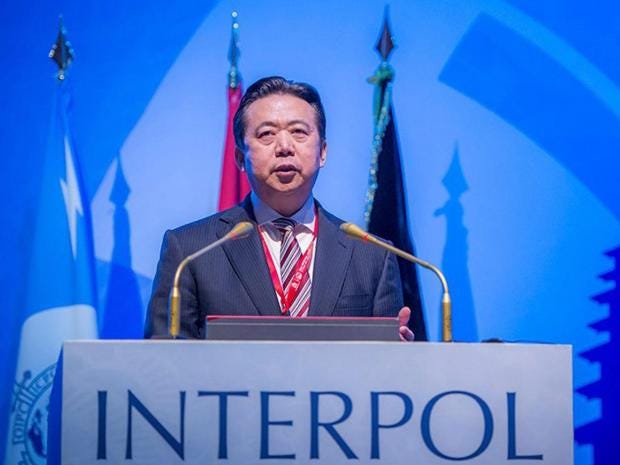
‘Old’ but underreported news is that Meng Hongwei – a top Chinese police official – has been elected president of Interpol, which worries some human rights NGOs. The Independent had an article on 10 November 2016.
Chinese President Xi Jinping has waged a four-year campaign against corruption, which includes a push to return former officials and other suspects who fled abroad. China filed a list of 100 of its most-wanted suspects with Interpol in April 2014, about one third of which have since been repatriated. The country’s police and judicial systems have been routinely criticised for abuses, including eliciting confessions under torture and the disappearance and detention without charges of political dissidents and their family members. Many Western nations have been reluctant to sign extradition treaties with China or return suspects wanted for non-violent crimes.
Given those circumstances, Mr Meng’s election is an “alarming prospect“, said Maya Wang, Hong Kong-based researcher at Human Rights Watch. “While we think it’s important to fight corruption, the campaign has been politicised and undermines judicial independence,” Ms Wang added. Mr Meng’s election “will probably embolden and encourage abuses in the system,” she said, citing recent reports of close Chinese ally Russia’s use of Interpol to attack President Vladimir Putin’s political opponents.
“This is extraordinarily worrying given China’s longstanding practice of trying to use Interpol to arrest dissidents and refugees abroad,” Nicholas Bequelin, east Asia director at Amnesty International wrote on Twitter.
Recently, 5 April 2017, Wei Jingsheng, a well-known human rights defender in exile, said while visiting Lyon (the HQ of Interpol) that the election of Meng Hongwei as chief of the global police organisation could give Beijing new leverage over its critics. “The Chinese government’s message to all political opponents like me or party officials who have fled the country is: ‘Wherever you are, the international police work with us and we will find you’,” “That’s frightening,” he said, adding that Meng “is still vice-minister of public security in China. He has led the secret police.”
While Interpol’s charter officially bars it from undertaking “any intervention or activities of a political, military, religious or racial character,” critics say some governments, primarily Russia and Iran, have abused the system to harass and detain opponents of their regime.
On 4 April 2017 Nils Muižnieks, the Council of Europe’s Human Rights Commissioner, wrote about “The Shrinking Space for Human Rights Organisations“. The new EU ‘alert site I referred to yesterday [see: https://humanrightsdefenders.blog/2017/04/03/protectdefenders-eu-launches-new-alert-website-but-no-single-stop-yet/] showed in 2016 some 86 reported violations in the European (and Central Asian) region, mostly detention and judicial harassment. Also the recent CIVICUS findings of the narrowing space for civil society points in this direction. An example could be Hungary as illustrated by reports of Human Rights Watch (2016), Human Rights First (2017) and Amnesty International (2016/17); the issue of academic freedom is not directly related but part of the restrictive trend [see links below].