Archive for the 'human rights' Category

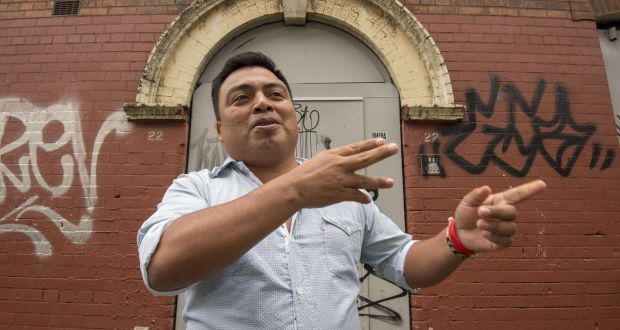
Gaston Chillier speaks about the values of his NGO, CELS, in Argentina

November 10, 2019

In an interview with Carly Graf of the Buenos Aires Times, Gaston Chillier, the executive director of Centre for Legal and Social Studies (CELS), one of Argentina’s most influential human rights groups, reflects on the organisation’s four-decade fight and the battles that still lie ahead.
Eventually, the grassroots organisation grew into the Centro de Estudios Sociales y Legales (CELS). It would play a fundamental role in bringing to light the abuses and crimes against humanity committed by the military dictatorship and in promoting human rights reform once the regime fell. However, the work did not end with the fall of the military government – over the coming decades, CELS would go on to become increasingly influential in defending the dignity and protecting the human rights of all Argentines. As CELS celebrates the 40th anniversary of its founding, its executive director, Gastón Chillier, spoke with the Times to discuss the organisation’s history, future and the most pressing human rights issues in Argentina today.


How does the CELS of today compare to the CELS of 40 years ago?

There are many lines of continuity between now and then. It was founded by a group of people with family members who had been “disappeared,” intending to denounce the military government and fight for justice. We continue with that commitment and fight against impunity. Of course, there have been some changes that have broadened our vision beyond only combating institutional violence — the greatest of which is that we now advocate and incorporate groups who don’t have a direct tie to the dictatorship. In the 1990s, we brought into the fold groups like immigrants, the indigeneous, union workers, men and more. In the last 15 years, we’ve worked hard to defend the right to protest. I think of our organisation as many different sectors coming together for a grand commitment to defend human rights.

What is the state of the human rights movement in Argentina?

Argentina has a society that’s mobilised across distinct generations and across distinct movements. We have activated and incorporated a wide variety of interests in a way that’s only grown and amplified the human rights movement. What we have now is something much larger and more diverse, but with objectives that we share in common.

What are the biggest challenges to the movement?

Currently, the regional trend of re-militarisation. First, there’s the use of the armed forces to maintain internal security, using the excuse of things like terrorism or drug-trafficking to justify it. This has led to grave systemic violations like what we’re seeing in Colombia, Mexico and Chile. Then, there’s the return of former military actors to positions of political power. We’re seeing the emergence of leaders on the far right, far more conservative and bolstered politically by rhetoric that directly threatens the rights of most people. We see this in Bolsonaro in Brazil. Many of those leaders also have a strong tie to the business sector and they promote the concentration of wealth and the perpetuation of inequality.

How would you evaluate outgoing president Mauricio Macri and his government in this context?

Obviously, Macri is not the same as someone like Bolsonaro or Donald Trump. But, it seems to me, there are many elements of Macri’s government that do resemble this movement towards the right. His policies are more neoliberal, and his term ended with a phenomenal economic crisis, with thousands more poor people and with higher levels of inequality. He also supported the intensified use of armed forces and police, even if it meant abuse. So, no, he’s not like those others, but he still has a very poor record in these matters.

What do you anticipate from Alberto Fernández in terms of human rights?

I can’t speak to the agenda. But I do believe his election signifies a consensus in Argentina to reject militarisation and the creep towards authoritarianism. It seems there’s a widespread understanding of the importance of human rights. Macri’s one of the only leaders in the region in recent years that wasn’t able to maintain his mandate through re-election.

What do you say to critics who say CELS has become too partisan?

I don’t have a defensive response. We’re consistent with our founders. When we participate in a campaign, it’s because we want to bring in a government with the best human rights platform. Today, individual members of our organisation have their own opinions and, of course, we don’t prohibit them from having those. As for our organisation as a whole, we have an agenda of values, not of politics or partisanship.

Let’s talk about specific human rights issues Argentina faces today. First, the prosecution of crimes against humanity.

These didn’t slow down during Macri’s administration, really, because there aren’t ways for him to simply stop the judicial process. That said, the surrounding agencies that could make things go faster didn’t necessarily help […]

Also, there was such a backlash when the government said the“2×1” [ruling] was applicable in these cases, that the courts and Congress quickly corrected course, saying it couldn’t be used for perpetrators of crimes against humanity. And, now, whenever world leaders come like Trump, Angela Merkel or many others, one of the first things they’re taken to see is the Parque de la Memoria or the ESMA [former Navy Mechanics School, used a clandestine detention centre during dictatorship].

Therefore, I think this government finally understands what it was ignorant to before — here’s great relevance and importance to finding justice and memorialising Argentina’s past both here and worldwide.

And what about the push for abortion reform?

With Macri, we had a lot of ambiguity, especially last year during the failed legalisation fight. But then, we saw him and Maria Eugenia Vidal, the outgoing governor of Buenos Aires Province, with the blue scarf — a sign of the anti-abortion movement — at the end of this campaign […] With Alberto Fernández, we have an explicit position. I believe he’s expected to achieve it, and that he will push it through the legislature […]

Even though the Catholic Church and conservative northern provinces still wield great influence , I think it’s now inevitable, it’s just a matter of time […]

Argentina’s society, especially its younger generations, realise that this is a question of public health and another part of the inequality discussion. It is going to be over soon.

There have been cases too about the use of lethal force by security forces…

It’s one of those things that’s not necessa r ily documented, but it’s clearly risen in recent years, especially under Macri. It’s obvious through the political discourse there’s more support and alignment with security forces. In the case of a potential abuse — as in the case of Luis Chocobar — the government will often protect, ally itself with and celebrate police instead of investigating the officer or guaranteeing the victim’s family justice […]

Fernández is going to have to do a lot to reinstate a feeling of trust and legitimacy in the security forces and to disarm these policies promoted by the highest offices of power.

And what’s your view on the health of Argentina’s institutions?

The legacy of the last four years in this respect is very poor, as poor as the economic legacy […] We see this even in the report that came out from the office of the United Nations High Commissioner for Human Rights last week. It points out a number of potential abuses and interventions that could violate the law.

Now, the government under Cristina Fernández de Kirchner didn’t have a good record with institutional corruption, especially as it relates to the Judiciary, but Macri’s government has recorded the same kind of levels […] and Macri ran his campaign selling anti-corruption and transparency as one of the legacies of his administration.

This report goes against that message entirely […] There’s been corruption in our institutions for at least 30 years, not only under him, but it’s led to having a Justice Ministry without any credibility. It would be great to see the incoming government address it.
http://www.batimes.com.ar/news/argentina/gaston-chillier-cels-has-an-agenda-of-values-not-of-politics-or-partisanship.phtml

Guatemalan human rights defender Abelino Chub Caal wins Trócaire human rights award

November 8, 2019

Abelino Chib Caal from Guatemala in Dublin after he was awarded the Romero International Award by Trócaire, for his work defending human rights. Photograph: Dave Meehan

Abelino Chib Caal from Guatemala in Dublin after he was awarded the Romero International Award by Trócaire. Photograph: Dave Meehan

On 26 April, 2019 Abelino Chub Caal walked free after spending 813 days in prison. Less than six months later, the Guatemalan human rights defender stood before a large Irish audience at the Riddel Hall in Belfast to accept the Trocaire Romero Award. This was the second edition of the award [see: http://www.trueheroesfilms.org/thedigest/awards/trocaire-romero-award]. The inaugural award in 2018 went to Sr Bridget Tighe in recognition of her humanitarian work in Gaza and the Middle East (for more on her click here)

The following week Sorcha Pollak of the Irish Times sat in a small meeting room in the Irish Times building with the Guatemalan teacher who has dedicated his life to fighting for the environmental and cultural rights of the indigenous people of his home country. A few days later, the 35-year-old flew back to Guatemala, unsure of the reception he will receive in a country which has an extremely poor international reputation for its treatment of community leaders who call for greater equality and recognition of human rights.

This has been the struggle of the indigenous people throughout our lives,” explains Caal in Spanish. “We’ve been completely rejected by the state. On the one hand the government says we’re the pride of Guatemala and they get millions of dollars in tourist money but at the same time we’re being repressed. They criminalise and persecute us; they send people to their deaths. They harass men and women who raise their voices against the injustice.”

Caal first became involved in the campaign for equal land rights aged 14 when his family’s community, in the department of Izabal in eastern Guatemala, was suddenly taken over by the cattle farm of a French woman operating in the area. “She had about 1,000 cattle just roaming around the community. They slept under our roof and ate all our crops.” He was deeply shocked when a community leader, who had come to the town to educate locals about their rights and the international treaties they could cite as protection, was thrown in jail for eight years.

After school, having graduated with a diploma in sustainable tourism, Caal began working for the Guillermo Toriello foundation which promotes local development. He also trained as a teacher but never got the chance to use his qualification. “I’ve dedicated myself to the community struggle and to becoming a mediator between state institutions and communities on land issues. It’s a legitimate and true struggle, the land for us is like our mother.”

The mining industry along with the rapidly growing production of palm oil, fruit, sugar cane and rubber by multinational companies is being carried out at the expense of local communities, says Caal. “They’ve accumulated all the land they can. All areas of flat land have been declared private property for palm plantations but not for the production of food.

“The state’s intention is to dispossess and exterminate the life of the indigenous communities. The communities are being expelled from their land and left without any alternatives. They just treat them as if they were toys.”

Caal cites examples of fellow human rights activists who were jailed for their work defending local communities, including Bernardo Caal Xol who was sentenced to eight years for his efforts to halt the development of a hydroelectric project along the Cahabon river by the Spanish ACS construction group which is chaired by Real Madrid president Florentino Pérez.

In February 2017, Caal was arrested and charged for alleged aggravated land grabbing, arson, coercion, illicit association and belonging to illicit armed groups. He spent the following two years in prison in Guatemala city.

While former government officials, locked up on corruption charges, made his life in prison difficult, he was surprised by the reception from gang members. “They were actually really respectful to me and called me profe [teacher]. They said I didn’t deserve to be there.”

During his two years behind bars, Caal witnessed hitmen inside the jail killing other prisoners and frequently worried for his safety. Despite being released earlier this year, after he was absolved of all charges, he knows that many other land rights defenders continue to face similar treatment. “The president is attacking human rights defenders, insinuating they have connections to drug trafficking. I wasn’t the first person to go to prison and I certainly won’t be the last. Our economic powers, they either send you to prison or send you to the grave.”

Upon his release, Caal spent one month in a safe house in Guatemala city and another three months in Costa Rica before travelling to Ireland to accept the Romero International Award presented by Irish NGO, Trócaire. He hopes his time in Ireland will raise awareness around the daily struggles faced by indigenous people across Guatemala in their attempts to hold on to their land. “We have been completely rejected by the state, we can’t be at peace. We just ask that people continue to show their solidarity with us.”

Caal is conscious that the Guatemalan public prosecutor’s office has not accepted his release and is appealing the decision. We part with uncertainty as to what will happen when he arrives home.

Gary Walsh of Trócaire says the voices of land rights defenders like Caal should put pressure on countries worldwide, including Ireland, to sign an international treaty on business and human rights which would help protect indigenous peoples around the globe.

Land grabs, environmental damage and violent attacks, including murder, are all too common features of how big business interacts with communities in the developing world,” says Walsh. “This has been facilitated by the absence of any global framework governing how businesses impact the human rights of the communities they engage with.” A binding international treaty is needed to ensure businesses operating outside the EU respect human rights, and that vulnerable people are protected, says Walsh. Recent negotiations held in Geneva around the revised draft of a legally binding treaty showed some progress despite insufficient engagement from EU member states including Ireland, said a spokeswoman for Trócaire

https://www.irishtimes.com/news/world/guatemalan-activist-abelino-chub-caal-wins-tr%C3%B3caire-human-rights-award-1.4076152

Profile of Widad Akreyi, Iraqi human rights defender

November 5, 2019
Dr. Widad Akreyi at the award ceremony for the 2018 International Woman Harmony Award, Cortona, Italy, Nov. 23, 2018.

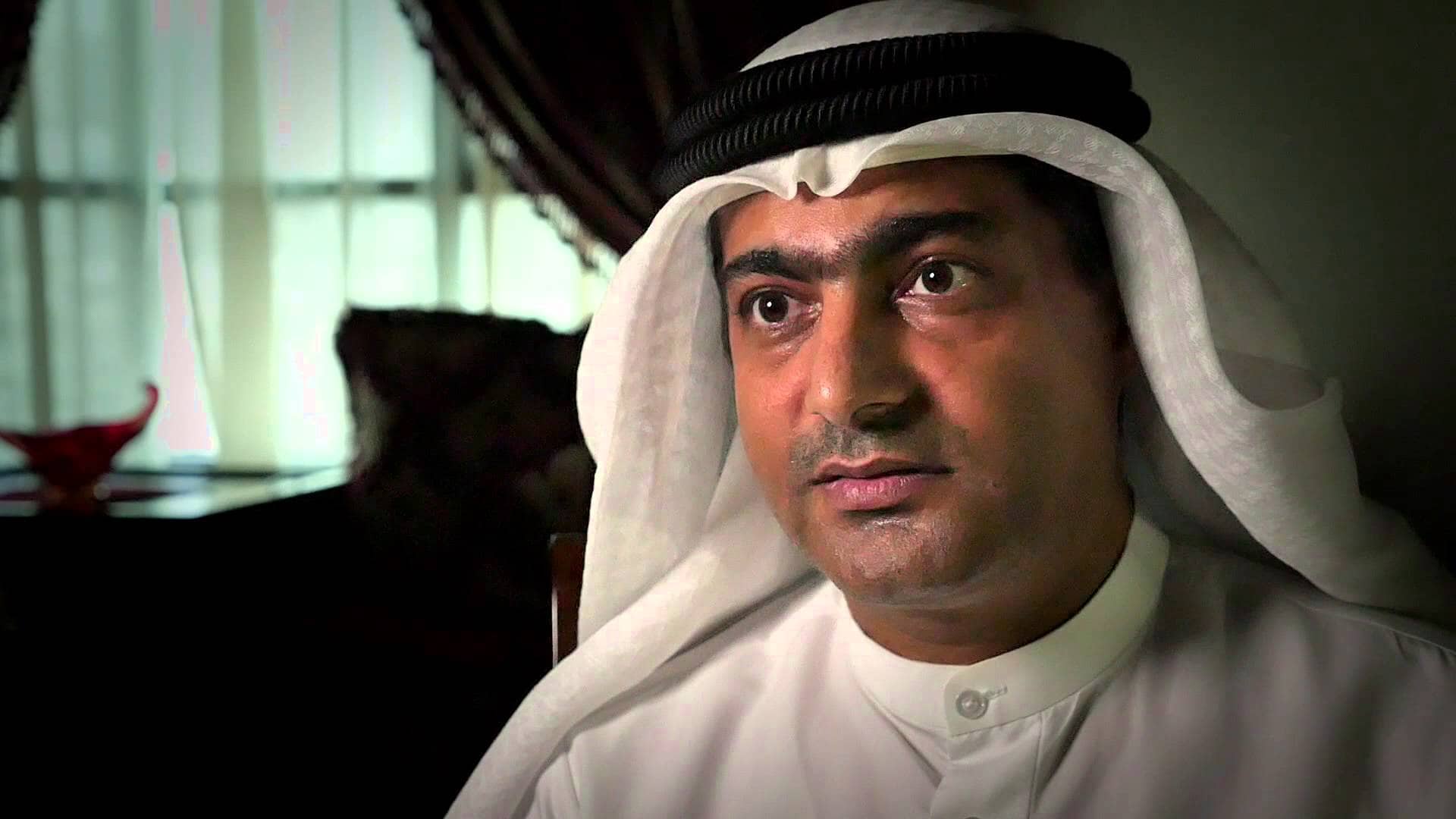
Massive call in support of Ahmed Mansoor at his 50th birthday – How can Emirates remain deaf?

November 5, 2019

Screenshot from Youtube video on Ahmed Mansoor, a Martin Ennals Award Laureate 2015, Youtube/Martin Ennals Foundation

Screenshot from Youtube video on Ahmed Mansoor, a Martin Ennals Award Laureate 2015, Youtube/Martin Ennals Foundation

142 civil society organisations have called upon the UAE government to unconditionally release human rights defender Ahmed Mansoor, whose life they believe may be at risk following beatings and hunger strikes to protest his inhumane prison conditions. This statement was originally published on gc4hr.org on 16 October 2019.

Your Excellency, Sheikh Khalifa bin Zayed al Nahyan,

The United Arab Emirates (UAE) has recently announced multiple projects promoting pluralism and tolerance both at home and abroad. 2019 has been declared the ‘Year of Tolerance’ and in 2020, Dubai will host the World Expo trade fair, under the theme ‘Connecting Minds, Creating the Future.’ Upon Dubai’s selection for this exhibition in 2013, Sheikh Mohammed bin Rashid Al-Maktoum, Vice President and Ruler of Dubai, said: “[w]e renew our promise to astonish the world in 2020.” We welcome these public commitments to tolerance and open-mindedness.

It is in this same spirit that we, the undersigned, call upon the UAE government to immediately and unconditionally release human rights defender Ahmed Mansoor, whose life we believe may be at risk following beatings and hunger strikes to protest deplorable and inhumane prison conditions. The Authorities have convicted and imprisoned him solely for his human rights work and for exercising his right to freedom of expression, which is also protected under the UAE’s Constitution. Amnesty International considers him to be a prisoner of conscience.

Before his imprisonment, Mansoor was known as ‘the last human rights defender left in the UAE’ on account of his fearless work to document human rights violations in the country. His willingness to speak out publicly in defence of human rights on his blog, via social media and in interviews with international media was an example to us all. He is also an engineer, a poet, and a father of four. He is on the advisory boards of the Gulf Centre for Human Rights (GCHR) and Human Rights Watch and was awarded the 2015 Martin Ennals Award for Human Rights Defenders.

UAE authorities arrested Mansoor on 20 March 2017 at his home and subjected him to enforced and involuntary disappearance for over six months, with no access to a lawyer and sparse contact with his family, who did not know his exact whereabouts. The authorities held him in solitary confinement for prolonged periods of time.

Shortly after his arrest, a group of United Nations human rights experts said that the UAE should release him immediately, describing his arrest as “a direct attack on the legitimate work of human rights defenders in the UAE.” They expressed fear that his arrest “may constitute an act of reprisal for his engagement with UN human rights mechanisms, for the views he expressed on social media, including Twitter.”

A year later, on 29 May 2018, Mansoor was sentenced under vague charges of “insulting the status and prestige of the UAE and its symbols, including its leaders”, “publishing false information to damage the UAE’s reputation abroad” and “portraying the UAE as a lawless land.” He received a sentence of 10 years in prison, a fine of 1,000,000 UAE Dirhams (US$272,000), three years of probation after completion of his sentence, and confiscation of his electronic devices. On 31 December 2018, the State Security Chamber of the Federal Supreme Court upheld his conviction and sentence.

The UAE’s Government actions against Mansoor have been widely criticised. For instance, on 4 October 2018, the European Parliament adopted a resolution condemning Mansoor’s “harassment, persecution and detention, and calling for his release.” In May 2019, after he ended a month-long hunger strike to protest his unjust conviction and his detention conditions in Al-Sadr prison, a group of UN Special Rapporteurs stated that his conditions of detention “violate[d] basic international human rights standards and risk[ed] taking an irrevocable toll on Mr Mansoor’s health.” In September 2019, Mansoor was severely beaten for continuing his protests and he undertook yet another hunger strike. Nevertheless, he continues to be held in an isolation cell with no running water or bed and is not permitted to leave his cell except for family visits.

In September 2019, the annual report of the UN Secretary General about reprisals against those who cooperate with the UN mechanisms cited Mansoor’s case. This was the fourth time that the Secretary General had denounced reprisals against him, having previously raised concerns in 2014, 2017 and 2018.

It is a tragedy and a disgrace for the UAE that this Tuesday, on 22 October of the UAE’s ‘Year of Tolerance’, Ahmed Mansoor will turn 50, alone in a prison cell in such deplorable conditions, simply for exercising his fundamental right to free speech and for speaking out against human rights violations.

Mansoor’s imprisonment is part of a larger and growing pattern of repression in the UAE. Since 2011, the authorities have embarked on an unprecedented campaign of repression on freedom of expression, peaceful assembly and association in the country, shrinking the space for peaceful dissent to near-obliteration. Authorities have used privately manufactured technologies, such as those made by NSO Group, for the unlawful targeted surveillance of human rights defenders, including Mansoor, in order to monitor and clamp down on dissent. The authorities have arrested, detained, and prosecuted activists, human rights defenders and other critics of the government, including prominent lawyers, judges and academics, on broad and sweeping national security-related or cybercrime charges and in proceedings that fail to meet international fair trial standards.

The UAE has publicly declared itself a champion of tolerance in the Middle East and the world. Under the Universal Declaration of Human Rights, it has an obligation to protect the rights of its citizens and residents. For this reason, we call upon the UAE government to uphold these principles, and to release Ahmed Mansoor without further delay.

Yours sincerely,

https://ifex.org/open-letter-to-the-emirati-authorities-to-free-human-rights-defender-ahmed-mansoor-on-his-50th-birthday/

https://www.amnesty.org/en/latest/news/2019/10/uae-global-call-for-release-of-prominent-human-rights-defender-ahmed-mansoor/

Music to our ears: songs for human rights

November 5, 2019

The Speak Up, Sing Out Music Contest 2020 is on. In collaboration with the GRAMMY Museum, Robert F. Kennedy Human Rights invites students to write and produce original songs that speak out against human rights abuses. The format is open to any genre of music. The Grand Prize winning songwriter will participate in a GRAMMY-related event. ENTRY DEADLINE: APRIL 20, 2020.

Getting your voice heard can really change your community, society, more than you could ever think.” says the 2019 Speak Up, Sing Out contest winner Tess Lira shares the inspiration behind her empowering song “Solid Gold” and encourages songwriters to trust their voices.

For some of my ealrier posts on music and human rights, see: https://humanrightsdefenders.blog/tag/music/

https://mailchi.mp/rfkhumanrights/calling-all-student-filmmakers-854437?e=99673fdc45

UNESCO: 9 out of 10 killings of journalists go unpunished

November 4, 2019

The report, called Intensified Attacks, New Defences, covers the period 2014-2018. It assesses trends in the safety of journalists and media professionals around the world and provides an update on the status of journalist killings, based on condemnations issued by the Director-General and recorded in the UNESCO Observatory of Killed Journalists. 2Key findings include the rise in the number of journalist killings and other attacks, as well as the continued trend of widespread impunity. The report highlights the changing nature of violence against journalists, with more and more journalists being killed outside of conflict areas, and the growing prevalence of threats and harassment in the online sphere. It also highlights the specific risks being faced by women journalists, including online where they are disproportionately targeted by harassment and abuse. The intensified attacks against journalists are being met with a growing commitment to monitoring, protection, prevention and prosecution mechanisms for the safety of journalists. New coalitions, involving Members States, civil society, the media and academia reflect a stronger and more coordinated response to the protection of journalists, in line with the logic of the UN Plan of Action on the Safety of Journalists and the Issue of Impunity.

The report also notes that killings of journalists have risen by about 18 percent in the past five years (2014-2018), compared to the previous five-year period.

The deadliest countres for journalists, according to the statistics, are Arab States, where almost a third of the killings took place. The Latin American and Caribbean region (26 percent), and Asian and Pacific States (24 per cent) are the next most dangerous. Journalists are often murdered for their reporting on politics, crime and corruption, and this is reflected in the study, which reveals that, in the past two years (2017-2018), more than half of journalist fatalities were in non-conflict zones. In his statement, the UN Secretary-General noted the rise in the scale and number of attacks on journalists and media workers, as well as incidents that make their work much harder, including “threats of prosecution, arrest, imprisonment, denial of journalistic access, and failures to investigate and prosecute crimes against them”….“Without the ability to protect journalists, our ability to remain informed and contribute to decision-making, is severely hampered.

A high-profile example is the murder of Maltese journalist Daphne Caruana Galizia in 2017. The case is being followed by independent UN human rights expert Agnes Callamard, among others, who has suggested that too little has been done by the Maltese authorities to investigate the killing. [see: https://humanrightsdefenders.blog/2019/02/26/son-of-maltese-journalist-daphne-caruana-galizia-tells-un-impunity-continues/]

India has similarly horrifying stories to tell, where the brutal murder of Bangalore-based journalist Gauri Lankesh in 2017 made headlines. Lankesh, the editor of Kannada weekly Lankesh Patrike, was shot dead in cold blood by religious activists at her residence, allegedly because of her liberal views. Though one of the six arrested gang members confessed to the crime last year, no convictions have been secured in the case. [see https://humanrightsdefenders.blog/2018/05/27/un-rapporteurs-ask-india-to-protect-journalist-rana-ayyub-and-refer-to-fate-of-gauri-lankesh/]

This year UNESCO has launched the #KeepTruthAlive social media campaign, which draws attention to the dangers faced by journalists close to their homes, highlighting the fact that 93 percent of those killed work locally, and featuring an interactive map created for the campaign, which provides a vivid demonstration of the scale and breadth of the dangers faced by journalists worldwide.

Kenya: human rights defenders active in outreach during October 2019

November 2, 2019

Saudi Arabia claiming to take the lead on human rights implementation…

November 2, 2019

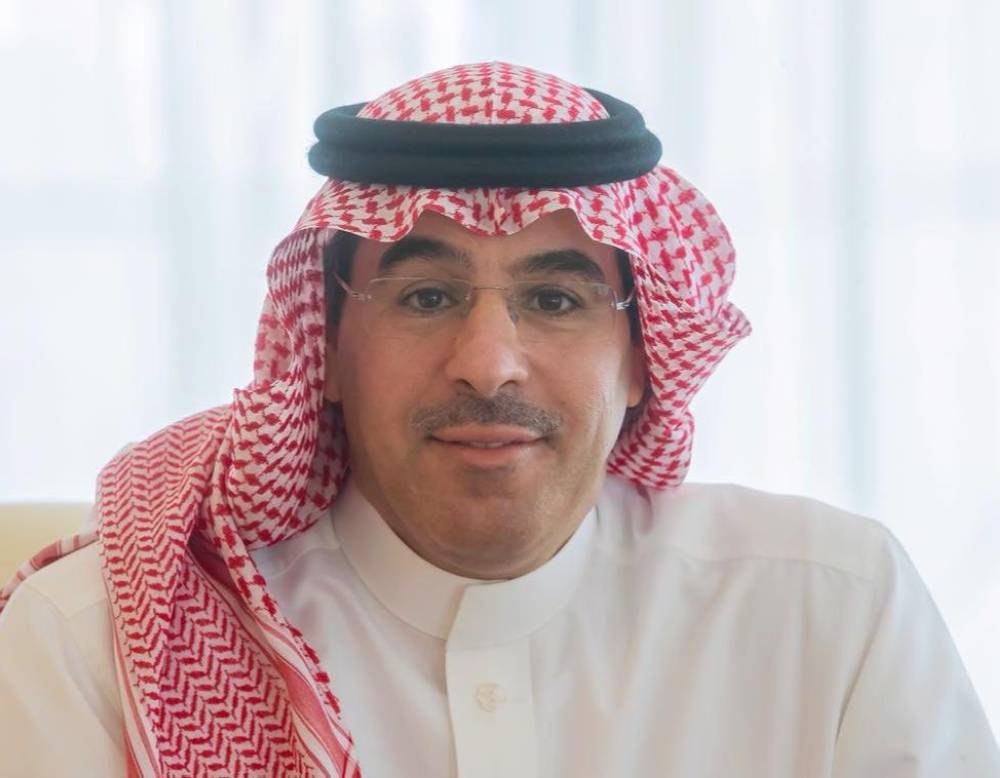
Human Rights Commission (HRC) President Awwad Al-Awwad tol inaugurate on Sunday a new initiative.
Whay to say about this news item published by the Saudi Gazette on 1 November 2019? On the one hand we all wish that countries take the implementation of international human rights mechanisms seriously. On the other hand, there must be a limit to obfuscation. The Saudi Human Rights Commission (HRC) has no independent status [see https://nhri.ohchr.org/EN/Documents/Status%20Accreditation%20Chart%20(04%20March%202019.pdf].
In March 2019, the Human Rights Commission defended the Saudi authorities’ refusal to allow an international investigation into the 2 October 2018 assassination of Jamal Khashogg.

Still, the article boosts that Human Rights Commission President Awwad Al-Awwad will inaugurate on Sunday an initiative to use the national database in order to track the implementation of the recommendations of the international mechanisms with regard to human rights abd thus will become the first Arab country to implement this initiative.

The ceremony will be held at the Ritz-Carlton Hotel in Riyadh. The initiative comes within the framework of a memorandum of technical cooperation signed between the Kingdom, represented by HRC, and the Office of the United Nations High Commissioner for Human Rights (OHCHR). Under the deal, HRC works to enhance national capacities in the fields of human rights within the Kingdom and outside, through the preparation, development and implementation of specialized training programs, including the mechanisms of the United Nations and the work of the competent international organizations.

Meanwhile, Al-Awwad made on Thursday an inspection tour of the General Intelligence Prison in Al-Hair, near Riyadh, and was reassured of the services being offered to the inmates. He also reviewed the prison’s compliance of the human rights criteria in line with the local and international conventions and regulations. Al-Awwad toured various facilities of the prison, including governmental and non-governmental offices that monitor the conditions of the inmates as well as the family facility where inmates meet their relatives, and the prison hospital.

For more of my posts on Saudi Arabia see: https://humanrightsdefenders.blog/tag/saudi-arabia/

http://www.saudigazette.com.sa/article/581459/SAUDI-ARABIA/Awwad-to-launch-human-rights-initiative-on-Sunday

Multimedia campaigns can help prevent gender-based violence in Pakistan

November 1, 2019

The report below was published in Dawn. It shows that thinking about multimedia tools in the struggle against gender-based violence is alive and well at the ground level where it matters most:

Speakers at the Media Conference in Peshawar on Thursday 17 October 2019 called for the resolution of the issues of media persons to enable them to effectively play their role as human rights defenders. The event titled ‘media, gender and right to service’ highlighted the significance of different mediums of media and stressed the need for their use for the eradication of sexual and gender-based violence and change in the people’s attitudes towards social issues through better awareness.

It was organised by Blue Veins in collaboration with the Peshawar Press Club and Right to Public Service Commission. Provincial anti-harassment ombudsperson Rukhshanda Naz said gender-based violence was one of the most prevalent human rights abuses. She said journalists could play a fundamental role in highlighting the voice of the people, whose rights were violated. Ms Naz said media could help highlight interventions and change attitudes, practices and behaviours, which drove violence against women.

Chief Commissioner of the Right to Public Services Commission Mohammad Mushtaq Jadoon said the media was playing the role of an ‘agenda setter’, which could easily disseminate information and influence public opinion. He said the use of modern media tactics could promote human rights.

Programme coordinator of Blue Veins Qamar Naseem said media was one of the pillars of power to influence public attitudes and social structure. He said the government and non-government service providers were struggling to improve response services to gender-based violence, so they needed to become skilled at engaging journalists in their coordinated efforts as an integral part of advocacy.

Journalists Aqeel Yousafzai and Waseem Ahmad called for the adoption of multimedia engagement approach. They said an intensive multimedia campaign would help reduce and prevent gender-based violence and ensure that the survivors have safe and improved access to services.

Chairman of the Department of Journalism and Mass Communication, University of Peshawar, Dr Faizullah Jan said to improve the role of media towards better understanding of gender roles, social attitudes and root causes of gender-based violence, there was a need for ensuring adequate capacity development and sensitisation for effective media reporting on gender-based violence issues.

General secretary of Khyber Union of Journalists Mohammad Naeem said such events could suggested actions to policymakers and the media for advocating a stronger legal and regulatory environment to support voluntary, equitable and rights-based programmes. The conference also contributed into the signing of a statement by media representatives promising commitment to addressing sexual and gender-based violence in collaboration with provincial and national stakeholders.

https://www.dawn.com/news/1511475

Victor Madrigal-Borloz, the U.N. independent expert on sexual orientation, speaks out

October 31, 2019
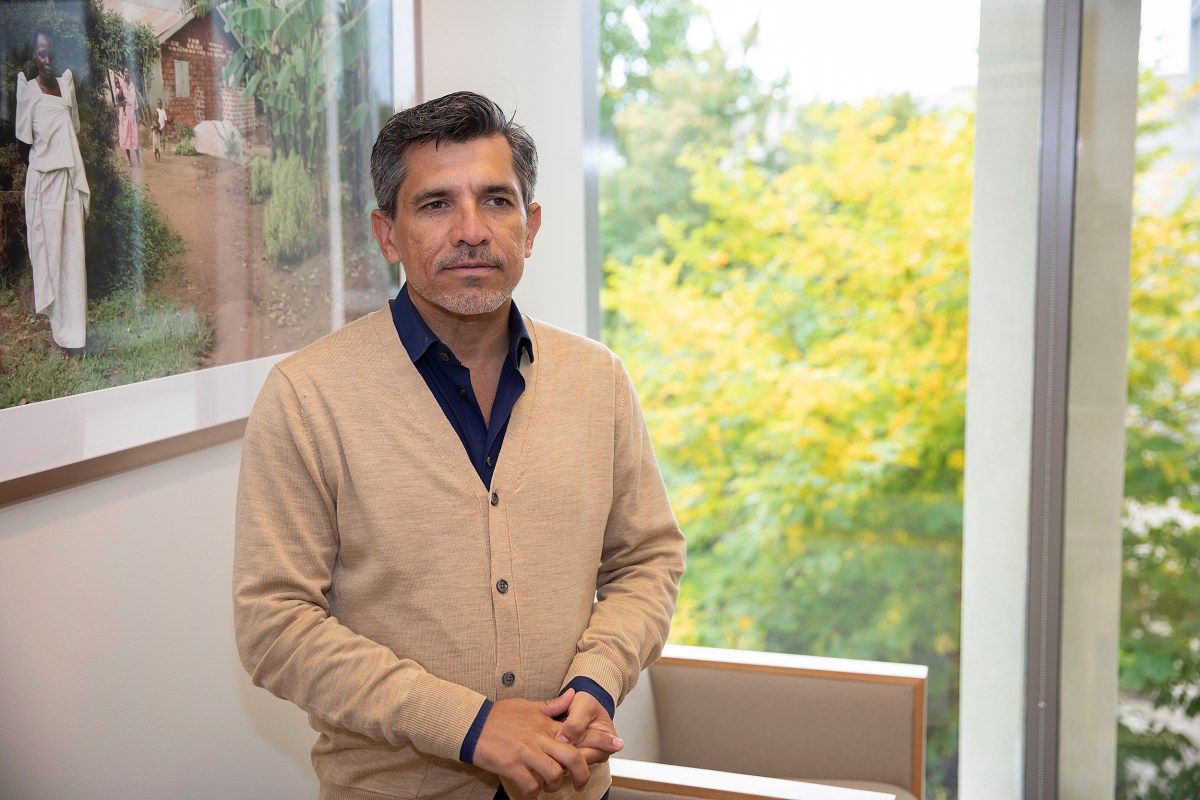
Victor Madrigal-Borloz
Victor Madrigal-Borloz, the U.N. independent expert, is now in residence at Harvard Law School. Kris Snibbe/Harvard Staff Photographer

Costa Rican magistrate Victor Madrigal-Borloz has served for the past 21 months as the U.N. independent experton protection against violence and discrimination based on sexual orientation and gender identity. The Gazette interviewed Madrigal-Borloz, who is the Eleanor Roosevelt Senior Visiting Researcher with the Human Rights Program at Harvard Law School, to talk about his work and his hopes for the future:

GAZETTE: Why did you decide to take on this role?

MADRIGAL-BORLOZ: I have been working in the field of human rights for over 20 years and I saw the possibility to bring about substantial change. The topic bears a lot of significance to me, as a gay man myself. I have been working on these issues for over a decade, first at the Inter-American Commission [on Human Rights] and now at the global level. I have seen many people suffer as a result of stigma and discrimination, and this was a once-in-a-lifetime opportunity to do something about it and put my skills at the service of a cause.

GAZETTE: What did your report find in terms of the root causes of violence and discrimination against LGBT people?

MADRIGAL-BORLOZ:There are primary and secondary root cases. First, there is the notion that societies are structured around certain power relations, which have been designed in relation to a person’s sex. Your role in society is determined by your genital configuration. That’s a very basic construction, and all forms of violence and discrimination come from a defense of those power relations. The other factors come from mechanisms that aim to protect those power relations, such as the idea that gay, lesbian, or trans people don’t exist, and the stigma around them, which is enabled through the message that gay, trans, bisexual, and lesbian people are sick or mentally ill. The other aspect is criminalization. Same-sex relations are still criminalized in 69 countries, which means that, as of today, over 2 billion people live in countries where being gay or lesbian is illegal. Another factor is demonization expressed in the notion that somehow LGBT lives are sinful, immoral; that gays or lesbians cannot be good citizens. The idea is that at the end of the day, there’s something immoral about our existence, and that’s what all of us need to fight against.

GAZETTE: Of your findings, which ones struck you the most?

MADRIGAL-BORLOZ:What disturbs me is that in 2019 there are countries that are considering bringing back the death penalty for same-sex relations. There was a discussion in Uganda about it, and early this year Brunei Darussalam enacted legislation allowing the stoning of gay men. That, to me, is shocking. What I also find surprising is that there are environments that are actually extremely progressive when it comes to gender identity, but can be very restrictive when it comes to sexual orientation and vice versa. In Pakistan, for example, there is an extremely forward legislation on the recognition of gender identity, but sexual orientation is very much criminalized. Sexual orientation has always been a more challenging notion for societies, which in general have used the notion of a traditional binary, hetero-parental family as the nucleus of society, and this has been recognized in public discourse and in the law. But what we also know is that homosexuals, lesbians, and bisexuals have existed and sought happiness all throughout history.

GAZETTE: What policies or practices have been the most successful in the protection of LGBT rights?

MADRIGAL-BORLOZ: Anti-discrimination legislation with the words sexual orientation and gender identity is very important because it allows for all actors in the system to understand that a red line has been drawn and that shouldn’t be crossed. This creates the belief that lesbian, gay, trans, bisexual, or gender-diverse people are entitled to protection. Other good practices are policies aiming at promoting integration of LGBT people in society and campaigns to change hearts and minds.

Let me give you an example. About a year ago, the Inter-American Court of Human Rights issued an advisory opinion, OC-24, which determined that Costa Rica and other countries in the continent must implement same-sex marriage, and it gave a time frame for that. Despite the fact that this created great polarization in Costa Rica, the Costa Rican state has now put together a campaign called “Yes, I do,” or in Spanish, “Si, Acepto,” which focuses on the parents of gay and lesbian children and their reasons why they support gay marriage and why their children are entitled to happiness.

Another good measure is access to justice, and this means that judges have to actively seek to implement the principle of nondiscrimination when it comes to LGBT rights. That’s what the Supreme Court of India, the Supreme Court in Botswana, and the High Court in Trinidad and Tobago did when they voted to decriminalize gay sex in their respective countries.

GAZETTE:How do you explain the dramatic advances in the protection of LGBT rights in regions such as Latin America, where same-sex marriage is now legal in five countries?

MADRIGAL-BORLOZ:It’s the work of civil society and human-rights defenders and advocates who have fought relentlessly for their rights. I began working on these issues over a decade ago, and at that time the trans movement in South America was strong. An extraordinary trans activist in Argentina, Lohana Berkins, used to say that trans women must expose the audacity of their bodies to the society that fails to understand the fragility of their lives. The average life expectancy of a trans woman in Latin America is 35 years, and that’s what Berkins was talking about. It was her voice and those of other great fighters in the LGBT movement that forced people to see their humanity, and ensured that Argentina, Uruguay, and other countries in the continent have the most advanced legislation on legal recognition of gender identity.

GAZETTE:Which countries are the worst and best performers in terms of LGTB rights?

MADRIGAL-BORLOZ:I have a lot of resistance to ranking countries, because things change very fast. Most of these rights are not necessarily enshrined or written in stone; there are forces in societies that are quite keen on seeing them taken back. We live in times in which rising populism uses certain categories of people, such as LGBT communities, as pawns for their political objectives. But I can say that the most problems arise in the countries where gay sex is criminalized, and they are roughly distributed along the Caribbean, sub-Saharan Africa, some regions of Asia, and the Middle East. It’s not a small part of the world. Criminalization forces people to live underground, and often the situation of those whose existence is considered criminal is devastating. The killing of trans women, for example, has been invisible from public records because they are classified as men. And the levels of violence against lesbian women and gay men all over the world is worrisome.

GAZETTE: Why have there been more gains in protection of sexual orientation than gender identity, and what does it say about the possibility of social change?

MADRIGAL-BORLOZ:There is a certain concentration of power and influence within gay and lesbian, or cisgender, urban populations. They have been able to represent their valid agendas in the political debate. On issues of concern for the gay and lesbian urban upper and middle class, there has been more progress than on those concerning trans women or trans men coming from the countryside. But those gains show that social change is possible within one generation. Those of us who were born in the ’60s have seen the world change from a majority of countries criminalizing and pathologizing LGBT identities to a majority of countries embracing the richness that comes from diversity.

Social change is possible when the prime minister of Luxembourg speaks at the General Assembly last week, and declares “I was never hoping to be the gay prime minister. I just happen to be the gay prime minister.” When political leaders take part in a pride parade, they are changing the views that people have about LGBT people. I’ve had the honor of marching alongside Justin Trudeau in Vancouver, and the first lady of Costa Rica in pride parades. That makes me hopeful, but also the fact that the new generations have changed their paradigm of thinking; they embrace the notion that their existence is not determined by rigid notions of gender. That is a great source of inspiration.

But I worry that for some, the change will not come fast enough. Elderly LGBT people are suffering enormous health disparities, and after living their lives in inclusive environments, they are being forced to go back into the closet as they move to retirement communities that are not prepared to cater for their needs. They deserve happiness now.

GAZETTE: What would you like to see happening before your tenure as the U.N. independent expert ends in 2020?

MADRIGAL-BORLOZ:My dream is to see a world free of criminalization of same-sex relations by 2030. Given the fact that international human rights law considers criminalization of same-sex relations a violation of human rights, I see no reason why states would actually get away with continuing this practice past 2030. That’s what I like to dream about.

A global look at LGBT violence and bias