Hans Thoolen on Human Rights Defenders and their awards

share information on human rights defenders, with special focus on human rights awards and laureates


Archive for the 'human rights' Category

« Older posts
Newer posts »

26 January is Kuchu Memorial Day in Uganda

January 29, 2020
A report on how Ugandan LGBT rights defenders celebrated Kuchu Memorial Day was posted by Kikonyogo Kivumbi on 28 January 2020 in ‘Erasing 76 Crimes’. Human rights defenders in Uganda have earmarked January 26 as Kuchu Memorial Day to remember and celebrate the life of David Kato and other LGBT human rights defenders killed because of their activism and sexuality.

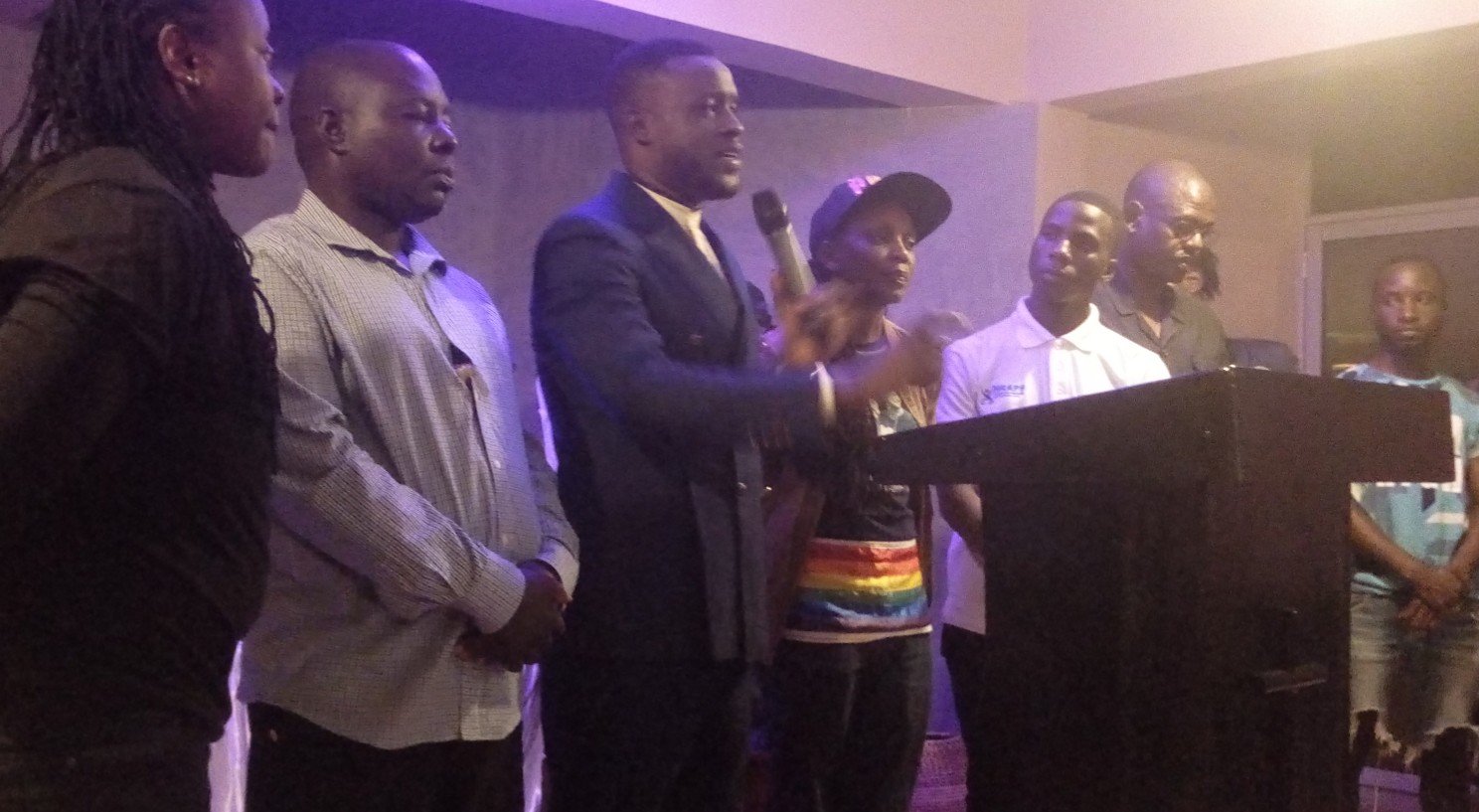
Pastor Simon Anthony addresses the Kuchu Memorial Day service in Kampala. Kasha Nabagesera stands beside him. (UhspaUganda photo)

At a memorial church service on Sunday, 26 January in Kampala, human rights defenders paid tribute to David Kato (murdered that day in 2011, at his home).

)

Kato was killed a few weeks after he helped to secure a court injunction against a Ugandan tabloid that had printed the names, photographs and addresses of gay Ugandans, including Kato, with the tagline “Hang them.” [see also: https://humanrightsdefenders.blog/2012/11/17/the-kuchu-chronicles-a-must-see/]

The  remembrance service was led by Pastor Simon Anthony, a senior pastor from The Fellowship of Affirming Ministries (TFAM) Uganda. The fellowship embraces all people with love, irrespective of their sexuality or any other considerations.

Kasha Nabagesera, one of the founding members of the Ugandan LGBT movement, spoke passionately about Kato’s work and the need to love one another, drawing from Kato’s inspiration and exemplary life. She said many LGBT persons are suffering in silence and need to work together and overcome the fears and challenges they face in life. [see also: https://humanrightsdefenders.blog/2013/02/08/uganda-anti-gay-bill-coming-up-again-mea-laureate-2011-kasha-speaks-out-and-faces-persecution/]

The organizers of the Kuchu Memorial Day hope to make it an annual event.

Ugandan LGBT activists celebrate David Kato on Kuchu Memorial Day

Posted in human rights | Leave a Comment »
Tags: David Kato, Erasing 76 Crimes, Kasha Nabagesera, lgbt human rights, LGBTI Human Rights Defenders, Simon Anthony, Uganda

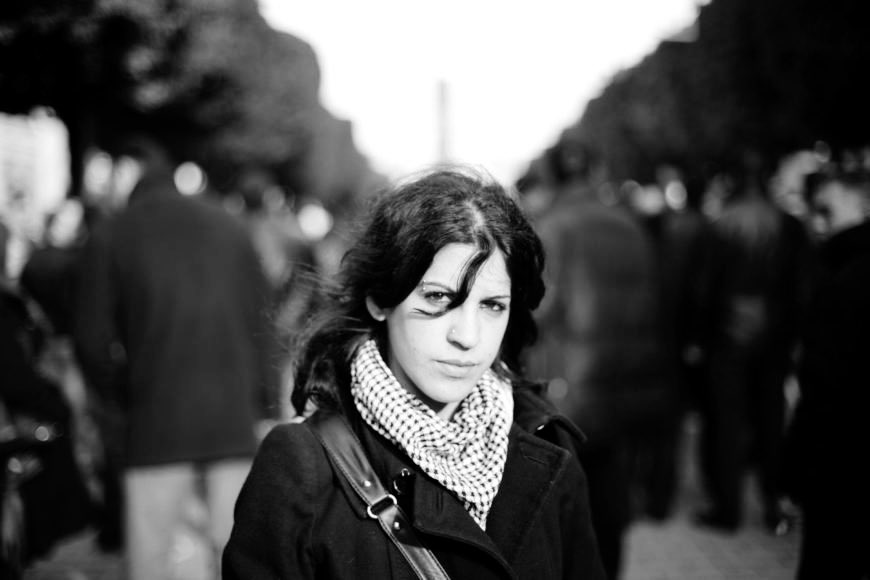
In Memory of Tunisian human rights defender Lina Ben Mhenni

January 29, 2020

On 28 January 2020 The Human Rights Foundation in New York expressed its sadness at the passing of Tunisian activist, journalist, and educator Lina Ben Mhenni, after a long battle with a chronic illness (1983-2020).

“Lina was a force who fought tenaciously until her last breath. She fought censorship, corruption, and human rights abuses, all while grappling with serious illness. But nothing stood in her way. Her voice and cause will resonate with generations to come,” said Thor Halvorssen, president of HRF. “She will forever be an inspiration to all of us at HRF and in the Oslo Freedom Forum community to never give up even in the darkest moments. We will truly miss our beloved friend Lina.”

Lina was one of the only Tunisians to criticize the repressive government openly on international broadcasts before the Jasmine Revolution began in 2011. She is often described as one of the bravest bloggers in the world, whose work was instrumental in documenting, informing, and mobilizing citizens during the Revolution. Lina’s impactful achievements led her to be nominated for the 2011 Nobel Peace Prize. She authored and published a book the same year entitled, “Tunisian Girl: A Blogger for an Arab Spring.” Much of her writing was focused on freedom of expression and rights of women and students in Tunisia.


“Lina’s life experiences went beyond her 36 years. Many people know about Lina – whether through the media or different social platforms – but no amount of reporting on her could do justice to the values and principles for which she fought during Tunisia’s era of tyranny and after the Revolution,” said Aymen Zaghdoudi, MENA Legal Advisor at Article 19 in Tunisia. “Lina stood with the weak, the deprived, and the oppressed – even at the expense of her own health – and turned her pain into inspiration and hope for those around her.”

Lina spoke at the 2011 Oslo Freedom Forum, urging the outside world to continue to pay attention to events in Tunisia and other Arab countries where recent revolutions appeared to have ended. Upon joining the HRF community that year, she was actively involved in the discussions unfolding about the Arab Spring.

In recent years, Lina continued to press for human rights and continued democratic reform. In 2016, she started a campaign called “Books to Prison,” to counter extremism within Tunisia’s prisons. She was inspired by her father, who was a political prisoner, and had once told her that prisoners had so little to read to change their minds or be inspired. By November 2019, her campaign had collected more than 45,000 books, helping to free the minds of tens of thousands of people.  Apart from her calls for democratic reform, Lina taught linguistics at a university in Tunisia and was a professional translator. She also brought awareness to the issue of organ donation and after a kidney transplant, amazingly received silver medals in the World Transplant Games.

You can read Lina Ben Mhenni’s blog “A Tunisian Girl” here.

https://mailchi.mp/609e2865ee85/hrf-mourns-the-passing-of-suleiman-bakhit-287648?e=f80cec329e

Posted in human rights, Human Rights Foundation | 1 Comment »
Tags: Arab spring, Aymen Zaghdoudi, blogger, freedom of expression, Human Rights Foundation, in memoriam, Journalist, Lina Ben Mhenni, obituary, Tunisia, woman human rights defender

The favourite domain of human rights NGOs, “.ORG”, at risk

January 27, 2020

David Gilbert in Vice.com of 24 January and Caitlin Harrington in the The Cascadia Advocate of 26 January 2020 (among others) address an important issue that could affect many human righs NGOs and thus human rights defenders. A private equity fund (backed by three prominent Republican billionaire families) is expected to buy the dot-org domain, throwing into question whether the online safe haven for rights organizations and nonprofits could now face censorship or spiralling costs. Ethos Capital has offered $1 billion for the domain, which is currently operated by a nonprofit.

[Back in the fall of 2019, the private equity firm Ethos Capital announced its plans to buy the Public Interest Registry (PIR) for more than $1 billion. PIR is owned by the Internet Society and manages the .ORG domain registry, which since 1985 has been used by nonprofits and nongovernmental organizations (NGOs) like the Northwest Progressive Institute (NPI). Dot org is what is known as top layer domain… the last part of a uniform resource locator (URL), or web address. For example, nwprogressive.org. Dot-org is home to over 10 million URLs, making it the third-largest domain on the internet today. A huge variety of organizations use the domain ending, from massive multinational organizations like UNICEF to local libraries and animal shelters. PIR is a nonprofit entity that has been managing the registry and setting the prices that owners pay when they register .ORG domains.]

In a letter to the Internet Society from the Electronic Frontier Foundation, an ally of NPI that opposes the sale, it was explained that this move could cause significant harm to nonprofits and NGOs. They argue that without oversight from an appropriate placement, the registry would have the power to make policy changes that would detrimental to .ORG stakeholders, including:

  • The power to raise .org registration fees without the approval of the Internet Corporation for Assigned Names and Numbers (ICANN) or the .ORG community. A .ORG price hike would put many cash-strapped NGOs in the difficult position of either paying the increased fees or losing the legitimacy and brand recognition of a .ORG domain. [Yearly fees for .ORG sites are, on average, between $10 to $20.]
  • The power to develop and implement Rights Protection Mechanisms unilaterally, without consulting the .org community. If such mechanisms are not carefully crafted in collaboration with the NGO community, they risk censoring completely legal nonprofit activities.
  • The power to implement processes to suspend domain names based on accusations of “activity contrary to applicable law. ”The .ORG registry should not implement such processes without understanding how state actors frequently target NGOs with allegations of illegal activity.

NPI cosigned EFF’s letter, with NPI’s founder and Executive Director Andrew Villeneuve explaining: “The pending sale is of great concern to NPI because we own a significant number of .org domains. We could be affected by price hikes and bad policies imposed by the proposed new owner.”…….Tim Berners-Lee, the inventor of the World Wide Web, was among those expressing grave concern and opposition at the time the sale was announced.

The Electronic Frontier Foundation also made the point in their letter opposing the sale, that back in 2002, amid similar talks of selling the .ORG registry, ISOC’s then president and CEO Lynn St. Amour assured the NGOs worldwide that the registry would continue to be accountable to the nonprofit sector.

Erik Brooks, founder and CEO of Ethos Capital, stated in a public blog post that the firm is investing in “the long-term vitality of .ORG and its users” and that “PIR’s partnership with Ethos will create new opportunities for PIR to provide enhanced services and support to the .ORG community.” He also promised that these enhanced services will be developed “in collaboration with the community.” But last month, ICANN published documents with the names of three directors of Ethos Capital involved in the sale redacted, which only deepened the concerns of nonprofits and NGOs.

….Tarleton argued the Washington Secretary of State’s office should be forcefully opposing the sale and calling attention to it. “This is the slippery slope of privatization that happens when no one is paying attention,” she warned.

….“We’re confident that this is in the best interests of the registry, in the best interests of the registrants, and in the best interest of the whole internet,” Andrew Sullivan, CEO of the Internet Society, a nonprofit that oversees the domain, told VICE News. But critics of the move say the promises made by Ethos Capital are not backed by any legal obligations. They also say there’s a problematic lack of transparency about the sale and who will be running the new organization overseeing the domain. So a group of respected internet pioneers and nonprofit leaders have come forward to offer an alternative proposition. But they don’t have $1 billion to offer.

Earlier this month, a group including former ICANN executives and internet pioneers called the Cooperative Corporation of .ORG Registrants filed incorporation papers in California. Their goal is to persuade ICANN to cancel the sale to Ethos and allow them to run dot-org instead. “Dot-org is the open internet’s most essential noncommercial infrastructure,” Esther Dyson, who served as the first chair of ICANN from 1998 to 2000 said in a blog post. “CCOR will ensure that dot-org will be kept free of commercial pressures, is mandated by law to uphold its public service purpose, and remains exceptionally well-positioned to advance the missions of the organizations it serves.” But ICANN has not responded publicly to the call.

This week the Internet Society and ICANN approved a 30-day extension to the process, giving both sides until 20 February to approve the sale. “This is by far the largest outpouring of public concern ICANN has ever seen,” Malthouse said. “It’s a huge opportunity for ICANN to prove it has the courage to stand behind its founding principles.”

https://www.vice.com/en_us/article/wxenaz/3-billionaire-republican-families-are-about-to-buy-the-dot-org-domain-thats-terrifying-nonprofits

NPI’s Gael Tarleton warns proposed sale of .ORG domain registry could harm nonprofits

Posted in human rights | 1 Comment »
Tags: .org, Caitlin Harrington, David Gilbert, domain names, dot.org, Electronic Frontier Foundation (EFF), Ethos Capital, ICANN, internet, Internet rights, Northwest Progressive Institute (NPI), private sector companies, Tim Berners-Lee, USA

Lebanon: human rights defenders use graffiti to express hope

January 24, 2020

The blue graffiti reads: “Oh, my wonderful country.” Photo by Nohad Elhajj.

Since the 17th of October 2019, Lebanon has been in the grips of widespread public protests against the social, economic, and political conditions of the country. The protesters are holding the government accountable for degrading living conditions and demanding serious and drastic changes. ….. But something, equally alive, captivates the place: graffiti. Building walls, stone barriers, wooden panels, even the asphalt ground are all covered with graffiti. With their diverse slogans, creative motifs, and direct, uncensored political and social messages, the graffiti artists collectively illustrate the people’s discourse demanding a full-fledged social and political reform.

On 23 January 2020 Nohad Elhajj – a development practitioner and independent researcher – wrote an interesting piece on this aspect in Global Rights, with rich illustrations:

….. reflecting on the present status of human rights and the human rights movement is of utmost need. More importantly, we need to consider questions about the future of those rights and this movement. In his 2019 article, Thomas Coombes offers a new way to address the future of Human Rights with “hope-based communication” [see: https://humanrightsdefenders.blog/2019/05/30/positive-communication-is-the-only-way-forward-for-effective-human-rights-work/]….

Graffiti is defined as “a form of visual communication, usually illegal, involving the unauthorized marking of public space by an individual or group”. The definition by itself poses a duality; would unauthorized marking of public space become positive communication? Would it possibly shift perspectives? Maybe not all, but some graffiti certainly does convey political messages. The question here is not about authority per se but the disruption of this authority. The act itself is intrinsically disruptive and political whether graffiti is acceptable or not. Starting from this understanding, graffiti, as a visual act, then can be leveraged as a participatory and accessible medium to shift public perspectives on human rights issues. Yet, the human rights movement does not only need to shift the public opinion but also to shift the current governance structures, which is beyond the impact of graffiti. The graffiti in Riyad El Soloh Square is a good illustration of this.

Graffiti is not new to the Lebanese society, but revolution graffiti is particular and powerful because of its relevance, the messages it conveys, and the places it occupies to convey these messages. The graffiti artists practiced their right to freedom of expression, of peaceful assembly and association, while communicating, directly and clearly, human rights demands from women rights, LGBTQ rights, economic and social rights to civil and political rights. (Shown in Pictures below).

……
The Lebanese graffiti artists have pushed and merged both boundaries of political participation and art. The graffiti imposes itself on the observer and on the spaces it occupies with wit and audacity. It overwhelms the observer with emotions of anger, despair, longing and revolt but also with hope. Much of this street art offers a thought-provoking mosaic of entangled messages and images. The graffiti above shows a white pigeon (a recurring image) combined with a strong slogan about workers’ rights; this combination conveys that those rights, and other demands, will be achieved in the future.

Similar to that, the graffiti at the beginning of this article offers another perplexing combination. The whole piece can be read as: “Oh my wonderful country, sectarianism burned us”. As much as it articulates a cry of despair with hurt and agony, it also retains the image of a wonderful country before civil war and a political system that has crippled it for the past 45 years. The generation who lived the war is still lamenting it and the following generations were still living in the resulting divisions and sectarianism—up until the 17th of October 2019. Akin to the protests, the graffiti captured a future hope of a country that will regain its glory after necessary social and political change.

The artists’ urge to mark every visible surface around Riad El Soloh square with spray paint and brushes placed them right in the middle of an already contested political and social scene, and it placed the rights discourse in the middle and around this scene. This graffiti proved to be a strong visual expression of all the protesters’ demands and a way to engage the public with it, both inside and outside Lebanon. Through their paint, these graffiti artists created a distinctive, unprecedented, and positive narrative about human rights in Lebanon: a narrative that more and more organizations and activists are now hanging onto.

https://www.openglobalrights.org/graffiti-creates-positive-human-rights-narratives-in-lebanon/
 

Posted in human rights, Human Rights Defenders | 1 Comment »
Tags: art, Beirut, communication, demonstrations, Global Rights, graffiti, Lebanon, Nohad Elhajj, political reforms, power of images, street artists, Thomas Coombes

Sri Lankan Government accused of embarking on process to silence critics

January 22, 2020
img
‘What we are seeing is the dismantling of any attempts to address accountability and a
massive shrinking of the civic space in Sri Lanka with even more sophisticated and
intrusive surveillance,’ said ITJP’s Executive Director, Yasmin Sooka.

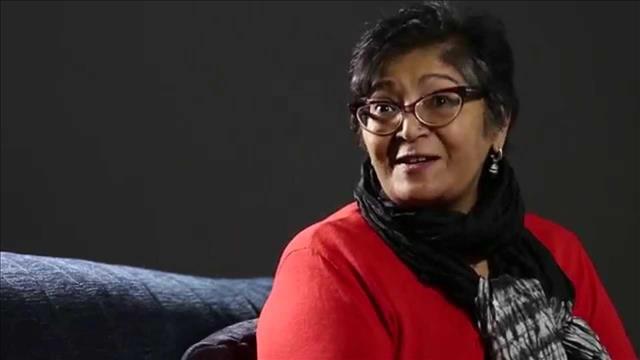
MENAFN in the Colombo Gazette of 13 January 2020 reports that the new Government in Sri Lanka, headed by President Gotabaya Rajapaksa, has been accused of embarking on a strategy to “militarize and securatize” Sri Lanka unleashing a chilling process of repression targeting critics and human rights defenders. Two human rights groups, the International Truth and Justice Project – Sri Lanka (ITJP) and Journalists for Democracy in Sri Lanka (JDS) said that with the help of activists in Sri Lanka (who cannot be named for their own safety) they have documented 69 incidents of intimidation and threats both before and after the elections which have targetted journalists, human rights defenders, lawyers, plaintiffs, academics and opposition figures. In some cases the threats have been so serious the individuals have fled the country.

The report also illustrates how Gotabaya Rajpaksa has spread his tentacles across the government by appointing many members of his former army regiment to positions of authority and has increasingly militarized the policing and intelligence functions. Those involved in investigating past crimes including fraud have been removed from their posts.

‘Individuals previously accused of corruption or alleged to be involved in war crimes are now in office again – the ‘deep state’ is out in the open, occupying positions of authority,’ said Bashana Abeywardene of JDS, adding that it’s cast a pall of silence over once outspoken journalists, trades union activists and human rights activists.

On 16 January Amnesty International echoes this in https://www.amnesty.org/en/documents/asa37/1678/2020/en/

See also: https://humanrightsdefenders.blog/2020/01/02/sri-lankan-human-rights-defender-barred-from-legal-practice-appeals-to-supreme-court/
https://menafn.com/1099543896/Sri-Lanka-Government-accused-of-embarking-on-process-to-silence-critics

Posted in AI, Amnesty international, human rights, Human Rights Defenders | 2 Comments »
Tags: AI, Bashana Abeywardene, Gotabaya Rajpaksa, Human Rights Defenders, International Truth and Justice Project – Sri Lanka (ITJP), intimidation, Journalists for Democracy in Sri Lanka (JDS), Sri Lanka, threats, Yasmin Sooka

Side event preparing the UPR process on Turkey

January 22, 2020

In the framework of the 35th session of the Universal Periodic Review, Press Emblem campaign (PEC) and International Observatory for Human Rights (IOHR) are organising a side event entitled ‘Information meeting on the UPR process in Turkey‘ within the Palais des Nations on Monday, 27 of January, Room XXV from 1 to 2.30 pm.

Key Note Speaker:
Ambassador Stephen Rapp Former United States Ambassador-at-Large for War Crimes Issues in the Office of Global Criminal Justice

Panel 1: Press Freedom
Guest Speakers
Mr Yavuz Baydar: Editor-in-Chief of Ahval
Ms Evin Barış Altıntaş: Journalist & Blogger
Mr Massimo Frigo: Senior Legal Advisor for International Commission for Jurists

Panel 2: Human Rights Defenders
Guest Speakers
Şebnem Korur Fincancı – President of the Human Rights Foundation of Turkey
Nurcan Baysal – Award-winning Turkish Human Rights Defender & Journalist [see: https://humanrightsdefenders.blog/2018/05/18/breaking-news-five-front-line-award-winners-2018-announced/]
Anne van Wezel – Former Co-Chair, EESC EU-Turkey Joint Consultative Committee

Moderator: Louise Pyne Jones, Head of Research, IOHR

See also: https://humanrightsdefenders.blog/2019/03/13/press-emblem-campaign-pec-reports-to-human-rights-council-on-media-casualties/

https://www.pressemblem.ch/

Posted in human rights, ICJ, UN | 1 Comment »
Tags: Geneva, ICJ, International Observatory for Human Rights (IOHR), Massimo Frigo, Press Emblem Campaign (PEC), side event, Turkey, UPR, Şebnem Korur Fincancı

Remembering Russian activists Stanislav Markelov and Baburova

January 20, 2020
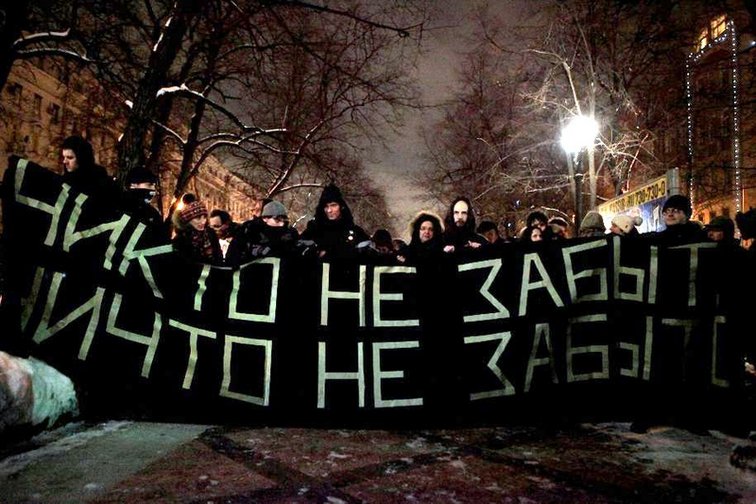
19 January rally, Moscow, 2012 CC BY NC 2.0 Vladimir Varfolomeev / Flickr. Some rights reserved.
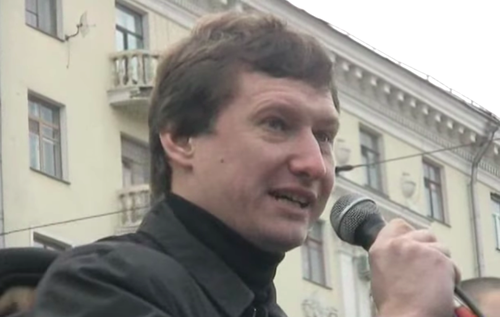
Thomas Rowley Giuliano Vivaldi wrote in Open Democracy of 18 January 2020: “To remember is to fight: the legacy of Russian human rights lawyer Stanislav Markelov“. The authors argue that his legacy remains important to this day. They do this with a selection of his articles and interviews in English.

The news broke: Russian human rights advocate and journalist killed in central Moscow. On 19 January 2009, Stanislav Markelov and Anastasia Baburova were shot by a Russian ultranationalist, Nikita Tikhonov. Markelov, a lawyer from Moscow, died at the scene. Baburova, an activist and journalist from Sevastopol who reported on Markelov’s work, died several hours later. As evidenced in the investigations and trials that followed, there was more to this tragic double murder than many western observers recognised at the time.

Eleven years on, 19 January is an important date for left-wing groups in Russia and Ukraine. Activists hold marches in memory of Markelov, Baburova and dozens of other people who have fallen victim to Neo-Nazi terror. But they also refer to issues that are often off-limits at other demonstrations. 19 January is one of the rare occasions where, particularly in Moscow, a whole range of groups — leftists, LGBT+, anti-racism campaigners, liberals, human rights activists, independent trade unionists, anarchists — come together to fill the streets with anti-militarist, anti-racist and anti-capitalist slogans for one day a year.

Screen Shot 2020-01-17 at 15.14.39.pngStanislav Markelov | Source: YouTube / Grani

In the years before Markelov’s murder, the streets of Russia’s big cities became a battleground as ultra-nationalists took aim at two targets: Russia’s migrant workers and anti-fascist activists. Protests, fights, murders and fabricated criminal cases flicked through headlines and news segments. “The moderate section of the nationalist movement has broken down,” Markelov said at a press conference after the murder of Alexey Krylov, a 21-year-old man who was killed on his way to an anti-fascist concert in 2008. “They have consciously gone underground… and are trying to provoke war itself.”

…

The investigation into the murder of Markelov and Baburova revealed that the end beneficiaries of Kremlin political technologists’ plans could be unpredictable. In the mid-2000s, Nikita Tikhonov and his accomplices in the revolutionary terror group BORN (Combat Organisation of Russian Nationalists) carried out 11 politically-motivated murders — migrant workers, anti-fascists, a federal judge being their targets. They also had deep connections to Russian Image, a magazine-turned-movement that aimed to rebrand far-right nationalism as intellectual and glamourous. In turn, Russian Image not only collaborated with pro-government youth organisations as it sought to out-position others in the competitive world of far-right activists. It also had connections in high-ranking Russian politics. With help from contacts in the police, they collected extensive personal information on Russian anti-fascists.

But while BORN and its competitors may have had their roots in the nexus of street-level and intellectual nationalism that began to emerge in Russia in the 1980s and 1990s, there was also a constellation of counter-movements developing, comprising environmental, social and political initiatives, that continued into the new decade and animated fresh protests under new conditions. It was in this milieu that Markelov, a Moscow law student, came of age politically in the long perestroika of the early 1990s — and perhaps where the pluralism of his political concerns was born. In the “October days” of 1993, Markelov served in a volunteer medical unit comprised of socialists and anarchists that patrolled the conflict zone which erupted in central Moscow as pro-government forces attacked the Supreme Soviet and the anti-Yeltsin movements. “He helped the wounded. Then he helped carry and load the dead,” Pyotr Ryabov, a Russian anarchist historian, recalled. “A real test for a 19-year-old boy.”

In 1994-1995, Markelov was involved in the radical left wing of the Student Defence trade union. This saw Russia’s student movement break, if briefly, into carnavalesque but deeply serious politics with major demonstrations on Moscow streets. The agenda ranged from higher student grants to ending the war in Chechnya and fighting big business. Indeed, in today’s light the work of Stanislav Markelov — both his legal defence and writings — appears as a vital missing link between human rights defence and critiques of Russian capitalism.

As a self-described left social-democrat, Markelov also stands out for his engagement — albeit far from uncritical — with anarchists. In the mid-1990s, he began visiting the Pryamukhino anarchist workshop in Tver, as well as participating in the Protectors of the Rainbow anarcho-ecological movement (which spanned Russia, Belarus and Ukraine), organising protest camps against new nuclear power stations in Rostov and Mogilev, Belarus. The horizontal elements of these anarchist-influenced milieu were attractive to Markelov. Looking back on the Pryamukhino workshop in 2007, he recalled: “This was a utopia made reality. […] It was here that a system of the free organisation of labour began to work.”

In distinction to many of the Russian liberal crowd, Markelov wanted to knit social and economic rights into human rights work, in order to give voice to a society being left behind in the transition. “In the 1990s, a paradoxical situation emerged,” he wrote in 2007, “you could organise hunger strikes, public demonstrations with thousands of people, even block roads, but that didn’t interest anybody.” For Markelov, a series of left-wing bomb attacks on public monuments carried out at the end of the 1990s (and whose participants he defended) suggested that Russian citizens’ desire for social justice had reached a breaking point — and had been frustrated by a dogmatic focus on liberal human rights.

Events at the Vyborg Paper Factory near the Finnish border are instructive. In the late 1990s, workers at this newly-privatised factory gave up waiting for their new owner, seized the plant, issued a single share and began working under the direction of a worker-led trade union. In an attempt to restore owner-control, riot police brutally stormed the plant on three occasions, eventually pressing riot charges against active workers. According to Markelov, who defended the employees, the reaction of the Russian liberal press was telling: demands by journalists to bring the workers to account was driven by a “fear of reevaluating the results of privatisation”. He didn’t have much time for certain sections of the human rights community, either. “You can sum up the attitude of rights defenders to [the workers at Vyborg] who came under threat of serious prison time, and who came to them for help, like this: we don’t defend these rights, they’re outside the sphere of human rights,” he wrote in 2007.

In this sense, Markelov is important as a consistent, if not widely known, critic of Russia’s new capitalism. “We were told that we can’t speak about society’s interests, collective interests, that we have individual interests which are above them,” he said at a conference in 2008. “Well sure, society’s interests were spat on in the Soviet times, but we at least had the system of Soviet paternalism. […] If something new is to emerge, then it will be in the spirit of socialist paternalism — when Soviet [social] guarantees are mixed with, well, less than democratic tendencies.”

Indeed, the left-wing human rights lawyer was invested in the idea of creating a new left tradition in Russia — one informed by the mistakes of the 1990s and the country’s earlier revolutionary history. “The main myth, which the Narodniki and Social Democrat-Mensheviks took from western social democrats,” he said at the same conference in 2008, “and which we felt on our own skin in the 1990s, is that after the fall of the cruel totalitarian Soviet system, the ordinary people, accustomed to social guarantees, a stabile social-welfare society, will be open to the ideas of democratic socialism. This was a very serious mistake.”

But while the late 1990s and early 2000s encompassed Markelov’s socio-economic interests, he shifted increasingly to defending the rights of people affected by the actions of Russian law enforcement, and Neo-Nazis. Residents of Blagoveshchensk brutalised at the hands of riot police. Relatives of anti-fascist activists killed by Neo-Nazis on Russian streets. The families of people tortured and murdered by a policeman in Khanty-Mansiisk. A journalist brutally beaten for his role in protesting the construction of a highway through a forest outside Moscow.

His bravery, courage and sheer drive were impressive. He worked extensively in Russia’s North Caucasus. In particular, Markelov represented the family of Elza Kungayeva, who was murdered by Russian soldiers during the second Chechen campaign. It was here that he gained the respect and trust of local rights defenders in an unimaginably hostile environment.

In what turned out to be the final years of his life, Markelov spent a significant amount of time defending the interests of Russian anti-fascists and their families. As political repression picks up in Russia, this year’s 19 January events will pay particular attention to repression faced by left-wing activists.

To show western readers how active and in flux Russian society was during the 1990s and 2000s – and to showcase the strategic thought of an under-appreciated and historic figure – the authors, Giuliano Vivaldi and Thomas Rowley, collect and present a selection of Markelov’s texts and interviews in English translation for the first time here. These texts span Markelov’s reflection on trade union and student activism, Soviet nostalgia, Russia’s place in the global economy, corrosive patriotism and the state and revolutionary maximalism.

Undoubtedly, Markelov would have been at the forefront of the solidarity and defence campaigns for all whose lives are touched by political repression in Russia today.

https://www.opendemocracy.net/en/odr/remember-fight-legacy-russian-activist-lawyer-stanislav-markelov/

Posted in human rights | Leave a Comment »
Tags: Anastasia Baburova, anti-facist, BORN (Combat Organisation of Russian Nationalists), human rights lawyer, in memoriam, remembrance, Russia, Stanislav Markelov

Annual reports 2019: Azerbaijan in review – muted hope for 2020

January 20, 2020
Osservatorio Balcani e Caucaso Transeuropa

On 13 January 2020 Arzu Geybullayeva published for the above-mentioned NGO a report on Azerbaijan in 2019.

It was a rather hectic year in 2019 in Azerbaijan, President Aliyev decided on a series of changes, layoffs and replacements of senior officials. For some a wave of reforms, for others yet another make-up, in view of the early parliamentary elections of 9th February On December 27th, 2019, former political prisoner and popular citizen journalist Mehman Huseynov disappeared after being detained for staging a solo protest in the heart of Baku. He was able to be reached only the next day. In his own account of the incident, Huseynov was abducted by a police gang, beaten, and taken to an unidentified location where he was then released. Huseynov was demanding the immediate release of rapper Paster (Parviz Guluzade), who was arrested a day earlier. [see for an earlier post on him: https://humanrightsdefenders.blog/2013/03/07/azerbaijan-harasses-human-rights-defenders-even-the-recipient-of-the-homo-homini-award/]….His case ended December 2018 with a bang, with freedom advocates across the world joining efforts in calling on the authorities to drop new charges against Huseynov, who was already serving a two-year jail sentence. 2019 began with continued efforts to ensure Huseynov’s release under the campaign #FreeMehman.

When President Ilham Aliyev began sacking some of his high-ranking officials in 2019, some observers were quick to hail a wind of change. When one of the oldest serving government representatives was let go, along with some other reshuffling, pundits applauded the long-awaited changes. Sadly these changes, in the long run, would mean little, especially when considering real progress and reforms. ……………

Much of the cabinet reshuffling took place following a weekend of protests in October. On October 19th, the National Council of Democratic Forces – an umbrella group of Azeri opposition groups – organised an unauthorised rally that was violently dispersed by the local police and resulted in many arrests of participants and organisers. Organisers and participants of the march demanded the release of all political prisoners, free and fair elections, and an end to economic injustice. The following day, a group of women activists took the streets demanding an end to all forms of violence against women. The march was the second of its kind, following the women’s march organised on International Women’s Day.

The crackdown against women activists was not surprising at all, considering President Ilham Aliyev’s personal views on gender equality, which he delivered during the centenary of Baku State University on November 26th, 2019. “We live in a traditional society, and we shall continue to do so. We must respect women, we must protect them, not the other way around. There is gender equality. We accept it. But we must also accept that we cannot live away from a traditional mindset and the young generation should know this […] I have said this before. We won’t integrate [into Europe] where there is no difference between men and women”.

Another example of these so-called reforms was the disciplinary measure taken against human rights lawyer Shahla Humbatova. On November 27th, 2019, the Azeri Bar Association suspended Humbatova, who is also facing disbarment on the basis of a complaint from a past client and the alleged failure to pay several months of Bar membership dues, according to a statement issued by the International Bar Association in support of Humbatova. In her defense, Humbatova had admitted falling behind in her bar payments – however, the lawyer refutes the rest of the accusations. “The decision to suspend her license and seek her disbarment is an unambiguously disproportionate punishment. The case is seen as a part of the relentless persecution of independent lawyers in Azerbaijan. In recent years, a growing number of independent lawyers have been subjected to harassment, criminal prosecution and disbarment in retaliation for their work on high-profile, politically sensitive cases, especially those concerning human rights violations”, read the rest of the statement. Previously, the Bar disbarred human rights lawyers Irada Javadova, Yalchin Imanov, Alayif Hasanov, and Khalid Bagirov. These recent allegations also come months after President Ilham Aliyev signed a decree on judicial reforms.

….

2019 brought some good news too. In March, about fifty political prisoners were pardoned. None of them, however, should have spent a second in jail in the first place. The news of some young candidates winning in December’s municipal elections was encouraging. Some of them, who did not make it as a result of gross electoral violations, have joined forces and set up a political “Movement ” bloc ahead of the extraordinary parliamentary election scheduled for February 9th, 2020. The bloc consists of activists, political party and youth movement members, and rights defenders. There is more awareness about women’s rights and there is hope 2020 will bring more positive change. Judging from last year, it is highly recommended to keep expectations low.

https://www.balcanicaucaso.org/eng/Areas/Azerbaijan/Azerbaijan-2019-year-of-make-up-198786

Posted in human rights, Human Rights Defenders | 2 Comments »
Tags: annual report 2019, Arzu Geybullayeva, Azerbaijan, Human Rights Defenders, Mehman Huseynov, OBC Transeuropa, Paster, Shahla Humbatova

Palestinian and Israeli human rights defenders stand together: Mohammed Khatib and Jonathan Pollak

January 20, 2020
Mohammed Khatib (attorney and founder of the Popular Struggle Coordination Committee) wrote on 15 January 2020 in 972magazine “As a Palestinian rights defender, I’m proud to stand with Jonathan Pollak“.

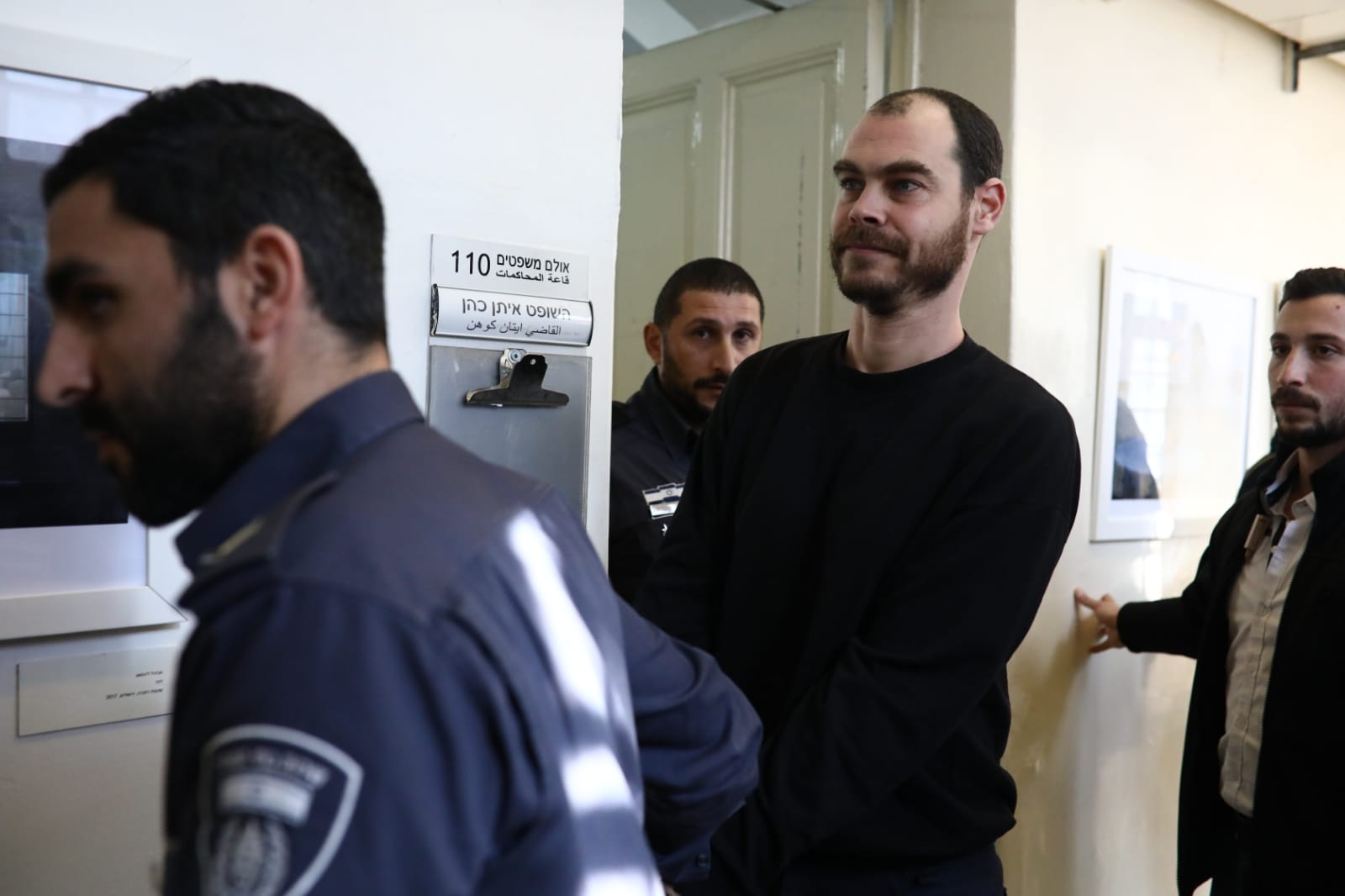
Israeli activist Jonathan Pollak at the Tel Aviv Magistrates' Court, arrested as part of an unprecedented private suit by Israeli right-wing group Ad Kan, Jan. 15, 2020. (Oren Ziv)

Israeli activist Jonathan Pollak at the Tel Aviv Magistrates’ Court, arrested as part of an unprecedented private suit by Israeli right-wing group Ad Kan, Jan. 15, 2020. (Oren Ziv)

I was standing in the fields of the West Bank village of Bil’in 15 years ago when my phone rang from an Israeli number. On the line, someone was speaking in a mix of broken Arabic and Hebrew. At the time the Israeli military had just begun targeting Bil’in to build the apartheid wall, and while the bulldozers had started working in the nearby village of Budrus, activists were showing up at our village too. Among the first people to come to Bil’in was the person on the phone. I’ll admit, at first I found him odd, even a bit freakish: he looked like a punk teenager, wearing strange clothes and with a wild haircut dyed with different colors. Full of energy and spirit, he walked up to us and got right down to business. “We are a group of anarchists against the wall,” he said, “and we want to support you in your struggle.”

I looked at this strange visitor from Tel Aviv, my mind at once grappling with the contradictions and the respect I felt. Who is this boy thinking he can stop the wall? He is part of the occupation! Why is he really here? From that first encounter, however, it was clear that he was passionate and willing to work tirelessly. He communicated with the people around him so easily and quickly that it didn’t take long before he earned my trust. That’s how I came to know my friend Jonathan Pollak – who is now sitting in Israeli detention because of a right-wing organization’s lawsuit targeting his activism in Palestinian villages like mine.

Jonathan has played a prominent role not only in Bil’in but in many other villages across Palestine. Every young person who has participated in West Bank demonstrations against Israel’s colonization knows him as Jonathan, the human rights defender.

On Feb. 13, 2015, I was arrested on false charges at one of our weekly demonstrations in Bil’in. The Israeli military claimed that I was participating in an illegal protest, preventing Border Police officers from carrying out their work and attacking them. The truth is that one of the officers attacked me with pepper spray for no reason, which is illegal under Israeli law; he lied and claimed that I had pushed him. He arrested me as a political punishment to cover up his own unlawful act. I have been on trial for these charges since I was arrested four years ago. My lawyer and I provided the Israeli police and the military prosecutor with video evidence to prove that the arresting officer lied, but it was ignored up until now. On Sunday, after four years, I was finally acquitted and the charges against me were dropped.

Muhammad Khatib during a weekly demonstration in the West Bank village of Bil’in in 2015. (Oren Ziv)

Muhammad Khatib during a weekly demonstration in the West Bank village of Bil’in in 2015. (Oren Ziv)

…My acquittal on Sunday was issued by an Israeli military court. This a rare privilege: according to Israeli human rights group B’Tselem, the rate of acquittals in the military court system is four out of every thousand. And though I was acquitted, I know that this system is inherently unjust and corrupt, built to keep us all as political prisoners. It is an oppressive regime designed solely for Palestinians: the judge is an Israeli military officer; the prosecutor is an Israeli soldier; even the translators and clerks are part of the Israeli army.

My friend Jonathan was arrested last week (and not for the first time) on charges similar to those I faced. Unlike me – and unlike Abdallah, Adeeb, and all Palestinians who are arrested for protesting – he will face judgement in an Israeli civil court, one which is supposed to protect the rights of citizens but in practice protects settlers, soldiers, and those who uphold apartheid and occupation. Because he supports our cause, I don’t expect him to find justice.

Due to of the nature of his arrest, and because he is not Palestinian, Jonathan could pay NIS 500 bail and walk out of jail. But he is a principled person. He has seen me and countless other Palestinian friends arrested on false charges, powerless to prove our innocence. So, he has decided to refuse bail and remain in detention instead. He won’t play by the rules of a system that is rigged against justice.

……Despite the many barriers that Israel has tried to place between us, we are part of the same struggle. Jonathan has stood alongside me and all Palestinians since he was a punk-looking teenager with weird clothes and crazy hair. Today, as a human rights defender and as a person of principle, I am proud to stand up and support Jonathan Pollak.

https://www.972mag.com/khatib-pollak-rights-defenders/

Posted in human rights, Human Rights Defenders | Leave a Comment »
Tags: fair trial, Human Rights Defenders, Israeli-occupied territories, Israeli–Palestinian conflict, Jonathan Pollak, military courts, Mohammed Khatib

Colombia: 21 January 2020 civil society begins a much-needed Patriotic March

January 20, 2020

There are so many places where human rights defenders are under attack [see e.g. https://humanrightsdefenders.blog/2020/01/14/front-line-defenders-global-analysis-2019-is-out-304-hrds-killed/], but Colombia seems to have started the new year even worse than others, witness the following recent reports:

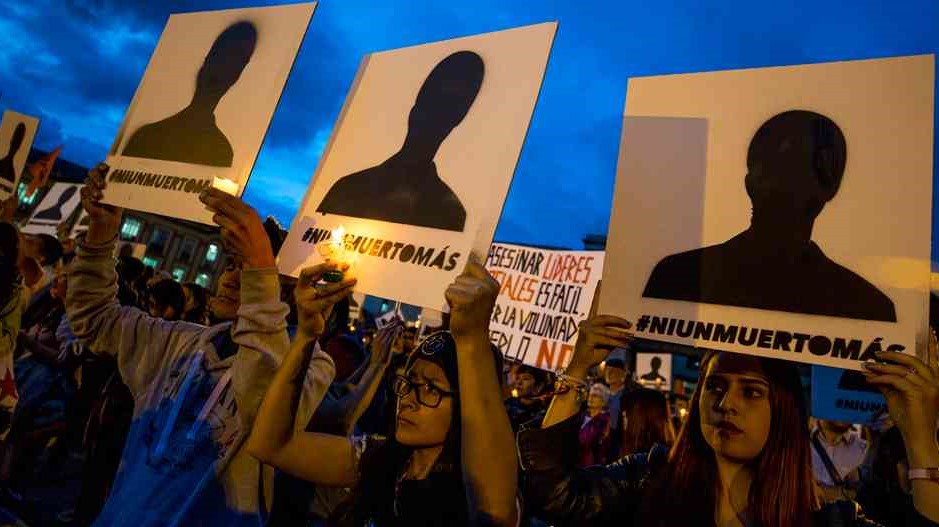
The United Nations’ mission chief told the Security Council on Monday 13 January that Colombia will not achieve peace “if the brave voices of social leaders continue to be silenced” and urged government action. In his address to the council, UN mission chief Carlos Ruiz dismissed President Ivan Duque‘s recent claim that violence against human rights defenders and community leaders dropped 25% last year. In the course of 2020, already 15 social leaders have been assassinated in an exceptional spike in political killings, according to independent think tanks. “On December 23, artist and social leader Lucy Villareal was killed in the Nariño department after conducting an artistic workshop for children and the killings of former FARC-EP combatants resumed on the very first day of the year with the death in the Cauca department of Benjamin Banguera Rosales,” Ruiz highlighted. Ruiz additionally warned that “the pervasive violence in conflict-conflicted areas continues to threaten the consolidation of peace as illustrated by several profoundly worrying developments in the last few weeks.”

According to conflict expert Camilo Gonzalez of think tank Indepaz, 368 community leaders and human rights defenders have been assassinated since Duque took office in August 2018. Gonzalez confirmed social organizations’ claims that “there is an omission or even complicity by elements of the public force, by agents of the state” with illegal armed groups accused of many of the killings. While Duque has blamed drug trafficking for the killings, think tanks and the United Nations have said that also land disputes and mining are among the main motives for the killings.

——-

On the same day Prensa Latina reported on the Illegal wiretapping of journaliststhat.  The Foundation for Press Freedom (FLIP) referred to a recent probe published by the Revista Semana magazine, disclosing that, ‘separate units of the National Army conducted a plan to threaten and carry out unlawful wiretapping of journalists, human rights defenders, magistrates, politicians and other public officials.’This illegal surveillance was carried out from military facilities, in order to protect the Army from facing justice and the media, according to a military officer’s statement. The wiretapping operations, however, were not only aimed at Revista Semana journalists, FLIP noted. According to the investigation, the Army bought a technological platform called ‘Invisible Man’ worth about 3 billion pesos (US$ 930,000) from a Spanish company represented in Colombia by a former National Navy officer. Recipient of the 2017 Global Pluralism Award from the Ottawa-based Global Center for Pluralism for his community-led reconciliation efforts, Leyner Palacios has received death threats from an illegal armed organization operating on Colombia’s Pacific Coast, and along the Atrato River, where Bojayá is located. The threats against Palacios by a shadowy group known as Autodefensas Gaitanistas de Colombia (AGC), as well as presence in the region of the National Liberation Army (ELN) guerrilla, has forced the government of President Iván Duque to heighten security measures in the territory, including the possibility of establishing a permanent military base in Bojayá.
In the first two weeks of 2020, 19 social leaders, human rights defenders and ex-combatants have been assassinated even as the government has failed to take action
—–
Colombia

Newsclick of 20 January 2020 says the “Colombian tragedy continues without an end in sight“: The last two weeks have seen a worrying surge in assassinations of social leaders, human rights defenders and ex-combatants. 19 such leaders have been assassinated since the turn of the decade. The demand by organizations and movements for protection and justice for the leaders – 800 of whom have been assassinated since 2016 – are being ignored. Meanwhile, in the first week of January, the news magazine Semana released an extensive exposé revealing that the Colombian army was illegally listening to and indulging in surveillance of journalists, politicians and judges, including a Supreme Court judge. Law and order, protection and guarantee of the most basic rights remain elusive in Colombia. It lists many of the victims:

22 year-old Cristian David Caicedo was assassinated in execution style on January 3 by a group of armed men in the rural area of Guapi, Cauca. Caicedo was the son of a well-known regional Black leader who was the legal representative of the Community Council Guapi Abajo and a member of the National Space of Prior Consultation of Black Communities.

Anuar Rojas Isaramá was a 29-year-old member of the Indigenous guard from the Agua Blanca community in Nuquí, Chocó and was assassinated by armed men on January 5, but the crime was only reported by the public institutions on January 9. According to the mayor of Nuquí, the assassination of Isaramá caused the displacement of 28 families (123 people) who are currently taking refuge nearby.

An Indigenous Nasa elder, Virginia Silva of the El Canelo Reservation in Páez, Cauca was assassinated at her home in front of her husband on January 7. She was 71 years old. According to Sonia Hurtado Ducue, president of the Association of Nasa Cxha cxha Cabildos, Silvia had received death threats from armed groups before her assassination.

37-year-old Gloria Ocampo, who lived in the rural region of Puerto Guzmán, was assassinated in her home along with her neighbor on January 7. Ocampo was an important leader in promoting crop substitution on a departmental level and within her community and worked on developing alternative options for production and commercialization despite lack of support from the government.

Peasant leaders Óscar Quintero and Gentil Hernández were both assassinated on January 8 in Puerto Guzmán. In the case of Quintero, armed men arrived at his house, dragged him out and assassinated him in front of his wife.

The same day, Mireya Hernández Guevara, the former treasurer of a Community Action Board, was shot and killed in Algeciras, Huila.

On January 10, a total of six assassinations took place in different regions of the country. Amparo Guejia Mestizo, Nasa Indigenous leader and founder of the Landless Workers Movement – Grandchildren of Quintin Lame – was assassinated along with her son Juan Pablo Dicué in Caloto, Cauca. The organization is affiliated to the national platform of social movements, the Patriotic March. Also in Cauca, human rights defender Nelson Enrique Meneses, 29, was shot and killed in his home in front of his wife and 3-year-old daughter in the municipality of Inza. He was a member of the Peasant Association of Inzá Tierradentro, part of the National Association of Zones of Peasant Reserve and the Patriotic March.

In Chiriguaná, Cesar, unidentified armed men killed the leader of a community action board, Henry Cuello. Tulio César Sandoval, who was part of the Coordinator of Coca, Marijuana and Poppy Growers and the Patriotic March in the Catatumbo region of North Santander, was also violently assassinated in his home in front of his family members on January 10. In Turbo, Antioquia former council member Sergio Narváez was assassinated in his home.

The next day, January 11, John Freddy Álvarez was assassinated in Algeciras, Huila. He was the president of the Association of Peasant Workers in Algeciras, Huila and a member of the Patriotic March.

Jorge Luiz Betancourt was shot dead by armed men on January 13 inside his home in Montelíbano, Córdoba while he was with his family. According to the Cordobexia Foundation, Betancourt was a community and sports leader…

The rise in the assassination of peasant leaders, Indigenous leaders, human rights defenders and others has shaken Colombian society. According to these numbers, the genocide of social leaders in the country is no where near stopping and may even get worse this year.

…..social movements, Indigenous, Afro Descendant and peasant organizations, trade unions, and human rights organizations are preparing for a national strike on January 21. The mobilization will commemorate two months since the beginning of the wave of mobilizations, strikes, cacerolazos and other protest actions against the government of far-right Ivan Duque and its war-mongering, neoliberal policies. One of the principal demands of the strike is that the government act to stop the genocide of social leaders, human rights defenders and ex-combatants in the country. The social movement platform, the People’s Congress, released a statement expressing solidarity with the Patriotic March and condemning the increased violence against social leaders. They also called on the people of Colombia to “take to the streets to protest as part of the mobilizations that will begin on January 21.”

See also: https://reliefweb.int/report/colombia/visit-colombia-report-special-rapporteur-situation-human-rights-defenders

See also on 21 January: https://colombiareports.com/colombias-peaceful-anti-government-protests-marred-by-violent-incidents-in-bogota-and-medellin/


https://www.plenglish.com/index.php?o=rn&id=50838&SEO=illegal-wiretapping-of-journalists-denounced-in-colombia

https://reliefweb.int/report/colombia/security-council-press-statement-colombia-3

15 community leaders assassinated in Colombia in 2020

UN mission chief says Colombia should ‘urgently’ and ‘fully’ implement peace deal

https://www.newsclick.in/colombia-stories-pain-and-resistance

https://www.batimes.com.ar/news/latin-america/united-nations-envoy-for-colombia-peace-depends-on-stopping-killings.phtml

Colombia’s human rights defender Leyner Palacios threatened by armed group

Posted in human rights, Human Rights Defenders, UN | 4 Comments »
Tags: Anuar Rojas Isaramá, Benjamin Banguera Rosales, Carlos Ruiz, Colombia, David Caicedo, Gloria Ocampo, Human Rights Defenders, indigenous groups, journalists, killings, Leyner Palacios, Nelson Enrique Meneses, Patriotic March (Colombia), social platforms, UN, United Nations Security Council, Virginia Silva

« Older posts
Newer posts »
  • Enter your email address to subscribe to this blog and receive notifications of new posts by email.

    Join 1,805 other subscribers
  • Recent Posts

    • Urgent concern for the safety of Angolan lawyer Zola Ferreira Bambi
    • Amnesty International opens Virtual Museum exploring six decades of human rights activism
    • Detention, torture and silence: SOS-Defenders’ 2025 report on censorship by detention — 60 new defenders were jailed last year
    • Three female candidates shortlisted for the 2026 Václav Havel Prize
    • Thailand: New FIDH report details more than a decade of lèse-majesté abuse
    • ‘Why is the Chinese Communist Party so scared?’
    • 30 August 2026 was the International Day of the Victims of Disappearances
    • Chinese artist Gao Zhen sentenced to the maximum of 3 years prison over satirical Mao statues
Blog at WordPress.com.
Entries and comments feeds.Valid XHTML and CSS.
  • Subscribe Subscribed
    • Hans Thoolen on Human Rights Defenders and their awards
    • Join 432 other subscribers
    • Already have a WordPress.com account? Log in now.
    • Hans Thoolen on Human Rights Defenders and their awards
    • Subscribe Subscribed
    • Sign up
    • Log in
    • Report this content
    • View site in Reader
    • Manage subscriptions
    • Collapse this bar
Loading Comments...