On 10 December 2021, David Fischer, HRW’s Media Coordinator, Germany published “A Human Rights Roadmap for Germany’s New Government“
…The climate crisis threatens catastrophic impacts on human rights, and ambitious climate action by the government to reduce greenhouse gas emissions is critical if Germany – the European Union’s biggest greenhouse gas emitter – is to help prevent the worst of those impacts. The new government’s coalition agreement, a non-binding roadmap for legislative action, calls for elimination of coal energy “ideally” by 2030, promises a roll-back of subsidies for fossil fuels and legislation to deal with climate change adaptation planning. These are positive steps but insufficient to reach Germany’s contribution toward the global goal in the Paris Agreement of limiting global warming to 1.5°C above pre-industrial levels.
In addition to the climate crisis, the new coalition between the Social Democrat Party (SPD), the Free Democrats (FDP) and the Greens (Die Grünen) will have to tackle challenges to the rule of law within the EU, stand up for human rights against autocrats in China and Russia, and address the many challenges arising from the pandemic.
The coalition agreement makes promising commitments to advance the rights of lesbian, gay, bisexual, and transgender (LGBT) people, including to change the law on legal gender recognition for transgender people so that it is based on self-determination. The coalition also commits to protecting human rights in supply chains in line with the UN Guiding Principles on Business and Human Rights that include the right to a remedy for victims. It proposes to increase the capacity of German courts to prosecute universal jurisdiction cases such as the trial on state-sponsored torture in Syria.
Within Europe, the new government intends to push for judgements of the European Court of Human Rights to have greater impact and “be implemented in all member states”. It supports the use of mechanisms and sanctions to enforce the rule of law in European Union member states. It also calls for shared responsibility for migrants and refugees among member states, an end to pushbacks at EU borders and for the border agency Frontex to respect human rights.
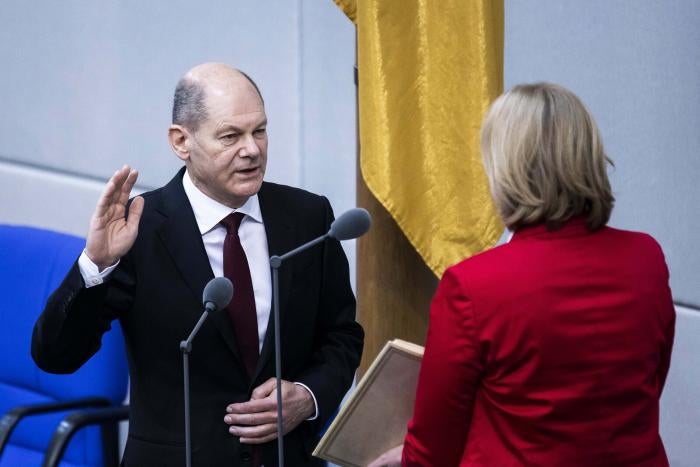
Scholz’s new government will now need to live up to expectations on human rights and prove that what the coalition dubbed “Germany’s responsibility for Europe and the World” is expressed in actions and not just words.
On 14 December 2021 a Statement “Bangladesh: Stop Harassment of Human Rights Defenders” was published by Forum Asia, FIDH and other NGOs: “Bangladesh authorities must end the harassment of Adilur Rahman Khan and ASM Nasiruddin Elan, respectively Secretary and Director of the human rights group Odhikar, who have been targeted through the misuse of the criminal justice system”, eleven rights groups said.
On December 15, 2021, the Cyber Tribunal of Dhaka will continue the examination of prosecution witnesses in the case brought against Adilur Rahman Khan, also a member of OMCT General Assembly and FIDH Secretary-General, and ASM Nasiruddin Elan, for charges brought against them in Case No. 1 of 2013 under the notorious Section 57 of the Information and Communication Technology (ICT) Act, 2006 (amended in 2009), in relation to a fact-finding report issued by Odhikar on the killing of at least 61 people by security forces and law-enforcement agencies in May 2013. Khan and Elan face up to ten years in prison. See also; https://www.trueheroesfilms.org/thedigest/laureates/88F17E2F-F919-580F-2FDA-59B8E24ACBF6
“The government should stop using vague laws to silence human rights defenders and start holding perpetrators of abuses to account, ” said Kerry Kennedy, President of Robert F. Kennedy Human Rights. “Odhikar’s findings not only should have led to investigations and reforms, but also should have been welcomed by the government as an opportunity to strengthen their commitment to upholding human rights.”
Following Odhikar’s 2013 report, Khan and Elan were arbitrarily detained for respectively 62 and 25 days until they were both released on bail. On February 14, 2021, the Appellate Division of the Supreme Court of Bangladesh rejected Odhikar’s appeal to quash the case on its legal merits. On September 12, 2021, the Cyber Tribunal of Dhaka resumed the trial in the case against the two while their review petition is still pending hearing before the Appellate Division of the Supreme Court, contravening the right to a fair trial. On October 5, November 9, and November 24, 2021, the Cyber Tribunal of Dhaka started to examine prosecution witnesses in the case.
We express our deepest concern over the ongoing harassment of Adilur Rahman Khan and ASM Nasiruddin Elan, which is manifestly a form of reprisals against Odhikar for their legitimate human rights work, including for cooperating with UN human rights mechanisms in documenting enforced disappearances, extra-judicial executions and torture in Bangladesh.
It is further a matter of great concern that since 2013, attacks, unlawful surveillance, smear campaigns and harassment against Odhikar and its staff and management have been incessant. Odhikar is also facing serious difficulties to conduct its work due to violations of the right to freedom of association, since its registration has not been renewed by the NGO Affairs Bureau of the Government of Bangladesh and is still pending since 2015. Moreover, all of its bank accounts have been frozen and the organization has been forbidden from receiving funding from foreign or international sources, impacting its operations considerably.
The trial against Khan and Elan resumes in a context where human rights in Bangladesh are under attack from all sides. Human rights violations committed by security forces, including enforced disappearances, extrajudicial executions, and torture remain pervasive throughout the country, with absolute impunity. Authorities regularly crackdown on human rights defenders and journalists who speak out against these violations, including through the use of the Digital Security Act – 2018, the Special Powers Act – 1974, and other draconian laws. See also: https://humanrightsdefenders.blog/2014/12/02/adilur-rahman-khan-speaks-out-against-torture/
Cases such as these question the Bangladeshi government’s commitment to protecting human rights. The international community, including the United Nations and the diplomatic corps in Bangladesh, should monitor the case against Adilur Rahman Khan and ASM Nasiruddin Elan and take a clear stand to ensure that the government of Bangladesh respects the rights of the two defenders to a fair and public trial and, more generally, guarantees the right to defend human rights and puts an end to all acts of harassment against all human rights defenders in Bangladesh.
Our organisations call on the authorities of Bangladesh to immediately and unconditionally drop all charges against Adilur Rahman Khan and ASM Nasiruddin Elan, and to ensure in all circumstances that human rights defenders in Bangladesh are able to carry out their legitimate activities without any hindrance and fear of reprisals.
“This trial is in reality an indictment of the authorities and a crucial test case for the country’s judiciary to be closely watched by the international community,” said Gerald Staberock, OMCT Secretary General, speaking on behalf of the Observatory. “The true culprits are those responsible for extra-judicial killings not those who report on it. Prosecuting human rights activists will not stifle dissent but will isolate Bangladesh from the international community.”
The NGOs:
Amnesty International
Anti-Death Penalty Asia Network (ADPAN),
Asian Human Rights Commission (AHRC),
Asian Network for Free Elections
Capital Punishment Justice Project (CPJP)
CIVICUS: World Alliance for Citizen Participation,
Eleos Justice, Monash University, Associate Professor
FIDH, within the framework of the Observatory for the Protection of Human Rights Defenders, i
FORUM-ASIA
Robert F. Kennedy Human Rights
World Organisation Against Torture (OMCT), within the framework of the Observatory for the Protection of Human Rights Defenders
Germany and France honoured this year 15 people who have made outstanding contributions to the protection of human rights, campaigning for causes including women’s rights in Afghanistan, the freedom of the press in South Africa and children who are born as a result of rape in wartime.
On 10 December, international Human Rights Day, Foreign Minister Annalena Baerbock and French Foreign Minister Jean‑Yves Le Drian presented fifteen people with the Franco-German Prize for Human Rights. This award recognises the efforts of all those who work tirelessly every day to advance the causes of human rights and the rule of law. It is presented decentralised by the French and German missions in various locations around the world.
Jake Epelle who works to combat the ongoing stigmatisation and discrimination faced by people with albinism in Nigeria.
Noelah Godfrey Msuya who promotes the rights of children and women in Tanzania.
Monika Borgmann who is a German-Lebanese documentary-maker.
Jacques Letang who is a judge and lawyer in Haiti.
Cristina Palabay from the Philippines who leads the national association Karapatan.
Alexandrine Victoire Saizonou who is an advocate for women’s and children’s rights in Benin.
Ajna Jusic from Bosnia discovered at the age of 15 that she was born as a result of rape during wartime, and since then she has advocated for others in the same situation.
Erika Lorena Aifán Dávila is a judge who has been the target of constant attacks from the authorities of Guatemala.
Nebahat Akkoc is the Managing Director of the NGO Kamer in Turkey.
The Venezuelan Education-Action Program on Human Rights or PROVEA.
Narges Mohammadi who is spokesperson and vice chairman of the Iranian organisation Defenders of Human Rights Center.
May Sabai Phyu is a Kachin activist from Myanmar/Burma.
Shaharzad Akbar is an Afghan human rights defender who campaigns in particular for the rights of women in Afghanistan.
Tabelo Timse is an investigative journalist and a member of an independent non‑profit media centre in South Africa.
UN human rights experts called on Morocco’s government Thursday to halt a decision to extradite a Uyghur activist to China, where they said he risks facing severe human rights violations.
The experts said human rights defender Yidiresi Aishan, a Chinese Muslim and member of China’s Uyghur minority, faces risks such as arbitrary detention, enforced disappearance, torture, and other cruel, inhuman or degrading treatment or punishment.
“This extradition process is happening without any form of individual examination and assessment of risks, which blatantly violates the absolute prohibition of refoulement under international human rights and refugee law,” they said in a statement.
Chinese authorities accused Aishan of joining a terrorist group, the East Turkestan Islamic Movement (ETIM), and carrying out or actively participating in activities within terrorist organizations under Article 120 of the Chinese Criminal Code.
The experts include Nils Melzer, the special rapporteur on torture and other inhuman treatment, Fionnuala Ni Aolain, the special rapporteur on protecting human rights while countering terrorism, and Mary Lawler, the special rapporteur on human rights defenders.
As an asylum seeker in Morocco, Aishan should be protected from any form of extradition or forced return to China until his refugee status is decided, they said. The experts emphasized that the existence of a bilateral agreement on extradition, or diplomatic assurances, do not release states from their obligations under international human rights and refugee law, in particular the principle of non-refoulment.
On the eve of Human Rights Day (10 December 2021) and coinciding with the Summit for Democracy, the European Union launched the Global Europe Human Rights and Democracy programme. This programme, worth €1.5 billion, steps up EU support in promoting and protecting human rights and fundamental freedoms, democracy, and the rule of law and the work of civil society organisations and human rights defenders around the world during the period 2021–2027. The programme will promote and protect the universality of human rights, strengthen the rule of law and accountability for human rights violations and abuses, and defend the full and effective exercise of fundamental freedoms, including the freedom of expression, supporting independent journalism and media, while seizing opportunities and countering risks associated with digital and new technologies.
High Representative/Vice President Josep Borrell said: “Courageous people from all backgrounds are fighting on a daily basis for their civil liberties, for independent media and to safeguard democratic institutions, often at great personal risk. The European Union stands with them. The Global Europe Human Rights and Democracy programme will allow us to strengthen our support to and protection of universal human rights and democratic principles worldwide: for everyone, at any time and everywhere. Together with civil society organisations, human rights defenders, the UN Human Rights Office and the International Criminal Court, we will leave no one behind.”
International Partnerships Commissioner Jutta Urpilainen, said: “Human rights and democracy are a cornerstone of sustainable and inclusive development, and essential to addressing global challenges and ensure citizens reach their full potential and realise their aspirations. In whichever way you measure it – in stability, equality, economic growth, health or longevity – democracies always outperform other forms of government in the long run. I am proud to think of the countless human rights defenders, young people, women, girls and civil society organisations that the €1.5 billion Global Europe Human Rights and Democracy programme will empower to build a better tomorrow for all of us.”
It has five overarching priorities:
Protecting and empowering individuals – €704 million
Uphold all human rights, including by working towards the universal abolition of the death penalty, the eradication of torture and cruel and inhumane treatment, the fulfilment of basic needs, decent working conditions, the eradication of child labour, and a safe, clean, healthy and sustainable environment. The programme will promote equality, inclusion and respect for diversity, support human rights defenders and counter shrinking space for civil society, and strengthen the rule of law, ensure a fair and effective administration of justice, and close the accountability gap.
Building resilient, inclusive and democratic societies – €463 million
The programme will support functioning pluralist, participatory and representative democracies, and protect the integrity of electoral processes. It will, for instance, engage civil society observers in election observation and support pro-democracy organisations, networks and alliances.
Promoting a global system for human rights and democracy – €144 million
Enhance strategic partnerships with key actors, such as the Office of the UN High Commissioner for Human Rights (OHCHR), the International Criminal Court (ICC), regional human rights systems, national human rights institutions, the private sector, and the Global Campus of Human Rights.
Safeguarding fundamental freedoms, including harnessing the opportunities and addressing the challenges of digital and new technologies – €195 million
Create and maintain an environment conducive to the full exercise of all fundamental freedoms both offline and online. For example, it will help strengthen the capacity of independent, pluralistic and quality media, including investigative journalists, bloggers and fact-checkers, to provide the public with reliable information through responsible and professional reporting. It will support civil society in fostering online media literacy and digital skills and in promoting an open, global, free and secure internet equally accessible to all.
Delivering by working together – €6.6 million
The earmarked funds can support the civil society in engaging with national authorities within the framework of the human rights dialogues that the EU conducts with partner countries, or finance training, studies, or exchanges of best practice. It underpins all of the activities.
In the first year of implementation, the EU will focus on promoting a global system for human rights and democracy. For example, in 2022–2024, the EU will support the Office of the United Nations High Commissioner for Human Rights with €16 million, the Global Campus of Human Rights with €10 million, and the International Criminal Court with €3 million. The EU will also support in 2022 the launch of a Team Europe Democracy initiative to reinforce the impact of EU and Member States’ global support to democracy. The 2021 action plan complements a number of urgent individual measures under the programme adopted earlier.
Background
The Global Europe Human Rights and Democracy programme is flexible as regards procedures, and supports civil society actions independently of the consent of partner countries’ governments and other public authorities. A substantial part of the programme will be implemented at country level. Subsequent calls for proposals covering the different activities, open to civil society organisations across the world, will be published in the coming months. See also: https://humanrightsdefenders.blog/2018/02/27/10611/
Funded under the thematic pillar of the new Neighbourhood, Development and International Cooperation Instrument (NDICI) – Global Europe, the Global Europe Human Rights and Democracy programme is the successor of the European Instrument for Democracy and Human Rights (EIDHR), which was established in 2006 to support civil society-led actions in the area of human rights and democracy in countries outside the EU. Under the previous financial period 2014–2020, the European Instrument for Democracy and Human Rights was allocated €1.33 billion.
As announced on 9 December 2021, the Electronic Frontier Foundation (EFF) has filed a lawsuit to on behalf of Saudi human rights defender Loujain Al Hathloul against spying software maker DarkMatter and three of its former executives for illegally hacking her iPhone to secretly track her communications and whereabouts.
AlHathloul is among the victims of an illegal spying program created and run by former U.S. intelligence operatives, including the three defendants named in the lawsuit, who worked for a U.S. company hired by United Arab Emirates (UAE) in the wake of the Arab Spring protests to identify and monitor activists, journalists, rival foreign leaders, and perceived political enemies.
Reuters broke the news about the hacking program called Project Raven in 2019, reporting that when UAE transferred the surveillance work to Emirati firm DarkMatter, the U.S. operatives, who learned spycraft working for the National Security Agency and other U.S. intelligence agencies, went along and ran DarkMatter’s hacking program, which targeted human rights activists like AlHathloul, political dissenters, and even Americans residing in the U.S.
DarkMatter executives Marc Baier, Ryan Adams, and Daniel Gericke, working for their client UAE—which was acting on behalf of the Kingdom of Saudi Arabia (KSA)—oversaw the hacking project, which exploited a vulnerability in the iMessage app to locate and monitor targets. Baier, Adams, Gericke, all former members of U.S. intelligence or military agencies, designed and operated the UAE cybersurveillance program, also known as Project DREAD (Development Research Exploitation and Analysis Department), using malicious code purchased from a U.S. company.
Baier, who resides in UAE, Adams, a resident of Oregon, and Gericke, who lives in Singapore, admitted in September to violating the Computer Fraud and Abuse Act (CFAA) and prohibitions on selling sensitive military technology under a non-prosecution agreement with the U.S. Justice Department.
“Companies that peddle their surveillance software and services to oppressive governments must be held accountable for the resulting human rights abuses,” said EFF Civil Liberties Director David Greene. “The harm to Loujain AlHathloul can never be undone. But this lawsuit is a step toward accountability.”
DarkMatter intentionally directed the code to Apple servers in the U.S. to reach and place malicious software on AlHathloul’s iPhone, a violation of the CFAA, EFF says in a complaint filed in federal court in Oregon. The phone was initially hacked in 2017, gaining access to her texts, email messages, and real-time location data. Later, AlHathloul was driving on the highway in Abu Dhabi when she was arrested by UAE security services, and forcibly taken by plane to the KSA, where she was imprisoned twice, including at a secret prison where she was subject to electric shocks, flogging, and threats of rape and death.
“Project Raven went beyond even the behavior that we have seen from NSO Group, which has been caught repeatedly having sold software to authoritarian governments who use their tools to spy on journalists, activists, and dissidents,” said EFF Cybersecurity Director Eva Galperin. “Dark Matter didn’t merely provide the tools; they oversaw the surveillance program themselves.“
While EFF has long pressed for the need to reform the CFAA, this case represents a straightforward application of the CFAA to the sort of egregious violation of users’ security that everyone agrees the law was intended to address.
“This is a clear-cut case of device hacking, where DarkMatter operatives broke into AlHathloul’s iPhone without her knowledge to insert malware, with horrific consequences,” said Mukund Rathi, EFF attorney and Stanton Fellow. “This kind of crime is what the CFAA was meant to punish.” In addition to CFAA violations, the complaint alleges that Baier, Adams, and Gericke aided and abetted in crimes against humanity because the hacking of AlHathloul’s phone was part of the UAE’s widespread and systematic attack against human rights defenders, activists, and other perceived critics of the UAE and KSA.
The law firms of Foley Hoag LLP and Boise Matthews LLP are co-counsel with EFF in this matter.
EFF also welcomed the Ninth Circuit Court of Appeals’ recent ruling that spyware vendor NSO Group, as a private company, did not have foreign sovereign immunity from WhatsApp’s lawsuit alleging hacking of the app’s users. Courts should similarly deny immunity to DarkMatter and other surveillance and hacking companies who directly harm Internet users around the world.
In spite of international condemnation, Israel continues to maintain its unlawful designation.
The website consolidates the efforts of the six Palestinian CSOs and partners, and provides resources for supporters outlining the full context of Israel’s ongoing harassment campaigns to silence and diminish Palestinian civil society overall. The website will be a central space where supporters can mobilize in solidarity with civil society, starting by sending emails to US Secretary of State, Anthony Blinken, and Josep Borrell, High Representative of the European Union for Foreign Affairs and Security Policy asking them to take decisive action to force Israel to reverse the unlawful designation.
As jointly stated by the six organizations, “this designation is only the latest of a series of attacks against us and certainly won’t be the last. This continued assault on Palestinian human rights defenders is also accompanied by systematic use of cybersurveillance technology to hack our phones and surveil us. It’s clear that Israel’s intention is to silence and harass Palestinian human rights defenders who criticize Israel’s apartheid and settler-colonial regime and call for holding Israeli authorities accountable for their human rights violations, war crimes and crimes against humanity. Through this common digital space we invite all supporters of human rights and freedom around the world, to take action and show solidarity with Palestinian civil society.” [see also: https://humanrightsdefenders.blog/2021/11/10/palestinian-ngos-dubbed-terrorist-were-hacked-with-pegasus-spyware/]
If you are you a human rights defender keen to use the UN you would do well to apply to the 2022 edition of ISHR’s flagship training the Human Rights Defender Advocacy Programme (HRDAP).
The course equips human rights defenders with the knowledge and skills to integrate the UN human rights system into their existing work at the national level in a strategic manner, and provides an opportunity for participants to prepare for and engage in lobbying and advocacy activities at the UN with the aim to effect change back home.
Applications for HRDAP22 will remain open until Monday 3 January 2022.
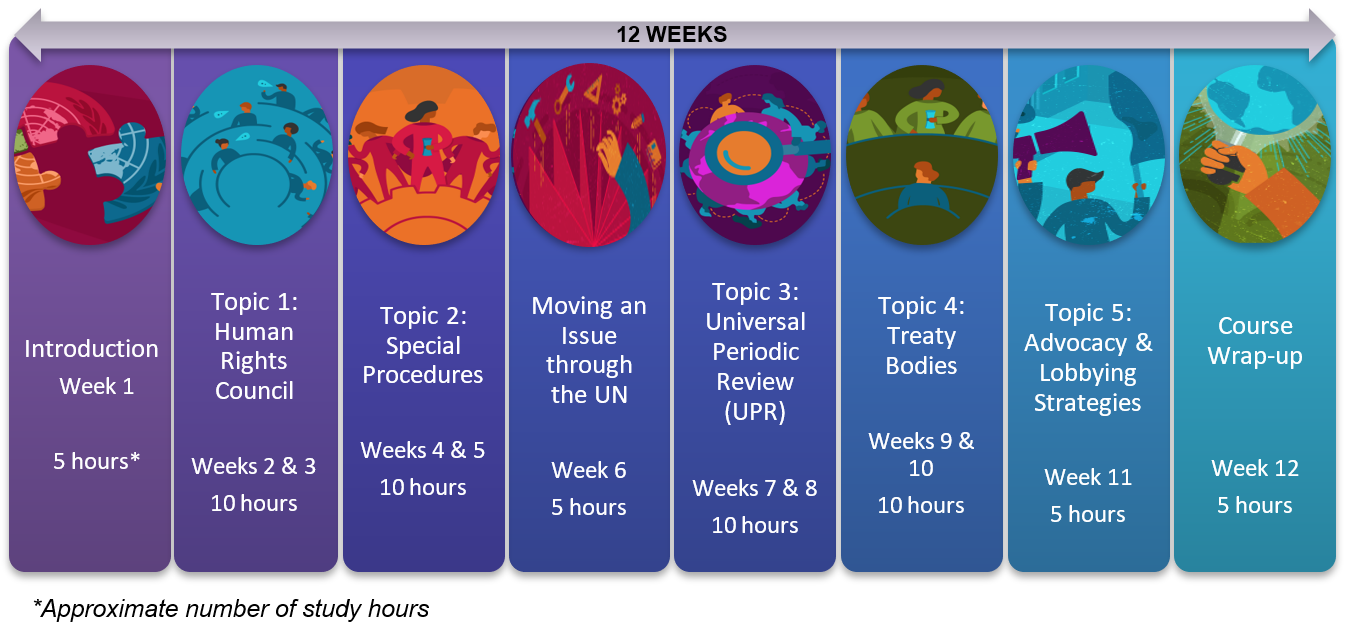
The 12-week course allows defenders to continue their vital work on the ground, while diving into the inner workings of each key UN human rights mechanism, and gaining first-hand experience from advocates and UN staff on how civil society can strategically engage in the international human rights space.
By participating in HRDAP, defenders:
Gain knowledge and tools, which they can use to ensure their voice is central in international human rights decision-making
Explore and compare the benefits of engagement with the Human Rights Council, the Special Procedures, the OHCHR, the UPR and the Treaty Bodies, and examine how they can use them to bolster their work at the national level
Develop strategies and lobbying techniques to increase the potential of their national and regional advocacy work
During the last training, 19 human rights defenders from 17 countries took part in the programme. At the end of the training, 100% of those surveyed were satisfied with the programme, with 82% indicating they were “very satisfied”. Find out more about what they learnt here.
This programme is directed at experienced human rights defenders in non-governmental organisations, with existing advocacy experience at the national level and some prior knowledge of the international human rights system. ISHR supports, and promotes solidarity with and between, defenders working in the following areas or contexts, which we recognise as intersectional and interdependent:
Equality, dignity and non-discrimination
Environmental justice and sustainability
International accountability for the repression of human rights defenders
At the heart of human rights lie the principles of equality and non-discrimination. Equality has the power to help break cycles of poverty; it can give young people the world over the same opportunities; it can help in advancing the right to a healthy environment; it can help tackle the root causes of conflict and crisis.
Equality “means that we embrace our diversity and demand that all be treated without any kind of discrimination,” says UN Human Rights High Commissioner Michelle Bachelet. On Human Rights Day, we are calling for a new social contract. This means addressing pervasive inequalities and structural discrimination with measures grounded in human rights. It requires renewed political commitment, the participation of all, especially the most affected, and a more just distribution of power, resources and opportunities.
Equality and non-discrimination are the key to prevention of some of the biggest global crises of our time. Human rights have the power to tackle the root causes of conflict and crisis, by addressing grievances, eliminating inequalities and exclusion and allowing people to participate in decision-making that affects their lives. Societies that protect and promote human rights for everyone are more resilient and sustainable, and stand better equipped to weather unexpected crises such as pandemics and the impacts of the climate crisis. As we continue on the path towards the 2030 Agenda for Sustainable Development, and countries’ commitments to leave no one behind, we must strive for a world where a life of equality in dignity and rights is a lived reality for all.
—–
Bertrand G. Ramcharan on this occasion wrote for the Universal Human Rights Group in Geneva a blog post: Human Rights Day 2021: protect the right to be as well as the right to become
..What the Universal Declaration sought to do, seventy-three years ago, was to invite all governments to pursue human rights strategies of governance. That is to say, government policies and laws should take the precepts of the Universal Declaration as their basic starting point, and governments should be held accountable against those standards.
Human Rights Day this year is being commemorated at a time when the present and the future are joined together as perhaps at no other time in the history of the UN. The world is simultaneously facing a range of critical human rights crises, including a global pandemic, a biodiversity crisis, a pollution crisis, and a climate crisis. The human rights challenges presented by these crises overlay existing discrimination and inequality.
Regarding climate change, the recent Glasgow conference witnessed the tensions between those who fervently believe that the use of fossil fuels must be halted and those who equally fervently plead that they cannot feed and take care of their peoples if they precipitously stop the use of fossil fuels.
The Universal Declaration of Human Rights provides the reference points, the frame of principles, for thinking through, formulating, and implementing policies on challenges such as these. It is a crucial document for every country.
The fourth principle is the rule of law, enshrined, among others, in article 10 of the Universal Declaration: ‘Everyone is entitled in full equality to a fair and public hearing by an independent and impartial tribunal.’ The rule of law must be respected everywhere. In many countries it is not.
In our times, both the right to be and the right to become are under serious threat. On this Human Rights Day, the eight principles of the Universal Declaration enumerated above can help humanity protect the right to be as well as the right to become.
———-
For Human Rights Day 2021, award-winning filmmaker Shred Shreedhar has planned to release his animated short Reena Ki Kahaani which talks about human trafficking. The short is made for all age groups and is based on a real-life incident. Directed by Shreedhar, animation and creative direction was done by Ashish Wagh and PS Jayahari took care of the music.
“Reena Ki Kahaani is based on the true story of Reena (name changed), a survivor of human trafficking. She got sold into the market of flesh trade on grounds of false promises only to be rescued later by Vihaan, the anti human trafficking NGO,” Shred Creative Lab director Shreedhar told AnimationXpress in an email interview.
He revealed that they chose ‘folk as an art style to connect to the region from where the story originated’. “It helped in making the story more relatable. The former National Geographic Channel India creative VP hopes that with this film, a heinous crime like human trafficking gets talked about more in the mainstream media.
About choosing animation as a medium, Shreedhar said, “Animation as a format is visually appealing to children as well as adults. The purpose was for the film and its message to reach out to not only adults and caregivers but children as well; so a difficult topic was made palatable for all age groups through an animated film so that the dangers are understood.”
According to him, there wouldn’t have been a better day to highlight this reassuring story of courage and human grit in the face of a brutal violation of human rights and spirit. “Nothing celebrates Human Rights Day as the rise and triumph of the human spirit in Reena’s story,” he concluded.
Reena Ki Kahaani, the animated short film of nearly 10 minutes will be released on Shred Creative Lab’s YouTube Channel and other social media handles.
When the United Nations High Commissioner for Refugees (UNHCR), feels the need to speak out publicly – as it did on 22 November 2021 – it must be serious: It said that it deplored Thailand’s deportation of a Cambodian refugee, which occurred only ten days after the authorities deported two other Cambodian refugees. This action contravenes the principle of non-refoulement, which obliges States – including Thailand – not to expel or return people to a territory where their life or freedom would be threatened.
On 19 November, the Cambodian refugee was arrested. UNHCR immediately notified the authorities of the individual’s refugee status and urged the Government not to return the individual to Cambodia over serious concerns for the safety of the refugee. The refugee was held in a detention centre in Aranyaprathet overnight and deported to Cambodia the following day, on 20 November.
“We are extremely alarmed by this trend of forcibly returning refugees to Cambodia, where they face a serious risk of persecution. Given recent developments, we are very concerned about the safety of UNHCR recognised Cambodian refugees in Thailand,” said Gillian Triggs, UNHCR’s Assistant High Commissioner for Protection.
“We urge the Royal Thai Government to refrain from deporting recognized refugees and to abide by its international obligations, particularly the principle of non-refoulement. UNHCR continues to offer its full support to the Government in ensuring the protection of those in need in Thailand,” she added.
UNHCR is seeking urgent clarification from the Thai authorities regarding the circumstances leading to this most recent deportation and the fate of those returned in Cambodia. UNHCR exhorts Cambodian authorities to uphold international human rights standards and to allow human rights organisations access to the deportees.

 w
w 


 Hans Thoolen on Human Rights Defenders and their awards