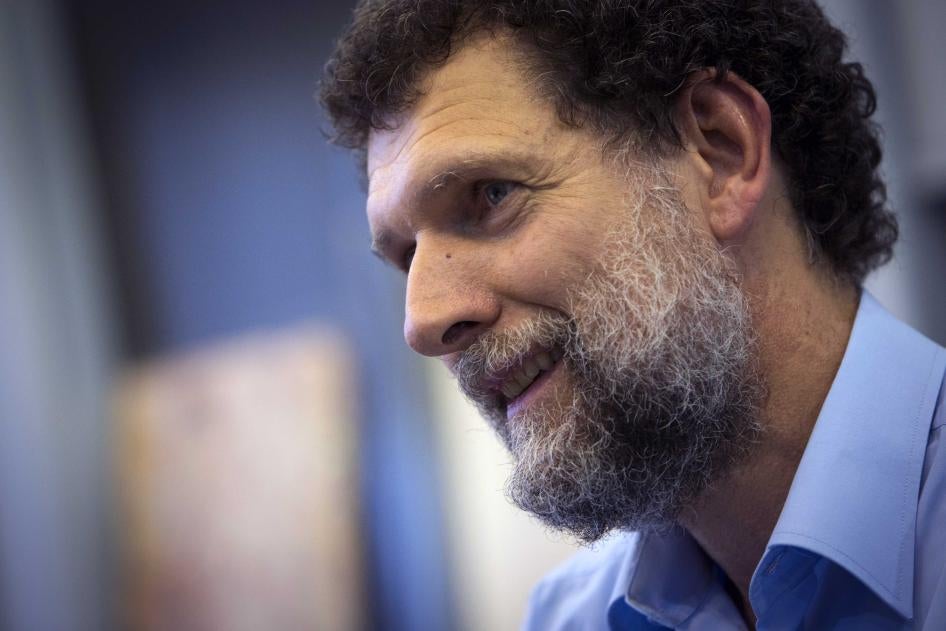
The court found in Kavala v. Türkiye, a case brought by the Council of Europe’s Committee of Ministers, that Turkey failed to fulfil its obligation under Article 46(1) of the European Convention on Human Rights to comply with its judgment issued on December 10, 2019. The judgment is an important step toward accountability for Turkey’s systemic disregard for the convention system and as recognition of the urgency of implementing the court’s order to release Kavala.
“This is the only second time, after Mammadov v. Azerbaijan, that the ECtHR has ever conducted infringement proceedings and determined that a member state has not complied with a European Court judgment,” said Helen Duffy of the Turkey Litigation Support Project.
“It is an acknowledgement of Turkey’s ever-deepening rule of law crisis, which has involved seriously undermining the Convention system and the escalating use of criminal law for political purposes.”
In its new judgment, the court held that “Türkiye has failed to fulfil its obligation under article 46§1 to abide by the Kavala v. Türkiye judgment of 10 December 2019.”
The European Court underlined that:
Its finding of a violation of Article 18 taken together with Article 5 in the Kavala judgment had vitiated any action resulting from the charges related to the Gezi Park events and the attempted coup. It is nonetheless clear that the domestic proceedings subsequent to the above judgment, which resulted first in an acquittal and then a conviction, have not made it possible to remedy the problems identified in the Kavala judgment (para. 172).
The Grand Chamber judgment addresses these practices of the Turkish authorities by stating that “the measures indicated by Türkiye do not permit it to conclude that the State Party acted in ‘good faith,’ in a manner compatible with the ‘conclusions and spirit’ of the Kavala judgment, or in a way that would make practical and effective the protection of the Convention rights which the Court found to have been violated in that judgment” (para. 173).
Aisling Reidy, senior legal adviser at Human Rights Watch said: “As the European Court has now confirmed Turkey’s failure to execute the 2019 Kavala judgment, the Committee of Ministers needs urgently to take all feasible measures to ensure the judgement is respected and Kavala released“.
The Committee of Ministers is expected to resume its supervision process and take more robust steps to discharge its mandate of ensuring the necessary individual and general measures are taken by Turkey to implement the court’s ruling.
Now, it is up to the Committee of Ministers, which oversees the implementation of the ECtHR rulings, what measures to take against Turkey after the country failed to comply with the court’s ruling. This could lead to Turkey’s suspension from the Council of Europe. In anticipation, the Foreign Ministry of Turkey said they expected the Committee of Ministers “to act without bias and with common sense” in a statement.
The International Court of Justice (ICJ) on 22 July, 2022, rejected Myanmar’s preliminary objections to the case brought by Gambia under the international Genocide Convention. The case concerns Myanmar’s alleged genocide against the ethnic Rohingya population in Rakhine State, with a focus on military operations launched in October 2016 and August 2017.
Gambia filed the case before the ICJ in November 2019 alleging that the Myanmar military committed the genocidal acts of “killing, causing serious bodily and mental harm, inflicting conditions that are calculated to bring about physical destruction, imposing measures to prevent births, and forcible transfers … intended to destroy the Rohingya group in whole or in part.”
“The ICJ decision opens the door toward an overdue reckoning with the Myanmar military’s murderous campaign against the Rohingya population,” said Elaine Pearson, acting Asia director at Human Rights Watch. “By holding the military to account for its atrocities against the Rohingya, the World Court could provide the impetus for greater international action toward justice for all victims of the Myanmar security forces’ crimes.”
In February 2022, the ICJ heard Myanmar’s four objections challenging the court’s jurisdiction and Gambia’s legal standing to file the case, as well as Gambia’s response.
In response to Myanmar’s argument that Gambia has no standing to bring the case due to its lack of ties to Myanmar or the Rohingya, the court concluded, “All the States parties to the Genocide Convention thus have a common interest to ensure the prevention, suppression and punishment of genocide, by committing themselves to fulfilling the obligations contained in the Convention.”
By rejecting the preliminary objections, the ICJ is allowing the case to proceed on the merits to examine Gambia’s genocide allegations against Myanmar. Myanmar will now have to submit its response to Gambia’s main arguments filed in October 2020 detailing its case.
The ICJ case is not a criminal case against individual suspects, but a legal action brought by Gambia against Myanmar alleging that Myanmar bears responsibility for genocide as a state.
In December 2019, the court held hearings on Gambia’s request for provisional measures to protect the Rohingya remaining in Myanmar from genocide, which it unanimously adopted in January 2020. The provisional measures require Myanmar to prevent all genocidal acts against the Rohingya, to ensure that security forces do not commit acts of genocide, and to take steps to preserve evidence related to the case. The court also ordered Myanmar to report on its compliance with the provisional measures every six months.
Myanmar is legally bound to comply with the order. However, Human Rights Watch and other groups have continued to document grave abuses against the 600,000 Rohingya remaining in Myanmar, contravening the provisional measures.
The court’s decision on Myanmar’s preliminary objections should encourage the United Kingdom, Netherlands, Canada, and other concerned governments to support Gambia’s case through formal interventions to bolster the legal analysis on specific aspects of the Genocide Convention as it relates to the Rohingya, Human Rights Watch said.
Under article 41(2) of the ICJ Statute, the court’s order for provisional measures is automatically sent to the UN Security Council. As the fifth anniversary of the military’s atrocities against the Rohingya approaches, Security Council members should take steps to address the failure to secure justice and security for the Rohingya. Council members should work to adopt a resolution that gives the International Criminal Court (ICC) a mandate over the situation in Myanmar and severs the junta’s supply of arms and revenue, even if the resolution would be vetoed by Russia or China.
As the Myanmar armed forces continue to carry out atrocities against civilians and ethnic minorities, the ICJ remains one of the few available paths for holding the military to account. Ethnic groups and human rights defenders have aligned in Myanmar to push for the establishment of democratic rule, efforts that are amplified by the pursuit of justice at the ICJ.
“Concerned governments seeking to be leaders for accountability in Myanmar should formally intervene in the Genocide Convention case,” Pearson said. “The case provides an important opportunity to scrutinize the Myanmar military’s abusive policies and practices that have preserved its power over decades.”
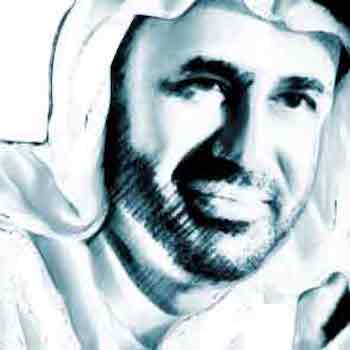
On 22 July 2022 Brian Dooley and Quinn Fulton wrote for Human Rights First a post: “Ten Years But Still Counting – UAE Fails To Release Jailed Activist Al-Roken“
Human Rights First has covered their cases and others for many years, and urged a succession of U.S. administrations to use the influence they have accrued – not least through supplying the Emirates with billions of dollars of weapons – to push for the release of jailed human rights activists there.
The U.S. government knows exactly who Al-Roken is and what he stands for. He has been featured in a succession of U.S. reports describing him as “a human rights activist” (2007), “a lawyer…reportedly held incommunicado and without charge for unknown reasons” (2012), and a “lawyer, academic and human rights defender” (2021).
In 2015, Human Rights First wrote about his wrongful imprisonment, and noted in a report that year on human rights in the Emirates that “Former heads of the Jurists Association are now political prisoners, including renowned constitutional scholar Dr. Mohammed Al-Roken. He is one of dozens serving long prison sentences after being convicted in mass trials.”
We have continued to raise cases through the media of human rights defenders wrongfully detained in the Emirates, and we successfully campaigned for the release of American citizens Mohammed and Kamal Al Darat when they were tortured and detained in the Emirates for over a year.
When calling for Al-Roken’s release, the UN Special Rapporteur on Human Rights Defenders noted that he was jailed on charges of “plotting against the government,” and “subjected to intermittent periods in solitary confinement, allegedly without justification or explanation.” The UN Working Group on Arbitrary Detention said Al-Roken “is reportedly well known for defending victims of human rights violations in the United Arab Emirates,” and deemed his detention as arbitrary.
We know that getting people who have been wrongfully detained in the Emirates out of prison is difficult, but it sometimes can be done if there is substantial international public pressure – as with the Al Darats and the British academic Matthew Hedges.
That’s why it’s important that the Biden administration speaks out publicly about Al-Roken. Our years of advocacy experience tells us that behind-the-scenes diplomacy is unlikely to work..
Michelle Langrand wrote in Geneva Solutions of 20 July 2022 that the “Michel Forst was elected special rapporteur for environmental defenders in June by the Aarhus Convention on environmental information.”
The newly appointed special rapporteur on environmental defenders Michel Forst will be able to intervene when environmentalists in the pan-European region are at risk of being attacked or penalised.
Defending the planet’s health can be a dangerous line of work – at times deadly. Two thirds of defenders murdered worldwide are environmental advocates, with 227 killings reported in 2020. While attacks in Europe and Central Asia are not as frequent as in other parts of the world, industries and governments publicly exposed for polluting or turning a blind eye to environmental crimes have been known to retaliate with harassment, legal action and even violence.
Environmental defenders in Ukraine documenting the impacts of the war or campaigners in Switzerland practising civil disobedience to alert the public about the climate threat can now turn to a UN expert to rapidly intervene on their behalf.
The French 71-year-old was UN special rapporteur on human rights defenders from 2014 to 2020.
Forst’s plans for the next four years are still being concocted. “It’s a very new mandate,” he told Geneva Solutions. To develop the tools and mechanisms he’ll be using throughout his term, he won’t have to look very far.
“I’ll be looking at how the working methods developed by the Office of High Commissioner of Human Rights could be implemented in this mandate, for instance, receiving complaints, sending communications to states when we know that rights have been violated and issuing public statements as well,” he said.
The complaints system will be one of Forst’s flagship measures and a chance to take it one step further. When UN experts under the Human Rights Council receive a complaint and write to a state asking for an explanation, the government has 60 days to reply, rendering it ineffective when a person’s life or security is at risk, he noted.
“We need to understand how it could be made effective because rapid response means that the special rapporteur has the possibility to intervene immediately by different means.”
The expert will also resort to what he calls “quiet diplomacy”, meeting with ambassadors both in Geneva and abroad, where there might be “systemic attacks against defenders”.s
Forst was elected by consensus by the parties to the Aarhus convention – an encouraging start for the expert. But not all governments will be easy to approach when they’re the ones in the hot seat. The most notable one is Belarus, sanctioned last year by fellow party members for closing down an anti-nuclear NGO that was collaborating with an expert body of the Convention. The country has deployed one of the most severe crackdowns in recent years in the region against civil society, and is on Forst’s to-do list. The country did not support the idea of creating a mechanism in the beginning, according to observers, although it did not oppose the proposal during the formal adoption last year. Last week, it was a no-show for the French expert’s nomination.
“Belarus is one of the last countries that I visited as special rapporteur on human rights defenders and on that occasion I met with a number of environmental defenders. I also had lengthy discussions with both the minister for foreign affairs and the minister of justice about the cases and to look at how my mandate at that time could help support government efforts to convict the perpetrators of attacks against defenders,” he said.
“Security forces employed by companies are the main perpetrators against environmental defenders. Part of the mandate is not only to speak to states, but also to companies and to draw attention to them, and to the countries in which they have their seat, over cases of maladministration, corruption or acts against defenders,” Forst said.
His efforts could add pressure on European countries to toughen corporate responsibility laws that could help protect defenders in countries beyond the convention’s jurisdiction. Within the country borders of the agreement, campaigners would also like to see Forst tackle legal abuses against environmental defenders that fall in a grey zone.
Yves Lador, Geneva representative for EarthJustice, told Geneva Solutions: “We see a worrying trend in democratic countries of targeting environmental activists directly through laws through different levels.
As a universal language that transcends cultural barriers, music is a medium where people and artists alike can have their voices heard in a manner that words alone cannot. Music has often been used to showcase pressing political and societal issues, including the promotion and protection of human rights. These 15 artists are listed in a post by Human Rights Carreers as examples of those who have used their musical talent and platform to share awareness of human rights issues across the world and bring a voice to marginalized members of society. Many readers will have their own preferences.
Pete Townshend is an English musician, songwriter and vocalist of “the Who” rock band, one of the most influential rock ensembles during the 1960s and 1970s. Alongside his career in the rock music industry, Townshend has a long history of charity and philanthropic work for human rights issues, advocating for greater drug rehabilitation and activism for children’s rights. In 1979, Townshend was the first musician to perform for Amnesty International’s Human Rights Concerts and inspired other renowned rock musicians to support the human rights cause. Townshend is quoted saying, “Amnesty does things that I can’t do in my work. It deals with the specifics of injustice… It makes them public. It was 1979 that I appeared at ‘The Secret Policeman’s Ball’… It was amazing subsequently to see what ‘The Secret Policeman’s Ball’ triggered. Quite big names got involved in supporting Amnesty. And it became apparent that big names in music and Amnesty melded very well. It’s good to see that what I did kicked that off…”
Sting
Performing under the stage name, “Sting”, Gordon Sumner is a Grammy-Award winning guitarist, vocalist and songwriter who is renowned for his work as both a solo musician and an ensemble musician with the rock band “the Police” between 1977 – 1984. Sting is heavily involved in human rights activism, having written songs inspired by his concern for world hunger and oppressive political regimes, and has also extended his activism beyond music by writing an open letter for the decriminalization of drug possession in the United Kingdom in 2011. He has also signed several petitions against the death penalty in Belarus and has cancelled concerts in response to human rights issues in several countries. Sting’s humanitarian activism has been recognized by Amnesty International and he has performed for the NGO’s Human Rights Concerts on several occasions.
Bono
Described as the world’s best known philanthropic performers and most politically effective celebrity of all time by the National Journal, Bono (Paul Hewson) has worked extensively as a rock musician in the band U2, a philanthropist and human rights activist. Focusing much of his efforts into advocating the fight against AIDS and extreme poverty in Africa, Bono has lobbied governmental entities to adopt human rights-based policies under his positions as the co-founder of ONE, a global movement campaigning to end extreme poverty. More recently, Bono raised awareness of vaccination against COVID-19 and vaccine inequality around the world and in April 2022, Bono recorded an acoustic rendition of “Walk On” by his band, U2, for the Global Citizen’s Stand Up for Ukraine livestream, urging global leaders to support Ukrainian refugees. Bono was also invited by Ukrainian president Volodymyr Zelenskyy to perform in a metro station in Kyiv, showing his solidarity to Ukraine under invasion from Russia. See also: https://www.trueheroesfilms.org/thedigest/laureates/292E53F2-AE54-E5BA-BE5B-17ACD95D9B40
Awarded “The Ambassador of Conscience Award” by Amnesty International in 2016, Angélique Kidjo is a Beninese singer-songwriter renowned for her creative music videos and unique musical style that integrates Afropop, Congolese rumba, jazz and Latin music genres. Within her 30-year musical career, Kidjo has been a prominent advocate for the expression of freedom, the education of girls in Africa and has expressed concerns regarding female genital mutilation and has worked as a UNICEF Goodwill Ambassador since 2002. Alongside her major ambassador roles, Kidjo is the founder of The Batonga Foundation, a non-profit organization that empowers women in Benin and upskills these women for socio-economic mobility. See also: https://www.trueheroesfilms.org/thedigest/laureates/B3AF6E27-B7AD-8D1D-C09E-B7EAA953F3C3
Lang Lang
Described as one of the most exciting and accomplished classical musicians in the world, classical pianist Lang Lang has not only revolutionized the classical music industry but has also used his music as a way to advocate for human rights globally. Appointed as a UNICEF Goodwill Ambassador and a Messenger of Peace, Lang Lang primarily advocates for children’s rights and access to education through concerts that raise funds for UNICEF and other humanitarian crises.
Buffy Sainte-Marie
As an Indigenous Canadian singer-song writer and composer, Buffy Sainte-Marie’s music primarily revolves around the issues faced by the Indigenous peoples of Canada and the United States. Buffy began her advocacy efforts for the protection of Indigenous artists, performers and their intellectual property by establishing the Nihewan Foundation for Native American Education in 1966 and has moved on to founding The Creative Native Project, an initiative which seeks to empower Indigenous youth in the performing arts. More recently, Buffy was awarded the Allan Slaight Humanitarian Spirit Award and was invited to the Canadian Music Week in 2020.
Maxim Vengerov
Hailed as one of the most talented violinists in the 21st century, Maxim Vengerov was the first classical musician to be appointed as a UNICEF Goodwill Ambassador in 1997. Alongside his musical accomplishments, Vengerov has focused much of his advocacy on the promotion of children’s education and rights and has visited countries such as Turkey, Uganda and Bosnia and Herzegovina representing UNICEF. Vengerov has also performed at #EndViolence events in Bucharest, Romania for UNICEF Romania.
Bruce Springsteen
Bruce Springsteen is an American singer-song writer, known as one of the original founders of the heartland rock genre, which combines elements of mainstream rock music with narratives of the American working class. Throughout his musical career, Springsteen has been a long advocate for LGBT rights, the empowerment of women and democracy, using his international platform to raise awareness of social issues. Springsteen was first invited to perform for Amnesty International in 1988 and has since continued his advocacy of human rights through his music.
Nadya Tolokonnikova
As the leader of the Russian feminist punk band Pussy Riot, Nadya Tolokonnikova uses her musical platform to spread awareness of human rights issues through her music. As a passionate feminist, Tolokonnikova delved into themes of sexism and rape culture in her newest EP, Panic Attack, and has agreed to donate a portion of the proceeds from her EP to a shelter for domestic violence in Russia. Tolokonnikova herself was recognized by a political prisoner by the Union of Solidarity with Political Prisoners and Amnesty International described her as a “prisoner of conscience” due to the “severity of the response of Russian authorities.”
Piera Van de Wiel
Piera Van de Wiel is a British singer and composer who uses her music as a platform for her human rights advocacy. During the COVID-19 pandemic, Van de Wiel released a single, “Used”, to raise awareness of the increase in domestic violence and abuse against women during the pandemic with the support of the United Nations Spotlight Initiative. Alongside her musical pursuits, Van de Wiel is the founder of the non-profit organization, Stronger With Music, a movement that works towards achieving the UN Sustainable Development Goals.
Evan Greer
Evan Greer is a trans/genderqueer artist based in Boston who composes acoustic songs that advocate technological security, LGBTQ rights and movements for justice and liberation. Alongside their musical accomplishments, Greer is the founder of a non-profit organization called Fight for the Future, which aims to secure digital rights and banning unethical technological practices.
Max Richter
German-British composer and pianist Max Richter is one of the most prominent composers of the 21st century, boasting over a billion streams of his music and a million album sales throughout his 25-year musical career. Richter has previously responded to the Iraq War, the 2005 London terrorist attacks and the Kosovo War through his music and his most recent album, “Voices” takes inspiration from the United Nations Declaration of Human Rights. All ten of the tracks (except for the final song) incorporate text from the 1948 UNDHR document and Richter himself has stated that the album is a response to the human rights abuses around the world and the need for social justice and equality of humans around the world. See: https://humanrightsdefenders.blog/2020/12/09/max-richters-voices-to-be-broadcast-for-human-rights-day-by-34-countries/
Hans Zimmer
Composer of award-winning films such as The Dark Night, The Lion King and The Rock, Hollywood composer Hans Zimmer has established himself as one of the most eminent film composers in history. Zimmer was invited to compose an anthem to celebrate Amnesty International’s 50th anniversary, titled “One More Voice for Freedom” in commemoration for International Human Rights Day. Zimmer himself is quoted saying “it was a privilege to create this piece of music for a cause which is so close to our hearts” and that it is my “hope that the anthem will inspire people to support Amnesty’s vision of a world where fundamental rights are protected for everyone. We should all join Amnesty in standing up for justice, freedom and human rights”.
Alicia Keys
Dubbed as the “Queen of R&B”, American singer-song writer Alicia Keys has intertwined her passion for music with human rights activism through her extensive philanthropic work in her musical career. Keys is the co-founder of the non-profit organization, Keep a Child Alive, that provides treatment and social support to children and families affected by HIV in Africa and India. As part of her work in Keep a Child Alive, Keys host an annual fundraising gala called the Black Ball, where she invites major musical artists to perform at the event to raise funds for HIV and AIDS activism. See: https://www.trueheroesfilms.org/thedigest/laureates/e062efc4-e1ca-47c7-b53d-ec1a018d3bb9
The French Development Agency (AFD) organised an international conference to consider new ideas and approaches to linking human rights and development
Report by Marc Limon, Executive Director of the Universal Rights Group on July 8, 2022
Against a background of the retreat of human rights worldwide, growing doubts about the ability of the international community to achieve the Sustainable Development Goals (SDGs) by 2030, growing inequalities, and the ecological and climate crises, on Human Rights Day 2021 (10 December) the French Development Agency (AFD) organised an international conference on ‘Human Rights and Development.’ It brought together 500 actors from the development community, covering both the global North and South, and considered how development actors can play a key role in securing improvements in the enjoyment of human rights while at the same time recharging progress towards the achievement of the SDGs ‘leaving no one behind.’
Key conclusions
Warning of the risk of failure of the 2030 Agenda if development actors do not promote a development model based on human rights, participants unanimously recommended moving away from both a solely economic vision of development and a purely normative approach to human rights. In that regard, they called for more concerted action to enhance development actors’ contribution to the realisation of human rights on the ground, and to develop more robust indicators for measuring the impact of the human rights based approaches (HRBA).
Notwithstanding, several recalled the challenges involved in convincing partners of the value-added of integrating human rights with the development agenda, and recommended undertaking research actions to provide evidence.
Panellists further emphasised that human rights constitute a universal framework that goes beyond the North/South divide and is applicable to all. They noted a strong demand for improvements in the enjoyment of human rights in the global South as evidenced by growing social movements often led by young people. The universal nature of human rights makes it possible to fight against arbitrariness by guaranteeing a minimum essential base for everyone without discrimination. The international corpus of human rights contributes, in this sense, to reducing inequalities, so that everyone can lead a decent and dignified life. This must be reflected in the fiscal resource mobilisation policies of States, but also in their budgetary policies for social investment in health, education and social protection. States and development actors must also address the structural causes of inequality, which include discrimination based on gender, sexual orientation, economic status, and minority status, all of which are prohibited under international human rights law. For this reason, development actors are invited to contribute to the collection of reliable data on vulnerable population groups, in order to design projects with a non-discriminatory and inclusive approach.
Speakers also agreed on the need to support civil society and preserve its space. Its role in observing, documenting, and monitoring the implementation of States’ human rights obligations is essential. It is therefore crucial to establish a culture of dialogue between a State/government and civil society when elaborating public policies, and to strengthen the capacity of CSOs to participate effectively. ‘Power should be fluid, distributed throughout society, shared and exercised collectively,’ argued one speaker.
In terms of business and human rights, participants recalled companies’ duty of care to prevent and remedy human rights violations in the course of their activities. At the international level, this duty is based on a voluntary approach which, it was argued, showing signs of strain – few companies actually mobilise vigilance mechanisms in their value chains. Nevertheless, there is a progressive movement towards the adoption of national legislation in countries where multinational companies are headquartered to make it compulsory to draw up and implement vigilance plans that cover the impact of their activities, and those of the actors integrated into their supply or value chains, and covering both human rights and the environment. In this way, the objective is to spread human rights throughout the value chain, starting ‘from the top,’ and to contribute to guaranteeing the enjoyment of human rights of those affected by business activities. However, this raises the challenge of the cost and capacity to implement the principles of the duty of care by all actors in the value chain, in particular those in the Global South. Development actors have a role to play in supporting them. A need was also identified to strengthen the dialogue between legislators in the countries where companies are headquartered and those in which they operate in order to build coherent and complementary legislative frameworks.
Beyond companies’ duty of care, the private sector also plays a key role in contributing to development. Speakers called for multinational companies to be held accountable so that, in addition to respecting human rights, they contribute more directly to reducing inequalities and poverty.
Throughout the conference, the discussions have also highlighted the inseparable links between the realisation of human rights and the protection of the environment. These two goals are not mutually exclusive, as the rights of nature guarantee the enjoyment of human rights. It is thus crucial to promote an approach to development that is not based solely on human rights, but include the rights of all living things. This is especially important, it was noted, for young people and future generations.
In this context, the panellists made several recommendations, including the need to develop and disseminate knowledge about human mobility due to climate change. They recommended supporting climate change mitigation and adaptation projects, and called for investment in social protection and parametric insurance mechanisms to mitigate shocks from loss and damage that are already unavoidable. Development actors were also called upon to finance restoration and rehabilitation mechanisms to remedy non-economic damages such as the loss of cultural heritage or biodiversity.
Finally, participants unanimously agreed that indigenous peoples are key actors in sustainable development. They represent 5% of the world’s population but are the custodians of 80% of the world’s biodiversity. They play a vital role on all continents – in the Amazon alone, they directly influence 48% of the land surface. The protection of the environment cannot and must not be done without them. They should be treated as true co-decision-makers in the management of these spaces and resources, in order to fully respect their free, prior and informed consent, as required under international law. Development actors should therefore seek to empower indigenous peoples by supporting the full enjoyment of their rights.
Each year the Secretary-General prepares a report that documents acts of intimidation and reprisals aimed at creating fear or blocking access to the United Nations of people who defend human rights. With ISHR’s #EndReprisals Database, users can more easily navigate the information contained in those reports, and research, analyse, and take action on the cases or situations so that together we can #EndReprisals. The webinar will introduce users to the database and its functionalities.
Register now for Webinar on 13 July 2022 15:00-16.00 pm CEST
This year’s report published at the halfway point of 2022 shines a light on a time of immense upheaval and contestation. The report finds hope, however, in the many mobilisations for change around the world: the mass protests, campaigns and people’s movements for justice, and the many grassroots initiatives defending rights and helping those most in need.
The report identifies five key current trends of global significance:
Rising costs of fuel and food are spurring public anger and protests at economic mismanagement
Democracy is under assault but positive changes are still being won
Advances are being made in fighting social inequality despite attacks
Civil society is keeping up the pressure for climate action
Current crises are exposing the inadequacies of the international governance system.
Governments around the world are failing to protect people from the impacts of massive price rises worsened by Russia’s invasion of Ukraine. Public anger at a dysfunctional economic system, poverty and economic inequality and corruption is rising. Mass protests are the result. In Sri Lanka, widespread protests against economic mismanagement led to resignation of the prime minister. In Iran people are demanding fundamental change as food prices soar. In Kazakhstan over 200 people were killed with impunity following protests over fuel price rises. But people will continue to protest out of necessity even in the many countries where fundamental freedoms are repressed and state violence is inevitable.
Institutions and traditions of democracy are under increasing attack. Coups are imperilling hard-fought gains. The military has gained power in multiple countries, including Burkina Faso and Sudan. In several others, including El Salvador and Tunisia, elected presidents are removing democratic checks on power. Entirely fraudulent elections have been held in countries as different as Nicaragua and Turkmenistan. Autocratic nationalists have triumphed in elections in countries including Hungary and the Philippines. But at the same time there have been successful mobilisations to defend democracy, not least in theCzech Republic and Slovenia, where people voted out political leaders who fostered divisiveness in favour of fresh and broad-based alternatives. Progressive leaders promising to advance social justice have won power in countries such as Chile and Honduras. In many contexts, including Costa Rica andPeru, a prevailing sentiment of dissatisfaction is leading to a rejection of incumbency and willingness to embrace candidates who run as outsiders and promise disruption.
In politically turbulent times, and despite severe pushback by anti-rights groups, progress has been achieved in advancing women’s and LGBTQI+ rights. The USA, where neoconservative forces are emboldened, is ever more isolated on sexual and reproductive rights as several other countries in the Americas, including Colombia and Mexico, have eased abortion restrictions following civil society advocacy. Opportunistic politicians continue to seek political advantage in vilifying LGBTQI+ people, but globally the normalisation of LGBTQI+ rights is spreading. Most recently, the people of Switzerland overwhelmingly voted in favour of an equal marriage law. Even in hostile contexts such as Jamaica important advances have come through civil society’s engagement in regional human rights systems. But when it comes to fighting for migrants’ rights, only Ukrainian refugees in Europe are being received with anything like the kind of compassion all such people deserve, and otherwise the dominant global sentiment is hostility. Nonetheless, a new generation is forging movements to advance racial justice and demand equity for excluded people.
A young and diverse generation is the same social force that continues to make waves on climate change. As extreme weather gets more common, the brunt of the climate crisis continues to fall disproportionately on the most excluded populations who have done the least to cause the problem. Governments and companies are failing to act, and urgent action on emissions cuts to meet the size of the challenge is being demanded by civil society movements, including through mass marches, climate strikes and non-violent civil disobedience. Alongside these, climate litigation is growing, leading to significant legal breakthroughs, such as the judgment in the Netherlands that forced Shell to commit to emissions cuts. Shareholder activism towards fossil fuel firms and funders is intensifying, with pension funds coming under growing pressure to divest from fossil fuels.
Russia’s war on Ukraine is the latest crisis, alongside recent conflicts in the Sahel, Syria and Yemen, among others, to expose the failure of global institutions to protect people and prevent conflict. The UN Security Council is hamstrung by the veto-wielding role of Russia as one of its five permanent members, although a special session of the UN General Assembly yielded a resolution condemning the invasion. Russia has rightly been suspended from the UN Human Rights Council, but this peak human rights body remains dominated by rights-abusing states. If the UN is to move from helping to prevent crises rather than trying to react to them, effective civil society engagement is needed. The world as it stands today, characterised by crisis and volatility, needs a UN prepared to work with civil society, since civil society continues to seek and secure vital progress for humanity.
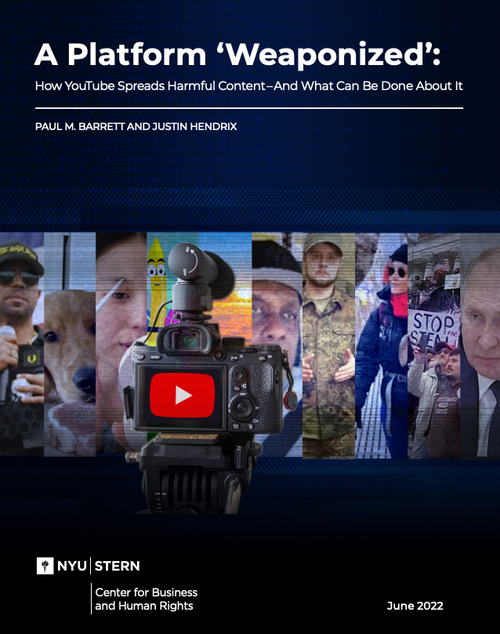
In June 2022, Paul M. Barrett and Justin Hendrix of NYU’s STERN Centre for Business and Human Rights came with a very timely report: “A Platform ‘Weaponized’:How YouTube Spreads Harmful Content—And What Can Be Done About It“. We know less about YouTube than the other major social media platforms. YouTube, with more than 2 billion users, is the most popular social media site not just in the United States, but in India and Russia as well. But because of the relative difficulty of analyzing long-form videos, as compared to text or still images, YouTube has received less scrutiny from researchers and policymakers. This in-depth report addresses the knowledge gap.
Like other major platforms, You Tube has a dual nature: It provides two billion users access to news, entertainment, and do-it-yourself videos, but it also serves as a venue for political disinformation, public health myths, and incitement of violence.
——————————————————————-
YouTube’s role in Russia illustrates this duality. Since Russia launched its invasion of Ukraine in February 2022, YouTube has offered ordinary Russians factual information about the war, even as the Kremlin has blocked or restricted other Western-based social media platforms and pressured foreign journalists in the country to silence themselves. But for years before the brutal incursion, YouTube served as a megaphone for Vladimir Putin’s disinformation about Ukraine and its relations with the West. Despite its heft and influence, less is known about YouTube than other major social media sites.
Does YouTube send unwitting users down a ‘rabbit hole’ of extremism?
In response to reports that the platform’s own recommendations were “radicalizing” impressionable individuals, YouTube and its parent, Google, altered its recommendation algorithm, apparently reducing the volume of recommendations of misinformation and conspiratorial content. But platform recommendations aren’t the only way people find potentially harmful material. Some, like the white 18-year-old accused of shooting and killing 10 Black people in a Buffalo, N.Y., grocery store, seek out videos depicting violence and bigotry. These self-motivated extremists can find affirmation and encouragement to turn their resentments into dangerous action.
A social media venue with global reach
Roughly 80% of YouTube traffic comes from outside the United States, and because of language and cultural barriers, the platform’s content moderation efforts are less successful abroad than at home. The report explores how YouTube is exploited by Hindu nationalists persecuting Muslims in India, right-wing anti-vaccine advocates in Brazil, and supporters of the military junta in Myanmar.
In Part 2, we examine YouTube’s role as the internet’s vast video library, one which has contributed to the spread of misinformation and other harmful content. In 2019, for example, YouTube reacted to com- plaints that its recommendations were pushing impressionable users toward extremist right-wing views. The company made a series of changes to its algorithms, resulting in a decline in recommendations of conspiratorial and false content. But recommendations are not the only way that people find videos on YouTube. A troubling amount of extremist content remains available for users who search for it. Moreover, YouTube’s extensive program for sharing advertising revenue with popular creators means that purveyors of misinformation can make a living while amplifying the grievances and resentments that foment partisan hatred, particularly on the political right.
In Part 3, we turn our attention to YouTube’s role in countries outside of the U.S., where more than 80% of the platform’s traffic originates and where a profusion of languages, ethnic tensions, and cultural variations make the company’s challenges more complicated than in its home market. Organized misogynists in South Korea, far-right ideologues in Brazil, anti-Muslim Hindu nationalists, and supporters of Myanmar’s oppressive military regime have all exploited YouTube’s extraordinary reach to spread pernicious messages and rally like minded users. [see also: https://humanrightsdefenders.blog/2020/11/02/bbc-podcast-on-the-framing-of-video-monk-luon-sovath/]
Recommendations to the U.S. government Allocate political capital to reduce the malign side effects of social media: President Biden’s off-the- cuff expressions of impatience with the industry aren’t sufficient. He ought to make a carefully considered statement and lend his authority to legislative efforts to extend federal oversight authority. Former President Obama’s recent speech at Stanford about disinformation provided a helpful foundation. Enhance the FTC’s authority to oversee social media: Some of the issues raised in this report could be addressed by a proposal we made in a February 2022 white paper—namely, that Congress should authorize the Federal Trade Commission to use its consumer protection authority to require social media companies to disclose more data about their business models and operations, as well as provide procedurally adequate content moderation.
To YouTube: Disclose more information about how the platform works: A place to start is explaining the criteria algorithms use to rank, recommend, and remove content—as well as how the criteria are weighted relative to one another. Facilitate greater access to data that researchers need to study YouTube: The platform should ease its resistance to providing social scientists with information for empirical studies, including random samples of videos. Expand and improve human review of potential harmful content: YouTube’s parent company, Google, says that it has more than 20,000 people around the world working on content moderation, but it declines to specify how many do hands-on review of YouTube videos. Whatever that number is, it needs to grow, and outsourced moderators should be brought in-house. Invest more in relationships with civil society and news organizations: In light of their contribution to the collapse of the advertising-based business model of many U.S. news-gathering organizations, the platforms should step up current efforts to ensure the viability of the journalism business, especially at the local level.
The NYU Center for Business and Human Rights began publishing reports on the effects of social media on democracy in the wake of Russia’s exploitation of Facebook, Twitter, and YouTube during the 2016 U.S. presidential campaign. We initially advocated for heightened industry self-regulation, in part to forestall government intervention that could lead to First Amendment complications. As the inadequacy of industry reforms has become clear, we have supplemented our calls for self-regulation with a proposal for enhancement of the Federal Trade Commission’s consumer protection authority to oversee the industry.
In Part 4, we offer a concise version of the FTC proposal, as well as a series of recommendations to YouTube itself. The report does not address the problem of YouTube hosting potentially harmful videos aimed at children and teenagers. This persistent phenomenon deserves continued scrutiny but is beyond the scope of our analysis.
The Office of the United Nations High Commissioner for Human Rights and 11 international and regional rights organisations have demanded that the government must immediately cancel its decision to deregister rights organisation Odhikar and allow the rights organisation to function without fear of reprisal.
Ravina Shamdasani, spokesperson for the UN High Commissioner for Human Rights, said in a press briefing in Geneva statement on Friday, ‘We are concerned by the Government of Bangladesh’s decision not to approve the renewal of registration for Odhikar, a prominent and respected human rights organisation in the country’.
She said, ‘We urge the government to immediately reconsider this decision, and to ensure that Odhikar has the ability to seek full judicial review of any such determination. We are further concerned that this decision will have a chilling effect on the ability of civil society organisations to report serious human rights violations to UN human rights mechanisms.’
Odhikar has documented and reported on rights violations for many years to the Office of the UN High Commissioner for Human Rights, UN Special Procedures mandate holders and human rights treaty bodies, she mentioned in the briefing available on the website of the UN body.
Intimidation and reprisals against Odhikar have been documented since 2013, and appear to have intensified, with accusations of ‘anti-state’ and ‘anti-government’ activities, she added.
‘There has been increased surveillance of its activities in recent months. The UN Secretary-General has also raised concerns about reprisals against Odhikar over the past decade for cooperating with the UN,’ she said.
On June 5, 2022, the bureau sent a letter to Odhikar, denying its application for renewal of registration. Odhikar’s application for renewal of its registration with the NGO Affairs Bureau under the Prime Minister’s Office has been pending since 2014, she said, adding that Odhikar’s bank account was also frozen in 2014. ‘We call for Odhikar to be permitted access to its banked funds pending reconsideration of the renewal application,’ said the UN official.
Eleven international and regional human rights organisations, meanwhile, in a joint statement called on the government to immediately reverse the decision to deregister Odhikar.
‘Human rights defenders should be allowed to conduct their work without fear of reprisals, intimidation, and harassment from the authorities,’ read the statement issued by Human Rights Watch, Amnesty International, Anti-Death Penalty Asia Network, Asian Federation Against Involuntary Disappearances, Capital Punishment Justice Project, Elios Justice at Monash University, Human Rights First, International Coalition Against Enforced Disappearance, International Federation for Human Rights, within the framework of the Observatory for the Protection of Human Rights Defenders, Robert F Kennedy Human Rights and World Organisation Against Torture. {See also: https://humanrightsdefenders.blog/2022/03/17/un-experts-urge-bangladesh-to-end-reprisals-against-human-rights-defenders/]
The rights organisation in the statement said this latest development appeared to be part of a pattern of reprisals by the government against human rights organisations groups and defenders following the US sanctions against the Rapid Action Battalion on December 10, 2021. [See https://humanrightsdefenders.blog/2022/03/21/bangladesh-sanctions-seem-to-work/]
On 14 June 2022 Forum Asia in a strong statement said: FORUM-ASIA expresses its solidarity with Odhikar and calls on the Bangladeshi authorities to immediately recall the decision of rejecting Odhikar’s renewal application thereby ensuring it to carry on their human rights work. FORUM-ASIA reiterates its earlier call to repeal the Foreign Donation (Voluntary Activities) Regulation Act, 2016 as it imposes restrictions on civil society organisations’ ability to access resources.
The same day, the Asian Human Rights Commission (AHRC) and CIVICUS: World Alliance for Citizen Participation said they “are extremely alarmed by the decision of the government to arbitrarily revoke the registration of Odhikar, a leading human rights organisation in Bangladesh. This move is another blow to civil society and human rights defenders who have been facing systematic repression by the Sheikh Hasina regime.“