Archive for the 'human rights' Category
March 27, 2015
Today , 27 March 2015, the FIDH published a moving portrait of Mutabar Tadjibaeva, the well-known Uzbek human rights defender, under the title “If I were told that I only have one day left to live, I would spend it fighting for human rights.” A statement that in her case is not an exaggeration!

“If I were told that I only have one day left to live, I would spend it fighting for human rights,” says Mutabar Tadjibaeva, President of the organization Fiery Hearts Club. The 52-year-old Uzbek journalist and activist arrived in France in 2009 as a political refugee. She is no longer welcome In her native country, which has been governed for a quarter of a century by the dictator Islam Karimov. In Uzbekistan, Mutabar investigated drug trafficking, corruption and human rights violations. She endured threats, prison, torture and rape; her fight came at a high price.
In 2002, while this activist was fighting to make publicly known the case of Alimuhammad Mamadaliev, who had been tortured and killed by the police, she herself ended up behind bars for several days. In April 2005, was kidnapped by secret service agents and subjected to horrific treatment. These men would never worried about having to answer for their deeds. But even in the face of such injustice, Mutabar Tadjibaeva continued her activism and journalism until she was imprisoned three years later, on 7 October 2005, just before boarding a plane headed for Dublin where she was to participate in an international conference on human rights. She was arrested by police and, a year later, sentenced to eight years in prison, where she was subjected to torture. She was accused of engaging in illegal activities against the State during demonstrations where several hundred people had lost their lives in May 2005 in Andijan, an industrial city. It is clear to Mutabar that her arrest was for purely political reasons. She was one of many victims of State repression that followed the events of 2005.
“I know very well what prison in Uzbekistan is like and the torture. That is why I have decided to devote me life to fighting for human rights. When I was in jail, I dreamt that one day I would be free. I would tell the prison guards that I would get out of there and write a book on what I had lived through,” she recalls. On 18 May 2008, while still in prison, she was granted the Martin Ennals Award for human rights defenders. She was released a few months later and, on 10 December of that same year, Mutabar Tadjibaeva came to Paris where she accepted the Liberté, Égalité, Fraternité Award on behalf of the Fiery Hearts Club. Banned from Uzbekistan for almost ten years, the organisation took shelter in France in 2011. It will celebrate the 15th year of its existence this year. Every day, dozens of people come to her in search of assistance. She seeks out lawyers and funding, prepares reports and files individual complaints to the UN. Despite the modest means at her disposal and a state of health weakened by the torture she suffered, Mutabar wants to help those who are in same situation as she was in ten years earlier. Her wish is that human rights defenders take more of an interest in the situation in Uzbekistan. Mutabar Tadjibaeva has enjoyed the support of FIDH, and her organisation is now officially a member. “It is thanks to the support of the FIDH that I was able to keep my promise, that is, write my book entitled “Prisoner of the Island of Torture.” I worked with an Uzbek journalist and it is thanks to those recordings that I was able to tell my story. Otherwise, it would have been too hard psychologically,” Mutabar recalls. In the book, which has been published in Uzbek, Russian, French, and English, she shares her memories of prison and decries the cruelty of the regime.
For Mutabar, the challenge lies not in Karimov’s departure, but in regime change. “His departure could set off a war among the clans. The country is corrupt, there is no respect for the law. Karimov the dictator is not the only one to blame for the fact that people are being killed in prisons and tortured; the politicians who support the regime are also to blame. I want Uzbekistan to become a democratic country and dissidents like me to be able to return there and live,” she said. However, as Mutabar sees it, a return to her country is not within the realm of the possible.
On 29 March, Islam Karimov will be running for President for the fourth time, thereby violating Article 90 of the Constitution, which does not allow more than two terms. Mutabar Tadjibaeva and her friends have set up a virtual electoral commission to organise a vote on the Internet. This alternative platform has rejected the candidacy of the president.
“When I decided to come to France as a political refugee,” she concluded, “I was afraid that I would not be able to do anything for my country remotely. But, now I see that if you are motivated and supported, anything is possible.”
“If I were told that I only have one day left to live, I would (…).
for more on Mutabar, see: https://thoolen.wordpress.com/tag/mutabar-tadjibayeva/
Posted in awards, FIDH, human rights, Human Rights Defenders, MEA | 1 Comment »
Tags: Alimuhammad Mamadaliev, Andijan, Égalité, exile, Fiery Hearts Club, France, Fraternité Award, human rights award, Karimov, Liberté, MEA Laureate 2008, Mutabar Tadjibaeva, Mutabar Tadjibayeva, portrait, torture, Uzbekistan, woman human rights defender
March 27, 2015
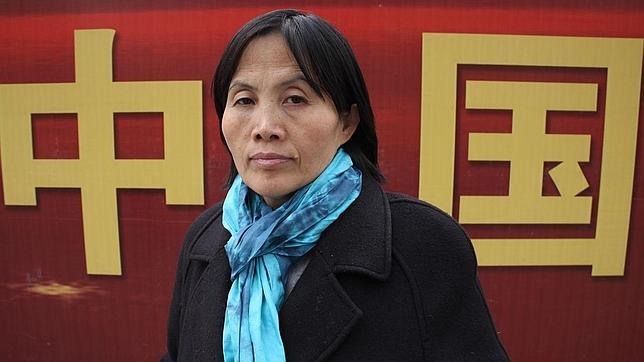
When late Chinese human rights defender Cao Shunli – as Final Nominee of he Martin Ennals Award 2014 – got a standing ovation during the ceremony in October last year, we all said, with the 10 NGOs on the Jury, that we should not forget her. On 19 March 2015 in a statement to the UN Human Rights Council that is exactly what a group of NGOs [International Service for Human Rights and supported by Human Rights Watch, CIHRS, CIVICUS, Conectas, EHARDP, Article 19, HRHF and ALRC] asked for: Ensure independent investigation into death of Cao Shunli.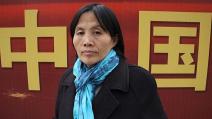
China must ensure a full, independent and impartial investigation into the death of Chinese human rights defender Cao Shunli, ..If Chinese authorities are unable or unwilling to conduct such an investigation in accordance with international standards, the Human Rights Council as the world’s top human rights body must take appropriate action, the statement said.
‘One year after her tragic death, there has been no adequate investigation or accountability in relation to the death of Chinese defender Cao Shunli,’ said Michael Ineichen, Head of Human Rights Council Advocacy at ISHR. ‘If China is let of the hook for such a blatant case of reprisals against someone wanting to cooperate with UN human rights mechanisms, the Council sends a message to rights abusers that activists can be attacked with impunity.’
The statement highlighted the negative effect of impunity for cases of intimidation and reprisals, as shown by the numerous reported cases of intimidation and reprisals occurring during the 28th session of the Human Rights Council, including against South Sudanese and Bahraini defenders.
The legal and moral obligations of States to protect those who cooperate with the UN are clear, and if a State fails to conduct stop reprisals or to properly investigate allegations, the UN has a responsibility to act, the statement said.
‘We welcome recent advances on the institutional level, such as the treaty body policies that recognise States’ primary duty to ensure accountability in the case of reprisals, and the UN’s own duty of care,’ said Eleanor Openshaw, Head of Reprisals Advocacy at ISHR. ‘However, in the absence of a more systematic approach, such as through a dedicated focal point on reprisals which could coordinate investigation of and follow-up to individual cases, these steps will remain the proverbial drop in the ocean’ The statement is available as a PDF and video.
for more on reprisals in this blog see: https://thoolen.wordpress.com/tag/reprisals/
Posted in awards, CIHRS, HRW, human rights, Human Rights Defenders, ISHR | 2 Comments »
Tags: Cao Shunli, China, Conectas, Eleanor Openshaw, HRW, Human Rights House Foundation, Human Rights Watch, International Service for Human Rights, ISHR, MEA final nominee 2014, Michael Ineichen, reprisals, statement, UN Human Rights Council
March 27, 2015
The Bahamas are not the most talked about nation when it comes to human rights but this story is a marvelous lesson in effective diplomacy by human rights defenders.

A group of NGOs [i.c. the Grand Bahama Human Rights Association (GBHRA), the Caribbean Institute for Human Rights, Robert F. Kennedy Human Rights, and and the Haitian Organization for the Prevention of HIV/AIDS and STDS] managed to get a hearing on Friday 20 March 2015 before the Inter-American Human Rights Commission (IACHR) about the treatment of migrants in the country. In short: The main concern was that the Government has put into effect new immigration restrictions without any amendments to the relevant law. It was claimed that Haitians had been targeted and there had been unlawful detention as well as mistreatment. To its credit the government of the Bahamas participated in the hearing and was represented by Minister of State for Legal Affairs Damian Gomez. He refuted the allegations made by the group. [“Indeed, our support of Haiti and its people in the attainment of economic, political and social stability emanates from an abiding and unflinching belief in the dignity of our shared human condition”] Gomez added that the Government received intelligence that Haitians were being smuggled to his country for as much as US$5,000. Still, Gomez invited the IAHRC to conduct an on-site visit to the Carmichael Road Detention Centre. “We have invited them to do an onsite visit. They have indicated a willingness to accept that invitation and act on it and the ball is within their court with respect to indicating to us when they wish to come. They’ve also given us some questions at the hearing which will be answered in the course of things within the next fortnight or so, though we have no deadline within which to answer them.”

Mitchell: Activists Defamed Country
However his colleague the Minister of Immigration, Fred Mitchell, reacted very differently a few days later when he called on the Grand Bahama Human Rights Association to explain why it is attempting to “defame” the country’s name through “irresponsible” efforts. “These people who went to Washington – Bahamians – making these exaggerated claims about abuse of migrants to this country must answer the question to the Bahamian public,” he said at a press conference. “What they are doing will aid and comfort people who are trying to sabotage this country through a criminal enterprise. They have to answer that question. Their actions are irresponsible.” He added: “You can disagree with policy. There are domestic remedies for people to take if you have a difficulty with the policy. If there are specific abuses, there are domestic remedies but to actually go and defame the country in another country, I want to describe that as a particular thing, but I’ll just stay my hand for the moment. But they do have to account to the Bahamian public for their conduct, knowing what we know.”
Compare this with the tone of the Grand Bahama Human Rights Association (GBHRA) in a statement of 24 March, which thanked the government for participating in the hearing and for “sharing the view” that the Immigration Bill should be reviewed. The letter is such a beauty that I copy it below in full. Diego Alcalá, deputy director of the Caribbean Institute for Human Rights, also used positive language and called the invitation “a great first step”.
But then the issue of reprisals..
During the hearing, petitioners also requested that the IACHR assist The Bahamas in designing and implementing a training protocol on Human Rights for State agents, including the role of human rights defenders and their protection. In his contribution, Mr Alcalá said: “Human rights defenders in The Bahamas are confronting a hostile environment that put their security and work at risk. Members of our delegation have been threatened for expressing their opinions against recent changes in migration policies. Also, high-level government officials have made expressions against them, minimising their work or even depicting it as ‘alarmist and inflammatory’.” Mr Alcalá referred to threats against GBHRA executive members Fred Smith and Joe Darville with charges of criminal libel and sedition, and pointed to the cancellation of the Kreyol Connection radio show following critical statements by the government.
Mr Smith, the GBHRA president, told The Tribune that he has made numerous complaints to the Commissioner of Police over verbal and physical attacks he has experienced due to his environmental and human rights activism. However, he did not feel the concerns are taken seriously given the government’s own proclamation against his organisation: “Joe Darville and I have been called social terrorists. Fred Mitchell (the Minister for Foreign Affairs) has threatened to have us prosecuted for criminal libel, sedition. On social media, we have had horrific accusations made against us, that we’re traitors against The Bahamas and that we should be deported.”
During Friday’s hearing, commissioner and country rapporteur Tracy Robinson responded by saying: “In relation to human rights defenders, the commission is always concerned when there are allegations of either threats or stigmatisation of human rights defenders and we ask the state to pay close attention to the allegations made. The commission has very clear rules and principles about the use of criminal laws, including criminal libel laws, in a context where human rights defenders are exercising their rights to protect the interest of others.”
The GBHRA’s reaction was coolly that it hoped Friday’s hearing would foster closer working ties with human rights groups and the government!
—–
Full text of the letter by the GBHRA:
“The Grand Bahama Human Rights Association (GBHRA) would like to publicly thank the government for participating in the recent international hearings in Washington D.C. concerning the country’s new immigration policy.
The hearings before the Inter-American Human Rights Commission (IACHR), convened at the request of the GBHRA and its international partners, we hope will serve as an opportunity for government and human rights defenders to work together closely on reforming current immigration policy and law, specifically the proposed amendments to the Immigration Act, currently before the Senate.
Considering the reaffirmation of its commitment to human rights best practices and international law during the hearings, we are confident the government shares our view that the Bill should be reviewed in light of the comments of the IAHCR commissioners.
The GBHRA looks forward to contributing to this effort in any way it can, and more generally speaking, stands prepared to partner with government to enhance respect for individual rights, strengthen the rule of law and prevent official actions which could pose a risk to our international reputation in the long run.
We likewise thank the government for extending an invitation to the commissioners to conduct an on-site visit to The Bahamas, and have expressed our avid support for such a visit to the Commission.
The GBHRA would also like to express our formal gratitude to the commissioners, the IAHCR and the Organization of American States (OAS) as a whole, for the careful attention currently being paid to human rights issues in The Bahamas.
The commissioners performed a great service to our country during the hearings, reminding us of the expectations of international law on the question of immigration enforcement.
Specifically, their comments affirmed: that detention must be a measure of last resort, not a general rule; that children should not be detained under any circumstances; that the impact of policies on women and children must be a matter of special consideration; that due process, the presumption of innocence and access to justice must be guaranteed for all migrants; and that the government has a duty to address violence and abuse during immigration enforcement exercises.
With regard to this last point, the commissioners made it clear that the government has a responsibility to not only prosecute those who would commit violence or abuse, but also do all in its power to prevent such attacks in the first place.
The commission asked for a report in writing on the extent to which the current policy conforms with the above requirements, and the GBHRA is confident the government will promptly comply with this formal request.
Finally, the GBHRA also welcomes the commission’s offer of help in revising and redrafting the current Bill. We are sure the government will be receptive to this offer, particularly with a view to better clarifying where immigration policy ends and law begins – another issue raised by the commissioners during the hearing.”
Posted in human rights, Human Rights Defenders | Leave a Comment »
Tags: Caribbean Institute for Human Rights, Damian Gomez, Diego Alcalá, Fred Mitchell, Fred Smith, GBHRA, Grand Bahama Human Rights Association, Human Rights Defenders, IACHR, Immigration, Inter-American Commission on Human Rights, Joe Darville, reprisals, Robert F. Kennedy Human Rights, The Bahamas
March 25, 2015
For those who don’t realise how much is going on at the local level in support of human right, here is a little story from Canada. Alan S. Hale in The Daily Press of 24 March describes an evening at Timmins High School:”Local defenders of human rights to be honoured“.

Tom Baby and Toree Doupont hold up with winning posters from the anti-racism poster contest held in local schools during the campaign leading up to the Evening of Applause scheduled at Timmins High Wednesday night
The inaugural Evening of Applause is being organized by a recently-formed committee made up of the local school boards and post-secondary institutions, as well as the Timmins Friendship Centre and the Timmins Local Immigration Partnership. The committee’s goal was to reproduce the successful campaign which has been taking place every year in North Bay for the past 25 years.
“We decided that we wanted to start that project up here in Timmins. So in September, we brought together representatives from all the different education institutions and formed a committee. So this committee has been putting together all the different events to mark the International Day for the Elimination of Racial Discrimination (which was on March 21,)” recalled Tom Baby, the Timmins Local Immigration Partnership coordinator.
For the past three months, the committee has been doing a variety of awareness raising activities in local schools, including in-class instruction and an anti-racism poster contest. The contest drew many submissions, but in the end, the winners were Lindsay Johnston in Grade 3, Emily Morreau in Grade 6 and Cassandra Lapointe in Grade 7. All three students received a $50 prize for their posters. [Anita Spadafore of Amnesty International; Dan McKay who is a local advocate for people with seeing disabilities and founding member of the Barrier Elimination Action Committee, and Ed Ligocki who is the executive director of the Good Samaritan Inn homeless shelter.]
During the Evening of Applause, the first three honourees will be inducted onto the Human Rights Wall of Fame, which will be a new permanent fixture at the Timmins Public Library.
Local defenders of human rights to be honoured | Timmins Press.
Posted in human rights, Human Rights Defenders | Leave a Comment »
Tags: anti-racism, Canada, Human Rights Defenders, Immigration, local community, mobilisation, posters, schools, students, Timmins, youth
March 23, 2015
From 21-13 February 2015, the Lemkin Summit: A National Gathering of the Next Generation of Human Rights Defenders took place in Washington DC. During the three-days students networked with one another, developed their advocacy and movement-building skills, and engaged with experts on current conflict areas including Burma, the Central African Republic, the Democratic Republic of Congo, Sudan, South Sudan, and Syria. Participants were from 28 States, including D.C., as well as the UK, Canada, India, Rwanda, and South Sudan, with 48 different high schools, colleges, and universities represented.
Students arrived Saturday night for a screening of Watchers of the Sky, as well as two special presentations by community leaders. Sunday’s program included panels on sexual & gender based violence, the financial leverage of combatting atrocities, and conflict-specific overviews; advocacy trainings, communications and storytelling workshops; and an Open Space for students to capitalize on the collective knowledge they brought to the Summit themselves. Sunday’s program included student participation in a Keynote Discussion with U.S. Ambassador to the United Nations Samantha Power, who skyped into the Summit, moderated by John Prendergast.
The final day of the Summit was an advocacy day on Capitol Hill, during which students discussed these ongoing issue areas with various congressional offices, and urged Congress to support the Global Magnitsky Human Rights Accountability Act and additional expert capacity to the Treasury Department to investigate and enforce sanctions on people in the DRC, Sudan, South Sudan, and Central African Republic. Students met with 43 offices in the House, 27 in the Senate, and one at the State Department, with Special Envoy to the Great Lakes Region and DRC Russ Feingold.
For a visual representation of the students’ experience over the weekend through social media, check out the Storify below or click here.
via Students Take Action in D.C. as part of The Lemkin Summit: A National Gathering of the Next Generation of Human Rights Defenders | Enough.
Posted in films, human rights, Human Rights Defenders | Leave a Comment »
Tags: Burma, Central African Republic, Democratic Republic Congo, Enough Project, Foreign Policy of the USA, Human Rights Defenders, Lemkin Summit, meeting, Rachel Finn, Samantha Power, South Sudan, students, Sudan, Syria, USA, Washington DC, Watchers of the Sky
March 23, 2015
During the adoption of the Universal Periodic Review (UPR) report on Egypt in the UN Human Rights Council on 20 March 2015 the Women Human Rights Defenders International Coalition (for the composition see below), made a forceful statement about the terrible situation of women human rights defenders in that country.
“The systematic judicial harassment faced by many women human rights defenders is highlighted through the emblematic case of the seven women defenders2 arrested on 21 June 2014 for protesting peacefully against the Protest and Public Assembly Law (No. 107), who faced arduous hassles including prolonged pre-trial detention. Their sentence was finally reduced to two years of imprisonment and two years of surveillance by the appeals court in December 2014. [The seven are: Ms. Sanaa Seif, Ms. Yara Sallam, Ms. Hanan Mustafa Mohamed, Ms. Salwa Mihriz, Ms. Samar Ibrahim, Ms. Nahid Bebo and Rania El-Sheikh]
Furthermore, we strongly condemn the killing of Shaimaa ElSabbagh during a peaceful protest on 24 January 2015. She was taking part in a gathering to commemorate the fourth anniversary of the 25 January revolution. We call on the Egyptian government to ensure a prompt, independent and effective investigation to identify the perpetrator and hold them to account. In this connection, we are deeply concerned that Azza Soliman from the Centre for Egyptian Women’s Legal Assistance (CEWLA), who was witness to the incident and testified before the Prosecutor’s Office, is now targeted as a suspect and charges have been brought against her under the public assembly law.
Finally, we express our continued dismay over sexual violence against women in online and offline public spaces. Though a national strategy to combat violence against women has been announced, we emphasise the need for it to be comprehensive and holistic with involvement of all relevant ministries and stakeholders, as well as adequate budget allocation. During the UPR, the government highlighted a new amendment to the Penal Code article 306, which addresses sexual harassment. This amendment is far insufficient in its scope as it only considers sexual harassment a crime if the intent of the perpetrator is proven to be related to obtaining sexual benefits…”
The Coalition members: Amnesty International, Asia Pacific Forum on Women, Law and Development (APWLD), Asian Forum for Human Rights and Development (FORUM-ASIA), Association for Progressive Communications (APC), Association for Women’s Rights in Development (AWID), BAOBAB for Women’s Human Rights, Centre for Reproductive Rights, Centre for Women’s Global Leadership, Coalition of African Lesbians, Front Line Defenders, Human Rights First, Information Monitor (INFORM), International Federation for Human Rights, International Service for Human Rights (ISHR), International Women’s Rights Action Watch Asia-Pacific (IWRAW-AP), Isis International, ISIS Women’s International Cross- Cultural Exchange, Just Associates (JASS), The Latin American and Caribbean Committee for the Defense of Women’s Rights (CLADEM), MADRE, Nazra for Feminist Studies, Peace Brigades International, Rainbow Rights Project Inc, Urgent Action Fund for Women’s Human Rights, Women Living Under Muslim Laws (WLUML), Women’s Global Network for Reproductive Rights, WOmen’s Initiatives for Gender Justice, Women’s Rehabilitation Centre (WOREC), World Organisation against Torture (OMCT).
Posted in AI, FIDH, Front Line, HRF, HRW, human rights, Human Rights Council, Human Rights Defenders, ICJ, ISHR, OMCT | 2 Comments »
Tags: APC, Azza Soliman, Centre for Egyptian Women’s Legal Assistance (CEWLA), detention, Egypt, freedom to demonstrate, Human Rights Defenders, ISHR, Sanaa Seif, Sannn, Shaimaa ElSabbagh, UN Human Rights Council, UPR, Violence against women, women human rights defenders, Women Human Rights Defenders International Coalition
March 20, 2015

PLEASE FREE TO DISSEMINATE THIS!!
True Heroes Films (THF), is a non-profit organisation working to ensure audiences outside the usual human rights community are reached and engaged by human rights stories. THF is looking for a coordinator to keep the team running smoothly and to ensure the organisation’s further development.
Reporting directly to the Committee of the THF Association, the coordinator is charged with managing the administration and functioning of the organisation. The coordinator is responsible for overall organisational coherence and THF’s reputation, as well as maintaining the organisation’s relations with stakeholders and coordinating the projects and work that our team is doing.
In close collaboration with the Institutional Developer, the Coordinator contributes to the development of the organisation’s strategy, to raising core funds and specific project funding, and to maintaining relationships with the organisations core stakeholders.
RESPONSIBILITIES
– Maintaining relations with partners, among THF associates and with the Committee.
– Planning day-to-day activities and overseeing to strategic planning
– Overseeing organisational accounting
– Logistics (office, transport, etc)
– Fundraising
– Role of Producer on films (Organisational view on deadlines, quality, resources and relations with client; troubleshooting when needed)
CORE COMPETENCIES
– Excellent organisational and project management skills
– Good interpersonal skills and experience coordinating teams
– Previous experience with fundraising (project drafting, discussions with donors, reporting) – A dedication to highlighting human rights issues
– Speaking English and French fluently, German a valuable addition
– Having a valid work permit for Switzerland
ADDITIONAL COMPETENCIES
– Experience in communications and audio-visual work
– An existing network or knowledge of human rights organisations, actors and donors
DETAILS
Salary: CHF 3200.- (brut) per month for a 50% position (21hrs/ week), with possibility of increasing both percentage worked and remuneration depending on projects received. Location: based in Geneva, but work times and location of work (office, home, etc) are flexible and to be agreed with associates; limited travel
Starting date: 1 June 2015
APPLICATION
Send CV and email explaining why you feel you fit the description and what you would bring to the team to info@trueheroesfilms.org.
THF is recruiting.
Posted in films, human rights, THF | 2 Comments »
Tags: Geneva, human rights films, human rights organisations, human rights organization, images, job opportunity, recruitment, THF, True Heroes Films, vacancy, visualisation
March 19, 2015

Abdulkarim al-Khaiwani speaking at the Oslo Forum in 2010
Prominent Yemeni journalist, press freedom advocate, and whistleblower Abdulkarim al-Khaiwani was assassinated on 18 March by unknown gunmen outside of his home in Sanaa. Al-Khaiwani was one of Yemen’s most effective journalists. He endured years of harassment, kidnappings, and death threats in retaliation for his outspoken criticism of Yemen’s 30-year dictatorship and his exposés on government corruption. His son, the writer Mohammed al-Khaiwani, witnessed the attack, in which several men on motorcycles opened fire on his father and then fled the scene.
“The murder of Abdulkarim al-Khaiwani is a cowardly and abhorrent display of the evil that so much of the world faces on a daily basis,” said Human Rights Foundation president Thor Halvorssen. “Al-Khaiwani bravely put his life on the line year after year to expose the reality of tyranny and corruption. He will always be remembered for his heroic devotion to use truth and justice.”
Al-Khaiwani is the former editor-in-chief of the pro-democracy online newspaper Al-Shoura. After years of threats and harassment, he was arrested, subjected to a mock trial, and sentenced in 2008 to six years in prison on fabricated charges of conspiring with the leader of an anti-government terrorism cell. and of being a coup-plotter After being tortured during his incarceration, al-Khaiwani received a presidential pardon and was released in 2009.
In June 2008, a week after being sentenced to six years in jail, Abdulkarim al-Khaiwani received the Special Award for Human Rights Journalism under Threat from AI UK.
Oslo Freedom Forum Speaker Abdulkarim al-Khaiwani Assassinated in Yemen | News | The Human Rights Foundation.
Posted in human rights, Human Rights Defenders, Human Rights Foundation | Leave a Comment »
Tags: Abdulkarim al-Khaiwani, AI UK, assassination, award, freedom of expression, Human rights defender, Human Rights Foundation, in memoriam, Journalist, Mohammed al-Khaiwani, murder, Oslo Freedom Forum, Thor Halvorssen, Yemen
March 19, 2015

Special Rapporteur on the human rights situation in Myanmar Yanghee Lee. UN Photo/Jean-Marc Ferré
On 18 March 2015 the United Nations Special Rapporteur on the human rights situation in Myanmar (Burma), Ms. Yanghee Lee, called on the country’s authorities to address ongoing challenges to the democratic reform process “before they undermine the success achieved so far.”
“I was very disturbed by reports on 10 March that excessive and disproportionate force had been used against students and other civilians and that 127 people were subsequently arrested,” Ms. Yanghee Lee said during the presentation of her first report to the UN Human Rights Council in Geneva. She welcomed the release of some detainees but also called for the immediate release of all the others. Further, Ms. Lee drew attention to the pressure on human rights defenders, including prosecutions under outdated defamation and national security laws, which have a “chilling effect on civil society activities.” “I am concerned journalists are still being interrogated and arrested, and that 10 journalists were imprisoned in 2014. This needs to stop if Myanmar wants to create a meaningful democratic space,.
..More needs to be done to address the underlying issues at the heart of the conflicts, including discrimination against ethnic minorities. Four bills currently before Parliament risk increasing tension, she emphasized.
“During my last visit in January 2015, I witnessed how dire the situation has remained in Rakhine state. The conditions in Muslim IDP [internally displaced persons] camps are abysmal and I received heart-breaking testimonies from Rohingya people telling me they had only two options: stay and die or leave by boat,” she said. Mrs Lee was verbally abused by a radical monk during her last visit, as reported on 21 January: https://thoolen.wordpress.com/2015/01/21/u-n-rapporteur-on-myanmar-called-whore-by-radical-buddhist-monk/
Read the rest of this entry »
Posted in human rights, Human Rights Council, Human Rights Defenders, UN | 2 Comments »
Tags: Aliran, Brang Shawng, Burma, Fortify Rights (NGO), Human Rights Defenders, impunity, Matthew Smith, military, minorities, Myanmar, non-discrimination, perpetrators, rape, UN, UN Special Rapporteur, Yanghee Lee
March 17, 2015

‘ Xi Jinping, even less tolerant than his predecessors.’ Photograph: EPA/WU HONG
Human rights defender Teng Biao, a visiting fellow at Harvard Law School, President of China Against the Death Penalty, and Co-founder of the Open Constitution Initiative, is in Ireland as the guest of Front Line Defenders. In a post of 10 March 2015, he depicts the grim situation of human rights defenders in China since President Xi took office. ‘Chinese human rights defenders are facing the most severe crackdown since the Tiananmen massacre in 1989’ he states. The hard-hitting piece [“Over 1,000 human rights activists were detained since President Xi took office“] is interesting enough to provide in full:
“I remember Cao Shunli’s speech during her trial. She was a brave activist who fought for land rights, documented cases of human rights abuse and participated in the United Nations human rights system.Tang Jingling, a lawyer in Guangzhou, is a prominent leader of the non-violent civil disobedience movement.
Ilham Tohti is a Uighur professor who set up a website to promote the rights of the muslim Uighur people. He advocated mutual understanding and reconciliation between Han Chinese and the Uighurs.
Pu Zhiqiang and Xu Zhiyong are both well known lawyers who have played a key role in abolishing the laws allowing extrajudicial detentions, in breach of China’s own constitution. Xu also founded an NGO called the Open Constitution Initiative, focusing on religious freedom and free speech. The organisation worked on the issues of forced eviction, forced abortion and ensuring transparency in local elections.
Guo Feixiong, Liu Ping, Ding Jiaxi, Zhao Changqing, all took an important part in the New Citizens Movement which has campaigned for constitutional government and for Communist Party officials to declare their assets.
Cao Shunli was arrested on her way to a human rights training in Geneva and died in custody as a result of torture, on March 14th, 2014. All the others are now in jail.
Chinese leaders are not known for tolerating dissent, but Xi Jinping is less tolerant than his predecessors. Over a thousand human rights activists have been detained since Xi took office, and Chinese human rights defenders are facing the most severe crackdown since the Tiananmen massacre in 1989. Xi’s suppression is widespread, targeting not just those at the forefront of the human rights struggle in China, but also faith groups, internet users, universities, and the media. Many members of China’s budding civil society, who have avoided politically risky issues so far, are now also being jailed.
In the past, those who crossed a red line, who stood out, took to the street, or who engaged in organised actions were the main targets of the crackdown. Now, the dragnet is much wider and is being used against anyone who demonstrates. At least 10 feminist activists were detained last week as they planned to stage a small protest against sexual harassment on public transport, which is a common occurrence in China. The government seems to be targeting all the nodes that connect civil society, picking off emerging civil society leaders, and destroying the capacity for civil resistance.
It seems that the Communist Party of China has never been stronger or more confident: China is the second largest economy in the world. China is exerting more influence on the international stage. There is no viable opposition, and the Chinese model is more effective than western democracies that have been bogged down by financial crises and intractable social problems. But as David Shambaugh pointed out in his recent article in the Wall Street Journal, “A more secure and confident government would not institute such a severe crackdown. It is a symptom of the party leadership’s deep anxiety and insecurity.”
For the Communist Party of China, “governing the country according to law” does not mean the “rule of law” as you and I understand it. It is first and foremost a tool to further control society, as the Party understands perfectly well that the rule of law, freedom of information, religious freedom, property rights, and other basic features of democratic governance would mean the demise of the Party’s rule, as Freedom House pointed out in its recent report.
Chinese civil society, fragile as it is, owes its emergence to the dedication and sacrifice of many human rights defenders. Every day, we receive information from all over the country about human rights defenders being detained, disappeared, tortured, or sentenced. But despite the perilous journey, more and more Chinese people – lawyers and journalists, farmers and bloggers, poor and rich, young and old, males and females – have stepped up to join the human rights movement, driven by their dignity, belief in freedom, and the desire to make a difference in our time of great change.
These Orwellian rulers can only do so much damage to the spirit of the people. A few are silenced but many more are inspired by a combination of international and domestic recognition, the admiration of “fellow travellers”, a sense of mission, and occasional victories in human rights cases. I speak from experience. I have been banned from teaching, fired from my job, disbarred, disappeared, detained and tortured for my human rights work since 2003, but I have never felt that I should stop. I believe it is my responsibility to fight for freedom for the next generation, for the dream that my children can live in a free and democratic country. This dream is shared by more and more Chinese people, even at this unlikely moment when the night seems the darkest.
Most Beijing watchers in the west misunderstand Beijing. Every time Beijing has a new slogan like “rule by law” or “harmonious society,” they embrace it as a sign of change, ignoring all the evil the Communist Party of China has been perpetrating. They fail to see where the real hope lies and remain fixated on the ruling class. Their selective blindness has hindered the West’s understanding of the real state of affairs in today’s China. If we human beings can learn anything from modern history, it is that it is time for the West to stop wishful thinking, to stop dancing with dictators, and to support human rights activists who are challenging the one-party dictatorship in China. History will judge the crimes committed by dictators against universal values, and it will also remember those Western governments who adopted short-sighted policies of appeasement in dealing with autocratic regimes and favouring trade over human rights.”
Over 1,000 human rights activists were detained since President Xi took office.
Posted in Front Line, human rights, Human Rights Defenders | Leave a Comment »
Tags: Cao Shunli, China, David Shambaugh, Ding Jiaxi, Front Line Defenders, Guo Feixiong, Harvard Law School, Human Rights Defenders, Ilham Tohti, Liu Ping, President Xi Jinping, Pu Zhiqiang, repression, rule of law, Tang Jingling, Xu Zhiyong, Zhao Changqing


 Hans Thoolen on Human Rights Defenders and their awards