Archive for the 'human rights' Category

International Women’s Day 2017: honoring, defending and watching women human rights defenders

March 8, 2017

International Women’s Day focuses on many different aspects of the struggle for the human rights of women. I have selected three special actions this year:

(1) a short piece honoring woman who are land rights defenders;

(2) a digital protection tool for women human rights defenders (Cyberwomen);

(3) a documentary film on how rape was made into a international war crime.

[Of course this blog has had many earlier posts on women human rights defenders: https://humanrightsdefenders.blog/tag/women-human-rights-defenders/ ] Read the rest of this entry »

High-level endorsements of crucial role of human rights defenders in UN Human Rights Council

March 7, 2017

The 34th Session of the UN Human Rights Council started off last week (as usual) with the so-called “high-level segment” during which important officials addressed the Council [see: https://humanrightsdefenders.blog/2017/02/28/new-secretary-general-at-human-rights-council-tells-human-rights-defenders-and-i-am-on-your-side/].

On 6 March the ISHR reported on that first week during which several dignitaries emphasised the key role that a vibrant civil society plays in promoting and protecting human rights.

 The President of the General Assembly, Peter Thomson, highlighted the importance of civil society by calling States, the UN and civil society to work shoulder to shoulder and advance with common purpose. Other high-level speakers expressed concern regarding increasing restrictions to civil society space, particularly against HRDs and journalists.
  • Delegates from Botswana, the Czech Republic, Costa Rica, the European Union, France, Malta, Liechtenstein and Luxembourg, among others, reiterated their support to the work of HRDs and journalists and stressed the importance of guaranteeing their protection.
  • Delegates from Germany, Norway, Poland, Slovenia, Sweden and the United Kingdom, among others, condemned acts of reprisals against HRDs and emphasised that HRDs must be able to participate and engage with the Council without fear of intimidation or reprisals.

The pivotal role defenders play in promoting sustainable development was also recognised. Georgia underscored the importance of strengthening the role of NGOs and safeguarding civil society’s space to ensure they are heard. ‘Without close cooperation with all stakeholders, it is impossible to secure the sustainable development of the country.

So, there is no shortage of good statements in Geneva, but the what matters most is the upcoming renewal of the mandate of the Special Rapporteur on Human Rights Defenders and any real action on reprisals!

Source: #HRC34 | High-level officials kick off Council session, emphasise critical role of defenders | ISHR

WEBINARS on best practices for digitising documents in March 2017

March 7, 2017

Why digitise? Digitising your documents greatly improves access to your information, whether you are building an online public library to share documents related to corruption, or making documents searchable for your team. Digitisation also helps to preserve and protect important human rights information. Many defenders run the risk that malevolent groups seeking to destroy or confiscate witness testimony, evidence of abuse, and other sensitive information. Others run the risk of documents being subject to harmful storage conditions, such as humidity, insects, and rodents. These are just a few reasons for digitising your documents. However, figuring out the most efficient, affordable, and responsible way to digitise thousands of documents can be a daunting task especially for human rights defenders in the field.

  • When:
  • Where: ReadyTalk (use the access code 2458641 to join)
  • Who: Open to anyone who wants to learn more about digitizing documents

Whether you are a seasoned digitization expert or a human rights defender just starting to think about digitisation, this is a good occasion to learn and share.

If you are interested, please contact Kristin Antin at kristin@huridocs.orgHere is an example of a webinar hosted in January on managing contact information.

Source: Community Discussion: Best practices for digitising documents | HURIDOCS

‘El Sexto’ Maldonado Released from Cuban Prison

March 6, 2017
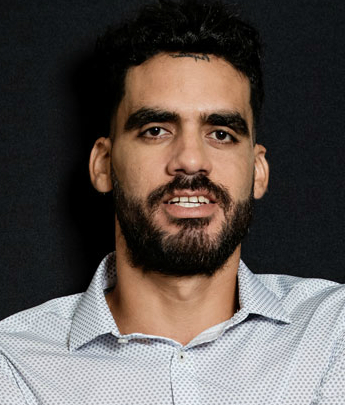
The Human Rights Foundation reported that Cuban graffiti artist Danilo ‘El Sexto’ Maldonado was finally released from prison on 21 January 2017, after spending two months in detention. Cuban authorities arrested El Sexto for spray painting “Se fue” (in English, “He’s gone”) shortly after the death of the island’s former dictator, Fidel Castro. He was sent to one of Cuba’s most notorious maximum security prisons, El Combinado de Este, where he was subjected to daily psychological torture and frequent death threats. The Human Rights Foundation filed an individual complaint with the U.N. Working Group on Arbitrary Detention for its Havel Prize Laureate.[https://humanrightsdefenders.blog/2015/04/16/havel-prize-for-creative-dissent-awarded-to-girifna-sakdiyah-maruf-and-el-sexto/]
Danilo 'El Sexto' Maldonado


Canada and the wisdom of “governmental” human rights awards

March 6, 2017

I have written earlier about the wisdom of having purely governmental human rights awards. Now Canada adds to the discussion:

In my article for Oxford University Press (“Human Rights Awards for the Protection of Human Rights Defenders” J Hum Rights Pract (2013) 5 p552) I wrote: “A word of caution with regard to ‘governmental’ awards is in order. While it is one thing for a government to ‘support’ (e.g. financially) an otherwise independent award with an autonomous jury, the notion that governments (such as the USA, the Netherlands, France, Poland, Sweden, Canada) should run their own awards, select the winner, have the Minister hand it out and promote the award through the diplomatic service, does not sit well with the desire to protect HRDs from the charge of being ‘foreign agents’, a frequent claim by repressive governments trying to depict HRDs as being supported and funded from abroad… A degree of distance would benefit governments and would also serve the laureates themselves who usually want to be seen as spearheading the non-governmental human rights movement. Intergovernmental organizations face similar problems in having awards, as was demonstrated by the controversy surrounding UNESCO’s decision in 2010 to launch an award paid for and named after the president/dictator of Equatorial Guinea, Obiang Nguema.

In a post of 2011 I expressed some doubt about the USA State Department giving an award to Cuba dissidents (see: https://humanrightsdefenders.blog/2011/04/24/us-state-department-gives-its-human-rights-defenders-award-to-cuban-ladies-in-white-how-wise/).

A recent article (5 March 2017) by Dean Beeby of the Canadian Broadcasting Corporation (CBC) entitled “Diefenbaker award missing in action after Liberals take over” brings home another aspect, namely that such an award becomes a ‘political tit-for-tat’.  An award created by Stephen Harper’s government, which honoured former Progressive Conservative prime minister John Diefenbaker, was inaugurated in early 2011 and given out for four years running before ‘disappearing’ in 2015 and 2016. Read the rest of this entry »

Low key launch of 2016 State Department Human-Rights Report raises questions

March 4, 2017

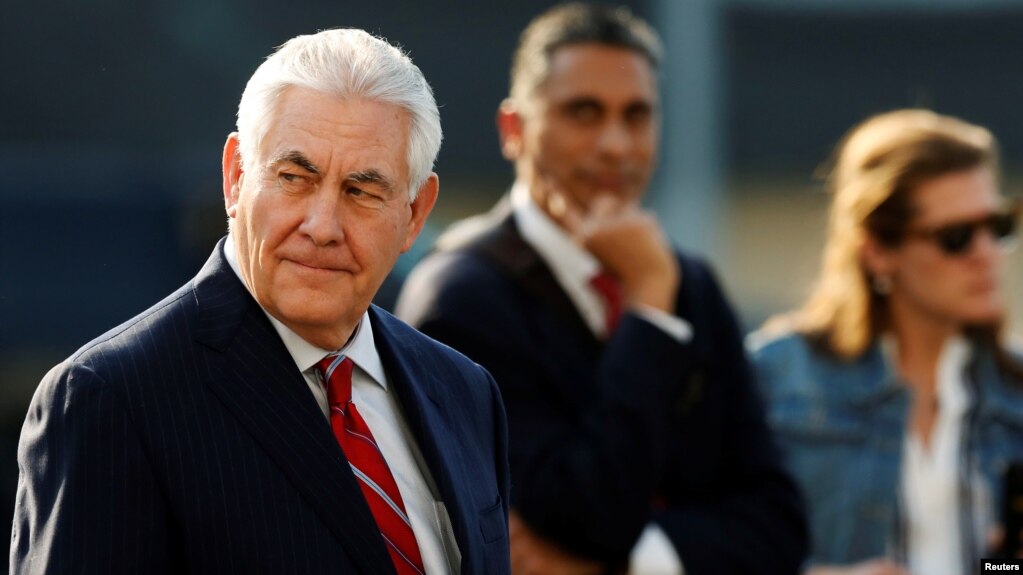
The Voice of America (3/3/17: Tillerson in Background as State Department Issues Human-Rights Report) and other media reported on the low-key way in which the US State Department launched the 2016 Country Reports on Human Rights Practices.

FILE - U.S. Secretary of State Rex Tillerson arrives in Mexico City, Mexico, Feb. 22, 2017.

U.S. Secretary of State Rex Tillerson arrives in Mexico City, Mexico, Feb. 22, 2017.

Sources:

Tillerson in Background as State Department Issues Human-Rights Report

http://gantdaily.com/2017/03/03/tillerson-skips-release-of-annual-human-rights-report/

International Human Rights Arts Festival in New York: 3-5 March 2017

March 3, 2017

International Human Rights Arts Festival to Feature HAMILTON Dancer, Bessie Winner and More

2016 Bessie Award-winning choreographer Joya Powell brings her Movement of the People Dance Company to the premiere International Human Rights Art Festival, New York City‘s first arts-advocacy festival of its kind. The Festival, presented by The Institute of Prophetic Activist Art, co-sponsored and housed at Dixon Place (161A Chrystie St, NYC), will take place 3-5 March, 2017. As part of the Dance portion of the festival, Jessica Chen of J Chen Dance project is working with three additional dance companies to create human rights-oriented dance. Jacqueline Dugal will also create a piece incorporating human rights texts.

Tickets are $10-25 and are now available online with full schedule and participant information at www.dixonplace.org.

Dance can help translate unspoken fears and emotions…” noted Jessica Chen, of the J CHEN PROJECT, “the nuances of a leg held up, a body launched into space, a gesture of yearning is immensely powerful. For this festival, we will use movement and choreography to enhance the conversation about critical human rights issues.”

J CHEN PROJECT Commissions: Jessica Chen of JChen Dance Project comissioned works will be based in and incorporate a specific textual inspiration, ranging from the words of great human rights defenders (such as MLK Jr. or Gandhi) to a bland recitation of statistics on refugees, civilian war deaths, famine due to autocratic governments etc. The four pieces, comprising an hour of dance, will run both Saturday and Sunday, and be previewed at the opening festivities. Saturday, March 4, at 10:00 pm; Sunday, March 5, at 4 pm (see below for full lineup)…


The International Human Rights Art Festival will bring together more than 70 artists producing more than 40 events, all of them oriented toward advocacy. Artistic media will include theatre, performance, dance, spoken word, painting, photography, music, literary arts, workshops, panel discussions, a kidsfest (hands-on activities to introduce children to using art for socially-transformative purpose), film and others. Rigorously curated for quality as well as content, the event includes some of New York’s most passionate rising artist-activists. It will raise social, cultural and political issues, as well as offering gentle, positive responses through thoughtful beauty and political and social thinking.

ABOUT THE ARTISTS:

Producer Tom Block, a 20-year activist painter, author, playwright and arts producer, as well as creator of the Amnesty International Human Rights Art Festival (MD, 2010) is bringing the concept to NYC, with the 2017 International Human Rights Art Festival. The event is part of the growing number of initiatives of the Institute of Prophetic Activist Art, which Mr. Block founded last year to teach, learn from, and work with New York’s activist artist community. www.tomblock.com

Side event 6 march 2017: Environmental Human Rights Defenders

March 3, 2017

The Permanent Mission of Spain, the Office of the High Commissioner for Human Rights, the United Nations Environment Program, the UN Special Rapporteur on human rights and the environment, the Universal Rights Group, ABColombia, CIDSE, Franciscans International, ISHR, Kolko, Oidhac, and PBI are organizing a side event during the UN Human Rights Council.

Environmental Human Rights Defenders: Responding to a Global Crisis

Monday 6 March 2017 12h30 – 14h30 Room XXVII, Palais des Nations (Simultaneous interpretation English-Spanish)

Panel discussion:

Professor John Knox, UN Special Rapporteur on human rights and the environment, Member of the Board of Trustees, Universal Rights Group (URG)

Michel Forst, UN Special Rapporteur on human rights defenders

Amanda Kron, Legal Officer, UN Environment (UNEP)

Johana Rocha, Environmental and Human Rights Lawyer, Research Centre for Social Justice ‘Tierra Digna’ (Colombia)

Isela González Díaz, Alianza Sierra Madre (Mexico)

Objectives

• Raise the profile of the situation of environmental human rights defenders

• Move the international human rights community, especially members of the Human Rights Council, towards a greater understanding of that situation, and towards a greater determination to improve support for the work of EHRDs and protection of their rights.

• Launch new URG Policy Report, authored by Professor John Knox, UN Special Rapporteur on human rights and the environment, on the global situation of EHRDs.

• Present the Special Rapporteur’s recommendations to policymakers and policy-influencers.

• Launch new online resource portal for EHRDs. The portal has been created by the UN Special Rapporteur on human rights and the environment, URG, Not One More (N1M) and Global Witness, following proposals made by EHRDs themselves during consultations in Europe and Asia. Its development was made possible thanks to the generous support of the Ministry of Foreign Affairs of Spain.

fFor some of my earlier posts on environmental defenders, see: https://humanrightsdefenders.blog/tag/environmental-activists/

http://www.universal-rights.org/events-detail/interface-human-rights-protection-environmental-conservation-situation-environmental-human-rights-defenders/
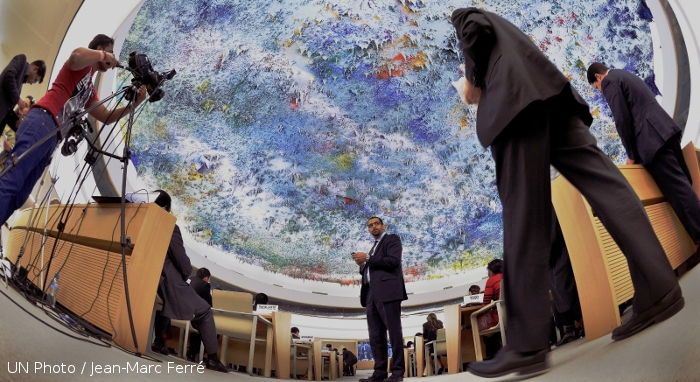
Backsliding on civic space in democracies – important side event on 3 March in Geneva

March 2, 2017

One of the side events in Geneva during the UN Human Rights Council that is of special importance for human rights defenders is held tomorrow, 3 March 2017, from 13:00 – 14:00, in Room XXI, Palais Des Nations, Geneva.

Across the world, well-established principles and standards fundamental to maintaining a safe and enabling environment for civil society are being questioned and threatened in mature and consolidated democracies. In both the global North and global South, governments with vibrant civil societies and constitutional and historical commitments based on their struggles for democracy and freedom are adopting increasingly hostile and corrosive policies and practices to suppress independent civil society voices. The event will provide an opportunity for the UN Special Rapporteur on human rights defenders and civil society leaders to reflect on the global climate for civil society operating in mature democracies and articulate key measures these states must take to ensure an enabling environment for civil society and human rights defenders both at home and at the UN Human Rights Council. In advance of their examination under the Universal Periodic Review in May 2017, the event will also bring together civil society leaders from India, Brazil, Poland, and South Africa to examine state backsliding on civic space norms.[see also: https://humanrightsdefenders.blog/2017/02/24/2017-10-need-to-reset-for-h…]

Panelists:

  • Michel Forst, UN Special Rapporteur on the situation of human rights defenders
  • Camila Asano, Conectas – Brazil
  • Henri Tiphagne, Human Rights Defenders Association – India
  • Maciej Kozłowski, Committee for the Defence of Democracy (KOD) – Poland
  • Corlett Letlojane, HURISA- South Africa

Moderator: Mandeep Tiwana, Head of Policy and Research, CIVICUS

The event is co-sponsored by key international NGOs: –Amnesty InternationalCIVICUS, Asian Forum for Human Rights and Development (FORUM-ASIA), International Society for Human Rights (ISHR), Human Rights Watch (HRW), Human Rights Defenders Alert India (HRDA), The Observatory for the Protection of Human Rights Defenders (OBS)

https://www.forum-asia.org/?p=23168

“Breaking the Silence” received Danish Poul Lauritzen award

March 2, 2017

The banquet hall at the National Museum in Copenhagen played host to the presentation of the PL Foundation Freedom Award on 12 December 2016, an annual prize given in honour of a Danish resistance fighter that recognises the exercise of human rights in an extraordinary manner. The winner was Breaking the Silence, an Israeli organisation that collects and shares testimonies (some anonymous) from soldiers who have served in the West Bank and Gaza – over a thousand at the last count. “Breaking the Silence shows great personal courage to talk about their own experience in the West Bank” commented the PL Foundation, named after the Danish resistance fighter Poul Lauritzen. Previous winners include Turkish publisher Ragıp Zarakolu and Turkish playwright Ali Tuygan. One of Breaking the Silence’s co founders, Yehuda Shaul, 33, along with spokesperson Achiya Schatz, appeared in person to receive the award, which included a prize of 100,000 kroner, from Poul Søgaard, a leading judge at the Supreme Court.

Founded in 2004, Breaking the Silence initially published the testimonies of the soldiers in an art gallery in Tel Aviv. Today, it publishes them in booklets and articles and shares them in lectures and guided tours of cities like Hebron in the West Bank.

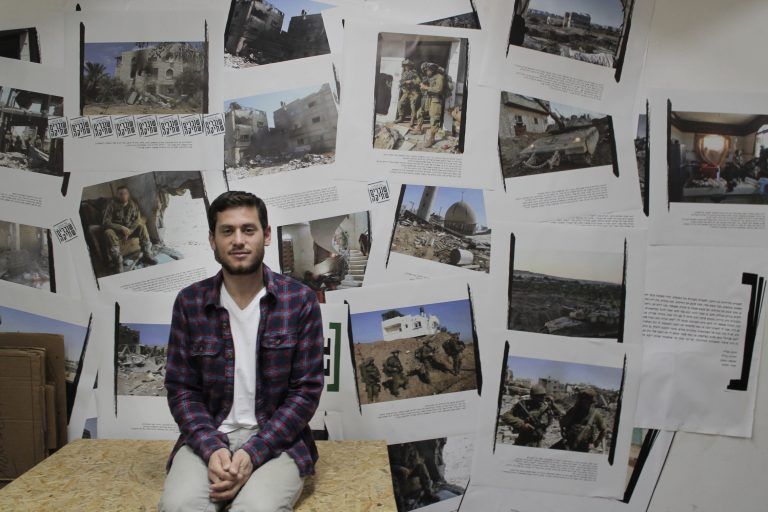
israel1
Achiya Schatz in front of the testimonies at the Breaking the Silence office in Tel Aviv. (all photos: Cornelia Mikaelsson)

Banned by the Israeli authorities from speaking to soldiers or schoolchildren, Breaking the Silence has been accused of spreading mistruths and of betraying the Israeli military. Threats are an occupational hazard. “To remain silent is no longer an option,” explains Achiya Schatz, 31, who did his national service in the Israeli army from 2005-08. Schatz recalls that many of his missions to search Palestinian residences were pointless – commanding officers would throw away the gathered intelligence without reading it. “After completing my service I got time to think. One question led to another and all of a sudden I asked myself: how can you ever occupy morally?”
Over half of Breaking the Silence’s funding comes from abroad (7 million kroner in 2014 alone) and one of its biggest supporters is Danish – Dan Church Aid, the humanitarian NGO. And this has led to extra suspicion in Israel. Earlier this year, the Israeli government passed a transparency bill forcing NGOs that receive more than half of their funding from foreign sources to declare them openly. Those who voted for the bill claimed that it served a democratic purpose. Critics, however, argued that it only was an attempt to target NGOs critical of Israel’s governmental policies. Israeli PM Benjamin Netanyahu wrote a statement on his Facebook page, claiming that the bill aims to “prevent an absurd situation, in which foreign states meddle in Israel’s internal affairs by funding NGOs, without the Israeli public being aware of it”. [see also: https://humanrightsdefenders.blog/2016/01/05/michael-sfardjan-israels-human-rights-activists-arent-traitors/]

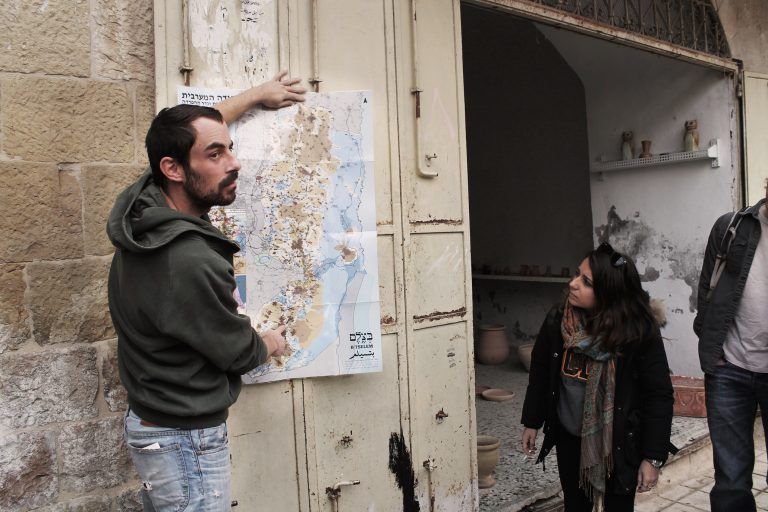
israel3
Ido Even-Paz, one of the guides on the Breaking the Silence tour of Hebron

Source: Former Israeli soldiers pick up Danish freedom award in Copenhagen – The Post