Archive for the 'human rights' Category

Tour de France also used for sportswashing by Bahrain

July 8, 2019
Vincenzo Nibali riding for Bahrain-Merida in 2018.
Vincenzo Nibali riding for Bahrain-Merida in 2018. Ten campaign groups say the team are helping to draw attention from the country’s ‘appalling human rights record’. Photograph: Tim de Waele/Getty Images

in the Guardian of 3 July 2019 reports on the efforts by a group of NGOs to have the UCI, cycling’s governing body, look again at the license of the Bahrain-Merida cycling team.

In the letter, under the umbrella of the Sport and Rights Alliance and led by the Bahrain Institute for Rights and Democracy (Bird), the signatories claim that the team, led by the 2014 Tour winner Vincenzo Nibali, is a vehicle for the Bahrain government to “sportswash” its appalling human rights abuses. “The Bahraini government has a reputation for using high-profile sporting events to divert international attention from the country’s appalling human rights record,” the letter states, “and we are concerned that Bahrain-Merida’s participation in UCI competitions is consistent with these aims.” The letter alleges that the Bahrain-Merida team may be in violation of the UCI’s code of ethics, which requires participants to “show commitment to an ethical attitude”.

However, the signatories draw attention in their letter to the fact that the Bahrain-Merida team was launched in 2017 by a son of the ruling king of Bahrain, Sheikh Nasser bin Hamad al-Khalifa, who is still described as the team’s leader on its website. ..Sheikh Nasser is a senior figure in the country’s sports institutions, chairing the Olympic committee until March this year. In 2011 he called publicly, on television, for the punishment of sportspeople who had taken part in demonstrations, saying: “To everyone that demands the fall of the regime, may a wall fall on their heads … whether he is an athlete, an activist or a politician … Today is the judgment day.”  Also, several of the sponsors – which include the Bahrain sovereign wealth fund Mumtalakat and the oil company Bapco which itself says that it is wholly owned by the government – are described as “semi-government companies”.

For more on “Sportswashing” see: https://humanrightsdefenders.blog/2019/05/22/andrew-anderson-the-dangerous-game-of-sportswashing/

A UCI spokesperson told the Guardian that it had been aware of the “allegations of human rights violations by the Bahrain regime … prior to the initial registration of Bahrain-Merida as a UCI WorldTeam late 2016.” The spokesperson did not explain what approach the UCI took to the human rights concerns, or why they were not a barrier to the team’s registration. He added: “For the upcoming season, the independent licence commission will review the applicable criteria, including ethical, based on all available information pertaining to the team. The assessment … concentrates on the team and its members.”

Sayed Alwadaei, the director of advocacy at Bird, described that as a “very disappointing” response. “We raised similar concerns in 2016 and despite the severity of our concerns the UCI awarded Bahrain-Merida team the WorldTeam licence,” he said. “We are asking the UCI now to be transparent about their due diligence and to disclose their assessment, as a rational assessment must account for a history of severe rights abuses.”

https://www.theguardian.com/sport/2019/jul/03/bahrain-merida-cycling-team-being-used-to-sportswash-campaigners-say

116 Iranian Human Rights Defenders speak out against US-Iran military conflict

June 28, 2019
On 26 June 2019 th Center for Human Rights in Iran informed us that in response to soaring tensions between Iran and the United States, 116 Iranian human rights defenders and groups based inside and outside the country have signed a statement warning of the “devastating” consequences of a military conflict.

The impact of military action on Iran would “lead to an accelerated human rights and humanitarian crisis and would only serve to destabilize an already troubled region,” said the statement co-organized by United for Iran and the Center for Human Rights in Iran. The names of the signatories, including activists, lawyers, journalists, and lawyers, are to be found in the link below.

Following is the letter:

We, the undersigned Iranian and international human rights organizations and advocates, express grave concerns over the rising tensions between the United States and the Islamic Republic of Iran, which risks a military confrontation that would cause massive human rights harms. We urge all parties and international actors to take immediate and clear steps to prevent a conflict.

The impact of any military action in Iran, as we have seen in neighboring countries, would be devastating. It would likely lead to an accelerated human rights and humanitarian crisis and could only serve to destabilize an already troubled region. Only peace-focused policies that prioritize the rights and well-being of ordinary people in Iran and the region can provide meaningful, long-term benefits.

We have a deep understanding of the problems in Iran, including human rights challenges and corruption within some government sectors. We have dedicated our lives to strengthening the rights of women and girls, ethnic minorities, religious minorities, workers, journalists, university students, LGBTQ people, artists, and political prisoners in Iran. We have fought for the freedom of speech, freedom of religion, the right to a fair trial, socio-economic rights of the Iranian people, and an end to discrimination. We have consistently opposed Iranian authorities in their abuse of power and oppressive policies. It is from this perspective that we warn against the threat posed by military conflict.

We also fear that military action against Iran will be disastrous for millions of ordinary people and could lead to the type of violent sectarian civil conflict seen in neighboring countries. The instability of these conflicts and the extent to which they pit groups of people against each other has led to immeasurable human rights abuses.

Many Iran-based human rights defenders have expressed dismay that broad economic sanctions imposed by the US and the specter of war have already made their work more difficult. Many of them are struggling to make ends meet in a depressed economy, while their activities have become increasingly risky in a heightened security environment. The threat of war has strengthened support for the Iranian state’s security approaches and has been used as a pretext to crack down on activists. Minority communities, who have little space for civic activism, suffer the brunt of crackdowns at such times. Many Iranian human rights defenders fear that an actual military conflict would give the Iranian security forces an opportunity to finally put a complete stop to their advocacy efforts.

These concerns reflect some of the likely outcomes of any military confrontation in Iran, underscoring the need for peaceful and legal solutions to any tensions between states.

We urge all parties to show maximum restraint. We ask that the United Nations Secretary-General, the European Union, and the government of Japan, as well as countries in the region that have stepped in the past to foster peace, to intervene to prevent the outbreak of war and deepening human rights and humanitarian crisis.

Sincerely,

116 Iranian Rights Defenders Warn of “Devastating” Consequences of US-Iran Military Conflict

NGOs come out in support of India’s Lawyers Collective

June 27, 2019
UPDATE 11 July: https://www.news18.com/news/india/cbi-raids-senior-lawyers-indira-jaising-anand-grovers-home-offices-for-violating-foreign-funding-norms-2225819.html
On 26 June 2019, a group of 10 major NGOs issued a joint statement to the Indian Government that it should withdraw criminal charges against the NGO ‘Lawyers Collective’ and its representatives.They strongly condemn the filing of criminal charges against Indian NGO ‘Lawyers Collective’, its President, Senior Advocate Anand Grover, and other representatives. Criminal charges were filed by the Central Bureau of Investigation (CBI) on June 13, 2019, relying on an investigation report of January 2016 of the Union Ministry of Home Affairs (MHA). The MHA report has been challenged by Lawyers Collective in January 2017 and the case is under consideration by the High Court of Bombay.Lawyers Collective is a human rights organisation based in New Delhi with its registered office in Mumbai and was founded by noted Indian human rights defenders and lawyers Ms Indira Jaising and Mr Anand Grover. Ms Jaising and Mr Grover are senior advocates with an exceptional profile of public service, probity and personal and professional integrity as lawyers and as human rights defenders. Ms Jaising was an Additional Solicitor General of India between 2009 and 2014, and was also a member of the UN Committee on Elimination of Discrimination against Women (CEDAW) between 2009 and 2012. Mr Grover held the mandate of UN Special Rapporteur on the Right to Health between 2008 and 2014. Ms Jaising and Mr Grover, through Lawyers Collective, have advocated for advancing the rights of the most vulnerable and marginalised sections of Indian society, thereby upholding constitutional values as enshrined in the Indian Constitution.

Lawyers Collective’s registration under the Foreign Contribution Regulation Act, 2010 (FCRA) was first suspended on May 31, 2016, and its bank accounts frozen. The FCRA license was not renewed on October 28, 2016, and was cancelled on November 27, 2016. Lawyers Collective petitioned the High Court of Bombay to challenge the FCRA cancellation and non-renewal in January 2017 and March 2017, respectively. In January 2017, its domestic accounts were unfrozen. Lawyers Collective’s challenge to the FCRA cancellation and non-renewal are currently pending before the High Court.

Filing of criminal charges while the matter is under consideration by the High Court is a blatant misuse of its agencies by the Indian Government to target critical human rights work undertaken by Lawyers Collective and its representatives, often involving sensitive cases against Indian ministers and senior officials of the ruling political party.

On May 15, 2019, the MHA wrote to CBI for ‘further investigation as per law’ into the matter relating to Lawyers Collective. On June 13, 2019, the CBI solely relying on the impugned MHA report registered a First Information Report under the Indian Penal Code (IPC) relating to charges of criminal conspiracy, criminal breach of trust, cheating, false statement made in declaration and various sections under the FCRA and Prevention of Corruption (PC) Act 1988. Given that there has been no change in circumstances since 2016 and also no material or evidential basis to support the provisions invoked under the IPC and PC Act, the filing of criminal charges is a blatant act of reprisal against Lawyers Collective and its representatives.

Such actions by the Indian Government are contrary to its pledge at the UN Human Rights Council and its obligations and commitments under several international human rights treaties and declarations. The FCRA has been time and again criticised by human rights defenders and NGOs within and outside India for its regressive and unfair interference in the functioning of organisations. Indian human rights defenders have condemned the use of FCRA and the accusations of “foreign funding” to quash dissent and smear individuals and groups.

In his analysis of the FCRA in 2016, former UN Special Rapporteur on the Rights to Freedom of Assembly and Association Maina Kiai concluded that certain provisions of FCRA were not in conformity with international human rights law and noted that “access to resources, including foreign funding, is a fundamental part of the right to freedom of association under international law, standards, and principles, and more particularly part of forming an association”. In June 2016 Kiai joined the UN Special Rapporteurs on Freedom of Expression and on the Situation of Human Rights Defenders calling on the Government of India to repeal the regressive FCRA, which was being used to “silence organisations involved in advocating civil, political, economic, social, environmental or cultural priorities, which may differ from those backed by the Government.”

We strongly call upon the Indian Government to cease misusing the country’s laws, including the FCRA, against human rights defenders. In the specific case of Lawyers Collective, we urge the criminal charges be immediately withdrawn pending the decision of the High Court of Bombay. We appeal to the National Human Rights Commission of India to take cognizance of this matter and take immediate actions under the Protection of Human Rights Act 1993 (PHRA) and to undertake a legal review of the FCRA under Section 12 (d) of the PHRA.

We further call upon the Indian Government to put an end to all acts of harassment, including at the judicial level, against Lawyers Collective and Mr Anand Grover, as well as against all human rights defenders in India and ensure that they are able to carry out their activities without hindrance.

Signatory organizations:

Amnesty International
CIVICUS
Forum Asia
Front Line Defenders
Human Rights Defenders Alert
Human Rights Watch
International Federation for Human Rights (FIDH), in the framework of the Observatory for the Protection of Human Rights Defenders
International Service for Human Rights (ISHR)
South Asians for Human Rights (SAHR)
World Organisation Against Torture (OMCT), in the framework of the Observatory for the Protection of Human Rights Defenders

——————————————————-

Pamela Philipose in The Wire gives a more detailed report: Backstory: Shrinking Spaces Need Expanding of Awareness; First they come for the human rights activists, and then they come for the defenders of human rights activists…

The filing by the CBI of a criminal case against the Lawyers Collective, a prominent legal resource organisation with a national and international reputation, has a significance that goes beyond the hounding of two prominent legal personalities, Indira Jaising and Anand Grover (‘After CBI Files FIR, Lawyers Collective Calls It an Attack on Free Speech’, June 18). It may well be a foretaste of what the new government has in store for those who stand up against state repression, or seek to expose malfeasance within the political, corporate and personal spaces.

The message could not have been clearer: the crackdowns that we witnessed in the first tenure of the Modi government – from the cancellation of registrations of hundreds of thousands of civil rights organisations to the incarceration under a draconian law of those supposedly linked to the Bhima Koregaon violence through elaborate police chargesheets – could manifest themselves with redoubled force during the second.

Also Read: After CBI Files FIR, Lawyers Collective Calls It an Attack on Free Speech

Significantly, this attempt to silence Jaising and Grover comes at a time when the independence of the judiciary is under tremendous strain from an executive seeking to bend the bench to its will (‘Centre’s Refusal to Elevate Justice Kureshi Raises Troubling Questions’, June 21). We have already seen a whistle blower police officer, critical of Narendra Modi, getting life imprisonment in Gujarat (‘Sanjiv Bhatt Case: In 16 Years, Gujarat Saw 180 Custodial Deaths – and Zero Convictions‘, June 21). The Gujarat dimension is conspicuous in all these instances, but there have been others like a rapper being hauled up for ‘sedition’ for her social media posts (‘Rapper Hard Kaur Charged With Sedition for Posts Against Adityanath, Bhagwat’, June 20) and journalists being thrown into Adityanath’s jails like hardened criminals (‘Editorial: The Yogi as Commissar‘, June 11).

Taken together, these recent occurrences may seem disparate in nature but point in the direction of an increasingly repressive state. This move to crush Lawyers Collective, when taken together with the arrest of the human rights defenders implicated in the Bhima Koregoan case, seems powered by a drive to wipe out human rights activism in the country.

Just a cursory look at the numerous petitions expressing outrage over the CBI move indicates the broad swathe of human rights Lawyers Collective has been involved in. Jaising and Grover have contributed significantly to changing the architecture of law and justice delivery in this country.

A petition from People’s Union of Civil Liberties, unequivocally condemned the move as a “brazen abuse of the process of law”, and noted that the organisation had “taken up important cases throughout the 38 years of their existence. In a separate statement, women activists recalled how “Indira Jaising, since the 1980s, has unwaveringly stood by the Constitution’s Fundamental Rights”, whether involving herself in the changes made to rape laws in 1983, securing inheritance rights for women as in the Mary Roy case, securing guardianship for single women in the Githa Hariharan case, battling sexual harassment in the Rupan Deol Bajaj case and campaigning for the formulation and enactment of the Domestic Violence Act.

Anand Grover and Indira Jaising.

It also applauded the battle Anand Grover has waged for over for two decades on behalf of the LGBTQI+ community in 2001 when a Public Interest Litigation was filed against Section 377 (IPC) and the way he “represented the Cancer Patients Aid Association and individuals against the patenting and pricing of drugs”, playing a key role in the formulation of The Human Immunodeficiency Virus and Acquired Immune Deficiency Syndrome (Prevention and Control) Act, 2017.

LGBTQI+ citizens, groups, collectives, and organisations iterated that the Lawyers Collective has been central to “the very story of the movement against Section 377 of the IPC”; while the Bebaak Collective, representing a large section of Muslim women, underlined the fact that the “two most significant legal cases in recent times” involved the Lawyers Collective articulating the intrinsic rights of Muslim women in the triple talaq and female genital mutilation cases.

These petitions – and there were many others emerging from bodies of international human rights activists to national and international intellectuals – indicate that there is rising alarm over the way political elites in India are seeking to consolidate themselves through the capture and control of the institutions of power. But these petitions also indicate that information, such as the life’s work of Jaising and Grover, is not known beyond small professional and activist groups. Consequently, the dynamic to defend such work also remains confined to these circles.

This must change. The Jaising-Grover legacy needs to be taken to a new generation of Indians who may be unfamiliar with cases fought aeons ago, but needs to realise that their everyday rights have got strengthened because of stalwarts such as them. It is precisely in times of shrinking spaces that the attempt to build popular awareness on human rights and their defenders should take place.

The media has a major role in achieving this and that is why pieces such as ‘Documenting Anand Grover, Indira Jaising’s Fight for Human Rights Over the Years’ (June 20), are valuable. The point to remind ourselves as journalists is this: in many profound ways, the work of both journalists and lawyers, while having separate pathways, are both concerned with the investigation; argumentation on, and exposure of, wrong doing; and the delivery of justice. This makes it incumbent upon the media to closely follow the Lawyers Collective issue in the days and months ahead, because of the tremendous consequence it holds for justice delivery and human rights in India.

national human rights commission, nhrc, cbi, fcra, Foreign Contribution Regulation Act, fcra violations, india news, Indian ExpressNHRC said it had made it clear in the past that matters relating to FCRA violations are outside its purview.

The direction came on complaints filed by Henri Tiphagne, a human rights activist associated with Human Rights Defenders’ Alert and Maja Daruwala, Senior Advisor of Commonwealth Human Rights Initiative.

https://thewire.in/media/backstory-shrinking-spaces-need-expanding-of-awareness

Express News Service

Even Eritrean human rights defenders abroad are not safe

June 27, 2019
Amnesty International published on 27 Jun 2019 a report called “Eritrea: Repression without borders – Threats to human rights defenders abroad

On 12 October 2018 the UN General Assembly elected Eritrea to be one of 47 member states of the UN Human Rights Council (UNHRC), despite its appalling human rights record. UNHRC membership comes with certain commitments, including the requirement to “uphold the highest standards in the promotion and protection of human rights, [and to] fully cooperate with the Council […]”. The Eritrean government falls far short of these requirements in practice – both domestically and internationally. This briefing highlights the routine and widespread use of harassment and threats by the Eritrean government and its supporters against Eritrean human rights defenders. See also: https://humanrightsdefenders.blog/2017/05/04/eritrean-born-journalist-dawit-isaak-awarded-2017-unescos-guillermo-cano-world-press-freedom-prize/

https://reliefweb.int/report/eritrea/eritrea-repression-without-borders-threats-human-rights-defenders-abroad

NGOs demand the release of Mohamed Cheikh Ould Mkhaitir in Mauretania

June 24, 2019

2019 edition of the Africa Shield Awards by AfricanDefenders

June 21, 2019
On 14 June 2019, AfricanDefenders (Pan-African Human Rights Defenders Network) awarded distinguished five human rights defenders on the African continent [for more on this and other regional awards, see: http://www.trueheroesfilms.org/thedigest/awards/african-human-rights-defenders-shield-awards]The winners are Beatrice Mtetwa, Felix Agbor Aniyor, Donald Deya, Fatou Jagne Senghor, and the Sudan Women Protest. The Shield Awards highlight the positive impact of their outstanding human rights work and their unwelding motivation.
The Shield Awards comprise five sub-regional awards and an overall Africa Shield Award. For this third edition, a jury composed of Hon. Commissioner Soyata Maiga, Chairperson of the African Commission on Human and Peoples’ Rights (ACHPR); Hon. Commissioner Rémy Ngoy, Special Rapporteur on Human Rights Defenders in Africa; Margaret Sekaggya, former UN Special Rapporteur on Human Rights Defenders; and Hassan Shire, Chairperson of AfricanDefenders, acknowledged that Sudan Women Protest should be granted the overall Africa Shield Award – also the winner of the North African Regional Award. Sudan Women Protest is a community of Sudanese women activists at the frontline of the Sudanese revolution since December 2018 – bringing to the fore women voices and rights. “This is for all the women, mothers, daughters who stood up to mobilise the people and to ensure that their rights are not forgotten – we all stand in solidarity with them,” said Walaa Salah, a Sudanese activist living in Kenya, who received the award on behalf of the community, as the women activists on the ground are immobilised due to the ongoing violence. “I hope I will be able to travel to Sudan, and bring this shield as a testimony to your solidarity.”
Beatrice Mtetwa, Shield Award winner for Southern Africa, is a Zimbabwean human rights lawyer Mtetwa has protected and promoted human rights for years, with a focus on HRDs and journalists, by representing on pro-bono hundreds of HRDs facing harassment and abusive detention in Zimbabwe. As a founding member and board member of Zimbabwe Lawyers for Human Rights (ZLHR), she continues to nurture leaders on the continent who carry her visionary mission of establishing a blue chip human rights lawyer’s organisation in Zimbabwe that has made access to justice for HRDs facing judicial persecution a reality in her home country. “This means a lot, particularly because it comes from my fellow African HRDs,” she said while receiving the award from Sekaggya. [see also: https://humanrightsdefenders.blog/2014/11/06/human-rights-documentary-beatrice-mtetwa-the-rule-of-law-on-television-and-internet/].
The Central African Shield Award was presented to Felix Agbor Anyior Nkongho, a Cameroonian lawyer and the founder of the Centre for Human Rights and Democracy in Africa. He has provided pro bono legal services to hundreds of victims. While seeking social justice and equality in the Anglophone region of Cameroon, he was arrested, charged, and tried at a ilitary tribunal for terrorism, rebellion to incite civil war, revolution, contempt against the State, and secession, which carries the death penalty. He was thrown into a cell with 12 alleged members of the Boko Haram terrorist group, later transferred to solitary confinement for 45 days, and was not allowed to attend his father’s funeral. Today, he is documenting and reporting systematic human rights violations committed by both government security forces and the armed separatist groups in the Anglophone region of Cameroon. “We, HRDs, defend the rights of others, so I thank you for protecting us,” he said.
Fatou Jagne Senghor, Executive Director of Article 19 West Africa, received the Shield Award for West Africa for her engagement on freedom of expression and media freedom. The award recognises Senghor’s longstanding human rights work in West Africa in general, and in The Gambia in particular. She plays an important role in regards to ensuring accountability on human rights violations, building the capacity of civil society, and strengthening the reforms in The Gambia. “Freedom of expression is increasingly under attack, and we need defenders like Fatou to protect us,” emphasised George Morara, Commissioner of the Kenya National Commission on Human Rights, while handing Senghor her shield.Donald Deya received the Shield Award for the East and Horn of Africa sub-region. Deya is an international human rights lawyer who represent and support victims of human rights abuses on the African continent. He represented numerous victims before the ACHPR, , the African Court on Human and Peoples’ Rights, the East African Court of Justice, and several national High courts. Deya is also the head of the Secretariat of the Pan African Lawyers Union (PALU), chair of the Boards of the Centre for Citizens’ Participation on the African Union (CCPAU) and the International Coalition for the Responsibility to Protect (ICRtoP). He dedicated the award to all African HRDs who suffer from persecution.
Through their human rights work, the awardees have faced harassment, intimidation, arbitrary detention, and even the threat of death – but they have never abandoned their tenacious commitment to human rights protection and promotion. Expressing her appreciation to their efforts, Hon. Maiga said: “I congratulate all the winners for their courage, and acknowledge the risks they take, and their strength that enables them to stand up for the rights of others.”

On a special note, Hassan Shire  presented the Shield of Africa award to Hon. Commissioner Maiga Soyata. This special award is presented by AfricanDefenders to valuable dignitaries  who have demonstrated longstanding contributions to protecting and promoting the rights of African citizens. Hon. Maiga dedicated 12 years of her life to protecting the rights of Africans across the continent, notably promoting the rights of women in Africa through the Maputo Protocol. “This is a coronation for her outstanding role in the protection of the rights of African citizens,’’ said Hassan Shire.


Rich palette of side events at 41st Session of the UN Human Rights Council

June 21, 2019

The 41st session of the UN Human Rights Council is to start soon. In addition to items of the agenda [see https://humanrightsdefenders.blog/2019/06/14/guide-to-human-rights-defenders-issues-at-the-41st-human-rights-council-starting-on-24-june/] there are – as usual – many side events in Geneva, both by States and NGOs, that relate to human rights defenders. You can download the list of NGO events here.

Here a selection:

  • Launch of ISHR joint report on strengthening HRC membership on 1 July at 13:00 at the UN Delegates restaurant. Speakers will introduce the report and highlight some of the key challenges, opportunities and practical recommendations, including with regard to good practice relating to candidacy and membership of the HRC.
  • Promoting and Protecting Civic Space for Migrants and Refugees is organised by CIVICUS and Solidarity Center and will take place on 24 June at 12:00. This event will examine findings on civic space barriers for migrant/refugees in Germany, Jordan, Kenya, Malaysia and Mexico from a new report by Solidarity Center and CIVICUS; provide an analysis of some of the civic space trends for migrants/refugees across the five countries; and hear from civil society activists on the ground.
  • Health impacts for US Asylum is organised by Physicians for Human Rights (PHR) and will be held on 26 June at 10:00 in Room VIII. PHR will present findings from two reports about the asylum crisis in the United States with research based on forensic evaluations of more than 180 child asylum seekers regarding their trauma exposure in country of origin and reasons for fleeing, and documentation of cases where US immigration enforcement has impeded migrants access to emergency health care.
  • Defending rights online: Challenges facing human rights defenders and a free and open Internet is organised by Article 19 and will be held on 26 June at 15:30 in Room VIII. It will discuss what more States at the Human Rights Council can do to bolster safeguards for the protection of human rights online, while also holding States accountable for violations of those rights. The panelists include the Special Rapporteur on freedom of opinion and expression and human rights defenders from Russia, Mexico, Tanzania and Tajikistan. https://www.article19.org/resources/event-defending-online-civic-space-challenges-facing-human-rights-defenders/
  • Freedoms of expression, assembly, and association in Asia organised by Forum-Asia and will be held on 26 June 2019 at 15:00. This side event aims to discuss issues related to freedoms of expression, assembly, and association in Asian states.
  • Ending Impunity for Murdered Journalists: Enhancing the role and impact of the UN is organised by Article 19 and will be held on 27 June at 11:30 in Room VIII. The panelists include the Special Rapporteur on extrajudicial, summary or arbitrary executions, the Special Rapporteur on freedom of opinion and expression, and Hatice Cengiz, Fiancée of Jamal Khashoggi. It will examine how the UN’s response to cases of murdered journalists might be enhanced.
  • Criminalisation of solidarity in migration organised by the International Commission of Jurists (ICJ) and OHCHR, and will be held on 27 June in  Kazakh Room – Cinema XIV. The event will feature the screening of the movie “The Valley” by Nuno Escudeiro, documenting the situation of human rights defenders and migrants in South of France, with an introductory panel and a discussion session after the movie (THE VALLEY is a coproduction Point du Jour (France), Miramonte Film (Italy) and was awarded the Emerging international filmmaker at the HOT DOCS film festival, Toronto).
  • Women’s rights under attack: the case of Poland, organised by the International Federation for Human Rights (FIDH) and Human Rights Watch, will take place on 27 June, at 13:00 in Room XV. This side event will expose attempts to erode sexual and reproductive health and rights, campaigns against women’s rights organisations, and targeting of women’s rights activists – against the backdrop of a decline in the rule of law in the country. It will explore how international and regional organisations should address this concern in Poland and in the rest of the continent.
  • Needs, best practices and risks of research and data collection on sexual orientation and gender identity, organised by COC Nederland and sponsored by ISHR will be held on June 27 at 15:30 in Room V.
  • Human Rights in Kashmir is organised by the International Commission of Jurists and will be held on 28 June at 13:00 in Room XXI.
  • The human rights problem of political marginalisation is organised by Salam for Democracy and Human Rights (Bahrain) and CIVICUS, and will take place on 2 July at 12:00. Despite steadily rising levels of social and political marginalization in Bahrain, the government has sought to convey the appearance of political stability. In a context where freedoms of expression, peaceful assembly and association are severely restricted, what strategies can civil society – in Bahrain and in other countries around the world – bring into play to reduce political marginalisation?
  • The situation of migrants and refugees rights in Brazil is organised by Conectas and will be held on 2 July at 14h in Room VIII. The event will discuss the rights of migrants and refugees in Brazil focusing on the situation of Venezuelans refugees coming to the country, the reasons why they are leaving Venezuela and how Brazil is responding to this situation.
  • Human rights in Myanmar is organised by Physicians for Human Rights, and will be held on 1 July at 12:00 in Room VIII. PHR will provide an in-depth briefing on new research findings that reveal a painful, long-term legacy of the Rohingya Crisis and underscore the urgent need for accountability.
  • Human rights in Myanmar is organised by Forum Asia and will be held on 1 July 2019 at 14:30 in Room VIII. Human rights defenders and the Special Rapporteur on Myanmar will provide updates on the situation in the country since the last Council session.
  • Upholding the rule of law: The UN database on businesses operating in the OPT is organised by the Cairo Institute for Human Rights Studies and will be held on 5 July at 14:00 in Room VIII. More than three years following the establishment of the Database mandate pursuant to Human Rights Council Resolution 31/36– the results of this process are not being transmitted with the necessary transparency. The side event will focus on the importance of releasing the database as a public online platform of business enterprises engaged in business activities related to Israeli settlements.
  • Human rights in Sudan is organised by DefendDefenders and Physicians for Human Rights. It will be held on 8 July at 13:00 in Room XXIV. This event will bring Sudanese voices to the Council to speak about the situation in Sudan and the ongoing crackdown.
  • Human Rights in Venezuela is organised by the International Commission of Jurists and will be held on 8 July at 14:30 in Room IX.

Any others that come to my attebtion will be reported later.


‘Lost Childhoods’ – an interactive graphic novel exposing child abuse in Nigeria – awarded at BAFTA

June 20, 2019
Journalist-photographer Marc Ellison receiving the award in London on Monday evening [One Media World]

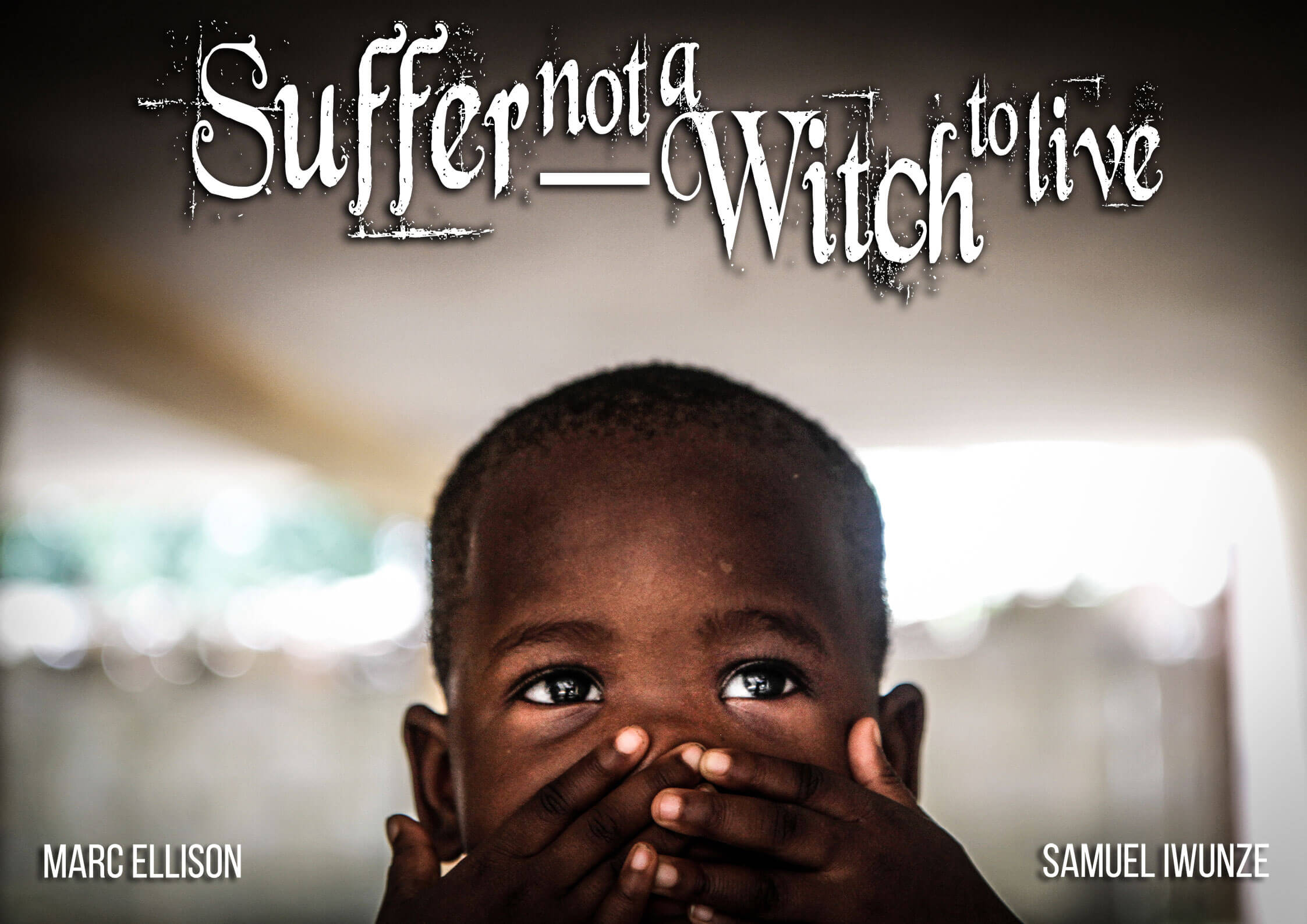
The winning entry – Lost Childhoods: How Nigeria’s Fear of Child ‘Witchcraft’ Ruins Young Lives – was praised on Monday for its interactive investigation into the practice of branding children and young adolescents as “witches”. “Combining graphic novel imagery with film, this highly accessible piece effectively covers a major human rights issue,” One World Media organisers said from the awards gala at London’s British Academy of Film and Television Arts (BAFTA).

Blamed for family illness, sudden financial loss or other misfortunes, the children are often beaten, locked into cages, branded with hot knives or made to undergo costly “exorcisms” performed by so-called “prophets” in local churches. With little choice but to flee, many children end up as drug addicts and living in rubbish dumps or on the streets.

AJLabs teamed up with journalist-photographer Marc Ellison and Nigerian illustrator Samuel Iwunze to unearth the facts of this under-reported story. Working meticulously with local fixers, NGOs and child psychologists, Ellison was able to expose the practice that has taken hold in parts of the Niger Delta and that has partially been fuelled by myths propagated by the Nigerian film industry.

Lost Childhoods employs a mix of visual and textual formats, including comic/graphic novel illustrations to preserve anonymity and portray past events. Carlos Van Meek, Al Jazeera’s director of Digital Innovation and Programming, said, “This story, in particular, is a skilful weave of investigations, videos, photos and illustrations that brings to light disturbing physical, emotional and religious abuse against children. Our goal is – and always will be – to make an impact that leads to positive change at the local and international level.”

As further testament to the production, AJLabs worked with NGOs to translate the graphic novel into local languages for distribution within communities, schools and churches in Nigeria, in an attempt to educate people and end the practice of scapegoating innocent children and branding them as witches.

Nigeria witchcraft

Cartooning in the doldrums? Cartooning Award 2019 seeks nominations!

June 19, 2019

Last week the New York Times announced that it would no longer carry [https://www.nytimes.com/2019/06/10/business/international-new-york-times-political-cartoons.html] political cartoons in its international edition. The outcry was loud but also accompanied by other voices such as on 16 June 2019 “The point is that globalisation and information technology have changed the business of cartooning. Cartoonists wedded to the old-school, in-house ways of the 20th century can throw tantrums about free speech as much as they like. If they do not recognise the way the world has changed – and is changing – then they will be left behind as their profession moves forward. History is not on their side. Just as 18th-century copperplate engravings were replaced by lithograph prints, and standalone caricatures were replaced by cartoons in 19th-century humour magazines, and they in turn by 20th-century newspaper cartoons, the web cartoon has well and truly arrived in the 21st century.“[http://theconversation.com/the-new-york-times-ends-daily-political-cartoons-but-its-not-the-death-of-the-art-form-118754]

In the meantime, Cartoonists Rights Network International seeks nominations for its twenty-fourth Courage in Editorial Cartooning Award. Read the rest of this entry »

Controversial spyware company promises to respect human rights…in the future

June 19, 2019

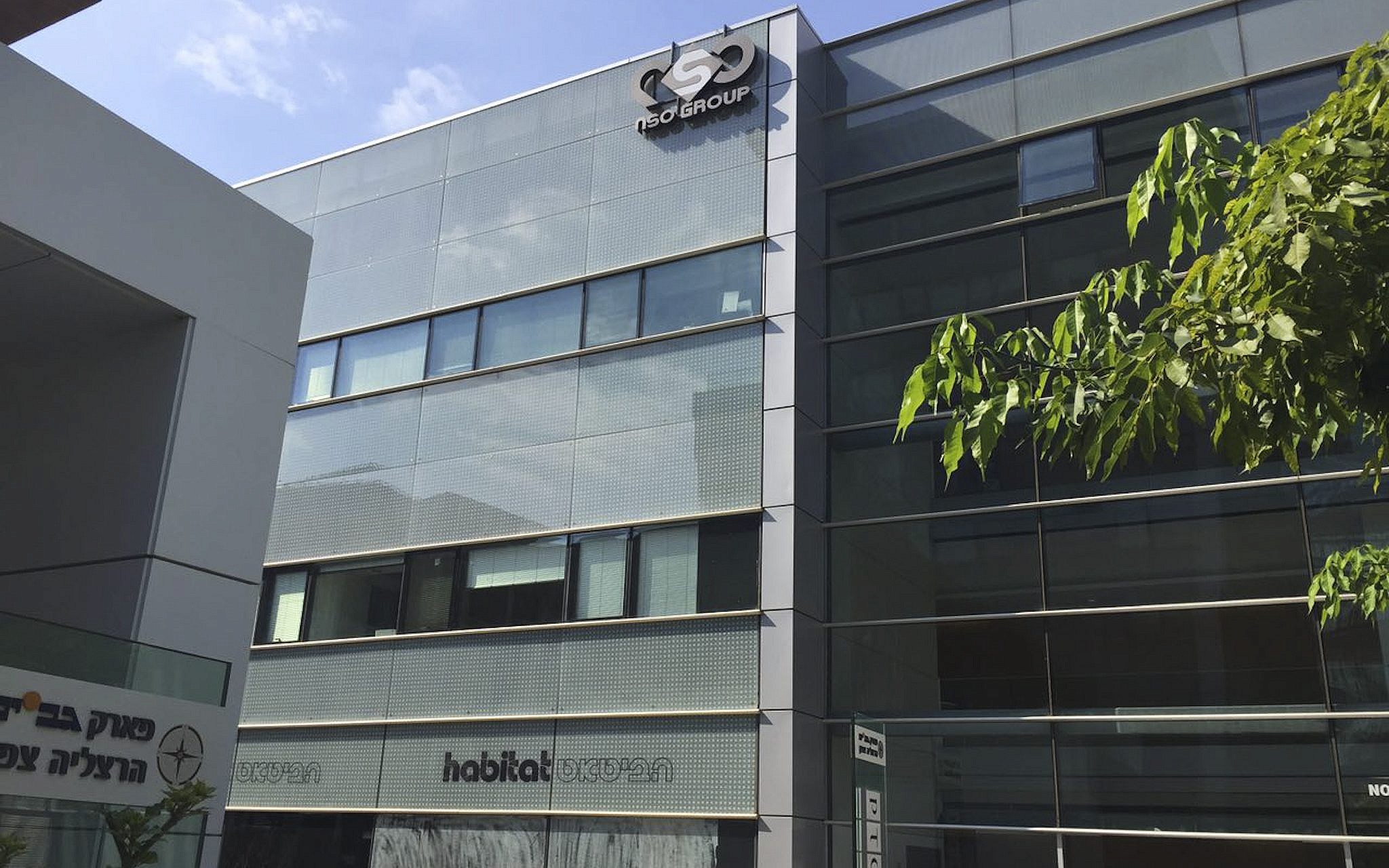
This photo from August 25, 2016, shows the logo of the Israeli NSO Group company on a building in Herzliya, Israel. (AP Photo/Daniella Cheslow)

This photo from August 25, 2016, shows the logo of the Israeli NSO Group company on a building in Herzliya, Israel. (AP Photo/Daniella Cheslow)

Newspapers report that controversial Israeli spyware developer NSO Group will in the coming months move towards greater transparency and align itself fully with the UN Guiding Principles on Business and Human Rights, the company’s owners said over the weekend. [see also: https://humanrightsdefenders.blog/2019/02/19/novalpina-urged-to-come-clean-about-targeting-human-rights-defenders/]

Private equity firm Novalpina, which acquired a majority stake in NSO Group in February, said that within 90 days it would “establish at NSO a new benchmark for transparency and respect for human rights.” It said it sought “a significant enhancement of respect for human rights to be built into NSO’s governance policies and operating procedures and into the products sold under licence to intelligence and law enforcement agencies.

The company has always stated that it provides its software to governments for the sole purpose of fighting terrorism and crime, but human rights defenders and NGOs have claimed the company’s technology has been used by repressive governments to spy on them. Most notably, the spyware was allegedly used in connection with the gruesome killing of Saudi journalist Jamal Khashoggi, who was dismembered in the Saudi consulate in Istanbul last year and whose body has never been found.

Last month London-based Amnesty International, together with other human rights activists, filed a petition to the District Court in Tel Aviv to compel Israel’s Defense Ministry to revoke the export license it granted to the company that Amnesty said has been used “in chilling attacks on human rights defenders around the world.”

On Friday the Guardian reported that Yana Peel, a well-known campaigner for human rights and a prominent figure in London’s art scene, is a co-owner of NSO, as she has a stake in Novalpina, co-founded by her husband Stephen Peel. Peel told the Guardian she has no involvement in the operations or decisions of Novalpina, which is managed by my husband, Stephen Peel, and his partners and added that the Guardian’s view of NSO was “quite misinformed.”

And Citizen Lab is far from re-assured:  https://citizenlab.ca/2019/06/letter-to-novalpina-regarding-statement-on-un-guiding-principles/…

https://www.timesofisrael.com/controversial-nso-group-to-adopt-policy-of-closer-respect-for-human-rights/

https://www.theguardian.com/world/2019/jun/18/whatsapp-spyware-israel-cyber-weapons-company-novalpina-capital-statement