Archive for the 'Human Rights Defenders' Category

State of human rights in Pakistan 2021

May 7, 2022

On 2 May 2022 – for the 30th year – the Human Rights Commission of Pakistan has put forward its review of the state of human rights in the country and the measures that should be taken to reduce human rights violations in the country. The main takeaway from the report is that there were blatant and unrelenting attempts to crack down on dissent, with at least nine journalists having faced harassment in an attempt to silence them in their work. As happens every year, violence against women took every possible form: from rape to domestic abuse to horrific murders to honour killings. The report has noted that 478 honour killings were reported in the country in 2021, although the number is almost certainly much higher with many never reaching the press, and over 5000 cases of rapes were reported by the media. Overall, violence in the country appeared to have increased quite dramatically. The HRCP has especially noted the case of Nazim Jokhio, and the mob lynching of Sri Lankan national Priyantha Kumara in Sialkot. These are but just a few examples of the disturbing trend of increased violence in the country. Just a few months back, research had revealed how many of these cases of violence are perpetrated by young people. The past few years we have watched in horror as Pakistani society has increasingly grown more violent — bringing nightmare-inducing optics straight to our phones. This is a direct result of the extremist tendency prevalent in society, an inevitable consequence of consistent state policies.

The report has also noted the way the previous government used ordinances to push through laws, some of them highly detrimental to freedom of expression. The HRCP has also noted that religion was used multiple times over the years to try and stop various acts of legislation from being passed. One of the most difficult issues human rights defenders in Pakistan have faced over a number of years has been that of missing persons or enforced disappearances. In 2021, says the HRCP, the highest number of enforced disappearances was reported to have been in Balochistan, with the government having failed to resolve concerns of families of the missing despite sit-ins in Islamabad.

From missing persons to the Gujjar and Korangi nullah evictions to sectarian violence to violence against transgender persons — the HRCP’s State of Human Rights 2021 is a timely reminder to the current government that it must do better on all these counts and more. It is on the Shehbaz Sharif led government to ensure that media freedom is upheld, there are no more arbitrary anti-journalism laws, and journalists are not harassed for doing their jobs. The incumbent government must not make the mistake of taking human rights issues lightly during its tenure. This report card on human rights by the HRCP comes out every year but each successive government has failed to take suggestions from rights activists seriously. It is hoped that with a change in government there will finally be a change in how citizens’ rights are treated and that all citizens from all communities and regions in the country can feel safe and less vulnerable to injustice and state or non-state violence.

See also: https://humanrightsdefenders.blog/2020/02/12/asma-jahangir-memorial-lecture-at-second-anniversary-of-her-death/

The Chair of Human Rights Commission of Pakistan (HRCP) is Hina Jilani.

https://www.thenews.com.pk/print/954916-state-of-human-rights
https://www.latestly.com/agency-news/world-news-address-human-rights-violations-seriously-hina-jilani-to-pak-government-3654179.html


Colombia: 52 activists killed in 3 months

April 29, 2022

In Summary:

• Most of the victims are targeted because they clash with the interests of illegal armed groups, including drug trafficking gangs, according to Colombia’s human rights ombudsman.

• The victims include 28 land rights and community rights activists, nine indigenous activists and four farming activists, Colombian newspaper El Tiempo reports. 

A total of 52 Colombian human rights activists and community leaders have been killed in the first three months of this year, authorities say.

It is a significant increase from 2021, which saw 145 murders all year.

Most of the victims are targeted because they clash with the interests of illegal armed groups, including drug trafficking gangs, according to Colombia’s human rights ombudsman.

The country is one of the world’s most dangerous for activists, monitors say.

The victims include 28 land rights and community rights activists, nine indigenous activists and four farming activists, Colombian newspaper El Tiempo reports. Of the victims, 48 ​​were men and four were women.

One of the most shocking cases was that of Breiner David Cucuñame, a 14-year-old indigenous activist who was shot dead in January while on patrol with an unarmed group that seeks to protect indigenous lands.

Colombia is officially at peace after signing a deal with the largest rebel group, the Revolutionary Armed Forces of Colombia (Farc), in 2016. But other armed gangs continue to operate in the country, the world’s largest cocaine producer.

Violence started increasing towards the end of last year due to disputes over territory and resources involving dissident Farc rebels and members of another Marxist guerrilla group – the National Liberation Army (ELN) – as well as right-wing paramilitary groups and criminal gangs such as the Gulf Clan.

“The homicides against social leaders and human rights defenders seriously affect the foundations of democracy,” said Carlos Camargo, the human rights ombudsman.

https://www.the-star.co.ke/news/world/2022-04-27-colombia-reports-52-activists-killed-in-three-months/

Press Freedom Awards in Hong Kong cancelled

April 29, 2022

Oiwan Lam on 26 April 2022 reported that Hong Kong’s Foreign Correspondents’ Club has canceled its Human Rights Awards for fear of “legal risks”

Image created by Oiwan Lam.

The Foreign Correspondents’ Club, Hong Kong (FCC HK), a press freedom watchdog, announced they would cancel their 2022 Human Rights Press Awards (HRPA) on April 25.  Eight members of the Club’s Press Freedom Committee have resigned in protest over the decision. 

Many foreign correspondents were shocked by the decision. Launched in 1995,  the HRPA has been one of the most important platforms to celebrate and honour human rights journalism from around Asia. The Club normally announces the winners on May 3, World Press Freedom Day.

Hong Kong Free Press (HKFP) quoted sources from FCC HK that the cancellation was related to the legal risks in presenting awards to the now-defunct Stand News. Two former senior staff members of the independent news outlet have been charged with conspiring to publish “seditious publications” pending trial. 

Stand News was forced to shut down last December after security police raided its office. The police authorities accused the news site of publishing “seditious materials” with the intent to cause hatred towards the government and the judiciary. 

An FCC member told the HKFP that Stand News would receive four awards and five merits in this year’s award, but “certain items” would pose a legal risk. 

In a letter to the Club’s members, the president of FCC HK Keith Richburg said the decision was made in the organization’s board meeting on April 23:

Over the last two years, journalists in Hong Kong have been operating under new “red lines” on what is and is not permissible, but there remain significant areas of uncertainty and we do not wish unintentionally to violate the law. This is the context in which we decided to suspend the Awards.

The letter also says that “recent developments might also require changes to our [FCC HK’s] approach” in the promotion of press freedom.

As the city’s incoming Chief Executive John Lee has vowed to apply the “strictest measures” to clamp down on “anyone who tries to use journalistic work as a shield to engage in crimes endangering national security” in response to the crackdown on Apple Daily, FCC HK’s anticipation of legal risks is valid.

Yet, as a press freedom watchdog, many see the choice to ax the awards as an act of self-censorship antithetical to the organization’s purpose, as independent journalist Ilaria Maria Sala wrote on Twitter:

Eight members of the Club’s press freedom committee have resigned in protest over the decision. Shibani Mahtani, Washington Post’s Southeast Asia and Hong Kong Bureau Chief, is one of the resignees. As one of the winners of the Human Rights Press Awards in 2020, Shibani Mahtani expressed her regrets about the decision and explained, in a Twitter thread, the significance of the annual occasion in Asia: See also: https://humanrightsdefenders.blog/2016/12/01/rsfs-press-freedom-prize-2016-goes-to-the-64-tianwang-website-in-china/

For more on the real, unannounced winners: https://hongkongfp.com/2022/04/27/in-full-winners-of-the-axed-fcc-human-rights-press-awards-revealed/

see also for future editions:

https://www.scmp.com/news/hong-kong/politics/article/3176537/american-university-taking-over-hong-kong-press-groups

Steven Donziger finally free..!

April 29, 2022

Steven Donziger, the human rights lawyer who took on Chevron, spent nearly a thousand days in jail or on house arrest. Amnesty says it was corporate retaliation.

This article originally appeared on 26 April at Common Dreams:

Human rights lawyer Steven Donziger walked free Monday after 993 days of detention stemming from his decades-long legal fight with Chevron, which deployed its vast resources in a campaign to destroy Donziger after he won a $9.5 billion settlement against the fossil fuel giant over its pollution of the Amazon rainforest.

“It’s over. Just left with release papers in hand,” Donziger wrote on Twitter. “Completely unjust that I spent even one day in this Kafkaesque situation. Not looking back. Onward.”

Donziger’s case has attracted global attention and outrage, with the UN high commissioner on human rights calling his prolonged detention a violation of international law. Lawmakers in the United States have also decried Donziger’s prosecution as an “unprecedented and unjust legal assault.” See also: https://humanrightsdefenders.blog/2022/04/14/why-is-the-harvard-administration-so-reluctant-to-speak-up-for-steven-donziger/

“We are relieved that Steven Donziger will finally recover his freedom after almost 1,000 days of arbitrary detention, which included 45 days in prison and over 900 days under house arrest,” Daniel Joloy, senior policy advisor at Amnesty International, said in a statement Monday. “He should have never been detained for even one day, as it has been clear the whole process against him has been in retaliation for his human rights work that exposed corporate wrongdoings.”

“Corporations must not be allowed to continue abusing the U.S. justice system to silence and intimidate human rights defenders or anyone else exposing their wrongdoing,” Joloy added.

…In 2014, a federal judge with ties to Chevron ruled that Donziger was guilty of a “pattern of racketeering activity,” a charge he has denied. U.S. District Judge Lewis Kaplan’s decision was based on testimony from a witness who later admitted to lying.

https://www.salon.com/2022/04/26/human-rights-lawyer-took-on-chevron-is-finally-free–after-993-days-_partner/

https://www.commondreams.org/news/donziger-pardon

https://www.democracynow.org/2024/6/6/headlines/50_organizations_call_on_biden_to_pardon_human_rights_lawyer_steven_donziger

https://www.jurist.org/news/2025/01/human-rights-group-urges-joe-biden-to-pardon-environmental-lawyer-steven-danziger/

EU finally moves on law to protect media from legal abuse (SLAPPs)

April 28, 2022

I have devoted posts to this important issue before [see: https://humanrightsdefenders.blog/tag/strategic-lawsuits-against-public-participation-slapps/]. Let us not forget that Daphne Caruana Galizia was facing 40 lawsuits when she was murdered. See: https://www.trueheroesfilms.org/thedigest/laureates/70b0bee4-9af2-40c6-a11e-5b9ad159b96f

Andrew Rettman writing in the EUObserver of 27 April 2022

Independent media should have less to fear in future from malicious lawsuits, after the EU Commission put forward a new law to shield them.

Billionaires, big corporations, and autocrats have, in recent years, resorted ever more frequently to so-called strategic lawsuits against public participation (SLAPPs) in order to try to gag adversaries.

But if EU states and MEPs back the commission’s proposed anti-SLAPP directive, then judges will soon get a fresh mandate to throw out bogus cases — and compensate their victims.

With these measures we are helping to protect those who take risks and speak up when the public interest is at stake,” EU values commissioner Věra Jourová said in Brussels.

We promised to defend better journalists and human rights defenders,” she said. “The new law does that,” Jourová said.

The directive lists criteria which individual judges can, using their discretion on a case-by-case basis, use to decide whether litigation is genuine or abusive.

These include seeking disproportionately huge financial damages or launching multiple cases at the same time, for instance.

The anti-SLAPP law applies to non-EU or “third” countries, giving European judges leeway to annul vexatious judgments against EU nationals if they are doled out in London, for example.

It is delimited to civil cases “with cross-border implication”. This is because EU competences do not cover national and criminal media laws in member states under the terms of Europe’s treaties. It means a Polish journalist or LGBTI rights activist, for example, who is sued by a Polish entity would normally not be covered.

But the “cross-border” element has been drafted by Jourová’s lawyers in a canny way so that if their case arguably had relevance beyond their national borders then the EU law would kick in.

EUobserver has faced three lawsuits in the past three years that were designated as SLAPPs by leading pro-free media NGOs.

The first saw a Luxembourg-based firm sue us in Belgium about an article on disinformation in Malta — an archetypal example of a “cross-border” lawsuit falling under the directive.

The second saw a Belgian firm sue EUobserver in Belgium, but as the story covered VIP-jet leasing security for EU and Nato heads of state from all over Europe this would also be covered under the cross-border clause.

The final one, which is ongoing, involves a Belarusian firm suing EUobserver in Belgium over an article about alleged money-laundering in Cyprus, but this would also likely fall under both the “third-country” and “cross-border” provisions, NGO experts told this website Wednesday in a flash analysis.

The commission “did the best it could do”, given its jurisdiction, Julie Majerczak, from the Paris-based NGO Reporters Without Borders, said. “It’s not perfect, but it’s a big step forward — two years ago we were nowhere on this,” she added…

There were at least 438 SLAPP cases in 24 member states in 2021 targeting 978 people or entities, the commission noted. Journalists in Bulgaria, Croatia, Poland, and Slovenia were being routinely targeted, Reporters Without Borders said. Journalists in Italy and environmental activists in France and Spain were also notable victims, it added.

https://euobserver.com/rule-of-law/154815

https://www.maltatoday.com.mt/news/europe/116496/brussels_unveils_groundbreaking_proposal_to_prevent_and_penalise_slapp_lawsuits_#.Ymqx_5LP1TZ

https://eutoday.net/news/human-rights/2022/slapps-european-commission-seeks-to-tackle-abusive-lawsuits-against-journalists-and-human-rights-defenders

Karla Avelar speaks out in Diversity in Adversity campaign

April 28, 2022

Episode 4: People who work to end violence and discrimination based on sexual orientation and gender identity (SOGI) face multiple forms of risk. They can be targeted for their actual or perceived sexual orientation or gender identity, and for being human rights defenders as well.

Karla Avelar is trans woman human rights defender from El Salvador who has been working since the 1990s to defend the rights of LGBTI persons, people with HIV and other marginalised groups. After being subjected to two and a half years in prison, where she was tortured, sexual assaulted and denied access to medical treatment, she began to work more intensely for the rights of LGBTI persons. She began by calling for appropriate provision of HIV medications and greater access to justice within El Salvador. In 2008 she founded COMCAVIS trans, El Salvador’s first organisation for trans women with HIV. In 2013, she was the first trans woman to appear before the Inter-American Commission on Human Rights. After multiple threats to her own life and that of her mother, she applied for asylum in Switzerland in 2017, where she now lives and continues her work. She was a finalist of the MEA in 2017 [see: https://humanrightsdefenders.blog/2017/05/16/trans-defenders-karla-avelars-life-is-under-constant-threat/]

Diversity in Adversity is a joint campaign by Mary Lawlor, UN Special Rapporteur on Human Rights Defenders, and Victor Madrigal-Borloz, UN Independent Expert on sexual orientation and gender identity. It will feature interviews with 10 SOGI rights defenders from all over the world; ordinary people engaged in extraordinary work. For more on this campaign, visit: https://www.ohchr.org/en/special-proc…

Three Aurora Prize finalists for 2022 announced

April 26, 2022

On 24 April – Armenian Genocide Remembrance Day – the Aurora Humanitarian Initiative announced the names of 2022 Aurora Humanitarians, chosen for their exceptional impact, courage, and commitment to putting themselves at risk to help others. One of the Humanitarians will later be named the 2022 Aurora Prize Laureate.

Such exceptional modern-day heroes remind us that even in the darkest times, a brighter future is in the hands of those who believe in it and are willing to do extraordinary things to protect it. Many of us may feel overwhelmed by the seemingly endless tide of human sorrow and suffering we face today, but the Aurora Humanitarians remain beacons of compassion, guiding and inspiring humanity. It is an honor for me to be part of the Initiative that recognizes and supports them,” said Lord Ara Darzi, Chair of the Aurora Prize Selection Committee and Director of the Institute of Global Health Innovation at Imperial College London.

The 2022 Aurora Humanitarians are:

  • Jamila Afghani (Afghanistan), a peace activist and founder of the Noor Educational and Capacity Development Organization (NECDO) who has dedicated over 25 years of her life to giving the women of Afghanistan access to education. After the Taliban took over her country, Jamila Afghani was forced to flee her homeland – but she hasn’t given up on its people.
  • Hadi Jumaan (Yemen), a peace activist, mediator, and body collector from Yemen who regularly risks his life to facilitate the exchange of prisoners of war and recover human remains from the frontlines. As the country continues to experience a prolonged political and humanitarian crisis caused by the civil war, Mr. Jumaan brings to the families the only solace left to them – the knowledge that their loved and lost ones may finally rest in peace.
  • Mahienour El-Massry (Egypt), a lawyer and political activist from Egypt who promotes political freedoms and human rights in the country by organizing peaceful protests and defending political prisoners in courts. In Egypt, voicing disagreement with the official policy can be dangerous, and Mahienour El-Massry has been detained and put in jail several times for her activism. Nevertheless, she remains optimistic about the future of her country and committed to being an agent of positive change. [see also: https://humanrightsdefenders.blog/2020/11/29/2020-award-of-european-bars-associations-ccbe-goes-to-seven-egyptian-lawyers-who-are-in-prison/]

“As one of the Aurora Prize Laureates, I have witnessed the impact of support and recognition on the international level. The Aurora Humanitarian Initiative gives activists and human rights defenders, often operating on their own, a way to promote and elevate their work so they can achieve even more. I would like to congratulate the 2022 Aurora Humanitarians and wish them all the best in their activities,” said 2021 Aurora Prize Laureate Julienne Lusenge, co-founder of Women’s Solidarity for Inclusive Peace and Development (SOFEPADI) and Fund for Congolese Women (FFC).

In accordance with the tradition, the names of the 2022 Aurora Humanitarians are inscribed in the Chronicles of Aurora, a unique 21st century manuscript containing the depictions of the Aurora Humanitarian Initiative activities, and the tome will be displayed for the public in the Matenadaran.

For more about the Aurora Prize for Awakening Humanity see: https://www.trueheroesfilms.org/thedigest/awards/35D4B5E3-D290-5DF9-08E1-14E6B3012FFA

https://hetq.am/en/article/143783

Lev Ponomarev, human rights defender, leaves Russia

April 26, 2022
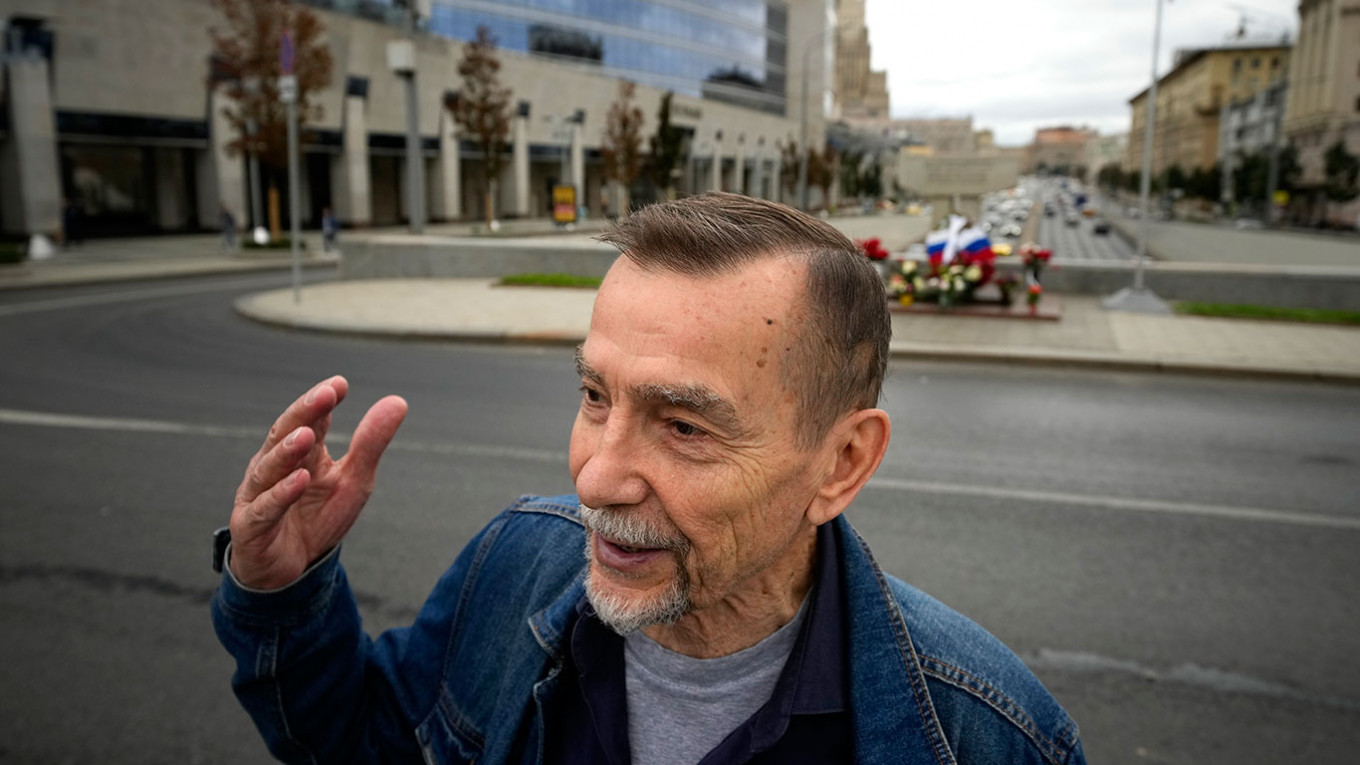
Lev Ponomarev. Alexander Zemlianichenko / AP Photo / TASS

On 22 April, 2022 AFP reported that Lev Ponomarev, a veteran Russian rights defender who was earlier detained for protesting the Kremlin’s military operation in Ukraine, has “temporarily” left the country. See also: https://humanrightsdefenders.blog/2022/02/27/anti-war-human-rights-defenders-in-russia/

The 80-year-old former parliament member has been engaged in activism since the last years of the Soviet Union, helping create the now-dissolved Memorial organization in 1988. He said in a statement on Friday that worries about his personal safety, including “shadowy information about what they intended to do to me,” have forced him to take a break abroad.

I doubt that my leave of absence will last long,” said Ponomarev, whose name has been added to Moscow’s list of “foreign agents” in Russia.

Ponomarev did not disclose his new location, saying only that he continued to closely follow the “worrying” news in Russia.

Ponomarev confirmed his departure on the same day fellow Kremlin critic Vladimir Kara-Murza appeared before investigators on charges of spreading false information about Russia’s military campaign in Ukraine, according to his lawyer. [see: https://humanrightsdefenders.blog/2022/04/14/human-rights-defender-vladimir-kara-murza-arrested-in-russia/]

The charge, which falls under a new law introduced after Russia’s Feb. 24 launch of the campaign, could see Kara-Murza, 40, jailed for up to 15 years. Kara-Murza was due to appear in a Moscow court later Friday, Interfax said.

Colleague activist Ronald Airapetyan: //www.rferl.org/a/russia-activist-asylum-netherlands/31823471.html

See also re Mikhail Nesvat: https://www.rferl.org/a/russia-activist-asylum-united-states-crackdown/31833981.html

https://www.themoscowtimes.com/2022/04/22/veteran-rights-defender-ponomarev-leaves-russia-a77467

Sudan: providing information against sexual violence to the UN equals “leaking state secrets”

April 26, 2022

Mat Nashed in Al-Jazeera of 18 April 2022 reports how Sulima Ishaq’s work against sexual violence is now being used against her.

On March 28, Volker Perthes told the United Nations’ Security Council that Sudanese government forces had raped 16 female protesters since last December’s anti-coup protests. He added that as UN envoy for Sudan, he was working with the Combating Violence Against Women (CVAW) Unit under the Ministry of Social Affairs and civil society to mitigate sexual violence in the country.

The next week, Sulima Ishaq, head of the unit, was interrogated by security services. Her lawyers say she is being investigated for accusations of “leaking state secrets” to the UN envoy under Article 47 of the country’s criminal act.

The information I gave to the [UN] had already been broadcasted on television channels and media outlets,” Ishaq, who is now worried that she’ll go to prison on trumped-up charges, told Al Jazeera over the phone. “But because the information was presented to the Security Council and the [coup forces] are afraid of getting sanctioned, they are [targeting] me now.”

In March, a Khartoum office – belonging to a commission investigating a June 3, 2019 incident in which security forces reportedly murdered at least 120 people to break up a sit-in – was raided by security forces.

According to Emma DiNapoli, a legal officer focusing on Sudan for Redress, a London-based non-profit advocating an end to torture worldwide, activists cooperating with the organisation have recently reported more security officers stalking them outside their homes. In some cases, this has resulted in unlawful arrests.

None of our partners has had arrest warrants issued against them, but I think there is a general sentiment that there is higher surveillance,” DiNapoli told Al Jazeera. “Even if they are not really being surveilled, [the arrests] are having a chilling effect.”

However, experts and rights groups say Ishaq’s case represents an escalation of a broader campaign to intimidate activists and put human rights defenders on high alert.

Kholood Khair, manager of Khartoum-based think-tank Insight Strategy Partners, told Al Jazeera that the coup government is trying to make an example out of Ishaq. The authorities, she said, are particularly irked since Ishaq is a civil servant, which gives her allegations more credibility in the eyes of the international community.

In Sudan, rape victims are traditionally harassed by the public and even punished by the police, so the number of people coming forward to Ishaq was seen as a big deal, Khair explained.

“Sulima was trying to highlight that rape is a weapon of war and a weapon of repression and the number of cases [documented] shows that it is a state tactic … not a case of just individual rapists,” she said.

Mohamed Osman, Sudan researcher at Human Rights Watch (HRW), said activists have always feared that they could be targeted for documenting human rights violations against protesters. He cited the recent arrests of journalists, lawyers and doctors who appear to have been targeted for tracking unlawful arrests and killings in the country.

But the targeting of a high-profile person like Ishaq suggests that security forces are even more sensitive to scrutiny following the United States’ decision to impose sanctions on the Central Reserve Police last month, said Osman. The US cited the unit’s excessive force against protesters – including the use of live ammunition – as the reason for the decision.

Ishaq told Al Jazeera that she wished the UN envoy had been more subtle by not mentioning her unit at the Security Council meeting, given the level of repression in Sudan. “I feel that the way [the information] was stated was a little bit insensitive,” she said.

In response, Fadi Al Qadi, the spokesperson for the UN envoy, told Al Jazeera that “the special representative to the secretary-general did not name any individual in the Security Council as a source”.

And now, an atmosphere of fear is slowly enveloping the country, causing dissidents, activists and civil society to beef up personal security and take more precautions to protect themselves and sources from the eye of the authorities.

One of them is Nabil Adeeb, the septuagenarian human rights lawyer heading the investigation into the June 2019 massacre.

After government forces stormed the tribunal’s office, there were fears that evidence could be compromised and that the names of witnesses – who provided testimonies that possibly implicated specific security branches in the massacre – could be exposed.

“Our records are secure and we know that nobody would be able to access them, but we are concerned that if we resume our activities in the same place then we might expose the investigation to unwanted people since the office could be bugged,” he said.

Adeeb  – who is also Ishaq’s lawyer – told Al Jazeera that she is currently being charged for defaming the security forces under Sudan’s cybercrime law, an accusation he believes has little merit.

He is concerned that Ishaq could still face more harassment and graver accusations for simply doing her job from the state, which should naturally be helping her instead. Ishaq too fears that the worst is yet to come.

”I think that I will be scapegoated to kick out Volker [from Sudan],” she said.  “I will then be charged for jeopardising national security for providing [him] with sensitive information.”

https://www.aljazeera.com/features/2022/4/18/sudan-investigates-social-worker-fo-leaking-state-secrets-to-un

Monitoring and documenting violations in Ukraine

April 22, 2022

HURIDOCS has been working with urgency to meet the needs of our Ukrainian partners to enable effective, comprehensive and safe documentation of human rights violations. The HURIDOCS Team on 19 April 2022 tells how:

A maternity ward and children’s hospital are hit by an airstrike. Schools and apartment blocks are shelled. A psychiatric facility is attacked. Residential areas are targeted by cluster bombs. Critical infrastructure is struck by missiles. Mass civilian graves are discovered.

These horrendous attacks on civilians in Ukraine, some of them on healthcare facilities, are labelled by the United Nations as ‘acts of unconscionable cruelty’. Russia’s invasion of Ukraine, which started on 24 February 2022, is unfolding as a series of atrocities committed against civilians.

Indiscriminate attacks using missiles, heavy artillery shells, rockets and airstrikes on civilians and non-combatants are in contravention of international humanitarian law and may amount to war crimes. Apart from attacks on civilians, Russia is reported to be shelling agreed-upon humanitarian corridors from conflict zones and therefore halting mass evacuations. 

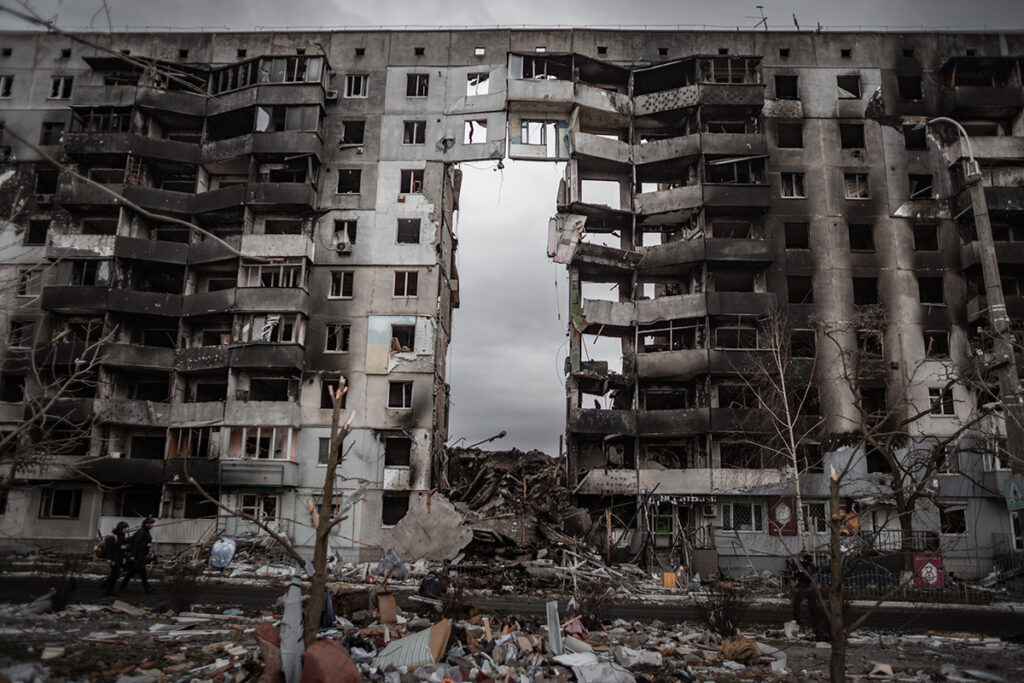
Borodyanka, a Ukrainian commuter town near Kyiv, was among the first places to be hit by Russian airstrikes.

Kyiv Declaration calls for support to groups actively documenting violations

Leaders of more than 100 Ukrainian civil society organisations have published the Kyiv Declaration, which defines the invasion as “a war against the fundamental principles of democracy”. The #KyivDeclaration asks for solidarity and immediate action, and outlines six urgent appeals to the international community. The organisations are collectively calling for the creation of safe zones in Ukraine, military aid, sanctions against Russia, humanitarian aid, freezing assets and revoking visas of prominent Russian families, and providing equipment to track war crimes. This includes technology and support to groups who are actively documenting the events in Ukraine, as well as human rights groups and lawyers who will be supporting accountability efforts in the long run.

An appeal from 100 Ukrainian civil society leaders

HURIDOCS has been working with urgency to meet the needs of our Ukrainian partners to enable effective, comprehensive and safe documentation of human rights violations. 

“When Russia started its full-scale invasion in February this year, we revived the work of EuromaidanSOS. We are faced with a large number of war crimes that need to be documented. Among these are indiscriminate attacks on civilians and civilian objects, deliberate killings, torture, cruel and inhumane treatment, enforced disappearances and other crimes listed in the Rome Statute. Such acts are not justified by any circumstances of the war. Russia is simply using war crimes as a way of waging war.

Our volunteers from EuromaidanSOS are based in different parts of the country, and some of them work directly in hot spots, where they face constant connectivity issues. This is why usable technical solutions are indispensable. As this work is undertaken in the context of war, it is important to have qualified technology support. We are very grateful to the organisations, such as HURIDOCS, providing it in this difficult time for us.”– Oleksandra Matviychuk, Head of the Center for Civil Liberties and Board Member of HURIDOCS

Documenting violations is vital for accountability

Four days into the Russian invasion, the International Criminal Court (ICC) Prosecutor opened an investigation into war crimes being committed in Ukraine. In conjunction with the investigation, the ICC launched a contact portal and anyone with relevant information is urged to come forward and share the details with the ICC. The United Nations Human Rights Council expressed that it is gravely concerned about the escalating human rights and humanitarian crisis and passed a resolution to establish a Commission of Inquiry. The Commission will first and foremost collect evidence of violations and those responsible, and subsequently submit reports to the Human Rights Council and General Assembly. The Federal Prosecutor’s Office in Germany has launched an investigation by collecting evidence of suspected crimes on civilians and critical infrastructure. Germany’s probe is based on the principle of universal jurisdiction, which allows countries to prosecute crimes against international law outside of its borders.

The United Nations High Commissioner for Human Rights released a statement where she expressed horror by the images of civilian bodies on the streets and in improvised graves in the town of Bucha. She stated that reports of egregious crimes raise serious questions about possible war crimes and grave breaches of international and humanitarian law. She urged that “it is vital that all efforts are made to ensure there are independent and effective investigations into what happened in Bucha to ensure truth, justice and accountability, as well as reparations and remedy for victims and their families”.

In addition to these and other measures already underway to investigate possible war crimes and breaches of international and humanitarian law, some of the most authoritative civil society organisations in Ukraine have established a global initiative to seek justice and hold perpetrators accountable. The ‘Breaking the Vicious Circle of Russia’s Impunity for Its War Crimes’  initiative was jointly established by the Ukrainian Helsinki Human Rights Union, the Kharkiv Human Rights Protection Group and the Center for Civil Liberties, and is also known as the ‘Tribunal for Putin’.

The Tribunal for Putin aims to document events which can be classified as genocide, crimes against humanity and war crimes under the Rome Statute of the International Criminal Court. The Tribunal for Putin will also collect evidence and facts on the crimes committed and will work with existing international mechanisms of the United Nations, Council of Europe, OSCE, EU and the International Criminal Court. The initiative has called for support from various actors such as international organisations, networks, government agencies, public associations, volunteer initiatives and groups who all share the common goal of restoring peace in Ukraine and ensuring that justice will prevail.

Civil society plays a crucial role in seeking justice

In this context, it is clear that the systematic documentation of human rights violations, irrespective of who is committing the transgression, is critical to achieving justice and accountability. Documentation should not only be undertaken to assist future justice and accountability mechanisms but also to support the process of reckoning and healing.

Civil society plays a key role in efforts to document and monitor violations, and to build and strengthen cases for accountability. Civil society actors are usually the first to respond to crises, have the deepest community reach and can mobilise the people who are living through these experiences. Documenting human rights violations as they happen is imperative in the process of restoring justice. To effectively and safely assist the community there is a need for strong digital tools to gather, process, preserve, manage, protect and analyse the rapidly growing bodies of potential evidence, including large amounts of storage-intensive video. In addition, deterrence against the worst violations can also be established through credible documentation strategies.

HURIDOCS is a longtime supporter of civil society organisations and human rights defenders who use human rights documentation strategies and tools as a means to strengthen accountability and advocate for justice. We are already supporting a number of groups working on documenting human rights violations in Ukraine and HURIDOCS invites other initiatives who need support with their documentation efforts to contact us. We value diverse approaches to documenting violations, as it may strengthen accountability measures and aid in articulating narratives during the process of memorialisation. 

Support for documenting violations in Ukraine

With the increased need for support to document violations in Ukraine to strengthen accountability, the Alfred Landecker Foundation has partnered with HURIDOCS to increase our capacity to support civil society-led initiatives where our expertise can be helpful. HURIDOCS is grateful to the Foundation for the support, as it comes at a time when documenting threats to peace, justice and democracy is critical. The support from the Alfred Landecker Foundation will be used to assist groups who are already participating in documentation efforts, and to aid other initiatives related to documenting violations in Ukraine. 

HURIDOCS is currently supporting our partners in the following ways:

  • Training and consultation on information collection, protection and management techniques and associated tools, such as Uwazi;
  • Setting up digital information repositories to securely store sensitive data;
  • Refinement and integration of existing technology solutions to document, protect and analyse evidence of human rights violations; and
  • Hardening and scaling infrastructure to preserve and protect large amounts of information.

There is a significant and growing need to support organisations with their efforts to gather, process, preserve, manage, protect and analyse information on abuses. Reliable documentation of violations is essential for the restoration of justice in the pursuit of upholding democracy and human rights.