Yesterday, 19 May 2014, EU foreign ministers, meeting in Brussels for the Foreign Affairs Council on Development, reaffirmed the EU’s commitment to promoting all human rights, whether civil and political, or economic, social and cultural, in all areas of its external action without exception, as part of working towards a rights-based approach to development coöperation. “The implementation of a rights-based approach to development cooperation should be based on the universality and indivisibility of human rights and the principles of inclusion and participation in decision-making processes; non-discrimination, equality and equity; transparency and accountability. The application of these principles should be central to EU development cooperation, thereby also ensuring the empowerment of the poorest and most vulnerable, in particular of women and girls, which in turn contributes to poverty reduction efforts,” said the Council conclusions. The Council also stressed the need for continued EU support for human rights defenders, capacity-building of local civil society organisations and promoting a safe and enabling environment in both law and practice that maximizes their contribution to development. Being closer to citizens and interacting with civil society, local authorities also play a crucial role in the effective implementation of a rights-based approach.
Moreover, the Council underlined that investment and business activities in partner countries should respect human rights and adhere to the principles of corporate social and environmental responsibility and accountability.
Thanks to Theo van Boven, who alerted me, I am happy to report another small step in the war against reprisals. On 21 April 2014 the UN General Assembly adopted a resolution on the Strengthening on the Treaty Bodies in which operative paragraph 8 strongly condemns intimidation and reprisals against human rights defenders and others who coöperate with the treaty bodies. (A/RES/69/268). For text of resolution: http://www.un.org/en/ga/search/view_doc.asp?symbol=A/RES/68/268
Another example of the earlier reported lawlessness in Bangladesh. On 15 May the director of investigation of the NGO Ain o Salish Kendra [ASK], Nur Khan, reported that six to seven people on a microbus tried to abduct him while returning home. The Observatory for the Protection of Human Rights Defenders, a joint programme of the World Organisation Against Torture and the International Federation for Human Rights, and the Asian Forum for Human Rights and Development, issued on 17 May 2014 an appeal to the Government of Bangladesh to impartially investigate the incident to bring the perpetrators to book.
Interesting to note that this piece found its way into the Tourism Sectionof the Thai newspaper Phuket Wan [“This is the first site on the island dedicated especially to tourism, property, restaurants and nightlife, and jobs”] of 19 May 2014. “The European Union EU must make the strengthening of bilateral relations with Laos contingent upon the Lao governments ability to make tangible progress in addressing key human rights issues, FIDH and it member organisation, the Lao Movement for Human Rights, said .” The paper then summarizes the briefing paper titled ‘Laos: The government’s failure to reform and address serious human rights issues call for EU action‘, released ahead of the 5th Laos-EU Working Group on Human Rights and Governance, held in Brussels today. [Foremost issues: rampant land grabbing and restrictions on freedom of expression, assembly, association, and religion as well as a credible investigation re human rights defender Sombath Somphone.
On 16 May 2014 the International Service for Human Rights [ISHR] reports that the African Commission on Human and Peoples’ Rights has designated a high-level focal point to document and follow up on cases of intimidation and reprisals against human rights defenders that cooperate with the African human rights system. The spokesperson of the ISHR, Clement Voulé, welcomed the move and said: ‘The UN and its Member States should take note of the African Commission’s initiative and approve the designation of a high-level UN focal point’…‘Delegations in New York should also heed the call led by Botswana and joined by 56 States in Geneva in March to expedite this process and ensure a comprehensive, system-wide response to reprisals.’ While this is in itself good news and a step in the right direction, some caution is needed:
(1) The tasks of documenting, monitoring and encouraging effective Commission follow up on reprisals has been delegated to the existing African Special Rapporteur on Human Rights Defenders, Reine Alapini-Gansou [‘By designating me as a focal point, the Commission has acted on the need to strengthen its response to reprisals by monitoring cases and working with States to prevent recurrence and promote accountability’]. However, there is no indication that Commissioner Alapini-Gansou is given additional powers or resources.
Still, I hope we can all share the ISHR’s passionate statement that “Any other outcome will signal support for impunity for the perpetrators of reprisals and a betrayal of human rights defenders and others who engage with the human rights system”.
In a 28-page report, Under Attack: Violence against health workers, patients and facilities, Human Rights Watch and the Coalition “Safeguarding Health in Conflict” highlight recent attacks in countries around the world. Major examples include the targeted killing of more than 70 polio vaccination workers in Pakistanand Nigeria; the arrests of health workers for providing care to protesters in Bahrainand Turkey; the bombing of hospitals and deaths of hundreds of patients and health workers in Syria; and attacks targeting health workers in South Sudan and Afghanistan. The report is released in advance of a meeting from 19-24 May 2014, of health ministers from around the world.
In an excellent piece written for CNN, Tanya Lokshina of Human Rights Watch, on 15 May gives an overview of the different measures that threaten human rights defenders in Russia. While attention is on Ukraine, a vicious crackdown on civil society in Russia itself also escalated with every week brings a new pernicious law or legislative proposal:
The authorities have blocked or essentially took editorial control over a number of independent news portals and are pushing new laws to stifle freedom of expression.
A week ago, President Vladimir Putin signed a law requiring Russian bloggers with significant followings to register with the authorities and comply with media regulations.
The same law requires blogging services and social networks to store user activity for six months.
Another legislative proposal would introduce administrative and criminal offenses for editors who publish “false anti-Russian” information or offer media support to “anti-Russian extremist and separatist forces.”
Another new draft law introduces a ban on publishing negative information about the Russian government and military.
Also, amendments presently under review by the State Duma, the lower house of parliament, would enable the authorities to throw people behind bars for up to five years for repeated participation in unauthorized public protests.
Sometimes it is good to look at how people can support human rights defenders elsewhere. Here an example from West Sussex, UK, where – using a script compiled exclusively from the first-hand accounts of Afghan women human rights defenders – Crawley’s Pitchy Breath Theatre Group voices testimony, underlining the risks to women’s freedom posed by any resurgence of the Taliban. The reading – on Monday 19 May – will be followed by an opportunity to ask questions and discuss the issues raised with Chris Usher, Amnesty International UK’s Country Co-ordinator for Afghanistan. There will also be the opportunity to take part in actions in support of Afghan women. This event forms part of Amnesty International UK’s campaign on women’s rights in Afghanistan. The local AI Group are hoping that “Even If We Lose Our Lives” can inspire the local community and contribute to more action protecting these women and the rights they are fighting fight for.
[Afghan women are too often portrayed as faceless, passive victims who are powerless to change the grave human rights abuses which regularly affect them. The script is based on the actual accounts of three women – Parween, whose teenage son was kidnapped and killed because she runs a girls’ school, Dr D, a gynaecologist whose son was injured in a bomb blast, and Manizha, who runs the largest Afghan organisation working on violence against women and girls at great personal cost.]
The recent killing of the lawyer Rashid Rehman (or Rahman) in a case of blasphemy in Pakistan has created a lot of media attention. This report from the local newspaper The News International of 17 May throws an interesting light on the follow up within the police and alleges that two lower level policemen have been made the scapegoats:
“Police bosses have held their subordinates responsible for their incompetence and negligence in the murder of human rights activist Rashid Rahman. The Multan CPO has transferred Chyllyak SHO Ghulam Abbas and Shah Shamas SHO Akbar Kamboh for their negligence in providing security to Rashid Rahman. On the other hand, a senior police official has contradicted receiving any sort of application from Rashid Rahman for security protection. The official said the government could not provide security to each citizen on demand. The government only provides security to the accused and complainant in all cases, including in blasphemy cases, instead of providing security to counsels. Rashid Rehman was gunned down in his chamber on May 7 evening just a month after he had been threatened by the prosecution during a court hearing. No progress could be made on his murder after eight days of the high profile assassination, which had been condemned across the world. The UN and the US have urged the government to ensure the arrest of killers. Sources in the CPO office disclosed that the route of providing security shelter passed through the SSP Operations. “When someone seeks security, he submits his request to the CPO office who forwards it to the SSP Operation for looking into the matter whether the applicant is deserved for security or not,” they added. They said the HRCP Task Force had informed the Multan CPO office on receiving life threats. The CPO office directed Cantonment SP Mehmoodul Hassan to ensure security to Rashid Rehman. The SP asked Shah Shamas SHO Akram Kamboh to ensure security in jail while Chyllyak SHO Ghulam Abbas was directed to ensure security in his chamber at District Courts. They said that both the SHOs had been suspended in this regard. On the other hand, the Punjab IGP office had directed the Multan CPO to ensure security for Rashid Rahman at any cost on the report submitted by Punjab Special Branch on April 21. However, the CPO office did not comply with the IGP office order and assigned a task to SSP Operation to provide security to rights activist. The sources said that the senior officers had suspended two SHOs to save their skin. CPO Sultan Ahmed Chaudhry was repeatedly contacted on Friday, but his gunman Abdur Razaaq promised every time to ring back, but to no avail. Multan SSP Operations Shaukat Abbas, however, denied that the application was sent to the police by the slain for security. “The government does not provide security to everyone in blasphemy cases. The government only provides security to the complainant and the accused,” he said. The government cannot provide security to the defence counsel even in blasphemy cases, he added. Meanwhile, human rights activists criticised the police for adopting dual standards. The police did not provide security to Rashid Rahman despite his application, but security was provided to a Muhammad Latif Ansar Sial alias Prof Lajpal. He is not an academician but always shows himself as professor. Lajpal had contested in all general elections or local bodies held in the past. He participated in the 2013 elections from NA-151 and PP-198, securing only 59 and 9 votes as an independent candidate. He contested the 2008 elections from NA-151 and secured 183 votes. Rights activists observed police were not taking one of the valuable assassinations seriously and using delaying tactics. The United Nations declared it a cold-blooded murder and strongly condemned it on May 9, right after the second assassination. They urged the government to ensure prompt investigation into the matter so that lawyers, human rights defenders and journalists could work without any fear. The spokesperson for UN High Commissioner for Human Rights Rupert Colville in Geneva said the murder of Rashid Rahman had “brought into stark focus the climate of intimidation and threats that permeates the work of human rights defenders and journalists in the country.“ The UN had urged the government last month to investigate the threats and ensure security for Rehman. “We condemn the killing of Rehman and urge the government to ensure a prompt investigation and bring the perpetrators to justice,” the UN spokesman said.
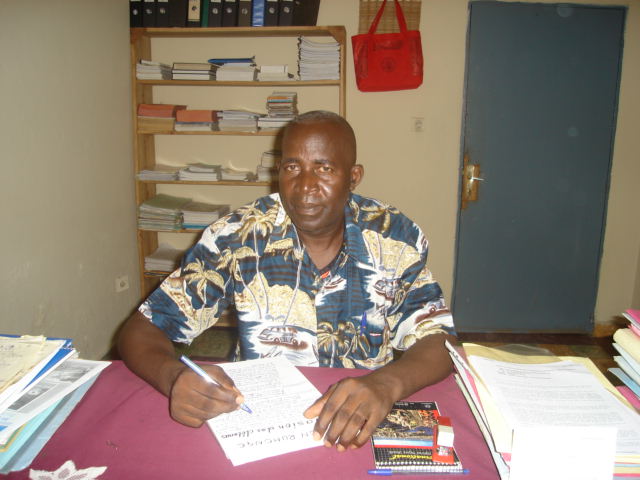
MEA Laureate 2007, Pierre-Clavier Mbonimpa, was arrested this morning early. The latest information is that he is still detained at the Police-Judiciare. The background is rising tension in Burundi, where it is feared that President Pierre Nkurunziza is expected to campaign for a third term in office in 2015 despite a two-term constitutional limit. The Economist of 29 March 2014 already carried an article under the prescient title “Trouble Ahead” and on 17 April Paul Debbie, security chief at the UN office in Burundi, was ordered to leave the country in connection with a UN report disliked by the Government containing “allegations of weapons distribution to members of the youth league of the ruling party”. [http://www.aljazeera.com/news/africa/2014/04/burundi-expels-un-official-over-arms-report-2014417144546195161.html] It is feared that this youth wing, named the Imbonerakure, are being armed and trained in weapons use, raising fears of a return to civil war, even of genocide. No charges have been brought against Mbonimpa, but it is believed that the arrest is related to comments made on the radio regarding the above. Read the rest of this entry »


 Hans Thoolen on Human Rights Defenders and their awards