Archive for the 'Human Rights Defenders' Category

University of New South Wales adds to its human rights institute

December 8, 2017

UNSW’s new centre of innovation on human rights is taking shape as the world marks Human Rights Day on 10 December.

eleanor_roosevelt.jpg

Former US First Lady Eleanor Roosevelt with the United Nations Universal Declaration of Human Rights. Photo: Wikimedia Commons

Announced by UNSW President and Vice-Chancellor Professor Ian Jacobs earlier this year, the Australian Human Rights Institute will further the interdisciplinary aims of the University’s 2025 Strategy  UNSW’s investment in the institute of $13 million to 2025 will allow research to be applied to real-world human rights violations, making an impact on communities in Australia and around the world when they are most in need of innovative responses.

Research will be focused on three areas: human rights and business, human rights and health, and gender justice. Australian Human Rights Institute Director Professor Louise Chappell says the new work will build on the strong foundations of the Australian Human Rights Centre, established in the Faculty of Law in 1986 and led for the past 13 years by Professor Andrea Durbach.

A cross-cutting theme emerging for the institute is the rapid advancement in technology, which has some negative human rights implications but also offers interesting new solutions. “It’s really clear that AI could create further frightening aspects of violence such as remotely controlling what’s happening in someone’s house,” Professor Chappell says. “But that same technology could also be turned around by victims of domestic violence, in this case, so that they’re able to protect themselves and link to support networks faster than ever before.”

Another aim of the Institute is to mentor the next cohort of rights defenders, linking emerging scholars with senior experts and UNSW’s deep networks in the human rights field.

The Institute will launch in early 2018 and is planning a program of lectures and other events to mark the 70th anniversary of the Universal Declaration of Human Rights.

If you like to get updates about the Australian Human Rights Institute, sign up for emails here.

https://newsroom.unsw.edu.au/news/business-law/new-unsw-institute-takes-shape-world-marks-human-rights-day

Women Human Rights Defenders Day 2017: an anthology

December 7, 2017

When the UN adopted a landmark Resolution on the Protection of the Women Human Rights Defenders in 2013, the international community committed itself to supporting them and recognising the indispensable role they play in society. But instead of being applauded and recognised for their achievements, human rights defenders are increasingly being threatened and attacked, and portrayed as ‘criminals’, ‘terrorists’ or a ‘threat to traditional values’. In the worst cases, they’re imprisoned and killed. Women human rights defenders are attacked because they challenge injustice and break traditional gender norms and stereotypes in their societies.

To mark international Women Human Rights Defenders’ Day on Wednesday 29 November, I already posted AWID’s list of women who have been killed this year [https://humanrightsdefenders.blog/2017/12/04/remembering-women-killed-fighting-for-human-rights-in-2017/].

However there is a plethora of other sources on the issue of women human rights defenders issued around this international day and here follows ‘unfortunately’ just a (big) selection:

——-

Kate AllenDirector of Amnesty International UK, wrote in the Huffington Post (5 December 2017) under the title “Women Human Rights Defenders: Time To Speak Up For The Those On The Frontline Of Human Rights“.

Amnesty International has released a new report that lays bare the shocking threats that activists face around the world. It shines a light on the plight of women who’ve been killed or forcibly disappeared as a result of their campaigning work over the past 20 years….Berta Cáceres, for example, an indigenous and environmental rights defender in Honduras, was murdered in March last year after being threatened for opposing a hydroelectric project. Her daughter, Bertha Zuñiga, survived an armed attack in July this year, just weeks after being named the leader of the Civic Council of Popular and Indigenous Organisations of Honduras, the organisation her mother previously led. Justice is yet to be served……And what is so utterly frustrating is that most of these attacks could have been prevented if countries had taken their human rights obligations seriously. When crimes are not investigated and punished, a chilling message is sent out, leaving many women human rights defenders fearing for their lives or too scared to stand up for what is right. This is why we need governments to take heed of our report. They must publicly acknowledge the enormous contribution of women activists in the advancement of human rights, and take steps to prevent any further attacks on them by ensuring they’re adequately supported….In the face of rising populism, fundamentalism, inequality, and a backlash against women’s human rights, voices of women human rights defenders and the communities and movements they represent are now more important than ever.

Rohit David, in the Time son India (5 December 2017) wrote “Women who have been tortured for the environment

The year 2017 has been a tough year for women environment activists and environmental defenders, protecting their indigenous land and resources as they face increased crackdowns, violence, threats, intimidation and murder by state and non-state actors. At the UN environment assembly in Nairobi the women’s rights organisations held a tribute ceremony on Monday. They highlighted the important role of women human rights defenders for a pollution-fr ..  Read more at: //economictimes.indiatimes.com/articleshow/61926819.cms?utm_source=contentofinterest&utm_medium=text&utm_campaign=cppst

Pratch Rujivanarom wrote in The Nation of 4 December 2017 about women in Thailand: “Hardships for female rights activists highlighted”

8b1dee1fdfc9479adc4f929e5e898bda.jpeg

FEMALE ACTIVISTS from every corner of Thailand have been victims of discrimination, lawsuits and threats to their families, Protection International has revealed.

Being a human rights activist was harder for women, as many of them had to look after their families and make a living while maintaining an active role campaigning for justice and basic human rights, the organisation’s coordinator, Pranom Somwong, said to mark International Day for Women Human Rights Defenders last Wednesday. “From the stories of women human rights activists across the country, we found that they are living in great distress,” Pranom said. “Not only do they have to face danger from their activism, they have to take care of their family. In the meantime they have a duty to go to court, gather evidence for their cases and earn money for litigation. ..“Moreover, we have found that since the National Council for Peace and Order (NCPO) came to power in 2014, 179 women have been sued for their activities to defend their rights. They were discriminated against and branded as criminals, and it is common for many of them to be a defendant in more than five cases at the same time.”

c059086e8d6085ffe3be86002e8ff522.jpg

At an event titled “Side by Side WHRD (Women Human Rights Defenders) 2018” last Wednesday at the Bangkok Art and Culture Centre, Protection International disclosed the latest statistics on lawsuits against female human rights activists. They showed that most female activists were sued over the forest-encroachment issue and that the Northeastern Region had the highest number of cases against women activists. A land-rights activist from Chaiyaphum in the northeastern region, Oranuch Phonpinyo, said that poor people of every gender and age were most likely to be victims of unfair government policies, so many women also took on the considerable role of campaigning for their basic rights and justice. Oranuch said the statistics showed that the land-rights issue was the most prominent problem. Since the NCPO proclaimed its forest reclamation policy and enforced orders to take back forestland from encroachers, poor people across the country had been affected severely – especially in the Northeast.

Vishal Gulati (in Nairobi at the invitation of United Nations Environment to cover its third annual session) wrote about: “200 environmental women defenders killed in 2017: Activists”.

This year has been the deadliest for environmental women defenders, with 200 assignations reported across the globe, and most of them were killed over land and forest conflicts, rights activists said on Monday. Paying a tribute on the inaugural day of the three-day third UN Environment Assembly here, they highlighted the important role of women human rights defenders for a pollution-free future. “Two hundred environmental and women human rights defenders have been assassinated this year, mostly killed over land and forest conflicts. Only last week, we lost Elisa Badayos from the Philippines. But these conflicts are greatly aggravated by pollution,” Priscilla Achakpa of the Women’s Major Group (WMG) said.

US NEWS on 30 November 2017 carried the Reuters story “Killing of Mexican Prosecutor of Crimes Against Women Sparks Outcry”

Wee on 29 November wrote in The MarySue: “5 Women To Remember on International Women Human Rights Defenders Day”

International Women Human Rights Defenders Day was created by the UN as a way of giving thanks and paying tribute to the women who have worked to increase women’s access to education, safety, and general independence around the world. So today at TMS we are going to talk about 5 women (2 historical and 3 modern women) who worked to ensure equality for women.

(1) Tawakkol Karman: the Yemeni journalist who became the face of the 2011 Yemeni uprising. In 2005 she, along with seven other female journalists, formed the human rights group Women Journalists Without Chains (WJWC).

(2) Sophia Duleep Singh: Goddaughter to Queen Victoria and exiled Indian royalty, Sophia Duleep Singh could have lived a life filled with royalty and opulence, but instead found herself called to the Suffragette movement in the United Kingdom.

(3) Peris Tobiko: Peris Tobiko was the first female Maasai member of Parliament to be elected in Kenya and was re-elected in 2017.

(4) Aida Kasymalieva: The youngest ever female member of the Kyrgyzstan parliament has made child marriage, domestic violence, and bride kidnapping an issue in her country, even when it causes other male members of parliament to walk out.

(5) Matilda Joslyn Gage: Considered too radical by many other suffragettes at the time, Gage was an unapologetic free thinker who supported not only just women’s right to vote but also provided her home as a stop on the Underground Railroad, supporting Civil Rights for African-Americans and Native peoples.

Indigenous Voices of Asia (IVA) published on 29 November “Philippines: CPA Statement on the Occasion of International Women Human Rights Defenders Day”

Today, in commemoration of the International Women Human Rights Defenders Day, the Cordillera Peoples Alliance (CPA) pays its highest tribute to all women activists who valiantly fight for women’s human rights against all forms of discrimination, inequality, and economic and political oppression. We especially honor women human rights defenders who work tirelessly and selflessly to promote indigenous peoples’ collective rights to our lands, territories and resources against land grabbing and plunder by the state and private corporations……There is a growing peoples’ resistance on state fascism and tyranny, which was seen in the series of protest caravans during the past three months, including the protest caravan led by indigenous peoples and Moro people in September. In response, President Duterte plans on a crackdown against left-leaning organizations on the basis of their alleged conspiracy with communists, and arresting not only communist rebels but also “all legal fronts aiding the left”. Duterte also issued Proclamation 360 on November 23, which terminated the peace negotiations between the Government of the Philippines and the National Democratic Front of the Philippines. Peace has become obscured and human rights have lost meaning and force under the current regime…..

Also in the Philippines the Women’s rights group Tanggol Bayi on Wednesday said women human rights defenders are facing “graver challenge” under the Duterte administration. In a press statement, Tanggol Bayi, in which name translates to Defend Women in English, convenor Gerifel Cerillo said Duterte’s words and actions are inciting state forces to commit further violence against human rights defenders, most of whom are women. “Duterte’s words and actions do not only smack of machismo and sexism. These are words and actions of an avowed fascist, one who flaunts state violence and terror on the poor majority to maintain a status quo that is inimical to the interests of the Filipino women and people,” Cerillo said as their group celebrated the International Women Human Rights Day on Wednesday.

On 29 November, 2017, to mark International Women Human Rights Defenders Day 2017, the Business & Human Rights Resource Centre made public a short video about women human rights defenders working on business and human rights – includes statistics from their database

On International Women Human Rights Defenders (WHRDs) Day, marked every year on 29 November, the Gulf Centre for Human Rights (GCHR) calls upon governments and armed groups in the MENA region to free all detained WHRDs.

In Saudi Arabia,  GCHR welcomed this news [re women being allowed to drive] with great enthusiasm, however unfortunately the precedent of arrest is stronger than the precedent of freedom when it comes to issues related to women in Saudi Arabia….It’s not possible for human rights defenders to work freely in Saudi Arabia right now, with almost all of them in jail or ceasing work. Most recently, on 10 November 2017, the Specialised Criminal Court (SCC) in Riyadh sentenced woman human rights defender and Internet activist Naima Al-Matrood to six years in jail followed by six years of a travel ban. Al-Matrood was arrested on 13 April 2016 at the Directorate of Public Investigation in Al-Dammam. She was charged with allegedly participating in a number of anti-state demonstrations and rallies, being linked to a media cell, and violating public order by creating two social networking accounts on Twitter and Facebook to demand the release of some detainees. Al-Matrood has actively contributed to the peaceful human rights movement in the Eastern Province. Her health is deteriorating because of anemia, which has caused her vision to weaken.

In Iran, many people who campaign for women’s rights have been jailed and the country treats WHRDs more harshly than others, jailing them for lengthy sentences despite illness and separating them from their families.
Atena Daemi, who has campaigned for women’s rights and against the death penalty, has been imprisoned since November 2016 after being convicted of charges that were based solely on her peaceful human rights activities……..Narges Mohammadi, former Vice-President of the Defenders of Human Rights Centre (DHRC) and President of the Executive Committee of the National Council of Peace in Iran, remains in prison….
Even after their release, WHRDs remain imprisoned in their country, unable to leave due to travel bans. Iranian human rights lawyer Nasrin Sotoudeh ..continues to be banned from travelling. She was released in September 2013 after having spent over three years in prison. She was given a 20-year travel ban.

In Syria, Razan Zaitouneh and Samira Al-Khalil were kidnapped from the Violations Documentation Center (VDC) offices with two male colleagues by armed, masked gunmen in Douma on 9 December 2013 and have been held ever since. There has been no word of their health or circumstances since they were abducted almost four years ago. …

(see also GCHR’s 2016 report Before It’s Too Late: Tangible Protection Mechanisms for Women Human Rights Defenders in the MENA Region and Beyond).

On 29 November the Inter-American Commission on Human Rights (IACHR) called on States to Recognize and Protect the Work of Women Human Rights Defenders

The IACHR observes with great concern that in recent years defending human rights in the Americas has become an extremely dangerous activity. Human rights defenders are regularly victims of criminalization, arbitrary detentions, killings, attacks, and threats, among other acts of violence. The information received by the IACHR demonstrates the seriousness of the situation in the region: in 2016 three quarters of all killings of human rights defenders in the world occurred in the Americas. Women human rights defenders face specific challenges in carrying out their defense of human rights, including the discrimination they are subject to because of gender stereotypes ascribed to their sex.

The IACHR notes that a context of structural violence and discrimination against women continues to exist in the region. In this context and while defying macho stereotypes that disapprove their participation in public life, women human rights defenders face a situation of particular vulnerability. They are exposed to misogynistic attitudes, threats of sexual aggression, gender-based defamation and questioning their “femininity” or sexuality. In this respect, the stigmatization and delegitimization have a different impact on women human rights defenders, given that many of these acts cause harm and violence to their gender condition. Additionally, in several occasions there is an intersection with racial discrimination when women defenders are indigenous or Afrodescendent.

Open Democracy of 29 November carries AWID’s “This is why we fight: Interview with Isabel Flota Ayala

AWID spoke with Isabel Flota Ayala, an indigenous activist from the International Indigenous Women’s Fund (IIWF) about people who fought bravely for her communities.

Isabel Flota Ayala, indigenous activist from the International Indigenous Women’s Fund (IIWF). Photo: AWID.

AWID spoke with Isabel Flota Ayala, an indigenous activist from the International Indigenous Women’s Fund (IIWF). She spoke lovingly about people who fought bravely for her communities, including Griselda Tirado Evangelio, a human rights lawyer and part of Oganización Independiente Totonaca (OIT) a group that was defending the land rights of indigenous people in Mexico, and Alberta “Bety” Cariño Trujillo, who was a human rights defender and director of CACTUS (Centro de Apoyo Comunitario Trabajando Unidos), a community organization in Oaxaca, Mexico, through which she fought for the right to resources and autonomy of indigenous people in her community. Griselda was assassinated just outside her family home in 2003. Bety was killed by gunfire during a peaceful solidarity caravan, in a case that still remains “unsolved.”

The International Service for Human Rights (ISHR) focused on Bahrain: “Interrogation, travel bans, arrest, and torture are but some of the challenges routinely faced by women humanrights defenders in Bahrain. On the International Women Human Rights Defenders Day we reiterate the call fortheir protection.

Just days ago, Nedal al-Salman was advised that a travel ban prevented her leaving Bahrain. Al-Salman is the Head of International Relations and Women & Children’s Rights Advocacy at Bahrain Centre for Human Rights, and is active in the promotion of women’s rights in Bahrain…This is the second travel ban al-Salman has received in two years; a restriction imposed simply due to her legitimate work in defence of human rights….Zainab Al-Khamees – a woman human rights defender and member of the Bahrain Human Rights Society – was prevented from traveling and summoned to Court in October this year …Jalila al-Salman – a teacher and the former vice president of the (now dissolved) Bahraini teachers’ association– also faces a travel ban. She was previously arrested and detained and tortured for her alleged role in coordinating a teachers’ strike following protests calling for government reform. Jalila al-Salman and her colleagues faced charges of ‘calling for and inciting the overthrow and hatred of the ruling system, possessing anti-political system pamphlets, spreading malicious and fabricated news and taking part in illegal gatherings.’ Nazeeha Saeed – correspondent for Radio Monte Carlo Doualiya and France24 – has been charged with ‘unlawfully working for international media.’ Saeed has previously been detained, and subjected to torture, ill-treatment, and humiliation by police. She as well is banned from travel. These women human rights defenders are subject to reprehensible treatment in response to their activism and commitment to human rights issues.

IPS has a special series of articles that cover the 16 days activism that start on 25 November, the International Day for the Elimination of Violence against Women.   “Women Activists are Targets of Gender-Biased Violence”

Fanny Kaekat, indigenous leader of the Shuar Arutam people, has spent her life defending the territories of indigenous communities in southeastern Ecuador from the threat of mining. She poses at the 14th Latin American Feminist Meeting, in Montevideo, in front of a poster that reads: "my body, my territory", a slogan of women human rights defenders. Credit: Mariela Jara / IPS

Fanny Kaekat, indigenous leader of the Shuar Arutam people, poses at the 14th Latin American Feminist Meeting, in Montevideo, in front of a poster that reads: “my body, my territory”, a slogan of women human rights defenders. Credit: Mariela Jara / IPS

Veiled and direct threats, defamation, criminalisation of activism, attacks on their private lives, destruction of property and assets needed to support their families, and even murder are some forms of gender violence that extend throughout Latin America against women defenders of rights. They want to throw us off our land, they do not leave us alone. The helicopters fly at midnight, there are rumours that they are going to attack us,” Fanny Kaekat, an indigenous leader of the Shuar Arutam people in Ecuador, who for decades have been resisting the harassment of mining companies interested in the gold in their territories in the southeast of the country.

The violence against women rights activists was one of the main topics discussed at Eflac, which brought together some 2,000 feminists between Nov. 23 and 25, the International Day for the Elimination of Violence against Women, which marks the start of 16 days of activism to eradicate a problem that is growing rather than declining in the region. This is shown by the report “Commitment to Action: Public Policies to Eradicate Violence against Women in Latin America and the Caribbean”, launched on Nov. 22 by UN Women and the United Nations Development Programme (UNDP), which stresses that the region has the highest rates of gender violence not perpetrated by a partner and the second highest committed by an intimate partner……

The local newspaper of Krugersdorp in South Africa (24 November 2017) must be representative of a host of articles on this topic: “#Count me in: together moving a non-violent SA forward”

The white ribbon is the symbol of support for the 16 Days of Activism campaign. It symbolises peace, and the commitment to never commit or condone violence against women and children. Photo: bigissue.org.

…In 1998, South Africa nominated the 16 Days of Activism campaign as the blue-print for curbing violence in the country, and uses it as a time to educate communities about abuse, which includes rape, murder, assault, financial abuse, starvation, emotional abuse, physical abuse, abduction, sexual harassment, human trafficking, incest, child labour and any act of doing something against the other person’s will. The 16 Days of Activism campaign also tells people how to get help when you or someone you know has been abused. The campaign has seen various governmental departments involved in acting against abuse, as well as initiatives, themes, talks, organisations and activities helping to eradicate abuse by providing information. As one of the strategic ways of fighting abuse and inequality, the government went so far as to establish a ministerial portfolio, the Department for Women, Children and Persons with Disabilities in May 2009, to put emphasis on not only equality but also the access to development opportunities for vulnerable groups in South African society. The Department aimed to steer the equity, equality and empowerment agenda of the government with regard to groups of people who are treated as insignificant, and previously disadvantaged communities in each of the three sectors.

Finally, although technically not issued in the context of the Women Human Rights Defenders Day, I refer to the piece by Aynslee Darmon in ET Canada of 6 December 2017 entitled  Angelina Jolie Is Fighting For Female Empowerment Through Art: ‘Help Them Tell Their Stories’

At The Hollywood Reporter‘s annual Women in Entertainment breakfast on Wednesday, Angelina Jolie delivered a powerful speech calling for female empowerment. Calling it an international battle, Jolie is encouraging female empowerment through art…“We don’t have to keep our heads down, we don’t have to think that the film we make or our comment on politics, or a joke we tell on stage could land us in prison where we might be tortured or punished,” Jolie, 42, added. “We don’t have the censorship. We don’t have to worry what acting in a play or singing on television will bring violence or dishonour to our families. We don’t have to tailor our clothes or our opinions to when it’s acceptable to religious authorities or violent extremist groups. We are not shunned and considered immoral because we dare to speak our mind about why we consider to be wrong as a society. We have the right to think thoroughly and to speak freely and to put forward our ideas on equal terms. There are women across the world who face serious danger and get hurt just trying to have a voice and an opinion.”


sources:

http://www.huffingtonpost.co.uk/entry/women-human-rights-defenders_uk_5a2692dce4b087120d865f21

https://economictimes.indiatimes.com/news/environment/developmental-issues/women-who-have-been-tortured-for-the-environment/articleshow/61926819.cms

http://www.business-standard.com/article/news-ians/200-environmental-women-defenders-killed-in-2017-activists-117120401285_1.html

http://www.nationmultimedia.com/detail/national/30333107

https://www.usnews.com/news/world/articles/2017-11-30/killing-of-mexican-prosecutor-of-crimes-against-women-sparks-outcry

https://www.themarysue.com/5-women-to-remember/

https://iva.aippnet.org/philippines-cpa-statement-on-the-occasion-of-international-women-human-rights-defenders-day/

http://www.philstar.com/headlines/2017/11/29/1763688/women-human-rights-defenders-say-they-face-graver-challenge-under

https://ifex.org/middle_east_north_africa/2017/11/29/women-rights-defenders/

https://reliefweb.int/report/world/iachr-calls-states-recognize-and-protect-work-women-human-rights-defenders

https://www.opendemocracy.net/democraciaabierta/isabel-flota-ayala-awid/this-is-why-we-fight-interview-with-isabel-flota-ayala

http://www.ishr.ch/news/bahrain-women-human-rights-defenders-must-be-protected

https://www.awid.org/whrd-tribute

http://www.ipsnews.net/2017/11/women-activists-targets-gender-biased-violence/

https://krugersdorpnews.co.za/340928/count-me-in-together-moving-a-non-violent-sa-forward/

https://etcanada.com/news/278063/angelina-jolie-is-fighting-for-female-empowerment-through-art-help-them-tell-their-stories/


Franco-German Prize for Human Rights and the Rule of Law awarded for second time

December 7, 2017
On 4 December 2017 the winners of the 2017 Franco-German Prize for Human Rights and the Rule of Law were announced. At the Franco-German Council of Ministers in April 2016, Germany and France announced the launch of an annual international Franco-German Prize for Human Rights and the Rule of Law. [see: https://humanrightsdefenders.blog/2016/12/05/surprise-announcement-of-a-franco-german-human-rights-prize/].

All prize winners will receive a diploma and a medal designed by artist Anna Martha Napp that was chosen by a Franco-German jury. The medal symbolises their active commitment to the defence of human rights.

For more on this and other awards, see: http://trueheroesfilms.org/thedigest/awards/franco-german-prize-for-human-rights-and-the-rule-of-law

Here is a list of the 15 prize winners:


Know more:

Commercial spyware out of control and becoming threat to human rights defenders

December 6, 2017

Read the rest of this entry »

Amnesty just published major report on human rights defenders

December 6, 2017

This report – published on 5 December – is part of Brave, Amnesty International’s campaign launched in May 2017 calling on states to recognize the work of human rights defenders, and to ensure they are able to carry out their work in a safe and enabling environment. States around the world are failing in their duty to effectively protect people who defend human rights, leading to an escalation in preventable killings and enforced disappearances, Amnesty International said.

The organization’s new report, Deadly but Preventable Attacks: Killings and Enforced Disappearances of Those who Defend Human Rights, highlights the growing risks faced by human rights defenders.
The report includes testimonies from friends, relatives and colleagues of human rights defenders, including environmentalists, LGBTIQ and women’s rights activists, journalists and lawyers, who have been killed or disappeared. Many described how victims’ pleas for protection had been repeatedly ignored by the authorities and how the attackers had evaded justice, fuelling a deadly cycle of impunity. “We spoke to families of killed and forcibly disappeared human rights defenders all over the world, and kept hearing the same thing: these people knew their lives were at risk,” said Guadalupe Marengo, Head of Amnesty International’s Global Human Rights Defenders Programme. “Their deaths or disappearances had been preceded by a string of previous attacks, which authorities turned a blind eye to or even encouraged. If states had taken their human rights obligations seriously and acted diligently on reports of threats and other abuses, lives could have been saved.”

Cases include:
Berta Cáceres, a Honduran environmental and Indigenous activist who was shot dead in 2016 after years of threats and attacks. [https://humanrightsdefenders.blog/2016/03/07/exceptional-response-from-ngo-world-on-killing-of-berta-caceres/]
Xulhaz Mannan, an LGBTIQ activist who was hacked to death in Bangladesh, along with his colleague, in 2016. Over 18 months later, justice is yet to take place.
Pierre Claver Mbonimpa, founder of a human rights organization in Burundi, who was shot in the face and neck in 2015. Months later, while he was recovering abroad, his son and son-in-law were killed. [https://humanrightsdefenders.blog/2017/10/17/mbonimpa-wins-also-the-2017-civil-courage-prize/]
The “Douma 4”, four Syrian activists who were abducted from their office by armed men in December 2013 and have not been seen since.

When the UN General Assembly adopted the Declaration on Human Rights Defenders in 1998, the international community committed to protecting them and recognizing their crucial work. But Amnesty International’s report shows that championing human rights continues to be highly dangerous work, with thousands of human rights defenders killed or forcibly disappeared by state and non-state actors in the two decades since. [https://humanrightsdefenders.blog/2017/11/21/breaking-news-un-adopts-key-resolution-on-human-rights-defenders/]
Amnesty International’s report reveals the motives behind these attacks are multiple and layered. Some people are attacked because of their occupations (for example, journalists, law professionals, trade unionists), for standing up to powerful actors violating human rights, for sharing information or raising awareness. Others are at heightened risk of attack both for what they do and who they are, facing discrimination and violence. These people include those defending the rights of women; sex workers; lesbian, gay, bisexual, transgender and intersex people; Indigenous peoples and other minority groups. Others are attacked in context-specific situations, for example during conflict or where communities are in the grip of organized crime and violent crackdown.

  • Amnesty International is urging all states to prioritize the recognition and protection of human rights defenders.
  • Authorities must publicly support their work, and acknowledge their contribution to the advancement of human rights.
  • They must take all necessary measures to prevent further attacks on them, and bring to justice those responsible for attacks by effectively investigating and prosecuting killings and enforced disappearances.


View Original

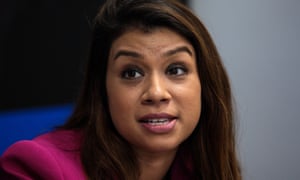
Why does MP Tulip Siddiq not want to speak out on Bangladesh?

December 5, 2017

Michael Polak, a human rights lawyer in the UK , wrote in the Guardian of 4 December 2017 “Why will Tulip Siddiq not speak out on Bangladesh’s ‘disappeared’ innocents?”. Behind this title is a serious matter. Ahmad bin Quasem is among the hundreds abducted by state forces in Bangladesh, the country of which this British MP’s  aunt happens to be the prime minister. The author points out that the excuse that the MP has “no sway over Bangladeshi politics” is far from convincing as:.. “And yet earlier this week the Bangladeshi cabinet adopted a resolution “greeting” the Hampstead and Kilburn MP for winning an award in Westminster. Siddiq accompanied the Bangladeshi prime minister during bilateral talks between Russia and Bangladesh in January 2013. Her paternal uncle is Tarique Ahmed Siddique, security adviser to the prime minister. Her mother and brother are both on the ruling party’s council and it is said that her brother is being groomed to be a future leader of Bangladesh. It is clear that Tulip Siddiq has a close relationship with various government figures in Bangladesh, including the prime minister.

Why this MP feels so reluctant to use her influence and to speak out on this and other cases is a mystery. The details of the case of Mir Ahmad bin Quasem, or Arman as he is known to friends and family, a British-trained Bangladeshi lawyer who was abducted in August 2016 by state security forces, follows below.
tulip siddiq
Tulip Siddiq. Photograph: Jack Taylor/Getty

Last year the family of one such victim approached me to press their case. Mir Ahmad bin Quasem, or Arman as he is known to friends and family, is a British-trained Bangladeshi lawyer who was abducted in August 2016 by state security forces. They knocked on his door and, in front of his wife and young children, dragged him away. This abduction followed the exact modus operandi of other abductions by the security forces in Bangladesh. Since this incident there has been no confirmation of his whereabouts, but we believe that he is still alive.

Mir Ahmad was on the defence team for his father, Quasem Ali, who was prosecuted by Bangladesh’s self-styled “international crimes tribunal”, set up by the ruling party in Bangladesh to try crimes committed during the country’s war of liberation against Pakistan.

The tribunal has been widely criticised internationally, including by groups such as Amnesty International and Human Rights Watch, as well as the United Nations high commissioner for human rights and eminent British lawyers. Along these lines, Mir Ahmad decided to join his father’s defence team but was abducted a month before his father’s execution, while the appeal procedure was still under way.

Mir Ahmad has not been charged with any offence and his abduction and continued detention by the Bangladeshi government is contrary to the Bangladeshi constitution and the country’s obligations under international law. Forced disappearances are common in Bangladesh under the current government: more than 320 people have been disappeared since 2009.

Mir Ahmad is one of three sons of former politicians who were abducted at around the same time, one of whom has been released. In a secret recordingobtained by Swedish radio, it is claimed by a high-ranking government security officer that the fate of those seized is decided by those “high up”. Astonishingly, as reported in these pages, Sheikh Hasina recently claimed that such forced disappearances also occur in Britain and the US, saying “275,000 British citizens disappeared” in the UK each year.

Last week Channel 4 News raised the issue and put the matter to Siddiq. The interaction now has become a matter of public record. Siddiq complained that Mir Ahmad was not her constituent, that she had no sway over Bangladeshi politics and that in any case she was a British MP focusing on Britain…..Even if we are to take Siddiq at her word that she has no sway over Bangladeshi politics, what is preventing her from at least speaking out? My client may not be Siddiq’s constituent, but nor is he the constituent of Shabana Mahmood MP, who raised an official parliamentary question on the matter earlier this year.

Before and since the Channel 4 News report was aired, the family of Mir Ahmad bin Quasem have been visited by state security forces who have reportedly warned them that “if there is any such news, come next time we will not be good like this time and you will not get to see our face like today”.

Since it has come to this, I earnestly hope that Siddiq can speak out to try to help ensure that Mir Ahmad’s mother, sister, wife and two young daughters are not intimidated by the Bangladeshi security services or face enforced disappearance themselves. This is an urgent matter and I ask Tulip Siddiq, as I have done many times before, to speak to me so it can be resolved.

https://www.theguardian.com/commentisfree/2017/dec/04/tulip-siddiq-bangladesh-disappeared-abducted-prime-minister


The ‘new normal’: rising attacks on human rights defenders

December 4, 2017

Mandeep Tiwana, Chief Programmes Officer for the global civil society alliance, CIVICUS published the following piece in the context of International Civil Society Week (4-5 December 2017 in Suva, Fiji): Are Rising Attacks On Human Rights Defenders The ‘New Normal’? In the piece the author makes some excellent points on how to try and counter this development, in short:

  1. civil society leaders and their supporters need to proactively challenge the misinformation.
  2. collecting comparable and accumulated data on violations of civil society rights is critical. 
  3. dedicated focus on demonstrable and impeccable internal accountability to counter unwarranted criticism of civil society 
  4. there is a pressing need to have more civil society champions in academia, the media and among business leaders
  5. standing together helps.

Read the rest of this entry »

Remembering women killed fighting for human rights in 2017

December 4, 2017

Source: Remembering women killed fighting for human rights in 2017 | AWID

Write for Rights again in December 2017

December 4, 2017

Every December, Amnesty International supporters across the globe write millions of letters and take actions for people whose human rights are under attack, in what has become the world’s biggest human rights campaign. Last year at least 4.6 million actions were taken. “For 15 years Write for Rights has given people hope in their darkest moments. Imagine being ill in jail and receiving thousands of letters of support and solidarity; or finding out that people all over the world are behind you in your quest for justice for a murdered relative. Writing letters really can change lives,” said Salil Shetty, Amnesty International’s Secretary General. For last year’s see: https://humanrightsdefenders.blog/2016/11/04/time-for-the-annual-write-for-rights-campaign/

This year Amnesty International is writing to, among others:

  • The Bangladeshi Home Minister, calling on him to bring the killers of Xulhaz Mannan to justice, without recourse to the death penalty. Xulhaz, a founder of Bangladesh’s only LGBTI magazine, was in his apartment with a colleague when men wielding machetes burst in and hacked them to death in April 2016. Despite ample evidence, the killers have yet to be charged.
  • The Prime Minister of Jamaica, telling him to protect Shackelia Jackson, who has been fighting for justice for her brother Nakiea since he was killed by police in 2014, and has refused to be silenced by police intimidation.  In the past decade around 2,000 men, usually young and poor, have been killed by police in Jamaica.
  • The Prime Minister of Israel, telling him to drop all charges against Farid al Atrash and Issa Amro, Palestinian human rights defenders, who want an end to illegal Israeli settlements on Palestinian land. They brave constant attacks by soldiers and settlers, and are facing ludicrous charges after they joined a peaceful protest march.


This year, these 10 people and groups urgently need your support:

Xulhaz Mannan

Xulhaz was a founder of Bangladesh’s only LGBTI magazine, a daring venture in a country where same-sex relations are illegal. He was in his apartment with a colleague when men wielding machetes burst in and hacked them to death. Despite ample evidence, including CCTV footage and eyewitness testimony, one year on the killers have yet to be charged for this brutal murder.

Mahadine

Tadjadine Mahamat Babouri, commonly known as Mahadine, is an online activist from Chad. In September 2016 he posted videos on Facebook criticizing the Chadian government. Within days, he was snatched off the streets, and beaten and chained up for several weeks. He faces a life sentence and is also gravely ill, having caught tuberculosis in prison.

Ni Yulan

A former lawyer, Ni Yulan has supported scores of people forced from their homes by lucrative construction projects. She has braved almost 20 years of violent harassment for defending housing rights, and has been monitored, arrested and repeatedly evicted by the authorities. She was once beaten so badly in detention that she now uses a wheelchair. Ni Yulan continues to help people stand up for their rights

Hanan Badr el-Din

Hanan Badr el Din’s life changed forever when her husband disappeared in July 2013. She last saw him on television, wounded and at a hospital after attending a protest. Hanan’s relentless search for him led her to others whose loved ones were taken by the Egyptian security forces. Now a leading voice exposing Egypt’s hundreds of disappeared, her latest search for information about her husband has seen her arrested on false charges which could result in five years in prison.

Sakris Kupila

Sakris Kupila, a 21-year-old medical student from Finland, has never identified as a woman. Yet he has to endure daily discrimination because his identity documents say he is female – the gender he was assigned at birth. To legally reassign your gender in Finland, you must be diagnosed with a “mental disorder” and sterilised. Sakris opposes this humiliating treatment. And despite threats and open hostility, he continues to demand a change to the law.

MILPAH Indigenous Movement

For the Indigenous Lenca people in Honduras, the land is their life. But huge hydroelectric, mining and other interests are out to exploit that land. MILPAH, the Independent Lenca Indigenous Movement of La Paz, is at the forefront of the struggle against them. They brave smear campaigns, death threats and physical assault to protect their environment, yet their attackers are rarely brought to justice.

Farid and Issa

Farid al-Atrash and Issa Amro are two Palestinian activists who demand an end to Israeli settlements – a war crime stemming from Israel’s 50-year occupation of Palestinian land. Dedicated to non-violence, the two activists brave constant threats and attacks by soldiers and settlers. In February 2016, Issa and Farid marched peacefully against settlements and the Israeli occupation. As a result, they face ludicrous charges apparently designed to obstruct their human rights work.

Shackelia Jackson

Shackelia Jackson will not give up. When her brother, Nakiea, was gunned down by police, she took on Jamaica’s sluggish court system to lead a bold fight for justice for his murder. In doing so, she rallied dozens of families whose loved ones were similarly killed. In response, the police have repeatedly raided and harassed her community. But Shackelia will not be silenced.

Clovis Razafimalala

Clovis is doing everything he can to protect Madagascar’s vanishing rainforest. Its rosewood trees are a precious resource under threat from a network of smugglers, bent on selling them off in what has become a billion dollar illegal trade. Clovis’ efforts to save this rare ruby-coloured tree have brought him unwanted attention. He has been convicted on false charges and could be jailed at any moment

Turkey

Right now, 11 people who have dedicated their lives to defending the human rights of journalists, activists and other dissenting voices in Turkey are themselves in danger. Among them are Amnesty International’s Director, İdil Eser, and its chair, Taner Kılıç, who remains in prison after five months. All are on trial for ‘terrorism’-related crimes, an absurd charge and face a jail sentence of up to 15 years.

Amnesty International’s Brave campaign calls on governments around the world to protect human rights defenders.

https://www.amnesty.org/en/latest/news/2017/11/amnesty-launches-worlds-biggest-human-rights-campaign/

In memoriam: Corinne Dufka remembers Peter Takirambudde

December 1, 2017

On 1 December 2017 Corinne Dufka of Human Rights Watch wrote a column aboutPeter Takirambudde who passed away on 16 November in his native Uganda. He was head of HRW’s Africa division from 1996 to 2008 during multiple crises, including in Sudan, Sierra Leone, Nigeria, Rwanda, and the Democratic Republic of Congo. After leaving Human Rights Watch, Peter founded and directed the Botswana-based African Human Rights Consortium, which helped train members of civil society from across the continent in human rights investigation and advocacy. Peter was also a lawyer and a well-respected law professor, including at the University of Botswana-Gaborone, where he served as head of social sciences, and at the University of Lund in Sweden. He received a bachelor’s degree from Makerere University in Uganda and a doctoral degree from Yale University.

As noted by Kenneth Roth, Human Rights Watch’s executive director, “We remember him fondly for his deep intellectual engagement with African human rights issues, his always-incisive analysis, and his principled and passionate defense of the rights of people throughout the continent. He made a very important mark establishing Human Rights Watch in Africa, and we remain deeply indebted to him.

The full text below:

Read the rest of this entry »