Archive for the 'Human Rights Defenders' Category

Snowden claims his Haven is safe

December 28, 2017

US whistle-blower Edward Snowden has helped create an Android app designed to protect the possessions of journalists and human rights defenders. The software uses sensors – including a phone’s camera, microphone, gyroscope and accelerometer – to detect intruders tampering with someone’s possessions. It is open source, meaning its code can be inspected. It is designed to be used on a “second” smartphone that can be left with the possessions a user wishes to monitor. The app was created as a joint venture between The Guardian Project and Freedom of the Press Foundation, of which Edward Snowden is board president.

Haven turns any spare android phone into a safe room that fits in your pocket,” claims Edward Snowden. In an age where our digital security is at more risk than our physical security, Snowden claims that Haven will change the game of cyber surveillance.

Here’s how it works: once you install the app, it uses the smartphone’s in-built equipment, like cameras, light sensor and microphones, to monitor for any motion, sound or disturbance of the phone. As explained by WIRED: “Leave the app running in your hotel room, for instance, and it can capture photos and audio of anyone entering the room while you’re out, whether an innocent housekeeper or an intelligence agent trying to use his alone time with your laptop to install spyware on it.” Alerts can be sent to your phone, via SMS, Signal or to a Tor-based website.

You shouldn’t have to be saving the world to benefit from Haven,said Snowden, though the app’s primary users are meant to be investigative journalists, human rights defenders, and other people at risk of forced disappearance.

see also: https://humanrightsdefenders.blog/2016/09/29/edward-snowden-can-still-not-collect-his-awards/

——-

https://video.scroll.in/862821/watch-nsa-whistleblower-edward-snowdens-app-turns-your-phone-into-a-physical-security-system

https://www.thequint.com/tech-and-auto/tech-news/edward-snowden-data-privacy-haven-app-android-released

http://www.bbc.co.uk/news/technology-42493028

Last straw?: U.N. Human Rights Rapporteur Barred By Myanmar

December 21, 2017

 Yanghee Lee, U.N. human rights special rapporteur to Myanmar, talks to journalists during a news briefing in Yangon, Myanmar, in July 2017.

Yanghee Lee, the U.N. special rapporteur on Myanmar, says she has been told that the Myanmar government will neither cooperate with her nor grant her access to the country for the remainder of her tenure. Lee was scheduled to visit Myanmar in January to assess human rights in the country, particularly in western Rakhine state, where the Rohingya are concentrated.

I am puzzled and disappointed by this decision by the Myanmar Government,she said in a statement.This declaration of non-cooperation with my mandate can only be viewed as a strong indication that there must be something terribly awful happening in Rakhine, as well as in the rest of the country.” “Only two weeks ago, Myanmar’s Permanent Representative informed the Human Rights Council of its continuing cooperation with the UN, referencing the relationship with my role as Special Rapporteur,” Lee said. Amnesty International called Myanmar’s decision to bar Ms Lee “outrageous”. James Gomez, the group’s director for Asia and the Pacific, said: “It is a further indication that authorities will do anything they can to avoid international scrutiny of their human rights record.”  [see also: https://humanrightsdefenders.blog/2017/02/01/murder-of-human-rights-defender-ko-ni-in-myanmar/]

The U.N. says more than 630,000 Rohingya have fled Myanmar since ongoing military attacks that began in August. Doctors Without Borders estimates that 6,700 Rohingya were killed in the first month of the crackdown. Refugees streaming into neighboring Bangladesh have brought with them tales of rape and murder at the hands of Myanmar’s soldiers.

U.N. High Commissioner for Human Rights Zeid Ra’ad Al Hussain told the BBC this week that Myanmar’s nominal leader, Aung San Suu Kyi, and the head of the country’s armed forces could potentially face charges of genocide for their role in the crackdown. “Given the scale of the military operation, clearly these would have to be decisions taken at a high enough level,” he told the BBC. “And then there’s the crime of omission. That if it came to your knowledge that this was being committed, and you did nothing to stop it, then you could be culpable as well for that.” [see also: https://humanrightsdefenders.blog/2017/09/03/myanmar-time-for-aung-san-suu-kyi-to-return-at-least-some-of-her-many-human-rights-awards/]

Myanmar’s refusal to cooperate with the U.N. comes as the country set up a joint working committee for the return of Rohingya refugees with Bangladesh — where hundreds of thousands are housed in squalid border camps. Under an agreement signed last month in Dhaka, a 30-member working group is to be set up for the voluntary repatriation of Rohingya.

The authorities last week arrested Wa Lone and Kyaw Soe Oo, Reuters journalists who have been covering the Rohingya crisis, and the men are being held incommunicado at an undisclosed location. They were arrested after being invited to dine with police officers on the outskirts of Yangon, the commercial capital.  After the arrests, the ministry of information released a picture of the men in handcuffs and alleged they had “illegally acquired information with the intention to share it with foreign media”.

https://www.npr.org/sections/thetwo-way/2017/12/20/572197324/u-n-human-rights-investigator-barred-by-myanmar

https://www.ft.com/content/6f0674ec-e57d-11e7-97e2-916d4fbac0da

Award winning Bersih 2.0 saw speech censored by Taiwan award giver

December 18, 2017

How sensitive human rights awards can be is shown again in the case of Taiwan’s Asia Democracy and Human Rights Award. The award (see: http://trueheroesfilms.org/thedigest/awards/asia-democracy-and-human-rights-award) is technically independent but closely related to the Government, which probably explains why the part concerning the “1MDB” corruption scandal in Malaysia  was deleted from Maria Chin Abdullah’s acceptance speech.

HR-award-1

[Parts of Bersih 2.0 chairman Maria Chin Abdullah’s acceptance speech when accepting the Asia Democracy and Human Rights Award in Taiwan last week were censored by organisers. A copy of the speech made available by the electoral reforms coalition today showed the censored portion was on state investment fund 1MDB and the allegations of corruption plaguing Prime Minister Najib Razak’s administration. The section of the speech, titled “Unfettered corruption”, was removed “due to diplomatic sensitivity”, the coalition said.]

Bersih 2.0 received the Asia Democracy and Human Rights Award on 10 December 2017. The event was attended by Taiwan President Tsai Ing-wen, Taiwan Foundation for Democracy chairman Su Jia-chyuan, the foundation’s president Hsu Szu-chien and civil society leaders. Bersih 2.0 received earlier the Gwangju award: https://humanrightsdefenders.blog/2016/04/26/malaysian-bersih-2-0-walk-for-democracy-wins-gwangju-human-rights-award/

Maria in her speech also touched on the lack of freedom of expression, attacks against human rights defenders, and the government’s use of laws such as the Security Offences (Special Measures) Act 2015 (Sosma). She charged that hate politics was part of a strategy to vilify rights activists. “The politics of hate, religious intolerance and exclusion, which adversely affect the freedom and human rights, are used against human rights defenders. Yet, impunity against wrong doers is not addressed,” she said, adding that change was still a long road ahead“Malaysians’ voices are loud and clear – racial hostility, generated hatred, intolerance, violence and poverty have no place in our nation…Our clarion call: They can jail us. They can beat us up. But, they can never break our spirit”.


http://www.freemalaysiatoday.com/category/nation/2017/12/18/human-rights-award-taiwan-censors-bersih-chiefs-speech/

Nominations for the 2018 Front Line Defenders Award for Human Rights Defenders now open

December 15, 2017


Front Line Defenders is currently accepting nominations for the 2018 Front Line Defenders Award for Human Rights Defenders at Risk.

For more information on this and other awards: http://trueheroesfilms.org/thedigest/awards/front-line-defenders-award-for-human-rights-defenders-at-risk
If you would like to nominate a human rights defender for the 2018 Front Line Defenders Award for Human Rights Defenders at Risk, please follow this link:  <https://www.frontlinedefenders.org/secure/nomination.php?l=en> Please also note that nominations can be submitted in English, French, Spanish, Russian and Arabic via the Front Line Defenders website.      Deadline: midnight Friday, 19 January 2018.


See also: https://humanrightsdefenders.blog/2017/05/26/lawyer-wins-front-lines-2017-human-rights-award-for-helping-crimean-tartars/

Mark Thompson – old hand in APT – leaves in 2018

December 15, 2017
Thursday, 14 December 2017, the Association for the Prevention of Torture (APT, founded in 1977 by the Swiss banker and lawyer Jean-Jacques Gautier) announced that its Secretary-General, Mark Thomson, will retire on the 31st of July 2018. Mark, who has served as Secretary General since 2001, says that this is the right time for him to hand over the reins to someone else and that, whilst he intends to remain active in torture prevention and access to justice issues, this will be on a voluntary and ad hoc basis and that his main goal is to seize the opportunity to focus his time and energy on his young family. The President of the APT, Martine Brunschwig Graf expressed her own and the Board’s sincere appreciation for the work Mark has done over the past seventeen years, stating that: “Mark has provided first-class leadership to the APT and during that time he has played a guiding role in some immensely important developments in torture prevention across the globe. He is held in high esteem by public oversight bodies and governmental and non-governmental partners in many countries who will be as sorry as we are to see him move on.” Before 2001 Mark Thompson worked at the International al Service for Human Rights (ISHR)

The APT’s Board, taking into account the quality of the existing team, has chosen not to make a public call and will instead appoint his successor at the next board meeting, on the 13th of April 2018.

https://www.apt.ch/en/news_on_prevention/upcoming-change-in-apt-management/

9 December, Human Rights Defenders Day, ‘celebrated’ in Uganda

December 13, 2017

In an article in the Ugandan paper The Independent entitled “Activists mark Human Rights Defenders day” (13 December 2017), Robert Kirenga, the Executive Director of the National Coalition of Human Rights Defenders in Uganda spoke to Flavia Nassaka about his perspective on international human rights defenders day and the general human rights situation in the country. He made some interesting points such as (excerpts):  Read the rest of this entry »

Malta’s Aditus foundation urges Government to improve relationship with human rights defenders

December 11, 2017

In commemoration of International Human Rights Day, the Aditus foundation (a non-governmental organisation established in 2011 by a group of young lawyers who monitor, report and act on access to human rights by individuals and groups; the focus is primarily Malta, but also covers the regional & international dimensions of human rights in Malta) noted the precarious situation of Malta’s human rights defenders and called for a broader respect for their central role in promoting and contributing towards Malta’s overall well-being. [see also: https://humanrightsdefenders.blog/2017/12/04/the-new-normal-rising-attacks-on-human-rights-defenders/]

In a statement released to the media, the foundation said that Malta’s human rights defenders are …are present where State interventions are either absent or insufficient, where the risk of human rights violations is high. It continued to say that without human rights defenders, Malta would probably not be able to boast today’s’ levels of social wellbeing. As activists dedicated to ensuring human rights enjoyment for all persons, most of us push for stronger legal and policy standards, support the training of public officials, provide public information, support victims of violations and strive to hold the State accountable and responsible for its failures. “In return, many of us are bullied, harassed, insulted, threatened and stigmatised. Many of us are denied access to important dialogue with State entities, or exploited by the State as we provide those public services the State refuses or is unable to provide. As the community of Malta’s human rights defenders is still mourning the brutal assassination of Daphne Caruana Galizia, we are uncertain of the security of our working environment and are concerned for the physical and psychological safety of our staff and volunteers.”

“We are not satisfied that our concerns are being taken seriously by the competent authorities, especially in view of the fact that we are often victims of hatred perpetuated by those entities responsible for our protection.”

“Understanding the importance of human rights defenders is fundamental for the fostering of a society that is geared towards respecting, protecting and fulfilling everyone’s human rights.”

“By tolerating this on-going abuse of its human rights defenders, Malta is not only offending the principles human rights embody – equality, non-discrimination, individual and social empowerment – but it is also further marginalising those communities and themes human rights defenders so vehemently stand up for.”

“On International Human Rights Day, we therefore urge Malta to rethink its relationship with human rights defenders. This means to not merely refrain from activities that instil fear and insecurity, but to take steps towards actively supporting human rights defenders.”

http://www.independent.com.mt/articles/2017-12-09/local-news/Adutis-foundation-urges-Malta-to-rethink-relationship-with-human-rights-defenders-6736182455

http://aditus.org.mt

Good introduction to the Anniversary of the UN Declaration on HRDs in 2018

December 11, 2017

COMMENTARY 05 December 2017

In “Defending Rights, Fighting Fatalism Janika Spannagel makes the point that we should take a long-term view in assessing human rights progress.  I plead guilty by having started 2017 with a series of ten posts on the indeed gloomy outlook for human rights (e.g. https://humanrightsdefenders.blog/2017/02/24/2017-10-need-to-reset-for-human-rights-movement/). Perhaps it is fitting to end the year with a bit more ‘optimistic’ long term view:

In 2017, both activists and political pundits embraced a rhetoric of doom and gloom about the global state of human rights. But faced with a world painted in ever darker colors, we risk losing sight of the bigger picture. This month marks 19 years since the UN Declaration on Human Rights Defenders was adopted. Its troubled story can teach us something about the long arc of history when it comes to the advancement of human rights worldwide.

There is no doubt that human rights defenders are under attack today. But that is not new. Defending human rights is and always has been a highly political and often dangerous undertaking. People who have raised their voices against injustice, from totalitarianism and colonial oppression to capitalist exploitation, have been persecuted and silenced throughout human history. Repressive regimes and groups in power seem just as quick and clever in adapting methods of control as their opponents are in carving out new spaces.

However, rather than giving in to fatalism we should learn from history that counter-discourse and pushback is an inevitable part of the human rights success story. On December 9, 1998, the United Nations (UN) member states unanimously declared that everyone has a right to defend human rights. This consensus in the UN General Assembly, however, did not mean that states were in wide agreement. Born out of a context of intense persecution of dissidents in the late 1970s, the lengthy negotiation process for what eventually became the Declaration on Human Rights Defenders was at the verge of collapsing time and again over surprisingly topical issues like foreign funding, supremacy of domestic law, or national security.

Stories like that of the Declaration illustrate how writing human rights history requires both perseverance and the prompt use of political windows of opportunity. These stories teach us not to submit to pessimistic rhetoric that can easily cloud our judgment, but to remain committed to multilateral cooperation on rights issues, particularly during challenging times. 

To learn more about how the Declaration on Human Rights Defenders was adopted against all odds, what difference it has made and why the term “human rights defenders” was omitted from the document, see my recent analysis of the 1998 Declaration on Human Rights Defenders. (http://www.geschichte-menschenrechte.de/en/schluesseltexte/erklaerung-zu-menschenrechtsverteidigern-1998/ in english, in spite of title)

With the 20th anniversary of the UN Declaration on Human Rights Defenders coming up on 9 December 2018 [https://humanrightsdefenders.blog/2017/11/01/20th-anniversary-of-un-declaration-on-human-rights-defenders-starts-with-crucial-draft-resolution-in-the-ga/], the article above makes good reading.

———-

http://www.gppi.net/publications/human-rights/article/defending-rights-fighting-fatalism/

Human Rights Day 2017 in Asia: MIND THE GAP

December 11, 2017
International Human Rights Day 2017 was celebrated all over the world by governmental and non-governmental entities alike. Here some cases of MIND THE GAP as reported in the media in Asia:

Cambodia:

The government celebrated Human Rights Day under the theme of ‘peace’, but 103 civil society groups spoke out against state ‘attacks’. KT/Mai Vireak

The government yesterday celebrated the 69th anniversary of International Human Rights Day under the theme of peace, while 103 civil society groups called for more protection for human rights defenders. Prime Minister Hun Sen posted on his Facebook page to say how the rights and freedoms of Cambodian people have been restored since the end of the Khmer Rouge regime in 1979: “December 10 is International Human Rights Day, which people all over the world celebrate. On January 7, 1979, the rights and freedoms of the Cambodian people were restored and have been until this day.”

Civil society meanwhile marked the day at different locations around Phnom Penh and in other provinces. A group of 103 civil society organisations issued a joint statement calling for justice and respect for human rights from the government. “On the occasion of International Human Rights Day, we, the undersigned members of Cambodian civil society, call for an end to government attacks on human rights defenders and civil society groups and the lifting of unjustifiable restrictions on fundamental freedoms,” the statement said.

Philippines:

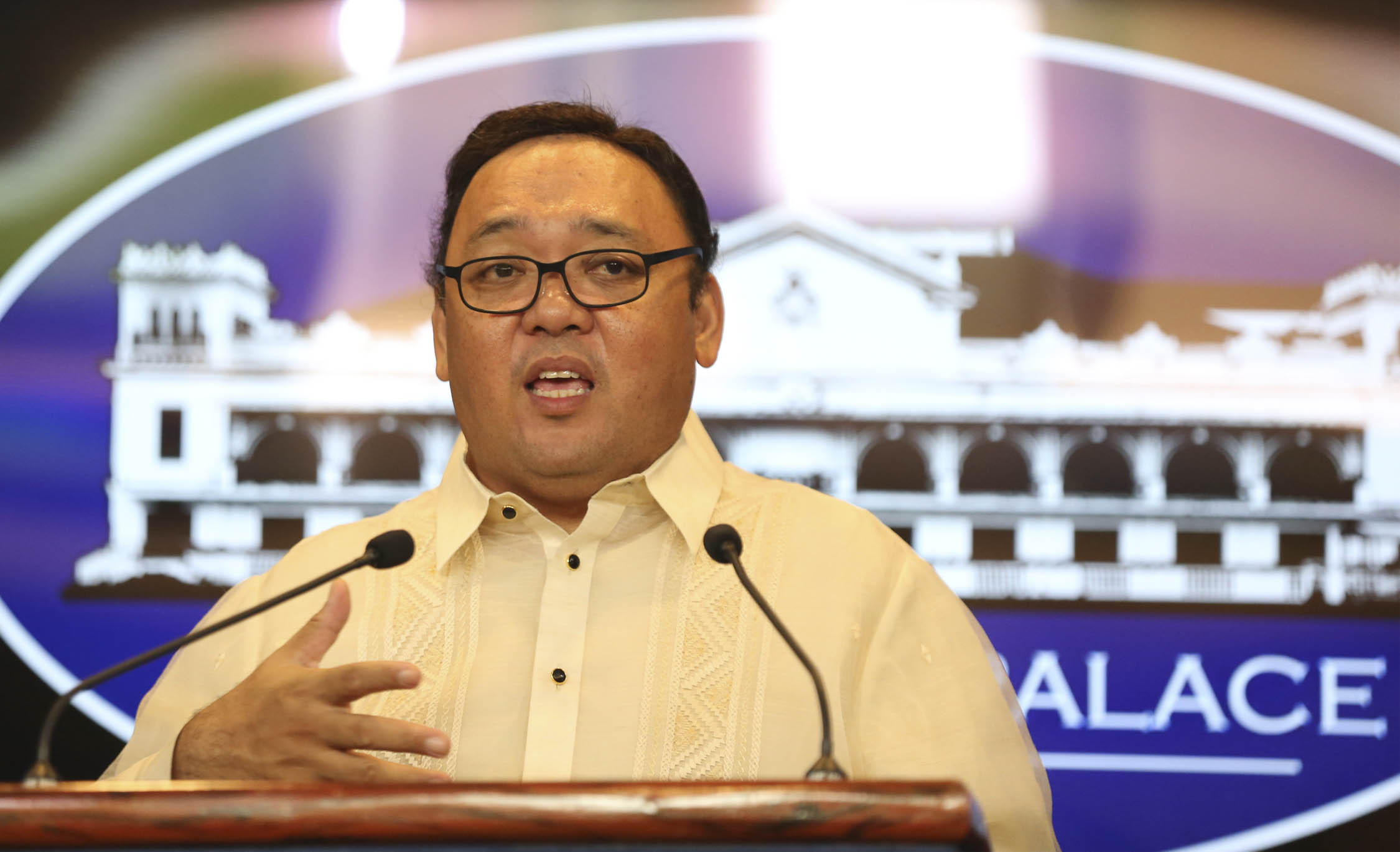
Presidential spokesperson Harry Roque INQUIRER PHOTO/JOAN BONDOC


On the observance of the International Human Rights Day, Presidential Spokesperson Harry Roque reiterated President Rodrigo Duterte’s commitment to uplift the lives of Filipinos, especially the poor, marginalized and vulnerable. Noting that the Philippines is an active member of the United Nations Human Rights Council and that respect for human rights is enshrined in the 1987 Constitution, Roque assured that the Duterte administration “works hard with the best interest of every Filipino.” ..“That direction is what inspires the government’s compliance with its human rights obligations. As a Nobel Peace Prize winner once said, ‘poverty is the absence of human rights” .

The Philippines has experienced a precipitous drop in basic human rights standards since President Rodrigo Duterte came to power last year, resulting in large, mass mobilizations across the country for the occasion of December 10, Human Rights Day. At least 12 rallies were held across the archipelago on Sunday, with human rights group KARAPATAN and progressive alliance BAYAN taking the lead alongside a range of like-minded groups calling for an end to what they describe as the U.S.-Duterte regime. In addition to over 13,000 small-time drug dealers and addicts killed during Duterte’s “war on drugs,” Karapatan has documented 113 victims of political killings, 81 victims of torture, 54,573 victims of threat, harassment, and intimidation, 364,617 who have suffered due to indiscriminate firing and aerial bombing, and 426,170 internally displaced who were subject to forced evacuation.  

Turkey:

Turkish President Recep Tayyip Erdogan. Photo: AA

Respect for human rights based on the principles of equality and non-discrimination of individuals before the law is the irreplaceable nature of the Republic of Turkey,” said Erdogan, according to state-run Anadolu Agency, on the occasion of Human Rights Day on Sunday. Erdogan specifically referenced Turkey’s commitment to “all oppressed people and victims from Palestine to Syria and Asia to Africa.”

Turkey has been cited by several international organizations for human rights violations, namely in its justice system, freedom of speech and Internet communications, treatment of minorities, and political censorship. See inter alia: https://www.amnesty.org/en/countries/europe-and-central-asia/turkey/report-turkey/and https://humanrightsdefenders.blog/2017/11/22/celebrities-come-out-to-support-taner-kilic-amnesty-turkeys-chair-on-trial-today/.

Thailand:

National Human Rights Commission (NHRC) commissioner and human rights defender Angkhana Neelaphaijit said that despite the government’s claim that it cherished human rights and had made them a priority, in reality it had done nothing to do so.
Angkhana Neelaphaijit
Thailand is still far from its goal of valuing human rights since the junta’s policies and actions have eroded rights, while many people do not even understand the principle. Prominent Thai campaigners marked Human Rights Day yesterday to lament that the country was still far from its professed goal of ensuring everyone was accorded the freedoms they deserve. The nation’s most severe human rights violation was the lack of freedom of expression, they said in an appeal to the National Council for Peace and Order (NCPO) to restore democracy to truly guarantee human rights for every citizen. They also said Thailand faced many serious human rights crises. For instance, social movements across the country continued to be suppressed by authorities, the justice system was being used against human rights defenders, and many people in society still did not understand human rights and harmed others. National Human Rights Commission (NHRC) commissioner and human rights defender Angkhana Neelaphaijit said that despite the government’s claim that it cherished human rights and had made them a priority, in reality it had done nothing to do so. On the contrary, Angkhana said the government was doing the very opposite, enforcing many laws and regulations that violated human rights and curbing the activities of campaigners, both through law enforcement and by force. In effect, the regime was deepening Thailand’s human rights crisis, she said.

Pakistan:

Message by Foreign Minister of Pakistan : ”On behalf of the people and Government of Pakistan, I wish to reiterate our strong commitment to promote and protect human rights and fundamental freedoms, as well as needs. Pakistan has demonstrated its resolve by enacting wide ranging legislation, establishing strong institutional machinery and putting in place robust policy measures in the field of human rights. Pakistan’s Constitution serves as an anchor and guarantor of fundamental freedoms and human rights of all Pakistanis.  The Government of Pakistan accords high priority to advancing mutually reinforcing objectives of development, human rights and democracy…This year is also significant for Pakistan in the field of human rights. Pakistan actively engaged with the UN human rights institutions and partners through regular submission of national reports, participation in review processes and implementation of recommendations arising from such mechanisms. Pakistan filed reports and participated in the review mechanism of three international treaty bodies, namely CAT, ICESCR and ICCPR. Pakistan also successfully presented its third national report on Universal Periodic Review (UPR) on 13 November 2017. This level of engagement, participation and contribution demonstrates Pakistan’s commitment as well as actions to advance the cause of human rights.  Pakistan’s success as the newly elected member of the Human Rights Council (HRC) this year is a testimony to the confidence reposed in Pakistan by the international community as a consensus builder within the international human rights policy framework.

The struggle against enforced disappearance was seen in Sindh alone while though there have been cases of missing persons in other provinces but Sindh has dared to raise voice against such violations of human rights.  These views were expressed at a seminar on occasion of Human Rights Day organized here by SAFWCO and Social Change. Noted Human Rights activist and lawyer Faisal Siddiqui said only voice against forced disappearances was being heard from Sindh while voice of Balochistan has been crushed with force. Though many persons were missing in KPK and Punjab but from there no voice is heard.  He said our judiciary has come out of colonization era and was giving right decisions. He said it was he who had filed petition in SHC for IG Sindh A.D.Khwaja. He said he was harassed for being advocate against Baldia Factory burning of 258 persons, Shahzeb Jatoi case and other cases for which he was harassed and could not open his office for many months. He said now powerful forces were active human rights.  The gathering paid tributes to Pubhal Saryo, convener of missing persons forum who was whisked away by agencies and released after more than 2 months. Punhal Saryo said it has become very difficult to work for human rights in situation where human rights defenders were also not safe.
—————–

http://www.khmertimeskh.com/5095119/civil-society-decries-attacks-nation-marks-human-rights-day/

https://www.telesurtv.net/english/multimedia/Human-Rights-Day-Marked-In-Philippines-Amid–All-Out-Repression-Drug-War-Martial-Law-20171210-0021.html & https://newsinfo.inquirer.net/951114/human-rights-day-roque-duterte-palace-poor-marginalized-un-rights-council

http://www.rudaw.net/english/middleeast/turkey/101220171

http://www.nationmultimedia.com/detail/national/30333640

http://www.mofa.gov.pk/pr-details.php?mm=NTY5Mw,, and http://www.pakistanchristianpost.com/detail.php?hnewsid=6705

Films on and for human rights defenders

December 9, 2017

true heroes films (THF) published on 3 December 2017, an updated version of its trailer.