Archive for the 'Human Rights Defenders' Category

Forgotten Kashmir: something has to be done

February 9, 2020

...After more than 70 years of terror, killings, torture, and disappearances, the international community must renew its efforts to end the conflict in Kashmir. In 2018 and 2019, the Office of the United Nations High Commissioner for Human Rights released reports that documented a wide range of abuses – including kidnappings, the killing of civilians, and sexual violence – perpetrated by both sides in the conflict. The UN needs to take the lead in stopping Kashmir’s torment. ……The conflict has consumed resources that should have been used for development; instead, they were channeled to arms purchases or a regional race to develop weapons of mass destruction. Everyone, regardless of age, religion, or ethnicity, has suffered, whether as a result of displacement, family separation, loss of property, the death or disappearance of friends and close relatives, grinding poverty, or simply the prospect of a future as bleak and constricted as the present.The international community has, at times, attempted to mediate between India and Pakistan. The UN has adopted resolutions demanding a referendum on Kashmir’s future status. But, even though it has long been evident that there is no military solution to the conflict – temporary ceasefire initiatives have never resulted in a lasting agreement – India to this day has resisted a plebiscite. In 2003, Pakistan’s then-president, Pervez Musharraf, formulated a four-step approach to a political solution. Without insisting on a referendum, India and Pakistan would begin a dialogue; recognize Kashmir as the main source of bilateral hostility; identify and eliminate what was unacceptable to each side; and strive for a solution acceptable to both countries – and especially to the people of Kashmir. Subsequently, a ceasefire was declared, and high-level meetings took place, but, following a terrorist attack, India terminated the talks. In 2012, Pakistani President Asif Ali Zardari and Indian Prime Minister Manmohan Singh tried unsuccessfully to revive the process.

I have been personally engaged with the Kashmir issue for some time. Last year, I held meetings with senior politicians in Pakistan and India. I am well aware that India wants to treat the Kashmir conflict solely as a bilateral issue. But in that case, it should take the initiative in starting talks with Pakistan. If that does not happen, the international community must demand that the parties come together to negotiate a peaceful solution.

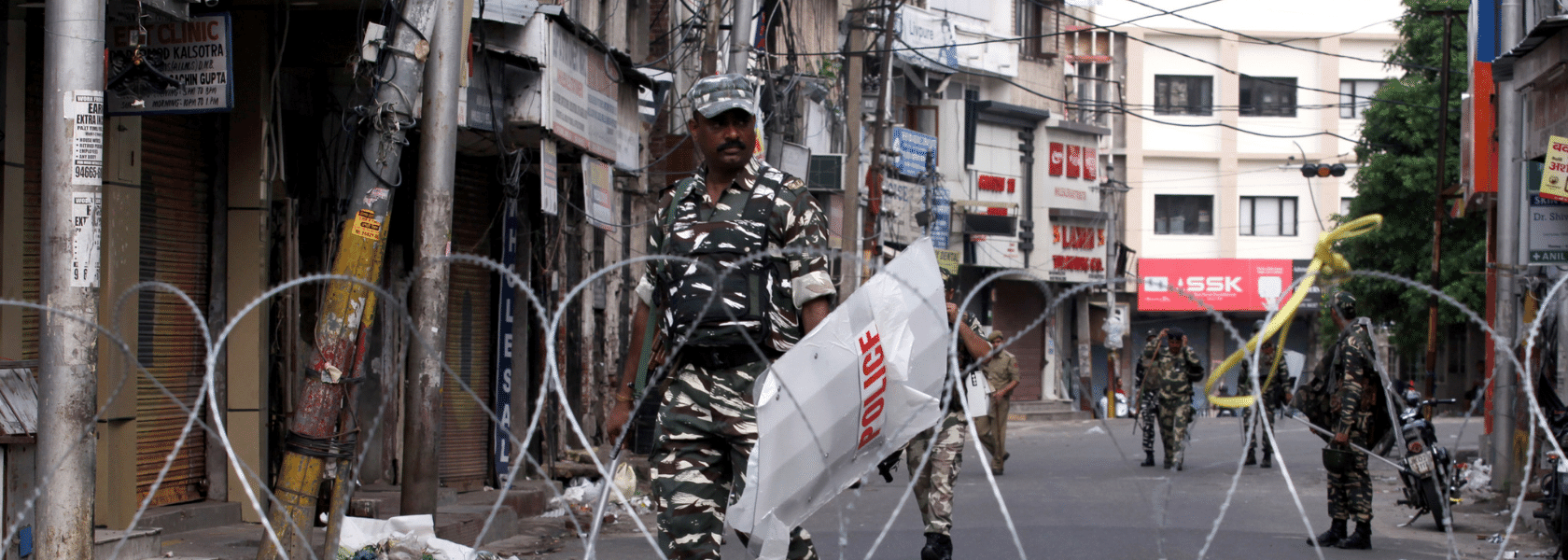
Again, it is not up to the UN or anyone else to impose a solution on the parties. The current situation is rooted in a highly complex mix of history and politics, and any viable settlement must reflect Kashmir’s unique circumstances. A major issue to be addressed is the “line of control” separating Indian- and Pakistani-administered Kashmir, which hinders the free movement of people, divides families, and impedes business and trade. And, of course, Kashmir’s future status is the main question that must be resolved. During my last visit to Kashmir, I saw firsthand the level of violence and the severity of human-rights violations. Conditions have deteriorated further since India repealed Jammu and Kashmir’s special status in October 2019, dissolved it as a state, and reorganized it as two “union territories” – all enforced by the security forces with a wave of arrests, a ban on assembly, and an Internet and media blackout.At a time of war in Syria and Yemen, and heightened tensions between the United States and Iran, it is difficult to get the international community to focus on Kashmir. But it is crucial that the conflict not be allowed to spiral out of control, especially given that both countries are nuclear powers. Above all, the people of Kashmir deserve a ceasefire, reconciliation, and stability, and it is the duty of the UN to advance this goal. I urge the UN to appoint a special envoy to Kashmir. And I appeal to UN Secretary-General António Guterres to seize the initiative and help deliver a long-overdue and lasting peace to this region…

“The Indian government must immediately end all draconian restrictions on fundamental freedoms in Jammu & Kashmir, and fully reinstate communications”, FIDH and its member organization People’s Watch urged on 5 February 2020. In conjunction with its call, FIDH released a briefing note that highlights some of the human rights concerns that have remained unaddressed since 5 August 2019. For the past six months, the people of Jammu & Kashmir have been living under siege and denied their fundamental rights under the most draconian of measures. These grave violations of human rights must come to an end, and accountability must be established for the serious violations that have occurred since 5 August.Adilur Rahman Khan, FIDH Secretary-General
Since the evening of 4 August 2019, internet communications, and initially telephone lines, have been cut in Jammu & Kashmir, effectively isolating residents from the rest of the world. Although phone lines were gradually reinstated and internet access restored in certain places, personal internet connections are limited to 301 government-approved websites through a very slow 2G connection. Although accurate figures are unavailable, thousands of arbitrary detentions have been reported since 5 August 2019, including hundreds of detentions under the abusive 1978 Public Safety Act (PSA). Many detainees, particularly youth and low-ranking political activists, have been transferred to jails outside of Jammu & Kashmir, the location of which is unknown in many cases. There have also been numerous reports of excessive use of force by army and police forces, including reports of deaths and injuries as a result of the improper use of pellet guns and teargas. The reorganization of Jammu & Kashmir has also resulted in a number of measures that will have long-term implications for the human rights situation in the region, including the disbanding of the State Human Rights Commission (SHRC) of Jammu & Kashmir – one of the few avenues for justice available to local people – at the end of October 2019. More than 500 cases of alleged enforced disappearances were pending before the SHRC at the time of its disbandment. [see also: https://humanrightsdefenders.blog/2019/03/17/fidh-dares-to-publish-a-report-on-key-human-rights-issues-of-concern-in-kashmir/]

Human rights violations of the gravest nature are nothing new in Jammu & Kashmir, and have gone unpunished for decades. But taking away the little autonomy the state had will only make the situation worse, especially when the people most affected by these changes have been denied their right to express their opinions. added Henri Tiphagne, People’s Watch Executive Director

On 5 February the Observatory for the Protection of Human Rights Defenders, a partnership of FIDH and the World Organisation Against Torture (OMCT), requested an urgent intervention in the case of Mr. Miyan Abdul Qayoom, a human rights lawyer and President of Jammu & Kashmir High Court Bar Association. Mr. Qayoom, 70,  suffers from multiple health conditions, including diabetes, double vessel heart disease, and kidney problems.
According to the information received, during the evening of January 29, 2020, Mr. Qayoom’s family received a phone call from Agra Central Jail’s authorities, in Uttar Pradesh State, informing them that Mr. Qayoom had been transferred to Sarojini Naidu Medical College after complaining of chest pain, breathlessness and his pulse rate had significantly gone down to 44pm, and asking them to visit him. On January 30, 2020, upon reaching Agra Central Jail, Mr. Qayoom’s relatives discovered that Mr. Qayoom had been taken back to the jail’s dispensary, even though his health condition had not improved.  On February 3, 2020, Jammu & Kashmir High Court Srinagar bench, after hearing the final arguments, reserved its judgement regarding Mr. Qayoom’s habeas corpus request. The scheduled date of the judgement was not known as of the publication of this Urgent Appeal…..
————-
https://www.project-syndicate.org/commentary/united-nations-must-mediate-political-solution-in-kashmir-by-kjell-magne-bondevik-2020-02

Cuba and EU dialogue: five empty chairs show serious shortcomings

February 9, 2020
Cuban human rights defenders who participated to the project of presenting a report on EU’s agreement with Cuba. [Civil Rights Defenders]

The EU needs to change strategy if it wishes to stand for democracy in Cuba by opening up to independent civil society, write Anders L. Petersson and Erik Jennische (of the NGO Civil Rights Defenders) on 4 February 2020. On Saturday 1 February. five Cuban democracy activists were stopped at the airport in Havana as they were on their way to Brussels to speak at the European Parliament today. They were banned from leaving the country by the Cuban authorities. Instead, the seminar at the European Parliament was held with Cuban activists based outside the country, and five empty chairs – a vivid reminder of the current strategy’s shortcomings. [Instituto Patmos has shown that at least 226 activists were banned from travelling abroad during 2019]. The five democracy activists were supposed to present their ideas on what the EU could do to promote respect for human rights and democratisation in the country. Their proposals form part of a report by Civil Rights Defenders – a total 30 letters from Cuban democracy activists and organisations – as a contribution to the EU’s policy development.

Although the EU and Cuba in their Agreement recall “their commitment to the recognised principles of democracy”, Civil Rights Defenders regrets that the EU remained silent on the sham elections and the transfer of power that followed. Apparently, it was all acceptable under the new Agreement…..When Federica Mogherini visited Cuba for the last time as High Representative for Foreign Affairs in September 2019, she rather perplexingly concluded that “after completing its generational transition and adopting a new Constitution, Cuba now faces major challenges in carrying out its economic modernization”.

….Reflecting on the stories of harassed and imprisoned activists in Cuba, we cannot afford to make such surrender again. The EU needs to change strategy if it wishes to stand for democracy in Cuba. It needs to build a formal and open dialogue with Cuba’s independent civil society. Since the negotiations began on the Agreement in the spring of 2014, the EU has not invited civil society to a single formal discussion on the content of the Agreement or its implementation. When the EU and Cuba held its human rights dialogue in October 2019, the Cuban government took the liberty to decide which European and Cuban organisations could participate. The papers in the report of CRD hold a great number of proposals and ideas – the two core messages being:

  • That both European and Cuban civil societies need to be recognised as formal partners to the EU in its relations to Cuba.
  • That the EU needs to speak out on the absence of democracy in Cuba and denounce all human rights violations.

The EU can never contribute to positive change in Cuba via a dialogue with the Cuban government. The only way is to give legitimacy and support to the civil society that openly and peacefully supports democratisation. It is time for the EU to include civil society in its relations with Cuba.

See also: https://humanrightsdefenders.blog/2018/12/15/new-rule-of-law-and-human-rights-in-cuba-and-venezuela-and-eu-engagement/

One of the award-winning Cuban dissident who was detained this week announced that he has been released without charge but barred from a planned trip to Europe for a meeting on human rights. Guillermo Farinas, a 58-year-old psychologist, is a leading voice in the opposition to Cuba’s communist government and won the European Parliament’s Sakharov human rights prize in 2010. Farinas was arrested Tuesday in the central city of Santa Clara, where he lives, as he planned to go to the Spanish Embassy in Havana to pick up travel documents. He had been due to take part in a meeting of the human rights commission of the European Parliament. “The main reason for my arrest was to keep me from traveling to Europe,” Farinas told AFP.

In the meantime a number Cuban and latin solidarity groups in Belgium had a quite different view: “Campaign by MEPs against Cuba rejected in Belgium. Another instance of the Empire’s vulgar and interfering policy of subversion and discredit against the Cuban Revolution. Cuba is sovereign and independent, we won’t yield to anyone”. http://www.cubadebate.cu/noticias/2020/02/04/rechazan-en-belgica-nueva-campana-contra-cuba-de-eurodiputados/#.XjsNg2q23cd 


Five empty chairs remind of Cuba’s regime true nature

https://www.france24.com/en/20200207-cuban-dissident-freed-but-cannot-leave-country

https://www.euronews.com/2020/02/07/cuban-activists-blocked-from-attending-eu-meeting

Ultranationalists attack human rights defenders, including Natasa Kandic, in Belgrade

February 7, 2020
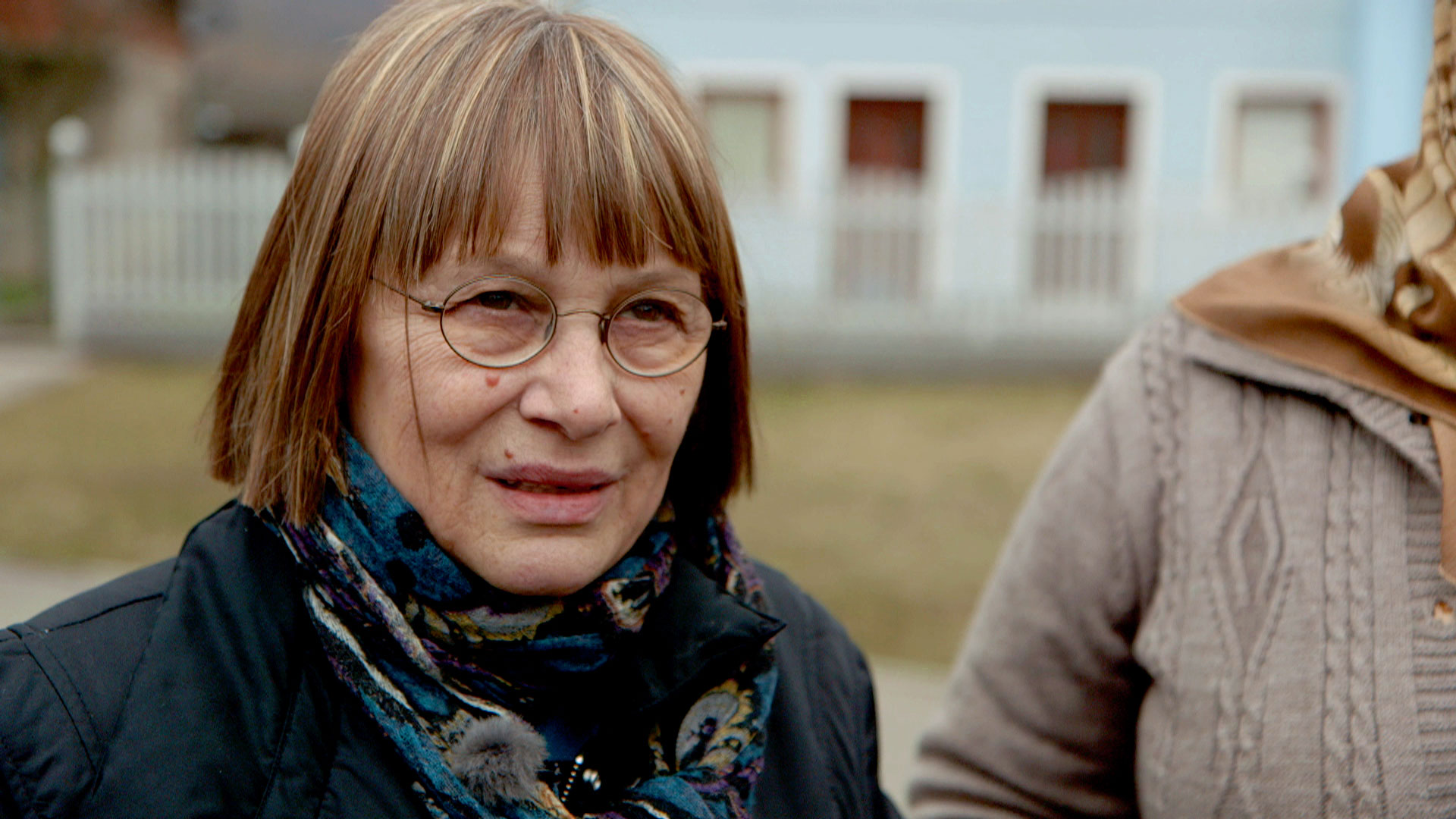
Nataša Kandić, the founder of the Humanitarian Law Center (HLC), an NGO documenting human rights violations across the former Yugoslavia, along with five other human rights defenders, organized a protest against Vojislav Šešelj’s book launch. Although the International Criminal Tribunal of the UN found Vojislav Šešelj guilty of crimes against humanity and sentenced him to ten years in prison in 2018, today he is the leader of the Serb Radical Party (SRS), and a member of Serbian parliament. At the book launch on 5 February 2020, he was promoting his latest book, in which he denies the Srebrenica genocide. The protesters were physically attacked and removed from the event by force.

The human rights defenders (members of the HLC, the Youth Initiative for Human Rights, and Forum ZFD) intended to hand out copies of an HLC report detailing Serbian war crimes committed against Croats, documents that had a crucial role in Šešelj’s Hague trial as well. Speaking to the Belgrade office of Radio Free Europe, Nataša Kandić said that they were pushed to the ground and kicked by SRS members following an order coming from Šešelj, the party’s leader. Ivana Žanić, executive director of HLC, shared a video showing this on her Twitter channel.

The founder of the Humanitarian Law Center (HLC), along with five other activists of HLC, the Youth Initiative for Human Rights (YiHR) and Forum ZFD, was physically assaulted by members of the far-right Serbian Radical Party at an event promoting books which deny genocide and crimes against humanity in the former Yugoslavia.

The human rights activists attempted to distribute a HLC report detailing war crimes committed against Croats in the Vojvodina province when they were confronted by supporters of the Radical party . On orders of the party’s president, convicted war criminal Vojislav Seselj, they proceeded to push, hit and verbally abuse the activists; violently forcing them out of the public hall.

The attack took place at the premises of the municipality Stari Grad in Belgrade, which is a public space, yet no staff or security personnel attempted to intervene to prevent the confrontation.

Natasa Kandic is the recipient of many (eight) human rights awards including the Martin Ennals Award in 1999 the first award by Civil Rights Defenders 2013. Its Director for Europe, Goran Miletic, commented “it is very concerning that time and again, every discussion on Serbia’s involvement in war crimes during the nineties is met with violent abuse and harassment. Events promoting genocide-denial are completely unacceptable in any democratic society, let alone an aspiring EU member state. Not only should public authorities not provide public spaces for such manifestations, but they should take an active position against the promotion of war criminals.

See also: https://humanrightsdefenders.blog/tag/natasa-kandic/

http://www.osaarchivum.org/press-room/announcements/ultranationalists-attacked-natasa-kandic

Attack Against Civil Rights Defender of the Year Recipient Natasa Kandic in Belgrade


Tajikistan’s jailed human rights lawyer Buzurgmehr Yorov awarded Homo Homini award 2020

February 7, 2020
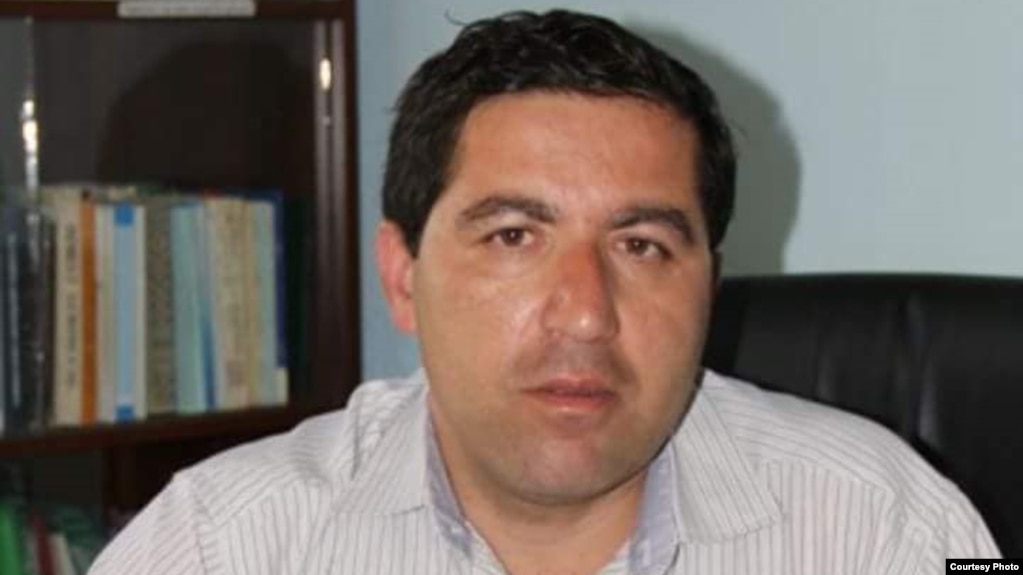
Tajik lawyer Buzurgmehr Yorov (file photo)

The Prague-based NGO People in Need has awarded its annual Homo Homini prize to Tajikistan’s jailed human rights defender Buzurgmehr Yorov for his “commitment to defending basic human rights and to assure a fair trial to all citizens” of his country.  For more on this and similar awards, see: http://www.trueheroesfilms.org/thedigest/awards/homo-homini-award.

Yorov has been promoting human rights in Tajikistan for many years despite facing severe persecution as a result of his work. He did not hesitate to defend clients who were targeted by politically motivated charges, whose cases other lawyers were not willing to take,” the NGO said on 5 February 2020. “As a result of doing his job, this prominent lawyer lost both his property and his freedom,”.

Yorov was sentenced in October 2016 on charges of issuing public calls for the overthrow of the government and inciting social unrest. His 23-year prison term was later extended by five years after he was found guilty of contempt of court and insulting a government official. Last year, his prison term was cut by six years as part of a mass amnesty. [see https://humanrightsdefenders.blog/2019/09/29/in-tajikistan-lawyers-have-to-be-human-rights-defenders/]

The Homo Homini Award will be presented on March 5 to his brother, Jamshed Yorov, at the opening of the One World Film Festival, a human rights film festival held annually in the Czech Republic.

https://www.rferl.org/a/jailed-tajik-lawyer-yorov-awarded-homo-homini-human-rights-prize/30418801.html

Women human rights defenders and climate: a treasure of references

February 5, 2020
14961626755_df9d75d853_c

On 4 February 2020 wrote in the New Security Beat an informative pieceUnsung Sheroes, Climate Action, and the Global Peace and Security Agendas“.

The December 2019 workshop on Gender, Peace and the Environment convened by the London School of Economics’ Centre for Women, Peace and Security and the University of Rosario’s Law School in Bogotá, Colombia, brought all of these interrelated perspectives together. Among other conclusions, the workshop acknowledged that indigenous women and girls are vital to more effective climate solutions, including building climate resilience in communities affected by violent conflict. However, their work is becoming increasingly fraught with danger. Criminal gangs, paramilitary groups, and private security forces from industries like mining, logging, dam construction, and agribusiness often target these indigenous environmental and human rights activists……

London School of Economic’s Keina Yoshida, one of the participants in the workshop on Gender, Peace and the Environment, reminded us of the “gender power structures, which result in violence against environmental, indigenous and women’s rights defenders such as Berta Cáceres.” Yet, as Ambassador Melanne Verveer notes in her Foreword to the Georgetown Institute for Women, Peace and Security’s report on Women and Climate Change, women are contributing to both adaptation and mitigation efforts and are creating innovative and localized solutions to build resilient communities. There is a reason for hope.

The article contains a helpful listing of relevant reports and documents on the role of women human rights defenders and climate change:

For some of my earlier posts: https://humanrightsdefenders.blog/tag/women-human-rights-defenders/


Unsung Sheroes, Climate Action, and the Global Peace and Security Agendas


Burundi elections start with convicting 4 journalists

February 5, 2020

Human Rights and Climate defenders should join hands says Andrew Gilmour

February 5, 2020

The Korea Herald of 4 February 2020 carries an opinion piece by Andrew Gilmour (former UN assistant secretary-general for human rights) entitled “Preventing climate change is a human rights issue”. In it he makes a strong case for human rights and climate groups to work more togehter:
…They’d seem to be natural allies. They both regard (with good reason) today’s situation as the worst in their movements’ existence. Second, they share common foes: Leading climate change deniers and environmental despoilers tend to be dismissive of human rights (Presidents Rodrigo Duterte, Donald Trump, or Jair Bolsonaro, to name but three). Third, both movements are accused of being “elitist” by their opponents, a charge neither group of activists has done enough to overcome.  But the two groups haven’t historically worked closely together.

…. In a seminal UN report last spring, Philip Alston castigated the human rights community for its failure to face up to the fact that “human rights might not survive the coming upheaval.” The idea that democratic systems failed to prevent global heating may well take hold, with a resulting urge to strengthen state powers at the cost of rights and freedoms.

To prevent this from happening, human rights advocates and environmentalists both need to broaden their mobilization campaigns by reaching out to groups who have traditionally not been allies of either movement. From Europe to the US to Australia, an alliance of populist leaders, corporate lobbyists and the Murdoch-owned press have pushed the idea that any gains for human rights or environmental protection will come at the expense of jobs. For example, the “gilets jaunes” protests in France were provoked, in part, by a fuel tax hike designed to reduce carbon emissions. (“Fin du monde, fin du mois” was one rallying cry — stop talking about the end of the world, when we’re just trying to get to the end of the month.)

Fossil fuel workers, cattle farmers and others need to know that they will still have livelihoods after serious measures have been taken to reduce global heating. Governments, NGOs and the private sector can offer such assurances through reskilling programs and subsidies for alternative land management and carbon sequestration. Without job security, too many people will remain vulnerable to wealthy climate science deniers — such as the Koch brothers — who have been able to convince them that climate change is basically a hoax against the “people” perpetrated by the “elite.”

Activists and sympathetic local officials must also work harder to win over indigenous people. In many countries, including Brazil, the Philippines and Honduras, there are examples of indigenous groups resisting renewable energy projects. Not because they are politically opposed to renewable energy, but because they have traditionally not been consulted about enterprises inflicted on them within their traditional lands and waters.

Climate and human rights activists should be reaching out to these groups to get their buy-in. Governments should be transferring ownership of forested land back to the indigenous communities who have proven time and again to be the most effective guardians of their own ecosystems. Instead, indigenous people are being attacked — literally. In 2017, an average of three indigenous, environmental or land rights defenders were killed every week worldwide.

Collaboration between human rights advocates and environmentalists will make it more likely that we come together to reduce emissions and mitigate the worst effects of climate change — and that we do so equitably. But the first step is to create far stronger bonds between the leaders and activists of each cause. Until both sides have fully recognized that neither agenda can be achieved without the other, they will continue to under-perform against their powerful opponents.

http://www.koreaherald.com/view.php?ud=20200203000932

Compilation of recommendations to companies and investors on HRDs and civic freedoms

February 1, 2020

Several national and international non-governmental organizations, think-tanks, coalitions and UN bodies and experts have made recommendations to businesses and investors about how to ensure respect for human rights defenders and civic freedoms. This non-exhaustive list brings together these recommendations.

Recommendations for companies and investors:

Name / Title:

Description:

Business sector:

Authors – type of organization(s): 

Date and Year:

Zero Tolerance InitiativeThe Geneva Declaration Declaration made by defenders of human rights and environment and supporting NGOs, with recommendations for states, companies and investors  All sectors Affected communities’ representatives, national and international NGOs November 2019
Action plan from the World HRDs Summit  Action plan made by defenders of human rights and environment and supporting NGOs, with recommendations for states, companies and investors  All sectors Affected communities’ representatives, national and international NGOs December 2018
Situation of human rights defenders – A/72/170 UN Special Rapporteur on HRDs’ report on HRDs working on business and human rights, with recommendations to states, companies and investors All sectors UN Expert July 2017

Recommendations for companies:

Human rights defenders and civic space – the business and human rights dimension Working Group on Business and Human Rights, as part of its mandate to promote the UN Guiding Principles, decided to give focused attention to the issue of HRDs and civic space – this is the summary of UNWG’s efforts on this issue to date and includes draft guidance for companies  All sectors  UN Working Group Ongoing
Shared Space under pressure: Business Support for Civic freedoms and HRDs Guidance document on business support for civic freedoms and HRDs All sectors International NGOs (informed by interviews with business representatives, HRDs, national and international NGOs) August 2018
Thematic overview: Civil society and the private sector CIVICUS’ 2017 State of Civil Society Report addressed the theme of civil society and the private sector, gathering a range of informed views from 27 different stakeholders that wrote about different aspects and produced a set of recommendations for the private sector  All sectors  National and international NGOs January 2017
Cross-regional group of human rights defenders called on business to take action for their engagement and protection Joint statement from 40+ civil society organizations, with guidance for businesses All sectors National and international NGOs 2016
Human Rights Defenders and Business: Searching for Common Ground Report with case studies, analysis and recommendations for businesses  All sectors International NGOs (informed by HRDs and national NGOs) December 2015

Recommendations for investors and financial institutions:

 Uncalculated Risks: Threats and attacks against human rights defenders and the role of development finance Report with 25 case studies and recommendations for international financial institutions  Finance & banking International and national NGOs June 2019
Guide for independent accountability mechanisms on measures to address the risk of reprisals in complaint management Toolkit that aims to assist independent accountability mechanisms (IAMs) to address the risk of reprisals within the context of their complaint management process  Finance & banking Independent Consultation and Investigation Mechanism (IDBG) January 2019

This list will continue to be updated – please notify the NGO at zbona(at)business-humanrights.org, if there is a set of recommendations missing from it.

https://www.business-humanrights.org/en/compilation-of-recommendations-to-companies-and-investors-on-hrds-civic-freedoms

Turkey defies European Court on Kavala and undergoes UPR review

January 29, 2020
FILE - A journalist stands in front of a poster featuring jailed philanthropist Osman Kavala, during a press conference given by his lawyers, in Istanbul, Turkey, Oct. 31, 2018.
A journalist stands in front of a poster featuring jailed philanthropist Osman Kavala, during a press conference given by his lawyers, in Istanbul, Turkey, Oct. 31, 2018.

Kavala and 15 other civil society activists are accused of supporting anti-government protests in 2013 against then-Prime Minister Recep Tayyip Erdogan, who is now president. The protest action came to be known as the Gezi movement, named after an Istanbul park where the unrest started. Prosecutors are calling for life imprisonment without parole. The ECHR condemned the case, calling for an end to Kavala’s more than two years in prison and describing it as “arbitrary” and “politically motivated.”

The Istanbul court ruled Tuesday the ECHR decision was provisional because Ankara was appealing the verdict and that Kavala should remain in jail. The court’s decision is flawed because the European Court ruling was clear in its call for Kavala’s immediate release,” said Emma Sinclair Webb, Turkey researcher for New York-based Human Rights Watch.

We saw multiple signs of how unfair this trial is,” said Webb, speaking after attending Tuesday’s court hearing. “The lawyers for Kavala raised many objections to the way witness evidence is used in this case. The court turns a deaf ear to all objections. It’s a shocking indication that once again, Turkey’s judiciary seems to be under heavy pressure of the executive.”

Tuesday’s court hearing was marred by chaos, with Kavala’s lawyers challenging the judge’s decision to hear some witnesses without their presence, prompting the lawyers to walk out of the room. Ankara strongly rejects the ECHR verdict, maintaining that the judiciary is independent. But observers note the case has strong political undertones. Three months ahead of Kavala’s prosecution, Erdogan accused him of “financing terrorists” and that Kavala was a representative for “that famous Jew [George Soros,] who tries to divide and tear up nations.” Erdogan did not elaborate on the comments about George Soros, who is an international philanthropist. Erdogan’s allegations against Kavala resemble the prosecution case against the jailed activist. Kavala is a pivotal figure in Turkey, using his wealth to help develop the country’s fledgling civil society after a 1980 military coup.

“Osman Kavala is very prominent within the civil society in this country,” said Sinan Gokcen, Turkey representative of Swedish-based Civil Rights Defenders. “He is not a man of antagonism; he is a man of preaching dialogue, a man of building bridges.”….

With the U.N. having few tools to sanction Turkey, the European Union is seen as offering the best hope by human rights advocates of applying pressure on Ankara. Turkey’s EU membership bid is already frozen, in part due to human rights concerns. But Ankara is seeking to extend a customs union, along with visa-free travel for its citizens with the EU. “It’s time all European countries should be speaking out very loud and clear on cases like this [Kavala],” said Sinclair-Webb. But even high-profile cases like Kavala’s have seen Brussels offer only muted criticism of Ankara. German Chancellor Angela Merkel’s visit to Istanbul Friday for talks with Erdogan saw little criticism of Turkey’s human rights record. Instead, discussions focused on Ankara’s recent deployment of soldiers to Libya and the upholding of an EU-Turkish agreement controlling migrants entering Europe. “There are many issues to talk about with Turkey,” said Sinclair Webb. “Syria, Libya, Turkey, hosting so many refugees from Syria, and this often takes priority over Turkey’s domestic human rights crisis. This means there isn’t sufficient clarity on cases like this. What we are seeing is Turkey defying Europe’s human rights court.” Some analysts suggest Brussels could yet be lobbying behind the scenes for Kavala’s release, tying Ankara’s calls for extra financial assistance for refugees to gestures on human rights.

https://www.forum-asia.org/?p=30836

HRW urges UN to address human rights violations in Turkey

https://www.voanews.com/europe/turkish-court-defies-europe-leaves-philanthropist-behind-bars

Lebanon: human rights defenders use graffiti to express hope

January 24, 2020

The blue graffiti reads: “Oh, my wonderful country.” Photo by Nohad Elhajj.

Since the 17th of October 2019, Lebanon has been in the grips of widespread public protests against the social, economic, and political conditions of the country. The protesters are holding the government accountable for degrading living conditions and demanding serious and drastic changes. ….. But something, equally alive, captivates the place: graffiti. Building walls, stone barriers, wooden panels, even the asphalt ground are all covered with graffiti. With their diverse slogans, creative motifs, and direct, uncensored political and social messages, the graffiti artists collectively illustrate the people’s discourse demanding a full-fledged social and political reform.

On 23 January 2020 Nohad Elhajj – a development practitioner and independent researcher – wrote an interesting piece on this aspect in Global Rights, with rich illustrations:

….. reflecting on the present status of human rights and the human rights movement is of utmost need. More importantly, we need to consider questions about the future of those rights and this movement. In his 2019 article, Thomas Coombes offers a new way to address the future of Human Rights with “hope-based communication” [see: https://humanrightsdefenders.blog/2019/05/30/positive-communication-is-the-only-way-forward-for-effective-human-rights-work/]….

Graffiti is defined as “a form of visual communication, usually illegal, involving the unauthorized marking of public space by an individual or group”. The definition by itself poses a duality; would unauthorized marking of public space become positive communication? Would it possibly shift perspectives? Maybe not all, but some graffiti certainly does convey political messages. The question here is not about authority per se but the disruption of this authority. The act itself is intrinsically disruptive and political whether graffiti is acceptable or not. Starting from this understanding, graffiti, as a visual act, then can be leveraged as a participatory and accessible medium to shift public perspectives on human rights issues. Yet, the human rights movement does not only need to shift the public opinion but also to shift the current governance structures, which is beyond the impact of graffiti. The graffiti in Riyad El Soloh Square is a good illustration of this.

Graffiti is not new to the Lebanese society, but revolution graffiti is particular and powerful because of its relevance, the messages it conveys, and the places it occupies to convey these messages. The graffiti artists practiced their right to freedom of expression, of peaceful assembly and association, while communicating, directly and clearly, human rights demands from women rights, LGBTQ rights, economic and social rights to civil and political rights. (Shown in Pictures below).

……
The Lebanese graffiti artists have pushed and merged both boundaries of political participation and art. The graffiti imposes itself on the observer and on the spaces it occupies with wit and audacity. It overwhelms the observer with emotions of anger, despair, longing and revolt but also with hope. Much of this street art offers a thought-provoking mosaic of entangled messages and images. The graffiti above shows a white pigeon (a recurring image) combined with a strong slogan about workers’ rights; this combination conveys that those rights, and other demands, will be achieved in the future.

Similar to that, the graffiti at the beginning of this article offers another perplexing combination. The whole piece can be read as: “Oh my wonderful country, sectarianism burned us”. As much as it articulates a cry of despair with hurt and agony, it also retains the image of a wonderful country before civil war and a political system that has crippled it for the past 45 years. The generation who lived the war is still lamenting it and the following generations were still living in the resulting divisions and sectarianism—up until the 17th of October 2019. Akin to the protests, the graffiti captured a future hope of a country that will regain its glory after necessary social and political change.

The artists’ urge to mark every visible surface around Riad El Soloh square with spray paint and brushes placed them right in the middle of an already contested political and social scene, and it placed the rights discourse in the middle and around this scene. This graffiti proved to be a strong visual expression of all the protesters’ demands and a way to engage the public with it, both inside and outside Lebanon. Through their paint, these graffiti artists created a distinctive, unprecedented, and positive narrative about human rights in Lebanon: a narrative that more and more organizations and activists are now hanging onto.

https://www.openglobalrights.org/graffiti-creates-positive-human-rights-narratives-in-lebanon/