The last 25 years have seen significant developments in international law and standards on the role, recognition and protection of human rights defenders. Five years ago, the Human Rights Defenders World Summit called for action, including to: “Take stock of the developments in normative frameworks related to the protection of defenders since 1998 and further develop and deepen the norms contained in the Declaration with the view to afford enhanced protection”. [see: https://humanrightsdefenders.blog/2019/11/01/one-year-after-the-2018-human-rights-defenders-world-summit/ as well as: https://humanrightsdefenders.blog/2018/12/18/premiere-powerful-video-summarizes-human-rights-defenders-world-summit-2018/]. The Declaration +25 Project is a civil society-led initiative that seeks to do just that while putting civil society at the centre of a conversation fundamental to them and their work – the right to defend rights.
A bit too late to actually follow the event (which took place on 20 June), I like to draw attention to the programme. The event was live-streamed on ISHR’s YouTube channel.
This side event, which is co-sponsored by a number of civil society organisations,
wanted to:
enhance awareness of the UN Declaration on human rights defenders, and of the Declaration +25 Project;
present developments in the last 25 years in international law and standards on the role, recognition and protection of human rights defenders;
encourage greater dialogue on the protection needs of defenders;
hear from human rights defenders on their protection needs and the role the Declaration has played to date.
Speakers:
Ketakandriana Rafitoson, Transparency International – Initiative Madagascar
Camila Zuluaga Hoyos, Colombian Commission of Jurists
Robby Mokgalaka, The Groundwork Trust, South Africa
Birgit Kainz-Labbe, Coordinator of Civic Space Unit, OHCHR
Moderator: Tess McEvoy, International Service for Human Rights
The 53rd session of the UN Human Rights Council started 19 June (to end on 14 July 2023). Thanks to the – as usual – excellent documentation prepared by the International Service for Human Rights (ISHR) I will highlight the themes mostly affecting HRDs.
To stay up-to-date you can follow @ISHRglobal and #HRC53 on Twitter, and look out for its Human Rights Council Monitor. During the session, follow the live-updated programme of work on Sched.
Here are some highlights of the session’s thematic discussions
Human rights of migrants
The Council will consider a resolution on the human rights of migrants this session, where a big problem is the criminalisation of the provision of solidarity and support, including rescues at sea, by migrant rights defenders.
Reprisals
..States raising cases is an important aspect of seeking accountability and ending impunity for acts of reprisal and intimidation against defenders engaging with the UN. It can also send a powerful message of solidarity to defenders, supporting and sustaining their work in repressive environments.
Anexa Alfred Cunningham (Nicaragua), a Miskitu Indigenous leader, woman human rights defender, lawyer and expert on Indigenous peoples rights from Nicaragua, who has been denied entry back into her country since July 2022, when she participated in a session of a group of United Nations experts on the rights of Indigenous Peoples. States should demand that Anexa be permitted to return to her country, community and family and enabled to continue her work safely and without restriction.
Vanessa Mendoza (Andorra), a psychologist and the president of Associació Stop Violències, which focuses on gender-based violence, sexual and reproductive rights, and advocates for safe and legal abortion in Andorra. After engaging with CEDAW in 2019, Vanessa was charged with ‘slander with publicity’, ‘slander against the co-princes’ and ‘crimes against the prestige of the institutions’. She has been indicted for the alleged “crimes against the prestige of the institutions” involving a potentially heavy fine (up to 30,000 euros) and a criminal record if convicted. States should demand that the authorities in Andorra unconditionally drop all charges against Vanessa and amend laws which violate the rights to freedom of expression and association.
Kadar Abdi Ibrahim (Djibouti) is a human rights defender and journalist from Djibouti. He is also the Secretary-General of the political party Movement for Democracy and Freedom (MoDEL). Days after returning from Geneva, where Kadar carried out advocacy activities ahead of Djibouti’s Universal Periodic Review (UPR), intelligence service agents raided his house and confiscated his passport. He has thus been banned from travel for five years. States should call on the authorities in Djibouti to lift the travel ban and return Kadar’s passport immediately and unconditionally.
Hong Kong civil society (Hong Kong): Until 2020, civil society in Hong Kong was vibrant and had engaged consistently and constructively with the UN. This engagement came to a screeching halt after the imposition by Beijing of the National Security Law for Hong Kong (NSL), which entered into force on 1 July 2020. States should urge the Hong Kong authorities to repeal the offensive National Security Law and desist from criminalizing cooperation with the UN and other work to defend human rights.
Maryam al-Balushi and Amina al-Abduli (United Arab Emirates), Amina Al-Abdouli used to work as a school teacher. She was advocating for the Arab Spring and the Syrian uprising. She is a mother of five. Maryam Al Balushi was a student at the College of Technology. They were arrested for their human rights work, and held in incommunicado detention, tortured and forced into self-incriminatory confessions. After the UN Special Procedures mandate holders sent a letter to the UAE authorities raising concerns about their torture and ill treatment in detention in 2019, the UAE charged Amina and Maryam with three additional crimes. The UN Working Group on Arbitrary Detention found their detention arbitrary and a clear case of reprisals for communicating with Special Procedures. In April 2021, a court sentenced them to three additional years of prison for “publishing false information that disturbs the public order”. States should demand that authorities in the UAE immediately and unconditionally release Maryam and Amina and provide them with reparations for their arbitrary detention and ill-treatment.
Other thematic reports
At this 53rd session, the Council will discuss a range of civil, political, economic, social and cultural rights through dedicated debates with the mandate holders and the High Commissioner, including:
The Special Rapporteur on the rights to freedom of peaceful assembly and of association
The Independent Expert on protection against violence and discrimination based on sexual orientation and gender identity
The Special Rapporteur on the right to freedom of expression
The Special Rapporteur on the right to health
The Special Rapporteur on extrajudicial, summary of arbitrary executions
The Special Rapporteur on promotion and protection of human rights in the context of climate change
The Special Rapporteur on contemporary forms of racism, racial discrimination, xenophobia and related intolerance
The Working Group on the issue of human rights and transnational corporations and other business enterprises
The High Commissioner on the importance of casualty recording for the promotion and protection of human rights
The Special Adviser to the Secretary-General on the Prevention of Genocide
In addition, the Council will hold dedicated debates on the rights of specific groups including:
The Working Group on discrimination against women and girls
The Special Rapporteur on violence against women and girls, its causes and consequences
The Special Rapporteur on the human rights of migrants
The Special Rapporteur on trafficking in persons, especially women and children
The Special Rapporteur on independence of judges and lawyers
#HRC53 | Country-specific developments
Afghanistan
The Human Rights Council will hold its Enhanced Interactive Dialogue on Afghanistan, with the Special Rapporteur on the situation in Afghanistan and the Working Group on Discrimination against Women in Law and Practice. The joint report of the two mandates follows up from an urgent debate held last year on the situation of women and girls in the country. Their visit to the country concluded that there exist manifestations of systemic discrimination violating human rights and fundamental freedoms in both public and private lives. ISHR has joined many around the world to argue that the situation amounts to gender apartheid, and welcomes the call of the two mandate holders to develop normative standards and tools to address this as “an institutionalised system of discrimination, segregation, humiliation and exclusion of women and girls”. The gravity and severity is urgent, and requires that States act on the ongoing calls by Afghan civil society to establish an accountability mechanism for crimes against humanity.
Algeria
On 15 June, fifteen activists and peaceful protesters will face trial in Algiers on the basis of unfounded charges which include ‘enrolment in a terrorist or subversive organisation active abroad or in Algeria’ and ‘propaganda likely to harm the national interest, of foreign origin or inspiration’. The activists were arrested between 23 and 27 April 2021, and arbitrarily prosecuted within one criminal case. If convicted of these charges, they face a prison sentence of up to twenty years. This case includes HRDs Kaddour Chouicha, Jamila Loukil and Said Boudour who were members of the LADDH before its dissolution by the Administrative Court of Algiers following a complaint filed by the Interior Ministry on 29 June 2022. We urge States to monitor the prosecution closely, including by attending the trial. We also urge States to demand that Algeria, a HRC member, end its crackdown on human rights defenders and civil society organisations, amend laws used to silence peaceful dissent and stifle civil society, and immediately and unconditionally release arbitrarily detained human rights defenders.
China
The recent findings of the Committee on Economic, Social and Cultural Rights in March, the Committee on the Elimination of Discrimination against Women in May, and the seven key benchmarks on Xinjiang by 15 Special Rapporteurs add up to wide range of UN expert voices that have collectively raised profound concern at the Chinese government’s treatment of Uyghurs, Tibetans, Hong Kongers and HRDs in mainland China. Seldom has the gap between the breadth of UN documentation on crimes against humanity and other grave violations and the lack of action by the Human Rights Council in response to such overwhelming evidence been so flagrant: the Council’s credibility is at stake. ISHR calls on the Council to promptly adopt a resolution requesting updated information on the human rights situation in Xinjiang, and a dialogue among all stakeholders on the matter. Governments from all regions should avoid selectivity, put an end to China’s exceptionalism, and provide a meaningful response to atrocity crimes on the basis of impartial UN-corroborated information.
The recent convictions of prominent rights defenders Ding Jiaxi and Xu Zhiyong to 12 and 14 years in jail respectively, and the recent detention of 2022 Martin Ennals awardee Yu Wensheng and his wife Xu Yan for ‘subversion of State power’ a year after his release, point to the need for sustained attention to the fate of HRDs in China. States should address in a joint statement the abuse of national security and other root causes of violations that commonly affect Uyghurs, Tibetans, Hong Kongers and mainland Chinese HRDs. States should also ask for the prompt release of human rights defenders, including human rights lawyers Chang Weiping, Yu Wensheng and Ding Jiaxi, legal scholar Xu Zhiyong, feminist activists Huang Xueqin and Li Qiaochu, Uyghur doctor Gulshan Abbas, Hong Kong lawyer Chow Hang-tung, and Tibetan climate activist A-nya Sengdra.
Egypt
Since the joint statement delivered by States in March 2021 at the HRC, there has been no significant improvement in the human rights situation in Egypt despite the launching of the national human rights strategy and the national dialogue. The Egyptian government has failed to address, adequately or at all, the repeated serious concerns expressed by several UN Special Procedures over the broad and expansive definition of “terrorism”, which enables the conflation of civil disobedience and peaceful criticism with “terrorism”. The Human Rights Committee raised its concerns “that these laws are used, in combination with restrictive legislation on fundamental freedoms, to silence actual or perceived critics of the Government, including peaceful protesters, lawyers, journalists, political opponents and human rights defenders”. Egyptian and international civil society organisations have been calling on the HRC to establish a monitoring and reporting mechanism on the human rights situation in Egypt, applying objective criteria and in light of the Egyptian government’s absolute lack of genuine will to acknowledge, let alone address, the country’s deep-rooted human rights crisis.
Israel and OPT
Civil society continues to call on the OHCHR to implement, in full, the mandate provided by HRC resolution 31/36 of March 2016 with regards to the UN database of businesses involved in Israel’s illegal settlement industry. The resolution mandated the release of a report containing the names of the companies involved in Israel’s settlement enterprise, to be annually updated. The initial report containing a list of 112 companies was released by the OHCHR in February 2020, three years after the mandated release date and despite undue political pressure. Since then, the UN database has not been updated. UN member states should continue to call on the OHCHR to implement the mandate in full and publish an annual update, as this represents a question of credibility of the Office of the High Commissioner and the Council.
The Commission of Inquiry on the Occupied Palestinian Territory, including East Jerusalem, and Israel will present its second report to the Council on 20 June. Member states should continue to support the work of the CoI to investigate the root causes of the situation in line with its mandate with a view to putting an end to 75 years of denial of the Palestinian’s people inalienable rights to self-determination and return. As the Palestinian people commemorate 75 years of Nakba (the destruction of Palestinian homeland and society), the CoI needs to address the root causes of the situation, including by investigating the ongoing denial of the Palestinian people’s right to self-determination and the return of refugees, as well as the ongoing forcible displacement of Palestinians on both sides of the Green Line in the context of Israel’s imposition of a system of colonial apartheid.
In addition, on 10 July, the Council will hold an interactive dialogue with the Special Rapporteur on the situation of human rights in the Palestinian territories occupied since 1967.
Saudi Arabia
In light of the ongoing diplomatic rehabilitation of crown prince and de facto ruler Mohammed bin Salman, the Saudi authorities’ brazen repression continues to intensify, as ALQST has documented. Some notable recent trends include, but are not limited to: the further harsh sentencing of activists for peaceful social media use, such as women activists Salma al-Shehab (27 years), Fatima al-Shawarbi (30 years and six months) and Sukaynah al-Aithan (40 years); the ongoing detention of prisoners of conscience beyond the expiry of their sentences, some of whom continue to be held incommunicado such as human rights defenders Mohammed al-Qahtani and Essa al-Nukheifi, and; regressive developments in relation to the death penalty, including a wave of new death sentences passed and a surge in executions (47 individuals were executed from March-May 2023), raising concerns for those currently on death row, including several young men at risk for crimes they allegedly committed as minors. We call on the HRC to respond to the calls of NGOs from around the world to create a monitoring and reporting mechanism on the ever-deteriorating human rights situation in Saudi Arabia.
Nicaragua
Continued attention should be paid by States at the HRC to the steadily worsening situation in Nicaragua. On 2 June, the spokesperson for the UN High Commissioner for Human Rights raised ‘growing concerns that the authorities in Nicaragua are actively silencing any critical or dissenting voices in the country and are using the justice system to this end’. The OHCHR reports 63 individuals arbitrarily detained in May alone, with 55 charged with ‘conspiracy to undermine national integrity’ and ‘spreading false news’ within one single night, without access to a lawyer of their choosing. States should express support for the monitoring and investigation work of the OHCHR and the Group of Human Rights Experts on Nicaragua (GHREN), and call on the Nicaraguan government to release the remaining 46 political prisoners, revoke its decision to strip deported political prisoners off their nationality, and take meaningful measures to prevent, address and investigate violence by armed settlers against Indigenous Peoples and Afro-descendants.
Russia
Russia’s war of aggression against Ukraine has also been accompanied by a domestic war of repression against human rights defenders, independent journalists and political dissent. Most recently, Russia has adopted a sweeping new law criminalising assistance to or cooperation with a range of international bodies, including the International Criminal Court, ad hoc tribunals, foreign courts and arguably even the UN Human Rights Council itself. This law is manifestly incompatible with the right to communicate and cooperate with international bodies, and a flagrant and institutionalised case of reprisal. With Russian authorities having been found by a UN-mandated Commission of Inquiry to be possibly responsible for crimes against humanity and war crimes, and having a closed and highly repressive environment for civil society (ranking 17/100 in the CIVICUS Monitor), Russia is plainly unfit to be elected to the UN Human Rights Council and should be regarded as an illegitimate candidate. States should support and cooperate with the mandate of the new Special Rapporteur on the human rights situation in Russia, as well as with the Commission of Inquiry into human rights violations and abuses associated with Russia’s illegal war of aggression against Ukraine.
Sudan
Since the beginning of the war in Sudan on 15 April 2023, increasing numbers of Sudanese WHRDs are receiving threats and subject to grave danger. WHRDs are facing challenges in evacuating from Sudan and face further protection risks in neighboring countries. Sudanese women groups and WHRDs are risking their lives to provide support, solidarity, and report on the rising numbers of sexual and gender-based violence crimes. Many survivors are trapped in fighting areas unable to access support, and the occupation of hospitals by RSF is hindering women’s access to health services. The Council must urgently establish an international investigation in Sudan with sufficient resources, including to investigate the threats and reprisals against WHRDs for their work, and to document sexual and gender-based violence. During the debate with the High Commissioner and designated expert on Sudan on 19 June, we urge States to condemn sexual and gender-based violence (SGBV). States should highlight the impacts of the war on women and girls, including sexual and reproductive health as well as lack of support services for survivors of SGBV. States should reaffirm the importance of participation of women and their demands, and amplify the critical work of WHRDs on the ground despite the imminent risks to their lives and safety. States should also condemn the increasing threats against WHRDs and demand their effective protection.
Venezuela
On 5 July, the High Commissioner will present his report on the human rights situation in Venezuela, which will include an assessment of the level of implementation of UN recommendations already made to the State. The Council focus on Venezuela remains critical at a time when some States’ efforts to normalize relations with Venezuela risk erasing human rights from key agendas. Council members and observers should actively engage in the interactive dialogue with the High Commissioner to make evident that the human rights situation in the country remains at the heart of their concerns. The human rights and humanitarian situation in the country remains grave. Human rights defenders face ongoing and potentially increasing restrictions. We urge States to:
Express concern about the NGO bill, sitting with the Venezuelan National Assembly, and call for it to be withdrawn. The potential implications of this bill are to drastically shrink civic space, including by criminalising the work of human rights defenders;
Call for the release of all those detained arbitrarily – including defender Javier Tarazona who has been held since July 2021 and whose state of health is deteriorating;
Call for the rights of human rights defenders and journalists to be respected including during electoral periods, with a mind to Presidential elections next year; and
Call on Venezuela to engage fully with all UN agencies and mechanisms, including OHCHR, and develop a clear plan for the implementation of UN human rights recommendations made to it.
Tunisia
Civil society organisations have raised alarm at the escalating pattern of human rights violations and the rapidly worsening situation in Tunisia following President Kais Saied’s power grab on 25 July 2021 leading to the erosion of the rule of law, attacks on the independence of the judiciary, a crackdown on peaceful political opposition and abusive use of “counter-terrorism” law, as well as attacks on freedom of expression. The High Commissioner has addressed the deteriorating situation in the three latest global updates to the HRC. Special Procedures issued at least 8 communications in less than one year addressing attacks against the independence of the judiciary, as well as attacks against freedom of expression and assembly. Despite the fact that in 2011 Tunisia extended a standing invitation to all UN Special Procedures, and received 16 visits by UN Special Procedures since, Tunisia’s recent postponement of the visit of the Special Rapporteur on the independence of judges and lawyers, is another sign of Tunisia disengaging from international human rights mechanisms and declining levels of cooperation. The upcoming session provides a window of opportunity for the Council to exercise its prevention mandate and address the situation before the imminent risk of closure of civic space in Tunisia and regress in Tunisia’s engagement with the HRC and its mechanisms is complete.
Syria
On 5 July, the Council will hold an interactive dialogue with the Commission of Inquiry on Syria. In a report to the Human Rights Council in 2021, the Commission of Inquiry on Syria called for the establishment of a mechanism to reveal the fate of the missing and disappeared. On 28 March 2023, during the 77th session of the UN General Assembly, the Secretary-General and UN High Commissioner for Human Rights briefed UN Member States on the situation of the missing in Syria, and the findings of the study conducted by the Secretary-General as mandated by Resolution UNGA 76/228. The study concluded that in order to address the situation of the missing in Syria and its impact on families’ lives, it is necessary to create an institution to reveal the fate and whereabouts of the disappeared and to provide support to their families. As discussions are taking place in the UNGA to adopt a resolution establishing a humanitarian institution to reveal the fate and whereabouts of the disappeared, civil society, led by the Truth and Justice Charter, urges States to support the families of the missing to know the truth about the fate and whereabouts of their loved ones by voting in favour of the resolution at the UNGA.
Other country situations
The High Commissioner will present the annual report on 19 June. The Council will hold an interactive dialogue on the High Commissioner’s annual report on 20 June 2023. The Council will hold debates on and is expected to consider resolutions addressing a range of country situations, in some instances involving the renewal of the relevant expert mandates. These include:
Interactive Dialogue with the Special Rapporteur on Eritrea
Interactive Dialogues with the High Commissioner and the Special Rapporteur on Myanmar
Interactive Dialogue with the Special Rapporteur on Burundi
Interactive Dialogue with the High Commissioner on Ukraine
Interactive Dialogue with the Special Rapporteur on Belarus
Interactive Dialogue with the Fact-Finding Mission on Iran
Interactive Dialogue with the Independent Expert on Central African Republic
Appointment of mandate holders
The President of the Human Rights Council has proposed candidates for the following mandates:
Special Rapporteur on minority issues (Mr Nicolas Levrat, Switzerland)
Special Rapporteur on the human rights of migrants (Ms Anna Triandafyllidou, Greece)
Special Rapporteur on the promotion and protection of human rights and fundamental freedoms while countering terrorism (Mr Ben Saul, Australia).
Resolutions to be presented to the Council’s 53rd session
At the organisational meeting on 5 June the following resolutions (selected) were announced (States leading the resolution in brackets):
Human rights situation in Syria (Germany, France, Italy, Jordan, Netherlands, Qatar, Turkey, USA, UK)
New and emerging digital technologies and human rights (Austria, Brazil, Denmark, South Korea, Morocco, Singapore)
Civil society space (Chile, Ireland, Japan, Sierra Leone, Tunisia)
Independence and impartiality of the judiciary, jurors and assessors, and the independence of lawyers – mandate renewal (Australia, Botswana, Hungary, Maldives, Mexico, Thailand)
Human rights of migrants (Mexico)
Mandate of the Special Rapporteur on the situation of human rights in Belarus – mandate renewal (EU)
Mandate of the Special Rapporteur on the human rights situation in Eritrea – mandate renewal (EU)
Business and human rights – mandate renewal (Russian Federation, Ghana, Argentina and Switzerland)
Extrajudicial, summary or arbitrary executions – mandate renewal (Finland, Sweden)
Situation of human rights of Rohiynga muslims and other minorities in Myanmar (Pakistan on behalf of OIC)
Adoption of Universal Periodic Review (UPR) reports
During this session, the Council will adopt the UPR working group reports on Argentina, Benin, Czechia, Gabon, Ghana, Guatemala, Japan, Pakistan, Peru, Republic of Korea, Sri Lanka, Switzerland and Zambia.
Panel discussions
During each Council session, panel discussions are held to provide member States and NGOs with opportunities to hear from subject-matter experts and raise questions. 5 panel discussions are scheduled for this upcoming session:
Panel discussion on the measures necessary to find durable solutions to the Rohingya crisis and to end all forms of human rights violations and abuses against Rohingya Muslims and other minorities in Myanmar
Annual full-day discussion on the human rights of women [accessible panel]. Theme: Gender-based violence against women and girls in public and political life
Annual full-day discussion on the human rights of women [accessible panel]. Theme: Social protection: women’s participation and leadership
Annual panel discussion on the adverse impacts of climate change on human rights [accessible panel]. Theme: Adverse impact of climate change on the full realisation of the right to food
Panel discussion on the role of digital, media and information literacy in the promotion and enjoyment of the right to freedom of opinion and expression [accessible panel]
Danna joins HURIDOCS from the Amnesty Tech management team, where she played an integral role in growing globally distributed teams, securing and managing large grants, and providing strategic and operational leadership. She combines perceptive and empathetic leadership with a bright, organised, fearless approach to building organisational strength and resilience. See: https://humanrightsdefenders.blog/tag/danna-ingleton/
“At a time when the power of accurate, accessible and secure information has never been more important to those seeking justice and the fulfilment of their human rights, I am thrilled to be starting as the new Executive Director of HURIDOCS.”
It is exciting to be joining an organisation with such a rich history of harnessing the power of information to facilitate change. Together with my new colleagues and our diverse, valiant partners we will build on this history to ensure HURIDOCS is consistently at the sharp-edge of information management and technological developments, and always strategically growing.
As an activist myself who has been working in human rights for more than a decade I have seen how the battle for justice can take its toll on the people behind the movements. I am therefore also committed to ensuring HURIDOCS is an effective and accountable workplace that values health and the well-being of us all. – Danna Ingleton
Danna will officially assume her responsibilities on 1 July 2023
On 14 June 2023 FORUM-ASIA announced the upcoming 2023 Human Rights Data Release by affiliate member, the Human Rights Measurement Initiatives (HRMI) based in New Zealand. HRMI will this June unveil the latest findings on civil and political rights, economic and social rights (ESR), and human rights in East Asia. On June 22nd, HRMI will present the civil and political rights data, including the measurement of Freedom of Religion and Belief in nine countries, as well as scores for Bangladesh, Thailand, and the Maldives. On June 29th, they will reveal the economic and social rights data, highlighting the crucial role of ESR data in increasing investment in low-income countries and its correlation with wealth improvement. Furthermore, on June 28th, HRMI will delve into the human rights situation in China, Hong Kong, and Taiwan, exploring topics such as the evolving freedom of opinion and expression and the impact of Hong Kong’s National Security Law. Esteemed guest panelists will share their valuable insights and provide context to the scores.
2023 civil and political rights data, including measuring Freedom of Religion and Belief in 9 countries, producing scores for Bangladesh, Thailand, and the Maldives, producing people at risk data about sex workers, and much more.
You can register for the zoom webinar here, it will also be livestreamed on Youtube here.
2023 economic and social rights (ESR) data, including the role of ESR data in increasing investment in low income countries, how improving ESRs increases wealth, and much more.
You can register for our zoom webinar here, it will also be livestreamed on Youtube here.
China, Hong Kong, and Taiwan’s 2023 human rights data, including how freedom of opinion and expression are evolving in these countries, the impact of Hong Kong’s National Security Law on human rights, and much more.
You can join the zoom webinar here (no registration required), it will also be livestreamed on Youtube here.
The New-Zealand-based Human Rights Measurement Initiative tracks the human rights progress of countries, producing robust data that anyone can use to push for improvements in how governments treat people. They are independent and non-profit.
What gets measured gets improved: if something isn’t being systematically measured, it can be more easily overlooked and undervalued. HRMI data make it easier for decision-makers to monitor their progress, and prioritise human rights. Advocacy based on sound information is one of the key drivers of change.
Eventually, HRMI aims to measure all human rights as defined in international law but they have begun with two core sets of data measuring five economic and social rights and eight civil and political rights. The scores are published annually on the Rights Tracker. see: https://rightstracker.org.
In this world, all governments seek advice not just on how to grow their economies and increase their GDPs, but also on how to improve people’s lives by better respecting, protecting, and fulfilling their human rights obligations. The main use is in the context of the Universal Periodic Review (UPR) of the UN.
HRMI’s mission: is to produce world-changing human rights data tools that track the human rights performance of countries.
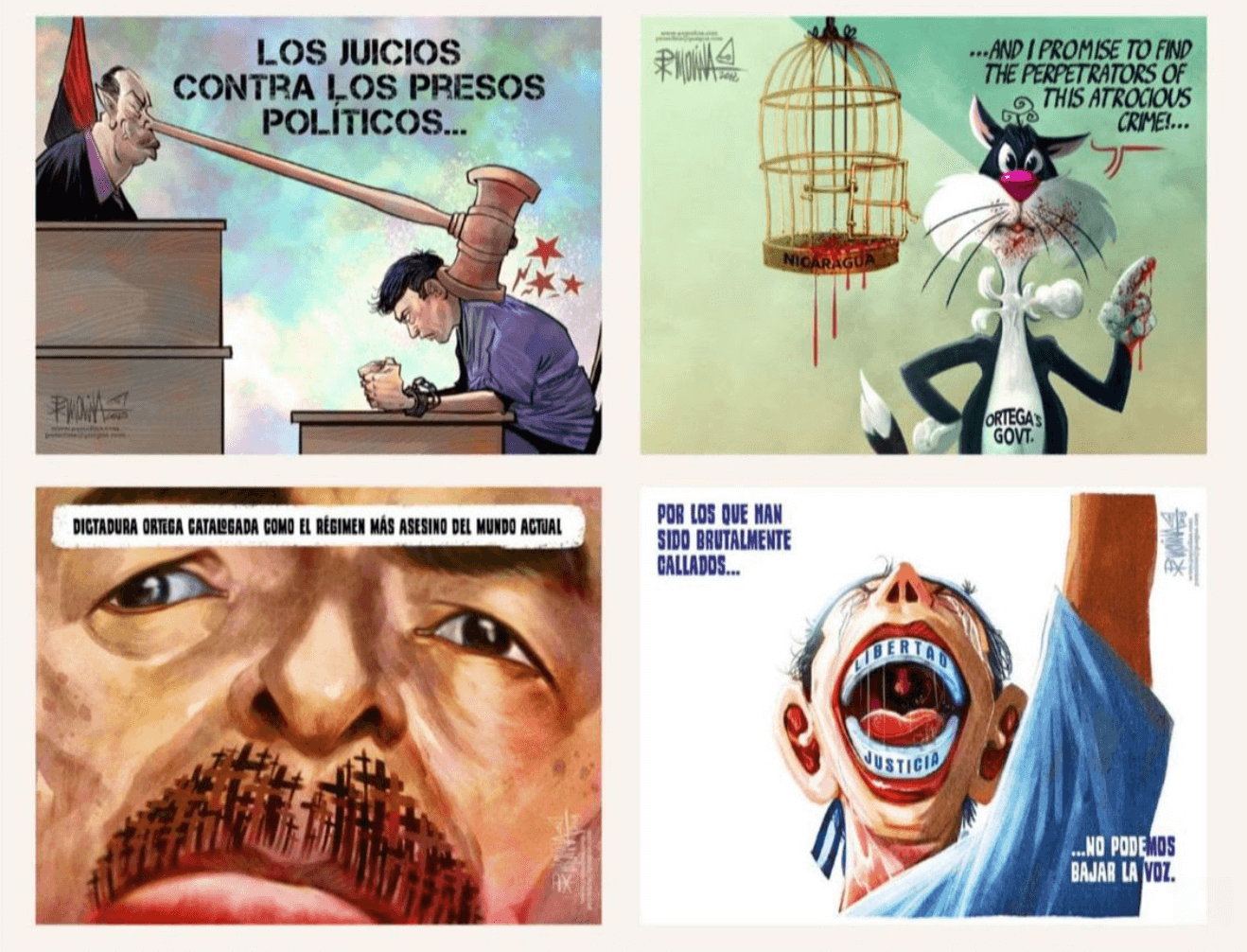
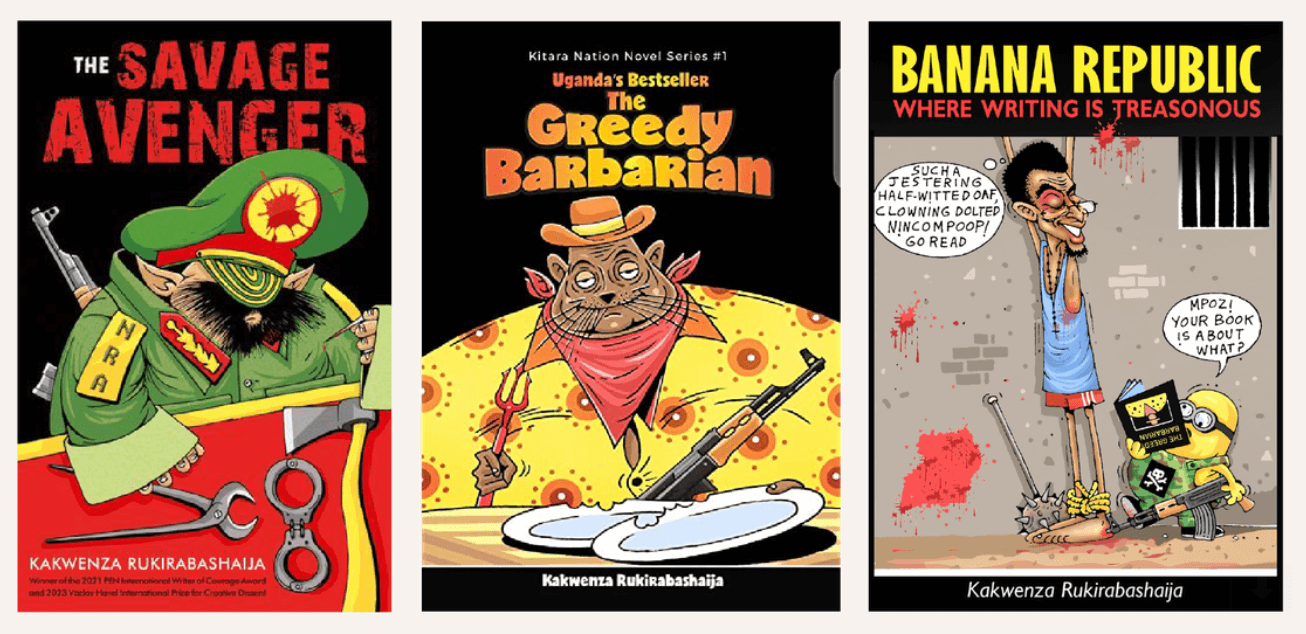
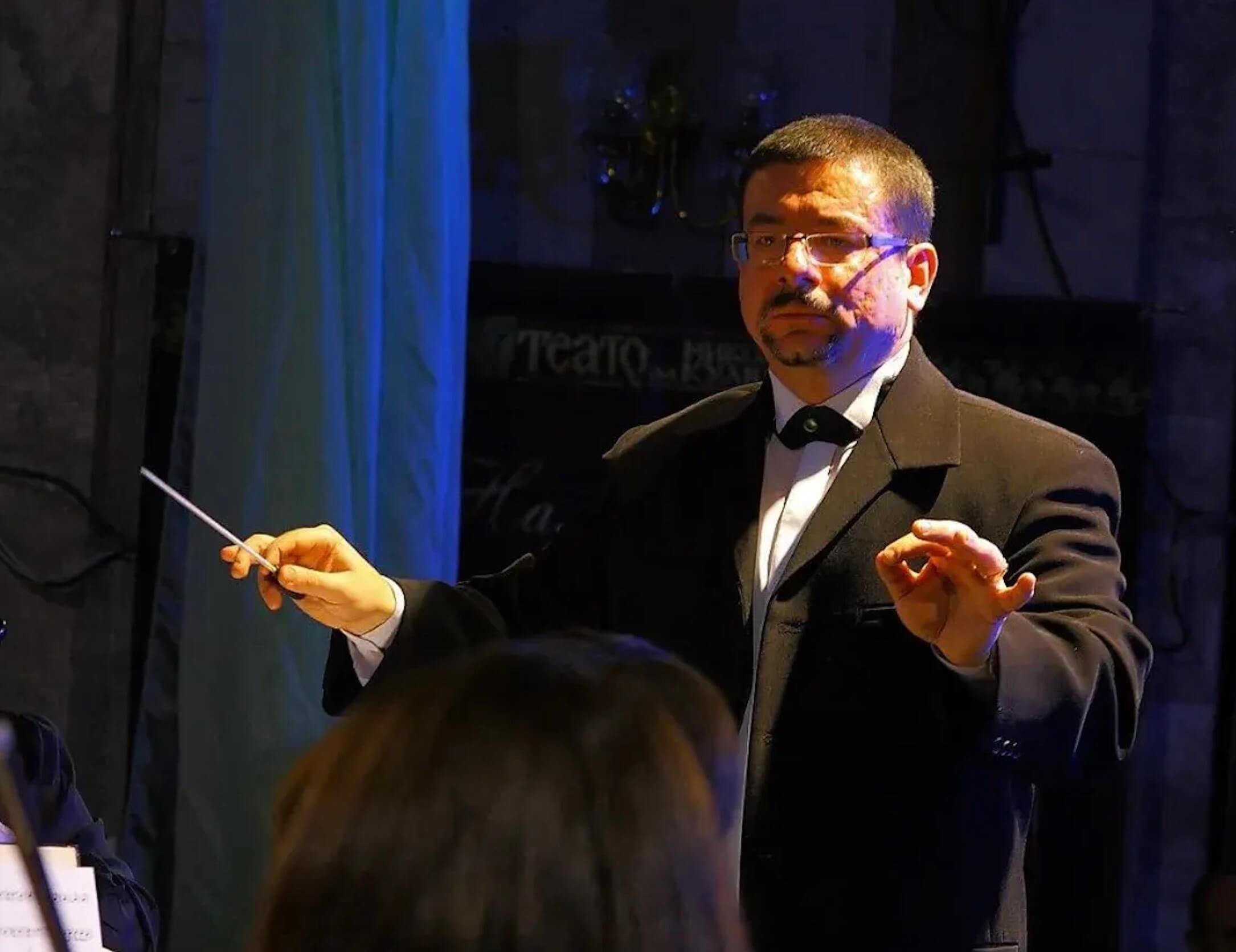
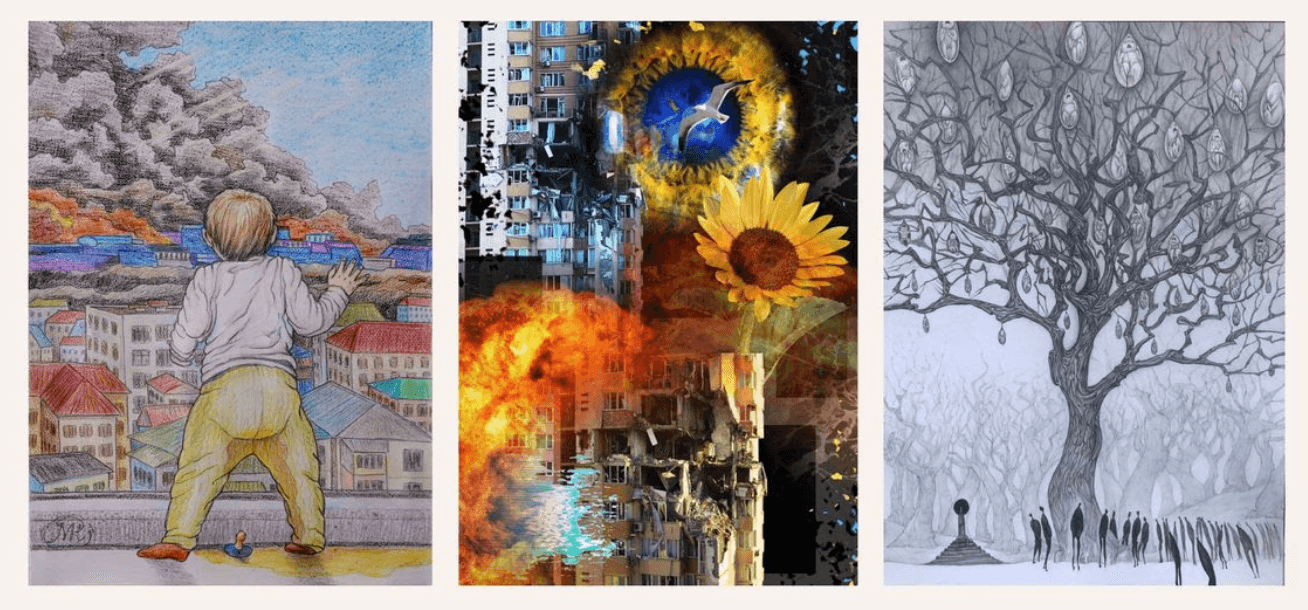
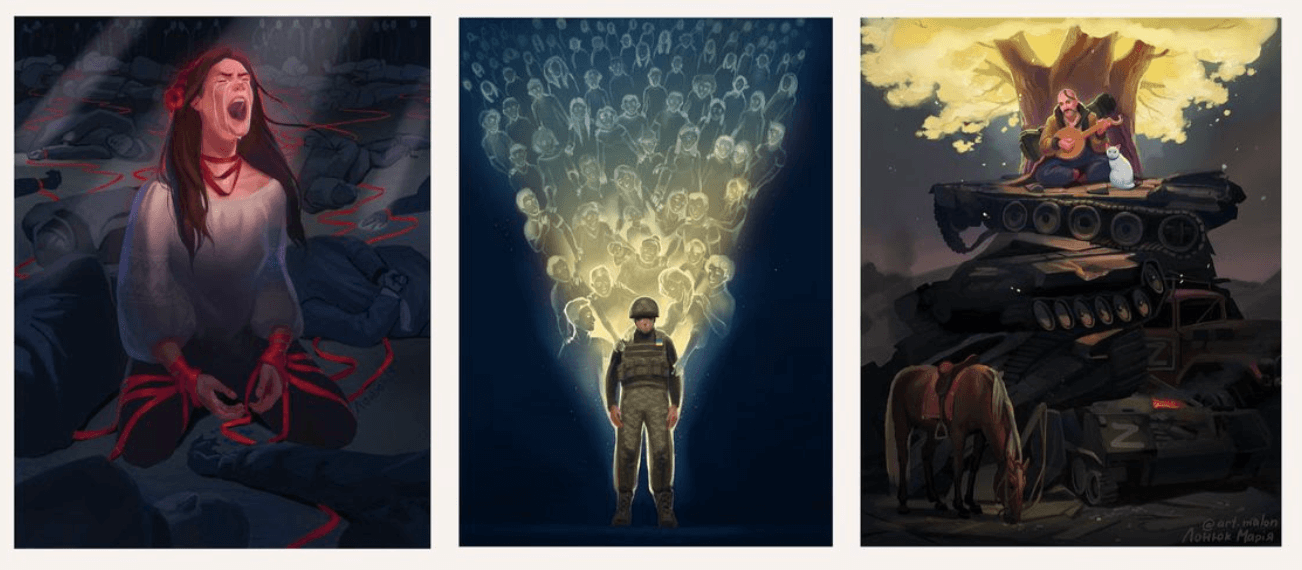
The Human Rights Foundation announced as recipients of the 2023 Václav Havel International Prize for Creative Dissent: Nicaraguan political cartoonist Pedro X. Molina; Ugandan novelist Kakwenza Rukirabashaija; and the third prize to be shared by four Ukrainian artists: the late conductor Yuriy Kerpatenko; the “Art Residency in Occupation” project; the illustrator Mariia Loniuk; and the “Stand Up for Ukraine” performance project.
“In the face of oppression and stifling silence, this year’s laureates have chosen to speak the unspoken, echoing Václav Havel’s creativity and courageous spirit,” said HRF Chief Executive Officer Thor Halvorssen.
This year’s laureates will be recognized during a ceremony on Wednesday, June 14, at the 2023 Oslo Freedom Forum (OFF) in Oslo, Norway. The Havel Prize ceremony will also be broadcast live at oslofreedomforum.com.
Pedro X Molina is a Nicaraguan political cartoonist who was forced into exile on Christmas Day 2018 after Nicaraguan dictator Daniel Ortega’s political police killed a journalist, jailed two others, and ransacked the offices of El Confidencial — the digital newspaper that featured Molina’s biting caricatures of Ortega and his tyranny. Molina published his first two cartoons in Barricada in 1995, later becoming a cartoonist for the digital outlet El Confidencial. In 2019, he received the Maria Moors Cabot Prize, awarded by Columbia University. The same year he was recognized by Americas Quarterly as one of its Top 5 Latin American political humorists.
Kakwenza Rukirabashaija is a prominent Ugandan novelist recognized by English PEN in 2021 as a Writer of Courage and a fierce critic of the dictatorship of Yoweri Museveni. He has shown exceptional courage and defiance despite being imprisoned and tortured three times since 2020 for his irreverent writing and books, including “The Greedy Barbarian,” a satirical political fiction novel about corruption and dictatorship in a fictitious African country, and “Banana Republic: Where Writing is Treasonous,” an account of the torture he was subjected to while in detention in 2020 for the publication of his first book. In late December 2021, Rukirabashaija was kidnapped from his home and taken to an army base, where he was illegally detained for one month because of his tweets criticizing Museveni and his son. Rukirabashaija was so severely tortured that he was released only on medical grounds. He was charged with “offensive communication” under Uganda’s repressive Computer Misuse Act. In February 2022, Rukirabashaija managed to flee to Germany for medical treatment, and he vowed to return to Uganda to face trial after his medical treatment.
Kerpatenko was a renowned Ukrainian musician and principal conductor of the Kherson Regional Philharmonic. In October 2022, Russian troops assassinated Kerpatenko in his home at point-blank range after he refused to conduct a concert under the rule of Russian invading forces in Kherson, Ukraine. The concert was meant to portray an “improvement of peaceful life” in the occupied city, but Kerpatenko “categorically refused to cooperate with the occupants,” the Ukrainian Ministry of Culture and Information Policy later confirmed. Kerpatenko led his hometown’s orchestra for more than 20 years before he was murdered. The Havel Prize will be presented posthumously to Kerpatenko for his courageous stance against the Russian forces’ repeated attempts at “artwashing” their illegal occupation of Ukraine.
Art Residency in Occupation is an underground art society created by curator Yuliia Manukian. During the occupation of Kherson, Ukraine, six resident artists secretly met in a basement studio at the initiative of Manukian to produce works that showcase the death and destruction in the southern city of Kherson, offering viewers an opportunity to understand the scope of the war. Through this residency, Manukian sought to provide shelter for artists and gave them the opportunity to tell stories of war through the language of art. While written journalism can distance an outsider from the reality of current life in Ukraine, Manukian believes that the group’s collection of drawings, paintings, photographs, diary entries, and videos convey the raw truth.
The Havel Prize will be presented to Manukian on behalf of the collective of artists who bravely united in wartime to create dozens of works that creatively document the horrors endured by millions of Ukrainians living under the Russian invasion.
Manukian is a curator, art critic, and journalist based in Odessa, Ukraine. She was shortlisted in the British Journalism Awards’ foreign affairs category for her vital, courageous, and deeply moving Kherson diaries for The Observer.
Mariia Loniuk is a Ukrainian freelance artist specializing in digital art. Since Vladimir Putin’s 2022 invasion of Ukraine, Loniuk has created vivid and touching illustrations about the war, conveying the feelings and images Ukrainians face. Her drawings capture the devastation of cities, homes, and human lives, the ubiquity of death and suffering, and the war’s destruction. Despite this, her illustrations also highlight the tremendous bravery and determination of the Ukrainian army and the courage and solidarity of the Ukrainian people as they defend their freedom.
Stand Up for Ukraine is a project that brings people together through the universal language of music, reminding us that art has the ability to transcend boundaries, challenge oppressive ideologies, and ignite a collective spirit of solidarity. The performance project, curated by Neringa Rekašiūtė, Eglė Plytnikaitė, and Elvina Nevardauskaitė, seeks to spark hope and empowerment and encourage people to stand united against a totalitarian regime that undermines human dignity. It consists of a live performance where the 22-year-old Ukrainian singer, Elizaveta Izmalkova, is joined by passersby singing along to the folk song, “Chervona Kalyna” — a symbol of Ukrainian resilience and freedom. Stand Up For Ukraine took the internet by storm, capturing the attention of more than five million viewers worldwide. The project serves as a call to action, urging people to set aside differences and come together in support of Ukraine.
Izmalkova is a 22-year-old Ukrainian singer based in Vilnius, Lithuania. She was born in the city of Pervomaisk in the Luhansk region. In her lifetime, Izmalkova’s family home in Ukraine was destroyed twice by Russian forces, first when Russia invaded Ukraine in 2014 and once again in early 2023.
Front Line Defenders announced the five winners of its 2023 Award for Human Rights Defenders at Risk, at a special ceremony in Dublin on 26 May 2023. Laureates from each of the major global regions travelled to Ireland to accept the Award, including:
“This year’s laureates are a courageous and inspiring group of people who reflect the determination, dynamism and diversity of human rights defenders (HRDs) who are on the front lines of fighting for a more just world,” said Olive Moore, Interim Director of Front Line Defenders. “Their vital work in defence of human rights in DRC, Ecuador, Jordan, Philippines and Ukraine impacts countless people in their communities and beyond. By shining an international spotlight on their struggles and empowering them to continue their work, we at Front Line Defenders hope this Award will touch the lives of many more people on whose behalf they act.”
Olivier Bahemuke Ndoole (Democratic Republic of the Congo) is a leader among environmental and land defenders in DRC and one of the most trusted advocates on behalf of communities impacted by land grabs, trafficking, and illegal resource extraction activities. He is also the only advocate who organises judicial training and capacity-building sessions for DRC citizens on topics related to environment and community rights in Goma, eastern DRC.
AMERICAS
Segundo Ordóñez (Ecuador), an Afro-descendant human rights defender, is one of the most visible faces and the community representative in the two legal proceedings brought against the Japanese-owned company Furukawa Plantaciones C. A. and the State of Ecuador. The cases have focused on how workers on abacá (Manila hemp) plantations suffer labour exploitation as they farm the raw materials in slavery-like conditions.
ASIA AND THE PACIFIC
Jeany ‘Rose’ Hayahay (Philippines) is a woman human rights defender based in Mindanao, the Philippines. Since 2019, she has been the spokesperson of the Save Our Schools Network (SOS Network), a coalition of child-focused NGOs, church-based groups and other stakeholders advocating for children’s right to education in Mindanao.
EUROPE AND CENTRAL ASIA
Digital Security Lab Ukraine (Ukraine) is a team of specialists in the field of digital security and internet freedom. They help Ukrainian journalists, human rights defenders and public activists solve problems with digital security, as well as promote the realisation of human rights on the internet by influencing government policy in the field of digital rights.
MIDDLE EAST AND NORTH AFRICA
Hala Ahed (Jordan) is a Jordanian human rights lawyer who has worked with a number of human rights and feminist organisations to defend women’s rights, workers’ rights, and the freedoms of opinion, expression and peaceful assembly in Jordan.
Volker Türk speaking to journalists after a press briefing at the Palais des Nations in Geneva, 24 May 2023. (Geneva Solutions/Paula Dupraz-Dobias)
Gabriela Galindo on 24 May 2023 in Geneva Solutions reports that Volker Türk said that $800 million are needed yearly, noting rich nations are quick to splurge when it comes to banks or the military, but not ‘when it comes to people’.
Dire humanitarian crises are piling up across the world, yet the United Nations’ human rights watchdog is still strapped for cash, its chief warned Wednesday.
But as these parallel crises continue to flare and some spiral, Türk warned that his organisation was running on empty and chided global leaders for not taking human rights funding more “seriously”.
“The needs have exponentially increased, but there isn’t the commensurate funding available on the humanitarian front – that’s just the reality,” he said. “And, unfortunately, that trend has been there for quite a number of years.”
“We have this combination of protracted conflict situations; we have the increase in new and emerging crises and [in] both non-international armed conflict and international armed conflict,” he said, referring to the Russian invasion of Ukraine.
Responding to a question on their funding needs, the UN rights chief said he “would want to see a doubling, which would be about $800 million per year, for the organisation”s
Türk addressed a grim roster of situations currently followed by the OHCHR, where human rights were being trampled on amid active armed conflicts, including in Sudan and Ukraine, or at the hands of authoritarian governments in Myanmar and Iran.
In Sudan, he said that the “senseless” fighting between two generals vying for power had civilians “besieged” as ceasefires were broken and added that his office had documented at least 25 cases of sexual violence…
Türk added that he was “deeply troubled by the growing phenomenon of anti-rights movements” targeting asylum seekers in the US and Europe as “hateful narratives against migrants and refugees also continue to proliferate”, spurring “anti-migrant” laws and policies that undermine basic human rights and international refugee laws.
“The developments that are unfolding in various countries including the United Kingdom, the US, Italy, Greece and Lebanon are particularly concerning,” he said, as they “appear designed” to hinder the right to seek asylum, to penalise citizens for assisting those in need or to organise returns in “unlawful, undignified and unsustainable ways”.
“We have some [crises] in the headlines all the time, but others are not. Haiti is a good example. There seems to be (…) no sense of urgency when it comes to dealing with a situation like this.”..
“When you look at how quickly billions can be made available when there is a banking crisis or and – I’m sure, rightly so – including military expenditure and so forth… when it comes to people and the plight of people, there doesn’t seem to be the same,” he said.
“Donor countries, they have a budget for peace and security, they have a budget for development (…) but they don’t actually have a budget down for human rights,” he said. “It is actually important to take human rights seriously, not just by (…) coming to the [UN Human Rights] Council and having all these discussions here and working with us, but also by having and increasing the funding for the organisation.”
On 26 May 2023 The Asian Forum for Human Rights and Development (FORUM-ASIA) called for quashing the convictions of NagaWorld union leader Chhim Sithar alongside eight members of the Labor Rights Supported Union of Khmer Employees of NagaWorld (LRSU).
FORUM-ASIA strongly condemns the verdict given on 25 May 2023 by a Phnom Penh municipal court. The trade unionists were convicted of ‘incitement to commit a felony or disturb social security’ under Criminal Code Articles 494 and 495.
Sithar was sentenced to two years in prison. Meanwhile, the other union members were sentenced to one to one and a half years in prison and received suspended sentences or judicial supervision.
‘We urge the court to overturn the verdict as Cambodian authorities are abusing the criminal justice system by targeting union leaders and other labour rights advocates. We call on the Cambodian Government to immediately release Sithar. This is the umpteenth unfair decision that exemplifies the government’s contempt for democratic principles as well as Hun Sen’s attempts to silence critical voices months before the national elections,’ said Mary Aileen D. Bacalso, Executive Director of FORUM-ASIA.
Alongside other union members, Sithar was first arrested in January 2022 and held in pre-trial detention for two months after being charged with incitement to commit a crime for leading a peaceful strike demanding higher wages for workers and the reinstatement of hundreds of union members who believe they were unjustly fired in December 2021. After being released on bail, Sithar was once again detained in November 2022 for allegedly violating her bail by travelling abroad to join a trade union conference without court approval.
The trial against Sithar and her eight co-defendants–Chhim Sokhorn, Hay Sopheap, Kleang Soben, Ry Sovandy, Sok Kongkea, Sok Narith, Sun Sreypich, and Touch Sereymeas–began in January 2023. During the trial, Sithar stated that the LRSU has followed all legal protocols for their protest against mass layoffs and alleged union-busting, only launching the strike after all viable mediation efforts were exhausted. Meanwhile, prosecutors claimed that Sithar and LRSU members are guilty of leading a strike for more than a year even after authorities have declared the strike to be illegal.
Nevertheless, in February 2023, Sithar won the prestigious Human Rights Defenders Award– from the US Department of State–for her exceptional courage and leadership in advocating for the promotion and protection of universally recognised human rights and fundamental freedoms.
Mariana de la Fuente, is a human rights defender who fights against slave labour and human trafficking in Brazil. According to ILO, more than 57,000 workers in Brazil were rescued in conditions similar to slavery – between 2003 to 2021.




 Hans Thoolen on Human Rights Defenders and their awards