Author Archive

Basic Misconception of Nobel Peace Prize

January 3, 2024

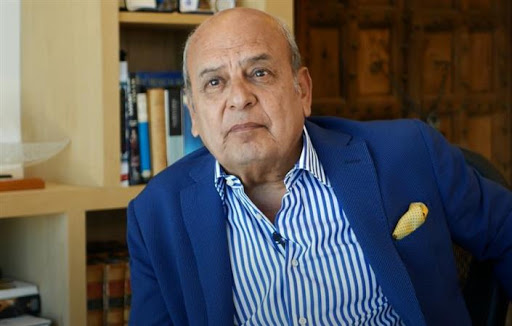
Mr Miknas

On 29 December 2023 Akram Miknas posted a piece on gdnonline attacking the Nobel Peace Prize. It is not my role to “defend” the Peace Prize, but the misconception underlying much of the piece is such that it is worth putting the record straight:

Wish it were feasible to revoke the Nobel Peace Prize! Especially when some individuals upon whom this supreme honour is bestowed, show, by their subsequent actions and behaviour, that they are more suited to a ‘prize’ or ‘badge’ of shame associated with war and destruction or violence and bloodshed

The author then raises the cases of Menachem Begin, Shimon Peres, and Aung San Suu Kyi, who are seen as violators. He could have added others such as Le Duc Tho, de Klerk, Arafat and Kissinger or more recently Abiy Ahmed Ali.

…”These examples make us question the logic of bestowing the Nobel on individuals or groups for peace, when their actions are anything but peaceful! In fact, after having received this honour, they have been involved in terrible acts that have stained them with the blood of their victims.”

…..Indeed, many of these Nobel Peace Prize laureates, are, in reality, perpetrators of war crimes. As far back as 2012 I published a piece ‘Nobel Prize is for Peace not necessarily Human Rights‘ which states that the Prize is a PEACE prize and was in certain cases awarded ‘merely’ because they stopped violating human rights. See: https://www.comminit.com/content/nobel-prize-peace-not-necessarily-human-rights

The author makes the sensible point of asking for a critical reassessment of the award selection process: “One key criterion should be that recipients must refrain from intertwining human rights advocacy with political activities. Failure to adhere to this condition should warrant the withdrawal of the award in the future. This measure ensures that the accolade is granted solely based on an individual’s commitment to human rights without any influence from political affiliations or perspectives.”

The author’s call to “to establish alternative awards that are …specifically designed to champion the causes of the vulnerable. It should recognise individuals who are committed to tirelessly working for peace, justice and the promotion of humane values within societies. These awards should gain appreciation and support from individuals and organisations dedicated to fostering positive change in oppressed communities.” is fine but hardly necessary as there are at least 200 such awards, see: https://www.trueheroesfilms.org/thedigest.

https://www.gdnonline.com/Details/1299326/Nobel-Peace-Prize-A-legacy-tainted-with-blood

Pegasus spyware now turned on Indian media

January 3, 2024

Voice of America on 28 December, 2023 reported that the founding editor of one of India’s largest news websites is among the journalists to be targeted by the Pegasus spyware. A joint investigation by the rights group Amnesty International and The Washington Post, published Thursday, found evidence that the invasive spyware is being used again to target media in India.

Made and marketed by Israeli company the NSO Group, the spyware can be used to access a phone’s messages and emails, peruse photos, eavesdrop on calls, track locations and even film the owner with the camera. [see also: https://humanrightsdefenders.blog/tag/pegasus/]

In the latest research, forensic investigations found evidence of the spyware on the iPhones of Siddharth Varadarajan of the news website The Wire, and Anand Mangnale of The Organized Crime and Corruption Reporting Project, or OCCRP.

Increasingly, journalists in India face the threat of unlawful surveillance simply for doing their jobs, alongside other tools of repression, including imprisonment under draconian laws, smear campaigns, harassment, and intimidation,” Donncha Ó Cearbhaill, who heads Amnesty International’s Security Lab, said in a statement.

Amnesty reported that it first suspected renewed Pegasus activity during regular monitoring by its researchers in June. It investigated further after Apple sent notifications to iPhone users in October warning they had been targeted by “state sponsored attackers.” Around 20 politicians and journalists in India received the notifications. Amnesty then carried out a forensic analysis for individuals who received the warnings.

Around that time, the OCCRP had been investigating an Indian tycoon, Gautam Adani, who is an ally of Prime Minister Narendra Modi and founder of the multinational conglomerate known as the Adani Group.

Mangnale told the French news agency AFP he was targeted “within hours” of sending questions to the Adani Group on behalf of the OCCRP.

Varadarajan told the Post he believes the attempted hacking may be related to opposition to the detention of a prominent news publisher in New Delhi.

In a statement, Amnesty’s Ó Cearbhaill highlighted the chilling effect spyware has on media freedom.

“Targeting journalists solely for doing their work amounts to an unlawful attack on their privacy and violates their right to freedom of expression,” Ó Cearbhaill said.

In 2021, New Delhi was accused of using Pegasus to surveil journalists, opposition politicians and activists, with leaked documents showing the spyware had been used against more than 1,000 Indian phone numbers. Prime Minister Modi’s main rival, Rahul Gandhi, was among those targeted.

The government denied conducting “illegal surveillance” but refused to cooperate with a Supreme Court probe into the allegations, the findings of which have not been made public.

Following the October notifications sent by Apple, Indian authorities were reported to be investigating whether opposition politicians were targeted.

Ashwini Vaishnaw, the information and technology minister, said the government was “concerned” by the complaints.

The Washington Post reported that one day after Apple sent the notifications, government officials in India announced they would investigate the security of Apple devices.

——

The Washington Post (WP) reported Wednesday that following Apple’s October alert about alleged government hacking attempts on iPhones of independent Indian journalists and opposition politicians, Indian government officials swiftly retaliated against Apple.

It is reported that officials of the Bharatiya Janta Party (BJP), the ruling party, hurried to contain the fallout after journalists and politicians shared Apple’s warnings. The government administration pressured Apple to retract warnings, leading to a heated discussion. Under government pressure, Apple India acknowledged potential mistakes in threat detection and sought to downplay warnings globally. However, during a November meeting, Apple defended its stance against Indian officials’ scrutiny.

India’s opposition leaders and journalists received Apple alerts, warning of potential state-sponsored i

https://www.voanews.com/a/journalists-government-critics-in-india-targeted-with-pegasus-spyware/7416268.html

https://www.jurist.org/news/2023/12/wp-india-government-retaliated-against-apple-after-government-phone-hacking-claims/

Report on four areas where synergies in human rights and anti-crime regimes should be enhanced

December 29, 2023

On 27 Dec 2023 Ana Paula Oliveira posted for Global Initiative on the Report of an interesting topic: the convergences between organized crime and human rights agendas, as well as communities’ responses to mitigate the negative impact of organized crime on human rights over the past year.

The Vienna Declaration and Programme of Action (VDPA), which in 2023 celebrated 30 years since it was adopted….Global issues such as digitization, climate change and conflict pose multiple challenges to human rights. Organized crime cuts across many of these challenges. In this context of reflection on the effectiveness of the human rights framework, the Global Initiative Against Transnational Organized Crime (GI-TOC) has worked to raise awareness of the convergences between organized crime and human rights agendas, as well as communities’ responses to mitigate the negative impact of organized crime on human rights over the past year. In 2023, the topic was selected for the GI-TOC’s Resilience Fund Fellowship. In this context, the Fund organized its first in-person Fellowship meeting with a group of grantees and Fellows to discuss pressing human rights implications of organized crime. The meeting provided a platform for the Fellows to share experiences and current challenges related to the human rights impact of organized crime in their communities.

Building on this work, the GI-TOC, with the support of the Sector Programme on Human Rights of the Deutsche Gesellschaft für Internationale Zusammenarbeit (GIZ) on behalf of the Bundesministerium für wirtschaftliche Zusammenarbeit und Entwicklung (BMZ) and the government of Norway, launched the first institutional report on the issue, ‘Four reasons why organized crime is a human rights issue’ during the 24-hour Organized Crime Conference (OC24). This report draws attention to four areas where synergies in human rights and anti-crime regimes should be enhanced, so that safeguards for human rights are woven into states’ policy responses to transnational organized crime.

As a final 2023 activity and part of the series of follow-up events to celebrate the 30th anniversary of the VDPA (VDPA+30) and the 75th anniversary of the UDHR, the GI-TOC organized a series of events to raise awareness of the intersection between organized crime and human rights in Vienna with the support of the Government of Austria. The programme comprised a two-day expert group meeting held from 29 November to 30 November in Vienna and a public event. The expert group meeting (EGM) brought together experts based in Vienna and selected global experts (comprising academia, non-governmental organizations, and representatives from international and grassroots organizations) from both the human rights and crime prevention fields to discuss the multifaceted interactions between organized crime and human rights. It was designed to spark discussion on organized crime as a global challenge that keeps human rights from being fulfilled, based on our research and evidence on the issues.

During this series of discussions, the GI-TOC also hosted a public panel at the Vienna Diplomatic Academy. This was followed by a reception where participants could engage more informally. This event reflected on high-level principles, community experiences and responses, as well as the dissemination of community tools to respond to organized crime violence through a human rights lens.

This report summarizes the key points discussed in this series of events and proposes a way forward for those who want to pursue further work on the issue.

https://globalinitiative.net/analysis/human-rights-responses-organized-crime/

Conference report

The story of Moses, a migrant who became a HRD

December 23, 2023

Himself a survivor of the harsh journey across the Mediterranean Sea, Moses Von Kallon SOS Méditerranée’s Aquarius vessel in 2018 – a journey during which his rescue ship was turned away from Italian and Maltese waters. He told ISHR about how he started his organisation after Aquarius Supervivientes after settling in Spain and how he has wrestled with everyday racism. ‘Immigration is not a disease,’ he said, as he shared his hopes for a future where justice and free movement would be guaranteed to those who are forced to leave their homelands to find safety. Learn more about Moses and other human rights activists and defenders like him: https://ishr.ch/defender-stories/

https://ishr.ch/defender-stories/human-rights-defenders-story-moses-von-kallon-from-sierra-leone/

Phil Lynch talks about Human rights defenders as the lifeblood of the UDHR

December 22, 2023

On 21 November, ISHR celebrated the vital work of human rights defenders at a conference on ‘The Universal Declaration of Human Rights Seventy-Five Years On: Achievements and Current Challenges.’ A slightly shortened version of Phil Lynch’s (Executive Director of the International Service for Human Rights) speech is reproduced below.

Former High Commissioner for Human Rights, Navi Pillay, once called defenders the lifeblood of human rights. ‘They are the promoters of change,’ she said. ‘The people who ring the alarm bell about abuse’. She is right in at least two ways.

Firstly, because, even as most States take a selective and inconsistent approach to human rights principles and situations, defenders reaffirm that all human rights are universal and inalienable; that they are indivisible, interdependent and interrelated.

Defenders are also the lifeblood of human rights because defending and advocating for human rights is integral to realising them, particularly the rights of individuals and groups who have been subject to various and intersecting forms of discrimination and oppression.

The right to defend rights

We all have the right – and the responsibility – to defend human rights. This was the revolutionary idea behind the Declaration on Human Rights Defenders, adopted by the General Assembly exactly 50 years after that same body adopted the Universal Declaration of Human Rights (UDHR). [see also: https://humanrightsdefenders.blog/2023/12/14/some-thoughts-on-the-25th-anniversary-of-the-un-declaration-on-human-rights-defenders/ and https://humanrightsdefenders.blog/2023/12/14/universal-declaration-of-human-rights-at-75-still-relevant/]

This right is now firmly established in jurisprudence. UN Treaty Bodies and Special Procedures recognise that the work of defenders is so integral to the realisation of all human rights, that threats or attacks against them may amount to violations of the very rights for which they advocate…

 The Declaration also went further than enshrining the fundamental right to defend rights. It elaborated existing binding international human rights law as it applies to defenders. This includes the right of defenders and their organisations to access resources, including from so-called ‘foreign sources’, as well as the right to communicate and cooperate with international bodies, free from any form of intimidation or reprisal.

Government action to implement the Declaration

 25 years after its adoption, a number of States have enacted the Declaration at the domestic level with specific national law and mechanisms for the protection of defenders. Côte d’Ivoire, Burkina Faso, Mali, Niger, the DRC, Mongolia and Mexico are among the States that have taken this positive step.

Other States, including Norway, Finland, Switzerland, Ireland and Canada, among others, have adopted human rights defender guidelines heavily inspired by the Declaration, providing guidance to their embassies and diplomats about the protection of at-risk human rights defenders abroad.

Threats facing defenders

But much remains to be done.

Despite their vital work for gender justice and equality, women human rights defenders like Neda Parwan and Zholia Parsi in Afghanistan and Narges Mohammadi in Iran face systemic discrimination and arbitrary detention.

Despite their vital work for racial justice and non-discrimination, anti-racism activists like Assa Traoré in France or Marielle Franco in Brazil face judicial harassment and even death in the case of Marielle.

Despite their vital work for political justice and freedom of expression, pro-democracy activists like Abdulhadi Al Khawaja in Bahrain and Ahmed Mansoor, Maryam al-Balushi and Amina al-Abduli in the UAE all face unfair detention, torture and ill-treatment.

Despite their vital work for reproductive justice and women’s rights, defenders like Vanessa Mendoza in Andorra and Justyna Wydrzyńska in Poland face spurious legal charges and criminalisation.

And despite their vital work for environmental justice, environmental and land rights defenders like Sukhgerel Dugersuren in Mongolia and Trinh Ba Phuong in Vietnam face persecution and worse.

State pledges to recognise and protect defenders

Together with a coalition of 16 NGOs, ISHR is calling on States to make 5 key pledges on the recognition and protection of defenders.

First, States should publicly recognise the vital role of human rights defenders. Authorities should actively promote the work and achievements of defenders, so that we know them not just for the threats they face but also and foremost for their invaluable contributions to freedom, justice, equality and accountability.

Second, States should recognise and address the intersecting forms of discrimination and oppression that many defenders face. They should ensure defenders are protected and able to meaningfully participate in all relevant policy and decision-making processes.

Third, in genuine partnership with independent civil society actors, States should develop and implement specific national laws, policies and mechanisms for the protection of human rights defenders. They should also repeal or amend laws and policies which restrict and even criminalise defenders.

Fourth, States should refrain from any form of intimidation or reprisals against defenders who engage with the UN and other regional mechanisms. They should take a clear and public position against intimidation and reprisals, including by calling out and holding other States which commit such acts to account.

Fifth and finally, States should ensure that all threats and attacks against human rights defenders are the subject of prompt, impartial and independent investigations. Perpetrators must be held accountable, and effective remedies provided both to address the harms to the individual and to address any systemic or structural factors contributing to such threats or attacks.

 Conclusion

Human rights defenders are essential agents of progress and positive change. Their work is vital for gender justice, racial justice, environmental justice, political justice and economic justice. Their work confronts and challenges power, privilege and prejudice. For this, they are frequently exposed to threats and attacks from governments, corporations and other unscrupulous actors. Their work contributes to good governance and accountability at the local, national and international levels.

To defend human rights is an act of bravery and solidarity and, above all, an act of hope and resolve. Hope for a future in which all peoples and communities enjoy freedom, dignity, justice and peace on a healthy planet, in line with the Universal Declaration. And resolve to work, individually and collectively, to realise that still magnificent vision.

https://ishr.ch/latest-updates/human-rights-defenders-are-the-lifeblood-of-the-universal-declaration-of-human-rights/
Germany’s fear of being seen as antisemitic goes over the top

December 21, 2023

On 20 December 2023 Jakob Guhl posted in Index on Censorship a piece stating that German authorities are increasingly silencing pro-Palestine activism in an effort to stamp out anything they fear could be seen as antisemitic. He makes some excellent points (which apply also outside Germany):

..The seemingly isolated incidents highlighted in this article are piling up and the curtailing of civic space is starting to be noticed internationally: Civicus, which ranks countries by freedom of expression rights, recently downgraded Germany in a review from “open” to “restricted” due to repression of pro-Palestinian voices, as well as of climate activists…

There are long-standing disagreements around where to draw the line between legitimate criticism of Israel and attacks on Israel that single it out because it is a Jewish state, are expressed in antisemitic ways or are motivated by antisemitic views. For example, the International Holocaust Remembrance Alliance (IHRA) definition of antisemitism acknowledges that “criticism of Israel similar to that levelled against any other country cannot be regarded as antisemitic” but identifies seven examples of when attacks on Israel may be antisemitic (taking into account the overall context). For example, it could be antisemitic to reference classic antisemitic tropes such as the blood libel conspiracy myth to describe Israel, deny the Jewish people’s right to self-determination or blame Jews collectively for the actions of Israel, according to IHRA.

While Germany has adopted IHRA, much looser standards seem to be applied by authorities and commentators committed to tackling Israel-related antisemitism. Calls for a binational state, advocacy for the Palestinian refugees’ right of return, support for Boycott, Divestment and Sanctions (BDS) or accusations that Israel is committing Apartheid are regularly identified as antisemitic. There is a strong sense that given its historical responsibility, it is not Germany’s place to judge, or let anyone else judge, Israel even as its offensive in Gaza has resulted in one of the highest rates of death in armed conflict since the beginning of the 21st century, and disproportionately affects civilians. [see also: https://humanrightsdefenders.blog/2021/01/18/israel-and-apartheid-israeli-human-rights-group-stirs-debate/]..

The debates since 7 October have created an atmosphere in which pro-Palestinian voices are more and more stigmatised. Pro-Palestinian protests have repeatedly been banned by local authorities. Their dystopian rationale for these bans revolves around the idea that, based on assessments of previous marches, crimes are likely to be committed by protesters. The practice is not new: in the past, German police have even banned protests commemorating the Nakba (Arabic for “catastrophe”), the collective mass expulsion and displacement of around 700,000 Palestinians from their homes during the 1947-49 wars following the adoption of the Partition Plan for Palestine by the United Nations. In reaction to pro-Palestine protests since 7 October, the antisemitism commissioner of North Rhine Westphalia and former federal justice minister even suggested the police should pay closer attention to the nationality of pro-Palestine protest organisers as protests organised by non-Germans could be banned more easily.

Furthermore, pro-Palestinian political symbols are being falsely associated with Hamas or other pro-terrorist organisations. In early November, the Federal Interior Ministry banned the chant “From the River to the Sea, Palestine will be free” as a symbol of both Hamas and Samidoun, a support network for the Marxist-Leninist Popular Front for Liberation of Palestine which has been designated as a terrorist organisation by the European Union.

While one plausible interpretation of the “From the River to the Sea” slogan is that it is a call for the destruction of Israel, it is equally plausible to understand it as a call for a binational state with full equality of all citizens. Without context, the slogan cannot automatically be identified as antisemitic, though it is of course entirely legitimate to criticise this ambivalence. As has been extensively documented, the slogan does not originate with nor is exclusively used by Hamas.

Apart from being based on misinformation, banning “From the River to the Sea” has also created the ludicrous situation that the German police force is asked to make assessments on whether holding a “From the River we do see nothing like equality” placard is an expression of support for terrorism. A former advisor to Angela Merkel even called for the German citizenship of a previously stateless Palestinian woman to be revoked who posted a similar slogan (“From the River to the Sea #FreePalestine”) on her Instagram.

In some cases, these dynamics venture into the absurd. On 14 October, the activist Iris Hefets was temporarily detained in Berlin for holding a placard that read: “As a Jew & an Israeli Stop the Genocide in Gaza.”

These illiberal and ill-conceived measures are not limited to protests. In response to the 7 October attacks, authorities in Berlin allowed schools to ban students from wearing keffiyeh scarves to not “endanger school peace”.

Curtailing civic spaces

While these trends have been accelerated since 7 October, they predate it. In 2019, the German Bundestag passed a resolution that condemned the BDS movement as antisemitic. It referenced the aforementioned IHRA definition of antisemitism (which does not comment on boycotts), compared the BDS campaign to the Nazi boycotts of Jewish business and called on authorities to no longer fund groups or individuals that support BDS.

BDS calls for the boycott of Israeli goods, divestment from companies involved in the occupation of Arab territories and sanctions to force the Israeli government to comply with international law and respect the rights of Palestinians, including the right of return for Palestinian refugees. Inspired by the boycott campaign against Apartheid South Africa, BDS has attracted many supporters, but critics have claimed that BDS singles out Israel and delegitimises its existence. Accusations of antisemitism within the movement should of course be taken seriously: BDS supporters have previously been accused of employing antisemitic rhetoric about malign Jewish influence and intimidating Jewish students on campus. However, many of BDS’ core demands are clearly not antisemitic. Since the BDS lacks a central leadership that would issue official stances, it is difficult to make blanket statements about the movement in its entirety.

The 2019 resolution is now being cited to shut down cultural events. A planned exhibition in Essen on Afrofuturism was cancelled over social media posts that, according to the museum, “do not acknowledge the terroristic attack of the Hamas and consider the Israeli military operation in Gaza a genocide” and expressed support for BDS. The Frankfurt book fair “indefinitely postponed” a literary prize for the Palestinian author Adania Shibli, after one member of the jury resigned due to supposed anti-Israel and antisemitic themes in her book. Shibli has since been accused by the left-wing Taz newspaper of being an “engaged BDS supporter” for having signed one BDS letter in 2007 and a 2019 letter that criticised the city of Dortmund for revoking another literary price for an author that supports BDS. A presentation by the award-winning Forensic Architecture research group at Goldsmiths (University of London), which has analysed human rights abuses in SyriaVenezuela and Palestine as well as Neo-Nazi murders in Germany, was likewise cancelled by the University of Aachen which cited the group’s founder Eyal Weizman’s support for BDS.

The curtailing of civic space increasingly affects voices that have stood up for human rights at great personal risk. The Syrian opposition activist Wafa Ali Mustafa was detained by Berlin police near a pro-Palestine protest, reportedly for wearing a keffiyeh scarf. Similarly, the Heinrich-Böll-Stiftung, which is associated with the centre-left Green Party, pulled out of the Hannah Arendt prize ceremony, which was due to be awarded to the renowned Russian dissident, philosopher and human rights advocate Masha Gessen. Despite acknowledging differences between the two, Gessen had compared Gaza to the Jewish ghettoes in Nazi-occupied Europe in an article about the politics of memory in Germany, the Soviet Union, Russia, Poland, Ukraine, Hungary and Israel.

Conversation stoppers

Alarm bells should ring as one of Europe’s major liberal democracies has taken an authoritarian turn in the aftermath of 7 October. Germany’s noble commitment to its historical responsibility in the face of rising antisemitism is morphing into a suppression of voices advocating for Palestinian political self-determination and human rights.

In this distorted reality, civic spaces are eroded, cultural symbols banned, political symbols falsely conflated with support for terrorism and events are shut down. So far, there has been little pushback or critical debate about these worrying developments. To the contrary: politicians, foundations, cultural institutions and media outlets seem to be closing ranks under the shadow of the 2019 BDS resolution and a skewed interpretation of the IHRA definition.

Following the appalling violence committed by Hamas on 7 October, and the scale of civilian suffering in Gaza due to the subsequent Israeli military offensive, polarisation and tension between communities have been on the rise. In this context, it is crucial to be able to have passionate, empathetic, controversial and nuanced discussions about the conflict, its history, the present impasse, potential ways forward and its impact on Jewish, Muslim and Arab communities abroad. With the voices of activists, authors and even internationally renowned human rights advocates being increasingly isolated, these vital exchanges are prevented from taking place.

https://www.indexoncensorship.org/2023/12/from-the-danube-to-the-baltic-sea-germany-takes-an-authoritarian-turn/

More on the EU Visa Framework for at-risk Human Rights Defenders

December 21, 2023

An initiative of ProtectDefenders.eu, the EU Human Rights Defenders Mechanism implemented by international civil society

Human rights defenders have the right to carry out their legitimate work safely and to access support and protection when they are at risk, especially those who operate in the most difficult contexts. Their right to defend rights has been systematically enshrined by the European Union in its political guidelines, and statements, as well as in its financial programming and external actions. In fact, the European Union is a leading actor in the promotion and protection of human rights in the world and it is regarded by the human rights defenders’ community as an invaluable source of empowerment and legitimacy. [see the call of 2022:https://humanrightsdefenders.blog/2022/09/24/call-for-an-eu-visa-framework-for-at-risk-human-rights-defenders/]

Human rights defenders often carry out their work at great personal risk, and increasingly face killings, attacks, threats, and acts of intimidation because of their peaceful activities, in addition to being subjected to repression, restrictive legislation, and judicial harassment. For these at-risk human rights defenders, the possibility of accessing a visa to a European territory emerges as an essential security and protection tool, which empowers them to carry out their activities in their countries in a more secure and protected way. Visas and multiple-entry visas are widely regarded by the international human rights defenders community as a vital element of a comprehensive security strategy, one that enables defenders to consider the possibility to move in and out of their country in a way that allows them to manage the level of risk that they face as a result of their work, and to continue to work in their communities without forcing them to resort to permanent asylum paths when facing aggravated threats. However, despite political commitments and existing guidelines, the EU and its member states’ stated support for human rights defenders is not consistent with the current EU visa policies and practices, as human rights defenders at risk around the world lack consistent procedures to effectively and predictably access visas for the EU territory.

The community in support of human rights defenders, including the Consortium of organisations implementing the European Union Human Rights Defenders mechanism ProtectDefenders.eu, have systematically noted and documented with great concern the numerous, diverse, and blatant obstacles for defenders to access EU visas. ProtectDefenders.eu – which has supported 45,000+ human rights defenders and civil society organisations to continue their work in the most difficult situations since 2015 – encounters these obstacles also in relation to its daily operations delivering EU-funded programmes of practical support for human rights defenders. Every day, human rights defenders face an array of impediments that hinder their access to this essential security and protection tool, preventing them from accessing safe haven when necessary, as well as from engaging in existing opportunities for rest and respite and temporary relocation programmes, or carrying out essential international advocacy, mobilisation, or networking activities in the EU territory.

This lack of reliable, predictable, and coherent access for human rights defenders to EU visas unnecessarily aggravates the risk, isolation, and vulnerability they face as a result of their work – which is exacerbated for those defenders belonging to particularly threatened groups – such as women human rights defenders, LGBTI rights defenders, or indigenous rights defenders; for those facing spurious criminalisation processes aimed at impeding their mobility, or for those without secure access to basic travel documents. Major crises affecting human rights defenders and massive backlash against civil society notoriously reveal the gap in the effective implementation of the EU political commitments and guidelines related to visas, as recently illustrated by the demand for support from those human rights defenders and civil society members in Afghanistan in need of urgent evacuation. A more predictable, coordinated, and consistent policy on visas for human rights defenders – allowing for flexible and reactive protocols in critical situations, would reportedly have avoided, or at least mitigated the deficiencies of the EU response, or lack thereof.

With the exception of the positive examples of current good practices and initiatives implemented by some Member States, European institutions, or political actors in the EU, the EU as a whole has yet to make a serious effort to mainstream access to at-risk human rights defenders in their visa policies. The current legislative instruments and established practices fail to comply with the consistency required for the Union’s actions enshrined in the EU Treaties and attest to a lack of harmonisation, effort-sharing, and coordination among both the Member States and the European institutions.

ProtectDefenders.eu and the international civil society organisations participating in this initiative are convinced that with political will and clear guidelines, the EU can and should return to its political mandate in favour of human rights and human rights defenders, and lead on the implementation of concrete initiatives, good practises, and policy changes to ensure that at-risk human rights defenders can access European Union visas with guarantees, security, and predictability.

ProtectDefenders.eu and the international civil society organisations participating in this initiative are calling on all European Union actors to urgently implement all appropriate measures at all levels to develop and promote an enabling framework for human rights defenders to access visas for the EU, one that guarantees predictability, consistency, and protection for those who are most at-risk HRDs.

More specifically, ProtectDefenders.eu and the international civil society organisations participating in this initiative call on the EU stakeholders to:

  • propose a specific facilitated procedure for human rights defenders within the EU Visa Code, setting common criteria and defining the elements of a facilitated procedure;
  • include instructions in the EU Visa Handbook on granting facilitations to HRDs and their family members;
  • work towards amending the legal instruments on visas, particularly the Visa Code,
  • create an EU Directive to protect Human Rights Defenders (HRDs), outlining ways to support and protect them in accessing and staying in the EU, as well as meeting their support needs to continue their work. The Directive would provide a legal tool to grant HRDs at risk access and stay in the EU for a specified time.; and
  • introduce amendments to the Temporary Protection Directive that allow temporary protection status in the EU to be granted to defenders at risk.

see also: https://bnnbreaking.com/breaking-news/human/fra-report-proposes-changes-to-eu-visa-code-handbook-for-human-rights-defenders/

SAR Global Congress June 2024 in Vilnius

December 21, 2023

Scholars at Risk invites you to register for the 2024 Global Congress to be held June 25-27, 2024, in partnership with the European Humanities University (EHU) in Vilnius, Lithuania. Global Congresses are SAR’s largest network events, and bring together leading scholars, advocates, students and professionals to rethink issues of academic freedom and related values, to learn from each other, and to help shape SAR’s agenda for the coming years.

The 2024 Global Congress theme, “Sustainable knowledge: Lessons from universities, scholars and students in exile,” seeks to explore and capture the experience of current and prior generations of academic communities forced into exile by political unrest, repression, disaster and conflict. From Afghanistan to Ukraine, Belarus to Myanmar, Turkey to Sudan, Nicaragua to Israel/Palestine, and beyond. How can we help more scholars and students reach safety and re-establish their academic roles most effectively? How can we help institutions and systems persevere and ultimately build better, stronger, freer higher education communities, whether in exile or upon return home?

Preliminary program:

A detailed program will be provided in early 2024.

  • Pre-congress workshops (June 25-26) On June 25-26, EHU will host SAR members, partners, and SAR-assisted scholars participating in pre-Congress workshops and trainings on hosting at-risk scholars, academic freedom advocacy, promoting higher education values, and regional academic freedom policy-making, among other themes. Side meetings will be organized for SAR sections and partner projects and consortium partners.
  • SAR Global Congress (June 26-27) On June 26-27, SAR and EHU will co-host the Global Congress at the historic Vilnius Town Hall, including keynotes, plenaries, and breakouts, in addition to networking and the 2024 Courage to Think Award dinner. [see https://www.trueheroesfilms.org/thedigest/awards/165B4CC5-0BC2-4A77-B3B4-E26937BA553C]

see also: https://news.harvard.edu/gazette/story/2023/12/human-rights-vision-and-reality/

Today: International Human Solidarity Day

December 20, 2023

UN experts today emphasised the need for the international community to support civil society groups expressing international solidarity in pursuit of peace and social justice and not to conflate international solidarity with antisemitism or islamophobia. It is a remarkably large group of UN experts (see below). They have issued the following statement:

We would like to raise public awareness about the need to support concrete actions by civil society groups that express international solidarity in our pursuit of peace and social justice.

The Universal Declaration of Human Rights, Article 1 establishes universal solidarity as the foundation for human rights: “All human beings are born free and equal in dignity and rights. They are endowed with reason and conscience and should act towards one another in a spirit of brotherhood [and sisterhood].”

Around the world, civil society groups have expressed international solidarity in marches and social media campaigns to call for peace and the protection of civilians in armed conflict. Moreover, they have also expressed international solidarity in pursuit of non-discrimination and equality (the core elements of positive peace) by advocating access to justice, truth, protection, and humane treatment for: children, women, members of the LGBTAIQ+ community, persons affected by leprosy (Hansen’s disease), persons with disabilities, racialized, indigenous groups, and other minorities subjected to violence, hate speech, and discrimination, families of disappeared persons, refugees and migrants, victims of terrorism/violent extremism and counter-terrorism/violent extremism measures, and the environment.

The recent significant engagement of people of all ages and diverse backgrounds in the expression of international solidarity is a powerful affirmation of the value of human rights as a narrative of emancipation in response to violence, oppression, and marginalisation.

It is imperative that civil society actors not be subject to censorship and reprisals for their expression of international solidarity, including loss of funding, loss of employment, arrest, attack, harassment, persecution, criminalisation, or other forms of penalisation.

Actions and expressions that promote transnational unity, empathy, tolerance, and cooperation are the elements of a strong culture of international solidarity in support of peace and social progress.

The most striking impact of the contemporary expressions of international solidarity is their embrace of the principle of humanity – the demand to protect life and alleviate human suffering. The combination of these two universal principles underscores the priority of exhausting peaceful dispute resolution mechanisms before using force.

We call on the international community to encourage International Solidarity expressions of civil society groups and human rights defenders that acknowledge that everyone should enjoy human rights without discrimination of any type. States should open civic spaces and refrain from criminalising non-violent actions and expressions that promote international solidarity. International Solidarity should not be conflated with antisemitism, islamophobia, or other movements that are examples of exclusionary, segregated unitary orientations which violate non-discrimination and equality principles.

International Solidarity promotes inclusion through bridge-building and invites everyone to stand up for peace as a fundamental premise for the enjoyment of human rights.”

The experts: Cecilia M. Bailliet, Independent Expert on human rights and international solidarity; Aua Baldé (Chair-Rapporteur), Gabriella Citroni (Vice-Chair), Angkhana Neelapaijit, Grażyna Baranowska, Ana Lorena Delgadillo Pérez, Working Group on enforced or involuntary disappearances; Reem Alsalem, Special Rapporteur on violence against women and girls, its causes and consequences;Tomoya Obokata, Special Rapporteur on contemporary forms of slavery, including its causes and consequences; Irene Khan, Special Rapporteur on the protection and promotion of freedom of opinion and expression; Farida Shaheed, Special Rapporteur on the right to education; Livingstone Sewanyana, Independent Expert on the promotion of a democratic and equitable international order; Alice Jill Edwards, Special Rapporteur on Torture and other Cruel, Inhuman or Degrading Treatment or Punishment; Paula Gaviria BetancurSpecial Rapporteur on the human rights of internally displaced persons;  Ben SaulSpecial Rapporteur on the promotion and protection of human rights and fundamental freedoms while countering terrorism; Graeme Reid, Independent Expert on protection against violence and discrimination based on sexual orientation and gender identity; Marcos OrellanaSpecial Rapporteur on toxics and human rights ; Alioune Tine, Independent Expert on the situation of human rights in Mali; Mama Fatima Singhateh, The Special Rapporteur on the sale, sexual exploitation and sexual abuse of children; Michael Fakhri, Special Rapporteur on the right to food; Beatriz Miranda GalarzaSpecial Rapporteur on the elimination of discrimination against persons affected by leprosy and their family members; Clément Nyaletsossi Voule, Special Rapporteur on the rights to freedom of peaceful assembly and of association.;  Dorothy Estrada Tanck (Chair), Claudia Flores, Ivana Krstić,  Haina Lu, and Laura Nyirinkindi, Working Group on discrimination against women and girls;  Damilola Olawuyi (Chairperson), Robert McCorquodale (Vice-Chairperson), Elżbieta Karska, Fernanda Hopenhaym, and Pichamon Yeophantong, Working Group on the issue of human rights and transnational corporations and other business enterprises; Carlos Salazar Couto  (Chair-Rapporteur), Sorcha MacLeod, Jovana Jezdimirovic Ranito, Chris M. A. Kwaja, Ravindran Daniel, Working Group on the use of mercenaries; Javaid Rehman, Special Rapporteur on the situation of human rights in the Islamic Republic of Iran; Gehad Madi, Special Rapporteur on the human rights of migrants; Richard Bennett, Special Rapporteur on the situation of human rights in Afghanistan; Tlaleng Mofokeng, Special Rapporteur on the right of everyone to the enjoyment of the highest attainable standard of physical and mental health; David BoydSpecial Rapporteur on the issue of human rights obligations relating to the enjoyment of a safe, clean, healthy and sustainable environmentAlexandra Xanthaki, Special Rapporteur in the field of cultural rights;  Priya Gopalan (Chair-Rapporteur),  Matthew Gillett (Vice-Chair on Communications),  Ganna Yudkivska (Vice-Chair on Follow-Up), Miriam Estrada-Castillo, and Mumba Malila, Working Group on arbitrary detention; Ms Attiya Waris, Independent Expert on the effects of foreign debt and other related international financial obligations and human rights.

https://www.ohchr.org/en/statements/2023/12/support-civil-societys-international-solidarity-efforts-peace-un-experts

Young artists raise awareness of human rights

December 20, 2023

Meet the winners of the Kids 4 Human Rights International Art Contest, an initiative of the Queen Sofia Children’s Art Museum of the Gabarrón Foundation, in collaboration with UN Human Rights, to raise awareness of the importance of the Universal Declaration of Human Rights.