Author Archive
February 20, 2018
Anson Chan, a longtime Hong Kong dignitary and fierce advocate of human rights and the rule of law, was awarded the O’Connor Justice Prize in Arizona. Hope more in this and other international human rights awards, see: http://trueheroesfilms.org/thedigest/awards/o-connor-justice-prize.
“I am deeply honored to be awarded the 2018 O’Connor Justice Prize and to join the company of three most distinguished predecessors,” said Chan, the fourth recipient of the award. “The values embodied within the spirit of this prize, namely advancement of the rule of law, justice and human rights, are particularly close to my heart, and it is a privilege to be associated with an award that celebrates Justice O’Connor’s extraordinary legacy.”
Known as “Hong Kong’s conscience” for her decades of devotion to social justice and democracy, Chan recounted how she and O’Connor had blazed similar trails that broke through gender barriers. While O’Connor was the first woman to serve as a state Senate majority leader and first to join the U.S. Supreme Court, Chan was the first woman to be appointed head of a Hong Kong government department, first female policy secretary and the first woman — as well as the first ethnic Chinese citizen — to be appointed head of the civil service.
Chan expressed concerns about Hong Kong’s independence, describing increasing oversight by the Chinese government. She pointed to the changes that have taken place in the two decades since the transfer of sovereignty from British rule in 1997, a transition that Chan helped oversee in her role as chief secretary for administration.

The O’Connor Justice Prize advisory board with the 2018 O’Connor Justice Prize recipient, the Honorable Anson Chan (center).
Chan’s words drew a response the next day from the Hong Kong government. In a release, the government said, “Statements made arbitrarily to undermine the rule of law and our well-recognized reputation in this regard is not conducive to Hong Kong’s progress.”
https://asunow.asu.edu/20180219-‘hong-kong’s-conscience’-anson-chan-accepts-o’connor-justice-prize-warns-china’s
Posted in awards, Human Rights Defenders | Leave a Comment »
Tags: Anson Chan, Arizona, China, civil servant, digest of human rights awards, Hong Kong, human rights award, O’Connor Justice Prize, woman human rights defender
February 20, 2018
The first is t
he report, by UN Special Rapporteur Michel Forst, which examines the many ways in which human rights defenders are impacted by the current environment related to migrant and refugee flows. For example, defenders may become migrants or refugees as a result of the harassment and violence they face in their own communities or countries. ‘
Empowering defenders on the move is crucial to the prevention of further tragedy‘.
The second is the OHCHR Principles and Practical Guidance for the protection of the Human Rights of Migrants in Vulnerable Situations, especially Principle 18 which states that ‘States must respect and support the activities of human rights defenders who promote and protect the human rights of migrants’.
Both document will be considered at the upcoming session of the UN Human Rights Council.
‘The two documents are fully complementary’, Sarah Brooks of the ISHR says. ‘The recommendations of the OHCHR and the UN expert have no daylight between them – their message is quite simple. In order for lives to be saved, States must ensure that human rights defenders and civil society can operate safely and without hindrance.’
Migrants – including migrant workers – who seek to stand up for their rights and those of others face unique threats, including deportation. The case of Sujana Rana and Rose Limu Jee, two migrant domestic workers from Nepal who were detained and deported after advocating for freedom of association in Lebanon, is a prime example. And defenders in countries of destination – whether the Gulf, the United States, or many Member States of the European Union (e.g. Hungary) – find that their own governments may rollback protections or even funding for civil society and defenders when migration-related issues are the focus, or in the worst cases criminalise assistance to migrants and refugees.
Main challenges
- Limits on access to migrant and refugee populations. This can appear as overt limits on physical presence in border areas or due to the remote nature of some areas where populations on the move are concentrated. This includes securitised border zones and offshore facilities. In both cases, the real impact is to increase physical and financial barriers to access, preventing people on the move from accessing independent services and much-needed legal counsel.
- Criminalisation. Some defenders struggle against risks of criminal prosecution both nationally and as a result of local bylaws, particularly registration requirements (based on geographic areas of work, for example). The overzealous application of existing law has also been sued to accuse people of harbouring or smuggling, when in reality the individual was engaged in humanitarian activity. This threat of criminal charges has a chilling effect, as does the decrease in funding for organisations working in this area (both anti-racism work and traditional legal aid centres).
- The growing role of non-state actors. Especially in some parts of Latin America, organised crime poses significant threats to defenders, as well as to States should they try to protect them. Businesses are also implicated, as the report notes particular types of private employment contracts which ‘gag’ service providers and impose outsized fines or criminal penalties for discussing the situation. Finally, in cases where governments have outsourced certain services, tools like access to information requests (normally directed at public authorities) are no longer available.
http://www.ishr.ch/news/hrc37-global-community-must-recognise-defenders-people-move-says-un-expert
Click to access 201802_ohchr_principles_and_practical_guidance.pdf
Posted in human rights, Human Rights Council, Human Rights Defenders, ISHR, UN | 1 Comment »
Tags: criminalization, harassment, Human Rights Defenders, ISHR, Michel Forst, migrants, Principles and Practical Guidance for the protection of the Human Rights of Migrants in Vulnerable Situations, refugees, Special Rapporteur on Human Rights Defenders, Sujana Rana, UN Human Rights Council
February 20, 2018
More than 250 (!) human rights organizations protested today against the new laws proposed by the Hungarian Parliament aimed at limiting the work of NGOs helping refugees in the country. “We express our solidarity with civil society and all human rights defenders in Hungary – the brave people who are fighting for a more honest society,” reads part of the open letter published by Amnesty International [the list can be consulted via the link below]. Today, parliament is going to discuss legislative changes that will impose new restrictions on non-governmental organizations in the country. It is expected that many of them will even be banned. According to the bills published last week on Parliament’s website, these organizations will be required to pay a 25% tax on all their foreign funding, and their workers will be banned from accessing refugee centers near the country’s borders.
The affected NGOs will also have to register with the Ministry of the Interior, which in turn will have the right to impose fines or deny them the right to work legally in Hungary. But to approve the changes, Prime Minister Viktor Orban’s government needs a two-thirds majority, which is not currently in parliament.
On 15 February 2018 the High Commissioner of Human Rights of the Council of Europe had already addressed the issue in a tough statement :
I am seriously concerned at the legislative package recently announced by the Hungarian government under the name “Stop Soros”. If adopted by Parliament, it will introduce further arbitrary restrictions to the indispensable work of human rights NGOs and defenders in Hungary. In a letter I sent to the Hungarian Parliament in May 2017, I set out my concerns regarding the then draft law on the Transparency of Organisations Supported from Abroad, which stigmatised a large number of organisations pursuing lawful activities in the field of human rights and introduced far-reaching restrictions on freedom of association in contravention of international human rights standards. I regret that instead of addressing those pressing human rights concerns, the Hungarian government appears now intent on intensifying stigmatisation and restrictions against NGOs working specifically on migration-related issues.
While I have not yet seen the final text of the proposed legislative package – changes to an earlier version I had examined were announced only the day before yesterday to make it “significantly stricter” – I am alarmed that it will aggravate the situation of freedom of association in Hungary even further. I understand that the changes made this week introduce mandatory licences for NGOs with a goal “to ensure that it is only possible to organise, support or finance migration in Hungary while in possession of a licence, which would be issued by the Minister of Interior following an assessment of the related national security aspects”. NGOs failing to abide by this requirement could be subject to sanctions, including a fine and ultimately dissolution. In addition, any such NGO that receives any amount of funding from abroad would be required to pay a 25% tax on such foreign funding.
The package also foresees the creation of “immigration restraining orders” that can be used to prevent any person deemed to “support the unlawful entry and residence of a third-country national” from accessing an 8-km zone from external borders – or even the entire Hungarian territory for non-nationals. Considering the context in which the proposed measures were conceived, there is an obvious risk that arbitrary restrictions may be applied on the freedom of movement of persons involved in refugee assistance at the border.
These proposed measures raise particular concerns because of the likelihood that they will be applied to organisations and individuals who carry out activities in the field of protecting the human rights of immigrants, asylum seekers and refugees that should be fully legitimate in a democratic society. Unfortunately recent public declarations of the Hungarian government referring to organisations which may come under the effect of the package only reinforce these concerns. In particular, the proposed package (which the government itself has named “Stop Soros”) follows a series of legal measures and stigmatising government rhetoric targeting entities funded or otherwise linked to Hungarian-American philanthropist George Soros, which carry out professional and important work in Hungary, including in the field of human rights.
Finally, I am alarmed at the escalating rhetoric used by the Hungarian government to portray NGOs and immigrants as a threat to national security. This discourse is stirring up among the population fears and intolerance towards foreigners and mistrust towards civil society organisations.
The proposed package of laws introduces administrative and financial burdens that constitute restrictions on freedom of association which cannot be regarded as necessary in a democratic society and are therefore at variance with international human rights standards. The package as a whole is stigmatising and is bound to have a chilling effect on NGOs but also their donors and individuals who work for or with them. I call once more on Hungary to refrain from penalising, stigmatising or putting at any disadvantage whatsoever NGOs, including those working in the field of migration, and to restore an enabling environment conducive to the work of human rights defenders.
The next day the UN High Commissioner for Human Rights labeled the law an “assault on human rights” and urged its government to uphold the right of freedom of association. It appeared to mark a further tightening of controls on groups “working on issues the government regards as against state interests, such as migration and asylum”, U.N. human rights spokesman Rupert Colville said. It represented “an unjustified restriction on the right to freedom of association and is a worrying continuation of the government’s assault on human rights and civic space,” he told a Geneva news briefing…
See also my earlier post: https://humanrightsdefenders.blog/2014/06/13/human-rights-defenders-in-hungary-not-yet-foreign-agents-but-getting-close/
https://www.amnesty.org/en/latest/campaigns/2018/02/in-solidarity-with-civil-society-in-hungary/
http://www.novinite.com/articles/188074/200+European+Human+Rights+Organizations+Protest+in+Hungary
https://www.coe.int/en/web/commissioner/-/commissioner-concerned-about-proposed-additional-restrictions-to-the-work-of-ngos-in-hungary
https://www.reuters.com/article/us-hungary-soros-law-un/hungary-anti-immigration-bill-an-assault-on-human-rights-u-n-idUSKCN1G0102
Posted in Amnesty international, Human Rights Defenders | 4 Comments »
Tags: Amnesty International, asylum seekers, freedom of association, Human Rights Defenders, Hungary, NGOs, Office of the Commissioner for Human Rights of the Council of Europe, Office of the High Commissioner for Human Rights, open letter, punitive taxation, refugees, stigmatization, Stop Soros, Victor Oban
February 16, 2018
Mfonobong Nsehe , a Forbes contributor on Africa, reports that Marjorie Brown, a South African teacher has been named a top 10 finalist for the
Varkey Foundation Global Teacher Prize 2018
, which was announced today by Microsoft founder and philanthropist Bill Gates at
globalteacherprize.org.
Now in its fourth year, the US$1 million award is the largest prize of its kind. In a special video message announcing the top ten finalists, Bill Gates paid a glowing tribute to the work of teachers around the world. “When you think about what drives progress and improvement in the world, education is like a master switch—one that opens up all sorts of opportunities for individuals and societies….and research has shown that having a great teacher can be the most important factor that determines whether students get a great education,” he said.
Marjorie Brown is a former human rights defender who teaches history to female students at Roedean School, Johannesburg, whilst encouraging critical thinking and global citizenship. Her students have gone on to represent South Africa at youth forums, the Paris Climate Talks and various Ivy League universities.
Italian tenor Andrea Bocelli (L) performs during the Global Teacher Prize ceremony in Dubai on March 19, 2017. Photo credit should read KARIM SAHIB/AFP/Getty Images)
She is widely credited with bringing the New Zealand originated Kids Lit Quiz programme, devoted to improving children’s literacy, to South Africa. This global quiz programme now has more than 100 South African schools participating, which has boosted the stocks of books in libraries throughout the land and mobilized teachers to act as coaches and reading champions with students. Marjorie also founded the Phendulani literacy quiz, which will have spread to over 100 schools this year, while the South African Department of Education plans to introduce it to 45 reading clubs involving over 225 pupils, with publishers Pan Macmillan aiming to start a Phendulani quiz in a poor area near Johannesburg.
Marjorie Brown and the other finalists were selected from over 30,000 nominations and applications from 173 countries around the world. The top ten were subsequently narrowed down from a top 50 shortlist that was announced in December 2017… The other nine finalists for the Global Teacher Prize 2018 come from turkey, Brazil Norway, Belgium and the United States among other countries.
Posted in awards, human rights | Leave a Comment »
Tags: Andrea Bocelli, award, Bill Gates, Forbes, Marjorie Brown, right to education, schooling, South Africa, teacher, Teacher Prize, Varkey Foundation Global Teacher Prize, woman human rights defender, youth
February 15, 2018
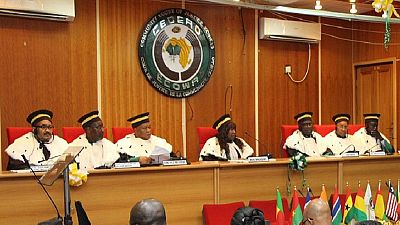
On 14 February 2018 the Economic Community of West African States (ECOWAS) Regional Court of Justice found that Jammeh-era media laws violated the right to freedom of expression in The Gambia. The Federation of African Journalists and four Gambian journalists filed a case in the court in December 2015. They argued that their rights, including their rights to freedom of expression, had been violated by Gambia through the enforcement of laws criminalising libel, sedition and false news in the country. Two of the journalists were also subject to torture whilst in the custody of the then notorious National Intelligence Agency following their arrests under these laws.
Arguments were heard by the court in October 2016. The case was supported by the Media Legal Defence Initiative (MLDI). Amnesty International filed an amicus brief in the case along with other freedom of expression organisations. Although press freedom has improved under the new government of President Barrow, who was inaugurated in January 2017, these restrictive laws are still in place.
The ruling will set an important precedent as many countries within West Africa continue to use similar repressive laws to silence freedom of expression, and hinder the vital work of journalists, in violation of international and regional human rights law. The ball is now in the court of the Adama Barrow government to repeal the said laws in order to realign the law to respect media freedoms. Amnesty International’s West Africa researcher has hailed the ruling as a historic day for The Gambian media landscape. “Today is an historic day for Gambia’s journalists and human rights defenders who, for decades, have suffered torture, imprisonment or exile just for exercising their right to freedom of expression,”Sabrina Mahtani said.
(see also: https://humanrightsdefenders.blog/2018/01/17/gambia-yahya-jammehs-ex-minister-continues-his-detention-in-switzerland/)
http://www.africanews.com/2018/02/15/jammeh-era-media-laws-violated-freedom-of-expression-ecowas-court/
Posted in AI, Human Rights Defenders | Leave a Comment »
Tags: ECOWAS, freedom of expression, journalists, libel, media law, regional court, the Gambia, west africa
February 15, 2018
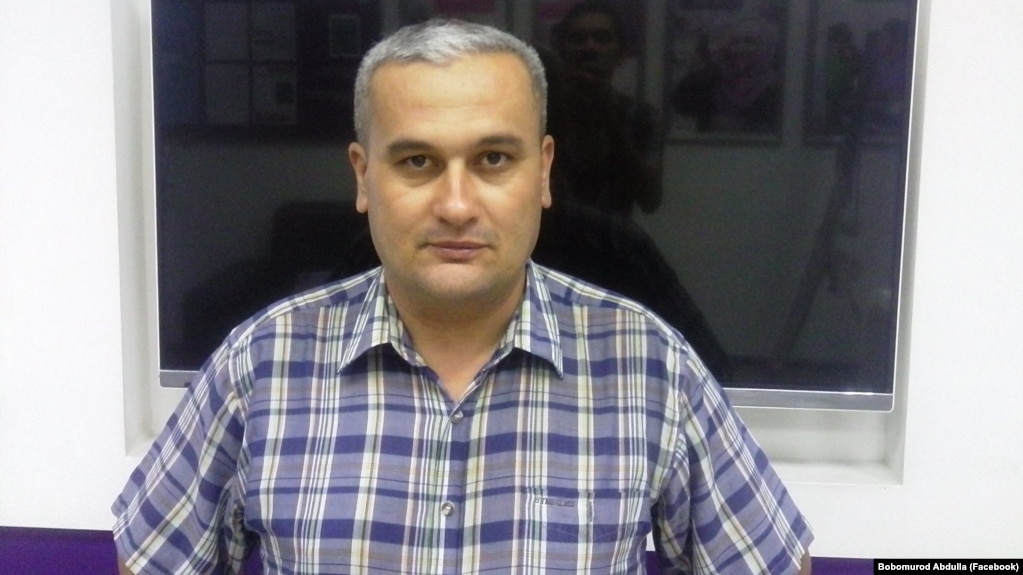
The Financial Times (amongst others) reports that changes in Uzbekistan are possibly going in the right direction. [“While Mr Mirziyoyev was part of the old system too, as prime minister for 13 years, his ousting of Mr Inoyatov was the boldest in a series of steps apparently designed to start opening the country up. He has freed 18 high-profile political prisoners — even if thousands more remain in jail — and taken nearly 16,000 people off a 17,500-strong security blacklist of potential extremists that stopped them travelling or getting jobs”.] This echoes what HRW said on 5 September 2017 after delegation had made its first visit to Uzbekistan since the organization was banned there in 2010: “The key is for the Uzbek government to transform the modest steps it has taken thus far into institutional change and sustainable improvements”. Now (13 February 2018) twelve international NGOs have publicly urged Uzbekistan to release journalists and human rights defenders.
In a joint statement HRW, IPHR, Amnesty International, the Association for Human Rights in Central Asia, Civil Rights Defenders, the Committee to Protect Journalists, Freedom House, the Norwegian Helsinki Committee, Reporters Without Borders, Freedom Now, ARTICLE 19, and the Uzbek-German Forum for Human Rights have called on Tashkent to “ensure a thorough, impartial, and independent investigation into the alleged torture and other ill-treatment” of independent journalist Bobomurod Abdullaev.
[Abdullaev was detained in September on charges of “conspiracy to overthrow the constitutional regime” and faces up to 20 years in prison if found guilty. In October, Uzbek authorities arrested well-known economist and blogger Hayot Nasriddinov. They have accused him and others, including Akrom Malikov, an academic who was arrested in 2016, of plotting to overthrow the government.
“At a time when the Uzbek government appears to be taking steps to reform the country’s feared security services, reports of a journalist’s torture in their custody should prompt an immediate investigation and decisive, public condemnation,” HRW Central Asia researcher Steve Swerdlow said in the statement.
“There is a real opportunity for change in Uzbekistan – and yet we hear of journalists and bloggers still being detained and tortured. This case is a test of whether Uzbekistan’s human rights situation is really improving or not,” Brigitte Dufour, director of International Partnership for Human Rights (IPHR), said in the rights groups’ statement.
For my earlier posts on Uzbekistan, see: https://humanrightsdefenders.blog/tag/uzbekistan/
—
https://www.rferl.org/a/uzbekistan-12-rights-watchdogs-urge-tashkent-to-release-journalist-others/29039260.html
https://eurasianet.org/node/84971
https://www.ft.com/content/6c37419c-0cbf-11e8-8eb7-42f857ea9f09
Posted in HRW, Human Rights Defenders | 1 Comment »
Tags: Akrom Malikov, Bobomurod Abdullaev, critical journalists, Hayot Nasriddinov, HRW, illegal detention, International Partnership for Human Rights (IPHR), Mirziyoyev, NGOs, release, torture, Uzbekistan
February 14, 2018
On 14 February 2018 a group of four UN human rights experts urged the United States Government to respect the rights of human rights defenders, amid concern over action being taken against a Mexican woman who campaigns to protect migrants’ rights. Maru Mora Villalpando, who has been in the US since 1996, is facing deportation proceedings after fronting a high-profile campaign against alleged human rights violations at a US immigrants’ detention centre, operated by a private company on behalf of the US government. [Ms. Villalpando, whose 20-year-old daughter is a US citizen, is co-founder of a group which highlights human rights concerns about the Northwest Detention Centre in Tacoma, Washington. She has raised the issue with the UN Working Group on Arbitrary Detention and with the Inter-American Commission for Human Rights, alleging corporate involvement in human rights violations as well as expressing concern over hunger strikes and the deportation of migrants. The UN experts have been in contact with the Government regarding their concerns.]
“Ms. Villalpando’s notice to appear at deportation proceedings, received without warning, seems to be related to her advocacy work on behalf of migrant detainees”, the experts said. “We urge the US Government to protect and ensure Ms. Villalpando’s rights as a defender and her right to family life”.
“The authorities should take all necessary measures to guarantee that no action, including detention and deportation, as means of retaliation, is taken against Ms. Villalpando for reporting cases of the detention of immigrants and alleged violations of their human rights, especially in view of the reported conditions in these centres of detention”. The experts said they were concerned that Ms. Villalpando’s case appeared to be part of a pattern. “Giving people notice of deportation proceedings appears to be a part of an increasing pattern of intimidation and retaliation against people defending migrants’ rights in the US”, the experts said.
The UN experts are: Ms. Elina Steinerte, Vice-Chair on Communications of the UN Working Group on Arbitrary Detention; Mr. Felipe González Morales, Special Rapporteur on the human rights of migrants; Mr. Michel Forst, Special Rapporteur on the situation of human rights defenders; Ms. Anita Ramasastry, Chair person of UN Working Group on human rights and transnational corporations and other business enterprises
http://www.ohchr.org/EN/NewsEvents/Pages/DisplayNews.aspx?NewsID=22657&LangID=E
Posted in Human Rights Defenders, OHCHR, UN | Leave a Comment »
Tags: Anita Ramasastry, deportation, Felipe González Morales, Human Rights Defenders, Maru Mora Villalpando, Mexico, Michel Forst, migrants, UN, UN Rapporteurs, USA, woman human rights defender
February 14, 2018
The Leuven Centre for Global Governance Studies is organising the SPRING LECTURE SERIES 2018 under the theme: UNDER SIEGE: HUMAN RIGHTS AND THE RULE OF LAW.
On Monday 26 February 2018 – from 11h00 – 13h00 – (Tiensestraat 41, Leuven) Dr. Kasey McCall-Smith will speak about “Human Rights Accountability of Non-State Actors (MNEs, NGOs, …): the Next Frontier”.
[The negative impact on human rights by business activity has been the focus of much academic and public policy debate. In no other field of law has the stubbornness of the public and private international law divide been exposed more starkly and with such devastating effects for individuals. Human rights law discourse has spent the last two decades debating the impact of business activity on human rights and the UN Guiding Principles on Business and Human Rights was hailed as a great victory. But, as rightly noted by the Special Rapporteur on Business and Human Rights, the UN Framework and Guiding Principles was simply the end of the beginning of the debate. International law has yet to catch up with the realities of business activity and its impact on human rights and the environment. This lecture will look at the key soft law developments of the past decade, the push to ‘harden’ these soft law initiatives, and examine a case study on smartphone supply chain management to elaborate the difficulties of reconciling human rights accountability and abuse by non-state actors. The legal issues raised in respect to multinational enterprises will also be considered in light of increasing pressure to hold other non-state actors to account, such as international organisations and NGOs. Ultimately, the lecture will contribute ideas about how to move forward on the next human rights frontier.]
Dr. McCall-Smith is a lecturer in Public International Law and programme director for the LLM in Human Rights. She is a US qualified lawyer and holds a BA in Architectural Studies (1998) and Juris Doctor (2001) from the University of Arkansas. Dr McCall-Smith was awarded an LLM (2002) and a PhD (2012) for her thesis on ‘Reservations to Human Rights Treaties’ by the University of Edinburgh. She is currently the Chair of AHRI, the Association of Human Rights Institutes. McCall-Smith’s research focuses primarily on treaty law and how treaties are interpreted and implemented at the domestic and supranational levels. Ensuring clarity in the law of treaties, specifically in reference to reservations to human rights treaties, is a major theme that she has pursued. She interested in the role of the UN human rights treaty bodies as generators of law. The increasingly blurred distinction between public and private international law in terms of human rights protection is another of her research interests.
Participation is free, but register by Friday 23 February at the latest
see also: https://humanrightsdefenders.blog/2016/06/07/leuven-centre-for-global-governance-studies-organizes-new-mooc-on-human-rights-as-from-21-june/
https://mailchi.mp/kuleuven/event-414449?e=bf340a3bd5
Posted in human rights | Leave a Comment »
Tags: Association of Human Rights Institutes, Belgium, Business and human rights, corporate accountability, Edinburgh, horizontal effect, Kasey McCall-Smith, lecture, Leuven Centre for Global Governance Studies, non-state actors
February 14, 2018
This blog has a keen eye for all human rights awards, so I report with pride rather than embarrassment that the 7th Thoolen NJCM Dissertation Prize 2017 goes to Sylvie McCallum Rougerie. Sylvie wrote her dissertation on ‘Police Failures to Combat Sexual Assault: Lessons from International and Regional Human Rights Law for Improving Accountability under the Canadian Charter of Rights and Freedoms’.
No less than four student dissertations made the final cut this time. They were assessed on the following criteria: originality of the chosen human-rights based theme, development thereof; academic level; degree of innovative insight; and accessibility. Tied for second place are Jordi Bierens and Danielle Snaathorst. Jordi wrote his dissertation on the growing influence of fundamental rights on European copyright rules. Danielle wrote about ‘The Curious Case of the Legitimate Aim. Understanding the “Legitimate Aim” Test of the European Court of Human Rights in Cases Concerning Freedom of Religion’. The third place goes to Jake Tingen. He wrote his dissertation on the tension between the freedom of information and the Dutch Public Access to Government Information Act.
The prize for winning the Thoolen NJCM Dissertation Prize is the publication of the winning dissertation by NJCM’s publishing house, Stichting NJCM-Boekerij. The award ceremony will take place during NJCM’s seminar on 12 April 2018 in The Hague (from 7.00 to 8.30 pm).
See also: https://humanrightsdefenders.blog/2016/03/03/dissertation-on-social-rights-and-austerity-wins-thoolen-njcm-award-2016/
https://njcm.nl/actueel/and-the-thoolen-njcm-dissertation-prize-2017-goes-to/
Posted in awards, books | Leave a Comment »
Tags: Canada, dissertation, human rights awards, Police, sexual assault, students, Sylvie McCallum Rougerie, Thoolen NJCM Dissertation Prize, Thoolen NJCM prijs


 Hans Thoolen on Human Rights Defenders and their awards