Author Archive

Really, Real Madrid honors Palestinian activist Ahed Tamimi

October 1, 2018

I have written above football clubs (such as Real Madrid) having Emirates as a sponsor [see: https://humanrightsdefenders.blog/tag/fly-emirates/], but this time the club has done something admirable: Saturday 29 September it has honored Palestinian Ahed Tamimi, who was imprisoned for eight months this year for slapping an Israeli soldier after her cousin was shot in the head, was honored Saturday by the Real Madrid football team in Spain.

In December 2017, a video was released of Ahed slapping a soldier in the front yard of her house just hours after her cousin had been shot in the head and put in critical condition by Israeli soldiers who fired at him during a non-violent demonstration. The next day, Ahed and her mother were pulled from their beds in the middle of the night by Israeli soldiers, separated, and imprisoned. Ahed was imprisoned for eight months, and released in July 2018.

17-year old Ahed was greeted by former striker Emilio Butragueno, who presented the teenager with a personalised football jersey. The jersey had ‘Ahed’ printed across the back, and the number 9, which is commonly assigned to strikers who take the front lines of the field and score most of the goals.

(In 2012, her father Bassem Tamimi, was declared a prisoner of conscience by Amnesty International)

In response to the honor by Real Madrid, Emmanuel Nahshon, the Israeli foreign minister spokesman, tweeted in Spanish, “A shame! Real Madrid receives a terrorist who incites hatred and violence. What has that to do with the values of the football?!?!”

Spanish Football Team ‘Real Madrid’ Honors Teenaged Palestinian Activist Ahed Tamimi

UNESCO-Madanjeet Singh Prize 2018 shared by Canadian film maker and Kenyan NGO

September 30, 2018

© Timea Hajdrak / The Coexist Initiative

On 16 November 2018, UNESCO Director-General Audrey Azoulay will award the 2018 edition of the UNESCO-Madanjeet Singh Prize for the Promotion of Tolerance and Non-violence to filmmaker Manon Barbeau (Canada) and the NGO The Coexist Initiative (Kenya). An international jury recommended the two laureates in recognition of their work in human rights, promotion of tolerance and inclusion.

Manon Barbeau, an innovative social entrepreneur and filmmaker, is awarded for her defense of human rights and tolerance through the art of cinema and a wide range of activities that she develops through Wapikoni Mobile Studios, amplifying the voices of indigenous people. Wapikoni hosts educational workshops and film screenings to raise awareness and educate the wider public about indigenous cultures, languages and identities. It also provides mentorship and capacity building in audiovisual creation to indigenous youth, allowing them to master digital tools by directing short films and musical works.

The Coexist Initiative is awarded the Prize for its promotion of gender equality, social justice and human rights, with particular focus on women and girls. The Coexist Initiative is a non-profit organization working to end violence against women, particularly through an approach that tackles harmful cultural practices and negative stereotypes based on gender. It moreover advocates for the rights and empowerment of women and girls by better involving men, boys and community leaders in the work of the association.

For more on this award: http://trueheroesfilms.org/thedigest/awards/unesco-madanjeet-singh-prize-for-the-promotion-of-tolerance-and-non-violence

https://en.unesco.org/news/canadian-filmmaker-and-kenyan-ngo-receive-unesco-madanjeet-singh-prize-2018

http://www.uniindia.com/canadian-filmmaker-and-kenyan-ngo-to-receive-unesco-madanjeet-singh-prize/world/news/1364773.html

Nominees for the 2018 Sakharov Prize announced by European Parliament

September 30, 2018

The nominees for the 2018 Sakharov Prize for Freedom of Thought have been announced on 27 September (Nominations can be made by political groups and groups of at least 40 MEPs – remarkable is the more active role played by right-wing groups in the EP, see the last two nominees):

Oleg Sentsov, a Ukrainian film director, convicted to 20 years in prison for “plotting terrorist acts” against the Russian “de facto” rule in Crimea. Amnesty International has described the court process as “an unfair trial before a military court”. He has become a symbol for the approximately 70 Ukrainian citizens illegally arrested and convicted to long prison sentences by the Russian occupation forces in the Crimean peninsula. He has been on hunger strike since May 2018. Nominated by EPP.

NGOs protecting human rights and saving migrant lives across the Mediterranean Sea. Since 2015, NGOs from across the EU have launched search and rescue operations in the Mediterranean to try and save the lives of refugees struggling to reach EU shores. The NGOs are: Boat Refugee Foundation, Jugend Rettet, Lifeline Rescue Boat, Médecins Sans Frontières International, MOAS, Proactiva Open Arms, PROEM-AID, Save the Children, Sea Eye, Sea Watch, and SOS Mediterranée. Nominated by S&D and the Greens/EFA.

Seyran Ateş, a German lawyer of Turkish origin, fighting against political and religious extremism and the oppression of women. She was behind the establishment of the Ibn Rushd Goethe Mosque in Berlin, where men and women can pray together and has received numerous death threats and has to have round the clock protection. She was nominated by ECR, Hans-Olaf Henkel and 40 other MEPs for her “commitment to the protection of human rights and her devotion to a modern and open Islam”.

Caesar is the code name of a former Syrian military photographer who smuggled more than 55,000 pictures out of Syria exposing the war atrocities. Their authenticity is confirmed by the Human Rights Watch. Caesar’s photographs will play a vital role in building criminal and civil cases against those responsible for the crimes documented. Nominated by ALDE.

Nasser Zefzafi is the leader of Hirak, a mass protest movement in the Rif region, Morocco, fighting corruption, oppression and abuse of power. He was arrested in May 2017 and sentenced to 20 years in prison for “conspiracy against the security of the state”. On August 2018, King Mohammed VI pardoned 188 Hirak activists, but Zefzafi was not among them. At the end of August he went on hunger strike to denounce his conditions of detention. Nominated by GUE, Kati Piri, Judith Sargentini, Marie-Christine Vergiat and 39 other MEPs for his fight “against oppression and abuse of power”.

Dewayne Johnson is a former groundskeeper from the US who has just won a landmark case against Monsanto. He was the first person to take Monsanto to trial over allegations that the chemicals sold by the company under the herbicide brand Roundup cause cancer. At the end of the process Dewayne had just months to live, yet he took the stand and described his pain and suffering. Nominated by EFDD as an inspiration “for those afraid to go to court and defend their rights”.

AfriForum is an NGO that aims to protect the rights of minorities in South Africa, with a specific focus on the rights of Afrikaners. It focuses on raising national and international awareness about farm attacks, murders and the expropriation of farm land without compensation, which threatens property rights, food supply and food security. Nominated by ENF.

Mary Wagner is a Canadian activist who has been arrested on multiple occasions and accused of “disturbing the business” of an abortion clinic in Toronto. She remained in prison for not complying with a probation order to stay away from abortion clinics. She was nominated by Marek Jurek and 41 other MEPs for her work “safeguarding the rights of those who cannot speak for themselves”.

For more information this award and 2 others with Sakharov in the name: http://trueheroesfilms.org/thedigest

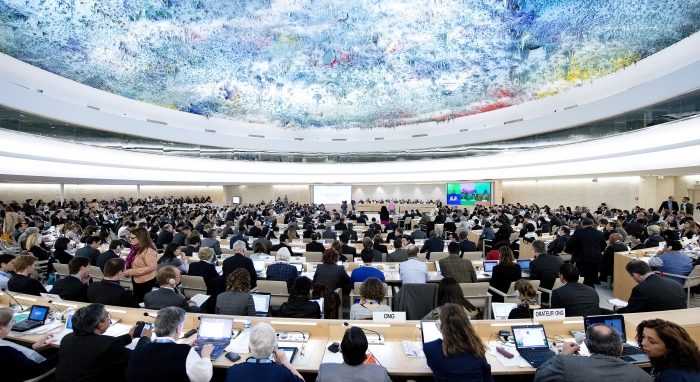
In spite of or because of the US’ absence, the 39th Human Rights Council considered a relative success

September 29, 2018

Civil society organisations welcomed significant outcomes of the Human Rights Council’s 39th session, including the creation of independent investigative mechanism on Myanmar, the renewal of the mandate of the Group of Eminent Experts on Yemen and the Commission of Inquiry on Burundi, and a dedicated space on the Council’s agenda in 2019 to discuss the human rights situation in Venezuela. [see alsohttps://humanrightsdefenders.blog/2018/09/08/many-hrd-issues-at-the-39th-session-of-the-un-human-rights-council/]

In a joint statement, several NGOs (ISHR The African Centre for Democracy and Human Rights Studies (ACDHRS), Amnesty International, Article 19, Center for Reproductive Rights. CIVICUS, DefendDefenders, FIDH, Forum Asia, Human Rights House Foundation (HRHF), Human Rights Watch, International Commission of Jurists) welcomed the Council’s adoption of landmark resolutions on several country situations:

On Myanmar, the creation of the independent investigative mechanism is an important step towards accountability for the horrific crimes committed in Myanmar, as elaborated in the Fact Finding Mission’s report to this session. The overwhelming support for the resolution, notwithstanding China’s shameful blocking of consensus, was a clear message to victims and survivors that the international community stands with them in their fight for justice. 

On Yemen, the Council demonstrated that principled action is possible, and has sent a strong message to victims of human rights violations in Yemen that accountability is a priority for the international community, by voting in favor of renewing the mandate of the Group of Eminent Experts to continue international investigations into violations committed by all parties to the conflict. 

Furthermore, the leadership by a group of States, including Latin American countries, on the landmark resolution on Venezuela, was as an important step for the Council applying objective criteria to address country situations that warrant its attention. The resolution, adopted with support from all regions, sends a strong message of support to the Venezuelan people. By opening up a space for dialogue at the Council, the resolution brings scrutiny to the tragic human rights and humanitarian crisis unfolding in the country.  

The renewal of the mandate of the Commission of Inquiry (CoI) on Burundi will enable it to continue its critical investigation and work towards accountability. However, the Council failed to respond more strongly to Burundi’s record of non-cooperation and attacks against the UN human rights system. [see alsohttps://humanrightsdefenders.blog/2016/10/26/enough-is-enough-ngos-call-for-burundi-suspension-from-un-human-rights-council/]

The Council also adopted a resolution on Syria, which among other things condemns all violations and abuses of international human rights law and all violations of international humanitarian law committed by all parties to the conflict.

However, on other country situations including China, Sudan, Cambodia and the Philippines, the Council failed to take appropriate action. 

On Sudan, the Council adopted a weak resolution that envisions an end to the Independent Expert’s mandate once an OHCHR office is set up; a “deal” Sudan has already indicated it does not feel bound by, and which is an abdication of the Council’s responsibility to human rights victims in Sudan while grave violations are ongoing. At a minimum, States should ensure the planned country office monitors and publicly reports on the human rights situation across Sudan, and that the High Commissioner is mandated to report to the Council on the Office’s findings.  

The Council failed to take action on the Philippines, in spite of the need to establish independent international and national investigations into extrajudicial killings in the government’s ‘war on drugs’, and to monitor and respond to the government’s moves toward authoritarianism. 

In addition, the Council continued with its weak response to the deepening human rights and the rule of law crisis in Cambodia, failing to change its approach even when faced with clear findings by the Special Rapporteur demonstrating that the exclusive focus on technical assistance and capacity building in the country, is failing.

Many States, NGOs and the High Commissioner, raised concerns about China’s human rights record, specifically noting serious violations of the rights of Uyghurs and other predominantly Muslim minorities in Xinjiang province. It is regrettable that States did not make a concrete and collective call for action by China to cease the internment of estimates ranging up to 1 million individuals from these communities. 

On thematic resolutions, the Council adopted by consensus a resolution on equal participation in political and public affairs, as well as a resolution on the safety of journalists. The latter sets out a clear roadmap of practical actions to end impunity for attacks.  

The Council also adopted by consensus a resolution on preventable maternal mortality and morbidity and human rights in humanitarian settings. Women and girls affected by conflict have been denied accountability for too long. The implementation of this resolution will ensure that their rights, including their sexual and reproductive health and rights, are respected, protected and fulfilled. 

Finally, the Council’s first interactive dialogue on acts of reprisals and intimidation was an important step to ensure accountability for this shameful practice. More States need to have the courage and conviction to stand up for human rights defenders and call out countries that attack and intimidate them. [https://humanrightsdefenders.blog/tag/reprisals/]

Read the full statement here.

Children as Human Rights Defenders: UN Committee has discussion

September 29, 2018

On 28 September the United Nations’ Committee on the Rights of the Child held a Day of General Discussion on the topic “Children as Human Rights Defenders”. United Nations Deputy High Commissioner for Human Rights, Kate Gilmore, gave the opening speech; here some excerpts:

….It is my great pleasure to join in welcoming you all to this Day of General Discussion on Children Human Rights Defenders..I am most excited of course to be welcoming the members of the Child Advisory Team. You make this such a very special moment for us all – for us personally who work here and for the human rights work we try to do here. This year is the 20th birthday of the UN Human Rights Defenders Declaration and the 70th birthday of the UDHR. ….

Today, we will talk with you, about you. We will listen to you, …….

….We older people have failed you – have failed children. In so many places, in so many ways – older people are still failing children…….

Yet, the strange thing about this, is that it was older people – even older people – including some working 70 years ago – who made those laws and standards that recognise you have those rights, and yet it is older people who are breaking those promises.

……………If young age is no barrier to experiencing the worst consequences of older people’s decisions, then why use young age as an excuse to leave you out, to lock you out, from the places where those decisions could be changed. As human rights defenders, you know far better than I do why it is so important that we rethink the power relationship between older and young people.  If we would just change how we older people relate to children, make more room for you, listen to you more respectfully, value your experiences more, keep our promises to you then maybe we too would grow up and with you, just get on with changing the world for better.

https://www.ohchr.org/EN/NewsEvents/Pages/DisplayNews.aspx?NewsID=23654&LangID=E


Start-up or impact grants available for human rights film festivals

September 28, 2018

Movies That Matter is pleased to announce that, contrary to its earlier message, there will be a second round of its grant programme this year. [see https://humanrightsdefenders.blog/2018/02/14/call-for-proposals-to-organize-human-rights-film-festivals-2018-19/] If you organise a film event to stimulate the discussion on human rights, social justice and freedom of expression, submit your project proposal!  If you are interested in organising a human rights film event in Africa, Asia, Latin America, Eastern Europe or the Middle East, Movies That Matter offers financial assistance and advice to festival organisers in low-income countries and states where press freedom is limited.

The deadline is 14 October. Please note that projects starting before 1 January 2019 cannot be considered.

Visit the site for other general regulations, selection criteria and the entry form.


Justice’s law firm exists 60 years In Geneva

September 28, 2018

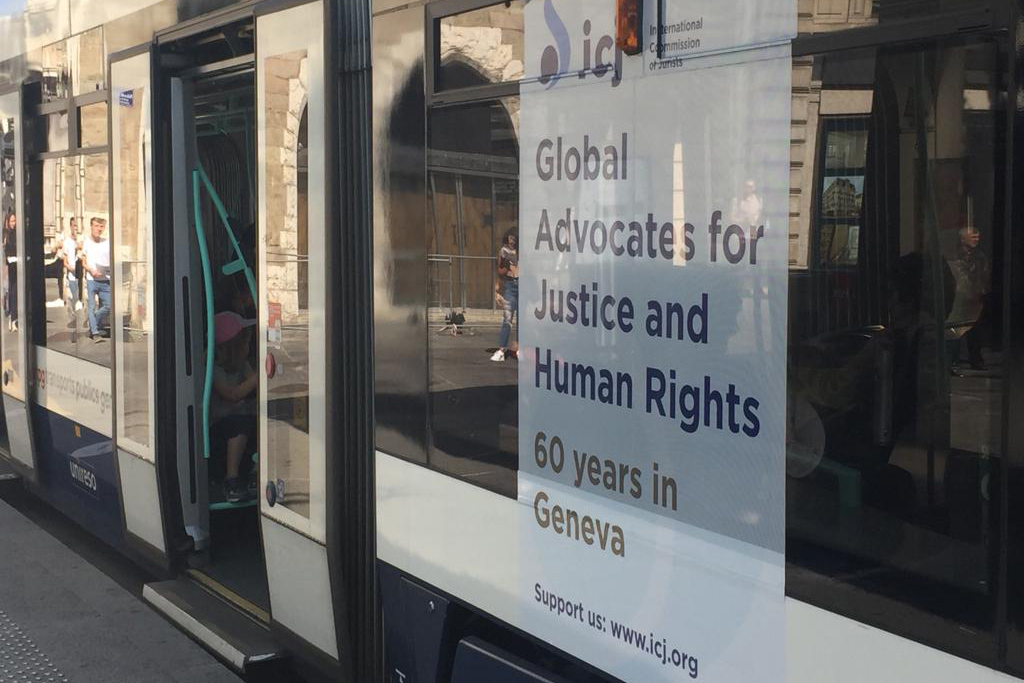
The International Commission of Jurists (ICJ) celebrates its 60th year in Geneva.

2018 marks the 60th anniversary of the ICJ’s move to Geneva thanks to the Swiss jurist Jean-Flavien Lalive, who was ICJ’s Secretary General in 1958. This makes the ICJ one of the earliest international organizations to establish its headquarters in Geneva. DISCLAIMER: I worked for the ICJ from 1977-1982. The ICJ was at that time a small organisation with less than 10 persons including the interns. As Executive Secretary – the grandiose title belied my real position as the personal assistant of the impressive Secretary General Niall MacDermot. Still, then as now the ICJ plays a preeminent role as a non-governmental organization seeking to defend human rights and the rule of law worldwide.

The ICJ will mark this event with two major initiatives:

  • A visibility campaign from 26th September to 9th October: the TV screens on the Geneva public transport network and five vehicles will carry the slogan “Global Advocates for Justice and Human Rights – 60 years in Geneva”
  • The launch of the “60th Anniversary Appeal” to all lawyers in the Republic and canton of Geneva to support the ICJ and, in turn, their less privileged colleagues, victims of persecution on five continents.

Geneva can be proud of its image as the world human rights capital. It is a beacon for justice advocates around the world. We must continue to make it shine,” said Sam Zarifi, Secretary General of the ICJ. “Through its 60-year history, the ICJ has contributed significantly to Geneva’s human rights record: the campaigns that led to the creation of the post of UN High Commissioner for Human Rights in 1993 and the UN Human Rights Council in 2006, as well as the adoption of the United Nations Convention against Torture in 1984 are some emblematic examples,” said Olivier Coutau, Head of La Genève Internationale.

The international reputation of the ICJ rests on these pillars:

  • 60 Commissioners – eminent judges and lawyers – from all regions of the world and all legal systems – with unparalleled knowledge of the law and human rights;
  • Cooperating with governments committed to improving their human rights performance;
  • Effective balance of diplomacy, constructive criticism, capacity building, and if necessary, ‘naming and shaming’;
  • Unmatched direct access to national judiciaries, implementing international standards and improved legislation impacting millions;
  • Guiding, training and protecting judges and lawyers worldwide to uphold and implement international standards (e.g.in 2018, the ICJ provided local trainings on five continents to assist 4,300 judges, lawyers and prosecutors strengthen their ability to protect and promote fundamental rights)
  • Working for access to justice for victims, survivors and human rights defenders, in particular from marginalized communities;
  • Following a strict result based management in project delivery.

The ICJ has been awarded, during its long history, some of the most prestigious international awards: the Council of Europe Human Rights Prize, the United Nations Award for Human Rights, Erasmus Prize, Carnegie Foundation Wateler Peace Prize.

https://www.icj.org/global-advocates-for-justice-and-human-rights-the-icj-60-years-in-geneva/

Human Rights lawyer Louis Blom-Cooper died 19 September 2018

September 27, 2018

Louis Jacques Blom-Cooper, lawyer and writer, born 27 March 1926; died 19 September 2018. Blom-Cooper was involved in the foundation of Amnesty International in 1961, supporting Peter Benenson‘s idea for an appeal for amnesty for political prisoners. He was also a Patron of Prisoners Abroad a registered charity which supports Britons who are held overseas, and was a trustee of the Howard League for Penal Reform. He was a fighter against the death penalty.

….

The enduring value of Louis’s work is likely to lie in his campaigning, supported by astute legal scholarship, against the death penalty, his contribution to the foundation of Amnesty International and his lifelong championship of the cause of penal reform and prisoners’ rights. For half a century he was a courageous advocate, a controversial legal author and journalist, a deputy high court judge and a forthright and radical chairman of numerous public inquiries and bodies. A man of extraordinarily wide intellectual interests, he was generous in his encouragement of younger lawyers and his availability and accessibility to his many prisoner clients.

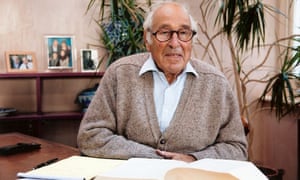
Louis Blom-Cooper in 2015. He was a prolific, informed and provocative legal journalist, writing for the Guardian and the Financial Times
Pinterest
Louis Blom-Cooper in 2015. He was a prolific, informed and provocative legal journalist, writing for the Guardian and the Financial Times

Born in London, Louis was the son of Alfred Blom-Cooper, a fruit and vegetable trader, and his wife Ella (nee Flesseman), who lived in Mill Hill. After attending Port Regis school in Dorset and Seaford college in West Sussex, Louis joined the East Yorkshire Regiment towards the end of the second world war (1944-47). He studied law at King’s College London, Fitzwilliam College, Cambridge, and the Municipal University of Amsterdam, where he obtained his doctorate in 1954.

He retained a spirit of inquiry in writing numerous challenging books on the death penalty, penal reform and murder law, notably the imposition of a mandatory life sentence for murder. But he also argued for the abolition of the jury system, because it did not give the convicted offender any reasons for his conviction.

….He was the first to argue for the extension of the principles of natural justice or fairness to the field of immigration and asylum law in cases such as that of the American journalist Mark Hosenball, deported in 1977 as a security risk after revealing the existence of GCHQ in a magazine article. ..

Most of all, Louis was a leading proponent of a general duty to state reasons in administrative law and made a judgment to that effect in his capacity as a high court judge. Rejected at the time as too advanced a position, the duty to give reasons for executive decisions has now been widely accepted.

….

As chairman of the Press Council (1989-90), he supported the principle that there should be a requirement that newspapers accord a right of reply to those they attacked. He also called for a law against the invasion of privacy, introduced changes to give complainants a better hearing and speed up adjudications, and also introduced a code of practice for newspapers. But it proved to be too little, too late.

Iranian Human Rights Defenders in trouble

September 27, 2018
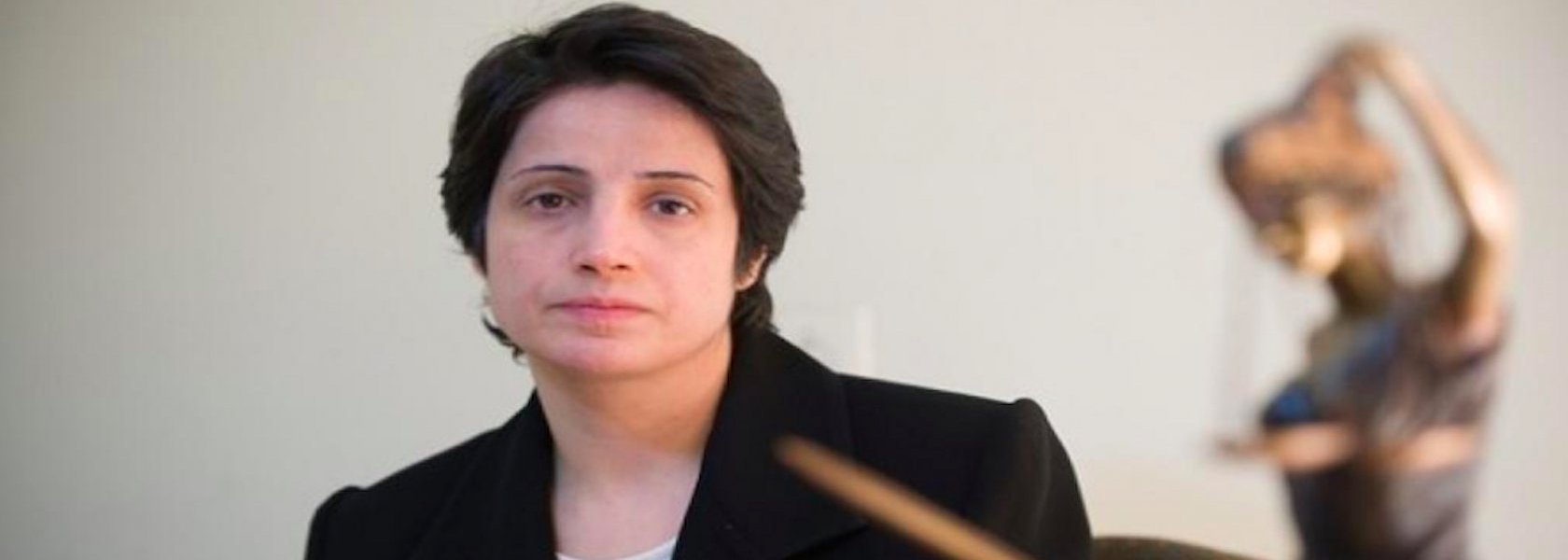
On 21 September 2018 the Observatory for the Protection of Human Rights Defenders (FIDH/ OMCT) petitioned the United Nations Working Group on Arbitrary Detention (WGAD) to seek the release of Iranian human rights lawyer Ms. Nasrin Sotoudeh. Ms. Nasrin Sotoudeh, a prominent defender and 2012 laureate of the European Parliament’s Sakharov Prize, was arrested on June 13, 2018 at her home in Tehran. [see: https://humanrightsdefenders.blog/2018/08/30/human-rights-defender-nasrin-sotoudeh-on-hunger-strike-in-iran/ ].. On September 16, 2018, Ms. Sotoudeh was informed that she would be denied her family visitation rights if she and her female visitors – including her daughter – did not wear a full hijab. Ms Sotoudeh has refused the condition and was denied the right to see her daughter on September 17, 2018.
The Observatory urges the Iranian authorities to immediately and unconditionally release Ms. Sotoudeh and to cease all acts of harassment and other abuses against her and all human rights defenders in Iran, in accordance with the provisions of the United Nations Declaration on Human Rights Defenders and with international human rights standards and international instruments to which Iran is a State party.

The semi-official ISNA news agency reported on Thursday 27 September that another human rights defender, Narges Mohammadi, has been granted a three-day leave from prison to visit her ailing father.

However, the recent terror attack in Iran may be expected to prompt the Guards to compensate by cracking down on domestic detractors and perceived opponents of their mission of defending and principles of the Islamic revolution. Certainly, some prominent figures within the Iranian activist and expatriate communities have been quick to raise alarms about the likelihood of this outcome. For instance, the Center for Human Rights in Iran quoted the Iranian human rights activist and Nobel Peace laureate Shirin Ebadi as saying of last Saturday’s attack, “Such actions lead to the justification of state violence and the arrest of many opponents in the name of fighting terrorism.” Meanwhile activists echoed the sentiment, saying, “Terrorism and violence in any form should be condemned in the strongest terms [but] such acts of violence should not become an excuse for state violence to suppress peaceful opposition.

Polish Ombudsman Adam Bodnar winner of 2018 RAFTO award!

September 27, 2018
Polish lawyer Adam Bodnar – Defender of minority rights and judicial independence in Poland (Photo credit: Kluczek/RPO.GOV.PL )

The Rafto Prize 2018 is awarded to the Polish lawyer Adam Bodnar and the institution he leads, the Office of the Commissioner for Human Rights, for the important stance taken in the face of current political developments in Poland.  A key function of the Ombudsman, or the Commissioner for Human Rights, is to ensure that the public authorities secure and respect the human rights of all members of Polish society. As lawyer and Ombudsman, Adam Bodnar (41) has highlighted the crucial role played by independent Ombudsman institutions in safeguarding human rights in Poland – and other countries – where such actors and institutions  increasingly have come under attack.

Since Law and Justice (PiS) won the Polish election in October 2015, the party has used its majority in the National Parliament to adopt legislation that reduces the independence of the courts and centralizes state powers. New laws grant the government control of state media and place severe limits on freedom of information and political lobbying. The rights of vulnerable groups have been repeatedly ignored.  “The award is not just an award to my work and the institution, but mostly a support from your community given to the Polish civil society, academia, judges and lawyers fighting for rule of law, juridical independence, pluralism and protection of minorities in Poland,” said Adam Bodnar.

The Rafto Prize for 2018 to Adam Bodnar and the Ombudsman for Human Rights highlights the rolling back of democracy and human rights protections in Poland. The conflict over the Polish Constitutional Tribunal and the Supreme Court are important internationally because they are symbolic of an alarming tendency where the independence of courts increasingly is under political pressure. It is crucial that the international community, the EU, Norway and other European countries take a clear stance against human rights violations and attacks on the rule of law and minority rights that take place in our own region. Adam Bodnar, being the civil servant, cannot accept the prize money awarded along with the Rafto Prize. The Rafto Foundation will identify and donate the prize money to civil society working for human rights in Poland.

For more on this and other awards: http://trueheroesfilms.org/thedigest/awards/rafto-prize

https://www.rafto.no/news/the-2018-rafto-prize-to-ombudsman-adam-bodnar