Author Archive

Expert Meeting on “Cultural Rights Defenders”

December 27, 2019

In the hard-to-define area of cultural rights, the following is an interesting contribution: On 22 October, 2019, the Artists at Risk Connection (ARC) hosted a meeting alongside the UN Special Rapporteur in the field of Cultural Rights, Karima Bennoune, at the Bahá’í International Community’s UN Offices in New York City. The aim of the meeting was to gain expert insight in support of the Special Rapporteur’s next report, on cultural rights defenders (CRDs), which will be presented in March 2020 to the UN Human Rights Council.

Cultural rights, including the right to take part in cultural life, the right to freedom of artistic expression, the right to scientific freedom, and the right to access and enjoy cultural heritage, are being increasingly recognized and mainstreamed internationally, and at the same time are regularly violated by states and other actors. Cultural rights defenders (CRDs) – those human rights defenders who act in defense of cultural rights – need much greater recognition and support to be able to carry out their critical work defending this part of the universal human rights framework. The meeting invited experts and actors working across the field of human rights and cultural rights, including artistic freedom, to share their knowledge on the state of cultural rights and those working to defend them. Participants included UN experts and representatives of UN bodies, representatives from NGOs, frontline cultural rights defenders, experts in cultural heritage work and scientific freedom, as well as those working on the cultural rights of specific categories of persons, including women, persons with disabilities, LGBTI people, minorities, indigenous peoples, artists, and cultural heritage defenders.

The meeting engendered a thought-provoking discussion on topics such as:

  • An intersectional approach to CRDs that is cognizant of gender, indigeneity, fundamentalism, LGBTQI identity, religion, cultural diversity, climate change, and disability.

  • The nature of the risks faced by CRDs, how they vary contextually across the Global North and South, and the recourse that such a term offers (or fails to offer) to actors in varied contexts.

  • What the term “Cultural Rights Defender (CRD)” entails, its use (or not) by human rights defenders and relevant actors across the field of culture, and the potential for its use as a means of redress for cultural activists at risk.

  • Strategies to better support the work of CRDs, including legal frameworks, the role of the internet, the role of national governments, and systems of censorship.

Inputs from the meeting will be included in the Special Rapporteur’s next report, which will be made public in March 2020. To keep abreast of the mandate of the UN Special Rapporteur in the field of Cultural Rights, you can follow their statements, reports, and feature stories here.

https://artistsatriskconnection.org/story/cultural-rights-defenders-experts-meeting

Saudi Arabia continues to buy celebrities, this time for the MDL Beast festival

December 27, 2019
Influencers, models, actors are given the will to promote the MDL beast in Saudi Arabia
Photographs through Daniele Venturelli / Getty

Jermaine Hoffman in Go Tech Daily of 23 Influencers, models, actors are given the will to promote the MDL beast in Saudi Arabia“. Another piece on the contoversial topic of celebrity endorsements [see e.g. https://humanrightsdefenders.blog/2019/10/26/celebrity-endorsements-and-the-dubai-expo-on-the-one-hand-and-the-other/].

This past weekend, the MDL Beast music festival was held in the capital of Saudi Arabia in Riyadh. Sold as the “biggest music event in the region,” it attracted some of the world’s greatest celebrities, including Winnie Harlow and Armie Hammer. It also attracted global controversy. Here’s an overview of what happened at the three-day festival, who was involved, and why people were upset.

J Balvin, Steve Aokie and David Guetta were placed as some of the great artists of the festival. Among the crowd were celebrities, influential artists and models who were invited to participate and promote MDL Beast on their personal social media platforms. Hollywood actors like Ryan Phillippe, Wilmer Valderrama and Armie Hammer attended, as well as models like Alessandra Ambrosio, Halima Aden, Imaan Hammam and Joan Smalls and Bollywood superstar Sonam Kapoor. Aden and Ambrosio later shared that they had been paid for an event post.

The festival was heavily portrayed on social media as a proud moment for Saudi Arabia – a “cultural shift”, according to Instagram’s contribution by Armie Hammer. These Western influencers and celebrities, however, are criticized for promoting Saudi Arabia as a tourist destination without mentioning human rights violations, and the festival itself gets resistance to whitening the image of Saudi Arabia.

[for some posts on Saudi Arabia see: https://humanrightsdefenders.blog/tag/saudi-arabia/ ]

Phillip Picardi, the former editor of Teen Vogue and Out, spoke about the role of the festival in the country’s expanded tourism strategies. He wrote, “Extremely, deeply disappointed when I see people on my Instagram feed who have traveled to Saudi Arabia as part of their government image rehabilitation campaign.” Picardi later said, “Many headline reports are about displaying SA as changed and accepted, and trips seem to be coordinated with the government or tourist board. You really can’t “buy” this kind of news and what was your experience of who organized your trip and what can or cannot you say? “Among the people who commented on Armie Hammer’s social media posts were journalist Yashar Ali, who tweeted about the brutal assassination of Washington Post reporter Jamal Khashoggi, in which the CIA closed Saudi Crown Prince Mohammad bin Salman. that the “main movie / television star” was allegedly offered an eight-figure amount to refuse.

While celebrities continue to talk about those who have decided to attend and promote a musical event, others support the role of the festival in improving Saudi Arabia’s image. Musician and author Kristina Bazan (who has 2.2 million followers on Instagram) commented on the contribution of Diet Prada, arguing that they point only to negative aspects. It pointed out: “A month ago the visa law was changed in Saudi Arabia, the Saudi government is trying to bring new energy and dynamism: social media have social resonance. How can we evolve as a globalized world and change things by boycotting areas that require new minds and ideas?

Modeled with more than 24 million Instagram followers, Emily Ratajkowski, aware of the power and resonance of social media, declined her paid invitation because of the discomfort she felt about the human rights record in Saudi Arabia. Diet Prada shared the statement they received from Ratajkowski about why she decided not to attend. “It is very important for me to clearly express my support for women’s rights, the LGBTQ community, freedom of expression and the right to free press,” read the statement. “I hope that I will focus more on the injustices that are happening there.

https://gotechdaily.com/influencers-models-actors-are-given-the-will-to-promote-the-mdl-beast-in-saudi-arabia/

Annual reports 2019: CIVICUS Global Report

December 27, 2019

The end of a year usually means looking back and many human rights NGOs issue reports of this kind. Here is the first by CIVICUS, through its Monitor:

Civic space – space for civil society – is the bedrock of any open and democratic society. When civic space is open, citizens and civil society organisations (CSOs) are able to organise, participate and communicate without hindrance. When people are free to participate, they are able to claim their rights and influence the political and social structures around them. This can only happen when a state holds by its duty to protect its citizens and respectsand facilitates their fundamental rights to associate, assemble peacefully and freely express their views andopinions. These are the three key rights that civil society depends upon.

The CIVICUS Monitor analyses the extent to which these three civil society rights are being respected and upheld, and the degree to which states areprotecting civil society. In an attempt to capture these dynamics on a global scale, over 20 organisations from around the world have joined forces on the CIVICUS Monitor to provide an evidence base for action to improve civic space. In order to draw comparisons at the global level and track trends over time, the CIVICUS Monitor produces civic space ratings for 196 countries. Each country’s civic space is rated in one of five categories – open, narrowed, obstructed, repressed, or closed – based on a methodology that combines several sources of data on the freedoms of association, peaceful assembly and expression. Civic space updates from our research partners contain qualitative, narrative information related to the situation for civil society in a country. This qualitative information is directed by a set of guiding questions and the resulting data is gathered from a variety of primary and secondary sources. In many cases, country-specific updates have come directly from national civil society themselves. (Methodology: In countries where it does not have a research partner, the CIVICUS Monitor relies on a variety of other sources produced at the national, regional and international levels to arrive at country ratings. These civic space updates are then triangulated, verified and tagged by the CIVICUS team. Together, the research partners posted 536 civic space updates from 1 October 2018 to 11 November 2019 which form the basis for the analysis presented in this report. For the time period assessed, these civic space updates cover 153 countries. This report analyses trends and developments since its previous report, published in November 2018. As well as global-level trends, it analyses trends in five regions: Africa, Americas, Asia and the Pacific, Europe and Central Asia and Middle East and North Africa (MENA).

Following an update of ratings in November 2019, the CIVICUS Monitor continues to tell a worrying story. The data shows that there are 24 countries with closed civic space, 38 countries with repressed space and 49 with obstructed space. Just 43 countries receive an open rating, and 42 countries are rated narrowed. Since our previous report, published in November 2018, space for activism has reduced: only three per cent of the world’s population now live in countries with open civic space. Nine countries have changed their civic space rating since our November 2018 update: two have improved their ratings, while seven have worsened. This indicates that repression of peaceful civic activism continues to be a widespread crisis for civil society in most parts of the world. Worrying signs for civic space continue to be seen in Asia, where two countries, Brunei and India, dropped their rating from obstructed to repressed. Given the size and global role of India, the decline in the quality of its civic space must be of particular concern. One country in the Pacific – Australia – dropped from an open to narrowed rating, partially due to increased restrictions on the freedom of expression and government surveillance

See also: https://humanrightsdefenders.blog/2018/12/06/20-human-rights-defenders-under-attack-one-for-each-year-of-the-declaration/

Click to access GlobalReport2019.pdf

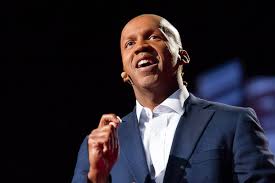
‘Just Mercy’ – starring Michael B. Jordan as human rights lawyer Bryan Stevenson – goes into premiere

December 26, 2019

in Heavy.com of 25he film Just Mercy – starring Michael B. Jordan as lawyer Bryan Stevenson – will be released nation-wide as from 10 January 2020.  The movie is based on Stevenson’s best-selling memoir, Just Mercy: A Story of Justice and Redemption. [See also: https://humanrightsdefenders.blog/2019/03/20/equal-justice-initiative-founder-bryan-stevenson-winner-of-2019-thomas-dodd-prize/]

It tells the story of how the Harvard law graduated moved to Alabama in order to help inmates who were wrongly condemned as death row prisoners. The main court case in the film focuses on one of Stevenson’s first clients, Walter McMillian, aka “Johnny D.” who’s played by Jamie Foxx in the movie, a 41-year-old tree-trimmer who was charged for the 1986 murder of Ronda Morrison, a local white teenager.Stevenson’s story is lesson in justice, persistence, and pushing to do what’s lawfully right. McMillian was released from prison after seven years on death row, he passed away from early on-set Alzheimer’s in 2013. However, Stevenson is still very much alive, and still working as attorney for the Equal Justice Initiative, which he founded in 1989. As described on their official website, “EJI is committed to ending mass incarceration and excessive punishment in the U.S., challenging racial and economic injustice, and protecting basic human rights for the most vulnerable people in American society.” Stevenson, who recently celebrated his 60th birthday, has helped release 135 wrongly accused prisoners sentenced to death.

We don’t see those kinds of stories very often and I think that’s created a void in our consciousness about what’s happening,” Stevenson told Delaware Online. “We have the highest rate of incarceration in the world and most people in this country have no knowledge of that. That lack of knowledge and that lack of compassion is what’s made us so vulnerable to the abuse that is on display in this story.

Over his career, Stevenson has earned 40 doctoral degrees, including those from Harvard, Yale, Princeton, Oxford, and University of Pennsylvania. He’s also won a long list of awards, including the MacArthur Foundation “Genius” Prize, the ABA medal, which is the American Bar Association’s highest honor, and the National Medal of Liberty from the American Civil Liberties Union. As a professor, he’s racked up even more hardware. In 2003, the SALT Human Rights Award was presented to Mr. Stevenson by the Society of American Law Teachers. In 2004, he received the Award for Courageous Advocacy from the American College of Trial Lawyers and the Lawyer for the People Award from the National Lawyers Guild. In 2006, New York University presented Mr. Stevenson with its Distinguished Teaching Award.

https://www.justmercyfilm.com/https://www.facebook.com/JustMercyFilm/

The Real-Life Bryan Stevenson Now: Where Is He Today?


A Rabbi and an Imam share Malmo’s human rights award

December 26, 2019
Rabbi Moshe David Hacohen and Imam Salahuddin Barakat from Amanah are awarded Malmo's City Prize on December 19, 2019. (photo credit: MUBARIK ABDIRAHMAN)
Rabbi Moshe David Hacohen and Imam Salahuddin Barakat from Amanah are awarded Malmo’s City Prize on December 19, 2019. (photo credit: MUBARIK ABDIRAHMAN)

The Swedish city of Malmö has bestowed its Human Rights Award on a rabbi and an imam who have been working together to bridge the gap between the city’s large Muslim population, the Jewish community and the general society. Rosella Tercatin reports on 25 December in the Jerusalem Post that Rabbi Moshe David Hacohen and Imam Salahuddin Barakat established Amanah (“The Jewish-Muslim Faith and Trust Project”) in 2017. Since then, they have been working together relentlessly organizing joint projects as well as touring Malmö’s schools and addressing the students.

Malmö, where about a third of the 300,000 residents is Muslim, is considered one of the most problematic cities in Europe for lack of integration. About 1,200 Jews live in the city. Working against discrimination and racism, specifically antisemitism and Islamophobia, is one of the organization goals. The rabbi and the imam were awarded the prize, that entails funding $5,300 by the mayor of Malmö Katrin Jammeh Stjernfeldt in a ceremony that took place on Thursday 19 December.

https://www.jpost.com/Diaspora/Challenging-Swedish-city-of-Malmo-honors-Jewish-Muslim-organization-612088

PBI’s ‘Right to Defend’ – a new multi-media awareness campaign

December 26, 2019
Putting Human Rights Defenders at the Centre

Throughout 2018, PBI ran a global campaign championing defenders for the Nobel Prize. The nomination was supported by over 4000 people and 200 organisations worldwide [https://humanrightsdefenders.blog/2018/10/05/further-plea-to-nobel-foundation-to-recognize-the-hrds-of-the-world/]. Then, it launched the campaign ‘Shoulder to Shoulder with Human Rights Defenders’, to mark the 20th anniversary of the UN Declaration on Human Rights Defenders.

Now, it wants to go further to raise the profile of human rights defenders working in some of the most dangerous environments in the world. PBI UK are working closely with the filmmaker and photographer Manu Valcarce on ‘Right to Defend’, a multi-media, multi-platform communications and awareness campaign, celebrating those making universal human rights a reality. Their stories set an example of solidarity and humanity that needs to be heard: stories of extraordinary human rights defenders taking a stand against injustice: community leaders fighting to protect collective land rights against mining companies; women struggling for gender equality; human rights lawyers risking their own safety to defend the rights of activists.

PBI UK are working on a unique 60-minute documentary film, online platform, photographic exhibition, and social media campaign presenting the work of around 100 at-risk grassroots human rights defenders in Latin America, Africa and Asia on the frontline of the global fight for universal human rights. The first piece of the project was released on the 10th of December: Human Rights Day:

So far, approximately 100 stories of human rights defenders have been recorded across four countries (Colombia, Honduras, Mexico and Nepal) alongside photographic material. You will be able to see the film at festivals in 2020, and the portraits will be debuted at an exhibition held at The Law Society in London, before touring worldwide. The online platform will enable PBI to further its impact as a global entity across 21 countries for campaigning, advocacy and awareness-raising to enhance the protection of human rights defenders.

https://peacebrigades.org.uk/news/2019-12-02/putting-hrds-centre

Targeting of Digital Rights Defenders in Ecuador, Argentina, and Beyond

December 25, 2019
Danny O’Brien wrote in Electronic Frontier Foundation of 19 December 2019 that “More Than Thirty Human Rights Groups Protest the Targeting of Digital Rights Defenders”.

…And some human rights defenders are technologists: building tools to defend or enhance the practice of human rights, and calling out the errors or lies of those who might misuse technology against its users. At this year’s Internet Governance Forum in Berlin, civil society groups mourned a growing trend around the world: the targeted harassment and detention of digital rights defenders by the powerful. Digital rights defenders includes technologists who work to create or investigate digital tools, and who work to improve the security and privacy of vital infrastructure like the Internet, and e-voting devices. As the declaration, signed by a coalition NGOs notes:

The work digital rights defenders do in defense of privacy is fundamental for the protection of human rights. When they raise awareness about the existence of vulnerabilities in systems, they allow the public and private sector to find solutions that improve infrastructure and software security for the benefit of the public. Furthermore, their work as security advisers for journalists and human rights activists is of vital importance for the safety of journalists, activists and other human rights defenders.

The problem is not confined to, but is particular pressing in Latin America. As 2019 draws to a close, Swedish security researcher Ola Bini remains in a state of legal limbo in Ecuador after a politically-led prosecution sought to connect his work building secure communication tools to a vague and unsubstantiated conspiracy of Wikileaks-related hacking. Meanwhile in Argentina, e-voting activist Javier Smaldone remains the target of a tenuous hacking investigation.

See also: https://humanrightsdefenders.blog/2019/01/08/bloggers-and-technologists-who-were-forced-offline-in-2018/

https://www.eff.org/deeplinks/2019/12/over-thirty-human-rights-groups-protest-targeting-digital-rights-defenders-ecuador

Special fund for rural defenders in South Africa

December 25, 2019
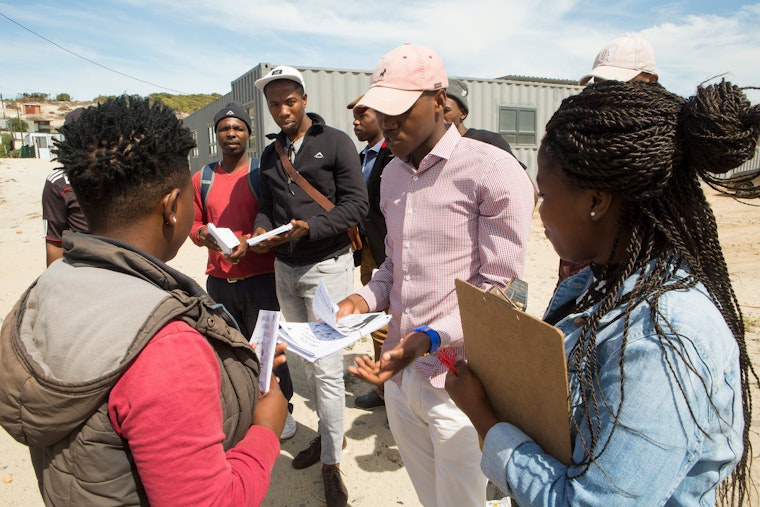
People standing in a circle in a settlement
A group of activists meets before a march for land rights, in Cape Town, South Africa, on March 7, 2018.© Melanie Stetson Freeman/The Christian Science Monitor/Getty

Sharan Srinivas (program officer with the Open Society Human Rights Initiative) wrote on 16 December 2019 about Protecting Civil Society in South Africa. …Before he was gunned down in front of his son, Sikhosiphi “Bazooka” Rhadebe—a leading environmental and housing advocate in Xolobeni, South Africa—telephoned others who had spoken out against mining interests along South Africa’s Wild Coast. He was checking on like-minded activists’ safety and warning them that a “hit list” had been developed targeting human rights defenders in the area who stood up against mining interests. Two hours later, gunmen posing as police officers shot him at his home.

No one has been held accountable in the killing of Rhadebe, which advocates now see as the first data point in a disturbing new trend. Increasingly, those that stand up for environmental, housing, and land rights in South Africa face bitter—and often violent—attacks. To counter this trend, the Open Society Foundations announced recently the creation of a new fund, hosted at the Southern Africa Human Rights Defenders Network, intended to provide support to activists. The fund will provide support services to activists depending on their needs and will include the provision of legal representation; emergency relocation for activists and their families; and physical, psychological, and medical support.

South Africa is rightly commended for its vibrant civil society, robust institutions and progressive constitution, which enshrines the fundamental rights of expression and assembly. But joint research conducted by Human Rights Watch, Earth Justice, GroundWork, and the Center for Environmental Rights reveals that communities who are exercising these fundamental rights have faced vicious reprisals.

  • There is an ongoing pattern of police misconduct during peaceful protests.
  • Local municipalities often impose extralegal restrictions on protest in mining affected communities.
  • An environment of fear has been created among community activists.

Though activists based in South Africa’s major cities are well connected to the international infrastructure built to protect human rights defenders, many attacks against community-based activists located in rural and isolated parts of the country have gone unreported and unnoticed. The fund hopes to serve as a vehicle of solidarity, and to strengthen the resilience of frontline community activists. Sharan Srinivas is a .

Colombia and Mexico: problems with national panic button devices for human rights defenders

December 24, 2019

A GPS-enabled “panic button” that Colombia‘s government has issued ito abut 400 persons is supposed to summon help for human-rights defenders or journalists if they are threatened. But it the article claims that it has technical flaws that could let hostile parties disable it, eavesdrop on conversations and track users‘ movements, according to an independent security audit conducted for The Associated Press. There is no evidence the vulnerabilities have been exploited, but are alarmed. “This is negligent in the extreme,” said Eva Galperin, director of cybersecurity at the nonprofit Electronic Frontier Foundation, calling the finding “a tremendous security failure.

Over the past four years, other “distress alarms” and smartphone apps have been deployed or tested around the world, with mixed results. When effective, they can be crucial lifelines against criminal gangs, paramilitary groups or the hostile security forces of repressive regimes. [see: https://humanrightsdefenders.blog/2014/06/23/today-official-launch-of-ais-panic-button-a-new-app-to-fight-attack-kidnap-and-torture/ and https://humanrightsdefenders.blog/2014/04/24/the-natalia-gps-alarm-bracelet-wins-golden-egg-awards-in-stockholm/]

The “boton de apoyo,” distributed by Colombia‘s Office of National Protection is a keychain-style fob. Its Chinese manufacturer markets it under the name EV-07 for tracking children, pets and the elderly. The operates on a wireless network, has a built-in microphone and receiver and can be mapped remotely with geo-location software. A button marked “SOS” calls for help when pressed.

A company official, John Chung, acknowledged that Rapid7 notified him of the flaws in December. In keeping with standard industry practice, Rapid7 waited at least two months before publicly disclosing the vulnerabilities to give the manufacturer time to address them. Chung told the AP that Eview was working to update the EV-07‘s webserver software, where Rapid7 found flaws that could allow user and geolocation data to be altered.

Activists have good reason to be wary of public officials in Colombia, where murder rates for land and labor activists are among the world‘s highest, and there is a legacy of state-sponsored crime. The DAS domestic intelligence agency, which provided bodyguards and armored vehicles to high-risk individuals prior to 2011, was disbanded after being caught spying on judges, journalists and activists. Five former DAS officials have been prosecuted for allegedly subjecting Duque and her daughter to psychological torture after she published articles implicating agency officials in the 1999 assassination of Jaime Garzon, a much-loved satirist.

Tanya O‘Carroll of Amnesty International, which has been developing a different kind of “panic button” since 2014 , said the Colombian model is fundamentally flawed. “In many cases, the government is the adversary,” she said. “How can those people who are the exact adversary be the ones that are best placed to respond?”…

In Mexico, the attorney general‘s office has issued more than 200 emergency alert devices to journalists and rights activists since 2013. But there have been multiple complaints . One is unreliability where cell service is poor. Others are more serious: Cases have been documented of police failing to respond or answering but saying they are unable to help.

O‘Carroll of Amnesty International said trials in 17 nations on three continents—including the Philippines, El Salvador and Uganda—show it‘s best to alert trusted parties—friends, family or colleagues. Those people then reach out to trusted authorities. Amnesty‘s app for Android phones is still in beta testing. It is activated with a hardware trigger—multiple taps of the power button. But there have been too many false alarms.

Sweden-based Civil Rights Defenders offers a 300-euro stand-alone panic button first deployed in Russia‘s North Caucasus region in 2013 and now used by more than 70 people in East Africa, Central Asia, the Balkans, Southeast Asia and Venezuela, said Peter Ohlm, a protection officer at the nonprofit. The organization‘s Stockholm headquarters always gets notified, and social media is typically leveraged to spread word fast when an activist is in trouble.

https://stockdailydish.com/colombia-panic-buttons-expose-activists/

ICJ Report on freedom of information in South East Asia especially on-line

December 23, 2019
Malaysian cartoonist Zunar helps launch a report by the International Commission of Jurists at the Foreign Correspondents' Club of Thailand.  (Photo by Osama Motiwala/ICJ))
Malaysian cartoonist Zunar helps launch a report by the International Commission of Jurists at the Foreign Correspondents’ Club of Thailand.  (Photo by Osama Motiwala/ICJ))

On 16 December 2019 Dave Kendall wrote in the Bankok Post about the International Commission of Jurists(ICJ), having released a report called Dictating the internet: Curtailing free expression, opinion and information online in Southeast Asia. The report was presetned at the Foreign Correspondents’ Club of Thailand, where some of the human rights defenders featured in the case studies participated in a panel discussion. The Malaysian cartoonist Zunar, [https://humanrightsdefenders.blog/2019/07/18/fight-through-cartoons-zunar/] drew a cartoon live on stage; it showed a government figure placing handcuffs around the two ‘O’s in the word Google.

The ICJ has a slightly different take from other non-governmental organisations that seek to protect freedom of speech. For the ICJ, the law is both the problem and the solution: Southeast Asian governments use existing laws and draft new ones to stifle dissent, violating international statutes upholding freedom of expression that they themselves have signed onto. The report calls for governments in Southeast Asia to “repeal, amend or otherwise rectify existing legal and regulatory frameworks to bring them in line with their international obligations” — and argues that “legislation framed in human rights terms is also the best and most effective way to protect against the very real threats posed by the spread of hate speech, disinformation online, cyber-attacks and other cybercrimes.

From left: ICJ director of Asia and the Pacific Frederick Rawski, Myanmar surgeon Ma Thida, human rights defender Sutharee Wannasiri, Singaporean activist Jolovan Wham and Malaysian cartoonist Zunar (Photo by Dave Kendall)

“It’s not a pretty picture,Frederick Rawski, ICJ director of Asia and the Pacific told the forum. “Laws are used to harass and threaten human rights defenders, lawyers, journalists and others…New legal frameworks are being seen as an opportunity to consolidate and protect political power.” Corporations, too, have joined the party. “Businesses are using strategic lawsuits to avoid criticism, claiming they are protecting their businesses interests,Sutharee Wannasiri told the audience. [https://humanrightsdefenders.blog/2019/05/04/international-civil-society-week-3-human-rights-defenders-engaging-business/]. The human rights activist is out on bail.

Governments have often cited vague concepts of “national security” and “public order” to justify using disproportionate means to shut down opposing views, sometimes even when privately expressed. “I was sentenced to 23 years in prison in 1993,” said Dr Ma Thida, a Myanmar surgeon, writer, and human rights activist. “The first charge was ‘endangering national serenity’.” She said the use of speech-suppressing colonial-era laws such as the National Secrets Act has actually increased since Aung San Suu Kyi joined the Myanmar government.

Governments across Southeast Asia vary in the subtlety — or otherwise — they employ in using the law to stifle dissent. “The police were very nice to me,” recalled Jolovan Wham, a Singaporean civil and labour rights activist [https://humanrightsdefenders.blog/2019/02/24/human-rights-defender-jolovan-wham-in-singapore-sentenced-ngos-dismayed/]. “They asked me, ‘Is the room too cold? Would you like some biscuits?’ Singapore introduced its Protection from Online Falsehoods and Manipulation Act this year. “Singapore has a very good PR machine… they use democratic processes for authoritarian ends,” said Mr Wham. “They made a show of democratic consultation to justify this repressive law.

The ICJ report was welcomed by Sutawan Chanprasert, the founder of DigitalReach, a new organisation campaigning to protect digital rights in Southeast Asia. “The report shows that while technology gives more opportunities for people to express themselves on social media, the state is moving to control the online space too,” she told the Bangkok Post. “Under repressive ‘fake news’ laws, any content can be interpreted as ‘fake’, ‘false’ and ‘misleading’. And tech has provided a new kind of threat to freedom of expression– digital surveillance of political dissidents.