Posts Tagged ‘youth’

UN Youth Rights Academy 2025

July 31, 2025
United Nations logo

Participants of the Youth Rights Academy.

© Credit – OHCHR

“Knowing our rights empowers us to act. Change is not as far away as it often seems. Every one of us can drive change from where we are,” said Avril Murillo, a young digital feminist activist from Bolivia.

“No one understands the urgency of change like young people do, especially those who’ve grown up watching their futures shrink under injustice,” added Yara Al-Zinati, a youth advocate from Gaza. “That’s why youth must stand up for their rights, to lead and shape a future where communities can thrive.”

For Kenneth Mulinde, from Uganda, young people have a responsibility to advocate for accountability and human dignity for all.

And for Constance Luk, a mental health advocate from Malaysia, connecting youth has the power to build a world free of discrimination and where communities support and care for each other.

Murillo, Al-Zinati, Mulinde and Luk were among a group of 45 young human rights advocates from around the world who participated in a Youth Rights Academy in Geneva on 7-11 July.

The Youth Rights Academy is the result of a partnership between UN Human Rights and and Qatar’s global foundation, Education Above All (EAA), aimed at empowering and mobilizing young people, particularly those living in situations of conflict and insecurity, to stand up for their human rights.

The partnership, implemented since 2022, has previously resulted in the development of the Youth Advocacy Toolkit, which was launched in September 2023 as “YES: Youth Empowerment System”, and laid the foundation for the Youth Rights Academy.

Since its beginning, the project has been guided by a Youth Advisory Board (YAB), a group of young human rights advocates from diverse countries and regions who offer feedback on the project’s overall direction and focus. Members of the second cohort of the YAB attended the Youth Rights Academy as participants, and also helped to design and facilitate some of its sessions.

The Academy brought together experts, including UN bodies and mandate-holders, and civil society organizations to equip young rights advocates with the knowledge and tools to defend and promote human rights in their communities.

The program included workshops on international human rights law and international humanitarian law, the right to education, the climate crisis, political participation, social media advocacy, and the protection of human rights defenders, among other topics.

https://www.ohchr.org/en/stories/2025/07/youth-rights-academy-learning-skills-lead-change-0

Youth tell stories of human rights success

January 6, 2025

on 31 December 2024 the UN Human Rights Podcast showcases the stories of five of the members of the  Youth Advisory Board. The board is made up of young people who work on issues that mobilize and empower others to stand up for human rights. The Board is in partnership with Education Above All and Silatech, to empower young people, especially those in conflict and vulnerable situations.

United Nations adopts ground-breaking Pact for the Future to transform global governance

September 27, 2024

New York, 22 September 2024 – World leaders today adopted a Pact for the Future that includes a Global Digital Compact and a Declaration on Future Generations. This Pact is the culmination of an inclusive, years-long process to adapt international cooperation to the realities of today and the challenges of tomorrow. The most wide-ranging international agreement in many years, covering entirely new areas as well as issues on which agreement has not been possible in decades, the Pact aims above all to ensure that international institutions can deliver in the face of a world that has changed dramatically since they were created.

“The Pact for the Future, the Global Digital Compact, and the Declaration on Future Generations open the door to new opportunities and untapped possibilities,” said the Secretary-General during his remarks at the opening of the Summit of the Future.

The Pact covers a broad range of issues including peace and security, sustainable development, climate change, digital cooperation, human rights, gender, youth and future generations, and the transformation of global governance. Key deliverables in the Pact include:

In the area of peace and security

On sustainable development, climate and financing for development

  • The entire Pact is designed to turbo-charge implementation of the Sustainable Development Goals.
  • The most detailed agreement ever at the United Nations on the need for reform of the international financial architecture so that it better represents and serves developing countries.
  • Improving how we measure human progress, going beyond GDP to capturing human and planetary wellbeing and sustainability.
  • A commitment to consider ways to introduce a global minimum level of taxation on high-net-worth individuals.
  • On climate change, confirmation of the need to keep global temperature rise to 1.5 °C above pre-industrial levels and to transition away from fossil fuels in energy systems to achieve net zero emissions by 2050.

On digital cooperation

  • The Global Digital Compact, annexed to the Pact, is the first comprehensive global framework for digital cooperation and AI governance.
  • At the heart of the Compact is a commitment to design, use and govern technology for the benefit of all.

Youth and future generations

  • The first ever Declaration on Future Generations, with concrete steps to take account of future generations in our decision-making, including a possible envoy for future generations.
  • A commitment to more meaningful opportunities for young people to participate in the decisions that shape their lives, especially at the global level.

Human rights and gender

  • A strengthening of our work on human rights, gender equality and the empowerment of women.
  • A clear call on the need to protect human rights defenders.
  • Strong signals on the importance of engagement of other stakeholders in global governance, including local and regional governments, civil society, private sector and others.

There are provisions across the Pact and its annexes for follow-up action, to ensure that the commitments made are implemented.

The Summit brought together over 4000 individuals from Heads of State and Government, observers, IGOs, UN System, civil society and non-governmental organizations. In a broader push to increase the engagement of diverse actors, the formal Summit was preceded by the Action Days from 20-21 September, which attracted more than 7,000 individuals representing all segments of society. The Action Days featured strong commitments to action by all stakeholders, as well as pledges of USD 1.05 billion to advance digital inclusion.

For more information:  https://www.un.org/en/summit-of-the-future

https://www.un.org/sustainabledevelopment/blog/2024/09/press-release-sotf-2024/

https://www.civicus.org/index.php/media-resources/news/united-nations/new-york/7322-civicus-urges-the-un-to-prioritise-strengthening-the-human-rights-pillar-at-unga79-and-the-summit-of-the-future

Amnesty finds that young human rights defenders face online harassment for posting on human rights

July 3, 2024
Amnesty International
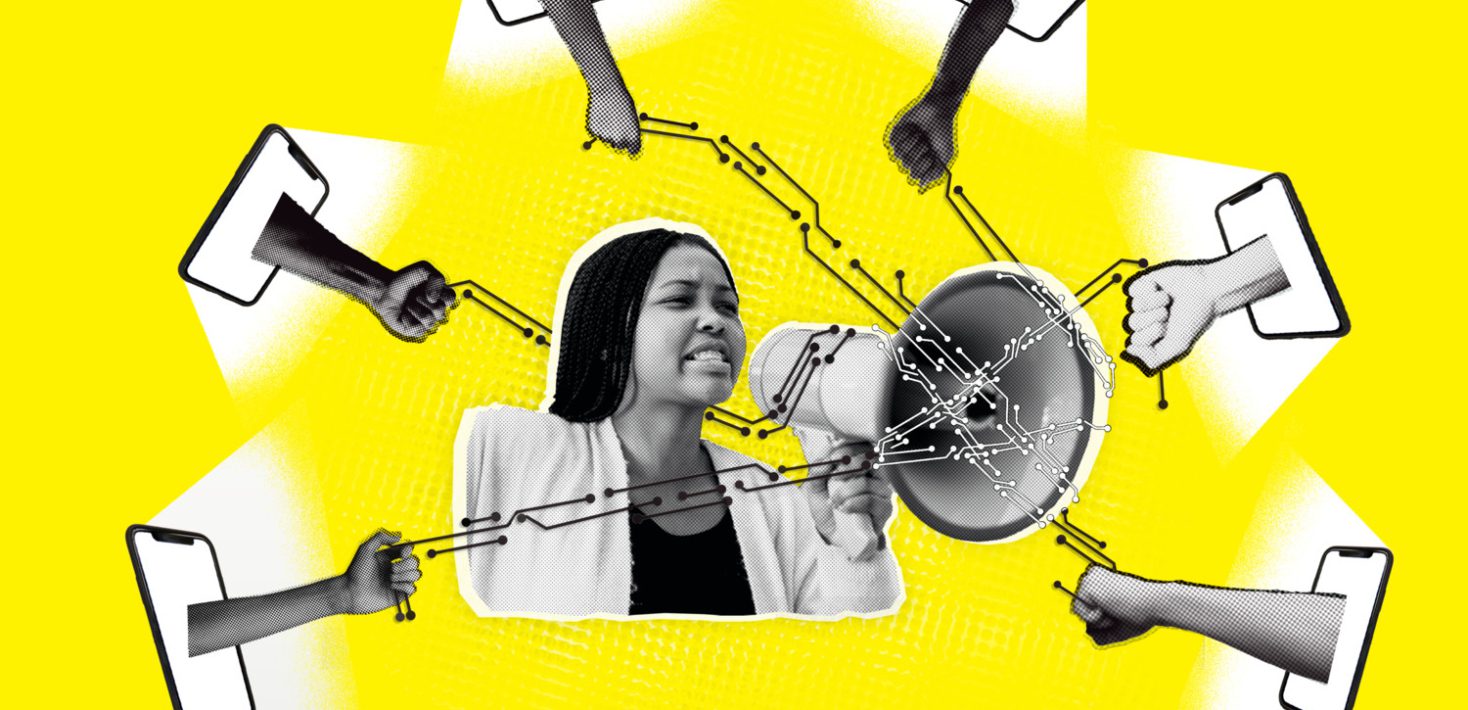
an illustration with a young person speaking into a megaphone. Around them are images of fists coming out of phone screens.

On July 1, 2024 AI published the findings of a survey which says that three out of five child and young human rights defenders face online harassment in connection with their activism, according to a new analysis of 400 responses to an Amnesty International questionnaire, distributed to young activists across 59 countries. More than 1400 young activists participated in the survey conducted as a part of Amnesty International’s global campaign to “Protect the Protest.”

Of those, 400 youth activists aged between 13 to 24 years agreed to the publication of their data.

They faced harassment in the form of hateful comments, threats, hacking and doxing which is often linked to offline abuse and political persecution often perpetrated by state actors with little or no response from Big Tech platforms resulting in the silencing of young people. 

The highest rates of online harassment were reported by young activists in Nigeria and Argentina.

“I have been harassed […] by a stranger because of my pronouns. The stranger told me it is not possible to be a ‘they/them’ and kept sending messages about how I am crazy for identifying the way I identify. I had to ignore the person’s messages,” said a 17-year-old Nigerian queer LGBTI activist who asked not to be identified.

Another young activist – 21-year-old male Nigerian LBGTI rights activist said, “People disagree with my liberal progressive views, and immediately check my profile to see that I am queer Nigerian living in Nigeria, and they come at me with so much vitriol. I am usually scared to share my opinion on apps like TikTok because I can go viral. The internet can be a very scary place,” he said adding that, “Someone cat fishing as a gay man, lured me into coming out to see him after befriending me for a while, and then he attacked me with his friends. This is Nigeria, I couldn’t go to the police for secondary victimization.”

Twenty-one percent of respondents say they are trolled or threatened on a weekly basis and close to a third of the young activists say that they have censored themselves in response to tech-facilitated violence, with a further 14 percent saying they have stopped posting about human rights and their activism altogether.

“I always think twice before making a comment, when I express my political position, I start to get many comments that not only have to do with my position, but also with my body, my gender identity or my sexuality,” said Sofía*, a 23-year-old human rights defender from Argentina shared her experience on X formerly known as Twitter.

The survey respondents said they faced the most abuse on Facebook, with 87 percent of the platform’s users reporting experiences of harassment, compared to 52 percent on X and 51 percent on Instagram.

The most common forms of online harassment are upsetting and disrespectful “troll” comments (60 percent) and upsetting or threatening direct messages (52 percent).

Five percent of the young activists say they have faced online sexual harassment, too, reporting that users posted intimate images (including real and AI-generated images) of them without consent.

For many of the survey participants harassment in relation to their online activism is not limited to the digital world either. Almost a third of respondents reported facing offline forms of harassment, from family members and people in their personal lives to negative repercussions in school, police questioning and political persecution.

Twenty-year-old non-binary activist Aree* from Thailand shared their experience of facing politically motivated prosecution in five different cases whilst they were still a child.

Abdul* a 23-year-old Afghan activist reported being denied work at a hospital after authorities found out about his social media activism.

The Israel-Gaza war currently stands out as an issue attracting high levels of abusive online behaviour, but the threat of online harassment appears to be omnipresent across all leading human rights issues. Peace and security, the rule of law, economic and gender equality, social and racial justice, and environmental protection all served as “trigger topics” for the attacks.

However, the way young activists are targeted varies and appears to be closely linked to intersectional experiences of discrimination, likely harming survivors of identity-based abuse in longer lasting ways than issue-based harassment.

Twenty-one percent of respondents say they have been harassed in connection with their gender and twenty percent in connection with their race or ethnicity. Smaller percentages said they face abuse in connection with their socio-economic background, age, sexual orientation and/or disabilities.

“At first it was simply hateful comments since the posts I published were daring and spoke openly about LGBT rights, which later made me receive threats in private messages and it went further when my account was hacked,” said Paul a 24-year-old activist from Cameroon, on being targeted for his LGBTI related activism adding that, “For 2 years, I have been living in total insecurity because of the work I do as an advocate for the rights of my community online.”

For Paul and many other young activists, online harassment is having deep effects on their mental health. Forty percent of the respondents say they have felt a sense of powerlessness and nervousness or are afraid of using social media. Some respondents have even felt unable to perform everyday tasks and felt physically unsafe. Accordingly, psychological support is the most popular form of support which young activists call for, ahead of easier to use reporting mechanisms and legal support.

Many of the young activists voiced frustrations over leading social media platforms’ failure to adequately respond to their reports of harassment saying the abusive comments are left on the platforms long after being flagged.

Some respondents also felt that social media platforms are playing an active part in silencing them; multiple activists reported that they found posts about the war in Gaza removed, echoing previous reports of content advocating for Palestinian rights being subject to potentially discriminatory moderation by various platforms.

Others highlighted platforms’ role in enabling state-led intimidation and censorship campaigns, undermining activists’ hope for government regulation to provide answers to the challenge of tech-facilitated violence.

Amnesty International has previously documented the repression of peaceful online speech by states including India, the Philippines and Vietnam and is currently calling for global solidarity actions in support of women and LGBTI activists facing state-backed online violence in Thailand.

*The young activists’ names have been changed to protect their identities.

Changing of the guard at European Commissioner for Human Rights

April 1, 2024

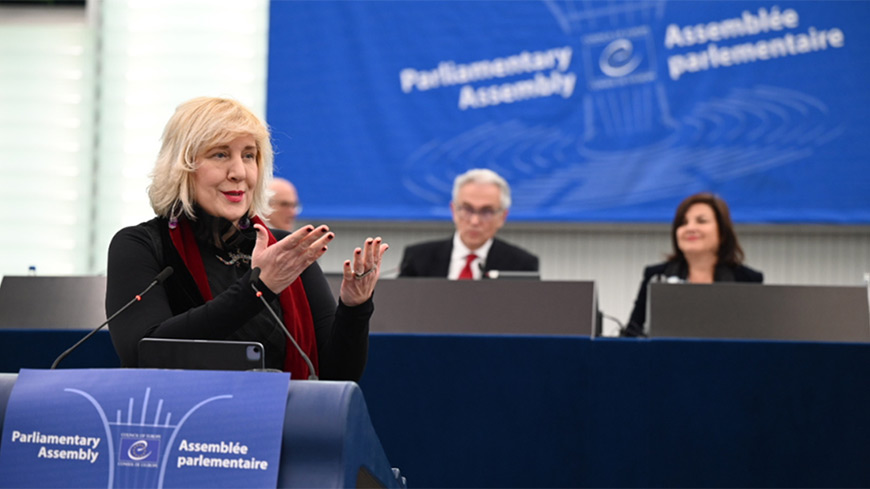
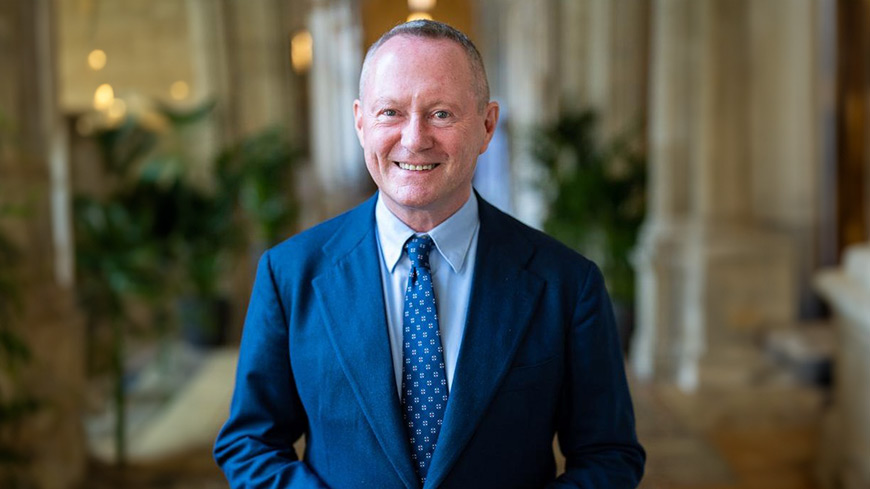
On 30 March 2024 Dunja Mijatović ended her term as Council of Europe Commissioner for Human Rights and the next day the new Commissioner, Michael O’Flaherty, started his work.

Dunja Mijatović ends her term as Council of Europe Commissioner for Human Rights

“… Over the past six years, I have witnessed the extraordinary commitment to human rights displayed by partners of my Office, and by ordinary citizens in the face of an ever-changing landscape of politics, technology and social issues. At the same time, I have seen the harm that the current challenges to human rights can do to our societies. The escalation of conflicts, most notably Russia’s full-scale invasion of Ukraine, has underlined the fragility of peace and the dire consequences of disregarding international law and human rights…

Throughout my tenure, the dedication of NGOs, journalists, activists and other partners has been a constant source of inspiration. Their unwavering commitment to the defence of human rights, often at great personal risk, has reinforced my belief in the power of collective action and the enduring relevance of our principles.

As my term ends, I am encouraged by the progress that has been made in the field of human rights, but mindful of the work that remains to be done. It is important to continue engaging on issues related to the environment and artificial intelligence…Finally, there is a crucial need to engage with and to enable the full participation of young people and their organisations in all future discussions. Governments should empower young people to make choices and meaningfully influence their future.

Michael O'Flaherty takes up office as Council of Europe Commissioner for Human Rights

The Council of Europe’s new Commissioner for Human Rights, Michael O’Flaherty, begins his six-year mandate today with a pledge to put human rights at the heart of member states’ agendas.

I intend to inject a human rights perspective into the greatest challenges facing our societies,” said O’Flaherty, noting that he intends to carry out his first visit as Commissioner to Ukraine. “I can think of nothing more urgent than addressing the human rights consequences of Russia’s full-scale invasion of Ukraine, which has caused terrible human suffering and destruction“.

The Commissioner also identified other areas where stronger human rights protection is urgently needed, including the climate crisis, the governance of artificial intelligence, freedom of expression, migration and the rise of hate speech, including antisemitism and anti-Muslim attacks.

A significant part of the Commissioner’s agenda will also be devoted to bringing the struggles of marginalised people and victims of discrimination to the forefront of human rights discussions. “In particular, Roma and Travellers face an intolerable situation that requires greater attention,” said the Commissioner.

Finally, the Commissioner highlighted his intention to focus on youth, socio-economic rights and human rights defenders, as well as to use his mandate to contribute to the implementation of judgments of the European Court of Human Rights.

I step into this new role with a sense of great responsibility, as well as deep appreciation and respect for the work of my predecessor, Dunja Mijatović. Human rights affect every aspect of our lives. At a time when they face multiple challenges, we must recommit ourselves to weaving them into the fabric of our societies. This will require a concerted effort and I intend to play my part to the best of my ability by accompanying and standing up for rights holders across the Member States.

An Irish human rights lawyer, O’Flaherty has served as Director of the EU Fundamental Rights Agency (2015-2023). https://www.pravda.com.ua/eng/news/2024/04/1/7449154/

https://www.coe.int/et/web/commissioner/-/dunja-mijatovi%C4%87-ends-her-term-as-council-of-europe-commissioner-for-human-rights

https://www.coe.int/hu/web/commissioner/-/michael-o-flaherty-takes-up-office-as-council-of-europe-commissioner-for-human-rights

Mary Lawlor’s new report focusses on Youth Human Rights Defenders

March 7, 2024

UN Report Unveils Strategies to Shield Child, Youth Human Rights Defenders

Emmanuel Abara Benson, on 6 March 2024, unveils in BNN a new UN report which highlights the challenges faced by young activists, advocating for global support and legal frameworks to safeguard their rights and efforts:

Amnesty International heralds a new UN report as a significant advancement for young activists worldwide, set to be introduced by UN Special Rapporteur Mary Lawlor during the 55th Session of the Human Rights Council on 12 March 2024. The document, titled “We are not just the future”: challenges faced by child and youth human rights defenders”, highlights the unique challenges faced by young activists, including oppression, age-based discrimination, and barriers to resources and legal aid.

The report by Mary Lawlor sheds light on the considerable obstacles child and youth defenders encounter, such as intimidation, threats, and attacks, both in physical and digital realms. Amnesty International’s Sara Vida Coumans emphasizes the overdue recognition of the distinct experiences and adversities young defenders face compared to their adult counterparts. The report also addresses the issue of “gatekeeping” by adult-led groups, which hampers the ability of young activists to access necessary resources and participate in decision-making processes.

Amnesty International has documented numerous instances of abuses against young human rights defenders. Examples include Fatima Movlamli from Azerbaijan and Mahmoud Hussein from Egypt, who faced intimidation and arbitrary detention, respectively, due to their activism. Moreover, the report mentions the plight of child climate defender Leonela Moncayo in Ecuador, who was intimidated with an explosive device outside her home, highlighting the risks young activists face. The organization calls for governments worldwide to heed the Special Rapporteur’s recommendations, particularly in providing legal aid and support for young defenders. See also: https://humanrightsdefenders.blog/2023/11/13/hrw-submission-to-special-rapporteur-focuses-on-child-and-youth-human-rights-defenders/

The document not only brings to the forefront the specific challenges faced by child and young human rights defenders but also underscores the importance of global support and legal frameworks to safeguard these individuals. By spotlighting the adverse impact of social media, the right to peaceful assembly, and the effects of climate change on young people, the report advocates for a more inclusive and supportive environment for young activists. Governments are urged to adopt the recommendations, recognizing the vital role of young defenders in advocating for human rights and democratic reforms.

This groundbreaking report marks a pivotal moment in the recognition and support of child and young human rights defenders. By highlighting the unique challenges they face and offering targeted strategies for protection, the UN and Amnesty International are paving the way for a more inclusive and equitable future for young activists. The global community’s response to these recommendations will be instrumental in ensuring that young voices are not only heard, but also protected in their brave efforts to defend human rights.

https://bnnbreaking.com/breaking-news/human/un-report-unveils-strategies-to-shield-child-youth-human-rights-defenders

https://www.irishexaminer.com/opinion/commentanalysis/arid-41349259.html

see also: https://www.coe.int/en/web/portal/-/child-human-rights-defenders-want-to-be-heard-by-their-governments-council-of-europe-study

https://rightlivelihood.org/news/joint-statement-condemns-global-persecution-of-youth-activists

Young artists raise awareness of human rights

December 20, 2023

Meet the winners of the Kids 4 Human Rights International Art Contest, an initiative of the Queen Sofia Children’s Art Museum of the Gabarrón Foundation, in collaboration with UN Human Rights, to raise awareness of the importance of the Universal Declaration of Human Rights.

HRW submission to Special Rapporteur focuses on child and youth human rights defenders

November 13, 2023

Human Rights Watch’ submission discusses the risks climate activists have faced in Australia, India, and Uganda. It focuses on examples of activists under age 32, as requested by the UN Special Rapporteur on Human Rights Defenders.

Australia

Following increased climate protest activity in New South Wales (NSW), the government in March 2022 established a new police unit known as the Strike Force Guard. The unit is designed to “prevent, investigate and disrupt unauthorized protests across the state.” On April 1, the state parliament introduced new laws and penalties specifically targeting protests that blocked roads and ports. Protesters can now be fined up to AU$22,000 (US$15,250) and be jailed for up to two years for protesting without permission on public roads, rail lines, tunnels, bridges, and industrial estates.

In 2022, Human Rights Watch interviewed three climate protesters who had been arrested and charged under the new laws. These cases indicate that climate protesters are being targeted for disproportionate punishment.

Violet (Deanna) Coco, a 31-year-old activist, took part in a climate protest on April 13, 2022, that stopped traffic in one lane on the Sydney Harbor Bridge. Coco climbed on the roof of a parked truck and stood holding a lit emergency flare. After approximately 25 minutes, NSW police forcibly removed her and the other protesters from the road. Coco was charged with disrupting vehicles, interfering with the safe operation of a bridge, possessing a bright light distress signal in a public place, failing to comply with police direction, and resisting or hindering a police officer. She was also charged under explosives regulations for holding the emergency flare; with an incitement offense for “encouraging the commission of a crime” by livestreaming the protest on Facebook; and for uploading a video of a climate protest she took the previous week, and with disrupting traffic during three previous protests.

Coco pleaded guilty to two charges – blocking traffic and failing to comply with police direction – and not guilty to the other charges. She was released on AU$10,000 (US$6,940) bail, but the magistrate ordered her not to leave her apartment for any purpose except for emergency medical assistance or to attend court. She was also ordered not to associate with any other Fireproof Australia member. Coco spent 21 days under what amounted to house arrest. On May 5, 2022, a magistrate amended her bail and, while she was allowed to leave her property, the authorities imposed a curfew banning her from leaving her address before 10 a.m. and after 3 p.m.

In March 2023, Coco was issued with a 12-month conditional release order after a district court judge heard she had been initially imprisoned on false information provided by the New South Wales police.

In August 2022, the state of Victoria followed New South Wales with harsh new measures targeting environmental protesters at logging sites with up to 12 months in jail or $21,000 in fines. In Tasmania, environmental activists now face fines of $13,000 or two years in prison, while nongovernmental organizations that have been found to “support members of the community to protest” face fines of over $45,000.

On May 18, 2023, the South Australia government introduced harsh new anti-protest measures in the South Australian lower house in the morning and then rushed them through after lunch with bipartisan support after just 20 minutes of debate and no public consultation. The bill would increase the punishment for “public obstruction” 60-fold, from $750 to $50,000 or three months in jail, with activists also potentially facing orders to pay for police and other emergency services responding to a protest or action. On May 30, the laws were passed after a 14-hour debate in the South Australian upper house.

India

In February 2021, Indian authorities arrested Ravi who was sent to police custody for five days. Indian authorities also issued arrest warrants against Nikita Jacob, a lawyer, and Shantanu Muluk, an activist, who were granted pre-arrest bail. The authorities alleged Ravi was the “key conspirator” in editing and sharing an online toolkit shared by the Swedish Fridays for Future founder Greta Thunberg on social media, including Twitter, aimed at providing information to those seeking to peacefully support ongoing farmers protests. In granting bail to Ravi, the Delhi court said the evidence on record was “scanty and sketchy,” and that citizens cannot be jailed simply because they disagreed with government policies. It added: “The offense of sedition cannot be invoked to minister to the wounded vanity of governments.”

The Indian government has enforced Information Technology Rules that allow for greater governmental control over online content, threaten to weaken encryption, and seriously undermine media freedoms, rights to privacy, and freedom of expression online. These rules put youth and other human rights defenders and journalists at further risk of being targeted by the authorities for their online content.

Uganda

Young people from across Uganda have faced reprisals for fighting for climate justice. On September 25, 2020, Ugandan police arrested and detained for eight hours eight youth climate activists while participating in the global climate strike in Kampala. The police told them election campaigns were not allowed, although the activists repeatedly explained that they were an environmental—not a political—movement. The activists, only two of whom were above the age of 18, were detained in a room for eight hours, questioned, and then allowed to leave.

Human Rights Watch published a report that documented a range of restrictions on freedom of expression, association, and assembly related to oil development, including the planned East African Crude Oil Pipeline (EACOP) by the government. Civil society organizations and environmental defenders regularly report being harassed and intimidated, unlawfully detained, or arbitrarily arrested. Human Rights Watch interviewed 31 people in Uganda between March and October 2023, including 21 environmental defenders, and several of whom were under 32 years old.

Many student climate activists protesting EACOP have been arrested and charged with various offences in Kampala since 2021. These protests have been largely peaceful and usually small in scale. Since 2021, there have been at least 22 arrests, largely of students, at anti-EACOP protests in Kampala. Nine students were arrested in October 2022 after demonstrating support for the European Parliament resolution on EACOP and charged with “common nuisance.” Their case was finally dismissed on November 6, 2023, after more than 15 court appearances. Another four protesters were arrested on December 9, 2022, as they marched to the National Environmental Management Authority (NEMA) to demand a re-evaluation of the environmental damage caused by EACOP. One of the detainees was kept at an unknown location until the morning of December 12 when all four were released.

Another protesting student was arrested in Kampala on June 27, 2023, after trying to deliver a petition to the Speaker of the House of Uganda’s parliament. He told Human Rights Watch he was taken to an unlawful place of detention known as a “safe house” with his hands tied behind his back, questioned by plain-clothed security officials about who was providing the funding for the protests, before he was knocked to the floor. He said he awoke two days later in the hospital with serious injuries. On July 11, 2023, five individuals were arrested after protesting EACOP in downtown Kampala.

On September 15, 2023, four student protesters were arrested after a “Fridays for Future” and “StopEACOP” joint protest at the Ugandan parliament as part of the “Global Fight to End Fossil Fuels,” a global mobilization and day of action. They were released on bond five days later and have been charged with “common nuisance.” Their next hearing is scheduled for November 27, 2023. One of the students described to Human Rights Watch being held in a room inside parliament and beaten by uniformed parliamentary security officials and others in civilian clothes with “batons, gun butts, and using their boots to step on our heads” before being taken to Kampala’s Central Police Station (CPS). At the CPS he described plainclothes intelligence officers asking: “Who are your leaders? Among us, who is your leader? How many are you? Who are your leaders in different universities? Who is managing your social media accounts?” They then described being beaten further in CPS cells by other prisoners, one of whom said, “We have order from above to discipline you. You need to stop working on EACOP.”

See also: https://globalpressjournal.com/africa/uganda/ugandan-pipeline-project-begins-landowners-navigate-crooked-road-compensation/

Human Rights Watch encourages the Special Rapporteur to call on governments to:

  • Promote and protect universally recognized human rights and fundamental freedoms, respect, and protect the work of climate activists, in line with their human rights obligations.
  • Publicly condemn assault, threats, harassment, intimidation, and arbitrary arrests of activists, and direct security and other government officials to stop arresting, harassing, or threatening activists for protesting or on false accusations.
  • End arbitrary arrests and prosecutions of human rights defenders, anti-EACOP activists, and peaceful protesters.
  • Respect and protect the rights of all human rights defenders and civil society organizations to exercise freedoms of association, assembly, and expression, in accordance with international human rights norms.
  • Where applicable, ratify and implement regional human rights agreements to ensure public participation in environmental decision-making and to protect environmental defenders.

Submission to the Special Rapporteur on the situation of human rights defenders

Clips from young Human Rights Defenders

August 17, 2023
Mary Lawlor

Mary Lawlor, UN Special Rapporteur on Human Rights Defenders, shows on her LinkedIn page young human rights defenders who are the ones who will carry the human rights movement into the future, and to who we need to listen now.

👉 e.g. meet Zeinab, a young WHRD from #Kenya who took part in the 2023 Vienna Youth & Children HRD conference:

#YouthForRights #InternationalYouthDay #YouthLead #InSolidarityAndHope

Five young women human rights defenders to watch

March 16, 2021

Sarah Noble in Geneva Solutions of 15 March 2021 writes about her encounter with five young women activists from around the world who shared their motivation, their pandemic experiences, and advice for future generations:

On International Women’s Day, I was privileged to moderate the conversation, at an event hosted by the EU mission to the UN in Geneva and UN Women. I came away convinced world leaders could learn a lesson or two. They aren’t waiting to be invited to the decision-making table, and are already driving change in their communities and beyond.

The solidarity among them encapsulates a global movement led by female youth, determined in their fight for gender equality, education, eradicating period poverty, and dealing with climate change.

“We do not have to wait for the adults to start campaigning for the action that we want to see,” said Amy Meek of the UK. Along with her younger sister Ella, Amy, 17, launched an award-winning campaign, now a charity, called Kids Against Plastic. The sisters (see picture) were motivated by realising the devastating impact the misuse of plastic was having on the planet and also its potential legacy for future generations.

“I grew up realising how much girls were taught to be weak, were taught to be submissive while boys are taught to be strong and to be leaders. For me it was really puzzling, ”said Yande Banda, a passionate 17-year-old feminist activist and education advocate from Zambia. Yande is the chairperson of Transform Education, a global youth-led coalition hosted by the UN, where she advocates for a gender transformative approach to education. “I began being an advocate and in particular a feminist, ever since I could realise the consequential inequalities within society – so I would say I was around six years old,” “The fight to end the climate crisis has not stopped for the pandemic and as feminist leaders, neither have we”.

İlayda Eskitaşcioğlu, 28, is a human rights lawyer and a PhD student at Koç University in İstanbul. She founded an NGO, We Need to Talk, in 2016, which aims to fight against period poverty and period stigma in Turkey. “Periods do not stop for pandemics! Neither does the fight for gender equality! We are still breaking taboos, step by step – fathers, brothers, romantic partners, co-workers, teachers, those that are not menstruating, period poverty is your problem too! ” We Need to Talk provides sanitary products to three vulnerable target groups: Seasonal agricultural workers, refugees and pre-teens who are going to school in remote rural areas, and tries to start an honest and open conversation around menstruation in the Middle East.

Lucija Tacer is the current UN youth delegate for Slovenia and an advocate for women’s rights. She has made gender equality the priority in her interventions at the world body. “I entered into a workplace where all of the partners and the high level people are men, except one or two women and 100 percent of the secretaries were female and just being in that environment every day really got me thinking, what is going on here ? ”

Julieta Martinez, 17, from Chile is the founder of the TREMENDAS Collaborative Platform, which promotes the empowerment of girls, and young people by putting their skills and talents at the service of the community.

“Amazingly talented girls are all around the world. We have to continue looking for them. We have to continue giving them a space. And we have to continue this fight to actually get to gender equality… Girls, young women and adolescents have the right to raise their voices, to be heard and to take action for their dignity, their integrity and to be agents of social change in a society where human and youth rights must always be defended. ”

Watch the full event on youtube here.

https://genevasolutions.news/peace-humanitarian/five-young-women-activists-to-watch-a-moderator-s-take