Posts Tagged ‘women human rights defenders’

FORUM-ASIA: human rights defenders face severe risks in Asia

June 4, 2019
The latest report by the Asian Forum for Human Rights and Development (FORUM-ASIA) found that human rights defenders in Asia are at high risks. “In Asia, we are witnessing more and more human rights defenders being subjected to increasingly severe forms of violations, particularly killing, simply for defending human rights,” said Sejin Kim, Programme Manager of FORUM-ASIA.

The report titled “Defending In Numbers: Resistance in the Face of Repression exposes 688 cases of human rights violations affecting 4,854 people across 18 different countries in Asia, and analyses current and emerging trends of violations against human rights defenders, including journalists, civil society organisations, advocates and their family members, throughout 2017-2018.

Besides that, the report also reveals that “violations have become more extreme, and the safe space in which human rights defenders can work have increasingly shrunk”. State and non-state actors openly threatened these defenders, something which played a key role in creating a dangerous climate for them. In fact, according to the report, there were 164 cases where physical violence was used against human rights defenders, and 61 of these cases resulted in death. The majority of these cases occurred in the Philippines (48 per cent) and India (25 per cent). Concerningly, most of the perpetrators of these killings remain unknown, a reality which perpetuates impunity in the region…. In the period under review, a staggering 327 cases of judicial harassment were recorded across 17 countries which include the (arbitrary) arrest and detention of human rights defenders; the misuse of the law and the passage of repressive laws aimed at criminalising human rights defenders; and the denial of a fair trial.

..

Although threats and harassment endanger all defenders, but certain groups are particularly targeted like prodemocracy defenders, who are vocal critics of state repression; and land and environmental rights defenders, who are targeted by state and non-state actors competing to access natural resources and/or implement mega-development projects. Women human rights defenders, who challenge gender norms and power structures, also ranked high among the most affected groups. Gender-based violence, including online attacks and harassment, were common tactics used against women human rights defenders.

Human rights defenders face severe risks including killing in Asia, says FORUM-ASIA

Five Laureates of the Right Livelihood Foundation speak about woman human rights defenders

May 22, 2019

On 6 March 2019, two days before international women’s day, the Right Livelihood Award Foundation brought together 5 women Laureates from around the world to discuss ‘local realities and shared global challenges’ facing Women Human Rights Defenders. The side event, organised in parallel to the Human Rights Council’s fortieth session, was co-sponsored by CIVICUS, Human Rights House Foundation, International Network for Human Rights, and supported by the International Platform against impunity and the International Dalit Solidarity Network.

P2980249

Fabiana Leibl, Sima Samar, Mozn Hassan, Helen Mack Chang, Ruth Manorama, and Charlotte Dos Santos Pruth. Photo by: Amy Au

Here are a few takeaways from the discussion:

Fabiana Leibl, Head of Protection and Advocacy at the Right Livelihood Award Foundation, opened the meeting by describing the worsening trend for women human rights defenders who are prevented from working, not only because they are advocating for human rights, but also because they are women. As the Special Rapporteur on Human Rights Defenders noted in his recent report, this trend is often fuelled by deeply rooted ideas about ‘who women are, and who they should be’. Nahla Haidar, a member of the Committee on the Elimination of Discrimination against Women, remarked that women are frequently ‘targeted with charges of counter-terrorism’, which allows their oppressors to act with impunity.

Sima Samar, Chair of the Afghanistan Independent Human Rights Commission and a leading women human rights defender in Afghanistan, emphasised that achieving parity in educating people of all genders was a key starting point. As we approach the 70th anniversary of the Universal Declaration of Human Rights, she explained, “we need female human rights defenders in order to really change the environment on the ground, and to make the environment conducive for the women to exercise their basic human rights.” She called for an end to the misuse and misappropriation of culture, tradition, and religion as justifications for male dominance. Access to paid work, reproductive services, and justice mechanisms was also identified as crucial in the struggle for gender equality. Samar received the Right Livelihood Award in 2012 “for her longstanding and courageous dedication to human rights, especially the rights of women, in one of the most complex and dangerous regions in the world.” See also: https://humanrightsdefenders.blog/2018/08/31/major-piece-by-departing-high-commissioner-in-the-economist/ 

Mozn Hassan, founder of Nazra for Feminist studies, is one of the defendants in the well-known NGO Foreign Funding case targeting civil society organisations in Egypt. Her career’s focus on sexual and reproductive rights adds additional restrictions to her work. In July 2018, she was charged with, among other things, establishing an entity in violation of the law and receiving foreign funding with the intention of harming national security. The charges – which are clearly politically motivated – could lead to life imprisonment. Hassan could not attend the event due to a travel ban imposed by the Egyptian government since 2016. However, via video message, she conveyed the serious dangers for human rights defenders, ranging from asset freezing to arrests, arbitrary detention and forced disappearances. On top of this, women must confront gender-specific threats from state and non-state actors. As Mozn noted, “women are facing various gender-based violence in their custodies from harassment to threats of rape.” Mozn Hassan received the Right Livelihood Award together with Nazra in 2016 “for asserting the equality and rights of women in circumstances where they are subject to ongoing violence, abuse and discrimination.” See also: https://humanrightsdefenders.blog/2017/02/02/right-livelihood-has-to-go-to-egypt-to-hand-mozn-hassan-her-2016-award/

Helen Mack Chang, who has persistently sought justice and an end to impunity in Guatemala as head of the Myrna Mack Foundation, emphasised that women often suffer multiple dimensions of discrimination. Indigenous women, for instance, “suffer double discrimination (…) when defending their land or territory against the claims of international corporations.” She noted that recent years have seen a resurgence of conservatism and of global threats to the rule of law and democracy. Corruption and impunity, she stressed, go to the heart of this challenge, in Guatemala and elsewhere. Helen Mack Chang received the Right Livelihood Award in 1992 “for her personal courage and persistence in seeking justice and an end to the impunity of political murderers.

Ruth Manorama is India’s most effective organiser of, and advocate for, Dalit women, belonging to the “scheduled castes” sometimes also called “untouchables.” She is, among other things, President of the National Alliance of Women (NAWO) and National Convenor to the National Federation of Dalit Women. Ruth called for counter-narratives to combat the negative view of human rights defenders in the media. In India, for instance, activists are routinely called “enemies of the State,” “militants,” “anti-nationals,” “traitors,” and “terrorists.” She stated: “I am a patriot. I am an Indian citizen. I must enjoy my constitutional rights. (…) Protecting human rights defenders is a state obligation.” Dalit women are particularly vulnerable to systematic sexual abuse at work, forced sexual slavery such as the Devadasi system, and forced labour. Manorama received the Right Livelihood Award in 2006 “for her commitment over decades to achieving equality for Dalit women, building effective and committed women’s organisations and working for their rights at national and international levels.” See also: https://humanrightsdefenders.blog/2016/11/07/forum-asia-25th-anniversary-event-in-geneva-on-16-november-2016/

Charlotte Dos Santos Pruth is an Advocacy and Policy Advisor at Kvinna till Kvinna, a Swedish organisation working to strengthen and promote women’s organisations in several regions of the world. She presented the findings of their recent report, “Suffocating the movement – shrinking space for women’s rights”, which identifies the main effects of shrinking civic space for women. “A strong feminist movement is the single most important factor to advance women’s rights and gender equality”, she stated, adding that women often have limited access to formal decision-making processes. “This makes defending civil society space particularly crucial”, Dos Santos Pruth continued by saying. She suggested that addressing the lack of funding for women’s organisations would be an important first step.

The speakers brought together experiences from very different cultural contexts. Nevertheless, there were important parallels in their descriptions of defending human rights on the ground. The panellists all showed that the crackdown on women human rights defenders must be viewed within the context of other global trends including growing material inequality, counter-terrorism, corporate impunity, environmental degradation, and corruption. As Sima Samar pointed out, in this worrying global landscape, international solidarity must remain an important principle. In her words: “We don’t only need women in positions of power, we need feminist women; women who don’t support male domination in order to keep their own space and position”.

rewatch the event:


#MeToo movement leaders win Sydney Peace Prize 2019

May 6, 2019
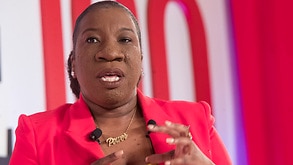
Activist Tarana Burke speaks during the during the TIME 100 Summit, April 23, 2019,
Activist Tarana Burke founded the #MeToo movement in 2006. Source: AAP

SBS reports that the founder of the global #MeToo movement, Tarana Burke, and one of the leading faces of the Australian movement, Tracey Spicer, have been jointly awarded the Sydney Peace Prize for their work in the #MeToo movement. [For more on this and other awards: http://www.trueheroesfilms.org/thedigest/awards/sydney-peace-prize]. The two human rights defenders have received the award for their work in revealing and protesting against sexual harassment, particularly the widespread 2017 investigations into sexual harassment in the media industry.

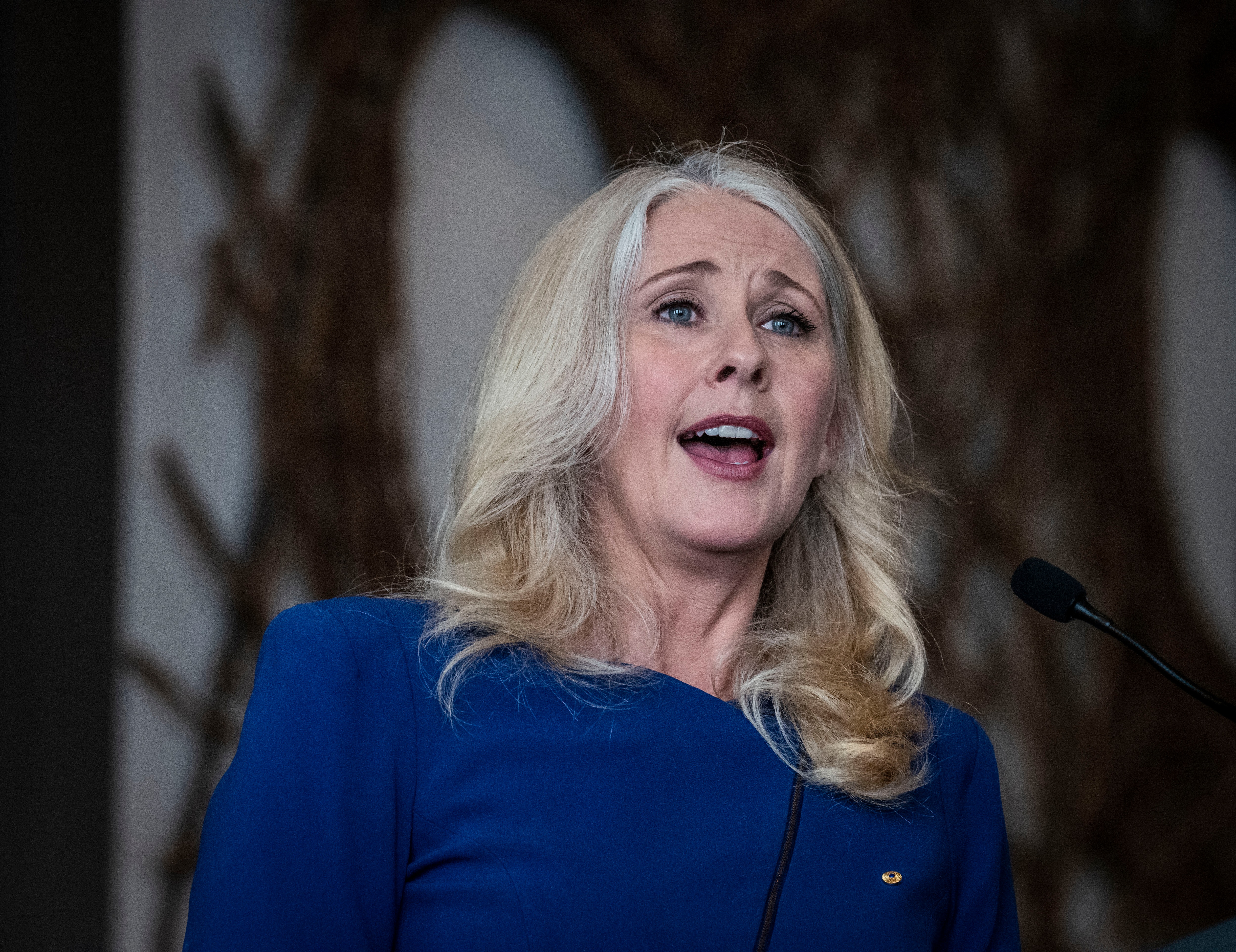
Tracey Spicer addresses the UsToo lunch at the Westin Hotel in Perth, 2018.

Tracey Spicer has been one of the spearheads of Australia’s movement against sexual harassment. AAP

Ms Burke said that receiving the peace prize highlights the prevalence of sexual violence and strengthens belief that the issue can be eradicated.  “The #MeToo movement will continue this work until we shift the culture to one that believes that every person, no matter their identity or circumstance, has the right to consent and safety,” Ms Burke said.

Ms Spicer greatly contributed to revealing sexual harassment in the Australian media industry, through work investigating multiple allegations of sexual harassment and bullying by Australian TV personality Don Burke.  Ms Spicer expressed her “tremendous honour” in accepting the Sydney Peace Prize alongside Ms Burke. “I dedicate this prize to everyone who is a survivor of sexual violence: your voices are being heard.” Ms Spicer also created Now Australia in 2018 to support survivors who have been sexually harassed, and to support the National Inquiry into Sexual Harassment being led by the Australian Human Rights Commission.

See also: https://humanrightsdefenders.blog/2019/03/16/civicus-publishes-report-on-women-human-rights-defenders-and-the-struggle-against-silencing/

Angelina Jolie addressed UN forcefully on crucial role of women

May 4, 2019

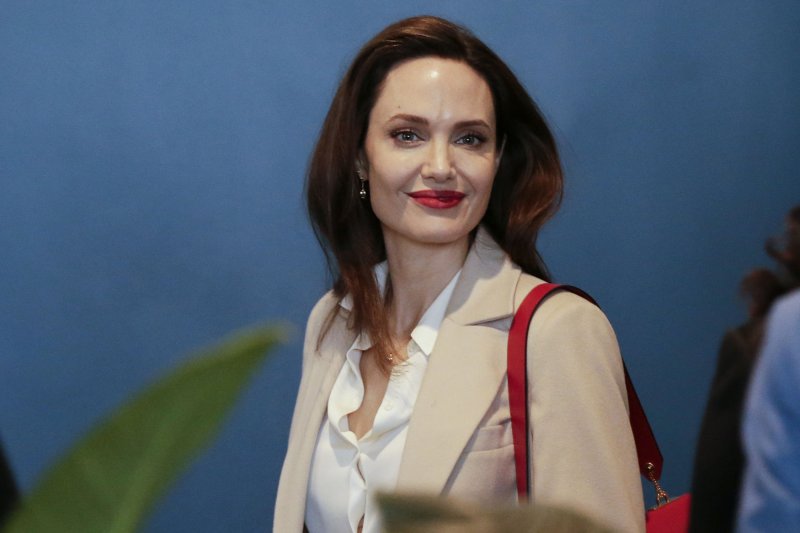
Angelina Jolie Addresses Women's Rights at the UN

UNTV via AP Video

And just in case you missed it, on Friday 29 March 2019, Angelina Jolie warned at the UN that the world “will remain stuck in a cycle of violence and conflicts” as long as nations continue to put almost every other issue ahead of women’s equality, rights and participation. In her speech to the annual meeting of foreign and defense ministers, the Oscar-winning actress focused primarily on women, but she also talked about the importance of multilateralism and the growing refugee crisis. She showed again that she is an excellent speaker [see e.g. https://humanrightsdefenders.blog/2017/02/27/angelina-jolie-gives-2017-sergio-vieira-de-mello-lecture-on-15-march-2017/].

Jolie, who is a special envoy for the UNHCR, added in a keynote address to a ministerial meeting on U.N. peacekeeping that “denying half a population representation in peace negotiations or in government is not the route to long-term stability.” There are many examples around the world of successful and inspiring women, she said, “but women and girls are still the majority of the victims of war,” over half the world’s refugees, and “the vast majority” of victims of rape and sexual violence. If the world accepted the principle that those affected by a problem should be charged with determining a solution, Jolie said, “then the majority of the world’s peace negotiators, foreign ministers and diplomats would be women.” But she quickly said: “We all know the reality.” The reality, Jolie added, is that unequal power relations, “abuse of power, gender bias, violence and lack of justice” have kept many women in a subordinate and vulnerable position internationally.

She pointed to missile strikes on schools and hospitals, families bombed in their homes, chemical weapons dropped on neighborhoods, besieged areas unable to get aid, and mass rapes.

We seem incapable of upholding minimum standards of humanity in many parts of the world,” Jolie said. “That this comes at a time when humankind is richer and more technologically advanced than ever before is all the more painful.”

She recalled that there were fewer than 20 million displaced people when she started working with the UNHCR. “Today there are over 65 million people displaced, and the numbers are rising,” Jolie said. ” Peacekeepers who commit violations must be investigated and prosecuted, she said, and there must be no impunity for crimes committed against women and girls during conflict. Above all, Jolie said, the world needs to understand “that women are themselves protectors: As mothers. As peacekeepers. As human rights defenders.” “As long as we continue to put almost every other issue ahead of women’s rights and participation we will remain stuck in a cycle of violence and conflict. We will have learned nothing. And our institutions will count for less than they should,” Jolie said.

Role of women in peace and security being rolled back (WSP@20)

April 30, 2019
On 22 March 2019 (a global gender, peace and security consultant and a former executive director of the New York–based NGO Working Group on Women, Peace and Security) posted this piece “The WPS agenda is almost 20, but it’s not time to celebrate yet”:

Next year, the United Nations women, peace and security (WSP) agenda turns 20, and with that will come high-level commemorations to mark this important anniversary. However, 2020 can’t be viewed only through a celebratory lens, as fundamental challenges continue to plague the agenda. Women’s civil-society organisations working on peacebuilding, conflict prevention and gender equality remain drastically underfunded, even though investment in gender equality is a proven conflict-prevention strategy. Women human rights defenders are increasingly targeted, while the international community remains largely silent. Of most concern, women also continue to be locked out from formal peace processes……

The recognition [in 2015/16] that all crises and conflicts have gendered elements is a positive development that can be attributed to the collective push in 2015 for context-specific implementation of the WPS agenda. Then came 2017 and the US-led cuts to peacekeeping budgets. The NGO Working Group on Women, Peace and Security was among the organisations to raise the alarm that gender posts were being disproportionally cut and downgraded. That came less than 18 months after the Security Council adopted resolution 2242, its eighth WPS resolution, which among other things called for the systematic deployment of senior gender advisers to provide strategic gender advice throughout all phases of missions and processes.

In 2017, language in the mission mandate for Afghanistan relating to women’s rights and participation and girls’ education was removed under the guise of streamlining the mandate. Fortunately, those provisions were reinserted in the 2018 version of the mandate following significant advocacy from WPS civil-society organisations and key council members. The removal of gender roles and WPS references in mandates showed how fragile gains are and how easily gender provisions will be cut for cost saving or political expediency.

A study commissioned by UN Women found that women’s participation increases the likelihood of a peace agreement lasting 15 years by 35%. That finding is systematically referenced by WPS-friendly governments as evidence of the agenda’s importance. Despite all the positive statements, women continue to be absent from peace negotiations. Peace agreements also remain devoid of gender provisions.

We only have to look at the past four months to get a grim picture of how exclusive talks continue to be. Libyan women were largely missing from high-level peace talks held in Italy in late November 2018. Yemeni women were sidelined from the January 2019 talks in Stockholm, and Afghan women were excluded from the closed US–Taliban talks in Doha. Over the past few years, Afghan women have repeatedly warned of the dire consequences that closed-door talks with the Taliban could have for women’s rights.

Last year, the UN secretary-general reported that 2017 was the first time in two years that most of the signed peace agreements that the UN had helped to broker lacked any gender references. Expressing his concern at this downward trend, he called for a redoubling of efforts to promote gender-inclusive processes and agreements. The question remains: how has this backsliding been permitted, given that so many national governments now align themselves with the WPS agenda, have implemented national action plans and support the proliferation of regional women mediators’ networks. It seems that WPS continues to be sidelined in favour of other political priorities.

The WPS agenda was established as a result of a groundswell of advocacy from women activists around the world demanding equal access to peace and security decision-making. Nineteen years later, the fight to ensure women’s participation has yet to be won, but women peacebuilders haven’t given up. In 2020, the resilience and determination of conflict-affected women should be celebrated.

Essential elements of the WPS agenda are being roadblocked due to a lack of political action. It’s time for states that call themselves friends of the agenda to draw a line in the sand and cease supporting talks that exclude women.

Women human rights defenders and journalists in Iraq receive training in Safety and Digital Security

April 29, 2019

To strengthen the resilience of Iraqi women journalists and women human rights defenders against online and offline gender-based attacks, Internews conducts workshops and other activities that focus on digital and physical security:

Iraq is one of the world’s most dangerous countries for journalists according to Reporters without Borders, ranking 160 out of 180 countries in the World Press Freedom Index. Women journalists and activists in Iraq have a particularly difficult time due to online threats and attacks that adversely affect their ability to express themselves freely and advocate effectively. Women have witnessed an escalation in online abuse over the past few years, not just in numbers, but also in methods and sophistication. The risk of harassment and gender-based attacks online is not limited to the digital space as research has shown that online abuse and stalking often escalate into real world physical violence if left unaddressed.

In an interview with The New Arab, Hala ‘Asif, a 24-year-old journalist working as a correspondent for the channel NRT in Baghdad, noted that, “Foreign journalists often investigate political affairs in Iraq, which sometimes is impossible for us to cover as it would be too dangerous and would prevent us from working safely in our country. I would like to go to other provinces in Iraq and carry out investigations about relevant issues, but as a young woman it would cost too much to take care of my safety.”

To address the issue of women’s safety in Iraq, Internews, with funding from the US State Department’s Bureau of Democracy, Human Rights and Labor (DRL), is using a multi-pronged approach – building local networks, coordinating advocacy, and conducting targeted journalism trainings on gender-sensitive issues. Internews’ program, Women Voices (Aswat Al-Maraa), aims to challenge societal attitudes that stigmatize survivors of sexual and gender-based violence (SGBV) by supporting journalists and women human rights defenders to shed light on sensitive issues through coordinated reporting and advocacy. The program works with female Iraqi journalists and media outlets to create a nationwide coalition of women journalists and human rights defenders to strengthen their resilience against gender-based attacks and build the capacity of journalists to report on sensitive human rights and SGBV.

Within the Women’s Voices project, Internews has conducted so far two training-of-trainers (TOT) workshops that focus on the digital and physical security of the project participants. Through a peer-to-peer program, TOT trainees have trained eighty women from Erbil, Najaf, and Halabja how to protect themselves from threats online and in their everyday lives.

….Another participant, from the Erbil workshop, said, “Females often have to face extreme scrutiny of their presence online, and are threatened with death in some instances for photos posted online without family consent or that are considered inappropriate; these kinds of workshops are incredibly important for every female in this country.”

To support the voices and participation of women in some of the world’s most challenging places, Internews’ MENA team ensures the implementation of digital as well as a physical security trainings in all of its projects across the region. ​

See also: https://humanrightsdefenders.blog/2017/05/09/defenddefenders-launched-new-security-manual-for-human-rights-defenders-in-africa/

https://reliefweb.int/report/iraq/uplifting-voices-women-supporting-their-physical-safety-and-digital-security

The FRAME exhibition: Filmmakers Making Women’s Lives Visible

April 27, 2019

Making women’s lives visible is a political act,” says The Asia Foundation’s Jane Sloane.There are many women human-rights defenders who are akin to modern day Joans of Arc. I wish more of their stories could be the inspiration for feature films.” Sloane was recently awarded an Atlantic Fellowship from the London School of Economics’ Inequalities Institute. She used the opportunity to launch an exhibition called FRAME: How Asia-Pacific Feminist Filmmakers and Artists Are Confronting Inequalities.

A collaboration with photographers and art directors Ariel and Sam Soto-Suver, and Maxine Williamson, artistic advisor and exhibition manager, FRAME showcases eight Asia-Pacific screen artists who are exploring and confronting inequality through their work both in front of and behind the camera: Anida Yoeu Ali, Jan Chapman, Mattie Do, Rubaiyat Hossain, Erica Glynn, Leena Yadav, Van Ha, and Anocha Suwichakornpong.

With FRAME now touring internationally, in this interview Sloane talks about her film series with InAsia

….I’ve also felt some frustration that so many women filmmakers in Asia and the Pacific aren’t being recognized for their work. I believe focusing on feminist filmmakers is a way to address the broader inequalities that women face as filmmakers.

Is this an important moment for women filmmakers in Asia?

Well, I think it’s a tipping point because of movements such as #MeToo, the Sustainable Development Goals, and 50/50 by 2020. With Asia now producing over half of the world’s films, it has real potential as the ground from which a lot of women filmmakers can spring. One of the biggest issues in Asia and the Pacific is violence against women, and film is a powerful way to engage people in that conversation. I lead the work to empower women at The Asia Foundation, and something really interesting from the Foundation’s latest survey in Bangladesh is that boys around the age of nine and 10 are at a key moment in formulating their lifelong attitudes towards girls and women. Film is one of the most accessible mediums for young people in many Asian countries, and it has huge potential to influence the attitudes and behavior of the next generation.

Jan Chapman. Photo: Ariel and Sam Soto-Suver

Tell me about the films that are featured in FRAME. Are they very different from one another?

They are. There’s Mattie Do—her filmmaking captures the phenomenal wealth disparities that exist in Laos. Van Ha’s documentaries in Vietnam have focused on the dislocation of people living in poverty because of the effects of urbanization and corporatization. Erica Glynn, an indigenous Australian filmmaker, is really focused on issues such as the entrenched illiteracy that’s a reality for many Aboriginal and Torres Strait Island peoples. Anida Ali’s work spectacularly challenges assumptions around gender, race, class, and religious identity, including Islamophobia, which is particularly important given the recent terrorist attack in New Zealand. Anocha Suwichakornpong has used film to make visible the roles that women have played as leaders and change-makers in history. And Jan Chapman, producer of The Piano, has played an instrumental role in lifting up strong female figures in filmmaking. I think that is the power of film, that it can challenge the audience at so many different levels.

With civil society under pressure in many places in Asia right now, how have these women been able to navigate the political landscape to maintain some freedom of expression in their films?

I think that the space for women to organize is closing down at the moment. It makes it harder for women to speak—in public spaces and in film. Often, it’s been a combination of tactics—diplomacy, organizing, networking. These filmmakers are so committed to their filmmaking that they have become very skilled at finding money, finding talent, and negotiating where they can film and under what conditions. When I was in the Philippines recently, a group of feminist filmmakers specifically asked whether I could capture the story of their work in Mindanao tracking the role of women organizing and speaking out to end conflict and save lives. So, I feel like FRAME has really struck a chord, and that it’s something whose time has come.

Jane Soane is director of The Asia Foundation’s Women’s Empowerment Program. She can be reached at jane.sloane@asiafoundation.org. The views and opinions expressed here are those of the interviewee, not those of The Asia Foundation.

https://asiafoundation.org/2019/04/24/frame-filmmakers-making-womens-lives-visible/

Two women human rights defenders in the Philippines honored with international awards

April 16, 2019
Joanna Patricia Kintanar Cariño (File photo by Noel Godinez/Northern Dispatch)
Filipina human rights defender, Joanna Patricia Kintanar Cariño, has been named as this year’s recipient of Gwangju Prize for Human Rights. Cariño is the founding secretary general and the current advisory council of Cordillera Peoples Alliance (CPA), regional council member of the Cordillera Human Rights Alliance (CHRA) and chairperson of SELDA-North Luzon, an organization of former political prisoners. For more on the Gwangju Prize for Human Rights see: http://www.trueheroesfilms.org/thedigest/awards/gwangju-prize-for-human-rights

Cariño is among the 600 individuals listed in the Department of Justice’s (DOJ) so-called terror list, which seeks to proscribe the Communist Party of the Philippines and the New People’s Army as terrorist organizations. Cariño, together with other activists who were included in the list, fought for the removal of their names and in January this year, the DOJ has acted by finally removing the names of scores of activists and human rights defenders in the Cordillera region. [see also: https://humanrightsdefenders.blog/2017/12/07/women-human-rights-defenders-day-2017-an-anthology/]

The Foundation recognizes Cariño’s track record as human rights defender from the time of the late dictator Ferdinand Marcos up to the present. “She has been illegally arrested, detained and harassed for being tireless and vigorous in the indigenous people’s fight against militarization of their communities,” the Foundation said in their statement.

 ——————–

Trade union worker France Castro was awarded the Arthur Svensson international Prize for Trade Union Rights [for more on this award, see: http://www.trueheroesfilms.org/thedigest/awards/arthur-svensson-international-prize-for-trade-union-rights]

In its statement, the Svensson Foundation described Castro as a brave leader who defies threats and dangerous condition. “Despite threats and persecution, there are brave people fighting for democracy and human rights. The regime has particularly attacked unionists among teachers and journalists. Some are killed and many imprisoned. Death threats are not uncommon. In recent times, police officers in the Philippines have been running an organized campaign where they are herding and publishing information on unionized teachers,” Svensson Foundation said in a statement referring to the profiling of the public school teachers, particularly the members of the Alliance of Concerned Teachers (ACT) by the Philippine National Police (PNP). Castro was also among those who were detained by the Talaingod police last November 2018, together with former Bayan Muna Rep. Satur Ocampo and Lumad teachers, students and administrator, for defending Lumad’s right to education  The Foundation also took notice of Castro’s role in the fight for public school teachers’ rights and welfare.

https://www.bulatlat.com/2019/04/16/progressive-solon-wins-international-award-for-championing-union-rights/

3 Saudi women human rights defenders released but for how long? And what about the others?

March 28, 2019
Amnesty International urges Saudi authorities to release activists Loujain al-Hathloul, Eman al-Nafjan and Aziza al-Yousef, outside the Saudi Arabian embassy in Paris, March 8, 2019
Protesters called for the female activists’ release at the Saudi embassy in Paris last month – copyright REUTERS

Media just reported that Saudi Arabia has temporarily released three female human rights defenders facing charges related to human rights work and contacting foreigners. Two sources told Reuters that three women had been released, and more would be freed on Sunday.[see: https://humanrightsdefenders.blog/2019/03/13/saudi-arabia-persist-with-trial-for-women-human-rights-defenders/]

Amnesty International and UK-based Saudi rights organisation, ALQST, named the women as Eman al-Nafjan, Aziza al-Yousef and Roqaya al-Mohareb. Saudi state media said the releases were only provisional. Lynn Maalouf from Amnesty welcomed the releases but said it should not be on a temporary basis. “They have been locked up, separated from their loved ones, subjected to torture and threats for simply peacefully calling for women’s rights and expressing their views,” she said.

https://www.bbc.co.uk/news/world-middle-east-47731946

Human Rights Council recognises vital role of environmental human rights defenders

March 23, 2019

The ISHR reports that on 21 March 2019 the UN Human Rights Council has adopted a strong consensus resolution recognising the critical role of environmental human rights defenders in protecting vital ecosystems, addressing climate change, attaining the sustainable development goals (SDGs) and ensuring that no-one is left behind. [See also: https://humanrightsdefenders.blog/2019/01/09/front-line-defenders-says-record-number-of-activists-killed-in-2018/].

The resolution meets many of the civil society demands ISHR expressed in a joint letter along with more than 180 groups (see reference below). By formally acknowledging the important role of environmental human rights defenders, the Council highlights the legitimacy of their work, helps counter stigmatisation and can contribute to expanding their operating space. Though the resolution falls short in some key areas, its adoption by consensus is a positive step towards better protection of environmental human rights defenders. It must now be followed by implementation at the national level by all relevant stakeholders, including States, UN agencies, businesses and development finance institutions….

The resolution was led and presented by Norway, on behalf of 60 States from all regions. In particular, many Latin American States strongly supported the resolution, which is significant given the dangerous situation for defenders in many of those countries. The consensus on the protection of environmental human rights defenders is a welcome sign of unity by the international community in recognising their vital contribution to a biodiverse and healthy environment, to peace and security, and to human rights.

We now look to States, business enterprises and development finance institutions to take rapid and decisive steps to address the global crisis facing environmental human rights defenders’, said Michael Ineichen, Programme Director at the International Service for Human Rights. ‘This means States need to create protection mechanisms which guarantee the security of defenders. States must also ensure that businesses put in place specific policies and processes allowing for the inclusion of human rights defenders and their concerns in due diligence processes’, Ineichen said.   

Key points of the resolution:

  • Expresses alarm at increasing violations against environmental defenders, including killings, gender-based violence, threats, harassment, intimidation, smear campaigns, criminalisation, judicial harassment, forced eviction and displacement. It acknowledges that violations are also committed against defenders’ families, communities, associates and lawyers;
  • Recognises that the protection of human rights defenders can only be achieved through an approach which promotes and celebrates their work. It also calls for root causes of violations to be addressed by strengthening democratic institutions, combating impunity and reducing economic inequalities;
  • Pays particular attention to women human rights defenders, by stressing the intersectional nature of violations and abuses against them and against indigenous peoples, children, persons belonging to minorities, and rural and marginalised communities;
  • Urges States to adopt laws guaranteeing the protection of defenders, put in place holistic protection measures for and in consultation with defenders, and ensure investigation and accountability for threats and attacks against environmental human rights defenders; and
  • Calls on businesses to carry out human rights due diligence and to hold meaningful and inclusive consultations with defenders, potentially affected groups and other relevant stakeholders.

While the resolution was adopted by consensus, the unity came at the price of a lack of specificity in certain areas. For instance, the resolution does not clearly recognise all of the root causes of the insecurity facing environmental human rights defenders, as documented by UN experts, nor comprehensively name the perpetrators or the most dangerous industries. It also fails to clearly spell out the human rights obligations of development finance institutions, and to detail the corresponding necessary steps to consult, respect and protect the work of environmental human rights defenders. 

https://www.ishr.ch/news/hrc40-council-unanimously-recognises-vital-role-environmental-human-rights-defenders

https://www.ishr.ch/news/hrc40-states-should-defend-environmental-human-rights-defenders