In the series Storytellers, Deutsche Welle gives the floor to Tanya Lokshina of HRW who has worked for 15 years in of the most difficult regions: Russia itself and conflict-ridden volatile areas like Chechnya and Dagestan as well as South Ossetia.
At first glance, Tanya Lokshina may not be the kind of person you would expect to travel to some of Russia’s most dangerous areas on a regular basis. But Read the rest of this entry »
In a recent post I discussed problems surrounding the new law on NGOs in Egypt. In case there was any doubt on the need for a new and IMPROVED legal regime, see here what Front Line Defenders reported yesterday, 5 June:
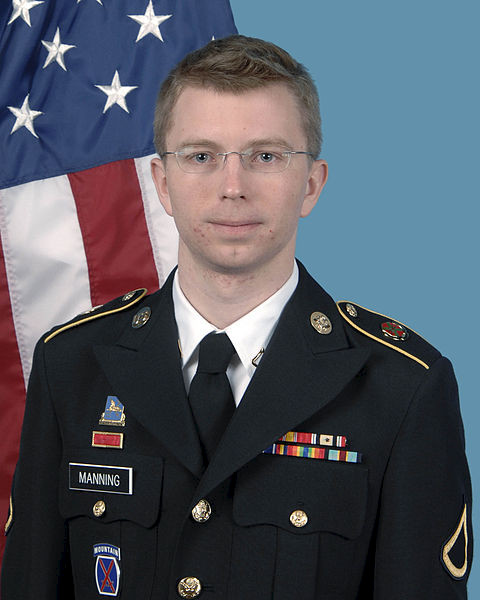
With the trial of Bradley Manning coming up, there is a wide-ranging and not always educating discussion raging on LinkedIn and other fora about why he is not a ‘prisoner of conscience’ for AI. Two of the few more substantive but not very flattering statements – in the absence of a formal reply by AI of course – are reported here, but I should point out that the authors are even more scathing about HRW or other large NGOs: Read the rest of this entry »
The New York based Center for Constitutional Rights called on US President Barack Obama last week to break his three-year silence over Israel’s 2009 killing of 18-year-old US citizen Furkan Doğan during its siege on the Gaza-bound Mavi Marmara ship in international waters.
On 16 May 2013 Russia Today spoke with the Russian Foreign Ministry’s Commissioner for Human Rights Konstantin Dolgov, to find out his view on the situation as the hunger strike in Guantanamohits its’ 100-day landmark. It is good to see Russia express its concern about this and even invoke the views of human rights defenders. Below I give some quotes from the interview. If only Russia would always be so concerned with their views! As to illustrate this the Moscow Times comes today with an article by Jonathan Earle Read the rest of this entry »
The Heads of State from Mexico, Central America and the United States met for the Summit of the Central American Integration System (SICA) in Costa Rica on May 4 and 5. The Fellowship of Reconciliation, collaborating with Just Associates, the Americas Program, the Guatemala Human Rights Commission-USA and the Latin America Working Group, presented a letter to the meeting signed by more than 145 international, regional and local organizations from ten countries in the Americas. The letter addresses inter alia civil society concerns about security issues, human rights violations, violence against men and women human rights defenders. It is time to refocus regional dialogue and resource investment to address the root causes of violence, understanding that for many citizens and communities, drug trafficking is not the principal cause of insecurity. Harmful “development” policies have similarly caused increased conflict and abuses, while forced migration and criminalization of migrants and human rights activists continues to divide families. Most importantly, the region’s challenges must be addressed without violating fundamental rights and human dignity. The groups said that “the lack of effective gun control in the U.S. has led to the massive and nearly unrestricted transfer of arms to criminal networks throughout the region” and called on the presidents to “take executive action in the United States to stop the flow of assault weapons and other firearms across the U.S.-Mexico border.” The letter also provides analysis and recommendations related to: Militarization in the name of addressing the drug war which has caused unprecedented levels of violence while failing to provide citizen security. The imposition of large-scale extractive projects on marginalized communities do not constitute “development. ”Violations of migrants’ rights and the lack of consideration of root cause of migration in policies. Read the full text of the letter in pdf. on John Lindsay-Polands blog
Human rights group Reporters Without Borders has named and shamed five companies it claims allowed their products to be used by countries with bad human rights records and the NGO also named five countries as “enemies of the internet“. It said that five private sector companies; Gamma, Trovicor, Hacking Team, Amesys and Blue Coat are “digital era mercenaries”. The overall list of companies it believed were involved in selling products to authoritarian regimes was “not exhaustive” and will be expanded in the coming months. “They all sell products that are liable to be used by governments to violate human rights and freedom of information,” the group said.”Their products have been or are being used to commit violations of human rights and freedom of information. If these companies decided to sell to authoritarian regimes, they must have known that their products could be used to spy on journalists, dissidents and netizens.” It added that if surveillance products were sold to an authoritarian regime by an intermediary without their knowledge, “their failure to keep track of the exports of their own software means they did not care if their technology was misused and did not care about the vulnerability of those who defend human rights.” Research by Bloomberg, the Wall Street Journal and the University of Toronto’s Citizen Lab has established that surveillance technology used against dissidents and human rights defenders in such countries as Egypt, Bahrain and Libya came from western companies, it claimed.
The Paris-based group labelled Syria, China, Iran, Bahrain and Vietnam as“enemies of the internet” Read the rest of this entry »
On 8 March 2013 – probably timed to coincide with the debate in the UN Human Rights Council – the U.S. Department of State published an overview of it support for Human Rights Defenders. It reads in part:
Protecting and supporting human rights defenders is a key priority of U.S. foreign policy. The Department’s objective is to enable human rights defenders to promote and defend human rights without hindrance or undue restriction and free from fear of retribution against them or their families. The work of these brave individuals and groups is an integral part of a vibrant civil society, and our investment in and support of them is likewise an investment in and support of the rule of law and democracy. Every day, around the world, many in civil society turn to us for assistance in emergency situations and to help them achieve longer-term goals that will make their countries more just and democratic.
After a short description of who are considered Human Rights Defenders and a quote from Hillary Rodham Clinton (as U.S. Secretary of State Krakow, Poland on July 3, 2010): “When NGOs come under threat, we should provide protection where we can, and amplify the voices of activists by meeting with them publicly at home and abroad, and citing their work in what we say and do.” The webpage sets out the way in which the State Department protects and supports human rights defenders, including:
Homosexuality is already illegal in the country and punishable by up to 14 years in prison, but the so-called Kill the Gays bill, sponsored by MP David Bahati and first introduced in 2009, would penalize “aggravated homosexuality”— consensual same-sex acts committed by “repeat offenders,” anyone who is in a position of power, is HIV-positive, or uses intoxicating agents in the process — with capital punishment. The lesser “offense of homosexuality,” also criminalized in the bill, encompasses anyone who engages in a same-sex sexual relationship, enters into a same-sex marriage, or conspires to commit “aggravated homosexuality”. And almost the most shocking, the bill also calls for three-year prison sentences for friends, family members and neighbors who do not turn in “known homosexuals” to the police!



 Hans Thoolen on Human Rights Defenders and their awards