Posts Tagged ‘UK’

Six female human rights defenders Samah Hamid wants you to know

March 5, 2015

Samah Hadid – a human rights activist from Australia – writes on 6 March that the following women human rights defenders are worth knowing more about. I have abridged her text a bit:

Human rights activist Samah Hadid.

Human rights activist Samah Hadid. Photo: Supplied

This year’s International Women’s Day [IWD] is dedicated to women who ‘Make it Happen’, and plenty of women come to mind who embody this theme. As attacks on women human rights activists and defenders continue to rise, I think this IWD is a perfect time to celebrate the women who are champions for the freedom of others.

Salwa Bugaighis- lawyer and political activist from Lybia

Salwa was shot dead in 2014 and her assassination left me and many worldwide devastated. Salwa was a courageous lawyer who from a young age pushed for democracy in Libya. She was actively involved in Libya’s revolution and has been described as the “Libyan human rights activist who took on Gaddafi”. Salwa was also actively involved in Libya’s post-revolution transition, calling for the inclusion of women in this process. At every chance, she pushed for national reconciliation in the troubled country. We can all take inspiration from Salwa’s courageous activism. Her commitment to peace and freedom is a legacy we should all aspire to.[see also: https://thoolen.wordpress.com/2014/06/29/human-rights-lawyer-salwa-bugaighis-killed-in-libya/]


Mu Sochua- politician and women’s rights advocate from Cambodia

Mu Sochua grew up during the reign of the brutal Khmer Rouge in Cambodia. She was forced into exile and returned to rebuild her country.  As the Minister of Women’s Affairs, Mu advocated to end human trafficking and the exploitation of female workers, and drafted crucial laws on ending violence against women. Standing strongly behind her principles, Mu stepped down as minister and decided to become an opposition figure in light of government corruption and repression. As a result, Mu has faced, and continues to be threatened with, imprisonment for criticising the government and Prime Minister.

Gillian Triggs- president of the Australian Human Rights Commission and legal expert

The head of Australia’s Human Rights Commission has recently faced an onslaught of politically driven attacks and abuse from leading politicians, including the Australian Prime Minister, for her human rights advocacy. Triggs, a highly accomplished lawyer and academic, has been unfairly targeted for promoting and protecting human rights, particularly on the issue of asylum seeker children locked up in immigration detention. Yet in the face of political pressure and relentless attacks by the government, she remains determined to fulfil her mission of protecting human rights in Australia.

Rebiya Kadeer- Uyghur activist and leader

Rebiya is many things: businesswoman, mother of eleven children, political leader and, let’s face it, one of China’s fiercest freedom fighters. As a member of the persecuted ethnic Uyghur minority in China’s Xinjiang region, Rebiya has spent her life campaigning for the rights of Uyghurs. Her activism has come at a price; Chinese authorities sentenced her to eight years in prison for her work and she was later forced to live in exile. Despite this, Rebiya – who is known as the ‘Mother of the Uyghur nation’ – has not been silenced by Chinese authorities and continues her activism at the age of 60! [see also: https://thoolen.wordpress.com/2013/09/19/challenges-for-human-rights-education-at-side-event-council-on-25-september/]

Yara Sallam- feminist activist and human rights lawyer from Egypt


At the age of 28, Yara is a leading human rights activist in Egypt. Her commitment to defending human rights, especially women’s rights in Egypt, is inspiring for a fellow young Arab woman like myself . As a feminist, she has championed greater space for women to exercise their civil and political rights and to be free from sexual violence. Yara was recently sentenced to two years in prison for attending a protest in Egypt, where it is now illegal for citizens to effectively exercise their right to protest. Even from prison, Yara continues to champion the causes of vulnerable women who have been detained and imprisoned.[for more on her: https://thoolen.wordpress.com/tag/yara-sallam/]

Nimko Ali- anti-FGM campaigner in the UK

Nimko is survivor of female genital mutilation and a fierce campaigner who leads the anti-FGM campaign in the UK. She has propelled the issue onto the front pages of newspapers and into the halls of parliament, advocating for stronger legislation and policy changes. She is a co-founder and director of Daughters of Eve, a not-for-profit raising awareness about FGM and providing support to survivors of FGM. Nimko has faced verbal and physical attacks for speaking out and yet her advocacy remains steadfast. Nimko considers herself a survivor, not a victim. Her fighting spirit is one we can all learn from. I certainly have.
Six female human rights defenders you should know.

Human Rights NGOs in UK under pressure from politicians and tabloids not to be ‘apologists’ for terrorism

March 3, 2015

It is not often that the Daily Mail, a British tabloid, writes about human rights defenders, but when it does [3 March 2015], it is vicious. Under the headline “No excuses! Theresa May leads politicians queuing up to blast British apologists for ISIS murderers“, it zooms in on Amnesty International and other NGOs that have worked on occasion with a local group called Cage. The latter is an islamic group led by a former Guantanamo Bay prisoner Moazzam Begg. The group’s research director, Asim Qureshi, recently described IS killer Mohammed Emwazi (“Jihadi John“) as a ‘beautiful young man’ and accused the security services of radicalising him.

This then led British politicians, from government and opposition, to outbid each other in the strongest possible terms to demand that everybody distance themselves from that group. E.g., Theresa May, the Home Secretary, said: ‘I condemn anyone who attempts to excuse that barbarism in the way that has been done by Cage.‘ Jacqui Smith, a Labour former Home Secretary, called Cage ‘outrageous apologists

Steve Crawshaw, of the office of the secretary general at Amnesty, admitted yesterday it was ‘highly unlikely’ they would work with Cage again, although together with Liberty, Justice and five other human rights groups, it had joined with Cage in a ‘collective’ to make representations to an inquiry into the treatment of British Army detainees.
Asked if Amnesty had played to a ‘myth’ of victimisation, Mr Crawshaw added: ‘I don’t think we have played to anybody’s myth. I can’t condemn strongly enough anybody, in any context who seeks to find some justification somehow for how they can justify killing civilians…Our colleagues there (in Iraq) are risking lives in order to document the terrible crimes of IS and therefore to hear somehow that we are turning away from those things, I do think is quite extraordinary.’

Amnesty International UK Director Kate Allen said yesterday: ‘Amnesty has no formal or financial relationship with Cage. Amnesty has, along with a number of others human rights organisations, worked on issues relating to Guantanamo and torture.’

Read more: No excuses! Theresa May leads politicians queuing up to blast British apologists for ISIS murderers | Daily Mail Online.

MEA laureate Kasha urges UK Home Office not to deport Ugandan lesbian

December 12, 2014

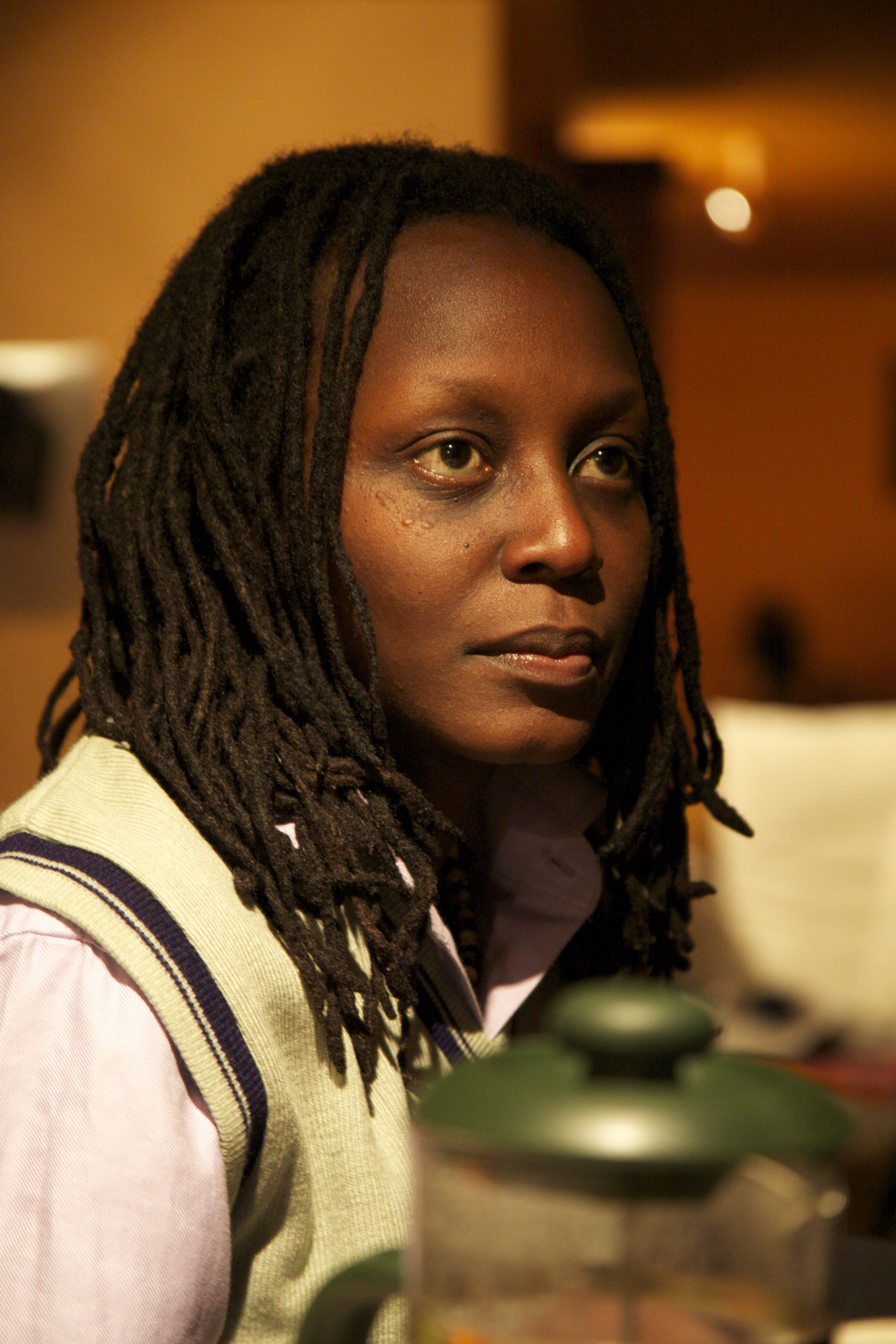
Under the title “FAMED UGANDAN ACTIVIST URGES UK HOME OFFICE NOT TO DEPORT LESBIANMelanie Nathan reports in her post of 11 December 2014 on O-blog-dee-o-blog-da that Kasha Jacqueline Nabagesera, the MEA laureate of 2011 has intervened strongly with the UK not to force Judith Twikiriz back to Uganda. “The UK has been very supportive of the Uganda Gay rights movement and it will be an embarrassment that your office doesn’t live up to its expectations in protecting those that need the protection most from persecution” Kasha writes in her letter. She would be sent back to the country where she already experienced torture and where she now faces likely persecution. The letter contains detailed arguments against deportation.

2011 Laureate Kasha


COPY OF THE LETTER to be found in the original post:


via Famed Ugandan Activist Urges UK Home Office Not to Deport Lesbian | O-blog-dee-o-blog-da.

Human Rights Watch deconstructs case against UK withdrawal from European Human Rights

October 1, 2014
In the past year, some senior members of the UK government have been highly critical of the current human rights framework, claiming falsely that it mainly benefits criminals, terrorists, and undocumented migrants, and suggesting that the UK should replace the Human Rights Act with a UK Bill of Rights. They have also hinted that the UK should withdraw from the European Convention so that it can more easily deport people. “To scrap the Human Rights Act and withdraw from the European Convention would be an extreme and reckless step, weakening rights protections for everyone in the UK” said Izza Leghtas, Western Europe researcher at Human Rights Watch. “It would gravely damage a system that has helped safeguard fundamental freedoms in some 47 European countries over six decades.”

In a Q&A released on 29 September, Human Rights Watch addresses some of the recurring criticisms of the Human Rights Act and the European Convention.

The Q&A responds to the criticism that human rights make it difficult to deport foreigners who have committed serious criminal offences. In fact, the UK already has legal powers to deport foreigners convicted of a serious criminal offence, but human rights law prohibits the deportation of a person in the limited cases where they would face a real risk of death, torture, or ill-treatment in the country of destination or have no prospect of a fair trial. Courts can also block a deportation if there would be a serious adverse impact on the deportee’s family, but in reaching such decisions courts must weigh the potential harm to the individual, the individual’s family (who may be British citizens), and the impact on society if he or she were allowed to remain.

The Q&A also addresses the criticism that the Human Rights Act is undemocratic. If a domestic court finds a UK law to be inconsistent with the Human Rights Act, it cannot strike down that law. It can only note that incompatibility and it is then for parliament to decide whether and how to change the law, in comparison to many other democratic countries where courts can strike down laws. As a last resort, people who invoke those rights unsuccessfully before UK judges can still seek to take their case to the court in Strasbourg, an arrangement approved by British governments for many decades.

The European Convention and the rulings of the European Court of Human Rights are binding on governments across the 47 countries that are part of the Council of Europe. The European Court has played a key role in protecting the rights of 800 million people across the Council of Europe region. Its rulings have been instrumental ending torture in police custody, ensuring victims of abuses by state authorities have access to justice and allowing people to express themselves freely. In many countries the court offers the only meaningful chance for justice for those whose rights are abused.

Reaffirming human rights at home is essential for any UK government that seeks to promote respect for human rights around the world. If the UK is to have any credibility on human rights in its foreign policy, it should strengthen, not weaken, its own human rights protections, Human Rights Watch said.

Attacks in the UK on the European Court of Human Rights undermine those efforts and provide succor to abusive governments in the Council of Europe that would prefer to ignore the European Court. The only European country currently not a member of the Council of Europe is Belarus. The only country to have withdrawn from the ECHR was Greece in 1969, while it was under a military dictatorship.

The UK’s withdrawal from the European Convention would be welcomed by abusive governments everywhere,” Leghtas said. “But it would gravely weaken an institution that has done so much to safeguard and advance basic freedoms across Europe and it would destroy the credibility of the UK when discussing human rights internationally.”

UK: Parties Should Commit to Rights | Human Rights Watch.

British human rights investigators held in Qatar freed

September 9, 2014

The Guardian reported today that Krishna Upadhyaya and Gundev Ghimire, the two British human rights investigators detained in Qatar for almost nine days, have been released from custody (but have not yet left the country).

via UK human rights researchers held in Qatar freed | World news | theguardian.com.

https://thoolen.wordpress.com/2014/09/08/human-rights-investigators-in-qatar-are-now-confirmed-as-detained/

Human rights investigators in Qatar are now confirmed as detained

September 8, 2014

On 6 September 2014, the Foreign Ministry of Qatar finally confirmed the arrest and detention of Krishna Upadhyaya and Ghimire Gundev, who were at first feared disappeared: https://thoolen.wordpress.com/2014/09/04/human-rights-investigators-in-qatar-being-followed-by-the-police-here-looks-like-they-will-give-me-troubles-now/

[Krishna Upadhyaya and Ghimire Gundev are British citizens working to investigate the conditions of migrant labourers who are constructing facilities for the 2022 World Cup in Qatar.]

Human rights investigators in Qatar: “being followed by the police here. Looks like they will give me troubles now”

September 4, 2014
Two British human rights workers investigating the plight of migrant labourers constructing facilities for Qatar’s 2022 World Cup have disappeared and are feared to be held incommunicado by the Gulf state’s security forces reports the Independent. Krishna Upadhyaya and Ghimire Gundev vanished on Sunday 31 August after sending texts to colleagues saying they were being followed by plain clothes police officers and feared they arrest as they tried to leave Qatar on flights that day. The two men, who are of Nepalese extraction and both carry British passports, had been in the Qatari capital Doha to record interviews with Nepali labourers and investigate conditions in accommodation camps. They were working in cooperation with Nepalese diplomats in the city.

The Global Network for Rights and Development (GNRD), employing the men, said it believed its employees were being held by the Qatari police and were at risk of maltreatment or torture: “We are deeply concerned that our employees, both British citizens, may have been subjected to enforced disappearance and are currently at risk of torture.”

[Qatar has been strongly criticised for the working conditions of its 1.4m migrant labourers as it races to spend £123bn on new infrastructure ahead of the 2022 World Cup. More than 400 Nepalese, the vast majority of them in Qatar to work on construction projects, died in the Gulf state between January 2012 and this May – a death rate of one worker per day. Qatar has insisted that none of the deaths occurred on World Cup sites. Qatar has been criticised for routinely holding detainees incommunicado for weeks or months at a time. Amnesty International has described the tactic as “standard practice” and said it can be followed by lengthy further detention without charge or trial.]


British human rights investigators disappear in Qatar, after being followed by plain clothes police – Middle East – World – The Independent.

Early human rights defender Helen Bamber dies aged 89

August 22, 2014
Helen Bamber dies

(Photograph: Helen Bamber Foundation/PA)

Many newspapers, including the Guardian of 21 August, carry the news of the demise of human rights defender and early member of Amnesty International, Helen Bamber. She died aged 89. Bamber was a psychotherapist who began helping victims of torture and atrocities aged 20 when she started working with survivors of the Holocaust.

She used her vast experience to work with actor Colin Firth on his film The Railway Man, an account of a British officer captured by the Japanese during the second world war and made to work on the Thai-Burma railway.  Firth said his encounter with Bamber was life-changing and the compassion she showed had touched him for life. He said that even in old age and ill-health Bamber continued to be determined to do all she could to help those affected by slavery, torture and human rights abuses: “Her courage, wisdom and pragmatism were formidable – and what she did worked.”

Actress Emma Thompson, who is president of the Helen Bamber Foundation, said: “Not only is she a great listener and an incredible interpreter, but she never lets her imagination run dry…She resists institutionalism. She knows which borders should be crossed and melds them together.”

via Human rights campaigner Helen Bamber dies aged 89 | World news | The Guardian.

for contributions: https://www.justgiving.com/HelenBamberMemorialFund/

Nabeel Rajab on the situation in Bahrain and lack of western pressure

August 18, 2014

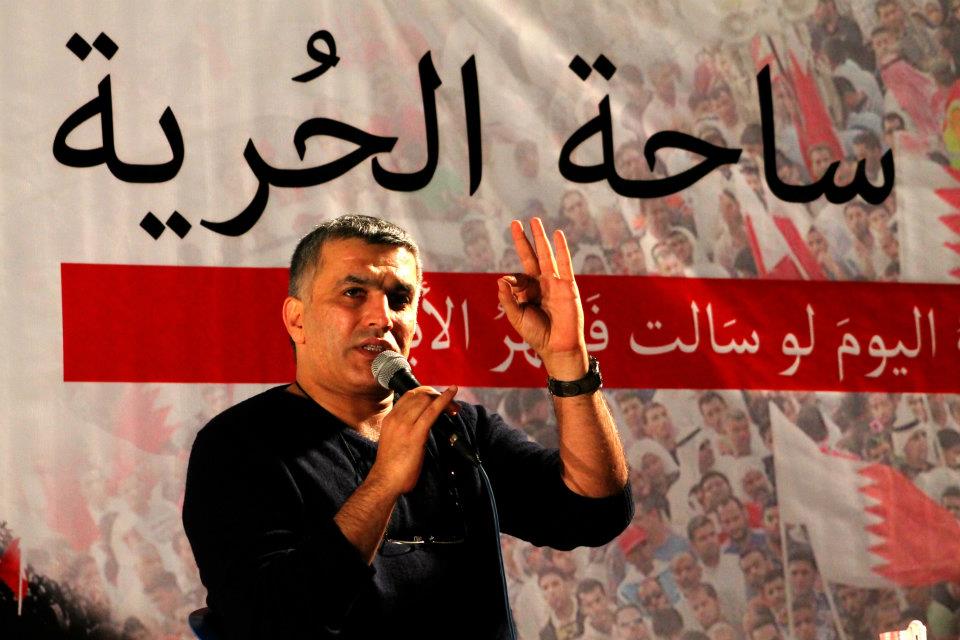
On 17 August 2014 Nabeel Rajab, who heads the Bahrain Center for Human Rights (the MEA Final Nominee of 2012), posted a strong piece in the Huffington Post which contains an impressive stand on why he takes the risks he does as well as a scathing attack on the western governments, especially those of the UK, for putting (arms) business before human rights consideration.

Nabeel Rajab, Final Nominee MEA 2012

Nabeel Rajab, Final Nominee MEA 2012

Read the rest of this entry »

Ben Whitaker died: one of the early human rights defenders at the international scene

July 16, 2014

Ben (Benjamin) Whitaker died on 8 June 2014. The memory of the human rights world being notoriously short, there will be many who do not recognize the name of one of the early human rights defenders in the international arena. A UK citizen, in 1965 he spoke out forcefully against detention camps in Rhodesia (now Zimbabwe), became one of the most activist members of the UN SubCommission in the mid seventies and lead the struggle to have the Armenian Genocide recognised. His 1985 final report on the question of genocide – which only had a brief but controversial mention of the Armenia – was for that reason blocked at the Commission level by Turkey and could not be distributed as such. I was at that time Director of the Netherlands Institute for Human Rights (SIM) and we agreed to publish a few thousand copies of the complete text under his own name.

As his link with the Armenian community was and remained strong, it should not surprise that one of the obituaries was published in DIARIO ARMENIA in Argentina. It was written by Leandro Despouy, President of the Argentine Audit Office and Former president of the SubCommission as well as the Human Rights Commission of the United Nations. Below is the English translation of this piece:

http://www.diarioarmenia.gov.ar:

Benjamin Whitaker, the Argentine dictatorship and the acknowledgement of the Armenian Genocide by the United Nations

Ben Whitaker died on June 8th. Predictably, an Armenian friend gave me the news. Whitaker’s name will forever be consistently associated to the recognition of the Armenian Genocide by the United Nations. It happened after extensive and difficult sessions, sabotaged by Turkey during fifteen years, which finally materialized in 1985 with the approval of the document that carries his name, the Whitaker Report.

He was a man of remarkable virtues, but two of these: coherence and sense of humour, were present in each and every one of the multiple activities he undertook during his life. Born into an aristocratic family, he made his first political incursions in the north London borough of Hampstead: he won the Hampstead seat for the Labour Party, a seat that had traditionally gone to the Tories for the previous 81 years. He had already graduated from Oxford to the bar, and spoken out vehemently against the local police regime in his book The Police.

Ben remained faithful to his neighbourhood football club throughout his life. An “argumentative idealist” –as he liked to describe himself-, who intensified the campaign for the enforcement of Human Rights worldwide, he battled against discrimination, the death penalty, the criminalization of homosexuality, against the outlawing of adultery and abortion, in favour of environmental care and all the issues that were surfacing with enormous force during the sixties and the seventies of the past century, an era which produced an unprecedented cultural change.

His condemnation, in 1965, of the clandestine detention camps of Rhodesia (Zimbabwe) is well-known. He served as consultant for Labour governments and became executive director of the Calouste Gulbenkian Foundation, created by an Armenian in Portugal, which is dedicated to the advancement of the arts, sciences and education. There is no doubt, however, that his better known activity took place in the United Nations, where he was appointed Special Rapporteur of the United Nations SubCommission on Prevention of Discrimination and Protection of Minorities -a competent area of independent expertise-, by David Owen, the British Minister of Foreign Affairs of the seventies.

During his time at the SubCommission, after multiple attempts at public accusation, Whitaker, the French ambassador Nicole Questiaux and Theo van Boven managed to unfetter the restraints that the diplomacy of the Argentine dictatorship (Gabriel Martínez, Mario Amadeo) had used to muzzle the accusations – presented  before the United Nations since 1976 -, of murders and disappearances in our country. In 1979, Whitaker delivered a clear message to the effect that countries who exercised terrorism within their territories should not try to use the same methods in the United Nations.

In 1983, the SubCommission and the Human Rights Commission (nowadays Council) entrusted Benjamin Whitaker with a study and revision of the Convention on the Prevention and Punishment of the Crime of Genocide, and its relation to the Convention of the Non-Applicability of Statutory Limitations to War Crimes and Crimes against Humanity, in order to insure that Governments would comply with these directives. Whitaker was chosen for this research because of his intellectual stature and his proven integrity; nevertheless, one of the female experts advised him to add a bullet-proof vest to his wardrobe.

In point of fact, two preliminary studies (1973 and 1975) developed by the Rwandan expert Ruhashiankiko, included a paragraph , number 30, which would become renowned because it labeled the Armenian Massacres of 1915 and 1923 as “the first genocide of the twentieth century”. This paragraph raised a storm of great proportions, conducted by the Turkish diplomacy, and had to be suppressed from the final report in 1979. The Rwandan expert vanished from the international arena.

We met at the SubCommission. We were 26 experts. Alfonsin’s administration was just getting started, as was the revolution of the cause of Human Rights. When I was appointed General Rapporteur of the SubCommission in 1984, the project of Whitaker’s excellent Report was being debated. It contained the definition of the Armenian Genocide. I agreed entirely with its contents, but found it difficult, from a political standpoint, to show signs of support and proximity to an Englishman, when the wounds of the Malvinas War were still so fresh. Concurrently, the investigation of the Argentine dictatorship’s crimes and the legal summons issued to the Juntas drew us closer, so we established an undercurrent of mutual sympathy in an almost clandestine fashion, sometimes mediated by the French judge Louis Joinet who was also an expert in the SubCommission. I told him I supported him. By 1985 we already enjoyed a fluid relationship and though the context was not simple, we were able to overcome that contingency; we shared a profound dialogue, and we both had knowledge of the world of the United Nations and Human Rights.

The situation was also very complicated for Whitaker; Margaret Thatcher ruled in Great Britain, her government did not endorse his condition of Rapporteur, and he had to receive the backing of a British NGO in order to finish his mandate at the United Nations. A committed socialist, Whitaker did not support the policies of Thatcher’s administration, and although these circumstances weakened him personally, the forcefulness of his Report made him stronger. That situation was taken advantage of by the Turkish diplomacy, who tried to erase from his Report the paragraph about the Armenian Genocide. During the debate of this issue, I brought up the changes which had taken place in Argentina, our solidarity with the victims of genocides and openly declared that the controversial paragraph must be kept.

In 1985, Whitaker reported to the SubCommission the theft of documents which he was never to recover. In that same session, as General Rapporteur, I pointed out that the expression “genocide” had been replaced by “Armenian question”. In those days, Whitaker received the visit of two Turkish diplomats who tried to dissuade him from continuing with his investigation. But Whitaker was a man of principles, not easily swayed by political pressure. The final approval in 1985 of the historical Report, which has become part of the patrimony of the United Nations, is the culmination of an unprecedented diplomatic battle that produced an important judicial and political impact throughout the world.

Whitaker ended his Report stating that it was necessary to close that chapter of History in an honourable way, and that if the experts did not have the courage to tell the truth, then participating in the SubCommission’s work would be useless, since it was the duty of the SubCommission to protect the victims from the governments and not the other way round.  For ethical reasons and in an act of chivalry, Whitaker abstained from voting for his own Report. When we met again in 1986, during his visit to Buenos Aires, he declared that the approval of the Report had been a good example of Anglo Argentine cooperation. Unknown to the media, he met with Dante Caputo and president Raúl Alfonsín.

He dedicated his last years to painting, and he campaigned to have a statue of George Orwell installed in front of the BBC, where it stands today.