Posts Tagged ‘Tunisia’

Human Rights Watch and Amnesty International condemn Tunisia’s ‘assault on the rule of law’

November 15, 2025

On 14 November 2025, Al Jazeera (Mariamne Everett) and other media reported that international NGOs, such as Human Rights Watch and Amnesty International, have decried a sharp decline in civil liberties and a pervading “injustice” in Tunisia since President Kais Saied came to power in 2019, as authorities escalate their crackdown on the opposition, activists and foreign nongovernmental organisations.

Tunisian authorities have increasingly escalated their crackdown on human rights defenders and independent non-governmental organizations (NGOs) through arbitrary arrests, detention, asset freezes, bank restrictions and court-ordered suspensions, all under the pretext of fighting ‘suspicious’ foreign funding and shielding ‘national interests’,” Amnesty International said in a statement on Friday.

Tunisia’s crackdown on civil society has reached an unprecedented level, according to Amnesty, as six NGO workers and human rights defenders from the Tunisian Council for Refugees are “being criminally prosecuted on charges solely related to their legitimate work supporting refugees and asylum seekers”. The trial’s opening session, initially scheduled for October 16, has been adjourned to November 24.

Within the past four months, Tunisia has temporarily suspended the activities of at least 14 Tunisian and international NGOs, said Amnesty, including the Tunisian Association of Democratic Women and the World Organisation against Torture.

Human Rights Watch said in a statement on Friday that Tunis’s Court of Appeal will hear on November 17 the appeal of more than 30 people “unjustly sentenced to heavy prison terms in a politically motivated ‘Conspiracy Case’” mass trial in April.

Four of those detained are on hunger strike, including one who, according to his lawyers, was subjected to physical violence in prison on November 11.

The defendants were charged with plotting to destabilise the country under various articles of Tunisia’s Penal Code and the 2015 Counterterrorism Law. Human Rights Watch, which reviewed the judicial documents, said the charges are unfounded and lack credible evidence. The NGO has called on the court to immediately overturn the convictions and ensure the release of all those detained.

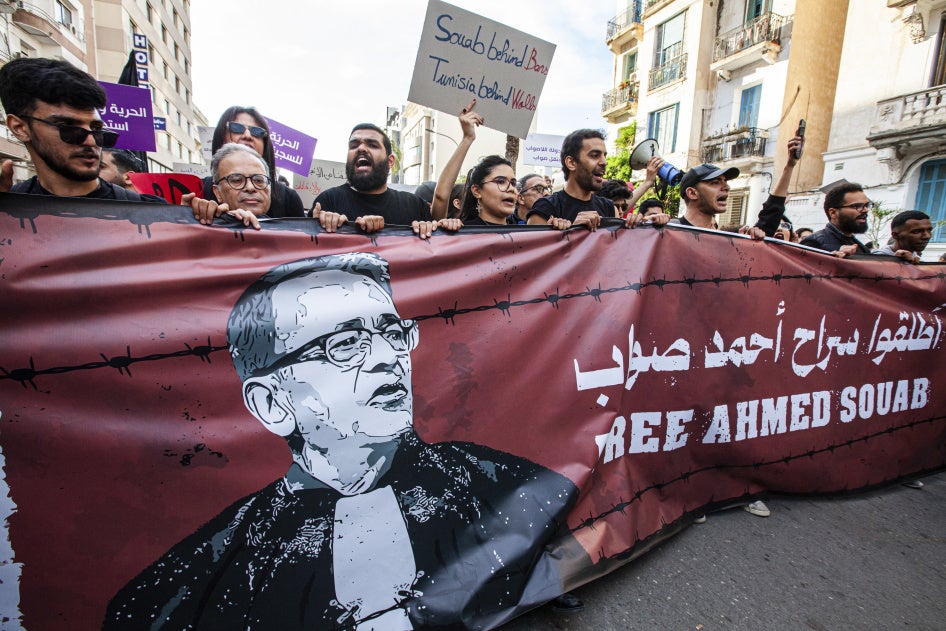
The 37 people detained include opponents of Saied, lawyers, activists and researchers. Their prison terms range from four to 66 years for “conspiracy against state security” and terrorism offences. Jawhar Ben Mbarek – cofounder of Tunisia’s main opposition alliance, the National Salvation Front – began a hunger strike on October 29 to protest his arbitrary detention. Ben Mbarek was sentenced to 18 years behind bars on charges of “conspiracy against state security” and “belonging to a terrorist group”.

Note that on 10 November the Martin Ennals Award announced that Saadia Mosbah, a leading Tunisian human rights activist and co-founder of Mnemty (‘My Dream’), was selected as a runner up. [see https://humanrightsdefenders.blog/2025/11/10/breaking-news-women-human-rights-defenders-recognised-with-the-2025-martin-ennals-award/]

https://www.aljazeera.com/amp/news/2025/11/14/rights-groups-decry-tunisias-injustice-crackdown-on-activists

https://www.ft.com/content/15a04a32-f975-4f5e-9748-874f8e26cbe5

https://www.rfi.fr/en/africa/20251130-prominent-tunisian-activist-chaima-issa-arrested-as-hundreds-protest-clampdown-on-dissent

https://thearabweekly.com/tunisia-calls-eu-parliament-rights-resolution-blatant-interference-releases-high-profile-lawyer

Breaking news: Women human rights defenders recognised with the 2025 Martin Ennals Award

November 10, 2025

For this 31st edition, ten of the world’s leading human rights NGOs composing the Jury of the Martin Ennals Award – Amnesty International, Human Rights Watch, FIDH, HURIDOCS, Bread for the World, Human Rights First, World Organisation Against Torture, International Commission of Jurists (ICJ), International Service for Human Rights (ISHR), and Front Line Defenders – have selected, after much deliberation, three human rights defenders for their exceptional contribution to the human rights movement. [se also https://www.trueheroesfilms.org/thedigest/awards/043F9D13-640A-412C-90E8-99952CA56DCE]

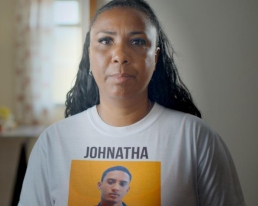
The 2025 Laureate is Ana Paula Gomes de Oliveira (Brazil), who co-founded the collective ‘Mothers of Manguinhos’ to fight for justice after the killing of her son, a 19-year-old Black man, who was shot in the back by a military police officer in the favelas of Rio on his way back from his girlfriend’s house in May 2014. The collective serves as a front for resistance and advocacy, but also as a network of emotional support and solidarity between women who share stories of similar loss. These women, in their majority Black, many of whom have lost children and other family members to violent actions by law enforcement officials, came together to denounce violence in the favelas, especially police violence that disproportionately affects poor Black youth. ‘When we are born Black and raised in the favelas, we are targeted by a racist system that is also reinforced by public security policies based on death and imprisonment,’ says Ana Paula. According to the UN, killings by the police have more than doubled in the last ten years in Brazil, with more than 6000 killings every year over the past six years. Black people, overwhelmingly men, represent a shocking rate of 82,7% of the killings by police officers in 2023. ‘The racist violence in Brazilian streets merits the full attention of the federal government and the international community,’ says Hans Thoolen, Chair of the Martin Ennals Award Jury. The collective ‘Mothers of Manguinhos’ fights for truth, memory, justice, freedom and the human rights of Black, poor, and peripheral lives. The collective is a member of the UN Antiracism Coalition (UNARC) and during the 57th session of the Human Rights Council, Ana Paula delivered a powerful message at a side event organised by UNARC on the perspectives of the Afro-Brazilian community directly affected by police violence in Brazil.

The Jury also recognised two finalists:  Aloikin Praise Opoloje (Uganda) and Saadia Mosbah (Tunisia).

Aloikin Praise Opoloje is a 26-year-old Ugandan student who has become a leading voice against corruption, social injustice, and human rights abuses in Uganda. Inspired by the dire living and educational conditions in her home district of Palisa, she has mobilised thousands through social media and organised major peaceful protests, including the March to Parliament and the Nude Protest against government mismanagement, which prompted official accountability for the Kiteezi landfill tragedy. Despite repeated arrests in 2024 and ongoing legal charges, Aloikin went on to create the WeThePeople movement, which informs young Ugandans about their civic rights and non-violent resistance.

Saadia Mosbah is a leading Tunisian human rights activist and co-founder of Mnemty (‘My Dream’), the main organisation dedicated to fighting racism and racial discrimination in Tunisia. She has spearheaded initiatives through education, awareness raising and legislative advocacy, which have led to the 2016 national debate on systemic racism, the adoption of the Anti-Racism Law No. 50 (2018), and the declaration of 23 January as the National Day for the Abolition of Slavery for Tunisia (since 2019). Her work has also focused on combatting prejudice against migrant people and promoting migrant and refugee rights. Despite her legitimate activism, Saadia Mosbah and Mnemty have faced intense smear  campaigns. She was arrested on 6 May 2024 on false accusations of financial crimes and remains in pre-trial detention without a set trial date.

The UN High Commissioner for human rights will award the selected laureate during the ceremony to take place on 26 November 2025 in Geneva, Switzerland. [https://www.martinennalsaward.org/2025-edition/]

https://www.frontlinedefenders.org/en/statement-report/martin-ennals-award-2025-laureate-and-finalists-announced

https://www.amnestyusa.org/press-releases/brazil-police-massacre-in-rio-de-janeiro-is-evidence-yet-again-of-systemic-and-racist-violence/

https://www.fidh.org/en/region/americas/brazil/brazil-police-repression-and-massacre-in-rio-de-janeiro

UN experts call for justice for Tunisian human rights defender Sihem Bensedrine

August 12, 2024

UN experts called on the Tunisian authorities to respect the right to judicial guarantees and judicial protection of Sihem Bensedrine, who was arrested on 1 August 2024.

“In a context marked by the suppression of numerous dissenting voices, the arrest of Ms Bensedrine raises serious concerns about the respect of the right to freedom of opinion and expression in Tunisia and has a chilling effect on journalists, human rights defenders and civil society in general,” the experts said.

https://www.trueheroesfilms.org/thedigest/laureates/5A2E5622-80B0-425E-A2AE-2703983126B4

Bensedrine is the former President of the Truth and Dignity Commission (TVD) which documented the crimes committed under previous regimes, and a journalist who has long denounced human rights violations in the country.

Since 2021, she has been involved in a judicial investigation into the alleged falsification of a chapter in the TVD´s final report regarding corruption in the banking system. The independent human rights experts have already held discussions with the Tunisian government concerning this investigation.

“This arrest could amount to judicial harassment of Ms Bensedrine for work she has undertaken as President of the Truth and Dignity Commission,” the experts said. “It appears to be aimed at discrediting information contained in the Commission’s report, which could give rise to legal proceedings against alleged perpetrators of corruption under the previous regimes.”

The Special Rapporteurs urged Tunisia to uphold its obligation to protect members of commissions of enquiry into gross human rights violations from defamation and civil or criminal proceedings brought against them because of their work, or the content of their reports.

“We call for strict respect for Ms Bensedrine’s right to judicial guarantees, including the right to a fair trial by due process, impartiality and independence, and for an end to abusive proceedings and reprisals against her.”

The experts: Bernard Duhaime, Special Rapporteur on the promotion of truth, justice, reparation and guarantees of non-recurrence; Irene Khan, Special Rapporteur on freedom of opinion and expression; Mary Lawlor, Special Rapporteur on the situation of human rights defenders.

https://www.miragenews.com/un-experts-demand-justice-for-tunisian-rights-1292532/

https://www.ohchr.org/en/press-releases/2024/08/un-experts-call-justice-tunisian-human-rights-defender

https://www.hrw.org/news/2024/08/12/tunisia-hollows-out-its-media-landscape-ahead-elections

but then in February2025 comes the good news over releases:https://www.france24.com/en/live-news/20250219-tunisia-court-orders-release-of-top-rights-activist

Meet Cyrine Hammemi, a human rights defender from Tunisia

December 7, 2023

Cyrine Hammemi is a human rights defender and a project manager at the Association for the Promotion of the Right to Difference (ADD) in Tunisia. Her work focuses on the human rights of persons belonging to minority groups, through alerts on discriminatory situations and the violence they suffered.

Speaking to ISHR, Cyrine discussed her journey into activism and her vision for an inclusive future. She shared the personal triggers that led her to become an activist and emphasised her hopes for a world where every individual can fully enjoy their rights without discrimination based on identity, gender, religion, or sexual orientation.

https://ishr.ch/defender-stories/human-rights-defenders-story-cyrine-hammemi-from-tunisia/

Tunisia no longer poster child of Arab spring

June 29, 2023

The Human Rights Council should urgently address the deterioration of the human rights situation in Tunisia, four human rights organizations said on 27 June 2023 as the 53rd Council’s session is underway.

In a letter sent to UN Member States’ Representatives on 5 June 2023, the four undersigned organizations warned against the rapidly worsening situation in Tunisia, and urged States to seize the opportunity of the ongoing Human Rights Council’s session to address it. The organizations called on the Council and Member States to press the Tunisian authorities to comply with their obligations under international human rights law particularly those guaranteeing the rights to fair trial, freedom of expression, freedom of peaceful assembly and association, and non-discrimination.

The Human Rights Council should urge Tunisia to end the ongoing crackdown on peaceful dissent and freedom of expression, and drop charges against, and release, all individuals being detained and prosecuted solely on the basis of their peaceful political activities and the exercise of their human rights. The Council should also call on Tunisia to conduct prompt, thorough, independent, impartial and transparent and investigation into a wave of anti-Black violence – including assaults and summary evictions – against Black African foreign nationals, including migrants, asylum seekers and refugees, and bring to justice anyone reasonably suspected to be responsible, and provide victims with access to justice and effective remedies.

Over the past two years, Tunisia has witnessed a significant rollback on human rights. Judicial independence guarantees have been dismantled and individual judges and prosecutors have been subjected to arbitrary dismissal, politicized criminal prosecutions and increased interference by the executive. Lawyers are being prosecuted for the discharge of their professional duties and exercise of their right to freedom of expression.

The Tunisian authorities’ interference in the judiciary and attacks on lawyers have greatly undermined the right to fair trial and public trust in the integrity of the justice system. The authorities must ensure that the courts are not weaponized to crush dissent and free expression,’ said International Commission of Jurists’ MENA director Said Benarbia. 

Under the guise of ‘fighting offences related to information and communication systems’,  punishable by up to a 10 years’ imprisonment and a hefty fine according to Decree Law 54, at least 13 individuals, including journalists, political opponents, lawyers, human rights defenders and activists, have been subject to police or judicial investigations and are facing possible prosecutions.

‘With Tunisia facing political uncertainty and economic crisis, it’s more important than ever that Tunisians be free to debate their country’s future without fear of reprisal. The authorities should strive to allow the effective enjoyment of the right to freedom of expression of everyone; instead, they are attacking it,’ said Rawya Rageh, Amnesty International’s acting deputy director for the Middle East and North Africa.

Last week, the UN High Commissioner for Human Rights called on the Tunisian authorities to stop restricting media freedoms and criminalizing independent journalism. In a statement published on 23 June, Volker Türk expressed deep concern at the increasing restrictions on the right to freedom of expression and press freedom in Tunisia, noting that vague legislation is being used to criminalize independent journalism and stifle criticism of the authorities. ‘It is troubling to see Tunisia, a country that once held so much hope, regressing and losing the human rights gains of the last decade,’ said the High Commissioner.

Since February 2023, a wave of arrests targeted political opponents and perceived critics of Tunisia’s President, Kais Saied. In the absence of credible evidence of any offences, judges are investigating at least 48 people, such as dissidents, opposition figures, and lawyers, for allegedly conspiring against the State or threatening State security, among other charges. At least 17 of them are being investigated under Tunisia’s 2015 counter-terrorism law.

‘By jailing political leaders and banning opposition meetings, the authorities are dangerously trampling on the fundamental rights that underpin a vibrant democracy. The democratic backsliding and the human rights violations, which are unprecedented since the 2011 revolution, require urgent attention from the Human Rights Council and Member States,’ said Salsabil Chellali, Tunisia director at Human Rights Watch.

Signatories:

  1. International Commission of Jurists (ICJ)
  2. International Service for Human Rights (ISHR)
  3. Amnesty International
  4. Human Rights Watch (HRW)

Download as PDF

Tunisia: The rule of law on the brink

March 16, 2023

On 7 March 2023 EuroMed Rights issued the following statement regarding the situation in Tunisia:

For several weeks now, Kaïs Saïed’s presidentialist regime has been conducting a relentless campaign of arrests, intimidation, denigration and targeted attacks against political opponents, journalists, trade unionists and civil society representatives, under the pretext of an alleged conspiracy to undermine state security, accusations of corruption or contacts with foreign diplomats. International trade union activists who have come to participate in activities of the Tunisian General Labour Union (UGTT), such as Esther Lynch, the General Secretary of the European Trade Union Confederation, have been expelled and any other trade union representatives are now persona non grata in Tunisia.

“These arrests based on the crime of opinion and the widespread repression of freedom of expression in all its forms constitute a serious breach of the rule of law. They raise fears of a return to the practices of the authoritarian regime that preceded the January 2011 revolution. The national dialogue that the UGTT has initiated in partnership with the Tunisian League for Human Rights (LTDH), the National Bar Association and the Tunisian Forum for Economic and Social Rights (FTDES), towards a roadmap to overcome the political, economic and social crisis, must be supported,” said Wadih Al-Asmar, President of EuroMed Rights.

A justice system at the orders

Accused of being “traitors” and “terrorists”, the opponents of the regime put in place, month after month, by President Kaïs Saïed since his power grab of 25 July 2021, are challenging the concentration of powers, in particular the supervision of the Ministry of Justice and the dismissal of many judges and prosecutors. Controlling the judicial power is a weapon that the Tunisian authorities no longer hesitate to use and abuse to silence critics.

“The rule of law in Tunisia is on the brink of collapse,” added Wadih Al-Asmar. “The presumption of innocence is being flouted. Moreover, to declare that anyone who exonerates those prosecuted would be considered an accomplice is a denial of the role and independence of judges and prosecutors. The ban on demonstrations and the desire to isolate Tunisian civil society from its international contacts are other symptoms of the regime’s autocratic drift.”

Attacks on migrants

On 21 February, President Kaïs Saïed continued his diatribe by calling for “urgent measures” against the “hordes” of sub-Saharan migrants, endorsing the conspiratorial theory of the “Great Replacement,” which asserts the existence of a plot to change the demographic composition of the country. As a result, racist and violent attacks, both official and unofficial, against migrants from sub-Saharan Africa continue, leading to arrests and deportations.

“Migrants have been expelled from their homes and fired from their jobs; children have been removed from their schools; women of sub-Saharan origin have been reportedly raped. Fear is growing among migrants who have been living in Tunisia, some for years, causing many families to leave the country to avoid facing violence,” said Rasmus Alenius Boserup, Executive Director of EuroMed Rights. “The European Union and its Member States, in their bilateral relations with Tunisia, must make clear that arbitrary repression and incitement to racial hatred are unacceptable, and should express solidarity with all those arrested, defamed and subjected to violence.”

And see also: https://www.hrw.org/news/2023/03/17/tunisia-talks-eu-should-privilege-human-rights-over-politics

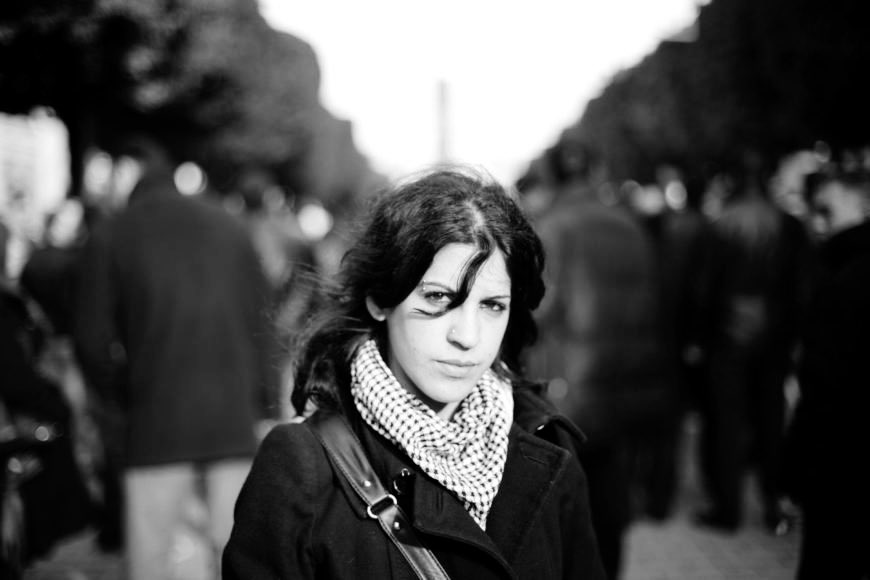
In Memory of Tunisian human rights defender Lina Ben Mhenni

January 29, 2020

On 28 January 2020 The Human Rights Foundation in New York expressed its sadness at the passing of Tunisian activist, journalist, and educator Lina Ben Mhenni, after a long battle with a chronic illness (1983-2020).

Lina was a force who fought tenaciously until her last breath. She fought censorship, corruption, and human rights abuses, all while grappling with serious illness. But nothing stood in her way. Her voice and cause will resonate with generations to come,” said Thor Halvorssen, president of HRF. “She will forever be an inspiration to all of us at HRF and in the Oslo Freedom Forum community to never give up even in the darkest moments. We will truly miss our beloved friend Lina.

Lina was one of the only Tunisians to criticize the repressive government openly on international broadcasts before the Jasmine Revolution began in 2011. She is often described as one of the bravest bloggers in the world, whose work was instrumental in documenting, informing, and mobilizing citizens during the Revolution. Lina’s impactful achievements led her to be nominated for the 2011 Nobel Peace Prize. She authored and published a book the same year entitled, “Tunisian Girl: A Blogger for an Arab Spring.” Much of her writing was focused on freedom of expression and rights of women and students in Tunisia.


Lina’s life experiences went beyond her 36 years. Many people know about Lina – whether through the media or different social platforms – but no amount of reporting on her could do justice to the values and principles for which she fought during Tunisia’s era of tyranny and after the Revolution,” said Aymen Zaghdoudi, MENA Legal Advisor at Article 19 in Tunisia. “Lina stood with the weak, the deprived, and the oppressed – even at the expense of her own health – and turned her pain into inspiration and hope for those around her.”

Lina spoke at the 2011 Oslo Freedom Forum, urging the outside world to continue to pay attention to events in Tunisia and other Arab countries where recent revolutions appeared to have ended. Upon joining the HRF community that year, she was actively involved in the discussions unfolding about the Arab Spring.

In recent years, Lina continued to press for human rights and continued democratic reform. In 2016, she started a campaign called “Books to Prison,” to counter extremism within Tunisia’s prisons. She was inspired by her father, who was a political prisoner, and had once told her that prisoners had so little to read to change their minds or be inspired. By November 2019, her campaign had collected more than 45,000 books, helping to free the minds of tens of thousands of people.  Apart from her calls for democratic reform, Lina taught linguistics at a university in Tunisia and was a professional translator. She also brought awareness to the issue of organ donation and after a kidney transplant, amazingly received silver medals in the World Transplant Games.

You can read Lina Ben Mhenni’s blog “A Tunisian Girl” here.

https://mailchi.mp/609e2865ee85/hrf-mourns-the-passing-of-suleiman-bakhit-287648?e=f80cec329e

Today: World Refugee Day 2019

June 20, 2019

Many are the initiatives on this day. UNHCR lists just a few ways that you can take action right now and spread this message even further:

Sometimes good news fall on the right day: a French court acquitted Tom Ciotkowski, a British human rights defender who documented police abuse against migrants and refugees and volunteers who were helping them in Calais. Amnesty International France’s Programme manager on Freedoms, Nicolas Krameyer said: “Today’s decision, delivered on World Refugee Day, is not only a victory for justice but also for common sense. Tom Ciotkowski is a compassionate young volunteer who did nothing wrong and was dragged through the courts on trumped up charges”. [see also: https://humanrightsdefenders.blog/2019/05/15/european-governments-should-stop-treating-solidarity-and-compassion-as-a-crime/]

EuroMed Rights focuses on the current practice of stopping people from disembarking ships/boats on the Mediterranean Sea shoreline, particularly in Tunisia. In many aspects, this situation is emblematic of the obstacles faced by refugees in obtaining protection and access to rights in the Euro-Mediterranean region. It is also emblematic of the unfailing solidarity with refugees of local organisations and individuals.

Freedom United issues a call to close Libyan slave markets.

Medecins Sans Frontieres (MSF) is featuring stories of survival—a collection of video testimonies and first-hand accounts from people who have risked everything for a chance at safety. As an organisation working with refugees and people on the move, we know that nothing—not a wall, or even an ocean—will ever stop people who are simply trying to survive.

———-

https://www.amnesty.org/en/latest/news/2019/06/france-acquittal-of-young-man-for-showing-compassion-to-refugees-in-calais-shows-solidarity-is-not-a-crime/

https://mailchi.mp/euromedrights/world-refugee-day-deadlock-at-sea-obstacles-to-the-right-of-asylum-the-tunisian-case?e=1209ebd6d8

https://www.freedomunited.org/

https://www.msf.org/refugees-around-world-stories-survival-world-refugee-day

Breaking news: 2019 Front Line Defenders Award to 5 LGBTI Human Rights Defenders

May 17, 2019

20th anniversary: UN work on human rights defenders assessed by ISHR

April 17, 2018
Since the adoption of the Declaration on Human Rights Defenders (1998), UN bodies have developed approaches to promoting the work of defenders and ensuring their protection.  However, this response has been insufficiently robust or coordinated, says the International Service for Human Rights (ISHR), one of the world’s foremost observers of the UN human rights system, in a piece published on 16 April 2018. Twenty years on, the situation for defenders in many countries around the world remains grave. [For earlier posts re the 20th anniversary of the HRD Declaration see: https://humanrightsdefenders.blog/tag/20th-anniversary-un-declaration-on-hrds/]

UN country missions and human rights mechanisms have developed some good practice in regard to the protection of human rights defenders (HRDs) but there is still much to be done to ensure a coherent, coordinated and courageous response. ISHR submitted findings on some aspects of the UN’s work on HRDs, to the Office of the UN High Commissioner on Human Rights (OHCHR) following its call for input. At country level, ISHR – along with partners Colombian Commission of Jurists and Ligue Tunisienne for Human Rights – found positive practice by OHCHR in encouraging the State to implement the Declaration.

In Colombia OHCHR has contributed to a collective understanding of who defenders are and what institutional changes may be needed to counter attacks against them,’ said ISHR’s Eleanor Openshaw. ‘While in Tunisia OHCHR has developed a database to systematise the process of follow up on UN recommendations.’  In other contexts, guidelines to steer bodies and representatives in country are often vague, with no mention of the Declaration as a key UN standard.

UN Resident Coordinators need to have an understanding of the Declaration on HRDs so they can ensure the protection of defenders is effectively integrated into their work,’ said Openshaw. ‘There is a gap between developments in key human rights mechanisms and country responses.’

Whilst there have been some positive developments connecting different parts of the UN system – for example the new UN Environment focus on environmental defenders, developed with the Special Rapporteur on HRDs – there is a lack of an informed or coordinated response in others. This points to the need for comprehensive UN-wide policies on the protection of defenders.

Ensuring coherence and effectiveness throughout the UN system in regard to the protection of defenders requires a strong steer from the very top –  the UN Secretary General,’ said ISHR’s Tess McEvoy. ‘We hope Mr Guterres will commit this year – the 20th anniversary of the Declaration–  to providing such leadership.’  The Special Rapporteur on Human Rights Defenders, Michel Forst has spoken of attacks against defenders ‘multiplying everywhere’.

Openshaw also stated: ‘The dangers for defenders are known. The UN system has good practice to build on – and it must – to fulfil its role in encouraging and demanding States realise their obligations to defenders.

Contacts:  Eleanor Openshaw e.openshawATishr.ch;  Theresa McEvoy t.mcevoyATishr.ch

http://www.ishr.ch/news/promising-patchy-un-work-human-rights-defenders