On 1 May 2018 the International Service for Human Rights (ISHR) published its 2017 annual report (“Time for ambition, cause for hope”), outlining its impacts during 2017 and vision for 2018 and the years ahead.
Here are just a few examples of major achievements:
Through its Human Rights Defender Advocacy Programme, ISHR helped defenders from across the world develop networks of support and influence, build energy and resilience, and become even more effective advocates for national-level change.
In consultation with LGBTI persons and organisations from all regions, and with input from eminent legal experts from across the world, ISHR developed and launched the Yogyakarta Principles Plus 10.
Following a three year campaign undertaken in partnership with the Burkina Faso Coalition of Human Rights Defenders and the West African Human Rights Defenders Network, in June ISHR secured the adoption of a national law on the protection of defenders in Burkina Faso.
ISHR provided human rights defenders with international and regional advocacy platforms by supporting them in giving evidence and testimony at the Human Rights Council in Geneva and the African Commission on Human and Peoples’ Rights in Banjul.
ISHR provided defenders with comprehensive and practical guidance to leverage the UN, with a new manual on engaging with the Third Committee of the General Assembly in English, Spanish and French, and a fully revised manual on navigating the UN Committee on NGOs in Arabic, Spanish, French and English.
ISHR also provided defenders with access to the most up-to-date information and advice via social media in Chinese, French, English and Spanish.
We’ll leverage the 20th anniversary of the Declaration on Human Rights Defenders to strengthen the recognition and protection of human rights defenders under international and regional law, and through the development and effective implementation of corporate policies on defenders.(eg, https://humanrightsdefenders.blog/2018/04/17/20th-anniversary-un-work-on-human-rights-defenders-assessed-by-ishr/) We’ll ensure that national mechanisms for the protection of defenders are adapted and respond to the particular risks faced by women human rights defenders. Our Human Rights Defender Advocacy Programme will substantially strengthen the skills, networks, resilience and impact of defenders working on women’s rights, LGBTI rights and in restrictive environments. Additionally we’ll provide human rights defenders from across the world with an innovative online e-learning platform, giving them access to training and tactical support and linking them with a community of practice and solidarity. And through our Human Rights Defender Fellowship Programme, we will provide at least three defenders at risk with up to six months of intensive training and strategic advocacy support.
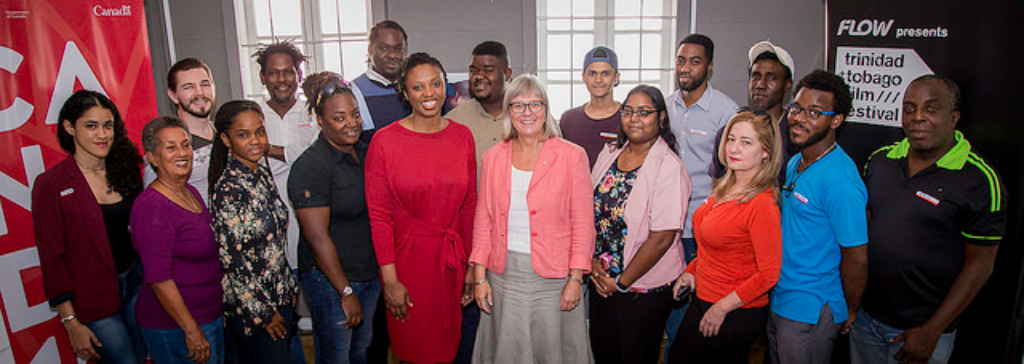
The trinidad+tobago film festival (ttff) and Canadian High Commission are teaming up to encourage the making of local short films on human rights issues, as part of a filmmakers development programme that began in 2017, reports Loop on 27 February 2018.
The ‘Human Rights on Film’ training programme encourages 14 filmmakers and writers who participated in a scriptwriting workshop with Canadian-Jamaican film professional, Annmarie Morais, last year, to put their training into practice. A panel of three judges, including a representative from The National Film Board of Canada and from the Canadian High Commission in Trinidad, will select the best three scripts. Trinidadian-born, National Film Board of Canada producer, Selwyn Jacobs, will then conduct a two-day workshop on how to move from the scriptwriting phase to production and post-production. The completed films will screen at ttff/18.
According to Annabelle Alcazar, Programme Director of the ttff: “This programme marries our interest in developing the skills of local filmmakers and writers, with advancing the conversations on human rights in Trinidad and Tobago. We are excited about this project and look forward to seeing how filmmakers rise to the challenge of using their artistic knowledge and skill to bring these important issues alive.”
UNSW’s new centre of innovation on human rights is taking shape as the world marks Human Rights Day on 10 December.
Former US First Lady Eleanor Roosevelt with the United Nations Universal Declaration of Human Rights. Photo: Wikimedia Commons
Announced by UNSW President and Vice-Chancellor Professor Ian Jacobs earlier this year, the Australian Human Rights Institute will further the interdisciplinary aims of the University’s 2025 Strategy UNSW’s investment in the institute of $13 million to 2025 will allow research to be applied to real-world human rights violations, making an impact on communities in Australia and around the world when they are most in need of innovative responses.
Research will be focused on three areas: human rights and business, human rights and health, and gender justice. Australian Human Rights Institute Director Professor Louise Chappell says the new work will build on the strong foundations of the Australian Human Rights Centre, established in the Faculty of Law in 1986 and led for the past 13 years by Professor Andrea Durbach.
A cross-cutting theme emerging for the institute is the rapid advancement in technology, which has some negative human rights implications but also offers interesting new solutions. “It’s really clear that AI could create further frightening aspects of violence such as remotely controlling what’s happening in someone’s house,” Professor Chappell says. “But that same technology could also be turned around by victims of domestic violence, in this case, so that they’re able to protect themselves and link to support networks faster than ever before.”
Another aim of the Institute is to mentor the next cohort of rights defenders, linking emerging scholars with senior experts and UNSW’s deep networks in the human rights field.
The Institute will launch in early 2018 and is planning a program of lectures and other events to mark the 70th anniversary of the Universal Declaration of Human Rights.
If you like to get updates about the Australian Human Rights Institute, sign up for emails here.
Human rights defenders from across Africa were in The Gambia undergoing a three-day training to consolidate their knowledge and skills on relevant human rights instruments for effective monitoring at the continental and international levels. The training on international and regional human rights mechanisms, was held from 25 – 29 October 2017, was organised by the African Commission on Human and People’s Rights, CIVICUS, ISHR, ACHPR and the United Nations Human Rights Council. The training was held on the margins of the Forum on the Participation of NGOs in the 61st Ordinary Session of the African Commission on Human and Peoples’ Rights and 36th African Human Rights Book Fair.
The training was designed to sharpen the knowledge and skills on the procedures for the promotion and protection of human rights in Africa. It was divided into three main parts: the international and the regional systems and mechanisms for the two days, and freedom of association and assembly, the SDGs, and human rights monitoring. Hannah Forster of the African Centre for Democracy and Human Rights Studies (ACDHRS – http://www.acdhrs.org) said: “This, we believe, will enable us to better understand opportunities available as we engage governments in the fulfillment of their mandates to promote and protect human rights and it will equip us with the knowledge and skills to lobby our governments to domesticate and implement their commitments while assisting participants to frame a strategy as they seek redress for violations of human rights”.
Justice and Peace Netherlands supports human rights defenders worldwide with trainings, its temporary relocation programme Shelter City and advocacy. In The Netherlands it organises Welkom Hier festivals together with local partners and refugees.
The Human Rights Defenders Programme has two aspects:
Shelter City, in which Human Rights Defenders at risk are temporarily relocated in The Netherlands for 3 months in order to rest and respite, gain new knowledge, energy, and expand their network.
The Hague Training Course (THTC), in which they participate in 10-day training course that aims to support Human Rights Defenders (HRDs) by facilitating the strengthening of their knowledge and skills on 4 main modules: training of trainers, holistic security (physical, digital, psychological), advocacy and policy influencing and international protection mechanisms.
Its Human Rights Defenders and Security programme offers – from mid-October to mid-December 2017 – an Internship (32 hours a week). The internship includes activities related to the aforementioned 2 projects. Candidates should have the following competences:
A Bachelor or Master’s degree level student in a discipline related to (international) human rights, law, social sciences, politics;
Excellent oral and written skills in English language (in addition French and/or Spanish are highly valued);
Result-oriented, flexible, stress resistant, professional, team player, open and creative mind, analytical skills.
The internship fee is €400 gross per month for a full work week of 36 hours. We also provide full reimbursement of travel expenses (2nd class public transport).
If interested send your motivation and CV to Marieke van der Vliet, Head of Programmes, vacature@justiceandpeace.nl, citing ‘Internship HRDs Programme’ .
Deadline: 30 September 2017. Interviews will take place beginning October. For more information: Manon Muti: manon.muti@justiceandpeace.nl or +31 (0)70-7631419.
HOLLY DAVIS and MAGDA ADAMOWICZ published in Open Democracy of 10 May 2017 an important piece entitled “Security and well-being: two sides of the same coin“. It states inter alia that by not paying enough attention to self-care, activists are compromising their own security—and that of their organizations. [It is a contribution to the debate on mental health and well-being.]
The authors rightly make the point that.. “in addition to threats against their personal safety and security, defenders face exhaustion and trauma and struggle with burnout.”
Flickr/ CDIH (Some rights reserved) Following the hearing on the human rights situation in Bajo Aguán held on April 5, 2016, a vigil was held by Berta Cáceres, an environmental activist who was murdered on March 3, 2016 in Honduras.
…By including and addressing well-being, trainers have a critical role to play in expanding defenders’ understanding of security and increasing their capacity to adopt new habits. These changes can happen only by integrating security and self-care into the everyday work and culture of human rights defenders and organizations.
Each organization and individual will have different needs. They may include:
•Allowing time and dedicated funding for staff retreats, peer support groups, psychological or supervision support, or other individual practices.
•Creating space to discuss people’s well-being at the team or organizational level.
•Connecting activists with peers from other organizations so they can find solidarity and support.
•Designing an organizational self-care plan with clear goals, expectations, and boundaries that are transparent and to which teams are accountable. Such a plan might include expectations for work hours and off-hours availability, the option to work from home, time for a true break during the workday, offering activities like stretching and meditation, or simply scheduling a block of quiet time without meetings.
•Consistently implementing an organizational self-care plan, with staff supporting each other, and regularly checking-in with each other through meetings that include a well-being status update.
•Challenging what is truly a crisis requiring immediate action, breaking a cycle of stress where people feel like they cannot afford to stop working.
Above all, human rights organizations and funders need to remember that prioritizing the safety and health of defenders, preventing burnout, and treating trauma are not self-indulgences. Rather, they are best practices. Individual and organizational attitudes and behavior must evolve. This means mainstreaming security and moving towards organizational cultures in which self-care is inherently understood to be critical to success. The old refrain of “toughen up or leave” is obsolete.
Why digitise? Digitising your documents greatly improves access to your information, whether you are building an online public library to share documents related to corruption, or making documents searchable for your team. Digitisation also helps to preserve and protect important human rights information. Many defenders run the risk that malevolent groups seeking to destroy or confiscate witness testimony, evidence of abuse, and other sensitive information. Others run the risk of documents being subject to harmful storage conditions, such as humidity, insects, and rodents. These are just a few reasons for digitising your documents. However, figuring out the most efficient, affordable, and responsible way to digitise thousands of documents can be a daunting task especially for human rights defenders in the field.
Therefore the NGO HURIDOCSis organizing two live webinars. These webinars will explore the process of digitising documents and the best practices that should be applied. A summary of the discussion will be written and shared on the HURIDOCS website.
Where: ReadyTalk (use the access code 2458641 to join)
Who: Open to anyone who wants to learn more about digitizing documents
Whether you are a seasoned digitization expert or a human rights defender just starting to think about digitisation, this is a good occasion to learn and share.
If you are interested, please contact Kristin Antin at kristin@huridocs.org. Here is an example of a webinar hosted in January on managing contact information.
Sam Berkhead of IJnet did on 21 December an interview with the Slovakian journalist and filmmaker Sara Cincurova to discusses her work to bring human rights to the forefront. She was chosen as Journalist of the month. In this context I draw attention to the “Speak Up, Speak Out: A Toolkit for Journalists Reporting on Gender and Human Rights Issues” which seeks to help journalists learn the basics of reporting on women’s and other human rights issues. It combines background information on international human rights mechanisms; guidelines on producing nuanced, objective reporting on rights issues; and practical exercises that walk users step-by-step through the production of a solid human rights story. The toolkit also helps journalists understand how international human rights mechanisms, laws and treaties work. Global in scope and written in an easy-to-understand language, the toolkit is intended to be used as a training aid in targeted journalism trainings around the world. It is available in English online as a free PDF download, with French, Arabic and Spanish language translations planned for the future. The toolkit is based on a series of trainings in human rights reporting that Internews conducted in several countries in Africa, Asia and the Middle East between 2009 and 2011. It was developed and produced by Internews’ Global Human Rights Program.
image courtesy of Sara Cincurova.
At age 26, the Slovakian journalist’s byline has appeared on sites like The Huffington Post, VoxEurop, Women’s WorldWide Web and openDemocracy. Her work has brought her to countries like the UK, France, Ukraine, Georgia, Burkina Faso and Indonesia, interviewing everyone from refugees at the “Jungle” refugee camp in Calais, France, to a Holocaust survivor. We spoke with her about her most noteworthy projects, finding the intersection between journalism and human rights and more:
IJNet: How did you get started as a journalist?
Cincurova: I have always been interested in human rights. I spent a year in Africa and in Asia, then I worked for a charity supporting women and children victims of domestic violence. I first started blogging in my home country, Slovakia. I remember that my first blog post about domestic violence had more than 10,000 entries within the first two days, and I also received a lot of emails from readers. So I started writing regularly for different media outlets, and that’s how it all started for me.
How has your work in advocating for victims of gender-based violence influenced the way you work as a journalist?
I think that trauma and abuse are always very difficult and intricate topics to report on. I have interviewed many experts on violence, and I try to use the skills that I have acquired whenever I’m interviewing victims of abuse, conflict, displacement, etc. I try to cover their stories as accurately and sensitively as possible. I also think that empathy is very important. Another thing is that I also try to focus on resistance and resilience, not just violence and victimhood.
What’s your favorite story you’ve worked on so far? What was challenging about it? How did you overcome those challenges?
Right now, I am working on an incredibly interesting article about Slovakians that hid Jewish families in their homes during World War II. I think it’s very important to share their stories today; they are a great inspiration for human rights defenders worldwide. Also, it’s very interesting to ask where their courage, kindness and motivation came from; many of them have risked their lives just to save another human being. To me, this project has been life-changing and changed the way I see human rights and resistance. I also think it’s important to share these stories today, in the current context.
The European Center for Constitutional and Human Rights (ECCHR) and the Kreuzberger Kinderstiftung, a foundation working to secure educational justice, recognize that starting a career in international human rights work can sometimes require more just having the requisite passion, motivation and skills. There can be certain barriers to entry into the profession, i.e. when economic or social considerations prevent potential participants from taking part in our programs. With this in mind, the Kreuzberger Kinderstiftungscholarship for ECCHR’s Legal Training Program offers young people with limited financial means and/or from underrepresented geographic and social backgrounds the chance to gain professional experience in human rights work. Read the rest of this entry »
I am using this little known country (Virgin Islands) to highlight a little-known programme: the Virgin Islands Consortium reports that Deputy Elections System Supervisor Genevieve Whitaker has been selected as a fellow for the 2016 Fellowship Programme for the People of African Descent of the UN.
Ms. Whitaker has been involved with human rights from an early age. She received her law degree from Stetson University College of Law, serving as a public service fellow and received the Public Service Recognition Award from Stetson’s Advocacy Board for her exemplary service locally and worldwide. She was instrumental in the establishment of Stetson’s Amnesty International Student chapter. She obtained certificates in human rights and humanitarian law during her legal studies at the University of Oxford School of Law and Santa Clara University Law School, respectively. There she joined Amnesty International USA, and United Nations Association of the USA. Ms. Whitaker is also a former board member of the DC-based Partners for Freedom & Democracy, a nonprofit organization for which she organized a human rights-based youth leadership development summit that took place in Abuja, Nigeria in 2008.
In 2009 she co-founded the Virgin Islands Youth Advocacy Coalition, Inc., a nonprofit established to promote the political and civic engagement of the young people of the Virgin Islands. Ms. Whitaker’s human rights work also includes service on the Board of the Caribbean Institute for a New Humanity, which housed the Virgin Islands Reparations Movement (ACRRA). Ms. Whitaker served as an international election observer with the Organization of American States for the February 25, 2016 Jamaican Parliamentary elections.
Ms. Whitaker says she plans on bringing back to the territory the knowledge she gains during her training to promote the important work of decolonization, by obtaining support among the key stakeholders who will be dedicated to the cause for the human right to self-determination, she says. The goal is centered on achieving the political, social, economic and cultural right advancement for people of African descent and all those negatively affected/impacted by the resultant human rights abuses tied to our colonial status, according to Ms. Whitaker.



 Hans Thoolen on Human Rights Defenders and their awards