Sam Berkhead of IJnet did on 21 December an interview with the Slovakian journalist and filmmaker Sara Cincurova to discusses her work to bring human rights to the forefront. She was chosen as Journalist of the month. In this context I draw attention to the “Speak Up, Speak Out: A Toolkit for Journalists Reporting on Gender and Human Rights Issues” which seeks to help journalists learn the basics of reporting on women’s and other human rights issues. It combines background information on international human rights mechanisms; guidelines on producing nuanced, objective reporting on rights issues; and practical exercises that walk users step-by-step through the production of a solid human rights story. The toolkit also helps journalists understand how international human rights mechanisms, laws and treaties work. Global in scope and written in an easy-to-understand language, the toolkit is intended to be used as a training aid in targeted journalism trainings around the world. It is available in English online as a free PDF download, with French, Arabic and Spanish language translations planned for the future. The toolkit is based on a series of trainings in human rights reporting that Internews conducted in several countries in Africa, Asia and the Middle East between 2009 and 2011. It was developed and produced by Internews’ Global Human Rights Program.
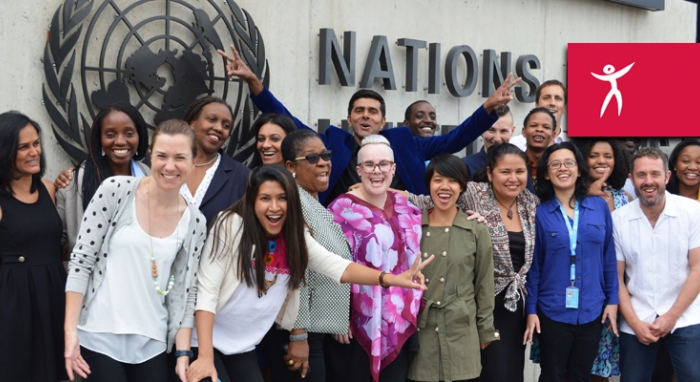
image courtesy of Sara Cincurova.
At age 26, the Slovakian journalist’s byline has appeared on sites like The Huffington Post, VoxEurop, Women’s WorldWide Web and openDemocracy. Her work has brought her to countries like the UK, France, Ukraine, Georgia, Burkina Faso and Indonesia, interviewing everyone from refugees at the “Jungle” refugee camp in Calais, France, to a Holocaust survivor. We spoke with her about her most noteworthy projects, finding the intersection between journalism and human rights and more:
IJNet: How did you get started as a journalist?
Cincurova: I have always been interested in human rights. I spent a year in Africa and in Asia, then I worked for a charity supporting women and children victims of domestic violence. I first started blogging in my home country, Slovakia. I remember that my first blog post about domestic violence had more than 10,000 entries within the first two days, and I also received a lot of emails from readers. So I started writing regularly for different media outlets, and that’s how it all started for me.
How has your work in advocating for victims of gender-based violence influenced the way you work as a journalist?
I think that trauma and abuse are always very difficult and intricate topics to report on. I have interviewed many experts on violence, and I try to use the skills that I have acquired whenever I’m interviewing victims of abuse, conflict, displacement, etc. I try to cover their stories as accurately and sensitively as possible. I also think that empathy is very important. Another thing is that I also try to focus on resistance and resilience, not just violence and victimhood.
What’s your favorite story you’ve worked on so far? What was challenging about it? How did you overcome those challenges?
Right now, I am working on an incredibly interesting article about Slovakians that hid Jewish families in their homes during World War II. I think it’s very important to share their stories today; they are a great inspiration for human rights defenders worldwide. Also, it’s very interesting to ask where their courage, kindness and motivation came from; many of them have risked their lives just to save another human being. To me, this project has been life-changing and changed the way I see human rights and resistance. I also think it’s important to share these stories today, in the current context.
The European Center for Constitutional and Human Rights (ECCHR) and the Kreuzberger Kinderstiftung, a foundation working to secure educational justice, recognize that starting a career in international human rights work can sometimes require more just having the requisite passion, motivation and skills. There can be certain barriers to entry into the profession, i.e. when economic or social considerations prevent potential participants from taking part in our programs. With this in mind, the Kreuzberger Kinderstiftungscholarship for ECCHR’s Legal Training Program offers young people with limited financial means and/or from underrepresented geographic and social backgrounds the chance to gain professional experience in human rights work. Read the rest of this entry »
I am using this little known country (Virgin Islands) to highlight a little-known programme: the Virgin Islands Consortium reports that Deputy Elections System Supervisor Genevieve Whitaker has been selected as a fellow for the 2016 Fellowship Programme for the People of African Descent of the UN.
Ms. Whitaker has been involved with human rights from an early age. She received her law degree from Stetson University College of Law, serving as a public service fellow and received the Public Service Recognition Award from Stetson’s Advocacy Board for her exemplary service locally and worldwide. She was instrumental in the establishment of Stetson’s Amnesty International Student chapter. She obtained certificates in human rights and humanitarian law during her legal studies at the University of Oxford School of Law and Santa Clara University Law School, respectively. There she joined Amnesty International USA, and United Nations Association of the USA. Ms. Whitaker is also a former board member of the DC-based Partners for Freedom & Democracy, a nonprofit organization for which she organized a human rights-based youth leadership development summit that took place in Abuja, Nigeria in 2008.
In 2009 she co-founded the Virgin Islands Youth Advocacy Coalition, Inc., a nonprofit established to promote the political and civic engagement of the young people of the Virgin Islands. Ms. Whitaker’s human rights work also includes service on the Board of the Caribbean Institute for a New Humanity, which housed the Virgin Islands Reparations Movement (ACRRA). Ms. Whitaker served as an international election observer with the Organization of American States for the February 25, 2016 Jamaican Parliamentary elections.
Ms. Whitaker says she plans on bringing back to the territory the knowledge she gains during her training to promote the important work of decolonization, by obtaining support among the key stakeholders who will be dedicated to the cause for the human right to self-determination, she says. The goal is centered on achieving the political, social, economic and cultural right advancement for people of African descent and all those negatively affected/impacted by the resultant human rights abuses tied to our colonial status, according to Ms. Whitaker.
The International Service for Human Rights (ISHR) is calling for applications for its flagship Human Rights Defenders Advocacy Program in 2017 – the extensive training programme for human rights defenders. The training will take place in Geneva between 29 May and 9 June 2017 and provides defenders with opportunities to put their advocacy skills directly into action at the 35th session of the UN Human Rights Council.
ISHR’s Human Rights Defender Advocacy Programme (HRDAP) equips defenders with the knowledge and skills to make strategic use of the international human rights system. It also provides an opportunity for participants to directly engage in lobbying and advocacy activities at the UN level to effect change on the ground back home. As well as receiving training modules on all the UN human rights mechanisms from a range of experts, participants will also have the opportunity to build networks in Geneva and around the world, carry out lobbying of UN member States and UN staff, and learn from peers from a range of regions working on a range of human rights issues.
Participants will take part in:
A short online learning component, prior to face-to-face training, to enable you to consolidate your existing knowledge and develop your advocacy objectives;
Intensive training in Geneva during June, to coincide with the 35th session of the Human Rights Council. The training will focus on ways to effectively use international human rights mechanisms and to influence outcomes;
Specific advocacy at Human Rights Council sessions and other relevant meetings, with regular feedback and peer education to learn from the experiences, including expert input from leading human rights advocates.
This programme is directed at experienced human rights defenders in non governmental organisations and national human rights institutions, with existing advocacy experience at the national level and some prior knowledge of the international human rights system. If you are interested in applying for ISHR’s training programme, please read the call for applications to check that you comply with the requirements. The link to the online application form can be found under point 5 of the call for applications.
The call for applicants can be found here. For more information, write to hrdap2017@ishr.ch.
The Leuven Centre for Global Governance Studies is an interdisciplinary research centre of the Humanities and Social Sciences at the University of Leuven, Belgium, led by prof. Jan Wouters. It carries out and supports interdisciplinary research on topics related to globalisation, global governance processes and multilateralism, and has been recognised as a KU Leuven Centre of Excellence [http://ghum.kuleuven.be/ggs/].
It has just announced a new MOOC (Massive Open Online Course). The previous edition on ‘EU and Human Rights’ reached more than 8,000 students worldwide. Starting on 21 June 2016 and running for 6 weeks, the MOOC provides a basic course on human rights using FRAME research results, targeting undergraduate students and other people interested in the topic, such as international organizations and NGO staff. It will be offered free of charge and will include a collection of videos of lectures and teaching materials.
I am sharing with you an important new report on the protection and security of human rights defenders entitled, “Keeping Defenders Safe: A Call to Donor Action”. The report was released this summer but did not get the attention it deserves. The report reviews existing responses to the security challenges that human rights defenders face, with a focus on the grant-makers who support work aimed at strengthening HRD protection and security. The author, Borislav Petranov, conducted more than 150 interviews with defenders and related stakeholders around the world, seeking to capture the viewpoints of activists on the ground. Monette Zard prepared it for publication. The report’s conclusions suggest changes in focus and approach with recommendations that donors can implement individually as well as collectively to enhance the protection and security of HRDs. While it is not a roadmap or comprehensive analysis of protection mechanisms, it does recommend considered reflection on current policies and practices in the field: Read the rest of this entry »
What every human rights defender should know about video, images etc.
Instruction video published on 15 October 2014 by Witness.What is a video format? A codec? What do 1080 and 720 refer to? What about “i” and “p”? In this video, archivist and writer of WITNESS’ award winning guide, Yvonne Ng, provides an overview of the key technical characteristics of video for everyday users with visual examples. Comment on Witness blog: http://wp.me/p4j1y7-5J2
New Tactics is going to have a on-line conversation on the safe & effective use of documentation tools from 9 to 13 June 2014. They are looking to recruit 10 to 12 human rights practitioners to join Daniel D’Esposito of HURIDOCSand Enrique Piracés of Benetech to help lead the upcoming conversation on Working Safely and Effectively with Documentation Tools Documentation is a crucial aspect of the quest for justice, accountability and transparency.
On 14 May the blogger APaper Bird posted an interesting set of slides that can be used in training human rights defenders. The author also sets a good example by letting them be shared freely:
“One thing I do with some frequency is trainings. These powerpoints reflect a session I worked on recently with the Egyptian LGBT group Bedayaa. The first (download the English version here) deals with issues in human rights documentation in general terms. The second (download English here) deals more specifically with strategies for interviews. I’m posting them here in the hope that they may be useful to activists who weren’t able to attend the workshop, and to people elsewhere as well. Some of the material is specific to Egypt, some is not….. [the slides also exist in Arabic – see original post)
These aren’t copyrighted; I’m not sure how you would copyright a basic skills set. (Actually, late capitalism can copyright anything. What I mean is, I don’t want to know.) However, if you find them interesting enough to adapt or reuse, I ask that you let me know, and cite me as the author.”
There are many international NGOs doing excellent work for human rights defenders, but I want to highlight one here in particular: the International Service for Human Rights. It has a clear mandate and niche, based in Geneva for 30 years (with a small office in New York) is the main advocate for human rights defenders in the UN. The Director, Phil Lynch, sent out an overview in April 2014 of its activities covering the recent months, especially the latest session of the UN Human Rights Council. Please read the statement in full and – if you want regular updates – subscribe to the ISHR Newsletter: Read the rest of this entry »