The Rafto Prize 2025 has been awarded to The Emergency Response Rooms of Sudan (ERRs) for their courageous work to preserve the most fundamental human right – the right to life.
The Emergency Response Rooms of Sudan are grassroot networks that emerged in the wake of the war in Sudan in 2023. They consist of thousands of volunteers who engage in collaborative, community driven efforts to meet urgent humanitarian needs of others, at great personal risk. The ERRs save lives and maintain human dignity in a place of misery and despair.
After the brutal war between the Sudanese Armed Forces (SAF) and the Rapid Support Forces (RSF) broke out in April 2023, the Sudanese state collapsed. As a consequence, civilians have an enormous need for humanitarian assistance.In a desperate attempt to save lives, ordinary Sudanese took matters in their own hands and formed self-help groups to offer services supporting basic life, welfare, and human dignity through Emergency Response Rooms (ERRs).
The ERRs originated in Khartoum and has spread to other conflict areas of Sudan. To mitigate excessive loss of life and human suffering, ERRs provide key services such as health, food, water, body retrieval and burial. They also work on monitoring, documenting, and responding to cases of sexual violence.
The Rafto Prize 2025 honours the Emergency Response Rooms and the thousands of individuals protecting the right to life and health, who are building hope in Sudan, at tremendous risk to their own lives. The prize is also a recognition of the significance of grassroot mobilization and collective effort in ensuring basic human rights in times of conflict. The need for protection of human rights and humanitarian assistance is becoming greater by the day. In these trying times, we must all stand in solidarity with the people of Sudan.
The second week of witness testimonies continued with the court hearings with Egbert Wesselink and Petter Bolme, two individuals considered central to the broader context of the trial. .. Wesselink provided background on the report’s origins and its significance in bringing the case to light. He also discussed his extensive knowledge of Sudan at the time and his contact with the pre-trial investigation and Lundin oil over the years.
Hearing with Egbert Wesselink
This is a very long report but as the devil in the details……
The second week of witness hearings began with the testimony of individuals who had worked and lobbied for these allegations to be investigated. Egbert Wesselink is a historian working for PAX, the largest peace organization in the Netherlands and the lead author of the report “Unpaid Debt” and involved in the production of the report “Depopulating Sudan’s Oil Regions.”
The prosecution’s questioning focused on Egbert Wesselink’s knowledge of southern Sudan and Block 5A during 1997–2003, his contacts with the Lundin companies during that period, the preparation of the report Depopulating Sudan’s Oil Regions, and his role within PAX and ECOS. He was also questioned about investigation trips to Block 5A and his communication with individuals connected to the pre-trial investigation. During the hearing, Wesselink described the situation in Block 5A during 1997–2003 as highly violent, with conflict over oil-rich areas and systematic or indiscriminate attacks on civilians by the Sudanese military and allied militias. He stated that representatives of the Lundin companies were made aware of these conditions by him from 2000 onward and clarified that PAX and ECOS did not exert undue influence over any interviewees involved in their investigations. Wesselink’s testimony provided crucial context about the violent circumstances in Block 5A and the awareness of these conditions among various actors at the time. It also offered valuable insight into the efforts to document and report the actions of oil companies to the rest of the world, while also highlighting the ongoing pursuit of justice and reparations for the plaintiffs.
The hearing began with Egbert Wesselink talking about his academic background in history and education, early work in politics as an assistant to a member of the Dutch parliament and teaching geography and French, and then his transition into human rights, first as a volunteer, then as a UN officer in Cambodia in 1993. He later worked as researcher and expert for the UN Office for Migration/UNHCR before joining PAX in 1998, where he focused on corporate responsibility and human rights dialogue with various companies. Wesselink recounted his early corporate engagement with the first oil company he worked with, Shell, where alongside Amnesty International he was involved in a dialogue with the company concerning the company’s human rights policies and actions.
PAX and ECOS
In the early 2000s, PAX began working in Sudan, responding to reports of harm caused by the oil industry. After discovering Shell’s ties to Sudan, PAX intervened and discussed the company’s human rights policies and actions, leading to Shell’s withdrawal from the country and its cessation of fuel supplies to the Sudanese air force. Around the same time, Dutch NGOs recognized the need for European-level measures and formed the European Coalition on Oil in Sudan (ECOS) to address what they saw as the oil industry’s role in fueling conflict and displacement. PAX played a central role in forming and coordinating ECOS, which launched officially in Brussels in 2001. The coalition aimed to stop harmful oil activities and to create a more substantial and effective dialogue between the EU and Sudan. ECOS brought together over 50 European NGOs and produced major advocacy and research efforts. When asked about its contact with Sudanese churches and their influence, Wesselink responded by saying that while not directed by churches, ECOS regularly consulted Sudanese civil society and church groups through forums, but he emphasized that the ECOS acted based on requests from affected communities and their interests and rights, not on top-down instructions.
When asked about how PAX and ECOS formed their understanding of the oil operations and their harmful effects, Wesselink explained how they found important observations by John Harker, who in 1991 conducted a mission for the Canadian government. The conclusions they presented aligned with what PAX and ECOS had heard from local residents, churches, and organizations working in the area. This information was further confirmed by reports from the UN Special Rapporteur on Human Rights in Sudan and the findings matched entirely with their prior understanding of how the Sudanese government approached the oil issue. Wesselink also described how he met families from areas north of Lundin’s block, who had been forced to flee to Utrecht. Their testimonies were clear, they had been driven from their homes in one of the country’s central oil regions.
Wesselink described how after the initially unsuccessful “Peace First” campaign, ECOS shifted focus in 2002 to promoting responsible oil business standards. By 2003, it no longer called for companies to leave Sudan but instead advocated for reform within the industry. This aligned with the 2003 peace agreement and Sudan’s transitional constitution, which introduced the possibility of compensation to affected communities and international standards for oil operations. But there was also concern from the church and civil society in Sudan that the government would not be strong enough to push for this against an industry that was uninterested and fear that the government lacked the capacity or will to enforce these standards. To address this, PAX organized a major conference in Juba in late 2006, aiming to create space for dialogue on these governance issues.
When asked about ECOS now, Wesselink explained that ECOS no longer exists, following the separation of Sudan and South Sudan, as focus and momentum declined, and according to Wesselink ECOS “died a slow death.” However, PAX continues working toward justice and compensation for communities affected by oil exploitation.
Wesselink’s engagement and contact with oil companies
Egbert Wesselink described how his understanding of the situation in southern Sudan, particularly Block 5A between 1997 and 2003, developed gradually. He became actively involved around 2000, reading extensively, and his first visit to Sudan was in 2004 for a peace conference in Upper Nile, where he gathered firsthand accounts of problems near major oil fields.
Wesselink explained that contact with oil companies varied. He had early and regular engagement with Shell, including participating in a 2000 conference in Munich, where he also met Lundin and Petronas representatives. He had several conversations with Christine Batruch, the head of Lundin’s corporate social responsibility work, which he described as unproductive, noting her denial of human rights concerns and reliance on Sudanese government narratives. He described how he was used to having discussions with oil companies that were upfront about the facts and willing to discuss dilemmas, as morality is rarely black and white—there were many gray areas in these discussions. However, he said that with Batruch it was impossible to have that kind of conversation as she denied well-established facts and showed very little knowledge about human rights and the responsibilities of companies like Lundin in this regard. He described her as appearing to have a combination of real ignorance and purposeful lack of knowledge. Wesselink explained that it was clear that her knowledge was biased and mainly influenced by northern perspectives, as it was evident that the company was following the Sudanese government’s war propaganda that all conflict stemmed from tribal conflicts. He described it like hearing an echo of what the Sudanese government expressed. While Batruch expressed some openness to hearing from southern Sudanese leaders, Lundin ignored Pax’s invitation to have a dialogue regarding ethical guidelines and the oil industry’s impact on the local population. He also stated that he received no response when he asked Batruch about Lundin’s stance on provisions in the peace agreement, which stated that those affected by oil extraction in southern Sudan had the right to compensation and redress and that those affected by the peace agreement were to be compensated.After that, Wesselink had no further direct contact with Lundin, though he was informed that the Church of Sweden had reached out.
Regarding further contact with Lundin Oil, Wesselink described how in late 2001 he raised concerns about former Swedish prime minister Carl Bildt joining Lundin’s board of directors while also being involved with Amnesty Sweden, calling it a conflict of interest. He viewed this dual role as a serious risk to Amnesty’s credibility and structure. Concerned, he wrote to Amnesty International, questioning their cooperation with Lundin. Wesselink explained that he saw it as a great risk for Amnesty to be linked through Bildt with companies accused of serious crimes and that Amnesty should not cooperate with Lundin. However, when he pointed this out, he received a long reply from Carl Bildt defending his involvement, although Wesselink found the arguments factually incorrect. Bildt claimed that Lundin’s presence contributed positively to human rights and peace in the region, which Wesselink strongly refuted, noting that this contradicted all available evidence at the time. He said, “I found these arguments insincere and baseless; they contradicted everything we knew.”
In terms of contact with other companies, Wesselink also engaged with OMV, which was part of the same oil consortium as Lundin. ECOS contacted OMV in 2001, encouraging them to align with international standards. Upon learning more about the situation, OMV’s leadership grew uneasy, especially after commissioning a risk report from the security firm Control Risk Group whose findings raised internal concerns, although they were not a human rights organization. OMV considered halting road construction to Leer due to violence but ultimately yielded to pressure from the Sudanese government. Wesselink noted that OMV often echoed Lundin’s messaging, suggesting coordinated responses.
Preparation of the report “Depopulating Sudan’s Oil Regions”
Regarding the report Depopulating Sudan’s Oil Regions, Wesselink explained that it was based on a 2002 field mission near Block 5A, organized by ECOS and led by Diane de Guzman, with support from journalist Julie Flint. The team flew into the area from Kenya and documented extensive violence and interviewed traumatized civilians. Julie Flint had a camera with her, and they made a short ten-minute film that can still be seen on YouTube, and which they also distributed via the ECOS network. The trip, financed by ECOS, targeted areas near Block 5A and Nhialdiu, where alarming reports of renewed violence were surfacing. The goal was to document these events, recognizing that without credible information, international concern would be lacking. The field data, interviews, and visual evidence were then compiled into a comprehensive report. De Guzman drafted the original document, which included interviews, high-level analysis, and contextual information, but the report itself was then written by Wesselink. The report included interviews, analysis, background on the conflict, and references to arms use and oil revenue.
Unpaid Debt
After 2004, Wesselink and ECOS continued working to ensure oil companies took responsibility for the harm caused during Sudan’s oil conflict. Wesselink believed that Lundin had no real interest in implementing the 2003 peace agreement’s compensation clauses, while his and the Sudanese church’s goal was to make the agreement a success by pushing for reparations. Wesselink recalls that the Sudanese Minister of Justice at the time said, “If there are affected people, they can take their cases to court,” and that became the starting point for assessing the financial damages incurred over the years, followed by lobbying the oil companies to pay these costs. It also became the start for Unpaid Debt as the objective was not only focused on good business practices, but also on ensuring the “debt” was paid.
The prosecution moved on to inquire about the Unpaid Debt report and the individuals involved in its creation. Wesselink explained that he was the main author of the report but had assistance from numerous assistants and received advice and input from others. They also hired a British defamation lawyer to review the report because when the report was finalized in 2008 and sent to Lundin for comments, Lundin’s response, which came via their lawyers, was to claim that the report contained false information that was damaging to the company. They alleged the intent was to harm the company and reserved the right to claim damages. According to Wesselink, such responses are standard tactics companies use when they are unwilling to resolve issues and prefer confrontation instead. This legal threat caused panic among members of ECOS, with the majority of the core group reluctant to risk being taken to court. A smaller faction of members remained undeterred and wanted to move forward with the publication under the condition that the report would be reviewed by a British lawyer due to the UK’s strict defamation laws. This ensured the report’s legal soundness but also resulted in more legally influenced language, which Wesselink speculated might have contributed to the current situation.
The prosecutor then moved on and asked about the recent claims that the photographs in the report were mislabeled regarding the location of where they were taken — Riel in Thar Jath versus Riel in Mankien. Wesselink acknowledged he wasn’t involved in taking the photos and relied on photographers from DanChurch Aid and others. While he could not verify their accuracy, he expressed trust in their work and admitted to being slightly surprised by any alleged mistakes and stated he would be embarrassed if the defense’s claims were proven correct. Despite this, Wesselink maintained that such potential errors would not diminish the report’s overall reliability.
The organization of investigation trips to and near Block 5A
Wesselink was also asked by the prosecution about the organization of investigation trips to Block 5A. These missions were conducted in cooperation with the Sudan Council of Churches and aimed to assess damage and pressure companies for accountability. If companies didn’t respond, findings were intended for the Evaluation and Assessment Committee, which included representatives from the U.S., U.K., and Norway. As a last resort, civil lawsuits were considered. The trips required extensive preparation due to the political sensitivity surrounding oil-related matters. Wesselink mentioned the need to seek support and endorsements for the research from state authorities, the UN, and local chiefs to facilitate the investigation. He also explained how one couldn’t simply go somewhere and “start asking questions about oil” because it was politically sensitive. His role was therefore to travel down to seek support for this work from the local chiefs.
Contacts with the pre-trial investigation
The prosecutor turned its focus to Wesselink’s personal connections to individuals linked to the pre-trial investigation. Wesselink explained that he had limited direct involvement with the pre-trial investigation, having been interviewed twice by Swedish police and attending two meetings with prosecutors. Most contact was minimal, with only some email correspondence. His own involvement with the trial began after civil war broke out in Juba in 2013, where it became nearly impossible for the Swedish authorities to access witnesses. Wesselink and his colleagues suspected the authorities needed help to find witnesses and offered assistance, but the response from the police was vague and Wesselink described them as “mussels” who did not say anything. Wesselink said that they received similar responses from the prosecutors, stating that he and his colleagues had the right to share information that may be helpful to the investigation with the Prosecutor’s Office. However, they did not receive instructions, although the previous prosecutor Magnus Elving did provide general advice stating that witnesses should only be interviewed by the police and should not be guided or influenced in any way.
Believing that firsthand testimony would be crucial to the case, Wesselink and Petter Bolme hired journalist Moses Urhailot in early 2015 to identify witnesses and possible perpetrators in refugee camps across Kenya, Uganda, Ethiopia, and Khartoum. Moses had also contacted people who testified in the earlier Talisman case, as some were willing to engage. Moses was instructed to collect only basic contact info and ensure that witnesses were not influenced. Despite identifying 54 potential witnesses, Wesselink believed that only one was eventually used by prosecutors. According to Wesselink, this stark result underscored the failure of their objective to identify individuals willing to testify.
ECOS’s work in South Sudan and Leech Victim Voices
The final part of the prosecution’s questioning addressed the relationship ECOS had with various groups in South Sudan, focusing on interactions following the publication of the Unpaid Debt report. After the report was published, ECOS began receiving more interest from groups in South Sudan. One such group, Leech Victim Voices, was formed by victims seeking justice after being ignored by both Lundin and the South Sudanese government. Wesselink attended their founding meeting in Juba in 2016. Their demands were later published on PAX’s website, and in 2017, Wesselink presented their claims at Lundin’s shareholders’ meeting. He noted Lundin had already been aware of these claims, having warned him in 2013 against making public accusations.
Wesselink stressed that the claims made by the victims were not driven by a desire for monetary compensation but by the pursuit of justice and truth. He emphasized that remedy and reparation as legal concepts must begin with uncovering the truth. This sentiment was echoed in the efforts of Leech Victim Voices, whose primary goal was to ensure that their experiences and demands were heard. He shared the story of Andrew Jagei Hon Diet, a plaintiff who fled Juba after threats and the murder of his neighbor, believing it was meant as a message for him. PAX helped him escape with Petter Bolme’s assistance. Similar threats were reported by others, including former Lundin employees, who claimed they were pressured to testify in the company’s favor. Wesselink and his team took these reports seriously and, with help from regional human rights organizations, relocated witnesses to safety. The details of these incidents were communicated to Swedish authorities and later shared with the plaintiffs’ counsels.
The plaintiffs’ counsel
After the prosecution’s interrogation, Percy Bratt, one of the plaintiffs’ counsels, had a few questions for Egbert Wesselink. The first topic concerned Wesselink’s efforts to warn plaintiffs to be cautious about discussing potential compensation. Wesselink confirmed that he had done so, elaborating on the cultural distinctions within Nuer legal practices. He explained that while similar to Western legal systems in principle, Nuer culture focuses on reconciliation rather than revenge. For the Nuer, an admission of guilt must be accompanied by a gesture of compensation and amends to the injured party. As a result, it is difficult for someone from the Nuer culture to comprehend a criminal case that excludes reparation or compensation. However, Wesselink emphasized that this cultural expectation does not imply material motivation on the part of the victims, whose ultimate pursuit is justice.
When asked about the driving force behind the victims’ participation, Wesselink clarified that their primary focus is truth and recognition, which are essential prerequisites for reconciliation. This universal principle of law in the Nuer belief system is that those who cause harm must take steps to reconcile it. Wesselink noted that for the Nuer, reconciliation holds more significance than punitive measures, and their efforts to share their experiences often come at great personal expense.
Bratt shifted to the topic of the Unpaid Debt report and inquired whether Wesselink and his team perceived threats of a lawsuit by Lundin Oil. Wesselink affirmed this, talking about the likelihood of a defamation lawsuit arising from the report, which the company argued had caused damage to its reputation. As mentioned in the prosecution’s questioning, PAX hired a British lawyer as the UK defamation law, which places the burden of proof on the defendant to demonstrate that their statements were not defamatory, was the strictest. The lawyer reviewed the report to ensure the accuracy of its claims and their alignment with legal standards.
Wesselink also addressed the defense’s claim that the plaintiffs’ statements amounted to SPLA propaganda. He refuted this notion and cautioned against overestimating the political cohesion of SPLA or SPLM, describing SPLA as a predominantly military operation with no unified political line. He highlighted the absence of a coherent political framework within SPLA or SPLM capable of orchestrating such false testimony.
Andreas Sjögren, the other plaintiffs’ counsel present during this hearing, asked a series of questions about Wesselink’s meeting with Christine Batruch at the Milhauim Conference in late December 2000. Wesselink recalled informing Batruch about the disturbing news of human rights violations linked to oil operations, which was a provocative issue tied to the conference’s theme of Corporate Social Responsibility. While Batruch acknowledged the correlation between oil work and abuses like forced displacement, Wesselink found her understanding of human rights lacking. He explained that Batruch emphasized international law and corporate responsibilities without grasping the fundamental processes that define rights. The conversation was described as awkward, with Wesselink pointing out what he believed should be common knowledge for corporate representatives. He again criticized Batruch for combining ignorance with a willful lack of awareness, further noting that her sources were limited and biased.
Lastly, Sjögren asked whether Lundin had the opportunity to respond to the Unpaid Debt report. Wesselink explained that the report was not intended as a lobbying tool against specific companies but noted that Lundin’s response contained falsehoods and lacked counterarguments. Lundin claimed to have refuted accusations made in the Scorched Earth report by Christian Aid through its own report produced in 2001. However, Wesselink questioned the validity of this defense, as Lundin’s report only covered a brief timeframe and failed to address accusations that spanned years.
Cross-Examination by the defense
The defense started their cross examination by asking Wesselink who actually was behind the police report filed regarding suspected violations of international law linked to Lundin Oil’s operations in Sudan. They asked about the police report dated 17 May 2010. This report, submitted by the plaintiffs’ counsels, Percy Bratt’s law firm, requested an investigation into suspected war crimes. Among the attachments to this report was Wesselink’s Unpaid Debt report, which had been submitted on behalf of ECOS and himself to the International Prosecutor’s Office. Samuelsson pointed out a contradiction in Wesselink’s statement, as Wesselink had previously claimed that Sten De Geer was responsible for submitting the report. Sten De Geer is the person who filed one of the police reports regarding Lundin’s activities in Sudan, based upon the book “Affärer i blod och olja” by Kerstin Lundell. Acknowledging the discrepancy, Wesselink clarified that while others may have been involved in the process, he was ultimately the one who submitted it. Wesselink explained that submitting the report was initially intended as a way to inform prosecutors, not to file a formal police report, as ECOS’s original aim was to achieve justice for victims through political, rather than legal, processes. The publication of the Unpaid Debt report was intended to prompt South Sudanese victims to file criminal complaints independently.
Samuelsson then raised concerns about Percy Bratt’s dual roles, suggesting that Bratt’s prior representation of ECOS and current role as plaintiffs’ counsel might pose ethical issues. Wesselink dismissed these concerns, explaining that Bratt stopped representing ECOS well before taking up the plaintiffs’ case and that there was no conflict of interest.
Shareholder status in Lundin Energy
Turning to Wesselink’s shareholder status in Orrön Energy, Samuelsson highlighted what he perceived as a contradiction between Wesselink’s critique of Lundin and his ownership of shares in the company. Wesselink explained that he purchased five shares in Lundin Energy in 2010 in order to be able to engage directly with the company’s management and shareholders. His objective was to use his status as a shareholder to urge the company to respect international law and ethical business guidelines. He defended this approach as a legitimate and widely practiced method for advocacy, particularly in the United States, Canada, and Europe. At these meetings, Wesselink explained his proposals and urged Lundin to assess the human rights impact of their operations and to take responsibility, including paying reparations if harms were found. While he couldn’t recall exact figures, he confirmed that he proposed allocating funds to demonstrate goodwill toward those affected. He also advocated for the resignation of the company’s management, asserting that it was not in Lundin’s best interest to be led by individuals suspected of war crimes.
Samuelsson questioned whether Wesselink had demanded five million dollars in damages at a shareholder meeting. Wesselink clarified that he had proposed that a sum of money be allocated specifically for compensating those affected. He argued that the company’s approach failed to consider the broader consequences of their legal strategy and urged them to correct their practices to better align with international principles and standards. Wesselink maintained that his actions, whether as a shareholder or through his involvement in advocacy, were aimed at achieving justice and accountability for victims, while upholding ethical guidelines for corporate behavior. He said that had the company’s leadership adopted his proposals, the outcome could have been better both for the company and for those harmed. He also pointed out that Lundin Energy no longer exists, suggesting a different approach might have changed that trajectory. Wesselink also criticized Lundin’s defense lawyers for adopting an overly aggressive legal strategy, arguing that it delayed justice for victims and contradicted the principles of human rights the company had publicly endorsed.
When asked about PAX and their neutrality, Wesselink firmly denied that PAX sided with any party in Sudan’s civil war, calling it a “strange question to ask a peace organization” and explained that supporting peace in a conflict does not entail choosing sides. He acknowledged that neutrality in conflict zones can be difficult, as any action taken by a peace organization may be interpreted as supporting or opposing one side but said that PAX maintained professional impartiality.
The 2019 Svenska Dagbladet article and SPLA Update
Samulsson continued by asking Wesselink about Jan Gruiters, who Wesselink described as the former general director of PAX and a good friend of his. Samuelsson referenced a 2019 opinion piece in the newspaper Svenska Dagbladet calling for reparations from Lundin, which Jan Gruiters co-signed. The defense asked whether Wesselink was familiar with SPLA Update, to which Wesselink answered that he did not read this kind of information from the SPLA. Samuelsson then mentioned that Jan Gruiters wrote articles for SPLA Update and questioned whether PAX and had links to SPLA Update. Wesselink denied any connection and instead discussed how even neutral reporting can be exploited by conflicting parties. Wesselink reiterated that he could not explain why the article appeared in SPLA Update but emphasized that neutrality does not prevent information from being used for one party’s benefit, and that this should not deter individuals from speaking the truth.
Carl Bildt’s email
The defense then presented an email from former Swedish prime minister Carl Bildt, in which he criticized Wesselink for forwarding allegations of systematic human rights violations by Lundin to Amnesty International. Wesselink expressed surprise that Bildt had responded at all and stated that Amnesty shared his position regarding Sudan, making Bildt’s involvement in the organization ironic and noteworthy. He viewed Bildt’s response as an effort to deflect substantive discussions by portraying the conflict as tribal disputes. Samuelsson then asked how Wesselink could dismiss the accounts of Lundin staff who were on-site. Wesselink rebutted this, stating the area was experiencing violent clashes at the time Bildt described it as “calm.” He pointed to Nuer defections that intensified conflict and claimed the region was a “bloodbath.” He also noted that Lundin ceased operations shortly after Bildt’s letter, contradicting Bildt’s portrayal of peace. Wesselink described how the violence at the time was widely anticipated and criticized Bildt for failing to acknowledge the reality of the conflict. Wesselink described Carl Bildt’s interpretation as a reversal of reality, attributing it to state propaganda efforts to justify atrocities.
Criticism of Christine Batruch
The defense then addressed Wesselink’s characterization of Christine Batruch, Lundin’s representative, as a “propagandist” for the Sudanese regime. Samuelsson challenged this label, noting Wesselink had never been in Sudan during the relevant period, to which Wesselink replied, “Do you have to have been to a place to be convinced? I’ve never been to Ukraine, but I know there’s a terrible war happening.” He criticized Batruch for dismissing credible reports and for not answering questions about local conditions. Wesselink explained that he relied on the accounts of knowledgeable individuals and experts, whose information he deemed credible, and had suggested to Batruch that Lundin should collaborate with groups outside the Sudanese government to gain a broader understanding of the situation.
Samuelsson pressed Wesselink on whether his information could be considered objective, given that he had not personally witnessed these events. Wesselink responded again that he relied on a wide range of expert reports, field studies, and testimony from displaced people. He acknowledged the importance of source criticism and said he had engaged critically with the materials he reviewed yet found no reason to doubt the integrity of the core information he used.
Discrepancies between photos in Unpaid Debt Report
Samuelsson then focused on errors in photo captions in the Unpaid Debt report. Wesselink admitted to possible confusion over locations with the same name, specifically “Rier” but emphasized that any mistakes were unintentional. Samuelsson pressed further, noting that the report gave the impression that burned huts photographed in the village of Rier were in areas where Lundin operated. Wesselink acknowledged the misleading impression but reiterated that Lundin did not operate directly in that village. He admitted potential errors and commended the defense for spotting them, saying corrections should be made if verified. When Samuelsson questioned whether Wesselink had known about discrepancies in photograph captions dating back to an email from 2018, Wesselink admitted he had asked the photographer for the locations but did not connect the two photographs to their respective names at the time. Though embarrassed by the issue, he stressed that it did not undermine the overall integrity of the report and firmly stated there was no intent to mislead and apologized if the captions were incorrect.
When shown the version of the report which was sent as a copy in the police report discussed earlier, the photo had another caption, which the defense then questioned, stating that Wesselink must have realized that the caption was wrong and altered it. However, Wesselink denied making any deliberate changes. He explained that the confusion might stem from the commonality of village names and the challenges of recalling specific details from among hundreds of locations.
Identifying witnesses and contact with the investigation
The defense moved on, asking questions about Wesselink’s interactions with Swedish prosecutors and police, including emails referring to their collaboration as a “complete failure.” Samuelsson read aloud emails exchanged between police, prosecutors, and Wesselink, asking whether he had received a formal written request for information. Wesselink could not recall receiving such a request but remembered that police and prosecutors had indicated they welcomed any information that could strengthen their suspicions. He clarified that they worked under general guidance to avoid jeopardizing the investigation. Their role was always to support—not lead—the prosecution.
Samuelsson questioned whether Wesselink considered himself suitable to lead the witness identification process. Wesselink replied that the prosecutor was free to use or reject his findings. Asked about Moses, Wesselink explained he was a journalist known for navigating the sensitive political landscape in South Sudan and was considered neutral. Wesselink believed this neutrality made Moses well-suited for the assignment. When asked about Moses’s attitude toward the Sudanese and Khartoum regimes, Wesselink replied that they had never discussed it.
Regarding whether Moses had used a questionnaire form when approaching potential witnesses, Wesselink replied that they didn’t believe so, describing the process as more of a general approach to providing information. He explained that Moses had been tasked with identifying prospective witnesses, as well visiting various areas to gather support from villages, asking them to sign forms as a show of support, and compiling names. He admitted he had no oversight over Moses’s forms and was not familiar with the specifics of how Moses gathered testimonies. The defense then asked questions regarding the list that Moses’s work resulted in. Wesselink explained that they sent the list of names to the prosecutors but did not know much more about what it resulted in. He explained how their work continued with gathering and recording an incident list of threats and violence reported by some of the witnesses and plaintiffs, which they sent to the authorities. Wesselink clarified that they had been contacted by former Lundin employees who reported being threatened by a former security manager for Lundin. Some of these individuals reached out to Wesselink for guidance, which resulted in a report on the threats and violence, which was subsequently forwarded to authorities. Many of these individuals eventually became plaintiffs. Wesselink stressed that it wasn’t PAX and ECOS who sought them out, but rather Lundin, whose actions led them to approach PAX and ECOS.
Failure of peace campaign and EU ambassadors’ visit to Sudan
Schneiter’s defense team finished their questioning and Ian Lundin’s defense team took over. Their part of the hearing opened with a question about why the 2003 campaign driven by ECOS and Pax to align oil with peace had failed. Wesselink explained that the ECOS strategy included suspending oil operations and advocating for human rights benchmarks in the EU–Sudan dialogue. However, according to Wesselink, the EU–Sudan dialogue was ineffective, often serving as diplomatic cover for improving relations with Sudan while avoiding real human rights scrutiny. When the discussion turned to a visit by EU ambassadors to Sudan in 2001, including Block 5A, and why it didn’t alter the EU’s stance, Wesselink described the mission as superficial, recalling conversations with a Dutch colleague who believed it was designed to avoid meaningful follow-up. Wesselink noted that there was a strong political desire within the EU to continue and strengthen constructive engagement with Sudan, driven by economic opportunities for European countries, particularly in light of the US sanctions on Sudan. Regarding the report generated after the mission, Wesselink explained that it resulted in mixed results and expressed surprise that the report had been used as evidence to suggest everything was fine in the region. While it concluded that the visit did not provide evidence of displacement, the report later acknowledged that there was evidence suggesting the Sudanese government had armed militias and used its own forces to protect the oil fields. Wesselink highlighted that the ambassadors had been given a guided tour by Talisman, during which they were shown only favorable conditions. When asked whether the report accurately reflected the region’s situation, Wesselink said it offered a balanced summary, but the timing of the visit in May 2001 was misleading as it occurred during a brief lull in violence, when the government had temporarily secured control and civilians could move around. Thus, displacement wasn’t visible.
Wesselink acknowledged that some of the report’s findings about militias were accurate but emphasized that the that the report was excessive in its defense of oil activities and failed to connect them directly to human rights abuses, either through oversight or by design. When questioned about whether the EU delegation had done a proper job, Wesselink clarified that the diplomats had framed their actions in a diplomatic manner and were doing their job as they believed was right and emphasized that it was true that the delegation had not seen any evidence of displacement at the time because of the timing. The defense had no further questions, and the cross-examination concluded.
Next week In our next report, we will cover the testimony of Petter Bolme.
Women human rights defenders with the Support Sudan Campaign lost everything, but they did not lose their determination to help others.A number of them have shared their stories over the past year, reflecting the magnitude of the tragedy caused by the Sudan war: poverty, death, hunger, disease, displacement, and asylum.
Wassal Hamad al-Nile, a university student and activist, was forced to leave her home in Khartoum’s Bahri neighbourhood.
“We contracted a number of diseases due to the unhealthy environment and the lack of food, and we couldn’t find medicine,” she says. This ultimately affected her father’s health, as the family had no money to buy him medicine. He was later transferred to Shendi Education Hospital but died while undergoing treatment. “We lost hope of finding a decent place that preserves our humanity and what remains of our dignity,” she says. Al-Nile and her family moved to the village of Um al-Tayyur, where they now live in a rented room.
Nahla Youssef, head of the Coalition of Women Human Rights Defenders in Darfur, fled the city of Nyala with her 11-year-old son. They went through Juba before settling in Kampala, Uganda.
“At the end of May, I was forced to leave Sudan for a safer place,” Youssef says. “As I left, the Rapid Support Forces [RSF] took over my house and most of the houses and streets in my neighbourhood.”
With three of her colleagues, they began the journey to the city of Al-Daein hoping to finally reach Abu Matariq, but the roads were unsafe. “We were exposed to random shooting by stragglers, and we felt that someone was following us to rob us,” she says. They decided to change course and left for Kampala, Uganda, where they found a safe place to stay. It is from here that Youssef continues her work in assisting women human rights defenders….
But these harsh experiences have not prevented them from supporting their communities. “Despite the stress and oppression caused by the war, I [still] help women and children with disabilities, as this is my speciality and work that I have been doing for years,” Mahjoub says.
It is the same situation for Tahani Abass, founder of NORA, an activist organisation against gender-based violence, who is also a member of the No Oppression of Women Initiative. She found refuge in Madni city, Gezira State, after she fled the war with her two children.
She had started working again, consulting with doctors, human rights defenders, and civil society organisations on how to help people affected by the war, until fighting spread there last December.
Women human rights defenders at risk in Darfur
Human rights defenders are often targeted, which forces them to hide and reduce their movement or change their place of residence for fear of arrest or death.
Youssef, head of the Alliance of Women Human Rights Defenders in Darfur, says the war has affected women defenders because some families see human rights work as a great risk for women, especially in displacement camps. She adds that some community elders have gone to the extent of warning families about women defenders.
“The war affected me psychologically, she says. “I was displaced and left the country [Sudan] with my children, at a time when my family depends on me. I did not find a stable job sufficient for housing, expenses, children’s studies and treatment, and I cannot return to my country.”
Youssef says many other women human rights defenders are subjected to bullying and smear campaigns on the Internet as a result of their demands to stop the war, while others have been killed.
One of them is Bahjaa Abdelaa Abdelaa, who before her death, had been sent death threats for monitoring rape cases.
The UN Human Rights Council will hold its 56th regular session at Palais des Nations in Geneva from 18 June and 12 July 2024. And as always the excellent Alert of the International Service for Human Rights permits me to hightlight what concerns HRDs most. To stay up-to-date you can follow @ISHRglobal and #HRC56 on X, and look out for the Human Rights Council Monitor.
Civil Society Access and Participation The UN is facing a severe liquidity crisis due to member states not paying their membership dues in full and on time. This shortfall is impacting victims and survivors of human rights violations. The crisis risks being used to impose restrictions on civil society participation, although online and hybrid modalities offer cost-effective and environmentally friendly solutions. Over 100 human rights organisations have called on all states to promptly pay their dues to address the liquidity crisis. Additionally, this session States have the opportunity to continue to build on the good practices adopted in the past years and allow for a broader, more inclusive, effective and climate-friendly human rights system, including by providing remote access to informal consultations on HRC resolutions that can greatly benefit from the analysis and lived experiences of human rights defenders.
Thematic issuesIssues on the agenda At this 56th session, the Council will discuss a range of civil, political, economic, social and cultural rights through dedicated debates with the mandate holders and the High Commissioner, including with the Special Rapporteur on extrajudicial, summary or arbitrary executions, the Special Rapporteur on the right to freedom of expression, the Special Rapporteur on the rights to freedom of peaceful assembly and of association, the Special Rapporteur on promotion and protection of human rights in the context of climate change, the Special Rapporteur on contemporary forms of racism, racial discrimination, xenophobia and related intolerance In addition, the Council will hold dedicated debates on the rights of specific groups including with: The Independent Expert on protection against violence and discrimination based on sexual orientation and gender identity, the Special Rapporteur on the rights of Internally Displaced Persons, the Special Rapporteur on violence against women and girls, the Special Rapporteur on independence of judges and lawyers
The Council will also hold debates on interrelation of human rights and thematic issues including with: The High Commissioner on new and emerging technologies.
The new incoming Independent Expert on violence and discrimination on the basis of sexual orientation and gender identity, Graeme Reid, will present his first report focusing on freedom of expression, assembly and association.
Environment and Climate Justice The Special Rapporteur on Internally Displaced Persons will present her report on planned relocations of people in the context of the adverse effects of climate change and disasters. This report is building up on previous reports by other mandates and will also look at laws and policies at the national, regional, and international levels. The newly appointed Special Rapporteur on Climate Change will also present her first report looking at the upcoming priorities and some reflections of the progress achieved on some issues in the last 5 years. The report will also provide a snapshot of some other key topics and the impacts on some particular groups. The Special Rapporteur will also present two country visits reports: Honduras and the Philippines. There is currently a call for inputs for her upcoming General Assembly report on access to information on climate change and human rights. The Working Group on Business and Human Rights will present its report on investors, Environmental, Social, and Governance (ESG) approaches and human rights. The report will raise awareness of the responsibilities of investors and will clarify responsibilities on how to align their ESG approaches to human rights. On Thursday 20 June, the President of the Human Rights Council is organising a high-level informal Presidential discussion on ‘The important link between climate change, food security and health security’. The discussion should address the important role of environmental human right defenders in promoting and securing the full realisation of the right to a clean, healthy and sustainable environment; and recognition of the obligation of States to prevent, protect and promote their work in an enabling environment.
International SolidarityCivil society and international experts have continued to raise grave concern at the attacks on fundamental freedoms when advocating for the human rights of Palestinians by authorities in Western countries, including in universities. The High Commissioner deplored the ‘sharp rise in hatred globally – including anti-Semitism and Islamophobia’. In her report to the Council, the Independent Expert on International Solidarity called on States to ‘eliminate the criminalization of international solidarity expressions and symbols and calls for accountability for violations of public international law norms, such as calls for peace, self-determination or decolonization and the ending of apartheid or genocide […] stressing that States ‘should not conflate them with ‘manifest support of terrorism’ or antisemitism in relevant legislation or regulations’. The Special Rapporteur on racism also raised concern at ‘accusations of antisemitism on the basis of legitimate criticism of treatment of Palestinians by Israel’ in her report following her visit to the United States.
The Special Rapporteur on Education, following her visit to the United States, stressed that the International Holocaust Remembrance Alliance (IHRA) definition conflating criticism of Israel with antisemitism is being used to crackdown against pro-Palestinian protesters, including individuals who ‘self-identify as belonging to the Jewish community or represent Jewish student associations’. The Rapporteur addressed violations against students following the organisation of ‘mass encampments at nearly 40 universities in more than 25 states across the country’, including the detention of more than 2000 individuals, raids by fully armed police on university campuses requested by educational institutions to ‘disperse demonstrators and dismantle encampments’. During the session, and especially in the ID with the experts on International Solidarity, Education, Freedom of Expression, Freedom of Assembly and Association, we urge States to call for an end to the repression and criminalisation of groups and individuals advocating for the human rights of the Palestinian people, including through the instrumentalization of anti-Semitism (IHRA definition) and anti-terrorism policies, including in universities, and especially in the West (including in Austria, France, Germany, Italy, United States, United Kingdom).
Reprisals HRC56 is a key opportunity for States to raise concerns about specific cases of reprisals and demand that governments provide an update on any investigation or action taken toward accountability. This month ISHR launched a new campaign regarding cases. ISHR urges States to raise these cases in their statements:
Cao Shunli was a prominent Chinese human rights defender, who sought to share information on the human rights situation in China with the United Nations in Geneva. Cao was arbitrarily detained and died in prison 10 years ago. [for more saee: https://humanrightsdefenders.blog/tag/cao-shunli/]
Khurram Parvez and Irfan Mehraj are two Kashmiri human rights defenders. They have conducted ground-breaking and extensive human rights documentation in the Indian-administered Jammu and Kashmir, including through their work within the Jammu Kashmir Coalition of Civil Society (JKCCS). In 2016, Indian authorities arrested Khurram a day after he was barred from traveling to Geneva to attend the 33rd session of the Human Rights Council. See also: https://www.trueheroesfilms.org/thedigest/laureates/81468931-79AA-24FF-58F7-10351638AFE3 and https://humanrightsdefenders.blog/tag/khurram-parvez/. Meanwhile, on 20 March 2023, Irfan was summoned for questioning and arbitrarily detained by the NIA in Srinagar also under provisions of the UAPA and other laws. The NIA targeted Irfan for being ‘a close associate of Khurram Parvez.’ Both Khurram and Irfan are presently in pre-trial detention in the maximum-security Rohini prison in New Delhi, India.
The Council will consider updates, reports on and is expected to consider resolutions addressing a range of country situations, in some instances involving the renewal of the relevant expert mandates. These include: Interactive Dialogues with the High Commissioner and the Special Rapporteur on Myanmar Enhanced Interactive Dialogue with the Special Rapporteur on Afghanistan Interactive Dialogue with the Independent international fact-finding mission for the Sudan Interactive Dialogue with the Commission of Inquiry on the Occupied Palestinian Territory and Israel Interactive Dialogue with the Special Rapporteur on Eritrea Interactive Dialogue with the Special Rapporteur on Belarus Interactive Dialogue with the Commission of Inquiry on Syria Interactive Dialogue with the Special Rapporteur on Burundi Interactive Dialogue with the High Commissioner on Venezuela Interactive Dialogue with the High Commissioner on Libya Interactive Dialogue with the Independent Expert on Central African Republic Interactive Dialogue with the High Commissioner on Ukraine and interim report of SG on Crimea Interactive Dialogue with the High Commissioner on Colombia
Afghanistan On 18 June, Richard Bennett, Special Rapporteur on Afghanistan will present his most recent report on the ‘phenomenon of an institutionalized system of discrimination, segregation, disrespect for human dignity and exclusion of women and girls’ (HRC res. 54/1). The report provides a multidimensional understanding of the design, commission and impact of the harms resulting from the Taliban’s institutionalized system of gender-based oppression. We welcome the Special Rapporteur’s view expressed in the report that the framing of gender apartheid most fully encapsulates the institutionalized and ideological nature of the abuses in the country. We note that the report of the Working Group on Discrimination Against Women to be presented at this session also noted the pattern of large-scale systematic violations of women’s and girls’ fundamental rights in Afghanistan ‘constitutes an institutionalized framework of apartheid based on gender and merits an unequivocal response.’ ISHR considers that the pursuit of justice for Afghan women and girls demands a multifaceted approach harnessing the strengths of various accountability mechanisms, including the establishment of an accountability mechanism for crimes against humanity; with strategic coordination exerting heightened pressure on the Taliban. See also: https://www.afintl.com/en/202406121393
Sudan On 18 June, the Fact-Finding Mission on Sudan will provide its first oral update to the HRC. Since the conflict erupted between the Sudanese Armed Forces and the Rapid Support Forces (RSF) on 15 April 2023, more than 30 thousand people have been killed while 10 million and a half have been displaced, a majority of which are women and children. Half of the population is now on the verge of famine, and 2.5 million could die of starvation by September. The continued fighting in El Fashir portends a repeated massacre and ethnic cleansing of the Masalit in El Geneina last year. In Aljazeera at least one hundred people were killed by RSF on 5 June, the area is facing grave human rights violations since last December. Meanwhile, the attacks on women’s rights groups and local response initiatives continue unabated.bHumanitarian responders get arbitrarily arrested, and smeared as traitors by the warring parties, some sentenced for up to 2 years and even killed. States should call for an immediate ceasefire, protection of civilians and adherence to international law by all parties in the conflict.
Occupied Palestinian Territory and Israel On 19 June, the Independent International Commission of Inquiry on the Occupied Palestinian Territory, including East Jerusalem, and Israel will present its report addressing the 7 October attacks by Palestinian armed groups and the commencement of Israel’s war on Gaza.
Venezuela The High Commissioner will present his report on 3 July with his Office staff still operating from Panama. The Maduro government has still not permitted the return of the Office on the terms of its original mandate. With Presidential elections to be held on 28 July, concerns increase about the safety of human rights defenders and opposition figures. Uncertainty has recently been increased by the re-introduction (and then rapid postponement of adoption) of the NGO Law. HRDs Javier Tarazona and Rocío San Miguel remain wholly unjustifiably detained. States must engage actively in the dialogue with the High Commissioner to make clear their support of the essential work of human rights defenders and of the UN’s essential, multifaceted regime scrutinising the human rights situation in the country. Situations of concern that are not on the Council’s agenda
Algeria The sustained repression against the pro-democracy movement and human rights defenders in Algeria was addressed in the end-of-session statements of the Special Rapporteur on freedom of association and assembly as well as the Special Rapporteur on human rights defenders who conducted official visits to Algeria in 2023. These were the first visits since 2016 by UN mandate holders to the country. The Special Rapporteur on Freedom of Assembly and Association addressed the ‘criminalisation of civil society work‘, and the ‘suspension or dissolution of political parties and associations, including prominent human rights advocacy organisations’ (including RAJ and LADDH), as well as ‘overly restrictive laws and regulations’ hindering their work.
Bahrain Thirty-three civil society organisations reiterated that thirteen years since Bahrain’s popular uprising, systemic injustice has intensified and political repression targeting dissidents, human rights defenders, clerics and independent civil society has effectively shut any space for the peaceful exercise of the right to freedom of expression or peaceful activism in the country. Despite the recent royal pardon issued on 8 April 2024, which included the release of more than 650 political prisoners, marking a change in State policy from previous royal pardons, the pardon excluded many individuals who played significant roles in the 2011 pro-democracy uprising, with an estimated 550 political prisoners remaining behind bars. HRC56 provides an important opportunity to address these developments in States’ national and joint statements, including during the Interactive Dialogues with the Special Rapporteurs and Independent Expert on Health, Freedom of Expression, Peaceful Assembly and Association, Independence of Judges and Lawyers and International Solidarity. We urge States to call for the release of all those arbitrarily, including human rights defenders and opposition activists Abdulhadi Al-Khawaja, Abduljalil Al-Singace, Hassan Mushaima and Sheikh Ali Salman as well as death row inmates Mohammed Ramadhan and Husain Moosa, who have now spent over a decade unlawfully detained following torture and unfair trials and remain at immanent risk of execution.
China The adoption on 4 July of the outcome of China’s fourth UPR review, which exposed strong international condemnation over grave abuses in January, is a key opportunity for States to urge China to fully implement recommendations emanating from existing findings by UN bodies. Any rejection by the Chinese government of UPR recommendations referring to UN expert mechanisms or to constructive cooperation with the UN system should be promptly condemned. Ahead of the second anniversary of the publication of the damning OHCHR Xinjiang report, and its authoritative findings of possible crimes against humanity in the Uyghur region, States should request updates on the implementation of the report’s recommendations. To uphold the integrity of its mandate and put an end to China’s exceptionalism, the HRC must also establish a monitoring and reporting mechanism on the country, as repeatedly called for by over 40 UN experts and hundreds of human rights groups globally. States should further urge the UN High Commissioner to strengthen follow-up action on his Office’s Xinjiang report, including through public calls for implementation, through translation of the report, and through an assessment of its implementation. States should raise serious concerns at the repression of peaceful protests by over 100 Tibetans who opposed a hydropower project in Derge County, affecting villages and monasteries. States should unequivocally call out the adoption of yet-another national security law further criminalising dissent and human rights promotion in Hong Kong, considered a ‘regressive step’ by High Commissioner Türk. States should echo the latter’s call to ‘release immediately and unconditionally all those arbitrarily arrested and detained under these laws.’ States should further ask for the prompt release of human rights defenders arbitrarily detained or disappeared, including feminist activist Huang Xueqin, human rights lawyers Ding Jiaxi, Yu Wensheng and his wife Xu Yan, legal scholar Xu Zhiyong, Uyghur doctor Gulshan Abbas, Hong Kong lawyer Chow Hang-tung, and Tibetan climate activist A-nya Sengdra.
Occupied Western Sahara ISHR is concerned over the situation of Saharawi human rights defenders, including lawyer M`hamed Hali, who has been arbitrarily deprived of his right to practice in the Moroccan judicial system due to opinions expressed in support of the right to self-determination for the people of Western Sahara. His hearing is scheduled on 27 June in front of Morocco´s highest court. We urge States to address the crackdown on Sahrawi civil society including: during the Interactive Dialogues with the Special Rapporteurs on Freedom of Expression, Peaceful Assembly and Association, to call on Morocco to immediately put an end to ‘the systematic and relentless targeting of human rights defenders in retaliation for exercising their rights to freedom of association and expression to promote human rights in Western Sahara’; during the Interactive Dialogue with the Special Rapporteur on the Independence of Judges and Lawyers to call on Morocco to reinstate M’hamed Hali’s right to practice as a lawyer, stressing that this case sets a dangerous precedent for the independence of lawyers; and during the Interactive Dialogue with the Independent Expert on International Solidarity to reiterate the recommendation of the expert that ‘States should eliminate the criminalization of international solidarity expressions and symbols and calls for accountability for violations of public international law norms, such as calls for peace, self-determination or decolonization […]’ in the case of Western Sahara.
Saudi Arabia On 4 July, the Council will consider Saudi Arabia’s fourth UPR outcome, as the authorities announce whether they have accepted or rejected recommendations issued by States in January. The recommendations address widespread and systematic rights violations in the Kingdom, and have the potential to bring about significant change. They include, but are not limited to: calls for the release of prisoners of conscience, many of whom are serving decades-long prison sentences for peacefully exercising their basic rights, and the repealing of travel bans imposed on human rights defenders following their release; the abolition of the death penalty for child defendants, with several young men at imminent risk of execution for alleged crimes committed as minors; and a raft of legislative measures, including ratifying key international human rights treaties and revising repressive laws. States should use this key opportunity to urge Saudi Arabia to accept them in good faith, and crucially implement them.
Tunisia In May 2024, Tunisian authorities waged an unprecedented crackdown against Black migrants and refugees, and civil society organisations defending their rights. On 6 May, in the opening address to a National Security Council meeting, Tunisian President Kais Saied reiterated discriminatory and hateful remarks against Sub-Saharan migrants and refugees while inciting against civil society organisations, describing them as ‘traitors and [foreign] agents’ and ‘rabid trumpets driven by foreign wages’, because of their receipt of foreign funding and their ‘insulting’ of the state. The president questioned the sheltering of asylum seekers and refugees by the Tunisian Council for Refugees (CTR) – a nongovernmental organization, partner of the UNHCR, which supports the registration of asylum claims – and described asylum seekers and refugees residing in Tunisia as illegal. President Saied suggested that CSOs should only work with the state and under its instructions. Since 3 May, Tunisian authorities have arrested and opened investigations against the heads or members of at least six organisations working on migrant and refugee rights and against racial discrimination, including the CTR. Five people, including WHRD Saadia Mosbah, President of Mnemty, have remained in pre-trial detention, under unfounded accusations of financial crimes. On 14 May, the Prime Minister announced that a new association law is being finalized, which would replace Decree-Law 88, an internationally lauded legislation that that safeguards Tunisia’s right to the freedom of association. During the interactive dialogues with the Special Rapporteurs on Freedom of Assembly and Association, and Freedom of Expression, we urge States to call on Tunisia to put an end to the crackdown on civil society, immediately release all those arbitrarily detained, including individuals providing support or advocating for the rights of migrants and refugees, and to firmly condemn the escalating smear campaign and stigmatisation of human rights and humanitarian organisations receiving foreign funding and working with migrants and refugees, supported by the president’s speeches, often making use of discriminatory and racist language against Black migrants and Black people.
Adoption of Universal Periodic Review (UPR) reports During this session, the Council will adopt the UPR working group reports on Belize, Central African Republic, Chad, China, Congo, Jordan, Malaysia, Malta, Mauritius, Mexico, Monaco, Nigeria, Saudi Arabia, Senegal. ISHR supports human rights defenders in their interaction with the UPR. This session of the Council will provide an opportunity for Chad, China, Congo, Mauritius, Nigeria to accept recommendations made in relation to human rights defenders, as proposed in ISHR’s briefing papers.
Michelle Langrand for Geneva Solutions of 20 March 2024 has an exclusive report on the liquidity crunch and its effect on the UN human rights branch. Here her report in full:
UN secretary general António Guterres and UN human rights high commissioner Volker Türk at the opening of the Human Rights Council 55th session in Geneva, 26 February 2024. (UN Photo/Elma Okic)
As the United Nations faces its worst liquidity crisis in recent history, experts, staff and observers worry about the ramifications on human rights work. Correspondence seen by Geneva Solutions reveals concerns at the highest levels of the UN human rights branch in Geneva as they are forced to scale back their operations.
A patchwork of cost-saving measures taken over the winter holidays at the Palais des Nations in Geneva, from keeping the heat down and closing the premises for two weeks, revealed how serious the UN’s cash troubles were after states failed to fully pay their bills in 2023. The new year didn’t brighten prospects either. In January, UN secretary general Antonio Guterres in New York announced that “aggressive cash conservation measures” would be taken across the organisation to avoid running out of cash by August as year-end arrears reached a record $859 million.
It couldn’t have come at a worse time for a cash-strapped UN Office of the High Commissioner for Human Rights (OHCHR) as worsening human rights crises worldwide add to its workload. The Geneva-based office acts as a secretariat for dozens of independent experts, investigative bodies and human rights committees that rely for the most part on the UN’s regular budget and few voluntary contributions from states. Between vacancies and travel restrictions, both insiders and outsiders worry that planned cuts could severely impair the UN’s crucial human rights work.
Understaffed and overwhelmed
On 12 February, just as the UN’s Geneva headquarters prepared for one of its busiest months hosting the Human Rights Council’s first session of the year, bad news came from New York. Countries had only paid one-third of the UN’s $3.59bn regular budget for 2024, and instructions from the higher-ups were that the hiring freeze imposed in July 2023 would be extended throughout 2024 across UN operations. The organisation said that $350 million would need to be shaved off through spending restrictions on travel, conference services and others.
Human rights bodies, where vacancies had been piling up in the last months, would have to continue to run with reduced staff. In a letter from 23 December, UN high commissioner for human rights Volker Türk had already warned Council president Omar Zniber that 63 posts in over 10 investigative mandates were waiting to be filled while recruitments had been placed on hold. Currently, there are active investigations on serious human rights abuses in Ukraine, Iran, Syria, South Sudan and Nicaragua among others.
“While no compromise has been made in terms of methodology, some of the investigative bodies have had to narrow the scope of both their investigations and their upcoming reports,” the letter reads.
The fact-finding mission on Sudan was one of the bodies immediately affected. Created in October to collect evidence on atrocities committed during the last year of bloody conflict in which thousands of civilians have been killed and millions displaced, the probe body has struggled to begin work. The independent experts composing it, who aren’t paid, have been appointed since December, but as of late February, the Human Rights Office hadn’t been able to hire a support team due to insufficient cash flow, according to a Human Rights Council spokesperson. The experts, who have been mandated for one year, are due to present their findings in September, with observers wondering whether the western-led proposal will garner the political backing it needs to be renewed.
That isn’t the only initiative struggling to get off the ground. “We have met with some new mandates, and we realised that they barely have a team, if any, to support them,” said one NGO member who collaborates with the human rights mechanisms and asked to remain anonymous. Observers say most investigative bodies, even older ones, are impacted at some level.
Kaoru Okoizumi, deputy head of the Independent Investigative Mechanism on Myanmar (IIMM) – the largest human rights probe team – said six out of 57 staff positions funded through the UN’s regular budget were vacant, significantly affecting their work. The IIMM, which also relies on a trust fund made up of voluntary donations and doesn’t depend on the OHCHR’s budget, is coping better than most.
Expert committees that oversee states’ compliance with international human rights law, such as on children’s rights and on torture, are also stretched thin. One staffer said they were required to take on more work than normally expected, for example, having to conduct research and compile information about several countries at the same time for one session. “It’s just too much!” they said, adding that their team was short of more than 10 people.
Another worker from the OHCHR’s special procedures branch, who said was covering for several vacant spots, conceded that the quality of work is affected in such conditions. “Of course, you won’t work as well after pulling all-nighters,” they said. Türk’s letter to Zniber acknowledges that the secretariat was having trouble supporting some 60 special procedures, which are UN-backed independent experts or groups of experts assigned to report to the council on a specific theme or country.
While the problem of understaffing isn’t new, and many also point to cumbersome months-long recruitment processes that are often incompatible with brief mandates, the situation has worsened. To compensate for the hiring freeze, the UN has also increasingly resorted to temporary contracts that last for a few months and can be exceptionally renewed for up to two years. The two workers, who have living on contract to contract for more than a year, said that there is fear that temporary staff may be among the first to go, along with consultants. “In the food chain of contracts, we’re at the bottom,” one of them said.
A slim year for the Human Rights Council
The UN’s human rights branch, which receives as little as four per cent of the UN’s total budget – around $142 million – just enough to cover one third of its activities, has been scrambling to cut back on spending. On Friday, in another letter seen by Geneva Solutions, Türk informed Zniber that his office would be forced to axe certain activities this year.
OHCHR spokesperson Marta Hurtado confirmed the information to Geneva Solutions by writing: “The office has developed an internal contingency plan, which provides for adjustment pending the complete availability of regular budget resources become available.”
Among the measures it proposes is postponing some activities to 2025 altogether while as many consultations and meetings as possible would be moved online without interpretation, according to Hurtado, since the UN in New York hasn’t authorised it for virtual meetings. For those that will be held in person, resources to fly in experts and civil society will also be reduced.
The UN’s recent decision that it would no longer provide online services for meetings has drawn outcry from rights campaigners who argue it curtails the possibility of civil society groups and states with little resources to participate. While the move has been attributed to matters of rules, observers can’t help but wonder if it isn’t, in the end, about the money. Echoing the concerns in the letter, Türks described the impact of these measures on participation from experts and other stakeholders as “deeply regrettable”.
Another issue raised by the UN rights chief is the difficulty that his office has been facing in providing technical assistance to national authorities. He gave the example of the Marshall Islands, which requested help in 2022 to assess the human rights impact of US nuclear testing in its territory in the 1940s and 50s. A source said that although a first visit finally took place this year, work has been delayed.
Marc Limon, director of the human rights think tank Universal Rights Group, remarked that work by the Council to help states improve their rights record through capacity-building support was unfortunately “almost inexistent” and regretted that resources couldn’t be spared for what he calls the “hard end of human rights diplomacy”. “While UN investigations must be protected, there is little threat to key commissions of inquiry due to the huge budgets allocated to them in the first place,” he said. Most probe bodies have between 17 to 27 staff while special procedures usually have one or two assistants.
The Moroccan ambassador forwarded Türk’s letter to fellow states on Monday and said a draft decision regarding the measures would be tabled for the council to consider at the end of the session at the beginning of April.
Human rights credibility at stake
One that has raised eyebrows but isn’t explicitly mentioned by the UN rights chief is limiting country visits by UN experts to one visit instead of two. Hurtado acknowledged that special procedures and other expert mechanisms, including probe bodies, would see their country visits “reduced” while not commenting on the number of authorised visits.
One UN expert, speaking under the condition of anonymity, voiced concern over the restriction. “Country visits are extremely important because they give us a real intimate understanding of a place and the state gets direct feedback on what they’re doing well and what they can do to improve, while also energising civil society,” they said, point out that experts were already barely able to conduct visits during the Covid-19 pandemic.
Limon commented that while it was a wise choice to cut back on some of the “superfluous” debates and activities, reducing special rapporteur trips to countries to one per year, an idea that he said has been floated around before, showed the office “had its priorities wrong”.
Travel restrictions could also have significant implications for criminal cases. Okoizumi said her Myanmar team only had 65 per cent of its usual travel budget, which is key for the Geneva-based group to reach victims and witnesses. “We do our witness interviews in person because we think it’s important in a criminal investigation to make sure that interviews are being conducted in a way that preserves the integrity of the testimony,” she said.
The body, set up in 2018 by the Human Rights Council, is currently working to support a case brought by The Gambia against Myanmar for violating the Genocide Convention at the International Court of Justice, as well as investigations on crimes against the Rohingya at the International Criminal Court and Argentina.
“These are very concrete proceedings and our ability to support them will be impacted by the number of interviews that we’re able to conduct or the analysis that we’re able to produce and share with these jurisdictions,” Okoizumi said, noting that the ICJ case is particularly time-sensitive as both parties were expected to make submissions this year.
The international lawyer said this has meant shifting resources to meet shorter-term deadlines at the risk of putting aside other objectives. “The whole point of having an investigative mechanism is to make sure that we can collect the evidence very soon after a crime happens, even if there isn’t an investigation or prosecution until many years or even decades later. So, shifting our resources in that way, overall will have a negative impact,” she explained.
Top experts within the human rights branch have also rang alarm bells about the wider repercussions of the funding crisis. In a letter seen by Geneva Solutions addressed to the president of the General Assembly, Dennis Francis, dated 23 February, 10 chairs of human rights committees warned that the liquidity crisis “severely threatens the credibility and efficiency of the United Nations human rights system”.
The experts said the treaty bodies were “being denied even the minimum staff and operational resources required to deliver their critical mandates to advance human rights” at a time of “such a severe existential crisis of multilateralism and of non compliance with international law”.
Referring to some of the measures being considered, the signatories also argue that suspending sessions “for the first time in their over six decades of history for financial reasons, together with visits to prevent torture and other human rights violations” would lead to “concrete and irreversible” harm.
“When the collective security system has failed to honour the ‘never again’ pledge of 1945, the least to do is to strengthen human rights monitoring mechanisms, so that human rights violations are documented, even when justice seems extremely challenging to serve. We note with deep regret that the opposite is being done,” the custodians of human rights law wrote.
Internally displaced families gather at a temporary gathering point outside a school in El Geneina town following recent intercommunal conflict in West Darfur. Modesta Ndubi/UNHCR
Ela Yokes in The New Humanitarian (Geneva) of 11 March 2024 reports on the role of young people documenting the abuses in the war in the hope that it will contribute to justrice in the future.
Sudanese civil society groups are playing a pivotal role in documenting human rights abuses committed during 10 months of conflict, even as volunteers risk being arrested by the warring parties and are struggling with a month-long internet blackout. Youth groups, legal associations, and civilians acting in a personal capacity have all been involved in cataloguing the human rights impacts of the conflict that commenced in April 2023 and sets the army against the paramilitary Rapid Support Forces (RSF).
“Documentation is a pathway to justice,” Noon Kashkoush of the Emergency Lawyers, a legal group monitoring abuses, told The New Humanitarian. She said she hopes the evidence her group has gathered will be used one day in the Sudanese justice system….
Access challenges for international aid agencies mean local mutual aid groups have shouldered the bulk of the relief effort in the most conflict-affected places. And likewise, civil society initiatives have carried the burden of human rights documentation. Despite the volatile security situation, local groups have led efforts to document sexual violence and killings, monitor ceasefire violations, track down missing persons, and report on the makeshift detention sites run by both the army and the RSF.
The findings of these civil society groups have fed into numerous human rights reports, including a detailed report last month by the UN, which charges both sides of the conflict of committing widespread abuses, some of which may amount to war crimes.
The report accuses RSF fighters of occupying residential buildings to shield themselves from army attacks, of massacring thousands of people in the Darfur region, and of committing extensive sexual abuse, including cases of rape and gang rape.
For its part, the army is accused of killing more than 100 civilians in airstrikes that were ostensibly targeting RSF positions but carried out in densely populated urban areas, or on public buildings including churches and hospitals.
The report also documents attacks on human rights defenders. It states that activists have been kidnapped and subjected to death threats and smear campaigns organised by army supporters, while several Darfuri rights monitors have been killed by the RSF.
Many groups documenting rights violations were active during the 2018-2019 Sudanese Revolution that toppled dictator Omar al-Bashir, and during the protests that followed the 2021 army-RSF coup that ended the post-Bashir democratic transition. Prior to the war, the Emergency Lawyers group was providing legal assistance to the families of pro-democracy protestors and activists who had been arbitrarily arrested, tortured, or killed by security forces.
Kashkoush said the group is now focused on war-related abuses, including the bombardment of civilian areas and the detention centres set up by the army and RSF in the capital, Khartoum, and the neighbouring cities of Omdurman and Bahri.
Kashkoush said the publication of the group’s reports and announcements have helped secure the release of hundreds of detainees – including some from the Emergency Lawyers network itself – though she described facing many difficulties.
“All of those documenting violations face the issue that movement on the ground is very challenging,” she said. “We depend a lot on open-source [information], such as video footage, and we work to verify it using witness statements.”
Another group involved in documenting abuses is the Youth Citizens Observers Network (YCON). It was established in late 2021 by volunteers wanting to shed light on violations committed against pro-democracy protesters and civil society activists. After the current conflict broke out, the network relaunched its platform under an anti-war stance, according to one of the group’s volunteers, who requested to remain anonymous to ensure their safety.
The volunteer said YCON has observers across Sudan and releases monthly reports on the impact of the war and the human rights situation. It also monitored several army-RSF truces that were violated last year. “In any given region, civilian monitors who are trained in documentation and verification methods are present on the ground and have a very wide network of connections,” said the volunteer. “Any event happening in a specific area, they would know about it.”
In cases where access to places affected by fighting has been too difficult for civil society groups, civilians already on the ground have taken it upon themselves to document what they are witnessing and publish evidence on social media.
When clashes between the RSF and the army first broke out in Khartoum, Hassan Abd al-Rauf, a local shop owner who ran a travel agency and a men’s clothing store, found himself caught in the epicentre.
Instead of escaping or complying with an RSF order that civilians should leave his neighbourhood, al-Rauf decided to stay, guard his properties, and offer assistance to others who were struggling to flee.
Walking through deserted streets, al-Rauf began recording live broadcasts on his Facebook page. His footage revealed the extent of the destruction and showed unarmed civilians who had been killed in the crossfire or targeted by snipers.
“When I started with the broadcasts, the aim was to connect people with what was happening on the ground and send photos [of the damage] back to the property owners in the area,” al-Rauf said in an interview after escaping Sudan for Qatar.
Two weeks after starting the broadcasts – which were getting hundreds of thousands of views – al-Rauf’s uploads suddenly stopped. He said he was captured by RSF fighters in the capital and held in a detention centre for 25 days.
“[The RSF] were certainly aware and it was the reason for my arrest,” al-Rauf said. “[One of my videos showed] a number of RSF vehicles after they had robbed the Bank of Khartoum and were hit by army aircraft.”
The volunteer at YCON said members of their group have faced harassment and the threat of detention from security forces as they attempt to move across different locations to document violations.
Similar threats were also described by Thouiba Hashim Galad, a member of the Missing Initiative, a local group with a platform that lets people post information about missing people. The group has a Facebook page with hundreds of thousands of followers.
“On a personal level, I receive private messages that include threats and very bad language,” Galad said. “Before the war, [the military authorities] were trying to hack our page many times,” she added.
On top of the security risks, volunteers told The New Humanitarian they are also struggling with a nationwide communication blackout that began in early February and has been blamed on the RSF.
Kashkoush of the Emergency Lawyers group said her organisation is unable to receive daily updates about human rights abuses, and instead gets a flurry of reports during the brief moments when they have an internet connection.
Kashkoush called for an international investigation into the blackout, which she described as a “constitutional violation” and a “deliberate attempt by one or both sides” to restrict access to information and thwart documentation efforts.
Documenting rights abuses has also had a psychological impact on volunteers, according to Galad of the Missing Initiative, which was founded in 2019 shortly after the RSF killed over 120 pro-democracy protesters at a Khartoum sit-in.
Galad, who currently volunteers for the initiative from outside Sudan, said the most difficult aspect of her work is delivering bad news to families when she learns that a missing person has been found dead.
During the first few weeks of the conflict, the Missing Initiative’s Facebook page was flooded with requests for information about people who had gone out to buy groceries or fuel and hadn’t returned.
Between April and August 2023, Galad said the group received over 600 reports of missing persons. She added that they stopped publishing statistics when they realised the actual number of cases was likely much greater than those reported to them.
Despite the challenges the group faces, Galad told The New Humanitarian she is determined to keep the initiative alive, especially as the conflict slips out of international focus.
“The main reason I am doing this is because I am a defender of human rights,” Galad said. “This is a continuation of the work we began after the [2019 Khartoum sit-in] massacre, on the basis that, in the future, both sides will be held accountable.”
The volunteer from YCON shared a similar view: “The fundamental motivation that allows us to continue monitoring the situation… is that this will provide accurate, recorded information for the institutions that will later work on [justice].”
Read this report on The New Humanitarian. The New Humanitarian puts quality, independent journalism at the service of the millions of people affected by humanitarian crises around the world.
On 14 February 2024, eight organisations, including FIDH and OMCT within the framework of the Observatory for the Protection of Human Rights Defenders, expressed their grave concern over the closure of civic space, attacks on freedom of expression, rising militarisation and continuous disruption and shutdown of communication that threatens the work and safety of Women Human Rights Defenders (WHRDs) and Women’s Rights Groups in Sudan:
February 14, 2024. We the undersigned groups and organisations would like to express our grave concern and raise the alarm over ongoing reports about the closure of the civic space, attacks on freedom of expression, rising militarisation and continuous disruption and shutdown of communication that threatens the work and safety of Women Human Rights Defenders (WHRDs) and Women’s Rights Groups in Sudan.
Shutdown of Communications
On February 7th, 2024, Sudan witnessed a complete communications shutdown. Reasons behind this shutdown remain unknown in the absence of official statements from operating companies and the warring parties. This shutdown followed two days of the extensive interruption of communications at the end of January 2024. The interruption of communications and frequent shutdowns have life threatening implications and put the safety and security of WHRDs at risk. Without access to communications, WHRDs struggle to document and report on the mounting atrocities on the ground. The interruption of internet networks has also impeded women groups’ access to the mobile banking apps that facilitate money transfers to operate or secure protection for WHRDs at risk. The #KeepItOn coalition — a global network of over 300 human rights organisations from 105 countries working to end internet shutdowns — has raised concerns that “amid the ongoing brutal violence in Sudan, the continued weaponisation of internet shutdowns is a flagrant violation of international law.”
Attack on Wad Madani
Since the attack on Wad Madani, the capital of the central Al Jazirah state, in mid-December 2023, Women’s Rights groups and WHRDs have lost the resources collected since the start of the war. Dozens of WHRDs and Women’s Rights Groups were forcibly displaced for the second time, driven from the city that had been the humanitarian response hub for local and international NGOs. As WHRDs were forced to flee again, they faced enormous challenges searching for safe locations across states and neighbouring countries. Dozens of WHRDs were harassed, detained, summoned and threatened by both warring parties during the last few weeks.
Targeting of Activists
The Sudanese Armed Forces (SAF) launched an intensified attack on human rights defenders, humanitarian workers and volunteers, journalists, and peace activists in the last few months in the areas under their control. Aid groups and first responders faced rising restrictions of movement and supplies.
Rapid Support Forces (RSF) continued to arrest civilians, loot both public and private properties and perpetrate systemic sexual violence across the areas under their control. WHRDs and Women’s Rights Groups struggle to operate in these areas as the risks of sexual violence are growing.
At least five WHRDs and women first responders have been detained, summoned, harassed or threatened in the last few weeks. The attacks were reported in areas controlled by both warring parties. Since the war erupted, four WHRDs have been killed, two of whom were journalists. At least 11 women health workers were killed as well.
Closure of Civic Space and Restrictions on Freedom of Expression
In January 2024, Sudanese authorities in the relatively safer states in Northern and Eastern Sudan, including local governors, issued decrees to dissolve neighbourhood resistance committees. These grassroot groups were mobilizing and organising communities since the emergence of the protests movement in 2018. The governors of five states also banned publication of information and imposed heavy penalties on publishing information on social media or other newspapers regarding the security situation in their states. Journalists and activists were detained in three states and two women journalists were summoned and threatened by local authorities following these decrees. In the Blue Nile state, Red Sea and other states, meetings and other forms of peaceful civic activities are either banned or not authorized. Women’s Rights groups and other NGOs operating in these states are working in hostile and increasingly challenging environments. Civic space in Sudan is closed, with an increasing militarisation of the state and local communities.
Rising Militarisation
During the last three months, Sudanese authorities launched a mobilisation campaign to arm civilians in various states under SAF control. This campaign’s leaders attacked and threatened activists who criticized the armament of civilians, including women, girls and boys. Voices of peace activists are considered treasonous by SAF supporters. The widespread arms in the hands of civilians has led to unprecedented threats to women and peace and security, including gender-based violence (GBV) in the areas outside of the fighting zones.
We the undersigned groups call on:
The warring parties:
An immediate ceasefire and the prompt creation of safe corridors for humanitarian aid organisations and groups, and to guarantee the safety of their operations;
An immediate restoration of telecommunications across the country;
Cease attacks on health facilities, medical supplies, and health workers, and uphold obligations under international humanitarian law;
The international community:
States and international human rights, peace-building and feminist groups and organisations to work together to create an immediate long-term protection program for WHRDs (and their families) that addresses relocation needs (in several locations if needed), provides psychological support for post-traumatic stress caused by war and conflict, including due to GBV, and equips WHRDs’ with all the necessary means to continue their work in the defense of human rights;
States to provide support for the FFM and other international mechanisms mandated to document human rights violations in Sudan, including by ensuring that these entities have the necessary resources to carry out their work effectively;
States to support local initiatives providing humanitarian support to local communities as well as support services to victims, and to support civil society’s documentation and reporting efforts so that the evidence obtained can be used for future judicial proceedings, including for those related to SGBV crimes.
The international community to establish a mechanism for the disclosure of the whereabouts of the disappeared and the release of detainees, and to urgently address the issue of enforced disappearances and grave violations in detention centers, including GBV;
The international community to reinforce and protect medical staff in accordance with international humanitarian law;
The Fact Finding Mission (FFM) recently established by the UN Human Rights Council, to ensure accountability is pursued for GBV crimes committed by warring parties, to regularly and meaningfully engage with civil society in this process, and to ensure effective protection of witnesses and victims;
All other UN human rights mechanisms, including UN Special Procedures, to support the FFM’s work and to investigate GBV as a weapon of war, to call for the release of detainees and for the disclosure of the whereabouts of the disappeared, and to demand an investigation into violations in detention, including GBV;
The 53rd session of the UN Human Rights Council started 19 June (to end on 14 July 2023). Thanks to the – as usual – excellent documentation prepared by the International Service for Human Rights (ISHR) I will highlight the themes mostly affecting HRDs.
To stay up-to-date you can follow @ISHRglobal and #HRC53 on Twitter, and look out for its Human Rights Council Monitor. During the session, follow the live-updated programme of work on Sched.
Here are some highlights of the session’s thematic discussions
Human rights of migrants
The Council will consider a resolution on the human rights of migrants this session, where a big problem is the criminalisation of the provision of solidarity and support, including rescues at sea, by migrant rights defenders.
Reprisals
..States raising cases is an important aspect of seeking accountability and ending impunity for acts of reprisal and intimidation against defenders engaging with the UN. It can also send a powerful message of solidarity to defenders, supporting and sustaining their work in repressive environments.
Anexa Alfred Cunningham (Nicaragua), a Miskitu Indigenous leader, woman human rights defender, lawyer and expert on Indigenous peoples rights from Nicaragua, who has been denied entry back into her country since July 2022, when she participated in a session of a group of United Nations experts on the rights of Indigenous Peoples. States should demand that Anexa be permitted to return to her country, community and family and enabled to continue her work safely and without restriction.
Vanessa Mendoza (Andorra), a psychologist and the president of Associació Stop Violències, which focuses on gender-based violence, sexual and reproductive rights, and advocates for safe and legal abortion in Andorra. After engaging with CEDAW in 2019, Vanessa was charged with ‘slander with publicity’, ‘slander against the co-princes’ and ‘crimes against the prestige of the institutions’. She has been indicted for the alleged “crimes against the prestige of the institutions” involving a potentially heavy fine (up to 30,000 euros) and a criminal record if convicted. States should demand that the authorities in Andorra unconditionally drop all charges against Vanessa and amend laws which violate the rights to freedom of expression and association.
Kadar Abdi Ibrahim (Djibouti) is a human rights defender and journalist from Djibouti. He is also the Secretary-General of the political party Movement for Democracy and Freedom (MoDEL). Days after returning from Geneva, where Kadar carried out advocacy activities ahead of Djibouti’s Universal Periodic Review (UPR), intelligence service agents raided his house and confiscated his passport. He has thus been banned from travel for five years. States should call on the authorities in Djibouti to lift the travel ban and return Kadar’s passport immediately and unconditionally.
Hong Kong civil society (Hong Kong): Until 2020, civil society in Hong Kong was vibrant and had engaged consistently and constructively with the UN. This engagement came to a screeching halt after the imposition by Beijing of the National Security Law for Hong Kong (NSL), which entered into force on 1 July 2020. States should urge the Hong Kong authorities to repeal the offensive National Security Law and desist from criminalizing cooperation with the UN and other work to defend human rights.
Maryam al-Balushi and Amina al-Abduli (United Arab Emirates), Amina Al-Abdouli used to work as a school teacher. She was advocating for the Arab Spring and the Syrian uprising. She is a mother of five. Maryam Al Balushi was a student at the College of Technology. They were arrested for their human rights work, and held in incommunicado detention, tortured and forced into self-incriminatory confessions. After the UN Special Procedures mandate holders sent a letter to the UAE authorities raising concerns about their torture and ill treatment in detention in 2019, the UAE charged Amina and Maryam with three additional crimes. The UN Working Group on Arbitrary Detention found their detention arbitrary and a clear case of reprisals for communicating with Special Procedures. In April 2021, a court sentenced them to three additional years of prison for “publishing false information that disturbs the public order”. States should demand that authorities in the UAE immediately and unconditionally release Maryam and Amina and provide them with reparations for their arbitrary detention and ill-treatment.
Other thematic reports
At this 53rd session, the Council will discuss a range of civil, political, economic, social and cultural rights through dedicated debates with the mandate holders and the High Commissioner, including:
The Special Rapporteur on the rights to freedom of peaceful assembly and of association
The Independent Expert on protection against violence and discrimination based on sexual orientation and gender identity
The Special Rapporteur on the right to freedom of expression
The Special Rapporteur on the right to health
The Special Rapporteur on extrajudicial, summary of arbitrary executions
The Special Rapporteur on promotion and protection of human rights in the context of climate change
The Special Rapporteur on contemporary forms of racism, racial discrimination, xenophobia and related intolerance
The Working Group on the issue of human rights and transnational corporations and other business enterprises
The High Commissioner on the importance of casualty recording for the promotion and protection of human rights
The Special Adviser to the Secretary-General on the Prevention of Genocide
In addition, the Council will hold dedicated debates on the rights of specific groups including:
The Working Group on discrimination against women and girls
The Special Rapporteur on violence against women and girls, its causes and consequences
The Special Rapporteur on the human rights of migrants
The Special Rapporteur on trafficking in persons, especially women and children
The Special Rapporteur on independence of judges and lawyers
#HRC53 | Country-specific developments
Afghanistan
The Human Rights Council will hold its Enhanced Interactive Dialogue on Afghanistan, with the Special Rapporteur on the situation in Afghanistan and the Working Group on Discrimination against Women in Law and Practice. The joint report of the two mandates follows up from an urgent debate held last year on the situation of women and girls in the country. Their visit to the country concluded that there exist manifestations of systemic discrimination violating human rights and fundamental freedoms in both public and private lives. ISHR has joined many around the world to argue that the situation amounts to gender apartheid, and welcomes the call of the two mandate holders to develop normative standards and tools to address this as “an institutionalised system of discrimination, segregation, humiliation and exclusion of women and girls”. The gravity and severity is urgent, and requires that States act on the ongoing calls by Afghan civil society to establish an accountability mechanism for crimes against humanity.
Algeria
On 15 June, fifteen activists and peaceful protesters will face trial in Algiers on the basis of unfounded charges which include ‘enrolment in a terrorist or subversive organisation active abroad or in Algeria’ and ‘propaganda likely to harm the national interest, of foreign origin or inspiration’. The activists were arrested between 23 and 27 April 2021, and arbitrarily prosecuted within one criminal case. If convicted of these charges, they face a prison sentence of up to twenty years. This case includes HRDs Kaddour Chouicha, Jamila Loukil and Said Boudour who were members of the LADDH before its dissolution by the Administrative Court of Algiers following a complaint filed by the Interior Ministry on 29 June 2022. We urge States to monitor the prosecution closely, including by attending the trial. We also urge States to demand that Algeria, a HRC member, end its crackdown on human rights defenders and civil society organisations, amend laws used to silence peaceful dissent and stifle civil society, and immediately and unconditionally release arbitrarily detained human rights defenders.
China
The recent findings of the Committee on Economic, Social and Cultural Rights in March, the Committee on the Elimination of Discrimination against Women in May, and the seven key benchmarks on Xinjiang by 15 Special Rapporteurs add up to wide range of UN expert voices that have collectively raised profound concern at the Chinese government’s treatment of Uyghurs, Tibetans, Hong Kongers and HRDs in mainland China. Seldom has the gap between the breadth of UN documentation on crimes against humanity and other grave violations and the lack of action by the Human Rights Council in response to such overwhelming evidence been so flagrant: the Council’s credibility is at stake. ISHR calls on the Council to promptly adopt a resolution requesting updated information on the human rights situation in Xinjiang, and a dialogue among all stakeholders on the matter. Governments from all regions should avoid selectivity, put an end to China’s exceptionalism, and provide a meaningful response to atrocity crimes on the basis of impartial UN-corroborated information.
The recent convictions of prominent rights defenders Ding Jiaxi and Xu Zhiyong to 12 and 14 years in jail respectively, and the recent detention of 2022 Martin Ennals awardee Yu Wensheng and his wife Xu Yan for ‘subversion of State power’ a year after his release, point to the need for sustained attention to the fate of HRDs in China. States should address in a joint statement the abuse of national security and other root causes of violations that commonly affect Uyghurs, Tibetans, Hong Kongers and mainland Chinese HRDs. States should also ask for the prompt release of human rights defenders, including human rights lawyers Chang Weiping, Yu Wensheng and Ding Jiaxi, legal scholar Xu Zhiyong, feminist activists Huang Xueqin and Li Qiaochu, Uyghur doctor Gulshan Abbas, Hong Kong lawyer Chow Hang-tung, and Tibetan climate activist A-nya Sengdra.
Egypt
Since the joint statement delivered by States in March 2021 at the HRC, there has been no significant improvement in the human rights situation in Egypt despite the launching of the national human rights strategy and the national dialogue. The Egyptian government has failed to address, adequately or at all, the repeated serious concerns expressed by several UN Special Procedures over the broad and expansive definition of “terrorism”, which enables the conflation of civil disobedience and peaceful criticism with “terrorism”. The Human Rights Committee raised its concerns “that these laws are used, in combination with restrictive legislation on fundamental freedoms, to silence actual or perceived critics of the Government, including peaceful protesters, lawyers, journalists, political opponents and human rights defenders”. Egyptian and international civil society organisations have been calling on the HRC to establish a monitoring and reporting mechanism on the human rights situation in Egypt, applying objective criteria and in light of the Egyptian government’s absolute lack of genuine will to acknowledge, let alone address, the country’s deep-rooted human rights crisis.
Israel and OPT
Civil society continues to call on the OHCHR to implement, in full, the mandate provided by HRC resolution 31/36 of March 2016 with regards to the UN database of businesses involved in Israel’s illegal settlement industry. The resolution mandated the release of a report containing the names of the companies involved in Israel’s settlement enterprise, to be annually updated. The initial report containing a list of 112 companies was released by the OHCHR in February 2020, three years after the mandated release date and despite undue political pressure. Since then, the UN database has not been updated. UN member states should continue to call on the OHCHR to implement the mandate in full and publish an annual update, as this represents a question of credibility of the Office of the High Commissioner and the Council.
The Commission of Inquiry on the Occupied Palestinian Territory, including East Jerusalem, and Israel will present its second report to the Council on 20 June. Member states should continue to support the work of the CoI to investigate the root causes of the situation in line with its mandate with a view to putting an end to 75 years of denial of the Palestinian’s people inalienable rights to self-determination and return. As the Palestinian people commemorate 75 years of Nakba (the destruction of Palestinian homeland and society), the CoI needs to address the root causes of the situation, including by investigating the ongoing denial of the Palestinian people’s right to self-determination and the return of refugees, as well as the ongoing forcible displacement of Palestinians on both sides of the Green Line in the context of Israel’s imposition of a system of colonial apartheid.
In addition, on 10 July, the Council will hold an interactive dialogue with the Special Rapporteur on the situation of human rights in the Palestinian territories occupied since 1967.
Saudi Arabia
In light of the ongoing diplomatic rehabilitation of crown prince and de facto ruler Mohammed bin Salman, the Saudi authorities’ brazen repression continues to intensify, as ALQST has documented. Some notable recent trends include, but are not limited to: the further harsh sentencing of activists for peaceful social media use, such as women activists Salma al-Shehab (27 years), Fatima al-Shawarbi (30 years and six months) and Sukaynah al-Aithan (40 years); the ongoing detention of prisoners of conscience beyond the expiry of their sentences, some of whom continue to be held incommunicado such as human rights defenders Mohammed al-Qahtani and Essa al-Nukheifi, and; regressive developments in relation to the death penalty, including a wave of new death sentences passed and a surge in executions (47 individuals were executed from March-May 2023), raising concerns for those currently on death row, including several young men at risk for crimes they allegedly committed as minors. We call on the HRC to respond to the calls of NGOs from around the world to create a monitoring and reporting mechanism on the ever-deteriorating human rights situation in Saudi Arabia.
Nicaragua
Continued attention should be paid by States at the HRC to the steadily worsening situation in Nicaragua. On 2 June, the spokesperson for the UN High Commissioner for Human Rights raised ‘growing concerns that the authorities in Nicaragua are actively silencing any critical or dissenting voices in the country and are using the justice system to this end’. The OHCHR reports 63 individuals arbitrarily detained in May alone, with 55 charged with ‘conspiracy to undermine national integrity’ and ‘spreading false news’ within one single night, without access to a lawyer of their choosing. States should express support for the monitoring and investigation work of the OHCHR and the Group of Human Rights Experts on Nicaragua (GHREN), and call on the Nicaraguan government to release the remaining 46 political prisoners, revoke its decision to strip deported political prisoners off their nationality, and take meaningful measures to prevent, address and investigate violence by armed settlers against Indigenous Peoples and Afro-descendants.
Russia
Russia’s war of aggression against Ukraine has also been accompanied by a domestic war of repression against human rights defenders, independent journalists and political dissent. Most recently, Russia has adopted a sweeping new law criminalising assistance to or cooperation with a range of international bodies, including the International Criminal Court, ad hoc tribunals, foreign courts and arguably even the UN Human Rights Council itself. This law is manifestly incompatible with the right to communicate and cooperate with international bodies, and a flagrant and institutionalised case of reprisal. With Russian authorities having been found by a UN-mandated Commission of Inquiry to be possibly responsible for crimes against humanity and war crimes, and having a closed and highly repressive environment for civil society (ranking 17/100 in the CIVICUS Monitor), Russia is plainly unfit to be elected to the UN Human Rights Council and should be regarded as an illegitimate candidate. States should support and cooperate with the mandate of the new Special Rapporteur on the human rights situation in Russia, as well as with the Commission of Inquiry into human rights violations and abuses associated with Russia’s illegal war of aggression against Ukraine.
Sudan
Since the beginning of the war in Sudan on 15 April 2023, increasing numbers of Sudanese WHRDs are receiving threats and subject to grave danger. WHRDs are facing challenges in evacuating from Sudan and face further protection risks in neighboring countries. Sudanese women groups and WHRDs are risking their lives to provide support, solidarity, and report on the rising numbers of sexual and gender-based violence crimes. Many survivors are trapped in fighting areas unable to access support, and the occupation of hospitals by RSF is hindering women’s access to health services. The Council must urgently establish an international investigation in Sudan with sufficient resources, including to investigate the threats and reprisals against WHRDs for their work, and to document sexual and gender-based violence. During the debate with the High Commissioner and designated expert on Sudan on 19 June, we urge States to condemn sexual and gender-based violence (SGBV). States should highlight the impacts of the war on women and girls, including sexual and reproductive health as well as lack of support services for survivors of SGBV. States should reaffirm the importance of participation of women and their demands, and amplify the critical work of WHRDs on the ground despite the imminent risks to their lives and safety. States should also condemn the increasing threats against WHRDs and demand their effective protection.
Venezuela
On 5 July, the High Commissioner will present his report on the human rights situation in Venezuela, which will include an assessment of the level of implementation of UN recommendations already made to the State. The Council focus on Venezuela remains critical at a time when some States’ efforts to normalize relations with Venezuela risk erasing human rights from key agendas. Council members and observers should actively engage in the interactive dialogue with the High Commissioner to make evident that the human rights situation in the country remains at the heart of their concerns. The human rights and humanitarian situation in the country remains grave. Human rights defenders face ongoing and potentially increasing restrictions. We urge States to:
Express concern about the NGO bill, sitting with the Venezuelan National Assembly, and call for it to be withdrawn. The potential implications of this bill are to drastically shrink civic space, including by criminalising the work of human rights defenders;
Call for the release of all those detained arbitrarily – including defender Javier Tarazona who has been held since July 2021 and whose state of health is deteriorating;
Call for the rights of human rights defenders and journalists to be respected including during electoral periods, with a mind to Presidential elections next year; and
Call on Venezuela to engage fully with all UN agencies and mechanisms, including OHCHR, and develop a clear plan for the implementation of UN human rights recommendations made to it.
Tunisia
Civil society organisations have raised alarm at the escalating pattern of human rights violations and the rapidly worsening situation in Tunisia following President Kais Saied’s power grab on 25 July 2021 leading to the erosion of the rule of law, attacks on the independence of the judiciary, a crackdown on peaceful political opposition and abusive use of “counter-terrorism” law, as well as attacks on freedom of expression. The High Commissioner has addressed the deteriorating situation in the three latest global updates to the HRC. Special Procedures issued at least 8 communications in less than one year addressing attacks against the independence of the judiciary, as well as attacks against freedom of expression and assembly. Despite the fact that in 2011 Tunisia extended a standing invitation to all UN Special Procedures, and received 16 visits by UN Special Procedures since, Tunisia’s recent postponement of the visit of the Special Rapporteur on the independence of judges and lawyers, is another sign of Tunisia disengaging from international human rights mechanisms and declining levels of cooperation. The upcoming session provides a window of opportunity for the Council to exercise its prevention mandate and address the situation before the imminent risk of closure of civic space in Tunisia and regress in Tunisia’s engagement with the HRC and its mechanisms is complete.
Syria
On 5 July, the Council will hold an interactive dialogue with the Commission of Inquiry on Syria. In a report to the Human Rights Council in 2021, the Commission of Inquiry on Syria called for the establishment of a mechanism to reveal the fate of the missing and disappeared. On 28 March 2023, during the 77th session of the UN General Assembly, the Secretary-General and UN High Commissioner for Human Rights briefed UN Member States on the situation of the missing in Syria, and the findings of the study conducted by the Secretary-General as mandated by Resolution UNGA 76/228. The study concluded that in order to address the situation of the missing in Syria and its impact on families’ lives, it is necessary to create an institution to reveal the fate and whereabouts of the disappeared and to provide support to their families. As discussions are taking place in the UNGA to adopt a resolution establishing a humanitarian institution to reveal the fate and whereabouts of the disappeared, civil society, led by the Truth and Justice Charter, urges States to support the families of the missing to know the truth about the fate and whereabouts of their loved ones by voting in favour of the resolution at the UNGA.
Other country situations
The High Commissioner will present the annual report on 19 June. The Council will hold an interactive dialogue on the High Commissioner’s annual report on 20 June 2023. The Council will hold debates on and is expected to consider resolutions addressing a range of country situations, in some instances involving the renewal of the relevant expert mandates. These include:
Interactive Dialogue with the Special Rapporteur on Eritrea
Interactive Dialogues with the High Commissioner and the Special Rapporteur on Myanmar
Interactive Dialogue with the Special Rapporteur on Burundi
Interactive Dialogue with the High Commissioner on Ukraine
Interactive Dialogue with the Special Rapporteur on Belarus
Interactive Dialogue with the Fact-Finding Mission on Iran
Interactive Dialogue with the Independent Expert on Central African Republic
Appointment of mandate holders
The President of the Human Rights Council has proposed candidates for the following mandates:
Special Rapporteur on minority issues (Mr Nicolas Levrat, Switzerland)
Special Rapporteur on the human rights of migrants (Ms Anna Triandafyllidou, Greece)
Special Rapporteur on the promotion and protection of human rights and fundamental freedoms while countering terrorism (Mr Ben Saul, Australia).
Resolutions to be presented to the Council’s 53rd session
At the organisational meeting on 5 June the following resolutions (selected) were announced (States leading the resolution in brackets):
Human rights situation in Syria (Germany, France, Italy, Jordan, Netherlands, Qatar, Turkey, USA, UK)
New and emerging digital technologies and human rights (Austria, Brazil, Denmark, South Korea, Morocco, Singapore)
Civil society space (Chile, Ireland, Japan, Sierra Leone, Tunisia)
Independence and impartiality of the judiciary, jurors and assessors, and the independence of lawyers – mandate renewal (Australia, Botswana, Hungary, Maldives, Mexico, Thailand)
Human rights of migrants (Mexico)
Mandate of the Special Rapporteur on the situation of human rights in Belarus – mandate renewal (EU)
Mandate of the Special Rapporteur on the human rights situation in Eritrea – mandate renewal (EU)
Business and human rights – mandate renewal (Russian Federation, Ghana, Argentina and Switzerland)
Extrajudicial, summary or arbitrary executions – mandate renewal (Finland, Sweden)
Situation of human rights of Rohiynga muslims and other minorities in Myanmar (Pakistan on behalf of OIC)
Adoption of Universal Periodic Review (UPR) reports
During this session, the Council will adopt the UPR working group reports on Argentina, Benin, Czechia, Gabon, Ghana, Guatemala, Japan, Pakistan, Peru, Republic of Korea, Sri Lanka, Switzerland and Zambia.
Panel discussions
During each Council session, panel discussions are held to provide member States and NGOs with opportunities to hear from subject-matter experts and raise questions. 5 panel discussions are scheduled for this upcoming session:
Panel discussion on the measures necessary to find durable solutions to the Rohingya crisis and to end all forms of human rights violations and abuses against Rohingya Muslims and other minorities in Myanmar
Annual full-day discussion on the human rights of women [accessible panel]. Theme: Gender-based violence against women and girls in public and political life
Annual full-day discussion on the human rights of women [accessible panel]. Theme: Social protection: women’s participation and leadership
Annual panel discussion on the adverse impacts of climate change on human rights [accessible panel]. Theme: Adverse impact of climate change on the full realisation of the right to food
Panel discussion on the role of digital, media and information literacy in the promotion and enjoyment of the right to freedom of opinion and expression [accessible panel]
Protection of human rights defenders The mandate of the UN Special Rapporteur on the situation of human rights defenders is to be renewed at the HRC’s March session through a resolution led by Norway.
Reprisals
ISHR remains deeply concerned about reprisals against civil society actors who engage or seek to engage with UN bodies and mechanisms. We call on all States and on the Council to do more to address the situation. General Debate Item 5 is a key opportunity for States to raise concerns about specific cases of reprisals and demand that Governments provide an update on any investigation or action taken toward accountability. An increasing number of States have raised concerns in recent Council sessions about individual cases of reprisals, including at HRC sessions 39, 41, 42, 43, 45, and 51.
ISHR believe that States raising cases is an important aspect of seeking accountability and ending impunity for acts of reprisal and intimidation against defenders engaging with the UN. In September 2022, ISHR ran a campaign regarding five specific cases of reprisals (#EndReprisals). We continue to urge perpetrator States to resolve these cases and other States to raise these cases in their statements: Ibrahim Metwally Hegazy (Egypt), the co-founder and coordinator of the Association of the Families of the Disappeared. Jiang Tianyong (China), a lawyer and legal rights activist working at grassroots level to defend land and housing rights, promote the rights of vulnerable social groups and expose root causes of systemic rights abuses. The Human Rights Center ‘Viasna’ (Belarus), which works towards the development of civil society and the promotion of human rights in Belarus and provides legal aid to people in defending their rights and public interests. Comité de Familiares de Víctimas del Caracazo (COFAVIC); Observatorio Venezolano de Conflictividad Social (OVCS); Centro de Justicia y Paz (CEPAZ); Control Ciudadano (and its director Ms. Rocío San Miguel); and Espacio Público (and its director Mr. Carlos Correa) (Venezuela): a group of five NGOs and two individuals working for the promotion of human rights in Venezuela and who have a history of cooperating with the UN, including the Fact-Finding Mission on Venezuela. Human rights lawyers and defenders Armel Niyongere,Dieudonné Bashirahishize, Vital Nshimirimana and Lambert Nigarura (Burundi), four prominent and well-respected figures within Burundian civil society and their local communities. In addition, we urge States to raise individual cases of reprisals in the country-specific debates taking place at this session: Nicaragua, Sudan, Israel and occupied Palestine, Myanmar, Iran, Venezuela, Belarus, Democratic Republic of the Congo. Further information on these cases can be found here or by contacting the ISHR team at s.hosseiny@ishr.ch.
Other thematic debates At this 52nd session, the Council will discuss a range of economic, social and cultural rights in depth through dedicated debates with: The Special Rapporteur on the right to food The Independent Expert on the effects of foreign debt The Special Rapporteur on the right to adequate housing The Special Rapporteur in the field of cultural rights The Council will discuss a range of civil and political rights through dedicated debates with: The Special Rapporteur on freedom of religion or belief The Special Rapporteur on torture The Special Rapporteur on the right to privacy In addition, the Council will hold dedicated debates on the rights of specific groups including: The Special Rapporteur on the sale and sexual exploitation of children The Special Representative of the Secretary-General on violence against children and the Special Representative of the Secretary-General on children and armed conflict The Special Rapporteur on the rights of persons with disabilities The Special Rapporteur on minority issues The Independent Expert on the enjoyment of human rights of persons with albinism The Council will hold dedicated debates on the interrelation of human rights and thematic issues including: The Special Rapporteur on the promotion and protection of human rights while countering terrorism The Special Rapporteur on human rights and the environment The High Commissioner’s report on access to COVID-19 vaccines
Country-specific developments
Afghanistan: The mandate of the Special Rapporteur on Afghanistan is a crucial mechanism for ongoing monitoring and documentation of the situation in the country, as well as enabling discussion and dialogue amongst States on its findings. It remains an important channel for communication between human rights defenders and survivors inside Afghanistan with the intergovernmental decision-making spaces. However, it falls short due to the overwhelming evidence of gross violations and abuses in Afghanistan. The HRC must respond to the calls from Afghan human rights defenders, especially women human rights defenders, and civil society and establish an independent accountability mechanism with a mandate and resources to investigate the full scope of violations abuses that continue to be committed in Afghanistan by all parties and to preserve evidence of these violations for future accountability. The Council will hold an interactive dialogue with the Special Rapporteur on 6 March.
China On 24 November 2022, the CERD issued an Urgent Action decision on Xinjiang stressing the ‘scale and nature’ of the repression of Uyghurs and Muslim minorities, as evidenced by the Xinjiang Police Files leaks. The Committee urged China to release all those arbitrarily detained, stop harassing Uyghurs abroad, and fully review its national security framework. For the first time ever, the Committee referred the matter to the Special Adviser of the Secretary-General on the Responsibility to Protect, while reminding ‘all States of their responsibility to cooperate to bring to an end through lawful means any serious breach of human rights obligations.’ States should ensure sustained visibility on the broader human rights situation across China, raising root causes of violations that commonly affect Uyghurs, Tibetans, Hong Kongers and mainland Chinese human rights defenders, including the abuse of national security as documented by the OHCHR’s Xinjiang report and Special Procedures, and ask for the prompt release of human rights defenders, including feminist activists Huang Xueqin and Li Qiaochu, human rights lawyers Chang Weiping and Ding Jiaxi, legal scholar Xu Zhiyong, Uyghur doctor Gulshan Abbas, Hong Kong lawyer Chow Hang-tung, and Tibetan climate activist A-nya Sengdra.
Mali. In 2020, Mali finally adopted its implementation decree for the HRD law. While it was a long awaited achievement, especially as it establishes the defenders protection mechanism within the National Human Rights Institution, the text also provides that in order to be recognised as such, any defender must carry a card or badge issued in advance by the Minister responsible for human rights. This provision was later reinforced by the decision adopted by the Malian government in September 2020, which establishes the characteristics and procedures for granting and withdrawing the professional card of human rights defenders. During the last presentation of the report of the independent expert on the human rights situation in Mali, ISHR delivered a statement asking the independent expert what support he planned to give to the Malian government to ensure the full implementation of the defenders law and its protection mechanism. The HRC must keep the scrutiny on Mali to ensure that defenders in the country are protected in line with the UN Declaration and not restricted by the limitation imposed by a card defining the status of defenders. The Council will hold an interactive dialogue with the independent expert on 30 March.
DRC The DRC has noticeably improved the protection of human rights in the Kasaï region but progress remains slow and action is still needed towards transitional justice and the protection of defenders in this region. In December 2022, the national assembly of the DRC adopted the draft law for the protection and promotion of defenders. The last step is for the text to be adopted by the Senate, which would strengthen the protection of defenders at the national level after the adoption in February 2016 of an edict for the protection of human rights defenders and journalists in the South Kivu province and a similar text adopted in November 2019 on the Protection of Human Rights Defenders in the North Kivu Province. The United Nations Joint Human Rights Office (UNJHRO) must support the calls of civil society and ensure the protection and promotion of defenders is part of its support to the government of the DRC. The Council will consider oral updates and hold an enhanced interactive dialogue with the High Commissioner and the team of international experts on the DRC on 30 March.
Egypt Notwithstanding the launch of a national human rights strategy, the fundamental purpose of which is to deflect international scrutiny rather than advance human rights, there has been no significant improvement in the human rights situation in Egypt since the joint statement delivered by States in March 2021. Since that time no consequential follow-up has occurred at the HRC, while the situation has further deteriorated on the ground. As witnessed by the world during COP27, the brutal crackdown on civil society in Egypt continues to intensify. Sustained, coordinated action on Egypt at the Council is more necessary than ever. Egypt continues to carry out widespread and systematic violations of human rights, including freedom of expression and freedom of assembly and association. The Egyptian authorities have for years employed draconian laws, including laws on counterterrorism, cybercrimes, and civil society in order to subdue the civilian populations and stifle all forms of peaceful dissent and mobilisation. Under the current government, Egypt ranks among the worst three countries in the world in the numbers of jailed journalists and almost all independent media has been forced to shut down or threatened into silence. Hundreds of websites continue to be banned. Scores of civil society and media representatives continue to be disappeared, tortured and arbitrarily detained under the pretense of counter-terrorism and national security.
While the release of a few select arbitrarily-detained activists is a sign that international pressure works, the number of releases pales in comparison to the vast numbers of individuals newly detained by the National Security Prosecution, or whose arbitrary detention was renewed in 2022. Between the reactivation of the Presidential Pardons Committee in April 2022 and the end of 2022, the authorities released around 900 people held for political reasons, but almost triple that number of suspected critics and opponents were interrogated by prosecutors and arbitrarily detained. ISHR reiterates the calls of more than 100 NGOs from around the world urging the HRC to create a monitoring and reporting mechanism on the ever-deteriorating human rights situation in Egypt.
Israel / OPT This session will consider a number of resolutions associated with the human rights situation in Israel and the Occupied Palestinian Territories, including with respect to the right of Palestinian’s to self-determination, as well as expanding and illegal Israeli settlements. Israeli policies and practices against Palestinian people have been found to constitute acts of apartheid by UN experts as well as by both international and national NGOs, while a HRC-mandated commission of inquiry has found that Israel’s permanent occupation and de facto annexation of Palestinian territory is likely unlawful. ISHR calls on all States to engage with these resolutions on their human rights merits, applying objective criteria in a principled and consistent way which upholds the right of self-determination as well as freedom from violence and discrimination. The Council will hold an interactive dialogue with the High Commissioner on ensuring accountability and justice in the Occupied Palestinian Territory, including East Jerusalem on 3 March.
Nicaragua A year after the adoption of resolution 49/3, the UN system has continued to document a steady deterioration of the country’s multi-pronged human rights crisis: UN and IACHR documentation compiled by the Colectivo 46/2 point to the absence of any step taken to implement any of the 14 recommendations from resolution 49/3. Instead, the ruling party has seized absolute control over the country’s 153 municipalities in a 2022 electoral process characterised by ‘repression of dissenting voices and undue restriction of political rights and civil liberties,’ according to the OHCHR; canceled the legal status of more than 2500 civil society organisations; detained political prisoners in inhumane conditions; and allowed for the continuation of widespread attacks, including 32 killings since 2018, by armed settlers against indigenous peoples of the Northern Caribbean Coast. The Nicaraguan government has confirmed its diplomatic isolation by refusing to cooperate with six UN Treaty Bodies within a year prompting an unprecedented public condemnation by the UN’s two anti-torture committees. It has also retaliated against EMRIP member and Nicaraguan citizen Anexa Cunningham, by denying her entry into the country on July 9. We urge the Human Rights council to renew, for a period of two years, resolution 49/3 establishing the mandate of the Group of Human Rights Experts on Nicaragua, and the monitoring mandate of the OHCHR. We call on all governments to support such a resolution and reinforce its intersectional approach, by bringing particular attention to the situation of indigenous peoples and afro-descendants, migrants and forcibly displaced persons, those detained for political reasons and the families of victims.
Saudi Arabia According to ALQST‘s 2022 annual report, the Saudi authorities’ unleashed a new wave of repression in 2022. Familiar patterns of abuse continued, including arbitrary arrests, enforced disappearances and harsh restrictions on prisoners of conscience released from prison, including travel bans. However from mid-year onwards in particular, the Saudi courts started imposing jail sentences of unprecedented severity for peaceful, legitimate activity on social media, further deepening the climate of fear in the kingdom. Use of the death penalty increased sharply after a lull during the COVID period, with the biggest mass execution in recent times (of 81 men in a single day), and executions for non-violent drugs-related offences made a dramatic comeback. This intensification of repression went hand in hand with the progressive diplomatic rehabilitation of Saudi Arabia’s crown prince and de facto ruler, Mohammed bin Salman. We call on the HRC to respond to the calls of NGOs from around the world to create monitoring and reporting mechanism on the ever-deteriorating human rights situation in Saudi Arabia.
Sudan The Sudanese military and some political parties and civic groups signed a framework agreement to pave the way for a power transition to civilian forces in December 2022. But the agreement was not widely welcomed by local resistance movements, including resistance committees and some women’s groups. The protests continued across the country demanding a comprehensive transitional process that respects the people’s demands for accountability, peace, and justice. In the meantime, the security forces crackdown on protests is sustained, while the violations of freedoms of assembly, expression, and association continues. Following the political framework agreement, attacks on women human rights defenders (WHRDs) and women groups continued as the violence in conflict areas escalated. The HRC must ensure continued reporting on Sudan and to urge the international community to prioritise justice and accountability in any upcoming political solution. The Council will consider an oral update and hold an interactive dialogue with the High Commissioner and designated Expert on 3 March.
Ukraine In the face of overwhelming evidence of war crimes and crimes against humanity associated with Russia’s war of aggression against Ukraine, ISHR calls on the HRC to renew the mandate of the Commission of Inquiry on human rights in Ukraine associated with Russia’s war of aggression, including the mandate of the Commission to examine the root causes of the conflict such as the repression and criminalisation of human rights defenders and independent journalists in Russia. The Council will hold an interactive dialogue with the Commission of Inquiry on 20 March. The Council will also hold an interactive dialogue on the OHCHR report on Ukraine on 31 March.
Venezuela ISHR joins Venezuelan and international organisations in urging states to speak out against the NGO bill currently passing through the National Assembly in Venezuela. The ‘Law of Supervision, Regularization, Performance and Financing of Non-Governmental and Related Organizations’ seeks to criminalise and further restrict the work of NGOs in the country. During the HRC session, there will be two agenda items specifically focusing on Venezuela: the update from the High Commissioner on 21 March, and an oral update by the UN fact-finding mission on 23 March, which will be their first since their mandate was renewed by the Council, last September. The High Commissioner’s update will no doubt include impressions and recommendations drawn from his recently concluded first visit to Venezuela. These updates will take place at a time of ongoing political flux in the country, upcoming elections and – critically – further threats to civic space. During the interactive dialogues on Venezuela, States must continue to express concern at ongoing human rights and humanitarian crises in the country, at the introduction of the NGO bill and call for the release of the arbitrarily detained including human rights defender Javier Tarazona who has now been held for almost 600 days, wholly without justification.
Yemen ISHR joins civil society organisations from Yemen and around the world in urging the HRC to establish an independent international criminally focused investigative mechanism on Yemen. Before its untimely dissolution in 2021, the UN Group of Eminent Experts (GEE), established by the HRC in 2017, recommended that UN member States refer the situation in Yemen to the International Criminal Court (ICC), support the establishment of an international criminally focused investigative mechanism, and stressed the need to realise victims’ right to reparation. In late 2021, HRC members narrowly rejected a resolution that would have renewed the GEE’s mandate following lobbying by Saudi Arabia and the UAE. In September 2022, Saudi Arabia and Yemen rejected attempts by States to ensure continued discussion at the HRC of the ongoing human rights crises in Yemen. The international community should not stand by and allow the vote to disband the GEE to be the HRC’s last word on the situation, nor should they allow warring parties to continue to block formal discussions of large-scale human rights abuses, war crimes and the urgent need for accountability. A new, HRC-mandated mechanism is required to ensure that potential avenues of criminal accountability and reparative justice are effectively explored for Yemen and may be pursued now and in the future to address impunity and provide effective redress to victims.
Guatemala Guatemala’s recent UPR put a spotlight on the fast deterioration of democratic spaces in the country. Over twenty States raised attacks against indigenous, environmental, and other human rights defenders, and journalists. There has been a steady increase in attacks, with a record high of 1000 attacks by 2021 according to local groups. The government, meanwhile, made no reference to the issue during the review. States also shared concern about the erosion of judicial independence, an issue repeatedly highlighted by UN experts and officials. Over the past years, UN experts have exposed interference or blocking in the appointment of high level court judges. High Commissioner Volker Türk recently condemned a 70% increase in cases of intimidation and criminal charges against justice officials fighting impunity and corruption. A growing number of judges and legal professionals have fled the country since the government closed the UN’s International Commission Against Impunity in Guatemala (CICIG) in 2019. In 2021, UN and OAS experts denounced a ‘choking’ law that gave the government ‘wide scope to control NGOs’. In this context, space for Guatemalan civil society to safely advocate for human rights and expose violations, and for the judicial authorities to respond to abuses and uphold the rule of law has become dangerously narrow. These patterns create serious risks of further deterioration – in a trend that is also seen in neighbouring Central American countries – in the lead-up to the June 2023 presidential elections. High Commissioner Türk’s presentation of his Office’s report on Guatemala to the HRC in March will provide a critical window of opportunity for States to collectively urge Guatemala to engage with the OHCHR to meaningfully address and put an end to attacks against human rights defenders and justice officials, ensure judicial independence, and review laws and policies that restrict civil society space.
Other country situations
The High Commissioner will provide an oral update to the Council on 7 March. The Council will consider updates, reports and is expected to consider resolutions addressing a range of country situations, in some instances involving the renewal of the relevant expert mandates. These include: Enhanced interactive dialogue with the Special Rapporteur on Eritrea Oral briefing and interactive dialogue with the International Commission of Human Rights Experts on Ethiopia ID with the Special Rapporteur on the Democratic People’s Republic of Korea and a presentation of the report of the High Commissioner Interactive Dialogue with the High Commissioner on Belarus Interactive dialogue with the High Commissioner, and interactive dialogue with the Special Rapporteur on Myanmar Interactive Dialogue with the Special Rapporteur on Iran Interactive Dialogue with the Commission of Inquiry on Syria Enhanced interactive dialogue with the Commission on Human Rights in South Sudan with the participation of the High Commissioner, and an interactive Dialogue on the OHCHR report on South Sudan High-level Dialogue with the Independent Expert on the Central African Republic Interactive dialogue with the Fact-Finding Mission on Libya #HRC52 | Council programme, appointments and resolutions During the organisational meeting for the 52nd session, held on 13 February, the President of the Human Rights Council presented the programme of work. It includes 7 panel discussions. States also announced at least 39 proposed resolutions.
Adoption of Universal Periodic Review (UPR) reports
During this session, the Council will adopt the UPR working group reports on Bahrain, Ecuador, Tunisia, Morocco, Indonesia, Finland, the United Kingdom, India, Algeria, Philippines, Brazil, Poland, the Netherlands, and South Africa.
Panel Discussions:
During each Council session, panel discussions are held to provide member States and NGOs with opportunities to hear from subject-matter experts and raise questions. 7 panel discussions are scheduled for this upcoming session: Biennial high-level panel discussion on the question of the death penalty. Theme: Human rights violations relating to the use of the death penalty, in particular with respect to limiting the death penalty to the most serious crimes High-level meeting commemorating the thirty-fifth anniversary of the Declaration on the Right to DevelopmentHigh-level panel discussion on UPR Voluntary Funds: achievements, good practices and lessons learned over the past 15 years and optimized support to States in the implementation of recommendations emanating from the fourth cycle Annual full-day meeting on the rights of the child [two accessible meetings]. Theme: Rights of the child and the digital environment Annual interactive debate on the rights of persons with disabilities. Theme: Support systems to ensure community inclusion of persons with disabilities, including as a means of building forward better after the COVID-19 pandemic Debate in commemoration of the International Day for the Elimination of Racial Discrimination. Theme: The urgency of combating racism and racial discrimination 75 years after the adoption of the Universal Declaration of Human Rights Annual high-level panel discussion on human rights mainstreaming. Theme: A reflection on five years of the United Nations Youth Strategy (Youth 2030): mapping a blueprint for the next steps Read here the three-year programme of work of the Council with supplementary information.
Read here ISHR’s recommendations on the key issues that are or should be on the agenda of the UN Human Rights Council in 2023.
A bit belatedly this overview for the 50th session:
The 50th session of the UN Human Rights Council, from 13 June to 8 July 2022, will consider issues including sexual orientation and gender identity, violence and discrimination against women and girls, poverty, peaceful assembly and association, and freedom of expression, among others. It will also present an opportunity to address grave human rights situations including in Afghanistan, Belarus, China, Eritrea, Israel and OPT, Russia, Sudan, Syria and Venezuela, among many others. With “HRC50 | Key issues on agenda of June 2022 session” the ISHR provided again its indispensable guide. Here’s an overview of some of the key issues on the agenda that are the most relevant to HRDs [see also: https://humanrightsdefenders.blog/2022/02/21/guide-to-49th-session-of-human-rights-council-with-human-rights-defenders-focus/ and https://humanrightsdefenders.blog/2022/04/15/results-49th-session-human-rights-council-as-seen-by-ngos/
Thematic areas of interest
Here are some highlights of the session’s thematic discussions
Business and human rights
Despite their vital work to protect the environment and combat climate change, Indigenous peoples as well as land and environmental defenders continue to be attacked. New data shows an alarming pattern of violence and harassment as a precursor to lethal attacks against defenders.
In 2020, Global Witness registered the killings of 137 land and environmental defenders in just five of the most dangerous countries for them: Colombia, Guatemala, Kenya, Mexico and the Philippines. However, a new dataset from the ALLIED Data Working Group, a coalition in which ISHR takes part, focused on these countries has for the first time documented what is often hidden – the non-lethal attacks, including threats, harassment, smear campaigns and stigmatisation that are a precursor to the shocking number of deaths we see each year.
The findings highlight the urgent need for States to monitor, collect data, report on the situation of these defenders, and address the root causes of attacks against them. ISHR urges all States to make a commitment to the systematic monitoring of attacks on indigenous, land and environmental defenders in their countries, and to take stronger action, together with civil society and relevant UN Special Procedures, to address the root causes of attacks in the debate with the Working Group due to take place on 21 June 2022.
Reprisals
Reports of cases of intimidation and reprisal against those cooperating or seeking to cooperate with the UN not only continue, but grow. Intimidation and reprisals violate the rights of the individuals concerned, they constitute violations of international human rights law, and they undermine the UN human rights system.
The UN has taken action towards addressing this critical issue, including:
Requesting that the Secretary General prepare an annual report on cases and trends of reprisals;
Establishing a dedicated dialogue under item 5 to take place every September;
Affirmation by the Council of the particular responsibilities of its Members, President and Vice-Presidents to investigate and promote accountability for reprisals and intimidation; and
The appointment of the UN Assistant Secretary General on Human Rights as the Senior Official on addressing reprisals.
Despite this, ISHR remains deeply concerned about reprisals against civil society actors who try to engage with UN mechanisms, and consistent in its calls for all States and the Council to do more to address the situation.
During the 48th session, the Council adopted a resolution on reprisals. The text was adopted by consensus for the first time since 2009 and invites the UN Secretary General to submit his annual report on reprisals and intimidation to the UN General Assembly. Once again the resolution listed key trends, including that acts of intimidation and reprisals can signal patterns, increasing self-censorship, and the use of national security arguments and counter-terrorism strategies by States as justification for blocking access to the UN. The resolution also acknowledged the specific risks to individuals in vulnerable situations or belonging to marginalised groups, and called on the UN to implement gender-responsive policies to end reprisals. The Council called on States to combat impunity by conducting prompt, impartial and independent investigations and ensuring accountability for all acts of intimidation or reprisal, both online and offline, by condemning all such acts publicly, providing access to effective remedies for victims, and preventing any recurrence.
Item 5 of the Human Rights Council’s agenda provides a key opportunity for States to raise concerns about specific cases of reprisals, and for governments involved in existing cases to provide an update to the Council on any investigation or action taken toward accountability. The President should also update the Council on actions taken by the President and Bureau to follow up on cases and promote accountability under this item.
Due to the lack of a general debate under item 5 at HRC 50, ISHR encourages States to raise concerns about specific cases of reprisals during the interactive dialogues on the relevant countries on the agenda at this session or in the context of thematic interactive dialogues where relevant.
During the organisational meeting held on 30 May, the President of the Council stressed the importance of ensuring the safety of those participating in the Council’s work, and the obligation of States to prevent intimidation or reprisals.
In line with previous calls, ISHR expects the President of the Human Rights Council to publicly identify and denounce specific instances of reprisals by issuing formal statements, conducting press-briefings, corresponding directly with the State concerned, publicly releasing such correspondence with States involved, and insisting on undertakings from the State concerned to investigate, hold perpetrators accountable and report back to the Council on action taken.
Sexual orientation and gender identity
The mandate of the Independent Expert on violence and discrimination on the basis of sexual orientation and gender identity is up for renewal for the second time at this session. We will be following this closely and call on all States to support the mandate and contribute to the Council’s efforts to combat violence and discrimination on the basis of sexual orientation and gender identity.
Other thematic reports
At this 50th session, the Council will discuss a range of civil, political, economic, social and cultural rights through dedicated debates with the mandate holders and the High Commissioner, including interactive dialogues with:
The Special rapporteur on the rights to freedom of peaceful assembly and of association
The Independent Expert on protection against violence and discrimination based on sexual orientation and gender identity
The Special Rapporteur on the right of everyone to the enjoyment of the highest attainable standard of physical and mental health
The Special Rapporteur on the promotion and protection of the right to freedom of opinion and expression
The Special Rapporteur on the right to education
The Independent Expert on human rights and international solidarity
The Special Rapporteur on extrajudicial, summary of arbitrary executions
The Special Rapporteur on extreme poverty and human rights
The Special Rapporteur on promotion and protection of human rights in the context of climate change
The Working Group on the issue of human rights and transnational corporations and other business enterprises
The Special Rapporteur on contemporary forms of racism, racial discrimination, xenophobia and related intolerance
The High Commissioner on State responses to pandemics
In addition, the Council will hold dedicated debates on the rights of specific groups including;
The Special Rapporteur on the rights of internally displaced persons
The Working Group on discrimination against women and girls
The Special Rapporteur on violence against women and girls, its causes and consequences
The Special Rapporteur on the human rights of migrants
The Special Rapporteur on trafficking in persons, especially women and children
The Special Rapporteur on the elimination of discrimination against persons affected by leprosy and their family members
The Special Rapporteur on independence of judges and lawyers
Since August 2021, when the Taliban took control of the country, there has been an enormous deterioration in the recognition and protection of the rights of women and girls in Afghanistan, including with respect to the rights to non-discrimination, education, work, public participation, health, and sexual and reproductive health. The Taliban has also imposed sweeping restrictions on the rights to freedom of expression, association, assembly and movement for women and girls. Afghanistan is now the only country in the world to expressly prohibit girls’ education.
The world’s worst women’s rights crisis demands a response and it would be unacceptable for the June session of the HRC, traditionally the session focused on gender-related issues, to pass without some meaningful action on the issue. I
The Council will hold an interactive dialogue with the High Commissioner on the update on Afghanistan on 15 June 2022.
China
The High Commissioner’s visit to China failed to adequately address widespread and systematic violations in the country, express solidarity with victims and defenders, or pave the way for meaningful monitoring of China’s human rights crisis across the Uyghur and Tibetan regions, Hong Kong and mainland China. The High Commissioner’s end of mission statement failed to address strong, specific concerns or make substantive, concrete recommendations to the governmen. The broad concerns issued in a light language do not match the scope and gravity of human rights violations across the country that have been thoroughly documented by UN experts and civil society and that could amount to crimes against humanity and genocide.
States should call on the High Commissioner to immediately publish her OHCHR report on the Uyghur region, with clear, compelling recommendations to the government, and present her findings in a briefing to the Human Rights Council. The High Commissioner should also ensure that the established annual meeting and working group for dialogue with the authorities are of public nature, include specific substantive recommendations to the government, and involve substantial consultation with a diverse set of independent civil society groups. China should also follow suit on promises for subsequent visits by the OHCHR by granting prompt unfettered access to Hong Kong and the Tibetan region. See also: https://humanrightsdefenders.blog/2022/06/09/disappointment-with-un-high-commissioners-visit-to-xinjiang-boils-over/
Burundi
The Commission of Inquiry on Burundi (CoI) concluded its work at the 48th HRC session in October 2021 while a new resolution establishing a mandate of UN Special Rapporteur on Burundi was adopted, resolution 48/16. The resolution tasks the mandate with monitoring the human rights situation in the country, making recommendations for its improvement, and reporting to the Human Rights Council. During the 50th HRC session, the newly nominated Special Rapporteur on Burundi will present their first oral update on 29 June 2022.
Egypt
Notwithstanding the launch of a national human rights strategy, the fundamental purpose of which is to deflect international scrutiny rather than advance human rights, there has been no significant improvement in the human rights situation in Egypt since the joint statement delivered by States in March 2021 at HRC46. Emblematic recent examples include: Ayman Hadhoud’s death in the custody of Egyptian security forces following his enforced disappearance over two months ago and the execution of seven people in Egypt on 8 and 10 March 2022 following trials in which the defendants were forcibly disappeared, tortured, and denied their right to a lawyer.
In response to the Egyptian President’s announcement of “reactivating the work of the Presidential Pardon Committee” on 26 April 2022, Egyptian human rights organisations submitted a proposal for a fair and transparent process to release political prisoners in Egypt. Yet, recent harsh sentences in unfair trials against peaceful critics demonstrate further the lack of political will of the Egyptian authorities to address the crisis of arbitrary detention in Egypt. ISHR joined more than 100 NGOs from around the world in urging the HRC to create a monitoring and reporting mechanism on the ever-deteriorating human rights situation in Egypt.
Israel and oPT
This session, the COI on the oPt and Israel established in 2021 will present its first report to the HRC. Civil society from around the world had welcomed the historic resolution establishing the standing Commission of Inquiry to address Israel’s latest and ongoing violations against the Palestinian people on both sides of the Green Line, while also addressing the root causes of Israel’s settler colonialism and apartheid. The interactive dialogue with the CoI comes in the context of mounting recognition of Israel’s establishment and maintenance of an apartheid regime by Israel over the Palestinian people as a whole. During HRC49, the SR on the oPT called on the international community to accept and adopt his findings as well as the “findings by Palestinian, Israeli and international human rights organisations that apartheid is being practised by Israel in the occupied Palestinian territory and beyond.” In its 2019 concluding observations, the Committee on the Elimination of Racial Discrimination found that Israel’s policies violated Article 3 of ICERD pertaining to segregation and apartheid on both sides of the Green Line. In 2022, the Human Rights Committee concluding observations on Israel emphasized the “pre-existing systematic and structural discrimination against non-Jews”.
While some States continue to seek to undermine the mandate of the CoI and effective accountability mechanisms to put an end to Israel’s apartheid regime, CSOs support the CoI’s methodological approach to fulfill its vital mandate. We call on States to engage with the substance of the mandate of the CoI during the interactive dialogue, express support for this important accountability mechanism and ensure it has sufficient resources to discharge its mandate.
Russia
Together with a coalition of international and regional NGOs, as well as numerous Russian civil society organisations, ISHR urges the Council to establish an independent international monitoring and reporting mechanism on Russia. In the context of the systematic repression of civil society organisations, severe restrictions on press freedoms and independent media, severe restrictions and criminalisation of many forms of free expression, association, assembly and peaceful protest, and the propagation of huge volumes of misinformation, a Special Rapporteur is necessary to ensure that the international community receives vital information about the human rights situation on the ground.
Sudan
The Council will hold a debate with the High Commissioner and Expert on Sudan on 15 June 2022.
The Sudanese Women Rights Action documented from March to April 2022 the violations against women protesters, including arrests, injuries, and sexual violence. Their report also highlighted the economic and humanitarian situation in conflict areas and in the country in general. The report shows that “the coup leaders are using increasing violence against women protesters, including arrests, fabricated charges, direct lethal violence in protests, and sexual violence. The civic space is shrinking across Sudan, where human rights groups and WHRDs are not able to work freely and safely. Surveillance on internet, communication, movement, and offices of many groups led them to work from underground. The economic conditions and the fragile political situation is increasing women insecurity, as the peace process failed to end violence conflict areas. Women in Sudan are living in constant fear of violence with growing threats of the collapse of the state.”
In light of this context, ISHR urges all States to support the adoption of a resolution that ensures continued attention to Sudan’s human rights situation through enhanced interactive dialogues at the Council’s 52nd and 53rd regular sessions. While the Expert’s mandate is ongoing, a resolution is required for the Council to hold public debates and continue to formally discuss the situation. A resolution at the Council’s 50th session would operationalise resolution S-32/1, which in its operative paragraph 19 called upon “the High Commissioner and the designated Expert to monitor human rights violations and abuses and to continue to bring information thereon to the attention of the Human Rights Council, and to advise on the further steps that may be needed if the situation continues to deteriorate.”
Venezuela
On 29 June, the Council will hold an interactive dialogue with the High Commissioner on her report on the situation of human rights in Venezuela. The Council requested her to provide in this report a detailed assessment of the implementation of the recommendations made in her previous reports. Implementation of recommendations and improvements in the human rights situation on the ground remains a critical question as HRC mandates for OHCHR and the international investigative body for Venezuela expire in September. Venezuelan civil society groups continue to show evidence of a lack of any substantive human rights reform in the country, of a lack of meaningful cooperation by the State and – in fact – of regression in key areas such as judicial independence and civic space. ISHR urges States at the upcoming session to express support for the work of OHCHR in the country, and encourage the Office to speak clearly to realities on the ground. In addition, States should signal their support for the continuance of the work of the HRC’s fact-finding mission to the country through an extension of the Mission’s mandate at HRC51.
The adoption of the report of the third cycle UPR on Venezuela will also take place on the 29 June or 1 July.
Other country situations
The Council will hold an interactive dialogue on the High Commissioner’s annual report on 14 June 2022. The Council will hold debates on and is expected to consider resolutions addressing a range of country situations, in some instances involving the renewal of the relevant expert mandates. These include:
Interactive Dialogue with the Special Rapporteur on Eritrea
Interactive Dialogues with the High Commissioner and Special Rapporteur on Myanmar
Interactive Dialogue with the High Commissioner on Nicaragua
Interactive Dialogues with the High Commissioner on Ukraine
Interactive Dialogue with the Commission of Inquiry on Syria
Interactive Dialogue with the International commission of Human Rights Experts on Ethiopia
Interactive Dialogue with the Special Rapporteur on Belarus
Interactive Dialogue with the Independent Fact-Finding Mission on Libya
Interactive Dialogue with the Independent Expert on Central African Republic
Council programme, appointments and resolutions
The President of the Human Rights Council will propose candidates for the following mandates:
Special Rapporteur on freedom of religion or belief
Special Rapporteur on the right to education
Special Rapporteur on the situation of human rights in the Democratic People’s Republic of Korea
Working Group on the issue of human rights and transnational corporations and other business enterprises, member from African States
Expert Mechanism on the Right to Development, member from Latin American and Caribbean States
Special Rapporteur on torture and other cruel, inhuman or degrading treatment or punishment
Working Group on Enforced or Involuntary Disappearances, member from Eastern European States
Working Group on the issue of human rights and transnational corporations and other business enterprises, member from Western European and other States
Resolutions to be presented to the Council’s 50th session
At the organizational meeting on 30 May the following resolutions were announced (States leading the resolution in brackets):
Elimination of discrimination against women (Mexico), mandate renewal
Freedom of expression (Brazil, Canada, Fiji, Sweden, Namibia, Netherlands)
Elimination of female genital mutilation (Africa Group)
Rights to freedom of peaceful assembly and of association (Czech Republic, Indonesia, Lithuania, Maldives, Mexico), mandate renewal
Human rights situation in Sudan (United Kingdom, Germany, Norway, United States)
Human rights situation in Syria (Germany, France, Italy, Jordan, Kuwait, Netherlands, Qatar, Turkey, United States, United Kingdom)
Mandate of the Independent Expert on protection against violence and discrimination based on sexual orientation and gender identity (Argentina, Brazil, Chile, Colombia, Costa Rica, Mexico, Uruguay), mandate renewal
Casualty recording and the promotion and protection of human rights (Liechtenstein, Croatia, Costa Rica, Sierra Leone)
Human rights and climate change (Bangladesh, Philippines, Viet Nam)
Access to medicines and vaccines in the context of the right of everyone to the enjoyment of the highest attainable standard of physical and mental health (Brazil, China, Egypt, India, Indonesia, Senegal, South Africa, Thailand)
Enhancement of international cooperation in the field of human rights (NAM)
Independence and impartiality of the judiciary, jurors and assessors, and the independence of lawyers (Hungary, Australia, Botswana, Maldives, Mexico, Thailand)
Human rights and the regulation of civilian acquisition, possession and use of firearms (Ecuador, Peru)
Human rights in Belarus, mandate renewal (European Union)
Human rights in Eritrea, mandate renewal (European Union)
The promotion and protection of human rights in the context of peaceful protest (Switzerland, Costa Rica)
Situation of human rights of Rohingya Muslims and other minorities in Myanmar (OIC)
Accelerating efforts to eliminate all forms of violence against women (Canada), mandate renewal
Mandate of the Special Rapporteur on the human rights of internally displaced persons (Austria, Honduras, Uganda), mandate renewal
Adoption of Universal Periodic Review (UPR) reports
During this session, the Council will adopt the UPR working group reports on Myanmar, Togo, Syrian Arab Republic, Iceland, Venezuela, Zimbabwe, Lithuania, Uganda, Timor-Leste, Republic of Moldova, South Sudan, Haiti and Sudan.
Panel discussions
During each Council session, panel discussions are held to provide member States and NGOs with opportunities to hear from subject-matter experts and raise questions. Seven panel discussions are scheduled for this upcoming session:
Panel discussion on the root causes of human rights violations and abuses against Rohingya Muslims and other minorities in Myanmar
Panel discussion on menstrual hygiene management, human rights and gender equality
Panel discussion on good governance in the promotion and protection of human rights during and after the COVID-19 pandemic
Annual full-day discussion on the human rights of women
Panel discussion on the adverse impact of climate change on the full and effective enjoyment of human rights by people in vulnerable situations
High-level panel discussion on countering the negative impact of disinformation on the enjoyment and realization of human rights
Annual thematic panel discussion on technical cooperation and capacity-building


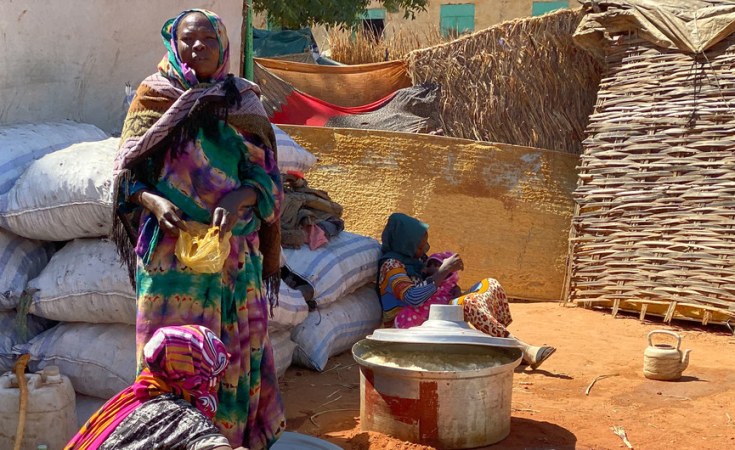


 Hans Thoolen on Human Rights Defenders and their awards