The issuance of Interpol red notices against two Salvadoran human rights defenders currently in exile in Spain constitutes a grave misuse of the law enforcement mechanism, UN experts warned on 19 November 2025
“This move amounts to an act of transnational repression, as it extends the harassment of human rights defenders beyond borders, targeting them in a country where they are seeking safety,” the experts said.
Ivania Cruz and Rudy Joya have applied for asylum in Spain, fleeing legal harassment in El Salvador stemming from their legitimate human rights work. Both human rights defenders work for the non-governmental organisation UNIDEHC, which has been targeted by the Salvadoran authorities since February 2025 for its support to the La Floresta community, who have been facing attempts of forced eviction since 2024.
“The charges brought against Ivania Cruz and Rudy Joya in El Salvador and related arrest warrants issued by the authorities appear to be without basis and in direct connection with their legitimate human rights work for UNIDEHC to support communities under threat and denounce the actions of the Government under the state of emergency declared in 2022,” the experts said.
In May 2025, the court presiding over their case in El Salvador ordered the Interpol National Central Bureau to submit a request for the issuance of a red notice to the Interpol General Secretariat. Interpol confirmed the issuance in July 2025.
The experts pointed to Articles 2 and 3 of the Constitution of Interpol, which state that the organisation is “strictly forbidden” from undertaking “any intervention or activities of a political nature”, and that the organisation’s activities will be conducted “in the spirit of the Universal Declaration on Human Rights.”
In September 2025, Rudy Joya was summoned by police under the pretext of his asylum application in Spain. Upon presenting himself to the authorities, he was detained and presented before a Spanish specialised court. Ivania Cruz was also summoned and appeared before the same court, which ordered that both defenders sign-in at a local court every 15 days, not leave the country, surrender their passports and report any change of address.
“We call on Interpol to immediately revoke the red notices and judicial sanctions against Ivania Cruz and Rudy Joya, and on Spain to refuse to accede to the red notice and to ensure their safety by rejecting their forcible return to El Salvador,” the experts said.
The experts are in contact with Interpol and the governments of Spain and El Salvador on these concerns.
Ganna Yudkivska (Chair-Rapporteur), Matthew Gillett (Vice-Chair on Communications), Miriam Estrada Castillo (Vice-Chair on Follow-Up), Mumba Malila, and Ethan Hee-Seok Shin,Working Group on Arbitrary Detent
On 29 October 2025the North-South Centre in Lisbon announced that the 2025 North-South Prize is awarded to Miguel Ángel Moratinos and the Olympic refugee sports initiative
The Council of Europe North-South Prize has been awarded to Miguel Ángel Moratinos, United Nations Under-Secretary-General and High Representative for the United Nations Alliance of civilizations, and to an initiative that enables refugees to compete in the Olympic and Paralympic Games. The award ceremony took place at the Portuguese Parliament in Lisbon.
In his speech at the ceremony, Secretary General Alain Berset said: “The Council of Europe is first and foremost a peace project. Peace built on justice and international cooperation – vital for the preservation of human society and civilisation. This is what the North-South Centre is all about. And that is why this prize matters. The recipients we honour today are for dialogue, human dignity, and for hope”.
Miguel Ángel Moratinos has been rewarded for his career in diplomacy and international relations, dedicated to advancing peace – notably in the Middle East, for which he was European Union Special Representative for seven years – and intercultural dialogue between different regions. He has also served, among other roles, as Minister of Foreign Affairs of Spain.
The initiative enabling refugees to compete in the Olympic and Paralympic Games – led by the Olympic Refuge Foundation, the International Olympic Committee and the International Paralympic Committee – was honoured for their commitment to making the participation of refugee athletes in the Olympic and Paralympic Games possible. By competing on the world stage, these athletes – displaced by conflict, persecution or crises – inspire hope and exemplify the power of sport to unite people in the spirit of fair play, tolerance and cooperation.
The initiative was represented at the ceremony by Nawal El Moutawakel, Vice-President of the International Olympic Committee, Leila Marques, Vice-President of the International Paralympic Committee, and the athletes Cindy Ngamba and Zakia Khudadadi, who made history as the first members of the Refugee Olympic and Paralympic teams to win a medal.
Himself a survivor of the harsh journey across the Mediterranean Sea, Moses Von Kallon SOS Méditerranée’s Aquarius vessel in 2018 – a journey during which his rescue ship was turned away from Italian and Maltese waters. He told ISHR about how he started his organisation after Aquarius Supervivientes after settling in Spain and how he has wrestled with everyday racism. ‘Immigration is not a disease,’ he said, as he shared his hopes for a future where justice and free movement would be guaranteed to those who are forced to leave their homelands to find safety. Learn more about Moses and other human rights activists and defenders like him: https://ishr.ch/defender-stories/
On 26 June 2023 HRW called on Spain use its six-month tenure as EU Presidency to translate into concrete and bold actions commitment to protect fundamental rights and the rule of law.
Spain holds the presidency as the world marks the 75th anniversary of the Universal Declaration of Human Rights (UDHR) on 10 December 2023. In anticipation of this pivotal moment Spain should make every effort to uphold the rights and values enshrined in this historic document.
HRW calls upon the Spanish government to consider the following priority issues and recommendations:
Fundamental Rights and Rule of Law in EU member states
Two EU member states – Hungary and Poland – currently face scrutiny under Article 7 of the Treaty on European Union (TEU)…
The freezing of EU recovery and cohesion funds under the conditionality mechanism represents a welcome step but it is insufficient to address the gravity of the erosion of rule of law and human rights. While Hungary and Poland have adopted some limited measures in response to requirements under the mechanism, these have failed to address fundamental and long-standing concerns. ….We urge the Council to hold the Polish and Hungarian governments to account by using the powers conferred to it under the Treaties and to fulfil the strong mandate to act given to it by the European Commission and Parliament. The urgency of Spain’s leadership and responsibility cannot be overstated as it is one of only two remaining presidencies before Hungary and Poland in turn assume leadership of the Council. It is highly likely that during that time progress on rule of law will at best stall, and at worst Article 7 scrutiny will come to an end altogether…
Rights-Respecting and Principled EU Migration Policy
Spain’s EU Council presidency comes at a critical time for the EU’s migration policy after the Council agreed on 8 June on a negotiating position on an EU-wide reform of its asylum and migration system. Given its mandate to lead on behalf of member states the negotiations with the European Parliament on a final agreement, Spain has an opportunity to broaden the scope for a rights-respecting approach.
We call on your government to:
Support the establishment of proactive, state-led SAR operations in the Mediterranean Sea that could involve expanding the mandates and capacity of existing initiatives like EUNAVFOR MED and Frontex, funding professional rescue NGOs and ensuring predictable disembarkation.
Promote a discussion on the critical role of NGOs to ensure that they are fully able to carry out their lifesaving SAR activities, instead of facing obstruction and criminal and administrative penalties; and provide platforms for discussion of cooperation between member state rescue coordination centers and NGOs.
Advocate for independent and effective border monitoring mechanisms to document human rights violations at EU external borders, such as unlawful pushbacks, to ensure accountability for those responsible for human rights abuses and access to justice for victims.
Ensure that migration cooperation with third countries, and all provision of financial, technical, and material assistance, are contingent on clear and verifiable human rights commitments.
Enable a constructive trialogue on the asylum procedures regulation and the asylum and migration management regulation with a view to limiting the use of accelerated border procedures, the detention of asylum seekers including families with children, and discretionary use of the “safe third country” concept.
Promote a discussion on establishing more safe and legal pathways for migration as called for by EU Justice and Home Affairs Commissioner Johansson.[8]
Human Rights as a Pillar of EU’s Foreign Policy
The EU is equipped with solid instruments to ensure that human rights protection remains at the centre of its external action. The EU has shown resolve in its response to Russia’s invasion of Ukraine and has led at the United Nations to address key human rights crises.
..
During its Presidency, we call on your government to:
Continue to combat impunity for crimes committed in Ukraine, including by providing adequate resources to the International Criminal Court’s (ICC) regular budget, advocating and supporting the implementation of ICC arrest warrants, pressing Ukraine to ratify the Rome Statute and supporting independent investigations and prosecutions under universal jurisdiction.
Continue to support Human Rights Defenders (HRDs) at risk and share your experience with other EU member states. Encourage other EU member states to learn from and replicate Spain’s forward-leaning approach with the Program for Support and Protection of Human Rights Defenders at Risk that provides dedicated one-year residential visas for HRDs. Advocate with EU member states to use their discretion and facilitate access by HRDs to multi-year multi-entry Schengen visas in line with EU guidelines.
…
Recalibrate EU’s engagement with China to address the government of China’s human rights record through measurable deliverables; counter the government of China’s flawed narratives on its own human rights record; reject efforts to undermine international human rights institutions; lead the creation of a UN investigative and monitoring mechanism for crimes against humanity committed in Xinjiang; sanction or hold accountable those responsible for such crimes; and make plans to reduce dependency on a government that assaults human rights both domestically and in its foreign policy.
The Brunet Foundation at the Public University of Navarre has published its Call for nominations for their International Jaime Brunet Prize to promote and disseminate the protection of human rights and contribute to the eradication of degrading and inhumane treatment. See also: https://www.trueheroesfilms.org/thedigest/awards/14B9DC4A-B689-D56A-2825-8E11E6374C3E.
The 2022 call is governed by the following guidelines:
The 2022 Jaime Brunet Prize is called with the aim of distinguishing: a) Work related to Human Rights. b) A career dedicated to the promotion of Human Rights.
The prize consists of a diploma, a sculpture commemorating the award and €36,000 in cash.
The prize may be awarded to the following, regardless of their status or nationality: a) Individuals. b) Work teams. c) Institutions or agencies.
Nominations can be presented by the nominees themselves or by third parties using the official form, which can be downloaded from: www.unavarra.es/conocerlauniversidad/fundacion-jaime-brunet It should be accompanied by a reasoned justification no longer than 20 pages.
If desired, this document may be submitted together with up to ten reasoned endorsements. The Board of the Brunet Foundation may present and endorse new candidates. It will also re-present the non-winning candidates from the two previous years.
Candidates can be nominated in Spanish, Basque, English and French and should be sent by email to t: fundacion.brunet@unavarra.es
The deadline for applications closes on September the 30th 2022.
Proposals will be examined by a Jury designated by the Board of the Foundation, which shall meet at the Public University of Navarre. The announcement of the winner of the 2022 Brunet Prize shall take place, as far as possible, on the anniversary of the Universal Declaration of Human Rights, on 10th December 2022.
On 30 March 2022, Statewatch along with 13 other human rights organisations condemned the deportation from Spain to Algeria of Mohamed Benhalima, a human rights activist who faces a serious risk of torture and other ill-treatment in the North African state.
The organisations strongly condemn the deportation by Spain of Algerian activist Mohamed Benhalima, in the evening of 24 March 2022, despite the risks of torture and serious human rights violations he faces in Algeria, and therefore in blatant violation of Spain’s international obligations on non-refoulement. The authorities had been made aware, through civil society and legal appeals, that Mr Benhalima faces a high risk of torture, arbitrary detention and unfair trial in Algeria, where such violations are increasingly common against prisoners of opinion and peaceful activists.
Mohamed Benhalima is an Algerian citizen and a former Army corporal turned whistleblower, who exposed corruption among Algeria’s high-ranking military officials in 2019. He left Algeria after receiving information that his name was on a list of wanted military officials at risk of detention by the Algerian army for their participation in the Hirak, a mass pro-democracy protest movement.
He sought asylum in Spain on 18 February 2020 and again on 18 March 2022; Spain refused him asylum both times. On 14 March 2022, authorities opened an administrative file of expulsion for infringement of Art. 54.1.a. of Immigration Law 4/2000, alleging that Mr. Benhalima took part in “activities contrary to public security or which may be harmful for Spanish relationships with foreign states”.
Spanish authorities justified the opening of an expulsion file based on Mr. Benhalima’s alleged association with political opposition group Rachad, which was listed as a terrorist group by Algeria on 6 February 2022. Spanish authorities claimed that Rachad’s objective was to infiltrate radical youth into Algerian society to protest against the Algerian government, and concluded that the activist was a member of a terrorist group.
Authorities did not provide any proof of violent action or speech or any other action taken by the activist that would fall under a definition of terrorism in accordance with the definition proposed by the UN Special Rapporteur on the protection of human rights while countering terrorism. Authorities also do not appear to have considered a context in which Algerian authorities have been increasingly levelling bogus terrorism and state security charges against peaceful activists, human rights defenders and journalists since April 2021. On 27 December 2021, UN Special Procedures warned that the definition of terrorism in the Algerian Penal Code was too imprecise and undermined fundamental rights. They stated that the procedure for registration on the national terrorist list did not comply with international human rights standards and expressed concern that it could give rise to abuse.
On 24 March around 7pm, Mr. Benhalima’s lawyers were notified of the resolution of expulsion and promptly filed a request for an interim suspensive measure at the National Court of Spain, which was rejected; however, it was revealed later that the activist was already on his way to Algeria at the time.
On 21 March 2022, the UN High Commissioner for Refugees (UNHCR) submitted a non-public report to the Spanish government stating that Mr. Benhalima’s asylum request should be studied thoroughly in a regular procedure and not rejected expediently, arguing that the fear of torture was credible and that Algeria’s criminalisation of peaceful opposition was internationally recognised.
On 27 March, Benhalima appeared in a video broadcasted on Ennahar TV, in which he “confesses” to the crimes of conspiracy against the state, and states that he was not treated badly in custody. However, the undersigned organisations call into question the reliability of such statements which might be the result of duress. In addition, Benhalima had himself released a video from the retention centre in Valencia, before his deportation to Algeria, in which he warns that such videos would not be genuine and would show that he “was subjected to severe torture at the hands of intelligence services.”
In January and March 2021, in Algeria, Mohamed Benhalima was sentenced in absentia to a total of 20 years in prison for charges including “participation in a terrorist group” (Article 87bis 3 of the Penal Code) and “publishing fake news undermining national unity” (Art.196 bis) among other charges. The overly broad formulation of both articles has been used by Algeria repeatedly to criminalise fundamental freedoms. In one of the verdicts, issued on 9 March 2021, the judge sentenced Benhalima to 10 years in prison for his online publications, including videos exposing corruption in the army, a form of peaceful expression, which is protected under the right to freedom of expression.
Spanish authorities additionally motivated the expulsion based on Mr. Benhalima’s close relationship with Mohamed Abdellah, another Algerian whistleblower and former member of the military, who also sought refuge in Spain in April 2019 and was forcibly returned on 21 August 2021 using Art. 54.1.a. of Law 4/2000, in similar circumstances and for the same motives.
Mohamed Abdellah, currently detained in the military prison of Blida, stated in court on 2 January 2022 that he had been subjected to various forms of torture and ill-treatment upon his return to Algeria, including prolonged solitary confinement in a cell with no light and physical abuse, according to a witness who attended the hearing. He was also deprived of access to a lawyer.
Despite the strong similarities between both cases providing a compelling precedent about the actual risk of torture and ill treatment of activists and whistleblowers, notably former members of the military, in Algeria, the Spanish government showed its determination to forcibly return someone where their physical and psychological integrity was not guaranteed. In doing so, Spain flouted critical international law obligations under which nobody should be returned to a country where they would be in danger of suffering torture or other cruel, inhuman or degrading treatment.
Signatures
MENA Rights Group
Justitia Center for legal protection of human rights in Algeria
On Thursday, 3 December 2020 Scoop carries the recent report by the Euro- Med Monitor which shows actions in a number of countries covered by the NGO
Hungary
The European Commission issued a new notice/ procedure against Hungary in which it considers Hungary’s new laws against refugees and asylum seekers illegal and violates the European Union laws for asylum seekers. The Hungarian government closed its transit areas and approved a new law prohibiting asylum seekers from entering the country. Under the new law, asylum seekers must first submit “a declaration of intent” at the embassies of Hungary in Serbia or Ukraine, and if they were approved by the National Directorate-General for Aliens Policing (formerly the Office of Immigration), asylum seekers can then enter the territory of Hungary to formally submit an asylum application.
During a lobbying and advocacy campaign extending for more than three years, Euro-Med Monitor has worked with partner international organizations to pressure the EU governments to accommodate more asylum seekers and distribute the burden among them. Euro-Med Monitor called on the EU to search for the best mechanisms to redistribute refugees and asylum seekers in Hungary in a fair manner between the EU member states, pressure the Hungarian government to take full responsibility for migrants and asylum seekers in its custody, and put an end to violations of their basic rights.
The EU Ombudsman announced on 10 November that an investigation has been opened into the possible complicity of the EU’s Executive in mismanaging funds allocated for overseeing the conduct of the Croatian border officers accused of participating in violence against asylum seekers, including shootings of refugees.
On May 19, Euro-Med Monitor addressed the Croatian government and concerned parties in the EU to immediately put an end to all illegal and discriminatory practices against asylum seekers and to conduct an independent investigation into violations committed by the Croatian police against refugees.
Spain
On 30 November, the Spanish authorities have cleared and dismantled dock camp in Gran Canaria, which was used to accommodate thousands of migrants and asylum seekers in very adverse conditions since last August.
On November 26, Euro-Med Monitor issued an urgent appeal to the Spanish authorities to end the overcrowding conditions in refugee camps in the Canary Islands, to deal with unsanitary conditions, to increase alternative reception centers, to transfer asylum seekers to the Spanish mainland in a quicker manner, and to establish fair asylum procedures for migrants and asylum seekers.
The Palestinian Territories
The EU called on the Israeli government to halt its policy of home demolitions in the occupied Palestinian territories (oPt), including demolishing housing units funded by the EU. This comes amid the high rate of demolitions this year.
In lobbying and advocacy campaigns that spanned over years, Euro-Med Monitor representatives met with members of the European Parliament and launched an intensive correspondence campaign revealing the high number of demolitions against projects funded by the EU in the Palestinian territories. Euro-Med Monitor brought the case to the United Nations Human Rights Council (UNHRC), providing a number of reports and statements, and contacted the Special Rapporteur on housing to exert pressure on Israel to put an end to its violations and demolitions last September.
The Jericho Magistrate’s Court issued a decision to release Palestinian activist Nizar Banat after he was arrested for publishing a video on Facebook criticizing the resumption of relations between the Palestinian Authority (PA) and Israel.
On November 22, Euro-Med Monitor called on concerned bodies in the PA and its Public Prosecutor to immediately release Banat, and urged the PA to to review its security policies in dealing with opponents and to put an end to all violations committed against the rights guaranteed by relevant international laws and treaties.
Saudi Arabia/United Arab Emirates
Negotiators in the European Council and the European Parliament approved new rules on November 8 that would control the export of dual-use goods such as electronic surveillance equipment to third countries that might use these technologies to harm their own citizens and are involved in human rights violations.
During the past months, Euro-Med Monitor, in cooperation with partner organizations, addressed several European Parliament members and representatives. The Euro-Med released several reports revealing the grave human rights violations committed by both Saudi Arabia and the UAE against civilians, including the war in Yemen, enforced disappearances, and arrest campaigns against journalists and activists for opposing the regime. Euro-Med Monitor, in cooperation with its partners in the region, called on the European Union (EU) countries to stop the export of weapons and modern surveillance technologies to countries that violate human rights in the Middle East.
Europe
On November 10, members of the European Parliament called for ensuring accountability for the European Border and Coast Guard Agency (Frontex) over returning migrants and asylum seekers from Greece to Turkish territorial waters. On May 6, 2020, Euro-Med Monitor addressed members of the European Parliament and the EU to impose transparency and accountability measures against Frontex practices and to establish an independent oversight committee to investigate and prevent any violations.
Jordi Cuixart is the head of Omnium Cultural, a Catalonian cultural association
THE UN’s special rapporteur on Human Rights Defenders, Mary Lawlor, has called for jailed Catalonian independence activist Jordi Cuixart to be freed.
Yesterday marked the third anniversary of the civic leader’s imprisonment for his role in the 2017 independence referendum. Writing in The National, Cuixart reveals the grim reality of life in a Spanish prison, saying that he’s forced to spend 23 hours a day in a room measuring just eight square metres. However, the father of two young children makes clear that he would make the same choices as before.”
He was handed a nine-year sentence after being convicted of sedition. Unlike the other eight imprisoned, Cuixart is not a politician, he is the head of Omnium Cultural, a Catalonian cultural association.
Taking to Twitter, Lawlor said it was time for Cuixart to be freed. “In 2019, the Working Group on Arbitrary Detention found his detention to violate both the [Universal Declaration of Human Rights] and [the International Covenant on Civil and Political Rights] and deemed it arbitrary. He should be released.”
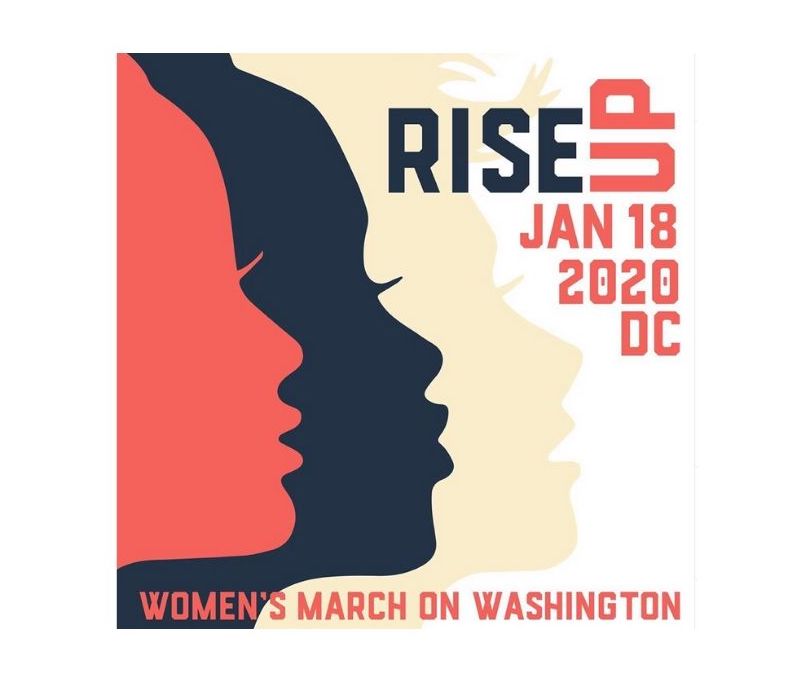
On January 21st of 2017, millions of women and allies around the world took to the streets to make themselves seen and heard, demonstrating to advance women’s human rights. Now, nearly three years later, the Women’s March movement has announced that on 18 January, 2020, feminists and women’s human rights defenders will march yet again in the 4th Annual Global Women’s March.
Common Dreams also reported that women and men alike marched in France, Spain, Uganda, and other countries in November 2019 to demand that their elected officials work to end violence against women. In Spain, tens of thousands of people marched to recognize the day. But as the New York Times reported, the country’s far-right Vox Party—which, though still a minority party, doubled its representation in Parliament in recent elections—used the opportunity to affirm its opposition to a law aimed at protecting women from gender-based violence. Women gathered at City Hall in Madrid shouted, “This is shameful!” as Vox secretary-general Javier Ortega Smith spoke out against the law and called for national attention to men who are killed by their partners.
Women during a protest on the commemoration of the International Day for the Elimination of Violence Against Women, in Nantes, France, on November 25, 2019. (Photo: Estelle Ruiz/NurPhoto via Getty Images)
As part of the global effort, the International Labor Organization (ILO) called for ratification of its new Convention, adopted in June, to recognize the right of all people to be free from harassment and violence in their workplaces. “This commitment now needs to be turned into concrete, practical action,” the ILO wrote. “Violence and harassment in the world of work has enormous human, social and economic costs. Violence and harassment constitutes one of the greatest threats to decent work. No more excuses. Let’s work together and make the promise of Convention No. 190 a reality for all.”
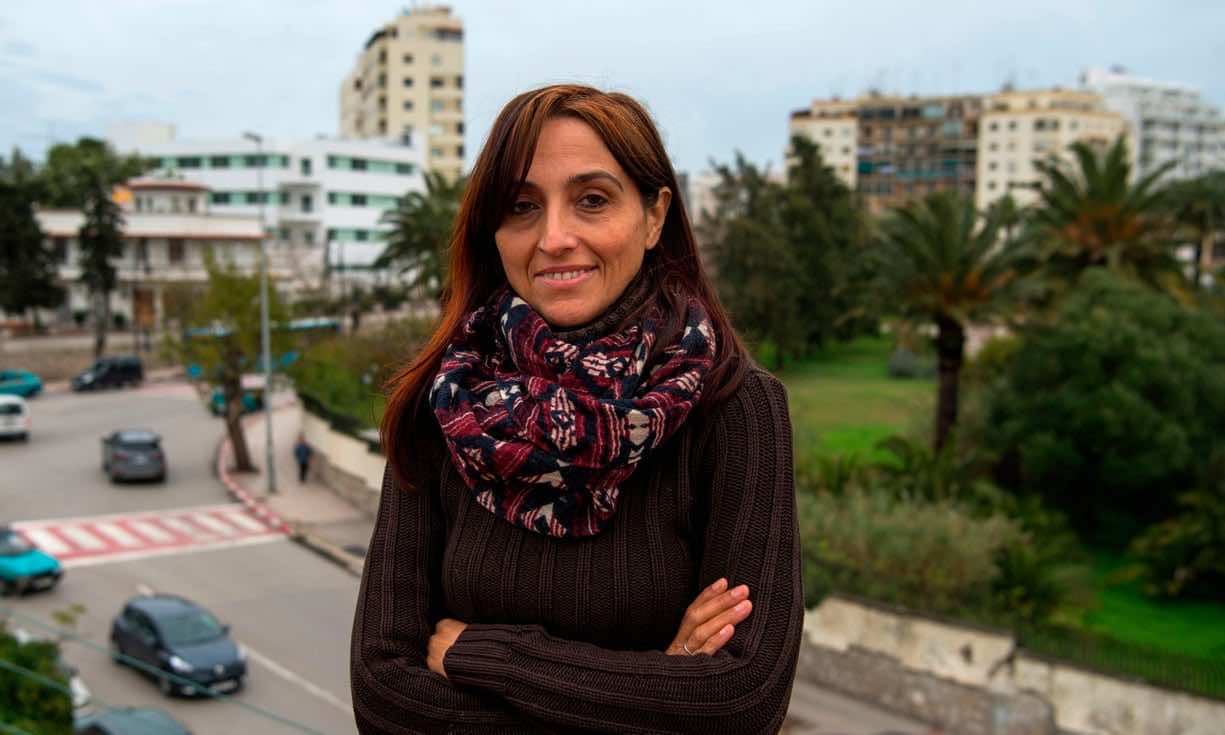
Helena Maleno – Credit: Fadel Senna (AFP), Getty Images
Sydney McCourt reported on 12 March 2019 on the case against Spanish migrant rights activist Helena Maleno:
The Court of Appeals in Tangier has dropped its charges against Spanish activist Helena Maleno. Morocco had charged Maleno, a spokesperson and activist for migrants, in 2017 with colluding with human traffickers to illegally move people across borders. However, the court confirmed on Monday that there was no evidence of a crime.
Based in Tangier for the last 16 years, Maleno leads the NGO Walking Borders, or Caminando Fronteras. Founded in 2002, the organization acts as a lifeline for migrants who are trying to reach Europe by crossing from Morocco to Spain. Walking Borders also documents human rights violations on both sides of the border and provides legal, social, and medical support to migrants. Maleno regularly receives calls from migrants in distress as they attempt the perilous Mediterranean crossing and then alerts maritime authorities in Spain, Morocco, and Algeria to the existence and location of the boats. In a speech earlier this year, the Spanish minister of interior development, Jose Luis Albalos Meco, said that 70 percent of calls to maritime authorities regarding boats at risk come from Maleno herself or her organization. The statement was backed up by Captain Miguel Zea, maritime rescue chief in Almeria, Spain, who has said that Maleno “is the person who has saved the most lives in the Strait – at least 10,000.”
UN human rights experts have denounced the case against Maleno, including the UN special rapporteur on the situation of human rights defenders in a report to the UN Human Rights Council in 2018.
The charges Morocco filed against Maleno have their origins in an investigation led by Spain’s Unit for Combating Immigration Networks and Document Counterfeiting (UCRIF) in 2012. The investigation was sparked by frequent calls made by Maleno to naval authorities regarding boats of migrants in the western Mediterranean waters. The calls, despite saving countless lives, also aided directly in the migrants’ transfer to the Spanish coast. In April 2017, Spain found insufficient grounds to pursue a criminal case but passed the investigation on to Morocco. The Moroccan courts first dismissed the case in December 2018, but Monday’s announcement, in response to an appeal filed with the Moroccan Prosecutor’s Office, stands as final..
Maleno responded to the news in a video she posted to her Twitter. In the video, she expresses that while she is “happy to be free,” the struggle does not end with the charges being dropped”. She said that “this is a very difficult time for human rights defenders as we are being persecuted and criminalized … To defend the right to life is not a crime.”
Maleno has won international recognitions with several awards, including the human rights award “Nacho de la Mata” (2015), the Human Rights Award of the Human Rights Association of Spain (2018), and the MacBride Peace Prize (2018).




 Hans Thoolen on Human Rights Defenders and their awards