This is a reminder that nominations for the 2026 Right Livelihood Award are open, and the deadline is January 16, 2026 . They are seeking new nominees for the Award who are leading change-makers in their field. Nominations are fully open to the public; therefore, anyone can nominate an individual or organisation creating change through their innovative and life-changing work. To nominate a candidate (preferably in English, but French and Spanish are also accepted), please submit nominations through our online nominations form. Read more about the Award https://www.trueheroesfilms.org/thedigest/awards/97238E26-A05A-4A7C-8A98-0D267FDDAD59.
The Right Livelihood Award recognizes and supports outstanding individuals and organizations driving social, environmental, and human rights change. Winners receive financial or honorary awards, lifelong access to a global network, and international recognition to amplify their impact and protect their work.
Right Livelihood is looking for a full-time Head of Research. The role will be based at one of our offices in Stockholm or Geneva and will lead the selection and research of new Laureates for the Right Livelihood Award.
About Right Livelihood
For over 40 years, Right Livelihood has honoured courageous people solving global problems, creating a community of change-makers committed to peace, justice, and sustainability. By recognising the actions of brave visionaries and building a continuous relationship with these change-makers, Right Livelihood boosts urgent and transformational societal change. With offices in Stockholm and Geneva, Right Livelihood has 20 staff and an annual budget of EUR 4 million. Every year, an international jury chooses the new Laureates: to date, 198 Laureates from 77 countries have been awarded for their impactful contributions. Read more about our approach.
Purpose of the role
You will oversee all aspects of the research and selection of new Laureates for the Right Livelihood Award, taking a leading role in implementing our strategic outlook, as well as developing and managing the research team. In this position, you will be collaborating with colleagues in the entire Right Livelihood team and communicating with nominees for the Award as well as external experts and other contacts. It is expected that you stay on top of global developments related to the work. It is your responsibility to ensure high quality in the research and present accurate, comprehensive, and timely research findings about the candidates.
The Head of Research will report to the Deputy Director and lead the work of the research team, which currently has two staff members.
Main responsibilities
Lead and develop the annual selection process of Laureates towards the goals defined in the organisational strategy and operational plan.
Provide leadership to the research team, manage and guide the research work, and be responsible for the research budget.
Coordinate and conduct investigative research about nominees for the Award, both remote and on-site, and lead the writing of the report presented to the jury, including all relevant research findings.
Ensure high-quality research to allow the jury to assess nominations from multiple perspectives.
In coordination with colleagues, make sure that our work is informed by current trends in global affairs and civil society movements.
Required experience and qualifications
Professional experience in leadership roles
Professional experience in conducting investigative research in fields such as activism and social transformation
Experience with conducting interviews with a wide range of people, e.g. victims of environmental or human rights violations, both on-site or online
Full professional proficiency in English, including experience with research report writing
Terms of employment
This position will be located preferably at our head office in Stockholm or at our Geneva office. Regular international travel is expected in this role. This is a permanent full-time position with a probationary period.
Right Livelihood is committed to creating a diverse and inclusive workplace. We therefore strongly encourage applications from all backgrounds, identities and abilities to help us create a diverse, balanced and inclusive working environment.
Starting date
By agreement, preferably April 2025.
How to apply
We use a competency-based process for this recruitment. Therefore, you will not be asked to attach a letter of motivation to your application. Instead, we will ask you to complete the online application form accessed through the link below, attach your CV and submit a work sample. Instructions for the work sample are outlined here and in the application form.
2024 Right Livelihood Laureates face off against the marginalisation of Indigenous Peoples, Israel’s illegal settlements, dangerous development projects in Mozambique and human rights violations committed with impunity to demand a just future for all.
THE 2024 LAUREATES:
Joan Carling “For raising Indigenous voices in the face of the global ecological breakdown and her leadership in defending people, lands and culture.” Joan Carling is a Filipino Indigenous activist who has been defending the rights of Indigenous Peoples for more than 30 years. Her work spans grassroots and international levels, focusing on human rights, sustainable development, climate justice and the fight against land exploitation. [https://humanrightsdefenders.blog/2016/11/02/joan-carling-indigenous-land-rights-defender-from-the-philippines/]
Issa Amro / Youth Against Settlements “For their steadfast non-violent resistance to Israel’s illegal occupation, promoting Palestinian civic action through peaceful means.” Issa Amro is a Palestinian human rights activist who has dedicated his life to peaceful resistance against Israeli occupation in the West Bank city of Hebron. Together with the activist group he founded, Youth Against Settlements, he strives to create a future where Palestinians live freely and with dignity. [https://humanrightsdefenders.blog/tag/issa-amro/]
Anabela Lemos / Justiça Ambiental! “For empowering communities to stand up for their right to say no to exploitative mega-projects and demand environmental justice.” Anabela Lemos is a Mozambican environmental activist and Director of Justiça Ambiental! (JA!), an organisation committed to fighting corporate-led projects that displace communities, damage livelihoods and intensify climate change in Mozambique.
Forensic Architecture “For pioneering digital forensic methods to ensure justice and accountability for victims and survivors of human and environmental rights violations.” Forensic Architecture is a pioneering research agency dedicated to uncovering and documenting the truth about environmental and human rights violations using cutting-edge open-source investigation and digital modelling techniques.
“Amid the chaos of violence, greed and injustice that is affecting so many people around the world, the 2024 Right Livelihood Laureates reignite hope,” said Ole von Uexkull, Right Livelihood’s Executive Director.
Right Livelihood’s advocacy team delivered a statement at the 56th session of the UN Human Rights Council in Geneva calling for Member States to stop retaliating against environmental defenders. The statement highlighted the struggles of Right Livelihood Laureates from Cambodia, Kenya and Nicaragua, where activists leading the fight against climate change face unlawful arrests, armed attacks and police violence, among other forms of oppression, for their peaceful activities.
Right Livelihood Laureates from Cambodia, Nicaragua and Kenya who are leading the fight against climate change are being attacked by their governments, a concerning trend Right Livelihood says the Council has a responsibility to reverse.
Addressing the Special Rapporteur on the protection and promotion of human rights in the context of climate change, Right Livelihood asked, “How can the Council better address reprisals against environmental defenders playing a key role in the fight against climate change?”
Similarly, in Kenya, Laureate Phyllis Omido and her organisation the Center for Justice Governance and Environmental Action have been targeted by the government for organising against business interests that jeopardise the environment.
In May, Omido and local community leaders came under threat when police brutalised protestors for opposing a nuclear project in a biodiverse area between the Watamu National Marine Park and the Arabuko Sokoke Forest. Police fired 137 live rounds and 70 tear gas canisters.
“Investigations into such crimes are rare, and those speaking out face severe reprisals,” we told the Council.
Wefinished our statement by highlighting the situation in Nicaragua, where Indigenous communities protecting their land are attacked, forcefully displaced and killed by illegal settlers involved in mining and cattle trading.
Right Livelihood Laureates illuminated the struggles and triumphs facing youth activists in a panel discussion organised by its Geneva office in March 2024. With speakers including Laureates from Belarus, Cambodia, and Egypt, as well as the UN Special Rapporteur on human rights defenders, the event painted a vivid picture of the evolving landscape of youth activism.
Natallia Satsunkevich, representing Belarusian Laureate organisation Human Rights Center “Viasna”, shared her journey, beginning as a civil rights summer school attendee to becoming an activist with Viasna to shed light on the abuses of Belarus’s repressive regime.
“I realised that I have this power to monitor and control the government,” she said. “This is obviously the aim of civil society in each country.”
She has faced backlash for her work: her apartment was searched and her mother was questioned by authorities. Eventually, Satsunkevich had to flee Belarus to avoid criminal prosecution. Five of her Viasna colleagues, including founder and Right Livelihood Laureate Ales Bialiatski, are imprisoned for their work.
“Nevertheless, I think the decision to become a human right activist and joining Viasna was one the best decisions of my life,” she said, pointing to the close friendships and working relationships she has developed. “The most important point is that I feel like I am doing the right thing, I know that I am making this world better.”
She called on young people around the world to “check your rights”: keep an eye on leaders and make sure that all human rights are respected.
Ratha Sun, from the Laureate organisation Mother Nature Cambodia, highlighted the innovative approaches of young activists. Despite facing legal challenges and imprisonment, the group’s viral campaigns and grassroots mobilisation have sparked significant environmental advocacy.
“For all our videos and campaigns, we … think about creativity and technical ideas to get more involvement from young people,” Sun said. “We also work closely with the local community that is being affected by the project [we’re fighting].”
The group’s activism has stopped damaging construction and extraction projects such as a hydropower dam and sand mining.
Their successes have resulted in more attention from the Cambodian public and, at the same time, also drew the ire of the government.
“Between 2015 and now, 11 members of Mother Nature Cambodia have been in jail, and now, six of us still have charges against us from the court,” Sun said, noting that the charges include insulting the king and plotting against the government. Sometimes, they are also accused of being members of the CIA.
“Even though we are facing 10 years in prison, our activists, who are young, are still standing to fight the government,” Sun said.
2016 Laureate Mozn Hassan, the founder of Nazra for Feminist Studies and the Doria Feminist Fund, talked about the double bind of being a young female activist in the Global South. Battling stereotypes and systemic challenges, Hassan emphasised the importance of expressing feminism and fighting gender-based discrimination creatively.
“Being a woman in these contexts is so problematic and has all these barriers from the private and the public – and all of them are affecting us,” Hassan said. “Especially if they are young: … it is also about resources, accessibility and acceptance.”
She noted that in the Middle East and North Africa region, the stigma for young feminist activists working on gender issues has been increasing, and they are targeted more often.
“For example, in Iraq, it’s not allowed to name any of the activity as something relating to gender,” she said, noting that this was especially the case for young activists expressing their femininity or sexuality in non-traditional ways.
When it comes to the tools young activists are using, in many countries, such as Egypt, they are being targeted and imprisoned for social media posts.
Having just finished a report on youth and child human rights defenders, Mary Lawlor, UN Special Rapporteur on human rights defenders, provided a global perspective. She highlighted the unique contributions of youth and child activists, drawing attention to their innovative use of social media, decentralisation, and creativity in campaigning.
“Young people face the same challenges as all other human rights defenders, and they often use the same approaches as other human rights defenders,” Lawlor said. “But where they differ is that they are very creative, and they have novel tools and methods.”
She noted their “extremely clever use of social media” that can garner attention.
However, she also pointed out the challenges they face, including exclusion from formal decision-making.
“Ageism is a frequent barrier to young and child activism: Young defenders feel they are not being heard, not being taken seriously, and their views are not being taken into account,” Lawlor said. “Even when their participation in public and political decision-making has been increased, it’s usually a tokenistic box-ticking exercise.”
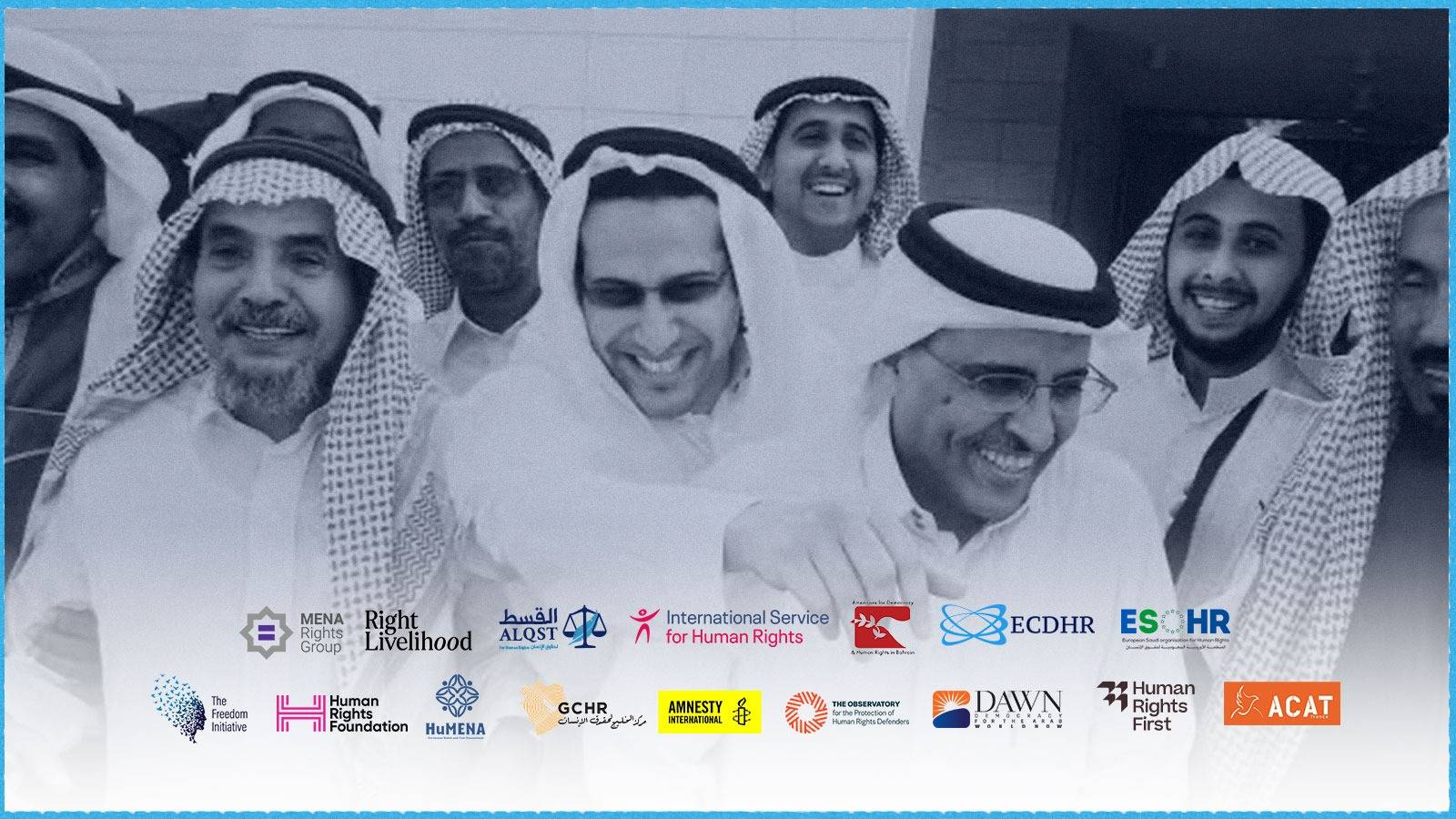
We, the undersigned human rights organisations, call on Saudi authorities to reveal the health condition of and immediately and unconditionally release prominent Saudi human rights defender and co-founder of the now dissolved Saudi Civil and Political Rights Association (ACPRA)*, Dr. Mohammed al-Qahtani, who has been detained incommunicado for six months. We also call for the immediate and unconditional release of four ACPRA members who remain in arbitrary detention.
Today, 24 April 2023, marks six months since prominent Saudi human rights defender and co-founder of the Saudi Civil and Political Rights Association (ACPRA)* Mohammed al-Qahtani last contacted his family. Since then, the authorities have subjected him to incommunicado detention. Al-Qahtani served his full sentence in November 2022. Five ACPRA members remain imprisoned in reprisal for their peaceful human rights activism: Mohammed al-Qahtani, Essa al-Hamid, Mohammed al-Bajadi, Fawzan al-Harbi, and Abdulaziz al-Shubaili.
Mohammed al-Qahtani was arbitrarily arrested in March 2012 and interrogated regarding his work with ACPRA and his peaceful activism. On 9 March 2013, the Criminal Court in Riyadh sentenced him to 10 years in prison to be followed by a travel ban of equal length on charges including “breaking allegiance to the ruler”, “questioning the integrity of officials”, “seeking to disrupt security and inciting disorder by calling for demonstrations”, and “instigating international organizations against the Kingdom.” The authorities failed to release Al-Qahtani on 22 November 2022, when he finished serving his prison sentence. However, since 24 October 2022, Saudi authorities have denied him any contact with his family and continue to keep him in incommunicado detention.
Despite al-Qahtani’s wife making several inquiries about him to al-Ha’ir prison, where al-Qahtani was serving his sentence, prison officers continue to refuse to disclose any information about him. His family has reasons to believe that he has entered into a hunger strike and his health has considerably deteriorated, putting his life at imminent risk. This is not the first time Mohammed al-Qahtani was denied contact with his family. In April 2021, he was held incommunicado after testing positive for Covid-19, raising fears regarding his health and well-being for the duration of his illness. For the past 10 years of imprisonment, security forces subjected al-Qahtani to inhumane and degrading conditions of detention, and they have also subjected him to torture and ill-treatment, including beatings.
We are all the more concerned about -al-Qahtani’s well-being considering the death of ACPRA co-founder Abdullah al-Hamid in detention on 23 April 2020. Abdullah al-Hamid suffered from hypertension, and his doctor told him three months before he passed away that he needed to undergo heart surgery. He was threatened by prison authorities that if he told his family about his health condition, they would cut his communication with his family. Dr Abdullah al-Hamid had suffered a stroke on 9 April 2020 and remained in detention, despite being in a coma in the intensive care unit at al-Shumaisi Hospital in Riyadh.
Following al-Hamid’s death, the Saudi authorities carried out a wave of arrests against several individuals who expressed sympathy over his passing.
Created in 2009 by 11 human rights defenders and academics, ACPRA was established to promote and protect fundamental rights and freedoms in Saudi Arabia, including through promoting constitutional reforms. While ACPRA was never officially registered by the government, it was formally banned as an organization and dissolved by court order in 2013. As of May 2016, all of its 11 members had been sentenced by the Specialized Criminal Court (SCC) to lengthy prison sentences ranging between seven and 15 years for their human rights activism and cooperation with the United Nations human rights mechanisms.
In light of the above, we, the undersigned organisations, reiterate our call on the Saudi authorities to immediately and unconditionally release Mohammed al-Qahtani and other imprisoned members of ACPRA who are arbitrarily detained solely for their peaceful activism. In the interim, we call on the authorities to disclose the fate and whereabouts of Mohammed al-Qahtani, ensure immediate contact with his family, and provide him with any medical care he may need. Saudi Arabia should ensure a free and enabling environment for all human rights defenders, in order for them to carry out their activities without fear of reprisals and without undue restrictions.See also: https://www.trueheroesfilms.org/thedigest/laureates/78383825-0b3f-4bca-883a-b81e1baecd09
Among the co-founding members of ACPRA, five remain imprisoned today: Dr Mohammed al-Qahtani (sentenced to 10 years in prison followed by a 10-year travel ban. He completed his sentence in November 2022, yet remains in detention incommunicado); Mohammed al-Bajadi (sentenced to four years in prison, four years of suspension followed by a 10-year travel ban, and currently detained since May 2018); Abdulaziz al-Shubaili (sentenced to eight years in prison followed by an eight-year travel ban); Fowzan al-Harbi (sentenced to 10 years in prison followed by a 10-year travel ban); Essa al-Hamid (sentenced to 11 years in prison, followed by an 11-year travel ban). Sheikh Sulaiman al-Rashudi (sentenced to 15 years in prison and a 15-year travel ban. He was released in April 2018 for medical reasons; Abdulkarim al-Khodr (sentenced to 10 years in prison, followed by a 10-year travel ban. He was released in January 2023 upon the completion of his sentence but remains subject to the travel ban); Abdulrahman al-Hamid sentenced to 9 years in prison, followed by a 9-year travel ban. He was released in January 2023 upon the completion of his sentence but remains subject to a travel ban); Dr Abdullah al-Hamid (sentenced to 11 years in prison followed by an 11-year travel ban), passed away on 23 April 2020 in custody. Abdullah al-Hamid and Mohammed al-Qahtani, alongside Waleed Abu al-Khair, have received the Right Livelihood Award in November 2018.
Signatories:
MENA Rights Group
Right Livelihood
ALQST
International Service for Human Rights (ISHR)
Americans for Democracy & Human Rights in Bahrain (ADHRB)
European Center for Democracy and Human Rights (ECDHR)
European Saudi Organization for Human Rights (ESOHR)
Freedom Initiative
Human Rights Foundation (HRF)
HuMENA for Human Rights and Civic Engagement
Gulf Centre for Human Rights (GCHR)
Amnesty International
International Federation for Human Rights (FIDH), in the framework of the Observatory for the Protection of Human Rights Defenders
World Organisation Against Torture (OMCT), in the framework of the Observatory for the Protection of Human Rights Defenders
Democracy for the Arab World Now (DAWN)
Human Rights First
Action des Chrétiens pour l’abolition de la torture (ACAT France)
Indigenous rights and environmental activist Lottie Cunningham Wren of Nicaragua “for her ceaseless dedication to the protection of indigenous lands and communities from exploitation and plunder.”
“This year’s Laureates are united in their fight for equality, democracy, justice and freedom,” said Ole von Uexkull, Executive Director of the Right Livelihood Foundation. “Defying unjust legal systems and dictatorial political regimes, they successfully strengthen human rights, empower civil societies and denounce institutional abuses. This year’s selection of recipients highlights the increasing threats to democracy globally. It is high time that all of us in favour of democracy around the world stand up and support each other.”
The four Laureates, selected by an international Jury, will each receive a prize money of 1 million SEK. As in previous years, the Laureates were nominated in an open process where anyone could submit individuals and organisations for consideration. The Laureates will be honoured during a virtual Award Presentation on December 3, 2020.
Asma Jahangir is rightly considered one of the foremost human rights defenders of our time [see: https://humanrightsdefenders.blog/2018/02/11/asma-jahangir-one-of-the-worlds-most-outstanding-human-rights-defenders-dies-at-age-66/]. So, the two-day ‘Asma Jahangir Conference 2019 – Roadmap for Human Rights’ which concluded in Lahore, Pakistan on 20 October 2019 is fully justified. The News carries a long report on the meeting in which some 120 jurists, politicians, human rights defenders and media people acted as panellists from Pakistan, England, America, Sri Lanka, Bangladesh, Ireland, Sweden and Afghanistan. Thousands of students, attended the sessions. They all resolved to carry forward the legacy of Asma Jahangir, who fought relentlessly against dictatorial forces and always sought due process of law, equality for women and protection of minorities in the country.
(Former) Politicians dominated the panels but other speakers at the sessions paid tribute to Asma Jahangir and appreciated her commitment to human rights with a resolve to uphold the rule of law and struggle for women’s rights. Munaza Hassan spoke of women’s right to inheritance. Daughter of Asma Jahangir and journalist Munizae Jahangir, who conducted the session, said: “It is a rare moment when all political parties are seen on the same platform.” She said that politicians conveniently forget to protect fundamental rights and right to expression when in they assume power. She said: “We are convinced that without freedom of the media, the rule of law and guarantees of security to human rights defenders, neither democracy nor justice, is possible. The main challenge to development of Pakistan and the rights of its citizens is a national security state. Until the national security is subservient, no other initiative in economy, health, education and rule of law can find success.
The day began with a short film on Asma Jahangir receiving the Right Livelihood Award, produced by True Heroes Films, where she spoke of growing expectations of citizens as far as what the governments should deliver. And governments falling ever further behind, internationally this gap of creative impulses of society on one side and governments dragging their feet on the other, has been the key engine of human rights challenges. Despite threats to her life, she spoke of never leaving Pakistan as it is a place where she has received most love and affection.
As a continuation of the discussion on ‘Art inspires politics’, Munizae Jahangir conducted a panel discussion on ‘How women can build bridges for peace in South Asia’. Former foreign minister Hina Rabbani Khar, Afghan politician Fawzia Koofi, human rights lawyer from Sri Lanka Bhavani Fonseka, Swedish Ambassador Ingrid Johansson and former Afghan ambassador to Pakistan Omar Zakhilwal opined that peace in South Asia was a prerequisite to securing women’s fundamental rights and the resources should be directed towards socio-economic areas rather than the military. Human Rights Ambassador of the Kingdom of the Netherlands, H. E. Dr Bahia Tahzib-Lie, Award-winning novelist Mohammad Hanif, Christian Caryl of the Washington Post, Wusat Ullah Khan, Ms Aisha Sarwari and Iqbal Khattak participated in the discussion on the role of social media.
Dr Bahia talked about the centrality of human rights in a thriving democratic society, and also the role of her government in supporting human rights initiatives all-over the world, including Pakistan. Aisha Sarwari talked about how women are systematically excluded from law-making process and, therefore, law-making concerning social media. She said it is essential for the social and economic development of all countries for women to be able to use the media as disruptive technology and end permission culture. Wusat Ullah Khan mentioned that the social media gives space to freedom, but also makes people extremely vulnerable. He said freedom of speech is part of a bouquet – you cannot talk about freedom of speech without talking about right to life and education and freedom of religion.
Iqbal Khattak, country representative of Reporters without Borders (RSF), spoke about the need for digital safety training and how one should protect oneself by disengaging with trolls. He particularly highlighted threats, accusations of blasphemy as threats that should be taken very seriously. He strongly encouraged use of PICA laws for individuals to seek online protection. He also highlighted Pakistan’s considerable investment in controlling social media spaces and vigilance on part of civil society. The Government of Pakistan should take social media as fundamental right.
On fighting the culture of shame and silence, woman rights activist Uzma Noorani, British professor of human rights Ms Siobhan Mullally, provincial Ombudsperson Khyber-Pakhtunkhwa Rukshanda Naz, Pakistan People’s Party leader Nafisa Shah, former chairperson of the Punjab Commission on the Status of Women Fouzia Viqar said that there should be universality of rights, for all excluded communities including women and marginalised remote communities.
..
On ‘Silencing civil society’, Ms Fareeda Shahid moderated the session of Knut Ostby, United Nations Resident and Humanitarian Coordinator for Pakistan. Ms Zohra Yusuf, human rights activist and council member of HRCP, Mohammad Tehsin, convener of Pakistan Civil Society National Forum, law expert Asad Jamal said registered civil society organisations should be allowed to function, 2013 policy of banning CSOs should be challenged. Mass communication needed to change narratives.
2019 will see the Right Livelihood Award being presented for the 40th time. The RLF maintains an open nomination process, so anyone is able to propose any individual or organisation they feel are creating structural changes through concrete and successful work. The deadline for submitting a nomination is 1 March, 2019. For more on this and other such award see: http://www.trueheroesfilms.org/thedigest/awards/right-livelihood-award
Read more about the nomination process here. Do not hesitate to contact the RLF via email at research@rightlivelihood.org or by phone at +41 (0)22 555 0943 if you have questions about the nomination process. As is stated in the guidelines, proposals for the award must remain confidential and will not be published, as publicising of a proposal will unfortunately result in disqualification.
For last year’s winners: https://humanrightsdefenders.blog/2018/09/24/laureates-of-the-2018-right-livelihood-award-announced/
The Right Livelihood Award— known as the “Alternative Nobel” — appealed on Wednesday 14 November to Saudi Arabia to free three jailed human rights defenders who are the recipients of this year’s award The foundation also urged that the kingdom stop “harassing and killing those who fight” for democracy. Ole von Uexkull, foundation head, said the three jailed Saudi men had “acted through peaceful means” in their activism.



 Hans Thoolen on Human Rights Defenders and their awards