On 26 December 2014, the Geneva-based International Service for Human Rights (ISHR) reported that the following posts were the most visited on its website in 2014:
The African Commission on Human and Peoples’ Rights adopts a landmark resolution condemning violence and calling for an end to discrimination on the basis of sexual orientation and gender identity, perhaps marking a turning of the tide against anachronistic laws across the continent which criminalise homosexuality and even the advocacy of LGBT rights: http://www.ishr.ch/news/african-commission-adopts-landmark-resolution-lg…
The UN Human Rights Council adopts a crucial resolution on the protection of human rights defenders, calling on States to enact laws and policies to support and enable their work. The resolution also renews the mandate of the UN Special Rapporteur on Human Rights Defenders for a term of three years: http://www.ishr.ch/news/un-human-rights-council-adopts-crucial-resolutio…
Human rights advocates from around the world take a stand at the UN Human Rights Council, calling on Chinese authorities to be investigated and held accountable for the death of detained human rights defender Cao Shunli: http://www.ishr.ch/news/china-interrupts-moment-silence-cao-shunli-un-hu…
What are the characteristics and strategies of the most successful human rights campaigns? In a guest opinion piece, Jo Becker of Human Rights Watch examines some of the most significant international human rights campaigns over the last decade to identify the secrets of success: http://www.ishr.ch/news/jo-becker-5-ways-successful-human-rights-campaign
The main topics are linked to the question of reprisals and bring to the fore the importance of the ISHR in linking to the international and regional fora.
On November 12 and 13, 2014, the UN Special Rapporteur on Human Rights Defenders, Michel Forst, met with representatives of regional human rights defenders’ mechanisms, in the framework of the first part of the fifth “inter-mechanisms” meeting. Enhancing coöperation between the UN mechanism and its regional counterparts was defined as a priority by the UN Special Rapporteur in his first report to the UN General Assembly in October 2014.
The “inter-mechanisms meeting 5.1” gathered representatives from the UN, the International Organisation of “La Francophonie” (OIF), the African Commission on Human and Peoples Rights, the Inter-American Commission on Human Rights, the Office of the Commissioner for Human Rights of the Council of Europe, the OSCE/ODIHR, the European Union, as well as international NGOs. It was hosted by theOIF headquarters in Paris, and was facilitated by the Observatory for the Protection of Human Rights Defenders (FIDH-OMCT joint programme).Participants reflected on ways to enhance cooperation, if not articulation, in processing submissions and public statements about human rights defenders’ violations, and in enhancing the follow-up of individual communications and recommendations from country visits. They further discussed best practices and strategies to tackle the issue of arbitrary detention, particularly on emblematic cases.
The meeting also allowed for an exchange on the definition of reprisals and impunity, how they relate to each other, and how tackling impunity through accountability would ultimately mitigate the root-cause of reprisals.
Finally, participants had a discussion on the issue of NGO funding, including foreign funding, as well as on the protection of land rights defenders, echoing the topics of the 2013 and 2014 Annual Reports of the Observatory.
This meeting aimed to prepare an “inter-mechanisms meeting 5.2”, gathering mandate-holders themselves, which the Observatory will organise during the first quarter of 2015 at the OIF headquarters. Last but not least, FIDH and OMCT were invited by the Office of the Commissioner for Human Rights of the Council of Europe to hold the sixth meeting in Strasbourg, and a future meeting in Warsaw, by ODIHR.
This video clip is an excellent introduction to the the question of whether Azerbaijan still belongs in the Council of Europe.
Azerbaijan wrapped up its chairmanship on November 13 of the Committee of Ministers of the Council of Europe. Azerbaijan took over as chair of the Committee of Ministers, the Council of Europe’s executive arm and decision-making body, back in May. Over the course of its six-month term, authorities in Baku bullied and imprisoned scores of journalists and human rights defenders, jailing some of the country’s most prominent such as Leyla and ArifYunus, on trumped-up charges. Azerbaijani Foreign Minister Elmar Mammadyarov attended a ceremony in Strasbourg on November 13 marking the transfer of the chairmanship from Azerbaijan to Belgium. A document posted on the Council of Europe’s website states that “Azerbaijan deployed considerable efforts in furthering the objectives of the Council of Europe around its three key pillars – human rights, rule of law and democracy.”
This assertion makes a mockery of reality as shown by the statements of a great many actors from international NGOs, OSCE to regional defenders networks:
Giorgi Gogia, senior researcher at Human Rights Watch: “It can be said without exaggeration that Azerbaijan’s tenure represented an assault on the institution and everything it [the Council of Europe] stands for”.
Two regional networks, the Human Rights House Network and the South Caucasus Network of Human Rights Defenders, addressed an open letter to President Ilham Aliyev, detailing government rights abuses and calling for immediate changes. “We specifically call upon you [Aliyev] to immediately and unconditionally release all civil society actors currently detained due to their engagement in human rights activities and for raising critiques against Azerbaijan’s authorities”.
Another rights network called the Civic Solidarity Platform released the No More Business as Usual video at the top of this post, urging policymakers in European Union member states to hold Azerbaijan accountable for its rights violations. “It is a disgrace Azerbaijan used its chairmanship … not to improve its human right record, but, on the contrary, to jail activists and journalists and to get further away from international standards of democracy and rule of law.”
Dunja Mijatovic, media representative of the normally careful 57-nation Organisation for Security and Cooperation in Europe (OSCE), said in a statement “Practically all independent media representatives and media NGOs have been purposefully persecuted under various, often unfounded and disturbing charges“. [She spoke after Azeri blogger Mehman Huseynov was detained at Baku international airport earlier in the day while trying to depart for Georgia to attend the 11th South Caucasus Media Conference on the invitation of the OSCE. Huseynov was released after several hours of questioning. In 2012 he was hit with a three-year travel ban after being convicted of resisting and insulting police.
Michael Georg Link, Director of the OSCE Office for Democratic Institutions and Human Rights (ODIHR), on 31 October cited the case of Azerbaijani human rights defender and journalist Khadija Ismayilova in calling on OSCE participating States to refrain from pressuring or harassing individuals for their legitimate activities in supporting the promotion and protection of human rights. “Ismayilova was detained and questioned at the end of September upon returning from the OSCE Human Dimension Implementation Meeting in Warsaw, where she raised concerns over failures by the Azerbaijani authorities to meet the country’s commitments in the area of human rights and fundamental freedoms,” Link said. “I raised her case yesterday in my first report to the OSCE Permanent Council, stressing that human rights defenders have to be able to work free of harassment and intimidation.” A clear case of reprisal!
Several other human rights defenders were sentenced to varying prison terms earlier this year on charges included tax evasion, illegal business activity and hooliganism. Defense lawyers called the charges unfounded and politically motivated. https://thoolen.wordpress.com/2014/08/18/azerbaijan-a-hot-summer-in-summary/
On 23 October former UN Rapporteur on Human Rights Defenders, Margaret Sekaggya, gave the Anna Lindh Lecture 2014 under the title: “Providing a safe and enabling environment for Human Rights Defenders: Critical factors to Consider”. This was done in the context of the 30th anniversary of the Raoul Wallenberg Institute in Lund, Sweden.
The need to combat impunity for attacks against human rights defenders, together with the enactment of specific laws and policies to protect their work, have been identified as key priorities by the new UN Special Rapporteur on Human Rights Defenders, Michel Forst, in his inaugural reportto the UN General Assembly next week. This is stated by the International Service for Human Rights in Geneva.
The report, which will be presented to the General Assembly in New York in the week of 20 October, sets out a vision and priorities for the mandate over the coming three years, including a focus on groups of human rights defenders who are ‘most exposed’ or at risk, such as those working to promote economic, social and cultural rights, the rights of minorities, the rights of lesbian, gay, bisexual, transgender and intersex persons, women human rights defenders, and those working on issues of business and human rights or on accountability for past violations. According to the Special Rapporteur, each of his ‘future thematic and mission reports will contain a specific section dedicated to analysing the development of trends and particular threats facing the most exposed groups’.
The report expresses grave concern at the related issues of lack of cooperation with the mandate by some States, and the intimidation and reprisals faced by many human rights defenders in connection with their engagement with international and regional human rights mechanisms. The Special Rapporteur is ‘struck by the number and gravity of threats’ against those who cooperate with the UN, the report says, including ‘threats against the defenders themselves or their families, defamation campaigns, death threats, physical violence, abductions, hounding by law enforcement, assassinations or various forms of harassment and intimidation by the police’. In this connection, the Special Rapporteur pledges to follow-up more actively and systematically with States in relation to the investigation and remediation of alleged threats and attacks against defenders.
The need to ensure accountability and combat impunity for attacks against defenders comes through as a strong theme in the Special Rapporteur’s report, with Mr Forst identifying that ‘it is partially because of the de facto impunity enjoyed by perpetrators of reprisals against defenders that the phenomenon grows and expands’ and pledging that ‘one of the main lines of his work will be to combat the culture of impunity’. It is likely that the Special Rapporteur will dedicate a forthcoming report to this topic.[for examples see: https://thoolen.wordpress.com/tag/reprisals/]
Building on the recommendation of the previous Special Rapporteur that States enact specific laws and policies to protect human rights defenders, Mr Forst’s inaugural report identifies a need to ‘intensify efforts to convince governments to develop specific national measures, following the examples of Brazil, Colombia, Cote d’Ivoire and Mexico’ and foreshadows a future study focusing on the importance of national laws and mechanisms and ways to improve their effectiveness. He also pledges to play a significant role in the identification and dissemination of ‘good practices’ in the implementation of the Declaration of Human Rights Defenders, including through a more visible social media presence for the mandate.
A UN Human Rights Council mandated inquiry is currently investigating alleged violations of international humanitarian law, as well as gross and systematic human rights abuses, committed by the Government of Sri Lanka and the Liberation Tigers of Tamil Eelam, which led to estimated 40,000 civilian deaths in 2009 alone. In a joint letter dated 25 August to the President of the UN Human Rights Council and to the Ambassador of Sri Lanka, a coalition of NGOs outline an alarming trend of intimidation, threats and reprisals in Sri Lanka against people engaging with UN human rights mechanisms, including the Commission of Inquiry.
This pattern has been brought many times to the attention of the UN Human Rights Council by civil society, human rights experts and States, and even by the UN Secretary-General and High Commissioner. ‘The Government of Sri Lanka has the primary responsibility for protecting people from threats, intimidation and reprisal, and must condemn all such acts immediately and unequivocally as well as take all necessary lawful steps to affirm and uphold the right of all persons to free communication with the UN, safe from hindrance or insecurity’ said ISHR Director Phil Lynch. See also on reprisals: https://thoolen.wordpress.com/tag/reprisals/
Still on 13 September 2014, human rights defenders Mr Namal Rajapakshe and Mr Manjula Pathiraja in Sri Lanka were threatened with death in connection to their work as defence lawyers, reported Front Line on 15 September. Namal Rajapakshe and Manjula Pathiraja are leading human rights lawyers who have frequently appeared (often pro bono) in public interest litigation representing victims of human rights violations across Sri Lanka.
[On 13 September 2014, two unidentified men wearing jackets and helmets covering their faces entered the office of Namal Rajapakshe and threatened that he and Manjula Pathiraja would be killed should they appear in any more “unnecessary cases”. This is not the first time that Namal Rajapakshe and Manjula Pathiraja have been targeted. On 4 August 2014, the human rights defenders were intimidated, along with another lawyer, while they were making representations on behalf of their clients. They were harassed by a group of thugs inside the Maradana Police station – in front of the local Inspector.]
“Protecting civil society space and preventing reprisals: National and international developments and next steps” is side event that will be held on Friday, 19 September 2014 from 9.15 to 10.45 am in the Palais des Nations, Geneva, Room XXIV.
Opening remarks Olivier de Frouville, member of the UN Working Group on Enforced and Involuntary Disappearances and member-elect of the UN Human Rights Committee
Panelists:
Reine Alapini-Gansou, Special Rapporteur on Human Rights Defenders, African Commission on Human and Peoples Rights
Stephania Kulaeva, Director, Anti-Discrimination Centre Memorial, Russia
Patricia OBrien, Ambassador of Ireland to the UN
Eleanor Openshaw, Reprisals Advocacy Manager, International Service for Human Rights
Mothusi Bruce Rabasha Palai, Ambassador of Botswana to the UN TBC
Moderator: Michael Ineichen, Human Rights Council Advocacy Director, ISHR
The event will be webcast at www.ishr.ch/webcast. You can also follow the event on Twitter @ISHRGlobal, using the hashtag #ProtectCSS.
If you would like to attend but do not have UN accreditation, please email information[at]ishr.ch before 12 noon on 16 September.
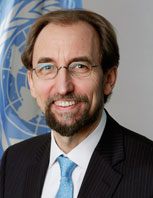
On 8 September 2014 the new UN High Commissioner for Human Rights, Zeid Ra’ad Al Hussein, addressed for the first time the Human Rights Council, and many will have been listening for clues about where he stands on key issues, how ‘activist’ he is likely to be etc. As the speech was rather long and covered a huge variety of issues, it is not easy to draw any conclusions yet. The fist half addressed issues of war and violence and in particular the humanitarian crises of today.
The role of the individual is beautifully worded: “courage is the first human virtue, revered the world over, the very virtue we value the most as human beings. The courageous individual is not he or she who wields great political power or points a gun at those who do not – that is not courage. The courageous individual is he or she who has nothing to wield but common sense, reason and the law, and is prepared to forfeit future, family, friends and even life in defence of others, or to end injustice. In its most magnificent form, the courageous individual undertakes this exertion, without ever threatening or taking the life of someone else, and certainly not someone defenceless.”..”the Takfiris [IS] who recently murdered James Foley and hundreds of other defenceless victims in Iraq and Syria – do they believe they are acting courageously? “…
“Navi Pillay was one of the greatest senior officials the UN has ever had, and one of the most able, formidable High Commissioners for Human Rights. That she could annoy many Governments – and she did – was clear; but she believed deeply and movingly in the centrality of victims, and of those who are discriminated against. They needed her vocal chords, her lungs and her pen, and she made everyone listen. I pledge to continue along the same path: to be as firm, yet always fair; critical of states when necessary, and full of praise when they deserve it.”
“A ministerial-level meeting will be held in New York on 25 September, on the need for a code of conduct to be adopted by the permanent members of the UN Security Council regarding use of veto, in situations where atrocities are ongoing and where those facts are well founded. This is not a call to have the UN Charter rewritten, but a call for the permanent members to exercise a moratorium in very specific circumstances involving atrocity crimes. I applaud the Government of France for taking the lead over this, and thank it for inviting me to participate on the 25th. When the veto is exercised for the sole purpose of blocking action by the Security Council, with no alternative course of action offered, and when people are suffering so grievously – that is also a form of cruelty.”
After briefly describing his priorities:
halt the increasingly conjoined conflicts in Iraq and Syria. In particular, dedicated efforts are urgently needed to protect religious and ethnic groups, children – who are at risk of forcible recruitment and sexual violence – and women, who have been the targets of severe restrictions.
ensure accountability and stop impunity
to take a step back and look at how and why these crises erupted,
the UN High Commissioner touched on a number of current situations and mentioned the importance of the different mechanisms and bodies. Finally he came to the civil society with the following words:
“But the work done by OHCHR, by the Special Procedures, by Treaty Bodies, this Council itself, and indeed, by Member States, could never be achieved without the greater efforts of civil society actors. We need their continuing support and contributions to realise progress. I encourage the Council to strengthen its constructive engagement with civil society actors, and to ensure that their voices can be raised safely and without reprisals. Freedoms of expression, association and peaceful assembly are rights that enable people to share ideas, form new thinking, and join together with others to claim their rights. It is through the exercise of these public freedoms that we make informed, considered and intelligent decisions about our development. To restrict them undermines progress. We must acknowledge the value of civic contribution, build the capacity of marginalised voices, ensure a place at the table for civil society actors, and safeguard their activities – including the activities of those who cooperate with this Council, its Special Procedures and Commissions of Inquiry. I take this opportunity to echo the Secretary-General’s condemnation of acts of reprisal against individuals by reason of their engagement with the United Nations.”
At the end of this speech, he paid significant attention to the issue of migration: “The treatment of non-nationals must observe the minimum standards set by international law. Human rights are not reserved for citizens only, or for people with visas. They are the inalienable rights of every individual, regardless of his or her location and migration status. A tendency to promote law enforcement and security paradigms at the expense of human rights frameworks dehumanises irregular migrants, enabling a climate of violence against them and further depriving them of the full protection of the law.”
In this new video produced by ISHR and True Heroes Films [THF] you hear about 4 cases (from Russia, China, Sri Lanka and DRC) of reprisals against human rights defenders who have bravely engaged at the UN. It would seem that the political costs of silencing and intimidating HRDs is not high enough for certain States to desist from this terrible practice. [for more posts on reprisals: https://thoolen.wordpress.com/tag/reprisals/]
A joint letter by 6 international NGOs (International committee of Jurists, Amnesty International, Asia Forum for Human Rights and Development, CIVICUS, the International Movement Against Discrimination and All Forms of Racism, and the International Service for Human Rights) to the UN Human Rights Council and the Sri Lankan government cites a number of recent incidents in which human rights defenders in the country were intimidated. Sri Lanka has vowed not to cooperate with the UN probe saying it infringed on the country’s sovereignty. Sri Lanka has rejected a UNHRC resolution in March that called for an international investigation into allegations that 40,000 civilians were killed in the final months of the civil war that ended in 2009.
The government spokesman and media minister, Keheliya Rambukwella, has reportedly threatened all those who intend to provide information to the UN investigation and promised to “take appropriate action based on the evidence the detractors give“. “We stress that threats, harassment, intimidation and reprisals against persons who engage with the UN are prohibited by international human rights law,” the letter said. “While we affirm the importance of exercising the right to free expression by journalists and others, we stress that the exercise of speech that serves to significantly risk inciting violence, hostility or discrimination against persons is unacceptable“.