Posts Tagged ‘reprisals’
August 11, 2014
Posted in Human Rights Defenders, ISHR, OHCHR, UN | Leave a Comment »
Tags: anti-reprisals focal point, civil society organisations, Human Rights Defenders, international protection, ISHR, legal protection, Phil Lynch, Pillay, Prince Zeid Raad Zeid al-Hussein, reprisals, retaliation, UN, UN High Commissioner for Human Rights, Zeid
August 11, 2014
My reference last week to an interview with the new Special Rapporteur on Human Rights Defenders [https://thoolen.wordpress.com/2014/08/05/michel-forst-new-special-rapporteur-on-human-rights-defenders-gives-indication-of-his-priorities/] seemed well appreciated judging from the number of views. Therefore I now refer you to a piece by the Director of the ISHR, Phil Lynch, of 16 July, who addresses the incoming UN High Commissioner for Human Rights, Zeid Ra’ad Zeid al-Hussein as the “human rights defender-in-chief “, saying that he has a particular responsibility to protect human rights defenders, especially so when they face intimidation and reprisals for their efforts to seek accountability at the UN for human rights violations. Read the rest of this entry »
Posted in human rights, Human Rights Defenders, ISHR, OHCHR, UN | Leave a Comment »
Tags: anti-reprisals focal point, Cao Shunli, civil society organisations, Ford Foundation, Human Rights Defenders, ISHR, Phil Lynch, Prince Zeid Raad Zeid al-Hussein, reprisals, reprs, retaliation, UN High Commissioner for Human Rights, woman human rights defender
August 5, 2014
After a long holiday break there is probably no better way to start again covering developments relevant to human rights defenders than by referring to the views of the new Special Rapporteur on Human Rights Defenders, Michel Forst, who shared his vision with the International Service on Human Rights on 16 July 2014. Michel Forst – appointed in June 2014 – is an experienced human rights lawyer. He was Secretary-General of France’s national human rights commission, and was a Board member of several international human rights NGOs. In an interview with ISHR, he sets out his vision and priorities in the post of Special Rapporteur on HRDs. Read the rest of this entry »
Posted in human rights, Human Rights Defenders, ISHR, UN | 2 Comments »
Tags: civil society organisations, consultation, Human Rights Defenders, International Declaration on Human Rights Defenders, International Service for Human Rights, interview, mandate holders, Margaret Sekaggya, Michel Forst, reprisals, Special Rapporteur on Human Rights Defenders, UN Special Rapporteur on Human Rights Defenders
June 12, 2014

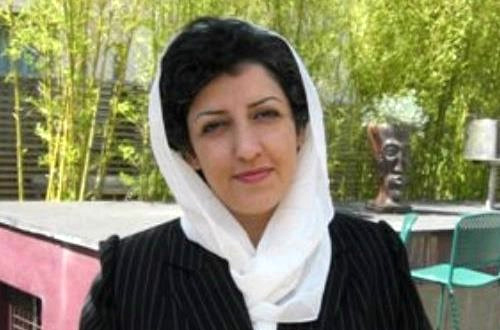
Reprisals are not limited to human rights defenders cooperating with the UN. Narges Mohammadi, a prominent human rights defender in Iran, told the NGO ‘International Campaign for Human Rights in Iran’ that new charges have been brought against her stemming from her March 8, 2014 meeting with the EU foreign policy chief Catherine Ashton. Mohammadi was charged with “propaganda against the state” and “collusion against national security” for her meeting with Ashton at the Austrian Embassy in Tehran. She was released on $10,000 bail. [Mohammadi was one of several women activists who accepted an invitation to meet the EU foreign policy head during her March visit to Tehran. The meeting took Iranian officials by surprise and unleashed a flurry of criticism by conservatives who described the meeting as “foreign interference in Iranian domestic affairs” and labeled the Iranian participants as foreign collaborators.]
Mohammadi stated: “I have been ‘charged’ with every single civil activity I have engaged in since my release from Zanjan Prison in August 2012, such as participating in gatherings on women’s rights, air pollution, and [Rouhani’s] Citizenship Rights Charter. I was also accused of honoring families of political prisoners at meetings, or attending a gathering with Gonabadi Dervishes in front of the Prosecutor’s Office, or giving interviews to media outside Iran. I told them there that when you fit all my civil activities into these two charges, it means that I must remain silent and still.”
Mohammadi was arrested in 2009 and charged with “assembly and collusion against national security,” “membership in the Defenders of Human Rights Center,” and “propaganda against the state.” She was first sentenced to 11 years in prison, but Branch 54 of the Tehran Appeals Court reduced her sentence to six years in prison. She was released in 2013 for medical reasons after a severe illness in Zanjan prison.
Prominent Rights Defender Faces New Charges for Her Meeting with Ashton : International Campaign for Human Rights in Iran.
Posted in EU, human rights, Human Rights Defenders | 2 Comments »
Tags: Catherine Ashton, EU, fabricated charges, freedom of expression, Human Rights Defenders, human rights lawyer, International Campaign for Human Rights in Iran, Iran, judicial harasment, Narges Mohammadi, reprisals, retaliation, Rouhani, woman human rights defender
June 6, 2014
The ISHR Monitor of June 2014 contains a good wrap-up of the situation regarding reprisals against Human Rights Defenders written by Eleanor Openshaw under the title: “Reprisals: States must reduce unacceptable human cost of cooperating with UN”.
‘Regrettably, reprisals against persons cooperating with the United Nations, its mechanisms and representatives in the field of human rights continue. ...’ said UN Secretary-General Ban Ki-moon in 2013. In response, the UN Human Rights Council adopted a landmark resolution in September 2013 calling on the Secretary-General to designate a UN-wide senior focal point to combat reprisals. Regrettably, Human Rights Council resolution 24/24 was blocked by the UN General Assembly in New York in December 2013, but NGOs are now calling again on States to revisit the issue as a matter of priority. “The disappearance, arbitrary detention, ill-treatment and death of human rights defender Cao Shunli in retaliation for her efforts to hold China to account for its human rights record at the UN is just one example among many of the unacceptable human cost of cooperating with the UN,’ said Ms Openshaw.
A number of positive recent developments (referred to in earlier blog posts [https://thoolen.wordpress.com/tag/reprisals/]) include a May 2014 decision by the African Commission on Human and Peoples’ Rights in Angola to appoint its own focal point, and a joint statement delivered by Botswana on behalf of 56 States in Geneva in March 2014 recognising that ‘the current response by the UN and the member States in addressing reprisals is inadequate’ and calling on them to ‘address cases of reprisals through a more effective and coordinated approach.‘
‘With the opportunity for the General Assembly to revisit the issue in September, NGOs are urging States to transfer the political will shown on this issue in Angola and Geneva to New York, and achieve an outcome that challenges impunity for the perpetrators of reprisals and increases protection for human rights defenders and others who engage with the UN human rights system,‘ Openshaw said (Program and Advocacy Manager, e.openshaw[at]ishr.ch).
The statement was signed by a coalition of 12 leading international and regional NGOs (of which 8 are members of the MEA Jury or Regional Panel):
- Amnesty International
- Association for the Prevention of Torture (APT)
- Asian Forum for Human Rights and Development (FORUM-ASIA)
- Cairo Institute for Human Rights Studies
- Commonwealth Human Rights Initiative
- Conectas Direitos Humanos
- Human Rights House Foundation
- Human Rights Watch
- International Commission of Jurists
- International Federation for Human Rights (FIDH)
- International Service for Human Rights
- World Organisation Against Torture (OMCT)
full article: Reprisals: States must reduce unacceptable human cost of cooperating with UN | ISHR.
Posted in human rights, Human Rights Defenders, MEA, UN | 1 Comment »
Tags: anti-reprisals focal point, Cao Shunli, coalition, human rights, Human Rights Council, Human Rights Defenders, MEA, reprisals, retaliation, UN, UN General Assembly, UN Human Rights Council, UN Resolution
May 29, 2014
The Treaty Body that oversees the implementation of the International Covenant on Economic, Social and Cultural Rights, composed of independent experts, recently completed its review of China‘s compliance. In its conclusions (called ‘Concluding Observations’), the UN committee expressed serious concern about ‘instances where labour and human rights activists, and their lawyers, have been victims of repression and reprisals while taking up cases of violations of economic, social and cultural rights’ and said that China is obliged under international law ‘to protect human rights and labour activists, as well as their lawyers, against any form of intimidation, threat and retaliation‘.
[The ISHR had briefed the treaty body experts on the case of Chinese human rights defender, Cao Shunli, on of the 3 Final Nominees of the MEA 2014, who died in detention after being denied access to adequate health care. In its briefing, ISHR also expressed concern at ongoing intimidation and reprisals against other human rights defenders, saying, ‘The Chinese Government again restricted human rights defenders from travelling to Geneva to attend this session, a pattern which is widespread. We call on the Committee to recommend that the government immediately cease its harassment and intimidation of human rights defenders, and that it guarantee the right of everyone to safely access and communicate with international bodies, such as this Committee. Further, we request that the Committee remain vigilant about reprisals, and that it recommend that the Government investigate all cases of alleged reprisals, and hold perpetrators to account.’] [http://www.ishr.ch/news/china-un-committee-demands-respect-human-rights-activists-and-end-reprisals]
Two days earlier, 26 May, the NGO Chinese Human Rights Defenders reported that Chinese authorities have detained a top rights lawyer and questioned dozens of activists and family members of victims of the 1989 military crackdown on the Tiananmen Square pro-democracy movement after they held a seminar to mark the sensitive 25th anniversary.
Read the rest of this entry »
Posted in Front Line, human rights, Human Rights Defenders, ISHR, UN | Leave a Comment »
Tags: Cao Shunli, China, China Human Rights Defenders, Committee on Economic Social and Cultural Rights, Cui Weiping, Front Line (NGO), harassment, Hu Jia, Human rights defender, Human Rights Defenders, illegal detention, inner mongolia, International Service for Human Rights, Liu Shihui, MEA final nominee 2014, Pu Zhiqiang, Renee Xia, reprisals, retaliation, Tiananmen Square
May 20, 2014
Thanks to Theo van Boven, who alerted me, I am happy to report another small step in the war against reprisals. On 21 April 2014 the UN General Assembly adopted a resolution on the Strengthening on the Treaty Bodies in which operative paragraph 8 strongly condemns intimidation and reprisals against human rights defenders and others who coöperate with the treaty bodies. (A/RES/69/268). For text of resolution: http://www.un.org/en/ga/search/view_doc.asp?symbol=A/RES/68/268
for more posts on reprisals: https://thoolen.wordpress.com/tag/reprisals/
Posted in Human Rights Defenders, UN | Leave a Comment »
Tags: intimidation, reprisals, retaliation, Theo van Boven, Thoolen, treaty bodies, UN, UN General Assembly, UN Resolution
May 19, 2014
On 16 May 2014 the International Service for Human Rights [ISHR] reports that the African Commission on Human and Peoples’ Rights has designated a high-level focal point to document and follow up on cases of intimidation and reprisals against human rights defenders that cooperate with the African human rights system. The spokesperson of the ISHR, Clement Voulé, welcomed the move and said: ‘The UN and its Member States should take note of the African Commission’s initiative and approve the designation of a high-level UN focal point’…‘Delegations in New York should also heed the call led by Botswana and joined by 56 States in Geneva in March to expedite this process and ensure a comprehensive, system-wide response to reprisals.’ While this is in itself good news and a step in the right direction, some caution is needed:
(1) The tasks of documenting, monitoring and encouraging effective Commission follow up on reprisals has been delegated to the existing African Special Rapporteur on Human Rights Defenders, Reine Alapini-Gansou [‘By designating me as a focal point, the Commission has acted on the need to strengthen its response to reprisals by monitoring cases and working with States to prevent recurrence and promote accountability’]. However, there is no indication that Commissioner Alapini-Gansou is given additional powers or resources.
(2) Almost all the African countries (except Chad and Morocco) supported the UN Resolution in the General Assembly last year that in fact blocked the creation of a focal point against reprisals in the United Nations. Courageous little Botswana may well have led a large group of countries with a statement in March 2014 at the Human Rights Council [http://www.ishr.ch/news/human-rights-council-has-duty-strengthen-response-reprisals] which favors such a UN-wide focal point, but how the African group will vote next time is far from clear. See more on: https://thoolen.wordpress.com/2014/01/08/un-general-assembly-indeed-defers-un-focal-point-on-human-rights-defenders/
Still, I hope we can all share the ISHR’s passionate statement that “Any other outcome will signal support for impunity for the perpetrators of reprisals and a betrayal of human rights defenders and others who engage with the human rights system”.
via African Commission designates high-level focal point to combat reprisals | ISHR.
Posted in human rights, Human Rights Council, Human Rights Defenders, ISHR, UN | Leave a Comment »
Tags: Africa, African Commission, African Commission on Human and Peoples' Rights, anti-reprisals focal point, Clement Voulé, Human Rights Defenders, International Service for Human Rights, Reine Alapini-Gansou, reprisals, retaliation, special rapporteurs, Thoolen, United Nations General Assembly
May 6, 2014
While not directly about Human Rights Defenders, this workshop organised by the Permanent Mission of Switzerland to the UN and others (see below) is of great importance to HRDs as they are the ones who provide most of the information to the Treaty Bodies, and are often the victims of the violations reported, including reprisals against them for having cooperated. Thus, this meeting on “The outcome of the treaty body strengthening process: Lessons learnt, implications and implementation” should be of interest to all. It takes place on 9 May 2014, 9.30am to 1pm in Room XXII, Palais des Nations, Geneva. Read the rest of this entry »
Posted in human rights, Human Rights Defenders, UN | 1 Comment »
Tags: Andrew Clapham, Geneva, Geneva Academy of International Humanitarian Law and Human Rights, human rights, Human Rights Defenders, international human rights law, international human rights treaties, meeting, Permanent Mission of Switzerland to the UN, reprisals, the Office of the UN High Commissioner for Human Rights, treaty bodies, UN
May 1, 2014
“Civil society loses as repressive States win election to regulate NGO access to UN” is the headline of a rightly alarming report on 23 April 2014 by the New York desk of the International Service for Human Rights [ISHR]. It calls on States that value and respect a vibrant civil society should do more to support non-governmental organisations to have their voices heard at the United Nations. The call comes after very few such States stood for election to an important UN committee that regulates civil society access to the UN, leaving the field to repressive States whose intolerance for civil society at home looks set to further restrict NGO access to the UN. Read the rest of this entry »
Posted in human rights, Human Rights Defenders, ISHR, UN | Leave a Comment »
Tags: Civil society, ECOSOC, Greece, Human Rights Defenders, India, International Service for Human Rights, Iran, ISHR, Michelle Evans, NGOs, reprisals, Russia, South Africa, UN Committee on NGOs, United Nations