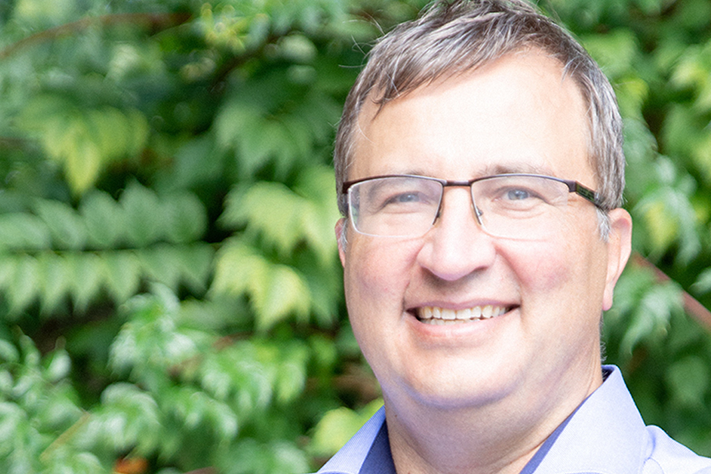
After 16 years of leadership, Gerald Staberock is stepping down from his role as Secretary General of the OMCT. The Executive Council has accepted his resignation and will oversee a smooth transition to new leadership to continue advancing the organization’s mission to combat torture and support human rights defenders worldwide.
A good friend and colleague has taken the thoughtful decision to start a managed transition of his own position at the helm of a key international NGO. Forgive me for being biased but he is a remarkable and exceptional person.
Under his leadership, OMCT gained renewed energy, reinforcing its footprint across regions through dynamic regional offices and in country-presence and further expanding the reach and impact of its global network. This was no small accomplishment. With staff, members and partners around the globe, Gerald also aided in “opening roads, working through landslides and filling gaps” so that OMCT could respond more effectively to the needs of people who were subject to torture and serious human rights violations or abuse. He has fostered a model of work that is lean and fitting for purpose in some of the toughest places in the world and has put our network of human rights defenders at the heart of our identity. He has maintained time after time that our true reserves are human – the trust, commitment and courage of our members, partners and staff.
The Executive Council of the OMCT extends special thanks to Gerald for his unwavering commitment to OMCT’s values and philosophy. After 16 years of dedicated service, Gerald has made the personal decision to step down to embrace new challenges and devote more time to his family, and the Executive Council fully supports and respects this decision, sharing his conviction that a leadership transition can be healthy for both him and the organization. We are committed to ensuring that this transition is safe, orderly and well-timed, and that OMCT remains firmly anchored in its values and strategic vision. Gerald has promised in the past that he’s committed to OMCT and the challenge of torture and, in any case, a smooth handover to the next Secretary General.
In this vein, the Executive Council is eager to start the recruitment process for the OMCT’s next Secretary General. You can access here the call for applications. Timing of the new Secretary General will depend on the availability of the candidate selected, and a dedicated transition process will be co-defined between the Executive Council working group, the incoming Secretary General and Gerald.
Gerald’s own Message to the SOS Torture Network and partners is a demonstration of his modesty and foresightedness:
I am writing you today to tell you that I informed our executive board early this year that it is time for leadership transition after 16 years at the OMCT. I can assure you that we will ensure that this is a safe, orderly and well-timed transition so that there will be no gaps. I am also addressing this to all our supporters; this is the time we need you to stay course with us more than ever. The relationship with many of you has been enriching, marked by a shared commitment that has helped us shape our vision. I would particularly like to thank our support committee in Geneva for their support.
For the past years, every time I came back from one of the many trips that are part of this job, I was intrigued by a watch making advertisement at the Geneva Airport. It basically says, ‘you never own this watch, your task is to keep it safe to hand over to a next generation’. Not being the owner of any luxury watches the advert always touched me, and each time I would think about OMCT. And when my decision nourished that after 16 years of leadership, it is time to accept that change is good, I had to look back at this advert.
My task was to take on an incredible gift from the founding fathers (yes, they were male) and a charismatic preceding director whom I call a friend. An organization built around a network, built around people that work in their countries to make them better places, more just, safer – and who sadly often don’t get the recognition for the good they do.
I cannot tell you how much I enjoyed and continue to enjoy working with amazing staff and members in our network. Human rights are really about people, people we help, serve, support, torture survivors and human rights defenders that make the difference. Our reserves are not financial but these relationships – they are our most important currency. In this, OMCT being able to provide tangible support is a is a meaningful achievement. Human rights work is also collective, it is about a movement, an eco-system. I appreciate our joint work in the Human Rights Defenders mechanism – Protect Defenders – stimulating and effective. I believe that our collective work within United Against Torture Consortium will be crucially important for the future. OMCT will remain about being united because it makes us better and stronger.
…I feel after 16 years it is the right moment to making sure that this incredible gift – not a watch – but an organization called OMCT – is given into the safe hands of a new generation…..
Jawad Fairooz is a Bahraini human rights defender, Founder of OMCT’s SOS-Torture Network member organisation SALAM for Democracy and Human Rights. He is also a former Member of the Bahraini Council of Representatives, currently living in exile after years of persecution by the authorities, including detention, torture, and the revocation of his nationality. In Bahrain, severe restrictions on civic space persist alongside widespread impunity and ongoing allegations of torture. As the UN Committee Against Torture reviews Bahrain’s record, Jawad Fairooz reflects on the human rights climate in the country, the personal cost of his advocacy, and the urgent need for accountability, drawing on his experience and the findings highlighted by OMCT and partners’ Global Torture Index.Since the crackdown on the Arab Spring protests in 2011, Bahrain has been marked by grave human rights violations. .. More than 435 people have had their nationality revoked [see also: https://humanrightsdefenders.blog/2018/02/25/i-am-bahraini-website-launched-in-effort-to-stop-denationalizations/], and over 300 prisoners of conscience remain behind bars, including opposition leaders. Freedom of speech and assembly are criminalised, torture has not been systematically banned, and political and civil rights continue to be restricted. The core violations that began years ago are still continuing today.
What has been the cost of your advocacy in Bahrain?
From the moment I became active in public life, I knew there would be a high price to pay. In 2004, while leading a large protest against the US invasion of Iraq, I was shot in the head with a live bullet. Since then, I have been targeted repeatedly through detention, torture, and eventually the revocation of my nationality.
The Global Torture Index classifies Bahrain as facing a “very high risk” of torture. Why?
Torture is not taken seriously by the authorities. There are no accountability and no clear mechanism to hold senior officials responsible. Victims are denied remedies, redress, and rehabilitation. Even after release, former detainees struggle to regain basic civil and political rights. They face obstacles in obtaining employment, housing, and other services. International recommendations from bodies such as the UN Committee Against Torture have not been implemented. There have been no meaningful legal amendments to fully prohibit torture or establish independent investigations. Semi-government institutions lack independence and cannot be trusted to address these abuses. All of this shows a clear lack of political will.
What are the main obstacles facing survivors of torture when seeking justice?
The government focuses on public relations rather than real reform. Institutions like the National Institution for Human Rights, the Special Investigation Unit, and other bodies exist, but they are not independent. Cases referred to them rarely result in accountability or fair trials. Victims consistently report that justice is denied. Torture has evolved from overt physical abuse to psychological and “soft” methods, including deprivation of rights, travel bans, revocation of nationality, deportation, and denial of documents and services. These practices show that torture continues in different forms, and the authorities are not serious about ending it at its roots…
You have been in exile. How do defenders continue their work despite reprisals?
Human rights defenders in exile pay a heavy price. Many are banned from entering Bahrain or face fabricated cases, Interpol notices, travel restrictions, and harassment of their families. Smear campaigns label activists as terrorists or foreign agents. Despite this, defenders continue out of belief in the cause and responsibility toward victims. It is extremely difficult, but repression cannot last forever, especially under international scrutiny.
What gives you hope to continue your work?
Silence only strengthens repression. The resilience of victims and their families gives me hope. Standing with them is a moral and spiritual duty. I believe oppression has a short life, and that by continuing this work, we help ensure that future generations do not inherit a reality of torture, executions, statelessness, and detention.
The Global Torture Index, a pioneering initiative by OMCT and partners, is poised to revolutionize the global fight against torture. It will be launched on 25 June, during the Global Week Against Torture, organized by OMCT and its partners in collaboration with #UnitedAgainstTorture – an EU-funded consortium of six leading anti-torture organizations.
Despite 175 countries ratifying the UN Convention Against Torture, this grave violation of human rights persists in prisons, public assemblies, armed conflicts, and daily police interventions. Torture remains shrouded in secrecy, making it difficult to detect and eradicate.
The Global Torture Index is an innovative tool, developed in collaboration with over 200 local civil society organizations that form the SOS-Torture Network, human rights defenders, and consulted with international experts, provides robust, data-driven insights and trend analysis into the risk of torture and ill-treatment across countries. The Global Torture Index map will serve as a critical resource for policymakers, governments, media, and activists, offering actionable recommendations, measuring progress and regression on human rights compliance, identifying good practices and fostering global awareness.
Follow us on social media to learn how you can take part in the launch of the Global Torture Index and discover how this powerful tool will empower the global anti-torture movement, bring torture out of the shadows, and drive meaningful change.
ISHR, the Observatory for the Protection of Human Rights Defenders, a partnership of the World Organisation Against Torture (OMCT) and the International Federation for Human Rights (FIDH), request your urgent intervention in the following situation in Venezuela.
The Observatory has been informed of the disappearance of Mr. Eduardo Torres, a labour lawyer who has been a member for over five years of the Venezuelan Education-Action Program on Human Rights (PROVEA), an FIDH member organisation.
According to witnesses, Eduardo Torres was last seen on Friday, 9 May 2025 at 4:00 p.m. in Parque Central in Caracas, after attending a meeting. At that moment, Mr. Torres contacted his family and informed them he was heading home, near Av. Fuerzas Armadas in Caracas, but he never arrived.
Seeking information about Eduardo Torres’ whereabouts, his wife, Ms. Emiselys Nuñez, accompanied by PROVEA members, have visited various detention centres in Caracas, including the Bolivarian National Intelligence Service (SEBIN) at El Helicoide, several National Bolivarian Police (PNB) stations in Maripérez, Boleíta and Petare, as well as the General Directorate of Military Counterintelligence (DGCIM) in Boleíta. As of the publication of this urgent appeal, his whereabouts remain unknown.
On 11 May 2025, Ms. Emiselys Nuñez and PROVEA’s legal team went to the Palace of Justice to submit a “Habeas Corpus” petition before the Judge of First Instance in Control Functions of the Criminal Judicial Circuit of the Metropolitan Area of Caracas, Specialised in protection matters, to request information on whether Eduardo Torres had been detained by the Venezuelan State. However, after more than seven hours of waiting, they were not “authorised” to receive the document, without providing details, and in clear violation of Article 27 of the National Constitution and Articles 2, 3, and 4 of the Organic Law of Personal Liberty and Security.
The Observatory highlights that Mr. Torres has been repeatedly been subjected to threats and acts of harassment by Venezuelan police officers. Like the rest of the PROVEA team, he is a beneficiary of precautionary protection measures granted by the Inter-American Commission on Human Rights (IACHR) due to repeated threats, criminalisation, and harassment in connection with his human rights work in Venezuela.
The Observatory expresses its deepest concern due to the high probability that Mr. Eduardo Torres is in a condition of arbitrary detention and enforced disappearance, due to his work as a human rights defender and given the constant threats against him. If confirmed, these acts would increase the risk of torture and ill-treatment against him.
The Observatory underlines that this disappearance occurs two weeks before the national and regional elections scheduled for 25 May 2025, again highlighting the risks against human rights defenders in Venezuela and exemplifying a systematic attempt to silence all critical voices committed to human rights and democracy in the country.
The Observatory urges the Venezuelan authorities to guarantee the physical and psychological security of Mr. Eduardo Torres, to disclose his whereabouts and to proceed to his immediate and unconditional release, in case he is indeed detained by State actors.
On 23 April, 2025 OMCT made public this interview with Armel Niyongere, exiled Burundian lawyer and Secretary General of SOS-Torture Burundi, a member of the World Organization Against Torture (OMCT) SOS-Torture network. He continues to denounce human rights violations in his home country. Despite 10 years of threats and intimidation from the authorities, Mr. Niyongere continues his fight to promote and protect human rights. In this interview he talks about the difficulties of exile, the challenges facing those who defend human rights, and the role of the international community.
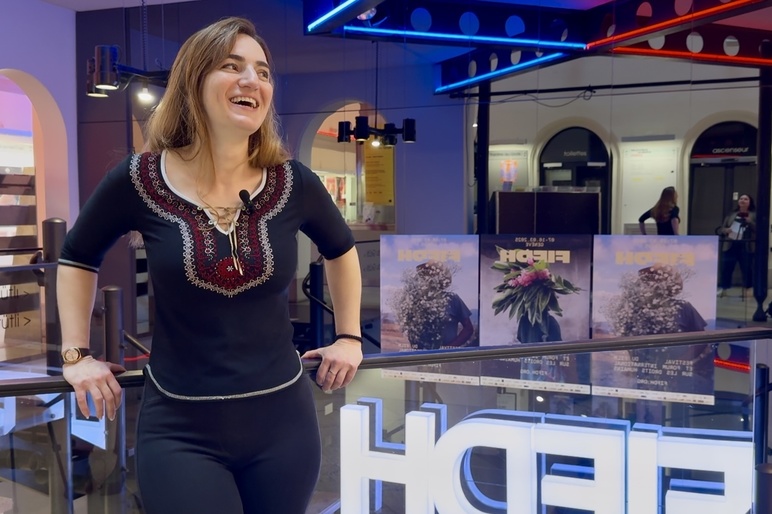
Born in Damascus, Syria, Lina is a filmmaker, journalist, and human rights defender, who in 2011 decided to pick up her camera and start filming, without a plan, but with the knowledge that she has a story to tell. What ensued are five years of conflict, arbitrary arrests, as well as torture and ill-treatment in detention, but also of hope that things would get better, despite a veto. Five Seasons of Revolution was recently screened at the International Film Festival and Forum on Human Rights in Geneva, in an event co-hosted by OMCT, partner of the festival. In this interview, Lina tells us more about her process and the challenges she encountered in the making of the film, as well as her hopes for the future of Syria.
What made you decide to start filming?
We started shooting in the summer of 2011, and a lot was already happening in Syria, but it was not clear how things were going to go. I was optimistic, thinking it would be over in six months, maybe a year, with a release within two years. It took 12 years.
It took more than five years of filming, and then many more to edit, because the country hadn’t stabilised, and the characters’ decision to participate in the film shifted with every new development, for their own safety. We had to go back, take characters out, then put them back in, and make amendments to the storyline. But it wasn’t all negative. During this time, deepfake technology improved and gave us a solution for the anonymity issue of some of the characters who chose to stay in Syria in a way that is safe and does not interfere with the visual narrative.
What was the most challenging part about the filming process?
Not knowing where it’s heading. As a filmmaker, you have, even in documentaries, a rough script, or an idea of where you are heading, but we couldn’t. It was like surfing, we just had to keep up with weird twists and turns. At some point, there were so many arrests in the group that I was filming, the characters just kept going in and out of jail, and at any given moment, we would lose one of them. I was arrested several times and the rest of the film crew had to come up with plan Bs for ‘what if we lose the director, who also happens to be the camera person and the sole contact to all the other characters, how do we finish the film?’ There was even one editing session that was held in my absence because I was detained, and they didn’t know when I would be released. It was really challenging.
What was the most challenging part about having to change your identity several times throughout filming?
It was very confusing, but it was also very necessary. In order to make it work, you have to internalise it to a certain extent, which was challenging. This confuses your relationships with the people you’re working with, with the people you’re socialising with, with the people that trust you, despite only knowing your fake name. Very strong bonds are formed under extremely difficult conditions and something always felt wrong about not being able to be fully honest with people. it also created these compartments of who I am because different parts of me had different names in different places… and they didn’t always get along. Walking out of it was also a challenge. Normalising being one person and only using one name, only answering to one name. It was quite a journey.
Towards the end of the documentary, you talk about your experience with your arrest. Did what you experienced in custody change your approach to the film, or your activism?
I did not encounter anything during my arrest that I did not previously know exists and happens. What was detrimental was the repetition of detentions because you know you might get away with it once, maybe twice, if you’re lucky three times. But when I was released for the third time, I realised I did not know anybody that survived a fourth arrest. I felt like a cat with seven lives and I was really running out of them. I think this affected not only my decision-making in the film, but decision-making in my life in general, which obviously had consequences.
What are three things you hope people remember after watching your film?
Number one is that simplistic reductionist scenarios of war into black and white, good and bad are never true. Number two is that nobody has a blueprint for what to do in these cases. People improvise, people try to find solutions on the spot under pressure, and these are not always ideal. But also, people can be much braver than they think, because at the end of the day we are survivors, all of us, and there is a lot more to us than we sometimes give ourselves credit for. And number three, friendship is really important.
You are a filmmaker, but also a human rights defender. What are your hopes now for Syria and its people?
I hope people will be able to recover. I hope people will be given a break, given a chance to process everything they went through, given a bit of time to find a way out of this gigantic mess. It will take generations to rebuild the country. I understand that people have endured so much for so long that they cannot take one more day of it, so there is understandably also a lot of emotions. I just hope that we have the ability to open our hearts a bit more, understand each other a bit more and that people will in return give us the chance to process everything….
One in four countries report backlash on women’s rights in 2024
Women’s and girls’ rights are facing unprecedented growing threats worldwide, from higher levels of discrimination to weaker legal protections, and less funding for programmes and institutions that support and protect women.
Despite important progress, only 87 countries have ever been led by a woman, and a woman or girl is killed every 10 minutes by a partner or member of her own family. Digital technology and artificial intelligence spread harmful stereotypes, while the digital gender gap limits women’s opportunities.
In the past decade, the world registered a disturbing 50 percent increase in the number of women and girls living in conflict, and women’s rights defenders confront daily harassment, personal attacks and even death. Recent global crises—like COVID-19, the climate emergency, soaring food and fuel prices—are only increasing the urgency to respond.
“UN Women is committed to ensuring that ALL Women and Girls, everywhere, can fully enjoy their rights and freedoms,” affirmed UN Women Executive Director Sima Bahous. “Complex challenges stand in the way of gender equality and women’s empowerment, but we remain steadfast, pushing forward with ambition and resolve. Women and girls are demanding change—and they deserve nothing less.”…
Today’s report also features the new Beijing+30 Action Agenda, a courageous roadmap to complete our unfinished business by focusing on:
A digital revolution for all women and girls: We must ensure equal access to technology, equip women and girls to lead in AI and digital innovation, and guarantee their online safety and privacy.
Freedom from poverty: Investments in comprehensive social protection, universal health coverage, education, and robust care services are needed for women and girls to thrive and can create millions of green and decent jobs.
Zero violence: Countries must adopt and implement legislation to end violence against women and girls, in all its forms, with well-resourced plans that include support for community-based organizations on the front lines of response and prevention.
Full and equal decision-making power: Temporary special measures like gender quotas have proven their effectiveness in rapidly increasing women’s participation.
Peace and security: Fully finance national plans on women, peace and security and gender-responsive humanitarian aid are essential. Frontline women’s organizations, so often the first responders to crisis, must receive dedicated, sustained funding to build lasting peace.
Climate justice: We must prioritize women’s and girls’ rights in climate adaptation, center their leadership and knowledge, and ensure they benefit from new green jobs.
Across these six Actions, putting young women and girls at the heart of our efforts is the best way to guarantee success, both today and tomorrow. These six plus one actions have the potential to unleash progress on women’s rights and put us back on track for 2030.
The Beijing+30 commemoration and the forthcoming UN Commission on the Status of Women (CSW69) are clear opportunities to enshrine this Action Agenda into national policies, regional strategies, and global agreements.
In a pivotal year for women and girls, that is also a year of pushback and crises like no other, let us push women’s rights forward to create a world where all women and girls enjoy equal rights and equal opportunities. We can be the first generation that can live in an equal world.
Ahead of International Women’s Day, Amnesty International’s Secretary General, Agnès Callamard, said:
“The significance of International Women’s Day 2025 cannot be overstated. It is no longer a case of addressing unfinished business on the gender justice front, but one of bracing ourselves to resist active regression and a mounting assault on our rights.
“Thirty years ago, 189 governments came together at the Fourth World Conference on Women to adopt the Beijing Declaration and Platform for Action, a groundbreaking blueprint for strengthening women’s rights endorsed by thousands of activists. Despite significant progress since then, the world has failed to fully deliver on all the promises. From rape and femicide to coercion, control and assaults on our reproductive rights, violence against women and girls still threatens their safety, happiness and very existence in a multitude of ways.
“And crucially, we are now going backwards. The aggressive patriarchal crusade led by President Trump and other powerful leaders against the rights and bodily autonomy of women and gender-diverse people has already had devasting consequences not just in the United States but all over the world. By dismantling domestic efforts to tackle gender-based, racial and other forms of discrimination, erasing recognition of transgender identity, and ending international funding for abortion counselling or referrals, the US administration is shamefully erasing years of hard-fought gains.
“Let us be clear, this trend has deeper roots than President Trump’s recent election. For several years now, brazen anti-rights movements have conspired to turn back the clock to an age when patriarchal oppression was the norm. We cannot afford to be complacent in the face of this gathering storm, for women, girls and LGBTQI+ people are under attack the world over.
“Amnesty International calls on states and non-state actors who believe in universal values and a rule-based international order to resist this accelerated and well-resourced attack against women’s rights. We call on them to strengthen protections of women, girls, LGBTQI+ people and other marginalized groups against gender-based violence. We urge them to recognize and support the vital work of all women human rights defenders and all those on the frontlines of the fight for sexual and reproductive rights, and to implement concrete measures to protect and empower them.
“We appeal to all to respect sexual and reproductive rights and prevent rollbacks, including by revoking any laws that criminalize or punish people for exercising these rights, as well as fully decriminalizing, providing and funding universal access to abortion.
“Finally, this International Women’s Day, Amnesty International reiterates its call on states to recognize gender apartheid under international law as a crime against humanity. Doing so would fill a major gap in the global legal framework and help to combat institutionalized and systematic domination and oppression on the basis of gender, no matter where it occurs.
“Despite suffering setbacks and facing countless attempts to block, divide and undermine us throughout history, feminist, LGBTI+ and grassroots movements keep marching forward. We may be walking a rocky path, but we will never stop fighting for a world where women, girls and gender-diverse people are free to enjoy the full range of human rights without discrimination or fear of reprisal.”
On 7 March 2025 SaferWorld carried a post “Still standing: The resilience of women peacebuilders in a time of crisis”
As we mark International Women’s Day 2025, women’s rights organisations (WROs) and frontline activists in crisis and conflict settings are standing strong despite immense challenges. ..Yet, while their work is more critical than ever, the harsh reality is that many are being forced to operate with dwindling resources, due to global funding cuts and shifting donor priorities towards militarisation, over a genuine investment in long-term peace, security and gender justice.
At a time when conflict, displacement and violence against women are escalating, and misogyny is a core pillar of the far-right agenda, these cuts will only deepen existing inequalities and undermine efforts to build sustainable peace and security globally. The reduction in funding for gender equality and Women, Peace and Security (WPS) initiatives threatens to reverse decades of progress and compounds the global rollback on women’s equality, safety and security. For example, cuts to the UK official development assistance (ODA) budget in 2021 led to a 30 per cent reduction in funding to programming with a focus on gender equality and to a 66% reduction in funding to WROs compared to 2017. WROs and women-led organisations – many of which are small community groups – often struggle to access direct, flexible and long-term funding, despite being the first responders in humanitarian crises and leading conflict prevention and peace efforts. When funding disappears, so do vital services, safe spaces for survivors of gender-based violence and conflict-related sexual violence, safe spaces for women peacebuilders to re-mobilise, legal aid for women and girls who have been displaced, and advocacy that ensures women’s voices are central in peace processes. But despite these constraints, WROs and women peacebuilders are still standing. Their resilience is evident in their ability to adapt, mobilise local resources and continue working in the most difficult circumstances. But resilience alone is not enough – they need meaningful and sustained support.
As the world commemorates International Women’s Day and gathers at the United Nations Commission on the Status of Women (CSW) to discuss gender equality and sustainable development, we reaffirm our commitment to ensuring that women and girls play a central role in peacebuilding and conflict prevention efforts around the world.
The international community, donors, funders and philanthropists will need to act urgently to ensure that WROs are not just surviving but thriving. This means:
Increasing direct, flexible and long-term funding and shifting power to local women-led organisations, women activists and women’s groups – we have seen the value in our work of providing sustained core funding to WROs, moving beyond short-term, project-based grants to ensure continuity of their critical efforts in conflict prevention, peacebuilding and humanitarian response. To make this shift meaningful, international organisations and donors should prioritise direct and flexible funding to frontline WROs rather than channelling resources through large intermediaries. This will ensure that funding reaches those who are best placed to drive lasting change within their communities.
Ensuring women’s leadership in conflict prevention, peace and humanitarian processes – women from all backgrounds and marginalised communities must have a seat at decision-making tables, not just as implementers but as equal partners in shaping policies and solutions that affect their lives.
Standing up for gender equality and women’s rights – urgently pushing back against reversals in women’s rights and gender equality, especially in fragile and conflict-affected contexts, where regressive policies and shrinking civic space are eroding hard-won gains. Women peacebuilders, human rights defenders and frontline activists are already standing up to these challenges, demanding that women’s voices remain central. Their leadership must be protected, amplified and meaningfully supported to sustain progress and counteract the global rollback on gender equality.
Protecting and supporting women human rights defenders and peacebuilding organisations – governments and international actors must recognise and safeguard the work of women human rights defenders and peacebuilding organisations in conflict zones, ensuring they can operate without fear of reprisals.
Strengthening accountability mechanisms – governments and multilateral bodies must hold themselves accountable to their commitments to the WPS agenda and support localisation of the UN Security Council Resolution 1325 on WPS.
Women’s rights organisations are the backbone of peace and resilience in crisis and conflict settings. This International Women’s Day, we celebrate their unwavering commitment – but celebration is not enough. The global community must act with urgency to fund, support and protect these organisations so they can continue to drive meaningful change.
In this interview, OMCT Secretary General Gerald Staberock shares his vision for 2025 and key priorities in the fight against torture. From the launch of the Global Torture Index to the SOS Defenders platform, he highlights the initiatives that will shape the movement and strengthen global human rights efforts, including the Global Week on Torture—an event not to be missed.
His message for 2025 is clear: “resilience and unity, not despair.”
What is your vision for 2025, and what priorities should we focus on to maximize our impact on human rights?
In my vision, 2025 is the year in which we rise to the challenge and stand up in the anti-torture movement and uphold the absolute prohibition of torture. Today, in an increasingly dangerous world where states are turning away from human rights, fostering division and weakening protections, and some questioning universal norms altogether, the message must be resilience and unity, not despair. It is essential to protect all victims of torture and to defend the universality of human rights, which is under threat.
I am convinced that our SOS Torture Network must serve as an anchor for human rights and universality. As a movement, we stand united—to protect those at risk, to support our fellow human rights defenders under threat, and to ensure that the absolute prohibition of torture remains intact.
What impact do you hope the launch of the Global Torture Index will have?
The Global Index on Torture is the new flagship program of OMCT, with its launch anticipated in June 2025. I think it is the tool we have been lacking for years, and a tool all actors working against torture can benefit from. It combines reliable data with often-overlooked narratives to make the hidden reality of torture visible. This index will allow us to measure its scope, its impact on society, and advocate for political and legal reforms. It will help identify risks and develop effective anti-torture strategies. This index is not only an OMCT tool but a collective resource to support the efforts of network members towards concrete reforms and the prevention of torture.
Why is the Global Week on Torture important and what can people expect?
Four years ago, we held the first ever Global Week Against Torture, and we saw the power and energy that such a week can create. Many of us, especially those of our members working in very complicated dire situation, often feel alone. It offers a unique opportunity to share experiences, best practices and to learn from each other and to stand in solidarity across countries and regions. The Global Week all makes us feel and understand that we are united in a struggle and reflect that the real force of the OMCT is in its SOS Torture Network.
How will the SOS Defenders platform and the SOS Database help serve human rights defenders?
One of the most important achievements in 2024 has been the launch of the SOS Defenders platform. The platform gives a face to more than 400 human rights defenders that are currently imprisoned because they stood up for human rights. We don’t forget them. We want to demonstrate to governments that the detention of these defenders is an attack on democracy and freedom, and we need to make states who support human rights understand that this is the moment to step up in their actions. OMCT, along with its SOS Torture Network must raise the alarm bells and act to protect from torture and ill-treatment in detention.
On 12 July 2024 OMCT welcomed the UN Working Group’s call to the government of Tajikistan to unconditionally release them and grant them the right to compensation and other reparations. All five are representatives of the Pamiri indigenous population in the Gorno-Badakhshan Autonomous Province. Their arrest, detention and conviction occurred amidst a human rights crisis in the Autonomous Province when, following the killing of a local Pamiri resident by police, mass protests erupted in November 2021 and were violently cracked down, leaving 40 people dead and hundreds detained.
Ms. Ulfatkhonim Mamadshoeva is a journalist, well-known human rights defender, and advocate for the rights of the Pamiri Indigenous population. She was arrested and detained on 18 May 2022 in Dushanbe and sentenced to 20 years imprisonment in December 2022.
Faromuz Irgashov, Khursandsho Mamadshoev and Manuchehr Kholiqnazarov are human rights lawyers and belong to the Pamiri Lawyers’ Association, the Director of which is Mr. Kholiqnazarov. All three were members of Commission 44, presided by Mr. Irgashov. This commission had been formed to investigate police brutality following the November 2021 protests. Still, after a further escalation in May 2022, its members were threatened, and several of them were detained and convicted on charges of terrorism or establishing or participating in a criminal association. They were arrested and imprisoned in Khorog on 28 May 2022 and sentenced in December 2022 to 29-, 18- and 16-years imprisonment.
Sorbon Yunoev is a Pamiri civic activist involved in community initiatives in support of the Pamiri indigenous population, who actively criticised the crackdown and police violence during the November 2021 protests. He was arrested on 13 June 2022 in Khorog, released, re-arrested, and detained on 17 June 2022. On 23 August 2022, he was sentenced to 10 years’ imprisonment.
The World Organisation Against Torture (OMCT) submitted communications on these cases to the WGAD on 10 October 2023 and requested the Working Group to declare their detention as arbitrary and to call for their immediate release.
In its Opinions, the WGAD endorsed the arguments submitted by the OMCT and concluded that the detention of all five human rights defenders meets the definition of arbitrary deprivation of liberty on four separate counts. It noted also that the government failed to provide evidence that the accusations and charges brought had a factual basis.
The WGAD concluded that the arrest and detention of Mr Irgashov, Mr Mamadshoev and Mr Kholiknazarov were related to their legitimate advocacy for the investigation into police violence against the Pamiri Indigenous population and for having criticised law enforcement authorities for failing to effectively investigate police violence, as part of their work for Commission 44. Likewise, the Working Group concluded that the basis for the arrest and conviction of Ms. Mamadshoeva and Mr. Yunoev was their exercise of freedom of expression and freedom of assembly.
The Working Group considers that these convictions should be assessed against the backdrop of the current human rights and media freedom situation in Tajikistan – “a picture suggesting that these charges are trumped up and retaliatory in nature, aimed at silencing dissent and quashing human rights advocacy”, in particular in the context of the Gorno-Badakhshan Autonomous Province, and the broader context as reported among other things by the Special Rapporteur on the situation of human rights defenders, which indicates a pattern of repression in Tajikistan, where the crackdown on peaceful protests, independent media and human rights defenders has intensified
Civil society actors across the world frequently operate in challenging or hostile environments in their efforts to defend human rights. The World Organisation Against Torture (OMCT) supports members of the SOS-Torture network, along with local actors, working to end torture and impunity and to support the rehabilitation of victims. We provide support by:
Engaging in joint activities and campaigns.
Sharing expertise and capacity-building opportunities.
Providing financial support to local actors, individuals, organisations, and initiatives, primarily outside the European Union.
This assistance enables them to carry out their crucial work in defending human rights and ending torture.
Our activities in support of the human rights movement are made possible by the generous contributions of our donors.



 Hans Thoolen on Human Rights Defenders and their awards