Posts Tagged ‘Nicaragua’

The 46/2 Collective demands protection of Nicaraguan opponents exiled in Costa Rica

June 30, 2025

ISHR and the Colectivo 46/2 condemn the assassination of opposition leader Samcam Ruìz by the Nicaraguan Government.

In the joint letter published on 23 June 2025 The 46/2 Collective denounces to the international community the assassination of retired Nicaraguan Army Major Roberto Samcam Ruíz, which took place on 19 June in his home in San José, Costa Rica.

Samcam Ruíz was a strong voice of denunciation against the Ortega-Murillo dictatorship, denouncing the Nicaraguan army and pointing it out as a participant in the repression and extrajudicial executions committed since 2018. He had also denounced an espionage network against opposition refugees in Costa Rica.

The retired major was one of the 94 Nicaraguans denationalised in February 2023 by the dictatorship and since 11 July 2018 had been a refugee in Costa Rica due to persecution and criminalisation by the dictatorship of Daniel Ortega and Rosario Murillo. He obtained Spanish nationality on 26 July 2023.

The assassination of the former retired military officer is not the first attack against opponents on Costa Rican soil.  In 2023, opposition member Joao Maldonado and his wife were shot at with the clear intention of killing them. Maldonado had already suffered another attack in 2021, also in San José, Costa Rica. In 2022, the Nicaraguan opposition leader Rodolfo Rojas was found dead in Honduras. According to relatives, he had been lured to Honduras from Costa Rica, where he had gone into exile. To the list must be added the murder of another refugee, Jaime Luis Ortega, in 2024, in Upala, a canton on the border with Nicaragua. Following these events, Roberto Samcam had spoken to the press, pointing out the direct involvement of the Ortega Murillo regime and indicating that he knew that his life was at risk.

Although the investigations into Samcam’s murder are ongoing, the circumstances of the murder and the profile of the victim raise strong suspicions that it may be a political crime with possible transnational links. This murder takes place in a context in which various human rights organisations have been documenting a sustained pattern of surveillance, threats, harassment and acts of intimidation directed against Nicaraguans in exile in the region, especially in Costa Rica.

We consider that this crime should be analysed and investigated as part of a broader strategy of transnational repression promoted by the Nicaraguan regime to persecute and silence dissent outside its borders, in open violation of the human rights of refugees and exiles. This transnational repression has been documented by the Group of Experts on Human Rights in Nicaragua (GHREN), who have pointed out that ‘The Government’s repressive actions transcend the country’s borders and affect people who are opponents or perceived as such abroad. The government has also continued to target family members of opponents inside Nicaragua, including children, by mere association, as a way of punishing opponents and/or deterring them from speaking out wherever they are’.

Given the gravity of this crime and the sustained pattern of transnational repression against exiled Nicaraguans, we urgently call on the international community to demand that the Nicaraguan State immediately cease all forms of persecution, surveillance and violence against dissidents in exile. We also request that the international community strengthen political, technical and financial support for the protection mechanisms for human rights defenders in exile. We also urge the establishment of bilateral or multilateral channels of communication with the host countries of Nicaraguans in order to assess the security situation and articulate preventive responses to possible acts of transnational persecution. Finally, we call on international human rights bodies to urgently follow up on these cases as part of a systematic pattern of cross-border repression, and to ensure justice and truth for the victims.

Signatories:

  • Collective Nicaragua Never Again
  • Centre for International Law and Justice – CEJIL
  • International Federation for Human Rights – FIDH
  • International Institute on Race, Equality and Human Rights
  • Autonomous Women’s Movement – MAM
  • World Organisation Against Torture (OMCT)
  • Peace Brigades International – PBI
  • International Network on Human Rights Europe – RIDHE
  • Legal Defence, Registry and Memory Unit – UDJUDR
  • Open ballot boxes
  • International Service for Human Rights – ISHR

Additional information:

The 46/2 Collective is a coalition of 19 international, regional and Nicaraguan human rights organisations that regularly informs the international community about the lack of action by the Nicaraguan regime to meet its international human rights obligations.  

https://ishr.ch/latest-updates/the-international-community-must-act-to-protect-nicaraguan-opponents-in-exile-in-costa-rica

Nicaragua leaves UNESCO after exiled newspaper wins award

May 18, 2025

This year, the UNESCO/Guillermo Cano World Press Freedom Prize was awarded to a historic media outlet from Nicaragua, La Prensa – El Diario de los Nicaragüenses (The Newspaper of the Nicaraguans), founded in 1926. Since 2021, following the imprisonment and expulsion of its leaders from the country as well as the confiscation of its assets, La Prensa has continued to inform the Nicaraguan population online, with most of its team in exile and operating from Costa Rica, Spain, Mexico, Germany, and the United States.

The value of human rights awards was once again demonstrated by the reaction of the Nicaraguan Government which withdrew from the UN cultural body. The Nicaraguan authorities justified their decision by denouncing the award as the “diabolical expression of a traitorous anti-patriotic sentiment” of La Prensa, which they accuse of promoting “military and political interventions by the United States in Nicaragua.” The Nicaraguan government denounced UNESCO’s decision, saying it gives prominence to “the traitors, slaves and lackeys of colonialism and imperialism,” adding the organization “totally abandons any sense of objectivity.

About the award: https://www.trueheroesfilms.org/thedigest/awards/8F8DB978-CD89-4CFB-1C26-D5FEE5D54855

UNESCO director-general Audrey Azoulay said on Sunday that she “regrets” the country’s decision, adding that it would “deprive the people of Nicaragua of the benefits of cooperation, particularly in the fields of education and culture.” The organization is “fully within its mandate” of defending freedom of expression and freedom of the press, Azoulay said.

https://www.dw.com/en/nicaragua-leaves-unesco-after-exiled-newspaper-wins-award/a-72431357

https://www.unesco.org/en/articles/unesco-statement-following-nicaraguas-decision-withdraw-organization

Right Livelihood tells UN Human Rights Council: Environmental defenders should be applauded, not attacked

August 5, 2024

Right Livelihood’s advocacy team delivered a statement at the 56th session of the UN Human Rights Council in Geneva calling for Member States to stop retaliating against environmental defenders. The statement highlighted the struggles of Right Livelihood Laureates from Cambodia, Kenya and Nicaragua, where activists leading the fight against climate change face unlawful arrests, armed attacks and police violence, among other forms of oppression, for their peaceful activities. 

Right Livelihood Laureates from Cambodia, Nicaragua and Kenya who are leading the fight against climate change are being attacked by their governments, a concerning trend Right Livelihood says the Council has a responsibility to reverse.

Addressing the Special Rapporteur on the protection and promotion of human rights in the context of climate change, Right Livelihood asked, “How can the Council better address reprisals against environmental defenders playing a key role in the fight against climate change?”

The question was critical for Right Livelihood as an organisation that has awarded 96 change-makers for their environmental activism since its inception in 1980, many of whom are persecuted for their work.[see:https://www.trueheroesfilms.org/thedigest/awards/97238E26-A05A-4A7C-8A98-0D267FDDAD59%5D

Among those Laureates is Mother Nature Cambodia (MNC), a peaceful youth movement raising awareness about environmentally disastrous development projects. Earlier this month, ten MNC members received six to eight-year prison sentences on sham charges for plotting against the government and insulting the king.

Similarly, in Kenya, Laureate Phyllis Omido and her organisation the Center for Justice Governance and Environmental Action have been targeted by the government for organising against business interests that jeopardise the environment. 

In May, Omido and local community leaders came under threat when police brutalised protestors for opposing a nuclear project in a biodiverse area between the Watamu National Marine Park and the Arabuko Sokoke Forest. Police fired 137 live rounds and 70 tear gas canisters.

“Investigations into such crimes are rare, and those speaking out face severe reprisals,” we told the Council.

Wefinished our statement by highlighting the situation in Nicaragua, where Indigenous communities protecting their land are attacked, forcefully displaced and killed by illegal settlers involved in mining and cattle trading.

You can read the full statement here.

Profile of Wendy Flores, human rights defender from Nicaragua

April 24, 2024

On 19 April 2024, the OHCHR published the story of Wendy Flores -Risking it all to stand up for human rights in exile

Wendy Flores, Nicaraguan human rights defender presenting report at the 55th session of the Human Rights Council. © Colectivo Nicaragua Nunca Más

I had to leave Nicaragua irregularly. I left with a backpack, my computer, and the feeling that I was leaving my country for having defended other victims, for having accompanied them. I felt like I had committed a crime, when what I had been doing was defending human rights,” said Wendy Flores, a human rights defender from Nicaragua.

Flores studied law and became motivated to defend human rights after observing the injustices occurring in her country. She later joined the non-profit organization Nicaraguan Centre for Human Rights (CENIDH) as an intern in April 2002.

“I began to realise that I was a human rights defender because I was working for the victims, for their rights and supporting them as they faced a series of obstacles in the country,” Flores said.

Flores is currently living in exile, after the government began to cancel the legal status of several civil society organisations dedicated to the defence of human rights, as well as detaining their members, following the protests of April 2018.

According to an Office report, in early April 2018, demonstrations led by environmental groups, the rural peasant population and students erupted in Nicaragua to denounce the slow and insufficient response of the Government to forest fires in the Indio Maíz Biological Reserve. After this, more dissatisfaction grew from among the public from social security reform to the reduction of pension payments, which led to even more protests. The people protesting were quickly seen as Government opponents, which resulted in the repression of the protests, the criminalization of demonstrators and their arrests.

“During the last five years, in Nicaragua more than 3,600 civil society organizations have been cancelled. In December 2018, CENIDH was one of the first 10 organisations to be cancelled,” Flores said. “And even when we said we would continue to defend human rights, unfortunately we didn’t manage to do so inside the country because detentions started happening and it was obvious that that was going to prevent me from doing my job as a defender.”

Flores had to leave Nicaragua because of the risk of being criminalised for defending human rights and putting her family in jeopardy. “Feeling that I was leaving behind, even temporarily, my almost newborn son and my daughter, was one of the hardest situations I’ve faced,” Flores said.

Leaving Nicaragua forced Flores to reinvent her work as a human rights defender and with other human rights defenders who were also in exile, she established the human rights collective Nicaragua Nunca Más (Nicaragua Never Again). The collective aims to support victims, denounce human rights violations, and sends a symbolic message that, despite many obstacles and the need to live in exile, they continue to fight against impunity for human rights violations in Nicaragua.

“We were emotionally broken, apart from our families, disjointed, but we had the strength to continue denouncing human rights violations. And that was the main motivation that we had and that I identified with. In February 2019, we held a press conference to announce that we would continue our work as defenders in exile,” Flores said.

“And since then, we’ve continued to document cases of displaced people in Nicaragua. We’ve managed to identify more than 1140 cases in these five years. We’ve documented the way in which acts of torture have been perpetrated against political prisoners,” Flores said. “We’ve identified more than 40 methods of torture used against political prisoners and their families. And we’ve also identified perpetrators within these documented cases.”

Flores knows that those who remain in Nicaragua face danger, but she points out that there are also extraterritorial risks.

“Those of us who are outside have also experienced acts of siege and surveillance by State forces or forces installed outside Nicaraguan territory to persecute and intimidate defenders. In addition, the denationalisation imposed by authorities, affected more than 317 people who are mainly outside Nicaragua,” Flores said.

“For us to be able to return to Nicaragua, we would need a country that complies with international obligations, that initiates a process of dialogue with international mechanisms for the protection of human rights and that shows evidence that the country is going to undertake a democratic process and respect human rights,” Flores said.

For Flores, some of this evidence would include allowing international organisms such as UN Human Rights and the Inter-American Commission on Human Rights to return to the country.

Our work for defenders in exile

Flores said the impact of UN Human Rights work for human rights defenders in exile has been vital for her as a human rights defender and the human rights movement in her country.

“The UN Human Rights Regional Office for Central America and the Caribbean (ROCA) supports the work of defenders in exile by providing technical assistance to facilitate their access to the human rights mechanisms of the UN and accountability at the international level, such as universal jurisdiction,” said Alberto Brunori, the Representative at ROCA.

Thanks to successive resolutions adopted since 2019, the Human Rights Council addresses the situation in Nicaragua at its sessions through oral updates and written reports submitted by UN Human Rights.

In addition, in 2022, the Council promoted the creation the Group of Human Rights Experts on Nicaragua to promote accountability,.

This way, the Office has succeeded in bringing the human rights violations that continue to occur in Nicaragua to the attention of the international community and has supported a solution to the crisis based on human rights principles and standards.

“The Office has advocated for host countries to provide defenders fleeing Nicaragua with the protection they need, as well as the necessary support for their work,” Brunori said.

“Human rights defenders who are forced to leave the country need international protection as they require a safe legal situation that allows them to continue promoting human rights without fear of being returned to Nicaragua,” Brunori said. “They also need their claims of insecurity in exile to be considered. Their work requires financial resources and the necessary political support to ensure that their work, their analysis, and their human rights proposals are included in the decisions that are made about Nicaragua at the international level. Supporting their work means contributing to a more democratic and human rights-based future for the country.”

For Flores, it is essential that the international community continues to keep an eye on Nicaragua.

“Networking and the work that other organisations can do, supporting human rights defenders, really becomes an action for life, because to live is not only to breathe and feed oneself, but to live has to be to live fully, and this has to do with the psychological, mental and physical conditions in which we can carry out our work,” Flores said.

https://www.ohchr.org/en/stories/2024/04/risking-it-all-stand-human-rights-exile

Sakharov Prize 2023: finalists announced

October 18, 2023

On 18 October, 2023 European Parliament published the names of the finalists of the European Parliament’s Sakharov Prize for Freedom of Thought. For more on this and other awards, see: https://www.trueheroesfilms.org/thedigest/awards/BDE3E41A-8706-42F1-A6C5-ECBBC4CDB449. The finalists were chosen in a vote by the foreign affairs and development committees on 12 October.

The 2023 Sakharov Prize finalists are:

  • 19 October: Parliament President Roberta Metsola and the political group leaders decide on the winner  
  • 13 December: the Sakharov Prize award ceremony takes place in Strasbourg.

2023 Sakharov Prize: finalists chosen

Group of UN Experts on Nicaragua finds escalating persecution against human rights defenders

September 14, 2023

Nicaragua has increased human rights violations and persecution of the opposition as it ratchets up its efforts to stifle dissent, a United Nations group of experts monitoring the country said on 12 September 2023.

The Group of Human Rights Experts on Nicaragua told the U.N. Human Rights Council in Geneva, Switzerland, that the government continues increasing pressure on human rights defenders to force them to leave the country.

That persecution has extended to the education sector, where the government has systematically cancelled the legal status of private universities and seized their campuses.

We have observed the intentional and severe deprivation of economic and social rights, in particular the right to education and academic freedom,” said Jan-Michael Simon, chair of the group. “Today, the university sector of Nicaragua as a whole no longer has independent institutions. Nicaragua is being stripped of its intellectual capital and critical voices, leaving the country’s prospects and development on hold.”

Last month, the government confiscated the prestigious Jesuit-run University of Central America in Nicaragua. It was the latest in a series of actions by authorities against the Catholic Church, but also among some 27 higher education institutions that have been cancelled and confiscated.

The group noted that religious figures, in particular from the Catholic Church, are increasingly targets of attacks and some have been forced to leave the country. Once abroad they are sometimes stripped of their nationality and have their assets in Nicaragua confiscated.

The university and other education institutions were important centers of dissent during the popular protests in April in 2018 that became a referendum on President Daniel Ortega’s administration. Ortega was re-elected after jailing seven potential competitors in 2021.

The government’s pursuit of the opposition has continued and intensified. Students and other opposition figures have been imprisoned or forced into exile.

In February, the Nicaraguan government put 222 prisoners on a plane to the United States, declaring them traitors.

The seriousness of these violations, in conjunction with the other crimes documented to date, perpetrated by reason of the political identity of the group targeted, leads the Group of Experts to conclude that these constitute prima facie the crime against humanity of persecution on political grounds,” the group said.

See also: https://humanrightsdefenders.blog/2022/02/21/nicaragua-death-in-detention-and-sham-trial/

https://www.ohchr.org/en/news/2023/09/group-experts-nicaragua-finds-escalating-persecution-against-dissent-and-crackdown?sub-site=HRC

https://abcnews.go.com/International/wireStory/nicaraguas-human-rights-violations-persecution-dissidents-rise-103128377

Human Rights Defenders at the 54th session of the UN Human Rights Council

September 11, 2023

On 6 September 2023 the ISHR published its formidable overview of key issues at the upcoming, 54th session of the UN Human Rights Council (from 11 September – 13 October). I have extracted from it – as ussual [for 53rd see: https://humanrightsdefenders.blog/2023/06/20/human-rights-defenders-issues-at-the-53rd-session-of-the-un-human-rights-council/], the issues most direclty affecting Human Rights defenders

To stay up-to-date: Follow @ISHRglobal and #HRC54 on Twitter/X, and look out for their Human Rights Council Monitor.

Thematic areas of interest

Reprisals

During the 54th session, Ghana, Fiji, Hungary, Ireland and Uruguay will present a draft resolution on cooperation with the UN. ISHR urges all States to support the adoption of a HRC resolution that strengthens the UN’s responses to reprisals.

On 28 September, the Assistant Secretary General for Human Rights, Ilze Brands Kehris, will present the Secretary General’s annual Reprisals Report to the Council in her capacity as UN senior official on reprisals. States raising cases is an important aspect of seeking accountability and ending impunity for acts of reprisal and intimidation against defenders engaging with the UN. It can also send a powerful message of solidarity to defenders, supporting and sustaining their work in repressive environments.

This year, ISHR launched a campaign regarding five cases. ISHR urges States to raise these cases in their statements:

  • Anexa Alfred Cunningham (Nicaragua), a Miskitu Indigenous leader, woman human rights defender, lawyer and expert on Indigenous peoples rights from Nicaragua, who has been denied entry back into her country since July 2022, when she participated in a session of a group of United Nations experts on the rights of Indigenous Peoples. States should demand that Anexa be permitted to return to her country, community and family and enabled to continue her work safely and without restriction.
  • Vanessa Mendoza (Andorra), a psychologist and the president of Associació Stop Violències, which focuses on gender-based violence, sexual and reproductive rights, and advocates for safe and legal abortion in Andorra. After engaging with CEDAW in 2019, Vanessa was charged with ‘slander with publicity’, ‘slander against the co-princes’ and ‘crimes against the prestige of the institutions’. She has been indicted for the alleged “crimes against the prestige of the institutions” involving a potentially heavy fine (up to 30,000 euros) and a criminal record if convicted. States should demand that the authorities in Andorra unconditionally drop all charges against Vanessa and amend laws which violate the rights to freedom of expression and association.
  • Kadar Abdi Ibrahim (Djibouti) is a human rights defender and journalist from Djibouti. He is also the Secretary-General of the political party Movement for Democracy and Freedom (MoDEL). Days after returning from Geneva, where Kadar carried out advocacy activities ahead of Djibouti’s Universal Periodic Review (UPR), intelligence service agents raided his house and confiscated his passport. He has thus been banned from travel for five years. States should call on the authorities in Djibouti to lift the travel ban and return Kadar’s passport immediately and unconditionally.
  • Hong Kong civil society (Hong Kong): Until 2020, civil society in Hong Kong was vibrant and had engaged consistently and constructively with the UN. This engagement came to a screeching halt after the imposition by Beijing of the National Security Law for Hong Kong (NSL), which entered into force on 1 July 2020. States should urge the Hong Kong authorities to repeal the offensive National Security Law and desist from criminalizing cooperation with the UN and other work to defend human rights.
  • Maryam al-Balushi and Amina al-Abduli (United Arab Emirates), Amina Al-Abdouli used to work as a school teacher. She was advocating for the Arab Spring and the Syrian uprising. She is a mother of five. Maryam Al Balushi was a student at the College of Technology. They were arrested for their human rights work, and held in incommunicado detention, tortured and forced into self-incriminatory confessions. After the UN Special Procedures mandate holders sent a letter to the UAE authorities raising concerns about their torture and ill treatment in detention in 2019, the UAE charged Amina and Maryam with three additional crimes. The UN Working Group on Arbitrary Detention found their detention arbitrary and a clear case of reprisals for communicating with Special Procedures. In April 2021, a court sentenced them to three additional years of prison for “publishing false information that disturbs the public order”. States should demand that authorities in the UAE immediately and unconditionally release Maryam and Amina and provide them with reparations for their arbitrary detention and ill-treatment.

Other thematic debates

At this 54th session, the Council will discuss a range of civil, political, economic, social and cultural rights and issues through dedicated debates with the:

  1. Special Rapporteur on truth, justice, reparation and guarantees of non-recurrence
  2. Special Rapporteur on contemporary forms of slavery, including its causes and consequences
  3. Working Group on Arbitrary Detention
  4. Working Group on Enforced or Involuntary Disappearances
  5. Special Rapporteur on the implications for human rights of the environmentally sound management and disposal of hazardous substances and waste
  6. ID on HC oral update on drivers, root causes and human rights impacts of religious hatred constituting incitement to discrimination, hostility or violence

In addition, the Council will hold dedicated debates on the rights of specific groups including with the:

  1. Independent Expert on the enjoyment of all human rights by older persons
  2. Special Rapporteur on the rights of Indigenous Peoples and the Expert Mechanism on the Rights of Indigenous Peoples

Country-specific developments

Afghanistan

The Council will hold an Interactive Dialogue with the Special Rapporteur on Afghanistan on 11 September, and on the OHCHR report on Afghanistan on 12 September, and will consider a resolution on the human rights situation in Afghanistan at this session.

ISHR supports the call of Afghan human rights defenders to the Council to renew the mandate of the Special Rapporteur on the situation of human rights in Afghanistan. We also support the call to establish a parallel independent investigative mechanism in the upcoming September session and to ensure meaningful follow up to the joint report of the Special Rapporteur and the Working Group on discrimination against women and girls, as well as continuation of a dedicated discussion at the Council on the situation of women and girls in Afghanistan. Accountability for widespread human rights violations, including gender apartheid and other crimes against humanity, is imperative to securing sustainable peace and development in the country.

Algeria

We urge States to demand that Algeria, a Council member, end its crackdown on human rights defenders and civil society organisations, amend laws aimed at silencing peaceful dissent and stifling civil society, and immediately and unconditionally release arbitrarily detained human rights defenders and activists, including in the interactive dialogue with the Working Group on arbitrary detention. Since the beginning of the Hirak pro-democracy movement, the Working Group has issued at least 6 decisions of arbitrary detention, highlighting Algerian legislation that is inconsistent with international law, violations of due process and the right to a fair trial, as well as violations to the right to freedom of expression, discrimination based on language, ethnicity and religion. They have also condemned Algeria’s abuse of counter-terrorism legislation. States should call on Algeria to implement the recommendations of the working group.

We also urge States to address the case of reprisals against HRDs Kaddour Chouicha and Jamila Loukil, members of the Algerian League for the Defence of Human Rights (LADDH) before its dissolution by the Algerian authorities. They were prevented from traveling to attend the pre-session organized by UPR-info, a clear case of reprisals against human rights defenders attempting to cooperate with the UPR. Chouicha, Loukil and other HRDs are charged in a criminal case, which includes ‘enrollment in a terrorist or subversive organization active abroad or in Algeria’. They are still awaiting trial as the authorities postponed their court session on 15 June 2023. If convicted of these charges, they face up to twenty years imprisonment.

Bahrain

Civil society organisations, including ISHR, have requested States to urge Bahraini authorities to unconditionally release all those sentenced for their political opinions, including human rights defenders Abdulhadi Al-Khawaja and Abduljalil Al-Singace, and in the meantime, to ensure that they are provided with life-saving medical care to prevent an imminent tragedy. [see also: https://humanrightsdefenders.blog/2023/08/20/500-bahraini-prisoners-on-hunger-strike-over-conditions/]

Burundi

The Council will hold an Interactive Dialogue with the Special Rapporteur on Burundi on 22 September. As serious human rights violations persist in Burundi and the Government has failed to hold per­petrators accountable or take the concerns raised by Burundian and international actors seriously, the Coun­cil should not relax its scrutiny. The Council should extend the Special Rapporteur’s mandate for a further year.

China

31 August marked one year since the release of the groundbreaking OHCHR report finding possible crimes against humanity committed by the Chinese government in Xinjiang. This Council session also marks one year since the failure of the Council, and most of its Council Members, to stand by principle against Beijing’s coercion and promote a dialogue on the human rights of Uyghurs. Since that time, the recommendations of the OHCHR’s report have been echoed by the CERD in its Urgent Action decision on Xinjiang, by the CESCR and CEDAW in their respective Concluding Observations, and by 15 Special Procedures mandates in their seven benchmarks on Xinjiang. Yet, in a surprise visit to the region in August, President Xi Jinping reiterated its hardline policy and called for further efforts to ensure ‘social stability’ and ‘control illegal religious activities’. States should take collective action to urge China to implement key recommendations from the OHCHR Xinjiang report, and from relevant UN Treaty Bodies and Special Procedures, with a focus on root causes of violations that commonly affect Uyghurs, Tibetans, Hong Kongers and mainland Chinese human rights defenders, including the abuse of national security laws and measures.

States should further ask for the prompt release of human rights defenders targeted by the Chinese government’s renewed crackdown on human rights lawyers, including lawyer Lu Siwei at risk of refoulement from Laos, activists Chang Weiping, Ding Jiaxi and Xu Zhiyong, recently convicted to lengthy prison sentences, as well as Yu Wensheng and Xu Yan, detained en route to meet with EU diplomats in Beijing. Ten years after the detention, and subsequent death in custody, of woman human rights defender Cao Shunli on her way to attend China’s UPR in Geneva, the Council must also pierce the veil of impunity for egregious cases of reprisals, and call on China to acknowledge its responsibility, bring perpetrators to justice and provide adequate remedy. [see also: https://humanrightsdefenders.blog/2023/09/05/human-rights-lawyer-gao-zhisheng-and-the-practice-of-enforced-disappearances-joint-letter/]

Egypt

Recent arrests and arbitrary detention of several media figures, dissidents and their family members in Egypt are indicative of the ongoing crackdown on basic freedoms and liberties in the country, and reflect a lack of genuine political will to improve the human rights situation by the Egyptian government. In the last ten years, Egyptian human rights organisations have recorded the enforced disappearance of no less than 3,000 citizens for varying periods of time, death by mistreatment and medical negligence of at least 1,200 people in detention centers, the sexual assault of at least 655 people and their family members, and the extrajudicial killing of more than 750 people. The continued silence on Egypt by States at the Council will only encourage further violations. NGOs continue to urge States to ensure appropriate action on Egypt at the Council though the establishment of a monitoring and reporting mechanisms on the human rights crises in the country. As an immediate step, States should deliver a follow-up joint statement condemning the human rights situation in the country and calling on the Egyptian government to refrain from continuing to carry out wide-spread human rights violations.

Israel/OPT

While Israel rejected all the recommendations on the right of the Palestinian people to self-determination and refugee return made by states during its UPR review, States should reiterate their commitment to putting an end to 75 years of denial of the Palestinian’s people inalienable rights to return and self-determination.

During HRC 53, civil society welcomed the resolution put forward by the OIC to ensure the full implementation of the United Nations database of businesses involved in Israeli’s settlement enterprise in the occupied Palestinian territory. States must ensure that the mandate is implemented in full as it represents a question of credibility to the Council, including by ensuring that the budget adopted in the fifth committee of the General Assembly later this year is in line with the programme budget implications (PBI). 

Russia

The Council will hold an Interactive Dialogue with the Special Rapporteur on the Russian Federation on 21 September. The Council will also be called upon to renew the mandate of the Special Rapporteur (HRC Resolution 51/25). ISHR strongly supports the renewal of the mandate and urges States to oppose Russia’s candidacy to the Human Rights Council.

The human rights situation in Russia continues to deteriorate, while Russia also continues to perpetrate atrocity crimes in Ukraine In recent months, Russia has enacted laws providing immunity against war crimes and crimes against humanity committed in the ‘State’s interests’, intensified its assault against LGBT persons, adopted further measures to repress civil society and silence independent journalists, and continued to arbitrarily imprison human rights defenders. Of further and direct relevance to the Council, Russia adopted a new law on 28 April 2023 which criminalises assistance, cooperation or confidential communications with international bodies, which may include the HRC and its mechanisms. These regressive developments, and the lack of any improvement in the human rights situation in the country, clearly warrant the extension of the mandate of the Special Rapporteur.

With respect to Russia’s candidacy for the Council, ISHR only campaigns against countries based on strict and objective criteria. Russia manifestly fulfils all of these criteria, being a country: (1) responsible for a pattern of reprisals against those who cooperate with the UN; (2) responsible for the repression of civil society (Russia is ranked as ‘closed’ (scoring 17/100 in the Civicus Monitor); and (3) directly responsible for war crimes and crimes against humanity in Ukraine according to the HRC-mandated CoI. On ISHR’s HRC candidate scorecards, Russia scores just 1/20 on objective criteria.

Saudi Arabia

In light of the ongoing diplomatic rehabilitation of crown prince and de facto ruler Mohammed bin Salman, the Saudi authorities’ brazen repression continues to intensify. Some notable recent trends as documented by ALQST include, but are not limited to: the further harsh sentencing against individuals for peaceful social media use, including a death sentence issued against a man for tweets, the prosecution of women such as Manahel al-Otaibi over her choice of clothing and support for women’s rights, the ongoing forcible disappearance of prisoners of conscience including Mohammed al-Qahtani [see: https://www.trueheroesfilms.org/thedigest/laureates/78383825-0b3f-4bca-883a-b81e1baecd09]and Essa al-Nukheifi beyond the expiry of their sentences, and; regressive developments in relation to the death penalty, including a surge in executions (95 individuals were executed in 2023 so far), and several young men at imminent risk of execution for crimes they allegedly committed as minors. Human Rights Watch has documented the brutal massacre of migrants at the Yemen border, in what may amount to further crimes against humanity. ISHR continues to call for States at the Council to adopt a resolution mandating an independent international monitoring and investigative mechanism on massive human rights violations perpetrated in and by Saudi Arabia.

Sudan

On 12 September, the Council will hold Interactive Dialogue on the High Commissioner’s oral update on Sudan.

Sudanese Women Rights Action published a report “laying an overview of the conditions of women’s rights and gender equality in Sudan as an extended crisis started on October 25th, 2021, when the military took over the power in Sudan, ending the transitional period on a bloody note…the report presents verified information about the crises scope, context, and responses from a gender perspective based on the needs on the grounds, the challenges, and the recommended interventions according to local actors and women activists.” ISHR urges the implementation of  the recommendations identified by women activists including to “Pressure both fighting parties to commit to sustainable Ceasefire; Pressure the fighting parties to open humanitarian corridors; Provide urgent funding to the humanitarian aid interventions; Ensure protection and evacuation of women and WHRDs from fighting areas”. Ahead of HRC54, ISHR joined over 110 NGOs in reiterating a call on the Council to establish an independent investigative mechanism on Sudan with a mandate to investigate human rights violations and abuses in Sudan, collect and preserve evidence, and identify those responsible.

Tunisia

We regret that the Council failed to exercise its prevention mandate and address the deteriorating human rights situation in Tunisia during HRC 53, during which the High Commissioner and UN Special Procedures raised alarm at the escalating pattern of human rights violations and the rapidly worsening situation in Tunisia following President Kais Saied’s power grab on 25 July 2021. In the last two years in Tunisia there has been a significant erosion of the rule of law, attacks on the independence of the judiciary, reprisals against independent judges and lawyers and judges associations, a crackdown on peaceful political opposition and abusive use of “counter-terrorism” law in politicised prosecutions, as well as attacks on freedom of expression and threats to freedom of association.

In an open letter against the “Memorandum of Understanding on a Strategic and Comprehensive Partnership between the European Union (EU) and Tunisia” and against the EU’s border externalisation policies, 379 researchers and members of civil society decried the use of vulnerable populations as scapegoats to mask the failures of public policy in Tunisia. While Tunisian authorities were persecuting Black African foreign nationals, including migrants, asylum seekers and refugees – deporting at least 1,200 sub-Saharan nationals to the borders with Libya and Algeria, in inaccessible and militarised desert zones, leaving them abandoned without water and food – the signing of the Memorandum effectively gave Tunisia “a blank check, following a strategy that is all the more irresponsible given its inefficacy”. Unless States tackle “the structural socio-economic causes of so-called irregular migration”, and radically rethink access to mobility, “this security approach to border management will only make crossings more deadly and strengthen smugglers”. Addressing these grave violations cannot be done without also urgently addressing the rule of law crisis in the country.

Venezuela

The UN’s fact-finding mission on Venezuela (FFM) will report to the Council on 25 and 26 September. The Mission will focus on the situation for human rights defenders in the country – an essential focus given the existing and proposed legislation adversely affecting civic space, and the threats and attacks HRDs face. The recent sentencing of 6 union leaders, denounced by UN Special Rapporteurs, is a clear example of the criminalisation of HRDs, as is the continued detention of the HRD Javier Tarazona, since July 2021, and that of many other real or perceived opposition figures. The continuing impunity in regard to the killing of defender Virgilio Trujillo Arana a year ago is an example of how little will exists to prevent attacks against HRDs.

In its first report in 2020, the FFM stated that it had reasonable grounds to believe that crimes against humanity had been carried out in Venezuela, with the principal targets of violations including social activists and political leaders at the forefront of protests. The recommendations made by the FFM at that time have not been implemented. We recall that Venezuela continues to refuse to engage with the FFM or allow it to enter the country.

States must participate in the interactive dialogue with the FFM to highlight the essential role of HRDs; express utmost concern at the ongoing, systematic threats, attacks and restrictions against civic space, and urge the Venezuelan authorities to take immediate steps to implement the recommendations issued by the UN human rights system. States must speak out forcefully in support of the FFM and its work, and encourage other states to do the same. This vital accountability mandate must be supported and its recommendations echoed, so that victims of violations in the country can believe that one day justice will be done.

Other country situations:

The High Commissioner will provide an oral update to the Council on 11 September 2023. The Council will consider updates, reports and is expected to consider resolutions addressing a range of country situations, in some instances involving the renewal of the relevant expert mandates. These include:

  • Interactive Dialogue on the report of the Independent Investigative Mechanism for Myanmar and Interactive Dialogue on the OHCHR report on Myanmar
  • Interactive Dialogue on the report of the High Commissioner on Nicaragua and oral update by the Group of Experts on Nicaragua
  • Interactive Dialogue on the report of the OHCHR on Sri Lanka
  • Interactive Dialogue with the Commission of Human Rights Experts on Ethiopia
  • Interactive Dialogue with the Commission of Inquiry on the Syrian Arab Republic
  • Interactive Dialogue on the interim oral update of the High Commissioner on the situation of human rights in Belarus
  • Interactive Dialogue with the Commission of Inquiry on Ukraine and Interactive Dialogue on the High Commissioner oral update on Ukraine
  • Enhanced Interactive Dialogue on the report of the High Commissioner and experts on the Democratic Republic of Congo
  • Interactive Dialogue on the oral update of OHCHR on technical assistance and capacity-building for South Sudan
  • Interactive Dialogue with the Special Rapporteur on Cambodia and presentation of the Secretary-General’s report
  • Interactive Dialogue with the Independent Expert on Somalia
  • Interactive Dialogue with the Independent Expert on the Central African Republic
  • Interactive Dialogue with the High Commissioner on the interim report on Haiti
  • Presentation of the High Commissioner’s report on cooperation with Georgia
  • Presentation of the High Commissioner’s report on cooperation with Yemen

Council programme, appointments and resolutions

Appointment of mandate holders

The President of the Human Rights Council has proposed candidates for the following mandates:

  1. Special Rapporteur on minority issues
  2. Special Rapporteur on the human rights of migrants
  3. Special Rapporteur on the promotion and protection of human rights and fundamental freedoms while countering terrorism
  4. Independent Expert on protection against violence and discrimination based on sexual orientation and gender identity
  5. Working Group on discrimination against women and girls, several members

Resolutions to be presented to the Council’s 54th session

At the organisational meeting on 28 August resolutions were announced (States leading the resolution in brackets):

  1. From rhetoric to reality: a global call for concrete action against racism, racial discrimination, xenophobia and related intolerance (Africa Group)
  2. Technical assistance and capacity-building in the field of human rights in the Democratic Republic of the Congo (Africa Group)
  3. Question of the death penalty (Benin, Belgium, Costa Rica, France, Mexico, Mongolia, Republic of Moldova, Switzerland)
  4. Special Rapporteur on truth, justice, reparation and guarantees of non-recurrence – mandate renewal (Argentina, Morocco, Switzerland)
  5. Human rights and Indigenous Peoples (Guatemala, Mexico)
  6. Special Rapporteur on the situation of human rights in Afghanistan – mandate renewal (EU)   
  7. Special Rapporteur on the situation of human rights in Burundi – mandate renewal (EU)
  8. Working Group on enforced or involuntary disappearances – mandate renewal (Argentina, France, Japan, Morocco)
  9. Implementation of the UN declaration on the rights of peasants and other people working in rural areas (Bolivia)
  10. Technical assistance and capacity-building for Yemen in the field of human rights (Lebanon on behalf of the Arab Group)
  11. Special Rapporteur on Russia – mandate renewal (Luxembourg on behalf of 26 EU countries)
  12. Right to privacy in the digital age (Austria, Brazil, Germany, Liechtenstein, Mexico)
  13. A world of sports free from racism, racial discrimination, xenophobia and related intolerance (Brazil and Africa Group)
  14. Cooperation with the United Nations, its representatives and mechanisms in the field of human rights (Fiji, Ghana, Hungary, Ireland, Uruguay)

The core group on Sudan (Germany, Norway, UK, US) announced that they are considering presenting a resolution on Sudan at this session. The core group on Syria (Germany, France, Italy, Jordan, Netherlands, Qatar, Turkiye, UK, USA) also announced that they are considering presenting a resolution on the human rights situation in Syria.

Read here the three year programme of work of the Council with supplementary information.

Read here ISHR’s recommendations on the key issues that are or should be on the agenda of the UN Human Rights Council in 2023.

https://ishr.ch/latest-updates/hrc54-key-issues-on-agenda-of-september-2023-session/

Winners of the Václav Havel International Prize for Creative Dissent 2023

June 12, 2023

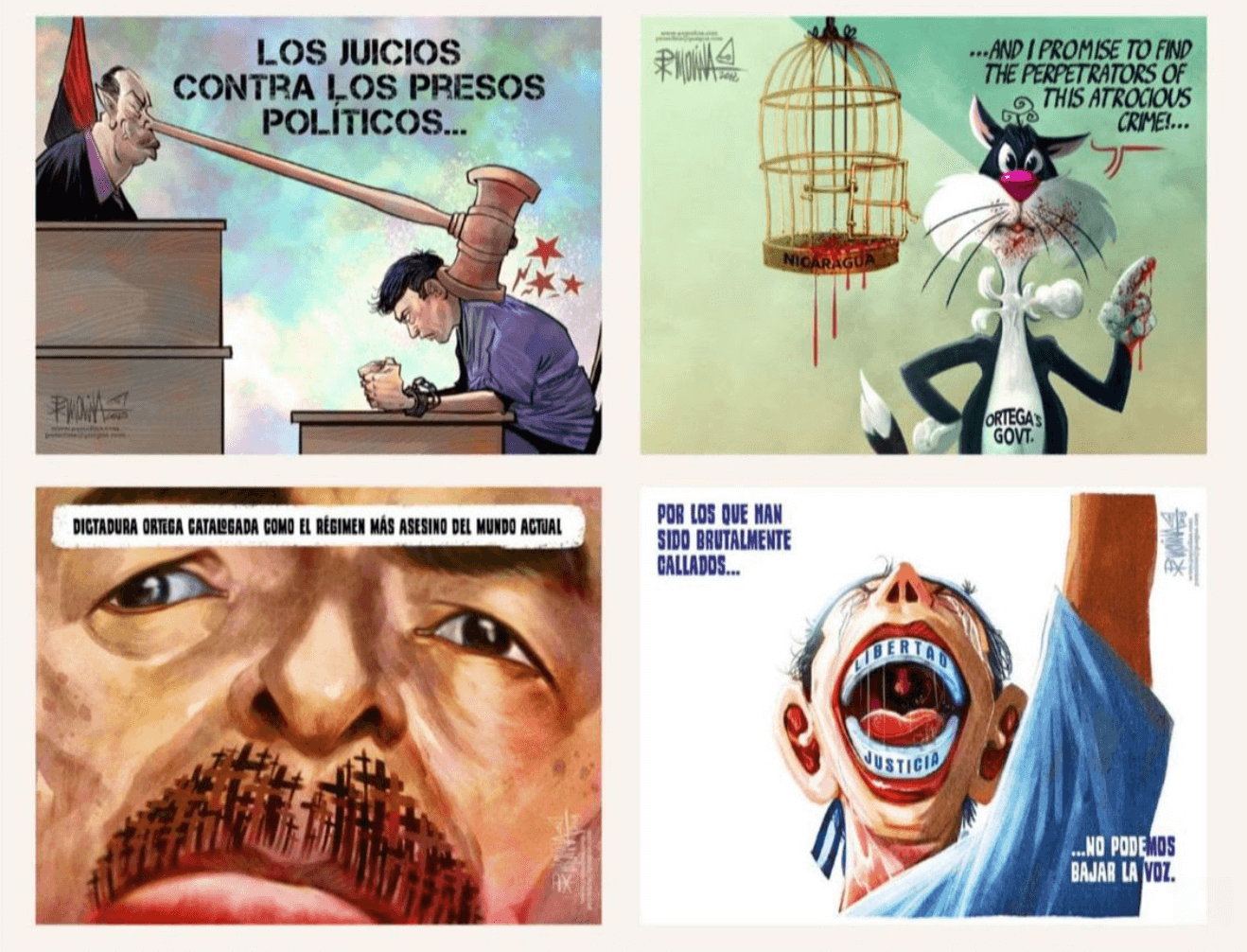
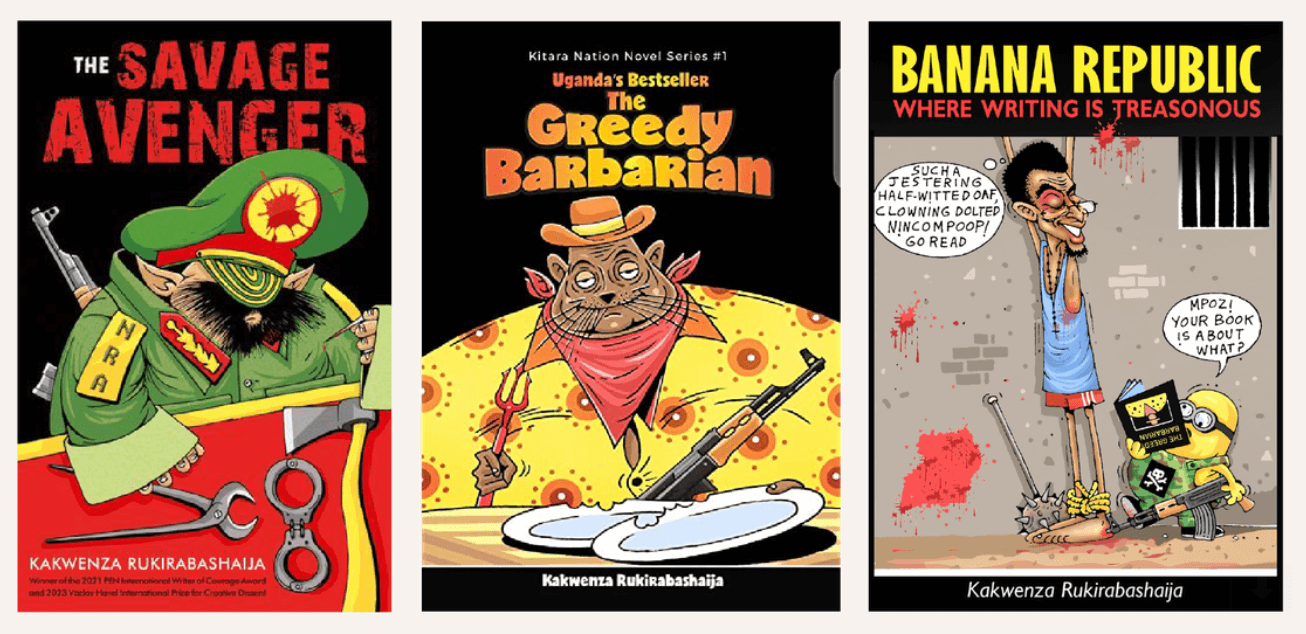
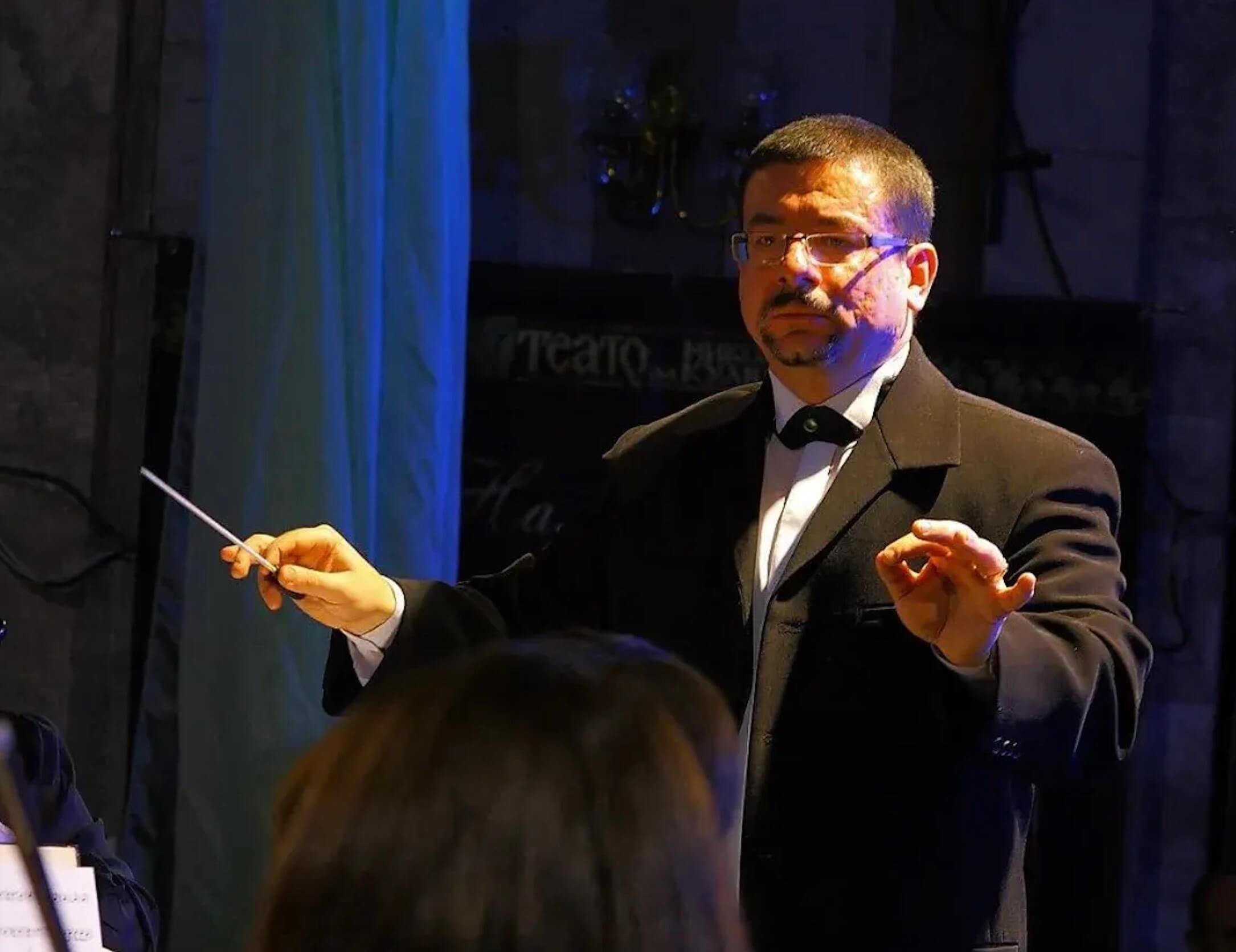
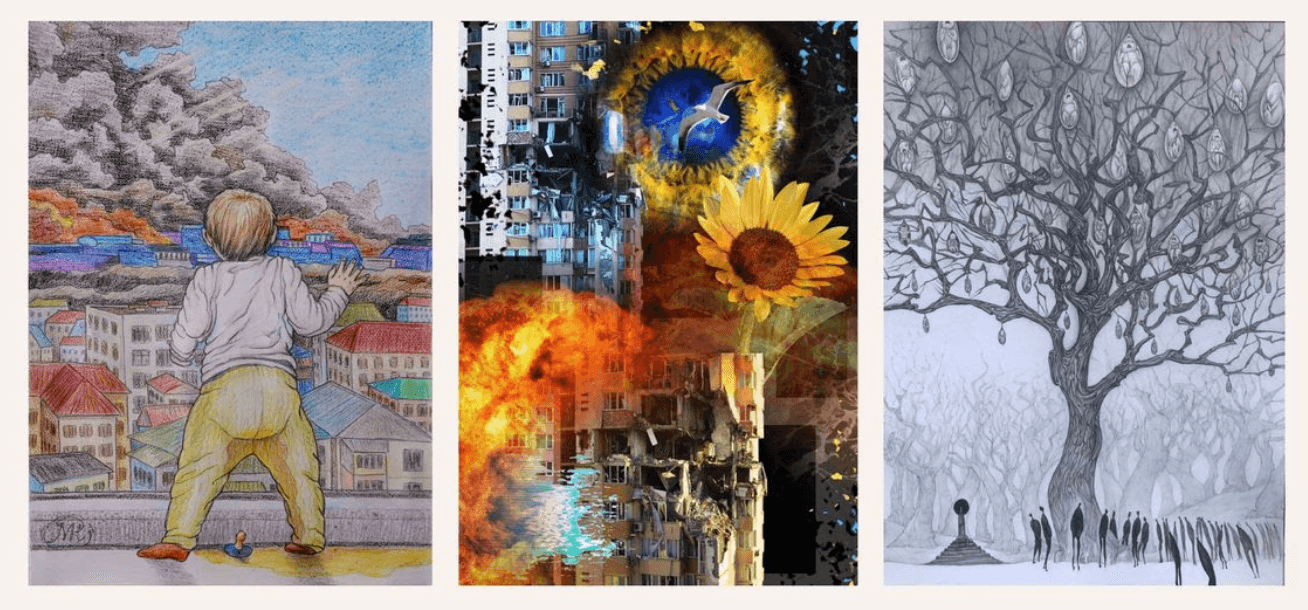
The Human Rights Foundation announced as recipients of the 2023 Václav Havel International Prize for Creative Dissent: Nicaraguan political cartoonist Pedro X. Molina; Ugandan novelist Kakwenza Rukirabashaija; and the third prize to be shared by four Ukrainian artists: the late conductor Yuriy Kerpatenko; the “Art Residency in Occupation” project; the illustrator Mariia Loniuk; and the “Stand Up for Ukraine” performance project.

In the face of oppression and stifling silence, this year’s laureates have chosen to speak the unspoken, echoing Václav Havel’s creativity and courageous spirit,” said HRF Chief Executive Officer Thor Halvorssen.

This year’s laureates will be recognized during a ceremony on Wednesday, June 14, at the 2023 Oslo Freedom Forum (OFF) in Oslo, Norway. The Havel Prize ceremony will also be broadcast live at oslofreedomforum.com.

Pedro X Molina is a Nicaraguan political cartoonist who was forced into exile on Christmas Day 2018 after Nicaraguan dictator Daniel Ortega’s political police killed a journalist, jailed two others, and ransacked the offices of El Confidencial — the digital newspaper that featured Molina’s biting caricatures of Ortega and his tyranny. Molina published his first two cartoons in Barricada in 1995, later becoming a cartoonist for the digital outlet El Confidencial. In 2019, he received the Maria Moors Cabot Prize, awarded by Columbia University. The same year he was recognized by Americas Quarterly as one of its Top 5 Latin American political humorists.

Kakwenza Rukirabashaija is a prominent Ugandan novelist recognized by English PEN in 2021 as a Writer of Courage and a fierce critic of the dictatorship of Yoweri Museveni. He has shown exceptional courage and defiance despite being imprisoned and tortured three times since 2020 for his irreverent writing and books, including “The Greedy Barbarian,” a satirical political fiction novel about corruption and dictatorship in a fictitious African country, and “Banana Republic: Where Writing is Treasonous,” an account of the torture he was subjected to while in detention in 2020 for the publication of his first book. In late December 2021, Rukirabashaija was kidnapped from his home and taken to an army base, where he was illegally detained for one month because of his tweets criticizing Museveni and his son.  Rukirabashaija was so severely tortured that he was released only on medical grounds. He was charged with “offensive communication” under Uganda’s repressive Computer Misuse Act. In February 2022, Rukirabashaija managed to flee to Germany for medical treatment, and he vowed to return to Uganda to face trial after his medical treatment.

Kerpatenko was a renowned Ukrainian musician and principal conductor of the Kherson Regional Philharmonic. In October 2022, Russian troops assassinated Kerpatenko in his home at point-blank range after he refused to conduct a concert under the rule of Russian invading forces in Kherson, Ukraine. The concert was meant to portray an “improvement of peaceful life” in the occupied city, but Kerpatenko “categorically refused to cooperate with the occupants,” the Ukrainian Ministry of Culture and Information Policy later confirmed. Kerpatenko led his hometown’s orchestra for more than  20 years before he was murdered. The Havel Prize will be presented posthumously to Kerpatenko for his courageous stance against the Russian forces’ repeated attempts at “artwashing” their illegal occupation of Ukraine.

Art Residency in Occupation is an underground art society created by curator Yuliia Manukian. During the occupation of Kherson, Ukraine, six resident artists secretly met in a basement studio at the initiative of Manukian to produce works that showcase the death and destruction in the southern city of Kherson, offering viewers an opportunity to understand the scope of the war. Through this residency, Manukian sought to provide shelter for artists and gave them the opportunity to tell stories of war through the language of art. While written journalism can distance an outsider from the reality of current life in Ukraine, Manukian believes that the group’s collection of drawings, paintings, photographs, diary entries, and videos convey the raw truth.

The Havel Prize will be presented to Manukian on behalf of the collective of artists who bravely united in wartime to create dozens of works that creatively document the horrors endured by millions of Ukrainians living under the Russian invasion.

Manukian is a curator, art critic, and journalist based in Odessa, Ukraine. She was shortlisted in the British Journalism Awards’ foreign affairs category for her vital, courageous, and deeply moving Kherson diaries for The Observer.

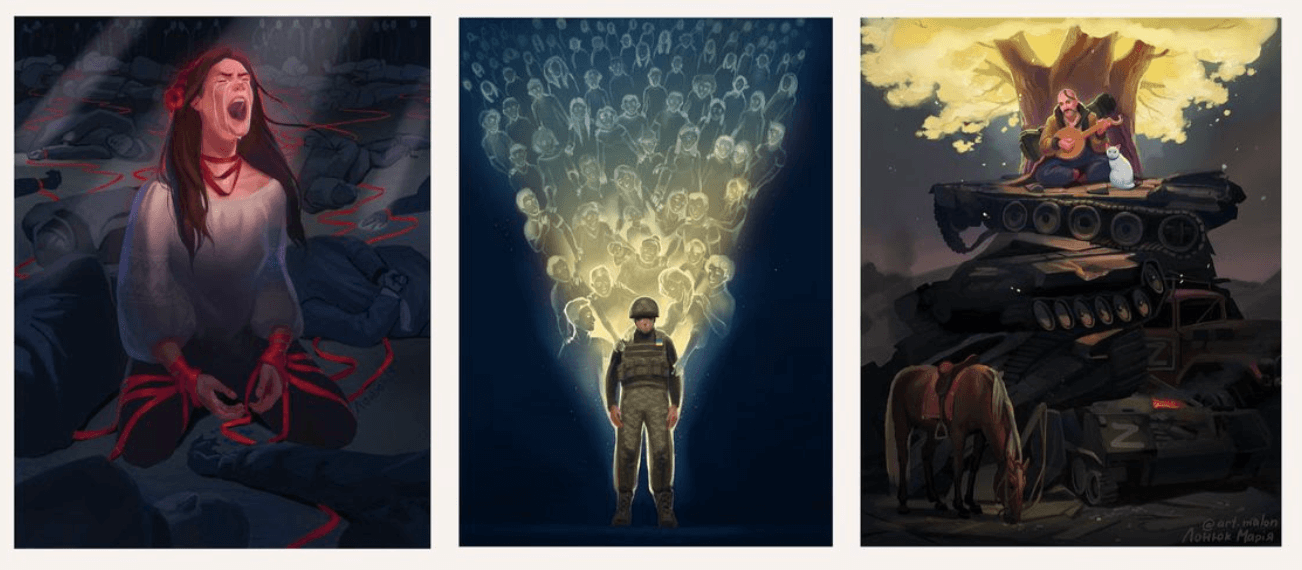
Mariia Loniuk is a Ukrainian freelance artist specializing in digital art. Since Vladimir Putin’s 2022 invasion of Ukraine, Loniuk has created vivid and touching illustrations about the war, conveying the feelings and images Ukrainians face. Her drawings capture the devastation of cities, homes, and human lives, the ubiquity of death and suffering, and the war’s destruction. Despite this, her illustrations also highlight the tremendous bravery and determination of the Ukrainian army and the courage and solidarity of the Ukrainian people as they defend their freedom.

Stand Up for Ukraine is a project that brings people together through the universal language of music, reminding us that art has the ability to transcend boundaries, challenge oppressive ideologies, and ignite a collective spirit of solidarity. The performance project, curated by Neringa Rekašiūtė, Eglė Plytnikaitė, and Elvina Nevardauskaitė, seeks to spark hope and empowerment and encourage people to stand united against a totalitarian regime that undermines human dignity. It consists of a live performance where the 22-year-old Ukrainian singer, Elizaveta Izmalkova, is joined by passersby singing along to the folk song, “Chervona Kalyna” — a symbol of Ukrainian resilience and freedom. Stand Up For Ukraine took the internet by storm, capturing the attention of more than five million viewers worldwide. The project serves as a call to action, urging people to set aside differences and come together in support of Ukraine.

Izmalkova is a 22-year-old Ukrainian singer based in Vilnius, Lithuania. She was born in the city of Pervomaisk in the Luhansk region. In her lifetime, Izmalkova’s family home in Ukraine was destroyed twice by Russian forces, first when Russia invaded Ukraine in 2014 and once again in early 2023.

For more on the Havel Prize and its many laureates, see: https://www.trueheroesfilms.org/thedigest/awards/438F3F5D-2CC8-914C-E104-CE20A25F0726

Human rights defenders at the 52nd session of the UN Human Rights Council

March 2, 2023

The 52nd session of the UN Human Rights Council started on27 February and will last until 4 April. Thanks to the Internationl Serrvice of Human Rights I am able to hightlight issues direclty affecting human rights defenders. For the full Alert to the session online, click here.  Stay up-to-date: Follow @ISHRglobal and #HRC52 on Twitter. See also: https://humanrightsdefenders.blog/2022/10/14/report-on-the-51st-session-of-the-human-rights-council/

Thematic areas

Protection of human rights defenders The mandate of the UN Special Rapporteur on the situation of human rights defenders is to be renewed at the HRC’s March session through a resolution led by Norway.

Reprisals

ISHR remains deeply concerned about reprisals against civil society actors who engage or seek to engage with UN bodies and mechanisms. We call on all States and on the Council to do more to address the situation. General Debate Item 5 is a key opportunity for States to raise concerns about specific cases of reprisals and demand that Governments provide an update on any investigation or action taken toward accountability. An increasing number of States have raised concerns in recent Council sessions about individual cases of reprisals, including at HRC sessions 39, 41, 42, 43, 45, and 51.  

ISHR believe that States raising cases is an important aspect of seeking accountability and ending impunity for acts of reprisal and intimidation against defenders engaging with the UN. In September 2022, ISHR ran a campaign regarding five specific cases of reprisals (#EndReprisals). We continue to urge perpetrator States to resolve these cases and other States to raise these cases in their statements: Ibrahim Metwally Hegazy (Egypt), the co-founder and coordinator of the Association of the Families of the Disappeared. Jiang Tianyong (China), a lawyer and legal rights activist working at grassroots level to defend land and housing rights, promote the rights of vulnerable social groups and expose root causes of systemic rights abuses. The Human Rights Center ‘Viasna’ (Belarus), which works towards the development of civil society and the promotion of human rights in Belarus and provides legal aid to people in defending their rights and public interests. Comité de Familiares de Víctimas del Caracazo (COFAVIC); Observatorio Venezolano de Conflictividad Social (OVCS); Centro de Justicia y Paz (CEPAZ); Control Ciudadano (and its director Ms. Rocío San Miguel); and Espacio Público (and its director Mr. Carlos Correa) (Venezuela): a group of five NGOs and two individuals working for the promotion of human rights in Venezuela and who have a history of cooperating with the UN, including the Fact-Finding Mission on Venezuela. Human rights lawyers and defenders Armel Niyongere,Dieudonné Bashirahishize, Vital Nshimirimana and Lambert Nigarura (Burundi), four prominent and well-respected figures within Burundian civil society and their local communities.   In addition, we urge States to raise individual cases of reprisals in the country-specific debates taking place at this session: Nicaragua, Sudan, Israel and occupied Palestine, Myanmar, Iran, Venezuela, Belarus, Democratic Republic of the Congo. Further information on these cases can be found here or by contacting the ISHR team at s.hosseiny@ishr.ch.

Other thematic debates At this 52nd session, the Council will discuss a range of economic, social and cultural rights in depth through dedicated debates with: The Special Rapporteur on the right to food The Independent Expert on the effects of foreign debt The Special Rapporteur on the right to adequate housing The Special Rapporteur in the field of cultural rights The Council will discuss a range of civil and political rights through dedicated debates with: The Special Rapporteur on freedom of religion or belief The Special Rapporteur on torture The Special Rapporteur on the right to privacy In addition, the Council will hold dedicated debates on the rights of specific groups including: The Special Rapporteur on the sale and sexual exploitation of children The Special Representative of the Secretary-General on violence against children and the Special Representative of the Secretary-General on children and armed conflict The Special Rapporteur on the rights of persons with disabilities The Special Rapporteur on minority issues The Independent Expert on the enjoyment of human rights of persons with albinism The Council will hold dedicated debates on the interrelation of human rights and thematic issues including: The Special Rapporteur on the promotion and protection of human rights while countering terrorism The Special Rapporteur on human rights and the environment The High Commissioner’s report on access to COVID-19 vaccines  

Country-specific developments

Afghanistan: The mandate of the Special Rapporteur on Afghanistan is a crucial mechanism for ongoing monitoring and documentation of the situation in the country, as well as enabling discussion and dialogue amongst States on its findings. It remains an important channel for communication between human rights defenders and survivors inside Afghanistan with the intergovernmental decision-making spaces. However, it falls short due to the overwhelming evidence of gross violations and abuses in Afghanistan. The HRC must respond to the calls from Afghan human rights defenders, especially women human rights defenders, and civil society and establish an independent accountability mechanism with a mandate and resources to investigate the full scope of violations abuses that continue to be committed in Afghanistan by all parties and to preserve evidence of these violations for future accountability. The Council will hold an interactive dialogue with the Special Rapporteur on 6 March.

China On 24 November 2022, the CERD issued an Urgent Action decision on Xinjiang stressing the ‘scale and nature’ of the repression of Uyghurs and Muslim minorities, as evidenced by the Xinjiang Police Files leaks. The Committee urged China to release all those arbitrarily detained, stop harassing Uyghurs abroad, and fully review its national security framework. For the first time ever, the Committee referred the matter to the Special Adviser of the Secretary-General on the Responsibility to Protect, while reminding ‘all States of their responsibility to cooperate to bring to an end through lawful means any serious breach of human rights obligations.’ States should ensure sustained visibility on the broader human rights situation across China, raising root causes of violations that commonly affect Uyghurs, Tibetans, Hong Kongers and mainland Chinese human rights defenders, including the abuse of national security as documented by the OHCHR’s Xinjiang report and Special Procedures, and ask for the prompt release of human rights defenders, including feminist activists Huang Xueqin and Li Qiaochu, human rights lawyers Chang Weiping and Ding Jiaxi, legal scholar Xu Zhiyong, Uyghur doctor Gulshan Abbas, Hong Kong lawyer Chow Hang-tung, and Tibetan climate activist A-nya Sengdra.

Mali. In 2020, Mali finally adopted its implementation decree for the HRD law. While it was a long awaited achievement, especially as it establishes the defenders protection mechanism within the National Human Rights Institution, the text also provides that in order to be recognised as such, any defender must carry a card or badge issued in advance by the Minister responsible for human rights. This provision was later reinforced by the decision adopted by the Malian government in September 2020, which establishes the characteristics and procedures for granting and withdrawing the professional card of human rights defenders. During the last presentation of the report of the independent expert on the human rights situation in Mali, ISHR delivered a statement asking the independent expert what support he planned to give to the Malian government to ensure the full implementation of the defenders law and its protection mechanism. The HRC must keep the scrutiny on Mali to ensure that defenders in the country are protected in line with the UN Declaration and not restricted by the limitation imposed by a card defining the status of defenders. The Council will hold an interactive dialogue with the independent expert on 30 March.

DRC The DRC has noticeably improved the protection of human rights in the Kasaï region but progress remains slow and action is still needed towards transitional justice and the protection of defenders in this region. In December 2022, the national assembly of the DRC adopted the draft law for the protection and promotion of defenders. The last step is for the text to be adopted by the Senate, which would strengthen the protection of defenders at the national level after the adoption in February 2016 of an edict for the protection of human rights defenders and journalists in the South Kivu province and a similar text adopted in November 2019 on the Protection of Human Rights Defenders in the North Kivu Province. The United Nations Joint Human Rights Office (UNJHRO) must support the calls of civil society and ensure the protection and promotion of defenders is part of its support to the government of the DRC. The Council will consider oral updates and hold an enhanced interactive dialogue with the High Commissioner and the team of international experts on the DRC on 30 March.

Egypt Notwithstanding the launch of a national human rights strategy, the fundamental purpose of which is to deflect international scrutiny rather than advance human rights, there has been no significant improvement in the human rights situation in Egypt since the joint statement delivered by States in March 2021. Since that time no consequential follow-up has occurred at the HRC, while the situation has further deteriorated on the ground. As witnessed by the world during COP27, the brutal crackdown on civil society in Egypt continues to intensify. Sustained, coordinated action on Egypt at the Council is more necessary than ever. Egypt continues to carry out widespread and systematic violations of human rights, including freedom of expression and freedom of assembly and association. The Egyptian authorities have for years employed draconian laws, including laws on counterterrorism, cybercrimes, and civil society in order to subdue the civilian populations and stifle all forms of peaceful dissent and mobilisation. Under the current government, Egypt ranks among the worst three countries in the world in the numbers of jailed journalists and almost all independent media has been forced to shut down or threatened into silence. Hundreds of websites continue to be banned. Scores of civil society and media representatives continue to be disappeared, tortured and arbitrarily detained under the pretense of counter-terrorism and national security.

While the release of a few select arbitrarily-detained activists is a sign that international pressure works, the number of releases pales in comparison to the vast numbers of individuals newly detained by the National Security Prosecution, or whose arbitrary detention was renewed in 2022. Between the reactivation of the Presidential Pardons Committee in April 2022 and the end of 2022, the authorities released around 900 people held for political reasons, but almost triple that number of suspected critics and opponents were interrogated by prosecutors and arbitrarily detained. ISHR reiterates the calls of more than 100 NGOs from around the world urging the HRC to create a monitoring and reporting mechanism on the ever-deteriorating human rights situation in Egypt.

Israel / OPT This session will consider a number of resolutions associated with the human rights situation in Israel and the Occupied Palestinian Territories, including with respect to the right of Palestinian’s to self-determination, as well as expanding and illegal Israeli settlements. Israeli policies and practices against Palestinian people have been found to constitute acts of apartheid by UN experts as well as by both international and national NGOs, while a HRC-mandated commission of inquiry has found that Israel’s permanent occupation and de facto annexation of Palestinian territory is likely unlawful. ISHR calls on all States to engage with these resolutions on their human rights merits, applying objective criteria in a principled and consistent way which upholds the right of self-determination as well as freedom from violence and discrimination. The Council will hold an interactive dialogue with the High Commissioner on ensuring accountability and justice in the Occupied Palestinian Territory, including East Jerusalem on 3 March.

Nicaragua A year after the adoption of resolution 49/3, the UN system has continued to document a steady deterioration of the country’s multi-pronged human rights crisis: UN and IACHR documentation compiled by the Colectivo 46/2 point to the absence of any step taken to implement any of the 14 recommendations from resolution 49/3. Instead, the ruling party has seized absolute control over the country’s 153 municipalities in a 2022 electoral process characterised by ‘repression of dissenting voices and undue restriction of political rights and civil liberties,’ according to the OHCHR; canceled the legal status of more than 2500 civil society organisations; detained political prisoners in inhumane conditions; and allowed for the continuation of widespread attacks, including 32 killings since 2018, by armed settlers against indigenous peoples of the Northern Caribbean Coast. The Nicaraguan government has confirmed its diplomatic isolation by refusing to cooperate with six UN Treaty Bodies within a year prompting an unprecedented public condemnation by the UN’s two anti-torture committees. It has also retaliated against EMRIP member and Nicaraguan citizen Anexa Cunningham, by denying her entry into the country on July 9. We urge the Human Rights council to renew, for a period of two years, resolution 49/3 establishing the mandate of the Group of Human Rights Experts on Nicaragua, and the monitoring mandate of the OHCHR. We call on all governments to support such a resolution and reinforce its intersectional approach, by bringing particular attention to the situation of indigenous peoples and afro-descendants, migrants and forcibly displaced persons, those detained for political reasons and the families of victims.

Saudi Arabia According to ALQST‘s 2022 annual report, the Saudi authorities’ unleashed a new wave of repression in 2022. Familiar patterns of abuse continued, including arbitrary arrests, enforced disappearances and harsh restrictions on prisoners of conscience released from prison, including travel bans. However from mid-year onwards in particular, the Saudi courts started imposing jail sentences of unprecedented severity for peaceful, legitimate activity on social media, further deepening the climate of fear in the kingdom. Use of the death penalty increased sharply after a lull during the COVID period, with the biggest mass execution in recent times (of 81 men in a single day), and executions for non-violent drugs-related offences made a dramatic comeback. This intensification of repression went hand in hand with the progressive diplomatic rehabilitation of Saudi Arabia’s crown prince and de facto ruler, Mohammed bin Salman. We call on the HRC to respond to the calls of NGOs from around the world to create monitoring and reporting mechanism on the ever-deteriorating human rights situation in Saudi Arabia.

Sudan The Sudanese military and some political parties and civic groups signed a framework agreement to pave the way for a power transition to civilian forces in December 2022. But the agreement was not widely welcomed by local resistance movements, including resistance committees and some women’s groups. The protests continued across the country demanding a comprehensive transitional process that respects the people’s demands for accountability, peace, and justice. In the meantime, the security forces crackdown on protests is sustained, while the violations of freedoms of assembly, expression, and association continues. Following the political framework agreement, attacks on women human rights defenders (WHRDs) and women groups continued as the violence in conflict areas escalated. The HRC must ensure continued reporting on Sudan and to urge the international community to prioritise justice and accountability in any upcoming political solution. The Council will consider an oral update and hold an interactive dialogue with the High Commissioner and designated Expert on 3 March.

Ukraine In the face of overwhelming evidence of war crimes and crimes against humanity associated with Russia’s war of aggression against Ukraine, ISHR calls on the HRC to renew the mandate of the Commission of Inquiry on human rights in Ukraine associated with Russia’s war of aggression, including the mandate of the Commission to examine the root causes of the conflict such as the repression and criminalisation of human rights defenders and independent journalists in Russia. The Council will hold an interactive dialogue with the Commission of Inquiry on 20 March. The Council will also hold an interactive dialogue on the OHCHR report on Ukraine on 31 March.

Venezuela ISHR joins Venezuelan and international organisations in urging states to speak out against the NGO bill currently passing through the National Assembly in Venezuela. The ‘Law of Supervision, Regularization, Performance and Financing of Non-Governmental and Related Organizations’ seeks to criminalise and further restrict the work of NGOs in the country. During the HRC session, there will be two agenda items specifically focusing on Venezuela: the update from the High Commissioner on 21 March, and an oral update by the UN fact-finding mission on 23 March, which will be their first since their mandate was renewed by the Council, last September. The High Commissioner’s update will no doubt include impressions and recommendations drawn from his recently concluded first visit to Venezuela. These updates will take place at a time of ongoing political flux in the country, upcoming elections and – critically – further threats to civic space. During the interactive dialogues on Venezuela, States must continue to express concern at ongoing human rights and humanitarian crises in the country, at the introduction of the NGO bill and call for the release of the arbitrarily detained including human rights defender Javier Tarazona who has now been held for almost 600 days, wholly without justification.

Yemen ISHR joins civil society organisations from Yemen and around the world in urging the HRC to establish an independent international criminally focused investigative mechanism on Yemen. Before its untimely dissolution in 2021, the UN Group of Eminent Experts (GEE), established by the HRC in 2017, recommended that UN member States refer the situation in Yemen to the International Criminal Court (ICC), support the establishment of an international criminally focused investigative mechanism, and stressed the need to realise victims’ right to reparation. In late 2021, HRC members narrowly rejected a resolution that would have renewed the GEE’s mandate following lobbying by Saudi Arabia and the UAE. In September 2022, Saudi Arabia and Yemen rejected attempts by States to ensure continued discussion at the HRC of the ongoing human rights crises in Yemen. The international community should not stand by and allow the vote to disband the GEE to be the HRC’s last word on the situation, nor should they allow warring parties to continue to block formal discussions of large-scale human rights abuses, war crimes and the urgent need for accountability. A new, HRC-mandated mechanism is required to ensure that potential avenues of criminal accountability and reparative justice are effectively explored for Yemen and may be pursued now and in the future to address impunity and provide effective redress to victims.

Guatemala Guatemala’s recent UPR put a spotlight on the fast deterioration of democratic spaces in the country. Over twenty States raised attacks against indigenous, environmental, and other human rights defenders, and journalists. There has been a  steady increase in attacks, with a record high of 1000 attacks by 2021 according to local groups. The government, meanwhile, made no reference to the issue during the review. States also shared concern about the erosion of judicial independence, an issue repeatedly highlighted by UN experts and officials. Over the past years, UN experts have exposed interference or blocking in the appointment of high level court judges. High Commissioner Volker Türk recently condemned a 70% increase in cases of intimidation and criminal charges against justice officials fighting impunity and corruption. A growing number of judges and legal professionals have fled the country since the government closed the UN’s International Commission Against Impunity in Guatemala (CICIG) in 2019. In 2021, UN and OAS experts denounced a ‘choking’ law that gave the government ‘wide scope to control NGOs’. In this context, space for Guatemalan civil society to safely advocate for human rights and expose violations, and for the judicial authorities to respond to abuses and uphold the rule of law has become dangerously narrow. These patterns create serious risks of further deterioration – in a trend that is also seen in neighbouring Central American countries –  in the lead-up to the June 2023 presidential elections. High Commissioner Türk’s presentation of his Office’s report on Guatemala to the HRC in March will provide a critical window of opportunity for States to collectively urge Guatemala to engage with the OHCHR to meaningfully address and put an end to attacks against human rights defenders and justice officials, ensure judicial independence, and review laws and policies that restrict civil society space.

Other country situations

The High Commissioner will provide an oral update to the Council on 7 March. The Council will consider updates, reports and is expected to consider resolutions addressing a range of country situations, in some instances involving the renewal of the relevant expert mandates. These include: Enhanced interactive dialogue with the Special Rapporteur on Eritrea Oral briefing and interactive dialogue with the International Commission of Human Rights Experts on Ethiopia ID with the Special Rapporteur on the Democratic People’s Republic of Korea and a presentation of the report of the High Commissioner Interactive Dialogue with the High Commissioner on Belarus Interactive dialogue with the High Commissioner, and interactive dialogue with the Special Rapporteur on Myanmar Interactive Dialogue with the Special Rapporteur on Iran Interactive Dialogue with the Commission of Inquiry on Syria Enhanced interactive dialogue with the Commission on Human Rights in South Sudan with the participation of the High Commissioner,  and an interactive Dialogue on the OHCHR report on South Sudan High-level Dialogue with the Independent Expert on the Central African Republic Interactive dialogue with the Fact-Finding Mission on Libya   #HRC52 | Council programme, appointments and resolutions During the organisational meeting for the 52nd session, held on 13 February, the President of the Human Rights Council presented the programme of work. It includes 7 panel discussions. States also announced at least 39 proposed resolutions.

Adoption of Universal Periodic Review (UPR) reports

During this session, the Council will adopt the UPR working group reports on Bahrain, Ecuador, Tunisia, Morocco, Indonesia, Finland, the United Kingdom, India, Algeria, Philippines, Brazil, Poland, the Netherlands, and South Africa.

Panel Discussions:

During each Council session, panel discussions are held to provide member States and NGOs with opportunities to hear from subject-matter experts and raise questions. 7 panel discussions are scheduled for this upcoming session: Biennial high-level panel discussion on the question of the death penalty. Theme: Human rights violations relating to the use of the death penalty, in particular with respect to limiting the death penalty to the most serious crimes High-level meeting commemorating the thirty-fifth anniversary of the Declaration on the Right to DevelopmentHigh-level panel discussion on UPR Voluntary Funds: achievements, good practices and lessons learned over the past 15 years and optimized support to States in the implementation of recommendations emanating from the fourth cycle Annual full-day meeting on the rights of the child [two accessible meetings]. Theme: Rights of the child and the digital environment Annual interactive debate on the rights of persons with disabilities. Theme: Support systems to ensure community inclusion of persons with disabilities, including as a means of building forward better after the COVID-19 pandemic Debate in commemoration of the International Day for the Elimination of Racial Discrimination. Theme: The urgency of combating racism and racial discrimination 75 years after the adoption of the Universal Declaration of Human Rights​ Annual high-level panel discussion on human rights mainstreaming. Theme: A reflection on five years of the United Nations Youth Strategy (Youth 2030): mapping a blueprint for the next steps
Read here the three-year programme of work of the Council with supplementary information.

Read here ISHR’s recommendations on the key issues that are or should be on the agenda of the UN Human Rights Council in 2023.

https://mailchi.mp/ishr/alert-to-the-human-rights-councils-35th-session-33793?e=d1945ebb90

See also: https://www.universal-rights.org/blog/what-are-the-human-rights-priorities-of-world-governments-at-hrc52/

Exiled Nicaraguan Human Rights Defenders in Costa Rica

March 15, 2022

A recent case study by Freedom House focuses on programming that offers holistic protection, support, and services, tailored to the needs of human rights defenders in their host country. This case study focused on the most current wave of migration of HRDs and CSOs who were forced to flee after anti-government protests in April 2018.

The Nicaraguan government continues to violate freedoms of expression, assembly and information and thwart the work of HRDs, including journalists and CSOs. Ortega-Murillo’s recent actions against potential presidential candidates and opposition figures demonstrate that the country will continue to see an outpouring of critics, activists, and HRDs to Costa Rica, among other countries. Nicaraguans continue to flee based on the attacks and harassment they face as HRDs and members of CSOs that champion democracy and human rights. See also: https://humanrightsdefenders.blog/2022/02/21/nicaragua-death-in-detention-and-sham-trial/

Of those 20 Nicaraguan HRDs who were surveyed, almost 90% stated that harassment and surveillance was a primary reason for leaving Nicaragua, followed by violence (65%) and threats (50%).
Costa Rica provides comparatively ample protection for migrants, and recently launched a new asylum category for those fleeing from authoritarian regimes in Venezuela, Cuba, and Nicaragua. The flow of migration since 2018 has persisted until March 2020 when the border shut due to the COVID-19 pandemic. Yet, migrant flows have begun to increase in recent months. However, Costa Rica is struggling to recover economically from the pandemic, particularly within the tourist, service, and commercial industries where most migrants and refugees find work. Most Nicaraguan refugees find themselves in a precarious economic situation, unable to find steady work, forcing many to resort to informal work with low salaries. HRDs are often not recognized as having different needs or characteristics from the larger refugee population, either by organizations or the Costa Rican population in general. Even for those who continue to work in human rights describe their ability to
continue work is difficult, and many express experiencing severe trauma as an exile, with remorse for not being able to stay and remain fighting for human rights at home. [see also: https://humanrightsdefenders.blog/2021/12/24/vilma-nunez-human-rights-defender-who-stays-in-nicaragua/]
However, many Nicaraguan HRDs try to carry out their work by investigating the laws and procedures in Costa Rica, accompanying their compatriots in their efforts, sharing knowledge, and giving advice. There are support and protection options for HRDs and CSOs in exile in Costa Rica, including a network of organizations and institutions facilitated by the United Nations High Commissioner for Refugees (UNHCR) that provide access to vital services.

All available support and protection options for Nicaraguan HRDs are operating at full capacity and cannot keep pace with the growing demand. We believe that it is necessary to seek support and accompaniment mechanisms for HRDs that facilitate their subsistence and enhance the
implementation of their work to defend the human rights of exiles and other Nicaraguan migrants who lack mechanisms for complaint and demand for their rights in Costa Rica.

https://freedomhouse.org/article/fighting-democracy-exile-my-story-nicaraguan-activist

later: https://thegaltimes.com/daniel-ortegas-regime-outlawed-another-25-ngos-in-nicaragua/87071/