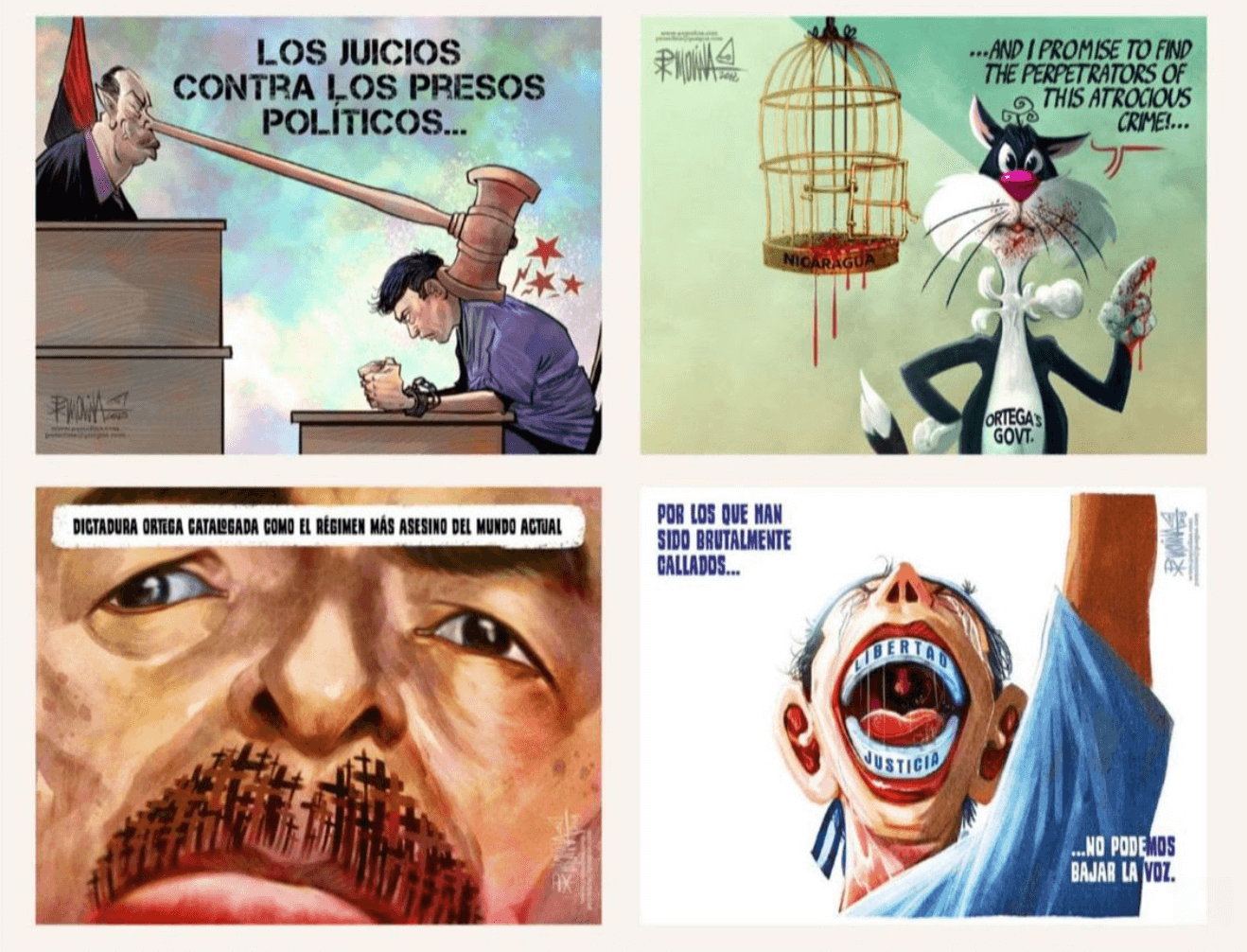
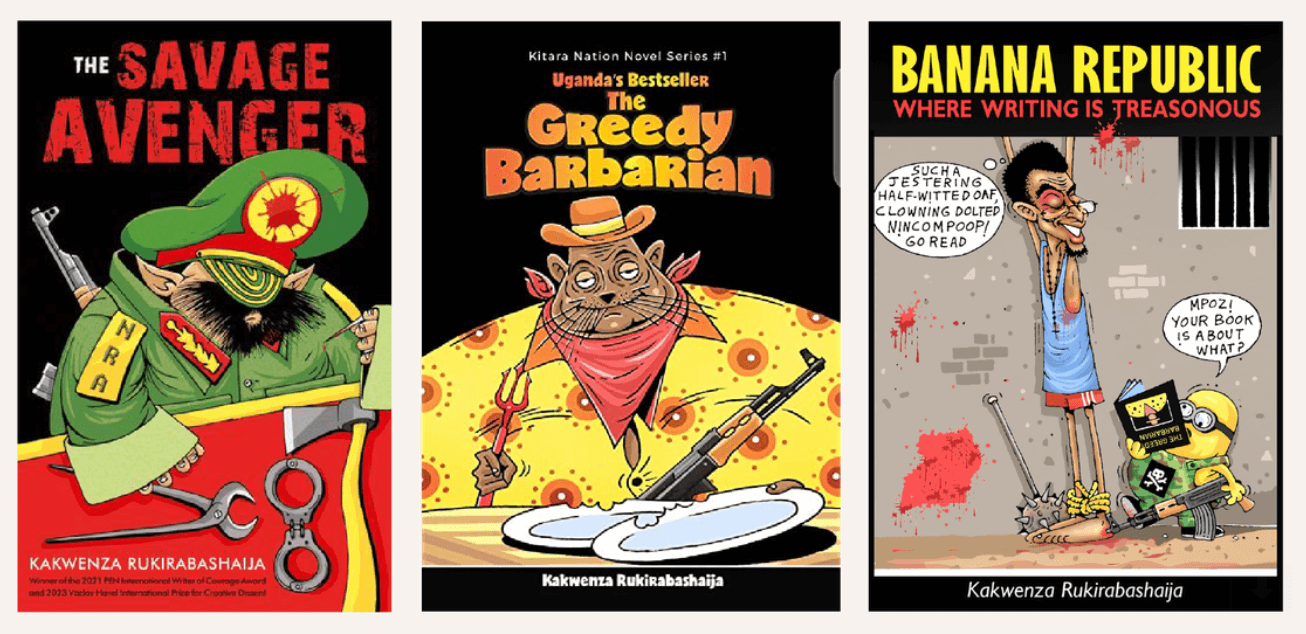
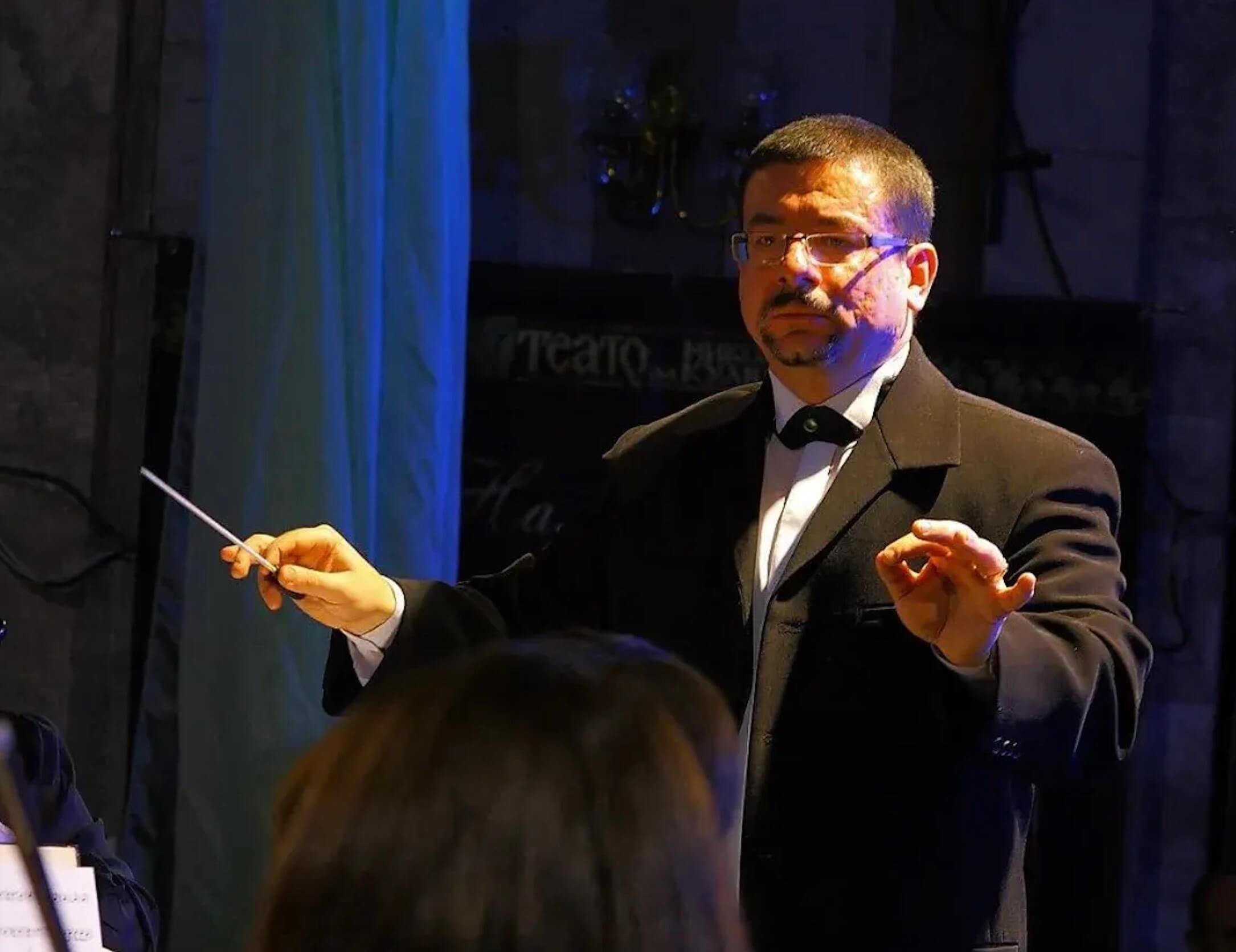
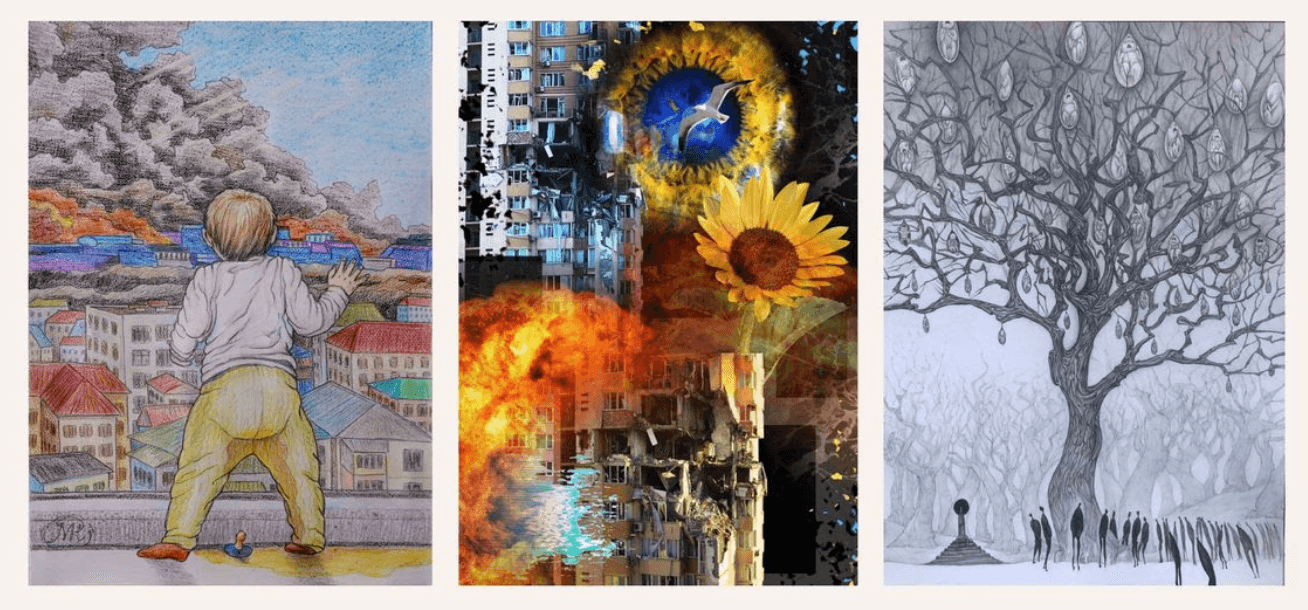
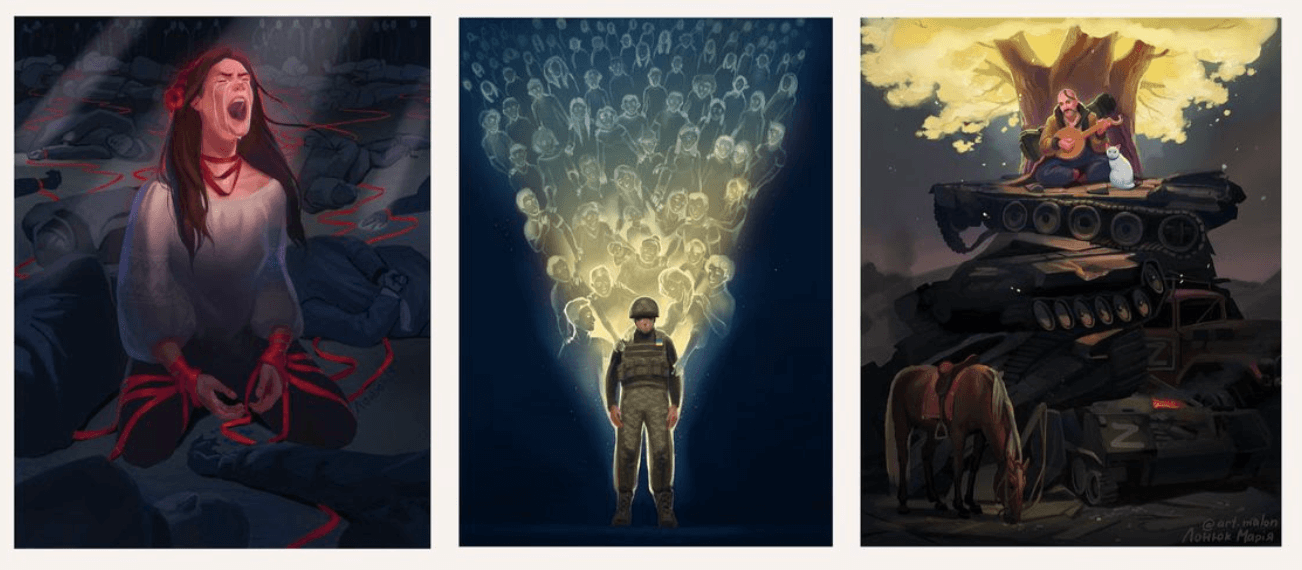
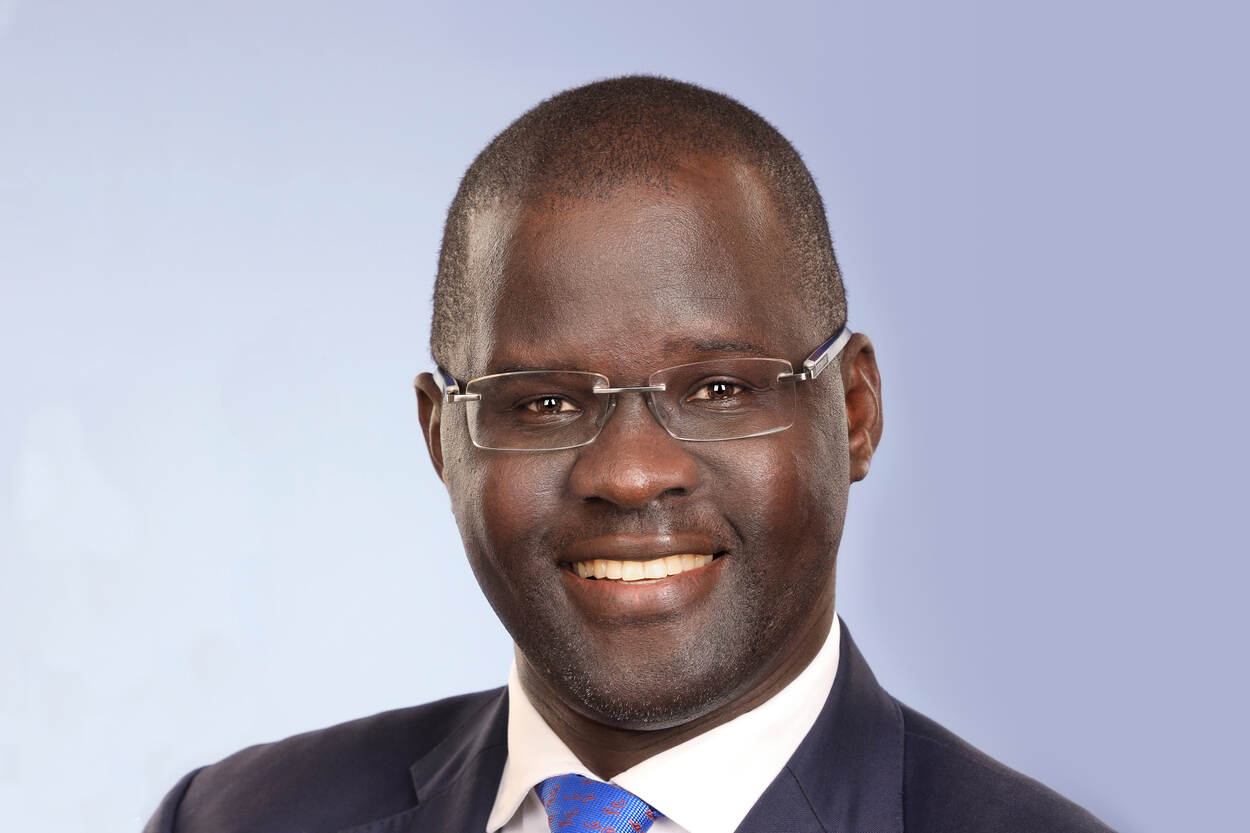
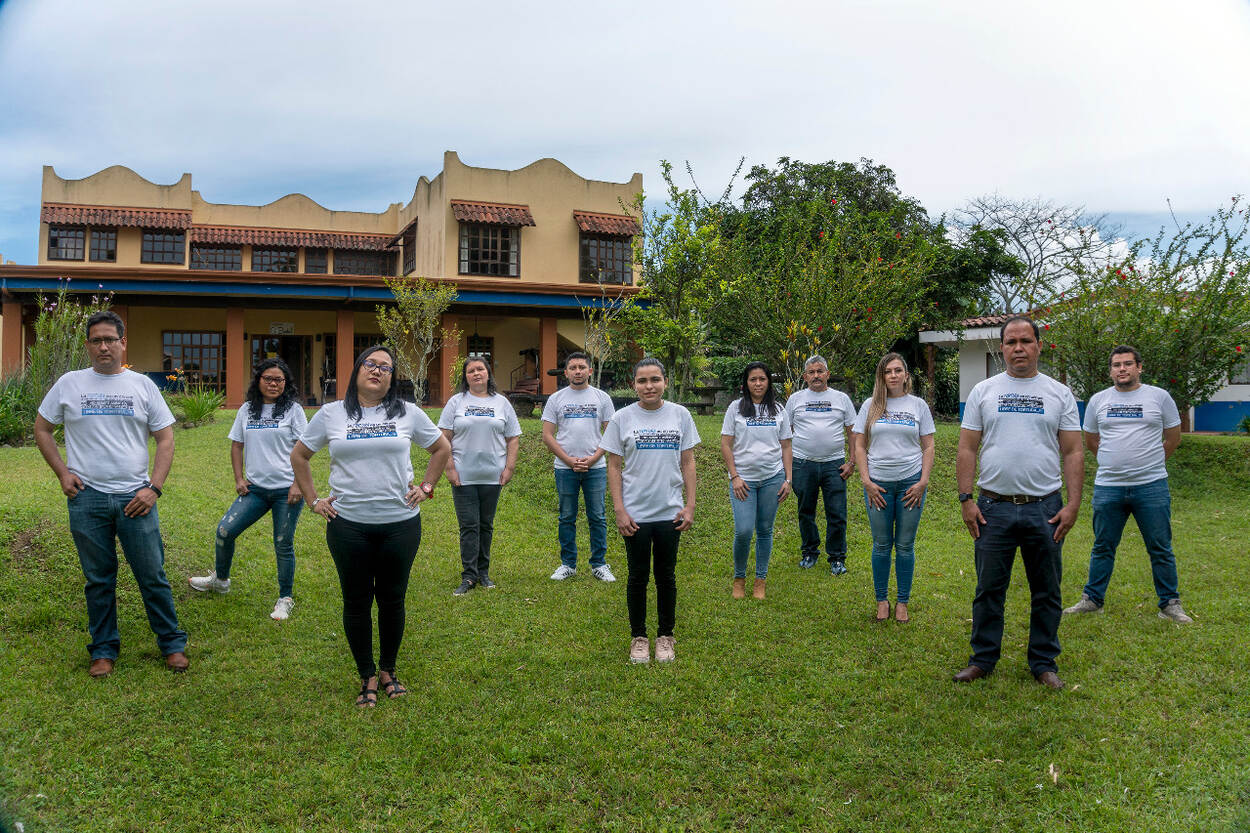
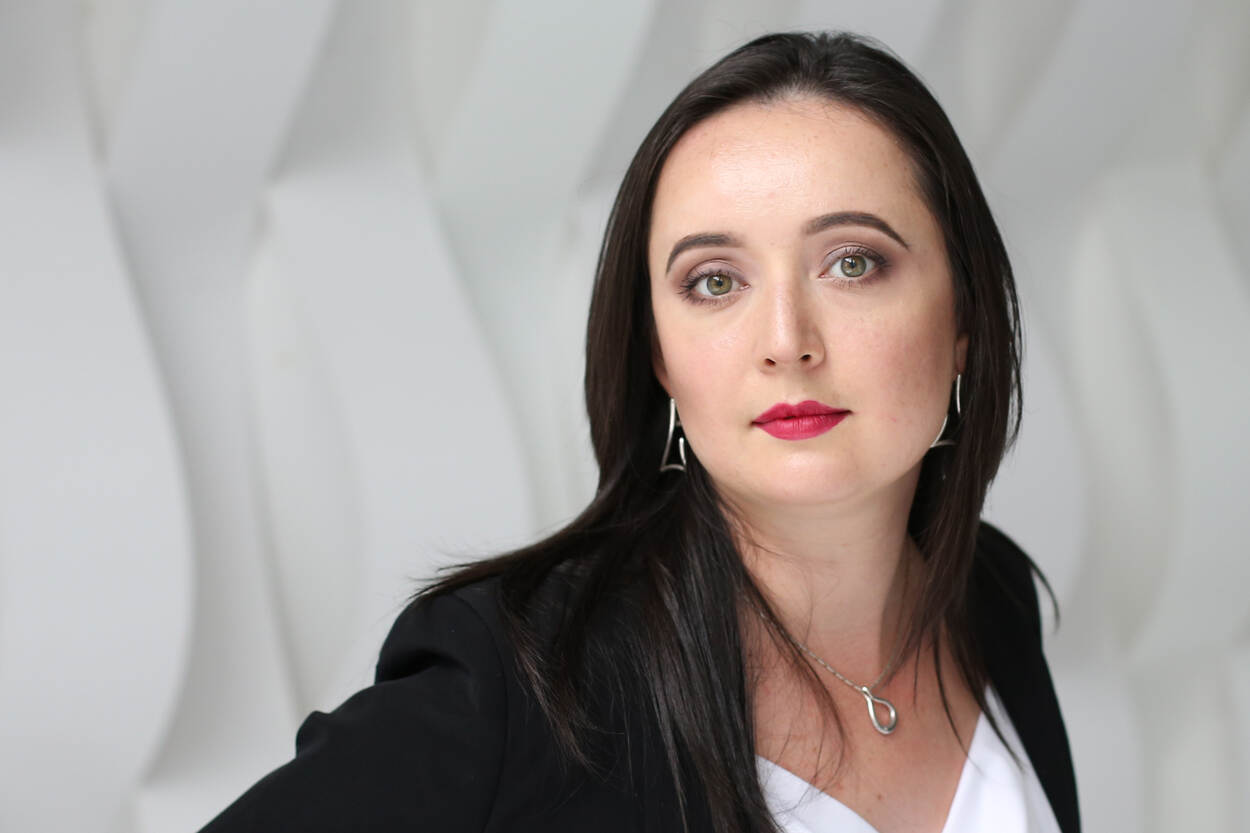
The Human Rights Foundation announced as recipients of the 2023 Václav Havel International Prize for Creative Dissent: Nicaraguan political cartoonist Pedro X. Molina; Ugandan novelist Kakwenza Rukirabashaija; and the third prize to be shared by four Ukrainian artists: the late conductor Yuriy Kerpatenko; the “Art Residency in Occupation” project; the illustrator Mariia Loniuk; and the “Stand Up for Ukraine” performance project.
“In the face of oppression and stifling silence, this year’s laureates have chosen to speak the unspoken, echoing Václav Havel’s creativity and courageous spirit,” said HRF Chief Executive Officer Thor Halvorssen.
This year’s laureates will be recognized during a ceremony on Wednesday, June 14, at the 2023 Oslo Freedom Forum (OFF) in Oslo, Norway. The Havel Prize ceremony will also be broadcast live at oslofreedomforum.com.
Pedro X Molina is a Nicaraguan political cartoonist who was forced into exile on Christmas Day 2018 after Nicaraguan dictator Daniel Ortega’s political police killed a journalist, jailed two others, and ransacked the offices of El Confidencial — the digital newspaper that featured Molina’s biting caricatures of Ortega and his tyranny. Molina published his first two cartoons in Barricada in 1995, later becoming a cartoonist for the digital outlet El Confidencial. In 2019, he received the Maria Moors Cabot Prize, awarded by Columbia University. The same year he was recognized by Americas Quarterly as one of its Top 5 Latin American political humorists.
Kakwenza Rukirabashaija is a prominent Ugandan novelist recognized by English PEN in 2021 as a Writer of Courage and a fierce critic of the dictatorship of Yoweri Museveni. He has shown exceptional courage and defiance despite being imprisoned and tortured three times since 2020 for his irreverent writing and books, including “The Greedy Barbarian,” a satirical political fiction novel about corruption and dictatorship in a fictitious African country, and “Banana Republic: Where Writing is Treasonous,” an account of the torture he was subjected to while in detention in 2020 for the publication of his first book. In late December 2021, Rukirabashaija was kidnapped from his home and taken to an army base, where he was illegally detained for one month because of his tweets criticizing Museveni and his son. Rukirabashaija was so severely tortured that he was released only on medical grounds. He was charged with “offensive communication” under Uganda’s repressive Computer Misuse Act. In February 2022, Rukirabashaija managed to flee to Germany for medical treatment, and he vowed to return to Uganda to face trial after his medical treatment.
Kerpatenko was a renowned Ukrainian musician and principal conductor of the Kherson Regional Philharmonic. In October 2022, Russian troops assassinated Kerpatenko in his home at point-blank range after he refused to conduct a concert under the rule of Russian invading forces in Kherson, Ukraine. The concert was meant to portray an “improvement of peaceful life” in the occupied city, but Kerpatenko “categorically refused to cooperate with the occupants,” the Ukrainian Ministry of Culture and Information Policy later confirmed. Kerpatenko led his hometown’s orchestra for more than 20 years before he was murdered. The Havel Prize will be presented posthumously to Kerpatenko for his courageous stance against the Russian forces’ repeated attempts at “artwashing” their illegal occupation of Ukraine.
Art Residency in Occupation is an underground art society created by curator Yuliia Manukian. During the occupation of Kherson, Ukraine, six resident artists secretly met in a basement studio at the initiative of Manukian to produce works that showcase the death and destruction in the southern city of Kherson, offering viewers an opportunity to understand the scope of the war. Through this residency, Manukian sought to provide shelter for artists and gave them the opportunity to tell stories of war through the language of art. While written journalism can distance an outsider from the reality of current life in Ukraine, Manukian believes that the group’s collection of drawings, paintings, photographs, diary entries, and videos convey the raw truth.
The Havel Prize will be presented to Manukian on behalf of the collective of artists who bravely united in wartime to create dozens of works that creatively document the horrors endured by millions of Ukrainians living under the Russian invasion.
Manukian is a curator, art critic, and journalist based in Odessa, Ukraine. She was shortlisted in the British Journalism Awards’ foreign affairs category for her vital, courageous, and deeply moving Kherson diaries for The Observer.
Mariia Loniuk is a Ukrainian freelance artist specializing in digital art. Since Vladimir Putin’s 2022 invasion of Ukraine, Loniuk has created vivid and touching illustrations about the war, conveying the feelings and images Ukrainians face. Her drawings capture the devastation of cities, homes, and human lives, the ubiquity of death and suffering, and the war’s destruction. Despite this, her illustrations also highlight the tremendous bravery and determination of the Ukrainian army and the courage and solidarity of the Ukrainian people as they defend their freedom.
Stand Up for Ukraine is a project that brings people together through the universal language of music, reminding us that art has the ability to transcend boundaries, challenge oppressive ideologies, and ignite a collective spirit of solidarity. The performance project, curated by Neringa Rekašiūtė, Eglė Plytnikaitė, and Elvina Nevardauskaitė, seeks to spark hope and empowerment and encourage people to stand united against a totalitarian regime that undermines human dignity. It consists of a live performance where the 22-year-old Ukrainian singer, Elizaveta Izmalkova, is joined by passersby singing along to the folk song, “Chervona Kalyna” — a symbol of Ukrainian resilience and freedom. Stand Up For Ukraine took the internet by storm, capturing the attention of more than five million viewers worldwide. The project serves as a call to action, urging people to set aside differences and come together in support of Ukraine.
Izmalkova is a 22-year-old Ukrainian singer based in Vilnius, Lithuania. She was born in the city of Pervomaisk in the Luhansk region. In her lifetime, Izmalkova’s family home in Ukraine was destroyed twice by Russian forces, first when Russia invaded Ukraine in 2014 and once again in early 2023.
Protection of human rights defenders The mandate of the UN Special Rapporteur on the situation of human rights defenders is to be renewed at the HRC’s March session through a resolution led by Norway.
Reprisals
ISHR remains deeply concerned about reprisals against civil society actors who engage or seek to engage with UN bodies and mechanisms. We call on all States and on the Council to do more to address the situation. General Debate Item 5 is a key opportunity for States to raise concerns about specific cases of reprisals and demand that Governments provide an update on any investigation or action taken toward accountability. An increasing number of States have raised concerns in recent Council sessions about individual cases of reprisals, including at HRC sessions 39, 41, 42, 43, 45, and 51.
ISHR believe that States raising cases is an important aspect of seeking accountability and ending impunity for acts of reprisal and intimidation against defenders engaging with the UN. In September 2022, ISHR ran a campaign regarding five specific cases of reprisals (#EndReprisals). We continue to urge perpetrator States to resolve these cases and other States to raise these cases in their statements: Ibrahim Metwally Hegazy (Egypt), the co-founder and coordinator of the Association of the Families of the Disappeared. Jiang Tianyong (China), a lawyer and legal rights activist working at grassroots level to defend land and housing rights, promote the rights of vulnerable social groups and expose root causes of systemic rights abuses. The Human Rights Center ‘Viasna’ (Belarus), which works towards the development of civil society and the promotion of human rights in Belarus and provides legal aid to people in defending their rights and public interests. Comité de Familiares de Víctimas del Caracazo (COFAVIC); Observatorio Venezolano de Conflictividad Social (OVCS); Centro de Justicia y Paz (CEPAZ); Control Ciudadano (and its director Ms. Rocío San Miguel); and Espacio Público (and its director Mr. Carlos Correa) (Venezuela): a group of five NGOs and two individuals working for the promotion of human rights in Venezuela and who have a history of cooperating with the UN, including the Fact-Finding Mission on Venezuela. Human rights lawyers and defenders Armel Niyongere,Dieudonné Bashirahishize, Vital Nshimirimana and Lambert Nigarura (Burundi), four prominent and well-respected figures within Burundian civil society and their local communities. In addition, we urge States to raise individual cases of reprisals in the country-specific debates taking place at this session: Nicaragua, Sudan, Israel and occupied Palestine, Myanmar, Iran, Venezuela, Belarus, Democratic Republic of the Congo. Further information on these cases can be found here or by contacting the ISHR team at s.hosseiny@ishr.ch.
Other thematic debates At this 52nd session, the Council will discuss a range of economic, social and cultural rights in depth through dedicated debates with: The Special Rapporteur on the right to food The Independent Expert on the effects of foreign debt The Special Rapporteur on the right to adequate housing The Special Rapporteur in the field of cultural rights The Council will discuss a range of civil and political rights through dedicated debates with: The Special Rapporteur on freedom of religion or belief The Special Rapporteur on torture The Special Rapporteur on the right to privacy In addition, the Council will hold dedicated debates on the rights of specific groups including: The Special Rapporteur on the sale and sexual exploitation of children The Special Representative of the Secretary-General on violence against children and the Special Representative of the Secretary-General on children and armed conflict The Special Rapporteur on the rights of persons with disabilities The Special Rapporteur on minority issues The Independent Expert on the enjoyment of human rights of persons with albinism The Council will hold dedicated debates on the interrelation of human rights and thematic issues including: The Special Rapporteur on the promotion and protection of human rights while countering terrorism The Special Rapporteur on human rights and the environment The High Commissioner’s report on access to COVID-19 vaccines
Country-specific developments
Afghanistan: The mandate of the Special Rapporteur on Afghanistan is a crucial mechanism for ongoing monitoring and documentation of the situation in the country, as well as enabling discussion and dialogue amongst States on its findings. It remains an important channel for communication between human rights defenders and survivors inside Afghanistan with the intergovernmental decision-making spaces. However, it falls short due to the overwhelming evidence of gross violations and abuses in Afghanistan. The HRC must respond to the calls from Afghan human rights defenders, especially women human rights defenders, and civil society and establish an independent accountability mechanism with a mandate and resources to investigate the full scope of violations abuses that continue to be committed in Afghanistan by all parties and to preserve evidence of these violations for future accountability. The Council will hold an interactive dialogue with the Special Rapporteur on 6 March.
China On 24 November 2022, the CERD issued an Urgent Action decision on Xinjiang stressing the ‘scale and nature’ of the repression of Uyghurs and Muslim minorities, as evidenced by the Xinjiang Police Files leaks. The Committee urged China to release all those arbitrarily detained, stop harassing Uyghurs abroad, and fully review its national security framework. For the first time ever, the Committee referred the matter to the Special Adviser of the Secretary-General on the Responsibility to Protect, while reminding ‘all States of their responsibility to cooperate to bring to an end through lawful means any serious breach of human rights obligations.’ States should ensure sustained visibility on the broader human rights situation across China, raising root causes of violations that commonly affect Uyghurs, Tibetans, Hong Kongers and mainland Chinese human rights defenders, including the abuse of national security as documented by the OHCHR’s Xinjiang report and Special Procedures, and ask for the prompt release of human rights defenders, including feminist activists Huang Xueqin and Li Qiaochu, human rights lawyers Chang Weiping and Ding Jiaxi, legal scholar Xu Zhiyong, Uyghur doctor Gulshan Abbas, Hong Kong lawyer Chow Hang-tung, and Tibetan climate activist A-nya Sengdra.
Mali. In 2020, Mali finally adopted its implementation decree for the HRD law. While it was a long awaited achievement, especially as it establishes the defenders protection mechanism within the National Human Rights Institution, the text also provides that in order to be recognised as such, any defender must carry a card or badge issued in advance by the Minister responsible for human rights. This provision was later reinforced by the decision adopted by the Malian government in September 2020, which establishes the characteristics and procedures for granting and withdrawing the professional card of human rights defenders. During the last presentation of the report of the independent expert on the human rights situation in Mali, ISHR delivered a statement asking the independent expert what support he planned to give to the Malian government to ensure the full implementation of the defenders law and its protection mechanism. The HRC must keep the scrutiny on Mali to ensure that defenders in the country are protected in line with the UN Declaration and not restricted by the limitation imposed by a card defining the status of defenders. The Council will hold an interactive dialogue with the independent expert on 30 March.
DRC The DRC has noticeably improved the protection of human rights in the Kasaï region but progress remains slow and action is still needed towards transitional justice and the protection of defenders in this region. In December 2022, the national assembly of the DRC adopted the draft law for the protection and promotion of defenders. The last step is for the text to be adopted by the Senate, which would strengthen the protection of defenders at the national level after the adoption in February 2016 of an edict for the protection of human rights defenders and journalists in the South Kivu province and a similar text adopted in November 2019 on the Protection of Human Rights Defenders in the North Kivu Province. The United Nations Joint Human Rights Office (UNJHRO) must support the calls of civil society and ensure the protection and promotion of defenders is part of its support to the government of the DRC. The Council will consider oral updates and hold an enhanced interactive dialogue with the High Commissioner and the team of international experts on the DRC on 30 March.
Egypt Notwithstanding the launch of a national human rights strategy, the fundamental purpose of which is to deflect international scrutiny rather than advance human rights, there has been no significant improvement in the human rights situation in Egypt since the joint statement delivered by States in March 2021. Since that time no consequential follow-up has occurred at the HRC, while the situation has further deteriorated on the ground. As witnessed by the world during COP27, the brutal crackdown on civil society in Egypt continues to intensify. Sustained, coordinated action on Egypt at the Council is more necessary than ever. Egypt continues to carry out widespread and systematic violations of human rights, including freedom of expression and freedom of assembly and association. The Egyptian authorities have for years employed draconian laws, including laws on counterterrorism, cybercrimes, and civil society in order to subdue the civilian populations and stifle all forms of peaceful dissent and mobilisation. Under the current government, Egypt ranks among the worst three countries in the world in the numbers of jailed journalists and almost all independent media has been forced to shut down or threatened into silence. Hundreds of websites continue to be banned. Scores of civil society and media representatives continue to be disappeared, tortured and arbitrarily detained under the pretense of counter-terrorism and national security.
While the release of a few select arbitrarily-detained activists is a sign that international pressure works, the number of releases pales in comparison to the vast numbers of individuals newly detained by the National Security Prosecution, or whose arbitrary detention was renewed in 2022. Between the reactivation of the Presidential Pardons Committee in April 2022 and the end of 2022, the authorities released around 900 people held for political reasons, but almost triple that number of suspected critics and opponents were interrogated by prosecutors and arbitrarily detained. ISHR reiterates the calls of more than 100 NGOs from around the world urging the HRC to create a monitoring and reporting mechanism on the ever-deteriorating human rights situation in Egypt.
Israel / OPT This session will consider a number of resolutions associated with the human rights situation in Israel and the Occupied Palestinian Territories, including with respect to the right of Palestinian’s to self-determination, as well as expanding and illegal Israeli settlements. Israeli policies and practices against Palestinian people have been found to constitute acts of apartheid by UN experts as well as by both international and national NGOs, while a HRC-mandated commission of inquiry has found that Israel’s permanent occupation and de facto annexation of Palestinian territory is likely unlawful. ISHR calls on all States to engage with these resolutions on their human rights merits, applying objective criteria in a principled and consistent way which upholds the right of self-determination as well as freedom from violence and discrimination. The Council will hold an interactive dialogue with the High Commissioner on ensuring accountability and justice in the Occupied Palestinian Territory, including East Jerusalem on 3 March.
Nicaragua A year after the adoption of resolution 49/3, the UN system has continued to document a steady deterioration of the country’s multi-pronged human rights crisis: UN and IACHR documentation compiled by the Colectivo 46/2 point to the absence of any step taken to implement any of the 14 recommendations from resolution 49/3. Instead, the ruling party has seized absolute control over the country’s 153 municipalities in a 2022 electoral process characterised by ‘repression of dissenting voices and undue restriction of political rights and civil liberties,’ according to the OHCHR; canceled the legal status of more than 2500 civil society organisations; detained political prisoners in inhumane conditions; and allowed for the continuation of widespread attacks, including 32 killings since 2018, by armed settlers against indigenous peoples of the Northern Caribbean Coast. The Nicaraguan government has confirmed its diplomatic isolation by refusing to cooperate with six UN Treaty Bodies within a year prompting an unprecedented public condemnation by the UN’s two anti-torture committees. It has also retaliated against EMRIP member and Nicaraguan citizen Anexa Cunningham, by denying her entry into the country on July 9. We urge the Human Rights council to renew, for a period of two years, resolution 49/3 establishing the mandate of the Group of Human Rights Experts on Nicaragua, and the monitoring mandate of the OHCHR. We call on all governments to support such a resolution and reinforce its intersectional approach, by bringing particular attention to the situation of indigenous peoples and afro-descendants, migrants and forcibly displaced persons, those detained for political reasons and the families of victims.
Saudi Arabia According to ALQST‘s 2022 annual report, the Saudi authorities’ unleashed a new wave of repression in 2022. Familiar patterns of abuse continued, including arbitrary arrests, enforced disappearances and harsh restrictions on prisoners of conscience released from prison, including travel bans. However from mid-year onwards in particular, the Saudi courts started imposing jail sentences of unprecedented severity for peaceful, legitimate activity on social media, further deepening the climate of fear in the kingdom. Use of the death penalty increased sharply after a lull during the COVID period, with the biggest mass execution in recent times (of 81 men in a single day), and executions for non-violent drugs-related offences made a dramatic comeback. This intensification of repression went hand in hand with the progressive diplomatic rehabilitation of Saudi Arabia’s crown prince and de facto ruler, Mohammed bin Salman. We call on the HRC to respond to the calls of NGOs from around the world to create monitoring and reporting mechanism on the ever-deteriorating human rights situation in Saudi Arabia.
Sudan The Sudanese military and some political parties and civic groups signed a framework agreement to pave the way for a power transition to civilian forces in December 2022. But the agreement was not widely welcomed by local resistance movements, including resistance committees and some women’s groups. The protests continued across the country demanding a comprehensive transitional process that respects the people’s demands for accountability, peace, and justice. In the meantime, the security forces crackdown on protests is sustained, while the violations of freedoms of assembly, expression, and association continues. Following the political framework agreement, attacks on women human rights defenders (WHRDs) and women groups continued as the violence in conflict areas escalated. The HRC must ensure continued reporting on Sudan and to urge the international community to prioritise justice and accountability in any upcoming political solution. The Council will consider an oral update and hold an interactive dialogue with the High Commissioner and designated Expert on 3 March.
Ukraine In the face of overwhelming evidence of war crimes and crimes against humanity associated with Russia’s war of aggression against Ukraine, ISHR calls on the HRC to renew the mandate of the Commission of Inquiry on human rights in Ukraine associated with Russia’s war of aggression, including the mandate of the Commission to examine the root causes of the conflict such as the repression and criminalisation of human rights defenders and independent journalists in Russia. The Council will hold an interactive dialogue with the Commission of Inquiry on 20 March. The Council will also hold an interactive dialogue on the OHCHR report on Ukraine on 31 March.
Venezuela ISHR joins Venezuelan and international organisations in urging states to speak out against the NGO bill currently passing through the National Assembly in Venezuela. The ‘Law of Supervision, Regularization, Performance and Financing of Non-Governmental and Related Organizations’ seeks to criminalise and further restrict the work of NGOs in the country. During the HRC session, there will be two agenda items specifically focusing on Venezuela: the update from the High Commissioner on 21 March, and an oral update by the UN fact-finding mission on 23 March, which will be their first since their mandate was renewed by the Council, last September. The High Commissioner’s update will no doubt include impressions and recommendations drawn from his recently concluded first visit to Venezuela. These updates will take place at a time of ongoing political flux in the country, upcoming elections and – critically – further threats to civic space. During the interactive dialogues on Venezuela, States must continue to express concern at ongoing human rights and humanitarian crises in the country, at the introduction of the NGO bill and call for the release of the arbitrarily detained including human rights defender Javier Tarazona who has now been held for almost 600 days, wholly without justification.
Yemen ISHR joins civil society organisations from Yemen and around the world in urging the HRC to establish an independent international criminally focused investigative mechanism on Yemen. Before its untimely dissolution in 2021, the UN Group of Eminent Experts (GEE), established by the HRC in 2017, recommended that UN member States refer the situation in Yemen to the International Criminal Court (ICC), support the establishment of an international criminally focused investigative mechanism, and stressed the need to realise victims’ right to reparation. In late 2021, HRC members narrowly rejected a resolution that would have renewed the GEE’s mandate following lobbying by Saudi Arabia and the UAE. In September 2022, Saudi Arabia and Yemen rejected attempts by States to ensure continued discussion at the HRC of the ongoing human rights crises in Yemen. The international community should not stand by and allow the vote to disband the GEE to be the HRC’s last word on the situation, nor should they allow warring parties to continue to block formal discussions of large-scale human rights abuses, war crimes and the urgent need for accountability. A new, HRC-mandated mechanism is required to ensure that potential avenues of criminal accountability and reparative justice are effectively explored for Yemen and may be pursued now and in the future to address impunity and provide effective redress to victims.
Guatemala Guatemala’s recent UPR put a spotlight on the fast deterioration of democratic spaces in the country. Over twenty States raised attacks against indigenous, environmental, and other human rights defenders, and journalists. There has been a steady increase in attacks, with a record high of 1000 attacks by 2021 according to local groups. The government, meanwhile, made no reference to the issue during the review. States also shared concern about the erosion of judicial independence, an issue repeatedly highlighted by UN experts and officials. Over the past years, UN experts have exposed interference or blocking in the appointment of high level court judges. High Commissioner Volker Türk recently condemned a 70% increase in cases of intimidation and criminal charges against justice officials fighting impunity and corruption. A growing number of judges and legal professionals have fled the country since the government closed the UN’s International Commission Against Impunity in Guatemala (CICIG) in 2019. In 2021, UN and OAS experts denounced a ‘choking’ law that gave the government ‘wide scope to control NGOs’. In this context, space for Guatemalan civil society to safely advocate for human rights and expose violations, and for the judicial authorities to respond to abuses and uphold the rule of law has become dangerously narrow. These patterns create serious risks of further deterioration – in a trend that is also seen in neighbouring Central American countries – in the lead-up to the June 2023 presidential elections. High Commissioner Türk’s presentation of his Office’s report on Guatemala to the HRC in March will provide a critical window of opportunity for States to collectively urge Guatemala to engage with the OHCHR to meaningfully address and put an end to attacks against human rights defenders and justice officials, ensure judicial independence, and review laws and policies that restrict civil society space.
Other country situations
The High Commissioner will provide an oral update to the Council on 7 March. The Council will consider updates, reports and is expected to consider resolutions addressing a range of country situations, in some instances involving the renewal of the relevant expert mandates. These include: Enhanced interactive dialogue with the Special Rapporteur on Eritrea Oral briefing and interactive dialogue with the International Commission of Human Rights Experts on Ethiopia ID with the Special Rapporteur on the Democratic People’s Republic of Korea and a presentation of the report of the High Commissioner Interactive Dialogue with the High Commissioner on Belarus Interactive dialogue with the High Commissioner, and interactive dialogue with the Special Rapporteur on Myanmar Interactive Dialogue with the Special Rapporteur on Iran Interactive Dialogue with the Commission of Inquiry on Syria Enhanced interactive dialogue with the Commission on Human Rights in South Sudan with the participation of the High Commissioner, and an interactive Dialogue on the OHCHR report on South Sudan High-level Dialogue with the Independent Expert on the Central African Republic Interactive dialogue with the Fact-Finding Mission on Libya #HRC52 | Council programme, appointments and resolutions During the organisational meeting for the 52nd session, held on 13 February, the President of the Human Rights Council presented the programme of work. It includes 7 panel discussions. States also announced at least 39 proposed resolutions.
Adoption of Universal Periodic Review (UPR) reports
During this session, the Council will adopt the UPR working group reports on Bahrain, Ecuador, Tunisia, Morocco, Indonesia, Finland, the United Kingdom, India, Algeria, Philippines, Brazil, Poland, the Netherlands, and South Africa.
Panel Discussions:
During each Council session, panel discussions are held to provide member States and NGOs with opportunities to hear from subject-matter experts and raise questions. 7 panel discussions are scheduled for this upcoming session: Biennial high-level panel discussion on the question of the death penalty. Theme: Human rights violations relating to the use of the death penalty, in particular with respect to limiting the death penalty to the most serious crimes High-level meeting commemorating the thirty-fifth anniversary of the Declaration on the Right to DevelopmentHigh-level panel discussion on UPR Voluntary Funds: achievements, good practices and lessons learned over the past 15 years and optimized support to States in the implementation of recommendations emanating from the fourth cycle Annual full-day meeting on the rights of the child [two accessible meetings]. Theme: Rights of the child and the digital environment Annual interactive debate on the rights of persons with disabilities. Theme: Support systems to ensure community inclusion of persons with disabilities, including as a means of building forward better after the COVID-19 pandemic Debate in commemoration of the International Day for the Elimination of Racial Discrimination. Theme: The urgency of combating racism and racial discrimination 75 years after the adoption of the Universal Declaration of Human Rights Annual high-level panel discussion on human rights mainstreaming. Theme: A reflection on five years of the United Nations Youth Strategy (Youth 2030): mapping a blueprint for the next steps Read here the three-year programme of work of the Council with supplementary information.
Read here ISHR’s recommendations on the key issues that are or should be on the agenda of the UN Human Rights Council in 2023.
A recent case study by Freedom House focuses on programming that offers holistic protection, support, and services, tailored to the needs of human rights defenders in their host country. This case study focused on the most current wave of migration of HRDs and CSOs who were forced to flee after anti-government protests in April 2018.
The Nicaraguan government continues to violate freedoms of expression, assembly and information and thwart the work of HRDs, including journalists and CSOs. Ortega-Murillo’s recent actions against potential presidential candidates and opposition figures demonstrate that the country will continue to see an outpouring of critics, activists, and HRDs to Costa Rica, among other countries. Nicaraguans continue to flee based on the attacks and harassment they face as HRDs and members of CSOs that champion democracy and human rights. See also: https://humanrightsdefenders.blog/2022/02/21/nicaragua-death-in-detention-and-sham-trial/
Of those 20 Nicaraguan HRDs who were surveyed, almost 90% stated that harassment and surveillance was a primary reason for leaving Nicaragua, followed by violence (65%) and threats (50%). Costa Rica provides comparatively ample protection for migrants, and recently launched a new asylum category for those fleeing from authoritarian regimes in Venezuela, Cuba, and Nicaragua. The flow of migration since 2018 has persisted until March 2020 when the border shut due to the COVID-19 pandemic. Yet, migrant flows have begun to increase in recent months. However, Costa Rica is struggling to recover economically from the pandemic, particularly within the tourist, service, and commercial industries where most migrants and refugees find work. Most Nicaraguan refugees find themselves in a precarious economic situation, unable to find steady work, forcing many to resort to informal work with low salaries. HRDs are often not recognized as having different needs or characteristics from the larger refugee population, either by organizations or the Costa Rican population in general. Even for those who continue to work in human rights describe their ability to continue work is difficult, and many express experiencing severe trauma as an exile, with remorse for not being able to stay and remain fighting for human rights at home. [see also: https://humanrightsdefenders.blog/2021/12/24/vilma-nunez-human-rights-defender-who-stays-in-nicaragua/] However, many Nicaraguan HRDs try to carry out their work by investigating the laws and procedures in Costa Rica, accompanying their compatriots in their efforts, sharing knowledge, and giving advice. There are support and protection options for HRDs and CSOs in exile in Costa Rica, including a network of organizations and institutions facilitated by the United Nations High Commissioner for Refugees (UNHCR) that provide access to vital services.
All available support and protection options for Nicaraguan HRDs are operating at full capacity and cannot keep pace with the growing demand. We believe that it is necessary to seek support and accompaniment mechanisms for HRDs that facilitate their subsistence and enhance the implementation of their work to defend the human rights of exiles and other Nicaraguan migrants who lack mechanisms for complaint and demand for their rights in Costa Rica.
Dr. Maria Luisa Acosta is the coordinator of the Centro de Asistencia Legal a Pueblos Indígenas (CALPI), an organisation that supports and seeks to realise the rights of Indigenous and Afrodescendant peoples and communities in Nicaragua. She shares her vision for the future and how, despite the personal toll of her work, she remains steadfast in her convictions.
“States have the obligation to respect defenders, to provide them with security, to heed their calls and to consider that we are people who support the most vulnerable sectors of society, and that this is a contribution to democratic life.“
The 49th session of the UN Human Rights Council, from 28 February – 1 April 2022, will consider issues including the protection of human rights defenders, freedom of religion or belief, protection and promotion of human rights while countering terrorism, the right to food and adequate housing, among others. It will also present an opportunity to address grave human rights situations in States including Nicaragua, Venezuela, China, Syria, South Sudan, Sri Lanka, Iran, the Democratic People’s Republic of Korea, Myanmar, Eritrea, among many others. Here’s an overview of some of the key issues on the agenda. The ISHR has issued again its excellent Guide to the upcoming session and I have extracted from it the issues most directly related to human rights defenders:
Protection of human rights defenders
On 11 March 2022, the UN Special Rapporteur will present her report on the work of human rights defenders to address corruption. At the 49th session of the HRC, Norway will present a thematic resolution on human rights defenders in conflict and post-conflict situations. A group of NGOs have produced a list of 25 recommendations related to key concerns that should be addressed in the resolution. These include recommendations related to the removal of legislation that impinges upon the ability of defenders to do their work, including counter-terrorism legislation; the development of protection measures that take into account the specific needs of particular groups of defenders and the precarious nature of their situation in conflict and post-conflict contexts, and specific measures to support human rights defenders in such contexts, including in regard to the provision of cloud-based solutions for storage of documentation, flexible and reliable funding and swift responses in the case of the need for relocation of human rights defenders and their families. ISHR joins these calls and to impress upon the Council the need for a strong commitment to acknowledging and taking action to protect human rights defenders working in such contexts. In addition, we call on all UN members to monitor and report on their implementation of the resolution in a comprehensive way, sharing updates on challenges faced and progress made during relevant UN dialogues and debates.
Reprisals
Reports of cases of intimidation and reprisal against those cooperating or seeking to cooperate with the UN not only continue, but grow. Intimidation and reprisals violate the rights of the individuals concerned, they constitute violations of international human rights law and undermine the UN human rights system.
The UN has taken some action towards addressing this critical issue including:
an annual report by the Secretary General;
a dedicated dialogue under item 5 to take place every September;
The appointment of the UN Assistant Secretary General on Human Rights as the Senior Official on addressing reprisals.
Despite this, ISHR remains deeply concerned about reprisals against civil society actors who try to engage with UN mechanisms, and consistent in its calls for all States and the Council to do more to address the situation. See also: https://humanrightsdefenders.blog/tag/reprisals/
During the 48th session, the Council adopted a resolution on reprisals. The text was adopted by consensus for the first time since 2009 and invites the UN Secretary General to submit his annual report on reprisals and intimidation to the UN General Assembly. Once again the resolution listed key trends including that acts of intimidation and reprisals can signal patterns, increasing self-censorship, and the use of national security arguments and counter-terrorism strategies by States as justification for blocking access to the UN. The resolution also acknowledged the specific risks to individuals in vulnerable situations or belonging to marginalised groups, and called on the UN to implement gender-responsive policies to end reprisals. The Council called on States to combat impunity by conducting prompt, impartial and independent investigations and ensuring accountability for all acts of intimidation or reprisal, both online and offline, by condemning all such acts publicly, providing access to effective remedies for victims, and preventing any recurrence.
Item 5 of the Human Rights Council’s agenda provides a key opportunity for States to raise concerns about specific cases of reprisals, and for governments involved in existing cases to provide an update to the Council on any investigation or action taken toward accountability to be carried out. The President should also update the Council on actions taken by the President and Bureau to follow up on cases and promote accountability under this item.
Other thematic debates
At this 49th session, the Council will discuss a range of topics in depth through dedicated debates with mandate holders. The debates with mandate holders include:
The Special Rapporteur in the field of cultural rights
The Special Rapporteur on freedom of religion or belief
The Special Rapporteur on torture
The Special Rapporteur on the right to privacy
In addition, the Council will hold dedicated debates on the rights of specific groups including the Special Rapporteur on minority issues
In addition, the Council will hold dedicated debates on interrelation of human rights and human rights thematic issues including:
The Special Rapporteur on the promotion and protection of human rights while countering terrorism
The Special Rapporteur on human rights and the environment
Burundi: The Commission of Inquiry on Burundi (CoI) concluded its work at the 48th HRC session in October 2021 while a new resolution establishing a mandate of UN Special Rapporteur on Burundi was adopted, resolution 48/16. The resolution tasks the mandate with monitoring the human rights situation in the country, making recommendations for its improvement, and reporting to the Human Rights Council. While the Special Rapporteur will be unable to continue the entirety of the investigative work carried out by the CoI, they will “collect, examine and assess” information on human rights developments. Ahead of HRC48 more than 40 organisations, including ISHR, urged the Council to continue its scrutiny and further work towards justice and accountability in Burundi. See also: https://humanrightsdefenders.blog/2021/07/03/germain-rukuki-burundi-human-rights-defender-out-of-jail/
The UN Human Rights Office (OHCHR) will ensure that evidence collected by the CoI is “consolidated, preserved, accessible and usable in support of ongoing and future accountability efforts” including efforts to hold Burundian officials responsible for atrocities in front of the International Criminal Court (ICC). The Burundian government should resume its engagement with the Council and grant the Special Rapporteur, who will be appointed in March 2022, access to the country for an official visit.
France: Following an urgent call by ISHR and the Comité Adama, UN experts sent two communications to the French government on 15 and 26 November 2021 asking for measures to ensure that human rights defenders, including people of African descent, enjoy a safe environment in which to carry out their legitimate work for human rights and justice. The lack of investigation in the case of Adama Traoré’s death and the judicial harassment against his sister Assa Traoré for her activism is a sign of broader systemic racism against Black people in policing and criminal justice in France.
ISHR urges the HRC to continue its scrutiny and calls on France to ensure a prompt, transparent, and impartial investigation into the case of Adama Traoré; end the judicial harassment of Assa Traoré for her activism; accept the requests of the UN Special Rapporteur on Racism and the Working Group on People of African Descent to visit the country; end impunity for police violence; and ensure truly free and impartial investigations into the death or injury of anyone at the hands of the police, especially people of African descent.
Egypt: The joint statement delivered by States in March 2021 at the 46th session of the HRC played a critical role in securing the conditional release of several human rights defenders and journalists arbitrarily detained throughout 2021 and 2022. Regrettably, these releases do not reflect any significant change in Egypt’s systematic attacks on civic space and human rights defenders, including arbitrary detention, torture, ill-treatment, enforced disappearances and criminalisation of the exercise of the rights to freedom of expression, association, assembly or public participation. On 3 February 2022, 175 parliamentarians from across Europe urged the HRC to establish a “long overdue monitoring and reporting mechanism on Egypt”. ISHR joined more than 100 NGOs from around the world in urging the HRC to create a monitoring and reporting mechanism on the ever-deteriorating human rights situation in Egypt. Continued, sustained and coordinated action on Egypt at the HRC is more necessary than ever. The HRC should follow up on the 2021 State joint statement and heed the calls of civil society and parliamentarians. See also: https://humanrightsdefenders.blog/2022/01/11/the-arabic-network-for-human-rights-information-has-shut-down/
Nicaragua: A year after Council resolution 46/2, civil society reporting indicates no meaningful action has been taken by Nicaragua to implement any of the Council’s recommendations to the government. Instead, it has deepened its crackdown on human rights defenders and any form of dissent, and further closed civil society space ahead of the November 2021 electoral process. The government’s absolute disregard for cooperation with international and regional mechanisms, including the treaty bodies, is an additional sign that the government does not intend to revert course on the country’s human rights crisis. ISHR, jointly with the Colectivo 18/2, urges the Human Rights Council to establish an independent mechanism to investigate grave human rights violations since April 2018 in Nicaragua, as well as their root causes. The mechanism should verify alleged grave violations, identify perpetrators, and preserve evidence, with a view to long-term accountability processes. See also my post of today: https://humanrightsdefenders.blog/2022/02/21/nicaragua-death-in-detention-and-sham-trial/
Saudi Arabia: According to ALQST’s 2021 annual report, for a short time in early 2021, intense global pressure on Saudi Arabia’s leaders to improve their dismal human rights record resulted in some minor reforms and concessions, yet, when the pressure eased, the Saudi authorities resumed their habitual pattern of abuses with renewed intensity. A number of high-profile women human rights defenders and prisoners of conscience were conditionally released, but they remain under severe restrictions which means that while they are released, they are not yet free. Saudi authorities continue to crackdown on freedom of expression and hand down lengthy prison sentences to human rights defenders. Saudi Arabia is sensitive regarding its reputation and susceptible to international pressure.
Sudan: On 5 November 2021, the Human Rights Council held a special session to address the ongoing situation in the Republic of Sudan and mandated an Expert on human rights in Sudan to monitor and report on the situation until the restoration of its civilian-led Government. The HRC must extend the reporting mandate of the Expert as the human rights situation is deteriorating. The military is closing the civic space for women’s rights groups and women human rights defenders, including by stigmatising women’s rights groups as terrorists or drug abusers. The recent arrests of women human rights defenders are part of a systemic attack against WHRDs in Sudan. The military and security forces are using social media and traditional media to defame women protesters. Women’s rights groups and WHRDs are facing a new wave of attacks that include framing charges to prolong the detention of WHRDs and defame the women’s rights movement. The military reinstated the authorities of the former regime’s security forces in December 2021 in the emergency order number 3. The new emergency order gave Sudanese security complete impunity and protection from accountability for any form of violations on duty. Sudanese security forces have a well-documented history of sexual abuse and torture of women detainees. WHRDs in detention are at risk of maltreatment, torture, and sexual violence.
Venezuela is back under the microscope with updates from the Office of the High Commissioner and from the Council’s fact-finding mission on the country both scheduled for 17th March. Attention on the human rights situation in the country follows hot on the heels of the Universal Periodic Review of Venezuela that took place at the end of January. The Council session is taking place at a time that Venezuelan civil society continues facing restrictions and attacks on their work. The head of human rights organisation, Fundaredes, has now been arbitrarily detained for 224 days. The Council session is an opportunity for States to express concern about the restrictions on civil society, and to enquire about the implementation of prior recommendations made to Venezuela by both OHCHR and the Mission. Despite being a Council member, Venezuela has yet to allow the Council’s own fact-finding mission access to the country, something the Council as a whole should denounce.
The High Commissioner will provide an oral update to the Council on 7 March. The Council will consider updates, reports on and is expected to consider resolutions addressing a range of country situations, in some instances involving the renewal of the relevant expert mandates. These include:
Oral update and interactive dialogue with the Special Rapporteur on Eritrea
Oral update and interactive dialogue with the High Commissioner on the Tigray region of Ethiopia
Interactive Dialogue on the High Commissioner’s written update on Sri Lanka
Interactive dialogue on the High Commissioner’s report on Nicaragua
Interactive dialogue on the High Commissioner’s report on Afghanistan
Interactive Dialogue on the High Commissioner’s report on ensuring accountability and justice in the Occupied Palestinian Territory, including East Jerusalem
Oral updates and interactive dialogues with the High Commissioner and fact-finding mission on Venezuela
Oral update bv the High Commissioner and interactive Dialogue with the Special Rapporteur on the Democratic People’s Republic of Korea
Enhanced Interactive Dialogue on the OHCHR’s report on Belarus
Interactive Dialogue on the High Commissioner’s report, enhanced interactive dialogue on the Secretary-General’s report, and interactive dialogue on the Special Rapporteur’s report on Myanmar
Interactive Dialogue on the Special Rapporteur’s report on Iran
Interactive Dialogue on the Commission of Inquiry’s report on Syria
Interactive Dialogue on the Special Rapporteur’s report on the Palestinian territories occupied since 1967
Interactive Dialogues on the High Commissioner’s report and Commission on Human Rights’ report on South Sudan
Interactive Dialogue with the High Commissioner on Ukraine
High-level Interactive Dialogue with the Independent Expert on Central African Republic
Oral updates and enhanced interactive dialogue with the High Commissioner and the team of international experts on the Democratic Republic of the Congo
Oral update by the Special Rapporteur on Cambodia
Interactive Dialogue on the Independent Expert’s report on Mali
Interactive Dialogue on the fact-finding mission’s report on Libya
Appointment of mandate holders
The President of the Human Rights Council will propose candidates for the following mandates:
Three members of the Expert Mechanism on the Rights of Indigenous Peoples (one from the Pacific, one from Central and South America and the Caribbean, and one from Central and Eastern Europe, the Russian Federation, Central Asia and Transcaucasia);
The Special Rapporteur on the promotion and protection of human rights in the context of climate change;
The Special Rapporteur on the situation of human rights in Afghanistan;
The Special Rapporteur on the situation of human rights in Burundi;
The Special Rapporteur on the situation of human rights in the Palestinian territories occupied since 1967;
A member of the Working Group on Arbitrary Detention, from Western European and other States;
A member of the Working Group on Enforced or Involuntary Disappearances, from Asia-Pacific States;
A member of the Working Group on the issue of human rights and transnational corporations and other business enterprises, from Asia-Pacific States;
A member of the Working Group on the use of mercenaries as a means of violating human rights and impeding the exercise of the right of peoples to self-determination, from Latin American and Caribbean States (an unforeseen vacancy that has arisen due to a resignation).
Resolutions to be presented to the Council’s 49th session
At the organisational meeting on 14 February the following resolutions were announced (States leading the resolution in brackets):
Human rights of persons belonging to minorities (Austria, Mexico, Slovenia)
Combating intolerance, negative stereotyping and stigmatization of, and discrimination, incitement to violence and violence against, persons based on religion or belief (Pakistan on behalf of the OIC)
Human rights situation in the Occupied Palestinian Territory, including East Jerusalem, and the obligation to ensure accountability and justice (Pakistan on behalf of the OIC)
Cultural rights (Cuba)
The negative impact of unilateral coercive measures on the enjoyment of human rights (Azerbaijan on behalf of NAM)
Right to work (Egypt, Greece, Indonesia, Mexico, Romania)
Situation of human rights in the Islamic Republic of Iran – mandate renewal (Iceland, Moldova, North Macedonia, UK)
Rights of the child (GRULAC and EU)
Human rights defenders (Norway)
Adequate housing as a component of the right to an adequate standard of living, and the right to non-discrimination in this context (Germany, Brazil, Finland, Namibia)
Situation of human rights in the Syrian Arab Republic – mandate renewal (France, Germany, Italy, Jordan, Kuwait, Netherlands, Qatar, Turkey, UK, USA)
Situation of human rights in South Sudan – mandate renewal (Albania, Norway, USA, UK)
Mandate of the Special Rapporteur on the promotion and protection of human rights and fundamental freedoms while countering terrorism – mandate renewal (Mexico)
Prevention of genocide (Armenia)
Situation of human rights in Belarus – mandate renewal (EU)
Situation of human rights in the Democratic People’s Republic of Korea (DPRK)- mandate renewal (EU)
Situation of human rights in Myanmar – mandate renewal (EU)
Freedom of religion or belief (EU)
Technical assistance and capacity-building for Mali in the field of human rights (Africa Group)
Technical assistance and capacity-building for South Sudan (Africa Group)
Role of states in countering the negative impact of disinformation on human rights (Ukraine)
During this session, the Council will adopt the UPR working group reports on Myanmar, Greece, Suriname, Samoa, Hungary, Saint Vincent and the Grenadines, Papua New Guinea, Tajikistan, United Republic of Tanzania, Eswatini, Antigua and Barbuda, Trinidad and Tobago, Thailand and Ireland.
During each Council session, panel discussions are held to provide member States and NGOs with opportunities to hear from subject-matter experts and raise questions. 7 panel discussions and 1 thematic meeting are scheduled for this upcoming session:
The United Nations Human Rights Council’s 49th session, which begins on February 28 in Geneva, presents an opportunity to send a powerful message to the Ortega-Murillo government that these human rights violations will not be tolerated. Governments should support a strong resolution on Nicaragua, demanding the release of all detainees subjected to arbitrary detention and prosecutions and establishing an independent mechanism to investigate rights violations.
Tamara Taraciuk Broner, Acting Director, Americas Division of HRW, describes the latest in the Nicaraguan Government’s Attempts to Tighten its Authoritarian Grip:
Nicaragua’s courts are scheduled to hold a sham trial of seven government critics and opposition leaders, all arbitrarily imprisoned since June 2021. It’s the latest in a slew of trials of people detained on absurd charges months on end.
This week’s trial epitomizes Nicaragua’s mockery of justice: A joint trial, with no due process, on charges of “conspiracy to undermine national integrity,” in most cases based solely on the defendants’ exercise of their right to free expression, that will most likely result in swift convictions for all.
Since February 1, at least 14 detainees have been found guilty of “undermining national integrity” during closed-door trials at “El Chipote” prison, rather than at public courthouses, as Nicaraguan law requires. Each trial has lasted just a few hours and has resulted in swift convictions and sentences of several years in prison.
Announcing the trials on January 31, the Attorney General’s Office called the detainees “criminals and thieves.” Authorities had suspended the trials in October 2021 without offering a clear reason.
Between May and November 2021, the government unleashed a wave of arbitrary arrests to pave the way for President Daniel Ortega’s reelection to a fourth consecutive term. Nicaraguan authorities arrested at least 40 critics, including student and business leaders, campesino representatives, defense lawyers, journalists, activists, and seven presidential candidates. More than 130 others were detained earlier and remain in detention.
Criminal proceedings have lacked basic due process. In many cases, detainees were held incommunicado for weeks or months at El Chipote, some in prolonged solitary confinement. When allowed visits, families described abusive conditions, including repeated interrogations and insufficient food.
On February 12, Hugo Torres died in detention. Torres a 73-year-old former companion of Nicaraguan President Daniel Ortega, had been arbitrarily arrested in early June and accused of “treason.”
Prosecutors have based serious accusations solely on claims that the accused had given interviews to media outlets, shared WhatsApp messages, participated in meetings, or signed letters calling for free elections, demanding international condemnation of government abuses, or expressing support for sanctions against Nicaraguan officials.
These trials contribute to President Ortega’s mounting record of abuse. Given the lack of judicial independence of Nicaraguan courts, this would provide victims the possibility of being heard by an independent body with a chance to holding perpetrators accountable.
Other inmates also are in dire straits, according to family members and rights defenders, who say the prisoners are malnourished, losing weight, teeth and memory, and getting weaker by the day.
“Many are facing a serious risk to health and life,” the former president of the Inter-American Commission on Human Rights (IACHR), Antonia Urrejola, said on Twitter.
Ortega, who secured a fourth consecutive term in November elections, has faced widespread criticism from rights groups, opposition figures and international observers who decried the vote as “a sham”.
On Monday, the European Union’s external affairs spokesman, Peter Stano, sent “deep condolences” to Torres’s family and called for an independent investigation into his death. “We reiterate our call for the immediate and unconditional release of all political prisoners … subjected to inhumane detention conditions” in Nicaragua, Stano tweeted.
On 25 January 2022 important Research by Jon Vrushi and Roberto Martínez B. Kukutschka of Transparency International (which just published it 2021 Corruption Perceptions Index) shows a perhaps not surprising but undoubted link between human rights and corruption. They say: Corruption enables both human rights abuses and democratic decline. In turn, these factors lead to higher levels of corruption, setting off a vicious cycle.
…While all states have a responsibility to respect, protect and fulfil the human rights of all people, the presence of corruption can weaken a government’s ability to do so by undermining the overall functioning of the state – from the delivery of public services, to the dispensation of justice and the provision of safety for everyone.
More specifically, the duty to respect means that the state must not act in violation of human rights, for example, by using violence against peaceful demonstrators. Corruption can undermine this obligation when, for example, the government instrumentalises the police or judiciary to unfairly detain, arrest or intimidate opponents or dissidents. Corruption in law enforcement can jeopardise people’s safety and victims’ access to justice. On the one hand, corruption in law enforcement can drive human right violations such as ill-treatment or torture in the hands of officers including in detention settings or through police practices. In other cases, corruption might permeate the administration of justice including by slowing investigations into human rights violations and affecting due process.
What is more, corruption and impunity contribute to an unsafe climate for human rights defenders to operate in. Having examined the data collected by Frontline Defenders, we found that out of the 331 cases of murdered human rights defenders in 25 countries in 2020, 98 per cent of those deaths occurred in 23 countries with high levels of public sector corruption, or a CPI score below 45. Moreover, at least 20 of all cases were registered as killings of human rights defenders dealing with anti-corruption issues.
The second state obligation, to protect, means that governments should ensure that no one infringes the rights of its people. Corruption can also undermine this obligation. Organised criminal groups routinely murder journalists and human rights defenders and the state often fails to protect their safety. Similarly, private actors can rely on bribery and/or personal connections to ensure that the state turns a blind eye to human rights abuses. If the state fails to prevent a company, which has made a large campaign donation, from polluting a water source on which people depend on and puts their health at risk, the state is effectively failing in its obligation to protect.
Finally, corruption can directly undermine a government’s ability to fulfil its human rights obligations to take positive actions to guarantee the enjoyment of basic human rights. When states allow the embezzlement of public funds meant to be spent on providing healthcare or when rigged public procurement processes fail to deliver the necessary goods and services for education, states fail in their responsibility to fulfil the rights to health and education.
While all three obligations are equally important, state failure to respect human rights can lead to catastrophic consequences for democracy and the rule of law, as it can subvert fundamental rights which are critical for government accountability, such as freedom of expression, assembly and association. This, in turn, makes it harder to keep corruption in check and can lead to a vicious cycle of corruption, human rights abuses, and democratic decline.
The graph below shows how corruption and abuse of civil liberties go hand-in-hand. The civil liberties score, a dimension of the Democracy Index from the Economist Intelligence Unit, contains indicators on freedom of expression, association, assembly, personal safety and access to justice, among others. What we observe is that there is a strong and positive correlation between good governance and the respect of human rights and that very few countries have managed to establish effective control of corruption without also respecting human rights. This relationship holds even when controlling for the level of development (see Annex).
Keeping corruption out of the public eye is essential to ensure that those who participate in it face no consequences. Restricting freedoms of expression, association and assembly is thus a popular tactic to weaken societal checks on corruption, reducing the chances of being denounced for engaging in corruption and facing consequences. Simultaneously, this helps to perpetuate corrupt networks and practices. To ensure they face no legal consequences, in some cases corrupt officials also capture the judiciary and independent oversight institutions. To prevent loss of their privileges, corrupt and their cronies often resort to oppressive measures, curtailing civil liberties.
Take Nicaragua, for example, where President Daniel Ortega has ruled since 2007 and the country has experienced democratic decline, along with restrictions to fundamental freedoms and rampant corruption. Nicaragua is one of the significant decliners on the 2021 CPI, having dropped from a score of 29 in 2012 to 20 in 2021.
Nicaragua now ranks in the bottom 20 countries on the Index. At the same time, Nicaragua’s scores on V-Dem’s “Freedom of Expression”, “Freedom of Association” and “Access to Justice” indicators have dropped to record low levels. Corruption in the justice system and total capture of the courts by the executive means that human rights abuses go unchecked, providing no access to justice or remedy for victims in the country. At the same time, politically motivated corruption charges against opposition figures.
further impinge on political rights and liberties while government officials face virtually no accountability for acts of corruption. This climate of total impunity allows the government to further restrict fundamental rights, like freedom of expression, association and assembly. In some cases, they become direct attacks.
In 2019, one of the oldest newspapers in Nicaragua, El Nuevo Diario, reported that it was forced to close after authorities prevented it from obtaining newsprint and ink. Furthermore, between March and July 2020, Nicaragua’s Observatory of Aggressions on the Independent Press reported 351 attacks including unjust prosecutions, arbitrary detentions and harassment of media workers and their families. Human rights abuses continue, including bans on protests, attacks on freedom of expression, and the stigmatisation and persecution of journalists and human rights defenders.
Attacks on checks and balances as well as on civil liberties do not only occur in countries with systemic corruption and weak democratic institutions, but also in consolidated democracies. Hungary serves as a cautionary tale where following corruption and full capture of the state, the country has fallen to the lowest score in the Freedom in the World Index since the end of the communist regime in 1989. The abuse of media, civic space and the judiciary by democratic governments alleged to be involved in corruption has also been prevalent in Czechia, Slovenia and Brazil, among others.
What is more, not everyone is equally able to challenge corruption. Repressive officials or those seeking to silence anti-corruption campaigners are less likely to fear being held to account when they target individuals from marginalised groups. People from discriminated groups are therefore more exposed to potential backlashes and human rights abuses when they try to make their voices heard. The enhanced level of danger also applies to anti-corruption campaigners who champion the cause of discriminated groups, such as Transparency International’s chapter in Guatemala, which seeks to uncover and challenge acts of collusive corruption between state officials and mining companies that harm Indigenous Peoples.
Transnational corruption as enabler of human rights abuses
Various actors in the top-scoring countries are all too eager to help authoritarian and kleptocratic regimes clean their reputations – not just their money.
The case of Kazakhstan and the United Kingdom shows this corrupt backscratching at work. The heavy-handed response to protests in the country in early January made international headlines, echoing events of the Zhanaozen massacre from 10 years ago. Nursultan Nazarbayev, the country’s president at that time turned to the UK’s former prime minister Tony Blair to help him with his image. In a leaked letter Blair reportedly advised and provided Nazarbayev with talking points on how to handle critical questions about Zhanaozen. Months later, the government jailed an opposition leader for allegedly orchestrating the events. Blair continued to defend Kazakhstan’s regime on various occasions.
More international coordination is needed to ensure that foreign dictators and western enablers do not circumvent anti-money laundering and sanctions regimes.
Transnational corruption enables human rights abuses and exacerbates repression by allowing autocrats to:
Enjoy looted funds and reward cronies. Without the help of professional enablers like complicit bankers, lawyers, accountants, real-estate brokers etc, kleptocrats would not be able to enjoy their funds and pay off those who support them. In turn this means that they can stay in power by buying support and dispensing patronage to cronies.
Launder their reputation abroad. By employing western public relations firms, lobby professionals and even funding universities kleptocrats and autocrats ensure that little pressure will come to bear from the international community on their human rights abuses record.
Evade accountability. By hiding their financial transactions, autocrats make it almost impossible for law enforcement or judicial bodies, at home or abroad, to find traces of their malfeasance, ensuring they stay in power and unscathed. They can also bypass sanctions regimes, such as those aimed directly at human rights abusers through the Global Magnitsky Act or similar legislation.
In 2017, the Azerbaijani Laundromat investigations found how a network of slush funds financed Azerbaijan’s bribe-induced foreign policy and reputation. Three Spanish delegates to the Parliamentary Assembly of the Council of Europe (PACE) are suspected of benefiting from the Laundromat. In return, they allegedly watered down the human rights body’s criticism of events in Azerbaijan under the country’s repressive authoritarian regime. In 2021, authorities in Germany expanded their previous investigations into the Azerbaijani Laundromat. Another (now former) German parliamentarian is under investigation for similar reasons. Transnational corruption schemes allowed the Azerbaijani government to conduct a type of caviar diplomacy, bribing abroad and shoring up support from cronies at home.
Effects on democracy and corruption
Civil and political rights including freedom of expression, freedom of association and assembly, as well as access to justice are integral to healthy democracies. They guarantee the participation of citizens and groups in democratic and policy processes and can help keep corruption in check. The current wave of autocratisation is not primarily driven by coups and violence, but rather by efforts to undermine democracy gradually. The descent into authoritarianism usually begins with violations to people’s civil and political rights, attacks on civil and political rights, efforts to undermine the autonomy of oversight undermining election management bodies, and trying to control or directly attack the media to help disseminate the regime’s ideology while supressing criticism.
The case of Belarus, which this year fell 6 points in the CPI score this year, perfectly illustrates the limits of this top-down model and how the apparent successes in controlling corruption can quickly prove illusory where they are subject to the whims of a dictator or a regime that does not allow criticism, opposition or political competition. The country also serves as a cautionary tale for similar regimes.
While examples of successful top-down anti-corruption reforms exist in countries like China, Cuba and Singapore. These efforts are few and far apart. Furthermore, some of the most successful anti-corruption reforms that started with top-down interventions, eventually had to incorporate more bottom-up approaches to ensure their sustainability. Hence, sustainable anti-corruption strategies go hand in hand with the protection of universal human rights and fundamental freedoms.
For these reasons, in its Strategy 2030, Transparency International recognises that corruption cannot be countered without fundamental human freedoms to organise, associate, access information and speak up as well as a free and independent media.
To end the vicious cycle of corruption, human rights violations and democratic decline, people should demand that their governments:
Uphold the rights needed to hold power to account. Governments should roll back any disproportionate restrictions on freedoms of expression, association and assembly introduced since the onset of the pandemic. Ensuring justice for crimes against human rights defenders must also be an urgent priority.
Restore and strengthen institutional checks on power. Public oversight bodies such as anti-corruption agencies and supreme audit institutions need to be independent, well- resourced and empowered to detect and sanction wrongdoing. Parliaments and the courts should also be vigilant in preventing executive overreach.
Combat transnational forms of corruption. Governments in advanced economies need to fix the systemic weaknesses that allow cross-border corruption to go undetected or unsanctioned. They must close legal loopholes, regulate professional enablers of financial crime, and ensure that the corrupt and their accomplices cannot escape justice.
Uphold the right to information in government spending. As part of their COVID-19 recovery efforts, governments must make good on their pledge contained in the June 2021 UNGASS political declaration to include anti-corruption safeguards in public procurement. Maximum transparency in public spending protects lives and livelihoods.
The Berlin-based nongovernmental organisation surveys business leaders and experts to assign scores to 180 countries and territories on their perceived levels of public sector corruption. Using a scale from 0 to 100 (with 100 being very clean and 0 ranking as highly corrupt), the 10th annual report found that two-thirds of countries scored below 50. The average score was 43 out of 100. Overall, the fight against corruption is having mixed results – with some nations making gains and others falling behind. “Since 2012, 25 countries significantly improved their scores, but in the same period 23 countries significantly declined,” the report said.
It also found that despite increased momentum to end the abuse of anonymous shell companies, many high-scoring countries with relatively clean public sectors continue to enable corruption. A shell company does not have a physical location, employees, products or revenue. It is used to store money, help facilitate tax avoidance and, in some cases, deal in illegal activity such as money laundering. Some high-ranking countries such as Switzerland have been called tax havens in part due to their tolerance of shell companies.
The long-time president of the Nicaraguan Center for Human Rights, doesn’t rule out the possibility of being jailed by the Ortega-Murillo regime. Re-published on 11 December in Havana Times:
Vilma Nuñez learned about Nicaraguan jails when she was just a child. She was eight years old when they took her to visit a political prisoner – her father. He had been imprisoned by Somoza’s National Guard, the same repressive body that years later would also jail and torture her.
In the course of over six decades of work, she’s become the veteran defender of Nicaraguans’ human rights. Founder and current president of the Nicaraguan Center for Human Rights (Cenidh), she confesses that she decided to study Law to fight against the outrages she’d experienced since childhood. Her law career has spanned 63 years, although she was very seldom the prosecutor, but almost always worked on the side of defense. See also: https://humanrightsdefenders.blog/2018/12/02/nicaragua-moves-against-women-human-rights-defenders/
Through Cenidh, Nuñez continues her struggle for the liberation of the Ortega regime’s political prisoners, just as she did in 1958, when she formed part of the Leon student movement. Through that organization, she became involved in the Committee for the Liberation of the Political Prisoners during the the Somoza regime. On one occasion, she recalls, they requested and received an audience with Luis Somoza Debayle, effectively Nicaragua’s dictator from 1956–1967. Together with university chancellor Mariano Fiallos Gil, she met with the man who had inherited the Somoza dynasty. The dictator became enraged when they demanded the release of the prisoners.
Twenty-one years after that meeting, Nuñez was jailed and tortured with electric shocks by order of the dynasty’s final successor, Anastasio Somoza Debayle. It’s not surprising, then, that the current situation of the political prisoners brings her back to the days of that other terrible dictatorship that – like the current regime – wouldn’t tolerate criticism.
In addition, Nuñez is a survivor of the student massacre of July 23, 1959. She has felt in her own flesh what it means to be jailed for false crimes because of having protested. At 83, it’s been her destiny to once more live under attack from a new dictatorship.
At the end of 2018, the Ortega regime ordered the Sandinista-dominated National Assembly to strip Cenidh of the non-profit status it had held since its founding in 1990. It also confiscated its offices.
“They’ve struck us a blow, but it doesn’t hurt us,” the Cenidh president declared defiantly. “A serious human rights organization can’t be dissolved by a resolution from a political organ with no autonomy or independence; nor can they dissolve our commitment and accompaniment of the Nicaraguan people,” she affirmed, in reference to the legislature’s decision…
According to Nuñez, all the attacks are because they won’t forgive her for having accompanied the case of Zoilamerica Narvaez, Daniel Ortega’s stepdaughter. In 1998, Narvaez filed formal accusations of 19-years of rape and sexual abuse and harassment against Ortega.
The issue most disturbs Dr. Nuñez at present is not being able to accompany the victims at the site where the human rights violations are occurring. She can’t even file an appeal, because the entire state apparatus is controlled by the Ortega regime.
“No one listens or does anything, which generates a situation of powerlessness. You can’t protest, or do anything, and for that reason I’ve said that I feel I’m a prisoner in Nicaragua,” she explains.
Nevertheless, she insists that she won’t cease in her struggle for the defense of human rights and the search for justice. “Fear has been one of the most powerful weapons wielded by the dictatorship, and I won’t let it dominate me,” she declares.
The human rights defender doesn’t rule out the fact that they may want to jail her. Every day, she says, she once again conquers that fear. “The authentic defense of human rights isn’t restricted to the use of the Law. Although the national and international statutes are always useful, they go hand in hand with less formal mechanisms, and one of the most effective of these is the public denunciation,” Nuñez notes.
“I’m going to continue on in Nicaragua. My commitment is to keep standing beside the people, denouncing and defending human rights as long as I can. It’s always been my lot to be standing on the sidewalk, right in the nose of the tyrants and human rights violators,” Vilma Nuñez says.
Antonia Urrejola, president of the Inter-American Commission on Human Rights: “Ever since I first met her, [Dr. Nuñez’] strength has impressed me (…) if there’s a person who’s always been present in the denunciations of human rights violations in Nicaragua, it’s her. She’s an example of strength and courage.”
Gonzalo Carrion, Nicaragua Nunca + Human Rights Collective: “The history of the human rights movement in the last sixty years in Nicaragua chronicles a people suffering and resisting two different dictatorial dynasties. Whoever writes [that story] will inevitably have to tell of Vilma Nuñez’ activism and commitment.”
Gioconda Belli, Nicaraguan writer: “Who hasn’t seen Doña Vilma traveling to the most remote places to accompany victims whose rights have been violated? No one, more than you knows how to be at the side of the Nicaraguan people.”
A committee of 5 human rights experts has selected a shortlist of 12 human rights defenders from among the nominees for 2021; since then an independent jury composed of 5 members has select 3 candidates from this shortlist. The Minister of Foreign Affairs will now choose a winner from the three remaining candidates:
Human rights activist and lawyer in Uganda
As a child, he grew up in the epicentre of a brutal war between the Lord Resistance Army and government forces. Today, working as a human rights lawyer, he is being threatened, spied on and shadowed. This is his story.
Nicholas Opiyo.
As a human rights lawyer, Ugandan Nicholas Opiyo is not afraid to take on sensitive cases. He challenged the law that gave the police the right to ban public gatherings. He led the campaign for the enactment of a law criminalizing torture and drafted the initial bill that was enacted by parliament in 2012. He, alongside other brave Ugandan activists, successfully challenged Uganda’s anti-gay law in 2014. He has provided legal representation to the gay community in Uganda.
Nicholas is executive director of Chapter Four Uganda, an NGO that works to protect civil liberties and improve universal observance of human rights. He defends human rights activists who are being persecuted in Uganda. He also stands up for people who are in trouble with the government and lack the resources to defend themselves. See: https://www.trueheroesfilms.org/thedigest/laureates/6743A94B-BA1A-AA2A-AC6C-592EBD981EDA
Surviving war
Nicholas grew up on the outskirts of the northern Ugandan city of Gulu. His village was repeatedly attacked by the Lord’s Resistance Army (LRA), a rebel group that used child soldiers. Unlike many young people abducted into the ranks of the rebels, he survived abductions. The rebels kidnapped his father and sister, who managed to return after several months in captivity. To avoid being kidnapped, Nicholas walked several kilometres every day so he could sleep in the city. It was safer in a church compound or on the pavement in front of shops than in his village.
Government soldiers detained Nicholas’ father as part of an operation to eliminate traitors. The soldiers took all men 18 and older to a stadium where they were held for days without food. Looking through a crack in the stadium wall, Nicholas could see his father being beaten. Nicholas’ father was released after three days because he was innocent. Unable to forget these events, Nicholas decided to become a lawyer. ‘First I wanted to be a journalist so I could speak about [mistreatment],’ he said in an interview met Buzzfeed News. ‘But I thought … I can go to court and change things.’
Nicholas’ work often gets him in trouble with the state. He is being threatened, spied on and shadowed. In December 2020, in the run-up to the elections, he was arrested and imprisoned. Although he was charged with money laundering, the government presented no evidence. He spent Christmas and New Year’s Eve in jail. Human rights activists see the charges against Nicholas as a way to hinder his work as a human rights lawyer. Even in jail, he used his time to talk to prisoners who sought advice. In fact, he says, his arrests give him the energy to do even more. [see also: https://humanrightsdefenders.blog/2020/12/23/ugandan-human-rights-defender-nicholas-opiyo-arrested-like-a-criminal/]
Nunca Más: they had to flee from Nicaragua, but their struggle continues
Banished from Nicaragua, a target of cyberattacks: despite all these setbacks, the activist collective Nunca Más is continuing to work for human rights in Nicaragua. This is their story.
Nunca Más.
‘When Daniel Ortega became president of Nicaragua, his supporters said that there was no longer any reason for us to exist. That human rights work in Nicaragua was a thing of the past. But that can never happen! Anyone who exercises power is capable of abusing it.’ So said human rights defender Gonzalo Carrión Maradiaga in an interview with the Nicaraguan magazine Envío. For 14 years he had been legal adviser of the Nicaraguan Center for Human Rights (CENIDH), which combats impunity and human rights violations.
In December 2018 the Ortega government closed CENIDH by force. The human rights defenders on its staff were expelled from Nicaragua. Gonzalo and his colleagues fled to Costa Rica, where they continued their work and in 2019 founded Nicaragua Nunca Más. Nunca Más reports on torture and other human rights violations in Nicaragua, in the interests of justice and to discourage new violations. They offer legal and psychosocial support to victims and their family members, journalists and human rights defenders, and conduct human rights training courses. They also work at international level on behalf of victims of human rights violations. At the moment, justice cannot be sought through the Nicaraguan legal system, as it is under influence of the president. Nonetheless, gathering evidence is crucial to ensure justice for human rights violation in the future.
It was not easy to make a fresh start in a new country, but the founders of Nunca Más have managed to recover. Between 2019 and 2021 the group documented over 400 cases of serious human rights violations. The collective has now issued five reports, including information on victims who have been tortured, humiliated and arbitrarily imprisoned. The reports also contain information about extrajudicial executions and denial of the right to organise. Such reports are crucial in the absence of free press.
Under pressure
The Nicaraguan government have not been pleased with Nunca Más’ reports, and are subjecting the organisation to severe pressure. Its website has been the target of repeated cyberattacks. Extra digital security measures have enabled the collective to safeguard personal data and sensitive digital information. Despite these difficult conditions, including being forced to live far from their familiar surroundings, its human rights defenders are persisting bravely with their struggle. Gonzalo has not seen his wife or one of his daughters for 18 months. ‘But the time will come. One day I’ll go back,’ he said resolutely in the interview with Envío.
It was not easy to make a fresh start in a new country, but the founders of Nunca Más have managed to recover. Between 2019 and 2021 the group documented over 400 cases of serious human rights violations. The collective has now issued five reports, including information on victims who have been tortured, humiliated and arbitrarily imprisoned. The reports also contain information about extrajudicial executions and denial of the right to organise. Such reports are crucial in the absence of free press.
Mari Davtyan, lawyer in Russia, opposes domestic violence
The Russian police do not always respond to domestic violence complaints. Sometimes their failure to act has fatal results. Lawyer Mari Davtyan has been working for years now to change this situation. This is her story.
Mari Davtyan.
In December 2017 Margarita Gracheva’s husband chopped her hands off with an axe. She had asked the police for help several times in the preceding months – in vain. Mari Davtyan was Margarita’s lawyer. Now Mari is working on the case of three teenage sisters who killed their father on 28 July 2018, when they could no longer bear his many years of physical and sexual abuse. Their mother had reported the violence to the police, but was ignored. Domestic violence is seen in Russia as a ‘family issue’, and outside interference is viewed as meddling, Mari noted in an interview with Voice of America. Mari’s strong defence for the teenage sisters has sparked a debate in Russian society on domestic violence and conservative family values.
Since 2017 domestic violence is no longer a serious offence in Russia, but a misdemeanour. Perpetrators are fined, have to do community service or are served with a training order. They are only taken to court in cases of repeated violence or serious injuries. This law is meant to preserve the ‘unity of the family’; according to this logic, fathers don’t belong in jail. Mari has been fighting for years now to change this law, ‘because it has been proven dangerous for the safety of thousands of women in Russia’, Mari said in an interview with Marina Pisklakova-Parker of the Anna Center in Moskou. Fighting and winning cases like this has ‘helped the government understand that we are not dealing with violence in the right way,’ said Mari in an interview with the Washington Post. Growing numbers of people are putting pressure on the courts and government to reflect on how they are treating victims.
Mari is also the head and legal expert of the Consortium of Women’s NGOs, which works to protect victims of domestic violence in Russia. The organisation gives courses on women’s rights to lawyers and the police and helps victims with their legal cases. ‘We have more than 100 lawyers working with us today, this year we have more than 150 cases, and I think about 1,000 consultations with individual women,’ said Mari in an interview with the European Human Rights Advocacy Centre (EHRAC). She sees that women are becoming more confident and more often have the courage to seek her out. ‘They are finding the power to ask for help and they’re starting to understand what a healthy relationship should look like,’ she said in her interview with Voice of America.
On 29 September, the Assistant Secretary General Ilze Brands Kehris for Human Rights will present the Secretary General’s annual report on Cooperation with the United Nations, its representatives and mechanisms in the field of human rights (also known as ‘the Reprisals Report’) to the Council in her capacity as UN senior official on reprisals. The presentation of the report will be followed by a dedicated interactive dialogue, as mandated by the September 2017 resolution on reprisals. ISHR remains deeply concerned about reprisals against civil society actors who engage or seek to engage with UN bodies mechanisms. We continue to call for all States and the Council to do more to address the situation. The dedicated dialogue provides a key opportunity for States to raise concerns about specific cases of reprisals, and demand that Governments provide an update on any investigation or action taken toward accountability. An increasing number of States have raised concerns in recent sessions about individual cases of reprisals, including in Egypt, Nicaragua, Cuba, Saudi Arabia, Malaysia, Bahrain, Yemen, Burundi, China and Venezuela, Egypt, Burundi, Lao and China,
During the 48th session, Ghana, Fiji, Hungary, Ireland and Uruguay will present a draft resolution on cooperation with the UN. The draft resolution aims to strengthen the responses by the UN and States to put an end to acts of intimidation and reprisals. ISHR urges all delegations to support the adoption of the draft resolution and resist any efforts to undermine and weaken it.
ISHR recently launched a study analysing 709 reprisals cases and situations documented by the UN Secretary-General between 2010 and 2020. The study examines trends and patterns in the kinds of cases documented by the UNSG, how these cases have been followed up on over time, and whether reprisal victims consider the UN’s response effective. Among other things, the study found that nearly half the countries serving on the Council have been cited for perpetrating reprisals. The study found that public advocacy and statements by high level actors condemning reprisals can be one of the most effective tools to prevent and promote accountability for reprisals, particularly when public pressure is sustained over time. The study also found that, overall, the HRC Presidency appears to have been conspicuously inactive on intimidation and reprisals, despite the overall growing numbers of cases that are reported by the UNSG – including in relation to retaliation against individuals or groups in connection with their engagement with the HRC – and despite the Presidency’s legal obligation to address such violations. The study found that the HRC Presidency took publicly reported action in only 6 percent of cases or situations where individuals or organisations had engaged with the HRC. Not only is this a particularly poor record in its own right, it also compares badly with other UN actors. [see also: https://humanrightsdefenders.blog/2021/05/06/un-action-on-reprisals-towards-greater-impact/]
In line with previous calls, ISHR expects the President of the Human Rights Council to publicly identify and denounce specific instances of reprisals by issuing formal statements, conducting press-briefings, corresponding directly with the State concerned, publicly releasing such correspondence with States involved, and insisting on undertakings from the State concerned to investigate, hold the perpetrators accountable and report back to the Council on action taken.
Environmental Justice
It’s high time the Council responds at this session to the repeated calls by diverse States and civil society to recognize the right of all to a safe, clean, healthy and sustainable environment and establish a new mandate for a Special Rapporteur on human rights and climate change. ISHR joins a broad civil society coalition in calling on all States to seize this historic opportunity to support the core-group of the resolution on human rights and environment (Costa Rica, Maldives, Morocco, Slovenia, Switzerland) as they work towards UN recognition of the right to environment so that everyone in the world, wherever they live, and without discrimination, can live in a safe, clean and sustainable environment. Furthermore, ISHR also joins a broad civil society coalition in calling on States to establish a new Special Rapporteur on climate change at this session. This new mandate is essential to strengthen a human rights-based approach to climate change, engage in country visits, undertake normative work and capacity-building, and further address the human rights impacts of climate responses, in order to support the most vulnerable. [see also the recent Global witness report: https://humanrightsdefenders.blog/2021/09/13/global-witness-2020-the-worst-year-on-record-for-environmental-human-rights-defenders/]
Other thematic reports
At this 48th session, the Council will discuss a range of civil, political, economic, social and cultural rights and issues through dedicated debates, including interactive dialogues with the:
Special Rapporteur on the human rights to safe drinking water and sanitation
Special Rapporteur on the negative impact of unilateral coercive measures on the enjoyment of human rights
Special Rapporteur on truth, justice, reparation and guarantees of non-recurrence
Special Rapporteur on contemporary forms of slavery, including its causes and consequences
Working Group on Arbitrary Detention
Working Group on Enforced or Involuntary Disappearances
Special Rapporteur on the implications for human rights of the environmentally sound management and disposal of hazardous substances and wastes
The Special Rapporteur on contemporary forms of racism, racial discrimination, xenophobia and related intolerance
In addition, the Council will hold dedicated debates on the rights of specific groups including with the:
High Commissioner on the current state of play of the mainstreaming of the human rights of women and girls in conflict and post-conflict situations
Special Rapporteur on the rights of indigenous peoples and the Expert Mechanism on the Rights of Indigenous Peoples
Working Group of Experts on People of African Descent
Country-specific developments
Afghanistan
ISHR has joined 50 civil society organisations to urge UN Member States to ensure the adoption of a robust resolution to establish a Fact-Finding Mission or similar independent investigative mechanism on Afghanistan as a matter of priority at the upcoming 48th regular session of the HRC. We expressed profound regret at the failure of the recent HRC special session on Afghanistan to deliver a credible response to the escalating human rights crisis gripping the country, falling short of the consistent calls of the Afghanistan Independent Human Rights Commission (AIHRC), the UN High Commissioner for Human Rights, Special Procedures and civil society organisations, and does not live up to the mandate of the HRC to effectively address situations of violations of human rights, including gross and systematic violations. The Council must establish a Fact-Finding Mission, or similar independent investigative mechanism, with a gender-responsive and multi-year mandate and resources to monitor and regularly report on, and to collect evidence of, human rights violations and abuses committed across the country by all parties.
China
It has now been three years since High Commissioner Bachelet announced concerns about the treatment of Uyghurs and other Turkic Muslims – including mass arbitrary detention, surveillance and discrimination – in the Xinjiang Uyghur Autonomous Region of China. During the intervening three years, further substantial and incontrovertible evidence has been presented indicating crimes against humanity in the region. ISHR joins a 300+ strong coalition of global civil society that continues to call for accountability for these and other violations, including in Tibet and Hong Kong, by the Chinese authorities. At this session, ISHR highlights that arbitrary detention is – as has been noted by the Special Procedures – a systemic issue in China. Chinese authorities are long overdue in taking any meaningful action in response to the experts’ concerns, such as ceasing the abuse of ‘residential surveillance in a designated location’, or RSDL. ISHR reiterates its calls from the 46th and 47th sessions for a clearly articulated plan from OHCHR to ensure public monitoring and reporting of the situation, in line with their mandate and with full engagement of civil society, regardless of the outcome of long-stalled negotiations for High Commissioner access to the country. This would be a critical first step for future, more concrete actions that would respond to demands of victims, their families and communities, and others defending human rights in the People’s Republic of China.
Burundi
We request the Council to continue its scrutiny and pursue its work towards justice and accountability in Burundi. The Council should adopt a resolution that acknowledges that despite some improvements over the past year, the human rights situation in Burundi has not changed in a substantial or sustainable way, as all the structural issues identified by the Commission of Inquiry on Burundi (CoI) and other human rights actors have identified since 2015 remain in place. The Council should adopt an approach that focuses on continued independent documentation on the situation of human rights in Burundi which should be carried out by the CoI, or a similarly independent mechanism or team of experts, who are solely focused on Burundi. The Council’s approach should also ensure that there is follow up to the work and recommendations of the CoI, in particular, on justice and accountability. See joint letter released ahead of the UN Human Rights Council’s 48th session.
Egypt
Despite Egypt’s assurances during the UPR Working Group in 2019 that reprisals are unacceptable, since 2017, Egypt has been consistently cited in the UN Secretary General’s annual reprisals reports. The Assistant Secretary-General raised the patterns of intimidation and reprisal in the country in the 2020 reprisals report, as well as UN Special Procedures documenting violations including detention, torture and ill-treatment of defenders. In her latest communication to the Government, the Special Rapporteur on human rights defenders highlighted the arbitrary detention of 12 defenders, including three targeted for their engagement with the UN: Mohamed Al-Baqer, human rights lawyer and Director of the Adalah Centre for Rights and Freedoms, arbitrarily detained since 29 September 2019; Ibrahim Metwally, coordinator for the Association of the Families of the Disappeared in Egypt, arbitrarily detained since 10 September 2017; and Ramy Kamel, Copitic rights activist, arbitrarily detained since 23 November 2019. Both States and the HRC Presidency should publicly follow up on these cases. Furthermore, in light of Egypt’s failure to address concerns expressed by States, the High Commissioner and Special Procedures, ISHR reiterates our joint call with over 100 NGOs on the Council to establish a monitoring and reporting mechanism on Egypt and will continue to do so until there is meaningful and sustained improvement in the country’s human rights situation.
Nicaragua
The human rights crisis in Nicaragua has steadily deteriorated since May 2021. Given the reported lack of implementation of resolution 46/2 and the absence of meaningful engagement with the UN and regional mechanisms by the Government, stepping up collective pressure has become vital. We warmly welcome the joint statement delivered by Costa Rica on behalf of a cross-regional group of 59 States on 21 June 2021. This is a positive first step in escalating multilateral pressure. Further collective action should build on this initiative and seek to demonstrate global, cross-regional concern for the human rights situation in the country. In her oral update, the High Commissioner stressed ‘as set out in [the Council’s] latest resolution, I call on this Council to urgently consider all measures within its power to strengthen the promotion and protection of human rights in Nicaragua. This includes accountability for the serious violations committed since April 2018.’ We call on all States to support a joint statement at the 48th session of the Human Rights Council, urging the Government to implement priority recommendations with a view to revert course on the ongoing human rights crisis, and indicating clear intention to escalate action should the Nicaraguan Government not take meaningful action.
Saudi Arabia
While many of the WHRDs mentioned in previous joint statements at the Council have been released from detention, severe restrictions have been imposed including travel bans, or making public statements of any kind. Most of the defenders have no social media presence. Furthermore, COVID-19 restrictions and the G20 Summit in November 2020 coincided with a slow down in prosecutions of those expressing peaceful opinions and a decline in the use of the death penalty. However, throughout 2021 the pace of violations has resumed. This has included fresh new waves of arrests of bloggers and ordinary citizens, often followed by periods of enforced disappearance, lengthy prison terms issued against human rights defenders and prisoners of conscience, and abuse in prison, including deliberate medical neglect. In addition, despite announcing the halt of the death penalty against minors, the Saudi government recently executed someone who may have been 17 at the time of the alleged offense, and the number of executions in 2021 is already more than double the total figure for 2020. Saudi Arabia has refused to address the repeated calls by UN Special Procedures and over 40 States at the Council in March 2019, September 2019 and September 2020, further demonstrating its lack of political will to genuinely improve the human rights situation and to engage constructively with the Council. ISHR reiterates its call on the Council to establish a monitoring and reporting mechanism on the human rights situation in Saudi Arabia.
Venezuela
With the environment becoming all the more hostile for civil society organisations in Venezuela, the Council will once again focus attention on the human rights situation in the country at the upcoming session. On 24 September, the Independent International Fact-Finding Mission will provide its second report to the Council building on its findings of likely crimes against humanity committed in the country. ISHR looks forward to making an oral statement during the dialogue with the Mission. In addition, the High Commissioner will provide an oral update on the situation in the country and the work of her office in-country, on 13 September. The Special Rapporteur on Unilateral Coercive Measures will present her report following her in-person visit to the country in February 2021. Finally, it’s expected that the report of the Secretary General on reprisals will include cases related to Venezuela. During all these opportunities to engage, States should remind Venezuela of the need to implement UN recommendations; engage with UN human rights mechanisms, including the Mission; and organise visits for Special Rapporteurs already identified for prioritisation by OHCHR.
Yemen
ISHR joined over 60 civil society organisations to use the upcoming session of the HRC to establish an international criminally-focused investigation body for Yemen, and simultaneously ensure the continuity of the Group of Eminent Experts on Yemen (GEE) through an ongoing or multi-year mandate. In their last report, “A Pandemic of Impunity in a Tortured Land”, the UN Group of Eminent International and Regional Experts on Yemen (GEE) underscored Yemen’s “acute accountability gap”, concluding that the international community “can and should” do more to “help bridge” this gap in Yemen. They recommended that the international community take measures to support criminal accountability for those responsible for serious violations of international humanitarian law and egregious human rights abuses. In particular, they supported the “establishment of a criminally focused investigation body” (similar to the mechanisms established for Syria and Myanmar) and “stressed the need to realize victims’ rights to an effective remedy (including reparations)”. Such a mechanism would facilitate and expedite fair and independent criminal proceedings, in accordance with international law standards, and lay the groundwork for effective redress, including reparations for victims.
Other country situations:
The High Commissioner will provide an oral update to the Council on 13 September 2021. The Council will consider updates, reports and is expected to consider resolutions addressing a range of country situations, in some instances involving the renewal of the relevant expert mandates. These include:
Interactive Dialogue on the High Commissioner’s written update on Myanmar, including of Rohingya Muslims and other minorities, an interactive dialogue on the report of on the Independent Investigative Mechanism, and an Interactive Dialogue with the Special Rapporteur
Oral update by the High Commissioner and enhanced interactive dialogue on the Tigray region of Ethiopia
Enhanced Interactive Dialogue with the Commission on Human Rights in South Sudan
Interactive Dialogue with the Commission of Inquiry on Syria and oral update by OHCHR on the extent of civilian casualties
Oral update by OHCHR and interactive dialogue on Belarus
Oral update by the High Commissioner on the progress made in the implementation of the Council’s 30th Special Session resolution on the Occupied Palestinian Territory, including East Jerusalem, and in Israel, and presentation of the High Commissiner’s report on allocation of water resources in Occupied Palestinian Territory, including East Jerusalem
Interactive Dialogue with the High Commissioner on Ukraine
Enhanced Interactive Dialogue with the High Commissioner on the Democratic Republic of the Congo and on the final report of the team of international experts on the situation in Kasai
Enhanced Interactive Dialogue on the oral update of the High Commissioner on South Sudan
Interactive Dialogue with the Special Rapporteur on Cambodia and presentation of the Secretary-General’s report
Enhanced Interactive Dialogue on the report of the High Commissioner on Sudan
Interactive Dialogue with the Independent Expert on Somalia
Interactive Dialogue with the Independent Expert on the Central African Republic
Interactive Dialogue with the Fact-finding mission on Libya
Presentation of the High Commissioner’s report on cooperation with Georgia
Oral update by the High Commissioner on the Philippines
#HRC48 | Council programme, appointments and resolutions
During the organisational meeting for the 48th session held on 30 August the President of the Human Rights Council presented the programme of work. It includes six panel discussions. States also announced at least 20 proposed resolutions. Read here the 87 reports presented this session.
Appointment of mandate holders
The Special Rapporteur in the field of cultural rights;
a member of the Working Group on the issue of human rights and transnational corporations and other business enterprises from Latin American and Caribbean States;
a member of the Working Group of Experts on People of African Descent, also from Latin American and Caribbean States (an unforeseen vacancy that has arisen due to the resignation of a current member).
Resolutions to be presented to the Council’s 48th session
At the organisational meeting on 30 August the following resolutions inter alia were announced (States or groups leading the resolution in brackets):
Human rights situation in Burundi (EU)
Human rights and environment (Costa Rica, Maldives, Morocco, Slovenia, Switzerland)
Cooperation with the United Nations, its representatives and mechanisms in the field of human rights (Fiji, Ghana, Hungary, Ireland, Uruguay)
Human rights situation in Yemen (Belgium, Canada, Ireland, Luxembourg, Netherlands)
Elimination of child, early and forced marriage (Argentina, Canada Italy, Honduras, Montenegro, Poland, Sierra Leone, Switzerland, UK, Uruguay, Zambia, Netherlands)
Technical assistance and capacity-building in the field of human rights in the Democratic Republic of the Congo (African Group)
Technical assistance and capacity-building to improve human rights in Libya (African Group)
From rhetoric to reality: a global call for concrete action against racism, racial discrimination, xenophobia and related intolerance (African Group)
Human rights and indigenous peoples (Mexico, Guatemala)
Human rights situation in Syria (France, Germany, Italy, Jordan, Kuwait, Netherlands, Qatar, Turkey, UK, USA)
Advisory services and technical assistance for Cambodia – mandate renewal (Japan)
Enhancement of technical cooperation and capacity-building in the field of human rights (Thailand, Brazil, Honduras, Indonesia, Morocco, Norway, Qatar, Singapore, Turkey)
Technical assistance and capacity building to Yemen (Arab Group)
Equal participation in political and public affairs (Czech Republic, Botswana, indonesia, Peru, Netherlands)
Right of privacy in the digital age (Germany, Brazil, Liechtenstein, Austria, Mexico)
The question of the death penalty (Belgium, Benin, Costa Rica, France, Mexico, Mongolia, Moldova, Switzerland)
Adoption of Universal Periodic Review (UPR) reports
During this session, the Council will adopt the UPR working group reports on Myanmar, Namibia, the Niger, Mozambique, Estonia, Belgium, Paraguay, Denmark, Somalia, Palau, Solomon Islands, Seychelles, Latvia, Singapore and Sierra Leone.
Panel discussions
During each Council session, panel discussions are held to provide member States and NGOs with opportunities to hear from subject-matter experts and raise questions. Six panel discussions are scheduled for this upcoming session:
Biennial panel discussion on the issue of unilateral coercive measures and human rights
Annual discussion on the integration of a gender perspective throughout the work of the Human Rights Council and that of its mechanisms
Annual half-day panel discussion on the rights of indigenous peoples on the theme “Situation of human rights of indigenous peoples facing the COVID-19 pandemic, with a special focus on the right to participation” (accessible to persons with disabilities)
Half-day panel discussion on deepening inequalities exacerbated by the COVID-19 pandemic and their implications for the realization of human rights (accessible to persons with disabilities)
High-level panel discussion on the theme “The tenth anniversary of the United Nations Declaration on Human Rights Education and Training: good practices, challenges and the way forward” (accessible to persons with disabilities
Panel discussion on the promotion and protection of human rights in the context of peaceful protests, with a particular focus on achievements and contemporary challenges (accessible to persons with disabilities)