Posts Tagged ‘NGOs’

NGOs express great worries about human rights situation in Russia at UN Human Rights Council

March 5, 2022

UN Human Rights Council should take urgent action to address the dire human rights situation in Russia say NGOs in a Joint Letter to the United Nations Human Rights Council. See also: https://humanrightsdefenders.blog/2022/02/27/anti-war-human-rights-defenders-in-russia/

To Permanent Representatives of Member and Observer States of the United Nations (UN) Human Rights Council:

Excellency,

As the 49th session of the UN Human Rights Council gets underway, and Russia continues its invasion of Ukraine, we, the undersigned civil society organisations, would like to draw your attention to the dire human rights situation within the Russian Federation, and urge all states to bring this neglected country situation onto the agenda of the Human Rights Council.

A year after last year’s joint statement on the situation in Russia, authorities there have further intensified the already unprecedented crackdown on human rights. A fully-fledged witch hunt against independent groups, human rights defenders, media outlets and journalists, and political opposition, is decimating civil society and forcing many into exile.

The gravity of this human rights crisis has been demonstrated in the last few days by the forcible dispersal of anti-war rallies and pickets across Russia with over 6,800 arrested (as of 2 March  2022), attempts to impose censorship on the reporting of the conflict in Ukraine and to silence those media and individuals who speak out against Russia’s invasion of Ukraine, including through blocking media websites, threats of criminal prosecution under “fake news” and “high treason” charges and other means.

In a shocking development, the authorities moved to shut down “Memorial,” one of the country’s most authoritative human rights organizations. At the end of December, courts ruled to “liquidate” the group’s key legal entities, International Memorial Society and Human Rights Center Memorial, over alleged persistent noncompliance with the repressive legislation on “foreign agents.” On 28 February, the Supreme Court upheld this decision, despite an article 39 ruling from the European Court of Human Rights ordering the Russian authorities to halt liquidation proceedings.

The December rulings came at the end of a particularly terrible year for human rights in the country, during which authorities threw top opposition figure Alexei Navalny in prison, banned three organizations affiliated with him as “extremist,” launched criminal proceedings against several of his close associates, doubled down on Internet censorship, and designated more than 100 journalists and activists as “media-foreign agents”.

Recent months also saw a dramatic escalation of repression in Chechnya, where Russian law and international human rights obligations have been emptied of meaning. With the Kremlin’s tolerance or acquiescence, the local governor, Ramzan Kadyrov has been eviscerating all forms of dissent in Chechnya, often using collective punishment. In December 2021, Kadyrov opened a brutal offensive against his critics in the Chechen diaspora, by having the police arbitrarily detain dozens of their Chechnya-based relatives. It continued in January with the abduction and arbitrary detention on fabricated charges of Zarema Musaeva, mother of human rights lawyer Abubakar Yangulbaev, and death threats issued against the Yangulbaev family and some prominent human rights defenders and journalists. 

This is a country situation urgently requiring the Council’s attention. We urge the Human Rights Council to adopt a resolution expressing serious concern about the human rights violations and abuses occurring in Russia, requesting the High Commissioner to monitor and report on the situation, and appointing a dedicated Special Rapporteur to address the human rights situation in Russia.

Yours sincerely,

Signed:

  1. Human Rights Watch
  2. Amnesty International
  3. Human Rights House Foundation
  4. International Federation for Human Rights
  5. International Service for Human Rights
  6. Human Rights Centre Memorial (Russia)
  7. Civic Assistance Committee (Russia)

There was also a statement was delivered by Yulian Kondur and the International Charitable Organization Roma Women Fund ‘Chiricli’ in the name of Minority Rights Group (MRG) and other organizations at the Human Rights Council’s Urgent Debate, held on Friday 4 March 2022, on the situation of human rights in Ukraine stemming from the Russian Aggression. They called on authorities and aid actors to ensure that Roma, minorities and marginalised peoples are granted equal access to protection and safety when seeking refuge, including those without identity documentation.

https://www.hrw.org/news/2022/03/04/joint-letter-united-nations-human-rights-council-human-rights-situation-russia

Draft Resolution on Human Rights Defenders in 49th session of Human Rights Council gets support from civil society

March 4, 2022

On 4 March 2022 Forum Asia published an Open Letter to States on the Draft Resolution on Human Rights Defenders, which has been signed by an impressive number of NGOs:

“At its current session, the UN Human Rights Council will be discussing a draft resolution on human rights defenders operating in conflict and post-conflict situations.  This is a useful and timely focus providing a means to give effect to a range of recommendations including those contained in the report of the Special Rapporteur on Human Rights Defenders in 2020.

[see also: https://humanrightsdefenders.blog/2022/02/21/guide-to-49th-session-of-human-rights-council-with-human-rights-defenders-focus/]

It is important for the Council to adopt a resolution that reflects the gravity and the reality of the situation defenders face every day and is tailored to addressing the specific protection needs they face. Our organisations call on members of the UN Human Rights Council to ensure that the resolution adopted by the Council clearly:

  • Acknowledges the critical role of human rights defenders in conflict and post-conflict situations, including those who report on gross and systematic human rights violations or systematic targeted violations against particular populations and communities as these can serve to provide an early warning of escalating conflict;
  • Acknowledges the precariousness that human rights defenders can experience working in conflict and post-conflict situations due to the disruption to basic supplies and services and increased security risks, all of which compound the risks associated with defending human rights;
  • Recognises the intersectional dimensions of discrimination, violations and abuses against specific groups of human rights defenders, including women human rights defenders, indigenous peoples, people of African descent, children, people belonging to minorities, defenders working on issues related to sexual orientation, gender identity and expression, older persons and rural and marginalized communities, and calls on States to pay particular attention to the protection needs of different groups in conflict and post-conflict situations integrating an age and gender responsive approach;
  • Outlines the elements that constitute a safe and enabling environment and restates that States have the obligation to create and safeguard such an environment including in conflict and post-conflict situations;
  • Includes in that overview the need to urgently lift all undue restrictions on the rights to freedom of association and collective bargaining, peaceful assembly and expression, including restrictive ‘NGO Laws’, foreign agent and foreign funding laws, counter-terrorism laws, ‘fake news’ laws and those specifically targeting women and LGBTQ+ organizations and defenders;
  • Expresses deep concern at the invocation of countering terrorism and extremism as a justification to target, threaten, or limit the activities and access to funding sources of human rights defenders operating in conflict or post-conflict areas, both online and offline;
  • Stresses that the use of digital surveillance tools must be regulated to ensure they are not used for violating human rights, including by targeting human rights defenders or journalists, and that mobile networks and internet access must not be shut down;
  • Calls for the development of protection mechanisms and support for human rights defenders in such contexts in line with the best practice identified by the Special Rapporteur. These should address the fact that, in some cases, state and non-state actors orchestrate ways  to make defenders appear to be supporting hostilities, and that attacks against defenders constitute “collateral damage” during hostilities;
  • Recognises that impunity and failure to protect and provide effective remedy prevails in several conflict and post-conflict situations, including in regard to attacks against human rights defenders, all of which can fuel further conflict;
  • Acknowledges the role of women human rights defenders and women peacebuilders in the prevention, in mediation and the resolution of conflicts, and recognizes the link between their involvement and the effectiveness and long-term sustainability of those efforts;
  • Recognizes that women human rights defenders are targeted for violence and subjected to intimidation and retaliation because of their efforts to ensure women’s rights, including sexual and reproductive health rights and for their demanding accountability for pervasive sexual violence and feminicides;
  • Calls on States to reaffirm the positive, important, and legitimate role played by child human rights defenders for the promotion of human rights in conflict and post-conflict situations, and the role of organisations advocating for the protection of the rights of older persons in these contexts;
  • Calls on States to act on their responsibility to protect against human rights abuses by non-State actors, including businesses, including in times of conflict when oversight of the operations of businesses can be weaker and human rights defenders can stand unprotected as they resist corporate abuse;
  • Calls on States to monitor and report on the implementation of this resolution in a comprehensive and systematic way and share updates on challenges faced and progress made during relevant UN dialogues and debates.

We ask States to actively support the drafting of a resolution that recognizes the essential work of human rights defenders operating in conflict and post-conflict situations, outlines means to ensure their work is enabled despite the situation of conflict and uncertainty that may prevail, and formulates concrete asks of States, companies and all other actors with the power to protect and promote the right to defend rights. We also call on States to resist efforts that undermine and weaken the resolution.”

Signed,

  • Access Now
  • African Centre for Democracy and Human Rights Studies (ACDHRS)
  • Al Mezan Centre for Human Rights
  • Al-Haq – Law in the Service of Man
  • Amnesty International
  • Amnesty International Norway
  • ARTICLE 19
  • Asian Forum for Human Rights and Development (FORUM-ASIA)
  • Association for Progressive Communications (APC)
  • Cairo Institute for Human Rights Studies (CIHRS)
  • Center for Reproductive Rights
  • Centro de Estudios Legales y Sociales (CELS)
  • Centro de Justicia y Paz – Cepaz
  • Centro para los Defensores y la Justicia (CDJ)
  • CIVICUS: World Alliance for Citizen Participation
  • Commonwealth Human Rights Initiative (CHRI)
  • DefendDefenders (East and Horn of Africa Human Rights Defenders Project)
  • Egyptian Initiative for Personal Rights (EIPR)
  • Freedom House
  • FRI – The Norwegian Organisation for Sexual and Gender Diversity
  • Gulf Centre for Human Rights
  • Human Rights House Foundation
  • Human Rights Watch
  • IFEX
  • International Commission of Jurists (ICJ)
  • International Service for Human Rights (ISHR)
  • KIOS Foundation
  • Mwatana for Human Rights
  • Norwegian Helsinki Foundation
  • Peace Brigades International
  • Protection International
  • Rafto Foundation for Human Rights
  • Rainforest Foundation Norway
  • Save the Children
  • Sexual Rights Initiative
  • UN Association of Norway
  • World Organisation Against Torture (OMCT)

EU by far biggest funder of human rights defenders

February 28, 2022

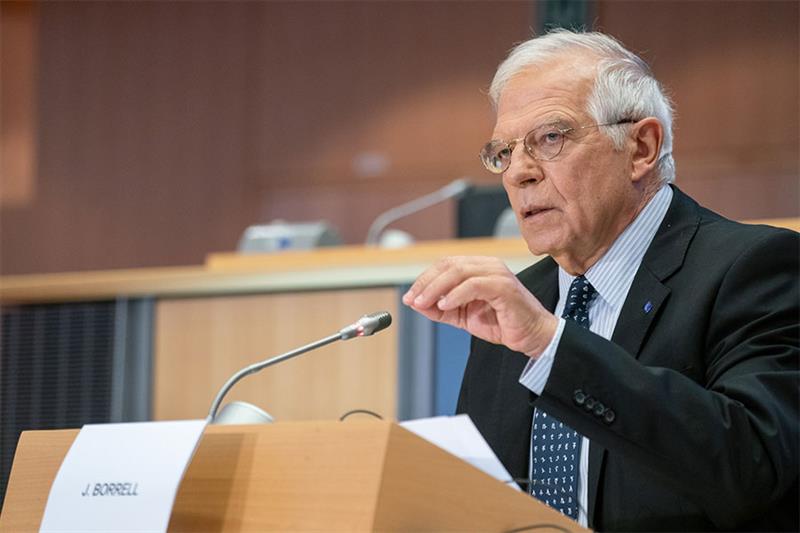
The European Union (EU) provided roughly €10 billion to support non-government organisations (NGOs) in its partner countries over the past seven years (2014-2021) EU High Representative and Vice-President Josep Borrell said in a statement in celebration of World NGO day, 26 February.

Josep Borrell

File Photo: EU s High Representative and Vice-President Josep Borrell. Photo courtesy of European parliament website.

With these allocations, the EU represents the world’s largest provider of support to local NGOs in partner countries, Borrell noted. He also stated that it has been a leading donor for the protection and support of human rights defenders, with 53,000 defenders and their families taken care of through the website ProtectDefenders.eu since 2015. See also: https://humanrightsdefenders.blog/2021/12/17/eu-launches-a-e1-5-billion-6-year-plan-to-promote-human-rights-and-its-defenders/

On World NGO Day, we honour all civil society actors who, every day, are at the forefront of the fight for human rights, the respect of democratic values and the rule of law. The EU commends their role in supporting and giving a voice to the most vulnerable as well as their essential contribution to building peaceful, just, and inclusive societies.

Today, with the unprovoked and unjustified military aggression against Ukraine by the Russian Federation, international peace and the rule of law are under attack. The EU stands firmly by the Ukrainian and Russian people along with their civil society and youths, whose future and voices are threatened by President Putin’s disregard of democracy, human rights, and international rules,” Borrell stated.

Borrell added that countries that curtail NGOs’ activity through legal and administrative measures hamper universal human rights and fundamental freedoms. See e.g.: https://humanrightsdefenders.blog/tag/foreign-agents/

Basic intro to the UN Human Rights Council

February 23, 2022

On 22 February 2022 Imogen Foulkes (a journalist reporting from Geneva for SWI swissinfo.ch as well as the BBC) published a piece: “What can the Human Rights Council do for you?”

Next week the spring session of the UN Human Rights Council begins [see also my: https://humanrightsdefenders.blog/2022/02/21/guide-to-49th-session-of-human-rights-council-with-human-rights-defenders-focus/]. Geneva will be inundated with the world’s top diplomats and human rights activists, who will wade their way through mountains of reports.  Foulkes brief survey helps to see the essence:

It’s too easy, sometimes, to be overwhelmed by all the paperwork and protocol of the human rights council. The 47 council members sit, day after day, in the vast council chamber, listening to those endless reports, and waiting for their two minutes to speak. 

Of course, the content of the reports is utterly serious; from possible war crimes and crimes against humanity in Syria, Yemen, or Myanmar, to the plight of child soldiers, to violence against women, and racial discrimination. Our world continues, day after day, to flout the human rights standards we’ve all signed on to defend. 

But the very quantity of those reports, the way multiple human rights crises are addressed in a single day, before moving on to the next litany of cruelty and misery, can be exhausting, and, somehow, desensitising. I, and my journalist colleagues at the UN in Geneva, often find it difficult to interest our editors in what the human rights council is doing. Not least because, when those editors ask “so, once they’ve passed the resolution condemning x or y country, what happens then?” our answer has to be “not much”. The council has no power to impose sanctions, it cannot prosecute, its investigators can never apprehend someone they know to be a war criminal, and drag him or her to the International Criminal Court. 

So what’s the point of it? That’s the question we try to answer in this week’s edition of Inside Geneva. We talk to human rights investigators, and to human rights defenders, people who bring their own testimonies of atrocities to the UN, often at great risk to themselves, and, often, because the UN is their last and only hope. 

Andrew Clapham, who is currently a member of the UN team investigating violations in South Sudan, tells us that “The idea that someone has listened to your story, and you have taken your case to the United Nations is incredibly important.” 

But is that enough? Is the UN’s human rights work simply a form of counselling, a way for victims of violations to talk through their trauma? 

Feliciano Reyna, a human rights defender from Venezuela, explains that the UN’s regular reviews of a country’s record, from its upholding of the convention against torture, on women’s rights or the rights of the child, allow human rights defenders to participate – they come to Geneva to present their version of what’s happening in their country. This process, Feliciano tells Inside Geneva has been “absolutely key in advancing our work on human rights and putting Venezuela on the international and local agenda”. 

We also talk to Collette Flanagan, whose son Clinton was shot and killed by Dallas police in 2013. Together with many other US mothers who have lost a child to police violence, Collette brought her case to the UN, because, she told us, her attempts at home to get answers for what had happened to her son, who was unarmed, were “dismissed by…the police department, we couldn’t get any answers to what happened to our child.” 

See also her piece: What does the Human Rights Council mean to victims of atrocities?

Collette’s campaigning resulted, eventually in the UN’s report on the treatment of people of African descent. Presenting that report last year, UN Human Rights Commissioner Michelle Bachelet drew a direct link between slavery and the violence and discrimination inflicted on people of African descent today. She said there was “an urgent need to confront the legacies of enslavement” and called for “amends for centuries of violence and discrimination”, including “formal acknowledgment and apologies, truth-telling processes and reparations in various forms”. 

For Collette, the report was a hugely important sign that even the most powerful country on earth, with its oft repeated promise of “liberty and justice for all”, is not above international scrutiny. 

“The United States is a democracy,” Collette says. “And we are supposed to uphold life, liberty and freedom for every citizen. And that is not happening in the United States. And if those things are not happening in the United States then that is an egregious attack on democracy and human rights and freedom. How can the United Nations not be involved?” 

One of the most disturbing investigations currently underway by UN human rights officers is the Fact Finding Mission on Myanmar, which is examining, among other things, the treatment of the Rohingya Muslim community by Myanmar’s ruling military regime. 

In 2016 and 2017 over a million Rohingya fled appalling violence. When human rights officer Ilaria Ciarla arrived in the refugee camps in Bangladesh to take witness accounts, among them from mothers whose babies had been killed before their eyes, she tells Inside Geneva her initial reaction was “incredulity… is this possible? How can human beings do such horrible things to other human beings?” 

Australian lawyer Chris Sidoti also served on the Fact Finding Mission, and highlights the inherent weakness in the human rights council’s inability to legally hold perpetrators to account. “I still know that the Myanmar butchers who are responsible for what happened may never individually be brought to justice,” he says. 

But, he explains, those UN investigations are quietly growing some teeth. Names of perpetrators, and all the evidence to convict them, is available to courts, national or international, who do have the power to try and convict. 

“We are seeing court cases in the top international courts now, dealing with Myanmar,” he notes. “The International Court of Justice is using our report. The International Criminal Court is using our report.” 

And for Khin Ohmar, who has devoted her life to the struggle for democracy in her native Myanmar, this is a milestone. “Oh yes, that is what I have been working for, there is no other way. We have allowed this military to enjoy blanket impunity for so long, and that must stop,” she says. “These perpetrators [must be] held to account by law, and there is no domestic law available, so now we need international law to hold them to account for all the crimes they have committed against the people of Myanmar.” 

https://www.swissinfo.ch/eng/what-can-the-human-rights-council-do-for-you-/47368266

Towards a fairer selection of NGOs to participate in the UN human rights debate

February 14, 2022
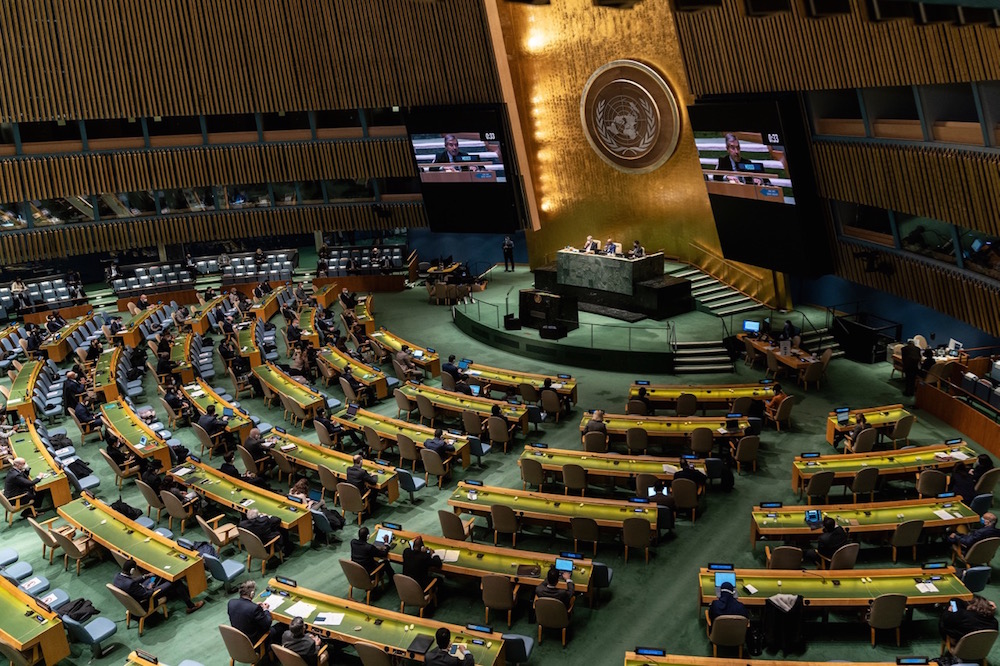
This image has an empty alt attribute; its file name is international-un-ecosoc-ngos-committee-participation-getty.jpg
A plenary meeting at the 76th Session of the General Assembly, at the UN Headquarters, in New York, USA, 21 January 2022, Lev Radin/Pacific Press/LightRocket via Getty Images

NGOs that seek to participate fully at the UN – making statements and organising events to highlight injustice and provide recommendations – have to get accredited.  The “Committee on NGOs” manages the process – as  the gateway for NGOs into the United Nations. If you’re a State with a mind to block NGOs, membership of the Committee is perfect. This is where you can sit and control who comes in. By asking questions of NGO applicants, members of the Committee can push their accreditation for many years.  For more on this see: https://humanrightsdefenders.blog/2018/02/09/the-saga-of-the-anti-ngo-committee-in-the-un-continues/

Currently there are 70 organisations that have faced over four years of deferrals.  Two human rights organisations have been deferred for over ten years.  Some  NGOs  have also been accused by Committee members of having terrorist sympathies: baseless accusations against which the NGOs have been denied appeal.  

In four short months there’s  a chance to change things. Elections to the Committee on NGOs will be held in April 2022. The 54 members of the UN’s Economic and Social Council (ECOSOC) vote to fill the 19 seats on the Committee across all regional groups. 

A joint letter by a massive number of NGOs of 10 February 2022 makes the point:

To: Member States of the UN General Assembly

Excellencies:

We are five months out from elections to the ECOSOC Committee on Non-Governmental Organisations for the 2023-2026 term. These are key elections for all those who value the expertise of civil society and seek to ensure the UN can benefit from it.

The Secretary General has called civil society the UN’s ‘indispensable partners”. Member States recently committed to boosting partnerships ‘to ensure an effective response to our common challenges’. In recommending approval of the participation of non-governmental organisations in a range of UN bodies and processes, the Committee on NGOs plays a key role in facilitating such partnerships. It is essential that the members of the Committee are committed to fulfilling such a task fairly and judiciously.

With this in mind, we would like to request the following, that:

1/ States with an interest in facilitating and safeguarding civil society access to and participation in UN processes stand for election to the Committee.

2/ Candidates make public the reasons for their candidacy and their commitment to fulfil their responsibilities as members of the Committee, as per ECOSOC Resolution 1996/31.

3/ All regions put up competitive slates, as the Asia-Pacific and GRULAC regions did in the last elections for the Committee in 2018. Competitive elections are important to create buy-in to the process and encourage states to be accountable for their commitments.

4/ All regions make public candidacies at least two months before the elections to allow for proper consideration of candidates.

5/ All ECOSOC members vote (and be encouraged to vote) only for candidates with positive track records in regard to civil society access and participation. Candidates could be assessed in regard to indicators such as support for relevant UN resolutions, such as those on civil society space and human rights defenders; on responses to cases of intimidation and reprisals; and on national level initiatives to safeguard civic space, press freedom – online as offline – and the right to defend human rights.

6/ ECOSOC members should consider introducing term limits for membership of the Committee on NGOs, among other reforms encouraging openness and accountability. As with other UN bodies, states should be required to leave the Committee for a specific interval of time after serving for a maximum agreed period. Term limits would encourage greater diversity in membership over time and encourage states to step up as candidates.

The Committee on NGOs is entrusted with the task of facilitating civil society access so that the expertise and experience of civil society partners can enrich and inform UN debates. It needs members that are committed to fulfilling the Committee’s mandate in a fair, transparent, non-discriminatory, expeditious and apolitical manner. It falls on all member states – as potential candidates and / or electors – to ensure that the Committee membership is fit for purpose.

Please elect to stand up for civil society!

Yours sincerely,

In addition to the letter, individuals can undertake additional steps. You can engage with States on all the campaign objectives!

  • On competitive elections and voting with integrity: See here for a model email for sending to those who get to vote, ECOSOC members.  Check here whether your State is going to vote. 
  • On candidates: Does your state have a positive record on promoting civil society but isn’t running? See here for a model email to encourage them. 

https://ishr.ch/action/campaigns/openthedoor2ngos/

Working Together

https://www.hrw.org/news/2022/02/16/letter-members-uns-general-assembly-regarding-ecosoc-committee-ngos

Harassment of Adilur Rahman Khan and other Human Rights Defenders in Bangladesh

December 21, 2021

On 14 December 2021 a Statement Bangladesh: Stop Harassment of Human Rights Defenders” was published by Forum Asia, FIDH and other NGOs: “Bangladesh authorities must end the harassment of Adilur Rahman Khan and ASM Nasiruddin Elan, respectively Secretary and Director of the human rights group Odhikar, who have been targeted through the misuse of the criminal justice system”, eleven rights groups said.

On December 15, 2021, the Cyber Tribunal of Dhaka will continue the examination of prosecution witnesses in the case brought against Adilur Rahman Khan, also a member of OMCT General Assembly and FIDH Secretary-General, and ASM Nasiruddin Elan, for charges brought against them in Case No. 1 of 2013 under the notorious Section 57 of the Information and Communication Technology (ICT) Act, 2006 (amended in 2009), in relation to a fact-finding report issued by Odhikar on the killing of at least 61 people by security forces and law-enforcement agencies in May 2013. Khan and Elan face up to ten years in prison. See also; https://www.trueheroesfilms.org/thedigest/laureates/88F17E2F-F919-580F-2FDA-59B8E24ACBF6

The government should stop using vague laws to silence human rights defenders and start holding perpetrators of abuses to account, ” said Kerry Kennedy, President of Robert F. Kennedy Human Rights. “Odhikar’s findings not only should have led to investigations and reforms, but also should have been welcomed by the government as an opportunity to strengthen their commitment to upholding human rights.

Following Odhikar’s 2013 report, Khan and Elan were arbitrarily detained for respectively 62 and 25 days until they were both released on bail. On February 14, 2021, the Appellate Division of the Supreme Court of Bangladesh rejected Odhikar’s appeal to quash the case on its legal merits. On September 12, 2021, the Cyber Tribunal of Dhaka resumed the trial in the case against the two while their review petition is still pending hearing before the Appellate Division of the Supreme Court, contravening the right to a fair trial. On October 5, November 9, and November 24, 2021, the Cyber Tribunal of Dhaka started to examine prosecution witnesses in the case.

We express our deepest concern over the ongoing harassment of Adilur Rahman Khan and ASM Nasiruddin Elan, which is manifestly a form of reprisals against Odhikar for their legitimate human rights work, including for cooperating with UN human rights mechanisms in documenting enforced disappearances, extra-judicial executions and torture in Bangladesh.

It is further a matter of great concern that since 2013, attacks, unlawful surveillance, smear campaigns and harassment against Odhikar and its staff and management have been incessant. Odhikar is also facing serious difficulties to conduct its work due to violations of the right to freedom of association, since its registration has not been renewed by the NGO Affairs Bureau of the Government of Bangladesh and is still pending since 2015. Moreover, all of its bank accounts have been frozen and the organization has been forbidden from receiving funding from foreign or international sources, impacting its operations considerably.

The trial against Khan and Elan resumes in a context where human rights in Bangladesh are under attack from all sides. Human rights violations committed by security forces, including enforced disappearances, extrajudicial executions, and torture remain pervasive throughout the country, with absolute impunity. Authorities regularly crackdown on human rights defenders and journalists who speak out against these violations, including through the use of the Digital Security Act – 2018, the Special Powers Act – 1974, and other draconian laws. See also: https://humanrightsdefenders.blog/2014/12/02/adilur-rahman-khan-speaks-out-against-torture/

Cases such as these question the Bangladeshi government’s commitment to protecting human rights. The international community, including the United Nations and the diplomatic corps in Bangladesh, should monitor the case against Adilur Rahman Khan and ASM Nasiruddin Elan and take a clear stand to ensure that the government of Bangladesh respects the rights of the two defenders to a fair and public trial and, more generally, guarantees the right to defend human rights and puts an end to all acts of harassment against all human rights defenders in Bangladesh.

Our organisations call on the authorities of Bangladesh to immediately and unconditionally drop all charges against Adilur Rahman Khan and ASM Nasiruddin Elan, and to ensure in all circumstances that human rights defenders in Bangladesh are able to carry out their legitimate activities without any hindrance and fear of reprisals.

This trial is in reality an indictment of the authorities and a crucial test case for the country’s judiciary to be closely watched by the international community,” said Gerald Staberock, OMCT Secretary General, speaking on behalf of the Observatory. “The true culprits are those responsible for extra-judicial killings not those who report on it. Prosecuting human rights activists will not stifle dissent but will isolate Bangladesh from the international community.

The NGOs:

Amnesty International

Anti-Death Penalty Asia Network (ADPAN),

Asian Human Rights Commission (AHRC),

Asian Network for Free Elections

Capital Punishment Justice Project (CPJP)

CIVICUS: World Alliance for Citizen Participation,

Eleos Justice, Monash University, Associate Professor

FIDH, within the framework of the Observatory for the Protection of Human Rights Defenders, i

FORUM-ASIA

Robert F. Kennedy Human Rights

World Organisation Against Torture (OMCT), within the framework of the Observatory for the Protection of Human Rights Defenders

https://www.fidh.org/en/region/asia/bangladesh/bangladesh-government-must-act-to-address-rule-of-law-crisis

EU launches a €1.5 billion 6-year plan to promote human rights and its defenders

December 17, 2021

w

On the eve of Human Rights Day (10 December 2021) and coinciding with the Summit for Democracy, the European Union launched the Global Europe Human Rights and Democracy programme. This programme, worth €1.5 billion, steps up EU support in promoting and protecting human rights and fundamental freedoms, democracy, and the rule of law and the work of civil society organisations and human rights defenders around the world during the period 2021–2027. The programme will promote and protect the universality of human rights, strengthen the rule of law and accountability for human rights violations and abuses, and defend the full and effective exercise of fundamental freedoms, including the freedom of expression, supporting independent journalism and media, while seizing opportunities and countering risks associated with digital and new technologies.

High Representative/Vice President Josep Borrell said: “Courageous people from all backgrounds are fighting on a daily basis for their civil liberties, for independent media and to safeguard democratic institutions, often at great personal risk. The European Union stands with them. The Global Europe Human Rights and Democracy programme will allow us to strengthen our support to and protection of universal human rights and democratic principles worldwide: for everyone, at any time and everywhere. Together with civil society organisations, human rights defenders, the UN Human Rights Office and the International Criminal Court, we will leave no one behind.”

International Partnerships Commissioner Jutta Urpilainen, said: “Human rights and democracy are a cornerstone of sustainable and inclusive development, and essential to addressing global challenges and ensure citizens reach their full potential and realise their aspirations. In whichever way you measure it – in stability, equality, economic growth, health or longevity – democracies always outperform other forms of government in the long run. I am proud to think of the countless human rights defenders, young people, women, girls and civil society organisations that the €1.5 billion Global Europe Human Rights and Democracy programme will empower to build a better tomorrow for all of us.

It has five overarching priorities:

  • Protecting and empowering individuals€704 million

Uphold all human rights, including by working towards the universal abolition of the death penalty, the eradication of torture and cruel and inhumane treatment, the fulfilment of basic needs, decent working conditions, the eradication of child labour, and a safe, clean, healthy and sustainable environment. The programme will promote equality, inclusion and respect for diversity, support human rights defenders and counter shrinking space for civil society, and strengthen the rule of law, ensure a fair and effective administration of justice, and close the accountability gap.

  • Building resilient, inclusive and democratic societies – €463 million

The programme will support functioning pluralist, participatory and representative democracies, and protect the integrity of electoral processes. It will, for instance, engage civil society observers in election observation and support pro-democracy organisations, networks and alliances.

  • Promoting a global system for human rights and democracy – €144 million

Enhance strategic partnerships with key actors, such as the Office of the UN High Commissioner for Human Rights (OHCHR), the International Criminal Court (ICC), regional human rights systems, national human rights institutions, the private sector, and the Global Campus of Human Rights.

  • Safeguarding fundamental freedoms, including harnessing the opportunities and addressing the challenges of digital and new technologies €195 million

Create and maintain an environment conducive to the full exercise of all fundamental freedoms both offline and online. For example, it will help strengthen the capacity of independent, pluralistic and quality media, including investigative journalists, bloggers and fact-checkers, to provide the public with reliable information through responsible and professional reporting. It will support civil society in fostering online media literacy and digital skills and in promoting an open, global, free and secure internet equally accessible to all.

  • Delivering by working together – €6.6 million

The earmarked funds can support the civil society in engaging with national authorities within the framework of the human rights dialogues that the EU conducts with partner countries, or finance training, studies, or exchanges of best practice. It underpins all of the activities.

In the first year of implementation, the EU will focus on promoting a global system for human rights and democracy. For example, in 2022–2024, the EU will support the Office of the United Nations High Commissioner for Human Rights with €16 million, the Global Campus of Human Rights with €10 million, and the International Criminal Court with €3 million. The EU will also support in 2022 the launch of a Team Europe Democracy initiative to reinforce the impact of EU and Member States’ global support to democracy. The 2021 action plan complements a number of urgent individual measures under the programme adopted earlier.

Background

The Global Europe Human Rights and Democracy programme is flexible as regards procedures, and supports civil society actions independently of the consent of partner countries’ governments and other public authorities. A substantial part of the programme will be implemented at country level. Subsequent calls for proposals covering the different activities, open to civil society organisations across the world, will be published in the coming months. See also: https://humanrightsdefenders.blog/2018/02/27/10611/

Funded under the thematic pillar of the new Neighbourhood, Development and International Cooperation Instrument (NDICI) – Global Europe, the Global Europe Human Rights and Democracy programme is the successor of the European Instrument for Democracy and Human Rights (EIDHR), which was established in 2006 to support civil society-led actions in the area of human rights and democracy in countries outside the EU. Under the previous financial period 2014–2020, the European Instrument for Democracy and Human Rights was allocated €1.33 billion.

Human Rights Defenders Targeted By Israel Launch new joint website

December 15, 2021

On 14 December 2021 the 6 Palestinian civil society organizations targeted by the Israeli government alongside partners have today launched a new website www.PalCivilSociety.com as part of their #StandWithThe6 campaign. This follows Israel’s escalation of its systemic efforts to shrink civic space, defund, criminalize human rights defenders (HRDs) and civil society. [see: https://humanrightsdefenders.blog/2021/10/23/assault-by-israel-on-palestinian-human-rights-ngos/]

In spite of international condemnation, Israel continues to maintain its unlawful designation.

The website consolidates the efforts of the six Palestinian CSOs and partners, and provides resources for supporters outlining the full context of Israel’s ongoing harassment campaigns to silence and diminish Palestinian civil society overall. The website will be a central space where supporters can mobilize in solidarity with civil society, starting by sending emails to US Secretary of State, Anthony Blinken, and Josep Borrell, High Representative of the European Union for Foreign Affairs and Security Policy asking them to take decisive action to force Israel to reverse the unlawful designation.

As jointly stated by the six organizations, “this designation is only the latest of a series of attacks against us and certainly won’t be the last. This continued assault on Palestinian human rights defenders is also accompanied by systematic use of cybersurveillance technology to hack our phones and surveil us. It’s clear that Israel’s intention is to silence and harass Palestinian human rights defenders who criticize Israel’s apartheid and settler-colonial regime and call for holding Israeli authorities accountable for their human rights violations, war crimes and crimes against humanity. Through this common digital space we invite all supporters of human rights and freedom around the world, to take action and show solidarity with Palestinian civil society.” [see also: https://humanrightsdefenders.blog/2021/11/10/palestinian-ngos-dubbed-terrorist-were-hacked-with-pegasus-spyware/]

https://www.scoop.co.nz/stories/WO2112/S00167/human-rights-defenders-targeted-by-israel-launch-joint-digital-hub.htm

The Palestine Institute for Public Diplomacy

Good example of broadcast on Human Rights Day

December 15, 2021

At the occasion of International Human Rights Day, Ugandan NTV Uganda broadcast on 13 December 2021 a talk show: “DEFEND DEFENDERS: Human rights defenders’ voices at the centre”.

I am referring to this as it is a remarkable use of mainstream media by human rights groups. at national leval. See also: https://humanrightsdefenders.blog/2021/12/10/human-rights-day-2021/.

Apply now for ISHR’s Human Rights Defender Advocacy Programme 2022

December 10, 2021

If you are you a human rights defender keen to use the UN you would do well to apply to the 2022 edition of ISHR’s flagship training the Human Rights Defender Advocacy Programme (HRDAP).

After two successful online editions in 2020 and 2021, ISHR has launched the call for applications for the third online edition which will take place remotely between 4 April and 24 June 2022. [for last year’s see: https://humanrightsdefenders.blog/2019/11/07/applications-now-open-for-ishrs-2020-training-for-human-rights-defenders/]

The course equips human rights defenders with the knowledge and skills to integrate the UN human rights system into their existing work at the national level in a strategic manner, and provides an opportunity for participants to prepare for and engage in lobbying and advocacy activities at the UN with the aim to effect change back home.

Applications for HRDAP22 will remain open until Monday 3 January 2022.

The 12-week course allows defenders to continue their vital work on the ground, while diving into the inner workings of each key UN human rights mechanism, and gaining first-hand experience from advocates and UN staff on how civil society can strategically engage in the international human rights space.  

By participating in HRDAP, defenders:

  1. Gain knowledge and tools, which they can use to ensure their voice is central in international human rights decision-making
  2. Explore and compare the benefits of engagement with the Human Rights Council, the Special Procedures, the OHCHR, the UPR and the Treaty Bodies, and examine how they can use them to bolster their work at the national level
  3. Develop strategies and lobbying techniques to increase the potential of their national and regional advocacy work

During the last training, 19 human rights defenders from 17 countries took part in the programme. At the end of the training, 100% of those surveyed were satisfied with the programme, with 82% indicating they were “very satisfied”. Find out more about what they learnt here.

This programme is directed at experienced human rights defenders in non-governmental organisations, with existing advocacy experience at the national level and some prior knowledge of the international human rights system. ISHR supports, and promotes solidarity with and between, defenders working in the following areas or contexts, which we recognise as intersectional and interdependent:

  1. Equality, dignity and non-discrimination
  2. Environmental justice and sustainability
  3. International accountability for the repression of human rights defenders
  4. Transparency and rule of law

Download the HRDAP22 Programme Description to find out more and apply before Monday 3 January 2022!

What are the next steps?

https://ishr.ch/latest-updates/hrdap-2022-apply-now-for-ishrs-training-for-human-rights-defenders/