Protesters call for justice for a Michoacán journalist who was victim of an assault last September and then harassed by police.
On 3 January 2020 the Mexico News Daily reports that the Special Prosecutor’s Office for Crimes Against Freedom of Expression has obtained just four convictions out of 803 investigations into crimes against journalists since its creation more than eight years ago and that in Mexico, one of the most dangerous countries in the world in which to practice journalism. [ see e.g. https://humanrightsdefenders.blog/2019/12/30/in-depth-investigative-report-on-journalist-miroslava-in-mexico/]
In that context, National Action Party Senator Marco Antonio Gama Basarte last month presented a proposal that seeks to create a new, completely autonomous special prosecutor’s office to investigate crimes against both journalists and human rights defenders. Mexico needs a strong and independent prosecutor’s office in order to “guarantee the institutional commitment we have with journalists and people who defend human rights,” he said while presenting his bill on December 12.
The senator also said that an average of 23 journalists per month requested government protection last year, adding that the funds to provide such protection were cut in the federal budgets for both 2019 and 2020. President López Obrador has come under fire for contributing to a culture of violence against journalists by launching scathing verbal attacks on reporters and news outlets that are critical of his government. The president often dismisses reports with which he doesn’t agree by declaring that they come from the prensa fifi (elitist press) and has called journalists and news outlets “puppets,” “hypocrites” and “two-faced,” among other disparaging terms.
Article 19, a press freedom organization, said at the time that the president’s “stigmatizing discourse [against the media] . . . has a direct impact in terms of the . . . risk it can generate for the work of the press because [his remarks] permeate in the discourse of the rest of society and can even generate attacks.” The organization demanded that López Obrador “abstain from generating any act that inhibits the exercise of freedom of expression,” adding “this includes maintaining a stigmatizing discourse” against the media.
Miroslava Breachlived under constant threat starting in March 2016, when she began to feel pressure over her publications regarding links between drug cartels and politics. She brought this to the attention of her old friend, the recently elected governor of Chihuahua state Javier Corral, as well as those in charge of the mechanisms at the federal level to protect journalists. The Colectivo 23 de Marzo is made up of Mexican journalists in collaboration with Forbidden Stories, Bellingcat and Centro Latinoamericano de Investigaciones Periodísticas (CLIP). We reconstructed the thread of threats linked to Miroslava’s work, the warnings that she raised about the danger she was in, and the clues that she let in her publications prior to her murder on March 23 2017 that the authorities did not fully investigate.
Miroslava Breach in the Tarahumara sierra. She investigated illegal logging, the effects of megaprojects, and narcopolitics. Source: Colectivo 23 de Marzo
Before her murder, a grey Malibu prowled down José María Mata street in the Granjas neighbourhood of Chihuahua. Security cameras captured the vehicle on the street six times between March 21 and 22 2017 as it passed in front of the two-story house now infamous for the murder: number 1609, with its brown gates and a small garden out front. On the morning of March 23, 2017, journalist Miroslava Breach Velducea was shot to death while waiting inside her car to take her son to school.…….
The SDD Contributor of Stock Daily Dish posted on 15 December 2019 a detailed piece on the shortcomings of the panic buttons issued by Colombia and Mexico.
A GPS-enabled “panic button” that Colombia‘s government has issued ito abut 400 persons is supposed to summon help for human-rights defenders or journalists if they are threatened. But it the article claims that it has technical flaws that could let hostile parties disable it, eavesdrop on conversations and track users‘ movements, according to an independent security audit conducted for The Associated Press. There is no evidence the vulnerabilities have been exploited, but are alarmed. “This is negligent in the extreme,” said Eva Galperin, director of cybersecurity at the nonprofit Electronic Frontier Foundation, calling the finding “a tremendous security failure.”
The “boton de apoyo,” distributed by Colombia‘s Office of National Protection is a keychain-style fob. Its Chinese manufacturer markets it under the name EV-07 for tracking children, pets and the elderly. The operates on a wireless network, has a built-in microphone and receiver and can be mapped remotely with geo-location software. A button marked “SOS” calls for help when pressed.
A company official, John Chung, acknowledged that Rapid7 notified him of the flaws in December. In keeping with standard industry practice, Rapid7 waited at least two months before publicly disclosing the vulnerabilities to give the manufacturer time to address them. Chung told the AP that Eview was working to update the EV-07‘s webserver software, where Rapid7 found flaws that could allow user and geolocation data to be altered.
Activists have good reason to be wary of public officials in Colombia, where murder rates for land and labor activists are among the world‘s highest, and there is a legacy of state-sponsored crime. The DAS domestic intelligence agency, which provided bodyguards and armored vehicles to high-risk individuals prior to 2011, was disbanded after being caught spying on judges, journalists and activists. Five former DAS officials have been prosecuted for allegedly subjecting Duque and her daughter to psychological torture after she published articles implicating agency officials in the 1999 assassination of Jaime Garzon, a much-loved satirist.
Tanya O‘Carroll of Amnesty International, which has been developing a different kind of “panic button” since 2014 , said the Colombian model is fundamentally flawed. “In many cases, the government is the adversary,” she said. “How can those people who are the exact adversary be the ones that are best placed to respond?”…
In Mexico, the attorney general‘s office has issued more than 200 emergency alert devices to journalists and rights activists since 2013. But there have been multiple complaints . One is unreliability where cell service is poor. Others are more serious: Cases have been documented of police failing to respond or answering but saying they are unable to help.
O‘Carroll of Amnesty International said trials in 17 nations on three continents—including the Philippines, El Salvador and Uganda—show it‘s best to alert trusted parties—friends, family or colleagues. Those people then reach out to trusted authorities. Amnesty‘s app for Android phones is still in beta testing. It is activated with a hardware trigger—multiple taps of the power button. But there have been too many false alarms.
Sweden-based Civil Rights Defenders offers a 300-euro stand-alone panic button first deployed in Russia‘s North Caucasus region in 2013 and now used by more than 70 people in East Africa, Central Asia, the Balkans, Southeast Asia and Venezuela, said Peter Ohlm, a protection officer at the nonprofit. The organization‘s Stockholm headquarters always gets notified, and social media is typically leveraged to spread word fast when an activist is in trouble.
International Human Rights Day, 10 December 2019, was celebrated or observed all around the world and there is no way to report on every event. Stil to add flavour here a selection of some 14 smaller and bigger events – for more details follow the links provided (and for last year’s anthology see references at the end):
There was of course the annual statement by UN High Commissioner for Human Rights Michelle BacheletRightly, these young people are pointing out that it is their future which is at stake, and the future of all those who have not yet even been born. It is they who will have to bear the full consequences of the actions, or lack of action, by the older generations who currently run governments and businesses, the decision-makers on whom the future of individual countries, regions and the planet as whole depends…We have a duty to ensure young people’s voices are heard. The Universal Declaration of Human Rights, adopted by the UN General Assembly on 10 December 1948, was a firm commitment by States to protect the rights of everyone – and that includes making it possible for future generations to uphold human dignity, equality and rights…..Climate harms will not be halted by national borders – and reactions based on hostile nationalism, or short-term financial considerations, will not only fail: they will tear our world apart. The struggles for climate justice and human rights are not a political quarrel. This is not about left or right: it is about rights – and wrongs… We need to mobilise across the world – peacefully and powerfully – to advance a world of rights, dignity and choice for everyone. The decision-makers understood that vision very clearly in 1948. Do they understand it now? I urge world leaders to show true leadership and long-term vision and set aside narrow national political interests for the sake of everyone, including themselves and all their descendants.
Pakistan: Human Rights Defenders asked the government to make serious efforts to provide fundamental rights. Human rights, labour rights and civil society activists called upon the government to make serious efforts for the provision of fundamental human rights and freedoms, especially the freedoms of association and expression, enshrined in the Constitution of Pakistan and the Universal Declaration of Human Rights. Addressing a joint press conference at the Karachi Press Club to mark International Human Rights Day, PILER joint director Zulfiqar Shah, human rights activists Naghma Shaikh and Saeed Baloch representing the Sindh Human Rights Defenders Network said the government should ensure the restoration of the freedom of expression and the freedom to association. They demanded that the government should bring in a law to protect the rights of human rights defenders as they stood up for the voiceless people…. They also demand fully restoring the freedom of expression, as it was a constitutional right of the people to express their thought. Access to the information right must be ensured, they said.
India: Activists say NHRC urgently needs to protect human rights defenders. The National Human Rights Commission should proactively protect the rights of ‘human rights defenders’, said activists at the national convention on rights of Dalit and Adivasi rights defenders in the capital on Tuesday. Human Rights Defenders appealed to the commission to proactively intervene in cases where the works of Dalit and Adivasi organisations were being obstructed. Activists said there were a growing attack on human rights defenders in India and said the need of the hour was collective action….On Human Rights Day, the convention highlighted the importance of the work of human rights defenders. Despite the country having national human rights institutions and over 160 state human rights institutions dealing with human rights, women, children, minorities, SCs, STs, right to information, persons with disabilities, and safai-karamcharis, these institutions have often failed to protect the human rights defenders, activists said. In addition to the usual challenges, women human rights defenders face gender-specific violations, such as rape and sexual violence which are used as tools for harassment, said activists. Caste discrimination has also presented a greater danger for women rights defenders belonging to the Dalit and Adivasi communities.
Cambodia: The Khmer Times reported that very differing opinions on the status of human rights in the Kingdom became apparent as various groups marked Human Rights Day at two venues in the capital. About 400 government officials and youth group members marked the day’s 71st anniversary at the Cambodia-Korea Cooperation Centre, while about 2,000 unionists and members of the public marked the day at Freedom Park.
Keo Remy, president of the Cambodian Human Rights Committee, at the CKCC said the government has always paid attention to the rights of citizens. “Our leaders prioritise peace and stability,” Mr Remy said. “Youths can make the country chaotic because of the words democracy and human rights. That is why we focus on youths and stability.” while..
Ath Thorn, president of the Coalition of Cambodian Apparel Workers’ Democratic Union, at Freedom Park said respecting the rights of workers has decreased over the years and it is a source of concern for many. “We see that respecting workers’ rights has decreased – investors do not pay attention to workers,” Mr Thorn said. “Investors need to consider the rights of workers.” He said garment factory workers are faced with decreasing salaries, overtime work, discrimination, short-term contracts, violence and imprisonment. The Cambodian Centre for Human Rights in a statement said the government has taken action to curb issues surrounding human rights, but it has not done enough. “We call on the government to encourage the celebration of Human Rights Day in Cambodia and acknowledge the benefit human rights have on society as a whole,” it said. “We implore the government to cease all arbitrary action and targetting of human rights defenders.” The CCHR also called for the charges against two former Radio Free Asia journalists and Kem Sokha to be dropped.
Palestine: the Addameer Prisoner Support and Human Rights Association reported that Palestinians marked International Human Rights Day following a year of nonstop violence and widespread human rights violations by Israeli Occupation Forces (IOF), against the Palestinian population used, as a form of collective punishment and a method to control Palestinian society. These consistent and systematic policies by the occupation include, extrajudicial executions and issuance of discriminatory legislations, mass arrests campaigns, torture, administrative detention, and medical negligence against Palestinian political prisoners…..In 2019, the (IOF) continued its crackdown and repression of human rights defenders. Currently, Addameer faces gag orders against around 40 of the cases they represent, who are in interrogation. The gag order prohibits us from releasing any information to the public regarding their detention status, or face grave consequences.
Philippines: Groups under the Ecumenical Voice for Human Rights and Peace in the Philippines (Ecuvoice) has submitted its first wave of reports on the human rights situation in the Philippines to United Nations Commissioner on Human Rights Michelle Bachelet on Monday, Dec. 9. This is in line with Resolution 41/2 which was adopted by the UN Human Rights Council (UNHRC) in July this year. “With the intensifying transgressions on the Filipinos people’s political rights and civil liberties, we are participating in this report-making process of the UN High Commissioner for Human Rights to pursue justice and accountability,” the convenor of Ecuvoice, Edita Burgos, said.
while
the international trade union movement was using international human rights day to call attention to the alarming attacks on human and labour rights defenders in the Philippines. The government’s targeting of trade unionists has been ramped up recently with fresh waves of arrests and violence. The international trade union movement is united in calling on the government to stop the attacks. The government is targeting labour activists through a practice known as red-tagging. By falsely identifying people who speak out against the government as associated to armed militia groups, the government purposely targets them with harassment and arrests and exposes them to violence and even murder….The International Labour Organization (ILO) has resolved to send a High-Level Tripartite Mission to the Philippines to investigate the human rights situation, but despite the urgency, the government has yet to receive the Mission. The international labour movement is undertaking solidarity events across the world to demand an end to the human rights abuses and the targeting of trade unionists. The ITUC has requested to meet with the representative of the Philippines to the EU on Human Rights Day and has outlined three key demands.
Turkey. Amnesty International Turkey and MetroPOLL Strategic and Social Research Center have jointly conducted a Survey on Perception of Human Rights. The results of the survey have shown that when they hear the expression of “human rights”, 65.2 percent of the participants think of “right to life” first. While “freedom of expression” comes to the minds of 33.5 percent, the right to a fair trial ranks third with 22.1 percent. According to the survey participated by 2,651 people from 28 cities and conducted in a face-to-face manner, 82.1 percent of the society think that fundamental rights and freedoms are violated in Turkey. Of these people, 58 percent say that fundamental rights are occasionally violated and 42 percent say that they are frequently violated. 62.6 percent of the participants are of the opinion that fundamental rights and freedoms are restricted in Turkey. While 72 percent of the young participants think that fundamental rights and freedoms are restricted, this rate falls as the age of the participant gets older. For more detials see the full report.
China:Samuel Wade posted an interesting piece in China Digital Times on how the Chinese government defends if record on human rights and how others see this. Here one excerpt out of manY:
On Tuesday, International Human Rights Day, spokesperson Hua Chunying mounted a familiar defense of China’s rights record at the Ministry of Foreign Affairs’ regular press conference …and went on to note that the MoFA and State Council Information Office would host the “2019 South-South Human Rights Forum” this week “with a view to adding new dimensions and injecting impetus into exchange and cooperation in the field of human rights.” ….. At Hong Kong Free Press, the Uyghur Human Rights Project’s Omer Kanat commented on the ‘South-South Human Rights Forum’ hailed by Hua Chunying,…… Among the enablers of Xi Jinping’s repression are states with disreputable recor[ds attracted to a possible exemption from universal standards that ‘human rights with Chinese characteristics’ affords. And again, if we could freely ask the populations who reside in these states how they feel about such a concept, there would be few advocates. Therefore, on Human Rights Day, we have a responsibility to defend those who defend universal values and be clear ‘never again’ has meaning. There is injustice everywhere and we must fight it. Uyghurs are among them, for example, the imprisoned Ilham Tohti, and in exile Rebiya Kadeer, Nury Turkel, Rushan Abbas, and Gulchehra Hoja, whose families have been detained and disappeared in East Turkestan because of their advocacy. The second ‘South-South Human Rights Forum’ is opening in Shanghai for this year’s Human Rights Day. The dangerous fiction of the ‘Beijing Declaration’ that there are exceptions to the universality of rights should be firmly resisted.
Afghanistan ‘Human Rights’ should be more focused during peace talks. MENAFN (Afghanistan Times) reported that UN Special Representative for Afghanistan and head of UNAMA, Tadamichi Yamamoto, in a gathering has expressed concerns regarding the human rights achievements, saying that these gains should be saved in the ongoing negotiation with the Taliban. He called on the National Security Council to consider perseverance of human and civil rights in talks with the Taliban, adding ‘Afghanistan Independent Human Rights Commission’s role is very important in the peace process, every voice that raise should be heard and rights of the victims should be observed.‘.. Moreover, head of AIHRC, Shaharzad Akbar has called on the Taliban to legislatively recognize the values of human rights. …There are massive concerns about the violation of achievements of human rights and freedom of speech in the peace negotiation with the Taliban militants. The Taliban has back in 1990 ruled Afghanistan with the sever restriction on girls and school students. The cultural Taboos and less freedom of women are one of the other key issues that have brought sever concerns from Afghan and foreign officials.
The NGO WITNESS used the occasion to publish its ANNUAL REPORT which looks at key successes from July 2018-June 2019 (fiscal year 2019). See the video clip:
Malaysia. “What happened to Harapan’s vow to improve human rights?” asks Jasmine Choin an open letter:…’When Pakatan Harapan won a dramatic victory in the GE14 elections, they vowed to steer the country forward with human rights as one of their top priorities. However, since their win, we have seen a heavy regression in the area. The kind of regression that has gotten us worried about our present and our future as a modern, fair, and humane nation. From the Suaram 2019 report, several areas of abuse were glaring. One was the treatment of prisoners. The government has yet to abolish the Security Offences (Special Measures) Act 2012, the Prevention of Crime Act 2015 and the Dangerous Drugs (Special Preventive Measures) Act 1985……….The list of human rights abuse is getting longer and the frustration we feel with our government is reaching boiling point. Malaysia is considered a modern and democratic country, so why are we so far behind when it comes to human rights? The government should stop pandering to the religious majority and stop focusing on external matters. The rights of the rakyat are being abused.
Netherlands/Sri Lanka. The Dutch Ambassador Gonggrijp spoke at an event for Human Rights Day 2019 organized by Equal Grounds Sri Lanka saying inter alia:
…Sri Lanka has recently known a long period of conflict, during which human rights were under pressure. The reconciliation process after the end of the war has been slow. And I hear people say: what is the point of looking back, let’s move forward. To my opinion it is about recognition and human dignity. To that respect we should also recognize the progress that has been made: the Office on Missing Persons has been mandated to restore the rights of every Sri Lankan of any background, language or religion, to know what happened to their loved ones. And the work of the Sri Lanka Human Rights Commission, as an independent entity, mirrors the country’s commitment to uphold human rights and civil freedoms. The Netherlands supports this and stands ready to help Sri Lankan institutions like these with capacity building and technical expertise…..
The policy of Netherlands is aimed at 1) abolishing the criminalization of homosexuality, 2) opposing discrimination on the basis of sexual orientation and gender identity and 3) achieving wider social acceptance of gay people. In the Netherlands we have taken the first step of decriminalization a long time ago, but we are also still working on stopping discrimination and promoting acceptance. As I hope Sri Lanka will also take this first step in the near future, I also recognize that this will not solve all issues the LGBTI community is facing. It is key to inform people about the rights they have, regardless of their sexual orientation. To empower them to take responsibility, stand up or seek justice. It is also key to educate and make people from outside the community aware of the harassment and discrimination that people from the LGBTI community face. In order to also empower them to show solidarity and to take action if necessary. Every form of emancipation has been and still is a struggle. It starts with a ‘fight for your rights’. This is why this initiative of Equal Ground is so important, because – and allow me to quote again:
Mongolia / EU: Montsame reported that on the occasion of International Human Rights Day the Delegation of the European Union to Mongolia together with the Embassies of France and Italy presented European Union Human Rights Defenders’ Award (a national award!) to nine people, who are making their efforts to human rights protection…..Unfortunately, we are still observing human rights violations in many countries, especially gender and racial discrimination and discrimination in sexual orientation. Therefore, the EU Delegation to Mongolia, the Embassies of France and Italy and the Embassies of other countries are showing respect to human rights activists in Mongolia. Protection of human rights is one of main principles of the European Union, which defines its internal, and foreign policies and it is belonged to everyone. We will ever protect and encourage the people who endeavor for human rights, “ Ambassador of the European Union to Mongolia Traian Laurentiu Hristea said at the opening of the award presenting ceremony. The Ambassador also highlighted that the event will be traditionally held in the future.
MEXICO An indigenous activist who documented and denounced abuse committed by the military in Guerrero is this year’s winner of the National Human Rights Prize. Obtilia Eugenio Manuel was awarded the prize at Tuesday’s presidential press conference by National Human Rights Commission (CNDH) president Rosario Piedra Ibarra. The human rights chief said that among the military abuses that have been documented by Eugenio are the forced sterilization, sexual assault and sexual torture of indigenous women. Piedra also said the activist has received numerous threats and noted that she was abducted for four days earlier this year. ..“We don’t want one more rapist in our way,” Eugenio said, making a reference to the Chilean feminist anthem that has been performed around the world in recent weeks. Also at Tuesday’s press conference, Piedra recognized the human rights work of Margarito Díaz González and presented an award to his widow, Modesta Chávez de la Rosa. A former member of the Wirikuta security council and an advocate for environmental and indigenous rights, Díaz was murdered in Nayarit last year. Piedra recalled that the activist opposed the construction of a dam and other projects in San Luis Potosí and the development of Canadian-owned mines on sacred sites of the Huichol people.
If you are interested to compare with last year, see:
When a worried parent calls for help finding a missing child, Norma Ledezma says she often immediately has a sense of whether they are likely to be found alive. Seventeen years after her daughter Paloma disappeared in northern Mexico, Ledezma has helped hundreds of families cope with the psychological and legal aftermath such cases, and experience has taught her how to react. “You have to learn to understand human behavior, the victim’s environment, the possible perpetrator’s environment,” she told the Thomson Reuters Foundation. “We’ve found a lot dead and unfortunately most are still missing, that’s the reality.”
The former factory worker, who left school at 11 but has completed a law degree since becoming a campaigner and founded her organization Justice for our Daughters in 2002. She succeeded in getting the government to name a justice center for women was named after Paloma, who was 16 when she went missing. She has also helped locate some victims alive, including several who were being trafficked. Most, however, are never found.
…Collectives of mothers who have lost children have scoured the Mexican countryside armed with shovels following tips of where mass graves might hold their loved ones. About one in four of those listed as missing are women, though the government said earlier this year it was reviewing the data. Ledezma said the government had no strategy to fix the issue. The government did not immediately respond to a request for comment. Earlier this year it said it would allow the United Nations to review reports on cases of disappearances.When her body was found, authorities did not run DNA tests on her, instead relying on clothing samples and the color of her nail polish. Ledezma could not bring herself to go into the room where her body lay. It was on the day of Paloma’s funeral that Ledezma decided to help those who seek justice for similar cases and she has pressed on despite threats from organized criminals. “I haven’t left the country because I have a debt to my daughter… I’ll be here until the last day”, she said.
Late on Monday 25 November 2019 the Martin Ennals Award for Human Rights Defendersannounced that its has three exceptional women as the finalists for the 2020 award, a demonstration of the leading position now occupied by women in the defence of human rights. In Yemen, Huda Al-Sarari has exposed and challenged the existence of secret prisons and many cases of torture. In Mexico, Norma Ledezma is fighting against femicides and disappearances. In South Africa,Sizani Ngubane is fighting for access for women to education and to land.
In 2020, for the first time the Jury nominated three women who defend the fundamental rights of their communities in sensitive contexts. ‘The Martin Ennals Foundation is proud to recognise the courageous work of three women. For the 2020 edition, our Jury’s choice reflects the ever-greater global impetus of individuals – whatever their gender – who are committed to respect for human rights and women’s rights in particular’, says Isabel de Sola, Director of the Martin Ennals Foundation. [see also: https://humanrightsdefenders.blog/2019/11/19/16-days-of-activism-against-gender-based-violence-start-on-25-november-2019/]
The 2020 Finalists are:
In Yemen, where the conflict has been ongoing since 2005, Huda Al-Sarari, a Yemeni lawyer, unveiled the existence of several secret detention centres where the worst violations of human rights were committed: torture, disappearances or even extrajudicial executions.
In South Africa, women face discrimination, the worst expression of which is widespread gender violence. In rural communities, they frequently have their land expropriated and are deprived of access to education and justice. SizaniNgubane founded an organisation of more than 50,000 women from rural areas in her country and has fought successfully for over 40 years for the recognition of their rights.
In Mexico, the civil population is paying a high price for the weakness of the rule of law which is underpins widespread violence and impunity. Women are the primary victims, with more than 3,500 femicides committed each year. Norma Ledezma, who is the mother of one of the victims, puts all her energy into supporting families seeking access to justice in the state of Chihuahua.
Huda Al-Sarari is a Yemeni lawyer and human rights activist. She graduated in Sharia and Law from Aden University in 2011 and holds a masters in Women’s Studies and Development from the Women’s Centre at Aden University. She has been working for more than a decade with numerous local Yemeni human rights organisations such as the Yemeni Women’s Union, the Adalah Centre for Rights and Freedoms and the National Committee to Investigate Allegations of Human Rights Violations. Over the last years, she investigated, exposed and challenged the network of secret prisons run by foreign governments in Yemen since 2015, where thousands of men and boys suffered arbitrary detention and torture. Huda Al-Sarari collected evidence on more than 250 cases of abuse taking place within the prisons and succeeded in convincing international organisations such as Amnesty International and Human Rights Watch to take up the cause. Despite the threats, defamation campaigns and sacrifices she and her family endured, she continues to stand alongside the families of those who have disappeared and pursue justice. In October 2019, she was honoured as a co-finalist by the Aurora Prize.
‘Huda Al Sarari has chosen not to leave Yemen. That is a decision which shows a rare courage, all the more so as she is working in a high-risk context and a source of danger for herself’ declared Alice Mogwe of the FIDH
Norma Librada Ledezma began her career as a human rights defender the day her daughter, Paloma, disappeared on her way home from school in Chihuahua, Mexico. Since that moment, Norma has dedicated herself to seeking justice for the families and victims of femicide, disappearance and human trafficking in Mexico. She is one of the founders and Director of Justicia Para Nuestras Hijas, a local organisation that offers legal counsel and support to ongoing cases. She is a member of the Board of the Centre for Justice for Women of Chihuahua, the Consultative Assembly of the Executive Committee for Victim’s Redress, and Deputy Coordinator of the Committee for Prevention and Redress of Domestic and Gender-based Violence. Norma has supported over 200 investigations into cases of femicide and disappearances, on behalf of both male and female victims. As a party in the case over her daughter’s murder, which was brought before the Interamerican Commission on Human Rights, Norma is responsible for the creation of a Special Prosecutor for Women Victims of Violence in her native state of Chihuahua. In spite of having received numerous death threats, she continues with her human rights work.
‘Norma Ledezma has received numerous death threats, but she is not daunted and continues her work seeking not only to obtain justice for the murder of her daughter, but for all the young women who have been murdered,’ noted Andrew Anderson of Frontline Defenders.
Sizani Ngubane is a South African activist who has dedicated her life to promoting gender equality, fighting for women’s and indigenous people’s rights. After her initial career as an activist with the ANC, she became Provincial Coordinator of the SA Women’s National Coalition in 1991 and contributed to the development of the Women’s Charter for Effective Equality in South Africa. That contribution was instrumental in building the section on rural and indigenous women of the Bill of Rights within the South African Constitution. In 1998, Sizani founded the Rural Women’s Movement (RWM), a unique organisation striving against gender-based violence and for women’s access to land, education, land rights, property and inheritance rights in courts operating under customary law. Recently, she is focused on fighting against traditional courts legislation, such as the Ingonyama Trust, which could lead to the misappropriation of many families’ land in KwaZulu-Natal Province.
‘Sizani Ngubane’s work has greatly advanced the rights of women and girls in South Africa over more than 40 years,’ underlined Guadalupe Marengo of Amnesty International.
The jury of the MEA is made up of ten of the world’s leading human rights organisations. They are: Amnesty International, Bread for the World, the International Commission of Jurists, the FIDH, Front Line Defenders, Human Rights First, Human Rights Watch, HURIDOCS, the World Organisation against Torture and the International Service for Human Rights. In order to reflect the cultural and geographic diversity of the human rights movement, a global network of regional human rights organisations consults with the selection process.
The 2020 Martin Ennals Award for Human Rights Defenders will be presented to one of them on 19 February during a ceremony hosted by the City of Geneva in the Salle Communale de Plainpalais (Geneva), in the presence of the three finalists. The event, organised by the City of Geneva, is open to the public. In order to make it possible for an international audience to participate, the event is also livestreamed. All the details on the evening’s event is available here: www.martinennalsaward.org
Amnesty International launched its Write for Rights campaign which this year champions children’s rights and youth activists. “This year Write for Rights, Amnesty’s flagship human rights campaign, champions youth activists who are taking on the world’s biggest crises,” said Kumi Naidoo, Secretary General of Amnesty International. “From those campaigning for climate and environmental justice, to those challenging inequality, poverty, discrimination and political repression, young people have emerged as a powerful force for change who deserve the world’s support.”
Every December people around the world write millions of letters, emails, tweets, Facebook posts and postcards for those whose human rights are under attack, in what has become the world’s biggest human rights event. Amnesty International is hoping to break last year’s Write for Rights record of nearly six million messages of support for activists and individuals from 10 countries whose human rights are under attack. [for last year’s campaign see: https://humanrightsdefenders.blog/2018/11/24/amnesty-starts-again-its-write-for-rights-campaign/]
Write for Rights 2019 features youth human rights defenders and individuals from in Belarus, Canada, China, Egypt, Greece, Iran, Mexico, Nigeria, Philippines and South Sudan.
Launching two days ahead of Universal Children’s Day on 20 November, a day to promote children’s rights, several of the featured activists had their rights violated as children.
They include José Adrián, who was 14 when he was brutally beaten by police on his way home from school in Mexico. He is now demanding reparations for his treatment and for the police to stop arbitrary detentions in the state of Yucatán. Among the other cases are:
Grassy Narrows Youth, a group of youth activists from an Indigenous community in north-western Ontario who have suffered one of Canada’s worst health crises. Their community has been devastated by 50 years of mercury contamination of their fish and river system. The Grassy Narrows youth are urging the government to address the mercury crisis once and for all, including by providing specialized health care and compensation for all;
Sarah Mardini andSeán Binder, two volunteer rescue workers from in Lesvos, Greece, who face up to 25 years in prison for their humanitarian work helping spot refugee boats in distress;
Yasaman Aryani, who defied her country’s discriminatory forced veiling laws and now must serve 10 years behind bars. Amnesty is campaigning for her immediate release;
Marinel Ubaldo, a youth activist from the Philippines who is urging her government to declare a climate emergency and protect future generations from the devastating impacts of climate change after her home was destroyed by typhoon Haiyan.
“The Write for Rights campaign epitomizes the ideals that Amnesty International was founded on – it’s about individuals helping other individuals. We are urging people to get behind these incredible young people who are campaigning for justice, equality and freedom,” said Kumi Naidoo.
“As we know from our work over the past five decades, writing letters works. Not only can it help free prisoners of conscience, but it makes a huge emotional difference to the people we support and to their loved ones.”
Monica Benício, the partner of Marielle Franco, a local politician in Brazil who was killed last year and was featured as part of the last Write for Rights, said of the campaign: “It helps me to get up in the morning and see some meaning, knowing that there is this big global network of affection. All these demonstrations of love and affection are helping us to mobilize, to demand justice, to pressure for investigation and above all to fight so that there will be no more Marielles.”
Andrew Smith and Matt Pollard in JustSecurity of 30 October 2019 publilshed a long article on the travails of the mandate “Human Rights and Counter-Terrorism” in the United Nations.
Background: In March 2018 at the Human Rights Council in Geneva, two resolutions of separate lineage were merged: a resolution on “protecting human rights and fundamental freedoms while countering terrorism,” led by Mexico for many years with consensus support; and a resolution presented by Egypt since 2015, on “effects of terrorism on the enjoyment of human rights,” which was deeply divisive. Parallel resolutions at the General Assembly were also merged in December 2018. Both merged resolutions were adopted by consensus. For several years, Egypt has been seeking to undermine longstanding consensus on norms for human rights in countering terrorism, in both Geneva and New York. Ben Saul chronicles well how this originated and spread in “United Nations Backslides on Human Rights in Counterterrorism” (Lawfare, Oct. 16, 2019), Civil society organizations including those of the authors, ARTICLE 19 and the International Commission of Jurists, have worked to turn back Egypt’s destructive efforts, with occasional — albeit limited — success. As Saul explains, the main effect of the merger has been to shift focus away from the Mexican-led resolution’s emphasis on human rights violations in the context of countering terrorism and the human rights of victims of terrorism, towards the Egyptian emphasis on impacts of terrorism on government finances and macro-economic conditions as well as a reaffirmation of states’ authority to impose counter-terrorism measures.
For states to treat Egypt as a reliable partner by allowing it joint leadership on the UN resolutions on human rights and terrorism only helps to provide cover for and perpetuate this egregious pattern, with serious consequences for the lives and dignity of Egyptians seeking to exercise their fundamental rights. The 74th session of the UN General Assembly Third Committee is an important opportunity for states to not only end their misguided acquiescence in Egyptian efforts to undermine UN work on terrorism and human rights, but also to restore the long legacy of Mexican leadership on the resolutions. In addition to the reasons identified in Saul’s Lawfare piece (which we won’t repeat here), several factors make this particular General Assembly resolution potentially an even more impactful moment.
…
In this moment, member states should recognize that a continuation of a Mexico-Egypt merged resolution on “terrorism and human rights” holds no promise of positive results for human rights. Now is the time for UN members to turn the tables and take a principled and strategic position: if Egypt will not agree to restoring key normative provisions previously lost, vigorously reinforcing rather than eroding support for the existing focus of the Special Rapporteur mandate, and laying the appropriate groundwork for a strong GCTS review in 2020, then states should insist that the merger be brought to an end and go back to the consensus text of resolution A/72/180.
Amnesty International marked 5 June – World Environment Day – by focusing on environmental human rights defenders, who often face the gravest risks to protect their homes and communities. Being an environmental human rights defender has deadly consequences, making it among the deadliest types of activism. According to the NGO Global Witness, in 2017 almost four environmental defenders were killed each week for protecting their land, wildlife and natural resources. In 2017, 207 environmental activists were killed. The vast majority of them hailed from South America, making it the most dangerous region in the world. [see: https://humanrightsdefenders.blog/2019/01/09/global-witness-report-2018-on-environmental-defenders-bad-but-2017-was-worse/]
Amnesty highlights the stories of seven environmental activists from the Americas who remind us of why we need to stand up for Earth’s defenders.
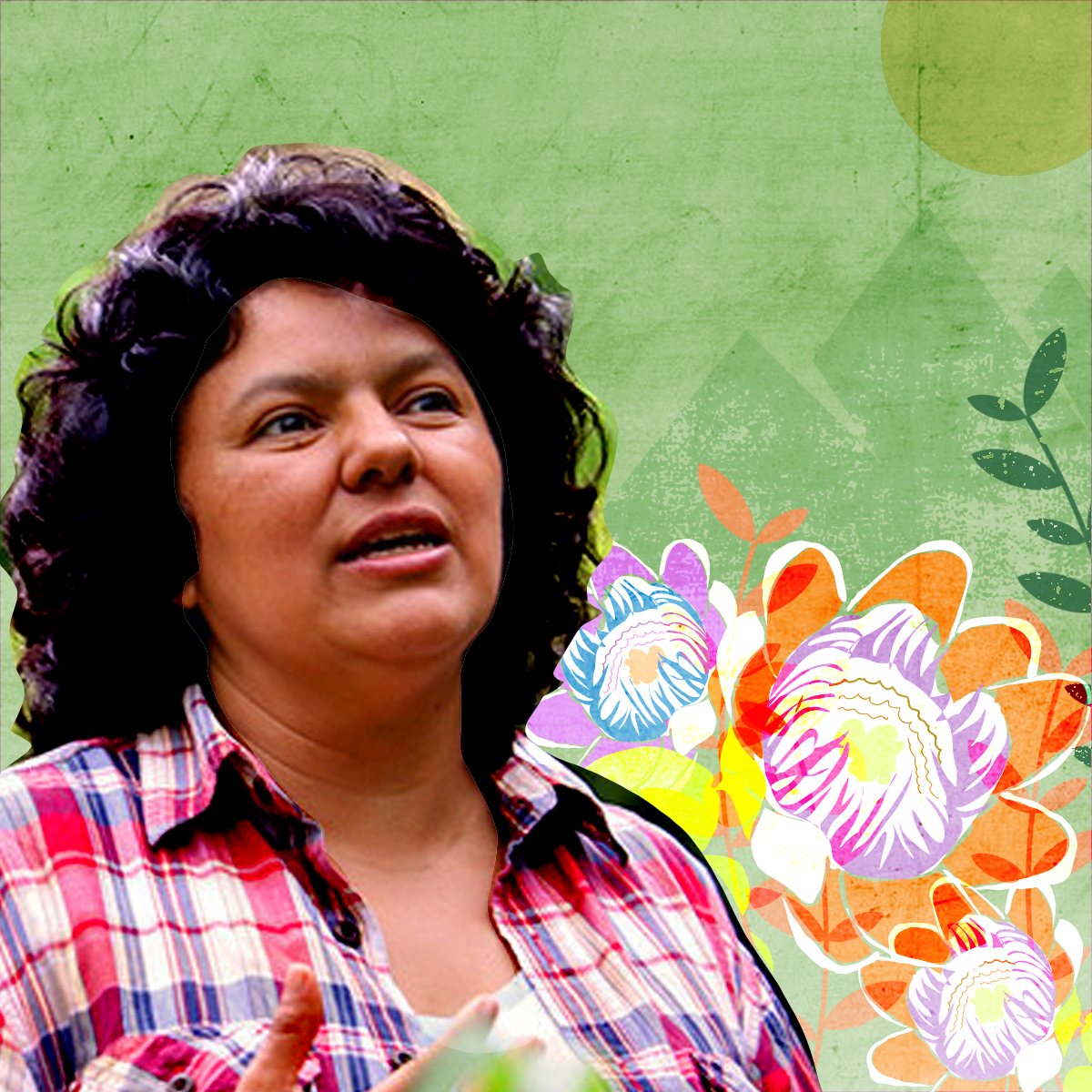
BERTA CÁCERES, COPINH (HONDURAS)
Berta Cáceres cofounded the National Council of Popular and Indigenous Organizations of Honduras (Consejo Cívico de Organizaciones Populares e Indígenas de Honduras, COPINH) in 1993 to address the growing threats posed to the territorial rights of the Lenca communities and improve their livelihoods. For more on her case see: https://humanrightsdefenders.blog/tag/berta-caceres/
JULIÁN CARRILLO AND THE COLORADAS DE LA VIRGEN COMMUNITY (MÉXICO)
PARAGUAY: AMADA MARTÍNEZ, INDIGENOUS DEFENDER OF THE ENVIRONMENT AND TERRITORY
Amadais an Avá Guaraní Indigenous environment defender from the Tekoha Sauce community.
In the 1970s, the construction of the Itaipú Binational hydroelectric plant, in the border between Paraguay and Brazil, forcibly displaced her community from its ancestral territory, putting their survival at risk. Since then, she has defended the right of her community to have a territory in which they can thrive in harmony with nature and has denounced the serious impacts of hydroelectric projects on nature and Indigenous Peoples’ lives. On 8 August 2018, a group of armed men threatened to kill her. Amada was leaving the community in a taxi along with his seven-year-old son, his sister and two young nephews, when the vehicle in which they were traveling was intercepted by a pickup truck with the logo of the hydroelectric plant. Amada Martínez believes that the threat against her was due to her work defending Indigenous Peoples rights and the environment.
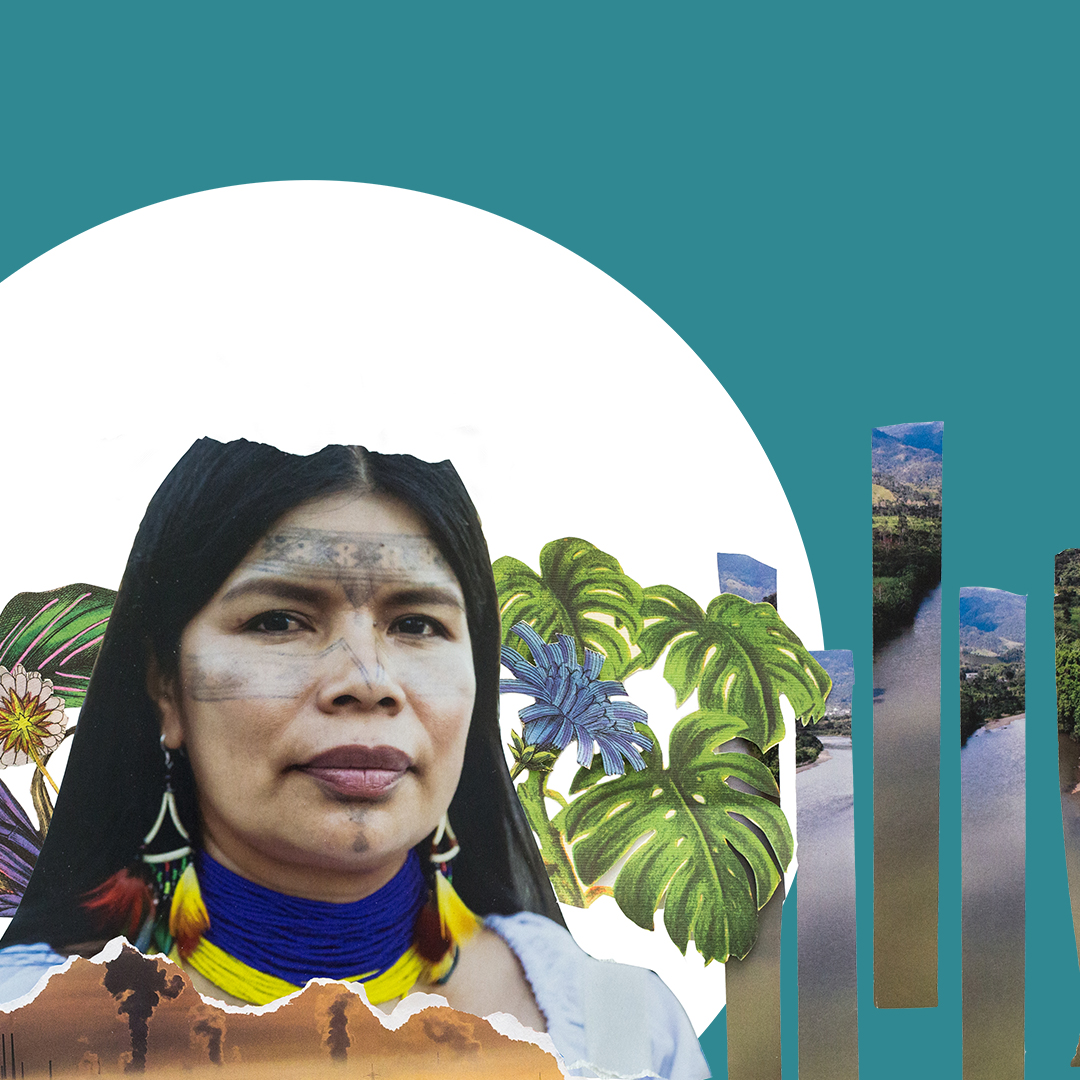
PATRICIA GUALINGA, INDIGENOUS DEFENDER OF THE ENVIRONMENT AND TERRITORY
“We are united and we will continue our struggle to defend Mother Earth.”
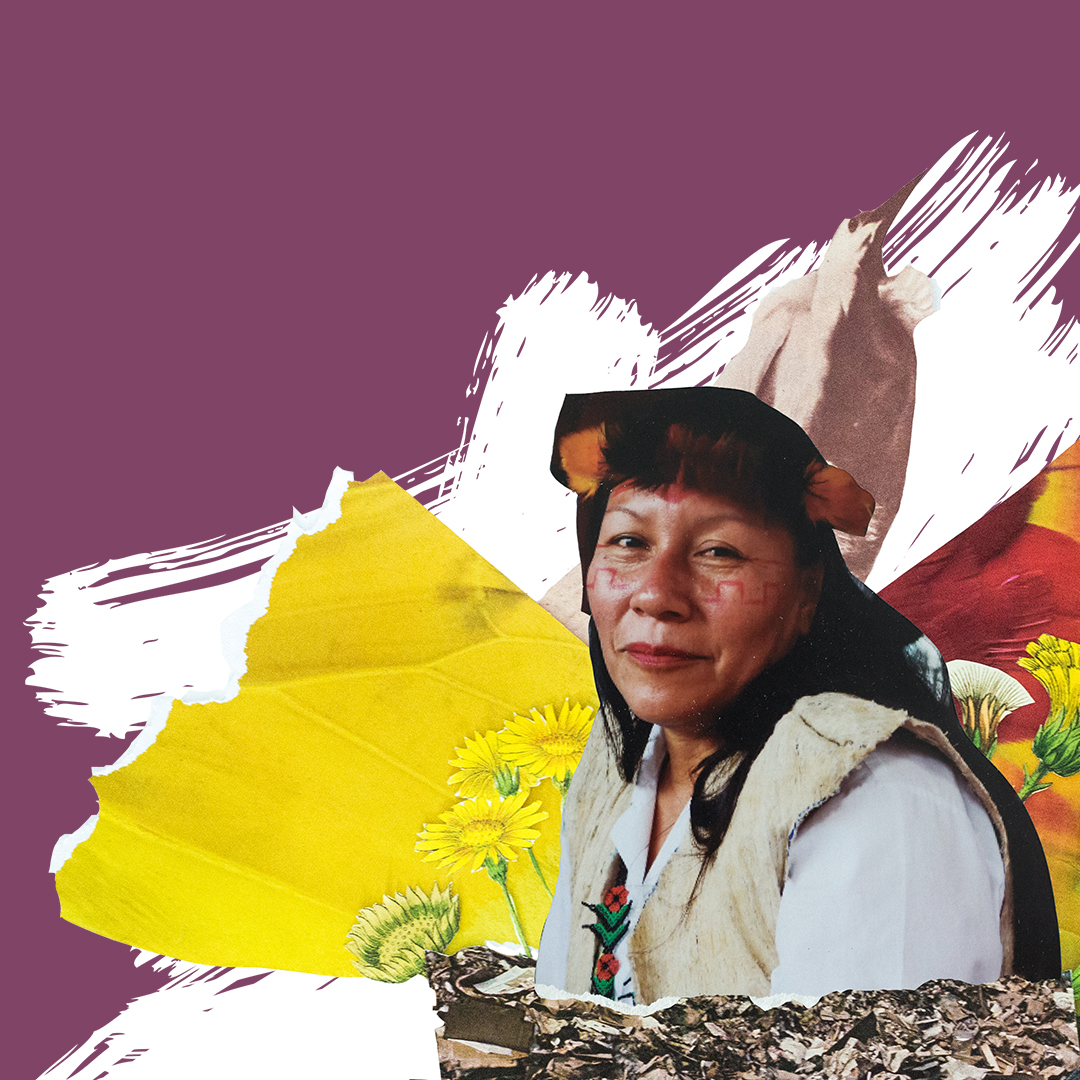
Patricia is an Indigenous leader of the Kichwa people of Sarayaku community. She defends her people’s rights to their territory and to live in a healthy environment in the face of damaging oil activities there. Patricia is also protecting the Amazonian environment and promoting sustainable development. In 2012, the Indigenous Sarayaku community achieved a historic victory for Indigenous Peoples against the Ecuador government after reporting an oil concession that had installed explosives on their territory without consulting them. In the early hours of 5 January 2018, an unknown man made death threats to Patricia and attacked her at her home in Puyo, in the east of Ecuador., The man shouted, “Next time we’ll kill you, bitch!” before fleeing. Patricia and her family had to leave their home after the attack because the property owner “was terrified that something would happen to her.”
NEMA GREFA, INDIGENOUS DEFENDER OF THE ENVIRONMENT AND TERRITORY
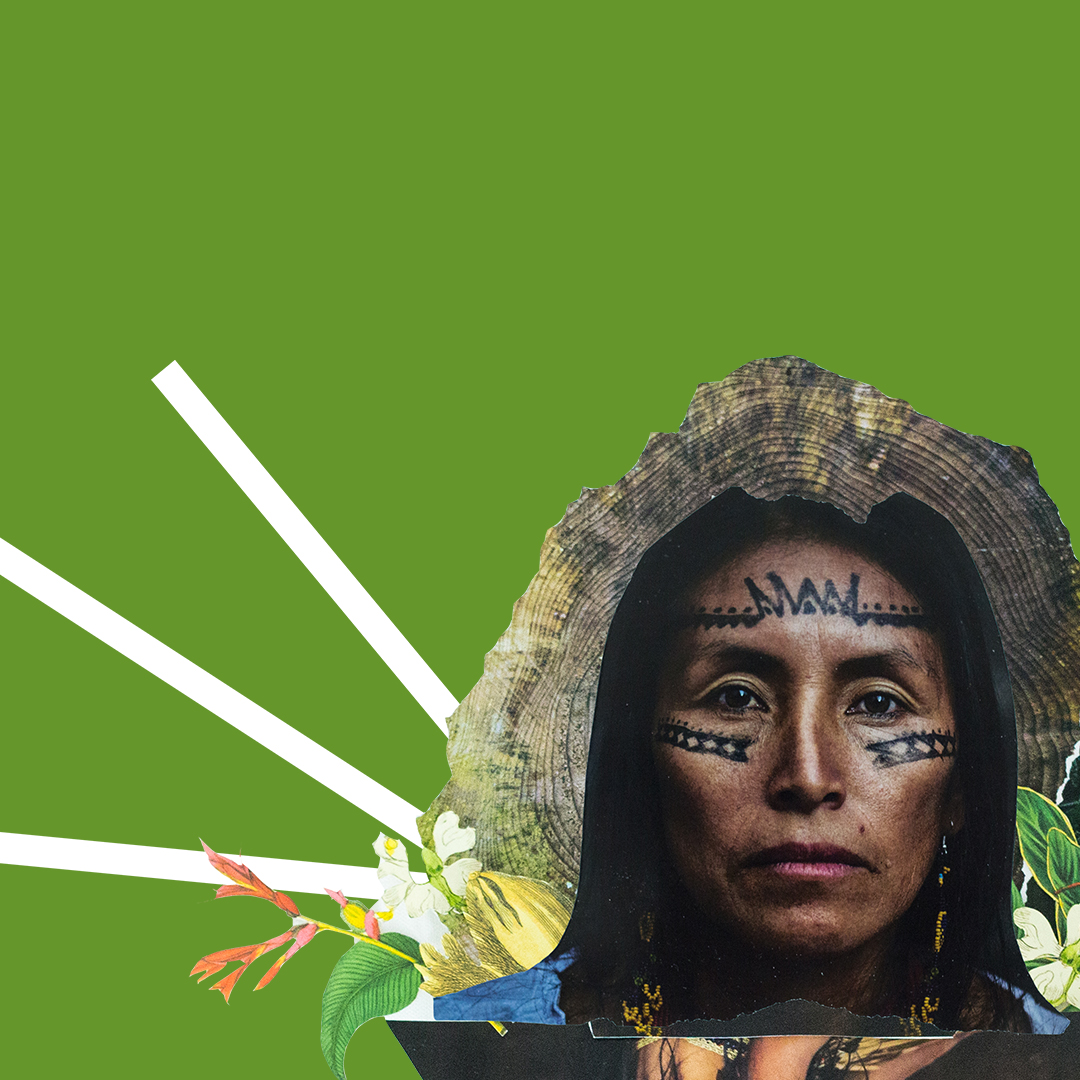
Nema is defending the Amazon environment and her people’s right to protect their territory from the possible negative effects of oil activity. After being legally recognized as President of the Sápara nationality of Ecuador in January 2018, her appointment was challenged by a group of people who Nema says are supportive of oil activities on the Sápara territory. Nema’s appointment was revoked in April 2018 as a result. Later that month a video was shared on social media featuring a man armed with a spear, identified by Nema as belonging to the group who had challenged her appointment, issuing her with a death threat: “Those present here are united in rejecting her and are thus going to kill Nema Grefa; she has no territory.” One year on, the Attorney’s Office has yet to open in investigation into the death threat. On 19 October 2018 Nema was finally recognized as president but still faces serious threats to her life. In April this year, despite the Ecuadorian authorities’ promises to protect her and her family, unknown individuals forcibly broke into her home to steal two computers containing sensitive information on her human rights work.
SALOMÉ ARANDA, INDIGENOUS ENVIRONMENTAL AND WOMEN’S RIGHTS DEFENDER
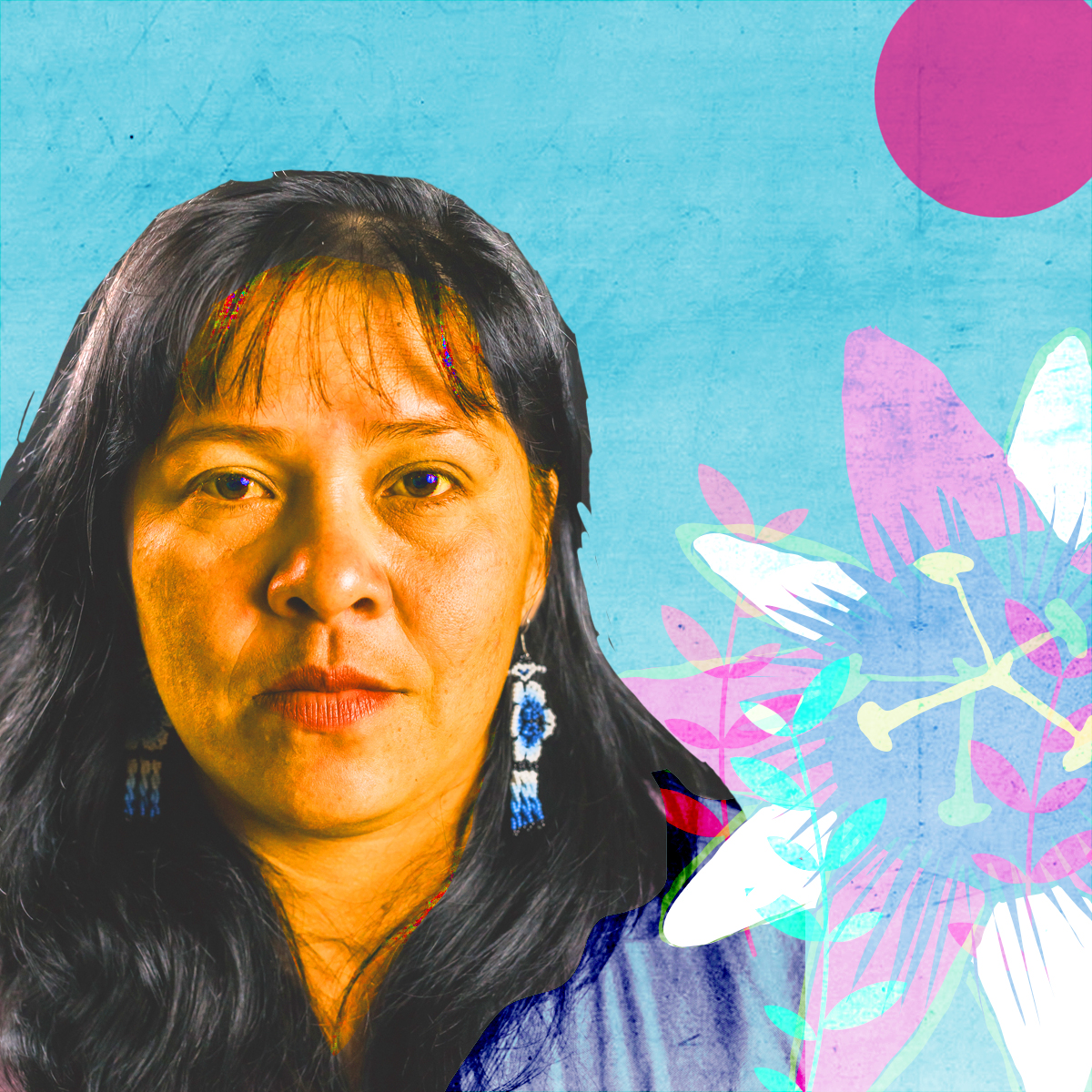
Salomé is an Indigenous leader from the Kichwa people who is defending the Amazonian environment and the right of women in her community to live in a healthy environment, free from sexual violence. Salomé is the Women and Family Leader in Moretecocha commune, Pastaza province. Salomé has publicly denounced the possible environmental impacts of oil operations in the Villano River basin, Pastaza province, and the sexual abuse of Indigenous women that have occurred in this context. In the early hours of 13 May 2018, a number of unidentified individuals attacked and threatened her and her family at home. Despite making a formal complaint, the Pastaza Provincial Attorney’s Office has yet to make any significant progress in this investigation. The authorities have not even offered her protection measures to address the risk facing her and her family.
MARGOTH ESCOBAR, ENVIRONMENTAL AND INDIGENOUS PEOPLES’ RIGHTS DEFENDER
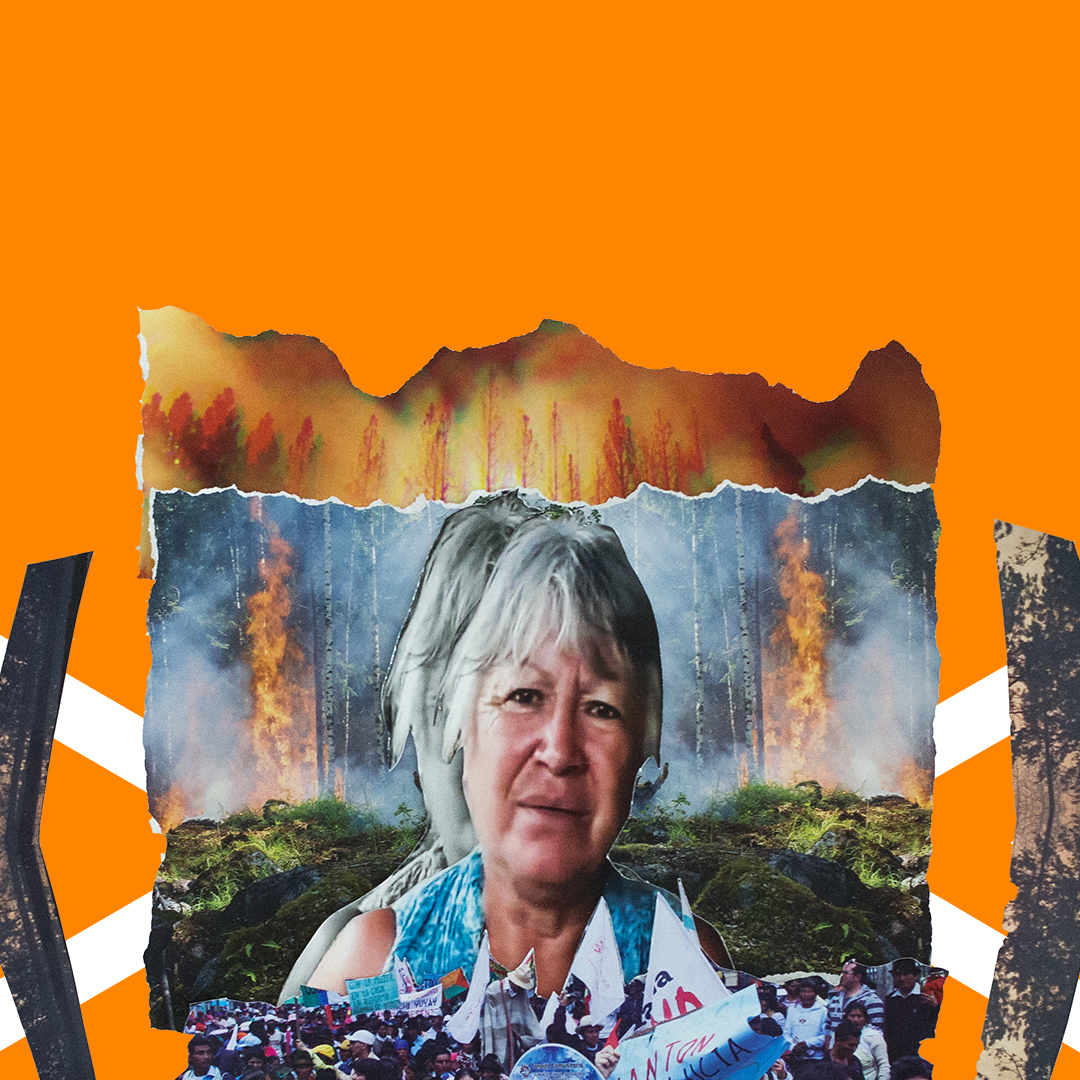
Margoth has devoted her life to defending the environment and Indigenous Peoples’ rights. In August 2015, Margoth was physically attacked by police officers at a protest and national strike called by the social and Indigenous movements in Puyo, Pastaza province. She was held on pre-trial detention for more than a week despite poor health caused by her injuries. She was charged with “attack and resistance”, which she was eventually acquitted of. In September last year Margoth’s house was set on fire, destroying all her belongings. On 1 October 2018, the Puyo Fire Brigade Commander stated that the fire at Margoth’s house had been intentional. Margoth lodged a criminal complaint with the Pastaza Provincial Attorney’s Office to investigate the attack, yet no progress has been made in her case. Margoth refused to join the country’s witness protection program because of her previous experience at the hands of the police: “I didn’t want to join the victim and witness protection system because I have no faith in the current government, I have no faith in the independence of the legal system in Ecuador, nor in the military or police forces.”
For the International Civil Society Week (ICSW), held in Belgrade from 8-12 April 2019, Michel Forst (Special Rapporteur on human rights defenders) contributed through IPS the
following piece: “Human Rights Defenders Need to be Defended as Much as they Defend our Rights”:
They are ordinary people – mothers, fathers, sisters, sons, daughters, brothers, friends. But for me they are extraordinary people – the ones who have the courage to stand up for everyone else’s rights. They are the human rights defenders. Last year, according to reliable sources, 321 of them were killed, in 27 countries. Their murders were directly caused by the work they do to ensure the rest of us enjoy the rights we claim as purely because we are human. Countless others were tortured, raped and threatened, also for the work they do protecting their, and others’ human rights.
In fact, 2018 was deadliest year for human rights defenders since the UN began monitoring the challenges they face through the establishment of a mandate for a Special Rapporteur on the situation of human rights defenders. It shouldn’t be like this.
Last year we marked 70 years since the Universal Declaration of Human Rights and 20 since the UN Declaration on Human Rights Defenders. The latter Declaration provides for the practical support and protection of human rights defenders as they go about their work. It is addressed not just to states and to human rights defenders, but to everyone. It tells us that we all have a role to fulfil as human rights defenders and emphasises that there is a global human rights movement that involves us all. This is a task we are not performing well.
Human rights should not need defenders, and human rights defenders should not need protection from the might of oppressive governments, corrupt multinationals and crooked legal systems. But this is an imperfect, human world.
Since 2000, when we UN Special Rapporteurs on the situation of human rights defenders began our monitoring work, much progress has been made. There has been extensive discussion on how these courageous people should be protected, and there is a Protection Mechanism for Human Rights Defenders and Journalists in a limited number of countries. Sadly, it is often not properly implemented, or funded. It is impossible to canvass each defender’s particular treatment or mistreatment by the authorities they face, or even that of communities of defenders. There are, however, trends.
On 23 October last year, Julián Carrillo, an indigenous rights defender from Mexico’s state of Chihuahua told a friend by phone that he believed he was being watched and that he was going into hiding. On the evening of 25 October, his body was found. He had been shot several times.
On 22 August last year, Annaliza Dinopol Gallardo, a Filipina land rights defender known to her community as “Ate Liza”, was shot dead outside Sultan Kudarat State University in Tacurong City. She had four children.
Mr Carillo’s murder is indicative of the largest trend. More than two-thirds – a full 77% – of the total number of defenders killed were defending land, environmental or indigenous peoples’ rights, often in the context of extractive industries and state-aligned mega-projects.
Ms Gallardo’s murder represents another trend – the number of attacks on women and girls who are defenders is increasing. In the recent report that I have presented to the UN Human Rights Council I have highlighted that, in addition to the threats experienced by their male colleagues, women human rights defenders face gendered and sexualised attacks from both state and non-state actors, as well as from within their own human rights movements.
This includes smear campaigns questioning their commitment to their families; sexual assault and rape; militarised violence; and the harassment and targeting of their children.
Changing all this is our task for the future. Protection Mechanisms for Human Rights Defenders and Journalists need to be properly implemented and funded, at national level.
We need to empower defenders and increase the abilities of those who are responsible for their protection to keep them safe. We also need to improve the accountability mechanisms these officials operate under.
To properly defend the defenders, we also need to recognise their diversity, and that each one of them faces challenges particular to their individual circumstances. There is no one-size-fits-all answer to ensuring each defender is able to do their work unfettered.
We need to acknowledge that defenders, just like all of us, live in this modern, interconnected world.
Protecting them means covering all aspects of their safety: physical, psychological and digital. It means doing so with flexibility. It also means that our protection needs to extend to their families, and the groups and organisations they belong to. We need to speak to them about what they need to feel safe.
In recent years the world has taken a worrying turn away from respect for human rights. Increasingly, groups are becoming inward-looking, and nations nationalistic. We need human rights defenders now more than ever. They also need us.
 Protesters call for justice for a Michoacán journalist who was victim of an assault last September and then harassed by police.


 Hans Thoolen on Human Rights Defenders and their awards